Chapter 2: American Popular Music in the Nineteenth Century Pt.1
Chapter 2: Introduction
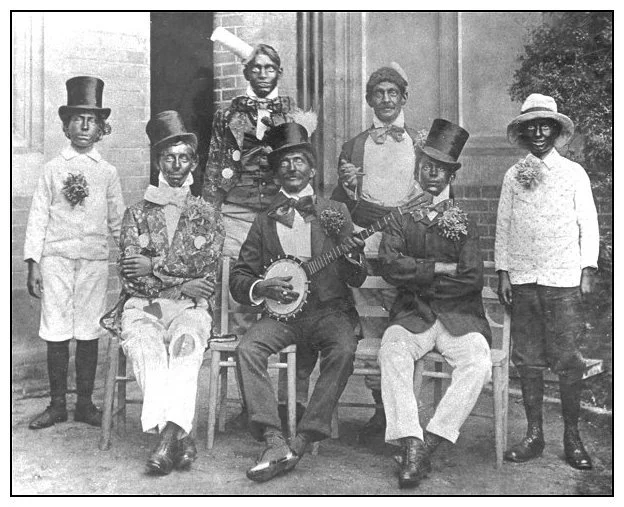
During the nineteenth century, the United States expanded across the continent while undergoing enormous changes in During the nineteenth century, the United States spread westward while changes in population, labor, transportation, and political power altered life across the country. Music traveled with people and appeared in theaters and churches, at political rallies, in private homes, and increasingly in commercially printed sheet music. Songs dealt with familiar subjects such as romance and work, but they also carried arguments about race, slavery, sectional conflict, and national belonging. As transportation routes improved and printing became more widely available, songs that had once circulated mainly within local communities could reach listeners hundreds of miles away.
The music moving through these networks drew from different cultural traditions. Indigenous peoples had their own musical practices across the continent long before the United States pushed westward. Enslaved Africans and their descendants developed musical practices with ties to African traditions while living under slavery, and European immigrants brought folk songs, dances, hymns, and art music. Musicians encountered these traditions in cities and ports, on plantations, and through churches and traveling performances. They borrowed sounds and ways of performing through these encounters, though the exchange took place under unequal conditions. White performers and publishers often made money from caricatures and imitations of Black and Indigenous people, while the communities they borrowed from had little control over how their music was performed, portrayed, or sold.
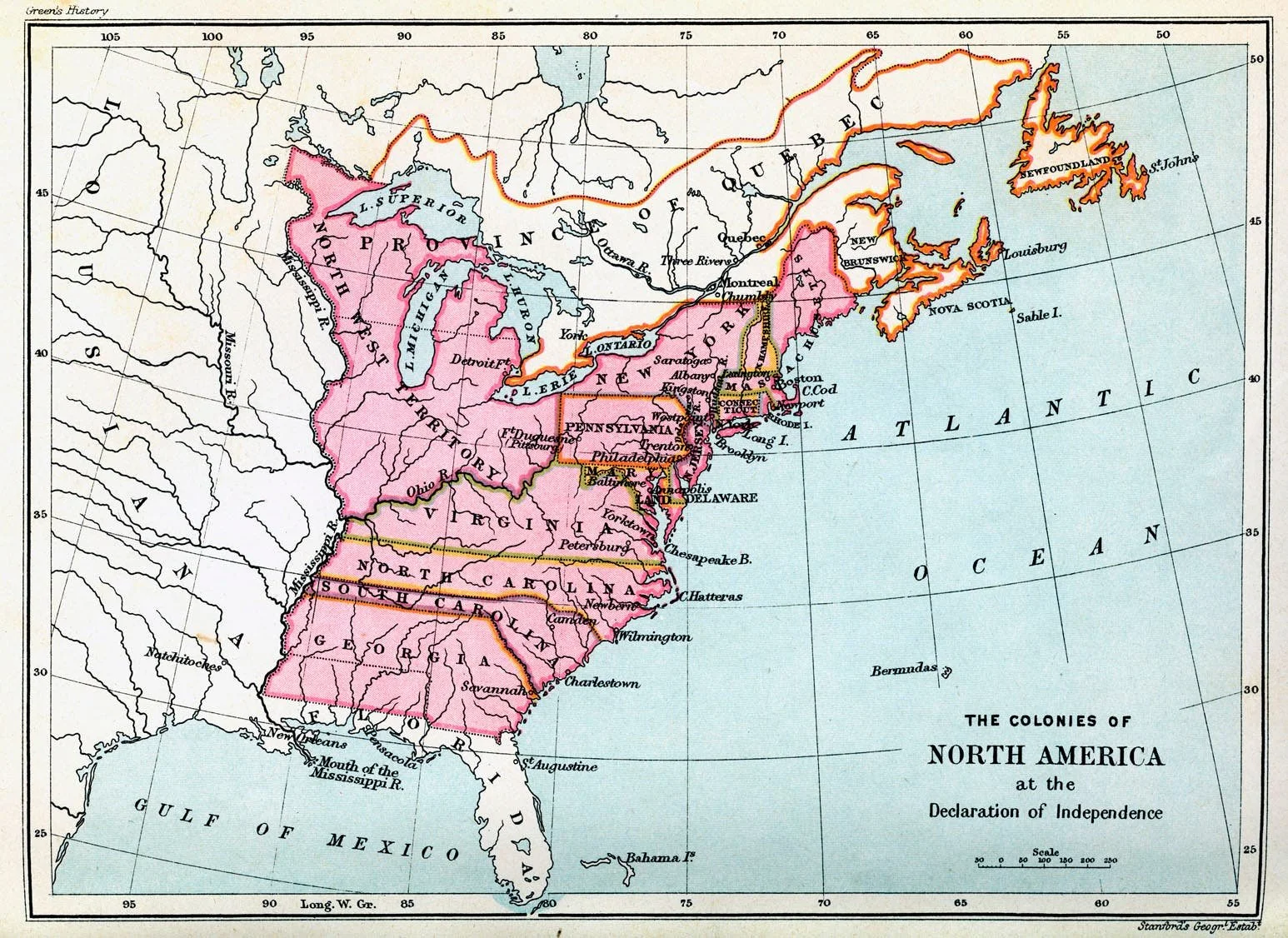
The growing circulation of music accompanied the westward growth of the country. At the beginning of the 1800s, most of the United States lay east of the Mississippi River, and much of the population lived along the Atlantic coast. Over the following decades, federal land purchases, warfare, treaties, and forced removals extended U.S. control westward. New roads and canals connected the settlements and cities, while the railroads later made travel between regions faster. Improvements in printing also allowed the newspapers and sheet music to circulate more widely. The new transportation and printing networks allowed performers, instruments, and music to travel farther and helped create a larger commercial music market.
The Louisiana Purchase of 1803 greatly increased the territory claimed by the United States. The United States purchased approximately 828,000 square miles from France under Napoleon Bonaparte, nearly doubling the territory claimed by the country. The purchase extended U.S. claims from the Mississippi River toward the Rocky Mountains and included land that later became all or part of fifteen states. The territory, however, was already home to numerous Indigenous nations with longstanding ties to the land. As the United States pushed its control westward and settlers entered these territories, conflicts with Indigenous nations increased, and many Indigenous communities lost their lands through warfare, treaties, and forced removal.
The westward growth of the United States also intensified the political struggle over slavery. As settlers moved into the western territories, Congress repeatedly confronted the question of whether slavery would be permitted in the new states. Cotton cultivation and the domestic slave trade carried slavery farther west and south, while the admission of new states could alter the political balance between the free and slaveholding states. The acquisition and settlement of western land brought disputes over Indigenous sovereignty, forced migration, slavery, and federal power into the newly claimed territories. The songs that circulated through the growing nation traveled through the same communities where these conflicts were taking place.

Soon after, the War of 1812 (1812–1815) brought the young United States into another military conflict with Great Britain. Tensions had grown over British restrictions on American trade and the impressment of American sailors into the Royal Navy, along with disputes over British involvement in the Northwest. The fighting reached several parts of the country. British forces burned Washington, D.C., in 1814, and later that year American forces successfully defended Fort McHenry in Baltimore. Francis Scott Key witnessed the bombardment from a nearby ship and wrote the poem “Defence of Fort M’Henry.” Its words were soon set to the popular tune “To Anacreon in Heaven,” and the song began circulating under the title “The Star-Spangled Banner.”
The Treaty of Ghent ended the war without settling many of the disputes that had led to it. News of American military victories, however, encouraged a period of national pride after the fighting ended. Patriotic songs and printed music became one way people celebrated those victories and told stories about the war. “The Star-Spangled Banner” continued to circulate throughout the nineteenth century and became closely associated with military ceremonies and other public events. More than a century after Key wrote the original poem, Congress designated the song as the national anthem in 1931.
surrounding the U.S. annexation of Texas and the continued push toward the Pacific. The idea of Manifest Destiny provided a justification for this territorial growth by presenting U.S. control across the continent as natural or divinely sanctioned. The war began amid a dispute over the boundary between Texas and Mexico and ended with an American victory.
Under the Treaty of Guadalupe Hidalgo in 1848, Mexico ceded a large territory to the United States that included present-day California, Nevada, Utah, most of Arizona and New Mexico, and parts of several other states. The transfer extended U.S. control farther into the West and brought long-established Mexican communities under American rule. Indigenous peoples also lived throughout the lands claimed by the United States. Spanish-language songs and dances, Mexican musical practices, and Indigenous traditions had existed in these regions long before the political boundary changed. After 1848, these traditions continued alongside music brought west by American settlers and later immigrants. The mixture differed from place to place, giving the Southwest and California their own regional musical traditions.

Changes in transportation and technology accompanied the country’s territorial growth. As roads, canals, and railroads connected distant regions, improvements in printing allowed songs and sheet music to circulate farther and more quickly. Music also traveled with the migrants and performers who moved between regions. Westward migration brought communities with different musical traditions into closer contact, while the growing towns and cities provided new places for musicians and audiences to encounter unfamiliar styles. Through these connections, sounds once associated with particular communities reached new performers and listeners.

By the end of the nineteenth century, American popular music had become a national commercial business, with sheet music, touring performers, theaters, and public entertainment carrying songs to audiences across the country. The growth of this business brought musicians and musical traditions from different communities into more frequent contact. At the same time, racial and economic inequalities influenced who could publish and perform music, who profited from it, and whose work received credit. The genres discussed in this chapter grew out of this environment, and their songs often addressed the experiences and conflicts of nineteenth-century life, from race and class to politics and regional identity.
America in the Colonial Era: Religious Music
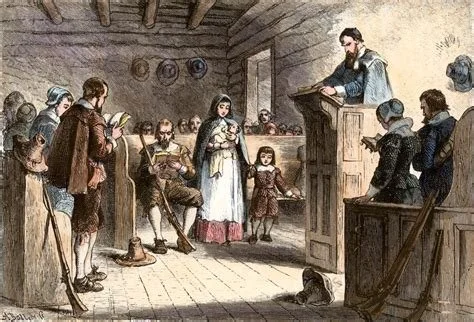
From the early colonial period, music in North America developed through contact among people from different cultural backgrounds, especially European settlers and enslaved Africans. British settlers established Jamestown, Virginia, in 1607 and brought musical traditions from Europe into the colony. In 1619, the first recorded Africans arrived in English Virginia, beginning a long period in which African musical practices existed alongside European traditions under the violence and restrictions of slavery. As the colonial population grew, these traditions came into greater contact. The exchanges between them took place within an unequal society, but they became part of the music that developed in the colonies and, later, the United States.
European settlers brought folk ballads and fiddle tunes, along with music for dancing and religious worship. Churches were among the main settings for organized musical activity in many colonial communities. In New England, the Puritans practiced congregational singing as part of worship and placed restrictions on how music could be used during religious services. Other denominations had their own practices. Catholics in Maryland used music within Catholic worship, while Anglicans in Virginia followed traditions associated with the Church of England. Religious music therefore varied according to the beliefs and worship practices of different colonial communities.
Other religious communities developed their own musical practices. The Moravians in Pennsylvania used choral singing and instrumental accompaniment in worship, maintaining musical ensembles as part of their religious communities. Puritan worship in New England relied more heavily on congregational psalm singing. Congregations sang English versions of biblical psalms, including those collected in the Bay Psalm Book in 1640. Because many worshippers could not read the text or musical notation, churches often used a practice known as "lining out," in which a leader delivered a line for the congregation to repeat. Lining out allowed the congregation to learn the words by ear and participate without reading from a book.
The desire to make written music accessible to ordinary singers also appeared in shape-note singing, which developed during the late eighteenth and early nineteenth centuries. Shape-note notation assigned different shapes to solfège syllables such as fa, sol, la, and mi, helping singers identify pitches before they had learned conventional notation. Singing schools used the system to teach groups of people how to read and perform written music, and the practice became especially common in rural areas and the South. Singers also gathered at conventions to sing from shape-note hymnals. One of these books, The Sacred Harp, appeared in 1844 and supplied singers with a collection of hymns and other sacred pieces arranged in shape-note notation.
During the late nineteenth and early twentieth centuries, shape-note singing became less common in many churches and schools. Music education increasingly favored conventional staff notation and European choral practices, reducing the place of shape-note methods in formal instruction. Churches in larger cities also began employing trained musicians and organized choirs, while commercial publishers distributed sacred music written for these settings. Shape-note singing continued in communities that maintained singing conventions and local traditions, especially in the South, even as fewer churches and schools used it for regular music instruction.

Second Great Awakening drew worshippers to meetings across the United States. Traveling preachers carried revival services from town to town, while camp meetings gathered people outdoors for several days of preaching and worship. Some attracted thousands of participants. Revival preachers focused on personal conversion, asking worshippers to seek salvation through an individual experience of faith rather than relying solely on established church authority.
Music gave the congregation an active role in these gatherings. Camp-meeting hymns often relied on melodies that were easy to remember and refrains that could be repeated after hearing them only a few times. Worshippers who could not read music could still learn the songs by ear and join the rest of the crowd. Call-and-response and lining out worked in a similar way: a leader supplied a phrase, and the congregation answered or repeated it. At a large outdoor meeting, these forms of group singing allowed hundreds of people to participate at once. Songs passed through the crowd between periods of preaching, prayer, and personal testimony, making music part of the shared experience of the revival.
The revival movement also brought Black and white religious music into closer contact, though slavery and racial discrimination governed the conditions under which these encounters occurred. African American Christians created spirituals and other sacred songs within this environment, drawing from Christian hymns and musical practices carried through African diasporic communities. Call-and-response gave the congregation a direct part in the performance, while improvised vocal lines allowed singers to alter melodies and phrases as they sang. Repeated refrains helped songs travel by ear from one singer or congregation to another. Some of these practices could be heard in revival meetings attended by both Black and white worshippers, allowing musical ideas to pass between communities even as the people involved lived under unequal social and legal conditions.
African American sacred music continued to develop after the revival era. Spirituals and other forms of Black church singing remained in use after the Civil War, while new religious songs entered Black congregations during the late nineteenth century. By the early twentieth century, these practices provided musicians with much of the musical vocabulary from which gospel music developed.
America in the Colonial Era: Secular Music

Secular music also had a place in the political and social life of the American colonies. Among the music circulating during the colonial period were broadside ballads, songs printed on inexpensive single sheets and sold by printers or street vendors. Broadsides usually printed the lyrics without musical notation because the words were often meant to be sung to a tune people already knew. Many used strophic form, with the same melody returning for each verse. The repeated tune allowed singers to concentrate on the changing story or message in the lyrics and made songs easier to pass from person to person. A chorus, when included, gave the group a repeated section that could be learned quickly and sung together. Through printed sheets and oral performance, the same song could circulate among people who encountered it in different settings.
The flexibility of the broadside ballad made it useful for political commentary. Writers could take a familiar melody and replace its words with verses about current events, allowing new songs to circulate without requiring audiences to learn a new tune. Some used humor to ridicule British officials, while others supported colonial resistance or described events from the growing conflict with Britain. Songs could be rewritten as political circumstances changed, giving familiar melodies new meanings depending on who was singing them and why.
"Yankee Doodle" followed this pattern during the years surrounding the American Revolution (1775–1783). The melody was already in circulation before the war, and British troops used versions of the song to make fun of colonial soldiers. American troops eventually took up the same tune and used it for their own verses. A melody intended to ridicule them could now accompany celebrations of the American cause. The song worked especially well for reuse because its short phrases and repeated refrain could accommodate new lyrics without changing the basic tune. As “Yankee Doodle” passed between British and American singers, its meaning changed with the words, the performers, and the political circumstances in which it was sung.
Another example of a familiar melody taking on a new political meaning is "The Star-Spangled Banner." During the War of 1812, Francis Scott Key witnessed the British bombardment of Fort McHenry in Baltimore and saw the American flag still flying over the fort the following morning. The experience led him to write the poem Defence of Fort M’Henry, which was soon paired with “To Anacreon in Heaven,” a British tune already known in the United States. The melody had originally been written for the Anacreontic Society, a gentlemen’s social club in London, and its unusually wide vocal range made it difficult to sing. Setting Key’s words to an existing tune allowed the new song to circulate without requiring audiences to learn a new melody. Printed copies spread under the title “The Star-Spangled Banner,” with each of Key’s verses sung to the same music. Although several verses appeared in the original song, the first eventually became the verse most commonly performed. The song remained in public use throughout the nineteenth and early twentieth centuries before Congress designated it as the national anthem in 1931.
The practice of fitting new words and stories to familiar music also appeared in ballad opera, an English theatrical tradition that reached American audiences during the colonial and early national periods. Ballad operas combined spoken dialogue with songs set to existing popular melodies, including tunes audiences might already have encountered outside the theater. John Gay’s The Beggar’s Opera (1728) became a widely performed example of the form. Gay used familiar tunes and English dialogue to parody the conventions of Italian opera while telling a story about thieves, criminals, and other characters outside aristocratic society. Audiences who knew the melodies could recognize the music even when the lyrics and dramatic setting had changed. As ballad opera circulated in American theaters, it offered another setting in which familiar songs could move between popular entertainment and public performance.
Immigration added new sounds and musical customs to American life throughout the nineteenth century. Irish and German immigrants who came to the United States during periods of famine, political unrest, and economic hardship brought songs and dances they had known in Europe. These traditions remained part of social life within immigrant communities, where music was heard at family gatherings, celebrations, and dances. Some also moved beyond these communities as musicians performed for wider audiences and popular dances entered commercial entertainment.
The music associated with different immigrant populations often developed according to the communities and regions where people settled. French-speaking communities in Louisiana continued musical practices with roots in the region’s colonial history. Over time, these practices became part of Cajun music, where the fiddle was widely used for dance melodies and the accordion later became a common instrument. Eastern European Jewish immigrants brought the instrumental music now known as klezmer, which was often performed at weddings and other celebrations. Violins were common in early ensembles, while the clarinet became more prominent as the music developed in the United States. Polish and other Central European communities brought the polka and related dance traditions. The polka eventually moved into dance halls and commercial entertainment, where it reached audiences outside the immigrant communities that had brought it to the United States.
The British ballad tradition remained a central influence on the American musical life throughout the nineteenth century. Settlers and immigrants brought narrative songs from England, Scotland, and Ireland to North America, where singers continued to pass them down by ear. As the songs moved between communities, their stories changed with them. American versions began to include subjects drawn from local life, including frontier settlement and westward migration, along with stories about work, crime, and domestic tragedy. Singers also altered words and melodies according to local dialects and performance customs, so the same ballad could sound different from one region to another. During the late nineteenth and early twentieth centuries, collectors and folklorists documented many of these songs, including British-derived ballads that had remained in oral circulation for generations. The melodies and storytelling practices heard in these songs later appeared in American folk music and in commercial styles such as country and bluegrass.
Vocal style also gave Anglo-American folk singing much of its recognizable sound. In parts of the rural South and Appalachia, singers often used a high register with a tense, nasal vocal quality that could carry clearly without amplification. Elements of this style can be heard in Appalachian ballad singing and later country and bluegrass performance. The phrase “high lonesome sound” eventually became associated especially with bluegrass singing, where the upper-register vocal style gives many performances their piercing, plaintive quality.
American popular singing also drew from the Italian bel canto tradition. Literally meaning “beautiful singing,” bel canto developed around a smooth, connected vocal line and careful control of the voice across its range. Singers used controlled breathing to sustain long phrases and added ornaments such as turns and grace notes without interrupting the melodic line. As Italian opera and European vocal training reached American performers during the nineteenth century, these techniques entered parlor songs and light opera, where singers adapted elements of the style to music written for American audiences.
European dance traditions were also common in American social life. Contra dances, quadrilles, reels, and square dances brought groups of people together in coordinated patterns, with dancers moving through lines or squares as a caller directed the figures. Live musicians accompanied the dancing, and the fiddle was especially well suited to the repeated melodies and steady rhythms needed to keep a group moving together. These dances could be held in homes and public halls, giving music a regular place at community gatherings.
During the nineteenth century, couple dances became more common alongside the older group forms. The waltz brought partners into a close turning position that had once drawn criticism for allowing greater physical contact between men and women. As attitudes toward social dancing changed, the waltz was joined by dances such as the galop, schottische, and polka in ballrooms and dance halls. By the late nineteenth century, couple dancing had become a regular part of public entertainment, and the music written for it followed the rhythms and steps of each dance. Dance halls and other public venues gave musicians regular work while allowing new dances and their accompanying music to travel between communities.
nstrumental music also traveled from the British Isles into American musical life, especially through fiddle traditions brought by Scottish and Irish settlers. The fiddle—the name commonly given to the violin in folk music—was portable and loud enough to accompany social dancing, which made it a practical instrument for gatherings where musicians had few resources beyond what they could carry. Fiddlers learned tunes by ear and changed them as they passed from one musician or region to another. “Turkey in the Straw,” which circulated under several names and in different versions, shows how melodies could acquire new associations as American performers adapted them. Fiddle tunes supplied the music for dances and informal gatherings, allowing the same melodies to travel with musicians and dancers between communities.
Printed song collections offered another way for music from the British Isles to circulate in the United States. Thomas Moore’s Irish Melodies, published in a series of volumes beginning in 1808, paired Moore’s poetry with melodies arranged or adapted from Irish musical sources. American singers encountered these songs through printed editions and performed them in homes and other social settings. Scottish songs followed similar routes. “Auld Lang Syne,” with words adapted by Robert Burns from an older Scottish song, became familiar in the United States through repeated performance and publication. Printed collections gave households access to consistent versions of songs that had previously traveled largely through oral performance, while the piano and other household instruments allowed families to perform the music themselves.
The Musical Heritage of Enslaved Africans

The development of African American music cannot be separated from the history of slavery in the United States. Beginning in the seventeenth century, Africans were forcibly transported across the Atlantic and sold into slavery in the American colonies. The transatlantic trade brought hundreds of thousands of enslaved Africans directly to mainland North America before the United States prohibited the importation of enslaved people in 1808. The enslaved population continued to grow through the domestic slave trade and forced reproduction, reaching nearly four million people by 1860.
The Middle Passage subjected captive Africans to extreme violence, disease, hunger, and death during the voyage across the Atlantic. Those who survived entered a system that separated people from their families and disrupted connections to their languages and communities. Enslaved Africans came from different parts of the continent and carried different musical knowledge with them. Under slavery, they drew from these traditions while adapting to new surroundings and to contact with other Africans and Europeans. Rhythmic practices, ways of singing, and forms of group participation continued through work, worship, and other parts of daily life. Over generations, these practices changed under American slavery and became part of the African American musical traditions that developed in the United States.
Enslaved Africans arrived in North America from many societies across West and Central Africa, bringing different languages and musical practices with them. Some had also lived under English, French, or Spanish colonial rule in the Caribbean before being brought to mainland North America, where they had already encountered European and Caribbean musical traditions. Under slavery, people from different backgrounds lived and worked in close proximity, and their music developed through contact with African and European traditions and, in some places, Native American music. Black musicians adapted the sounds they encountered according to musical practices carried from Africa and developed within African American communities. Over generations, these exchanges produced forms of music with their own performance practices and ways of organizing rhythm, melody, and group participation.
Music and dance also gave enslaved people ways to participate in community life under the violence of slavery. Practices with roots in West and Central African music remained especially audible in rhythm and group singing. Call-and-response involves a leader singing or playing a phrase followed by an answer from the group, allowing individual and collective performance to occur within the same song. Polyrhythm places different rhythmic patterns against one another, while syncopation accents notes between or around the expected beats. Improvisation allowed performers to alter melodies, rhythms, or words during a performance, and oral transmission allowed songs to pass between people without written notation. These practices appeared in work songs and spirituals, as well as in music used for dancing, storytelling, and children’s games. Spirituals drew on biblical language and Christian worship while expressing the experiences of enslaved Black communities, including hopes for deliverance and freedom.
Religious revivals such as the Great Awakening brought many enslaved people into contact with Protestant ideas about personal salvation and spiritual equality. African American worshippers interpreted these ideas through their own experiences, and biblical stories of deliverance could speak directly to hopes for freedom from slavery. European hymns and Christian scripture entered Black religious life through this process, while African-derived ways of singing and participating in worship continued within the new religious setting. Spirituals often used call-and-response, with worshippers adding rhythm through hand-clapping, foot-stomping, and movement. Some services also included ecstatic forms of worship in which participants understood intense physical or emotional experiences as contact with the divine.
Enslaved people sometimes gathered for worship away from the supervision of slaveholders in secluded places commonly called hush harbors. In these meetings, worshippers could sing, pray, and preach with greater freedom than they had in white-controlled churches. Biblical stories and hymns took on meanings connected to the conditions of slavery, especially stories about captivity, deliverance, and freedom. Black preaching also developed a musical quality of its own. Preachers could move between speech and song, alter their vocal pitch and rhythm, and respond to reactions from the congregation. Similar exchanges between an individual voice and an answering audience later appeared throughout African American religious and popular performance.
African-derived rhythmic practices could also be heard in instrumental music. Musicians built performances around short repeated phrases, later commonly called riffs, which provided a pattern over which other parts could vary. Different rhythmic patterns could overlap, while listeners participated by clapping, stomping, or answering performers vocally. Slaveholders restricted drums in some places because they feared that enslaved people could use them to communicate across distances. Musicians continued producing complex rhythms through other means, including body percussion and instruments such as tambourines and small frame drums. These methods allowed rhythmic practices to continue even where particular instruments were restricted.
Stringed instruments offer another connection to African musical practices. Enslaved people made instruments from materials available to them, including the diddley bow, a single string stretched between two points and played by plucking or striking it while changing the pitch with a slide. African instrument-making traditions were also carried into the early history of the banjo. Enslaved Africans and their descendants made early banjos from gourds covered with animal skin, attaching wooden necks and strings made from materials such as gut or horsehair. These instruments shared features with West African lutes such as the akonting and ngoni. Players could combine a repeating drone with a changing melody, giving the instrument both a rhythmic and melodic function. Downward striking techniques associated with early Black banjo playing later appeared in styles such as clawhammer, which became common in Appalachian music.
African American musicians also adapted European hymns, dances, and folk tunes according to the rhythmic and vocal practices they had developed under slavery. A familiar hymn, for example, could change through call-and-response, altered phrasing, or rhythmic variation when performed in a Black religious setting. Work songs used repeated rhythms and vocal responses that allowed groups to coordinate physical labor while singing together. Similar habits of improvisation and rhythmic variation continued in African American music after slavery, where they took different forms as new styles developed. Gospel, blues, and jazz each grew within their own historical settings, drawing in different ways from musical practices that had developed in Black communities over generations. Later styles, including R&B, funk, and hip-hop, continued to use practices such as improvisation, rhythmic layering, and interaction between performers and audiences.
Cakewalks

A particularly striking example of early cultural exchange—and the complexities of appropriation—between European and African American traditions is the Cakewalk, a 19th-century dance that demonstrates how enslaved Africans reinterpreted European forms through African aesthetic principles. European settlers brought formal ballroom dances such as the Minuet, Cotillion, and Quadrille, which emphasized precise, symmetrical movement and patterned figures associated with elite social settings. These dances were performed at high-class gatherings, where participants were expected to demonstrate refinement and adherence to etiquette. In contrast, country dances such as the Jig, Reel, and Virginia Reel circulated widely in informal or rural settings, featuring improvisatory movement, active footwork, and group participation. Enslaved African performers observed and often mimicked the posture, gestures, and style of these European dances, exaggerating them with syncopated rhythms, intricate footwork, and improvisatory embellishments.
Dance already held an important place in the social and ceremonial life of many West and Central African societies from which enslaved people had been taken. On American plantations, African American dancers carried elements of these traditions into the European forms they encountered. Improvisation gave dancers freedom to alter familiar steps, while syncopated rhythms changed the relationship between movement and the underlying beat. Humor became especially important as performers exaggerated the posture and etiquette of white ballroom dancing. These performances developed into competitive dances in which couples were judged on their movements and individual style. A cake was sometimes awarded to the winning couple, a practice commonly associated with the name Cakewalk and the expression “taking the cake.” For enslaved performers, the exaggerated movements could make fun of white social behavior even when white spectators understood the performance simply as entertainment.
The music accompanying the Cakewalk carried the same exchange into sound. Black musicians played European instruments such as the fiddle alongside the African-derived banjo, combining instruments with different histories within the same performance. Syncopation placed accents away from the expected beat, while call-and-response created exchanges among musicians, dancers, and spectators. Repeated musical patterns also left room for performers to vary rhythms and movements as the dance continued. Similar rhythmic practices later became important in ragtime, where syncopated melodies moved against a steady accompaniment, and they also appeared in early jazz.
The history of the Cakewalk changed again when white entertainers brought the dance into commercial popular culture. By the late nineteenth century, it appeared in minstrel shows and other public entertainment, where Black music and dance were often presented through racist caricature. The Cakewalk also reached large public events and became familiar to audiences far removed from the Black communities in which it had developed. White performers and producers could now profit from a dance created by African Americans, often stripping away the satire that had been part of its earlier performance. Black performers also brought the Cakewalk to professional stages, though they worked within an entertainment business that often required them to perform racial stereotypes for white audiences. The path of the Cakewalk—from plantation parody to commercial entertainment—shows how African American performers could create new forms from the culture around them while having little control over how those forms were later presented and sold.
Minstrelsy

Blackface minstrelsy became one of the most widely consumed forms of American entertainment during the nineteenth century, spreading racist caricatures of African Americans through popular songs, dances, and comedy. Minstrel shows drew heavily from Black musical and dance practices while placing them inside fictional portrayals of Black life created largely for white audiences. Performers turned plantation life into comedy and presented African Americans through exaggerated stereotypes that distorted the realities of slavery and Black culture. The Cakewalk and other Black performance practices entered this entertainment business through the same process: white performers borrowed the music and movement, altered them for the stage, and sold them as racial spectacle.
Full-length minstrel shows appeared during the 1840s and soon drew large audiences across the United States. White performers darkened their faces with burned cork or greasepaint and adopted exaggerated dialects, movements, and costumes to play stock Black characters. Some portrayed enslaved people as contented and foolish, while others mocked free Black people as pretentious or incapable of fitting into urban society. These characters gave theatrical form to racist ideas already circulating in American life and offered audiences distorted images of Black people during decades of intense conflict over slavery. Black entertainers later entered the minstrel business as professional performers, but the conventions of the stage often required them to reproduce the same stereotypes created by white performers. For Black musicians and actors, minstrelsy could provide paid theatrical work while restricting the kinds of Black characters and music that audiences were willing to accept.
Blackface performance had roots in earlier British and American theater, where white actors had portrayed Black characters through exaggerated dialect and costume, while the word “minstrel” came from a much older European tradition. During the Middle Ages, minstrels were professional entertainers who traveled between towns, courts, castles, and public gatherings. They performed songs, instrumental music, poetry, stories, and other forms of entertainment, often drawing on both oral traditions and the musical practices of their time. The term minstrel came to encompass a range of musicians and entertainers rather than a single profession or musical style. Over the centuries, the word remained associated with professional performers and musical entertainment in Britain and Europe.
When American performers adopted the word during the nineteenth century, they attached this older name to a distinctly American form of theatrical entertainment. During the 1820s and 1830s, individual blackface acts became increasingly common on American stages, and performers began building careers around songs advertised as “Ethiopian” music. George Washington Dixon became associated with this early period through performances of songs such as “Long Tail Blue” and “Coal Black Rose” in New York. Much of the music used familiar European-derived melodies and song forms even when performers claimed to represent African American music. The result was a stage version of Black culture assembled from racial stereotypes, European theatrical conventions, and material borrowed from African American performers.
Minstrelsy also gave working-class entertainers a way to comment on the society around them. Through comic characters and exaggerated dialect, performers mocked politicians and wealthy social customs while keeping those comments inside the conventions of racial comedy. Much of early blackface minstrelsy developed in working-class neighborhoods of cities such as New York, where white and Black residents lived and worked near one another. White entertainers encountered African American music and dance in these environments and turned parts of what they heard and saw into commercial performances. Their acts reveal the contradiction at the heart of minstrelsy: white performers depended on Black culture for much of their material while using the stage to ridicule Black people. Minstrelsy made that contradiction profitable, circulating African American musical practices through an entertainment industry that gave white performers and producers much greater control over how those practices—and Black Americans themselves—were presented to the public.
Minstrel Show Characters and Structure

Minstrel shows built much of their comedy around recurring Black characters whose exaggerated traits reinforced racist ideas about African Americans. Two of the best-known were Jim Crow and Zip Coon, fictional characters created and performed largely by white entertainers in blackface. Each targeted a different stereotype. Jim Crow mocked the rural Black laborer, while Zip Coon ridiculed the free, urban Black man who sought education, fashionable dress, or social status. Together, characters like these gave minstrel audiences a narrow and degrading set of images through which Black life was repeatedly portrayed on the American stage.
Thomas D. “Daddy” Rice made the Jim Crow character famous during the 1830s through a blackface song-and-dance routine. Rice portrayed Jim Crow as a rural Southern Black man whose speech, movements, and behavior were exaggerated for comedy. The character was presented as ignorant and foolish, reinforcing the racist claim that Black Americans were naturally unfit for social or political equality. Jim Crow became so familiar to American audiences that the character’s name eventually moved beyond the theater. By the late nineteenth century, “Jim Crow” was being used to describe the laws and customs that enforced racial segregation, especially in the South. These laws separated Black Americans from white Americans in schools, restaurants, theaters, hospitals, and other public institutions
Rice’s portrayal drew on multiple influences. The dialect and mannerisms of Jim Crow were partly inspired by preexisting white rural characters, such as the frontier figure Davy Crockett, and partly by the Black and Creole dialects Rice encountered as a child growing up near the docks of New York’s Seventh Ward, a culturally diverse and predominantly working-class neighborhood. By combining these elements, Rice created a character at once recognizable and exotic to his audiences, amplifying humor through exaggeration and stereotypes.
Rice assembled the character from material he encountered in American popular culture and everyday life. Some of Jim Crow’s exaggerated mannerisms resembled existing white rural and frontier characters, while Rice also borrowed from Black speech and performance. Growing up near New York’s Seventh Ward placed him in a working-class area where Black, white, and immigrant communities lived and worked near one another. Rice turned elements from these encounters into a blackface character designed for white audiences. His performance depended on recognizable pieces of American speech, music, and dance, but rearranged them into a racist caricature.
The song used in Rice’s Jim Crow routine makes the caricature explicit:
“Come, listen all you gals and boys, I'se just from Tuckyhoe
I'm gain to sing a little song, My name's Jim Crow
Wee! about and turn about and do jis' so
Eb'ry time I wee! about I jump Jim Crow”
The written dialect imitates a caricature of Black speech through pronunciations chosen for comic effect, while the repeated refrain accompanied Rice’s exaggerated dance movements.

Where Jim Crow caricatured the rural Black laborer, Zip Coon targeted the free Black man living in the urban North. The character dressed fashionably, used elaborate language, and tried to imitate the manners associated with wealthy white society. Minstrel performers made each effort end in ridicule. Zip Coon misused words, exaggerated his speech, and appeared unable to understand the social customs he tried to follow. The joke rested on a racist claim with clear political meaning: Black Americans who sought education, social mobility, or acceptance in public life could be portrayed as foolish for believing they belonged there.
The music associated with Zip Coon reveals another contradiction within blackface minstrelsy. Although performers presented the character as a representation of Black life, the tune itself drew largely from Irish and Scottish musical traditions already circulating in the United States. White entertainers could combine European-derived melodies with exaggerated Black dialect and then market the result as Black entertainment. The song’s refrain used nonsense syllables resembling “Zip a duden duden zip a duden day,” a phrase later associated with “Zip-a-Dee-Doo-Dah” from Disney’s Song of the South. The mixture of sources shows how minstrelsy manufactured its version of Black culture from material borrowed and altered for the stage.
Minstrel shows surrounded Jim Crow and Zip Coon with other recurring racial caricatures. Brudder Tambo and Brudder Bones took their names from the tambourine and bone percussion instruments they played and were portrayed as highly musical but unintelligent. The Interlocutor acted as the master of ceremonies, usually occupying a more formal position within the show and trading jokes with the other performers. Other characters targeted Black family life and sexuality. The Mammy caricature portrayed a Black woman as devoted to the white household she served and was often played by a man in blackface. The Old Uncle presented an elderly Black man as submissive and attached to the plantation order, while the Wench reduced Black women, especially lighter-skinned women, to sexual objects.
These characters gave minstrelsy a repeated vocabulary for portraying Black Americans to mass audiences. The stereotypes reached beyond individual songs or performances because audiences encountered the same types again and again, often across decades. Some later appeared in advertising, film, and other commercial entertainment; the Mammy caricature, for example, was used in the former Aunt Jemima brand image. Through repetition, minstrel entertainment made racist assumptions about Black intelligence, family life, and social status familiar to generations of American audiences.

Dan Emmett and the Virginia Minstrels

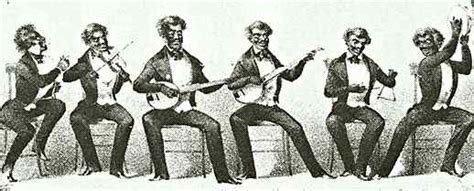
By the 1840s, blackface minstrelsy had grown from individual song-and-dance routines into a full evening of commercial entertainment. The Virginia Minstrels, organized in 1843, helped establish the ensemble format that soon became familiar on minstrel stages across the country. Four performers sat in a semicircle and played fiddle, banjo, bones, and tambourine, surrounding the musical numbers with comedy and other routines. Devoting an entire program to blackface performance gave minstrel companies a format they could reproduce on tour, allowing the same music, characters, and racial caricatures to reach audiences from city to city.
Daniel Decatur Emmett (1815–1904) helped create this format as a founding member of the Virginia Minstrels. His path to the minstrel stage began with the fiddle, which he learned while growing up in Mount Vernon, Ohio. He later worked briefly as a printer before enlisting in the U.S. Army in 1834. While stationed at Jefferson Barracks in Missouri, Emmett played the fife and drum, adding military music to the instrumental experience he already had as a fiddler. After leaving the Army, he entered the circus business and began performing in blackface, where his experience as a musician and entertainer eventually led to his work with the Virginia Minstrels.
After leaving the Army, Emmett entered the circus business and began performing in blackface. He toured as a singer, banjoist, and comedian while writing songs in the exaggerated dialect used by blackface entertainers. His career changed with the formation of the Virginia Minstrels in 1843. Emmett and three other performers organized their blackface routines into a complete program built around music and comedy, helping establish the basic format that other minstrel companies soon copied. The success of this model turned what had often been a single act within a larger program into an evening of entertainment devoted entirely to minstrelsy.
Emmett’s best-known song, “I Wish I Was in Dixie’s Land”, commonly called “Dixie,” shows how music written for the minstrel stage could acquire meanings far beyond its original setting. Emmett wrote the song for a blackface performance in 1859, using the fictional plantation nostalgia common to minstrel entertainment. After the Civil War began, Confederates adopted “Dixie” as an unofficial anthem, tying the song to the Confederate cause and to the slaveholding South celebrated in its lyrics. Its history carried the racial imagery of minstrelsy directly into the political culture of the Civil War.
The success of the Virginia Minstrels was followed by a rapid increase in touring companies. Groups such as the Ethiopian Serenaders performed for audiences across the country and appeared at the White House during John Tyler’s presidency. E. P. Christy built another successful company and helped turn the minstrel format into a regular part of commercial theater. Blackface performance also traveled overseas. Thomas Dartmouth Rice toured Britain during the 1830s with his Jim Crow routine, bringing a form of entertainment developed on American stages to European audiences.
By the middle of the nineteenth century, minstrelsy had become a major business in American entertainment. Touring companies carried the same characters, songs, and racial stereotypes from city to city, while sheet music allowed minstrel songs to enter private homes and amateur performance. The genre remained commercially successful for decades, and material developed within minstrelsy continued to appear in later theater and recorded entertainment. Its commercial success depended heavily on turning distorted representations of Black culture into products for mass consumption, even as Black musical practices supplied much of the material that made the performances appealing to audiences.
Musical Elements of Minstrelsy
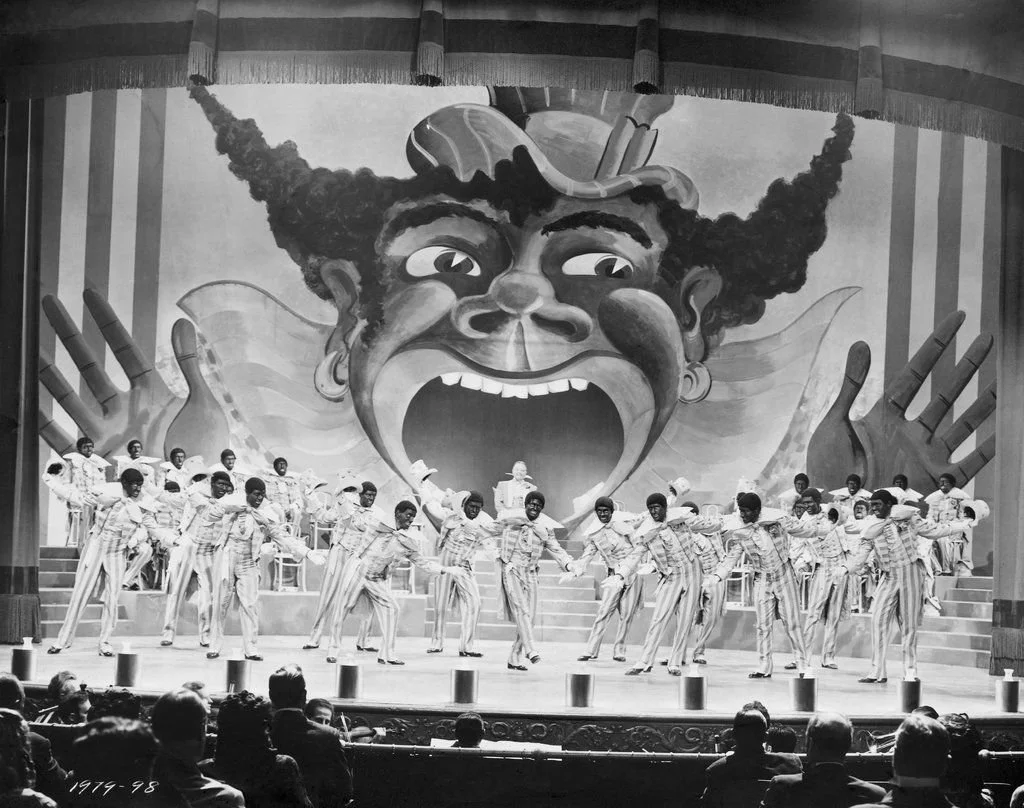
By the middle of the nineteenth century, minstrel companies had settled on a recognizable format that organized an evening of music and comedy into three sections. The first, known as the Minstrel Line, introduced the company seated in a semicircle, with the Interlocutor in the middle and the endmen, often Brudder Tambo and Brudder Bones, at either side. Songs alternated with comic exchanges between the Interlocutor and the performers, allowing the racial characters introduced earlier to interact within a repeated theatrical routine. Familiar jokes and songs traveled from one company to another, and the section sometimes ended with a Cakewalk or another ensemble dance.
The second section, called the Olio, worked more like a variety show. Performers appeared individually or in small groups while the curtain remained closed for preparations behind the stage. The Olio could include songs, dances, instrumental acts, and comic monologues. One recurring routine was the Stump Speech, which parodied the political speeches heard at public meetings and election campaigns. A blackface character attempted to speak on politics or another public issue using elaborate language but repeatedly mispronounced or misused words. Much of the joke depended on presenting a Black speaker who sought political authority as incapable of speaking intelligently. The routine became especially charged as debates over Black citizenship and voting rights entered American politics during the nineteenth century.
The evening usually ended with the Afterpiece, a short musical comedy often set on an imagined Southern plantation. These stories portrayed enslaved or formerly enslaved Black characters as content with plantation life or longing to return to it, giving audiences a fictional version of slavery that ignored its violence. Minstrel companies employed songwriters to supply music for these scenes, and publishers sold many of the resulting songs as “Ethiopian” or “Plantation” melodies. Such labels presented music written largely by white composers as representations of Black life and culture.
The commercial life of these songs extended well beyond the theater. Stephen Foster wrote several songs performed by Christy’s Minstrels, including “Old Folks at Home” and “Massa’s in de Cold Ground,” which used the plantation settings and racial dialect common to minstrelsy. Once audiences heard a song onstage, publishers could sell printed copies for people to sing and play at home. Minstrel companies therefore helped connect theatrical performance with the growing sheet-music business: the stage introduced songs to large audiences, while printed editions carried the same repertoire into parlors and other private settings.
A typical minstrel song was performed by a single member of the troupe, accompanied by a small ensemble of instruments such as the banjo, fiddle, tambourine, and bones. The banjo brought an African-derived instrument into a theatrical form controlled largely by white performers, while the fiddle came from European traditions and was already common in American dance music. The tambourine, usually associated with the character Tambo, could be shaken or struck to punctuate the beat. Bones played a similar rhythmic role. The performer held pairs of animal bones or wooden pieces in each hand and snapped them together to create quick, syncopated patterns. Some troupes added instruments such as shakers or the jaw harp, but the four-piece combination of banjo, fiddle, tambourine, and bones became closely associated with the minstrel stage.
Minstrel companies often advertised these sounds as authentic representations of Black music, even though their performances were filtered through the conventions and racial stereotypes of blackface theater. The claim of authenticity was part of the competition between troupes, with companies promising audiences a supposedly more accurate version of plantation music than their rivals. Their music drew from several sources, including African American performance and European folk traditions, but white entertainers rearranged that material for the stage and presented the result as an imagined version of Black musical life.
Many minstrel songs used a verse-chorus form that made them easy to remember after a performance. Each verse introduced new words over a repeated melody, while the chorus returned with the same words and tune. Short refrains and repeated phrases gave audiences an obvious place to join the performers. Call-and-response could create an exchange between a solo singer and the rest of the troupe, adding another layer of participation. Publishers sold these songs under labels such as “Ethiopian songs” and “plantation melodies,” encouraging buyers to treat theatrical caricatures as representations of African American music.
Sheet music carried minstrel songs from the theater into the home. Publishers usually arranged them for solo voice and piano, instruments more likely to be available in middle-class households than a minstrel ensemble. A family could therefore hear a song at the theater, purchase the printed music, and perform it later at home. The piano arrangement retained the melody and lyrics, although it could not reproduce the sound of the banjo, bones, and other percussion that audiences heard in live performances. Minstrelsy became closely tied to the sheet-music business through this cycle of performance and home consumption.
Stephen Foster’s "De Camptown Races", published in 1850, shows how these musical and commercial conventions worked together. The verses use a stylized dialect meant to imitate African American speech, while the recurring “Doo-dah! Doo-dah!” refrain gives the chorus a phrase that listeners can remember and repeat. A soloist could sing the verses while the troupe answered in the chorus, making the song well suited to the minstrel stage. Its racial caricature was therefore carried through the same musical features that made the song easy to perform, remember, and sell. As songs such as “De Camptown Races” moved from minstrel theaters into sheet music and home performance, the stereotypes written into them traveled with the music.
E.P. Christy

Few minstrel companies achieved the commercial success of Christy’s Minstrels, whose long-running performances helped turn blackface minstrelsy into a regular part of nineteenth-century American theater. Edwin Pearce Christy (1815–1862) organized the troupe during the 1840s and built its reputation through a more structured and carefully rehearsed version of the minstrel show. Under his direction, Christy’s Minstrels attracted large audiences and became closely associated with the format that other companies copied.
The troupe arranged its performers in the semicircle that became familiar on the minstrel stage. At either end sat Brother Tambo and Brother Bones, named for the tambourine and bone percussion they played. The endmen interrupted the musical numbers with jokes and comic exchanges, often behaving loudly and unpredictably. Mr. Interlocutor, usually played by Christy, sat in the middle and acted as master of ceremonies. His formal speech and controlled manner provided a comic contrast with the endmen. The opening command, “Gentlemen, be seated. We will commence with the overture,” established that relationship from the beginning: the Interlocutor tried to maintain order while Tambo and Bones repeatedly disrupted it.
Christy himself performed several roles within the company, appearing as the Interlocutor while also singing and playing the banjo. The troupe usually consisted of four to seven performers, allowing it to move between solo songs, ensemble pieces, comedy, and instrumental performances during the same program. Careful rehearsal and a consistent stage format gave the company a polished theatrical presentation that appealed to audiences accustomed to conventional theater. Christy’s Minstrels could therefore present the racist characters and blackface conventions of minstrelsy within an organized commercial production rather than the shorter acts associated with its earlier years.
The company’s success also connected the minstrel stage more closely with the growing sheet-music business. Songs performed by Christy’s Minstrels could be advertised through the troupe’s popularity and then sold for home performance. Stephen Foster worked with this market, and Christy’s Minstrels introduced several of his songs to large audiences. The relationship between touring performance and printed music allowed songs associated with blackface minstrelsy to travel well beyond the theater, bringing the music and its racial imagery into middle-class homes across the country.
Christy’s Minstrels reached a new level of commercial success in 1847 when the troupe began a residency at Mechanics’ Hall in New York City. They remained there for more than seven years and gave thousands of performances, allowing Christy to turn the minstrel show into a regular theatrical attraction rather than entertainment that audiences encountered mainly through traveling companies. He advertised the shows as affordable entertainment for respectable audiences and drew heavily from New York’s growing middle class. The long residency also gave the company time to refine a consistent program, with rehearsed musical numbers and recurring characters presented in a familiar stage format.
Christy later took his business beyond New York. In 1854, he brought a company to San Francisco, where minstrelsy had already found an audience during the rapid growth of the city following the Gold Rush. He retired from regular performance the following year but remained involved in the business as a manager. The Christy name continued to appear on minstrel companies and venues, including theaters advertised as Christy’s Opera Houses. By attaching a recognizable name to these productions, Christy treated minstrelsy as a commercial brand that could be reproduced in different cities and sold to audiences who already knew what kind of entertainment to expect.
The Civil War disrupted the theatrical business that had made Christy wealthy, and his final years were troubled by fears over his finances and the future of his enterprises. In 1862, Christy died by suicide after jumping from a window of his New York home. His career had followed minstrelsy through much of its early commercial development, from a small touring ensemble to long-running urban theater productions that reached paying audiences across the country.
Stephen Foster
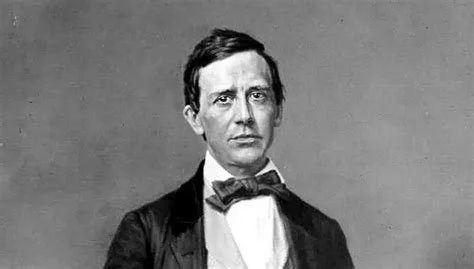
AA major development for Christy’s Minstrels came through E. P. Christy’s business relationship with Stephen Foster (1826–1864), whose songs became some of the most widely circulated American popular music of the nineteenth century. Christy negotiated an agreement that gave his troupe first-performance rights to Foster’s new material. The arrangement gave Christy a steady supply of new songs while introducing Foster’s music to large theater audiences before it entered the sheet-music market. Foster was initially reluctant to associate his name closely with blackface minstrelsy, and when “Old Folks at Home” was published in 1851, he allowed Christy to receive the original songwriting credit. Christy could market the song through the reputation of his troupe, while Foster gained access to an established audience at the cost of public credit for his work. Later editions restored Foster’s name. Their arrangement connected live performance with the growing sheet-music business: audiences could hear a new song at a Christy performance and then purchase a copy to sing or play at home.
Foster grew up in a middle-class family near Pittsburgh, Pennsylvania, and became interested in music at an early age. His sisters helped with his musical education, and he learned to play the guitar, flute, and piano. He also received formal instruction from Henry Kleber, a local music teacher and dealer who introduced him to European concert music and the popular songs being sold to American audiences. Foster encountered English sentimental songs, Italian light opera, and Irish and German musical traditions, drawing from their melodies and song forms as he developed his own writing. His music joined these European sources with subjects and styles familiar to American audiences, especially the sentimental parlor song and the minstrel song.
Foster published his first composition, "Open Thy Lattice, Love", in 1844, when he was eighteen. His family still expected him to pursue a more practical occupation, and from 1846 to 1849 he worked as a bookkeeper for his brother Dunning’s steamship company in Cincinnati, Ohio. Foster continued writing in his spare time, composing minstrel songs for local performers and sentimental ballads that he sometimes gave to young women in his social circle. Songwriting remained an activity pursued alongside his regular employment until "Oh! Susanna" became a major success in 1848. The song spread through minstrel performances and printed sheet music, and travelers heading west during the California Gold Rush adopted it as an unofficial song of the Forty-Niners. Its popularity gave Foster a national audience and encouraged him to pursue songwriting as a profession.
After returning to Pittsburgh, Foster committed himself more fully to composition. Over the following decade, he wrote songs for two important areas of the commercial music market: the minstrel stage and the domestic parlor. De Camptown Races (1850) and Old Folks at Home (1851), also known as Suwannee River, were written within the minstrel tradition and used the racial dialect and plantation imagery expected by that market. My Old Kentucky Home (1853), another song connected to plantation imagery, was later adopted as Kentucky’s state song. Foster also wrote sentimental songs such as Jeanie with the Light Brown Hair (1854), a courtship song associated with his estranged wife, Jane McDowell Foster, and Beautiful Dreamer, a ballad of romantic longing published after his death in 1864. These songs circulated through theaters and sheet music before some passed into oral tradition, where later generations often encountered them as familiar folk songs rather than as works written by a professional composer.
The enormous circulation of Foster’s music did not bring him comparable financial security. Nineteenth-century songwriters received no performance royalties, and weak copyright protection allowed unauthorized editions of successful songs to circulate without providing additional income to the composer. Foster also sold the rights to many of his songs for immediate payment, leaving him with little control over the later profits they generated. As his financial problems grew, he spent much of his later life in debt. In January 1864, Foster suffered a severe injury after falling in his New York lodging and died several days later at the age of thirty-seven. He reportedly had only 38 cents in his pocket when he died.
Foster’s career shows how professional songwriting was becoming tied to theatrical performance, publishing, and the sale of music for home use during the nineteenth century. He wrote melodies that could move easily between the stage and the parlor, allowing his work to reach audiences through several parts of the growing music business. That success was also inseparable from blackface minstrelsy. Some of Foster’s most popular songs used racial caricature and imagined plantation life, and minstrel companies carried those songs to audiences across the country. His work therefore offers a way to examine both the development of professional popular songwriting and the racial entertainment system through which much of that music was performed and sold.
Foster and Christy’s Fallout

The relationship between Stephen Foster and E. P. Christy reveals how authorship, reputation, and money could come into conflict in the early American music business. Foster wrote several songs that became closely associated with the minstrel stage, including “De Camptown Races,” “Oh! Susanna,” and “Old Folks at Home,” commonly known as “Swanee River.” Christy’s Minstrels gave Foster access to an established theatrical audience, while Christy benefited from new songs written by a composer whose music was selling in large numbers. Copyright protections offered composers limited control over their work, and publishers and performers often held considerable power over how songs were credited and marketed.
Foster’s discomfort with blackface minstrelsy complicated this arrangement. He initially hesitated to attach his name openly to songs written for a form of entertainment based on racial caricature. When “Old Folks at Home” was published in 1851, Christy received the songwriting credit even though Foster had composed the song. After it became successful, Foster regretted giving up public credit and wrote to Christy explaining that he had changed his mind about identifying himself with minstrel music:
“I feel that by my efforts, I have done a great deal to build up a taste for the Ethiopian songs among refined people. I have concluded to reinstate my name on my songs and to pursue the Ethiopian business without fear or shame, and lend all my energies to making the business live.”
The letter captures Foster’s changing attitude toward the minstrel market. Rather than distancing himself from what was then called “Ethiopian” music, he decided to claim his work publicly and continue writing for the genre. Christy did not remove his own name from existing editions of “Old Folks at Home,” however, and the dispute left Foster without public credit on those copies even as the song circulated widely. Later editions restored Foster’s authorship.
Foster eventually wrote around two hundred songs across the minstrel and parlor-song markets, along with sentimental ballads and sacred music. His work drew from musical traditions already circulating in nineteenth-century America and was written for audiences who encountered songs in theaters, through sheet music, and at home. His ability to write memorable melodies for both professional performers and amateur musicians helped him build a career at a time when songwriting was only beginning to become a profession of its own.
Foster’s career also cannot be separated from the racial politics of the business that helped sell his music. Minstrel companies gave several of his songs large audiences, while the racial dialect and plantation imagery used in those songs participated in the stereotypes on which blackface entertainment depended. His dispute with Christy shows another side of the same commercial system: even a successful songwriter could lose control over the credit and profits attached to his work. Foster’s career brings these issues together in one place, showing how songwriting, copyright, theatrical entertainment, and racial caricature operated within the nineteenth-century music business.
Chapter 2: Conclusion
During the nineteenth century, the United States developed the foundations of a commercial music business while musicians drew from traditions carried by the people who lived throughout the country. Sacred music had long been part of colonial and early American life, though its practices differed widely among communities. Puritans used congregational psalm singing and lining out, Moravians maintained choral and instrumental traditions, and African American worshippers developed spirituals and other forms of sacred song under slavery. Through these traditions, music accompanied worship while giving communities ways to preserve songs, stories, and religious practices across generations.
Music also circulated outside the church. Broadside ballads, inexpensive single-sheet songs, carried stories, political arguments, and accounts of current events into homes, taverns, and public gatherings. Because new words could be fitted to familiar melodies, a song could spread without requiring listeners to read musical notation or learn a new tune. Printing allowed these songs to travel farther, connecting oral performance with a growing market for music that could be bought and sold.
By the middle of the century, blackface minstrelsy had become one of the country’s most popular forms of live entertainment. Minstrel shows combined songs and dances with comedy and theatrical routines, drawing large white audiences in cities and on touring circuits. The business depended on racist caricatures of African Americans while borrowing heavily from Black music and dance. White performers and producers turned those borrowed practices into commercial entertainment, often claiming to present authentic Black culture while offering audiences a distorted version created for the minstrel stage. The format later carried some of its performance practices into vaudeville and musical theater.
Minstrelsy also became closely tied to the growing sheet-music business. Performers and songwriters such as Dan Emmett and Stephen Foster wrote music that could move from the theater into the home, where families played published arrangements on the piano and sang the songs themselves. “Dixie,” “Old Dan Tucker,” and “Old Folks at Home” circulated widely through performance and print. Other songs associated with minstrelsy, including “Turkey in the Straw,” “Jimmy Crack Corn,” and “Arkansas Traveler,” continued to be performed long after the minstrel stage declined. Some became so familiar that later audiences encountered them as folk or children’s songs without knowing the racialized theatrical settings through which they had circulated.
The commercial reach of these songs shows how deeply minstrelsy entered nineteenth-century musical life. Music first heard in blackface theaters could later appear in parlors, schools, and public events, carrying parts of the minstrel repertoire into settings far removed from the original performances. The same music business that gave composers and performers access to larger audiences also raised questions about authorship and who profited when music crossed racial and social boundaries.
By the end of the century, American popular music had become a commercial business connecting theaters, publishers, performers, and audiences across the country. Its development grew from cultural exchange under conditions that were often deeply unequal. Religious communities preserved and adapted older traditions, printed songs moved between public and private life, and the minstrel business turned racial caricature and borrowed Black performance practices into mass entertainment. The conflicts over race, ownership, and commercial profit found in nineteenth-century music remained part of the music business that entered the twentieth century.
Chapter 2: Further Reading
Austin, William W. "Susanna," "Jeanie," and "The Old Folks at Home": The Songs of Stephen C. Foster from His Time to Ours. New York: Macmillan, 1975.
Skeaping, Lucie. Broadside Ballads: Songs from the Streets, Taverns, Theatres and Countryside of 17th Century England. London: Faber Music Ltd., 2005.
Chase, Gilbert. America's Music: From the Pilgrims to the Present. New York: McGraw-Hill, 1955.
Clague, Mark. O Say Can You Hear? A Cultural Biography of "The Star-Spangled Banner". New York: W. W. Norton, 2022.
Cockrell, Dale. Demons of Disorder: Early Blackface Minstrels and Their World. New York: Cambridge University Press, 1997.
Cobb, Buell E. Jr. The Sacred Harp: A Tradition and Its Music. Athens: University of Georgia Press, 2001.
Conway, CeCe, and Scott Odell. CD liner notes for Black Banjo Songsters of North Carolina and Virginia. Smithsonian Folkways LC 96z8, 1998.
Emerson, Ken. Doo-dah! Stephen Foster and the Rise of American Popular Culture. New York: Simon & Schuster, 1997.
Levine, Lawrence. Black Culture and Black Consciousness: Afro-American Folk Thought from Slavery to Freedom. New York: Oxford University Press, 2007.
Lhamon, W. T., Jr. Raising Cain: Blackface Performance from Jim Crow to Hip Hop. Cambridge, MA: Harvard University Press, 1998.
Lott, Eric. Love and Theft: Blackface Minstrelsy and the American Working Class. New York: Oxford University Press, 1993.
Lowens, Irving, and Allen P. Britton. “The Easy Instructor (1798–1831): A History and Bibliography of the First Shape Note Tune Book.” Journal of Research in Music Education 1, no. 1 (Spring 1953): 31–55. https://doi.org/10.2307/3344565.
MacCulloch, Diarmaid, introduction. The Bay Psalm Book. Facsimile ed. Imprinted 1640. Oxford: Bodleian Library, 2014.
Morgan, Thomas L., and William Barlow. From Cakewalks to Concert Halls: An Illustrated History of African American Popular Music from 1895 to 1930. Washington, DC: Elliott and Clark Publishing, 1992.
Simpson, Claude M. The British Broadside Ballad and Its Music. New Brunswick, NJ: Rutgers University Press, 1966.
Toll, Robert C. Blacking Up: The Minstrel Show in Nineteenth-Century America. New York: Oxford University Press, 1974.
U.S. Bureau of the Census. Historical Statistics of the United States: Colonial Times to 1970. Washington, DC: U.S. Government Printing Office, 1976.