Chapter 36: Alternative Rock in the 90s pt.1
Table of Contents
“Radio Free Europe”
Album/Year Released
1983 (1981 single; 1983 on Murmur)
Artist/Composer
R.E.M.
Michael Stipe, Peter Buck, Mike Mills, Bill Berry
Genre/Style
Indie rock; jangle pop
Song Form
Verse–chorus with pre-chorus and bridge
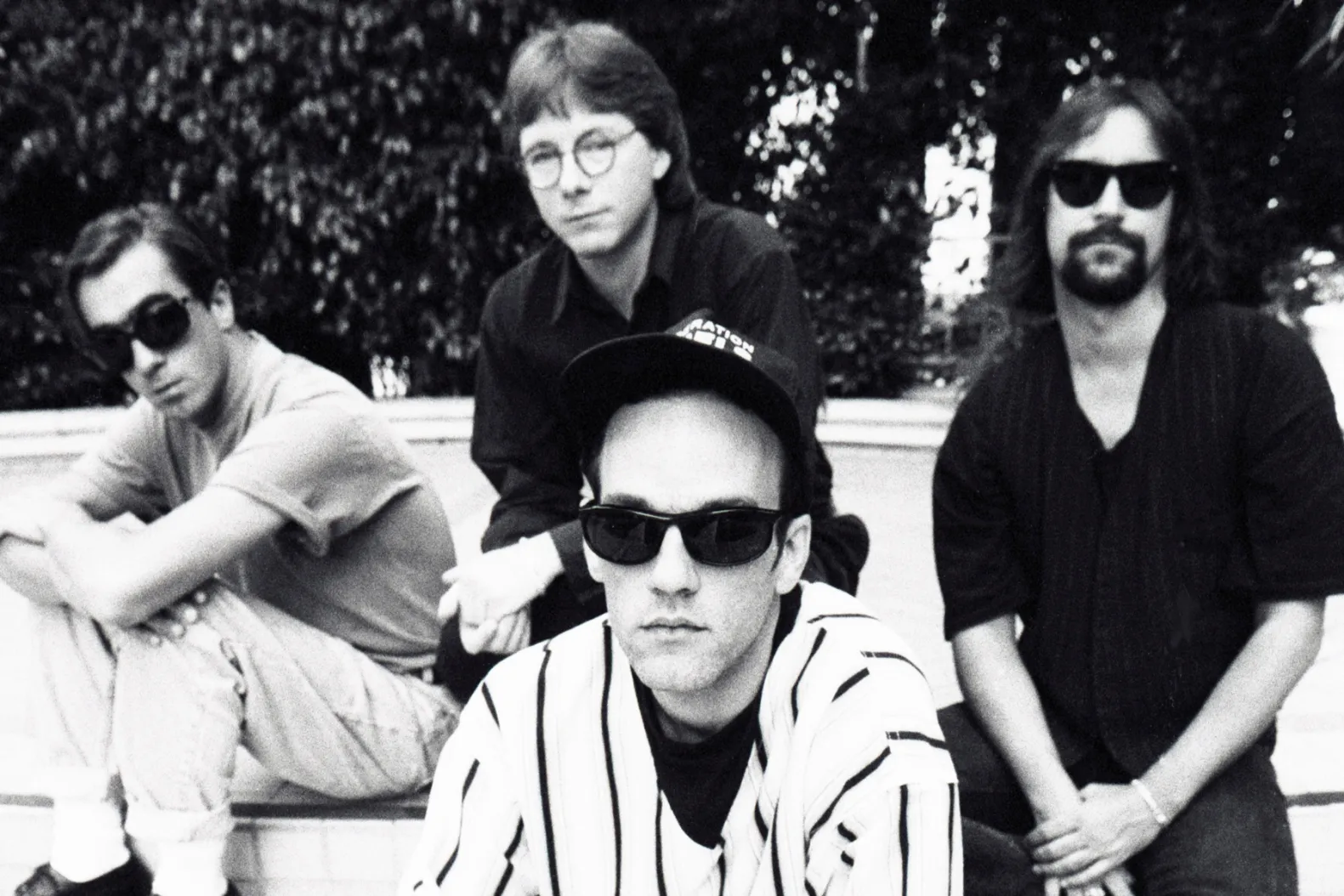
“Radio Free Europe,” first released as a single in 1981 and subsequently re-recorded for R.E.M.’s 1983 debut album Murmur, marked the arrival of one of the most influential American alternative bands of the decade. Composed by Michael Stipe, Peter Buck, Mike Mills, and Bill Berry, the song is set in a steady duple (4/4) meter and features a verse–chorus structure with prechorus sections and a distinct bridge. While the song adheres to pop conventions structurally, its sonic characteristics—bright, chiming guitars, melodic basslines, and elliptical lyrics—played an important role in the development of the jangle pop subgenre within indie rock.
The initial recording was released by the independent label Hib-Tone Records in 1981 and offered a rawer, more distinctly post-punk interpretation. The 1983 re-recording for Murmur, issued by I.R.S. Records, featured cleaner production while retaining the original structural framework. Both versions open with brief instrumental introductions before the full band enters. The Hib-Tone version opens with a short synthesizer gesture, whereas the later version is notable for a mechanical hum that was inadvertently recorded. Producer Mitch Easter processed this sound using a noise gate and equalization, then edited the resulting seven-bar segment into the introduction.
Peter Buck's jangling guitar timbre is one of the recording's most recognizable musical features, produced through bright, clean electric tones and arpeggiated open chords. In the verses, Buck palm-mutes the lower strings and punctuates four-bar cycles with upward strums. During the prechorus, he transitions to ringing arpeggios that culminate in full downstroke chords. Mike Mills’ bass lines are both melodic and active, often moving in quick eighth-note pulses reminiscent of punk and new wave. In the prechorus, Mills introduces syncopated countermelodies that operate independently of the vocal line. Drummer Bill Berry establishes a steady four-on-the-floor introduction that transitions into a consistent backbeat, driving the song forward with subtle syncopation rather than complex fills. Following two verse–prechorus cycles, the chorus features the repeated refrain “Calling out in transit / Radio Free Europe.” The bridge is constructed around an ascending bass figure, doubled by piano, before the band returns to a final verse–prechorus–chorus sequence. The song concludes with an arpeggiated guitar figure that recalls the prechorus motif and resolves on an A major chord.
Michael Stipe’s vocal performance is characterized by a narrow melodic range and irregular phrasing, resulting in an off-balance, conversational quality. Stipe’s singing became representative of what can be described as R.E.M.’s “unintelligible” lyric style. Stipe has stated that the lyrics were not finalized during the song’s early development and were sometimes improvised during live performances, later referring to the lyrics of “Radio Free Europe” as “complete babbling.” Although the band never officially published the lyrics, they appeared in magazines such as Song Hits (1983) and New Sounds (January 1984). Despite the song’s title referencing the U.S. government broadcaster Radio Free Europe/Radio Liberty, bassist Mike Mills clarified that the title was selected for its phonetic qualities rather than any thematic association with the organization.
Upon its release, the song received substantial college-radio airplay at a time when mainstream album-oriented rock stations offered little exposure to non-mainstream bands. Influenced by artists such as The Velvet Underground, Patti Smith, and Big Star, R.E.M. contributed to the emergence of an alternative music movement that gained momentum later in the decade. The song’s chiming guitar texture, in particular, served as a model for the 1980s jangle pop movement.
“Smells Like Teen Spirit”
Album/Year Released
1991 (album: Nevermind)
Artist/Composer
Nirvana
Kurt Cobain, Krist Novoselic, Dave Grohl
Genre/Style
Grunge; alternative rock
Song Form
Verse–chorus with post chorus
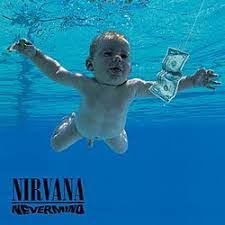
“Smells Like Teen Spirit,” the opening track and lead single from Nevermind (1991), marked Nirvana’s transition from a regional underground act to an internationally recognized band. Released by DGC Records, the song became the group’s most commercially successful single, selling over 13 million copies worldwide and propelling Nevermind to the top of album charts in several countries, including Belgium, France, New Zealand, and Spain. Nirvana's commercial breakthrough is widely considered the point at which grunge, and alternative rock more broadly, entered mainstream popular culture in the early 1990s.
The track is structured around heavily distorted electric guitars, bass, and drums, exemplifying the raw, abrasive qualities of grunge. It is set in a steady duple (4/4) meter and follows a conventional rock format, including an introduction, verse, pre-chorus, chorus, post-chorus, repeated cycles, a guitar solo, and an outro, all organized into four-, eight-, and twelve-bar units. Verses and pre-choruses each span eight measures, while choruses extend to twelve. A brief four-bar post-chorus and a melodic guitar solo, follow the second chorus. The verse–pre-chorus–chorus–post-chorus cycle is repeated three times, resulting in a sectional and modular construction in which short musical “cells” are reiterated and recombined.
A central characteristic of the song is its “loud–soft–loud” dynamic contrast, influenced by the Pixies. The verses are restrained, featuring cleaner guitar tones and a bass-driven melodic focus, while the choruses employ full distortion and double-tracked guitars to increase volume and intensity. The alternation between subdued and explosive textures creates tension and release within each cycle. The main guitar riff, played by Kurt Cobain, comprises four power chords in a syncopated sixteenth-note strumming pattern. These dyads or triads, often double-tracked for additional weight, sometimes blur into suspended voicings as Cobain strikes the lower four strings to thicken the sound. In the pre-chorus, additional “washy” distorted layers build anticipation, leading into the chorus with maximum impact. The guitar solo closely follows the vocal melody, using bends and reverse bends to replicate the slightly slurred contour of Cobain’s singing, and rarely deviates from the established melodic material.
Cobain’s vocal delivery alternates between subdued, melodic phrasing in the verses and shouted, nearly screamed lines in the choruses, intensifying the song’s emotional volatility. His slurred, guttural articulation, combined with deliberately opaque lyrics, made the words difficult to discern. The absence of printed lyrics in early pressings of Nevermind made Cobain's words even more difficult for listeners to decipher, causing some radio programmers to hesitate before adding the song to playlists. MTV addressed this by broadcasting a version of the music video with subtitles. Critics frequently compared the song’s near-indecipherability to “Louie Louie,” arguing that its enigmatic quality enhanced its appeal. The lyrics were subsequently published in the liner notes of the “Lithium” single in 1992.
Interpretations of the text vary widely. The song has often been understood as an anthem of teenage disaffection and rebellion, a perspective reinforced by its music video, which depicts a high school pep rally descending into chaos. Cobain provided varying explanations in interviews, sometimes describing the song as an expression of generational sentiment and at other times diminishing any specific meaning. Biographer Charles R. Cross has proposed that the lyrics may reference Cobain’s relationship with Tobi Vail, citing earlier drafts with more explicit content. Other commentators, such as Michael Azerrad, interpret the text as an exploration of contradiction and confusion, referencing lines like “It’s fun to lose and to pretend” and the chorus couplet “A mulatto, an albino / A mosquito, my libido” as juxtapositions that convey sarcasm and restless desire. Cobain described the song as a playful response to the idea of revolution, simultaneously mocking and embracing the concept. Dave Grohl later noted that Cobain often selected lyrics as much for their sound and rhythm as for their semantic meaning.
“Smells Like Teen Spirit” became one of the most widely recognized examples of the early-1990s grunge aesthetic, combining distorted guitars, dramatic dynamic contrasts, anti-establishment imagery, and lyrics associated with generational frustration. By combining a simple four-chord progression with dramatic dynamic fluctuations and emotionally charged vocals, the song demonstrated that alternative rock could attain widespread popularity without sacrificing its rawness. Its success positioned Nirvana among the leading voices of the decade and accelerated the mainstream acceptance of previously underground sounds and sensibilities.