Chapter 37: Alternative Rock in the 90s pt.2
Chapter 37: Introduction

In the late 1980s and early 1990s, many rock musicians revisited and reinterpreted earlier musical traditions while simultaneously stretching the boundaries of the rock idiom through experiments in sound, production, and subject matter. This period saw significant hybridization as artists combined the aggression of punk, the introspection of folk, and the ambiance of electronic music to create a sound simultaneously familiar and innovative. Industrial rock bands such as Nine Inch Nails and Marilyn Manson drew from the darkness and distortion of heavy metal, fusing it with the minimalist song structures and noise textures reminiscent of The Velvet Underground. Using layers of synthesizers, distorted guitars, and programmed percussion, they crafted an aesthetic of alienation that resonated with listeners navigating the digital and emotional dislocation of the late twentieth century.
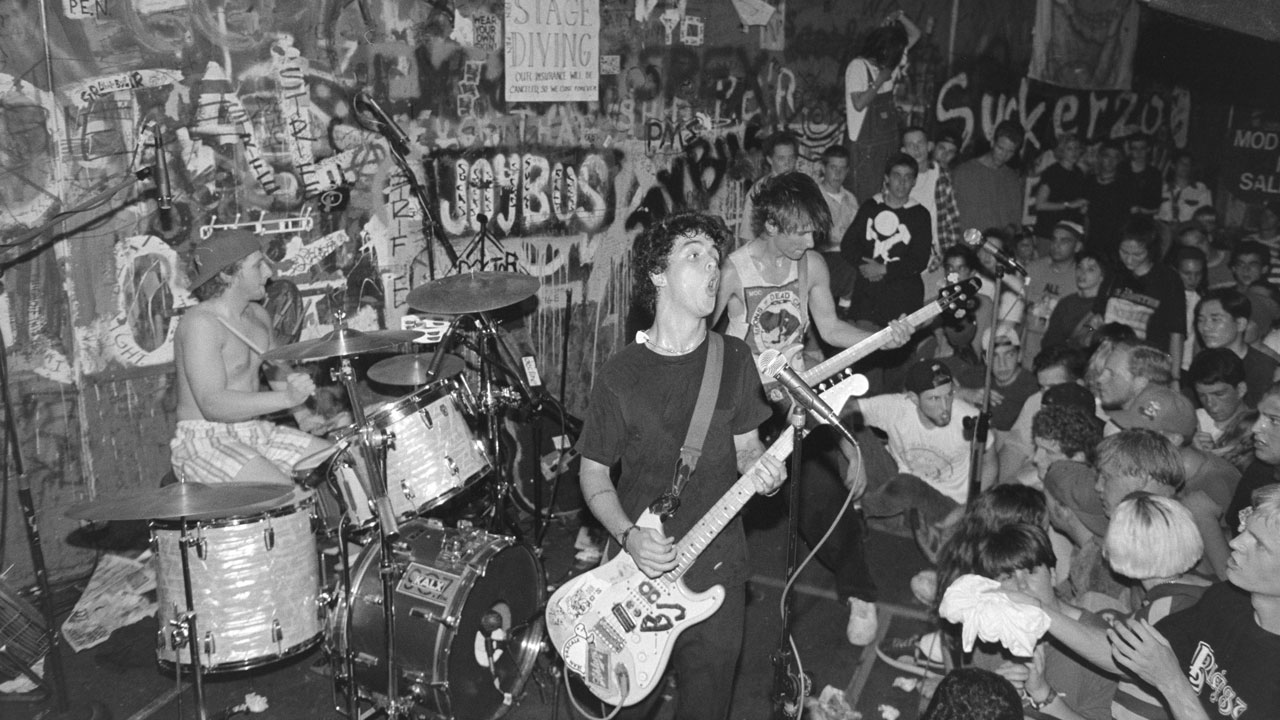
Meanwhile, punk underwent a commercial revival through bands like Green Day, whose 1994 album Dookie brought high-energy guitar riffs, anthemic choruses, and ironic suburban humor to mainstream audiences. Their success represented one of punk’s most visible reemergences since its 1970s origins, proving that youthful rebellion could still thrive—albeit even within the structures of major-label production.
Across the 1990s and into the 2000s, rock musicians continued to mix genres in more direct ways. While the hybridization of music was not new—Bob Dylan had electrified folk in the 1960s, Gram Parsons integrated country into rock in the late 1960s and early 1970s, and Herbie Hancock fused rock with hip-hop turntable techniques on “Rockit” (1983)—the alternative rock scene of the 1990s embraced even more radical combinations. Artists such as Beck and Radiohead drew freely from an expansive musical palette, incorporating elements of hip-hop, experimental music, blues, folk, funk, classical music, and electronic traditions.
The following sections examine several examples of cross-genre experimentation, focusing on artists whose eclectic styles blurred the boundaries between rock and other genres. By drawing on influences as varied as electronic music, folk, funk, blues, hip-hop, and even classical composition, these musicians demonstrated how the postmodern soundscape of the 1990s dissolved conventional genre distinctions, creating a more fluid and adventurous musical landscape.
Alternative in the Mainstream
By the mid-1990s, the experimental sound once known as “alternative” had become the new mainstream. The success of grunge acts like Nirvana and Pearl Jam opened the door for a wave of artists who combined the confessional intimacy of the singer-songwriter tradition with the layered textures of alternative rock. Bands such as Counting Crows, Hootie & the Blowfish, Third Eye Blind, and solo artists like Alanis Morissette, Elliott Smith, and Jeff Buckley created music that was both emotionally direct and musically accessible, connecting introspective indie rock with radio-oriented pop.
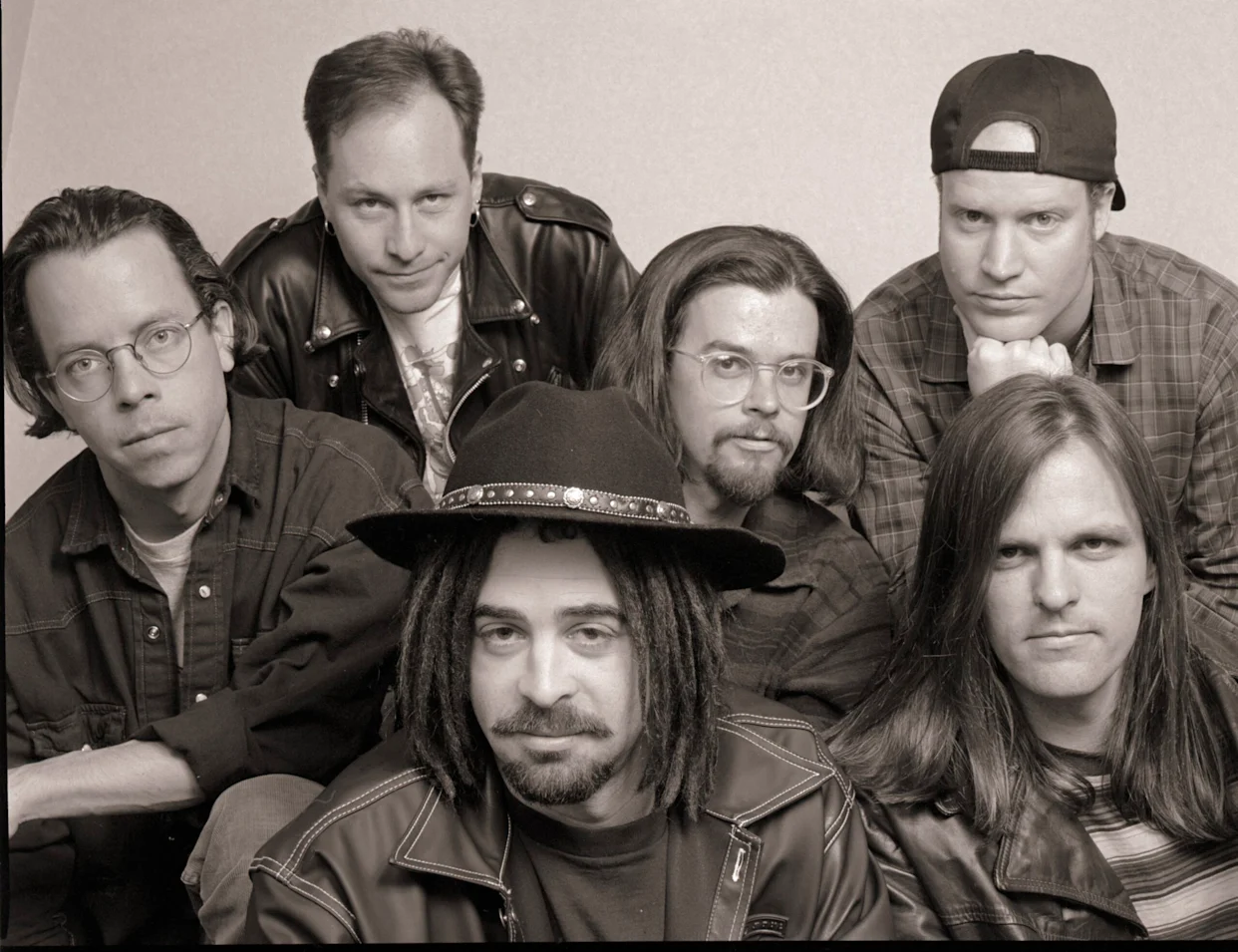
Counting Crows became one of the commercially prominent alternative-rock bands of the early 1990s. Formed in 1991, the band grew out of the intellectual and artistic culture surrounding UC Berkeley. Counting Crows channeled this atmosphere through a contemplative yet melodic style of mainstream alternative rock. Their debut album, August and Everything After (1993), presented themes of longing and self-examination that stood apart from the raw angst of grunge. The hit single “Mr. Jones " combined jangling guitars with organ and Duritz’s theatrical vocal delivery to create a sound that felt both roots-oriented and contemporary. Drawing inspiration from 1970s soft rock acts such as Van Morrison and The Band, Counting Crows returned to narrative songwriting in a rock scene often dominated by irony and distortion.
As the band's success grew, they became increasingly intertwined with celebrity culture. Adam Duritz's high-profile relationships with actresses like Jennifer Aniston and Courteney Cox made him a frequent figure in tabloids, in contrast to the sensitive, introspective persona articulated in his lyrics. The tension between sincerity and fame also appeared across 1990s alternative rock, in which authenticity was both a cherished value and a marketing strategy.
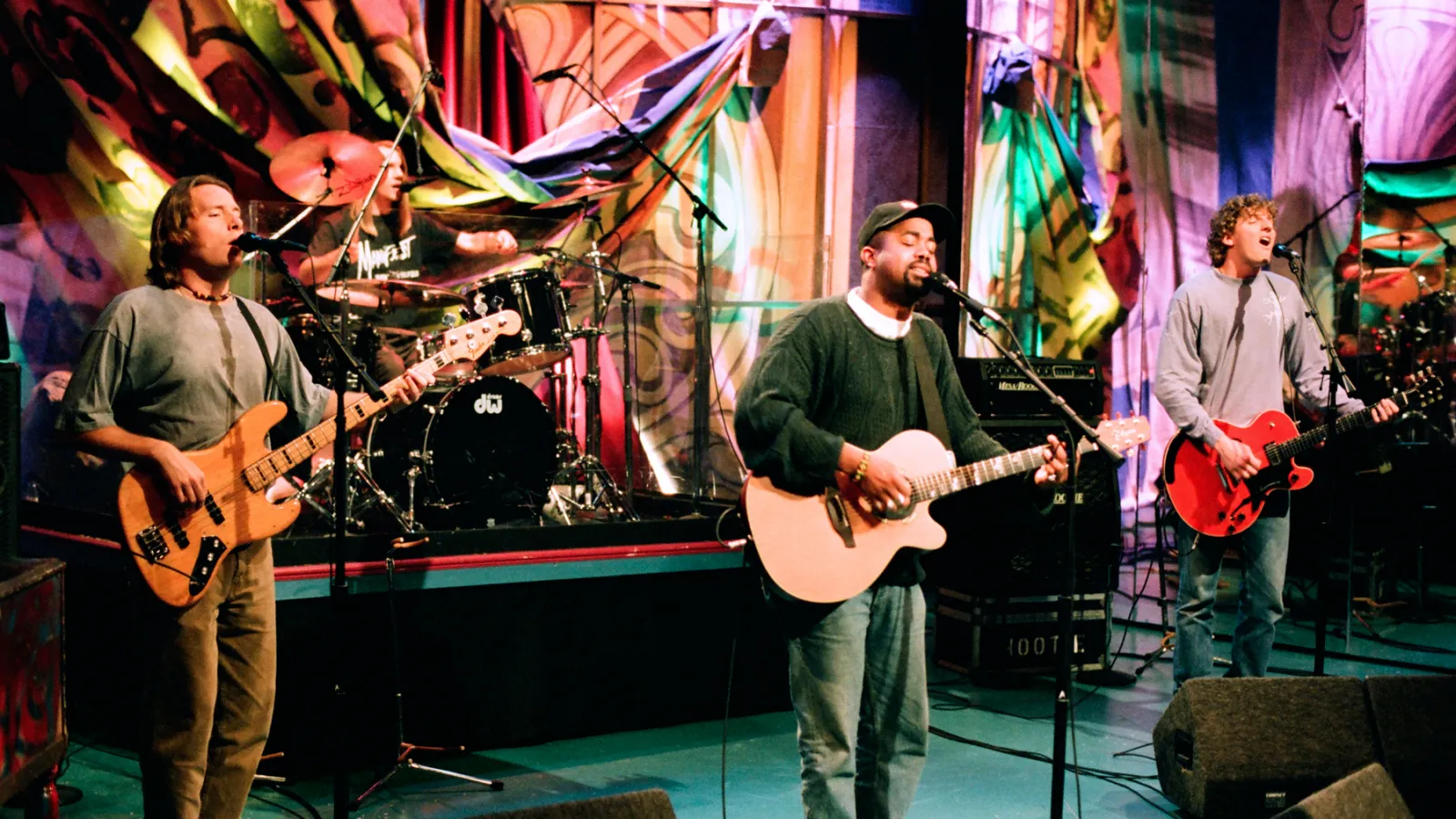
From the college circuit in South Carolina, Hootie & the Blowfish played a style built from folk rock and soul-influenced pop. Fronted by Darius Rucker—one of the few Black musicians to achieve mainstream success in the predominantly white world of 1990s alternative rock—the band presented a more inclusive version of American rock. Their 1994 album Cracked Rear View became one of the best-selling records of the decade, featuring hit singles such as “Hold My Hand,”“Let Her Cry,” and “Only Wanna Be with You.” While some listeners dismissed the group as overly safe or conventional, their massive popularity suggested a widespread longing for sincerity and melodic simplicity after years of grunge's intensity and cynicism. Following the band’s initial success, Rucker transitioned into a solo career in country music, where he achieved further acclaim and became one of the genre’s most visible Black artists. His crossover success showed his range as a vocalist and his capability to connect with audiences across musical and cultural boundaries.
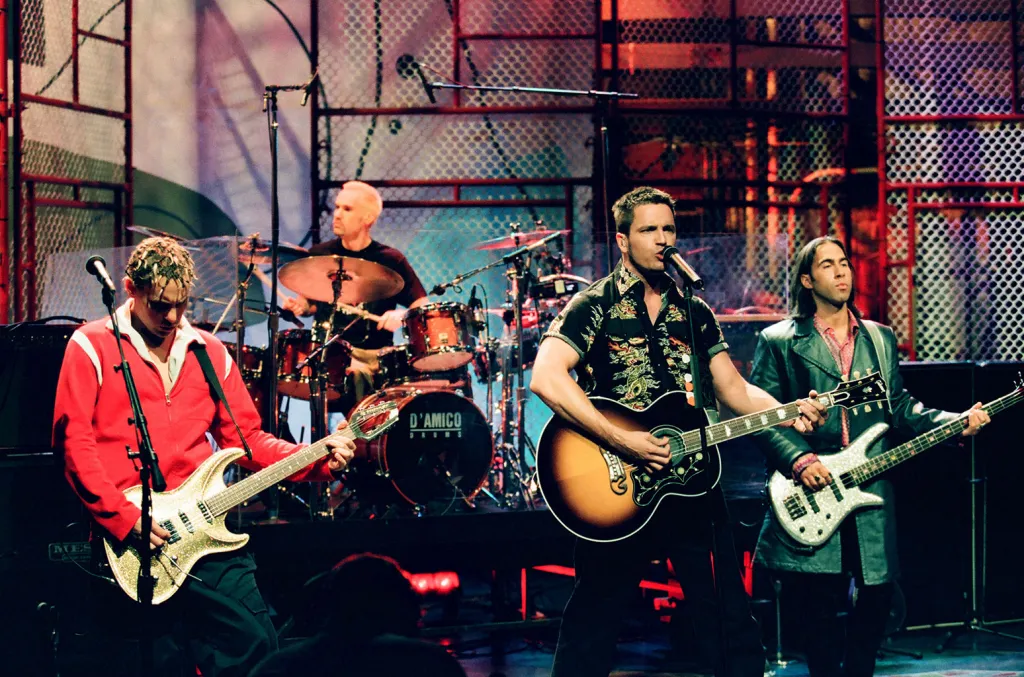
Third Eye Blind, based in San Francisco, brought polished production with emotionally direct songwriting to late-1990s alternative rock. Their 1997 self-titled debut album fused shimmering guitar textures and anthemic pop hooks with introspective lyrics that examined themes of addiction, youth, and emotional uncertainty. Songs such as “Semi-Charmed Life” epitomized the contradictions of the era: its upbeat, radio-friendly melodies masked dark subject matter about drug use and self-destruction. Other tracks, such as “Jumper” and “How’s It Going to Be,” deepened the group’s emotional complexity, combining lush production with themes of empathy, alienation, and loss. “Jumper,” in particular, written about a friend who died by suicide, offers a message of compassion and understanding, urging listeners to “step back from that ledge” and reconsider despair. Third Eye Blind’s music thus stood at the juncture of commercial polish and alternative introspection, linking grunge’s emotional honesty and the pop sensibility that would dominate the turn of the millennium.
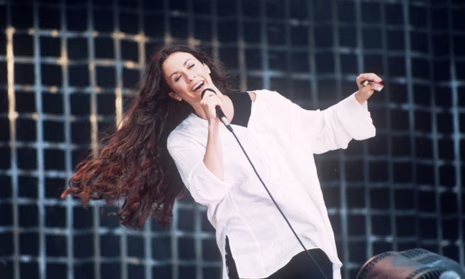
If Third Eye Blind offered a male-centered expression of 1990s ambivalence, Alanis Morissette’s Jagged Little Pill (1995) gave voice to its feminine counterpart. Produced by Glen Ballard, the album propelled Morissette from a Canadian teen pop singer into one of the most influential songwriters of her generation. She had studied piano and dance as a child and began writing songs at age nine. In 1986, she appeared on the Canadian television show You Can’t Do That on Television. As a teenager, Morissette collaborated with producer Leslie Howe, who helped her write and record her dance-pop albums Alanis (1991) and Now Is the Time (1992) for MCA Records Canada. She later relocated to Los Angeles in 1993, where she reinvented her sound by blending the raw emotion of confessional songwriting with the intensity of alternative rock.
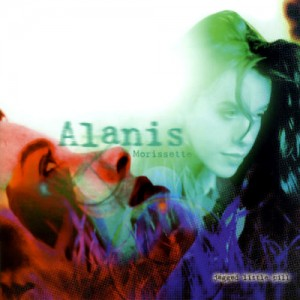
The first single from Jagged Little Pill, “You Oughta Know,” featuring Flea on bass and Dave Navarro on guitar from the Red Hot Chili Peppers, marked Alanis Morissette’s emergence as a bold and emotionally raw artist. The song’s scathing and explicit lyrics, along with Morissette’s explosive vocal delivery, quickly captured attention. With heavy rotation on MTV and on Los Angeles’s KROQ radio station, the album’s sales skyrocketed. When the 20-year-old Morissette sang, “Are you thinking of me when you fuck her,” the lyrics shocked audiences with their frankness and emotional intensity. Morissette's emotional directness inspired a generation of women songwriters to express their emotional truths without holding back. As Taylor Swift later said, “[Morissette] inspired a generation of confessional female singer-songwriters who suddenly felt empowered to express their raw feelings. They realized they could sing about their real lives, include personal details, and even express anger if they wanted to. I think it's fair to say that many female singer-songwriters of my generation, myself included, wouldn’t write the way we do without her and her music.”
The album’s subsequent singles—“All I Really Want,” “Hand in My Pocket,” “You Learn,” and “Head Over Feet”—demonstrated Morissette's range in tone and subject. Yet it was “Ironic” that became her biggest hit, earning multiple Grammy nominations and cementing her place in the 1990s rock canon. Jagged Little Pill spent over a year in the Billboard Top 20, won several Grammy Awards, and remains the best-selling debut album by a female artist in the United States, as well as the highest-selling debut album worldwide. Her combination of rock energy and confessional storytelling shifted expectations for women performing in a genre long dominated by male artists. The success of Jagged Little Pill opened the door for a wave of female singer-songwriters—among them Fiona Apple, Sheryl Crow, and later Avril Lavigne and Olivia Rodrigo—who continued to explore themes concerning identity, anger, and emotional self-discovery in their own work.
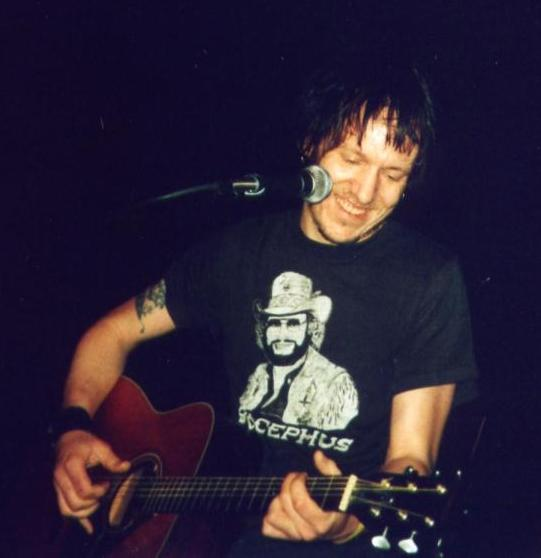
While Morissette’s music channeled emotional release through volume and intensity, Elliott Smith worked within a quieter, more introspective side of 1990s alternative rock. Emerging from Portland’s indie scene, Smith became known for his whispery, thin vocal delivery and intricate fingerpicked guitar lines. He often used multi-tracking to build delicate layers of harmony and texture, recording to tape to preserve a sense of intimacy and imperfection. His albums Either/Or (1997) and XO (1998) evoke an atmosphere of melancholy and emotional candor, considering topics of isolation, addiction, and fleeting moments of beauty in songs such as “Ballad of Big Nothing,” “Between the Bars,” and“Say Yes.” Drawing inspiration from Bob Dylan and the confessional folk tradition, as well as the alternate tunings popularized by Joni Mitchell, Smith translated the DIY ethos of indie rock into a personal, interior world—one that contrasted strongly with the loudness and aggression dominating much of alternative radio. Smith’s life was also marked by struggles with depression and addiction. In 2003, he died at the age of 34 in Los Angeles from two stab wounds to the chest, widely believed to be self-inflicted, though some questions remain about the circumstances. His early death added to his cult status, and posthumous releases have continued to influence a new generation of introspective songwriters.
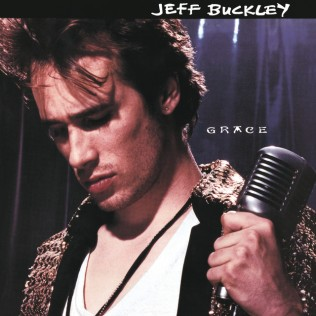
Jeff Buckley emerged in the 1990s as a singular vocalist and guitarist whose music defied easy categorization within alternative rock. Drawing on folk, jazz, and classical music, and on the expressive power of singers like Nina Simone and Van Morrison, Buckley’s art centered on his agile tenor voice, which could shift from a near-whisper to a soaring falsetto within a phrase. His use of melisma, dynamic variations, and a wide range created a sense of instability and vulnerability, distinguishing him from his contemporaries.
Buckley’s artistic identity crystallized during his residency at Sin-é, an East Village café where he performed solo sets of electric guitar and voice, blending original songs with inventive reinterpretations of artists like Piaf, Simone, and Van Morrison. His extended phrasing and dramatic vocal shifts attracted critical attention, leading to a Columbia Records contract and the 1993 EP Live at Sin-é.
His 1994 album Grace weaves together alternative rock, folk, jazz harmony, and diverse classical and non-Western influences, refusing to settle into a single style. The album features originals like “Mojo Pin,”“Grace,”“Last Goodbye,” and “Dream Brother,” as well as interpretations such as “Corpus Christi Carol” (from Benjamin Britten) and a now-iconic, intimate version of Leonard Cohen’s “Hallelujah.”
Rather than relying on standard verse-chorus forms, Buckley structures songs through gradual development and contrast. Tracks like “Mojo Pin” and “Dream Brother” unfurl slowly, layering arpeggiated guitar, modal harmony, shifting rhythms, and psychedelic or South Asian textures. “Grace” stands out for its distorted guitar and rhythmic interplay, while “Hallelujah” strips instrumentation down to voice and guitar, using restraint to heighten emotion. “Corpus Christi Carol” brings a medieval hymn into the mix, broadening the album’s stylistic reach.
Buckley's voice—with its intervallic leaps, melismatic lines, and tonal control—drives each song's structure, guiding dynamic shifts and giving the album its emotional arc. Artists such as Radiohead and Coldplay have drawn on Buckley’s balance of vulnerability and sonic expansiveness, as evidenced by Radiohead's Thom Yorke imitating his phrasing and falsetto in his own delivery. His guitar work is equally distinctive; favoring clean telecaster tones, open tunings, and arpeggios, he interacted closely with his vocals, using effects like delay and reverb to create spatial depth that contrasted with the heavy distortion of mid-’90s rock radio.
Buckley’s promising career was cut short when he died in 1997 at the age of 30, drowning in the Wolf River in Memphis, Tennessee, while working on his second album. His unexpected death contributed to his lasting mystique, and posthumous releases have further cemented his reputation as a singular voice in modern music.
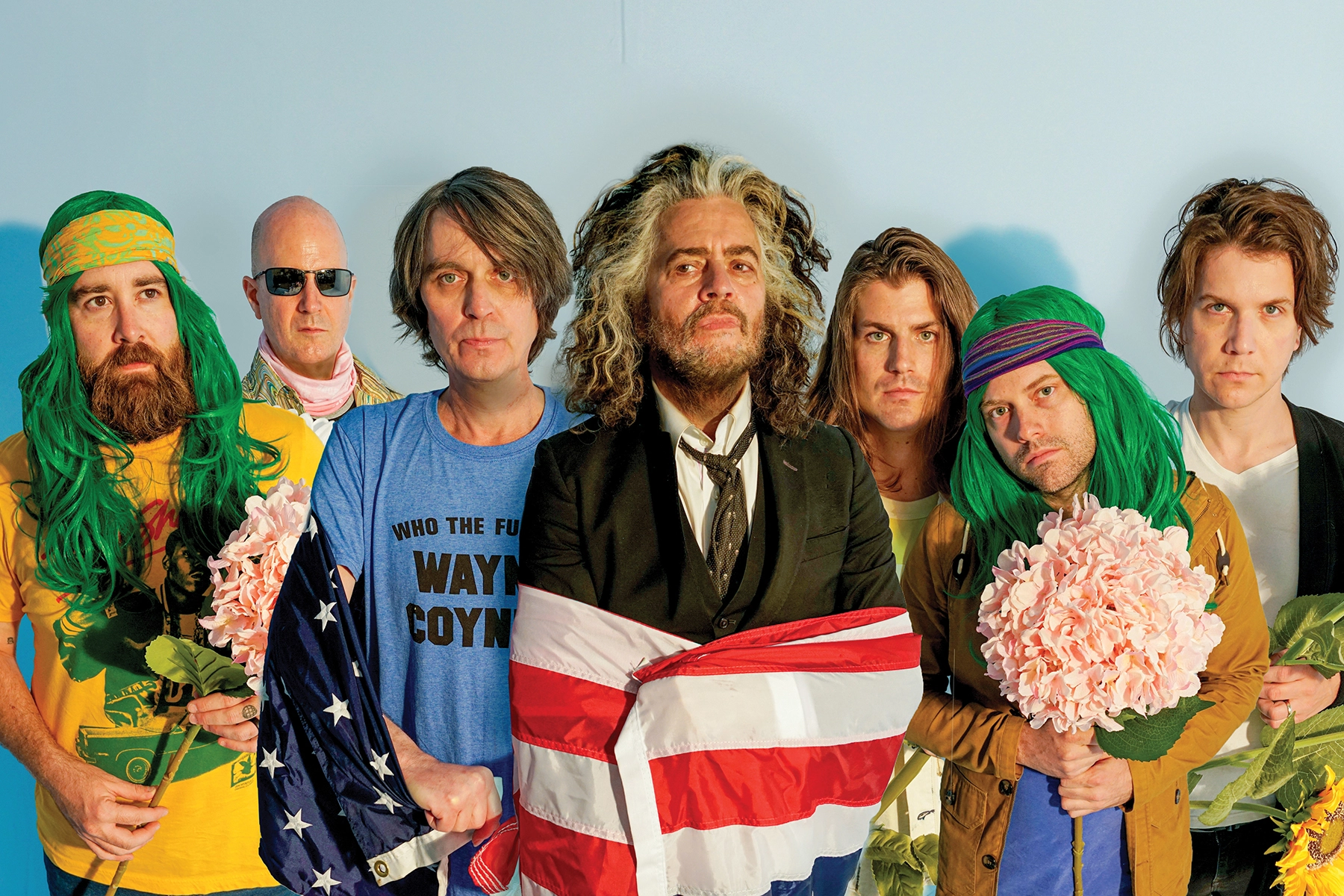
At the experimental end of the music spectrum, The Flaming Lips pushed the boundaries of psychedelic rock and pop. The band is known for its surreal lyrics, unconventional instrumentation, and theatrical live performances. They combined distorted guitars with layered harmonies and ambient textures, producing a dense and shifting sonic field. Their song “Race for the Prize” from The Soft Bulletin (1999) features heavily distorted drums, Mellotron textures, and orchestral arrangements that place themes of struggle and mortality within a dramatic musical setting. The album as a whole integrates philosophical and emotional themes with layered, symphonic production, and broadened the range of sounds used in late-1990s alternative rock.
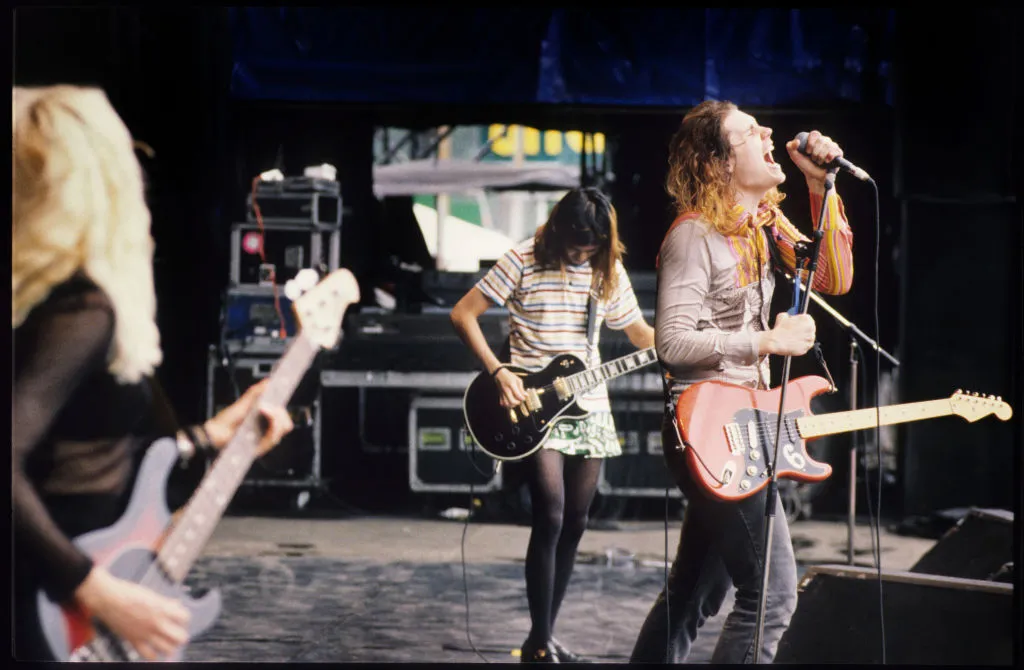
On the other hand, The Smashing Pumpkins pursued a different yet equally ambitious form of sonic experimentation. The band’s direction centered around frontman Billy Corgan, who served as the lead guitarist, vocalist, keyboardist, bassist, and primary songwriter, and has remained the sole constant member since its inception. Their early sound was characterized by the extensive layering of guitar tracks during recording sessions. This method, referred to by co-producer Mark “Flood” Ellis—known for his work with U2 and Nine Inch Nails—as the “Pumpkin guitar overdub army,” became a central part of their style. Although their debut album Gish (1991) featured some overdubbing, Corgan pushed the “Pumpkin guitar overdub army” method further on the album Siamese Dream (1993); Flood has stated that the song “Soma” alone contains up to forty guitar parts. The extensive layering of guitar overdubs was a direct result of Corgan’s fascination with 1970s popular artists such as David Bowie, Cheap Trick, Queen, Boston, and Electric Light Orchestra, along with his interest in British shoegaze—a late-1980s and early-1990s alternative rock style that relied on dense, swirling layers of modulated and distorted guitar noise to achieve textural richness.
By the close of the 1990s, alternative rock had fragmented into countless directions—from the introspective minimalism of Elliott Smith to the symphonic psychedelia of The Flaming Lips, and the monumental layering of The Smashing Pumpkins. Yet all shared a focus on personal expression and resisted standardized production styles while working between independent scenes and commercial markets. In this diversity lies the legacy of the 1990s: a redefinition of what it meant for “alternative” music to exist within and in opposition to the mainstream.
Weezer
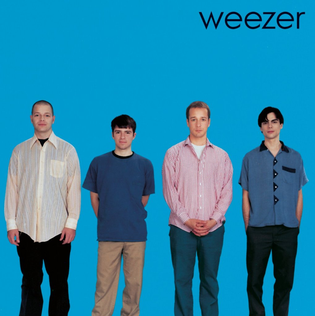
Weezer rose to prominence in the mid-1990s with a sound that blended alternative rock energy and offbeat humor. Formed in Los Angeles in 1992, the band signed with Geffen Records the following year. Fronted by Rivers Cuomo, they provided a quirky counterpoint to the angst of grunge and the polish of mainstream pop. Drawing on power-pop traditions, Weezer fused melodic guitar riffs with tight vocal harmonies. Their lyrics were wryly self-aware, embracing nerdy awkwardness.
The band’s breakthrough came with their self-titled debut album, widely known as The Blue Album (1994), which produced a series of enduring hits, including “Undone – The Sweater Song,” “Say It Ain’t So,” and “Buddy Holly.”Directed by Spike Jonze, the music video for “Buddy Holly” digitally placed the band into the 1970s television sitcom Happy Days, where they performed inside the iconic diner set, Al’s Drive-In, alongside characters like Fonzie and Richie Cunningham. The playful fusion of nostalgic 1950s Americana and 1990s irony made the video an MTV staple. The song's tongue-in-cheek lyrics combine humor with the band's characteristic self-consciousness. with lines such as, “What’s with these homies dissin’ my girl?”
“In the Garage,” another track from The Blue Album, offers a clear insight into Weezer’s cultural sensibility. The song celebrates the private, imaginative world of an adolescent outsider, where fantasy and fandom serve as a refuge from social anxiety and isolation. Cuomo sings about his “Dungeon Master’s Guide,” “twelve-sided die,” and posters of the band Kiss, reimagining the garage into a sanctuary of creativity and self-acceptance. In contrast to the machismo often found in 1990s rock, "In the Garage" embraces vulnerability and nerd culture with a sense of ironic coolness. Weezer articulated a different model of masculinity in rock, based on emotional honesty and self-awareness rather than rebellion or excess.
Their follow-up album, Pinkerton (1996), marked a significant departure from their previous work. Rejecting the production polish of their debut, Pinkerton adopted a rawer sound and more unguarded lyrics. Cuomo’s writing—especially in songs like“El Scorcho” and “The Good Life”—explored themes of insecurity, loneliness, and romantic disappointment. Although Pinkerton initially received mixed reviews and modest sales at its release, it later achieved cult status for its openness and emotional depth.
Over time, Weezer’s early albums gained recognition within 1990s alternative rock. Their work bridged the gap between post-grunge alienation and pop accessibility, giving voice to a generation of self-conscious, media-aware youth. By combining irony with direct self-reflection, Weezer brought humor and vulnerability into the same musical frame and offered a different mode of sincerity in alternative rock.
Jam Bands
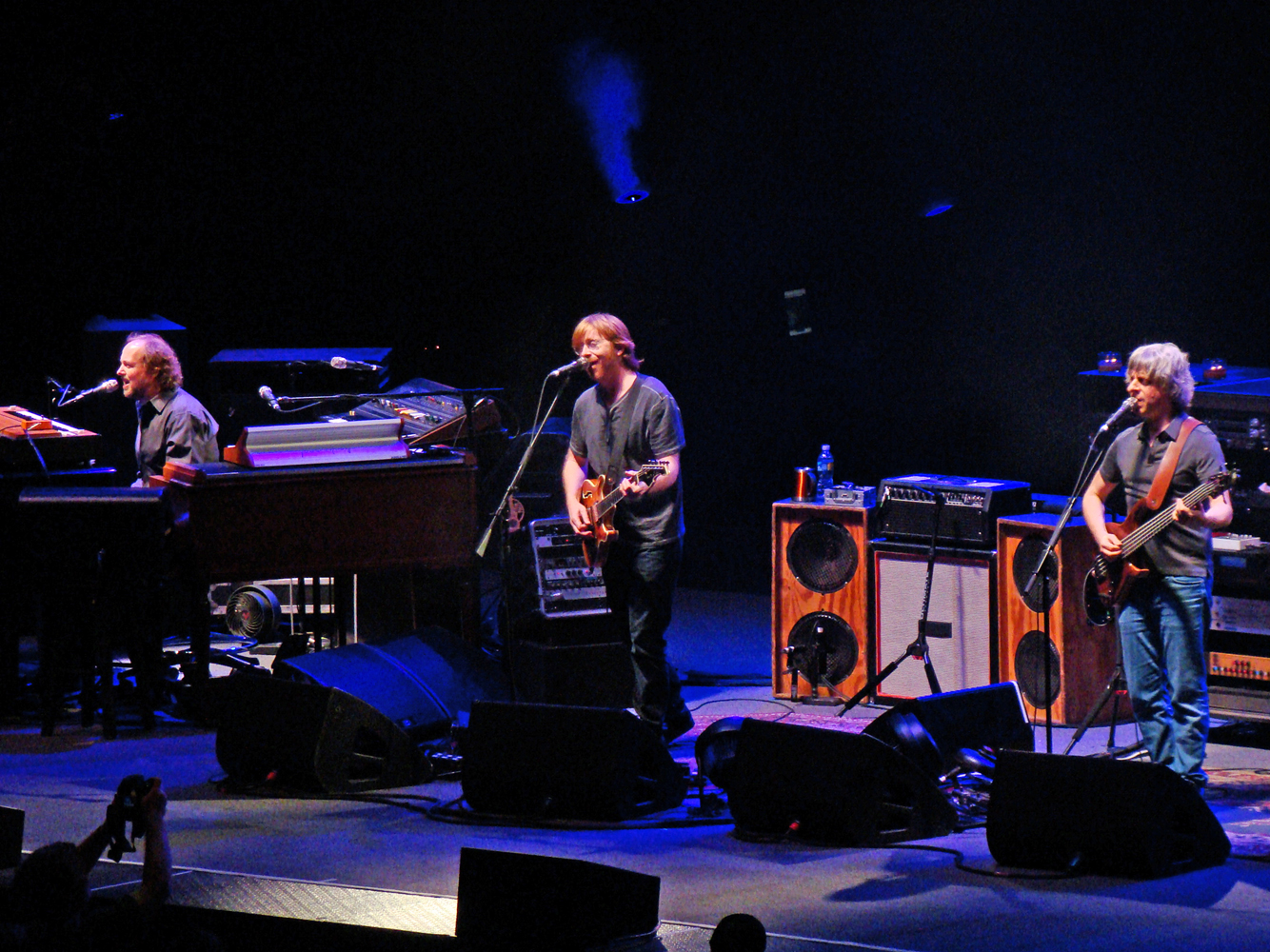
Although the term “alternative rock” is often associated with bands influenced by 1970s punk, another significant branch that emerged in the 1980s drew inspiration from an earlier era: the jam band. Unlike most alternative groups, which emphasized an aggressive style, jam bands traced their roots to the 1960s, particularly the Grateful Dead, and prioritized eclectic musical influences and extended improvisation. These bands blended multiple genres, giving each member space to explore their instrument and produce performances that were musically unpredictable, while maintaining the communal ethos associated with the Grateful Dead’s “deadhead” fanbase.
Jam bands share several traits, foremost among them a commitment to lengthy improvisation and stylistic variety. They often favor progressive songwriting over conventional pop structures and treat improvisation as a collective process, generating grooves through group interaction rather than spotlighting individual soloists. Jams frequently diverge from their original harmonic or rhythmic framework and segue seamlessly into other songs, with tempos suited for dancing across extended passages. The collective improvisation cultivated a dynamic experience in which audiences influenced the direction of performances in real time.
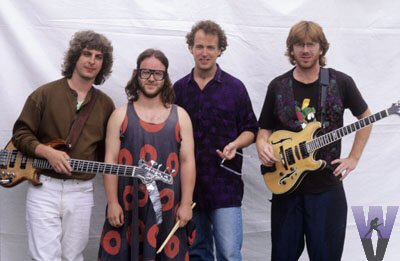
Phish, formed in 1985 by Vermont college students Trey Anastasio (guitar), Page McConnell (keyboards), Mike Gordon (bass), and Jon Fishman (drums), exemplifies the jam band tradition. Their music draws on a wide range of styles—including blues, country, folk, classical, bluegrass, and funk—alongside free-form improvisation. Phish collaborated closely with luthier and sound engineer Paul Languedoc, whose custom instruments and sound engineering helped develop the band's distinctive live identity. The track “Stash” from Phish: A Live One (1995) illustrates the band’s improvisational style. Over the course of twelve minutes, Phish balances structured motifs with free-flowing exploration. Anastasio’s recurring tangolike guitar melody anchors the performance, while the band engages in polyphonic interplay reminiscent of early New Orleans jazz, with no single instrument dominating. The performance emphasizes group improvisation rather than a single dominant soloist.
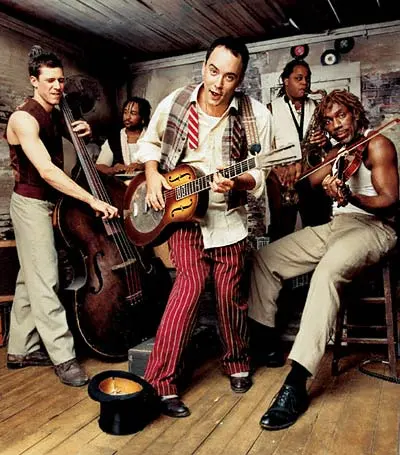
The Dave Matthews Band (DMB) played a central role in the growth of the 1990s jam band movement, bringing a distinctive mix of jazz, bluegrass, funk, and rock influences to mainstream audiences. Originally from Johannesburg, South Africa, Dave Matthews moved to Charlottesville, Virginia, where he formed DMB in 1991 with Stefan Lessard (bass), Carter Beauford (drums), LeRoi Moore (saxophone), and Boyd Tinsley (violin). Unlike typical rock bands, DMB often built songs around Matthews’s acoustic guitar and expressive vocals, layering complex rhythms, syncopation, and virtuosic instrumental interplay.
DMB’s breakthrough came with Under the Table and Dreaming (1994), which brought them national recognition. Songs such as “What Would You Say” and “Ants Marching” exhibited their ability to combine carefully structured compositions with the open-ended freedom of improvisation—particularly evident in their live performances. Their extensive touring schedule, often overlapping with that of Phish and other jam-oriented acts, built a devoted fan community that valued participation and spontaneity in live settings. Matthews’s lyrics, thoughtful yet playful, conveyed themes of connection, wonder, and the joys and anxieties of modern life, which, paired with the band’s buoyant musicality, contributed to their wide draw across generational and stylistic boundaries.
Jam bands such as DMB, Phish, and Blues Traveler offered a contrast to the darker, more brooding aesthetic of 1990s alternative rock. Their improvisational ethos, stylistic fluidity, and communal energy created a more inclusive, optimistic musical space that invited audience engagement rather than alienation. Critics sometimes dismissed these groups for lacking the confrontational edge of grunge or punk, but their live performances became major cultural events. Extended versions of songs like Phish’s “Stash” or DMB’s “Tripping Billies” and “Two Step” demonstrated that the essence of the jam band tradition resided in the concert setting, where collective improvisation made each performance a unique, participatory experience.
Many jam bands also promoted active live recording cultures as bands encouraged fans to record concerts and trade the “bootlegged” tapes freely. Until 1995, the Dave Matthews Band even permitted fans to patch directly into the soundboard before the commercial misuse of these recordings spurred a shift to more controlled taping policies. The circulation of these fan-made recordings, particularly among college students, helped build followings for these jam bands and establish their grassroots reputations long before mainstream radio embraced them.
Pop Punk
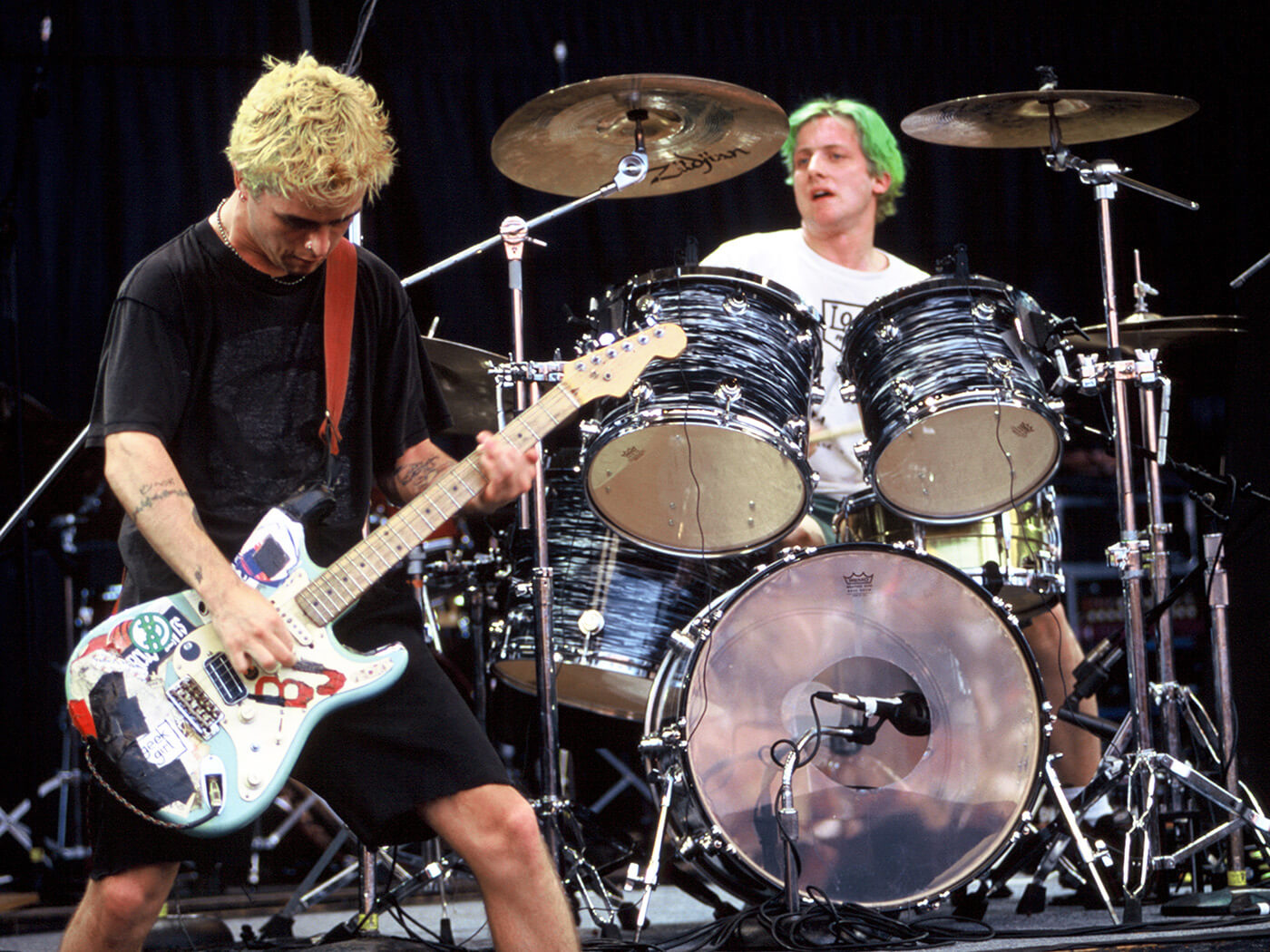
As grunge’s prominence declined in the mid-1990s, pop punk re-emerged as a dominant force in alternative music, combining punk’s high energy and DIY ethos with catchy melodies, accessible song structures, and lyrical subjects aimed largely at young listeners. Musically, pop punk typically features fast tempos, power-chord guitar progressions, and driving eighth-note drum patterns. Vocals alternate between earnest singing and shouted phrases, stressing both melodic hooks and a sense of urgency. Lyrics often explore adolescent and suburban experiences—relationships, boredom, angst, and social alienation—while songs tend to be concise, typically lasting two to four minutes, and are crafted for both radio play and energetic live performance. Bands such as Green Day and The Offspring revitalized punk’s commercial appeal with albums like Dookie (1994) and Smash (1994), infusing a distinctly Californian sensibility into the genre. Later acts, including Blink-182, carried this momentum forward, translating punk’s aggression into tuneful, hook-driven songs suitable for radio and MTV, thereby bringing pop punk into the mainstream.
Green Day, formed in Berkeley, California, centered on childhood friends Billie Joe Armstrong (vocals, guitar) and Mike Dirnt (bass), later joined by Tré Cool on drums. They built a following in the independent punk scene, performing at iconic venues such as 924 Gilman Street and releasing two albums through Lookout! Records. Their major-label debut, Dookie, released on February 1, 1994, by Reprise Records and produced by Rob Cavallo, was recorded in 1993 at Fantasy Studios in Berkeley. Armstrong wrote most of the album, using personal experiences and probing themes such as anxiety, isolation, boredom, relationships, and sexuality.
Dookie established Green Day’s signature sound: fast, distorted guitar riffs, driving power chords, syncopated rhythms, and infectious pop melodies. Singles like “Longview,”“Basket Case,” a re-recorded “Welcome to Paradise,” and “When I Come Around” exemplified their ability to combine punk intensity with melodic accessibility. “Basket Case” in particular addressed Armstrong’s struggles with anxiety and panic attacks, pairing confessional, sometimes darkly humorous lyrics with energetic, propulsive instrumentation. The contrast of serious subject matter with catchy, upbeat delivery became a hallmark of late-1990s pop punk. The album sold over twenty million copies worldwide and earned a Grammy Award for Best Alternative Music Performance, cementing Green Day’s place in both the punk and mainstream rock worlds. Later tracks, such as the acoustic ballad “Good Riddance (Time of Your Life)” from Nimrod, showed the band's ability to temper aggression with introspection.
Green Day’s commercial success ignited debate over their punk credentials. After signing with a major label, they were barred from performing at core punk venues in Berkeley, including 924 Gilman Street. Critics questioned whether mainstream success compromised their authenticity, with John Lydon of the Sex Pistols arguing that the band had not “earned their wings” and had co-opted punk for profit. Others defended them, including Brett Gurewitz of Bad Religion and founder of Epitaph Records, who stated, “They [Green Day] are a punk band, but you know, punk is the legacy of rock and roll, and Green Day are the biggest band in the genre.” Armstrong himself acknowledged the tension of being a punk band on a major label, remarking, “Sometimes I think we’ve become redundant because we’re this big band now; we’ve made a lot of money—we’re not punk rock anymore. But then I think about it and just say, ‘You can take us out of a punk rock environment, but you can’t take the punk rock out of us.”
Meanwhile, The Offspring, from Southern California, drew on the West Coast punk tradition to create a similarly accessible yet aggressive sound. Their breakthrough album, Smash (1994), released on the independent Epitaph Records, combined heavy guitar riffs with melodic hooks and surf-influenced lines, exemplified in the hit single “Come Out and Play.” The album’s success helped establish the band as a central figure in the 1990s pop punk landscape while retaining ties to the DIY ethic of punk’s underground roots.
Blink-182, a San Diego-based trio, became one of the major voices of late-1990s and early-2000s pop punk, emphasizing humor and irreverence, paired with high-energy guitar riffs. Emerging from a suburban skate punk scene heavily influenced by Southern California’s surfing, skating, and snowboarding culture, the band initially gained attention for their energetic live performances and playful, often juvenile sense of humor. Unlike East Coast punk acts, the West Coast scene incorporated more melodic elements, which Blink-182 used to create catchy, hook-driven songs that appealed to a broad audience.
The band’s first mainstream success came with singles like “Dammit” and “What’s My Age Again?” The latter, in particular, addressed themes of Peter Pan syndrome, capturing the tension between youth and the responsibilities of growing up, while “Dammit” contained the memorable hook, “Well, I guess this is growing up.” Albums such as Enema of the State (1999) and Take Off Your Pants and Jacket (2001) showcased the band’s signature style: three-minute songs, fast tempos, driving pop-punk riffs, and sing-along choruses. Their music videos further emphasized their playful aesthetic, including “What’s My Age Again?”—featuring the band running naked through a series of comical scenarios—and “All the Small Things,” a parody of contemporary pop and hip-hop videos, written in part to satisfy label expectations for radio-ready material.
Lyrically, Blink-182 frequently explored relationships, suburban life, teen angst, and toilet humor, regularly drawing from autobiographical experiences. Songwriting was shared between Mark Hoppus and Tom DeLonge, with recurring themes of immaturity, growing up, and the challenges of adolescence. Albums like Take Off Your Pants and Jacket leaned heavily into teen-focused and irreverent lyrics, prompting Rolling Stone to describe it as a concept album chronicling adolescence.
Despite their popularity, the band encountered criticism from parts of the punk community. Their mainstream success, partnerships with MTV, and collaborations with boardsport companies and clothing brands led some critics to accuse them of “selling out” and betraying punk’s independent ethos. Some detractors also pointed to their focus on female fans, stage banter, and occasional juvenile or provocative lyrics, including material that could be interpreted as sexist or homophobic, as evidence of pandering or shock value. Others, however, have argued that these elements accurately represented millennial male youth culture and considered Blink-182 among the least offensive of the pop-punk wave of the 2000s. The band’s second drummer, Travis Barker, has since become a figure in mainstream celebrity culture through his marriage to celebrity icon Kourtney Kardashian, further connecting Blink-182 to broader pop culture beyond the music scene. Ultimately, Blink-182’s blend of melodic hooks, irreverent humor, and relatable teenage themes, helped establish Blink-182 within mainstream pop while retaining recognizable elements of punk
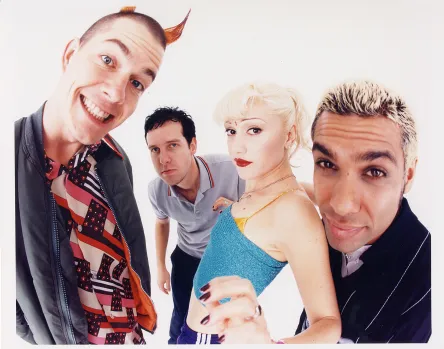
Other bands during this era blended punk with additional genres, broadening the sonic palette of pop punk. Sublime incorporated reggae, ska, hip-hop, and beach music into their Southern California punk sound, exemplified by the 1996 hit “What I Got.” Ska—a Jamaican-born style characterized by walking bass lines, offbeat guitar or piano chords, and energetic, danceable rhythms—became a frequent influence in punk through bands like The Mighty Mighty Bosstones, who fused punk with ska to create a high-energy “ska-core” style featuring full horn sections and lively performances. No Doubt, fronted by Gwen Stefani, combined ska and pop on Tragic Kingdom (1996) and its massive single “Don’t Speak”, later moving toward electronic, dance, and reggae influences through collaborations with artists including Moby, Eve, and Akon, as well as Stefani's solo album Love. Angel. Music. Baby. (2005).
Pop punk’s influence extended beyond music into youth fashion and retail culture, notably through Hot Topic. The 1990s retail chain became a hub for fans of punk, goth, and alternative subcultures. Selling band t-shirts, accessories, and DIY-inspired merchandise, Hot Topic helped cement punk as a visible youth lifestyle, promoting layered clothing, studded belts, black-and-red color schemes, and other hallmarks of subcultural style.
Through these developments, 1990s pop punk fused punk’s rebellious energy with melodic accessibility, commercial viability, and a wider cultural presence. The commercial success of Green Day, The Offspring, and Blink-182 brought pop punk to radio, MTV, and a large youth audience. The style's combination of punk-derived instrumentation, melodic hooks, humor, and adolescent subject matter remained influential in later pop-rock recordings.
Industrial Rock
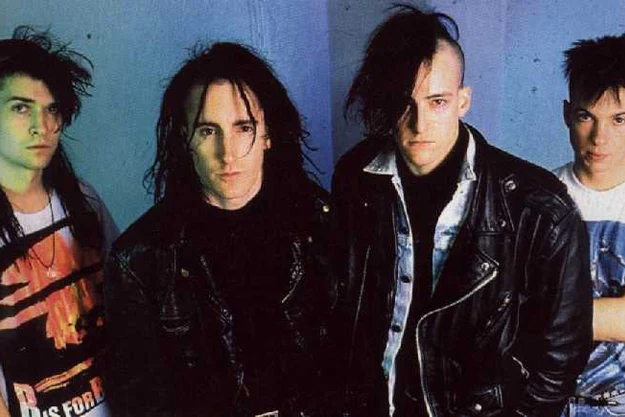
Industrial rock first took form in the mid-1970s, spanning the underground scenes of the United Kingdom, the United States, and Canada, where artists fused electronic noise with the intensity of rock. In Britain, bands such as Throbbing Gristle and Cabaret Voltaire pioneered the style, combining electronic experimentation with performance art and a rejection of mainstream rock conventions. Their work embraced abrasive and unsettling sounds—synthesizers, tape loops, found objects, and manipulated recordings—producing music that was intentionally confrontational. These early artists operated from a philosophy of anti-conformity and avant-garde experimentation, often incorporating performance elements that blurred the line between concert and conceptual art. Their work questioned societal norms, explored alienation, and intentionally provoked audiences, creating a philosophical core that would characterize industrial music. In Canada, Skinny Puppy extended these practices into the 1980s, combining electronic textures, provocative stagecraft, and dark thematic content to advance the genre’s transatlantic development.
In the United States, industrial rock developed in tandem with the no-wave and hardcore scenes, drawing on local experimental traditions. San Francisco’s Chrome combined traditional rock instrumentation with distorted guitars, feedback, and synthesizers to produce a harsh, otherworldly sound. Later U.S. bands, including Swans, Big Black, and Killing Joke, developed these techniques further, experimenting with drum machines, tape manipulation, and layered sonic textures. European acts, such as Einstürzende Neubauten, further influenced the U.S. scene through unconventional percussion, the use of metal objects, and electronic innovation. Across these iterations, industrial rock became associated with an abrasive sound and confrontational performance, with an emphasis on theatrical staging and psychological tension.
By the 1990s, industrial rock had coalesced into a more structured form while conserving its experimental and confrontational roots. The genre blended electronic elements with distorted rock instrumentation, heavy riffs, and complex sound layering. Vocals ranged from melodic to harsh, often conveying alienation, psychological distress, or critiques of social control. Concept albums, intricate production techniques, and theatrical live performances distinguished industrial acts from other strands of alternative rock. The integration of metal elements gave rise to industrial metal, retaining the philosophical and sonic intensity of the genre while adding virtuosic guitar work and aggressive rhythms.
Nine Inch Nails
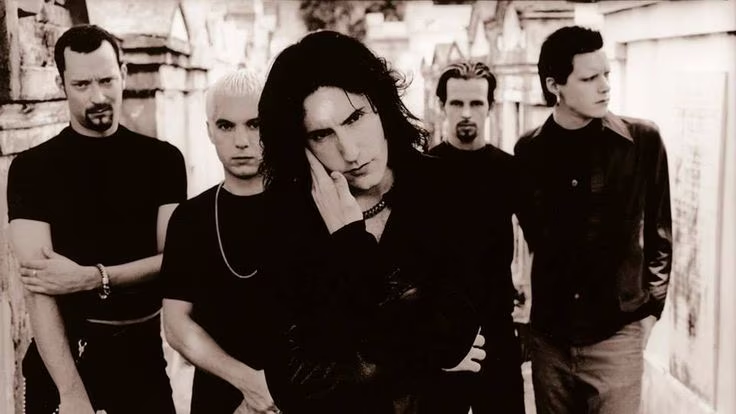
By the late 1980s, Trent Reznor had positioned himself at the forefront of American industrial rock, recording under the name Nine Inch Nails. His debut album, Pretty Hate Machine (1989), was crafted almost entirely by Reznor himself, employing synthesizers and multilayered overdubs to create a dense, immersive sound. Unlike earlier industrial acts such as Throbbing Gristle or Ministry, Reznor combined abrasive textures with melodic riffs and conventional song structures, including verse-chorus forms, making his music more accessible without compromising its intensity. The single “Head Like a Hole” exemplifies Nine Inch Nails' sound, merging industrial noise and distortion with a memorable chorus and the recurring lyric, "You're going to get what you deserve."
Reznor’s work consistently engaged with dark psychological and philosophical themes. His lyrics explored alienation, human frailty, and societal critique, while his performances and videos heightened a sense of discomfort and confrontation. In 1992, Nine Inch Nails relocated to 10050 Cielo Drive, Benedict Canyon, Los Angeles, a location Reznor dubbed “Le Pig” in reference to the word “Pig” scrawled on the home’s wall in Tate’s blood by Susan Atkins. The house served as a recording site where Reznor recorded the Broken EP, marking Nine Inch Nails’ first release through Interscope Records. Broken reached the top 10 on the Billboard 200. Reznor described it as a guitar-based “blast of destruction,” harder and more aggressive than Pretty Hate Machine, inspired by the intensity of the band’s live performances at events such as Lollapalooza. The 1992 video for “Happiness in Slavery,” which graphically depicted a man subjected to torture, symbolized Reznor’s antagonistic relationship with his former label, TVT, and was censored on MTV, illustrating industrial rock’s confrontational ethos.
The house at Cielo Drive also served as the primary studio for the recording of The Downward Spiral (1994), a concept album chronicling a man’s psychological and moral descent. Tracks such as“Closer” and “Heresy” explored nihilism, alienation, and the grotesque dimensions of human existence. The song “Heresy” explicitly references the ate-nineteenth-century German philosopher Friedrich Nietzsche’s philosophy with the line: “Your god is dead and no one cares if there is a hell. I’ll see you there.” This line draws from Nietzsche’s famous declaration, “God is dead,” which symbolizes the collapse of traditional moral and religious frameworks and challenges individuals to confront existence without relying on imposed absolutes. Reznor incorporated Nietzschean questions about morality, meaning, and religious authority into the album's themes of existentialist despair, societal critique, and the search for purpose amid chaos and disorder. During the same period, Marilyn Manson recorded portions of Portrait of an American Family (1992) in the house, while Nine Inch Nails filmed the video for “Gave Up” there as well. Reznor left the house in December 1993, later explaining, “there was too much history in that house for me to handle,” pointing to the psychological weight of recording in a site marked by violent history.
The single “Closer” became a commercial and cultural phenomenon, though it was heavily censored for radio due to its explicit sexual content and provocative language. The song’s lyrics include lines such as “I want to f*** you like an animal,” and the music video, directed by Mark Romanek, featured provocative imagery, nudity, and religious symbolism, which combined to make the track controversial and often unsuitable for mainstream broadcast. Despite—or perhaps because of—these restrictions, “Closer” drew widespread attention, exemplifying industrial rock’s ability to merge accessibility with confrontation and philosophical engagement. Through these works, Reznor established the industrial rock sound of the 1990s: a fusion of aggressive electronics, dark introspection, and confrontational imagery that both challenged and influenced mainstream music culture.
Marilyn Manson
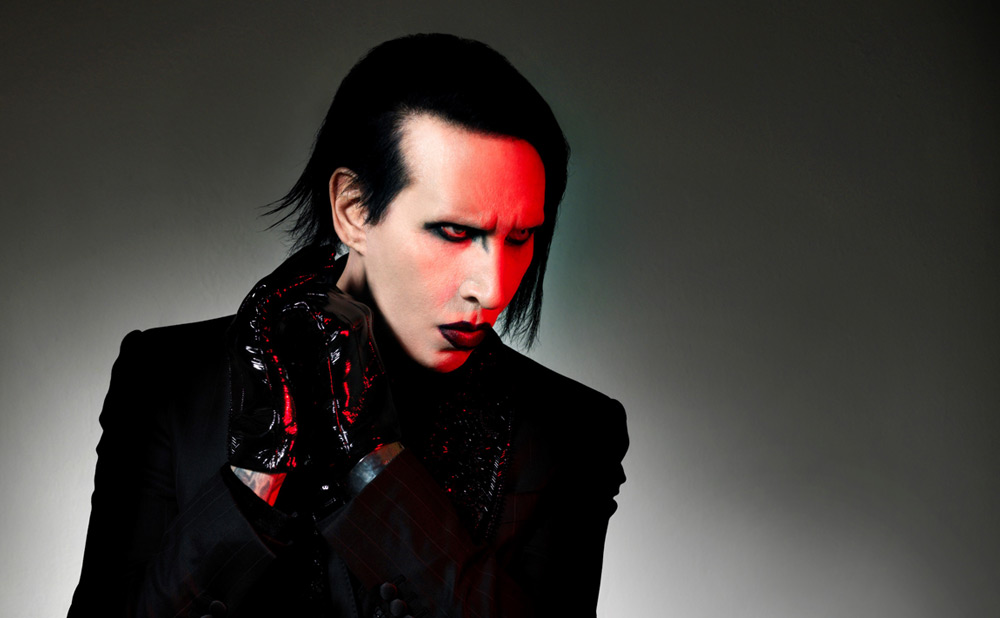
In the 1990s, Marilyn Manson—the stage persona of Brian Hugh Warner—rose to prominence through a striking fusion of performance art and philosophical provocation alongside industrial-metal intensity. Formed in Fort Lauderdale, Florida, in 1989 as Marilyn Manson and the Spooky Kids, the group promptly gained notoriety for highly provocative performances. Early shows incorporated cages, chainsaws, fire, and other shocking stage props, establishing a visual and performative aesthetic rooted in the shock-rock tradition. Each member adopted a stage name pairing a glamorous female celebrity with a notorious criminal—such as Marilyn Manson (Marilyn Monroe + Charles Manson) and Twiggy Ramirez (Twiggy + Richard Ramirez)—in accordance with the band’s fascination with cultural icons, criminality, and the grotesque.
By 1992, the band had shortened its name to Marilyn Manson, signed to Trent Reznor’s Nothing Records, and toured as the opening act for Nine Inch Nails. The subsequent exposure introduced them to a larger audience and established their presence in the industrial rock and metal scene. Musically, Manson combined the distortion and electronic textures of industrial rock with heavy metal aggression, pairing abrasive guitars, synthesizers, and electronic effects with lyrics exploring nihilism, decadence, and taboo subjects. His stage persona—characterized by a stark white foundation, dark eye makeup, black lipstick, and often bleached or dyed hair, paired with theatrical costumes ranging from tailored suits to fetish-inspired attire—emphasized the grotesque imagery that challenged beauty norms and supported the band’s themes of transgression and cultural critique. Manson also engaged with occult and provocative imagery, deliberately courting outrage and censorship as a critique of social standards, authority, and moral panic.
The band’s debut album, Portrait of an American Family (1994), generated controversy even before its release due to provocative cover art and unsettling lyrical content. Manson’s theatricality and visual presentation became central to his identity in the media, amplifying both fascination and fear. Subsequent releases, beginning with Antichrist Superstar (1996), produced by Trent Reznor, functioned as concept albums and rock operas. Antichrist Superstar and the albums that followed drew heavily on Nietzschean philosophy to examine nihilism, moral corruption, and the grotesque. Nietzsche’s philosophy, central to Manson’s work, interrogates traditional morality, the death of God, and the necessity of constructing personal values in a universe lacking inherent meaning—concepts that Manson incorporated into his lyrics, stagecraft, and public persona. Mechanical Animals (1998) and Holy Wood (In the Shadow of the Valley of Death) (2000) formed a loosely connected trilogy, continuing the trilogy's exploration of fame, identity, alienation, and social decay. Despite limited radio airplay, Marilyn Manson achieved mainstream visibility. A cover of the Eurythmics’ “Sweet Dreams (Are Made of This)” (1995) received heavy rotation on MTV, while live performances and music videos amplified the band’s confrontational ethos.
Commercially, Marilyn Manson’s breakthrough coincided with the broader rise of industrial metal—a hybrid subgenre that merged the electronic experimentation of industrial rock with the aggression of heavy metal. Alongside acts like KMFDM, Rob Zombie, Rammstein, and Fear Factory, Manson became one of the decade’s most provocative and commercially successful industrial metal artists.
By the late 1990s, Marilyn Manson had become a household name and one of the most controversial rock acts in music history. Albums such as "Antichrist Superstar " (1996) and "Mechanical Animals " (1998) achieved both critical and commercial success, while the confrontational nature of the group’s music and imagery provoked repeated criticism from politicians and advocacy groups. In 1997 and 1998, Manson faced U.S. congressional hearings, notably led by Senators Joseph Lieberman and William Bennett, who accused his music of corrupting youth and promoting violence, sex, and Satanism. Lieberman described Marilyn Manson as “perhaps the sickest group ever promoted by a mainstream record company.” Politicians lobbied to ban performances and demanded stricter parental advisory warnings, framing Manson as emblematic of moral decline in popular culture.
Following the congressional criticism of Marilyn Manson, the band faced intense media scrutiny after the Columbine High School massacre on April 20, 1999. Early reports alleged that shooters Eric Harris and Dylan Klebold were fans of Marilyn Manson, despite evidence proving they favored German industrial bands such as KMFDM and Rammstein and “had nothing but contempt” for Manson’s music. Sensationalist headlines like “Killers Worshipped Rock Freak Manson” and “Devil-Worshipping Maniac Told Kids To Kill” proliferated. Manson later addressed the hysteria in a Rolling Stone op-ed, “Columbine: Whose Fault Is It?”, blaming America’s gun culture, the political influence of the NRA, and sensationalist media coverage for diverting attention from deeper societal issues.
Manson’s provocative stage persona and lyrical content continued to generate public scrutiny and allegations. In addition to criticism over violence and sexual content, he faced multiple claims of sexual and emotional abuse by former band members and collaborators in later years, complicating his legacy and public image. His career exemplifies the intersection of theatricality, philosophical inquiry, and mainstream visibility, securing his place as one of the most influential and controversial figures of 1990s alternative music.
Stylistic Hybrids: Red Hot Chili Peppers
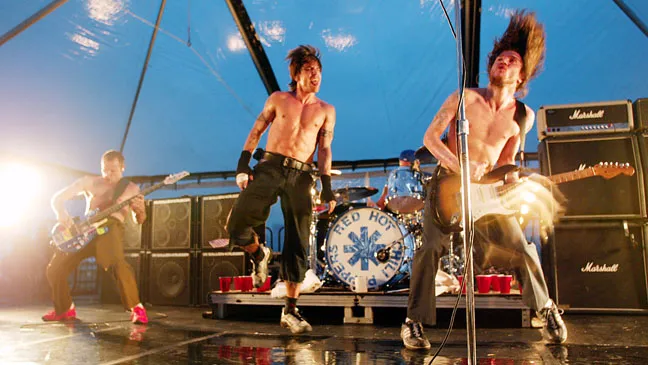
The early 1990s saw rock artists increasingly experiment with hip-hop’s rhythms and lyrical delivery. Just as Run-DMC enlisted Aerosmith’s Steven Tyler and Joe Perry for “Walk This Way,” and Slayer guitarist Kerry King appeared on Beastie Boys singles, rock musicians began integrating elements of rap into their own work. One of the earliest and most successful bands to synthesize these genres was the Red Hot Chili Peppers, whose hybrid of funk, punk, metal, and rap set a precedent for alternative rock experimentation.
Formed in Los Angeles in the early 1980s, the Red Hot Chili Peppers were founded by guitarist Hillel Slovak, bassist Flea, and drummer Jack Irons, who were classmates at Fairfax High School in Los Angeles. Over the years, Anthony Kiedis (vocals) and Flea remained the band’s core, while various members came and went. The group’s early sound combined slap-bass funk, fast punk tempos, extended psychedelic jams, and Kiedis’s rap-inflected vocal delivery. The band was also known for its stage presence, which included nude performances (often with only socks covering genitals) that contributed to their early notoriety.
The Red Hot Chili Peppers’ second album, Freaky Styley (1985), produced by funk legend George Clinton, brought additional punk and funk influences into their repertoire. However, the band encountered personal challenges: both Kiedis and Slovak struggled with severe drug addiction. Slovak died of a heroin overdose on June 25, 1988, shortly after completing the Uplift tour. Devastated, Irons left the band and eventually joined Pearl Jam in 1994. In the wake of Slovak’s death, Kiedis and Flea recruited guitarist John Frusciante, then 18, who brought a darker, more melodic sensibility, and drummer Chad Smith, who joined in December 1988 and has remained with the band since.
Albums such as Mother's Milk displayed a rougher, abrasive sound, while Blood Sugar Sex Magik balanced melodic textures with funk-driven arrangements. Frusciante similarly broadened the band's sound by incorporating reggae, speed metal, and psychedelic elements, often using talk boxes and melodic riffs as foundations for the group's songs, as in “Behind the Sun,” which inspired the band to explore more lyrical and “pretty” compositions. Flea’s bass work was central to the band’s identity, combining influences of funk, punk, psychedelia, and hard rock. Slap bass dominated early albums, while later work featured melodic grooves that complemented Frusciante’s textured guitar lines. Kiedis’s vocals, alternating between rap-like rhythmic delivery and more traditional melodic singing, further enhanced the band’s distinctive hybrid sound.
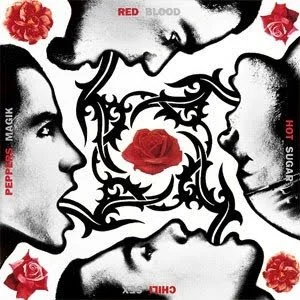
In 1991, the Red Hot Chili Peppers released Blood Sugar Sex Magik, produced by Rick Rubin. The album represented a stylistic shift: guitars became less distorted, and the songs relied more on melody and tighter arrangements. Singles like “Give It Away” exemplify their rhythmic, funk-infused sound, while“Under the Bridge” explores Kiedis’s loneliness and struggles with drug addiction, gradually building from sparse Hendrix-styled guitar chords and vocals to full instrumentation. The Blood Sugar Sex Magik tour featured alternative rock contemporaries Nirvana, Pearl Jam, and Smashing Pumpkins as opening acts, placing the band firmly within the 1990s alternative music movement.
During the 1990s, Frusciante left the band in 1992 at the height of their fame, citing discomfort with the pressures of success. He was replaced by Arik Marshall for the Blood Sugar Sex Magik tour, followed by Jesse Tobias for a brief period before Dave Navarro of Jane’s Addiction joined in 1993. While commercially successful, One Hot Minute was hampered by the band’s transitional tensions. The rift between Navarro and the remaining members ultimately contributed to his departure in 1998. Frusciante returned that year, restoring the melodic interplay associated with the band's earlier work. His return preceded albums such as Californication, By the Way, and Stadium Arcadium.
Upon his return, Frusciante's guitar style shifted from the aggressive, improvisational funk-blues associated with the Slovak era toward a more melodic and emotionally expressive sound, evident on albums such as Californication, By the Way, and Stadium Arcadium (2006). On By the Way, for instance, he crafted guitar lines that could be sung melodically, drawing inspiration from post-punk and new-wave players like Vini Reilly, John McGeoch, Johnny Marr, and Bernard Sumner.
Commercially, the band has achieved extraordinary success. With over 120 million records sold worldwide, they are among the best-selling bands of all time. They hold records for the most number-one singles on the American Alternative Songs chart (15), the most cumulative weeks at number one (91), and the most top-ten songs on the Billboard Alternative Songs chart (28). The band has won three Grammy Awards, was inducted into the Rock and Roll Hall of Fame in 2012, and received a star on the Hollywood Walk of Fame in 2022. Throughout their career, the Red Hot Chili Peppers have been celebrated for their capacity to balance musical virtuosity with mass appeal, solidifying their status as one of the most influential bands in alternative rock history.
Rage Against the Machine
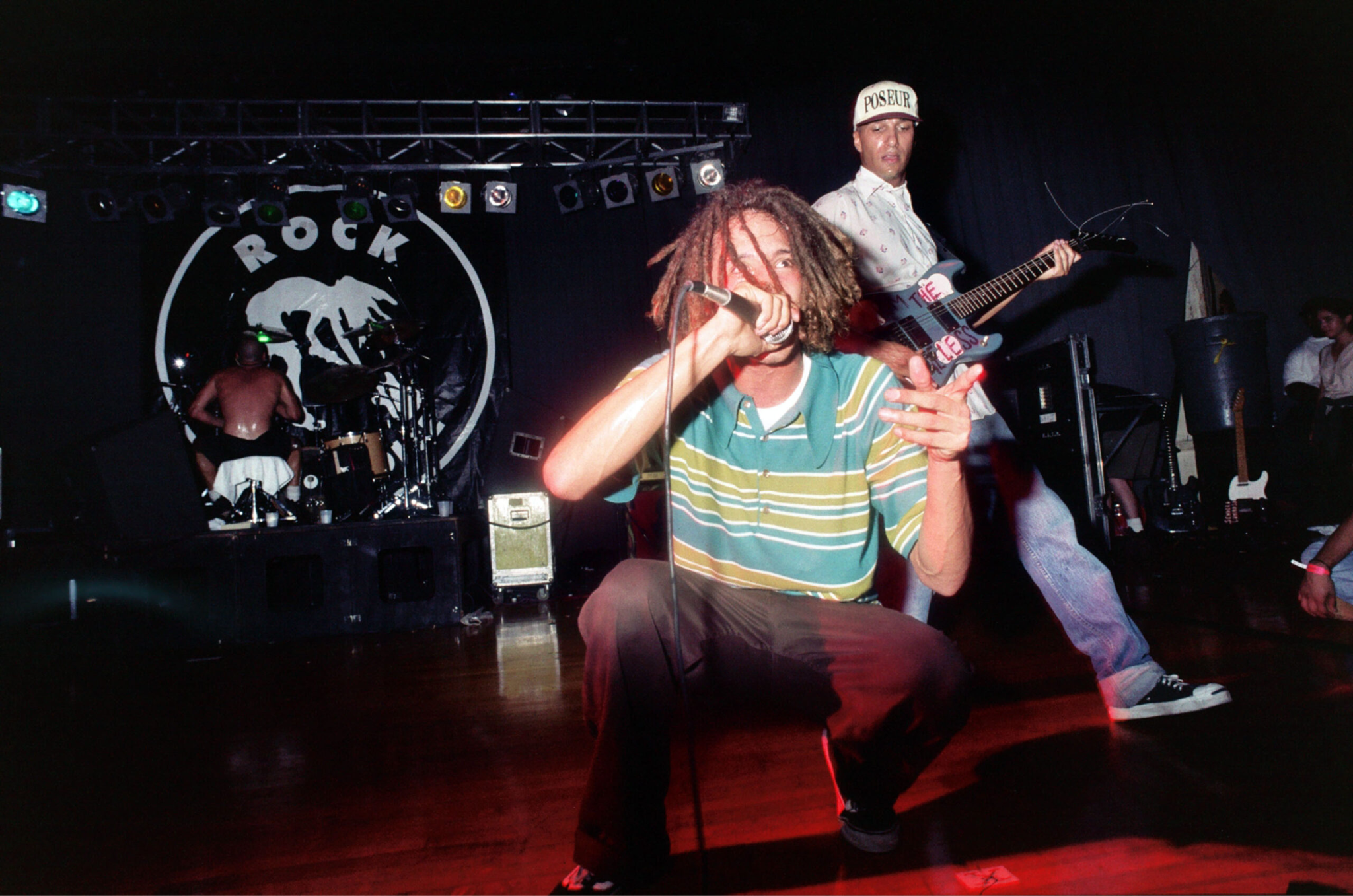
Formed in Los Angeles in the early 1990s, Rage Against the Machine created a distinctive blend of hard rock, thrash metal, punk, funk, and hip-hop, producing a sound that was both sonically aggressive and overtly political. Unlike many rap-influenced rock bands of the era, Rage avoided sampling, synthesizers, and keyboards, creating all their music with traditional rock instruments and the album liner notes explicitly state the band's decision. While drawing inspiration from hip-hop, the group reproduced its rhythmical and stylistic qualities entirely through guitar, bass, and drums, rather than relying on scratching, sampling, or other production techniques typically associated with rap.
Frontman Zack de la Rocha delivered rapid-fire, impassioned raps that addressed anti-authoritarianism, anti-capitalism, and revolutionary politics. Guitarist and Harvard political science graduate, Tom Morello developed an inventive playing style that emulated hip-hop DJ techniques, using sliding techniques to mimic scratching, manipulating the pickup toggle as a rhythmic “kill switch,” and employing a variety of effects, including wah-wah pedals, delay for on-the-fly reverb, and the DigiTech Whammy pedal to create pitch-shifting harmonies and octaves. Morello also incorporated unconventional tools, scraping strings with wrenches or pencils and tapping pickups with the unplugged cable, as heard on tracks like“People of the Sun” and “Bullet in the Head.” Guitar World described his style as a “molotov cocktail of killer riffs, Whammy pedal abuse, and toggle switching,” blending influences from heavy metal, punk, funk, and hip-hop. Morello credits his experimental style to a formative realization: rather than endlessly practicing scales, he would concentrate on creating original sounds, treating the guitar as a tool for artistic expression rather than fame or technical display.
Rage Against the Machine’s self-titled debut album, Rage Against the Machine (1992), illustrates the band’s fusion of political militancy and musical intensity. The album merges confrontational lyrics with technical virtuosity, blending Tom Morello’s innovative guitar techniques, heavy bass, and propulsive drums into a sound both urgent and aggressive. Tracks such as “Bullet in the Head” critique media manipulation by the U.S. government, while “Know Your Enemy” condemns systemic submission, ignorance, and hypocrisy. The lead single, “Killing in the Name,” directly addresses police brutality and institutionalized racism, expressing the anger that erupted during the 1992 Los Angeles riots, which were sparked by the acquittal of four LAPD officers who had been videotaped brutally beating Rodney King, an African American motorist. The riots resulted in over fifty deaths, thousands of injuries, and widespread property destruction, stemming from decades of racial tension, police violence, and socio-economic inequality.
Zack de la Rocha’s lyrics do not shy away from explicit language to convey his message; the song “Killing in the Name” alone contains 17 instances of the F-word. Lines such as “Some of those that work forces are the same that burn crosses” directly accuse law enforcement of complicity in white supremacist organizations such as the Ku Klux Klan.
The band’s live performances further confirmed their radical stance. During shows, Rage Against the Machine often displayed a large image of Che Guevara, the Argentine Marxist revolutionary who played a key role in the Cuban Revolution and has since become a global emblem of rebellion against oppression. The recurring image of Che Guevara conveyed the band's identification with revolutionary and anti-authoritarian politics, situating their music as a vehicle for both cultural critique and activism.
Rage continued their revolutionary ethos on subsequent albums. Evil Empire (1996) critiques U.S. domestic and foreign policy, drawing its title from Reagan-era rhetoric framing the Soviet Union as a global threat—a label the band argued could just as easily describe the United States. The Battle of Los Angeles (1999) incorporates references to George Orwell’s 1984, analyzing themes of institutional control, surveillance, and state oppression. Across all albums, Rage Against the Machine consistently combined incisive political commentary with musical experimentation, advocating resistance to authoritarian structures and social injustice.
Although the band disbanded in the early 2000s, they have periodically reunited for live performances while remaining inactive in terms of new studio recordings. By 2010, Rage had sold over sixteen million records worldwide and were inducted into the Rock and Roll Hall of Fame in 2023, solidifying their legacy as one of the most influential politically conscious rock acts of the late 20th and early 21st centuries.
Rage's musical style shares certain parallels with the Red Hot Chili Peppers: both groups integrated rock instrumentation with rap-influenced vocal delivery. However, their lyrical focus diverges sharply. While De La Rocha’s lyrics are almost exclusively political, emphasizing revolution and anti-capitalist resistance, Anthony Kiedis alternates between rapped phrasing and melodic singing, often exploring personal, playful, or introspective themes. These bands exemplify how 1990s rock musicians could incorporate hip-hop sensibilities while cultivating distinct, recognizable identities within the broader alternative music scene.
Kid Rock
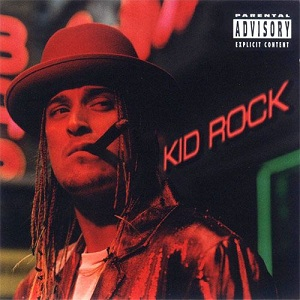
Another notable figure in the 1990s who merged rock and rap was Detroit-born musician Kid Rock. During his early career, he recorded singles, demos, and albums on independent labels, drawing heavy influence from the Beastie Boys. His first major-label album, Devil Without a Cause (1998), demonstrates his eclectic style, blending rock, hip-hop, and at times country and country rock.
One of the album’s standout tracks, “Cowboy,” demonstrates Kid Rock’s hybrid style. Kid Rock described the song as a fusion of Lynyrd Skynyrd’s Southern rock and Run-DMC’s hip-hop. Musically, it combines rapped verses with sampled psychedelic rock sounds, sung choruses reminiscent of 1960s Motown female groups, honky-tonk piano, and heavily distorted guitars. The track also features the jaw harp—a plucked mouth instrument often associated with bluegrass and early country music—whose “boingy” timbre adds a distinctly Americana texture. In “Cowboy” and other early singles, Kid Rock blended rap, country rock, psychedelic rock, Motown, heavy metal, and bluegrass, creating a sound that was simultaneously aggressive and often deliberately inconsistent in style.
Kid Rock’s early live performances and aesthetic reinforced his hybrid identity. Kid Rock cultivated a rebellious persona, adopting elements of rap culture, Southern rock swagger, and motorcycle-inspired imagery, consequently establishing himself as a versatile entertainer who straddles multiple musical and cultural traditions.
By the 2000s, Kid Rock had largely moved away from rapping, focusing instead on singing with a country and country-rock inflection. On tracks like “Lonely Road of Faith” (2001), he delivers ballad-style vocals accompanied by piano and guitar, emphasizing melody and traditional song structures. “All Summer Long” (2008) further demonstrates his genre-crossing, blending samples from Lynyrd Skynyrd’s “Sweet Home Alabama,” Warren Zevon’s “Werewolves of London,” and Michael Jackson’s “Billie Jean.” While sampling evokes his hip-hop roots, the final product leans firmly into country rock rather than rap. Throughout his career, Kid Rock has consistently navigated between disparate genres, blending rock, country, and hip-hop into a distinctively hybrid musical identity.
In recent years, Kid Rock has courted substantial controversy outside of the music industry. He has made headlines for outspoken political stances, including support for conservative politicians and participation in political rallies, often accompanied by provocative gestures and inflammatory statements. His social media presence has included confrontational commentary and claims that have been criticized as incendiary, racist, ableist, or divisive, fueling debates about the influence of celebrities on politics and culture. Kid Rock's political statements and public controversies have reinforced his reputation as a polarizing public figure.
Radiohead
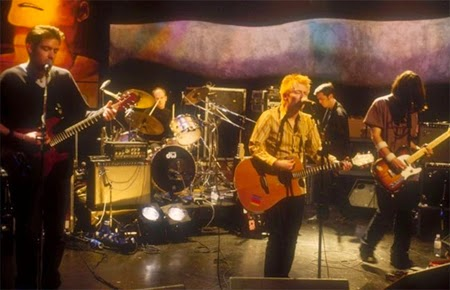
Radiohead, the British quintet formed at Abingdon School near Oxford, stands out for the breadth and fluidity of its sound. Members Thom Yorke (vocals, guitar, piano), Johnny Greenwood (guitar, keyboards), Ed O’Brien (guitar), Colin Greenwood (bass), and Phil Selway (drums) composed lyrics and music that explore themes of alienation, modern anxiety, and existential unease, while consistently challenging the boundaries of rock music. Their compositions alternate between experimental textures, dynamic shifts, and electronic effects, occasionally returning to more conventional, guitar-driven rock. On some tracks, the band employs three lead guitars simultaneously.
The band first achieved widespread recognition with their 1993 single “Creep”, a meditation on obsession marked by a repeating guitar motif and abrupt bursts of dissonant noise before each chorus. Though blacklisted by BBC Radio 1 for the lyric’s perceived gloom, the track connected with American audiences as a slacker anthem, drawing comparisons to Nirvana’s “Smells Like Teen Spirit” and Beck’s “Loser.” Despite early critical ambivalence and modest reception for their debut album, Pablo Honey (1993), Radiohead quickly demonstrated a capacity for musical growth and experimentation.
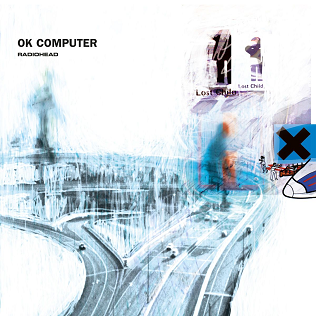
Their follow-up albums, The Bends(1995) and OK Computer (1997), significantly expanded their sonic palette. OK Computer in particular drew on progressive rock, Krautrock, Miles Davis’ Bitches Brew(1969), and the studio experimentation of the Beatles, especially “A Day in the Life.” Tracks such as "Paranoid Android" abandon conventional verse-chorus forms, echoing the multi-sectional structure of Queen's "Bohemian Rhapsody." At the same time, "Karma Police" incorporates acoustic and piano textures alongside synthesized vocal effects, drawing on their engagement with Eastern philosophy reminiscent of the psychedelic-era Beatles and Brian Wilson. Yorke’s lyrics capture the alienating pace of modern life, evoking what critics termed “end-of-the-millennium blues.”
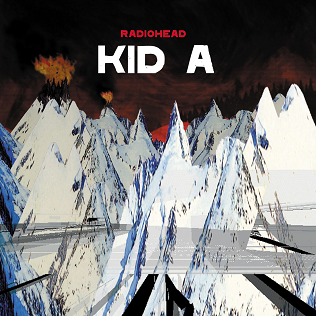
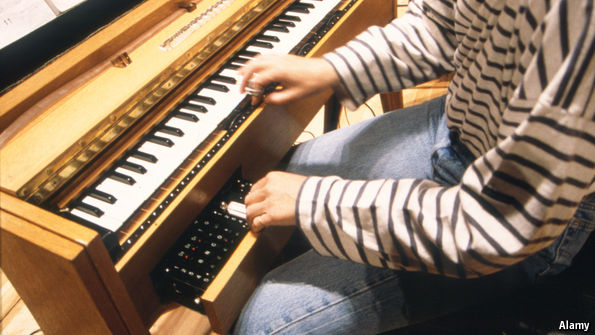
By 2000, Radiohead embraced an even more radical experimentalism with Kid A, incorporating electronic music, orchestral instrumentation, jazz, and Krautrock. They prominently employed the Ondes Martenot, a 1920s electric keyboard capable of sliding tones and nuanced dynamics, heard on tracks such as “Pyramid Song”. These albums feature minimalist textures, programmed beats, and layered soundscapes, constituting a deliberate departure from traditional rock songwriting. Radiohead’s move toward electronic, orchestral, and minimalist textures responded to mainstream success while also representing a conscious effort to pursue new possibilities within alternative rock.
Radiohead’s evolution continued with Amnesiac (2001), Hail to the Thief (2003), and In Rainbows (2007), the latter released online via a pay-what-you-want model that challenged conventional music industry practices. While Hail to the Thief and In Rainbows blend experimental elements with more traditional rock arrangements, The King of Limbs (2011) leans heavily into synthetic textures and sampling, building on Thom Yorke’s solo explorations in The Eraser (2006). Across these works, Radiohead balances avant-garde experimentation with accessible songcraft.
Ultimately, Radiohead’s career represents the possibilities of hybridized rock. Their music continually defies genre constraints, drawing from electronic, jazz, classical, and rock traditions, evolving stylistically from grunge-era slacker anthems to fully realized experimental soundscapes. Through this blending of styles, the band broadened the vocabulary of alternative rock and established a precedent for the genre's continued engagement with diverse musical influences.
Beck
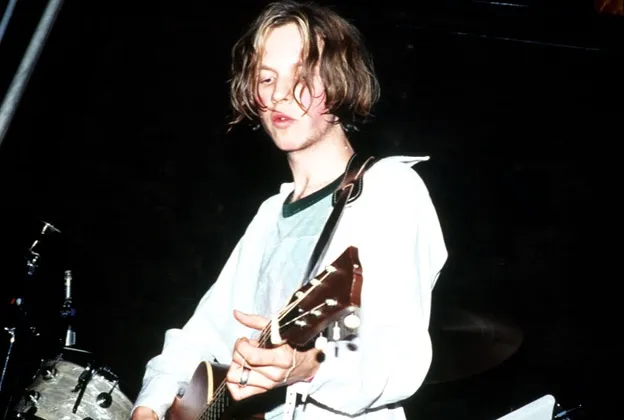
Beck Hansen, known simply as Beck, is well known for his eclectic music, which combines a wide range of genres. His songs often traverse multiple styles—even within a single track—blending folk, country rock, blues, hip-hop, classical, psychedelic, and experimental music. Vocally, he alternates between melodic singing and quasi-rap deliveries, frequently layering sampled vocal or instrumental material alongside his own, creating a distinctive postmodern texture.
In the early 1990s, Beck began releasing music on independent labels in Southern California while performing in unconventional venues. His breakthrough surfaced in 1993 with “Loser”, issued by Bong Load Custom Records. The track combines blues slide guitar, psychedelic sitar, sampled drum beats, and surreal, semi-rapped verses. Its ironic, multi-layered sound drew widespread attention, eventually leading to a deal with Geffen Records. The reissued single reached the U.S. top 10 and the U.K. top 15, establishing Beck as a bold and unconventional voice in the alternative rock genre.
Beck’s first major-label album, Mellow Gold (1994), capitalized on Loser’s commercial wave, selling over a million copies. Thanks to a flexible contract with Geffen, he retained significant creative control, continuing to release independent work alongside his major-label projects. His 1996 album, Odelay, produced with the hip-hop-oriented duo the Dust Brothers, pushed Beck's genre-mixing further. Tracks such as “Where It’s At” combine live instruments—guitars, pedal steel, keyboards, brass, and saxophones—with loops, samples, and turntable scratching, creating intricate, rhythmically rich arrangements that juxtapose irony, humor, and musical virtuosity.
Beck’s artistic upbringing influenced his wide-ranging tastes. His father, David Campbell, a string arranger, contributed to several of Beck’s albums, while his mother, Bibbe Hansen, was connected to Andy Warhol’s Factory and the West Coast punk scene. His grandfather, Fluxus artist Al Hansen, also influenced Beck’s experimental sensibilities. Immersed in diverse cultural and musical environments, Beck absorbed a broad spectrum of traditions, fostering the genre-fluid, boundary-pushing style that became his hallmark.
Throughout his career, Beck has continually reinvented his sound. Early releases such as Stereopathetic Soulmanure and One Foot in the Grave reveal his indie roots. Mutations (1998), produced with Nigel Godrich, abandons sampling in favor of merging blues, psychedelic rock, and Brazilian bossa nova. Midnite Vultures (1999) pursues a funk-heavy, eclectic direction, drawing from Bowie, the Velvet Underground, and Kraftwerk. In the 2000s, Beck revisited sampling and hip-hop influences; Modern Guilt (2008), co-produced with Danger Mouse, features surf-rock guitar on “Gamma Ray” and heavy metal riffs on “Soul of a Man.” His 2014 folk-infused Morning Phase won Album of the Year at the 57th Grammy Awards.
From the ironic, loop-driven “Loser” to the multi-layered constructions of Odelay and the experimental textures of his later albums, Beck embodies the 1990s and 2000s trend in alternative rock toward eclecticism, genre hybridity, and inventive sonic collage. His work illustrates how contemporary rock artists merged disparate influences to create singular, boundary-defying compositions, continually pushing the possibilities of alternative music.
Nu Metal
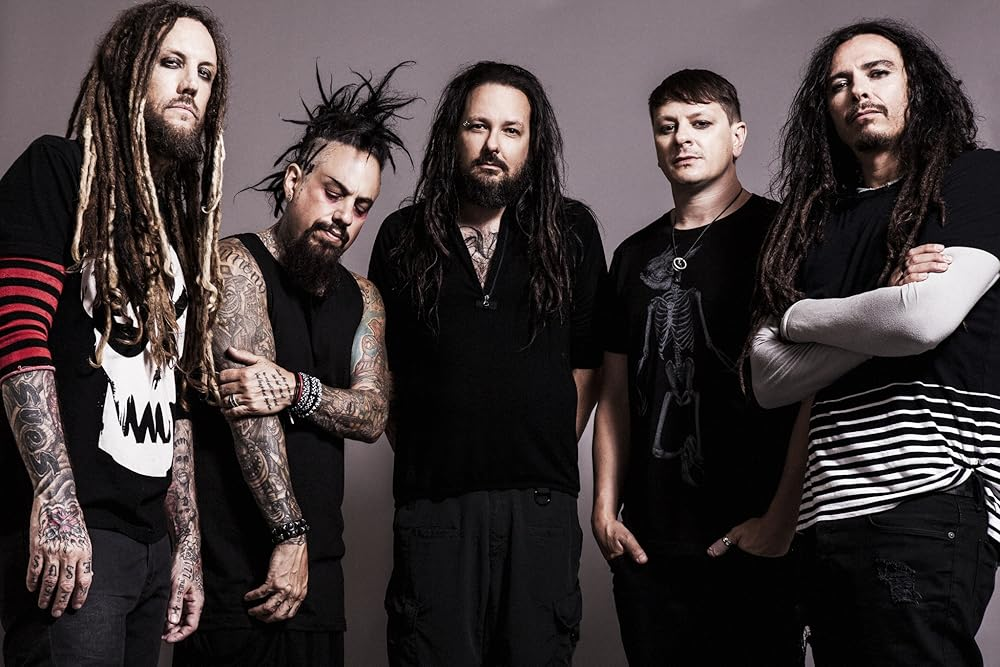
Nu-metal emerged in the 1990s as a strain of heavy music that reorganized metal around rhythm, groove, and cross-genre borrowing. Drawing on earlier experiments by bands such as Faith No More, Red Hot Chili Peppers, Jane’s Addiction, and Rage Against the Machine alongside the rap-rock hybridity of Beastie Boys, the style coalesced in the mid-1990s with Korn’s debut and reached mass visibility between 1998 and 2002 through heavy rotation on MTV and extensive touring. While many leading acts emerged from California, its audience quickly became national and international. Musically, nu-metal departs from earlier metal by shifting attention away from virtuosic guitar solos toward tightly syncopated riffs and percussive drive. Guitarists frequently used down-tuned seven-string instruments to produce a thicker, lower register, often building riffs around modal patterns associated with metal such as Aeolian or Phrygian. These parts tend to lock in with bass and drums rather than stand out, creating a dense, groove-oriented texture. Bass lines often draw from funk, while drumming incorporates hip-hop-influenced patterns. Rapid double bass or blast beats appear only occasionally, even in heavier bands like Slipknot. Many groups also incorporated DJs whose use of sampling, looping, and turntable scratching added another rhythmic and timbral layer.
Vocal styles within the genre mirror this rhythmic emphasis. Performers move between rapped delivery, melodic singing, and shouted or screamed passages, sometimes within a single track. This flexibility lets the voice function as another percussive element, closely matching the instrumentation's groove. Songs such as “Freak on a Leash” by Korn or “In the End” by Linkin Park illustrate how these shifts in vocal style can organize a track’s structure as much as its harmonic content. Lyrically, nu-metal often turns inward. Themes of alienation, humiliation, trauma, and emotional volatility appear with a directness that differs from the more outward-facing aggression of earlier metal. Some bands frame these concerns through confrontational or abrasive imagery, as heard in Limp Bizkit or Dope, while others, such as Deftones, favor ambiguity and layered imagery. There are also departures from this tone: P.O.D., for example, incorporates motifs of faith and optimism. Across these variations, the genre consistently frames personal distress as a shared condition rather than an individual anomaly.
Linkin Park worked within a rock format while integrating hip-hop production and electronics with unusual precision. Guitarist Brad Delson typically used drop tunings (often Drop D or lower) and favored palm-muted, tightly gated riffs built from short repeating cells rather than extended progressions. Many songs rely on a small set of pitches, with harmonic movement created through texture and layering instead of chord changes. Underneath, Dave Farrell’s bass frequently doubles the guitar line to reinforce the low end, occasionally breaking away for octave figures that cut through the mix.
The percussive structure owes much to hip-hop sequencing. Rob Bourdon’s drumming emphasizes steady, loop-like patterns with clean subdivision rather than swing, locking tightly to programmed elements. Joe Hahn and Mike Shinoda build tracks around samples, filtered loops, and digital effects—reverse sounds, vinyl scratches, stutter edits, and ambient pads that fill the space between riffs. Songs like “Numb” use a continuous electronic loop as a structural spine, while “Points of Authority” layers distorted guitar over a clipped, almost mechanical beat.
Vocal arrangement is central to their sound. Mike Shinoda delivers rhythmically strict rap verses, often with sixteenth-note patterns, while Chester Bennington handles sung choruses that heighten the melodic range and dynamic level. Bennington’s parts are frequently double-tracked or stacked in harmony, then pushed into saturation at peak moments, creating a sharp contrast with the dry, percussive verses. Tracks such as “In The End” hinge on this contrast: compressed, loop-driven verses that open into wide, high-register choruses with sustained chords and layered vocals. Production plays a major role. Much of Hybrid Theory (2000) and Meteora (2003) uses tight editing, quantization, and compression to keep every element precisely aligned. Silence and dropouts are also used structurally; brief breaks strip the texture down to a single loop or vocal before the full band re-enters.
Limp Bizkit pursued similar material with a looser, more groove-centered sound. Guitarist Wes Borland often tuned down to Drop C or lower and built riffs from percussive attacks, deadened strings, and dissonant intervals such as tritones, with variation created through rhythm, muting, and effects. He also uses unconventional timbres—filter sweeps, octave effects, and abrupt distortion changes—to continually vary the same riff across sections, and DJ Lethal adds scratches, short samples, and noise bursts that punctuate transitions rather than running continuously.
Song structures tend to rely on contrast between restraint and release. Verses often strip down to bass, drums, and sparse guitar, leaving space for Fred Durst’s conversational rap phrasing. Choruses then become denser through heavier distortion, louder dynamics, and shouted group vocals. “Break Stuff” follows this pattern closely: a minimal, almost spoken verse over a reduced groove, followed by an abrupt change into a dense, high-volume refrain built on a single repeated riff.
By the turn of the millennium, the commercial growth of nu-metal brought rap-influenced heavy rock to radio, MTV, and large festival audiences. Bands such as Linkin Park and Limp Bizkit translated hybrid sounds into formats suited for radio, MTV, and large festival crowds, where strong rhythmic hooks and clear sectional contrasts carried across wide audiences. In doing so, they helped normalize stylistic mixing within mainstream rock, making genre boundaries less rigid for the acts that followed.
Festivals
By the early 1990s, alternative music had moved rapidly from regional scenes and college radio into national circulation. Bands that had built followings through independent labels and local venues now appeared on commercial radio, in heavy rotation on MTV, and on the charts. The term “alternative,” once tied to specific modes of distribution and audience, began to stretch across a wide range of styles—grunge, industrial, post-punk, hip-hop crossover—without a single unifying sound. The expansion of alternative introduced a practical problem. Promoters needed ways to gather disparate acts and audiences without forcing them into a single format.
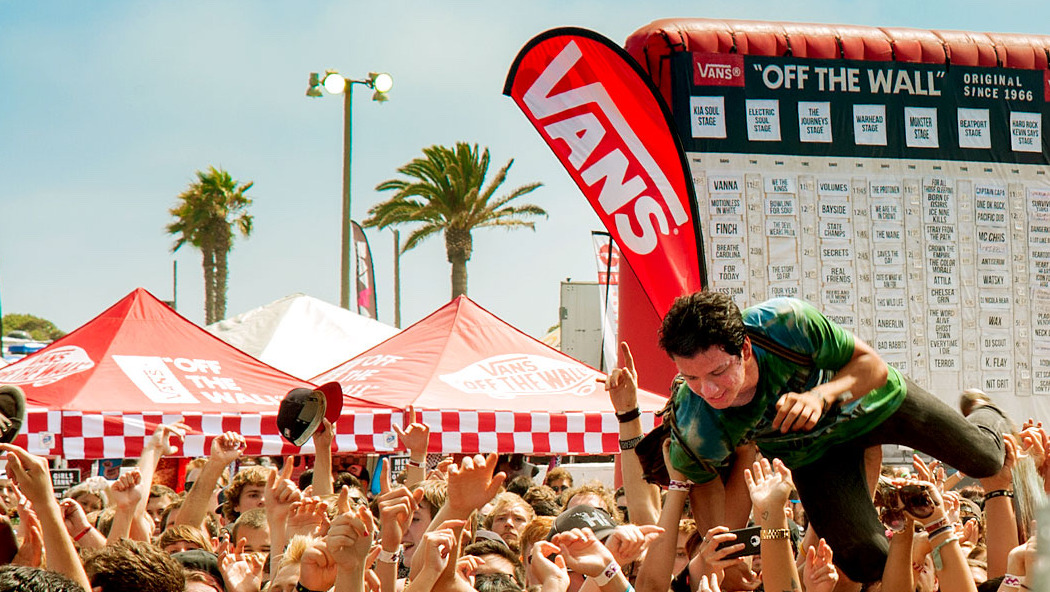
The traveling circuit model offered one answer. Vans Warped Tour, launched in 1995 by Kevin Lyman, operated as a summer tour that moved city to city across North America, combining punk, ska, pop-punk, hip-hop, and alternative acts on multiple stages. Its structure emphasized accessibility and turnover: relatively low ticket prices, daytime schedules, and a rotating lineup that mixed established bands with emerging ones. Corporate sponsorship—most visibly from Vans—helped finance the tour, while skate culture, merchandise tents, and meet-and-greet spaces created a participatory environment that blurred the line between performers and audiences. Rather than organizing around a single genre, it grouped scenes that shared audiences and aesthetics, making stylistic variety part of its identity. This model built on an earlier framework established by Lollapalooza, which had already demonstrated in the early 1990s that a national touring festival could assemble diverse acts under a single banner while attracting a large, unified audience.
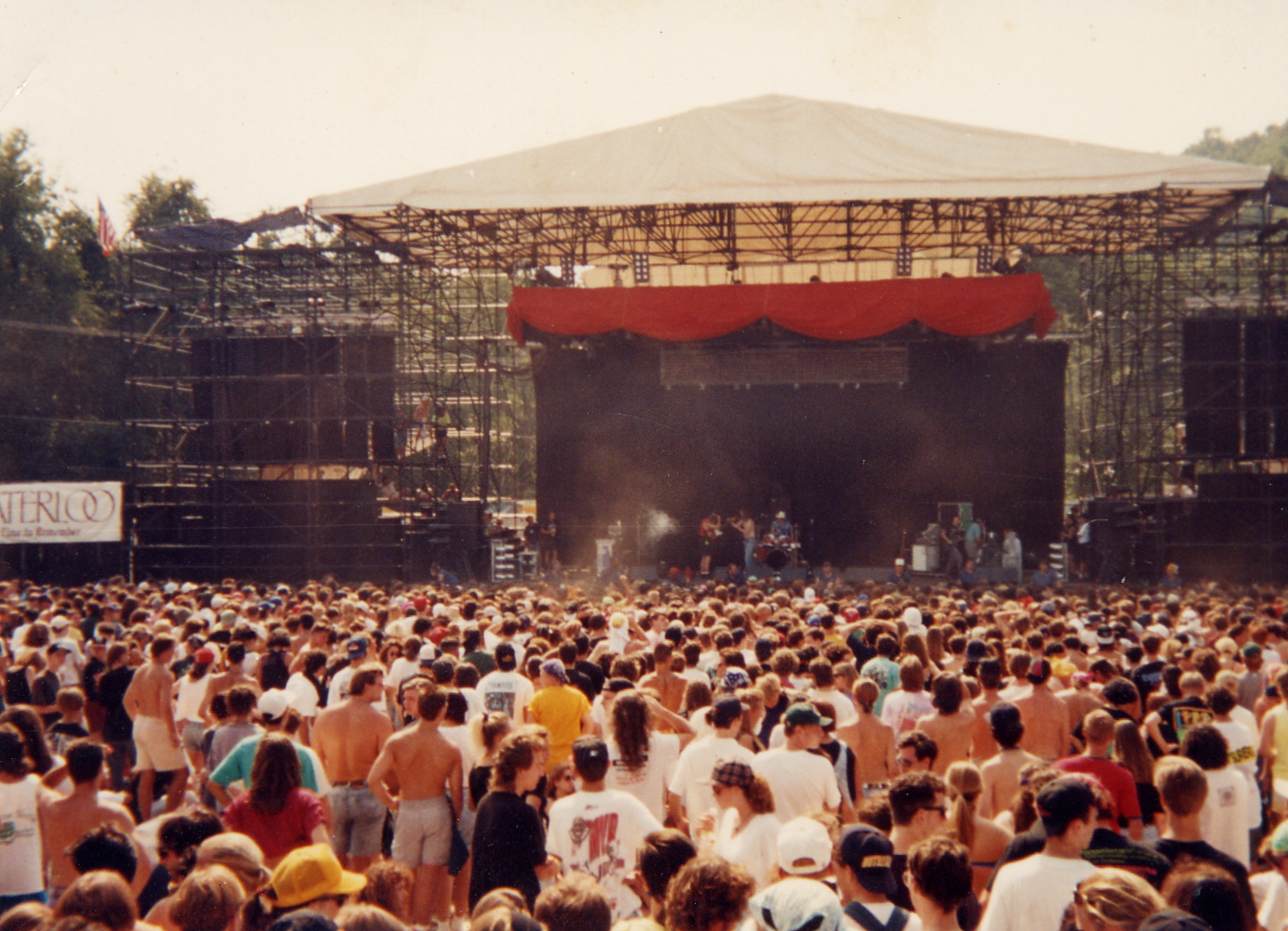
Lollapalooza began in 1991 as one answer to that question. Founded by Jane's Addiction frontman Perry Farrell, the festival began as a farewell tour but quickly became a traveling platform for the alternative movement as a whole. Its early lineups placed artists with distinct musical identities side by side: Nine Inch Nails' industrial sound, Siouxsie and the Banshees' post-punk lineage, rapper Ice-T's shift into metal with Body Count, and Butthole Surfers' noise-oriented performances. Despite these artists' musical differences, they shared a place within a growing category that had only recently entered mainstream circulation.
The festival's structure was well suited to those conditions. Instead of organizing around a single headliner, Lollapalooza presented a rotating bill where multiple acts shared visibility across cities. Side stages, art installations, and political groups—including Rock the Vote, a progressive nonprofit focused on voter registration—were integrated into the grounds. The festival created a temporary space where music, politics, and subcultural identity appeared together in visible, organized form.
As alternative music continued to grow, Lollapalooza expanded alongside its wider circulation. By 1993 and 1994, artists such as The Smashing Pumpkins, Alice in Chains, Soundgarden, and Beastie Boys appeared on its stages, attracting audiences that now extended well beyond the subcultural base of the 1980s. The festival became a central meeting point for listeners whose tastes had been influenced by this expansion, even as the category of “alternative” itself grew less precise.
Increased attendance and corporate sponsorship changed how the festival operated as the conditions that once separated alternative scenes from the mainstream began to shift. The festival still gathered a wide range of artists, but the sense of operating outside dominant industry structures became harder to sustain.
By the late 1990s, the touring model began to strain. Attempts to book headliners that could unify a fragmented audience proved difficult, and the 1998 tour was canceled. When Lollapalooza returned in 2003, it briefly toured before failing to draw sufficient crowds, leading to another cancellation. Its reinvention came in 2005, when it shifted to a fixed location in Chicago’s Grant Park. This change represented a departure from its original format and placed it within the model of destination festivals rather than itinerant tours.
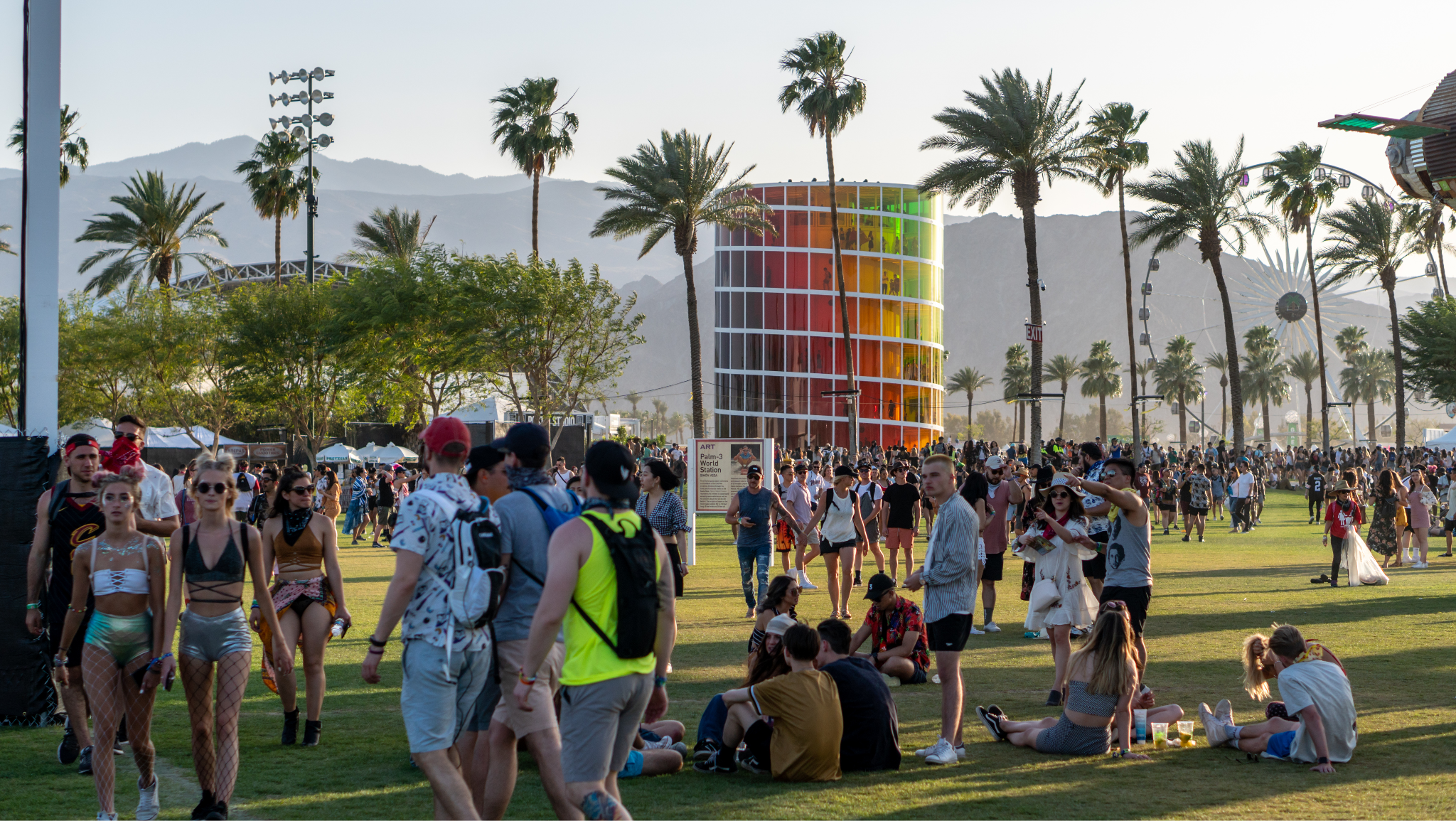
If Lollapalooza translated the rapid expansion of alternative music into a traveling gathering, Coachella Valley Music and Arts Festival represents what followed once those boundaries had largely dissolved. Founded in 1999 and held at the Empire Polo Club in Indio, California, Coachella emerged at the end of the decade as a different kind of festival model: fixed in place, carefully staged, and oriented toward a national and eventually global audience willing to travel for the event. Yet the festival's origins date back several years, and it is closely tied to Pearl Jam's actions.
On November 5, 1993, during the Vs. tour, Pearl Jam performed for nearly 25,000 fans at the Empire Polo Club. The band selected the site after refusing to play in Los Angeles due to its dispute with Ticketmaster over service charges and control of ticket distribution. That concert demonstrated that the polo grounds could sustain a large-scale audience outside the conventional venue system. Paul Tollett, whose company Goldenvoice promoted the show, later pointed to this event as the moment that made a future festival there seem possible.
By the late 1990s, Goldenvoice faced mounting financial pressure. Larger promoters like SFX Entertainment outbid them for major acts, limiting their ability to secure tours under traditional booking. In response, Tollett considered a different strategy: rather than competing for a single headliner, he would assemble a wide-ranging bill of artists who attracted attention within emerging scenes, even if they did not dominate the charts. The premise rested on accumulation. A collection of sought-after acts could draw a large audience without relying on a single dominant name.
Tollett further developed this plan in 1997, when he attended the Glastonbury Festival in England. There, he distributed pamphlets to artists and managers depicting the Empire Polo Club as a potential festival site. In a clever marketing ploy, Tollett stressed the contrast between the two locations. Where Glastonbury often faced rain and mud, the Coachella Valley offered open space and predictable weather. The proposal initially drew skepticism but established early awareness of the concept within the touring circuit.
After considering multiple locations, Tollett and Goldenvoice co-president Rick Van Santen returned to the Empire Polo Club during the Big Gig festival in 1998. Observing the site under festival conditions confirmed its viability. Although they hoped to launch that year, logistical and monetary constraints delayed the debut. Progress accelerated in 1999. On July 16, the Indio City Council approved the proposal and committed $90,000 to services such as traffic control and public safety, with a guarantee of reimbursement from the promoter. The city's caution stemmed from recent experience: the 1998 Big Gig had resulted in a financial loss after lineup changes and weak attendance.
The festival was formally announced on July 28, 1999, with a preliminary lineup of around forty acts, and tickets went on sale shortly after. Its timing placed it close to the fallout from Woodstock '99, marked by violence, fires, and infrastructure breakdowns. Insurance costs rose sharply afterward, and uncertainty surrounded ticket sales, yet Coachella organizers doubled down on a different model of large-scale gathering. Promotional materials emphasized free water, sufficient restrooms, and cooling areas, positioning the festival as controlled and navigable in ways recent events had not been.
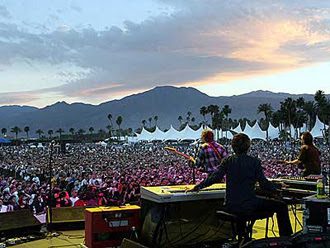
When the first Coachella took place in October 1999, its lineup brought together artists such as Beck, Tool, Rage Against the Machine, Morrissey, and Pearl Jam. Pearl Jam’s presence carried particular weight. Their earlier conflict with Ticketmaster had made them a visible critic of industry consolidation, and their return to the same site where they had performed in 1993 linked the new festival to that history. At a moment when large events risked association with corporate excess or disorder, their participation lent credibility to an untested format.
Despite strong attendance, the inaugural festival failed to turn a profit, and Coachella did not take place in 2000. Its continuation depended on whether the model could sustain itself financially. When it returned in 2001, it did so within a changing musical environment. Over the following years, the festival increased in scale and reach. In 2006, Daft Punk's reunion performance drew wide attention, with its stage production signaling a growing interest in electronic music and large-scale visual design at the festival. From that point forward, Coachella increasingly organized its lineup across genres, placing indie rock, hip-hop, electronic music, and pop within the same billing.
As the festival grew, it became tied to image circulation as much as to sound. Fashion, branding, and social media presence became part of the event’s structure, affecting how it was experienced and remembered. By the 2010s, Coachella had become an international destination, pulling in audiences willing to travel significant distances. Its structure—fixed location, high ticket prices, corporate sponsorship, and carefully curated lineups—aligned with a wider shift in the live music industry, where festivals became key sites of revenue and exposure. Unlike Lollapalooza’s early years, which brought together scenes that had been geographically and culturally dispersed, Coachella assumed a landscape in which those distinctions had already blurred. The festival’s emphasis on scale, presentation, and cross-genre programming shows a moment when the category of “alternative” no longer occupies a position outside the mainstream, but instead forms part of a larger, fully incorporated system of production and performance.
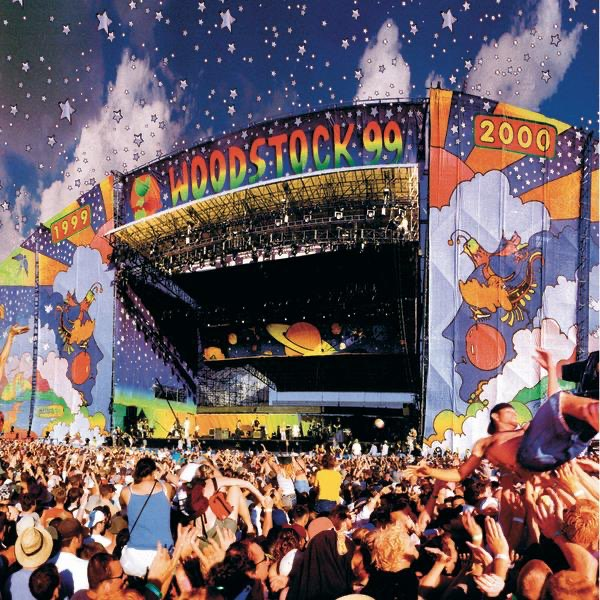
Woodstock '99 was staged as a large-scale revival of the 1969 event, again led by promoter Michael Lang. Public messaging framed the weekend as a continuation of the earlier gathering’s ethos, yet its structure grew out of late-1990s media and entertainment economics. The festival relied on extensive corporate sponsorship, a widely marketed pay-per-view broadcast, and near-constant coverage from MTV. The broadcast alone drove roughly 500,000 purchases at $59.95 each, generating close to $30 million in revenue. Promotion centered on scale and spectacle: three main stages, a dense lineup spanning alternative rock, rap metal, hip-hop, electronic music, and pop, and an expected attendance exceeding 200,000.
Costs affected the experience from the outset. A three-day ticket ran about $150, with additional charges for camping and parking. Inside the grounds, basic necessities were expensive and limited. Bottled water sold for around $4, food prices were similarly high, and ATMs periodically ran out of cash. Long lines formed at concession stands, which became more difficult to navigate as temperatures rose.
The site—Griffiss Air Force Base—introduced immediate physical strain. The decommissioned base’s concrete and asphalt surfaces absorbed and radiated heat, pushing ground temperatures well beyond already high air temperatures in the 90s °F. Shade was scarce, limited mostly to hangars and small structures. Free water stations either failed under demand or produced discolored, foul-tasting water due to contamination, forcing reliance on purchased bottles. Sanitation worsened across the weekend: portable toilets overflowed, waste spread into crowded areas, and reports of trench foot and gastrointestinal illness circulated by Saturday.
The audience skewed young, white, and male, in part because of the popularity of late-1990s alternative rock and rap metal. Large camping areas kept most attendees on-site for the duration, limiting opportunities to leave and recover. As dehydration, heat, and poor sanitation accumulated, the atmosphere grew increasingly unstable.
The lineup featured many of the most visible acts of the period, including Red Hot Chili Peppers, Metallica, Fatboy Slim, The Offspring, DMX, Limp Bizkit, Korn, Alanis Morissette, Bush, Kid Rock, and Creed. Despite the star power, many in the crowd were restless. Reports of sexual harassment and assault appeared early and persisted. Women who crowd-surfed were frequently groped or had their clothing torn away. Performers, including Dexter Holland of The Offspring, Flea of Red Hot Chili Peppers, and Jay Kay of Jamiroquai, addressed the crowd about this behavior during their sets. At least five rapes were officially reported, alongside numerous other assaults and incidents of harassment, though many more likely went unreported. Eyewitnesses described a woman being pulled from crowd-surfing and assaulted in a mosh pit during Limp Bizkit’s performance.
Sheryl Crow’s Friday set became a widely discussed moment. The crowd began to chant “show your tits”, and she later recalled that someone threw feces at her during “My Favorite Mistake” and described the performance as the worst of her career. During the set, she also addressed ongoing harassment, bringing attention to incidents that continued across the weekend.
Electronic tents and rave areas extended activity well beyond the main stage schedule. Continuous DJ sets, lighting rigs, and dense crowds kept many attendees active overnight, reducing rest and adding to exhaustion under already difficult conditions.
By Saturday, tensions were visible across the grounds. Members of the crowd threw bottles and mud at performers. Security, much of it contracted with insufficient training or volunteers, struggled to manage surges and enforce barriers. During The Offspring’s set, the band staged a mock attack on effigies of the Backstreet Boys, which the crowd responded to by throwing objects. Commentators later pointed to this moment as part of a broader pattern of aggressive anti-pop sentiment among both performers and attendees.
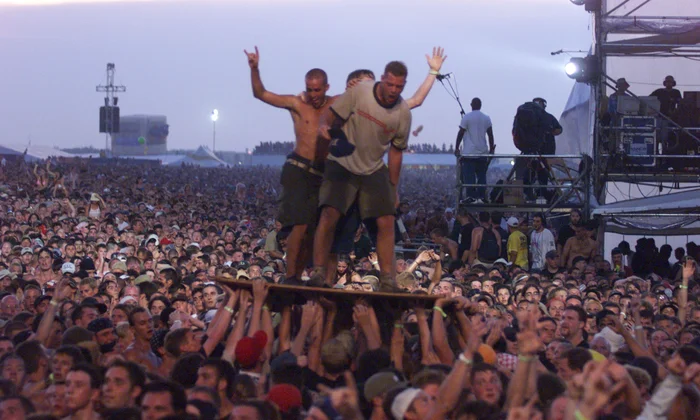
Violence escalated further during Limp Bizkit’s performance. As the set progressed, sections of the audience tore plywood from nearby structures and used it for crowd-surfing. Frontman Fred Durst was approached by staff and asked to calm the crowd; he relayed a partial warning but continued to encourage intensity. Before “Break Stuff,” he urged the audience to release pent-up frustration, listing everyday grievances and directing that energy outward. During the song, mosh pits expanded, fights broke out, and smaller buildings near the stage were damaged. Pieces of plywood collapsed under the weight of crowd-surfers, dropping people onto others below. Technicians in the central sound tower posted a sign reading “The Alamo” before evacuating under orders. Broadcast audio cut portions of Durst’s microphone while medical teams treated the injured. Later in the set, he reversed tone, calling for “positive energy,” then climbed onto a sheet of plywood to crowd-surf while performing “Faith.” Afterward, he was informed by staff and police that fans had dismantled structures to obtain the boards. Festival co-producer John Scher later blamed Durst for failing to de-escalate, while Durst responded that he could not see the extent of injuries from the stage.
Sunday closed with major acts, including Red Hot Chili Peppers. Organizers and activists from PAX had distributed candles for a vigil commemorating victims of the Columbine High School massacre. The plan had not been coordinated with fire authorities. During the closing sets, attendees lit the candles; many were then used to ignite piles of trash and debris strewn across the grounds. Fires spread across multiple areas, fed by plywood and accumulated waste. A sound tower caught fire and eventually collapsed after people climbed its structure. Fire crews were initially hesitant to enter due to crowd conditions. Vendor stalls were looted, and police in riot gear moved in as the situation deteriorated.

In retrospect, Woodstock '99 exposed the gap between large-scale commercial promotion and the logistical demands of sustaining a crowd of that size. High ticket prices, inflated costs inside the venue, and failing infrastructure created conditions where small disruptions escalated quickly. Some commentators have identified the festival as part of a pattern of sometimes violent rockist sentiment and machismo expressed by the festival's male performers and attendees. The emphasis on continuous high-intensity performances added further strain. As Anthony Kiedis later observed, "It was clear that this situation had nothing to do with Woodstock anymore. It wasn't symbolic of peace and love, but of greed and cashing in.”
Chapter 37: Conclusion
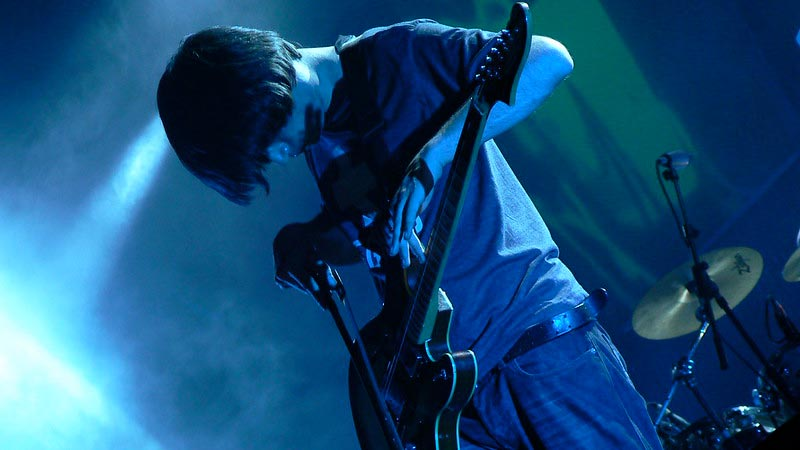
Alternative rock in the 1980s and 1990s combined musical experimentation with cultural resonance, responding to the anxieties, aspirations, and contradictions of its era while leaving a lasting influence on American popular music. The genre occupied a liminal space between independence and mainstream recognition, often challenging the values and expectations of major labels, the media, and popular audiences. Tensions between independence and commercial success remained central to many alternative-rock scenes as bands moved from independent networks into major-label markets. Nirvana exemplified this duality: the band’s raw, unvarnished sound and deeply personal lyrics captured the disaffection of a generation, yet the overwhelming success of Nevermind propelled them to international fame and turned them into global icons, in effect, bringing into focus the fraught intersection of rebellion and fame.
Beyond individual artists, alternative rock fostered communities and subcultures that extended far beyond the concert stage. DIY ethics, zine culture, underground venues, and fan networks created spaces where marginalized voices could find expression, influencing youth identity and cultural discourse. Movements such as Riot Grrrl, the jam band scene, and industrial collectives like Nine Inch Nails and Marilyn Manson extended alternative rock’s reach into broader social and political realms, addressing issues ranging from gender inequality and sexual violence to alienation, consumer culture, and technological anxiety. Even as some bands achieved mainstream prominence, the underlying values of experimentation, improvisation, and defiance of convention persisted, ensuring that the genre retained its edge and cultural credibility.
The abiding influence of 1980s and 1990s alternative rock lies in its capacity to resonate collectively and to offer listeners a framework for questioning social norms, negotiating identity, and articulating dissatisfaction with dominant cultural narratives. It demonstrated that popular music could be simultaneously confrontational and communal, intellectually engaged and viscerally affecting. In doing so, alternative rock influenced the landscape of contemporary culture, leaving a legacy that continues to inform the aesthetics, politics, and ethos of new generations of musicians, fans, and cultural participants into the 21st century.
Chapter 37: Further Reading
Alden, Grant, and Peter Blackstock, eds. The Best of No Depression: Writing about American Music. Austin: University of Texas Press, 2005.
Baddeley, Gavin. Dissecting Marilyn Manson. London: Plexus, 2000; revised edition.
Bell, Thomas. “Why Seattle? An Examination of an Alternative Rock Culture Hearth.” Journal of Cultural Geography 18, no. 1 (1998): 35–48.
Carr, Daphne. Pretty Hate Machine. New York: Omnibus, 2011.
Delancey, Morgan. The Dave Matthews Band: Step into the Light. Toronto: ECW Press, 1998; 2nd ed., 2001.
Doheny, James. Radiohead: Back to Save the Universe. New York: St. Martin’s Griffin, 2002.
Fitzpatrick, Rob. Give It Away: The Stories Behind Every Red Hot Chili Peppers Song. Cambridge, MA: Da Capo Press, 2004.
Fox, Pamela, and Barbara Ching. Old Roots, New Routes: The Cultural Politics of Alt.Country Music. Ann Arbor: University of Michigan Press, 2008.
Gehr, Richard, and Phish. The Phish Book. New York: Villard, 1998.
Griffiths, Dai. OK Computer. New York: Continuum, 2004.
Hanson, Amy. Smashing Pumpkins: Tales of a Scorched Earth. London: Plexus, 2004.
Huxley, Martin. Nine Inch Nails. New York: St. Martin’s Press, 1997.
Humphrey, Clark. Loser: The Real Seattle Music Story. Portland, OR: Feral House, 1995; updated Seattle edition, 1999.
Jovanovic, Rob. Beck! On a Backwards River. New York: Continuum, 2001.
Kiedis, Anthony, and Larry Sloman. Scar Tissue. New York: Hyperion, 2005.
Letts, Marianne. Radiohead and the Resistant Concept Album. Bloomington, IN: Indiana University Press, 2010.
Martell, Nevin. Dave Matthews Band: Music for the People. New York: Schirmer, 2004.
Moore, Ryan. Young, Gifted, and Slack: Social Crises, Postmodernity, and the Indie Rock Scene in San Diego. PhD diss., University of California, San Diego, 1999.
——— . Sells Like Teen Spirit: Music, Youth Culture, and Social Crisis. New York: New York University Press, 2009.
Mullen, Brendan. Oral/Visual History of the Red Hot Chili Peppers. New York: HarperCollins, 2010.
Oakes, Kaya. Slanted and Enchanted: The Evolution of Indie Culture. New York: Continuum, 2009.
Prato, Greg. Grunge is Dead: The Oral History of Seattle Rock. Toronto: ECW Press, 2009.
Puterbaugh, Parke. Phish: The Biography. Philadelphia: Da Capo Press, 2009.
Tate, Joseph, ed. The Music and Art of Radiohead. Aldershot, UK: Ashgate, 2005.
Thompson, Dave. Industrial Revolution. Los Angeles: FAB Press, 1994.
Wolff, Kurt. “Settin’ the Woods on Fire: Alternative Country in the 1990s.” In Country Music: The Rough Guide, edited by Oliver Duane, 549–91. London: Rough Guides, 2000.
Woolliscroft, Tony. Me and My Friends: Red Hot Chili Peppers. New York: Omnibus Press, 2009.