Chapter 4: Tin Pan Alley
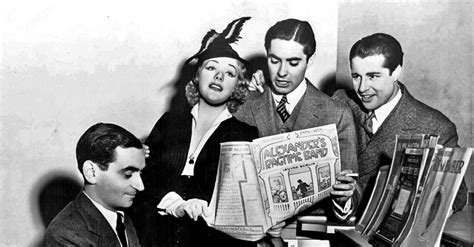
Chapter 4 explains how Tin Pan Alley accelerated the commercialization of American music through sheet music publishing and song promotion. It also explores the rise of vaudeville, marches, and ragtime, showing how African American musical traditions influenced popular music while new business practices changed how songs were written, marketed, and sold
Important Terms
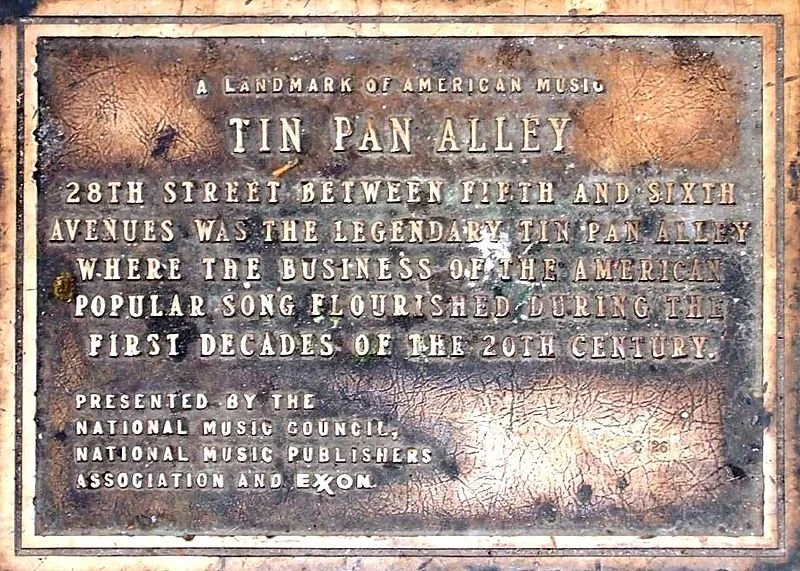
Tin Pan Alley – The New York City district where music publishers were concentrated and the center of the American sheet music industry.
Music Publisher – A company that produced, promoted, and distributed songs while managing copyrights.
Song Plugger – A musician hired to promote new songs through live performances.
Copyright Act of 1909 – The law that strengthened copyright protection and standardized royalty payments for composers.
Royalty – A payment made to a songwriter or copyright owner whenever their music is sold, performed, or reproduced.
Public Domain – Works that are no longer protected by copyright and may be used freely.
Mechanical License – A license allowing others to reproduce copyrighted music while paying required royalties.
ASCAP (American Society of Composers, Authors, and Publishers) – Organization founded in 1914 to collect royalties and protect songwriters' rights.
Performance Rights Organization (PRO) – An organization that collects licensing fees and distributes royalties to songwriters and publishers.
Blanket License – A license allowing businesses to perform any song within an organization's catalog.
Chorus Slip – Printed lyrics distributed by song pluggers so audiences could sing along.
Vaudeville – A variety show featuring music, comedy, dancing, magic, and other live entertainment.
Triple Meter – Musical meter with three beats per measure.
Waltz – A dance and musical style written in triple meter.
Coon Songs – Racist songs built around harmful stereotypes of African Americans that grew out of blackface minstrelsy.
March – A musical style with a steady beat originally written for military bands.
Ragtime – A piano-based musical style featuring syncopated melodies over a steady march rhythm.
Syncopation – Placing rhythmic emphasis on weak beats or offbeats.
Stride Bass – Left-hand piano pattern alternating bass notes and chords.
2/4 Meter – Musical meter with two beats per measure commonly used in ragtime.
Tin Pan Alley Rag – A popular song influenced by ragtime rhythms but written in a standard verse-chorus format.
Artists Discussed

Harry von Tilzer – Tin Pan Alley songwriter known as the "Daddy of Popular Song."
George Gershwin – Influential Tin Pan Alley and Broadway composer.
Ira Gershwin – Lyricist who collaborated with George Gershwin.
Cole Porter – Prominent Tin Pan Alley and Broadway songwriter.
Irving Berlin – One of America's greatest songwriters and composer of "Alexander's Ragtime Band," "God Bless America," and "White Christmas."
Al Jolson – Popular entertainer who promoted Tin Pan Alley songs.
Gene Austin – Singer frequently credited as a songwriter for promotional purposes.
Eddie Cantor – Vaudeville performer who promoted Tin Pan Alley songs.
Ruth Etting – Singer and vaudeville performer associated with Tin Pan Alley.
Rudy Vallée – Popular singer who benefited from song plugger promotions.
Charles K. Harris – Composer and self-publisher of "After the Ball."
J. Aldrich Libbey – Vaudeville singer who helped make "After the Ball" a national hit.
James A. Bland – One of the first commercially successful Black singer-songwriters; composed "Carry Me Back to Old Virginny."
John Philip Sousa – America's "March King" and composer of "The Stars and Stripes Forever."
Scott Joplin – Known as the "King of Ragtime" and composer of "Maple Leaf Rag."
John Stark – Music publisher who published Scott Joplin's works.
James Reese Europe – African American bandleader who helped bridge ragtime and early jazz.
Songs Referenced

"After the Ball" – Charles K. Harris
"A Bird in a Golden Cage" – Harry von Tilzer
"I Want a Girl Just Like the Girl That Married Dear Old Dad" – Harry von Tilzer
"Sweet Adeline" – Music by Harry Armstrong; lyrics by Richard H. Gerard
"You Tell Me Your Dream and I'll Tell You Mine" – Charles N. Daniels
"My Gal Sal" – Paul Dresser
"The Sidewalks of New York" – Charles B. Lawlor and James W. Blake
"Meet Me in St. Louis, Louis" – Kerry Mills
"Daisy Bell (Bicycle Built for Two)" – Harry Dacre
"In the Good Old Summertime" – George Evans and Ren Shields
"My Wild Irish Rose" – Chauncey Olcott
"All Coons Look Alike to Me" – Ernest Hogan
"Gimme Ma Money" – Traditional coon song
"Carry Me Back to Old Virginny" – James A. Bland
"The Stars and Stripes Forever" – John Philip Sousa
"The Washington Post March" – John Philip Sousa
"Semper Fidelis" – John Philip Sousa
"El Capitan" – John Philip Sousa
"Maple Leaf Rag" – Scott Joplin
"The Entertainer" – Scott Joplin
"Railroad Rag" – Traditional Tin Pan Alley song
"Alexander's Ragtime Band" – Irving Berlin
"Hello! Ma Baby" – Joseph E. Howard
"That Mysterious Rag" – Irving Berlin
"Everybody's Doin' It Now" – Irving Berlin
"God Bless America" – Irving Berlin
"There's No Business Like Show Business" – Irving Berlin
"White Christmas" – Irving Berlin