Chapter 17: Soul, Motown, and Stax

Chapter 17 follows the rise of soul music during the Civil Rights era as African American artists blended gospel, rhythm and blues, and pop into a genre closely connected to the social and cultural transformations of the 1960s. The chapter compares Motown's polished crossover productions with the gospel-influenced recordings of Stax and Atlantic Records while examining the contributions of performers, producers, songwriters, and studio musicians who established the sound of 1960s soul.
Important Terms
Soul Music – A genre combining gospel, rhythm and blues, jazz, and pop that emphasizes emotional vocal expression and African American musical traditions.
Sweet Soul – A polished style of soul featuring smooth vocals, lush orchestration, and pop-oriented production.
Southern Soul – A gospel-influenced style of soul emphasizing passionate vocals, horn sections, and rhythm-driven arrangements.
Call-and-Response – A musical exchange in which a lead singer or musician is answered by a group or another performer.
Melisma – Singing several notes on a single syllable.
Blue Notes – Notes intentionally sung or played slightly below standard pitch to increase emotional expression.
Triplet Feel – A rhythmic pattern dividing each beat into three equal parts.
12/8 Time – A compound meter with four beats per measure, each divided into three eighth notes.
Compound Meter – A meter in which each beat naturally divides into three equal parts.
Motown Sound – A polished style featuring melodic bass lines, tambourines, handclaps, layered vocals, and pop-oriented songwriting.
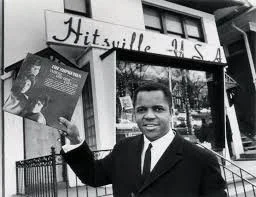
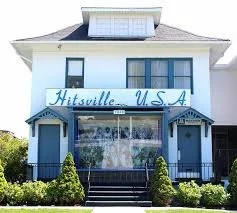
Hitsville U.S.A. – Berry Gordy's original Motown headquarters in Detroit.
Hook – A memorable melodic or lyrical phrase designed to capture the listener's attention.
Half-Step Modulation – A key change upward by one semitone used to build excitement late in a song.
Multi-Track Recording – A recording method allowing instruments and vocals to be recorded separately and combined later.
Overdub – Recording additional parts over an existing track.
House Band – A group of studio musicians who regularly perform on a record label's recordings.
Backbeat – Strong accents on beats two and four.
Syncopation – Placing rhythmic emphasis on weak beats or unexpected parts of the measure.
Delayed Backbeat – A groove in which the snare drum falls slightly behind the beat, creating a relaxed rhythmic feel.
Staccato – A style in which notes are played or sung in a short, detached manner.
Melodic Bass Line – A bass part that functions as an independent melody rather than simply supporting harmony.
Chromatic Passing Tone – A note outside the main scale used to connect two notes smoothly.
Improvisation – Creating or altering music spontaneously during performance.
Factory Model of Production – Berry Gordy's system in which songwriting, production, performance, and promotion were divided into specialized roles.
Finishing School (Charm School) – Motown's artist development program that taught etiquette, stage presence, and public presentation.
Artists Discussed
Berry Gordy Jr. – Founder of Motown Records who built the company using a factory-style business model.
Ben E. King – Singer whose "Stand by Me" became an early soul classic.
Jerry Leiber – Producer and songwriter who worked with Ben E. King.
Mike Stoller – Producer and songwriter who worked with Ben E. King.
Sam Cooke – Known as the "King of Soul"; singer, songwriter, producer, and founder of SAR Records.
SAR Records – Black-owned label founded by Sam Cooke.
Motown Records – Detroit record label that developed the Motown Sound.
The Miracles – Motown vocal group led by Smokey Robinson.
The Marvelettes – Early Motown girl group.
Mary Wells – Motown singer known for "My Guy."
Martha and the Vandellas – Motown girl group.
Holland-Dozier-Holland (HDH) – Songwriting and production team responsible for many Motown hits.
Brian Holland – Member of Holland-Dozier-Holland.
Eddie Holland – Member of Holland-Dozier-Holland.
Lamont Dozier – Member of Holland-Dozier-Holland.
Barrett Strong – Songwriter and singer who co-wrote many Motown hits.
Norman Whitfield – Producer and songwriter for Motown.
Marvin Gaye – Motown singer known for "I Heard It Through the Grapevine."
Stevie Wonder – Motown singer, songwriter, and multi-instrumentalist.
The Temptations – Motown vocal group known for sophisticated harmonies and choreography.
The Four Tops – Motown vocal group.
Junior Walker and the All Stars – Motown rhythm and blues group.
The Jackson 5 – Motown family group that launched Michael Jackson's career.
Michael Jackson – Singer who first gained fame with the Jackson 5.
Maxine Powell – Director of Motown's finishing school.
Cholly Atkins – Choreographer for Motown artists.
Maurice King – Music director who trained Motown performers.
Smokey Robinson – Singer, songwriter, producer, vice president of Motown, and leader of the Miracles.
James Jamerson – Bassist whose melodic bass style became one of the most recognizable features of the Motown Sound.
The Funk Brothers – Motown's house band.
The Supremes – Motown's best-selling girl group.
Diana Ross – Lead singer of the Supremes.
David Ruffin – Lead singer of the Temptations' classic lineup.
Atlantic Records – Record label known for Southern soul and rhythm and blues.
Herb Abramson – Co-founder of Atlantic Records.
Ahmet Ertegun – Co-founder of Atlantic Records.
Jerry Wexler – Producer whose work at Atlantic Records helped popularize Southern soul.
Stax Records – Memphis-based soul label.
Jim Stewart – Co-founder of Stax Records.
Rufus Thomas – Singer whose recording helped shift Stax toward soul music.
Booker T. & the MG's – Stax house band.
Isaac Hayes – Singer, songwriter, and keyboardist associated with Stax.
The Memphis Horns – Horn section featured on many Stax recordings.
Sam & Dave – Soul duo associated with Stax.
Eddie Floyd – Soul singer and songwriter.
Otis Redding – Southern soul singer and songwriter.
Aretha Franklin – Known as the "Queen of Soul."
Songs Referenced

"The Twist" – Chubby Checker
"Stand by Me" – Ben E. King
"Be with Me Jesus" – The Soul Stirrers
"Nearer to Thee" – The Soul Stirrers
"You Send Me" – Sam Cooke
"Chain Gang" – Sam Cooke
"Cupid" – Sam Cooke
"Twistin' the Night Away" – Sam Cooke
"Bring It On Home to Me" – Sam Cooke
"A Change Is Gonna Come" – Sam Cooke
"Shop Around" – Smokey Robinson and the Miracles
"Money (That's What I Want)" – Barrett Strong
"I Heard It Through the Grapevine" – Marvin Gaye
"Stop! In the Name of Love" – The Supremes
"My Guy" – Mary Wells
"I Second That Emotion" – Smokey Robinson and the Miracles
"The Tears of a Clown" – Smokey Robinson and the Miracles
"My Girl" – The Temptations
"The Way You Do the Things You Do" – The Temptations
"Baby Love" – The Supremes
"When the Lovelight Starts Shining Through His Eyes" – The Supremes
"Where Did Our Love Go" – The Supremes
"You Can't Hurry Love" – The Supremes
"Someday We'll Be Together" – Diana Ross and the Supremes
"Last Night" – The Mar-Keys
"Green Onions" – Booker T. & the MG's
"Boot-Leg" – Booker T. & the MG's
"Hip Hug-Her" – Booker T. & the MG's
"Soul Limbo" – Booker T. & the MG's
"Hang 'Em High" – Booker T. & the MG's
"Time Is Tight" – Booker T. & the MG's
"(Sittin' On) The Dock of the Bay" – Otis Redding
"Soul Man" – Sam & Dave
"These Arms of Mine" – Otis Redding
"Pain in My Heart" – Otis Redding
"I've Been Loving You Too Long" – Otis Redding
"Try a Little Tenderness" – Otis Redding
"Respect" – Otis Redding (later reinterpreted by Aretha Franklin)
"I Can't Turn You Loose" – Otis Redding
"(I Can't Get No) Satisfaction" – The Rolling Stones (covered by Otis Redding)
"Shake" – Sam Cooke (covered by Otis Redding)
"Unforgettable" – Aretha Franklin
"Runnin' Out of Fools" – Aretha Franklin
"Walk On By" – Aretha Franklin
"I Never Loved a Man (The Way I Love You)" – Aretha Franklin
"Respect" – Aretha Franklin
"(You Make Me Feel Like) A Natural Woman" – Aretha Franklin
"Chain of Fools" – Aretha Franklin
"Think" – Aretha Franklin
"(Sweet Sweet Baby) Since You've Been Gone" – Aretha Franklin