Chapter 20: The Folk Revival and Folk Rock
“This Land is Your Land”
Album/Year Released
1944 (single, recorded 1940s)
Artist/Composer
Woody Guthrie
Genre/Style
Folk; protest song
Song Form
Strophic
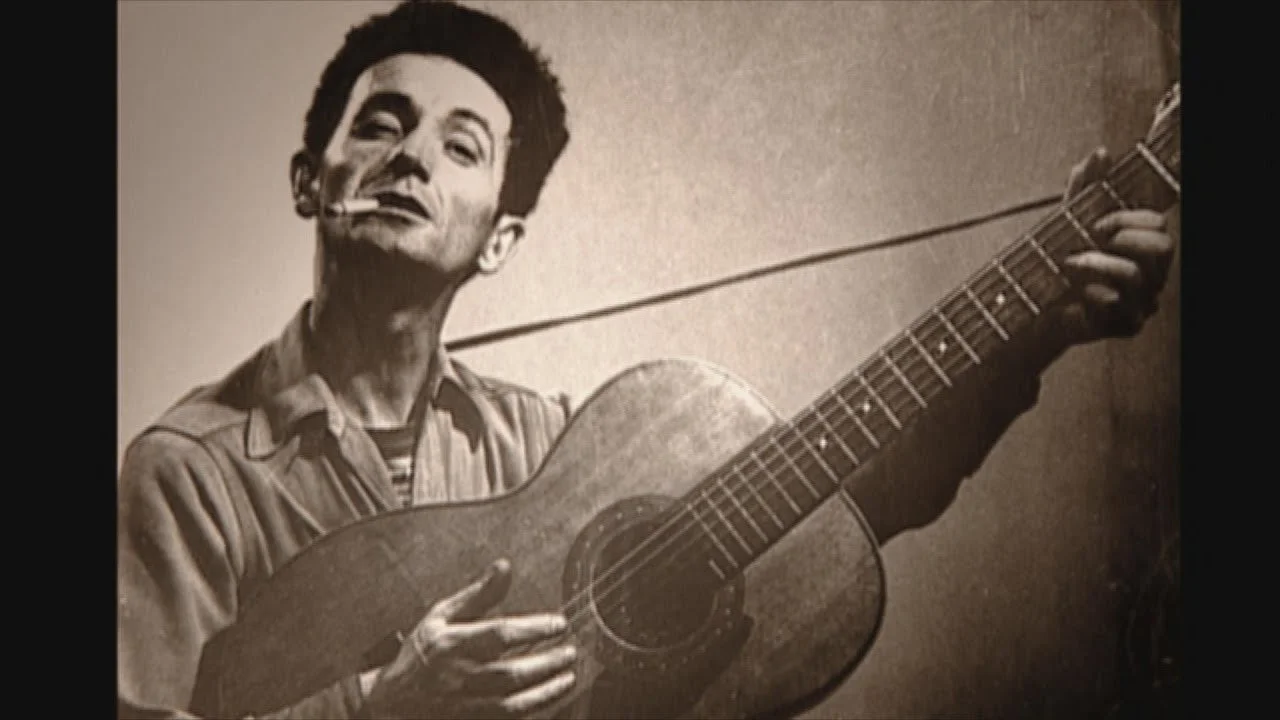
“This Land Is Your Land” is a seminal American folk song composed by Woody Guthrie in 1940 as a critical response to Irving Berlin’s “God Bless America.” Initially titled “God Blessed America for Me,” Guthrie’s version challenged the idea that divine favor was reserved solely for the United States, conveying concern for Americans affected by the Great Depression. By the time of its 1944 radio debut, Guthrie had retitled the song “This Land Is Your Land,” from the original “God Blessed America,” and revised the refrain "God blessed America for me" to the more inclusive "This land was made for you and me" while omitting two verses that directly addressed economic inequality.
Guthrie’s composition draws upon earlier folk and gospel traditions. The melody closely resembles the Baptist hymn “Oh, My Loving Brother,” which the Carter Family recorded as “When the World's On Fire” and later adapted for “Little Darlin’, Pal of Mine.” Guthrie modified the melody by shortening and restructuring it: whereas the original hymn and Carter Family versions follow an “ABCD” pattern, Guthrie employed an “ABAC” structure, repeating the initial melodic phrase for the third line and introducing a distinct phrase for the concluding line, “This land was made for you and me.” The mixture of established folk melodic elements with Guthrie’s innovations accentuates the song’s foundation in American folk music while imparting a unique character.
“This Land Is Your Land” exemplifies key characteristics of folk music, including a strophic, verse-repeating structure, a simple 4/4 meter, and a concentration on melody-driven storytelling. The recurring refrain after each verse reinforces the song’s communal and participatory qualities. Its melodic lines, while harmonically simple, are grounded in folk and gospel traditions, making the song more accessible and encouraging audience participation. The song’s structure, thematic content, and performance practice collectively embody the central elements of American folk music: narrative, social awareness, and engagement with everyday life.
The 1944 recording of the song included the “private property” verse but excluded the “relief office” verse which included the following lyrics:
There was a big high wall there that tried to stop me;
Sign was painted, it said private property;
But on the back side it didn’t say nothing;
That side was made for you and me.
One bright sunny morning in the shadow of the steeple,
By the relief office I saw my people;
As they stood there hungry, I stood there wondering
If this land was made for you and me.
In 2002, the National Recording Registry selected this version for preservation in its inaugural year, recognizing its historical and cultural significance. Nora Guthrie, Woody Guthrie’s daughter, has commented on the song’s international resonance, noting that many regard it as an alternative national anthem for its themes of collective ownership and appreciation for the land.
“Blowin’ in the Wind”
Album/Year Released
1963 (album: The Freewheelin’ Bob Dylan)
Artist/Composer
Bob Dylan
Genre/Style
Folk; protest song
Song Form
Strophic
“Blowin’ in the Wind” is Bob Dylan’s folk protest song in 4/4 meter that uses a strophic structure, with three main verses, each asking questions like “How many roads must a man walk down before you call him a man?” and “How many times must the cannonballs fly before they’re forever banned?” Every verse ends with the chorus, “The answer, my friend, is blowin’ in the wind.” This repeated line is open to different meanings, hinting that the answer might be clear but overlooked, or hard to grasp. Dylan uses an A A A B rhyme scheme, which ties the verses together and draws attention to the questions.
A - How many roads must a man walk down before you call him a man?
A - Yes, 'n' how many seas must a white dove sail before she sleeps in the sand?
A - Yes, 'n' how many times must the cannonballs fly before they're forever banned?
B - The answer, my friend, is blowin' in the wind, the answer is blowin' in the wind.
To better understand how “Blowin’ in the Wind” is constructed, it’s helpful to consider the concepts of macrostructure and microstructure in music analysis. Macrostructure refers to the larger formal elements of a song or composition, such as verses, choruses, and bridges. The broader macrostructure sections are typically labeled using uppercase letters (A, B, C, and so on), providing an overview of the song’s structural layout. Within each macrostructure section, microstructure describes the smaller musical units—such as phrases or subsections—that make up the larger form. Microstructure units are usually labeled with lowercase letters (a, b, c, etc.), offering a more detailed view of the song’s internal organization.
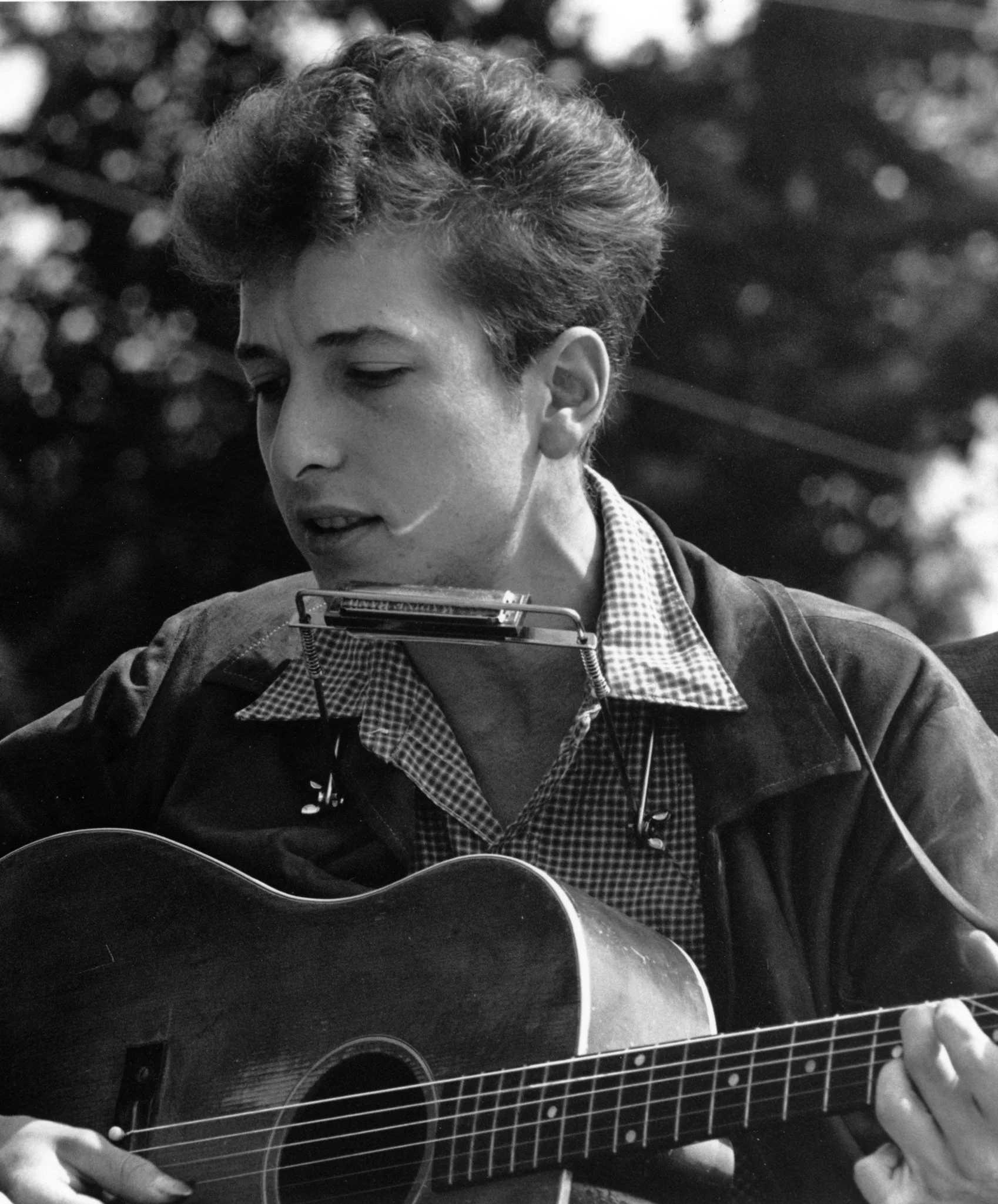
Dylan performs the song using both acoustic guitar and harmonica, with the harmonica providing brief melodic interludes between vocal sections. The instrument’s somber timbre and phrasing reinforce the song’s contemplative and questioning atmosphere. The straightforward chord progression sustains focus on the lyrics and their underlying social and political themes.
The melody of “Blowin’ in the Wind” is derived from the 19th-century African-American spiritual “No More Auction Block for Me,” with Dylan adopting its structural framework for his verses. The recurring verse-and-refrain format provides the song with a stable overall form, while subtle variations in rhythm, phrasing, and harmonica passages introduce diversity. The strophic structure is characteristic of folk music, in which the musical setting remains constant while the lyrics vary.
“Blowin’ in the Wind” quickly became an anthem for the U.S. Civil Rights movement and has been adopted by numerous social movements globally. The song’s effectiveness stems from its simple structure, recurring melody, and stirring lyrics, which promote both communal singing and reflection. Dylan’s use of repeated questions and an unresolved chorus establishes the song as a persistent critique of prevailing norms, enabling it to resonate over the generations.
“Like a Rolling Stone”
Album/Year Released
1965 (album: Highway 61 Revisited)
Artist/Composer
Bob Dylan
Genre/Style
Folk rock
Song Form
Verse-chorus
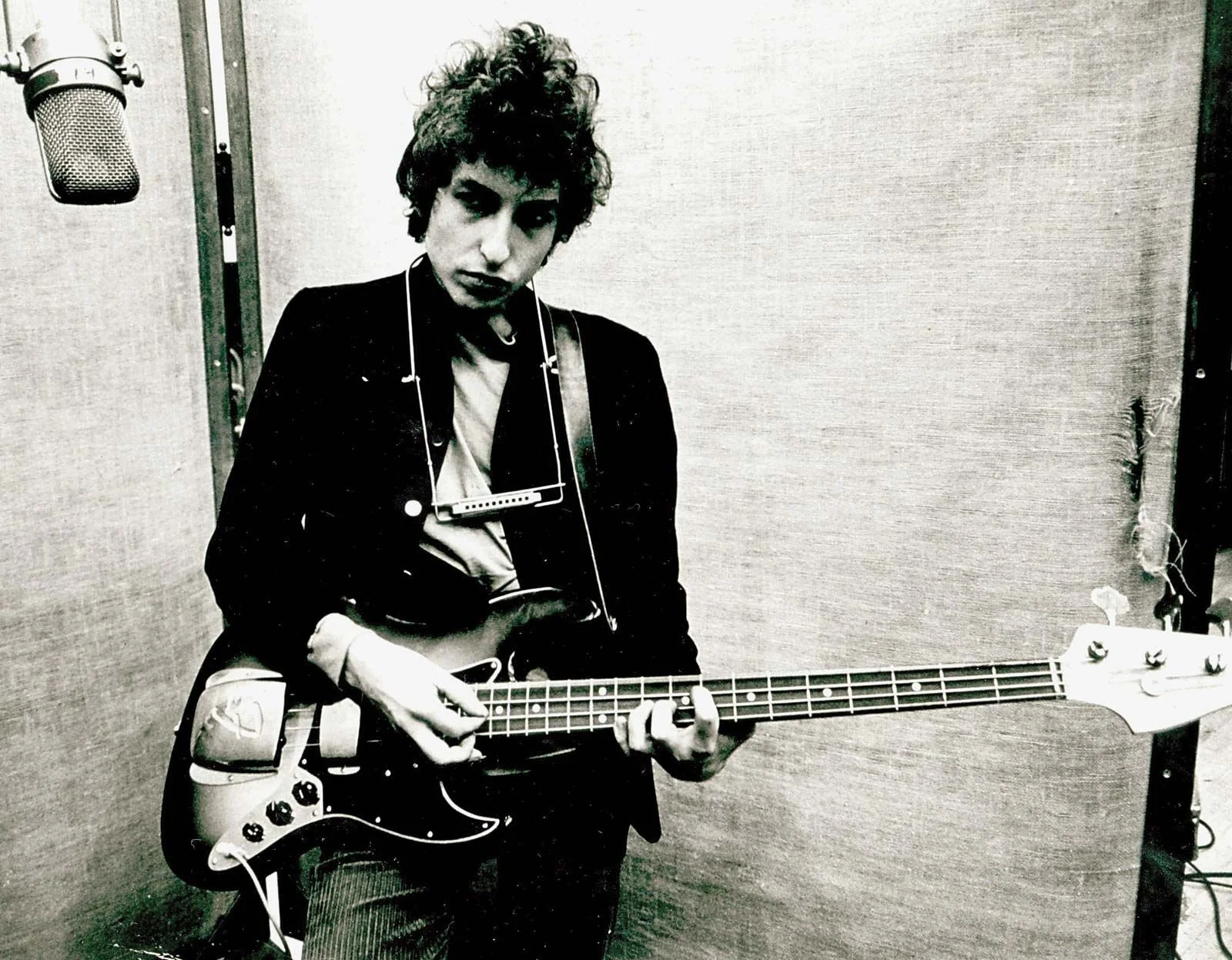
“Like a Rolling Stone” constitutes a major transition in Dylan’s career, as well as the trajectory of American popular music, as he adopts electric instrumentation and merges folk narration with the dynamism of rock. The arrangement incorporates electric guitar, bass, drums, and a Hammond B3 organ, which contributes harmonic depth, melodic embellishments, and rhythmic drive. The persistent 4/4 meter and verse–chorus structure support extended narrative verses that culminate in the iconic chorus hook: “How does it feel…?” The electric instrumentation produces a denser, more assertive sound compared to Dylan’s earlier acoustic recordings, while the organ imparts warmth and a consistent pulse that sustains the song’s momentum.
The verses are extended, spanning 20 to 32 bars, and follow a five-phrase structure labeled “aabcd.” Dylan’s lyrics present a pointed and cynical narrative detailing “Miss Lonely’s” social and financial decline. In contrast, the choruses are more concise, generally comprising three 4-bar phrases that repeat both the lyrics and the melody, thereby emphasizing the central hook. The organ and guitar reinforce the transition between verse and chorus, maintaining rhythmic drive and continuity throughout the song’s six-minute duration, which was atypical for popular music in 1965.
Melodically, Dylan employs repeated-note motifs, particularly at the beginning of each verse and in the lead-up to the chorus, giving the melody a speech-like quality. At certain points, Dylan maintains a continuous C in the vocal line over shifting chords, creating brief dissonance that aligns with the song’s stylistic character. These harmonic decisions ensure the accompaniment stays supportive, allowing the lyrics to remain the primary focus. The chorus, constructed from three high-pitched notes, functions as a compact and memorable hook that consistently returns the listener to the song’s central question. Dylan's vocal style frequently sustains a single pitch over changing chord roots, generating controlled tension and placing greater emphasis on the lyrics than on harmonic intricacy.
“Like a Rolling Stone” challenged conventions regarding song length, thematic content, and musical style. Its duration of over six minutes, its focus on social commentary rather than traditional love themes, and its incorporation of electric instruments into a folk-based framework made it innovative. The song exemplifies Dylan’s capacity to balance lyrical sophistication with structural clarity, presenting complex storytelling within a stable verse–chorus format that foregrounds the lyrics. Al Kooper’s B3 organ playing enriches the sonic texture without eclipsing the narrative, while the guitar and rhythm section sustain the song’s momentum.
Through these artistic decisions, Dylan produced a composition that is both musically innovative and lyrically uncompromising, establishing an essential juncture in the evolution of folk-rock. “Like a Rolling Stone” continues to exemplify Dylan’s ability to integrate narrative lyricism, inventive melody, and electric instrumentation, resulting in a composition that is both accessible and layered with musical and textual complexity.
“Mr. Tambourine Man”
Album/Year Released
1965 (Bob Dylan: Bringing It All Back Home)
1965 (The Byrds album: Mr. Tambourine Man)
Artist/Composer
Bob Dylan
The Byrds (cover)
Genre/Style
Folk
Folk rock
Song Form
Verse-chorus
“Mr. Tambourine Man” has two well-known versions that show different takes on folk-rock. Dylan’s recording is acoustic, using a 4/4 beat and a repeating song structure that puts the focus on his poetic lyrics. Each verse shares the same melody, letting the story stand out, while Dylan’s harmonica adds expression and melody. His verses are long, from 20 to 32 bars, with some lines repeating in slightly different ways, showing his skill with melody. The chorus is always 16 bars, made up of four 4-bar sections, and centers on the line “Hey, Mr. Tambourine Man, play a song for me.”
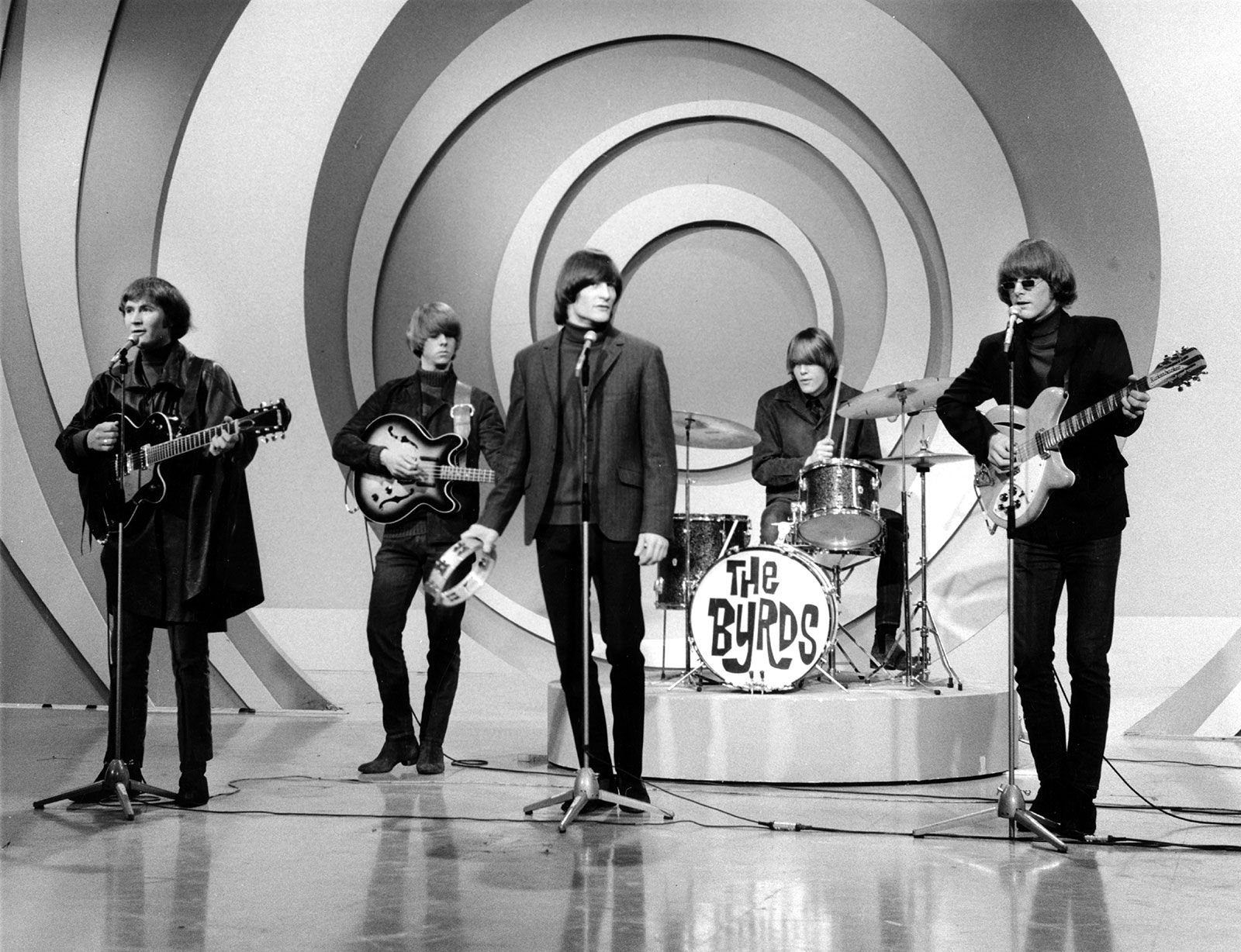
The Byrds turned Dylan’s folk ballad into a major folk-rock hit. Their version came out in April 1965 as their first single on Columbia Records and reached number one on both the Billboard Hot 100 and the UK Singles Chart. The arrangement featured McGuinn’s bright 12-string guitar and harmonized vocals from McGuinn, Clark, and Crosby. A strong rhythm and clean production made the song appealing for radio, while keeping the heart of Dylan’s lyrics and melody. The Byrds used only Dylan’s second verse, making the song shorter—under two and a half minutes—to fit radio standards.
The Byrds’ version was inspired by earlier American folk revival acts, like the Animals’ rock take on The House of the Rising Sun, the Beatles’ folk style, and the jangly twelve-string guitar sound of the Searchers and George Harrison. At first, the band was unsure about recording the song, but McGuinn changed the time signature from Dylan’s 2/4 to 4/4, making it better suited to rock performance. Producer Jim Dickson helped rework the song into a full electric rock piece, subsequently setting a model for many mid-1960s rock bands to follow. Dylan approved of the Byrds’ version after hearing them rehearse, saying, “Wow, you can dance to that!”
The Byrds’ version starts with McGuinn’s unique, Bach-inspired guitar intro, which leads straight into the chorus. The song features the 12-string Rickenbacker, electric piano, bass, and drums, all played by Wrecking Crew session musicians. McGuinn’s lead vocals combine Dylan’s style with clear Beatles-like singing. The twelve-string electric, played by Roger McGuinn, featured six pairs of strings, each pair tuned in octaves or unison, which gave it a uniquely resonant, shimmering tone. When amplified, the doubled strings produced a bright, bell-like chime that filled out the sonic space and created a rich, layered texture. The resulting “jangle” became closely associated with the Byrds and later folk-rock recordings,
Dylan’s original version is more complex in structure, with verses that repeat certain phrases and extend the melody:
1st verse: 20 bars
2nd verse: 24 bars with repeated subphrases
3rd verse: 26 bars
4th verse: 32 bars
In contrast, the Byrds shortened the song for pop audiences while retaining the main verse-chorus structure. Their version starts with a 12-string guitar intro, includes one verse and repeated choruses, and ends with a variation of the intro before fading out to accommodate commercial radio stations, which were reluctant to play songs more than two-and-a-half minutes long. The shorter length and electric instruments made the song more rhythmic and clear, establishing a new musical and lyrical standard for radio-friendly rock hits.
“California Dreamin’”
Album/Year Released
1965 (single, also on If You Can Believe Your Eyes and Ears [1966])
Artist/Composer
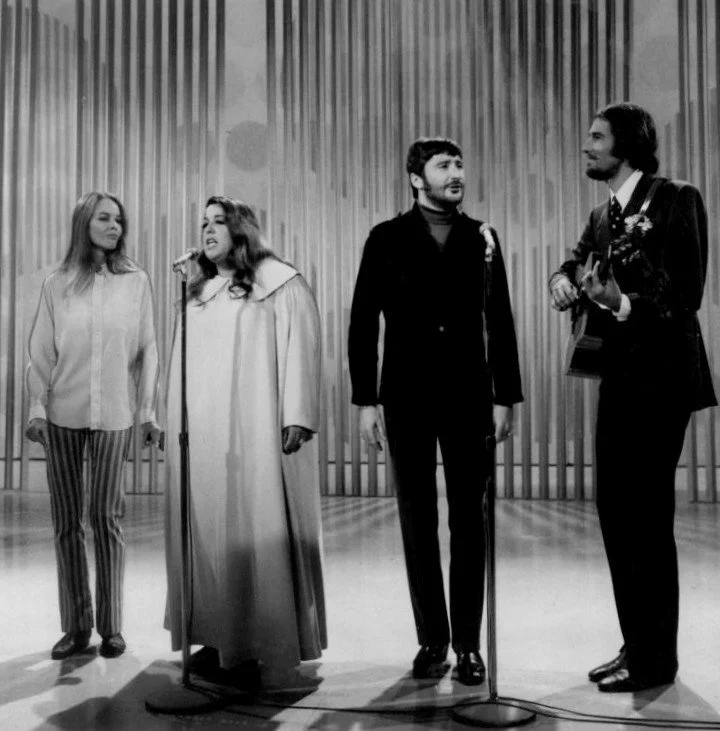
The Mamas & The Papas
John Phillips & Michelle Phillips (composers)
Genre/Style
Folk rock
Song Form
Verse-chorus with Instrumental Bridge
“California Dreamin’” typifies the “California sound,” an aesthetic that emerged in the early 1960s among Southern California pop and rock musicians. Initially, the California sound was linked to idyllic representations of beach culture, surfing, and youth, as popularized by the Beach Boys, Jan and Dean, and Brian Wilson. Over time, the California sound developed into a more sophisticated style that incorporated social consciousness and political awareness. By the mid-1960s, it influenced the Los Angeles folk-rock scene, particularly in Laurel Canyon, where artists such as the Byrds, Buffalo Springfield, Crosby, Stills & Nash, and the Mamas & the Papas addressed themes of counterculture, personal freedom, and social commentary.
The “California sound” is apparent in the song’s finely crafted four-part vocal harmonies, which blend male and female voices to produce a rich, airy texture. The composition uses a 4/4 meter, with a consistent acoustic guitar strumming pattern that establishes rhythmic drive and supports the vocal lines. The verse–chorus structure is complemented by a brief bridge section that introduces harmonic and melodic contrast, adding variety while maintaining the song’s hypnotic continuity. The vocal arrangements emphasize the melodic contour and serve as the centerpiece of the track, illustrating the capacity of folk-rock to foreground vocal blending as a principal expressive device.
“California Dreamin’” follows a straightforward verse–chorus structure with repetition of the melody in each verse. The song opens with a descending, melancholic line played on a 12-string guitar, immediately establishing its pensive tone. Midway through, the track features an alto flute solo performed by Bud Shank, reportedly improvised, which adds a lyrical, airy counterpoint to the vocal harmonies and amplifies the song’s sense of longing and escape.
The verses convey a desire to escape a cold, dreary environment, while the chorus conveys a longing for the warmth and promise of California. The lead vocals were re-recorded by Denny Doherty after the initial sessions and combined with the original instrumental and backing vocal tracks, ensuring that the vocal delivery aligned with the expressive, layered arrangements. The instrumentation features acoustic guitar, piano, flute, and drums, with the lush harmonies remaining central to the song’s texture.
Stylistically, the song integrates the narrative and acoustic foundations of folk-rock with the polished, expansive qualities of Los Angeles’ sunshine pop. Its memorable melody, hypnotic chord progressions, and rich vocal harmonies are an example of the California music scene and the 1960s countercultural era.