Chapter 39: R&B and Pop Music in the 90s
Table of Contents
“Doo-Wop (That Thing)”
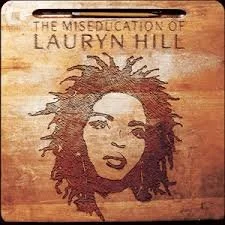
Album/Year Released
1998 (album: The Miseducation of Lauryn Hill)
Artist/Composer
Lauryn Hill
Genre/Style
Neo Soul; R&B; hip-hop
Song Form
Verse–pre-chorus–chorus with bridge
“Doo-Wop (That Thing)” by Lauryn Hill, released in 1998 as the lead single from The Miseducation of Lauryn Hill, blends neo-soul, R&B, and hip-hop, combining socially conscious lyrics with intricate musical textures. The track features a rhythm section composed of programmed drums, bass, and sampled instrumentation. Hill’s vocal performance alternates between rapped verses and melodic choruses. Hill alternates lines with background vocalists in call-and-response passages, drawing from traditions rooted in African American musical heritage. The lyrics address self-respect, materialism, and personal integrity. Hill directs different verses toward men and women, using clear diction and precise rhythmic phrasing to deliver cautionary messages.
The song’s structure follows a verse–pre-chorus–chorus format with a bridge and is set in a minor key, favoring a hip-hop aesthetic rather than the traditional 1950s doo-wop chord progression implied by the title. A simple piano motif establishes the opening rhythmic pulse, supported by a secondary piano line before drums, bass, and horns enter just prior to the first verse. Hill’s rapping and singing are layered with backup vocals, and additional elements such as male baritone vocals and violin appear during the bridge to create rich harmonic interplay. The instrumental arrangement is dynamic: horns, drums, and violin emphasize melodic phrases, while the piano, bass, and Hill’s voice maintain softer textures. Melodic contours are varied, with piano motifs rising and falling, the bass line undulating, horn phrases moving in groups of three, and the violin spanning a wide range with pauses and climaxes.
Hill's vocal parts create layered textures, with rapped and sung lines overlapping in the chorus and bridge. At several points, the background voices reinforce or vary the lead melody, creating a heterophonic effect. The instrumental and vocal layers each follow independent rhythmic patterns, resulting in complex textures. The piano repeats a four-beat figure, the horns use a three-note grouping, the bass an eight-note pattern, the drums a four-beat figure, and the violin a two-part phrase. Harmonic complexity emerges from the interaction of multiple voices and instruments, most notably in the bridge, where violin, piano, drums, and both male and female vocal lines converge. Phrasing enhances the clarity of the lyrics, with horns and drums accentuating key points. Loops are employed in the introduction and chorus to maintain rhythmic and melodic cohesion. The song's layered instrumentation and vocal interplay produce a dense yet accessible arrangement that combines neo-soul, R&B, and hip-hop with socially conscious songwriting, which encapsulates a significant moment in 1990s popular music.