Chapter 34: Hip Hop pt.1
“The Revolution Will Not Be Televised”
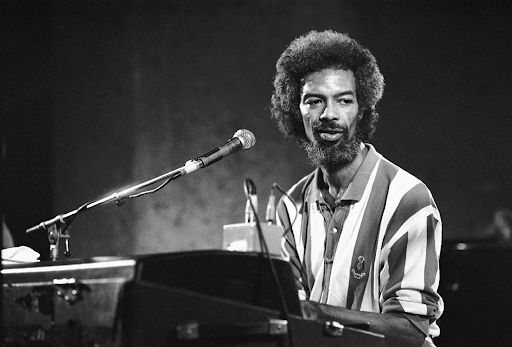
Album/Year Released
1970 (Small Talk at 125th and Lenox)
Artist/Composer
Gil Scott-Heron
Genre/Style
Spoken word; proto-hip-hop; jazz poetry
Song Form
Strophic spoken-text form
“The Revolution Will Not Be Televised,” first recorded in 1970 for Small Talk at 125th and Lenox, positions Gil Scott-Heron as a poet, musician, and social critic operating at the intersection of spoken performance and music. The original version features Scott-Heron reciting his text over a sparse rhythmic foundation of congas and bongo drums in a steady 4/4 pulse. Rather than employing a conventional verse–chorus format, the piece adopts a strophic, prose-like structure distinguished by continuous spoken delivery. The recurring line “The revolution will not be televised” functions as a refrain that anchors the text, reappearing throughout the performance as both a rhythmic marker and a thematic statement. Scott-Heron is frequently identified as a proto–hip-hop figure due to his focus on rhythmic speech, political commentary, and minimal yet groove-oriented accompaniment.
Scott-Heron uses rhythmically aligned speech rather than pitched singing, articulating the words in a measured cadence against a consistent backbeat. His delivery emphasizes timing, phrasing, and rhetorical accent rather than melody. The steady drum pattern establishes a repetitive framework that keeps the lyrics at the center of the performance. In the 1971 re-recorded version, released as the B-side of the first single from Pieces of a Man, the accompaniment becomes a small jazz-funk ensemble. Bass and electric piano reinforce the groove, while flute lines add melodic contrast to the percussive foundation. The fuller arrangement maintains the original's linear structure while giving the instrumental parts a more prominent presence.
Lyrically, the piece critiques American mass media and consumer culture in the period following the Civil Rights Movement. Its text draws upon earlier traditions of jazz poetry and contemporaneous spoken-word activism, such as The Last Poets’ “When the Revolution Comes,” which begins by suggesting that some individuals might witness change through television. Scott-Heron’s work directly refutes the idea that political change could be experienced passively through television. Scott-Heron references television programs such as Green Acres and The Beverly Hillbillies, film stars including Natalie Wood and Steve McQueen, and brand names such as Coca-Cola, Listerine, Hertz, Dove, and Exxon. By enumerating these icons of popular entertainment and advertising, he juxtaposes the spectacle of commercial media with the realities of political struggle. The repeated assertion that the revolution “will not” be presented through familiar broadcast forms contests the notion that social change can be commodified as entertainment or condensed into news highlights. The title draws upon rhetoric associated with Black Power activism in the 1960s, and the work has frequently been interpreted as both satire and warning in response to the era’s media-saturated environment.
“The Adventures of Grandmaster Flash on the Wheels of Steel”
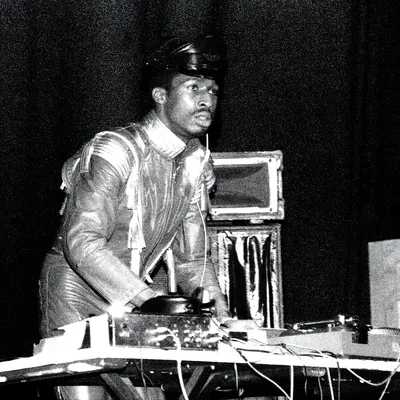
Album/Year Released
1981 (single)
Artist/Composer
Grandmaster Flash and the Furious Five
Clifton "Jiggs" Chase, Melvin Glover, George Jackson, Sylvia Robinson
Genre/Style
Hip-hop
Song Form
Through-composed DJ performance
“The Adventures of Grandmaster Flash on the Wheels of Steel,” released in 1981 as a single, is one of the earliest commercially issued recordings to document Bronx DJ practice in real time. Produced by Grandmaster Flash (Joseph Saddler) of Grandmaster Flash and the Furious Five, alongside members Melle Mel, Cowboy, Kidd Creole, Rahiem, and Mr. Ness/Scorpio, the track presents a through-composed DJ performance rather than a conventional verse–chorus structure. The piece maintains a steady 4/4 meter derived from its source recordings and unfolds as a continuous live mix constructed entirely from previously released funk, disco, and rock records. In this context, sampling refers to the reuse of prerecorded material as the base substance for a new composition, incorporating drum breaks, bass lines, vocal hooks, spoken-word excerpts, and instrumental riffs from diverse sources.
Flash treats the turntable as a musical instrument, a practice known as turntablism. Using three turntables and a mixer, he manipulates records both physically and electronically to alter their contents. One of Flash's principal techniques is backspinning, which involves manually rotating a record backward to replay a brief passage. Backspinning formed part of his broader “quick mix theory,” a method for extending percussive breaks for dancers. He also uses cutting, which rapidly alternates between records using the crossfader to produce rhythmic interruptions or sharp sound insertions, and rubbing, a lighter technique related to scratching. The “punch-phrase” technique, in which short sound fragments are rhythmically introduced over a continuous groove, is another distinctive feature. By crossfading between two copies of the same or related records, Flash can extend drum sections, sustain momentum, and layer additional elements. These techniques turn fixed recordings into adaptable musical building blocks governed by timing, repetition, and manual intervention.
The composition functions as an audio collage or megamix, moving fluidly between recognizable excerpts. Incorporated records include Chic’s “Good Times,” Blondie’s “Rapture,” Queen’s “Another One Bites the Dust,” Sugarhill Gang’s “Rapper’s Delight” and “8th Wonder,” Spoonie Gee’s “Monster Jam,” Michael Viner’s Incredible Bongo Band’s “Apache,” The Furious Five’s “Birthday Party,” Grandmaster Flash and the Furious Five’s “Freedom,” The Hellers’ “Life Story,” and spoken-word material from the 1966 album The Official Adventures of Flash Gordon. Rather than organizing these materials into repetitive sections, Flash arranges them in a continuously advancing sequence characterized by beat-matched transitions and rhythmic focus. Each transition creates a distinct texture while holding the underlying pulse.
From a historical perspective, this recording documents techniques that previously circulated primarily in live party environments throughout the Bronx during the late 1970s. Grandmaster Flash and the Furious Five are frequently regarded as hip-hop’s first supergroup and were the first hip-hop act inducted into the Rock and Roll Hall of Fame. "The Adventures of Grandmaster Flash on the Wheels of Steel" demonstrates how early hip-hop artists converted commercial recordings into new musical constructions built from breakbeats, looping, and technological experimentation.
“Rapper’s Delight”
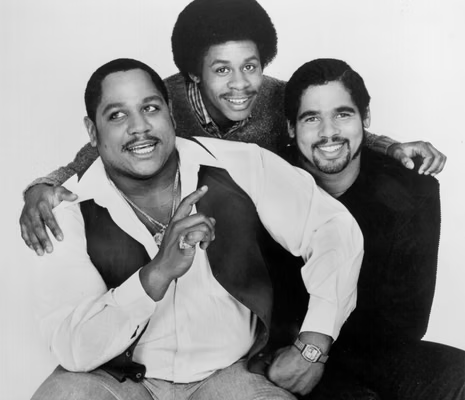
Album/Year Released
1979 (single)
Artist/Composer
The Sugarhill Gang
Bernard Edwards, Nile Rodgers, Sylvia Robinson Henry Jackson, Michael Wright, Guy O'Brien, Curtis Brown. Alan Hawkshaw
Genre/Style
hip-hop
Song Form
Strophic with extended verses
Released in 1979, “Rapper’s Delight” by the Sugarhill Gang was the first rap record to achieve widespread commercial success and significantly influence public awareness of hip-hop. The group, consisting of Wonder Mike (Michael Wright), Big Bank Hank (Henry Jackson), and Master Gee (Guy O’Brien), was formed by producer Sylvia Robinson, founder of Sugar Hill Records. According to widely circulated accounts, Robinson searched for performers who could translate the live MC style of Bronx parties into a studio recording. Her son recommended Big Bank Hank after hearing him rap in a pizza shop. Following auditions with multiple candidates, Robinson selected the trio that became the Sugarhill Gang. The backing track was performed by live musicians, distinguishing the recording from the turntable-based looping used at block parties.
Musically, “Rapper’s Delight” unfolds in duple meter (4/4) and is structured as a strophic, groove-based performance built around extended verses rather than alternating verse and chorus sections. The foundation is a repeated bass line from Chic’s “Good Times,” functioning as an ostinato throughout the track. The bass figure, combined with steady funk drumming, creates a continuous backdrop for the MCs to deliver extended rap passages. The harmonic content remains static, allowing rhythmic delivery to take precedence over chordal changes. The 12-inch single runs approximately 14 minutes and 35 seconds, though shorter edits of around six and four-and-a-half minutes were also distributed, and multiple mixes of the recording exist. Central to the track is rapping, the rhythmic speaking or chanting of lyrics over a beat rather than melodic singing. Equally important is flow, which refers to how an MC organizes syllables in relation to the pulse. Flow involves phrasing, accent placement, syllable density, timing shifts, and variation within a consistent metric framework. Across the extended verses, each group member displays a distinct style of articulation and rhythmic pacing, frequently using rhymed couplets organized in an AABBCC pattern. The lyrics range from party boasts to humorous narratives and pop culture references, drawing on themes common in early hip-hop.
The recording became associated with authorship disputes. Some verses performed by Big Bank Hank were later attributed to lyrics originally composed by Grandmaster Caz of the Cold Crush Brothers, leading to ongoing debate over proper credit. Additionally, because the track closely replicated the groove of Chic’s “Good Times,” Nile Rodgers and Bernard Edwards threatened legal action for copyright infringement, resulting in a settlement that granted them songwriting credit. The track also incorporates elements from Love De-Luxe’s “Here Comes That Sound Again,” further situating it within the late-1970s disco-funk context.
Although the Fatback Band’s “King Tim III (Personality Jock)” was released earlier, “Rapper’s Delight” is widely recognized as the recording that introduced rap to mainstream radio audiences. It reached the Top 40 in the United States, the Top Three in the United Kingdom, and number one in Canada. By adapting the MC-and-DJ party format into a commercially distributed single, the song established a template for recorded hip-hop, characterized by a repeating groove, extended rap verses, and an emphasis on rhythmic speech as the primary musical element.
“Walk This Way”
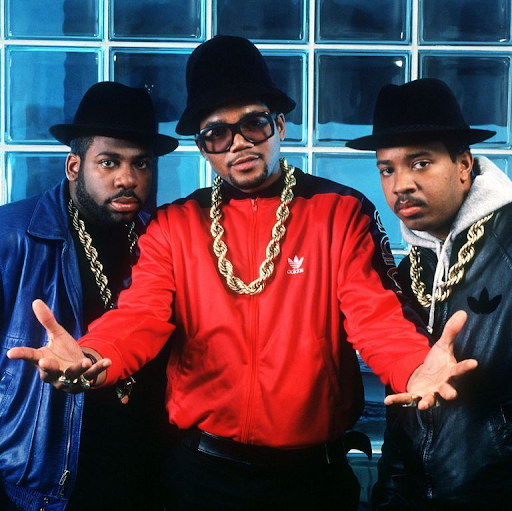
Album/Year Released
1986 (album: Raising Hell)
Artist/Composer
Run-DMC
Steven Tyler, Joe Perry (composers)
Genre/Style
Hip-hop; rap rock
Song Form
Verse–chorus
Run-DMC’s 1986 rendition of “Walk This Way,” produced in collaboration with Aerosmith, typifies the fusion of rap and rock into a cohesive musical style. The track is anchored by the iconic distorted electric guitar riff from Aerosmith’s 1975 original, produced by overdriving the amplifier to achieve a gritty, aggressive timbre characteristic of hard rock. In Run-DMC’s version, the riff is looped and integrated with a drum machine groove that features prominent 808-style drum sounds, resulting in a more forceful, mechanized hip-hop aesthetic.
The collaboration originated during the recording sessions for Raising Hell, produced by Rick Rubin. Rubin proposed the idea after referencing Aerosmith’s Toys in the Attic. Run-DMC had previously improvised over a loop of the song’s opening riff during live performances, without familiarity with the complete track or its lyrics. At that time, Simmons and McDaniels were unfamiliar with Aerosmith and initially dismissed the lyrics as “hillbilly gibberish.” In contrast, Jam Master Jay was receptive to Rubin’s proposal. Rubin subsequently invited Steven Tyler and Joe Perry to the studio to re-record their parts.
The song uses a verse–chorus structure intended to maximize crossover appeal. It begins with an introduction in which Jam Master Jay performs turntable scratching, followed by the recognizable guitar riff. The opening immediately establishes the combination of hip-hop DJ techniques and rock instrumentation.
The verses feature alternating rap deliveries by Joseph “Run” Simmons and Darryl “D.M.C.” McDaniels. They trade lines back and forth over the steady groove, creating a conversational rhythmic flow. Their vocal style remains rhythmically spoken rather than sung, emphasizing syncopation and percussive articulation against the persistent backbeat. The rhythm guitar provides support without dominating the texture, consequently preserving a cohesive groove. The chorus features Steven Tyler’s vocal hook, “Walk This Way,” which retains the original’s melodic identity while introducing pitch and delivery modifications. The cover incorporates subtle pitch variations in the chorus, which Aerosmith subsequently adopted in live performances. During collaborative sections, an additional vocal interjects with “talk this way” on alternating lines, enhancing the call-and-response dynamic.
A prominent feature of the performance is the precise alignment and completion of phrases by both groups. Run and DMC demonstrate their signature interlocking tag-team rhyming, frequently finishing each other’s sentences or alternating lines with rapid precision, demonstrating the tightly coordinated vocal exchanges characteristic of Run-DMC's performance style.
Run-DMC did not anticipate the song’s release as a single and were surprised by its airplay on both urban and rock radio stations. Rick Rubin also indicated that he did not expect it to become a single. The track ultimately reached number 4 on the Billboard Hot 100, surpassing the original Aerosmith version’s chart position. It became Run-DMC’s most successful single and the first hip-hop track to enter the top five of the Billboard charts. In the United Kingdom, it peaked at number 8, establishing itself as one of the earliest major hip-hop hits in that market.
The music video, directed by Jon Small and filmed at the Park Theater in Union City, New Jersey, depicts Run-DMC and Aerosmith rehearsing in adjacent studios separated by a physical wall. As the performance escalates, Steven Tyler breaks through the barrier, and both groups unite onstage. This visual metaphor represents the dismantling of racial and genre divisions. Despite its modest $67,000 budget, the video became highly influential on MTV, which at the time featured few minority artists aside from figures such as Michael Jackson. Joe Perry later observed that, although the collaboration was not intended as a cultural statement, it helped to increase diversity on the network.