Chapter 27: Funk Music
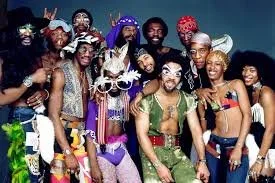
Chapter 27: Introduction
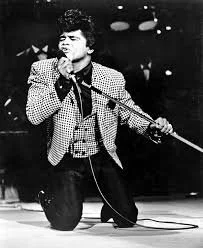
As discussed in earlier chapters, African American musical practices that fed into 1950s rock and roll—particularly the fusion of rhythm and blues with country forms and a heightened emphasis on rhythm and bodily movement—provoked resistance among white middle-class audiences. However, these innovations helped break deep-seated racial barriers and significantly influenced the sound of mainstream rock music. By the late 1970s, however, the racial integration associated with early rock and roll had vastly diminished. The audiences, performers, and industry leaders within the rock genre had become predominantly white, while record labels and radio formats increasingly confined Black popular music to a separate “soul market.” At the same time, Black musicians were using their art to respond to the era’s political upheavals, harnessing strength from the civil rights movement and, later, from the rise of Black Power.
Political engagement in Black music predated the late 1960s. The 1960s had already provided a crucible in which Black musical traditions fused with social change. Landmark legislation such as the Civil Rights Act of 1964 and the Voting Rights Act of 1965 dismantled legal segregation and voting discrimination, while leaders like Martin Luther King Jr. emphasized peace, solidarity, and civil disobedience. Musicians amplified these messages: Sam Cooke’s 1964 ballad “A Change Is Gonna Come” draws on gospel inflections and melismatic phrasing, set within compound meter, to address racial justice through popular song form. Cooke paired his art with activism, canceling performances at segregated venues, challenging whites-only hotels, and founding his own label and publishing company to counter systemic exclusion (see Chapter 17). Curtis Mayfield and his band, The Impressions, wrote songs that paired religious imagery with calls for collective perseverance, such as “People Get Ready” and “Keep On Pushing,” which were adopted as Civil Rights anthems by King, Reverend Jesse Jackson, along with the broader civil rights movement. Across racial lines, white folk singer Pete Seeger bolstered these ideals through performances of“We Shall Overcome,” exemplifying music’s power to inspire collective action
Yet optimism in the civil rights era could not erase the cruel realities of structural racism. Despite legislative gains, structural racism persisted through segregation, housing policy, and violent backlash. By the late 1960s, many activists shifted toward Black nationalism, emphasizing unity, self-determination, and cultural pride. The Black Power movement, articulated by organizer Kwame Ture as a call for African Americans “to unite, to recognize their heritage, to build a sense of community,” encouraged the creation of independent institutions and new forms of cultural expression. Music became a central outlet for this ethos. James Brown’s “Say It Loud – I'm Black and I’m Proud” (1968) captured the moment in a rhythmic declaration of pride, strength, and self-respect. Brown’s use of rhythm and repetition became central to funk, a style organized around groove and extended rhythmic cycles that presented collective performance as an audible assertion of identity.
The assassination of Martin Luther King Jr. on April 4, 1968, devastated Black communities and intensified unrest across the country, reverberating in the music industry as well. At Memphis-based Stax Records, located near the site of the assassination, the loss of Otis Redding and contractual disputes with Atlantic Records had already threatened the company’s stability. In this environment of grief and upheaval, Stax restructured under new leadership, but the close-knit community that had been apparent in its golden years began to fragment.
After King’s assassination, Black political discourse increasingly turned toward militancy and self-defense. In place of his vision of nonviolent protest and interracial solidarity, more militant calls for liberation came to the fore. Chief among these was the Black Panther Party, founded in Oakland in 1966 by Huey P. Newton and Bobby Seale. Originally calling themselves the Black Panther Party for Self-Defense, they gained national attention through armed patrols designed to monitor police behavior and protect Black communities from brutality. But their program extended far beyond copwatching. The Panthers organized free breakfast programs for children, health clinics, and political education classes, presenting themselves as a revolutionary vanguard committed to addressing poverty, housing inequality, and systemic racism. Their Ten-Point Program demanded not only an end to police violence but also full employment, decent housing, and education that addressed the realities of American oppression. To many African Americans, the Panthers embodied a new militancy that connected with the frustrations stemming from postindustrial city conditions in the wake of deindustrialization and white flight.
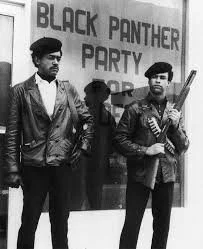
The federal government viewed the organization as a dire threat. In 1969, FBI director J. Edgar Hoover declared the Panthers the “greatest threat to the internal security of the country” and launched an aggressive campaign through the counterintelligence program COINTELPRO. Surveillance, infiltration, and coordinated police raids sought to dismantle the party, culminating in the killings of leaders like Chicago’s Fred Hampton and Mark Clark. Panther imagery, rhetoric, and community programs became part of the broader language of Black Power, influencing musicians, visual artists, and writers alike. In popular music, the Panthers’ call for self-determination and resistance echoed through the work of figures like James Brown, Marvin Gaye, and, later, Gil Scott-Heron, showing that political struggle and popular music remained closely linked during this period.
By the late 1960s into the 1970s, “soul” came to denote Black identity and pride beyond just music. This cultural shift was reflected in Billboard’s 1969 decision to rename its rhythm-and-blues chart the “soul” chart. Besides music, the language of “soul” permeated everyday life—seen in expressions like “soul food,” rooted in Southern culinary traditions, and “soul style,” encompassing fashion choices such as natural hairstyles and dashikis that celebrated African heritage. These practices affirmed dignity, continuity, and resistance in the face of systematic racism. Musicians echoed and amplified the broader embrace of “soul.” Artists like Sam Cooke and Curtis Mayfield fused gospel conviction with political hope, while James Brown expanded the vision with a style that focused on rhythm and groove. Funk emerged from this milieu as a musical form tied directly to expressions of Black empowerment in which the very structure of sound—interlocking rhythms, emphatic downbeats, and collective performance—became an expression of cultural and personal autonomy. In the figure of James Brown and the rhythmic revolution he sparked, funk emerged as both a new musical language and a vehicle for articulating Black pride in the 1970s.
James Brown
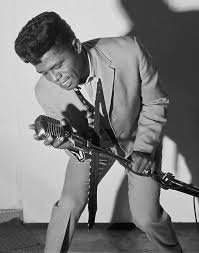
James Brown’s early career developed through regional performance circuits, where he refined his treatment of rhythm, vocal delivery, and stagecraft. Born in South Carolina and raised in southern Georgia, he first gained regional attention with the vocal group the Famous Flames, founded by Bobby Byrd, who remained a close collaborator throughout his career. Brown’s earliest break came when the Flames filled in for Little Richard at a local show just before “Tutti Frutti” became a national hit. The performance impressed Richard’s manager, Clint Brantley, and secured a series of Southern engagements. When Little Richard left Georgia to pursue his newfound fame, Brown and the Flames stepped into his bookings, effectively serving as Richard’s stand-ins and sharpening their stagecraft before segregated Southern audiences.
The group’s early recordings bore the stylistic hallmarks of 1950s doo-wop and rhythm and blues, while incorporating vocal inflections associated with gospel performance. “Please, Please, Please” (1956) combined a gospel-like piano accompaniment and compound meter with Brown’s impassioned delivery, backed by the harmonized voices of the Flames in the style of vocal harmony groups such as the Chords and the Orioles. Although the song followed the conventions of an R&B ballad, Brown’s treatment was strikingly unconventional: he repeated syllables obsessively, stretching a single word, such as “please,” into a syncopated, rhythmically charged plea. Brown focus on repetition and accentuation treated the voice as a rhythmic element rather than a vehicle for melodic phrasing alone. The single achieved moderate success but established Brown’s presence on the R&B touring circuit.
Brown achieved significant success on the charts with “Try Me” in 1958, marking his first number-one R&B hit and gaining some crossover popularity. While this ballad still carried the stylistic influence of doo-wop, the recording moves toward a heavier rhythmic emphasis and a more aggressive vocal attack. By the time he released “Think” in 1960, he had moved away from lyric-centered pop music toward a harder-edged sound that prioritized rhythm and vocal power. The song featured tightly arranged horns and a driving rhythm section, giving Brown space for vocal phrasing. Instead of relying on elaborate harmonies or lyrical embellishments, “Think” emphasized rhythmic intensity and repetition—qualities that became central to Brown’s performances.
James Brown's reputation was built not only on his records but also on his electrifying live performances. During the early 1960s R&B touring circuit, he became legendary for shows that combined athletic dance routines, gospel-inspired vocal calls, and meticulously staged theatrics. His performances were marked by grunts, shouts, and screams, often leading him to seemingly collapse in exhaustion. However, he would be revived under a cape and return to the microphone with explosive energy, a spectacle famously demonstrated during his performance on The Ed Sullivan Show on May 1, 1966.
To capture the intensity of these performances, Brown and his manager, Ben Bart, recorded a live show at the Apollo Theater in New York in 1962. Released as "Live at the Apollo," this album became an unexpected commercial success, reaching number two on the pop charts in 1963. At a time when live albums seldom achieved mainstream success outside of jazz, folk, or classical music, the live recording recording solidified Brown's status as one of the most dynamic live performers in American music.
James Brown and Black Pride
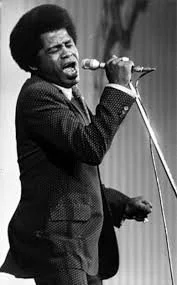
By the late 1960s, James Brown had become one of the most visible voices of Black pride in American popular culture. His music, marked by sharp rhythms, assertive lyrics, and an uncompromising persona, was celebrated within African American communities as a declaration of self-determination. Brown's reputation as a voice of Black pride was reinforced by his unusual independence in the music industry. Brown wrote and produced most of his own songs, and in 1968, assumed direct control of his business affairs. He managed his band, negotiated contracts, and oversaw his publishing rights, securing a degree of autonomy rare among Black performers of the time. This control was often compared to the concessions Motown and Atlantic artists were believed to make in attracting white audiences. Although those comparisons are not entirely accurate or were exaggerated, Brown’s insistence on directing his own career extended to his recording, touring, and business decisions, allowing him to maintain control over his artistic identity. The release of his song “Say It Loud—I'm Black and I'm Proud” in 1968 strengthened his public association with musical experimentation and Black pride rhetoric. Drawing on gospel traditions of call-and-response, Brown’s shouts of “Say it loud!” were answered with the response, “I’m black and I’m proud!” His vocal delivery, often more sermon than song, echoed hymns like “We’ve been ’buked, and we’ve been scorned,” while channeling contemporary frustrations into a proud declaration of identity. Band member Fred Wesley later recalled that the track “inflamed that newfound spirit of pride and freedom.” He followed with songs such as “I Don’t Want Nobody to Give Me Nothing (Open Up the Door, I’ll Get It Myself)” (1969) and “Get Up, Get Into It, Get Involved” (1970), both urging African Americans to take control over their communities and futures. The songs marked Brown's decisive move toward funk, organized around relentless grooves, extended vamps, and repeated rhythmic figures. Brown’s social impact spread far beyond the studio. Celebrated with the moniker “Soul Brother Number One,” he came to represent both musical brilliance and a voice of empowerment for African Americans. However, Brown's public role as a voice of Black empowerment was put to the test in the wake of Martin Luther King Jr.’s assassination on April 4, 1968, when riots erupted in cities such as Chicago, Detroit, and Washington, D.C. Scheduled to perform in Boston the following evening, Brown found himself at the center of a heated debate over whether the concert should proceed. Mayor Kevin White initially considered canceling it, fearing that such a gathering might spark unrest. Instead, a last-minute decision was made not only to proceed but also to televise the event, in hopes that Brown’s presence would keep people at home rather than in the streets. The decision proved effective: Brown delivered one of his most powerful shows, and Boston avoided the violence that engulfed other cities. Contemporary reports later linked the televised concert to the absence of large-scale unrest in Boston that night during one of the most volatile moments in modern American history. Brown also became one of the few mainstream artists to weave direct political critique into his records. In “Talkin’ Loud and Sayin’ Nothing” (1972), he targeted leaders whose lofty speeches ignored the struggles of ordinary people. Two years later, “Funky President (People, It’s Bad)” turned his attention to Gerald Ford, skewering the hollowness of post-Watergate politics with the line, “He was a nice man, but he talked a lot and didn’t say anything.” By addressing political disillusionment head-on, Brown gave voice to views shared by many of his Black audience members in the early 1970s who saw promises of reform give way to continued poverty, unemployment, and police violence. His songs articulated a widespread skepticism in the early 1970s, when many African Americans questioned whether government institutions could ever deliver genuine equality. Yet Brown’s repertoire was never confined to protest. He balanced socially charged tracks with lighter material such as “Papa’s Got a Brand New Bag” (1965), which celebrated dance crazes like the Mashed Potato and the Jerk, and “Cold Sweat” (1967), which described the bodily response to romantic excitement. Songs like “Get Up (I Feel Like Being a Sex Machine)” (1970) blended both impulses, combining exuberant party energy with exhortations for collective engagement. Through this versatility—paired with his control of production, business, and performance—Brown both popularized funk and also embodied the ideal of Black cultural independence.
James Brown: Elements of Funk
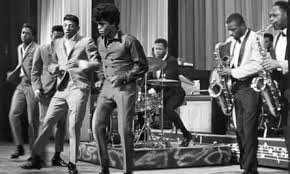
By the mid-1960s, Brown’s studio recordings had begun to capture the rhythmic intensity that had driven his stage shows for years. “Out of Sight” (1964) showed his sharpened focus on recreaiting his live performance, in turn paving the way for the revolutionary grooves of “Papa’s Got a Brand New Bag, Pt. 1,”“I Got You (I Feel Good)” (1965),“It’s a Man’s Man’s Man’s World” (1966), and “Cold Sweat, Pt. 1” (1967). These records showed the priority rhythm had taken as the organizing principle of his music. Horns, bass, drums, guitar, and vocals interlocked in tightly coordinated patterns, emphasizing percussive repetition over harmonic progression. The synthesis of rhythm, voice, and groove provided an early expression of funk aesthetics, channeling the musicality of gospel and R&B into a new musical language associated with musical innovation and cultural empowerment.
Central to this new sound was Brown’s uncompromising leadership. He carefully selected his band members, drilling them through demanding rehearsals and imposing fines for lateness or mistakes—even when delays were his own. While some musicians found his discipline excessive, it produced one of the most tightly coordinated ensembles in 1960s and 1970s popular music. The band's rhythmic precision is evident in “Papa’s Got a Brand New Bag, Pt. 1” (1965), which opens with a sustained chord before settling into a 12-bar blues framework. Stops between verses heighten the groove, while the bridge reappears as the vamp of the coda. The absence of background vocals further denotes Brown’s departure from his earlier doo-wop style and from the smoother textures of Motown productions.
Brown’s authority was balanced by the creativity of his collaborators, and his sound relied as much on the contributions of his musicians as on his own commanding vocals. His bands typically featured a lineup of guitar, bass, drums, and a horn section comprising saxophones, trombones, and trumpets. Key figures such as Maceo Parker, Pee Wee Ellis, Fred Wesley, and Bobby Byrd brought their own ideas, often receiving co-writing credits on Brown’s most important tracks. A hallmark of the ensemble was the layering of interlocking riffs: rather than one line carrying a song, each instrument contributed its own repeating figure, woven into a dense rhythmic fabric. Rehearsals often began with the drummer laying the foundation, followed by additional riffs that gradually built the groove. Brown then entered with vocals, stops, and breaks, once describing his method as hearing “everything, even the guitars, like they were drums.”
Brown's collaborative experimentation with his band produced some of the earliest funk recordings. “Cold Sweat” (1967), co-written with Ellis, is widely regarded as the first funk song and introduced a groundbreaking drum break—an instrumental section derived from stop-time that provides a “break” from the main parts of the song. These moments showcased the drummer’s virtuosity and reinforced rhythm as the organizing principle of funk. At 4:30, the band falls silent while drummer Clyde Stubblefield takes center stage. Stubblefield’s breaks were later widely sampled in hip-hop, forming a foundational element of the genre. A similar moment occurs in “Funky Drummer” (1970), when, at 5:22, the ensemble drops out, leaving Stubblefield’s solo to propel the track; it is one of the most frequently sampled recordings in music history. Through strict discipline, inventive rhythm, and unyielding artistic control, James Brown reinvented his sound and changed American music, establishing grooves and formal practices later adopted throughout Black popular music.
Motown in the 70s
By the 1960s, Motown had become a dominant center of Black popular music in Detroit, developing a polished, crossover-oriented sound that appealed to Black and white audiences. By the late 1960s, however, the label adjusted its repertory and production priorities in response to shifting political pressures, urban unrest, and changing audience expectations. Following the assassination of Martin Luther King Jr. in 1968, Motown artists and songwriters increasingly engaged with the civil rights movement and the lived realities of African American life. Motown's increasingly socially conscious material departed from the polished pop associated with the label’s earlier years.
The departure of the songwriting team Holland-Dozier-Holland in 1968 elevated Norman Whitfield as Motown’s leading producer. Whitfield guided the label toward more socially conscious themes, encouraging music that addressed poverty, inequality, and the challenges of Black life. For example, the Supremes’ “Love Child” (1968), written by the songwriting collective known as the Clan, tells the story of a child born into poverty and frames that experience within the constraints of segregated segregated metropolitan life. In the early 1970s, artists including the Temptations, Marvin Gaye, and Stevie Wonder released music that spoke candidly about war, drug use, environmental degradation, and the broader struggles of Black communities. Motown’s output in this period contrasted sharply with the earlier “sound of young America,” replacing smooth pop formulas with lyrics that addressed race, social conflict, and Black self-determination.
Motown also adapted to stylistic changes in late-1960s popular music. The Temptations, for instance, recorded “Cloud Nine” (1968), adopting a more psychedelic and groove-driven style. Around this time, the group underwent a major lineup change: lead singer David Ruffin departed and was replaced by Dennis Edwards. Edwards partnered closely with Motown veteran Barrett Strong, while Whitfield’s production emphasized funk-inflected rhythms, socially aware lyrics, and more experimental arrangements. Whitfield's psychedelic-soul production style reached its peak commercial success with“I Can’t Get Next to You” (1969), which topped both the Billboard Hot 100 and the newly renamed Best Selling Soul Singles chart. The Temptations continued to explore this direction with singles such as “Psychedelic Shack” (1970) and “Ball of Confusion” (1970). Whitfield and the Temptations further extended their engagement with social commentary with “Papa Was a Rolling Stone” (1972), a seven-minute track that addresses struggles produced by racial and class inequality in postindustrial America. Featuring an atmospheric string arrangement by Motown arranger Paul Riser and a hypnotically repeated bass line, the song drew on minimalist funk techniques pioneered by artists like James Brown.
These musical changes coincided with widespread unrest in Detroit. The 1967 Detroit riots—a five-day period of violence sparked by a police raid on an unlicensed “blind pig” bar (an illicit alcohol-serving establishment common in Black neighborhoods)—exposed decades of entrenched racism, police harassment, poverty, and poor housing conditions. The unrest resulted in 43 deaths, over a thousand injuries, the destruction of more than 2,000 buildings, and thousands of arrests. Governor George Romney deployed the Michigan National Guard, and President Lyndon B. Johnson sent in U.S. Army troops to restore order. The Kerner Commission, established to investigate the riots, concluded that systematic racism and segregation were central causes, warning that the nation risked becoming divided into two separate and unequal societies. The riots also accelerated white flight from Detroit, deepening the city’s economic decline.
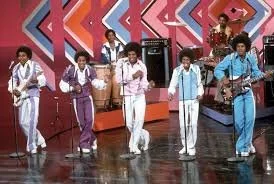
By 1972, Berry Gordy relocated Motown’s operations to Los Angeles, shifting the company’s focus toward film, television, and entertainment ventures based in Los Angeles. While the 1960s remain Motown’s “golden age,” the label continued to produce hits and cultivate artists who would influence the decade’s popular music. Diana Ross embarked on a solo career, scoring multiple chart-topping singles and earning an Academy Award nomination for her portrayal of Billie Holiday in Lady Sings the Blues (1972). At the same time, Motown maintained its strong presence in the teen market with the Jackson 5, a group of brothers from Gary, Indiana. Fronted by the high, prepubescent vocals of the youngest member, Michael Jackson, the group scored a string of infectious bubblegum hits—including “I Want You Back” (1969), “ABC”(1970), “The Love You Save” (1970), and “I’ll Be There” (1970). Their psychedelic-inflected arrangements and tightly choreographed performances drew inspiration from the crossover success of other artists like Sly and the Family Stone while appealing directly to youth audiences.
Even after leaving Motown in the mid-1970s—renamed the Jacksons after Gordy retained the legal rights to the original name—the group continued to achieve commercial success, while Michael Jackson launched a solo career that would ultimately make him one of the most successful and influential figures in popular music history (see Chapter 32).
Marvin Gaye
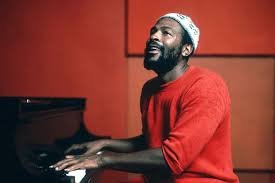
The 1970s also marked an unprecedented period of artistic freedom for Motown artists, and Marvin Gaye had already become one of the architects of the label's sound in the 1960s, first as an in-house session musician and songwriter, and later as a solo artist. His early successes earned him nicknames such as the “Prince of Motown” and the “Prince of Soul.” During the 1960s, he recorded hits including “How Sweet It Is (To Be Loved by You)” (1964), “Ain’t That Peculiar” (1965), and “I Heard It Through the Grapevine”(1968), and he collaborated on duets with artists such as Mary Wells, Kim Weston, Tammi Terrell, and Diana Ross.
By the early 1970s, Gaye was writing and producing not only his own material but also songs for other acts, including the Originals, whose singles “Baby I’m for Real” and “The Bells” became significant successes. In 1971, Gaye released What’s Going On, a concept album that departed from Motown’s earlier production norms. The concept album explored urgent social issues—including economic deprivation, environmental degradation, and U.S. involvement in the Vietnam War—blending socially conscious lyrics with crossover appeal. Inspired by an idea from Renaldo “Obie” Benson of the Four Tops, who witnessed an act of police brutality at an anti-war rally in Berkeley, the title track “What’s Going On” presented the narrative from the perspective of a Vietnam veteran returning home to confront injustice, hatred, and social unrest. Berry Gordy initially resisted releasing the song, fearing it was “too political” for radio and could jeopardize Gaye’s crossover success. In response, Gaye refused to release any other new material until the label issued the single. When it was finally released in January 1971, “What’s Going On” quickly reached No. 1 on the R&B charts, holding that position for five weeks, topped Cashbox’s pop chart for one week, reached No. 2 on the Billboard Hot 100, and sold over two million copies. Other hit singles from the album, including “Mercy Mercy Me (The Ecology)” and “Inner City Blues (Make Me Wanna Holler),” extended the album’s focus on life under systemic inequality and political disillusionment, combining contemplative lyrics with carefully crafted musical arrangements.
Following “What’s Going On,” Gaye continued to produce influential work, including the albums “Trouble Man” (1972) and “Let’s Get It On” (1973), and tracks such as “Got to Give It Up, Pt. I” (1977). Through these projects, his work attracted sustained attention from both Black radio audiences and crossover markets, combining experimentation with personal narrative and political commentary. Tragically, Gaye’s life ended prematurely on April 1, 1984, when he was fatally shot by his father, Marvin Gay Sr., at their home in Western Heights, Los Angeles, on the eve of his forty-fifth birthday. Gay Sr. later pleaded no contest to voluntary manslaughter and received a six-year suspended sentence along with five years of probation.
Stevie Wonder
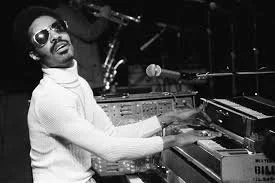
Stevie Wonder became one of Motown’s most innovative and commercially successful artists during the 1970s, combining African American rhythmic and vocal practices with synthesizer-based production and studio experimentation. Born Stevland Hardaway Morris in 1950, he lost his sight shortly after birth due to complications from being born six weeks premature, a condition known as retinopathy of prematurity. Despite this, he displayed extraordinary musical talent from an early age, gaining attention as the child prodigy “Little Stevie Wonder.” His remarkable skill on the piano led to the single “Fingertips,” which became a No. 1 hit on the Billboard Hot 100 in 1963 when he was just thirteen, making him the youngest solo artist ever to top the chart.
By the mid-1960s, Wonder had begun composing songs for other Motown acts, including Smokey Robinson and the Miracles and the Spinners, while continuing to release hits under his own name. Tracks such as “Signed, Sealed, Delivered, I’m Yours” (1970) demonstrate his maturation as a performer and songwriter, signaling the development of a fully realized artistic voice.
In early 1971, at the age of twenty-one, Wonder secured a landmark contract with Motown, granting him full creative control and ownership of his compositions. This unprecedented autonomy allowed him to write, produce, arrange, and perform nearly every aspect of his recordings. He mastered multiple instruments—including piano, drums, harmonica, and synthesizers—and popularized the Hohner Clavinet, an electric keyboard capable of producing sharp, percussive sounds reminiscent of a guitar. This period saw the release of a series of albums that received sustained critical and commercial recognition: Music of My Mind (1972), Talking Book (1972), Innervisions (1973), Fulfillingness’ First Finale (1974), Songs in the Key of Life (1976), and Journey Through the Secret Life of Plants (1979). Each album paired dense arrangements with socially engaged lyrics and prominent vocals, drawing from Wonder’s roots in African American dance music and balladry while incorporating experimental rock and electronic techniques.
A prime example of this creative stance is “Superstition” (1972), the lead single from Talking Book. The song opens with a syncopated Clavinet riff, played by Wonder himself, layered with overdubbed keyboards and percussion to create a tightly interlocking groove. The riff persists through the verses, lending a hard-edged rhythmic drive that draws on James Brown’s soul stylings while introducing a distinctive electronic texture. The chorus incorporates chord changes suggestive of blues, extending the traditional twelve-bar phrasing into a more complex structure. Lyrically, the track takes a modern, assertive stance, rejecting superstition while demonstrating Wonder’s skill in bringing African American musical practices into dialogue with contemporary pop production.
Wonder further explored socially conscious narratives on Innervisions, particularly in “Living for the City” (1973). The song follows a young Black man moving from rural poverty to the urban North, only to encounter systemic inequities and unjust incarceration. Delivered over a synthesizer-driven backdrop, the track critiques structural inequality rather than interpersonal racial conflict, linking it to the socially engaged Motown works of the era. Wonder’s ability to combine crossover appeal with political awareness helped him reach audiences beyond R&B radio and into rock-oriented broadcast formats.
By the mid-1970s, Stevie Wonder had established himself as a singular voice in Black popular music: a virtuoso instrumentalist, visionary songwriter, and socially conscious storyteller. His albums from this period demonstrated the creative potential unlocked by complete artistic control, pairing studio experimentation with material that circulated widely across Black and white audiences.
Sly and the Family Stone
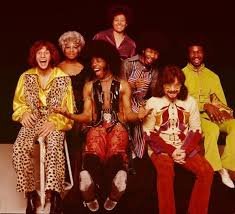
In the late 1960s, Sly and the Family Stone emerged from the San Francisco Bay Area as a band whose music and public image redirected funk’s sound and politics. Sylvester Stewart, known professionally as Sly Stone, was born in Texas but moved to the Bay Area as a child. By the mid-1960s, he worked as a disc jockey and producer, an experience that informed the band’s studio techniques and genre range, and collaborated with prominent psychedelic rock acts in the local scene. In 1967, Stone formed Sly and the Family Stone, assembling an interracial, mixed-gender lineup that placed men and women, Black and white musicians, on equal footing onstage: Sly and his sister Rose provided lead vocals and keyboards, Freddie Stone played guitar, Larry Graham anchored the bass, Gregg Errico handled drums, and trumpeter Cynthia Robinson and saxophonist Jerry Martini completed the ensemble. Their instrumentation fused rock’s energy with funk’s rhythmic complexity, producing a hybrid sound connected to the experimental ethos of the Bay Area and influencing later funk production through its use of rock instrumentation and rhythmic density.
From the outset, the band established a distinctive crossover appeal. Their first major hit, “Dance to the Music” (1968), reached number eight on the pop charts, while subsequent singles—including “Everyday People” (1969), “Thank You (Falettinme Be Mice Elf Agin)” (1970), and “Family Affair” (1971)—secured success across both pop and rhythm-and-blues markets. The band's recordings blended funk rhythms with rock guitar timbres and studio effects drawn from psychedelic recording practice, employing wah-wah guitars, fuzzed basslines, organ riffs reminiscent of gospel, and vocal distortions. This combination produced a sound often described as “psychedelic soul.”
The Family Stone’s lineup was notable for its rare racial and gender integration. Black and white musicians, men and women, performed together—a public presentation that rejected segregated band norms common in late-1960s popular music. The band's commitment to racial and gender integration extended to their lyrics, which frequently addressed themes of unity, optimism, and collective empowerment. Tracks such as “Stand” (1969) and “I Want to Take You Higher” (1969) combined infectious rhythms with upbeat, danceable energy, while their performance at Woodstock in 1969 reinforced their connection to the counterculture and the era’s social movements.
Central to the band’s sound was Larry Graham’s revolutionary treatment of the bass guitar. Moving beyond its traditional role as a supporting harmonic instrument, Graham made the bass a percussive, leading voice within the ensemble. His technique—later known as “slap bass”—involved striking the strings with the thumb and snapping them against the fretboard with the fingers, producing a sharp, rhythmic attack that was both melodic and propulsive. On “Thank You (Falettinme Be Mice Elf Agin),” Graham’s riff functions as the song’s primary hook, locking tightly with the drum pattern and vocal phrasing to create a dense, interlocking groove. Graham’s approach anchored the rhythm while also giving the bass a central, almost vocal-like role, a role widely adopted in 1970s funk and later adapted in rock and R&B contexts.
The lyrical content of Sly and the Family Stone drew inspiration from both the civil rights movement and the late-1960s counterculture, emphasizing peace, love, equality, and social consciousness. Sly Stone’s songwriting increasingly addressed themes of Black pride and self-assertion while maintaining the group’s collaborative ethos. “Everyday People” (1968) stages this idea through alternating solo lines and group responses performed by Sly, Rose, Freddie, and Larry Graham, emphasizing collective participation:
I am no better and neither are you
We're all the same, whatever we do
The band's recordings blended funk rhythms with rock guitar timbres and studio effects drawn from psychedelic recording practice...You love me, you hate me
You know me and then
Still can't figure out the bag I'm in
I am everyday people
Other songs from this period, including “Dance to the Music” and “You Can Make It If You Try,” conveyed similar themes of unity and optimism, further cementing the band’s connection to the social and cultural movements of the late 1960s.
By the early 1970s, Sly and the Family Stone’s music had become darker and more experimental. For There’s a Riot Goin’ On (1971), Stone began overdubbing and re-recording his tracks to such an extent that the album is filled with the sound of tape hiss caused by the damaged tape. Fresh (1973), featuring the hit single “If You Want Me to Stay,” marked the band’s final major commercial success. Late tracks such as “Loose Booty” (1974) presented a stripped-down, gritty sound in contrast with the dance-oriented character of their earlier recordings. Internal tensions, drug use, and contract disputes eventually led to the group’s dissolution in 1975.
Sly and the Family Stone brought interracial, mixed-gender ensembles into regular radio rotation, centered the bass in funk arrangements, and circulated collective language through pop formats. They pioneered racial and gender integration in a mainstream performing ensemble, advanced funk, soul, and rock into hybridized forms, and established new possibilities for instrumentation, particularly through Graham’s slap-bass technique. Sly Stone’s songwriting and the band’s communal vocal arrangements communicated messages of equality, empowerment, and social consciousness, leaving a continuous influence on Black popular music and crossover pop culture.
Afrofuturism
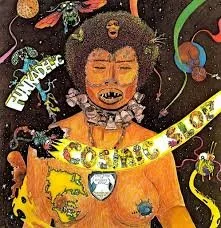
Many funk artists addressed Black empowerment and collective life through music tied to movement, ritual, and performance. They often did so through the lens of Afrofuturism, which blends African diasporic identity, or the shared cultural memory and creativity of African-descended peoples whose shared histories were forged through slavery and migration, with creative exploration and a future-oriented imagination. Funk operates as an Afrofuturist practice, treating sound, performance, and narrative as tools for imagining Black futures. It functions as a musical and performative movement that draws on science fiction, fantasy, and African mythology to imagine futures centered on Black life. Afrofuturism seeks to reclaim narratives about Black culture and history, promoting empowerment and agency while foregrounding futures that refuse the limits imposed by racial hierarchy. These ideas appear across literature, music, visual arts, film, and fashion, and in the context of funk, they emphasize the genre’s potential as entertainment that also carries social commentary, speculative storytelling, and acts of cultural recovery.
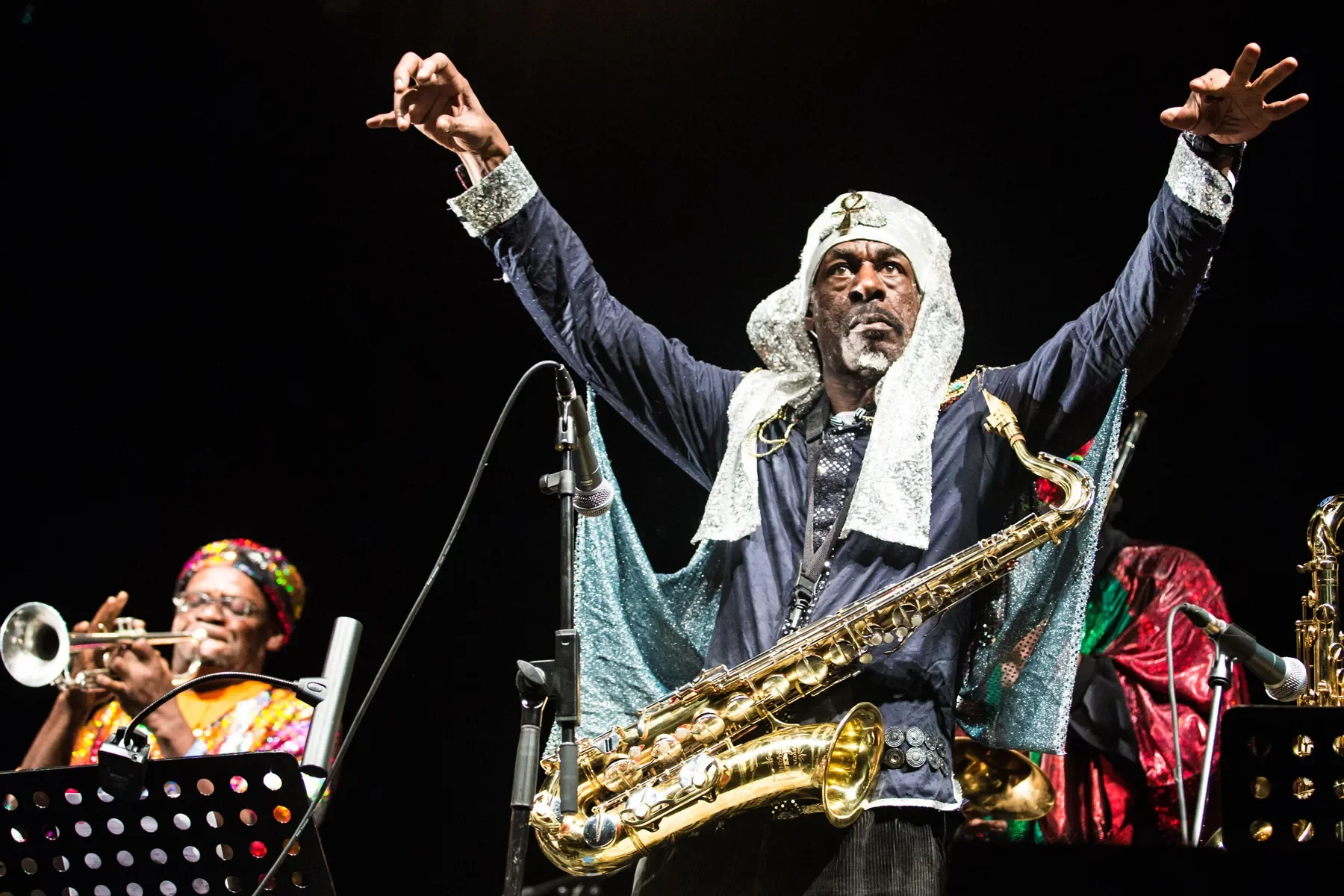
Sun Ra was an early figure to articulate Afrofuturist ideas through sound, image, and persona. Born Herman Poole Blount, he immersed himself in Chicago's jazz scene in the late 1940s, before adopting the name Sun Ra and cultivating a mythic persona claiming extraterrestrial origins from Saturn. Leading his group, The Arkestra, for more than four decades, Ra created music that moved freely across early jazz styles, free improvisation, and electronic experimentation, composing for both small ensembles and orchestras of over thirty musicians. His performances were theatrical and visually striking, incorporating elaborate stage costumes and uniforms that ranged from metallic spacesuits and flowing capes to headdresses, sequined tunics, and robes adorned with cosmic motifs and ancient Egyptian imagery. These outfits, along with choreographed movement and dramatic lighting, visually reinforced the band’s otherworldly, cosmic narratives and staged a speculative future onstage. With over 100 albums and more than 1,000 compositions, Ra’s prolific output shows sustained formal risk-taking and the constant circulation of spiritual and communal ideals central to both Afrofuturism and funk.
Ra’s philosophy, often described as an “equation” rather than a conventional ideology, combined music, myth, ritual, and speculative cosmology. Drawing from sources as diverse as Kabbalah, numerology, Rosicrucianism, ancient Egyptian mysticism, and Gnostic reinterpretations of religion, he envisioned a cosmos in which humanity could transcend earthly and social limitations. His film Space Is the Place dramatizes this vision, depicting a distant planet where Black people escape oppression, realign with natural vibrations, and attain collective empowerment. By personifying Afrofuturism in his music, performances, costumes, and public persona, Sun Ra demonstrated that artistic practice could function as a form of liberation, cultural reclamation, and philosophical exploration, providing a blueprint for integrating visionary storytelling into rhythm-driven, communal music.
Funk in the 70s
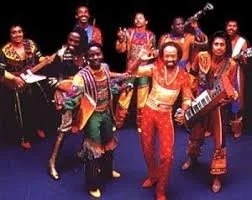
Funk is first and foremost dance music, but it also carries powerful social and cultural messages, from celebrations of love and peace to assertive declarations of empowerment. Drawing from Afrofuturist ideas associated with Sun Ra, funk artists in the late 1960s and 1970s paired groove-centered rhythms with messages that addressed Black history, futurity, and social life. Its sound relied on interlocking drums, bass-led grooves, guitar riffs, keyboards, and syncopated horns, producing thick, rhythm-focused textures. Funk frequently drew on big band jazz sensibilities, incorporating brass sections reminiscent of swing and jazz ensembles, with trumpets, trombones, and saxophones providing both melodic hooks and rhythmic punctuation. These ensembles added a dynamic, orchestral energy to the music, amplifying its communal and celebratory spirit while reinforcing complex polyrhythms.
The genre’s Afrofuturistic dimension was also expressed in performance and visual presentation. Bands frequently employed elaborate costumes, bold color schemes, and stage personas that suggested cosmic or otherworldly identities, echoing Sun Ra’s theatricality. These choices signaled an imaginative re-centering of Black cultural identity, portraying African American musicians as agents of their own narrative and crafting alternative visions of time, space, and possibility. Horn lines and vocal harmonies often mimicked futuristic or mechanical motifs, and electronic experimentation—from synthesizers to effects-laden keyboards—further enhanced this sonic futurism.
Bands' names like Kool and the Gang, Parliament, and Sly and the Family Stone emphasized collective identity and solidarity, conveying the cultural and political currents of the late 1960s and 1970s. Groups such as the Ohio Players demonstrated this style, constructing dense, riff-driven tracks layered with melodic horn lines and engaging vocal hooks. Their 1973 hit, “Funky Worm,” combined rhythm-and-blues grooves with a theatrical, visually dynamic presentation, producing music that was simultaneously danceable, intricate, and strikingly performative. Kool and the Gang similarly integrated horns, percussion, and group vocals in tracks like “Jungle Boogie,” achieving a tightly orchestrated sound. Their performances often incorporated synchronized stage movements and choreographed interactions, accentuating collective energy, cohesion, and expressions of Black cultural pride
Earth, Wind & Fire, under the leadership of Maurice White, brought studio-trained musicianship and large-ensemble arranging into funk-based pop during the 1970s. White began his career as a session drummer at Chess Records in the mid-1960s, performing on recordings for numerous artists and honing his craft in the studio. In 1966, he joined the Ramsey Lewis Trio, a group rooted in Chicago’s jazz tradition that was increasingly exploring pop-oriented instrumental tracks, including the hit “Wade in the Water.” By 1969, White had relocated to Los Angeles and formed Earth, Wind & Fire with lead vocalist Philip Bailey. The ensemble, known for its festive stage shows and horn section, operated with a flexible and expansive lineup of top-tier musicians throughout the 1970s, blending tight, groove-driven rhythms with sophisticated horn arrangements and memorable pop hooks.
Beyond their music, Earth, Wind & Fire developed an eye-catching visual identity, incorporating dazzling costumes, Egyptian-inspired imagery, and Afrofuturistic motifs that suggested a cosmic vision of Black cultural transcendence. Through the combination of musical experimentation and theatrical presentation, the band became representative of funk’s breadth, exhibiting its capacity to fuse technical mastery, popular appeal, and cultural imagination.
Their crossover success was equally rooted in their songwriting. Tracks like “Shining Star” (1975) and the classic hit “September” (1978) show the band’s musical identity, opening with a hard-driving funk groove reminiscent of Sly and the Family Stone. Vocals alternate between rich group harmonies and gritty solos, anchored by precise horn hits and reinforced by a catchy, memorable chorus, illustrating the seamless affinity between funk energy and pop sensibility that characterized Earth, Wind & Fire’s signature style.
Tower of Power, a racially integrated band from the Bay Area, earned acclaim for its precise grooves and virtuosic horn section, contributing also to albums by major artists such as Elton John, the Rolling Stones, and Rod Stewart. Formed in the Bay Area hippie scene, the group counted early supporters like Fillmore concert promoter Bill Graham and producer David Rubinson. Comprised of White, Latino, and Black musicians, Tower of Power combined hard-driving funk rhythms with sophisticated horn arrangements, crafting a sound that balanced technical excellence with an impression of collective energy. Recording for Warner Brothers, the band released a series of albums during the early 1970s, including Bump City (1972), Tower of Power (1973), and Back to Oakland (1974), consistently performing better on soul charts than in the pop market, yet producing a lasting imprint on funk’s developing sound
The fusion of funk with rock, Latin rhythms, and socially conscious messaging can also be seen in War, a Los Angeles–based ensemble that blended rhythm and blues with politically aware lyrics. Collaborating with Eric Burdon of the Animals, the group released Eric Burdon Declares War (1970) and sustained success with albums such as All Day Music (1971) and The World Is a Ghetto (1973). Classic tracks like “Low Rider” (1975) captured working-class experience whilst maintaining the groove-centric, improvisatory qualities intrinsic in funk.
Across these groups, funk combined percussive grooves, tightly coordinated ensemble playing, and infectious danceability with Afrofuturist elements of performance. Theatrical costumes, invented stage personas, and cosmic themes turned concerts into immersive experiences that reached beyond sound into fashion, spectacle, and ideology. This blending of music and imagery reflected a broader cultural imagination in which African American artists envisioned alternative futures grounded in Black creativity, empowerment, and collective celebration. By the mid-1970s, funk’s increasingly varied styles had become a major influence on contemporary jazz. Artists such as Miles Davis on Bitches Brew (1969), Herbie Hancock on Headhunters (1973), the Crusaders on Southern Comfort (1974), and Weather Report on Black Market (1976) absorbed funk’s rhythms, grooves, and textures into jazz fusion, creating a new hybrid genre that carried funk’s influence into instrumental improvisation and experimental soundscapes.
P-Funk
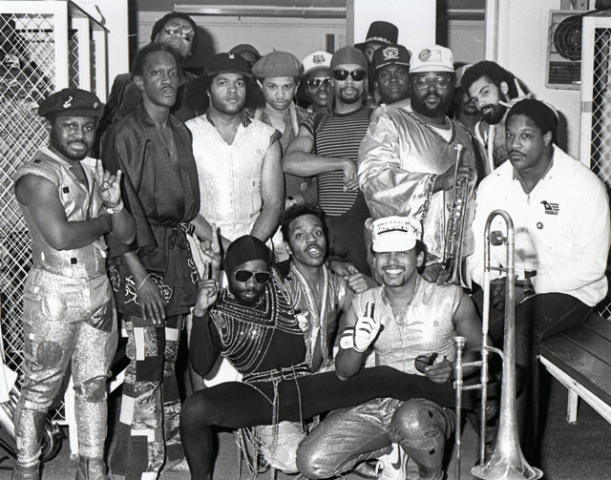
George Clinton played a central role in 1970s Black popular music, developing a form of funk that joined political commentary with theatrical presentation. Born in the early 1940s in North Carolina, Clinton started his career in the 1960s as a singer, songwriter, and producer for the Parliaments, a Detroit-based vocal group inspired by the Temptations. In 1969, after losing the rights to the Parliament name, he reformed his backing musicians into Funkadelic and signed them to Westbound Records. When he regained the rights in 1971, he relaunched the vocal group as Parliament under Invictus Records. Although the two were marketed as separate bands, Parliament and Funkadelic shared the same core lineup of approximately ten musicians, all of whom were directed by Clinton. He used the Parliament/Funkadelic dual identity to release material under different names while drawing on the same musicians and studio resources.
At first, the stylistic distinction between the two names was clear. Funkadelic embraced psychedelic rock and experimental jams, producing albums like Free Your Mind and Your Ass Will Follow (1970) and Maggot Brain (1971), while Parliament leaned toward a more polished, soul- and funk-oriented sound crafted for singles and radio play. By the mid-1970s, the stylistic lines had blurred to the extent that the two names essentially functioned as different outlets for the same collective of musicians within a shared universe known as P-Funk.
A distinctive feature of P-Funk was the innovative use of synthesizers. Keyboardist Bernie Worrell, Clinton’s longtime collaborator, expanded the instrument’s role beyond simple accompaniment, using it to carry melodies, imitate horns or voices, and generate a kaleidoscope of effects that could shriek, growl, or pulse with otherworldly textures. This versatility is on full display in Parliament’s “Flash Light” (1978), where the synthesizer functions in dozens of roles, anchoring the groove while simultaneously creating an array of shifting sonic colors.
Clinton called his style P-Funk, or "pure, uncut funk." He envisioned P-Funk as a liberated cultural space in which African Americans could celebrate identity, creativity, and communal power outside the constraints of white-dominated society. Clinton described the ideal as "One Nation Under a Groove."” Songs like “Chocolate City” (1975) imagined a radical reorganization of political and social life, proposing a Black White House and Cabinet members drawn from prominent African American popular culture figures such as musicians Aretha Franklin and Stevie Wonder, boxer Muhammad Ali,, and comedian Richard Pryor. In Clinton’s work, the playful, fantastical, and theatrical aspects of funk were inseparable from its underlying message of empowerment, placing pleasure, political commentary, and Afrocentric reference within the same musical framework.
Central to Clinton’s vision was his application of Afrofuturism within his creative output. Clinton cultivated elaborate stage personas, science fiction–inspired narratives, and theatrical performances that supported themes of Black empowerment, cultural pride, and communal celebration. Figures such as Dr. Funkenstein, Star Child (also called Sir Lollipop Man), and Sir Nose D’Voidoffunk became recurring characters in a complex mythology in which funk itself was a spiritual and social energy once possessed by African Americans during slavery and in need of restoration. Clinton’s lyrics blended humor, intellectual wordplay, and political messaging, coining terms like “groovallegiance,” “prosifunkstication,” and “psychoalphadiscobetabioaquadoloop” to describe musical, social, and cosmic phenomena.
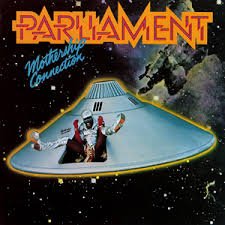
Clinton’s Afrofuturist narrative reached its apex on Parliament’s 1975 concept album Mothership Connection, which unfolds like a cosmic saga. The story centers on Star Child, a divine alien sent to Earth by Dr. Funkenstein to restore funk—a spiritual, social, and aesthetic energy believed lost during slavery. The album describes the funk as buried by the Thumpasorus People beneath the Egyptian pyramids, tasking Star Child and his crew with recovering it. Each track contributes to the mythology: the title track introduces Star Child’s descent from the galaxy’s “Chocolate Milky Way,” while songs such as “Supergroovalisticprosifunkstication” and “P-Funk (Wants to Get Funked Up)” depict Dr. Funkenstein and his allies combating Sir Nose D’Voidoffunk, a villain who refuses to dance and rejects funk’s liberating power. By quoting spirituals like “Swing Low, Sweet Chariot” in the lyrics of “Mothership Connection (Star Child),”Clinton creates a direct link between P-Funk and the music of slavery, grounding Afrofuturist fantasy in African American historical experience.
Musically, Mothership Connection exemplifies Clinton’s experimental style. Tracks often unfold in multiple sections, alternating grooves with changes in texture and vocal arrangements. One section may feature tightly interlocking riffs and group vocals, while another gives greater attention to synthesizer-driven melodies or soloists. Bernie Worrell’s synthesizers perform multiple roles—sometimes emulating horns or vocals, at other times producing shrieks, growls, or electronic effects. Clinton’s proto-rap delivery over these grooves adds rhythmic complexity, while layered group harmonies and call-and-response vocals create communal energy. Songs like“Mothership Connection (Star Child)” display an ABAB form: short instrumental riffs and occasional singing in the first section shift into melodic synthesizer lines and full-group vocals in the second, illustrating the intricate, multidimensional character of P-Funk compositions.
Clinton’s Afrofuturist sensibilities extended fully into live performance, turning concerts into immersive spectacles. The 1976 P-Funk tour featured a descending Mothership spaceship, alien costumes, dashikis, keffiyehs, and synchronized choreography performed by dozens of musicians. Clinton embodied Dr. Funkenstein while other band members assumed the personas of Star Child, Sir Nose D’Voidoffunk, and additional mythic characters. Lights, smoke, lasers, and massive platform boots completed the theatricality, blending science-fiction imagery, Afrocentric symbolism, and group celebration. Audiences experienced imaginative escape, cultural reclamation, and collective empowerment, manifesting the visionary potential of Clinton’s Afrofuturist funk.
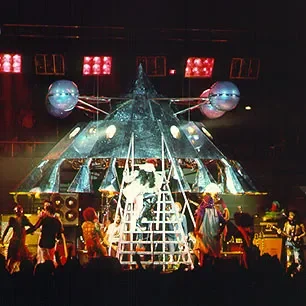
The P-Funk universe was supported by a vast network of musicians, including members of Parliament, Funkadelic, and the broader Parliafunkadelic collective. Many had previously performed with James Brown, including trombonist and arranger Fred Wesley, saxophonist Maceo Parker, bassist Bootsy Collins, and guitarist Catfish Collins, contributing virtuosity and deep funk expertise. Through albums such as Mothership Connection (1975), Funkentelechy vs. the Placebo Syndrome (1977), and One Nation Under a Groove (1978), Clinton combined driving grooves, layered vocals, synthesizer experimentation, and narrative storytelling. The integration of music, myth, costumes, and stagecraft created a cohesive Afrofuturist universe that fused historical consciousness with imaginative, collective possibility. Through this expansive vision, George Clinton gave funk a broader narrative range, allowing it to carry political commentary and speculative storytelling alongside dance music. His work connected audiences with African American history while also creating space to imagine liberated futures.
Blaxploitation
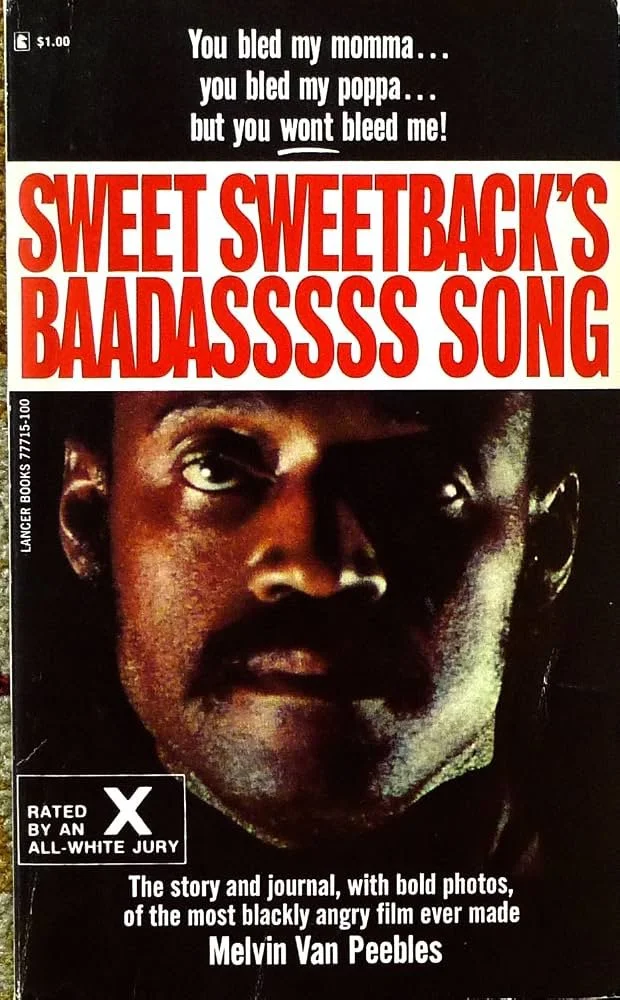
In the early 1970s, a new cinematic subgenre appeared that gave African Americans unprecedented visibility on screen and in music: Blaxploitation. Named from a combination of the words “Black” and “exploitation,” the term referred to films with predominantly African American casts and action-driven stories that drew on the cultural currents of the Civil Rights and Black Power movements. Often financed outside the Hollywood mainstream and distributed in inner-city theaters, these productions featured strong, independent Black protagonists navigating everyday conditions structured by race and class. At the center of the genre were charismatic, anti-authoritarian heroes whose style and resilience resonated deeply with Black audiences. Melvin Van Peebles’s Sweet Sweetback’s Baadasssss Song (1971) is regarded as the genre’s breakthrough, proving that stories centered on Black protagonists could be popular and profitable. Its soundtrack, recorded by Earth, Wind & Fire shortly after their move to Los Angeles, shows the close integration of film and music that was characteristic of the genre.
Soundtracks became a major component of Blaxploitation films, elevating the films while also standing alone as influential works of Black popular music. Isaac Hayes’s score for Shaft (1971) introduced his half-spoken vocal style over wah-wah guitar riffs. The single “Theme from Shaft” became a crossover hit, earning Hayes an Academy Award and strengthening his status in soul music. Curtis Mayfield followed with the soundtrack for Super Fly (1972), combining wah-wah guitar, lush orchestration, and funk rhythms in tracks like “Freddie’s Dead” and “Superfly.” His lyrics addressed social injustice and the effects of segregation and poverty, positioning him as both an artist and a cultural commentator. Even as the films came to be viewed as campy action spectacles or, at worst, perpetuating negative racial stereotypes of Black men, their soundtracks circulated widely and influenced studio practice in funk, soul, and R&B.
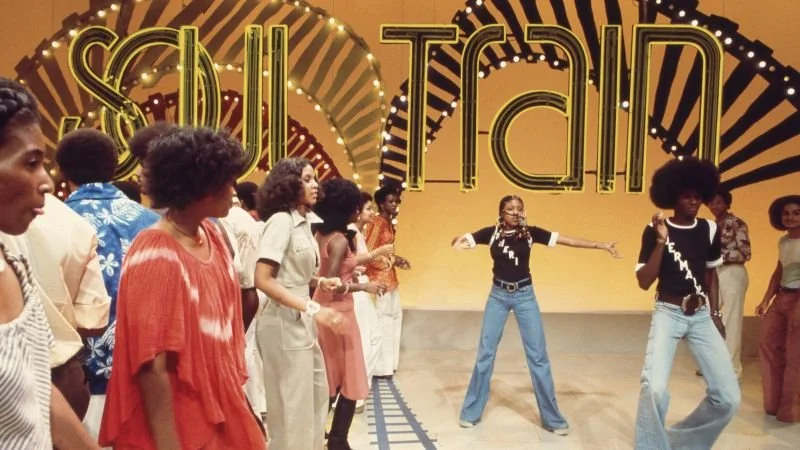
Television also served as a major channel for African American music and style, with Soul Train standing as the most influential platform of its era. Debuting in 1971 on Chicago’s WCIU-TV before entering national syndication later that year, the program ran until 2006, making it the longest-running nationally syndicated show in U.S. television history. Hosted and produced by Don Cornelius, Soul Train provided a groundbreaking alternative to mainstream programs such as American Bandstand, featuring Black performers, dancers, and fashion almost exclusively. It established a space where African American music, style, and cultural creativity could flourish on its own terms. Week after week, the program brought major artists—including James Brown, Curtis Mayfield, Sly and the Family Stone, and Parliament-Funkadelic—directly into living rooms across America, linking sound to performance, fashion, and movement. Every broadcast closed with Cornelius’s signature sendoff, wishing viewers “love, peace, and soul,” a phrase that summed up the program’s values and public image.
One of the show’s most recognizable features was the Soul Train Line, adapted from the 1950s fad known as “The Stroll.” In its original form, the line consisted of couples, with men on one side and women on the other, strutting down the middle in turn. Over time, the format evolved to feature individual lineups for men and women, enabling dancers to exhibit their unique personal flair. Particular dancers often introduced new dance styles, and the segment became a launchpad for popularizing moves that spread well beyond the show. Alongside the stage, a group of dancers performed continuously to the music, conveying the program’s lively and collective atmosphere and placing dance at the center of African American popular culture.
By combining film, music, and television, the 1970s produced a unique media convergence that elevated African American cultural production to national prominence. Blaxploitation films, with their dynamic soundtracks, offered narratives of empowerment and resistance, while artists like Isaac Hayes and Curtis Mayfield brought Black working-class struggles into mainstream awareness through new musical techniques. Soul Train amplified these efforts, providing a nationally televised stage for Black artists and audiences to celebrate style, rhythm, and creativity. Together, these cultural outlets fostered visibility, community, and pride, establishing patterns of representation and distribution that remained in place for decades.
Chapter 27: Conclusion
Throughout the 1960s, African Americans fought to have their voices recognized and to secure equality within American society. Musicians became central spokespeople for both the civil rights and Black Power movements, using their work to inspire pride, resilience, and collective empowerment. James Brown delivered urgent calls for self-definition, while Curtis Mayfield, Sam Cooke, and Stevie Wonder addressed social and political issues through lyrics that guided and encouraged their communities.
By the late 1960s, funk had arisen as a powerful vehicle for African American expression. Built on the foundations of soul, gospel, and rhythm and blues, it emphasized driving bass lines, percussive grooves, and collective performance as symbols of solidarity and shared identity. Bands like Sly and the Family Stone embodied countercultural ideals through racially and gender-integrated lineups, while George Clinton’s Parliament-Funkadelic universe pushed funk in new directions, merging political commentary, Afrofuturist imagery, and theatrical spectacle to encourage Black audiences to reclaim the cultural and spiritual meaning of “funk” suppressed by history.
During the 1970s, funk developed into both a sound and a philosophy. It was a music of the body, demanding dance and participation, but also of the mind, embedding political consciousness and cultural pride in its grooves. At the same time, its presence in mainstream media—through Blaxploitation films and Soul Train—made Black music and style central to American popular culture, providing unprecedented visibility while also raising questions about commodification, stereotype, and authenticity. These tensions echoed earlier debates around Motown but now occurred within a bolder, more overtly political framework. Funk evolved into a cultural practice that fused rhythm, spectacle, and ideology into a potent expression of Black modernity. It addressed the African American experience in the 1970s and articulated alternative social possibilities through sound, image, and performance, bridging past struggles with new possibilities for empowerment, solidarity, and joy.
Chapter 27: Further Reading
Baraka, Amiri. Black Music. New York: William Morrow, 1967.
Bettison, Oscar. “‘I Wanna Take You Higher’: The Stylistic Development and Cultural Dissemination of Post-Psychedelic Funk Music.” PhD diss., Princeton University, 2009.
Bolden, Tony, ed. The Funk Era and Beyond: New Perspectives on Black Popular Culture. New York: Palgrave Macmillan, 2008.
Brackett, David. “James Brown’s ‘Superbad’ and the Double-Voiced Utterance.” In Interpreting Popular Music, 108–56. Cambridge: Cambridge University Press, 1995.
Brown, Geoff. James Brown: Doin’ It to Death. London: Omnibus Press, 1996.
Brown, James, with Bruce Tucker. The Godfather of Soul. New York: Macmillan, 1986.
Chase, Allan S. “Sun Ra: Musical Change and Musical Meaning in the Life and Work of a Jazz Composer.” PhD diss., Tufts University, 1992.
Corbett, John. Extended Play: Sounding Off from John Cage to Dr. Funkenstein. Durham, NC: Duke University Press, 1994.
Davis, Sharon. Marvin Gaye. London: Proteus, 1984.
Edmonds, Ben. What’s Going On? Marvin Gaye and the Last Days of the Motown Sound. Edinburgh: Canongate, 2001.
George, Nelson. The Death of Rhythm and Blues. New York: Pantheon, 1988.
Kofsky, Frank. Black Nationalism and the Revolution in Music. New York: Pathfinder, 1970.
Lodder, Steve, and Stevie Wonder. Stevie Wonder: A Musical Guide to the Classic Albums. San Francisco: Backbeat Books, 2005.
Marcus, Greil. “Sly Stone: The Myth of Staggerlee.” In Mystery Train: Images of America in Rock ’n’ Roll Music, 1st ed. 1975. 4th rev. ed., 199–228. New York: Plume, 1997.
Neal, Mark Anthony. Songs in the Key of Black Life: A Rhythm and Blues Nation. New York: Routledge, 2003.
Peisch, Jeffrey. Stevie Wonder. New York: Chelsea House, 1985.
Ritz, David. Divided Soul: The Life of Marvin Gaye. New York: McGraw-Hill, 1985.
Vincent, Rickey. Funk: The Music, the People and the Rhythm of the One. New York: St. Martin’s Press, 1996.
Walser, Robert. “Groove as Niche: Earth, Wind & Fire.” In This Is Pop: In Search of the Elusive at Experience Music Project, 266–78. Cambridge: Harvard University Press, 2004.
Werner, Craig. Higher Ground: Stevie Wonder, Aretha Franklin, Curtis Mayfield, and the Rise and Fall of American Soul. New York: Crown, 2005.