Chapter 7: Swing and Big Bands

Chapter 7 examines the rise of swing during the 1920s and 1930s, explaining how radio, big bands, and the Great Depression changed the way Americans listened to music. This chapter tracks how swing grew out of earlier jazz and dance band traditions, with bandleaders developing larger ensembles, arranged music, and stronger rhythm sections that became the dominant sound of the era.
Important Terms

Roaring Twenties – The period during the 1920s marked by economic growth, consumer culture, and new forms of entertainment.
Prohibition – The nationwide ban on the manufacture, sale, and transportation of alcoholic beverages from 1920 to 1933.
Eighteenth Amendment – Constitutional amendment that established Prohibition.
Temperance Movement – A reform movement that encouraged reducing or eliminating alcohol consumption.
Bootlegging – The illegal production, transportation, or sale of alcohol during Prohibition.
Speakeasy – An illegal bar that operated during Prohibition.
Great Depression – The economic crisis that lasted through much of the 1930s.
78 RPM Record – A shellac record that rotated at 78 revolutions per minute.
Electric Phonograph – A record player that used electrical amplification instead of hand-cranking.
Swing – A style of jazz featuring strong rhythms, arranged music, and large dance orchestras.
Big Band – A large jazz ensemble usually divided into brass, reed, and rhythm sections.
Society Syncopators – Dance bands of the 1920s that emphasized arranged music for social events.
Rhythm Section – The piano, guitar, bass, and drums that provide harmony and rhythmic support.
Brass Section – The trumpets and trombones in a big band.
Reed Section – The saxophones and other reed instruments in a big band.
Unison Riff – A repeated musical phrase played together by multiple instruments.
Interlude – A short instrumental passage connecting larger sections of music.
Tone Color (Timbre) – The unique sound quality that distinguishes one instrument or voice from another.
Plunger Mute – A rubber plunger placed over a brass instrument's bell to create a "wah-wah" effect.
Harlem Renaissance – A cultural movement centered in Harlem during the 1920s that celebrated African American literature, music, and art.
Race Records – Historical industry term for recordings marketed primarily to African American audiences.
Kansas City Jazz – A swing style emphasizing blues forms, riffs, strong rhythm sections, and improvisation.
Comping – A pianist or guitarist's rhythmic chord accompaniment supporting soloists.
Walking Bass – A bass line that plays one note on every beat while outlining the harmony.
Ostinato – A short repeated rhythmic or melodic pattern.
Hi-Hat Cymbal – Pair of cymbals controlled by a foot pedal that became the primary timekeeper in swing drumming.
Backbeat – Strong rhythmic accents on beats two and four.
Bebop – A fast, harmonically advanced jazz style that developed during the 1940s.
Cool Jazz – A jazz style characterized by relaxed tempos and lighter tone.
Hard Bop – A jazz style combining bebop with blues, gospel, and rhythm and blues influences.
Modal Jazz – A jazz style based on musical modes rather than rapid chord changes.
Jazz Fusion – A style combining jazz improvisation with rock, funk, and electronic instruments.
Avant-Garde Jazz – Experimental jazz that explores unconventional sounds and structures.
Free Jazz – A style emphasizing unrestricted improvisation and flexible musical forms.
Artists Discussed
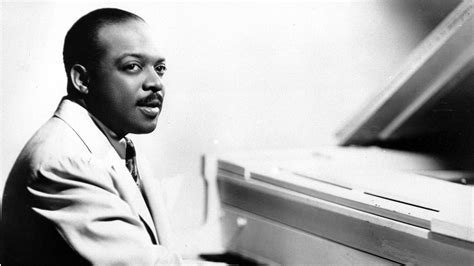
Fate Marable – Bandleader whose riverboat orchestra trained many early jazz musicians.
Louis Armstrong – Trumpeter who performed with Fate Marable before becoming a jazz icon.
Fletcher Henderson – Bandleader and arranger whose orchestral style became the foundation for swing.
Benny Goodman – Clarinetist and bandleader known as the "King of Swing."
Duke Ellington – Composer, pianist, and bandleader who expanded jazz orchestration.
Cootie Williams – Trumpeter in Duke Ellington's orchestra.
Paul Whiteman – Bandleader known as the "King of Jazz."
Tommy Dorsey – Trombonist and bandleader who performed with Paul Whiteman.
George Gershwin – Composer of Rhapsody in Blue.
Louis Prima – Composer of "Sing, Sing, Sing (With a Swing)."
Glenn Miller – Popular white swing bandleader.
Count Basie – Pianist and bandleader who developed the Kansas City swing style.
Walter Page – Bassist who helped establish the walking bass line.
Freddie Green – Guitarist in Count Basie's rhythm section.
Jo Jones – Drummer who popularized using the hi-hat as the primary timekeeper.
Lester Young – Tenor saxophonist known for his relaxed improvisational style.
Coleman Hawkins – Tenor saxophonist whose style contrasted with Lester Young's.
Charlie Parker – Alto saxophonist who helped create bebop.
Miles Davis – Trumpeter who contributed to cool jazz, modal jazz, hard bop, and jazz fusion.
John Coltrane – Saxophonist associated with modal jazz and avant-garde jazz.
Art Blakey – Drummer and bandleader whose hard bop recordings drew on blues and gospel.
Max Roach – Drummer and composer whose music supported the Civil Rights Movement.
Songs Referenced
"King Porter Stomp" – Jelly Roll Morton (popularized by Fletcher Henderson and Benny Goodman)
"Blue Skies" – Irving Berlin (arranged by Fletcher Henderson for Benny Goodman)
"Concerto for Cootie" – Duke Ellington
"Jeep's Blues" – Duke Ellington
"Old Man Blues" – Duke Ellington
"Rhapsody in Blue" – George Gershwin
"Sing, Sing, Sing (With a Swing)" – Louis Prima (popularized by Benny Goodman)
"Wholly Cats" – Benny Goodman, Teddy Wilson, Lionel Hampton, and Charlie Christian
"Breakfast Feud" – Benny Goodman Sextet
"Lester Leaps In" – Count Basie Orchestra
"Straight Ahead" – Count Basie Orchestra