Chapter 38: Hip Hop in the 90s
Chapter 38: Introduction
By the early 1990s, hip-hop had become a major artistic and commercial presence in the United States. What began as a regional expression in New York’s boroughs during the 1970s had evolved into national and global circulation, affecting popular culture, fashion, and language. During this period, the music spread to new regions and took on new stylistic forms. While New York had long been hip-hop’s creative center, the early 1990s witnessed the rise of the West Coast as a powerful new voice in the genre.
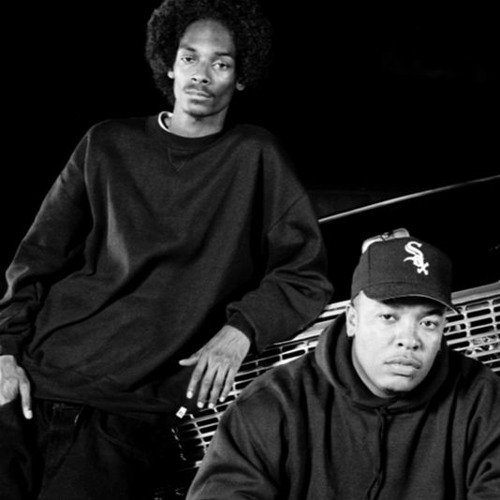
The West Coast sound, built around Dr. Dre's pioneering G-funk production style, introduced a smoother, funk-influenced sound centered on deep basslines and melodic synthesizers, often drawing samples from 1970s funk recordings. Popularized by artists such as Dr. Dre and Snoop Dogg, G-funk helped establish Los Angeles as a major center of hip-hop innovation. Yet the dominance of the West Coast was short-lived. By the mid-1990s, East Coast artists such as Nas and the Wu-Tang Clan reasserted New York’s influence through music marked by dense lyricism and sample-heavy production, with a rougher sonic texture.
As regional styles multiplied, rivalries between artists grew more hostile. Competitive zeal turned to animosity as artists from opposite coasts traded public insults and released songs directly targeting one another. The tension between the East and West Coasts reached a tragic peak with the feud between Tupac Shakur and The Notorious B.I.G. What began as a battle of lyrical supremacy escalated into a cycle of threats, accusations, and violence, culminating in the murders of both rappers while they were at the heights of their careers.
Understanding hip-hop’s evolution in the 1990s also requires an awareness of the broader social and political climate in which it developed. The early years of the decade were marked by racial tension and economic inequality, along with widespread mistrust of law enforcement in major American cities—especially Los Angeles. In April 1992, the acquittal of four Los Angeles Police Department officers who had been filmed beating Black motorist Rodney King sparked one of the most destructive periods of urban unrest in U.S. history. The Los Angeles riots, also known as the Los Angeles uprising, erupted across South Central and neighboring areas, lasting six days and resulting in 63 deaths, more than 2,000 injuries, and over 12,000 arrests. Property damage exceeded $1 billion, and the destruction was so extensive that federal troops and the California National Guard were deployed to restore order.
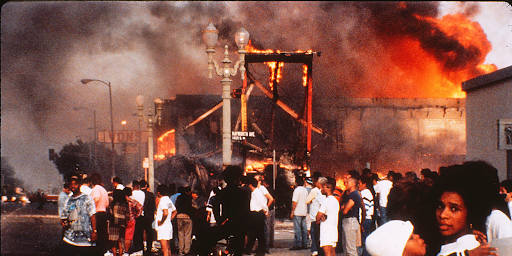
Koreatown suffered hefty losses, which exposed longstanding racial and economic tensions between Black and Korean American communities. These tensions had intensified the previous year, after the killing of fifteen-year-old Latasha Harlins by Korean shopkeeper Soon Ja Du, who shot the unarmed teenager during a dispute over a bottle of orange juice. Although the jury recommended a sixteen-year sentence, the judge reduced the punishment to probation and community service, fueling outrage and deepening divisions. Many African American residents felt that the justice system consistently devalued their lives, while some Korean American shop owners faced resentment for perceived economic exploitation and racial bias.
The riots exposed the layers of frustration that had accumulated over decades of economic neglect and systemic inequality. Social critic Mike Davis argued that the violence stemmed from widening economic disparities caused by corporate restructuring and government deregulation, which had left inner-city residents increasingly marginalized. Then-presidential candidate Bill Clinton described the unrest as a symptom of the breakdown of opportunity and community in America’s metropolitan areas. While condemning the violence, he criticized both major political parties for ignoring the roots of poverty and social decay, framing the riots as the result of a nation that had abandoned its most vulnerable citizens.
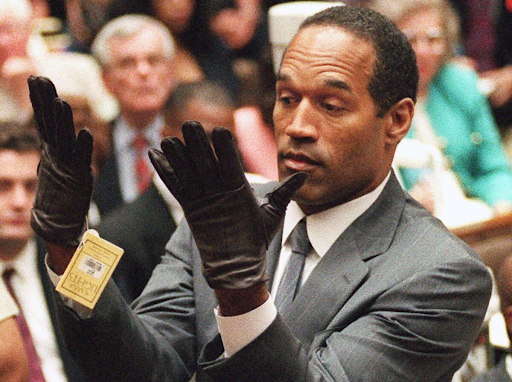
The O.J. Simpson trial, which dominated headlines from 1994 to 1995, further revealed the depth of America’s racial divisions. Simpson, a former football star, was charged with the murders of Nicole Brown Simpson and Ronald Goldman in Los Angeles. His highly publicized trial, which was broadcast daily and drew millions of viewers, became a flashpoint in national debates over race, justice, and media sensationalism. When Simpson failed to surrender to police and became the subject of a televised low-speed pursuit in his White Ford Bronco on the 405 Freeway, the spectacle only deepened public fascination.
After his acquittal in October 1995, reactions to the verdict sharply diverged along racial lines. Polls showed that most Black Americans viewed the decision as a victory against a police department notorious for corruption and racial bias, while most white and Latino Americans believed Simpson had escaped justice. The LAPD’s credibility had already been damaged by the Rodney King beating and subsequent trial, and the defense’s accusations that detective Mark Fuhrman had planted evidence struck deeply with communities long accustomed to police misconduct. As MSNBC’s Charles F. Coleman Jr. observed, “Black people didn’t love O.J. Simpson—they hated the LAPD.” Later civil proceedings found Simpson liable for the murders, though he paid little of the $33.5 million judgment. He was later imprisoned in 2008 for armed robbery and kidnapping in Las Vegas and released on parole in 2017.
The events surrounding the Rodney King beating, the Los Angeles riots, and the O.J. Simpson trial greatly influenced the social and emotional discourse of the 1990s, particularly within hip-hop and R&B music. The music of this decade was deeply influenced by its environment, marked by racial tension, media spectacle, and growing attention to systemic injustice. Hip-hop emerged as a response through defiance, storytelling, and social critique, while R&B echoed similar themes of resilience, love, and aspiration. Together, these genres created the soundtrack for a generation navigating both cultural pride and collective disillusionment, giving voice to the struggles and contradictions of life in modern America.
Dr. Dre and the West Coast Style
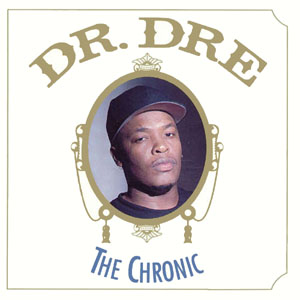
Following internal conflicts with fellow members of the gangsta rap group N.W.A and the group’s management, Dr. Dre left N.W.A. in 1991 and co-founded Death Row Records in Los Angeles with former football player Marion “Suge” Knight, rapper and lyricist the D.O.C. (Tracy Lynn Curry), and Richard Gilbert “Dick” Griffey. The label quickly secured a distribution deal with the major label Interscope Records, which helped bring West Coast hip-hop to a mainstream audience. Death Row’s first release was Dr. Dre’s 1992 solo debut, The Chronic, an album that both established Dre’s solo producing career and also brought West Coast rap to national prominence.
The title The Chronic refers to a high-grade strain of marijuana, a reference consistent with the album’s lyrical themes of gangsta lifestyle, sex, drugs, violence, as well as loyalty to one’s city and friends. Although often explicit and controversial, the album’s lyrics blended autobiography, fantasy, and social commentary. Dre’s vocal delivery, and that of his collaborators, especially Snoop Doggy Dogg, was characterized by a slow, laid-back, and occasionally slurred cadence.
The resulting sound was called G-Funk, short for “Gangsta Funk,” a style inspired by the P-Funk innovations of George Clinton’s Parliament-Funkadelic collective. Dre incorporated the lush, psychedelic grooves of Clinton’s 1970s recordings through both sampling and re-performance. Hallmarks of the G-Funk sound included deep, resonant bass lines, high-pitched synthesizer melodies, female backing vocals, and the use of traditional verse–chorus song structures. The tempos were generally slower than those favored by East Coast producers such as Public Enemy or the Beastie Boys, typically at around 90–100 beats per minute, creating a relaxed yet rhythmically dense atmosphere. Vocally, G-Funk artists favored a relaxed, “lazy” delivery that maintained rhythmic precision while emphasizing smoothness and clarity. Dre’s mixing technique emphasized extreme sonic contrast—boosting the highs and lowering the lows to produce thunderous bass and shimmering synthesizer leads.
By the early 1990s, it had become increasingly expensive and legally complicated for hip-hop producers to sample large portions of existing recordings, which had characterized late-1980s rap production. Dre adapted by blending live instrumentation with samples, hiring studio musicians to replay sections of older songs, recording these performances, and then sampling his own new recordings. The process of replaying and then sampling newly recorded performances allowed Dre to pay only publishing (songwriting) fees rather than both publishing and mechanical (recording) fees, which were typically more costly. As a result, Dre was still engaging in sampling, but he was sampling his own recordings rather than the original tracks, effectively cutting costs while maintaining creative flexibility. Though he occasionally used direct samples, the majority of his productions during this period relied on re-performed material. Dre’s production also drew on his preference for vintage analog equipment. He employed classic keyboards such as the Wurlitzer, Fender Rhodes, Clavinet, and Vox V-305 organ, as well as the Roland TR-808 drum machine, known for its booming low-end kick. Although he was not the first to merge P-Funk with rap—groups like Digital Underground had explored similar territory earlier—Dre successfully branded G-Funk as his signature sound and popularized it on a mass scale. The Chronic spent eight months in the Billboard Top 10, making it the most successful hardcore rap album of its time.
One of The Chronic’s standout tracks, “Let Me Ride”, exemplified the G-Funk style. The song features re-performed portions of Parliament’s “Mothership Connection (Star Child)” and includes reinterpreted lyrics and melodies from the original. Each chorus concludes with replayed instrumental passages, accompanied by high-register synthesizers and a rumbling bass line characteristic of the G-Funk aesthetic. The drum track, however, is sampled from James Brown’s “Funky Drummer,” utilizing the iconic break by drummer Clyde Stubblefield, which has become one of the most sampled rhythms in hip-hop history.
Another signature single from The Chronic was “Nuthin’ but a ‘G’ Thang”, featuring Snoop Doggy Dogg, Dre’s new protégé and primary collaborator. The song’s melodic foundation was replayed from Leon Haywood’s 1972 track “I Wanna Do Somethin’ Freaky to You”, performed on a Minimoog synthesizer by session musician Colin Wolfe. Its combination of layered synths, funk-inspired basslines, and smooth rhythmic flow captures the G-Funk sound and made the track a global hit. Dre’s production team for The Chronic and for Snoop’s subsequent album Doggystyle included Daz Dillinger, Tony “T. Money” Green on bass, Ricky Rouse on guitar, keyboardists Emanuel “Porkchop” Dean and Sean “Barney Rubble” Thomas, engineer Tommy Daugherty, and contributors such as Warren G and Sam Sneed, who supplied additional samples and musical ideas.
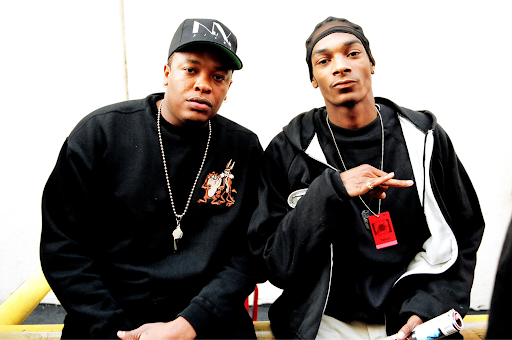
Dr. Dre’s production style continued to influence West Coast hip-hop through Snoop Doggy Dogg’s debut album, Doggystyle (1993), the first rap album ever to debut at number one on the Billboard Pop Chart. Like The Chronic, Doggystyle featured G-Funk’s trademark synthesis of re-performed P-Funk grooves, deep bass, and relaxed vocal flow. The lead single, “Who Am I (What’s My Name)?”, reimagined the chorus of George Clinton’s “Atomic Dog” (1982) and borrowed the bassline from Funkadelic’s “Not Just Knee Deep” (1979), both replayed by studio musicians. Though party-oriented and often explicit, the album captured the carefree, funk-infused essence of early 1990s West Coast rap.
Snoop’s career developed rapidly. Known for his versatile flow—capable of shifting between a relaxed drawl and rapid-fire delivery—he gained attention with Dre’s 1992 single “Deep Cover.” His 1993 debut Doggystyle sold over four million copies and broke records for the highest chart debut in Billboard history. However, Snoop’s rising fame was eclipsed by his involvement in a 1993 murder trial. He and his bodyguard were charged with the killing of Phillip Woldermarian; Snoop was later acquitted, but the case heightened media scrutiny, contributing to both his notoriety and record sales. In 1995, his protégés, Tha Dogg Pound, released their debut album under Death Row, further solidifying the label’s dominance. Snoop’s 1996 follow-up, Tha Doggfather, was his final Death Row release before joining Master P’s No Limit Records in 1998, where he issued Da Game Is to Be Sold, Not to Be Told and two subsequent albums. He later returned to prominence with 2002’s Paid tha Cost to Be da Boss and continued his commercial success with 2004’s R&G (Rhythm & Gangsta): The Masterpiece and 2008’s Ego Trippin’, which featured the hit “Sexual Eruption.”
As his musical career grew, Snoop became a prominent figure in mainstream American culture, far beyond the world of gangsta rap. Snoop became a fixture in film and television, including his own reality series on the E! Network. He developed an unlikely but popular partnership with celebrity television personality Martha Stewart, hosting cooking shows and variety programs that played on their contrasting public personas. He also appeared regularly in film and television, becoming a familiar presence on talk shows, award ceremonies, and advertising campaigns. By the 2020s, Snoop was widely embraced as a cultural icon, culminating in his widely celebrated commentary segment during the 2021 Tokyo Olympics, where his humorous analysis of equestrian events became a viral moment and further demonstrated his crossover appeal.
During the early 1990s, Death Row Records became the center of the West Coast rap industry. Its aggressive marketing strategy and Interscope distribution deal propelled artists like Dr. Dre, Snoop Doggy Dogg, Tupac Shakur, Daz Dillinger, and Warren G into mainstream visibility. Yet, the label was also notorious for generating controversy, as Suge Knight and several of its artists faced frequent legal issues. Mounting public criticism over gangsta rap’s lyrical themes of violence and misogyny led Time Warner, the parent company of Interscope, to sever ties with the distributor. By 1996, tensions within Death Row had reached a breaking point: Dr. Dre left to form Aftermath Records, while Suge Knight was imprisoned for probation violations but continued to manage the label from jail. Death Row eventually filed for bankruptcy, then was purchased by WIDEawake Entertainment Group in 2009 for $7 million.
After founding Aftermath, Dre released his second solo album, 2001 (originally The Chronic 2001), in 1999, alongside producing Eminem’s The Slim Shady LP that same year. He later mentored 50 Cent and The Game, reinforcing his standing as one of hip-hop’s most influential producers. Throughout the 2000s, Dre’s perfectionism limited his solo output, but his influence remained unmatched.
Tupac Shakur
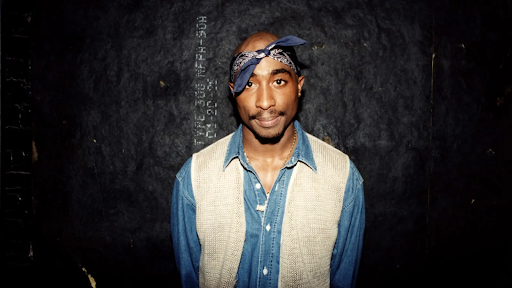
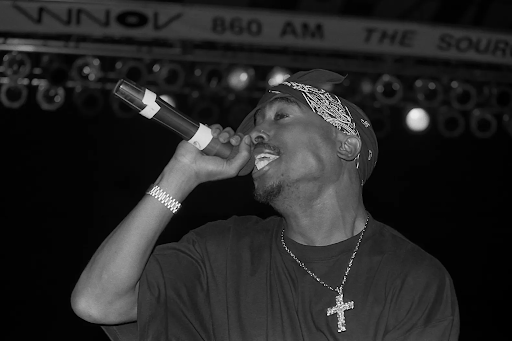
Tupac Amaru Shakur, known professionally as 2Pac, is a central figure in twentieth-century hip-hop. His work fused political awareness with direct, emotionally exposed lyricism, bringing gangsta rap to the forefront of American popular culture while continually challenging its boundaries. Despite his success, his life and career were marked by tensions in the 1990s around race, violence, and media attention in which he was directly involved.
Born in New York City in 1971, Tupac entered the world already surrounded by political struggle. He was named after Túpac Amaru II, the eighteenth-century Peruvian revolutionary who led a resistance against Spanish colonial rule. His parents, Afeni Shakur and Billy Garland, were members of the Black Panther Party, an organization committed to Black self-determination and community defense. Afeni was part of the group known as the Panther 21, activists charged with conspiring to bomb New York City police stations and other public sites. She was pregnant with Tupac while standing trial and represented herself in her own defense. Her acquittal came just a month before he was born.
His professional career began with the Oakland-based group Digital Underground, first as a roadie and dancer, and later as an MC. He made his recording debut on the group’s This Is an E.P. Release (1990) and Sons of the P (1991), performing on tracks like “Same Song.” This experience prepared him for his solo debut, 2Pacalypse Now (1991), released on Interscope Records. The album’s politically charged lyrics addressed systemic racism, police brutality, poverty, and the struggles of Black youth through songs such as “Brenda’s Got a Baby,” “Trapped,” and “Part Time Mutha.” Though less polished than his later work, 2Pacalypse Now was widely praised for its unvarnished honesty and social consciousness, aligning Shakur with politically engaged rap groups such as Boogie Down Productions, Public Enemy, and X-Clan.
Tupac’s second album, Strictly 4 My N.I.G.G.A.Z. (1993), continued to explore social and political issues while showcasing a more confident sound. Songs like “The Streetz R Deathrow” and “Last Wordz” confronted the violence and inequality facing Black communities, while “Keep Ya Head Up” became widely used as a statement of support for Black women and resilience. The album also featured the playful hit “I Get Around,” which reunited him with members of Digital Underground. Strictly 4 My N.I.G.G.A.Z. reached number 24 on the Billboard 200 and earned platinum certification, establishing him as a major figure among emerging hip-hop artists.
In 1994, Tupac formed the group T.H.U.G. Life—an acronym for “The Hate U Give Little Infants Fucks Everyone”—with Big Syke, Macadoshis, Rated R, and his half-brother Mopreme Shakur. Their album Thug Life: Volume 1 (1994) captured the tension between the realities of street life and the desire for redemption. That same year, Tupac’s growing fame was shadowed by escalating legal troubles and violence. He was robbed and shot in a New York recording studio and faced several criminal charges, including assault and sexual assault. He served fifteen days in jail for attacking film director Allen Hughes and eight months for the assault conviction.
Even during his imprisonment, Tupac continued to influence the direction of hip-hop. His 1995 album, “Me Against the World,” recorded before his sentencing, debuted at number one on the Billboard 200, making him the first artist to reach that position while incarcerated. A centerpiece of the album, “Dear Mama,” paid tribute to his mother, Afeni Shakur. Built on samples from the Spinners’ “Sadie” and Joe Sample’s “In All My Wildest Dreams,” the track combined tenderness with direct accounts of poverty, addiction, and maternal sacrifice. Earlier works such as “Keep Ya Head Up” (1993) likewise countered gangsta-rap misogyny by affirming the dignity and struggles of Black women.
Following his release from prison in late 1995, Suge Knight and Jimmy Iovine posted $1.5 million bail on the condition that Tupac sign to Death Row Records. His first album for the label, the double-disc All Eyez on Me (1996), quickly became one of the era’s quintessential West Coast projects. Produced in part by Dr. Dre, the album moves between celebratory tracks and more introspective songs, such as “Ambitionz Az a Ridah,” “I Ain’t Mad at Cha,” “Life Goes On,” and “Picture Me Rollin’.”
“California Love,” featuring Dr. Dre and Roger Troutman, became the album’s signature single. The track blended elements of funk, electronic production, and G-funk, sampling Joe Cocker’s “Woman to Woman,” Ronnie Hudson’s “West Coast Poplock,” and Zapp’s “Dance Floor.” Troutman’s talk box performance—created by routing an instrument’s sound through a plastic tube into the performer’s mouth, where shaping the mouth silently manipulates the tone so the instrument seems to “speak”—added a distinctive, robotic timbre that linked the song to the electro-funk. Combined with Dre’s crisp drum programming and Tupac’s authoritative delivery, the track became a widely recognized West Coast anthem, topping the Billboard Hot 100 and cementing Tupac’s mainstream visibility.

Beyond music, Tupac built a parallel career in film, appearing in Juice (1992), Poetic Justice (1993), and Above the Rim (1994). Black nationalism, egalitarian politics, and the legacy of both civil rights and Black Power movements strongly influenced his artistic worldview. He saw creative expression as a tool for social critique and often drew on literary influences, including Shakespeare, whose explorations of ambition and conflict resonated with Tupac’s own narrative sensibilities.
Vocally, Shakur cultivated a style recognized by strong projection and a rough, gritty vocal tone. Greg “Shock G” Jacobs, one of his earliest producers, described his delivery as coming “from the pit of his stomach,” which Jacobs compared to the delivery of great orators such as Malcolm X and Martin Luther King Jr. Tupac was also an early adopter of extensive vocal layering, recording multiple takes to intensify rhythmic force and presence. On tracks like “Dear Mama,” shifts between a dark, rounded tone and a rougher, huskier timbre heighten the sense of vulnerability beneath his assertive delivery.
Tupac’s influence rests not only on his cultural stature but on the breadth of his artistic expression. His work captured the complexities of Black life in the late twentieth century, confronting systemic injustice while making space for tenderness, frustration, humor, and hope. His catalog remains a central point of reference in discussions of hip-hop’s sound and political content, and his work remains visible across subsequent generations of rappers, writers, and activists.
The East Coast Style: The Wu Tang Clan
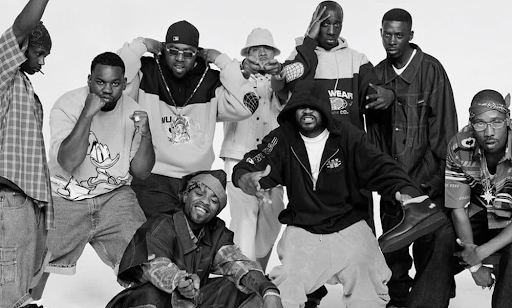
By the early 1990s, East Coast hip-hop was reestablishing its identity in contrast to the polished, funk-driven G-funk sound that dominated the West Coast scene. The New York style emphasized raw drum breaks and dense lyricism. Producers reduced melodic elements and favored a “grimy” texture that foregrounded street narratives over radio-friendly production. The beats were built from raw, chopped drum samples layered with 1970s soul and jazz loops, often pitch-shifted or time-stretched to create unconventional textures. Producers used sparse arrangements so the MCs’ delivery carried the track. The stripped-down, sample-heavy East Coast production style relied heavily on looping short samples, layering multiple vocal tracks, and using low-cost keyboards and drum machines to create a signature sonic identity. This aesthetic gained wide attention in 1993 with the release of Enter the Wu-Tang (36 Chambers) by the Wu-Tang Clan, a collective that redirected both the sound and business model of East Coast rap.
Formed in New York City in the early 1990s, Wu-Tang Clan united nine members—RZA (Robert Diggs), GZA (Gary Grice), Ol’ Dirty Bastard (Russell Jones), Method Man (Clifford Smith), Raekwon (Corey Woods), Ghostface Killah (Dennis Coles), Inspectah Deck (Jason Hunter), U-God (Lamont Hawkins), and Masta Killa (Jamal Turner). With such a large ensemble, not every rapper appeared on each track, a structure that allowed the group to showcase varied voices. RZA, the group’s producer and architect, secured a groundbreaking contract: the Clan would sign as a group, but each member retained the freedom to pursue solo deals with other labels. After extended negotiation, RCA agreed, making it one of hip-hop’s most unusual and influential business arrangements.
RZA’s production characterized the sound of their debut. Using inexpensive gear, he combined 1970s soul and jazz samples with distorted drum patterns and dialogue from kung-fu films, especially Shaolin and Wu Tang (1983) and The 36th Chamber of Shaolin. The result was a stark, atmospheric style that contrasted with the slicker mainstream trends of the period. Among the album’s most iconic tracks was “C.R.E.A.M.,” built on a sample from the Charmels’ 1967 soul song “As Long as I’ve Got You.” With verses from Raekwon and Inspectah Deck and a hook from Method Man, the track explored poverty, hustling, and the pressures on working-class families. Its chorus referenced Jimmy Spicer’s 1983 “dollar bill, y’all,” grounding the group firmly within earlier rap traditions.
RZA and GZA changed course after disappointing experiences with major labels. RZA had briefly recorded as Prince Rakeem, and GZA’s Words from the Genius received little label support. Both believed that the polished sounds major labels favored misrepresented the communities they sought to portray. Wu-Tang’s deliberately raw, “street-level” aesthetic was their response—a corrective that asserted authenticity through grit and dense lyricism with limited post-production.
Their independently released 1993 single “Protect Ya Neck,” which sold 10,000 copies on vinyl, attracted the attention of major labels and secured a deal with Loud/BMG. When Enter the Wu-Tang (36 Chambers) appeared later that year, its aggressive lyricism, eccentric beats, and cohesive collective identity shifted the sphere of East Coast hip-hop and helped restore New York’s national prominence.
Between 1994 and 1996, the Clan increased its influence through a celebrated series of solo albums, nearly all produced or guided by RZA—including Method Man’s Tical (1994), Raekwon’s Only Built 4 Cuban Linx… (1995), GZA’s Liquid Swords (1995), Ol’ Dirty Bastard’s Return to the 36 Chambers (1995), and Ghostface Killah’s Ironman (1996). Their consistency of sound and continued collaboration reinforced the Wu-Tang identity while forming the mid-1990s East Coast aesthetic.
The group reunited in 1997 for Wu-Tang Forever, which sold strongly on release, though its length and the members’ growing solo commitments made it less unified than their debut. Over time, the members pursued individual careers—Method Man moved into acting, RZA began composing film scores, including work for Kill Bill: Volume 1, and the group launched clothing ventures. By the mid-2000s, internal conflicts, creative differences, and dispersed priorities led the Clan to function more as a loose collective than a consistently active group, though they never formally disbanded and continue to reunite intermittently for tours and releases.
The group’s most influential work remains concentrated in the 1992–1997 period, with its stripped-down, sample-heavy production, cinematic textures, dense lyricism, and a gritty realism that established a new blueprint for independent production and for East Coast hip-hop as a whole.
Bad Boy Records: Sean Combs
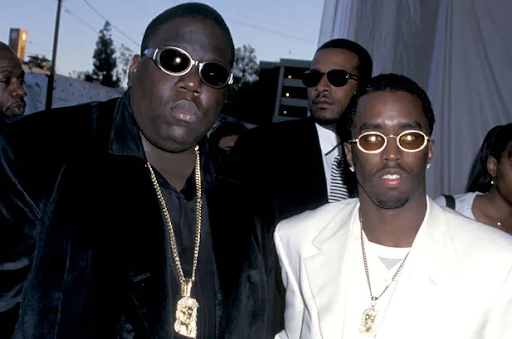
As Wu-Tang Clan broadened the possibilities for raw, sample-driven production and independent artistic identity, a different vision of East Coast hip-hop rose alongside them—one with polished production, R&B crossover appeal, and an embrace of mainstream pop aesthetics. No figure pushed this direction more decisively than Sean Combs.
Sean Combs—also known as Puff Daddy, P. Diddy, and Diddy—was central to the commercial and stylistic resurgence of East Coast hip-hop in the mid-1990s through his label Bad Boy Records. A producer, rapper, executive, and entrepreneur, Combs gained recognition for his sample-heavy, R&B-infused sound, which helped reclaim East Coast commercial dominance after years of West Coast influence. His work across fashion, film, and branding helped establish him as an influential figure in hip-hop's movement into global pop culture.
Born in Harlem, Combs attended Howard University before leaving to intern at Uptown Records with Andre Harrell. By eighteen, he had become head of A&R, helping launch the careers of Mary J. Blige and Jodeci. After leaving Uptown in 1993, he secured $1.5 million in backing from Clive Davis, founder of Arista Records, to establish Bad Boy Records, which included a distribution deal and full creative control. Early signings included Craig Mack, The Notorious B.I.G. (Christopher Wallace), the R&B groups Total and Faith Evans, and the rapper Mase (Mason Betha).
The release of The Notorious B.I.G.’s Ready to Die (1994) solidified Bad Boy’s signature sound: polished production, warm soul samples, and vivid lyrical narratives. Combs’s close partnership with Biggie placed him squarely at the center of the escalating East Coast–West Coast rivalry involving Tupac Shakur and Death Row Records, particularly Suge Knight.
Combs launched his own career as a recording artist with No Way Out (1997), which produced international hits including “Can’t Nobody Hold Me Down” and “I’ll Be Missing You,” the latter built on a sample of the Police’s “Every Breath You Take.” He followed with Forever (1999), The Saga Continues… (2001), and Press Play (2006), collaborating with artists such as Nelly, T.I., and Drake. His extensive reliance on samples—from Diana Ross’s “I’m Coming Out” to David Bowie’s “Let’s Dance”—embodied the era’s persistent debate over artistic originality, nostalgia, and commercial strategy. Outside of music, Combs extended Bad Boy into fashion through the Sean John and Sean by Sean Combs clothing lines, launched a film production company, and opened restaurants, becoming one of the decade's most visible cultural entrepreneurs.
In recent years, however, Combs’s legacy has been overshadowed by serious legal issues. In late 2023, he settled a high-profile sexual assault and abuse lawsuit filed by his former partner, Cassie Ventura. More lawsuits followed, alleging misconduct between 1991 and 2009. In March 2024, the Department of Homeland Security raided his properties, and in September, he was charged with federal sex trafficking, transportation to engage in prostitution, and racketeering. Combs pleaded not guilty but was denied bail three times. His trial began on May 5, 2025; on July 2, he was convicted of transportation to engage in prostitution but acquitted on racketeering and sex trafficking charges. On October 3, 2025, he was sentenced to fifty months in prison, with credit for twelve months served, and is currently incarcerated at the Federal Correctional Institution in Fort Dix, New Jersey.
Notorious B.I.G.
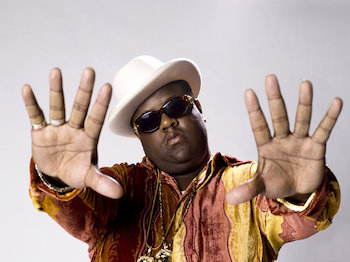
While Tupac Shakur came to symbolize the intensity and political edge of West Coast hip-hop in the mid-1990s, Christopher George Latore Wallace—better known as the Notorious B.I.G. or Biggie Smalls—became a central voice in East Coast hip-hop, combining lyrical sophistication with compelling narrative storytelling. Born in 1972 in Brooklyn, New York, Wallace grew up in a single-parent household where his mother emphasized the importance of education. Despite her guidance, he became involved in selling drugs by age twelve and dropped out of high school at seventeen. These experiences later supplied much of the material for his semi-autobiographical music, blending realism with meditations on ambition and survival.
Performing initially under the name Cwest, Wallace soon adopted Biggie Smalls and developed a style distinguished by a smooth, swinging flow, precise timing, and clever wordplay. His lyrics combined vivid depictions of street life with broader social commentary, striking a balance between gritty realism and aspirational storytelling. Biggie’s skill caught the attention of Sean Combs, then an A&R executive at Uptown Records, preparing to launch Bad Boy Records. Combs signed Biggie in 1992, featuring him on guest verses for other artists, introducing him to a broader audience, and helping launch his early career.
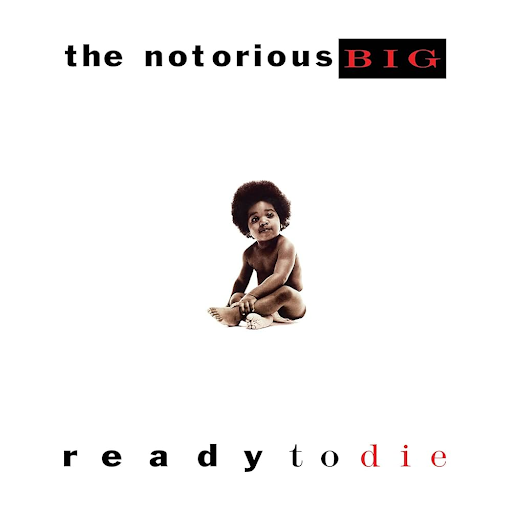
TThe Notorious B.I.G.’s debut album Ready to Die (1994), produced under the supervision of Sean Combs, presents a loose narrative tracing his childhood and rise within hip-hop. The lead single “Juicy” captures this balance, combining boastful celebration with personal reflection. Musically, the song is built around a sample of Mtume’s “Juicy Fruit” and supported by vocals from Total. The track follows a rags-to-riches arc, recounting early poverty, aspirations in music, key influences, involvement in illicit economies, and eventual success and material excess.
Other singles from the album, including “One More Chance” and “Big Poppa,” pair direct, experience-based lyricism with accessible, radio-ready production, with “Big Poppa” drawing on stylistic traits associated with West Coast rap. Across the record, The Notorious B.I.G. demonstrates control of internal rhyme, a flexible rhythmic flow, and detailed narrative pacing, producing music that is both technically intricate and widely accessible. His rapid rise positioned him at the center of East Coast hip-hop and elevated Bad Boy Records, and contributed to the region’s renewed commercial prominence after a period dominated by West Coast artists.
East Coast vs. West Coast Hip-Hop
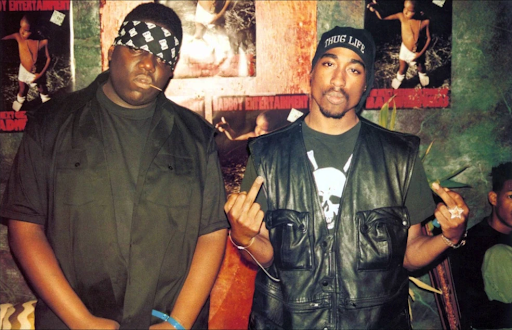
In the early 1990s, West Coast hip-hop dominated the mainstream music scene, primarily due to Dr. Dre’s signature G-Funk sound. However, because New York is widely recognized as the birthplace of hip-hop, the East Coast positioned itself as the genre’s cultural authority, creating a natural rivalry between the coasts. The feud began musically. In 1991, Bronx rapper Tim Dog released the single “F--- Compton,” a direct attack on N.W.A and the Los Angeles rap scene. The accompanying video depicted actors resembling N.W.A members in threatening scenarios, further inflaming tensions. West Coast artists responded with diss tracks, most notably Dr. Dre’s “F--- wit Dre Day (And Everybody’s Celebratin’)” from his 1992 album The Chronic. The track targeted both Tim Dog and Dre’s former N.W.A. collaborator, Eazy-E, using G-Funk’s signature combination of Funkadelic-inspired bass lines and shimmering synthesizers.
The regional record labels amplified the rivalry. In 1991, Dr. Dre, entrepreneur Suge Knight, and their collaborators founded Death Row Records in Los Angeles, which quickly became the dominant label on the West Coast. Across the country, Sean Combs (Puff Daddy) prepared to launch Bad Boy Records in New York, signing emerging artists like The Notorious B.I.G. (Biggie Smalls) and later Mase, Total, and Faith Evans. Knight and Combs openly clashed over their production philosophies, with Knight criticizing Combs’ hands-on style, which included appearing in music videos and contributing vocal ad-libs.
Tensions turned violent in 1994, when Tupac Shakur was shot multiple times at Quad Recording Studios in Manhattan. Tupac claimed that Biggie Smalls and Combs had prior knowledge of the attack, though no evidence supported these allegations. In the months following, Biggie released “Big Poppa” from Ready to Die, with the B-side “Who Shot Ya?” While Biggie and Combs insisted the track had been recorded before Tupac’s shooting, many on the West Coast interpreted it as a deliberate provocation. Tupac responded with the 1996 track “Hit ‘Em Up,” threatening Biggie, Combs, and other Bad Boy affiliates. Biggie never issued a direct musical response, though listeners have noted subtle references to the feud in his lyrics.
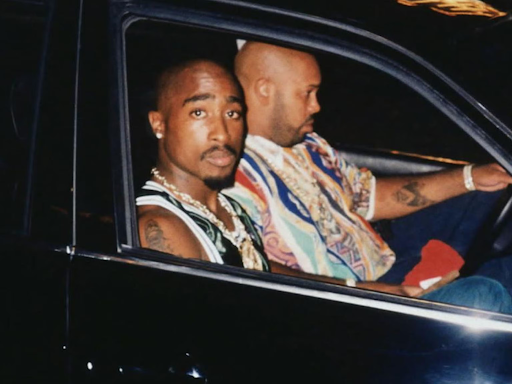
The conflict culminated in tragedy. In September 1996, Tupac was killed in a drive-by shooting in Las Vegas at age 25. Rumors implicated Biggie or Death Row affiliates, but no definitive evidence ever surfaced. Tupac’s posthumous album, The Don Killuminati: The 7 Day Theory, was released under his Makaveli pseudonym two months later. Six months after Tupac’s death, Biggie Smalls was murdered in Los Angeles while promoting his second album, Life After Death, which was released just two weeks later. Like Tupac’s murder, Biggie’s death remains unsolved, with speculation surrounding Suge Knight and other Death Row associates.
The feud recalibrated hip-hop’s landscape. On the West Coast, Death Row artists—including Dr. Dre, Snoop Dogg, and Tupac—eventually left the label, while Suge Knight faced legal trouble and federal racketeering charges. In New York, Bad Boy Records rose to national prominence, though Combs and his artists remained embroiled in ongoing tensions. Snoop Dogg left Death Row in 1998, citing personal safety concerns: “I definitely feel my life is in danger if I stay in Death Row Records. … Suge Knight is in jail, the president; Dr. Dre left and 2Pac is dead. It’s telling me that I’m either going to be dead or in jail or I’m going to be nothing.”
Ironically, both Tupac and Biggie had recorded tracks that, in hindsight, seemed prophetic, rapping from the perspective of someone speaking from beyond the grave rather than celebrating victory over rivals. These songs were released posthumously on albums such as Life After Death, Born Again, Still I Rise, and Here After, turning their deaths into cultural milestones. By the late 1990s, collaborations between East and West Coast artists—such as Nas working with Dr. Dre—helped reduce tensions. The deaths of Tupac and Biggie, both at the height of their careers, remain the most infamous consequences of the East Coast-West Coast rivalry, leaving an enduring mark on hip-hop and popular culture at large.
Missy Elliott
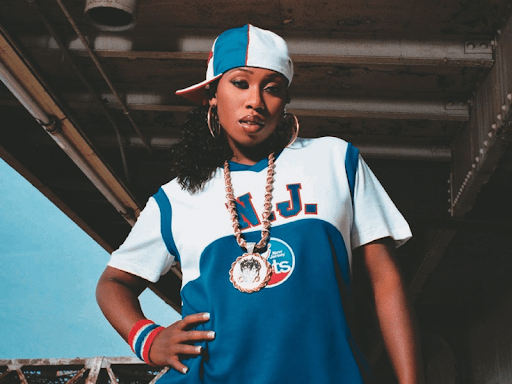
While the dominant narrative of 1990s hip-hop often centers on high-profile rivalries and the commercial battles between male East Coast and West Coast artists, the decade also denoted a significant shift in visibility and influence for female rappers. Among them, Missy Elliott emerged as one of the most innovative figures in the genre, expanding the possibilities for women in hip-hop as a rapper, singer, songwriter, producer, and executive.
Elliott’s career began after high school, when she formed the R&B group Sista. The group joined Donald DeGrate’s Swing Mob, a New York–based collective known as “Da Bassment,” where young artists lived and collaborated intensively. Although Sista secured a distribution deal with Elektra Records, business complications prevented the release of 4 All the Sistas Around da World. The experience, however, gave Elliott substantial studio training and introduced her to Timbaland (Timothy Mosley), the producer who would become her closest creative partner.
Together, Elliott and Timbaland developed a sound that changed the sound of mid-1990s R&B and hip-hop. Timbaland’s production—identifiable by the use of stuttering, syncopated drum patterns, double-time hi-hats, and unconventional use of silence—paired naturally with Elliott’s conversational melodies and rhythmic phrasing. Their work on Aaliyah’s One in a Million (1996), including “One in a Million,” “If Your Girl Only Knew,” and “4 Page Letter,” introduced a futuristic aesthetic built from swung rhythmic subdivisions and vocal fragments used as percussion. The album established Elliott and Timbaland as the leading designers of a new, minimalist R&B style.
Elliott launched her solo career with “Supa Dupa Fly ” (1997), produced entirely by Timbaland. The album displayed her fluid movement between rapping and singing, layered vocal registers, and willingness to experiment with sonic manipulation, including reversed vocals, call-and-response hooks, and asymmetrical rhythmic structures. Subsequent releases—Da Real World (1999), Miss E… So Addictive (2001), Under Construction (2002), This Is Not a Test! (2003), and The Cookbook (2005)—continued to blend humor, braggadocio, and social commentary with increasingly adventurous production.
Before establishing herself as a solo artist, Elliott gained visibility as a guest rapper on a number of high-profile tracks, including Bad Boy remixes of Gina Thompson’s “The Things That You Do,” MC Lyte’s “Cold Rock a Party” (1996), and New Edition’s “You Don’t Have to Worry” (1996). Though Sean “Puffy” Combs hoped to sign her, Elliott instead founded her own imprint, The Goldmind Inc., in 1996 under East West Records, ensuring full creative independence.
Her 2002 hit “Work It” exemplifies her distinctive musical style. Timbaland’s syncopated beat supports Elliott’s playful, sexually confident lyrics, while the hook famously features the line “I put my thing down, flip it, and reverse it” played backward, a technique she repeats on the bridge. The song’s combination of humor, rhythmic complexity, and vocal experimentation became an emblem of her style.
Beyond her own albums, Elliott wrote and produced for a diverse range of artists, including Christina Aguilera, Destiny’s Child, Justin Timberlake, and Eminem, thereby extending her influence across both pop and hip-hop. Her body of work challenged gendered assumptions in the music industry and helped establish a new model of artistic autonomy for female performers. Today, Elliott’s genre-blending creativity, technical innovation, and distinctive musical language remains audible in contemporary hip-hop and R&B production.
Mary J. Blige
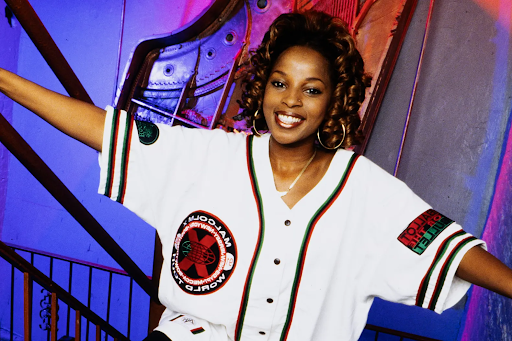
Blige played a central role in codifying the fusion of hip-hop and R&B that changed the sound of the 1990s. Ethan Brown of The New Yorker notes that her first two albums, What’s the 411? (1992) and My Life (1994), established “the sample-heavy sound that reinvigorated urban radio and became a blueprint for nineties hip-hop and R&B.” Working closely with producer Sean “Puffy” Combs, Blige’s music integrated raw breakbeats, deep bass lines, and samples from artists such as Audio Two, MC Shan, and Curtis Mayfield. These sonic choices created an aesthetic that blended hip-hop’s rhythmic sensibility with classic soul and R&B vocal traditions.
Blige’s lyrics drew heavily from her lived experiences, including struggles with poverty, family instability, and trauma. Blige’s thematic openness challenged narrow, hypersexualized depictions of Black women in mainstream media, instead foregrounding emotional vulnerability, self-worth, and resilience. Songs like “Real Love” and “You Remind Me” not only functioned as chart-topping singles but also as cultural statements that demanded recognition of the complexities of Black womanhood, making Blige a generational voice for many listeners.
Her debut album, What’s the Her debut album, What’s the 411?, produced several Billboard R&B hits, including the number-one single “Real Love.” Its combination of hip-hop drum programming, R&B melodies, and a distinctive vocal grit established a benchmark for the emerging hip-hop soul style. My Life extended this sound even further. Built around samples from artists such as Roy Ayers and Al Green, the album explored depression, addiction, and interpersonal conflict with striking candor. Its triple-platinum success established Blige as both a major artistic force and a commercial powerhouse.
Blige continued releasing work that reached wider audiences throughout the mid-1990s. Her 1995 duet with Method Man, “I’ll Be There for You/You’re All I Need to Get By,” won a Grammy Award and became a crucial hip-hop/R&B collaboration of the decade. While navigating her own struggles with addiction, she released Share My World (1997), a more polished and musically expansive album featuring production from Jimmy Jam and Terry Lewis, Babyface, and Rodney Jerkins. The project produced five major singles and supported her first global tour. Throughout the 2000s and beyond, Blige remained one of the best-selling female artists in the United States, earning additional Grammy Awards, acting accolades, and widespread cultural recognition. Her precise, expressive, and emotionally resonant vocal delivery continues to influence several generations of singers, placing her among the central figures in contemporary R&B and hip-hop.
Salt-N-Pepa
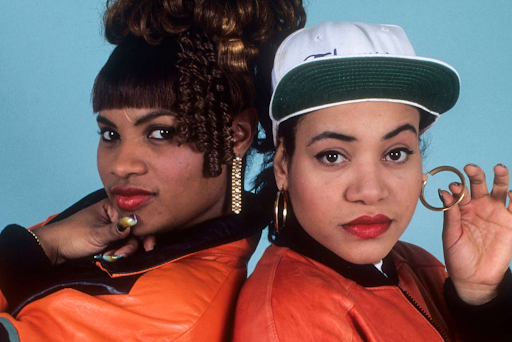
Salt-N-Pepa—Cheryl “Salt” James, Sandra “Pepa” Denton, and later Deidre “DJ Spinderella” Roper—formed in Queens, New York, in 1985 and quickly became one of hip-hop’s earliest and most commercially successful all-women rap groups. James and Denton first collaborated while studying nursing, and their producer, Hurby “Luv Bug” Azor, encouraged them to record an “answer rap” responding to Doug E. Fresh and Slick Rick’s The Show. Released under the name Super Nature, their debut single “The Show Stopper” reached number forty-six on the Billboard R&B chart. Its unexpected success led to a contract with Next Plateau Records.
The group’s debut album, Hot, Cool & Vicious (1986), introduced their assertive lyrical style and dance-oriented production built around drum machines, DJ scratches, and Azor’s distinctive mixture of electro and pop influences. Their breakthrough arrived in 1988 with a reissue of their song “Push It,” featuring prominent use of the Roland TR-808 drum machine, sparse synth lines, and call-and-response vocals. The single became a major crossover hit, climbing the Billboard Hot 100 and achieving international success. Around this time, DJ Spinderella replaced the group’s original DJ, Pamela Latoya Greene, solidifying the classic lineup.
Salt-N-Pepa’s subsequent releases blended humor, social commentary, and club-friendly beats. Their third album, Blacks’ Magic (1990), included “Let’s Talk About Sex,” a song that confronted taboos around sexuality, HIV/AIDS education, and media censorship. Built on a sample of the Staple Singers’ “I’ll Take You There,” the track matched a broader move toward groove-based, accessible production while raising public awareness of safe sex. The group later recorded “Let’s Talk About AIDS,” which circulated widely in educational contexts.
Their fourth album, Very Necessary (1993), became their most commercially successful. It produced major hits such as “Shoop,” “Whatta Man” (featuring En Vogue), and “None of Your Business,” the last of which won the Grammy Award for Best Rap Performance in 1995. The album featured polished production, strong hooks, and an increasingly self-assured feminist message, arriving as hip-hop reached larger mainstream audiences.
Salt-N-Pepa released “Brand New ” in 1997, before disbanding in 2002. They reunited in 2005 for VH1’s Hip Hop Honors and officially reformed in 2007, appearing at the BET Hip Hop Awards and embarking on an international tour. Their influence extends far beyond their chart performance. Salt-N-Pepa helped normalize women’s presence in a male-dominated industry, offering an alternative model of female artistry grounded in confidence, humor, and sexual autonomy. Their willingness to address women’s issues and social topics, combined with dance-friendly production and memorable performances, stood as a significant milestone in the development of hip-hop and paved the way for later generations of female MCs.
Eminem
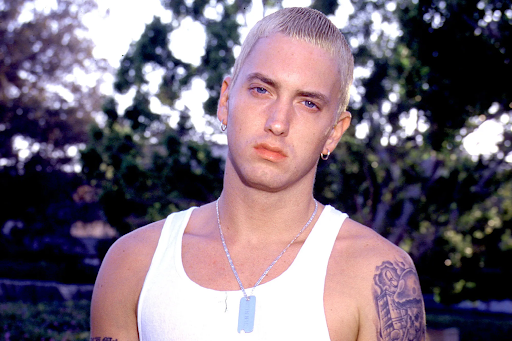
Marshall Bruce Mathers III, known professionally as Eminem, established himself as one of the most influential and controversial figures in hip-hop at the turn of the 21st century. Born in 1972 in St. Joseph, Missouri, and raised primarily in Detroit, Michigan, Eminem grew up in lower-middle-class, predominantly African American neighborhoods. His early exposure to hip-hop came from local radio and cassette tapes, and he began honing his skills at open-mic venues along West Seven Mile Road, a hub of Detroit’s underground rap scene. He developed extraordinary technical skills, including multi-syllabic rhymes, intricate cross-rhythms, and precise articulation, treating the sound of words as a musical instrument. He also learned to integrate humor, parody, and shock value into his lyrics, giving him a distinctive voice in a genre where his whiteness might have otherwise limited his credibility. Unlike Vanilla Ice, whose success was largely novelty-driven, Eminem earned acceptance within the hip-hop community by demonstrating authentic mastery and respect for its culture, while concurrently addressing his racial identity head-on, embracing it as a lens for exploring working-class, Midwestern anxiety.
Eminem’s career was catalyzed by his performance at the 1997 Rap Olympics in Los Angeles, which led to a contract with Dr. Dre’s Aftermath Entertainment. Dr. Dre’s production lent him credibility, but Eminem’s lyrical complexity, rhythm, and narrative skills distinguished him as an artist in his own right. He established multiple personas in his work: Slim Shady, an outrageous, violent, and unpredictable alter ego who delivers hyperbolic tales of revenge, satire, and dark humor; Eminem, the disciplined and technically accomplished performer, commonly serving as the voice of social commentary and narrative storytelling; and Marshall Mathers, his real-life self, portrayed as a sensitive, self-conscious individual grappling with fame, parenthood, and personal struggles. These personas often intertwine within a single track, allowing Eminem to alternate perspectives, tones, and styles while creating layered narratives.
His major-label breakthrough, The Slim Shady LP (1999), combined Dr. Dre’s polished production with Eminem’s rapid-fire, multi-syllabic rhymes, off-beat rhythms, and vocal shifts between nasal, throaty, and aggressive tones. The album’s provocative content, including violent fantasies, misogyny, and satire, provoked widespread controversy yet also established Eminem’s public persona as a rebellious, boundary-pushing artist. This pattern continued with The Marshall Mathers LP(2000), which became the fastest-selling solo album in U.S. history at the time. Tracks like “Stan” explored obsessive fan culture through narrative lyricism, while songs such as “‘97 Bonnie & Clyde” and “Kim” provoked backlash for their depictions of domestic violence. His lyrics frequently challenged social norms regarding gender, sexuality, and celebrity, with homophobic and misogynistic content generating critical and political scrutiny, including congressional attention, yet his skillful lyricism and satirical framing often complicated these critiques.
Eminem's subsequent albums, including The Eminem Show (2002) and Encore (2004), broadened his thematic range to include politics, celebrity culture, and personal contemplation, combining live instrumentation, samples, and complex vocal layering. He continued to push technical boundaries, alternating tempo, vocal tone, rhyme density, and internal wordplay to differentiate his three personas. During periods of personal struggle, including addiction to prescription medications, he incorporated confessional elements into albums such as Relapse (2009) and Recovery (2010), where tracks mixed introspection, humor, and aggressive braggadocio over beats that combined traditional hip-hop percussion with electronic textures.
Eminem’s 2002 film 8 Mile dramatized his experiences growing up in Detroit’s predominantly African American neighborhoods and managing the city’s rap battles. Named after 8 Mile Road, the boundary separating Detroit’s inner city from its northern suburbs, the film follows a struggling rapper attempting to assert himself in the local hip-hop scene. Eminem played a semi-autobiographical version of himself, and the soundtrack’s lead single, “Lose Yourself,” became the first hip-hop song to win an Academy Award. Featuring driving drum patterns, layered vocal tracks, and intense narrative tension that matched his on-screen persona, it showcased Eminem’s unique style. The movie cemented Eminem’s status as a crossover cultural figure, simultaneously embodying hip-hop credibility and mainstream recognition.
Eminem’s musical style is characterized by intricate rhyme schemes, dense multi-syllabic structures, irregular metric phrasing, and variable vocal timbres that shift between aggression, nasality, and melodic delivery. He frequently incorporates samples, layered harmonies, and sound effects to enhance narrative or emotional impact. His tracks often fuse autobiographical content with social commentary, exploring themes such as fame, parenthood, addiction, and race. As a white artist in a predominantly African American genre, Eminem’s work confronted racial assumptions without erasing them; he leveraged his perspective to comment on social marginalization, class tensions, and cultural appropriation.
His controversies have been extensive and highly publicized. Lyrics targeting women, including his ex-wife, Kim Mathers, sparked public outcry and criticism from advocacy groups, while homophobic references drew political scrutiny, particularly after performances like the 2001 Grammy duet with Elton John, which sought to address criticism directly. Eminem also satirized public figures, including President George W. Bush and Michael Jackson, blurring the line between entertainment, personal vendetta, and political critique. These controversies reinforced his image as a provocateur while accentuating the tension between artistic freedom and social responsibility in hip-hop.
Eminem’s commercial achievements are unparalleled for a white rapper. He founded Shady Records in 1999, nurturing artists such as D12, 50 Cent, and Obie Trice. He has won thirteen Grammy Awards, including three consecutive Best Rap Album honors, and was named Billboard’s best-selling artist of the first decade of the 21st century in the United States. Albums such as Recovery (2010) achieved simultaneous multi-single chart success, a feat not accomplished since The Beatles. Eminem’s influence extends beyond commercial metrics; he has altered perceptions of race and authenticity in hip-hop while bridging genre limits between rap, rock, and pop, demonstrating that the expressive intensity typically associated with rock music could coexist with hip-hop lyricism.
Eminem’s career is therefore notable not only for its technical aptitude and commercial success but also for his ability to traverse the complex intersections of race, class, persona, and controversy. His layered artistic identities, from Slim Shady to Marshall Mathers, and his willingness to tackle taboo subjects, distinguish him as a unique artist whose music expresses both personal therapy and cultural commentary, establishing his place as one of the one of the most recognizable voices of late-20th- and early-21st-century popular music.
Chapter 38: Conclusion
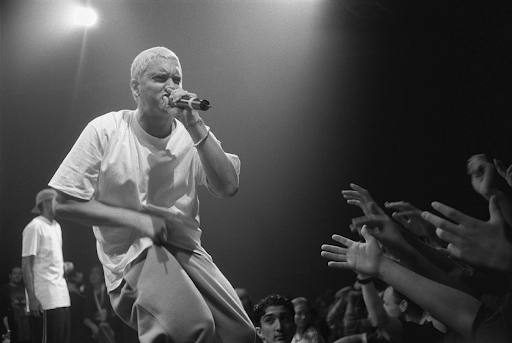
The 1990s witnessed a remarkable diversification of hip-hop, both in terms of sound and geography. On the West Coast, Dr. Dre, with collaborators such as Snoop Dogg and Daz Dillinger, established a distinctive style of hip-hop characterized by funk-derived beats and smooth, laid-back flows. Meanwhile, East Coast artists like Nas and the Wu-Tang Clan developed a contrasting musical direction, distinct from that of earlier pioneers such as Run-DMC and the Beastie Boys. This new East Coast hip-hop was noted for a harder edge, semi-autobiographical lyrics, and, in the case of the Wu-Tang Clan and its members’ solo projects, a deliberately gritty, “dirty” production style. At times, the divide between East and West Coast rappers manifested in musical battles, while in the tragic cases of Tupac Shakur and the Notorious B.I.G., these conflicts escalated into lethal violence.
Since the late 1980s, gangsta rap has presented highly stylized narratives centered on poverty, drug economies, and violence, often delivered in a first-person, present-tense voice that places the listener inside these accounts. Artists such as Ice-T, N.W.A., Snoop Doggy Dogg, Tupac Shakur, and the Notorious B.I.G. combined a grim, survivalist outlook with a gleeful celebration of the gangster lifestyle. This “celebratory nihilism,” propelled by sampled funk grooves and surrounded in music videos by continuous images of hip-hop fashion, luxury goods, and sexually objectified women, has produced understandable ambivalence among observers. Critics sympathetic to the struggles of marginalized communities question how a genre committed to “keeping it real” can simultaneously indulge in consumerist fantasies and reinforce sexist portrayals of women.
Part of the answer lies in hip-hop’s dual role as both a product of African American culture and a window into broader American society. Rap music expresses the creative energy, regional diversity, and technological innovation of American culture while also exposing its darker aspects: an obsession with guns and violence, the pursuit of material wealth, and enduring patterns of racism, homophobia, and sexism. As many commentators have noted, narratives of black outlaws, such as Staggolee, have long existed in dialogue with popular depictions of white gangsters like Al Capone and John Dillinger, as well as violent Hollywood films including Little Caesar, Scarface, and Natural Born Killers.
On one level, rap presents an unvarnished account of the conditions facing many Black communities—what Cornel West has described as “the lived experience of coping with a life of horrifying meaninglessness, hopelessness, and lovelessness… a numbing detachment from others and a self-destructive disposition toward the world” (West 1993, 14). At the same time, gangsta rap, heavily promoted by major entertainment corporations to a predominantly white audience, has sometimes reinforced longstanding and pernicious stereotypes of black masculinity, echoing the knife-wielding caricatures of nineteenth-century minstrel shows. Perhaps the tension between realism and commercialization is best articulated in Public Enemy’s Chuck D’s 1998 remarks: “Ten years ago, I called rap music black America’s CNN. My biggest concern now is keeping it from becoming the Cartoon Network.”
Chapter 38: Further Reading
Alexander, Frank, and Heidi Cuda. Got Your Back: Protecting Tupac in the World of Gangsta Rap. New York: St. Martin’s Press, 2000.
Armstrong, Edward. “Eminem’s Construction of Authenticity.” Popular Music and Society 27 (2004): 335–55.
Bastfield, Darin Keith. Back in the Day: My Life and Times with Tupac Shakur. Cambridge, MA: Da Capo Press, 2003.
Bozza, Anthony. Whatever You Say I Am: The Life and Times of Eminem. New York: Crown, 2003.
Carr, Janelle. “Missy Elliott.” In Icons of Hip-Hop: An Encyclopedia of the Movement, Music, and Culture, edited by Mickey Hess, 503–27. Westport, CT: Greenwood Press, 2007.
Coker, Cheo Hodari. Unbelievable: The Life, Death, and Afterlife of the Notorious B.I.G. New York: Crown, 2003.
Cooper, Kim, and David Smay. Bubblegum Music Is the Naked Truth: The Dark History of Prepubescent Pop, from the Banana Splits to Britney Spears. Los Angeles: Feral House, 2001.
Cornwell, Jane. Janet Jackson. London: Carlton Books, 2002.
Dyson, Michael Eric. Holler If You Hear Me: Searching for Tupac Shakur. New York: Basic Civitas Books, 2001.
Frere-Jones, Sasha. “On Top: Mariah Carey’s Record-Breaking Career.” The New Yorker, April 3, 2006.
Gold, Jonathan. “Day of the Dre.” Rolling Stone, September 30, 1993.
Grigoriadis, Vanessa. “The Tragedy of Britney Spears.” Rolling Stone, February 21, 2008, 46–54.
Hawkins, Stan, and John Richardson. “Remodeling Britney Spears: Matters of Intoxication and Mediation.” Popular Music and Society 30, no. 5 (2007): 605–29.
Jarman-Ivens, Freya. “Introduction.” In Oh Boy!: Masculinities and Popular Music, edited by Freya Jarman-Ivens, 1–20. New York: Routledge, 2007.
Joseph, Jamal. Tupac Shakur: Legacy. New York: Atria, 2006.
Kajikawa, Loren. “Eminem’s ‘My Name Is’: Signifying Whiteness, Rearticulating Race.” Journal of the Society for American Music 3 (2009): 341–63.
Light, Alan, ed. The Vibe History of Hip Hop. New York: Random House, 1999.
Lowe, Melanie. “Colliding Feminisms: Britney Spears, ‘Tweens,’ and the Politics of Reception.” Popular Music and Society 26, no. 2 (2003): 123–40.
Marriott, Rob. “Gangsta, Gangsta: The Sad, Violent Parable of Death Row Records.” In The Vibe History of Hip Hop, edited by Alan Light, 319–25. London: Virgin Books, 1999.
Miller, Paul D. Sound Unbound: Sampling Digital Music and Culture. Cambridge, MA: MIT Press, 2008.
Ogbar, Jeffrey O. G. Hip-Hop Revolution: The Culture and Politics of Rap. Lawrence: University Press of Kansas, 2009.
Perkins, William Eric, ed. Droppin’ Science: Critical Essays on Rap Music and Hip Hop Culture. Philadelphia: Temple University Press, 1996.
Pough, Gwendolyn D. Check It While I Wreck It: Black Womanhood, Hip-Hop Culture, and the Public Sphere. Lebanon, NH: University Press of New England, 2004.
Potter, Russell A. Spectacular Vernaculars: Hip-Hop and the Politics of Postmodernism. Albany: State University of New York Press, 1995.
Quinn, Eithne. Nuthin’ but a “G” Thang: The Culture and Commerce of Gangsta Rap. New York: Columbia University Press, 2004.
Ripani, Richard J. The New Blue Music: Changes in Rhythm & Blues, 1950–1999. Jackson: University Press of Mississippi, 2006.
Richardson, Riché. Black Masculinity and the U.S. South: From Uncle Tom to Gangsta. Atlanta, GA: University of Georgia Press, 2007.
Rischar, Richard. “A Vision of Love: An Etiquette of Vocal Ornamentation in African-American Popular Ballads of the Early 1990s.” American Music 20 (2004): 407–43.
Ro, Ronin. Dr. Dre: The Biography. New York: Thunder’s Mouth Press, 2007.
———. Have Gun Will Travel: The Spectacular Rise and Violent Fall of Death Row Records. New York: Anchor, 1998.
Rose, Tricia. Black Noise: Rap Music and Black Culture in Contemporary America. Middletown, CT: Wesleyan University Press, 1994.
———. The Hip Hop Wars: What We Talk About When We Talk About Hip Hop—and Why It Matters. New York: Basic Books, 2008.
Ross, Dax-Devlon. The Nightmare and the Dream: Nas, Jay-Z and the History of Conflict in African-American Culture. Jersey City, NJ: Xlibris, 2008.
Scott, Cathy. The Murder of Biggie Smalls. New York: St. Martin’s Press, 2000.
Smit, Christopher R. The Exile of Britney Spears: A Tale of 21st Century Consumption. Chicago: Soft Skull Press, 2011.
Stephens, Vincent. “Pop Goes the Rapper: A Close Reading of Eminem’s Genderphobia.” Popular Music 24 (2005): 21–36.
Taylor, Chuck. “Backstreet Boys View Their Teen Act Origins as Just the Start of a Career.” Billboard, May 23, 1998.
Touré. “What Makes Puffy Run?” Rolling Stone, October 14, 1999.
Udovitch, Mim. “Mariah Carey: The Whirling Diva.” Rolling Stone, February 17, 2000.
Utley, Ebony. Transcendence: The Rhetorical Functions of the Gangsta Rapper’s God (Snoop Dogg, Tupac Shakur, Lady of Rage). PhD diss., Northwestern University, 2006.
Wald, Gayle. “I Want It That Way: Teenybopper Music and the Girling of Boy Bands.” Genders 35 (2002). http://www.genders.org/g35/g35_wald.html.
Wood, Brent. “Understanding Rap as Rhetorical Folk-Poetry.” Mosaic 32, no. 4 (1999): 129–46.