Chapter 41: Post 9/11 Country Music

Chapter 41: Introduction
At the turn of the millennium, mainstream country music was increasingly gravitating back toward its roots. Building on the the neotraditionalist country movement of the 1980s and early 1990s, artists such as Alan Jackson and the Dixie Chicks found commercial success by embracing Bakersfield-style twang, honky-tonk rhythms, and traditional murder ballads, bringing fiddles, banjos, and other bluegrass instruments into contemporary country production. Younger performers followed the roots revival trend, reintroducing acoustic textures, storytelling-focused songcraft, and traditional instrumentation at a time when late-1990s country-pop had become heavily polished and formulaic.
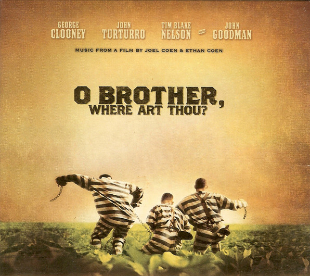
The roots revival reached a wider audience in 2000 with the release of the soundtrack for O Brother, Where Art Thou?, a film directed by the Coen brothers and loosely adapted from Homer’s Odyssey, set in 1930s Mississippi during the Great Depression. The soundtrack, produced by T Bone Burnett, featured traditional American roots music, including bluegrass, Appalachian folk, gospel, and early country recordings, alongside covers of classics by Jimmie Rodgers and the Carter Family, as well as new recordings by Ralph Stanley. The album sold eight million copies and won the Grammy Award for Album of the Year. While it had little immediate impact on mainstream country radio, it significantly broadened exposure to roots-based music, revived public interest in bluegrass, and helped launch the careers of artists such as Alison Krauss.
Much of the musical realignment occurred amid intense national uncertainty. In 1999, widespread anxiety over the Y2K computer bug—fears that many computer systems would misread the year 2000 because older software stored dates with only two digits—prompted extensive preventive measures by governments, businesses, and infrastructure agencies. Power grids, financial systems, transportation networks, and telecommunications were all scrutinized and upgraded to avoid system-wide failures. When January 1, 2000, arrived, only minor technical issues occurred, and catastrophic disruptions were largely avoided, bringing temporary relief but not alleviating wider societal anxieties.
Yet the sense of instability quickly returned with the collapse of the dot-com bubble. Between 2000 and 2002, the dot-com bubble, a speculative frenzy over internet-based companies, collapsed. Many startups that had been overvalued despite lacking profitable or sustainable business models failed. Stock prices in technology sectors plummeted, billions of dollars in investments vanished, and the U.S. economy entered a recession. The collapse of the dot-com bubble prompted public debates over corporate accountability and financial regulation, while spurring public skepticism about technological optimism.
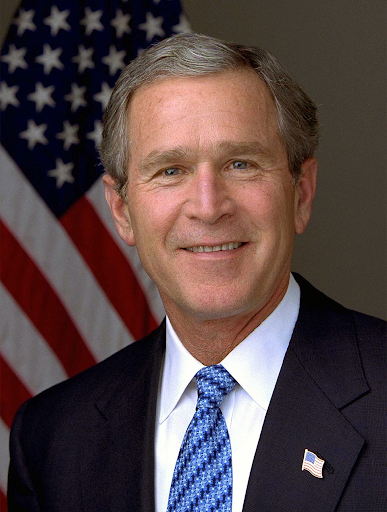
Political uncertainty added another layer of instability at the turn of the millennium. The 2000 presidential election between Texas governor George W. Bush and Vice President Al Gore was razor-thin and fraught with controversy. In Florida, the outcome hinged on a small number of disputed ballots, many of which featured “hanging chads”—small pieces of punched paper that were not fully detached from the ballot, making it unclear whether the voter intended to select a candidate. The disputed Florida ballots and questions over their validity delayed the final vote count and sparked judicial challenges that ultimately reached the U.S. Supreme Court. In Bush v. Gore, the Court halted the Florida recount, effectively awarding the presidency to Bush. The contested result left many Americans uncertain about the legitimacy of the electoral process and the country’s political direction.

Before the country could recover from the shock of a contested election, September 11, 2001, delivered a far more harrowing blow, as coordinated terrorist attacks brought fear and grief to the nation on an unprecedented scale. On that morning, nineteen al-Qaeda terrorists hijacked four commercial airplanes. At 8:46 a.m., American Airlines Flight 11 crashed into the North Tower of the World Trade Center in New York City. Seventeen minutes later, at 9:03 a.m., United Airlines Flight 175 struck the South Tower. The South Tower collapsed at 9:59 a.m., followed by the North Tower at 10:28 a.m., resulting in the deaths of 2,996 people, including nearly 350 firefighters, paramedics, and other first responders who were trying to save lives. At 9:37 a.m., American Airlines Flight 77 crashed into the Pentagon, killing 125 military and civilian personnel. The fourth plane, United Airlines Flight 93, crashed in a field in Shanksville, Pennsylvania, after passengers attempted to regain control from the hijackers; investigators later determined that the plane was likely headed for a major target in Washington, D.C., possibly the U.S. Capitol or the White House.
The attacks sent shockwaves across the United States, eliciting widespread fear, grief, and a surge of patriotic sentiment. In the hours and days following the tragedy, President George W. Bush vowed to hold those responsible accountable, declaring that the United States would not distinguish between terrorists and the nations that harbored them. Bush’s rhetoric initiated what the Bush administration called the Global War on Terror. In October 2001, the U.S. launched Operation Enduring Freedom in Afghanistan to dismantle al-Qaeda and remove the Taliban from power, as they had allowed Osama bin Laden and al-Qaeda to operate in Afghanistan. In 2003, the Bush administration justified the invasion of Iraq with claims that Saddam Hussein possessed weapons of mass destruction and maintained connections to al-Qaeda. The invasion was also framed as a mission to promote democracy and stabilize the Middle East. Subsequent investigations found no operational links between Saddam Hussein and al-Qaeda, and no WMDs were discovered, casting significant doubt on the stated rationale for the conflict.
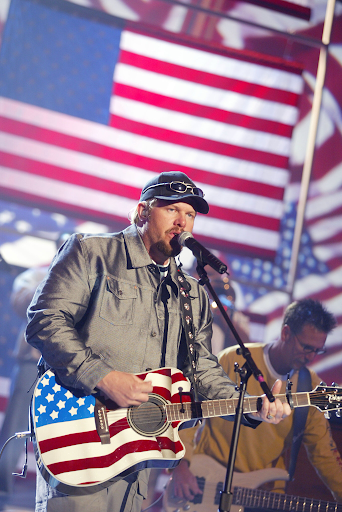
The cultural shock of 9/11—combined with an existing economic recession—reoriented country music’s sound, themes, and industry practices. Many Americans responded to the tragedy with demonstrations of patriotism that ranged from flying flags to donating blood to organizing benefit concerts, and country music quickly became a primary forum for articulating grief and patriotic solidarity. Alan Jackson’s self-penned ballad “Where Were You (When the World Stopped Turning)” offered a reflective response that brought country music into the national spotlight. Other artists adopted more defiant tones. Toby Keith and Darryl Worley each released revenge-oriented songs whose rhetoric aligned closely with Republican messaging; both became central to the patriotic turn in country music. Their visibility also stemmed from country artists' longstanding presence at Republican campaign events and the Republican National Convention.
Yet the musical responses were not monolithic. The Dixie Chicks became the most prominent example of dissent when, in 2003, they publicly criticized President Bush, causing a swift and severe backlash: radio blacklists, public condemnation by peers—including Toby Keith—and a sharp decline in album and ticket sales. The band later regained commercial and critical success with Taking the Long Way (2006), demonstrating the professional risk artists faced when criticizing the dominant political mood.
Radio corporations played a central role in mediating these cultural tensions. Program directors adjusted playlists in response to national mood, giving prominence to songs like Lee Greenwood’s “God Bless the USA” and Whitney Houston’s Super Bowl rendition of “The Star-Spangled Banner,” while temporarily removing tracks deemed insensitive or potentially distressing, including U2’s “Sunday Bloody Sunday,” Drowning Pool’s “Bodies,” and Dave Matthews Band’s “Crash Into Me.” Clear Channel Communications (now iHeartMedia) became particularly controversial for distributing a list of roughly 150 songs to avoid, including all Rage Against the Machine material, as well as tracks deemed too violent, irreverent, or unsettling for post-9/11 audiences.
This chapter examines these intertwined developments: the patriotic anthems that surged in popularity, the corporate decisions widely interpreted as censorship, and the controversies that arose when musicians challenged the dominant political mood. By tracing the musical, cultural, and political responses to 9/11, we can see how country music became a central arena for debates over free speech, nationalism, and the emotional and symbolic work of music during a period of national crisis.
The Post-9/11 Clear Channel Memorandum

In the early twenty-first century, Clear Channel Communications had become the most powerful force in American radio. Founded by San Antonio investment banker Lowry Mays, who purchased his first station in 1972, the company grew aggressively by acquiring struggling local stations and converting them into profitable operations. By the mid-1980s, Clear Channel controlled sixteen stations and had earned a reputation for its profit-driven practice of acquiring stations, improving their financial performance, and reselling them. The company’s national dominance was powered by two pivotal regulatory shifts: the Federal Communications Commission’s 1992 relaxation of ownership rules and the Telecommunications Act of 1996, both of which permitted unprecedented consolidation within the radio industry. By 1999 and 2000, Clear Channel had acquired Jacor Communications and AMFM, becoming the largest radio owner in the United States. At its peak, it managed or owned more than 1,200 radio stations, provided syndicated programming to over 5,000 affiliates, and held additional interests in television and billboard advertising.
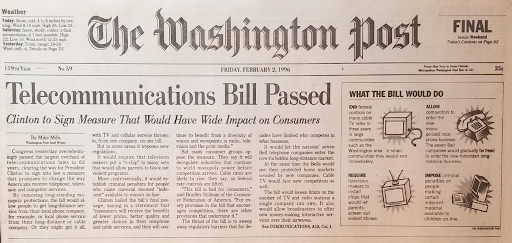
Much of the consolidation of media power in the late twentieth and early twenty-first centuries was enabled by the Telecommunications Act of 1996. Signed into law by President Bill Clinton on February 8, it represented the first major overhaul of U.S. telecommunications policy since 1934. While its stated goal was to encourage competition across previously separate sectors, in practice the act significantly weakened ownership limits in broadcasting, facilitated some of the largest mergers in American communications history, and created new regulatory categories—distinguishing between telecommunications services and information services—that grew increasingly confusing as technologies converged. The act also attempted to regulate online indecency through the Communications Decency Act; although much of Title V was struck down, Section 230 remained, ultimately laying the foundation for the rise of internet platforms and social media.
The subsequent concentration of media ownership drew sharp criticism from media-reform organizations, including the Future of Music Coalition, which cited reduced local programming, fewer employment opportunities, and more homogenized national playlisting as major concerns. Advocates for free expression further noted Clear Channel’s longstanding practice of internal censorship, raising concerns about the relationship between concentrated ownership, playlist control, and access to diverse programming.
In the aftermath of the September 11th attacks, Clear Channel’s immense reach positioned it as a key arbiter of what musical expression was deemed appropriate in a nation plunged into grief and fear. Within days, the company circulated an internal memo advising programmers to avoid roughly 165 songs, a list that included Tom Petty’s “Free Fallin’,” Louis Armstrong’s “What a Wonderful World,” Van Halen’s “Dancing in the Street,” as well as Rage Against the Machine’s entire catalog. The criteria for inclusion varied. Some songs contained words—“plane,” “fly,” “burn,” “falling”—that were deemed too close to the imagery of the attacks. Others referenced death, violence, explosions, New York City, or the Middle East. Still others were celebratory, such as Kool & the Gang’s “Celebration,” which a Washington, D.C. station inadvertently aired before receiving a listener complaint. Some songs entered the list because programmers associated them with specific cover versions: the Alien Ant Farm cover of Michael Jackson’s “Smooth Criminal” was listed, while the original was not. Conversely, Martha and the Vandellas’ “Dancing in the Street” and Van Halen’s version were included, but the Bowie-Jagger duet was absent. No country songs appeared on the list.
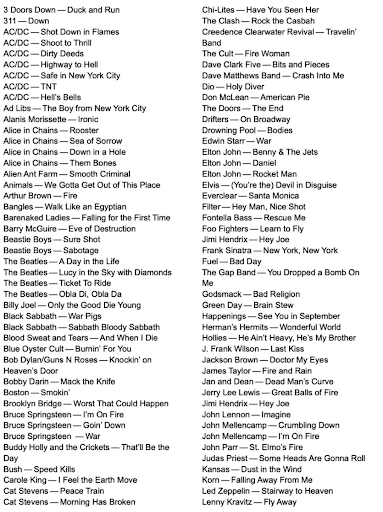
Clear Channel’s CEO later acknowledged that the company had been “hypersensitive,” but insisted it supported free expression. Critics countered that the memorandum amounted to de facto censorship and illustrated the dangers of allowing a single conglomerate to control so many outlets. Former FCC commissioner Glen Robinson noted that while the list might not technically violate federal broadcasting obligations, its implications were akin to “borderline manufacturing of the news.” Media reform organizations and free expression advocates reinforced this critique, emphasizing Clear Channel’s prior record of content control and the broader dangers of concentrated media ownership.
The post-9/11 cultural climate also prompted broader debates over how popular culture should respond to trauma. Many commentators anticipated that Americans would turn away from violent entertainment in favor of artistic forms that offered emotional clarity and collective mourning.Popular music became a particularly visible site for public mourning and patriotic expression, alongside news images and the New York Times’ photograph collection, “Portraits of Grief.”
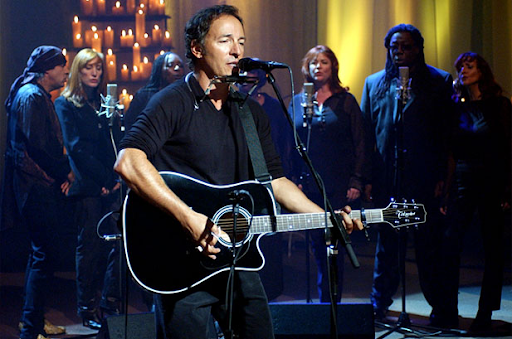
Television played a central role: on September 21, 2001, the major networks jointly aired A Tribute to Heroes, a telethon featuring Bruce Springsteen, Paul Simon, Billy Joel, Tom Petty, Neil Young, and Sting. The program emphasized interracial unity, often staging a white lead singer with a Black gospel choir, framing national belonging in simplified racial terms while sidestepping more complex questions of identity, nationalism, and anti-Islamic xenophobia that influenced public discourse in the years that followed.
A strong patriotic climate in the months after 9/11 was evident in Bruce Springsteen's The Rising. Released six weeks before the first anniversary of the attacks, the album was positioned as a memorial project. Springsteen framed it as a response to public need, sparked by a fan shouting, “We need you!” from a passing car. The album offered a series of spiritualized poetics of healing that deliberately turned away from the visceral and painful realities of the attacks.
However, not all musicians embraced the patriotic consensus. Hip-hop artists, in particular, foregrounded geopolitical critique and domestic racial politics. Nas’s “What Goes Around” interpreted the attacks as an outgrowth of American arrogance abroad. Mr. Lif’s “Home of the Brave” argued that oil interests drove the war, and Talib Kweli warned Black audiences against embracing patriotic zeal that normalized state power and lionized the police, figures many African Americans associated with systemic violence. Hip-hop also challenged the political instrumentalization of the attacks. Artists criticized media narratives that simplified global complexity into personified villains like Osama bin Laden and “the terrorists” and questioned the expansive wartime authority granted to the president. These critiques represented one of the earliest cultural pushbacks against the militarism associated with the post-9/11 era.
Alan Jackson
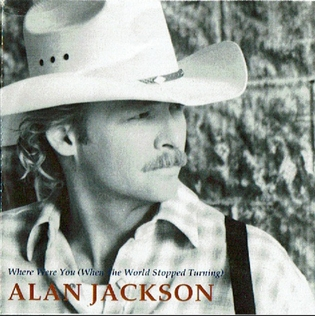
Alan Jackson, one of country music’s most distinctive voices in the early 1990s, would become a central figure in the genre’s response to the September 11 attacks with his reflective ballad “Where Were You (When the World Stopped Turning).” Born in rural west Georgia, Jackson drew on his working-class background as an auto mechanic and used-car salesman, performing music on the side while supporting his young family. After marrying his high-school sweetheart, he moved to Nashville in 1985 and secured a staff songwriting position at Glen Campbell’s publishing company. His breakthrough came in 1989 when Arista Records signed him, releasing his debut album Here in the Real World (1990), which produced five charting singles, including his first number-one hit, “I’d Love You All Over Again,” and earned him the Academy of Country Music’s Top New Male Vocalist award.
Jackson quickly established himself as one of the decade’s most reliable hitmakers. Don’t Rock the Jukebox (1991) reached quadruple-platinum status by 1995, with its title track giving him a second number-one single. His follow-up, A Lot About Livin’ (and a Little ’Bout Love) (1993), sold over six million copies by 1995 and produced the chart-topping “Chattahoochee.” Industry recognition and accolades followed. Jackson earned the ACM’s Top Male Vocalist award in 1994 and the CMA’s Entertainer of the Year honor in 1995, 2001, 2002, and 2003. His compilation albums, Greatest Hits Collection(1995) and Greatest Hits Volume II (2003), each surpassed six million in sales by the early 2010s. Over his career, Jackson has accumulated more than twenty-five number-one singles, including “Drive (for Daddy Gene)” (2002), “It’s Five O’Clock Somewhere” (2003), “Remember When” (2004), and “Country Boy” (2009), and has sold over 43.5 million albums worldwide.
Jackson’s most culturally visible moment came after the September 11, 2001, terrorist attacks. On November 7, 2001, he debuted his self-written ballad “Where Were You (When the World Stopped Turning)” at the Country Music Association Awards. Radio stations began airing the track the next morning, and it topped the country charts for five consecutive weeks starting in late December. The song sought to capture the nation’s emotional disorientation. The lyrics unfold as a series of questions. They depict a listener who turns off a violent movie and instead watches I Love Lucy, phones a parent, comforts schoolchildren, and opens a Bible to 1 Corinthians, which Jackson paraphrases in the chorus. While artists like Toby Keith would soon adopt a more overtly militaristic tone, Jackson's restrained response paralleled the tone of Clint Eastwood's remarks during A Tribute to Heroes, which described a nation that was “wounded” yet “renewed in strength.”
Released as the lead single from Jackson’s tenth studio album Drive (2002), “Where Were You” reached number 28 on the Billboard Hot 100 and received widespread praise for its plainspoken, largely nonpolitical tone. Radio stations across the country were encouraged to play the song, and it quickly became a centerpiece of the nation's musical response to 9/11. It won multiple industry awards, including Song of the Year from both the ACM and CMA, and earned Jackson his first Grammy for Best Country Song.
Toby Keith
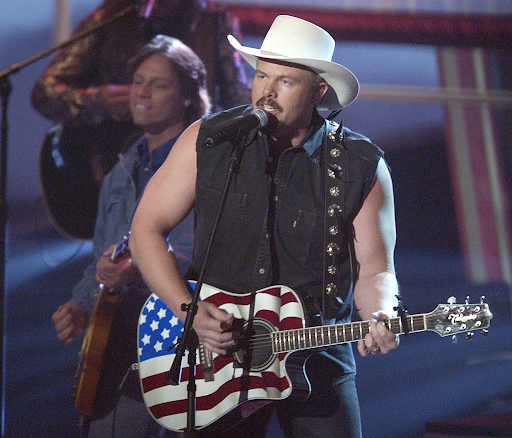
Unlike Alan Jackson’s reflective and largely nonpolitical response to 9/11, Toby Keith responded to the attacks with combative patriotic rhetoric in his music. Keith had already established himself as a prominent figure in country music, breaking through with his 1993 debut single, “Should’ve Been a Cowboy,” which reached number one on the Billboard Hot Country Songs chart and number 93 on the Hot 100. His self-titled debut album went platinum, producing three additional Top 5 singles: “He Ain’t Worth Missing” (No. 5), “A Little Less Talk and a Lot More Action” (originally the B-side to “Should’ve Been a Cowboy”), and “Wish I Didn’t Know Now” (No. 2). While critics noted that the album’s polished early-1990s production sometimes overwhelmed Keith’s voice, its songwriting foreshadowed the direction he would take in later releases.
Keith became widely associated with a strongly nationalistic strain of country patriotism, particularly after the September 11, 2001, attacks, with his song “Courtesy of the Red, White and Blue (The Angry American)” (2002). Written in late 2001, the song was inspired by two deeply personal experiences: the recent death of Keith’s father, a military veteran, and the emotional impact of the September 11 attacks. Initially, Keith performed the song exclusively for U.S. service members and was hesitant to record it commercially. However, strong reactions from audiences—including direct encouragement from Marine Corps Commandant James L. Jones—led him to release it as the lead single from his album Unleashed (2002). He framed the release as a duty to boost troop morale, and radio stations were encouraged to play the song widely, significantly increasing its reach across the country.
Musically, the song follows a straightforward verse-chorus structure. It begins with Keith singing over a lone acoustic guitar, gradually building layers of instrumentation until the final chorus erupts with full production. The fourth verse delivers the most combative lines:
“And you’ll be sorry that you messed with the U.S. of A.,
‘Cause we’ll put a boot in your ass, it’s the American way.
‘Cause freedom don’t come free,
And you’ll know you’re looking at the rest of the world’s liberty.”
The lyrics promise violent retribution against those who attacked the United States and invoke the imagery of “Mother Freedom” ringing her bell, accompanied by literal bell sounds in the studio production.
The track quickly became a flashpoint. ABC invited Keith to perform on a 2002 patriotic television special, but host Peter Jennings requested that the lyrics be softened or that a different song be performed. Keith refused and withdrew, drawing widespread media attention and high-profile performances. In a 60 Minutes appearance, he criticized the network for labeling the song too “angry” and joked: “Isn’t he Canadian?” referring to Jennings’ nationality.
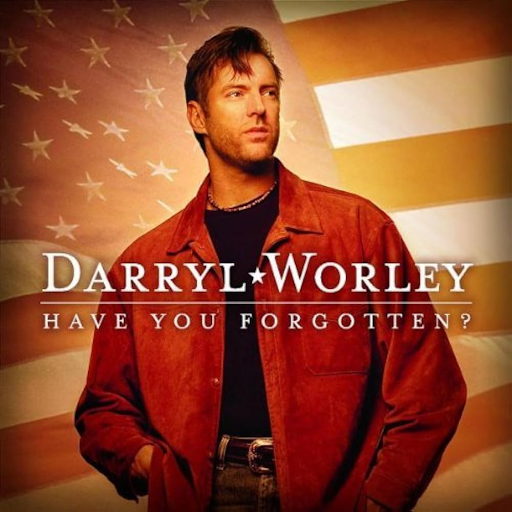
"Courtesy of the Red, White and Blue" launched a wave of fiercely nationalistic country music released between 2002 and 2003, fueled by the patriotic fervor that followed 9/11, the U.S. invasion of Afghanistan, and the 2003 invasion of Iraq. Darryl Worley’s “Have You Forgotten?” (2003) memorialized 9/11 victims while endorsing the U.S. campaign in Afghanistan; Clint Black’s “I Raq and I Roll” (2003) and Pat Garrett’s “Saddam Stomp” (2003) drew direct—but inaccurate—links between Saddam Hussein and Osama bin Laden.
While these recordings reinforced patriotic sentiment among many country fans, they also triggered criticism for tone, timing, and political assumptions. Within the genre, dissenting voices like Natalie Maines of the Dixie Chicks challenged this wave of nationalism, standing in sharp contrast to the prevailing climate in early-2000s country music.
The Dixie Chicks
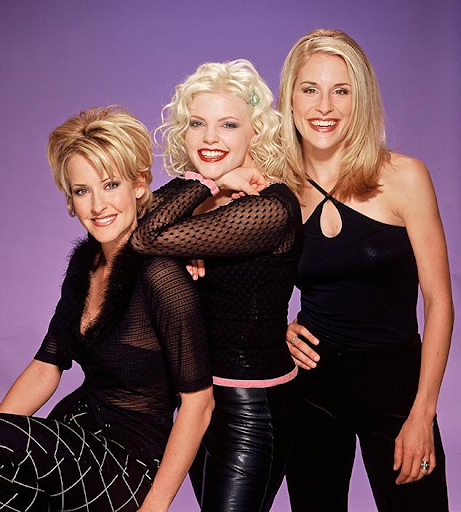
The Dixie Chicks first gained notoriety as one of country music’s most commercially successful acts of the late 1990s. The group originated in 1989 in Dallas, Texas, as a bluegrass-leaning quartet formed by sisters Martie Erwin Maguire (fiddle) and Emily Erwin Robinson (banjo), along with Laura Lynch (bass) and Robin Macy (guitar). After Lynch and Macy departed in 1995, the band reconfigured as a trio and invited Natalie Maines—recently enrolled at Berklee College of Music and the daughter of steel guitarist and producer Lloyd Maines—to become their new lead vocalist. Maines’s contemporary country vocal style, outgoing stage presence, and irreverent persona helped steer Maguire’s and Robinson’s instrumental virtuosity toward a more modern sound that appealed to mainstream audiences.
Their major-label debut, Wide Open Spaces (1998), introduced the trio of Natalie Maines, Martie Maguire, and Emily Strayer and marked the group’s transition from a regional bluegrass act to national powerhouse. The album generated five singles, including three number-one hits—“There’s Your Trouble,” “Wide Open Spaces,” and “You Were Mine”—and ultimately sold more than twelve million copies between 1998 and 2003. The title track, written by Susan Gibson, centers on a young woman establishing independence, a theme supported by Maines’s lead vocal and the trio’s close harmony singing. The recording features Robinson on mandolin and Maguire on fiddle, supplemented by studio musicians on banjo, guitar, and piano. Their next release, Fly (1999), produced two more number-one singles and surpassed ten million sales by 2002. The acoustic-oriented album Home (2002), released on the trio’s Open Wide label, continued their commercial momentum and included the chart-topping “Travelin’ Soldier.” Between 1998 and 2003, the Dixie Chicks were among the most decorated artists in American music, earning ten Grammy Awards, nine Country Music Association awards, including Entertainer of the Year in 2000, and five Academy of Country Music awards.
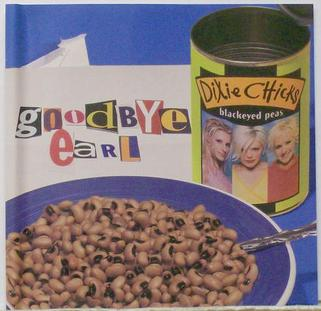
Much of the group’s repertoire centered on narratives of assertive, self-determining women, which resonated with many listeners but also drew criticism from more conservative segments of the country's audience. “Goodbye Earl,” a single from Fly, offered a striking example of the group's style of assertive storytelling. The song uses dark humor to tell the story of Mary Ann and Wanda, two friends who murder Wanda’s abusive husband by poisoning his black-eyed peas and disposing of his body. Although country music had previously addressed domestic violence in songs such as Garth Brooks’s “The Thunder Rolls,” “Goodbye Earl” distinguished itself by its comedic framing of revenge. Its plot—often described as a blend of the films Fried Green Tomatoes and Thelma & Louise—sparked controversy during its release. Roughly twenty of the 149 country stations monitored by Radio & Records declined to play the single in early 2000, and KRTY in San Jose drew national attention when it banned the track and devoted on-air programming to discussing its decision. Other stations played the song, but less frequently than expected for a major Dixie Chicks single.
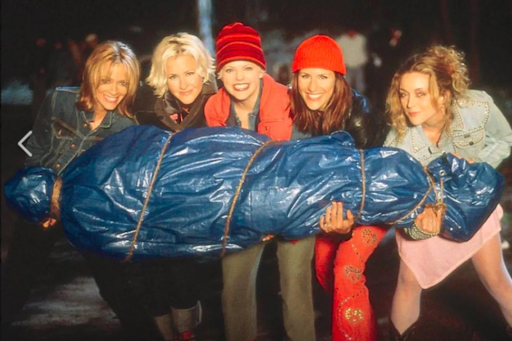
The video’s reception also provoked wider conversations regarding domestic violence. Advocates such as Rita Smith of the National Coalition Against Domestic Violence argued that the song forced difficult topics into public view. Many programmers responded by airing hotline numbers for domestic violence resources alongside the track, and KRTY eventually reversed its ban, donating money to a local shelter each time it played the song.
Even as they pushed the boundaries of mainstream country acceptability with songs like “Goodbye Earl,” the Dixie Chicks also recorded material that aligned closely with the traditional values long associated with country music, including patriotism, religious conviction, and respect for military service. “Travelin’ Soldier,” from Home, recounts the relationship between a young woman and a soldier deployed to Vietnam. Accompanied by a spare acoustic arrangement of guitar, mandolin, fiddle, and banjo, Maines narrates the soldier’s death—an event marked only by his pen pal’s grief. Released as American involvement in Afghanistan intensified and the invasion of Iraq approached, the song resonated deeply with audiences experiencing the early years of the post-9/11 military era.
The Dixie Chicks’ Controversy
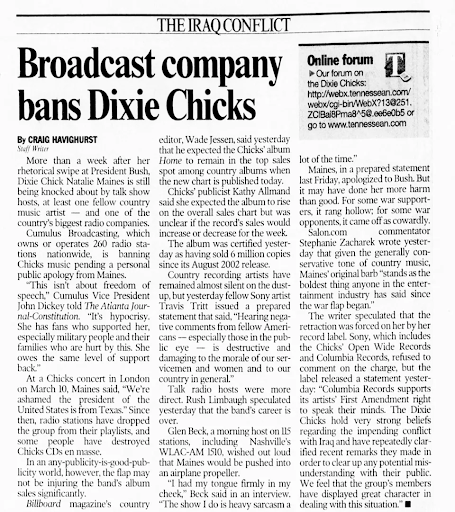
On March 10, 2003, the Dixie Chicks performed at the Shepherd’s Bush Empire in London, just days before the United States launched its invasion of Iraq. Introducing “Travelin’ Soldier,” Natalie Maines told the audience the group opposed the impending invasion and said they were “ashamed” that President George W. Bush came from their home state of Texas. Her remark, delivered in a foreign country at a moment of highly polarized public opinion, triggered an immediate and sustained backlash across the United States. Country radio stations—many of which publicly aligned themselves with pro-war sentiment—removed the group from their playlists. Industry giants such as Clear Channel imposed full bans on the group’s material across 74 stations, and the group quickly lost several corporate sponsors. Some stations staged publicity stunts, including an event in Louisiana where listeners crushed the band’s CDs with a rented bulldozer. Maines apologized shortly after the uproar, calling her words disrespectful, but later rescinded that apology, stating she no longer believed the president deserved such courtesy. Entertainment Weekly compared the uproar to the outrage following John Lennon’s 1966 statement that the Beatles were “more popular than Jesus.”
The political fallout had quantifiable commercial consequences. Radio airplay collapsed. The group’s cover of Fleetwood Mac’s “Landslide,” which had been rising on the charts, fell from number ten to forty-three on the Billboard Hot 100 within a week and soon disappeared altogether. The controversy depressed ticket sales for their upcoming tour and reduced interest in their studio work, interrupting the career momentum of the most decorated act in country music at the turn of the century. Public hostility escalated further as the trio received anonymous death threats, many of which were documented in the 2006 film Shut Up and Sing.
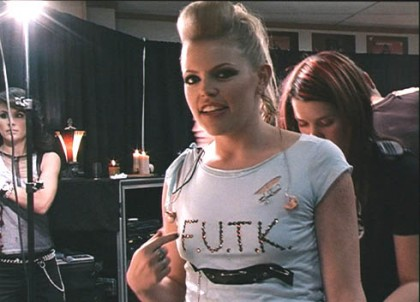
At the same time, the band became embroiled in a highly visible and publicized feud with Toby Keith. Months before the London remark, Maines had criticized Keith’s post-9/11 anthem “Courtesy of the Red, White and Blue (The Angry American),” calling the song “tactless” and “ignorant” and arguing that its militaristic rhetoric reduced the genre to caricature. Keith retaliated by dismissing her songwriting credentials—pointing out that most Dixie Chicks material was written by Emily Strayer, Martie Maguire, or outside writers—and by projecting doctored images of Maines beside Saddam Hussein during his concerts. The conflict reached its most notorious moment at the 2003 Academy of Country Music Awards, where Maines wore a shirt reading “FUTK.” Although she jokingly claimed the acronym stood for “Friends United in Truth and Kindness,” footage in Shut Up and Sing later confirmed it was directed squarely at Keith. In August 2003, Keith publicly stated he was "all done feuding with Natalie Maines 'cause I guess there's more important things than that to concentrate on.”
The Dixie Chicks confronted the political firestorm directly in their 2006 single “Not Ready to Make Nice,” co-written with Dan Wilson. The song addresses the death threats, the industry’s attempts to silence them, and the personal cost of refusing to recant. Its accompanying album, Taking the Long Way, restored the group’s commercial visibility: it earned multi-platinum certification, received strong critical acclaim, and won five Grammy Awards in 2007, including Album of the Year. Although the trio maintained a lower profile afterward, Maguire and Robinson launched the duo Court Yard Hounds in 2009. Their self-titled debut, released by Columbia Records, reached number three on the Billboard rock albums chart in May 2010.
In 2020, amid nationwide protests against racial injustice, the group formally shortened its name to the Chicks. The change acknowledged the term “Dixie” and its associations with the Confederacy, slavery, and segregation, representing another highly public moment in which the band grappled with the political and historical implications of its place within country music.
Chapter 41: Conclusion

In the months following the attacks of September 11, the American music industry—artists, corporations, and audiences alike—struggled to determine how music should speak to a moment of national grief and rising militarism. Clear Channel Communications, then the largest owner of radio stations in the United States, circulated an internal memorandum listing 165 songs that programmers were “strongly encouraged” to avoid. Executives framed the list as a sensitivity measure, but critics argued that its sweeping scope—barring everything from Rage Against the Machine to Louis Armstrong’s “What a Wonderful World”—functioned as de facto censorship. The memo became a flashpoint for broader anxieties about corporate gatekeeping and a single conglomerate's ability to affect public emotion, discourse, and memory in a moment of crisis.
Simultaneously, country radio emerged as a primary site for articulating competing visions of patriotism. Several artists offered songs that sought to translate the sorrow and anger felt by many Americans into musical form. Toby Keith’s “Courtesy of the Red, White, and Blue (The Angry American)” and Clint Black’s “I Raq and I Roll” captured a desire for retribution and aligned closely with the Bush administration’s escalating rhetoric. Their popularity was amplified by radio programmers who promoted these tracks as expressions of national unity.
Other musicians moved in the opposite direction, questioning the political climate that followed the attacks. Natalie Maines of the Dixie Chicks became the most visible and controversial critic, speaking publicly against President George W. Bush and expressing discomfort with the aggression embedded in Keith’s post-9/11 anthem. Her remarks ignited an industry-wide backlash that revealed the extent to which dissent was policed within the commercial country sphere.
Together, these intertwined controversies show how corporate policy, artistic response, and audience sentiment interacted with one another in the early 2000s The conflicts among radio corporations, performers, and listeners reveal competing views of patriotism, dissent, and the appropriate role of popular music after 9/11.
Chapter 41: Further Reading
Collins, Ace. All About the Dixie Chicks. New York: Berkley Books, 1999.
Dickerson, James L. The Dixie Chicks: Down Home and Backstage. Dallas, TX: Taylor Publishing, 2000.
Heller, Dana, ed. Selling 9/11: How a National Tragedy Became a Commodity. New York: Palgrave Macmillan, 2005.
Lawson, Mark. “After the Fall.” The Guardian, August 16, 2002. http://www.guardian.co.uk/film/2002/aug/16/artsfeatures.september11.
Malone, Bill C. Country Music, USA. Austin, TX: University of Texas Press, 2002.
Malone, Bill C., and Jocelyn R. Neal. Country Music U.S.A. 3rd ed. Austin, TX: University of Texas Press, 2010.
Melnick, Jeffrey. 9/11 Culture: America Under Construction. Malden, MA: Blackwell, 2009.
Nuzum, Eric. “Crash Into Me, Baby!: America’s Implicit Music Censorship Since 11 September.” Freemuse, 2004. http://freemuse.synkron.com/graphics/Publications/PDF/18.pdf.
Neal, Jocelyn R. Country Music: A Cultural and Stylistic History. New York: Oxford University Press, 2013.
O’Brien, Lucy. She Bop: The Definitive History of Women in Rock, Pop and Soul. London: Pandora, 1995.
Peterson, Richard A. Creating Country Music: Fabricating Authenticity. Chicago: University of Chicago Press, 1997.
Ritter, Jonathan, and J. Martin Daughtry, eds. Music in the Post-9/11 World. New York: Routledge, 2007.
Rossman, Gabriel. “Elites, Masses, and Media Blacklists: The Dixie Chicks Controversy.” Social Forces 83, no. 1 (September 2004): 61–79.
Sturken, Marita. Tourists of History: Memory, Kitsch, and Consumerism from Oklahoma
City to Ground Zero. Durham: Duke University Press, 2007.