Chapter 39: R&B and Pop Music in the 90s
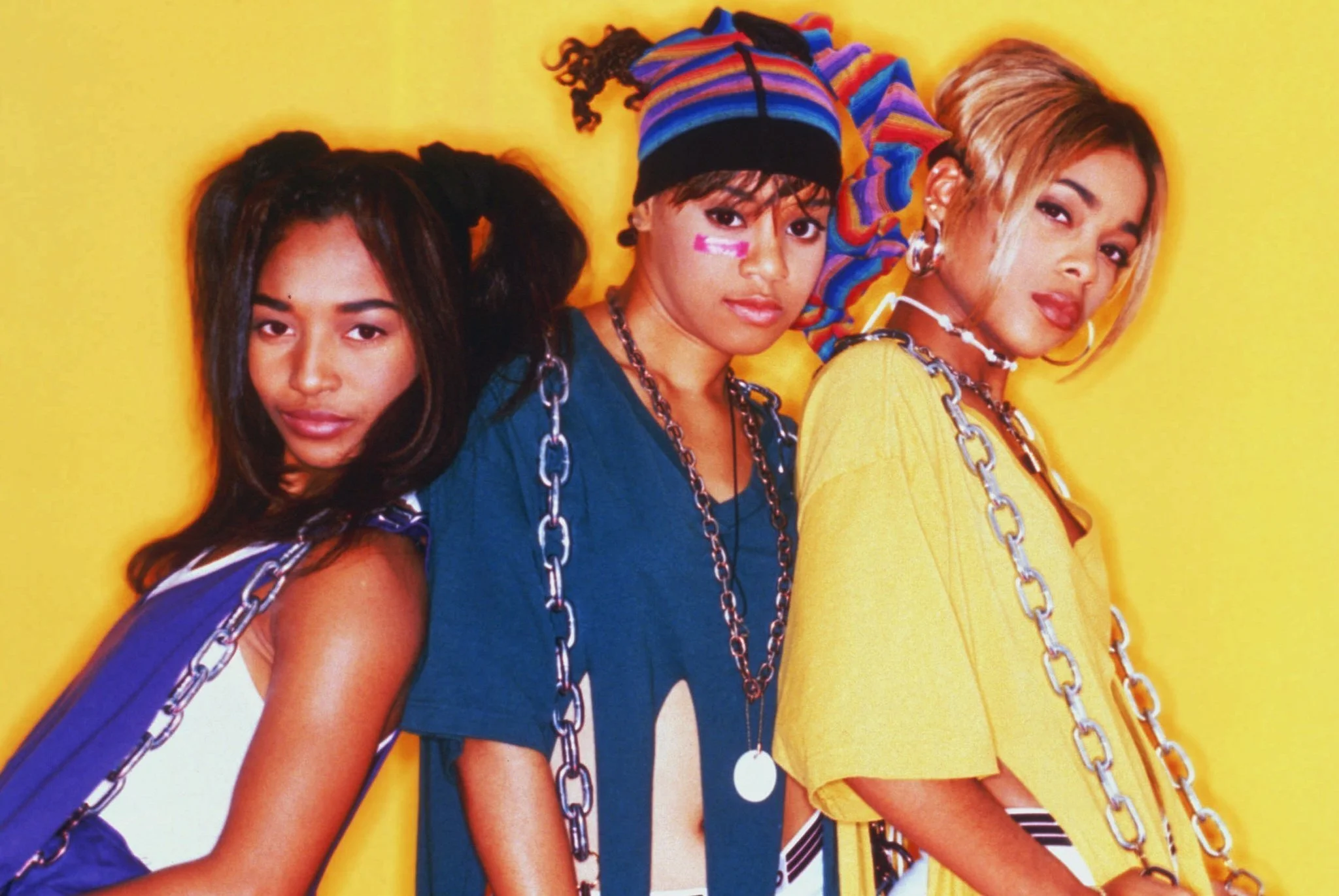
Chapter 39: Introduction
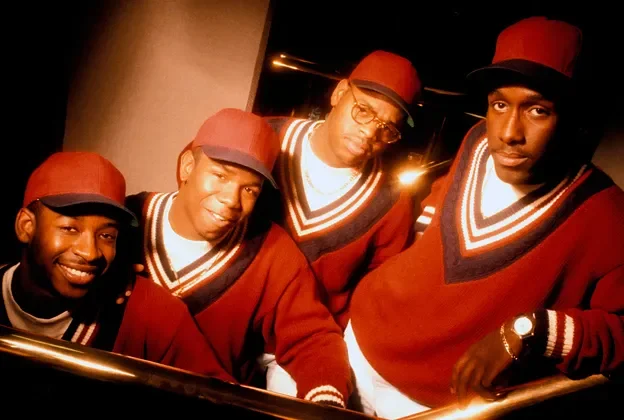
By the late 1990s, R&B increasingly incorporated a style that critics and performers often called neo-soul, drawing on the sounds and instrumentation associated with 1970s soul while incorporating hip-hop rhythms and production. Artists such as Erykah Badu, Lauryn Hill, and Maxwell became central to the neo-soul movement. They drew on harmonic density, live instrumentation, and close-miked vocal production associated with earlier soul recordings. At the same time, performers like Hill and Missy Elliott moved fluidly between R&B and hip hop, treating the two as intertwined musical languages. Their work broadened the range of sounds, production techniques, and vocal approaches heard in mainstream R&. Industry recognition followed: in 1995, the Grammy Awards established the Best R&B Album category, signaling a broader acknowledgment of R&B’s evolving sound. Early winners—Motown’s Boyz II Men for II (1995), TLC for CrazySexyCool (1996), Tony Rich for Words (1997), Erykah Badu for Baduizm (1998), and Lauryn Hill for The Miseducation of Lauryn Hill (1999)—point to increased visibility for artists combining soul traditions with contemporary production. At the same time, albums such as Aaliyah’s Age Ain’t Nothing but a Number (1994) and One in a Million (1996), produced by Missy Elliott and Timbaland, introduced digital beatmaking, asymmetric rhythms, and sparse, syncopated textures that became increasingly common in later R&B production. By the end of the decade, Billboard identified Mariah Carey and Janet Jackson as the two most commercially successful artists of the 1990s, drawing attention to the prominence of female performers in both artistic direction and commercial success.
Lauryn Hill
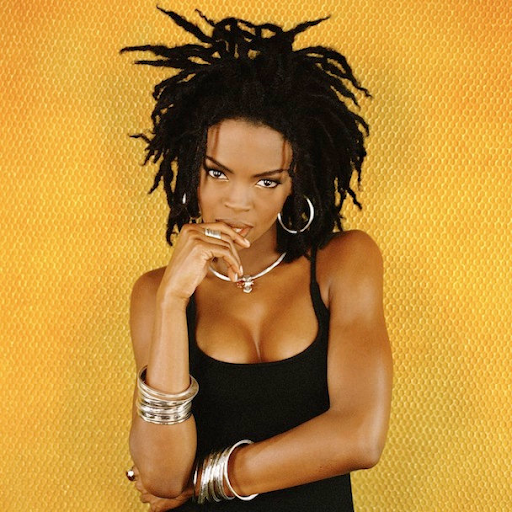
Lauryn Hill’s career began early. At thirteen, she performed Smokey Robinson’s “Who’s Lovin’ You” at the Apollo Theater’s Amateur Night, and she soon balanced singing with acting roles in As the World Turns and Sister Act 2. As a teenager, she met Prakazrel “Pras” Michel and Wyclef Jean, forming the group that became the Fugees. Their debut album, Blunted on Reality (1994), introduced them to the industry, while their follow-up, The Score (1996), became the highest-grossing rap album of its time. The group’s cover of Roberta Flack’s “Killing Me Softly” placed Hill’s distinctive vocal presence at the center of their sound and signaled her capacity to move fluidly between rapping and singing.
Hill’s artistic breakthrough came with The Miseducation of Lauryn Hill (1998) which became one of the most commercially and critically prominent R&B and hip-hop albums of the late 1990s. Blending neo-soul, hip-hop, R&B, reggae, and classic soul, the album relies on live instrumentation, layered harmonies, and a broad palette of stylistic references, with contributions from Carlos Santana, Mary J. Blige, and D'Angelo. Hill consciously separated her solo work from the Fugees’ aesthetic, grounding her sound in the legacies of 1960s and 1970s soul artists such as Aretha Franklin, Al Green, and Sam Cooke. The album favors extended narrative writing and personal subject matter over the shorter, more formulaic structures common to contemporary pop singles.
The album is organized around the idea of self-education in love. It moves through themes of relationships, growth, motherhood, faith, and social responsibility. Spoken-word interludes, recorded in Hill’s New Jersey home, feature poet and politician Ras Baraka addressing a classroom of children, which reinforces the album’s emphasis on learning and reflection. Hill also drew on Carter G. Woodson’s The Mis-Education of the Negro, integrating its call for self-awareness and community care into the album’s narrative arc.
Hill’s musical style is recognized by her ability to shift between rapped and sung delivery, supported by rich harmony stacks and carefully crafted vocal timbres. Each track presents a different part of her vocal and stylistic range. “Doo Wop (That Thing)” layers doo-wop harmonies, soul horns, hip hop, and R&B, sampling “Let’s Find Love” by the 5th Dimension and “I’m a Loser” by Brighter Side of Darkness. The song critiques materialism and gendered double standards while urging women to protect their autonomy. “Lost Ones,” built from hip hop and reggae, incorporates sharp snare patterns, DJ scratching, and an interpolation of Sister Nancy’s “Bam Bam.” Its lyrics address professional rifts and personal frustrations, including tensions with former Fugees members.
Other songs extend the album’s emotional scope and stylistic variety. “To Zion,” featuring Carlos Santana’s acoustic guitar, is a meditation on Hill’s decision to embrace motherhood despite industry pressure. “Ex-Factor,” often compared to the work of Minnie Riperton and Aretha Franklin, channels the expressive vocabulary of 1960s soul to describe the dissolution of a relationship. “Superstar” reworks The Doors’ song “Light My Fire,” combining harpsichord and harp textures with hip-hop rhythm. Tracks like “Final Hour,” “When It Hurts So Bad,” and “Forgive Them Father” draw on jazz, roots reggae, traditional soul, and contemporary R&B, while “Every Ghetto, Every City” evokes Stevie Wonder’s “Living for the City” as Hill reflects on her New Jersey childhood. “Nothing Even Matters,” supported by D’Angelo’s electric piano, offers a quiet, intimate portrait of love. The album concludes with hidden tracks: a beatbox-infused cover of “Can’t Take My Eyes Off You” and “Tell Him,” a guitar-driven prayer dedicated to God, her son, and Rohan Marley.
Lyrically, Hill explores empowerment, vulnerability, spiritual reflection, and the complications of love. “Doo Wop (That Thing)” critiques superficiality and urges self-respect. “Lost Ones” and “Forgive Them Father,” delivered partly in Jamaican patois, confront betrayal and emphasize spiritual clarity. “To Zion” foregrounds motherhood, while “Ex-Factor,” “When It Hurts So Bad,” and “Nothing Even Matters” explore heartbreak, tenderness, and emotional renewal. Biblical references appear throughout, especially in “Final Hour” and “Forgive Them Father,” pointing to Hill’s focus on moral introspection and divine justice. The album’s sequencing traces a movement from conflict and emotional strain toward reconciliation, insight, and self-assurance. Through its combination of rap, soul singing, live instrumentation, social commentary, and varied production, The Miseducation of Lauryn Hill became an important reference point for late-1990s neo-soul and contemporary R&B.
Destiny’s Child
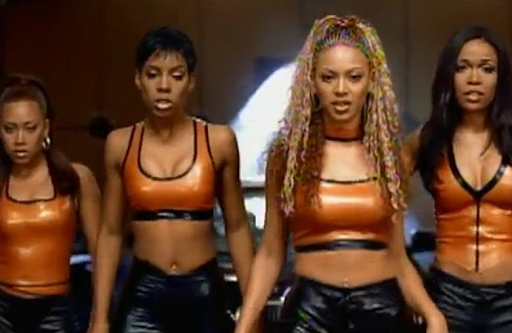
As neo soul and contemporary R&B remodeled the sound of the late 1990s, female solo artists and vocal groups played a major role in bringing contemporary R&B to mainstream radio and television. Alongside figures such as Lauryn Hill, Aaliyah, Brandy, TLC, and Erykah Badu, the period saw the rise of highly successful girl groups whose polished harmonies, visual presentation, and crossover appeal brought R&B to new audiences through radio, television, and retail. Among the most influential was Destiny’s Child, initially consisting of Beyoncé Knowles, Kelly Rowland, LaTavia Roberson, and LeToya Luckett. Formed in Houston under the name Girl’s Tyme in 1990, the group spent much of the decade performing locally, participating in talent shows, and refining their vocal blend and choreography. After a series of management changes and an unsuccessful audition for Star Search, they eventually secured a deal with Columbia Records in 1997 under their new name, Destiny’s Child.
The group’s debut single, “No, No, No” (1997), introduced them to mainstream audiences, but their breakthrough arrived with their second album, The Writing’s on the Wall (1999). Developed in collaboration with leading R&B producers such as Rodney Jerkins, Kandi Burruss, and Kevin “She’kspere” Briggs, the album blended hip-hop–influenced production with distinctive harmonic layering and conversational call-and-response vocals. Its singles—including the Billboard Hot 100 number-one hits “Bills, Bills, Bills” and “Say My Name,” as well as “Bug a Boo” and “Jumpin’, Jumpin’”—established Destiny’s Child as one of the most commercially dominant acts of the era. The album's syncopated hi-hats, abrupt harmonic modulations, and layered vocal arrangements created dense rhythmic and harmonic textures.
Despite their success, the group confronted major internal tensions. In the classic trio, Beyoncé remained the primary lead vocalist, with Rowland and Williams sharing substantial lead passages and adding to the group’s trademark blend. Roberson and Luckett attempted to separate from the group’s manager, Mathew Knowles, citing unequal treatment and financial favoritism toward Beyoncé and Rowland. Their departure in early 2000 led to the controversial addition of Michelle Williams and Farrah Franklin; Franklin left after several months, leaving the trio of Beyoncé, Rowland, and Williams that was active during the group’s most productive years.
Throughout their career, the group drew frequent comparisons to the Supremes, particularly with Beyoncé cast as Diana Ross. Although Beyoncé rejected such comparisons, the connection was reinforced when she portrayed Deena Jones—a character modeled after Ross—in the 2006 film adaptation of Dreamgirls. During the making of Survivor (2001), MTV’s Gil Kaufman described Beyoncé as the group’s clear musical leader, with increasing creative control over arrangements, songwriting, and overall direction. Lola Ogunnaike of The New York Times noted that the industry often viewed Destiny’s Child as the platform from which Beyoncé’s solo career would inevitably rise. Beyoncé’s solo career trajectory will be revisited in a later chapter.
Mariah Carey
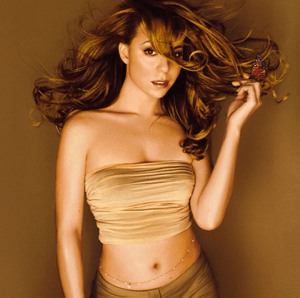
Among the bestselling albums of the 1990s, a remarkable variety of artists dominated the charts, ranging from adult contemporary divas such as Celine Dion and Janet Jackson to Mariah Carey, who became the decade’s biggest-selling pop and R&B recording artist. Despite a shrinking singles market overall, Carey produced some of the decade’s most enduring hits. Her 1995 duet with Boyz II Men, “One Sweet Day,” an R&B-infused love ballad, set a record by remaining at number one on the Billboard Hot 100 for sixteen consecutive weeks, a milestone that remains historic.
Born to a former opera singer and vocal coach, Mariah Carey developed her vocal skills at an early age and began composing as a teenager. After moving to New York in the mid-1980s, she worked as a backup singer for Brenda K. Starr, whose support helped Carey circulate her demo tape. The tape reached Columbia Records executive Tommy Mottola, who signed her after hearing what he later described as “a once-in-a-generation voice.”
Her debut album, Mariah Carey (1990), exhibited her five-octave vocal range, including the whistle register, the highest register of the human voice. Whistle tones produce a clear, flute-like sound above the head and in the falsetto register, allowing for sustained, piercing notes with outstanding precision, often used as decorative flourishes or climactic moments—and melismatic phrasing. Carey is particularly known for her exact control across registers, agile runs, and the ability to transition seamlessly between chest voice, head voice, and whistle tones. She frequently uses layered vocal harmonies, counter-melodies, and call-and-response phrasing within her arrangements, giving her songs a rich, multi-layered vocal texture. Emotions (1991) broadened her technical and stylistic range through influences from disco, gospel, and R&B, though it received mixed critical reception. Her commercial breakthrough, Music Box (1993), featured global hits such as "Dreamlover" and "Hero."
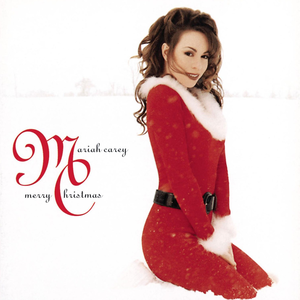
Carey broadened her artistic reach with Merry Christmas (1994), one of the most successful holiday albums in history. Blending traditional carols with original material, the record’s standout track, “All I Want for Christmas Is You,” became a modern seasonal standard. Written and produced by Carey and Walter Afanasieff, the song channels 1960s girl-group aesthetics through bright piano chords, sleigh bells, melodic counterlines, and a structure modeled on Phil Spector’s “Wall of Sound.” Carey’s vocal performance alternates between playful chest tones, soaring head voice, and whistle-register embellishments, demonstrating her ability to convey joy, excitement, and warmth simultaneously.
Although released in 1994, “All I Want for Christmas Is You,” achieved remarkable longevity: it was the last number-one single of the 2010s, the first number-one of the 2020s, and spent a third week atop the Hot 100 chart dated January 4, 2020. In doing so, Carey became the first artist in history to achieve number-one hits in four separate decades: the 1990s, 2000s, 2010s, and 2020s.
Carey’s subsequent albums such as Daydream (1995) incorporated contemporary R&B, gospel, and hip-hop influences, which set the stage for Butterfly (1997), a major project that marked her transition toward more hip-hop-centered production. Collaborating with producers such as Sean “Puffy” Combs and Missy Elliott, Carey embraced a looser, groove-oriented sound on tracks like “Honey,” which fused rap rhythms with her signature vocal agility, including intricate runs, rapid-fire melismas, and occasional expressive vocal breaks.
Although Glitter (2001) initially struggled amid industry upheaval and media scrutiny, Carey returned to commercial prominence with The Emancipation of Mimi (2005), the year’s top-selling album. Tracks such as “We Belong Together” proved her ability to combine contemporary R&B production with emotionally charged vocal performance, blending sustained legato phrases, precise pitch control, and dynamic phrasing.
Janet Jackson
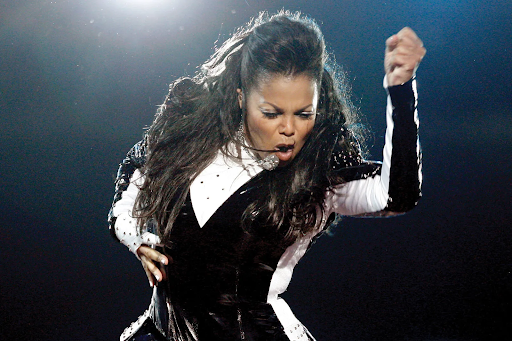
Janet Jackson was raised amongst the most influential musical families in American popular culture. As the youngest child of Katherine and Joseph Jackson, she grew up surrounded by the extraordinary success of the Jackson 5, who had already become Motown icons by the time she reached school age. The family's expectation that she would enter entertainment influenced the direction of her early career. Jackson made her television debut on the family variety show The Jacksons in 1976, and she quickly became a familiar face on American sitcoms such as Good Times, where she proved herself a capable young actor. Her first musical recording, a duet with her brother Randy titled “Love Song for Kids” (1978), introduced her to the studio setting. Although she initially resisted pursuing a music career, her father pushed her into the industry, leading to her debut album Janet Jackson (A&M, 1982). Its modest success encouraged her to continue, but after her second album, she decisively broke from her father’s management and the family’s producers to carve out her own artistic identity.
That decision set the stage for her breakthrough. A&M paired her with Minneapolis producers Jimmy Jam and Terry Lewis, whose blend of funk, R&B, electronic production, and hard-edged drum-machine programming gave her third album, Control (1986), its distinctive sound. The record reached number one on the Billboard 200 and generated a remarkable run of top-five singles—“Nasty,” “What Have You Done for Me Lately,” “Control,” “When I Think of You,” and “Let’s Wait Awhile.” The album’s sound was clean, rhythmic, and sharply punctuated, allowing Jackson’s light, breathy vocal timbre to function as a precise rhythmic instrument. Her music videos, choreographed by Paula Abdul (later a judge on American Idol), revealed a commanding dancer whose visual presence was as carefully crafted as her sound. Control’s commercial and critical success established Jackson as an important voice of female autonomy in the 1980s pop landscape, earning a Grammy nomination for Album of the Year and four American Music Awards.
Jackson deepened her artistic ambitions with Janet Jackson's Rhythm Nation 1814 (1989), which broadened her musical palette and introduced more explicit social and political themes into her music.The album wove together R&B, industrial pop, new jack swing, and rock textures, creating a harder, more politically engaged sound. Its lyrics addressed racial inequality, youth violence, education, and the possibility of multiracial unity at the end of the Cold War era. The accompanying music videos—visually stark, heavily choreographed, and set in uniform black-and-white—became essential records in MTV’s evolution. “Rhythm Nation” established Jackson as a major pop performer whose music addressed social and political issues. Her ability to translate social concerns into dance music made her a role model for young listeners and cemented her status as an artist who could simultaneously entertain and challenge her audience.
Through the 1990s, Jackson continued to innovate by combining pop, hip-hop, and R&B while exploring softer, more pensive textures. The Velvet Rope (1997) marked a shift toward confessional songwriting, addressing topics such as depression, sexuality, desire, and self-worth. Sonically, it fused trip-hop, midtempo grooves, lush ballads, and intricate vocal layering, making it one of her most critically acclaimed projects. During this period, Jackson’s influence became unmistakable: artists like Beyoncé Knowles, Britney Spears, Aaliyah, and Ciara drew heavily from her combination of dance-forward performance, thematic ambition, and stylistic polish.
Her commercial dominance continued into the 2000s. In 2001, she released All for You, a shimmering dance-pop album whose success coincided with her receiving MTV’s first-ever MTV Icon award. By the year’s end, Jackson had joined her brother Michael as one of only a handful of artists to earn ten number-one singles on the Billboard Hot 100. Her momentum, however, was disrupted after the 2004 Super Bowl XXXVIII halftime show, where a highly controversial “wardrobe malfunction” occurred during a duet with Justin Timberlake. At the climax of the performance, Timberlake tore away a portion of Janet’s costume as part of a planned choreography moment; however, the tear went further than rehearsed, briefly exposing her breast on live television. The incident sparked a media firestorm and prompted immediate regulatory responses, including a record FCC fine and heightened broadcasting restrictions. While both artists were involved, public backlash disproportionately targeted Janet, affecting radio play, award-show invitations, and television opportunities in ways Timberlake did not experience. The fallout from the wardrobe malfunction became an early example of how gender, race, and media framing can affect public accountability in the digital age.
Despite this setback, Jackson continued to work across the entertainment industry. She released new music, including the singles “Feedback” (2008) and “Nothing” (2010), and appeared in successful films such as Tyler Perry’s Why Did I Get Married? (2007). Over more than four decades, she has remained a multifaceted performer whose fusion of R&B and hip-hop, with choreography-centered videos, socially engaged lyrics, and innovative production aesthetics, has helped broaden the visibility of Black women on MTV and in popular music more broadly. Well into the 21st century, Janet Jackson continues to sing, dance, act, and tour, sustaining an influence felt across contemporary pop and R&B.
D’Angelo
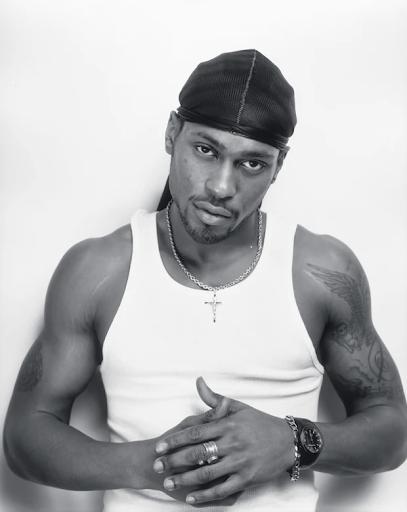
Singer-songwriter, multi-instrumentalist, and producer D’Angelo found his early musical inspiration in the gospel music of the Pentecostal church, where he played piano while his father preached. His critically acclaimed debut album, Brown Sugar (1995), made him a central figure in the Neo-Soul movement. Brown Sugar blends jazz rhythms, gospel chords, soulful horn arrangements, and extended funk grooves, providing a platform for D’Angelo’s silky falsetto, which he frequently overdubs in multiple voicings—a technique reminiscent of Marvin Gaye. The album features emotionally resonant, mid-tempo ballads that recreate the sound of 1960s and early 1970s soul. D’Angelo emphasized vintage instruments over digital sampling, producing lush, ambient textures within minimalist song structures. Singles such as Lady, Brown Sugar (a reinterpretation of Smokey Robinson’s Cruisin’), and Me and Those Dreaming Eyes of Mine helped the album achieve platinum status.
After collaborating on other projects, it was five years before D’Angelo released another solo album. Voodoo (2000) reached number one on the Billboard 200 and earned a Grammy Award for Best R&B Album. The Prince-influenced single Untitled (How Does It Feel) won Best R&B Performance and became a breakout hit, fueled in part by a provocative music video in which D’Angelo performed nude from the waist up. Voodoo showcased jam-oriented compositions, stripped-down arrangements, and a fusion of gospel, soul, funk, and gritty hip-hop, with extensive overdubbing that further pushed contemporary soul toward looser rhythmic structures and live instrumentation.
Although both the Voodoo album and tour received critical acclaim, D’Angelo expressed discomfort with being primarily framed as a sex symbol rather than a serious musician. In 2000, he withdrew from the public eye and stopped giving interviews. Over the following years, he struggled with alcohol, drugs, and legal issues, including arrests for DUI, possession, and solicitation.
During the late 1990s and early 2000s neo-soul continued to evolve, largely influenced by producers such as James “J Dilla” Yancey. Dilla, known for his work with Slum Village, Common, and A Tribe Called Quest, developed a distinctive production style characterized by loose, behind-the-beat drum programming, subtle swing, and syncopated kick and snare patterns—later termed the “Dilla feel.” This off-the-grid rhythmic feel gave recordings a humanized, almost elastic quality that became a hallmark of late 1990s and early 2000s neo-soul and hip-hop fusion.
Other artists and groups contributed to the expansion of neo-soul's rhythmic and production practices. The Roots, for example, based in Philadelphia, brought a live-instrument sensibility to hip-hop, blending jazz, funk, and soul with socially conscious lyrics. Their albums, including Things Fall Apart (1999), showcased complex instrumentation, polyrhythmic grooves, and intricate horn and keyboard arrangements, making them distinct from the sample-based production typical of the era. Collectively, these artists created a neo-soul ecosystem centered on musicianship, experimental production, and lyrical depth, connecting soul, jazz, and hip-hop while pushing the boundaries of contemporary R&B.
Boy Bands and the Teen-Pop Phenomenon
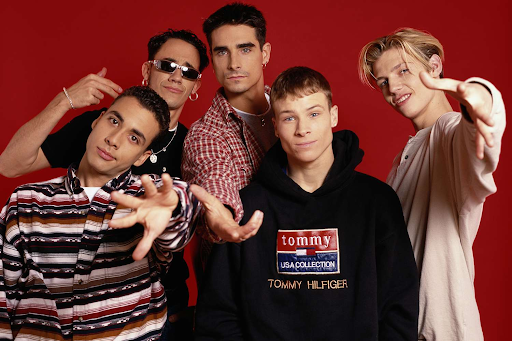
By the late 1990s, contemporary R&B had become an important source of musical techniques in mainstream pop, with its attention to layered harmonies, syncopated rhythms, and vocal ornamentation, resulting in chart-topping hits. These R&B elements fed directly into the rise of boy bands, male vocal groups that repackaged these hallmarks in highly polished, radio-friendly pop formats. Vocally, boy bands adopted melismatic runs, falsetto leads, call-and-response techniques, and tight harmonies—features drawn from African American musical traditions, from doo-wop and Motown to modern R&B of the 1980s and 1990s. Instrumentally, tracks often used drum machines, programmed basslines, and lush synth pads. These tracks paired complex rhythmic motifs with direct melodic hooks. Lyrically, songs emphasized romantic love and emotional relationships rather than physical intimacy, using playful euphemisms appropriate for adolescent audiences. The visual presentation of these groups complemented the music through choreography, fashion, and individualized member personas.
The boy band concept draws on a long lineage of male vocal ensembles. Doo-wop groups of the 1940s and 1950s, such as The Orioles and The Platters, emphasized harmonized vocals, vocal improvisation, and romantic storytelling. Motown acts in the 1960s, including The Jackson 5 and The Temptations, incorporated choreographed performance and stagecraft alongside rich harmonies and call-and-response structures. In the 1980s, New Edition provided a more direct precedent by blending contemporary R&B with a teen-oriented pop appeal, establishing a template for both *NSYNC and the Backstreet Boys.
New Kids on the Block
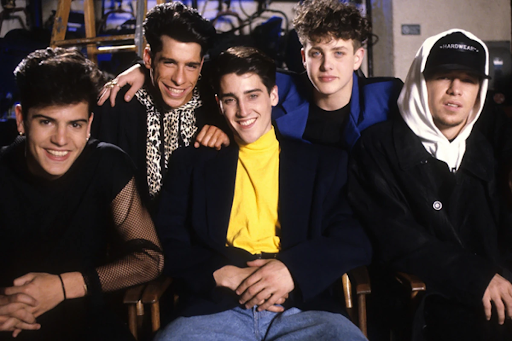
The late-1990s boy-band boom drew heavily on the commercial formula established by New Kids on the Block (NKOTB), formed in 1985 by producer Maurice Starr in Boston. Starr sought to replicate the success of African American teen groups while combining mainstream pop polish and conservative styling. NKOTB—Donnie Wahlberg, Jordan Knight, Jonathan Knight, Danny Wood, and Joey McIntyre—achieved widespread success with Hangin’ Tough (1988), featuring hits such as “Please Don’t Go Girl” and “You Got It (The Right Stuff).” The group's early singles showcased tight harmonies, prominent lead vocals juxtaposed with ensemble backing, and a rhythmic bounce derived from R&B while using pop-oriented hooks and melodic phrasing. Despite their commercial success, the group relied heavily on pre-recorded vocals and studio production, a trend that would become a recurring critique of boy bands.
Lou Pearlman and the 1990s Boy Band Machine
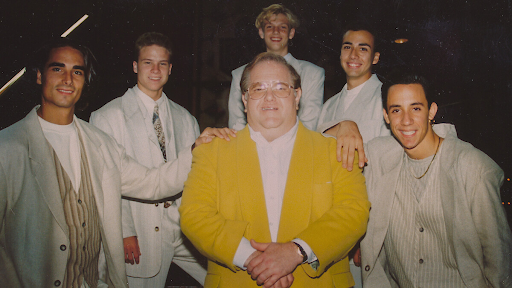
Lou Pearlman, inspired by NKOTB’s model, became the foremost business tycoon of the 1990s boy band wave. He founded the Backstreet Boys (1993) and *NSYNC (1995), applying a formula that fused R&B-derived vocal techniques with choreographed pop performance. Pearlman marketed his groups aggressively, emphasizing visual identity and multi-platform media exposure. However, his business practices were exploitative: he defrauded investors, withheld earnings from band members, and was ultimately convicted of mail, wire, and bank fraud.
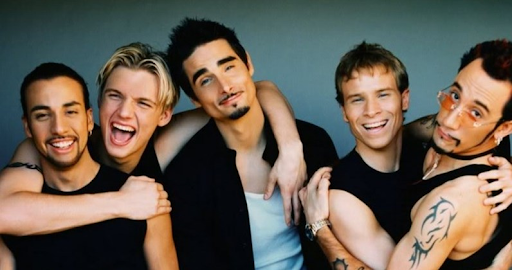
Backstreet Boys
The Backstreet Boys—Nick Carter, Howie Dorough, Brian Littrell, AJ McLean, and Kevin Richardson—perfected the formula Pearlman envisioned. Albums such as Backstreet’s Back (1997) and Millennium (1999) combined R&B-style harmonies, layered vocals, and call-and-response techniques with tightly arranged pop hooks. Tracks like “I Want It That Way” showcased falsetto leads, melismatic runs, and multi-part harmonization. These techniques draw on R&B vocal practices while remaining within tightly structured pop arrangements. Percussion and basslines, often programmed, provided rhythmic propulsion similar to that found in contemporary R&B production, while choruses relied on memorable melodic repetition to ensure mass appeal. Visual performance—coordinated dance moves and individual personas—helped audiences distinguish the individual members within the group.
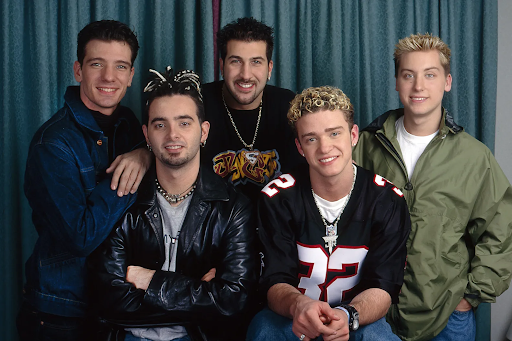
*NSYNC and Justin Timberlake
*NSYNC—Justin Timberlake, JC Chasez, Joey Fatone, Chris Kirkpatrick, and Lance Bass—built on the Backstreet Boys’ template while incorporating slightly edgier R&B influences. Their hits, including “Bye Bye Bye” and “It’s Gonna Be Me,” featured syncopated drum programming, layered harmonies, call-and-response breaks, and falsetto runs that emphasized emotive storytelling. Each member adopted a distinct vocal timbre and stylistic flair, from airy falsetto to chest-dominant leads, combining R&B technique with pop accessibility. Timberlake, emerging as the public face of the group, sharpened these skills into a solo career, releasing Justified (2002) with production by Timbaland and The Neptunes. Songs like “Cry Me a River” and “Rock Your Body” showcased complex rhythmic layering, syncopated R&B beats, falsetto leads, and vocal layering, while integrating funk, soul, and electronic textures—extending the vocal and rhythmic techniques he had developed within the boy-band format. Later albums, FutureSex/LoveSounds (2006) and The 20/20 Experience (2013), built on these elements through live instrumentation, electronic textures, and intricate vocal arrangements, tracing Timberlake’s development from a teen pop performer to a globally recognized R&B and pop innovator. Within the group, Timberlake frequently handled the lead on emotionally expressive tracks, often employing melismatic runs, airy falsetto passages, and nuanced vocal dynamics. His combination of R&B-inspired vocal techniques with pop sensibilities established the basis for his later solo work.
Max Martin
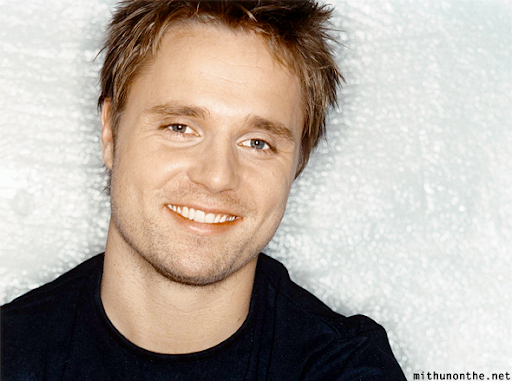
By the late 1990s, boy-band and teen-pop success showed how extensively mainstream pop had absorbed R&B vocal and rhythmic techniques. Pop musicians increasingly drew on R&B vocal techniques, harmonies, and rhythmic sensibilities while packaging them for mainstream adolescent audiences. Producers and songwriters became central to this process, adapting Black musical influences into tightly structured, radio-ready tracks. Among the most influential figures was Swedish songwriter and producer Max Martin, whose work with the Backstreet Boys, *NSYNC, and Britney Spears both established teen-pop's sonic identity and demonstrated how hooks, layered harmonies, and syncopated rhythms could adapt R&B motifs into global pop hits.
Karl Martin Sandberg rose to prominence in the late 1990s with credits on a string of hits, including Britney Spears’s “…Baby One More Time” (1998), the Backstreet Boys’ “I Want It That Way” (1999), Celine Dion’s “That’s the Way It Is” (1999), and *NSYNC’s “It’s Gonna Be Me” (2000). He co-wrote and co-produced seven of the twelve tracks on the Backstreet Boys’ Millennium (1999), including all singles. “I Want It That Way,” co-written with Andreas Carlsson and co-produced with Kristian Lundin, became an enduring emblem of the era, ranking No. 10 on MTV/Rolling Stone’s “100 Greatest Pop Songs” and No. 3 on VH1’s 100 Greatest Songs of the ’90s, the highest-ranking boy-band single on the list. Millennium sold over 1.1 million units in its first week in the U.S., setting a debut-week record, and became the best-selling album globally.
Martin’s ability to blend R&B-inspired vocal techniques with pop sensibilities extended across multiple projects. Songs originally intended for other artists—such as “Shape of My Heart”—found their way onto the Backstreet Boys’ Black & Blue (2000), demonstrating his ability to compose tracks with broad international appeal. Martin’s recognition included ASCAP’s “Songwriter of the Year” awards in 2000 and 2001.
Max Martin has written or co-written 28 Billboard Hot 100 number-one singles, 26 of which he also produced or co-produced, holding the all-time record as of March 2024. His work includes Katy Perry’s “I Kissed a Girl” (2008) and “Roar” (2013), Maroon 5’s “One More Night” (2012), Taylor Swift’s “Shake It Off,” “Blank Space” (2014), and “The Fate of Ophelia” (2025), and the Weeknd’s “Can’t Feel My Face” (2015), “Blinding Lights” (2019), and “Save Your Tears” (2020), with Blinding Lights ranked as the best-performing song in Billboard Hot 100 history. Martin has surpassed John Lennon’s record with 27 number-one singles, second only to Paul McCartney (32). His singles have sold over 135 million copies as of early 2013, and Martin has won ASCAP’s Songwriter of the Year a record 11 times, five Grammy Awards, including Producer of the Year, and received nominations for an Academy Award and two Golden Globes.
Martin’s work with teen-pop vocalist Britney Spears began in 1998 with her debut single, “…Baby One More Time,” which he wrote and co-produced. Originally offered to the Backstreet Boys and TLC, the track became a global phenomenon when Spears released it, marking the launch of her career and cementing Martin’s influence on late-1990s pop. He continued to guide her early output, co-writing and co-producing hits such as “(You Drive Me) Crazy,” and later singles from Oops!... I Did It Again (2000) and Britney (2001). Martin’s meticulous craftsmanship in hooks, harmonies, and rhythm, blending R&B sensibilities with teen-pop accessibility, helped Spears dominate both U.S. and international charts and established a new benchmark for female pop performers.
Britney Spears
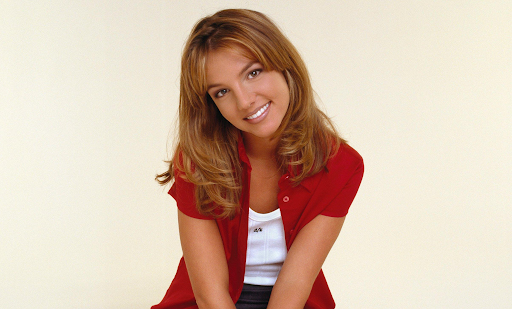
Britney Spears, often referred to as the “Princess of Pop”, has had a significant cultural impact in the last years of the 20th century and into the 21st century, and is credited with helping revive the teen pop genre. Her first major professional work came in 1992 with the musical Ruthless! and as a cast member on the final seasons of The All-New Mickey Mouse Club (1992–1994). The show offered rigorous training in singing, dancing, and acting, as well as exposure to industry professionals and a network of young Disney-trained peers—Justin Timberlake, Christina Aguilera, and Ryan Gosling—who would go on to dominate late-1990s and early-2000s pop culture. For Spears, the experience provided both technical development and insight into the workings of the entertainment industry.
After leaving the show, Spears signed with Jive Records in 1997 and quickly became the face of the teen-pop revival. Her debut album, …Baby One More Time (1999), shot to number one in the United States, with its title track becoming one of the best-selling singles in history. The song’s opening line—“Hit me baby one more time”—led to widespread misunderstanding; music journalist John Seabrook explained, “Everybody thought it was some weird allusion to domestic violence or something. But what it really was was the Swedes using English, not exactly correctly. What they really wanted to say was, ‘hit me up on the phone one more time’ or something. But at that point, Max’s English wasn't that great. So it came out sounding a little bit weird in English.” The track, written and produced by Max Martin, combined R&B-inspired vocal runs with pop hooks, establishing Spears’ signature blend of melismatic phrasing, conversational delivery, and catchy, hook-driven choruses. The accompanying music video, featuring Spears in a Catholic schoolgirl uniform with her midriff exposed, combined sexual knowingness with a childlike image, gaining her international attention and a Grammy nomination for Best New Artist.
Spears’ second album, Oops!... I Did It Again (2000), continued her commercial dominance, while her third album, Britney (2001), marked a conscious move toward maturity, addressing themes of self-discovery, sexuality, and personal agency. Spears co-wrote five tracks and selected producers herself, signaling greater control over her music. Subsequent albums, including In the Zone (2003) and Blackout (2007), explored dance-pop and electronic textures, with songs centered on freedom, desire, and fame.
Among Spears's later singles, the 2004 hit Toxic stands out as a demonstration of Spears’ musical evolution. A dance-pop and techno-pop song with elements of South Asian music, Toxic features layered instrumentation—including drums, synthesizers, surf guitar, and high-pitched strings sampled from the 1981 Bollywood song “Tere Mere Beech Mein” by Laxmikant–Pyarelal. Spears’ breathy vocal delivery complements the song’s seductive, metaphor-driven lyrics, which compare a lover to a dangerous, addictive drug.
Spears’ life and career were deeply intertwined with public scrutiny. Her personal struggles—including brief marriages to childhood friend Jason Alexander and dancer Kevin Federline, the birth of two children, and a highly publicized breakdown between 2006 and 2008—dominated media coverage. In 2008, a conservatorship was established, placing her father and legal team in control of her personal, financial, and professional affairs. The conservatorship arrangement lasted for over a decade, during which Spears released albums, toured, and maintained a public career, though she often described the conservatorship as controlling and restrictive. The #FreeBritney movement went viral on social media platforms in the late 2010s, culminating in Spears’ 2021 public testimony against her family and management. The conservatorship was dissolved later that year, allowing her greater personal autonomy and control over her public narrative, although her public life remains the subject of rigorous media scrutiny.
Chapter 39: Conclusion
As hip-hop’s national prominence grew, 1990s R&B and pop developed in close dialogue with it, creating some of the decade’s most influential crossover styles. As we saw in the previous chapter, Missy Elliott and Mary J. Blige forged new paths by blending hip-hop production techniques with R&B vocal traditions; Elliott pushed sonic boundaries through futuristic beats, unconventional song structures, and visually inventive music videos, while Blige’s “hip-hop soul” paired raw, emotionally charged singing with gritty, sample-based tracks. Lauryn Hill expanded this hybrid style by fusing rap, gospel, and classic soul, bringing a socially conscious perspective that broadened the expressive range of mainstream R&B.
Groups such as Destiny's Child further developed the era's sound by integrating hip-hop rhythms with tight harmonies and lyrics centered on independence and self-definition. At the same time, performers like D’Angelo revitalized neo-soul through warm, analog textures and a deliberate return to 1970s funk and soul aesthetics, countering the genre’s increasing digital polish. Mariah Carey became a central figure in this broader convergence by working with hip-hop producers and rappers on remix singles, helping bring the rap–R&B blend firmly into pop’s mainstream.
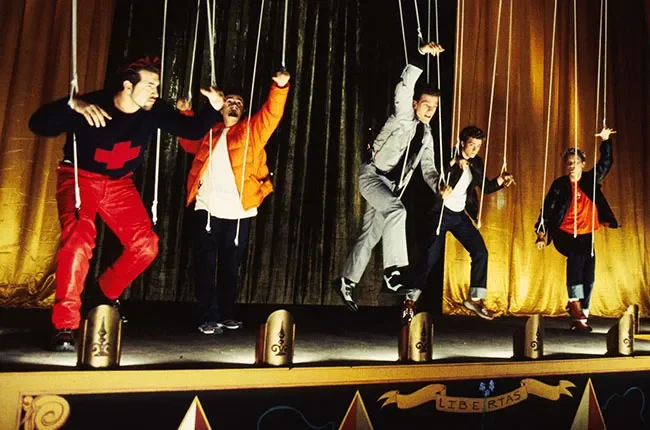
Beyond R&B, teen-oriented pop also absorbed these developments. Boy bands such as Backstreet Boys and *NSYNC, along with solo artists like Britney Spears, drew on R&B vocal stylings, hip-hop–influenced dance production, and the visual grammar of MTV to become dominant cultural forces at the decade’s end. Their success showed how extensively hip-hop rhythms, R&B vocal techniques, and MTV-oriented visual presentation had entered mainstream pop by the end of the 1990s.
Chapter 39: Further Reading
Carr, Janelle. “Missy Elliott.” In Icons of Hip-Hop: An Encyclopedia of the Movement, Music, and Culture, edited by Mickey Hess, 503–27. Westport, CT: Greenwood Press, 2007.
Cooper, Kim, and David Smay. Bubblegum Music Is the Naked Truth: The Dark History of Prepubescent Pop, from the Banana Splits to Britney Spears. Los Angeles: Feral House, 2001.
Cornwell, Jane. Janet Jackson. London: Carlton Books, 2002.
Frere-Jones, Sasha. “On Top: Mariah Carey’s Record-Breaking Career.” The New Yorker, April 3, 2006.
Grigoriadis, Vanessa. “The Tragedy of Britney Spears.” Rolling Stone, February 21, 2008, 46–54.
Hawkins, Stan, and John Richardson. “Remodeling Britney Spears: Matters of Intoxication and Mediation.” Popular Music and Society 30, no. 5 (2007): 605–29.
Jarman-Ivens, Freya. “Introduction.” In Oh Boy!: Masculinities and Popular Music, edited by Freya Jarman-Ivens, 1–20. New York: Routledge, 2007.
Light, Alan, ed. The Vibe History of Hip Hop. New York: Random House, 1999.
Lowe, Melanie. “Colliding Feminisms: Britney Spears, ‘Tweens,’ and the Politics of Reception.” Popular Music and Society 26, no. 2 (2003): 123–40.
Perkins, William Eric, ed. Droppin’ Science: Critical Essays on Rap Music and Hip Hop Culture. Philadelphia: Temple University Press, 1996.
Pough, Gwendolyn D. Check It While I Wreck It: Black Womanhood, Hip-Hop Culture, and the Public Sphere. Lebanon, NH: University Press of New England, 2004.
Potter, Russell A. Spectacular Vernaculars: Hip-Hop and the Politics of Postmodernism. Albany: State University of New York Press, 1995.
Ripani, Richard J. The New Blue Music: Changes in Rhythm & Blues, 1950–1999. Jackson: University Press of Mississippi, 2006.
Richardson, Riché. Black Masculinity and the U.S. South: From Uncle Tom to Gangsta. Atlanta, GA: University of Georgia Press, 2007.
Rischar, Richard. “A Vision of Love: An Etiquette of Vocal Ornamentation in African-American Popular Ballads of the Early 1990s.” American Music 20 (2004): 407–43.
Smit, Christopher R. The Exile of Britney Spears: A Tale of 21st Century Consumption. Chicago: Soft Skull Press, 2011.
Taylor, Chuck. “Backstreet Boys View Their Teen Act Origins as Just the Start of a Career.” Billboard, May 23, 1998.
Udovitch, Mim. “Mariah Carey: The Whirling Diva.” Rolling Stone, February 17, 2000.
Wald, Gayle. “I Want It That Way: Teenybopper Music and the Girling of Boy Bands.” Genders 35 (2002). http://www.genders.org/g35/g35_wald.html.