Chapter 2: American Popular Music in the Nineteenth Century Pt.1
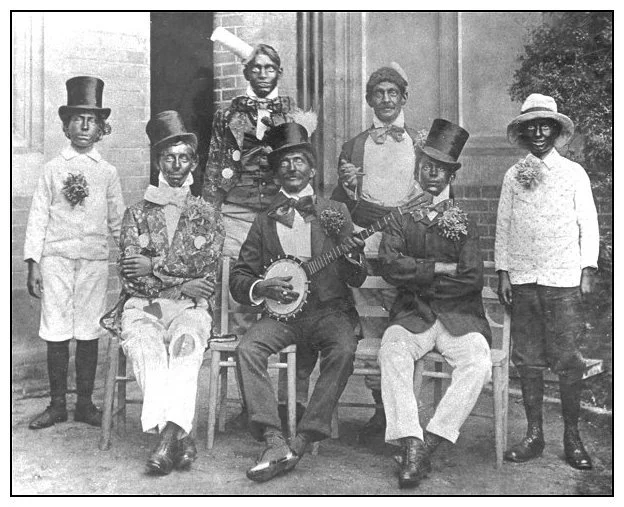
Chapter 2: Introduction
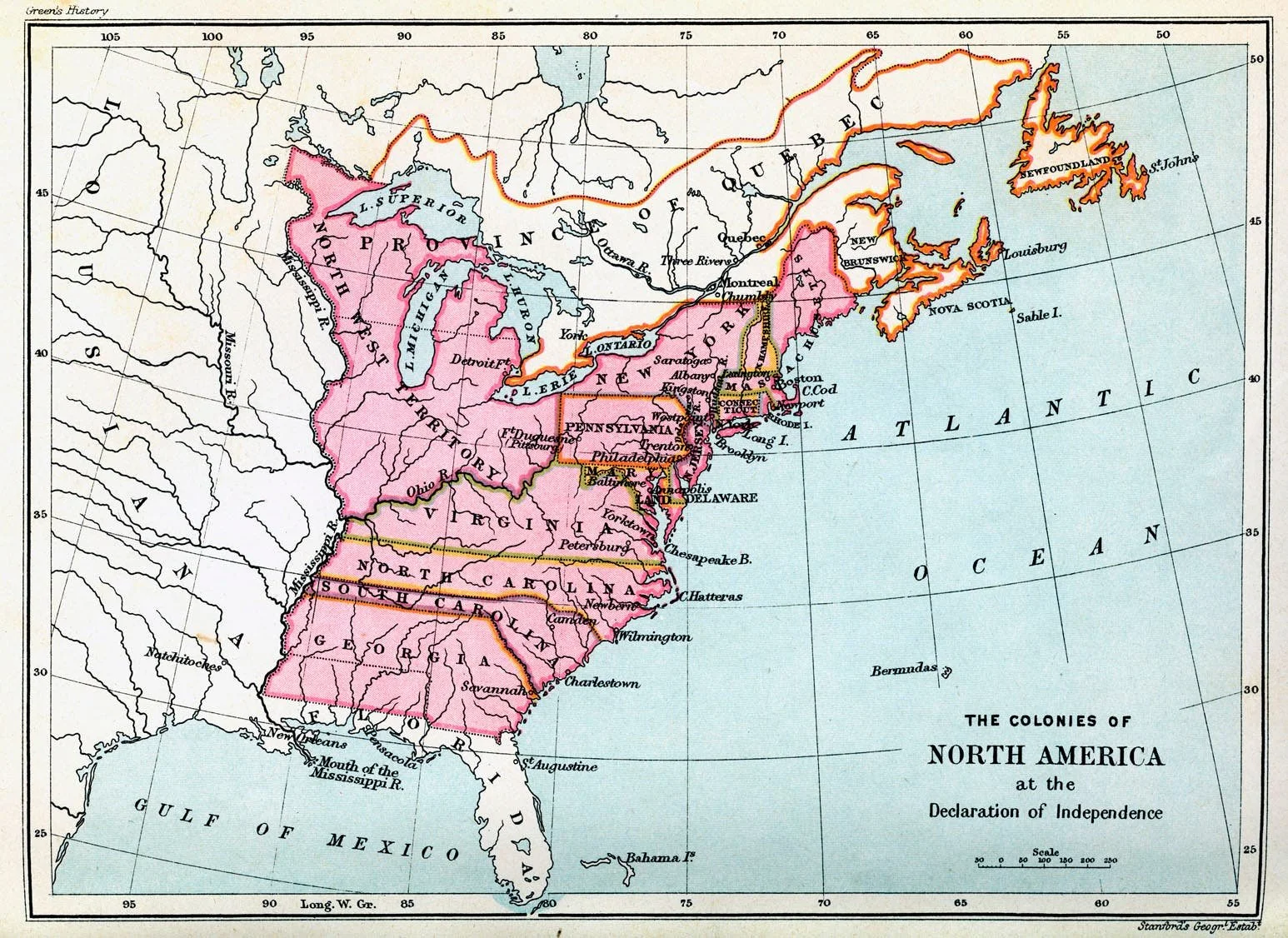
As the United States expanded westward during the 19th century, popular music functioned as a record of everyday American experience shaped by migration, labor, racial hierarchy, and displacement. Circulating through theaters, parlors, churches, political rallies, and printed sheet music, songs documented how Americans understood romance, work, sectional conflict, and national belonging. Indigenous musical traditions, African diasporic practices carried through enslavement, European folk and art-music forms, and commercial stage entertainment increasingly intersected within an emerging national marketplace. These encounters produced new and widely shared musical styles, even as they relied on processes of appropriation, caricature, and cultural erasure that paralleled larger systems of power.
The conditions behind this circulation reflected ongoing structural change. In the decades after independence, the United States shifted from a coastal republic to a continental nation through land acquisition, Indigenous displacement, slavery’s expansion, and industrial growth. Rapid population growth, urbanization, and improvements in transportation and printing allowed music to circulate nationally for the first time. Within this setting, popular songs both registered social change and shaped ideas about national identity, embedding political conflict and cultural values within forms of entertainment that reached audiences across region and class.
At the beginning of the 1800s, the United States was a small, agrarian nation mainly confined to the Atlantic coast. But over the course of the century, the country expanded dramatically in both size and population. The Louisiana Purchase of 1803 was a monumental land deal in which the United States acquired approximately 828,000 square miles of territory from Napoleon-led France, effectively doubling the size of the nation. This vast expansion included land that would become all or part of fifteen future states, stretching from the Mississippi River to the Rocky Mountains. It opened the continent's interior to exploration, settlement, and economic development, fueling westward migration while sharpening disputes over slavery’s future in new territories.

Soon after, the War of 1812 (1812–1815) tested the young nation's autonomy and determination in a renewed military conflict with Great Britain. Tensions with Great Britain flared over issues such as trade restrictions, the impressment of American sailors into the British Navy, and disputes over territorial expansion in the Northwest. The war featured significant battles, including the burning of Washington, D.C., and the successful defense of Baltimore's Fort McHenry, which inspired Francis Scott Key to write the poem that became "The Star-Spangled Banner." Although the Treaty of Ghent ended the war in a stalemate, the conflict generated a surge of national pride and reinforced a uniquely American identity as patriotic song and folklore gained wider circulation during and after the war.
Later in the century, the Mexican–American War (1846–1848) arose from tensions over the U.S. annexation of Texas and the desire for westward expansion under the ideology of Manifest Destiny. Following a series of armed conflicts, the war concluded with the Treaty of Guadalupe Hidalgo, through which Mexico ceded nearly half of its territory to the United States. This included present-day California, Arizona, New Mexico, Nevada, Utah, and parts of several other states. These acquisitions extended U.S. control while bringing new populations and cultural practices into national life, shaping regional musical variation over time.

Changes in transportation and technology accompanied this growth. Westward movement and statehood brought local musical practices into wider contact. The transitory nature of the 19th century established the basis for what would become the distinctive traditions of American popular music through the migration, industrialization, and interplay of different communities.

By the end of the 19th century, the American popular music landscape had evolved to become both national in scope and commercial in structure. It was a period defined by contradiction: artistic innovation alongside cultural appropriation, mass participation alongside systemic exclusion, and sentimentality alongside satire. This chapter explores the major genres, performers, and practices that shaped American popular music in the 1800s, both as entertainment, and as a window into the social, political, and cultural life of a growing nation in flux.
America in the Colonial Era: Religious Music
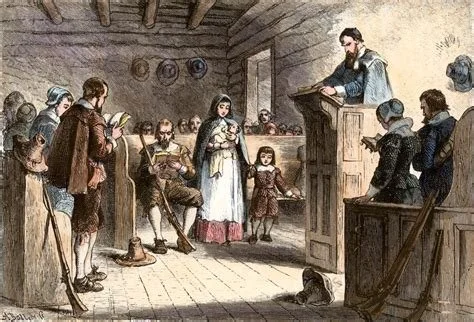
The United States, from its earliest days, has been shaped by the cultural interplay of diverse peoples, particularly immigrants and the forcibly enslaved. From the moment the first permanent British colony was established in Jamestown, Virginia, in 1607, the seeds of American popular music were sown through the convergence of European and African traditions. The early colonial population primarily consisted of British settlers who arrived voluntarily and West Africans who were brought against their will, beginning in 1619, through the transatlantic slave trade. This unequal dynamic between the colonists and enslaved Africans formed the foundation of a cultural dialogue, however coerced, that profoundly influenced the development of American music from the colonial era to the present day.
As this cultural exchange began to unfold, the musical contributions of European settlers helped establish the earliest frameworks of colonial soundscapes. These colonists brought with them a variety of musical traditions from the Old World, including folk ballads, fiddle tunes, formal ballroom dance, and military brass band music . Many colonists, though not all, came to North America for religious reasons, and religion played a significant role in shaping early musical life in the colonies. For example, the Puritans in New England sought to establish communities centered on strict religious principles, including regulated worship practices such as congregational singing. Congregational singing was a central part of worship for many denominations, such as the Catholics in Maryland and the Anglicans in Virginia, who developed musical traditions aligned with their respective liturgies.
Meanwhile, groups like the Moravians in Pennsylvania brought with them highly developed sacred music practices, including choral singing and instrumental accompaniment, which they maintained as part of their religious and communal life. However, congregational singing was particularly important in Puritan New England, where psalm singing formed the foundation of church music. Early hymnals, such as the Bay Psalm Book (first published in 1640), helped establish a tradition of simple, syllabic singing, often performed in a practice known as "lining out," in which a leader would sing a line and the congregation would repeat it. This practice was partly practical, since many people were illiterate and could not read music, but it also fostered a strong communal aspect to worship.
Over time, this tradition would evolve into the shape-note singing and gospel styles that would influence later American sacred and secular music. Shape-note singing, which developed in the early 19th century, used a unique system of notation in which different shapes represented different solfège syllables (fa, sol, la, and mi). This simplified approach made it easier for people with little or no formal musical training to read music, and it became especially popular in rural and southern communities. Shape-note hymnals like The Sacred Harp (first published in 1844) allowed communities to come together in large gatherings called singing conventions. However, by the late 19th and early 20th centuries, shape-note singing began to decline in popularity. This was due in part to the rise of more standardized, European-style music education in schools and churches, which favored conventional notation and standard Western choral styles. Additionally, the growth of the commercial sheet music industry and the professionalization of sacred music performance in urban centers like New York and Philadelphia contributed to the perception of shape-note singing as outdated or rustic, pushing it to the margins of mainstream American musical life.

At the same time, the early- to mid-nineteenth century witnessed a wave of Protestant revivalism known as the Second Great Awakening, which led to widespread religious enthusiasm and a focus on personal conversion and emotional expression. Preachers traveled extensively to hold large revival meetings and multi-day, open-air gatherings called camp meetings that could attract thousands of participants from diverse social and denominational backgrounds. The movement sought to democratize the religious experience, emphasizing that salvation and spiritual insight were accessible to all, not just church elites. Music played a central role in this effort, providing the liturgical structure for the worship meetings. Camp meeting hymns often employed call-and-response forms, in which a leader would “line out” each phrase for the congregation to repeat, fostering both participation and a sense of shared spiritual experience. These musical practices then entered a complex conversation that both influenced and reflected the influence of African American sacred music, such as spirituals, gospel, and other forms of African American religious expression, which developed in dialogue with revivalist traditions.
America in the Colonial Era: Secular Music

As the American colonies developed, secular music also served important political and social purposes. One of the earliest and most widespread forms of popular music in colonial America was the broadside ballad. A broadside was a single sheet of printed paper containing song lyrics, often distributed publicly or sold cheaply on street corners. These ballads were typically in strophic form, meaning the same melody was repeated for each successive verse, allowing listeners to focus on narrative content rather than musical complexity. Strophic form facilitated oral transmission and communal performance, making these songs accessible to populations with limited musical literacy. Many broadside ballads also included a chorus—a repeated segment of text and melody inserted between verses—to encourage audience participation and memorability. Their simplicity and affordability made them widely accessible, and they were often posted in public spaces or sold cheaply on street corners.
Many broadside ballads were explicitly political, using satire and humor to mock British officials, celebrate colonial resistance, or spread news and opinion. These ballads often reflected and helped to shape public sentiment, especially leading up to and during the American Revolution. One of the most enduring examples is "Yankee Doodle," which gained popularity during the Revolutionary War (1775–1783). The lyrics were set to an older English or Dutch melody, believed to have been used as early as the Seven Years' War. Its jaunty, march-like rhythm and catchy refrain made it an ideal vehicle for new political lyrics and satire. Although its exact origins are debated, the song is believed to have evolved from British mockery of colonial soldiers into a patriotic anthem, emblematic of the colonists’ ability to reclaim and repurpose cultural materials to forge a distinctly American identity.
Another canonical example is “The Star-Spangled Banner,” written by Francis Scott Key during the War of 1812. Inspired by the British bombardment of Fort McHenry in Baltimore, Key composed a poem, Defence of Fort M'Henry, after witnessing the American flag survive the attack. The lyrics were set to the tune of "To Anacreon in Heaven”, a British song with a wide vocal range and originally composed for the Anacreontic Society, a London gentlemen’s club. Like other broadside ballads, “The Star-Spangled Banner” circulated primarily in print, intended to be sung to a familiar melody. The song is written in a strophic form, using the same melody for each verse, and originally contained multiple verses beyond the single one commonly performed today. Its popularity grew throughout the nineteenth century, and in 1931 it was officially adopted as the national anthem of the United States.
In addition to broadside ballads, the English ballad opera tradition was influential in early nineteenth-century America. Ballad operas were theatrical works that combined spoken dialogue with preexisting songs, often adapted from broadside ballads or popular tunes. Unlike Italian opera, which featured highly trained professional singers, aristocratic or high society subjects, and Italian dialogue known as libretti, ballad operas used vernacular English, simple melodies, and narratives centered on common people. John Gay’s The Beggar’s Opera (1728) is a prominent example, designed as a satire of Italian opera and as a means of making theater more accessible to a wider audience. These productions, along with increased demand for public concerts, reflected the growing democratization of musical performance in America.
The British ballad tradition remained a central influence on the American musical life throughout the nineteenth century. Narrative ballads that had spread orally in England, Scotland and Ireland were carried by settlers and immigrants to North America, where they were adapted to new social conditions. In the United States, the lyrics of these songs increasingly addressed local topics such as frontier settlement, westward migration, labor, crime and domestic tragedy. Although rooted in earlier European models, American variants often modified melodies, lyrics and performance practices to suit regional palates and dialects. In the early twentieth century, folklorists such as Francis James Child and John Lomax documented hundreds of these British-derived ballads in the United States, preserving narrative structures and melodic formulas that later shaped country, folk, and bluegrass music.
Vocal style played a key role in distinguishing Anglo-American folk traditions. One lasting aesthetic feature is the so-called “high lonesome sound,” a tense, nasalized vocal timbre often produced in an upper register. This style, primarily associated with Southern white rural singing, remains a culturally specific marker of regional identity and can be heard in Appalachian ballad singing as well as in later commercial country music.
Printed song collections reinforced transatlantic musical exchange. Publications such as Thomas Moore’s Irish Melodies (1808–1834) circulated widely in American homes, schools, and social gatherings, offering sentimental poetry set to newly composed tunes modeled on Irish folk song. Scottish songs, most famously “Auld Lang Syne,” became fixtures of American communal life, performed at public ceremonies and private gatherings. These repertoires helped standardize melodies and lyrics while encouraging domestic music-making, particularly in middle-class households.
Along with folk and ballad traditions, American popular singing was formed by the Italian bel canto style. Bel canto—literally “beautiful singing”—refers to a nineteenth-century Italian vocal tradition that emphasizes smooth legato melodic lines, even tone quality across the vocal range, controlled breath support and carefully executed ornamentation such as turns and grace notes. In the American context, these European vocal techniques influenced parlor songs, light operatic works and early popular vocal performances.
European dance music also exerted a strong influence on the American social life. Group dances such as the contra dance, quadrille, reel and square dance were widely practiced in rural and urban settings. These dances are defined by coordinated patterns of movement organized in lines, circles or square formations, typically led by a caller who led dancers through a series of figures. Such dances were central to community meetings and relied on live instrumental accompaniment most often provided by fiddles.
By the mid-nineteenth century, social dancing increasingly shifted towards couple dances, reflecting changing attitudes toward intimacy and social interaction. Forms such as waltz, galop, schottische and ballroom polka became popular in dance halls and private salons. In the 1880s, the one-step appeared as a fast-paced couple dance characterized by quick walking motions, closely aligned with the regularity of marching bands and popular theatrical music. These dances signaled a growing link between popular music, physical movement and commercial entertainment.
Immigration further expanded the musical diversity of the United States. Irish and German immigrants fleeing famine, political unrest, and economic hardship in the nineteenth century brought with them distinctive song, dance, and instrumental traditions. While many of these practices were preserved within ethnic communities, others entered mainstream popular culture. French-descended populations in Louisiana maintained musical traditions shaped by colonial history, leading to the development of Cajun music, characterized by fiddle-led melodies and dance rhythms. Jewish immigrants from Eastern Europe introduced klezmer music, a tradition centered on expressive instrumental performance—especially clarinet and violin—often used for weddings and communal celebrations. Polish and Central European immigrants contributed polka traditions, which became popular in both ethnic and commercial dance contexts.
Instrumental music, particularly fiddle-based repertoires derived from Scottish and Irish traditions, became a cornerstone of American folk practice. The fiddle, a colloquial term for the violin in folk contexts, was a portable, versatile instrument well suited to dance accompaniment. Tunes such as “Turkey in the Straw,” also known as “Natchez Under-the-Hill,” illustrate how European-derived melodies were reshaped through American performance practice. These tunes functioned as social glue, supporting dances, festivals, and informal gatherings, and they helped establish shared musical vocabularies that persisted across generations.
The Musical Heritage of Enslaved Africans

The evolution of African American music is deeply intertwined with the history of slavery in the United States. Between 1619 and the formal abolition of the transatlantic slave trade in 1808, approximately one to two million Africans—roughly ten percent of the total transatlantic traffic—were forcibly brought to the American colonies. By 1860, on the eve of the Civil War, nearly four million people were enslaved in a population of approximately thirty-one million. The forced journey across the Atlantic, known as the Middle Passage, was brutal and deadly, claiming approximately 2 million lives. Survivors were stripped of familiar instruments, languages, and social networks. Slaveholders often intentionally separated individuals from the same ethnic or linguistic communities, fearing that shared cultural practices could enable communication and rebellion. Despite these measures, African cultural values endured, preserved, adapted, and were reimagined under the conditions of enslavement, laying the foundation for African American musical traditions and the development of American music.
Enslaved Africans arrived in North America from many different societies across West and Central Africa, and some had already lived under English, French or Spanish rule in Caribbean colonies before arriving in the United States. This variety combined with the forced conditions of slavery produced cultural forms that united African, European and sometimes Native American elements. Yet this blending should not be read as evidence that African American music lacked coherence or a distinctive perspective. Black musicians and performers were exposed to a wide range of musical sources and cross-cultural influences and adapted those influences through an African-derived lens. Over generations, this process of adaptation became central to African American musical practice, especially amid systemic oppression.
Music, dance, and improvisation helped enslaved people preserve their community and cope with daily violence. Core West African musical principles—call-and-response, polyrhythm, syncopation, improvisation, and oral transmission—became the basis of African American musical expression. Call-and-Response involves a leader performing a phrase and a group responding, often repeating or changing the line. Polyrhythm means that several rhythms occur at once, while syncopation emphasizes beats that fall off the expected pulse. These parts appear in work songs, lullabies, children's game songs, narrative story songs, instrumental ensembles and spirituals—religious songs that expressed faith while also carrying coded messages about escape and freedom.
Religious revivals like the Great Awakening influenced African American religious music by emphasizing personal salvation and spiritual equality, themes that enslaved communities adapted as metaphors for liberation. In this sense, the influence of European religious forms did not overwrite African musical principles; rather, it was absorbed and reshaped through African performance practices. Spirituals often used call-and-response and included hand-clapping, foot-stomping, dancing, and spirit possession—an ecstatic state seen as a direct connection to the divine. In informal worship settings known as hush harbors, enslaved people reworked European hymns and scripture, embedding hidden messages about resistance. African American preachers also developed a semi-improvised, musically intoned sermon style that later shaped R&B and funk performers such as James Brown and Ray Charles.
African musical structures continued to shape instrumental practice. Short repeated phrases, or riffs, became a foundation for improvisation and group interplay. Repetition created dense polyrhythmic textures, and performers and listeners contributed rhythm through clapping, stomping, and vocal responses. Even when slaveholders restricted drumming, the music’s rhythmic complexity persisted through hand percussion, the fife, tambourines, and small frame drums.
Stringed instruments also reflected African influence. The diddley bow, a simple homemade single-string instrument, provided a flexible melodic and rhythmic base. The banjo, a more developed string instrument, used a drum-like skin head for resonance and produced a sharp, percussive tone. Enslaved Africans adapted West African instruments, such as the akonting and ngoni, creating early banjos with gourd bodies, wooden necks, and gut or horsehair strings. These were often played with the thumb and fingernail to combine drone and melody. The clawhammer technique—striking the strings downward with the back of the fingernail—remains central to Appalachian banjo playing today, demonstrating a direct link to African musical practices.
Enslaved Africans also transformed European musical forms by reshaping hymns, dances, and folk tunes with African rhythm, phrasing, and ornamentation. Work songs coordinated labor and rhythm, the blues developed from pentatonic scales and an expressive vocal style, and early jazz emerged from combining African rhythms with European harmony. Even under systematic oppression, African values such as improvisation, participatory performance, and layered rhythm were preserved and reworked. These musical practices helped create the stylistic foundations of gospel, blues, jazz, R&B, funk, and hip-hop.
Cakewalks

A particularly striking example of early cultural exchange—and the complexities of appropriation—between European and African American traditions is the Cakewalk, a 19th-century dance that demonstrates how enslaved Africans reinterpreted European forms through African aesthetic principles. European settlers brought formal ballroom dances such as the Minuet, Cotillion, and Quadrille, which emphasized precise, symmetrical movement and patterned figures associated with elite social settings. These dances were performed at high-class gatherings, where participants were expected to demonstrate refinement and adherence to etiquette. In contrast, country dances such as the Jig, Reel, and Virginia Reel circulated widely in informal or rural settings, featuring improvisatory movement, active footwork, and group participation. Enslaved African performers observed and often mimicked the posture, gestures, and style of these European dances, exaggerating them with syncopated rhythms, intricate footwork, and improvisatory embellishments.
In many West African societies, dance created a structure for ritual activity surrounding storytelling and communal gathering. On American plantations, enslaved Africans observed and absorbed the dance styles of their white owners but transformed them through their own cultural lens. They infused the movements with new rhythmic patterns, improvisation, expressive gestures, and humor. These practices coalesced into the Cakewalk, a competitive dance in which enslaved performers exaggerated and stylized the postures and steps of elite white ballroom dances. These performances often functioned as subtle satire, mocking the rigidity of white formal dances. The top dancer would frequently be awarded a prize, literally “taking the cake,” giving the dance its name.
Musically, the Cakewalk blended European and African elements. Enslaved musicians employed European instruments, such as the fiddle, alongside African-derived instruments, most notably the banjo. The music incorporated syncopation, emphasizing off-beats to create rhythmic tension, call-and-response, and improvisation, all hallmarks of African diasporic musical practice. These features later appeared in ragtime and early jazz repertoires. The Cakewalk took shape as a satirical social dance and a hybrid form: a social dance in which enslaved communities reworked European models through parody, exaggeration, and rhythmic alteration into a distinctly African American cultural expression that would later be commodified in minstrel shows.
However, white plantation owners often failed to perceive the Cakewalk’s satirical elements, viewing it simply as entertainment. By the late 19th century, the dance had been absorbed into mainstream white popular culture, featured at national fairs and expositions, including the 1876 Centennial Exposition in Philadelphia and the 1893 World’s Columbian Exposition in Chicago. The Cakewalk reflects a repeated process in American music, in which Black performance practices were adopted and commercialized for white audiences. Eventually, the Cakewalk became a staple of the Minstrel Show, the dominant theatrical entertainment of the era, further illustrating how African American creativity shaped—and was often appropriated by—broader American culture.
Minstrelsy

Blackface minstrelsy emerged in the early 19th century as one of the most widely consumed forms of American popular entertainment, built on racist caricature and exploitation. Minstrel shows combined music, comic sketches, dance, slapstick humor, and social commentary. Despite their comic presentation, minstrel shows relied on racial misrepresentation and exploitation of African American people and culture. Minstrelsy relied on a white reinterpretation of Black life, especially as imagined on Southern plantations, and though its content was deeply demeaning, it depended heavily on African American musical and dance practices. Elements like the Cakewalk and other Black performance practices were often co-opted, distorted, and presented to white audiences as comedic spectacle.
The first full-length minstrel shows appeared in the 1840s, and the genre quickly became one of the most common theatrical forms in the United States. White performers wore blackface, a cosmetic mask made of burned cork or greasepaint, and adopted exaggerated dialects, gestures, and costumes to portray grotesque caricatures of African Americans. These portrayals were not based on reality, but were trafficked in damaging stereotypes. Although initially performed exclusively by white actors, later iterations occasionally included Black performers, who were nevertheless pressured to reproduce the same exaggerated and demeaning portrayals.
Minstrelsy had precedents in 18th-century British comic operas, in which white actors played Black characters with simplistic melodies and exaggerated speech. Many of these operas became popular in colonial America before the Revolutionary War, often drawing on Irish and Scottish tunes to create an “exotic” European flavor. One of the first widely recognized blackface entertainers was George Washington Dixon (c. 180?-1861), who debuted in New York City in 1829. His act featured some of the earliest widely circulated “Ethiopian” songs, including Long Tail Blue and Coal Black Rose, which, like their European predecessors, used simple melodic structures derived from European musical conventions.
In addition to entertainment, blackface minstrelsy functioned as a medium for social and political commentary. By performing “in dialect,” actors could critique politicians, elite culture, or contentious social issues under the guise of humor, creating a protective distance that allowed them to voice critiques that might otherwise have been censored or punished. Recent scholarship emphasizes that blackface minstrelsy developed in working-class, urban, and commercially vibrant neighborhoods—such as New York City’s Seventh Ward—where interracial contact was frequent. From this perspective, early blackface performers represented an early expression of a distinctly American popular culture, in which working-class white youth navigated their own social marginalization by engaging with African American cultural forms—a dynamic that would recur throughout American music history. Minstrel shows functioned as vehicles for racist representation. They also provided a space where working-class performers negotiated class identity through caricature and performance.
Minstrel Show Characters and Structure

Minstrel shows relied on a fixed cast of exaggerated racial caricatures that worked together to reinforce white supremacist ideas about intelligence, morality, and social hierarchy. Two of the most prominent characters in minstrel shows were Jim Crow and Zip Coon. These were not depictions of real individuals, but fictional caricatures created and popularized by white performers in blackface.
The character of Jim Crow, popularized in the 1830s by performer Thomas D. “Daddy” Rice, was based on a song-and-dance routine that caricatured a rural Southern Black laborer as lazy, ignorant, boastful, and comically inept. This exaggerated portrayal reinforced harmful stereotypes of African American men and became so pervasive that the term “Jim Crow” was later adopted to label the system of racial segregation laws that dominated the American South from the late 19th century into the twentieth century. These laws barred Black Americans from white theaters, cemeteries, hospitals, restaurants, and schools.
Rice’s portrayal drew on multiple influences. The dialect and mannerisms of Jim Crow were partly inspired by preexisting white rural characters, such as the frontier figure Davy Crockett, and partly by the Black and Creole dialects Rice encountered as a child growing up near the docks of New York’s Seventh Ward, a culturally diverse and predominantly working-class neighborhood. By combining these elements, Rice created a character at once recognizable and exotic to his audiences, amplifying humor through exaggeration and stereotypes.
The song associated with the Jim Crow routine illustrates this hybridized performance style:
“Come, listen all you gals and boys, I'se just from Tuckyhoe
I'm gain to sing a little song, My name's Jim Crow
Wee! about and turn about and do jis' so
Eb'ry time I wee! about I jump Jim Crow”
Here, the lyrics employ a rhythmic structure and a dialect intended to imitate—and ridicule—African American speech patterns, while the accompanying dance movements emphasized exaggerated gestures and physical humor. The widespread popularity of Jim Crow performances helped entrench negative racial stereotypes in the public imagination, linking entertainment with social and political oppression in ways that would have lasting cultural and legal repercussions

In contrast to Jim Crow, the character of Zip Coon represented a Northern urban Black man attempting—and failing—to adopt the manners, speech, and cultural practices of the white elite. Portrayed as ostentatious, overdressed, and comically pretentious, Zip Coon frequently used malapropisms and exaggerated “fancy” language to signal his supposed incompetence. This caricature reinforced white supremacist notions that African Americans were inherently incapable of social mobility or assimilation into mainstream society.
Musically, the chorus of the song associated with Zip Coon consisted of nonsense syllables—"Zip a duden duden zip a duden day"—which directly influenced the later song "Zip-a-Dee-Doo-Dah" in Walt Disney's 1947 film Song of the South. Despite its association with African American performance in minstrelsy, the melody of Zip Coon derives mainly from Irish and Scottish musical traditions rather than African American sources, indicating the appropriation and distortion of Black cultural identity by white performers.
Alongside Zip Coon were other recurring stereotypes, including Brudder Tambo and Brudder Bones, enslaved caricatures depicted as unintelligent yet highly musical figures whose names referred to the tambourine and bone percussion instruments they played. The Interlocutor, who functioned as the show’s master of ceremonies, occupied a nominal position of authority but was frequently undermined through comic misstatements, implying that articulate speech and legitimate leadership remained out of reach. Additional stock characters included the Mammy figure, typically played by a male performer and portrayed as a wise, loving, and simple matriarch—a stereotype that persists in American culture, most famously through the former “Aunt Jemima” advertising image. The “Old Uncle,” sometimes called “Uncle Darky,” appeared as a stern family patriarch, while the “Wench,” often labeled a “mulatto,” was highly sexualized and framed as an object of desire and conquest. Together, these characters formed the structural foundation of minstrel entertainment and played a central role in embedding harmful racial stereotypes into American popular culture.

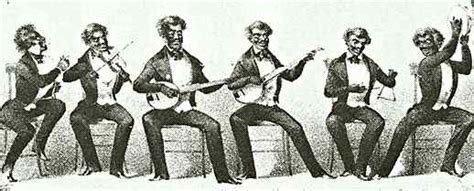
By the 1840s, minstrel shows had evolved into full-length theatrical productions. The first ensemble to present a full minstrel show was the Virginia Minstrels, founded in 1843. While the Virginia Minstrels were not the first blackface performers, they were the first to present a concert. Seated in a semicircle, they performed using the fiddle, banjo, bones, and tambourine, a combination that would define the minstrel sound. In addition to musical numbers, shows included comic dialogue, stump speeches, exaggerated dancing, and slapstick routines. Songs like "Old Dan Tucker" and "Dixie," written by group member Dan Emmett, became some of the most popular tunes of the time.
Dan Emmett and the Virginia Minstrels

Daniel Decatur Emmett (1815–1904) played a central role in establishing blackface minstrelsy as a commercial genre. A songwriter, multi-instrumentalist, and performer, Emmett helped establish the minstrel show as a national phenomenon and wrote songs that became embedded in the American musical imagination. Born in Mount Vernon, Ohio, Emmett was largely self-taught. As a child, he learned to play the fiddle, and as a young man, he apprenticed as a printer before enlisting in the U.S. Army in 1834. While stationed at Jefferson Barracks in Missouri, he honed his musical skills, becoming a proficient fife player and drummer, skills that would serve him well in his later career.
After his discharge in 1835, Emmett joined a circus in Cincinnati, where he began performing in blackface. Emmett wrote songs in exaggerated dialect and toured with various circus and minstrel troupes as a banjoist, singer, and comedian. In 1843, Emmett helped found the Virginia Minstrels.
Emmett spent the rest of his professional life in the minstrel theater, both as a performer and a songwriter. His most famous composition, “I Wish I Was in Dixie’s Land” (1860), commonly known as “Dixie,” became one of the most recognizable and controversial songs of the 19th century. Though originally intended as a minstrel tune, it was quickly adopted by the Confederacy during the Civil War and became an unofficial Southern anthem. Emmett also composed “Turkey in the Straw” (1861), a fiddle tune that, while often divorced from its minstrel roots today, also originated in blackface performance.
Dozens of minstrel companies soon emerged across the country, reflecting the genre’s explosive growth and widespread appeal. The Ethiopian Serenaders, another blackface troupe, performed at the White House in 1844 during the presidency of John Tyler. This rapid rise to national visibility, just four years after the first full-length minstrel show was performed, signaled the genre’s swift acceptance into mainstream American culture. In the 1830s, Thomas Dartmouth Rice toured England, becoming the first native-born American performer to export a style of music that was widely perceived abroad as distinctly American in character and content. Additional figures like E. P. Christy developed highly commercialized minstrel companies, and minstrelsy dominated American entertainment for decades, extending its influence across theaters, sheet music publishing, and even into the earliest forms of recorded music in the 20th century.
Musical Elements of Minstrelsy
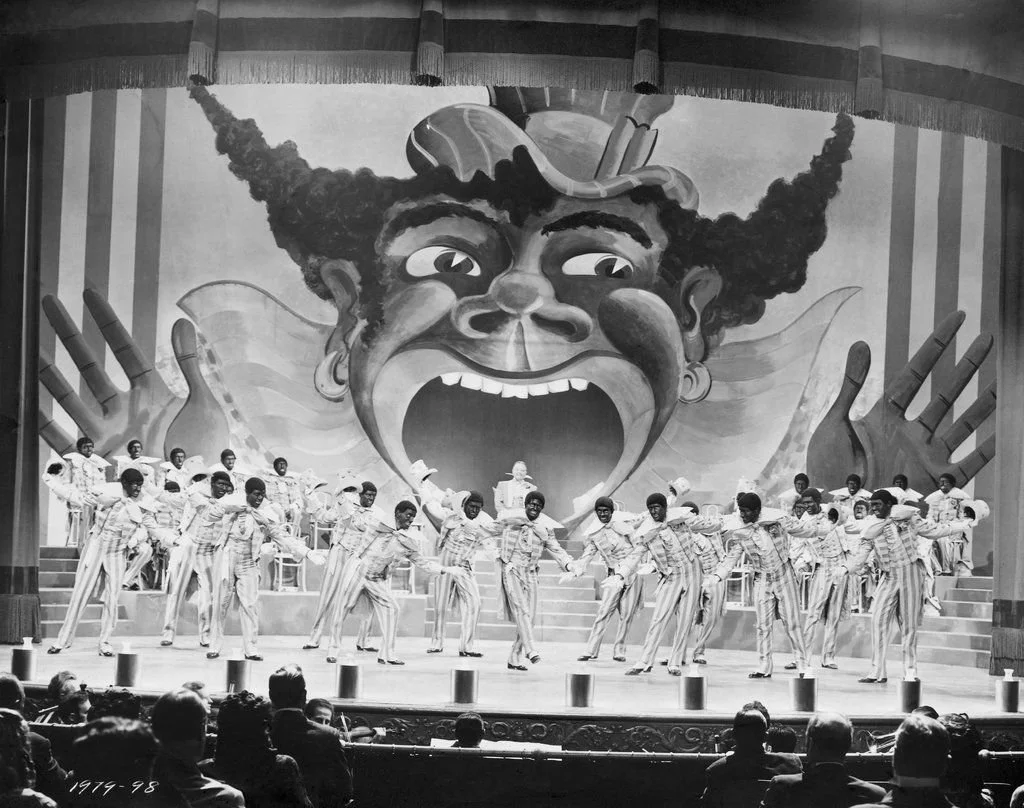
A typical minstrel performance unfolded in three main sections. The first, known as the Minstrel Line, involved songs and comic exchanges between the interlocutor and the performers. These jokes and musical numbers circulated widely and became part of a national catalog of humor and folk motifs. This segment often concluded with a Cakewalk. The second section, the Olio, functioned as a variety segment performed in front of the curtain while the stage was prepared for the final act. The Olio included routines such as the Stump Speech, delivered by a Northern African American character aspiring to political office. The comedy of this routine arose from the character’s linguistic missteps, implying incompetence and social inadequacy.
The final section, known as the Afterpiece, was a one-act musical portraying life on a plantation. These performances featured original songs, often focusing on how African American characters either enjoyed or longed for their “home.” Each troupe typically employed a composer to write these songs, which were published as “Ethiopian” or “Plantation” melodies and presented to audiences as supposedly authentic representations of Black culture, despite being creations of white performers. These songs, along with the Minstrel Line repertoire, became part of the repertory that circulated widely through performance and print. Notable examples include famous songwriter Stephen Foster’s compositions, such as “Old Folks at Home” and “Massa’s in de Cold Ground,” which were premiered by the renowned Christy’s Minstrels and widely disseminated through sheet music. Audiences who enjoyed a memorable tune often purchased the sheet music to perform at home, linking live performance directly to the growing commercial music industry.
A typical minstrel song was performed by a single member of the troupe, accompanied by a small ensemble of instruments that gave the genre its distinctive sound. The banjo became a signature sound in early American folk and minstrel music. The fiddle, colloquially known as a violin, was drawn from both European and American folk traditions, providing melodic and rhythmic support. bourine, a small handheld frame drum with jingles, was often shaken or struck to add rhythmic accents and dynamic texture, usually played by the character Tambo. The bones, typically pairs of animal bones or wooden slats, were held in one hand and clicked together by the character Bones to create syncopated rhythms that energized the performance. Other instruments occasionally included shakers, small containers filled with beads or pellets, and the jaw harp, a plucked idiophone held against the mouth to produce twanging, resonant sounds. While some of these instruments had origins or analogues in African musical practice, the performances by white minstrels bore little direct relation to the authentic musical traditions of the American South. Nevertheless, troupes advertised their shows as more “authentic” than their competitors, despite relying on stereotypes, even when those stereotypes were filtered through others.
Musically, most minstrel songs followed a verse-chorus structure, a form that became standard in popular music. Verses introduced new lyrics while repeating the same melody, and the chorus remained consistent in both melody and text. Choruses were lively and catchy, often inviting audience participation through call-and-response. Although minstrel songs were marketed as “Ethiopian songs” or “plantation melodies,” they were neither authentically African nor genuinely African American, but rather white interpretations of imagined Black music, often exaggerated for theatrical or comedic effect.
When minstrel songs were published as sheet music, they were adapted for solo voice and piano, making them accessible to middle-class American families who often owned pianos but not banjos, bones, or other percussive instruments. These arrangements preserved the melody and lyrics but sacrificed much of the rhythmic energy and unique timbre of the live performances.
One of the best-known examples of this style is Stephen Foster's "De Camptown Races" (1850). The song's lively melody and catchy chorus, with its repeated "Doo-dah! Doo-dah!" refrain, made it instantly memorable and easy to sing along. The lyrics are written in a stylized dialect intended to imitate African American vernacular, a common feature in minstrel songs that exaggerated speech patterns for comedic effect. The song's structure also features interactions between a soloist and a chorus, adding to its theatrical and participatory appeal.
Although widely popular in its time, the song and others like it reflected and reinforced harmful racial stereotypes. Understanding its musical structure and commercial function helps us examine how popular music can simultaneously entertain and marginalize.
E.P. Christy

Among the many minstrel troupes that toured the United States in the 19th century, none was more famous—or more commercially successful—than Christy's Minstrels, led by impresario and performer E.P. Christy. Edwin Pearce Christy (1815–1862) was a pioneering figure in the development of blackface minstrelsy as a national entertainment industry. A skilled performer, impresario, and entrepreneur, Christy founded Christy's Minstrels in the early 1840s, creating what would become the most successful minstrel troupe of the 19th century.
The troupe was often arranged in a semicircle with one performer at each end playing either the tambourine or the bones. These endmen, known as Brother Tambo and Brother Bones, delivered humorous exchanges between the musical and dance numbers. Traditionally, Tambo was portrayed as thin, while Bones was depicted as a heavyset character. At the center was a character called Mr. Interlocutor (played by Christy), who served as the master of ceremonies. As he took his place in the middle of the semicircle, he would begin with the opening phrase: "Gentlemen, be seated. We will commence with the overture." Throughout the show, the interlocutor maintained a dignified demeanor which stood in sharp contrast to the boisterous antics of the blackfaced endmen.
Christy served multiple roles within his troupe: he was the interlocutor (master of ceremonies), a featured singer, and a banjo player. His group usually included between four and seven performers. Their shows were carefully staged and featured a mix of solo and choral vocals, full band numbers, burlesque comedy skits, short instrumental performances, and novelty acts. This varied programming helped distinguish Christy's Minstrels from smaller or less polished troupes and played an essential role in transitioning minstrelsy from informal street theater to mainstream, middle-class entertainment.
In 1847, Christy's Minstrels secured a residency at Mechanics' Hall in New York City, where they performed for more than seven years, staging nearly 3,000 performances. This remarkable run helped standardize the format and theatrical professionalism of minstrel shows. Christy marketed his shows as affordable, family-friendly entertainment, and he successfully attracted broad audiences from New York's growing middle class.
In 1854, Christy moved his troupe to San Francisco, expanding his influence to the West Coast. He retired from performing in 1855, but continued to act as a manager and entrepreneur, launching a chain of venues called "Christy's Opera Houses" in cities across the United States. These theaters offered consistent, branded entertainment under the Christy name and helped institutionalize blackface minstrelsy as a national phenomenon.
Despite his commercial success, Christy's later years were marked by growing anxiety. The onset of the Civil War disrupted the entertainment industries, travel routes, and consumer spending, leading Christy to fear the collapse of his business empire. In 1862, he died by suicide, jumping from a window in his New York home.
Stephen Foster
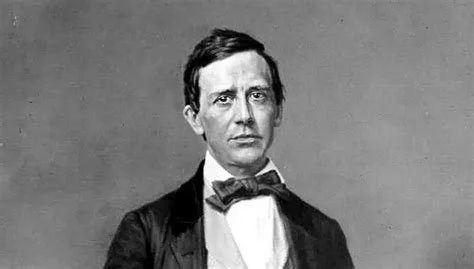
A turning point in the success of Christy's Minstrels came when Christy formed a business relationship with a young composer, Stephen Foster, now considered one of America's most important early songwriters. Recognizing Foster's talent, Christy negotiated an agreement that gave Christy's Minstrels exclusive "first performance" rights to Foster's newest songs. This arrangement ensured that Foster's music reached large audiences quickly while also helping Christy's shows remain fresh and musically appealing. Foster, initially reluctant to associate his name with minstrelsy, allowed Christy to publish the song under Christy's name. This deal helped Christy market the song more effectively while providing Foster with much-needed exposure, though at the cost of authorship credit.
Stephen Foster (1826–1864) is widely recognized as one of the most significant American songwriters of the nineteenth century and is often referred to as the "father of American popular song." His compositions laid the foundations for the emerging American music industry and also helped shape a distinctly national musical identity that influenced generations of performers and audiences. Born into a middle-class family near Pittsburgh, Pennsylvania, Foster developed an early fascination with music. He learned to play several instruments—including guitar, flute, and piano—guided by his sisters and through formal lessons with Henry Kleber, a local music dealer and teacher who introduced him to both European classical music and contemporary popular songs.
Foster absorbed a wide array of musical styles circulating in mid-nineteenth-century America, including English sentimental songs, Italian light opera, and Irish and German folk traditions. This eclectic exposure informed his distinctive compositional style, which combined European melodic sensibilities with vernacular American themes, allowing his work to resonate across cultural and regional lines.
Foster published his first composition, "Open Thy Lattice, Love", in 1844, at age 18. However, as was the case with many young men of his social class, he was expected to pursue a practical career. From 1846 to 1849, he worked as a bookkeeper for his brother Dunning's steamship company in Cincinnati, Ohio, but continued to write music in his spare time. During this period, he composed minstrel songs for local performers and sentimental ballads, often gifting them to young women. One of his most significant early successes was "Oh! Susanna" (1848), a jaunty minstrel tune that quickly became a national hit and the unofficial anthem of the California Gold Rush "Forty-Niners." The song's popularity boosted Foster's public profile and encouraged him to pursue songwriting as a full-time career.
Foster had returned to Pittsburgh and committed himself to professional composition. Over the next decade, he produced dozens of songs that became central to nineteenth-century American life, both in concert halls and domestic parlors. Notable works include Jeanie with the Light Brown Hair (1854), a courtship song dedicated to his estranged wife; Beautiful Dreamer (published posthumously in 1864), a ballad of romantic longing; popular minstrel songs such as De Camptown Races (1850) and Old Folks at Home (1851, also known as Suwannee River); and My Old Kentucky Home(1853), later adopted as Kentucky’s state song. Many of these compositions have become so ingrained in American culture that they are often treated as folk songs, despite their origins as carefully crafted professional works.
Foster’s artistic achievements, however, were not matched by financial success. Weak copyright laws, the absence of performance royalties, and a rapidly changing music market meant that he earned little from his widespread popularity, living much of his life in debt. Stephen Foster died in 1864 at the age of 37 from complications after a fall that caused a severe head injury. He left only 38 cents in his pocket. Despite his tragic end, Foster's contributions to American music are long-lasting. His songs, though formed by the racist aesthetics and prejudices of his time, including the problematic genre of minstrelsy, remain key artifacts in understanding how popular music both reflected and shaped American culture of the 19th century.
Foster and Christy’s Fallout

The professional relationship between Stephen Foster and E.P. Christy illustrates the complex and often competing interests that shaped the early American music industry. Foster, widely regarded as the first major composer of American popular song, wrote some of his most famous works for Christy's Minstrels, including "De Camptown Races," "O, Susanna!" and "Old Folks at Home" (commonly known as "Swanee River"). At the time, authorship and copyright protections were still in their infancy, and the music publishing world often prioritized marketability over proper attribution, making it a rather cutthroat business. Foster, initially uneasy about being associated with the racial caricatures of blackface minstrelsy, allowed Christy to take credit for his songs. As a result, early sheet music editions listed Christy rather than Foster as the composer. However, Foster eventually reconsidered this decision. After "Old Folks at Home" became widely popular, he regretted relinquishing credit and wrote to Christy expressing his desire to reclaim authorship:
"I feel that by my efforts, I have done a great deal to build up a taste for the Ethiopian songs among refined people. I have concluded to reinstate my name on my songs and to pursue the Ethiopian business without fear or shame, and lend all my energies to making the business live.”
Christy, however, refused to revise the existing sheet music or public credit. His name continued to appear as composer on official editions until 1879, when the copyright expired, and Foster's authorship was retroactively recognized.
Despite his entanglement with minstrel performance, Foster went on to compose around 200 songs in a variety of genres, including parlor songs, sentimental ballads, and melodic hymns. His songs laid the foundation for what would become the American popular song tradition, blending European melodic forms with African American rhythmic influence and vernacular storytelling.
Foster is remembered both as a pioneer of American songwriting and as a composer whose success was deeply connected to a genre that perpetuated racial stereotypes. This dual legacy reflects broader tensions in American musical history, where creative innovation and commercial appeal have often been intertwined with the marginalization of the cultures that inspired them.
Chapter 2: Conclusion
In the 19th century, America began laying the foundation for a commercial music industry that represented the complex and often conflicting cultural forces of the nation. During this period, music was shaped by a wide range of traditions, including religious, folk, and popular forms. In colonial and early American communities, sacred music played a central role in everyday life. Puritans, Moravians, and African American congregations developed musical practices grounded in worship and community. Hymn singing, lining out, and spirituals all reflected the interconnection of European sacred traditions with African musical values, sustaining cultural memory and religious expression.
Meanwhile, broadside ballads, single-sheet songs that circulated stories, political commentary, and news, offered an early form of mass musical communication. Performed in homes, taverns, and public gatherings, these songs helped democratize access to music and ideas, laying the groundwork for later popular music formats.
Alongside these traditions, blackface minstrelsy emerged as the first truly national form of live popular entertainment. Combining music, comedy, dance, and theatrical spectacle, minstrel shows captured white audiences across the United States. Though predominantly performed by white actors in grotesque caricatures of African Americans, these shows appropriated and distorted Black musical and cultural practices. In doing so, they created a highly profitable entertainment form that set the springboard for future developments in vaudeville, musical theater, and popular music.
Despite its racist foundations, minstrelsy propelled the careers of performers and composers such as Dan Emmett and Stephen Foster. Their songs became some of the most widely circulated pieces of sheet music, bridging public performance and private domestic life. Minstrel songs were sung in parlors, taught in schools, and embedded in the everyday musical landscape of 19th-century America. Minstrel songs were among the most popular sheet music titles, further blurring the lines between public performance and private musical life.
While blackface minstrelsy was undeniably rooted in racist misrepresentation, many of its songs have become enduring parts of the American musical repertoire. In addition to Foster’s and Dan Emmett’s contributions (“Dixie,” “Old Dan Tucker”), several other well-known tunes first gained popularity through minstrel shows such as “Turkey in the Straw,” “Jimmy Crack Corn,” “Arkansas Traveler,” and “Ching-a-Ring-Chaw” These songs are still taught, sung, or referenced in schools, films, and public events—often without recognition of their minstrel origins.
This period shows how popular music has always been a site of both creativity and conflict, and a reflection of cultural values. The tensions and innovations of the 19th century—whether around race and representation, gender and access, creative ownership, or commercial pressures— had their start at the birth of our country’s popular culture and continue to echo through the American musical landscape.
Chapter 2: Further Reading
Austin, William W. "Susanna," "Jeanie," and "The Old Folks at Home": The Songs of Stephen C. Foster from His Time to Ours. New York: Macmillan, 1975.
Skeaping, Lucie. Broadside Ballads: Songs from the Streets, Taverns, Theatres and Countryside of 17th Century England. London: Faber Music Ltd., 2005.
Chase, Gilbert. America's Music: From the Pilgrims to the Present. New York: McGraw-Hill, 1955.
Clague, Mark. O Say Can You Hear? A Cultural Biography of "The Star-Spangled Banner". New York: W. W. Norton, 2022.
Cockrell, Dale. Demons of Disorder: Early Blackface Minstrels and Their World. New York: Cambridge University Press, 1997.
Cobb, Buell E. Jr. The Sacred Harp: A Tradition and Its Music. Athens: University of Georgia Press, 2001.
Conway, CeCe, and Scott Odell. CD liner notes for Black Banjo Songsters of North Carolina and Virginia. Smithsonian Folkways LC 96z8, 1998.
Emerson, Ken. Doo-dah! Stephen Foster and the Rise of American Popular Culture. New York: Simon & Schuster, 1997.
Levine, Lawrence. Black Culture and Black Consciousness: Afro-American Folk Thought from Slavery to Freedom. New York: Oxford University Press, 2007.
Lhamon, W. T., Jr. Raising Cain: Blackface Performance from Jim Crow to Hip Hop. Cambridge, MA: Harvard University Press, 1998.
Lott, Eric. Love and Theft: Blackface Minstrelsy and the American Working Class. New York: Oxford University Press, 1993.
Lowens, Irving, and Allen P. Britton. “The Easy Instructor (1798–1831): A History and Bibliography of the First Shape Note Tune Book.” Journal of Research in Music Education 1, no. 1 (Spring 1953): 31–55. https://doi.org/10.2307/3344565.
MacCulloch, Diarmaid, introduction. The Bay Psalm Book. Facsimile ed. Imprinted 1640. Oxford: Bodleian Library, 2014.
Morgan, Thomas L., and William Barlow. From Cakewalks to Concert Halls: An Illustrated History of African American Popular Music from 1895 to 1930. Washington, DC: Elliott and Clark Publishing, 1992.
Simpson, Claude M. The British Broadside Ballad and Its Music. New Brunswick, NJ: Rutgers University Press, 1966.
Toll, Robert C. Blacking Up: The Minstrel Show in Nineteenth-Century America. New York: Oxford University Press, 1974.
U.S. Bureau of the Census. Historical Statistics of the United States: Colonial Times to 1970. Washington, DC: U.S. Government Printing Office, 1976.