Chapter 28: Disco
Chapter 28: Introduction
Disco, one of the defining musical and cultural movements of the 1970s, emerged from nightclubs where recorded music, rather than live bands, dominated the dance floor. The term itself comes from discotheque, a European label from the 1960s for clubs devoted to dancing to recorded tracks. By the mid-1970s, these venues spread widely in the United States. They were especially common in urban Black and Latino neighborhoods with established dance cultures and in gay communities in cities such as New York and San Francisco. Disco’s rise, and its eventual penetration into the Top 40 pop charts, was propelled by multiple forces: the influence of Black popular music, including Motown, soul, and funk; the popularity of social dancing among middle-class Americans; technological innovations such as synthesizers, drum machines, and synchronized turntables; Hollywood films that promoted musical trends; and the economic recession of the late 1970s, which led club owners to hire DJs instead of live bands.
The disco era, roughly 1975 to 1980, represented a clear alternative to rock music. Unlike most rock, which emphasized albums as cohesive artistic statements, disco centered on social dancing. It challenged the traditional notion of the band as the primary creative force: many disco “bands” were rotating collections of session musicians, while producers, DJs, and a small number of glamorous vocalists—often enjoying short-lived careers—dominated the scene. Social dances ranged from couple-based routines such as the hustle to choreographed line dances that recalled nineteenth-century ballroom traditions like the quadrille.
By contrast, rock music in the early 1970s had largely abandoned its dance origins. Album-oriented rock favored attentive listening over communal movement, leaving little room for collective dancing of the kind popularized earlier by Chubby Checker’s “The Twist.” Disco filled that void, producing music designed for shared, physically engaged experiences in which rhythm and motion ruled the room.
Discotheques became the primary spaces where this cultural shift took place. Early American clubs were modeled on European, particularly French, venues, where exclusivity and glamour were prized and admission often depended on style and adherence to strict dress codes. Over time, clubs evolved to serve more diverse communities, becoming sanctuaries for ethnic minorities, women, youth, and especially the gay community. These venues functioned as more than entertainment spaces—they acted as cultural laboratories where music, fashion, and community intersected, giving disco its distinctive sound, style, and ethos.
The link between disco and gay culture cannot be separated from the political and social climate of mid-twentieth-century America. During the 1950s and early 1960s, the Lavender Scare reflected a widespread moral panic about homosexuals in government service. Thousands of federal employees were investigated, interrogated, and dismissed solely because of their sexuality. Homosexuality was framed as a national security risk under the assumption that gay men and lesbians could be blackmailed, particularly by foreign spies or Communist agents, into revealing sensitive information. The Lavender Scare campaigns ran in tandem with the Red Scare and McCarthyism, institutionalizing homophobia through government policy and leaving lasting scars on both individuals and communities. Beyond government work, homosexuality was criminalized in many states, and sodomy laws, often coupled with police surveillance and entrapment, made LGBTQ+ lives precarious and secretive.
Early resistance materialized through organizations such as the Mattachine Society, founded in 1950 by Harry Hay and a small group of Los Angeles activists. As one of the first national gay rights organizations in the United States, the group focused on public education and legal reform while also supporting gay men facing harassment and discrimination. Though initially cautious and often secretive, the society established a foundation for organized advocacy, connecting local chapters in major cities and creating a feeling of community through newsletters. Other early groups, including the Daughters of Bilitis, addressed the needs of lesbians and bisexual women, offering spaces for socializing, political discussion, and mutual support. These organizations operated in a context where marriage, employment protections, and public visibility were largely denied to LGBTQ+ people, and where existing legal codes often rendered everyday life legally perilous.
By the late 1960s, urban gay populations were becoming increasingly visible, and pockets of tolerance began to emerge. In 1966, New York City implemented modest reforms that reduced police harassment, allowing some members of the gay community to live openly. Nightclubs such as Bosco’s, the Candlelight, the Piccadilly, and the Tabletop became crucial gathering points, providing spaces where LGBTQ+ patrons could socialize, dance, and forge community. Despite these advances, harassment persisted in the form of raids, arrests, and occasional violence, due to the perpetual legal and social marginalization of LGBTQ+ people.
Tensions reached a breaking point in 1969 at the Stonewall Inn, a prominent gay bar on Christopher Street. Unlike most bars at the time, which often catered to more conventional or affluent patrons, Stonewall was owned by the Mafia and welcomed some of the most marginalized members of the gay community: drag queens, members of the transgender community, effeminate young men, hustlers, and homeless youth. Police raids on gay bars were common in the 1960s, but the Stonewall raid differed in several critical ways. Officers neither alerted the Mafia nor coordinated with the NYPD’s Sixth Precinct, and the raid occurred late on a Friday night, when the bar was expected to be at its busiest. The combination of these factors—high crowd density, lack of prior warning, and the presence of particularly vulnerable patrons—contributed to the rapid escalation of events.
When police attempted to arrest patrons, they were met with unexpected resistance that spread into the streets of New York. The ensuing confrontation quickly spiraled into multi-day riots that galvanized the modern gay liberation movement. Stonewall became a symbol of both the oppression faced by LGBTQ+ communities and their resilience, demonstrating the might of collective resistance in the face of systemic discrimination.
In the aftermath, activists formed more radical organizations, including the Gay Liberation Front (GLF), which sought visibility, legal equality, and social change. Departing from the cautious strategies of earlier advocacy groups, the GLF embraced direct action, public protest, and cultural expression as central tools for empowerment. The events at Stonewall also laid the groundwork for broader legal advocacy, influencing later efforts to decriminalize same-sex sexual activity, secure employment protections, and eventually achieve marriage equality, though these victories would take decades to realize.
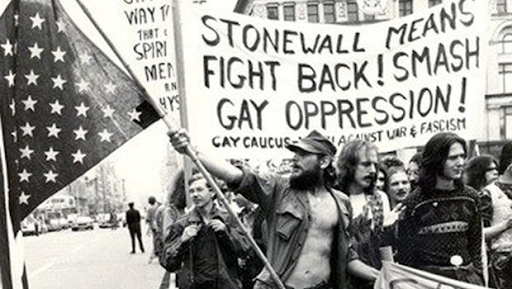
Discotheques and dance culture became integral to the LGBTQ+ rights movement. Clubs offered entertainment but also spaces for political and social affirmation. Dancing in large groups became a visible statement of unity and defiance against societal marginalization. The Electric Circus in New York demonstrated this ethos, advertising that it welcomed the general public but “especially encouraged gay people to come, and we really hope that everyone will dance together and dig one another.” Similar spaces developed in metropolises like San Francisco and Los Angeles, creating safe havens where LGBTQ+ individuals could gather, celebrate, and experiment with music, fashion, and identity.
The DJ
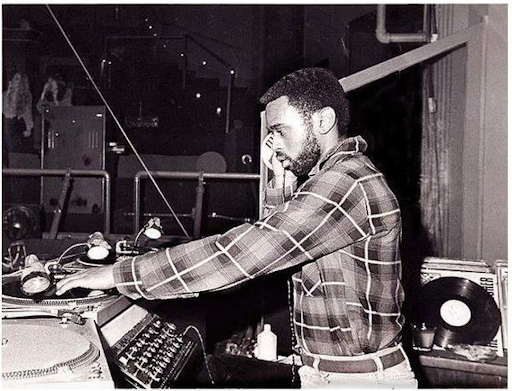
At the center of the disco movement stood the disc jockey, or DJ, whose role grew in response to both economic and technological conditions of the 1970s. Hiring live bands for extended hours was often impractical for nightclub owners, leading DJs to assume responsibility for sustaining the dance floor over the course of an entire evening. Rather than simply playing individual records, DJs curated continuous musical environments, selecting tracks that maintained momentum and blending one recording into the next. Using two turntables and a mixer, they matched tempos and faded seamlessly between songs, creating uninterrupted grooves that could extend for ten to fifteen minutes at a time.
These practices built upon earlier developments in recorded sound. The twelve-inch shellac disc, introduced in 1902 and played at 78 revolutions per minute, could hold up to four minutes of music. A major shift occurred in 1948 with Columbia Records’ introduction of the twelve-inch long-playing record, or LP. Spinning at 33⅓ r.p.m., the LP accommodated more than twenty minutes of music per side, vastly exceeding the limitations of earlier formats. Disco-era DJs made use of this larger physical space by rediscovering the single and stretching it to fill the twelve-inch vinyl format.
Producer Tom Moulton formalized this practice in 1975 with the twelve-inch single, which featured extended mixes designed specifically for dance clubs. These longer versions minimized interruptions on the dance floor and supported the DJ’s goal of musical continuity. The turntable techniques developed in disco—beat matching, seamless transitions, and extended mixes—established a new relationship between recorded music and live performance and began to treat recordings themselves as instruments for creative manipulation.
Unlike rock musicians, DJs did not perform with traditional instruments or present albums in their entirety. Instead, they created continuous musical performances in real time by layering recordings, manipulating transitions, and reading the crowd's energy to maintain momentum. Positioned on raised platforms and often accompanied by pulsating strobe lights and colorful projections, DJs became the visible stars of the club, turning nightclubs into immersive audiovisual environments. Beat matching, seamless transitions, and extended mixes created a continuous, communal dance experience. The same techniques were later adopted in hip-hop, house, and techno, where DJs and producers would similarly dominate the creation and presentation of music.
The Philadelphia Sound
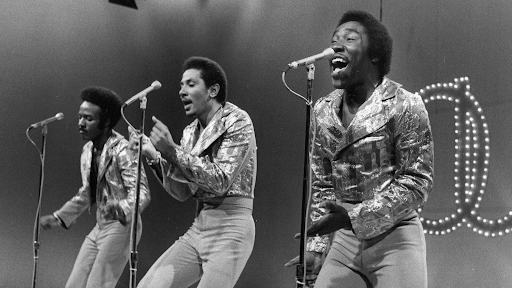
The renewed prominence of producers in recorded music coincided with the rise of the Philadelphia Sound in the early 1970s, a recorded style built on soul and R&B practices while drawing on early disco rhythms. Producers Kenneth Gamble and Leon Huff, who began as independent songwriters and producers in the late 1960s, were the architects of the Philadelphia Sound. They released early tracks themselves, such as the Intruders’ “(We’ll Be) United” (1966), and produced records for major labels, including Archie Bell & the Drells’ “I Can’t Stop Dancin’” (1968) and Wilson Pickett’s “Don’t Let the Green Grass Fool You” (1971).
In 1971, CBS funded Gamble and Huff to establish Philadelphia International Records, giving them control over production and distribution while reaching mainstream audiences through the CBS network. The label quickly became synonymous with the Philadelphia Sound, blending lyric-driven vocals, driving rhythms, and elegant string arrangements. Artists like Harold Melvin & the Blue Notes, featuring Teddy Pendergrass, achieved major R&B success, while the O’Jays regularly crossed over to pop charts with hits like “Back Stabbers” (1972) and “Love Train”(1973), the latter reaching number one on both pop and soul charts. The label also featured one-time or short-lived acts, including Billy Paul, the Three Degrees, McFadden & Whitehead, and Lou Rawls, many of whom influenced later disco and soul recording practices.
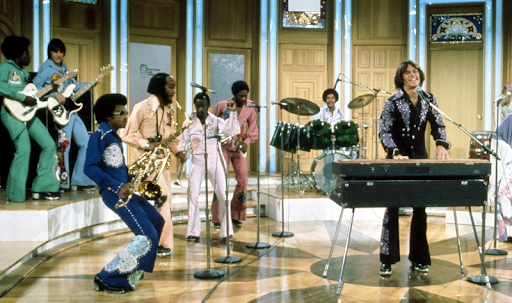
A central aspect of the Philadelphia Sound was the use of studio musicians, particularly the house band MFSB (Mother Father Sister Brother), whose performances provided both the rhythmic foundation and musical polish for numerous hits. MFSB’s work also extended into popular culture, including performing the theme song for Soul Train, “TSOP (The Sound of Philadelphia)” (1974), which became an anthem of Black music and disco culture.
One of the era’s most influential tracks, “Love Is the Message” by MFSB (1973) showcases the Philadelphia Sound at its height. It features strings and horns layered over a steady piano figure and rhythm section, with studio drummer Earl Young introducing a pattern that became known as the disco beat. Young subdivided each measure on the hi-hat, placing audible hits both on and between the beats, creating a continuous, driving pulse. Additionally, Earl Young popularized the driving “four on the floor” beat in which the bass drum strikes uniformly on every beat of the measure. Young's four-on-the-floor bass-drum pattern was widely copied and became essential to disco’s danceability, providing material that DJs could extend and mix into dance tracks for clubs.
The Rise of Disco
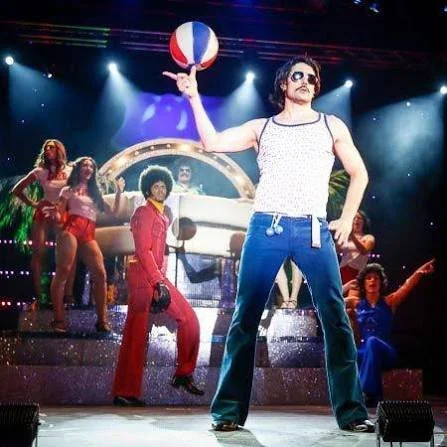
While disco music could incorporate many different styles, songs associated with the genre were unified by one essential feature: a relentless, driving four-on-the-floor drumbeat popularized by Earl Young. While instrumentation, vocalists, and lyrical themes could vary, the four-on-the-floor beat provided a consistent pulse for dancing.
Tempo played a key role in disco’s danceability. Most tracks fell between 100 and 130 beats per minute (BPM), a range carefully chosen to facilitate continuous dancing and allow DJs to transition smoothly from one song to the next. Some records even listed their BPM, helping DJs curate compatible songs to transition between. Iconic examples include the Bee Gees’ “Stayin’ Alive” (103 BPM), whose rhythm has even been used in medical training for cardiac compressions.
Structurally, disco songs were intentionally repetitive and straightforward, often relying on verse-chorus forms. Lyrics rarely tackled complex or controversial topics; the primary goal was to sustain the dancers’ momentum. Repetition in rhythm and musical motifs allowed participants to anticipate changes and move in sync without interruption, reinforcing the genre’s communal, kinetic nature.
Disco’s popularity can also be regarded as a response to changes in rock music. By the mid-1970s, rock had shifted toward album-oriented listening, emphasizing attentive, stationary audiences rather than collective movement. In contrast, disco placed physical engagement and social interaction at the forefront, encouraging music to be experienced collectively and physically. Early disco venues thrived in metropolitan Black and Latino communities and in the increasingly visible gay scene in cities like New York. Clubs such as 12th Street, The 10th Floor, the Loft, and Paradise Garage became hubs for night-long dance sessions, supporting an underground culture and cohesive community.
Disco’s initial popularity was rooted in club play rather than radio airplay. Singles like Manu Dibango’s “Soul Makossa”(1973) and Carl Douglas’ “Kung Fu Fighting” (1974) earned popularity on dance floors before attaining wider commercial success. Record labels often distributed advance copies to DJs to test audience response, and tracks that appealed in clubs were then released commercially. By the mid-1970s, stations like WPIX in New York began broadcasting disco shows, followed by WBLS, which incorporated disco alongside other genres. When fellow New York station WKTU switched from rock to an all-disco format, its market share surged from 0.9 to 11.3, demonstrating the genre’s rapid rise to prominence. By the late 1970s, disco had eclipsed rock, funk, and other pop styles in mainstream U.S. music.
Several early hits helped codify disco’s sound. George McCrae’s “Rock Your Baby” (1974) and Van McCoy’s “The Hustle” (1975) paired infectious disco beats with catchy hooks. Barry White’s Love Unlimited Orchestra brought lush orchestration to tracks like “Love’s Theme” (1973). Florida-based KC and the Sunshine Band, formed by Harry Wayne “KC” Casey and Richard Finch after producing McCrae’s hit, contributed multiple dancefloor staples, including “(Shake, Shake, Shake) Shake Your Booty” (1976), “Get Down Tonight” (1975), and “That’s the Way I Like It” (1975). These artists took elements of soul, Motown, and funk, incorporating strong basslines, syncopated horn lines, and large ensembles, which added to the vibrant energy of the disco genre.
By 1975, disco had reached national prominence, propelled by legendary venues like Studio 54 in New York City. Discotheques sprang up across North America, from luxurious new constructions to repurposed ballrooms and barns. At its height, estimates suggest 10,000 discos operated across the continent, with 200 to 300 in New York City alone, solidifying disco as both a dominant musical style and a cultural phenomenon.
Saturday Night Fever: Disco in the Mainstream
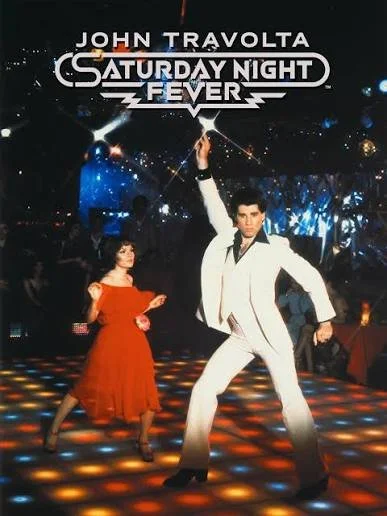
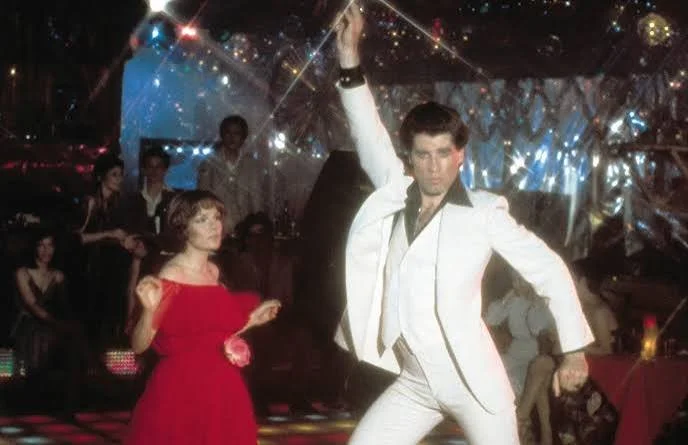
By the late 1970s, disco had transitioned from being an underground phenomenon to a dominant commercial force in mainstream popular culture, largely due to the success of the blockbuster movie “Saturday Night Fever” (1977). Starring John Travolta, the film tells the story of a working-class youth from Brooklyn who rises to become a championship disco dancer. It was filmed on location at a Brooklyn discotheque and helped popularize many of the dance moves associated with the genre. The film’s soundtrack became a cultural phenomenon, selling over 25 million copies and setting a record as the biggest-selling soundtrack at that time. It displayed a diverse range of artists, including KC and the Sunshine Band, MFSB, and Yvonne Elliman. Notably, the soundtrack included disco renditions of classical music, such as “A Fifth of Beethoven,” which was an adaptation of Beethoven’s Fifth Symphony by Walter Murphy.
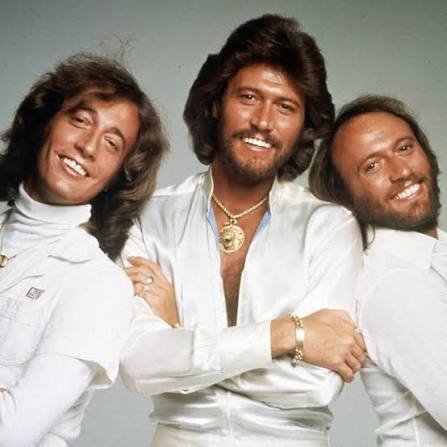
The Bee Gees were the biggest beneficiaries of disco’s surge into the mainstream. Brothers Barry, Maurice, and Robin Gibb had performed together since childhood in Manchester, England, before moving to Australia, where they first gained fame as teen pop sensations. Their U.S. breakthrough came in 1967 with “New York Mining Disaster 1941,” followed by a string of hits through 1969. Though the group nearly dissolved in the early 1970s, they regrouped with “Lonely Days” (No. 3) and their first chart-topping single, “How Do You Mend a Broken Heart?” (1971).
By 1973 and 1974, however, the Bee Gees were struggling. Their albums underperformed, and they failed to produce hit singles. The rise of disco offered them a chance to reinvent themselves. While they had enjoyed modest success with sentimental pop ballads, they shifted toward a new sound that fused Beatles-inspired vocal harmonies with the pulsing, repetitive rhythms supplied by Miami studio musicians. The Bee Gees’s reinvention broadened their reach, appealing to both disco enthusiasts and mainstream pop audiences.
Their 1975 album Main Course, which featured the No. 1 hit “Jive Talkin,” marked the start of the Bee Gees' shift toward disco. Two years later, Saturday Night Fever turned the Bee Gees into global superstars. They wrote most of the soundtrack, performed six of its tracks, and scored three consecutive No. 1 singles—“Stayin’ Alive,” “Night Fever,” and “How Deep Is Your Love”—between 1977 and 1978. The film itself linked disco music and dance to a classic American narrative of upward mobility, allowing working- and middle-class Americans of diverse backgrounds to access a glamorous cultural world reminiscent of the grand ballrooms of earlier decades.
The Bee Gees sustained their momentum with three more No. 1 singles and two chart-topping albums between 1978 and 1979, cementing their dominance at the peak of the disco era. Although their popularity faded with disco’s decline in the early 1980s, the group experienced a commercial renaissance in the 1990s, particularly in the United Kingdom and Germany, as dance music returned to fashion.
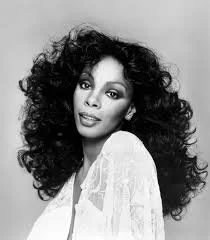
Another leading figure of disco was Donna Summer, often promoted under the title “Queen of Disco.” Born LaDonna Gaines, Summer fused R&B and gospel influences with disco’s infectious rhythms, creating a powerful and soulful vocal style. Her 1975 hit “Love to Love You Baby,” co-written with Pete Bellotte and produced by Giorgio Moroder, exemplified disco’s sexualized, extended dance format. Originally four minutes long, the song was lengthened to a nearly 17-minute version for club play on 12-inch vinyl, allowing DJs to keep dancers moving continuously. Despite being banned by the BBC due to its breathy, moaning, eroticized vocals, the track became a club favorite, cementing Summer’s status as a central figure in disco culture.
Summer’s versatility extended beyond sensual dance tracks. “Last Dance” (1978) combined balladlike sections with a steady disco beat, while “MacArthur Park” and “Hot Stuff” displayed her ability to merge pop, soul, and dance sensibilities. Between 1976 and 1980, she released ten Top 10 hits, including multiple number-one singles. Notably, her 1977 release “I Feel Love”, produced by Moroder, replaced traditional orchestration with synthesized instrumentation, pioneering techniques that would influence electronic dance music and genres such as techno.
The disco craze also prompted other artists to explore the genre. Rock musicians such as Rod Stewart (“Do You Think I’m Sexy?”), The Rolling Stones (“Miss You”) and KISS (“I Was Made for Loving You”) released disco-flavored tracks. Pop and R&B artists, including Diana Ross with “Love Hangover” (1976) and “Upside Down” (1980), and James Brown with “It’s Too Funky in Here” (1979), adapted their sounds to appeal to disco audiences. Additionally, disco-inspired novelty records, such as Rick Dees’ “Disco Duck” (1976) and the aforementioned “A Fifth of Beethoven” by Walter Murphy (1976), further demonstrated the genre’s mainstream reach. Even Barbra Streisand, Bruce Johnston of the Beach Boys, and Michael Jackson embraced disco in albums like Off the Wall (1979) and Streisand’s Guilty (1980), while disco techniques influenced reinterpretations of older hits, such as Bruce Johnston’s disco version of “Pipeline.” By the end of the 1970s, disco had become a cultural powerhouse, influencing radio, dance clubs, and popular music worldwide with its combination of relentless rhythm, visual spectacle, and aspirational glamour.
Village People
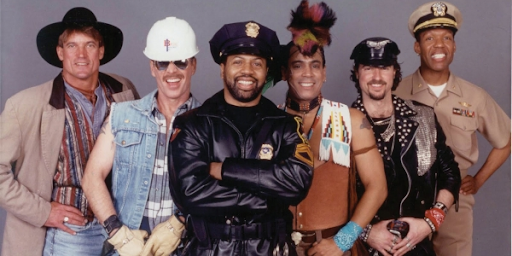
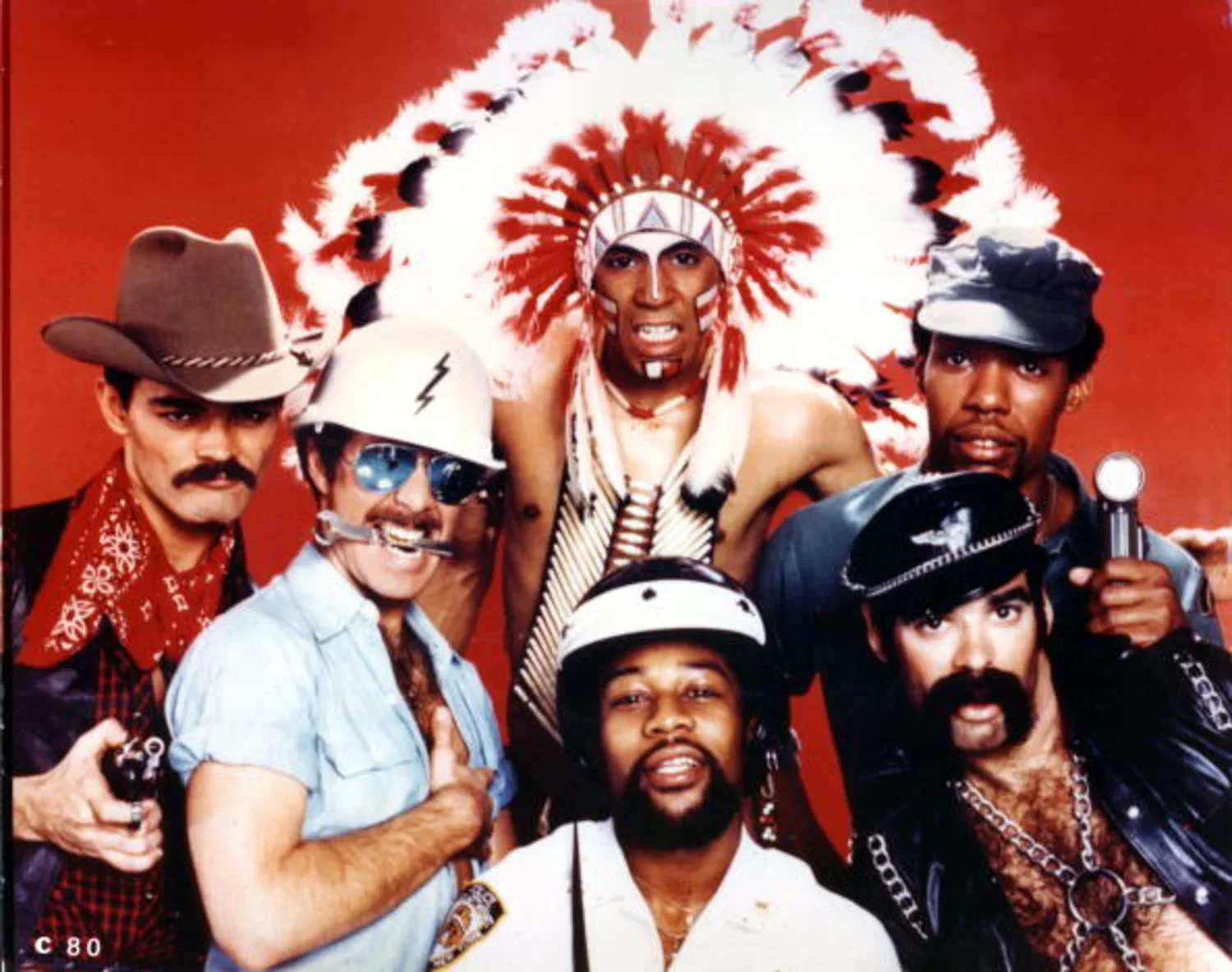
Another prominent disco group of the late 1970s was Village People, founded in 1977 by French producer Jacques Morali and his business partner Henri Belolo. Seeking performers for his disco compositions, Morali placed an ad that read: “Macho types wanted. Must dance and have a mustache.” The resulting lineup—Victor Willis, Felipe Rose, Randy Jones, Glenn Hughes, David Hodo, and Alex Briley—was racially diverse and costumed to represent exaggerated stereotypes drawn from the Greenwich Village gay nightlife scene. These included a construction worker, a cowboy, a Native American, a policeman, a soldier, and a leatherman. These costumes drew on camp performance and fantasy personas of the Village club scene, and their name directly referenced Greenwich Village itself.
The Village People’s songs and visual style were deliberately over-the-top parodies of underground gay life, often filled with inside references to gay culture. Their breakout hit “YMCA” (1978) is widely believed to celebrate the Young Men’s Christian Association as a space where gay men could meet and socialize. The single’s enormous success, however, extended far beyond its subcultural roots: it became the YMCA’s unofficial anthem and has become a staple at a myriad of public events. Building upon this momentum from the success of "YMCA", the group turned to another national institution with “In the Navy” (1979). The U.S. Navy recognized the song’s potential and approached manager Henri Belolo about using it in a television and radio recruitment campaign. Belolo granted the rights free of charge on the condition that the Navy assist in producing the music video.
Many mainstream listeners overlooked the subtexts of the Village People’s work, drawn instead to their flamboyant costumes, infectious melodies, and playful choreography. The group's crossover appeal made them one of the best-selling pop acts in the United States by the late 1970s, extending disco’s reach to an even broader audience.
Behind the scenes, their backing band Gypsy Lane provided the instrumental foundation, while most songs were written by Phil Hurtt and Peter Whitehead. Early hits included “San Francisco (You Got Me),” which gained attention through an appearance on American Bandstand, followed by “Macho Man” (1978), “YMCA” (1978), and “In the Navy” (1979). Their cultural reach even extended to film, with the disco-themed Can’t Stop the Music (1980).
Although the group released new material until 1985, they have continued to tour with changing lineups since 1987. Today, the Village People continue to circulate as recognizable examples of disco’s camp aesthetics and engagement with gay culture.
Disco Demolition
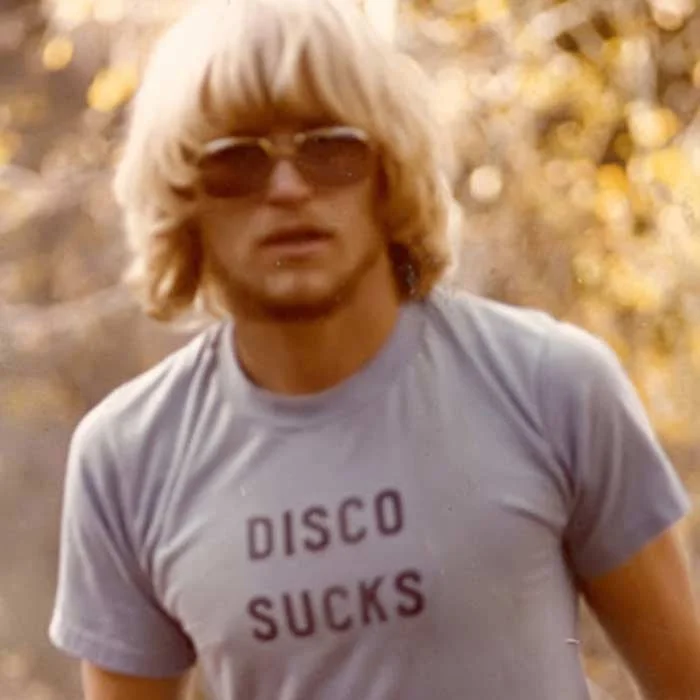
Despite its mainstream popularity, disco was far from universally embraced. Saturday Night Fever and the Bee Gees presented disco through a masculine, heterosexual lens, but its roots in gay and lesbian club culture made it an easy target for critics. Some listeners rejected disco outright because of these associations with the LGBT community. Others, particularly devoted rock fans, scorned it because it prioritized dancing and collective fun over the solitary act of listening intently. Still others dismissed it as a shallow fad, pointing to its rapid commercialization and the speed with which artists seemed to adopt the disco style. The backlash was visible even in rock-oriented media: Rolling Stone sold T-shirts emblazoned with the slogan “Disco Sucks.”
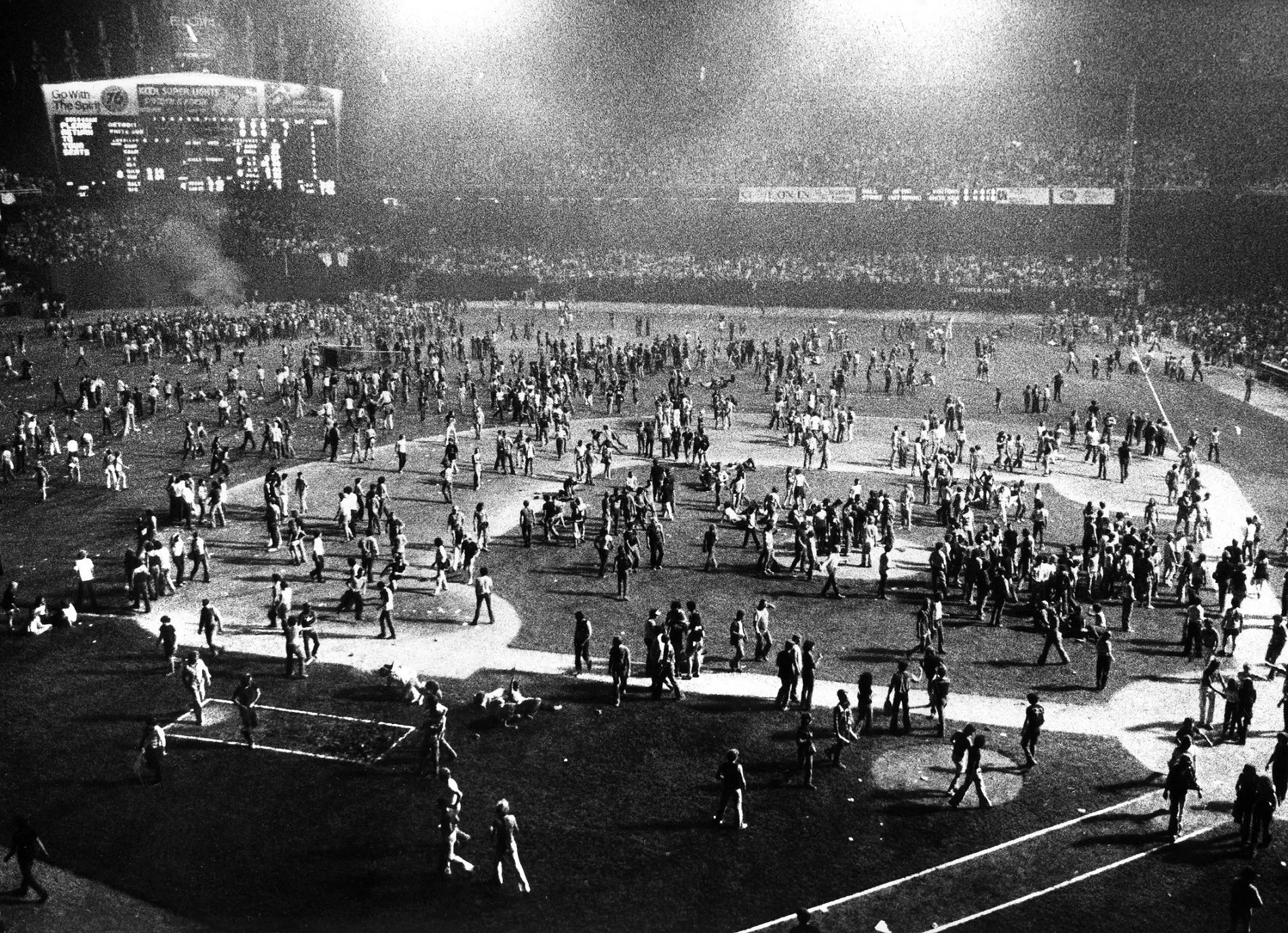
The hostility culminated on July 12, 1979, during a White Sox doubleheader at Comiskey Park in Chicago. Facing dwindling attendance, the team staged a publicity stunt with Chicago shock jock Steve Dahl, a former rock DJ who had made a career of lampooning disco. The promotion, called Disco Demolition Night, allowed fans to enter for just 98 cents if they brought a disco record to be destroyed—a nod to Dahl’s radio station, WLUP 97.9 FM. Between games, Dahl would blow up the collected vinyl on the field.
Team officials anticipated around 20,000 attendees, already more than their usual draw. Instead, more than 50,000 fans filled the stadium, while thousands more forced their way in after the gates were closed. Many never turned in their records, opting instead to fling them from the stands like frisbees. When Dahl finally detonated the crate, the blast ripped apart the albums and left a crater in the outfield grass.
Chaos erupted almost immediately. With most security personnel still stationed at the entrances, little stood between the crowd and the playing field. Within minutes, an estimated 5,000 to 7,000 fans poured onto the diamond. They tore up bases, lit small fires, and climbed foul poles, while pitcher Ken Kravec abandoned the mound and players locked themselves in the clubhouse. Riot police were eventually summoned, but the field was so severely damaged that the White Sox were forced to forfeit the second game by order of American League president Lee MacPhail.
The next day, newspapers portrayed the event as equal parts comedy and catastrophe. Images of smoke, fire, and fans swarming the diamond circulated nationwide, turning the fiasco into a cultural flashpoint. For some, it resembled earlier moments of musical hysteria, such as the mass burnings of Beatles records in the 1960s. Yet this was no attack on a single artist. Disco Demolition Night targeted an entire genre and, more significantly, the Black, Latino, and LGBTQ+ communities that had sustained it.
In retrospect, the riot came to symbolize disco’s contested place in American society. Many participants viewed it as nothing more than raucous fun or a chance to rebel against an overexposed trend. However, the ferocity of the backlash suggested deeper unease with shifting norms around race, gender, and sexuality, as well as resentment toward a musical style that challenged rock’s cultural dominance
Why did disco provoke such hostility? Explanations abound, though many rest on shaky ground. Some have argued that rock fans were reacting against disco’s roots in gay nightclubs. It is true that the genre developed in Manhattan venues such as the Loft and the Tenth Floor, where gay men—and predominantly Black and Puerto Rican DJs—crafted an inclusive, dance-centered culture. Yet most Americans did not encounter disco in that context. They knew it instead through the heterosexual imagery of Saturday Night Fever and the Bee Gees, figures who seemed far removed from the underground gay scene. Others suggested that disco’s association with casual sex offended puritanical sensibilities, but this is difficult to square with rock’s own legacy of sexual swagger. Rock audiences had long tolerated and even celebrated androgyny, and by the late 1970s, many prominent rock musicians, like David Bowie, openly acknowledged nonheterosexual identities without drawing comparable outrage.
A stronger explanation lies in how disco threatened the cultural values that rock had built since the mid-1960s. The velvet ropes and strict dress codes of elite discotheques clashed with rock’s torn jeans and T-shirt ethos of informality. Stepping into a disco was like entering another world: pounding bass lines, flashing lights bouncing off mirrored walls, and bodies pressed together on crowded dance floors. For devotees, the club was a shrine to hedonism and escape, a place where one could lose oneself in rhythm rather than contemplate the lyrical meaning. This stood in stark contrast to the hippie aesthetic of rock, where albums like Sgt. Pepper’s Lonely Hearts Club Band had positioned rock as a serious, artist-centered, and intentional art form to be listened to with care. Disco, by contrast, focused on danceability and shifted creative authority away from musicians toward producers and DJs.
These tensions were intertwined with race and gender. Disco was rooted in Black dance traditions, emphasizing rhythm, groove, and collective movement over the individual instrumental virtuosity celebrated in rock. To predominantly white rock audiences accustomed to guitar heroics from artists like Jimi Hendrix, Eric Clapton, or Jimmy Page, disco’s repetitive beats and machine-driven production seemed simplistic. At the same time, disco’s choreographed dance styles, flashy costumes, and flamboyant presentation challenged conventional norms of masculinity, leading some to perceive it as effeminate or “unmanly.” The combination of disco’s Black cultural origins and its subversion of gender norms made it a target of both racial and gendered anxieties, which—often unacknowledged—helped fuel the intensity of the backlash, even when fans framed their objections as matters of taste or musical authenticity.
In this sense, the “Disco Sucks” movement said more about rock culture than about disco itself. It marked an early expression of an overarching belief that popular music should be judged by rock’s values of authenticity, virtuosity, and artistry, with other genres dismissed as shallow or commercial. Ironically, disco and punk—though stylistically worlds apart—shared a rejection of rock’s hippie idealism. Neither replaced rock, but both pointed to a growing split between rock and mainstream pop culture by the decade’s end.
However, the legacy of this backlash is complex. Disco Demolition Night dramatized the hostility at its peak, but in hindsight, the anti-disco movement's intensity also pointed to deeper anxieties about cultural change, identity, and ownership of the musical mainstream. And yet, within a few years, stadiums full of sports fans would gleefully sing and dance to the Village People’s “YMCA,” a song rooted in gay club culture. Although disco faced considerable criticism during the 1970s, it became a major force in American popular music, influencing musical aesthetics, fashion, dance culture, and broader ideas about social identity.
Chapter 28: Conclusion
Disco emerged from European-style discotheques and American clubs that offered a sense of belonging for gay and lesbian communities, and it quickly grew into one of the most distinctive styles of the 1970s. Unlike rock, disco placed dancing at its center. The steady pulse of the beat mattered more than lyrical meaning, and producers, studio musicians, and the new artistry of the DJ played a greater role in creating the music than live bands. Innovations such as the dual turntable setup, the mixer, and the 12-inch single allowed DJs to extend songs, create uninterrupted transitions, and keep dancers on the floor for hours. These techniques extended beyond disco and laid the groundwork for hip-hop, house, and electronic dance music.
Yet disco’s meteoric rise also provoked strong backlash. Many rock fans felt that their culture of listening, authenticity, and instrumental virtuosity was under siege. The popularity of disco—and punk as well—challenged the dominance of album-oriented rock and the hippie aesthetic that had represented it since the 1960s. For these listeners, the very premise of music as a communal, producer-driven, dance-oriented form seemed to threaten the core values of rock.
By the early 1980s, the word “disco” had largely vanished from the marketplace, replaced by new labels such as “dance music,” “dance-oriented rock” (DOR), and hi-NRG. Still, its influence persisted. Disco altered the sound of popular music, changed the role of the DJ, and created a blueprint for the global dance culture that followed. Neither disco nor punk displaced rock, but both prompted the genre to evolve in response to new challenges. In the next chapter, we turn to punk and its assault on corporate rock and, perhaps most importantly, its rejection of the fading ideals of the 1960s counterculture.
Chapter 28: Further Reading
Bilyeu, Melinda, Hector Cook, and Andrew M. Hughes. The Bee Gees: Tales of the Brothers Gibb. London, 2000; 2nd ed., 2003.
Brewster, Bill, and Frank Broughton. Last Night a DJ Saved My Life: The History of the Disc Jockey. London, 1999.
Breithaupt, Don, and Jeff Breithaupt. Precious and Few: Pop Music in the Early ‘70s. New York: Billboard Books, 1996.
Dyer, Richard. “In Defense of Disco.” In On Record: Rock, Pop, and the Written Word, edited by Simon Frith and Andrew Goodwin, 410–18. New York: Pantheon, 1990.
Echols, Alice. Hot Stuff: Disco and the Remaking of American Culture. New York: W.W. Norton, 2010.
Holden, Stephen. “The Evolution of a Dance Craze.” Rolling Stone, April 19, 1979.
Jones, Randy, and Mark Bego. Macho Man: The Disco Era and Gay America’s ‘Coming Out’. Westport, CT: Praeger, 2009.
Jones, Alan, and Jussi Kantonen. Saturday Night Forever: The Story of Disco. Chicago: A Cappella Books, 1999.
Krasnow, Carolyn. “Fear and Loathing in the ’70s: Race, Sexuality, and Disco.” Stanford Humanities Review 3, no. 3 (1993): 37–45.
Lawrence, Tim. Love Saves the Day: A History of American Dance Music Culture, 1970–1979. London: Duke University Press, 2004.
Shapiro, Peter. Turn the Beat Around: The Secret History of Disco. New York: Faber and Faber, 2005.
Vincent, Rickey. Funk. New York: St. Martin’s Press, 1996.