Chapter 41: Post 9/11 Country Music
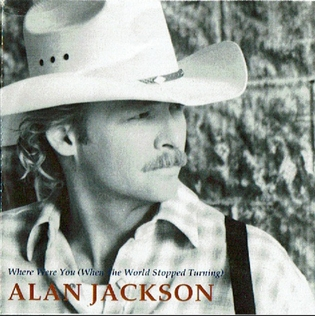
“Where Were You (When the World Stopped Turning)”
Album/Year Released
2001 (album: Drive)
Artist/Composer
Alan Jackson
Genre/Style
Country ballad
Song Form
Verse–chorus with bridge.
“Where Were You (When the World Stopped Turning),” released in 2001 on Alan Jackson’s album Drive, is a contemplative country ballad composed in response to the September 11 attacks. The song uses a verse-chorus form, repeating the same melodic pattern for each verse to emphasize the narrative and direct the listener’s attention to the story. Jackson’s vocal delivery is clear and syllabic, making the poignant questions easy to understand. The accompaniment, featuring acoustic guitar, subtle piano, and restrained strings, remains understated to retain focus on the lyrics. The 4/4 meter provides a gentle, even pulse that supports the reflective mood and adds emotional weight to the song. The song resonated with a broad audience, demonstrating how country music can articulate both personal and collective experiences in a direct, accessible way.
Jackson wrote the song to capture the complex emotions associated with the events of September 11, framing the narrative through questions that examine how individuals responded to the day’s events. Phrases such as “Did you call up your mother to tell her you loved her?” and “Were you in the yard with your wife and children?/Or workin’ on some stage in LA?” situate the listener in both intimate domestic settings and broader social contexts, generating a sense of shared experience. The central refrain, “Where were you when the world stopped turning on that September day?” functions as both a lyrical and emotional anchor, recurring after each verse to unify the song’s structure. A reflective bridge transitions the focus from external observation to Jackson’s personal and spiritual response, using religious language to convey hope, faith, and love, and culminating in a paraphrase of 1 Corinthians 13:13: “Faith, hope and love are some good things He gave us/And the greatest is love.”
Initially, Jackson was hesitant to record the song, uneasy about appearing to exploit a national tragedy. Encouraged by his wife, Denise, and producer Keith Stegall, he went to the studio that week. The recording session impressed label executives with its simplicity and sincerity, leaving them speechless upon hearing the finished track. Musically, the verses maintain a gentle, repetitive structure with minimal harmonic movement, while the chorus subtly reinforces the meditative tone.
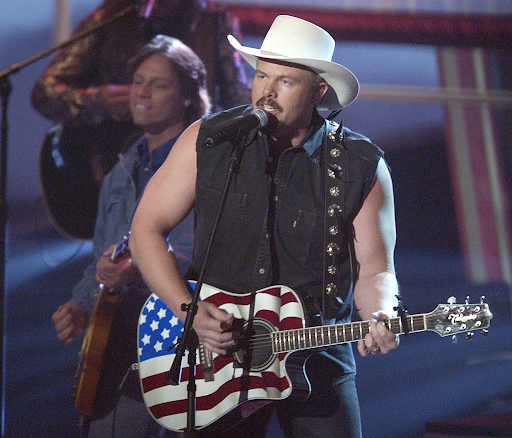
“Courtesy of the Red, White and Blue (The Angry American)”
Album/Year Released
2002 (album: Unleashed)
Artist/Composer
Toby Keith
Genre/Style
Country
Song Form
Verse–chorus with bridge
“Courtesy of the Red, White and Blue (The Angry American),” released in 2002 on Toby Keith’s album Unleashed, is a country anthem inspired by the September 11 attacks and the recent death of Keith’s father, a U.S. Army veteran. The arrangement combines electric and acoustic guitars, bass, and drums with a forceful 4/4 backbeat, giving the song a driving, march-like character. Keith’s predominantly syllabic vocal delivery occasionally intensifies for emphasis, conveying anger and defiance. The lyrics are direct and narrative, articulating themes of personal vengeance and patriotic pride, which render the song both celebratory and confrontational. The song's popularity and contentious reception placed it at the center of public debates about patriotism, anger, and the response to September 11.
The composition uses a verse–chorus–bridge structure, alternating narrative verses with a repeated, emphatic chorus and concluding with a bridge that intensifies the song’s emotional impact. Written rapidly in the aftermath of September 11, Keith initially performed the song for U.S. military audiences before releasing it commercially. The track quickly reached #1 on the Billboard Hot Country Songs chart and peaked at #25 on the Hot 100, becoming one of Keith’s most prominent hits. Its aggressive tone, militaristic imagery, and patriotic fervor resonated with many listeners, particularly service members and blue-collar audiences, while also attracting criticism for its confrontational style.
The lyrics emphasize retribution and national pride, with lines such as, “Justice will be served / And the battle will rage / This big dog will fight / When you rattle his cage / And you’ll be sorry that you messed with The U.S. of A. / ’Cause we’ll put a boot in your ass / It’s the American way,” which generated controversy due to their aggressive tone. The accompanying music video and live performances frequently incorporated military imagery and encouraged audience participation, further establishing the song as a rallying anthem. Keith has asserted that the song expresses his personal anger and devotion to the nation, noting that the emotional intensity of the events in 2001 greatly influenced its tone.
The track also sparked public debate, including a well-known feud with Natalie Maines of the Dixie Chicks over perceptions of patriotism in country music. Despite—or perhaps because of—its contentious reception, “Courtesy of the Red, White and Blue” reinforced Keith’s reputation as an unapologetic and emotionally direct songwriter. The straightforward instrumentation, assertive vocal delivery, and direct narrative lyrics present Keith's anger and patriotism with little ambiguity, helping explain both the song's popularity and its contentious reception after September 11.
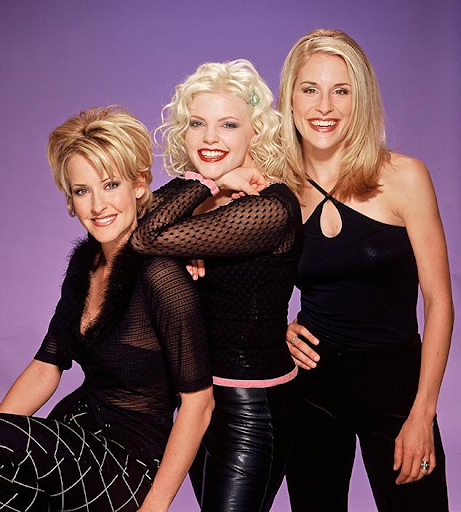
“Wide Open Spaces”
Album/Year Released
1998 (album: Wide Open Spaces)
Artist/Composer
The Dixie Chicks (The Chicks)
Susan Gibson (Composer)
Genre/Style
Contemporary country; country-pop
Song Form
Verse–chorus
Released in 1998 as the title track of the Dixie Chicks’ album, “Wide Open Spaces” exemplifies contemporary country music with pronounced country-pop influences. The arrangement features acoustic and electric guitars, fiddle, banjo, bass, and piano, all enhanced by polished studio production that achieves a clean, radio-ready sound while preserving traditional instrumentation. The 4/4 meter provides a consistent rhythmic foundation, and the vocals combine Natalie Maines’ lead with harmonies from Emily Strayer and Martie Seidel, occasionally incorporating subtle melismatic ornamentation. The bridge introduces harmonic and rhythmic contrast before returning to the central chorus, which accentuates the themes of independence and personal exploration. The track’s success solidified the band’s identity in late-1990s country music by merging traditional elements with contemporary sensibilities.
“Wide Open Spaces” uses a verse–chorus structure with an instrumental section featuring a fiddle and mandolin solo. The song begins with a fiddle riff that establishes the melodic character, followed by Maines’ entrance in the first verse, which explores the experience of leaving home to pursue greater independence. The chorus reinforces the central theme of seeking individual direction.
The second verse extends the narrative of transition, while an instrumental break features Strayer on mandolin and Seidel on fiddle, introduces greater timbral and melodic variety. The bridge introduces contrasting harmony and rhythm, culminating in a climactic final chorus. The song concludes with a reprise of the opening fiddle motif, reconnecting the ending with the opening while reinforcing the song's theme of independence.
Susan Gibson, a songwriter from Amarillo, Texas, wrote the lyrics, drawing inspiration from her own desire for autonomy during a quiet moment at her mother's kitchen table. After a demo was sent to Lloyd Maines, Natalie Maines’ father and the band’s producer, the song was included on the Dixie Chicks’ album.
The recording emphasizes acoustic instrumentation, with the fiddle introducing and concluding the track, while drums, guitar, piano, and banjo provide support throughout the verses and choruses. The interplay between Maines’ expressive vocals, Strayer and Seidel’s harmonies, and the instrumental bridge produces a dynamic sound that reinforces the lyrical theme of seeking personal space. “Wide Open Spaces” illustrates the band’s ability to integrate traditional country instrumentation with contemporary songwriting.
The song blends influences from country, bluegrass, and folk rock, resulting in a diverse soundscape that demonstrates the trio’s musical versatility. The Wide Open Spaces album received multiple awards, including the Grammy for Best Country Album, while the group also received recognition in the Best Country Performance by a Duo or Group with Vocal category, and played a significant role in establishing the Dixie Chicks as a major force in country music alongside contemporaries such as Faith Hill, Shania Twain, and Martina McBride.