Chapter 32: "I Want My MTV" Popular Music in the 1980s
Chapter 32: Introduction

The United States entered the 1980s during a period of political realignment and shifting cultural values, as Americans grappled with economic uncertainty, international conflict, and the legacy of the 1960s and 1970s. The election of Ronald Reagan in 1980 signaled a dramatic political and cultural shift. A former Hollywood actor and two-term governor of California, Reagan presented himself as a champion of optimism and “traditional values,” promising to restore American strength after the turbulence of the 1970s. His landslide victory over Jimmy Carter drew support from a coalition of economic conservatives and religious evangelicals, as well as many Democrats dissatisfied with the Carter administration, all of whom were drawn to his pledge to cut taxes, reduce government regulation, and rebuild military power. Reagan’s embrace of laissez-faire economics reduced federal oversight of corporations and financial markets, helping normalize the view that wealth accumulation signaled virtue and patriotism. His policies were accompanied by a rhetoric of renewal that sought to reassert American global dominance, even as they deepened inequality at home.
The Reagan-era fascination with money and power permeated American popular culture. Oliver Stone’s 1987 film Wall Street captured the ethos of the decade through the character of Gordon Gekko, a ruthless corporate raider whose simplified mantra "Greed is good" became shorthand for the seductions and dangers of unrestrained capitalism. On television, the prime-time soap Dallas (1978–1991) drew millions of viewers into the world of the Ewing family, Texas oil magnates whose fortunes rested on ruthless business dealings, personal betrayals, and corporate intrigue. By dramatizing excess, the show suggested that ruthless ambition and domestic strife were inextricably linked to the American pursuit of success. In real life, the figure of the “yuppie”—the young urban professional—embodied these same values, measuring success through designer clothing, high-end cars, and career ambition. Yuppies, corporate raiders, and wealthy television characters circulated widely in the media during the decade and helped frame wealth and ambition as markers of success.
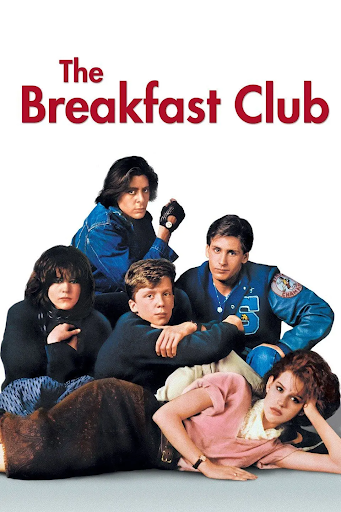
During the same period, new consumer technologies and youth media altered everyday routines. The personal computer, once confined to universities and corporate offices, became increasingly common in American households with the introduction of the Apple II, IBM PC, and Commodore 64. Video game consoles such as the Atari 2600 and later the Nintendo Entertainment System changed leisure time, bringing digital play into the family living room. At the movies, coming-of-age films articulated the voices of a younger generation as they navigated the complexities of consumer culture and social conservatism. John Hughes’s Sixteen Candles (1984), The Breakfast Club (1985), and Ferris Bueller’s Day Off (1986) captured the frustrations and aspirations of suburban teenagers. The films presented teenage experience as a means of exploring broader anxieties about consumer culture, social expectations, and generational identity. The political realignment, growth of consumer culture, and spread of new technologies produced a decade characterized by indulgence and optimism alongside unease and uncertainty.
Developments in media both mirrored and magnified the political and cultural changes of the 1980s. The 1984 Cable Communications Policy Act, part of the Reagan administration’s broader deregulatory agenda, dismantled many of the restrictions that had long governed the broadcasting industry. Cable providers grew rapidly, multiplying the number of available channels and changing the television business model. No longer competing solely for a mass audience, networks increasingly pursued niche markets that advertisers prized. Subscription services like HBO proved that viewers would pay for uncut films, original programming, and live events, while ESPN devoted itself exclusively to sports, CNN introduced twenty-four-hour news, Nickelodeon catered to children, and the Disney Channel targeted families. The segmentation of cable programming reflected a broader societal change toward embracing consumer choice, as American viewers increasingly organized their media habits around lifestyle categories. The proliferation of cable created an insatiable demand for programming, opening space for experimentation. Within the expanding cable television market, MTV emerged as a channel devoted entirely to music videos, functioning both as a promotional tool for record companies and as a cultural force that fused sound and image in ways emblematic of the decade.
For record companies, MTV arrived during a period of financial uncertainty. After years of commercial growth, record sales fell sharply in 1979, plunging 11 percent—the steepest decline in three decades. By 1982, profits had bottomed out at $4.6 billion, half a billion below the 1978 peak. Record labels, now subsidiaries of multinational conglomerates, responded by slashing staff, signing fewer acts, and raising the prices of albums and cassettes. At the same time, they sought new promotional strategies to offset the downturn and reconnect with their audiences. Music television offered one such opportunity.
As rosters narrowed, companies leaned heavily on a small number of superstar artists to stabilize revenue. By the mid-1980s, industry recovery depended less on across-the-board growth than on blockbuster releases from megastars such as Michael Jackson, Madonna, Prince, Bruce Springsteen, Whitney Houston, Phil Collins, and Janet Jackson. The “superstar system” concentrated both risk and reward, changing how talent was cultivated and marketed in the new media domain.
The slump of the early 1980s had multiple causes. A national recession, exacerbated by Reagan-era economic policies, curtailed consumer spending. At the same time, new forms of leisure—home video, cable television, and video games—competed directly with record sales. The collapse of disco, which had powered the industry’s late-1970s boom, left a market gap. Piracy also grew rapidly, as consumers armed with cassette decks made unauthorized copies of albums, further undercutting revenue streams.

Cassettes, however, would soon change the industry in unexpected ways. By 1984, sales of prerecorded cassettes had surpassed those of vinyl, chiefly driven by the portability of the Sony Walkman—a small, lightweight personal cassette player that allowed listeners to carry their music anywhere with headphones—and the continued popularity of boom boxes for shared, amplified listening. Aside from convenience, cassettes fostered a thriving culture of personalization. Fans created homemade mixtapes by recording songs from albums, the radio, or even other tapes onto blank cassettes, carefully arranging track orders and often crafting elaborate cover art. Mixtapes enabled listeners to curate playlists, share music with friends, and create compilations of rare or bootleg recordings, encouraging a more participatory and social form of music listening. Later developments in digital audio tape (DAT) and writable CDs increased this capability, enabling near-perfect copies and further blurring the distinction between producer and listener while challenging the recording industry’s control over content.

The introduction of compact discs in 1983 marked another major technological shift. CDs read sound digitally using lasers rather than mechanically with a needle, converting audio into a series of binary numbers sampled at 44.1 kHz. Digital encoding preserved a wider dynamic range, eliminated surface wear vinyl suffered, and offered longer playback times. By 1988, CD sales had surpassed those of vinyl. Although manufacturing costs were comparable, companies charged higher prices—often $13 rather than $8 or $9 for LPs—earning higher profit margins. CDs also facilitated digital editing and replication, making it possible to copy or transfer tracks between digital devices without loss of quality, a feature that further integrated home recording, mixtape culture, and emerging studio technologies.
Digital tools were also changing how music was created. Affordable drum machines, sequencers, and samplers gave artists new ways to build tracks by combining loops, samples, and synthesized textures. The introduction of the Musical Instrument Digital Interface (MIDI) in 1983 standardized communication between electronic instruments, allowing keyboards, drum machines, and sequencers from different manufacturers to work together seamlessly. MIDI made it possible to trigger multiple instruments simultaneously, layer complex arrangements, and manipulate timing, pitch, and effects in real time. Musicians could compose entire tracks within a single system, experiment with sounds previously impossible to produce in a home studio, and even synchronize music with video or lighting cues for live performance. MIDI reduced some of the technical and financial barriers to electronic music production, allowing professional and home-based musicians to create complex arrangements with smaller setups.
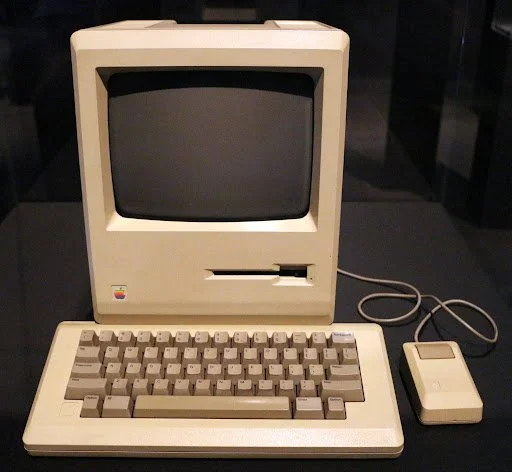
The growth of the personal computer market further democratized music production. By the late 1980s and early 1990s, affordable home computers such as the Apple Macintosh, Atari ST, and IBM PC, combined with MIDI interfaces and sequencing software, enabled musicians to create multi-track recordings without access to professional studios. Producers and hobbyists could program drum patterns, manipulate synthesizers, sample recordings, and arrange complex compositions entirely within their own homes. The lowered barrier to entry fueled the growth of genres like hip-hop, where beat-making and sampling became central, and techno, which relied on intricate electronic patterns and synthesized textures. Small-scale producers could distribute tapes or CDs independently, while early computer-based notation and sequencing programs enabled rapid experimentation, consequently increasing the technical and aesthetic possibilities available to musicians.
Advances in communication technologies further expanded the creative possibilities and globalized music culture. Satellite broadcasts enabled live concerts to be transmitted to audiences worldwide in real-time, bringing regional performances to international audiences. Meanwhile, fiber-optic and early internet networks made it possible for musicians in different countries to exchange files, coordinate sessions, and collaborate virtually, reducing geographical constraints on creativity. Studios thousands of miles apart could synchronize tracks, share MIDI arrangements, or experiment with digital effects remotely, supporting cross-cultural exchanges and hybrid musical styles.
MTV both mirrored and intensified these developments. By broadcasting music videos globally, the channel made visual identity and branding central to an artist’s success, while also promoting songs created in home studios or digitally produced environments. The network’s emphasis on image, novelty, and immediacy dovetailed with technological innovations in production and distribution, producing a feedback loop in which digital tools enabled new music, and MTV provided the platform for that music to reach a worldwide audience. In this way, the convergence of computers, communication networks, and cable television changed how music was created, consumed, marketed, and perceived on a global scale.
Music Videos

Long before MTV transformed the music industry, film and television had already played a central role in promoting popular music. A music video is a short film or video that integrates a song with imagery, designed to promote the song and create a visual interpretation of its themes, lyrics, or performance. The roots of the modern music video can be traced to early efforts to synchronize film with prerecorded sound. In the 1910s and 1920s, silent “song-plug” films were created to accompany live performances of specific songs. Unlike conventional film music, which typically accompanies action, these films used visuals to interpret and enhance the songs themselves. By the late 1920s and 1930s, song numbers in film musicals developed this idea further, incorporating choreography and fantastical elements that anticipated techniques later used in music videos. Animated films further advanced the interaction between sound and image: German filmmaker Oskar Fischinger produced abstract music-driven animations in the early 1920s, while Disney's Silly Symphonies shorts (beginning in 1929) and Fantasia (1940) synchronized elaborate visuals with music. Sequences such as Stravinsky’s The Rite of Spring in Fantasia paired animation with rhythm, melody, and dramatic contours, creating a model for visually interpreting sound that would influence future music videos.

Throughout the 1930s and 1940s, musical short films featuring one or two songs by popular artists became a common prelude to feature films, allowing audiences to see performers in action. In the United States, Panoram Soundies—so-called “visual jukebox” films—enabled viewers to select short musical clips for viewing, a precursor to on-demand music video consumption. Television programs such as Your Hit Parade dramatized popular songs for home audiences, while avant-garde video art and surrealist-inspired imagery gave musicians and directors new visual possibilities. By the late 1950s and 1960s, music and television had become firmly intertwined. Shows like American Bandstand introduced young audiences to the latest hits while showcasing performers dancing and lip-syncing, turning music into a visual as well as auditory experience. Similarly, the television series The Monkees (1966–1968) blended scripted comedy with performances of the band’s songs, effectively creating a serialized format for promoting music to teen audiences. In film, The Beatles’ movies, including A Hard Day’s Night (1964) and Help! (1965), combined narrative, performance, and visual experimentation, giving fans an immersive way to experience the band beyond the record player.
The 1960s also saw the emergence of promotional television films by British artists, with The Beatles producing clips for songs like “Penny Lane” and “Strawberry Fields Forever,” which combined creative staging, imaginative editing, and performance-focused visuals. Although these early promotional films shared many formal characteristics with later music videos, their commercial impact remained limited. Elvis Presley’s film musicals similarly influenced the performer's visual image, providing a template for star-centered marketing, though they were less experimental in their editing or visual effects.
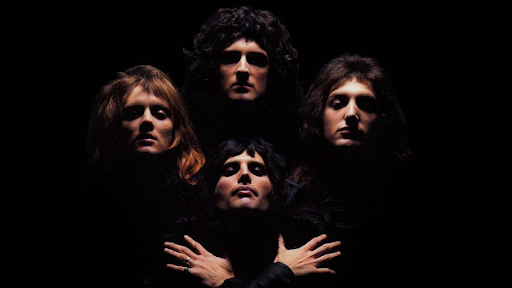
By the mid-1970s, the music video became a recognizable commercial and artistic format. Queen’s 1975 promotional clip for “Bohemian Rhapsody” combined theatrical performance, innovative editing, and visual effects, producing a striking visual accompaniment that helped drive record sales. The success of "Bohemian Rhapsody" signaled to other artists that music and video could be integrated not just for promotion but as a distinct form of artistic expression. Decades of experimentation in film, television, and promotional media established many of the visual strategies that MTV would commercialize on a continuous, twenty-four-hour platform beginning in 1981.
MTV

On August 1, 1981, Warner Communications and the American Express Company launched MTV, the first cable channel devoted entirely to music videos. The network launched during a period of rapid cable television growth, driven by deregulation and the loosening of federal broadcasting restrictions. Freed from many of the limitations placed on traditional networks, cable providers grew rapidly and offered channels aimed at niche audiences rather than broad, mass-market programming. The deregulated cable environment created a strong demand for new content, establishing the basis for innovative formats that combined music and visual media in ways previously impossible. Originally conceived as a television counterpart to mainstream rock radio, MTV played videos continuously, with video jockeys, or VJs, introducing songs and providing brief commentary between clips.
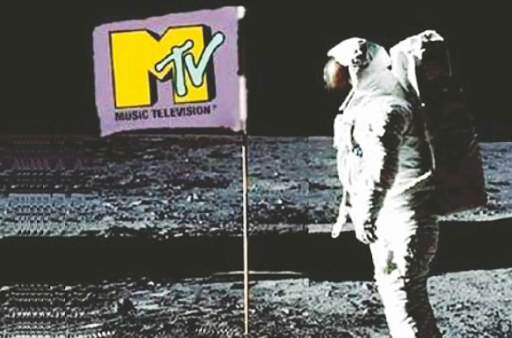
MTV made an immediate visual statement with its debut. The channel’s launch featured an extended network ID that began with footage of the Apollo 11 Moon landing. The sequence showed an astronaut planting a flag emblazoned with the MTV logo, which then cycled rapidly through different colors and patterns to the network’s original guitar-driven jingle. The “Moon landing” ID ran more than 75,000 times per year at the top and bottom of every hour and established the Moonman as an iconic recurring symbol of MTV’s brand.
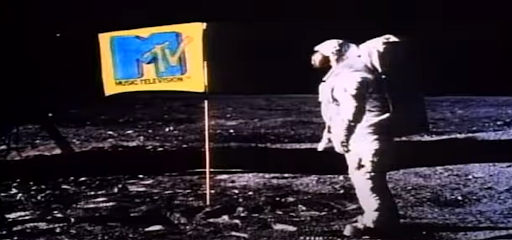
MTV’s branding spanned beyond the ID. Its iconic logo and vibrant animated graphics competed visually with the videos themselves, while VJs became public personalities with distinct styles: Nina Blackwood and Mark Goodman presented themselves as knowledgeable rock hosts. J.J. Jackson adopted a relaxed, conversational tone, while Alan Hunter leaned into humor. Martha Quinn became closely associated with the network’s youthful audience. Between 1983 and 1985, MTV entered major markets such as New York and Los Angeles, negotiating exclusive broadcast rights through payments to record labels that often granted the channel a one-month window to air videos before they appeared elsewhere. These agreements, sometimes worth hundreds of thousands of dollars, cemented MTV’s role as a central platform for music promotion, and by 1983, nearly every Billboard-charting album included at least one video in heavy rotation.
While MTV concentrated on mainstream rock and pop, other niche channels emerged to serve audiences that the network largely ignored. The Nashville Network (TNN) devoted eighteen hours a day to country music videos, and Black Entertainment Television (BET) focused on African American artists. In 1985, MTV launched VH1 to target an older demographic, broadcasting videos for adult audiences while the original channel continued to cater to teenagers. Around this time, MTV also introduced structured programs such as Headbangers Ball, focused on heavy metal; 120 Minutes, devoted to alternative and less mainstream rock; and Dial MTV, a daily call-in countdown show. These shifts—from continuous video play to genre-specific programming—showed that the network had begun organizing programming around specific audience groups. International expansion followed with the launch of MTV Europe in 1987, extending the channel’s broadcast reach beyond North America.
The Second British Invasion
Early MTV programming was dominated by album-oriented rock, primarily featuring white American artists. However, many established bands were reluctant to produce music videos. Many musicians were not trained actors, had little interest in performing for the camera, and often felt that making videos was a form of “selling out” or a compromise of their artistic credibility. To fill its schedule, MTV turned to other performers—primarily British new wave bands—many of whom had already been creating promotional videos for British television or urban “rock discos.” Groups such as Duran Duran, Soft Cell, and the Human League quickly gained prominence on MTV, benefiting from their visually striking presentation, dramatic fashion, and use of modern instruments like synthesizers and electronic drums. The heavy rotation of British videos helped spark the so-called “New British Invasion” in the United States between 1982 and 1984, influencing both MTV's programming and commercial radio playlists.
British artists were particularly adept at using television to promote their music, primarily due to the structure of the UK music market. Unlike the United States, which offered a multitude of radio stations, Britain had relatively few outlets for airplay, making television an essential medium for reaching audiences. Top of the Pops, which aired weekly on the BBC beginning in 1964, gave charting musicians a national television platform for live or lip-synced performances and visual presentation.In the United States, there was no direct equivalent at the time—programs like American Bandstand and Soul Train provided performance and dance showcases, but they were less centrally focused on chart rankings and tended to feature regional acts alongside national hits. When MTV launched in 1981, it gave British acts direct access to American audiences without the financial and logistical burdens of touring, which was costly and offered no guarantee of success. Early British music videos were often conceived as promotional tools for both the song and the artist, employing techniques reminiscent of advertising, including rapid cuts, shifting camera angles, flashy visual effects, and stylized performances.
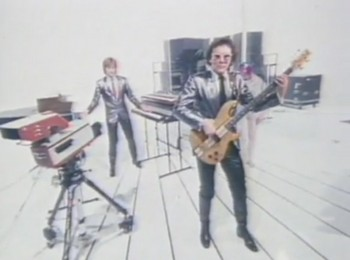
The first video ever aired on MTV exemplified the new visual era: the Buggles’ “Video Killed the Radio Star” (1979). The song, with its commentary on music video's growing influence, prophetically framed the medium’s cultural impact. Notably, Hans Zimmer, who would later become one of Hollywood’s most renowned film composers, appeared in the video. The heavy rotation of British videos on MTV catalyzed what would become known as the “Second British Invasion” of the American music market. Other acts, such as The Human League, achieved major success through the channel; their 1981 hit, “Don’t You Want Me,” reached number one in the United States. Bands including Billy Idol, A Flock of Seagulls, and New Order also found substantial audiences, with MTV exposure directly fueling record sales and concert attendance.
A major feature of this wave of British music was its reliance on synthesizers, which had become more affordable and widely available by the early 1980s. These instruments often replaced guitar- and drum-based arrangements with electronic tones and disco-influenced rhythms. The resulting style, linked to the New Romantic movement, paired pop-oriented vocals with sleek production and a glamorous visual sensibility that suited the emerging medium of music video.
The commercialized styling of new wave grew out of the late-1970s new wave and punk scene but was quickly promoted by major record labels during the early 1980s. It also gave rise to the label synth-pop, one of the first popular music genres identified primarily through the use of electronic sound synthesis. Although synth-pop lost much of its mainstream popularity by the end of the decade, it helped secure the synthesizer’s place in popular dance music and continued to influence later electronic dance music and LGBTQ club culture.
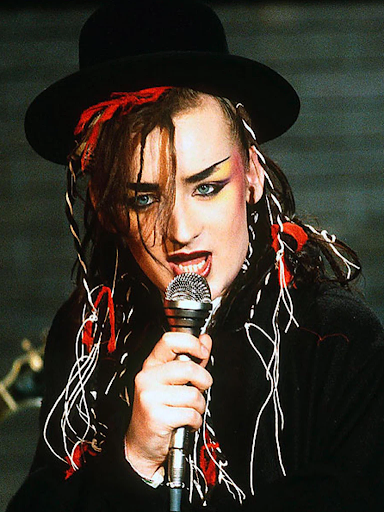
Visual experimentation was equally central to these British acts. Many artists challenged conventional notions of gender and identity, utilizing fashion and makeup to create theatrical personas. Annie Lennox of the Eurythmics frequently presented herself androgynously in clips for “Love Is a Stranger” (1982) and “Sweet Dreams Are Made of This” (1983), while Boy George of Culture Club embraced heavy makeup and traditionally feminine clothing in videos for “Do You Really Want to Hurt Me” (1982) and “Karma Chameleon” (1983). These visual choices, together with innovative synthesizer use and pop-oriented songwriting, became closely associated with a generation of musicians who cared as much about spectacle and image as they did about sound, and positioned MTV as the central arbiter of both style and commercial success in the early 1980s.
Duran Duran
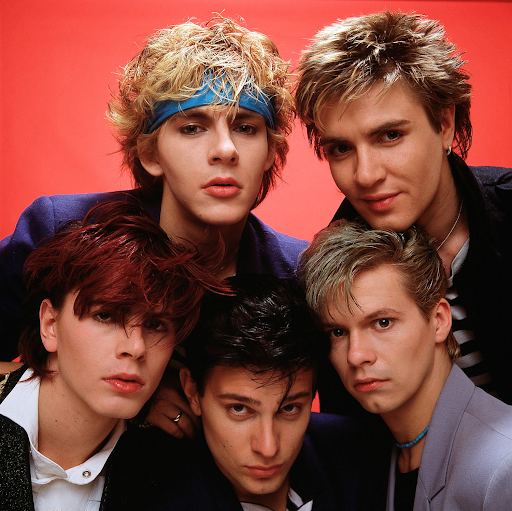
Duran Duran became a central act of the Second British Invasion, combining a striking visual image with catchy, synth-driven pop. The band consisted of lead vocalist Simon Le Bon, keyboardist Nick Rhodes, guitarist Andy Taylor, bassist John Taylor, and drummer Roger Taylor (none of the Taylors were related). They quickly earned a reputation for their good looks and stylish image, earning the nickname “the prettiest boys in rock.” Their self-titled debut album, Duran Duran (1981), included the single “Girls on Film,” whose video generated considerable controversy. Directed by Kevin Godley and Lol Créme, the clip depicted women in provocative, sexually explicit scenes. Originally intended for nightclub screens or premium channels such as the Playboy Channel, the video had to be heavily edited for MTV broadcast. Even with edits, its explicit content limited airplay, exposing both the cultural boundaries of the early 1980s and MTV’s growing influence over what mainstream audiences could see.
Drawing on their earlier video experience, Duran Duran adopted increasingly cinematic and visually dynamic styles in subsequent videos. The video for “Hungry Like the Wolf” (1983), directed by Russell Mulcahy, is widely regarded as one of the most influential music videos ever produced. Filmed on location in Sri Lanka, it intercuts narrative sequences with performance shots, showing Le Bon pursuing a female model through dense jungle paths, riverbanks, and bustling city streets in a suspenseful, adventure-thriller style. Mulcahy employed a variety of camera techniques, including tracking shots, rapid zooms, aerial views, and other moving-camera techniques, to heighten tension and motion. Dramatic lighting, from sun-dappled forest scenes to shadowed alleyways, amplified the cinematic quality. MTV placed the video in heavy rotation, airing it multiple times per day, which propelled the single to number one on the Billboard Hot 100 and helped the album Rio reach the top of the Billboard 200. The combination of exotic locations, narrative suspense, and a polished visual style set a new standard for integrating music into cinematic storytelling.
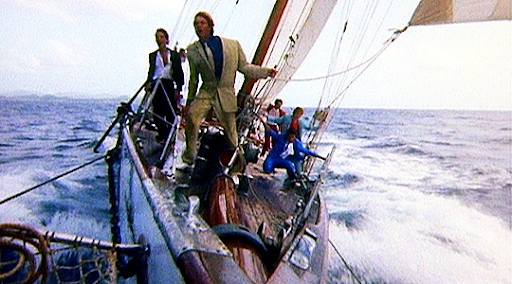
The video for “Rio” (1982–1983), also directed by Mulcahy, was filmed primarily on a luxury yacht and in sun-soaked outdoor settings. It opens with sweeping shots of the band performing against a sparkling blue backdrop and lush tropical vistas. The members wear sharply tailored designer suits, while scenes of them lounging or dancing alongside models display both elegance and playful energy. Quick pans, sweeping crane shots, and slow-motion sequences reinforce the glossy, aspirational aesthetic, making the video as much about style and image as it is about the song itself.
Through these videos, Duran Duran demonstrated MTV’s potential for outsized music promotion. By emphasizing exotic locations, narrative storytelling, fashion, and dynamic cinematography, they created a strong visual identity that complemented their sound. Their videos were more than advertisements for singles; they built a fully realized persona and brand for the band. In doing so, Duran Duran showed that music videos could drive commercial success, set aesthetic trends, and establish a new medium for blending music, performance, and visual storytelling in the 1980s.
Thriller
By the 1982, MTV had fundamentally changed both the music industry and popular culture. Music videos had become essential promotional tools, determining which artists achieved mainstream success and how they were marketed. The channel quickly became a cultural phenomenon among teenagers and young adults, but it also drew significant criticism for its narrow focus and selective programming. In its earliest years, MTV explicitly targeted a predominantly white teenage male audience in the Midwest. Executives and VJs repeatedly argued that their audience preferred videos by white artists, effectively excluding African American musicians from regular rotation. Donna Summer was a rare exception; her video for “She Works Hard for the Money" (1983) received only light airplay. These inconsistencies in MTV’s claims of adhering to a “rock and roll” format were displayed when the network aired Phil Collins’s cover of the Supremes’“You Can’t Hurry Love" while ignoring the original Motown recordings, exposing the arbitrary and racially coded nature of MTV’s programming decisions. By the early 1980s, the lines between genres had become increasingly blurred—synth-based acts such as the Eurythmics were labeled rock, while disco and R&B performers, including Donna Summer, received far less exposure.
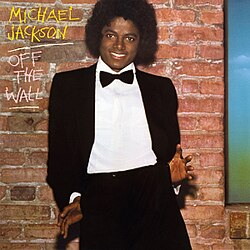
Michael Jackson became the artist who ultimately forced MTV to confront the entrenched racial bias. Already a star as the lead singer of the Jackson 5 in the 1960s and 1970s, Jackson had demonstrated crossover appeal, but his solo career truly took off in the late 1970s. While working on the 1978 film adaptation of The Wiz, he met producer Quincy Jones, beginning a collaboration that would profoundly influence subsequent popular music. Their first project, Off the Wall (1979), blended funk, pop, and disco with sophisticated vocals and complex rhythmic structures. The album appealed broadly to radio programmers, dancers, and top-40 audiences, signaling Jackson’s ability to connect across racial and musical boundaries.
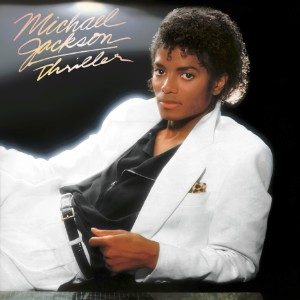
The follow-up, Thriller (1982), also produced by Jones, became a global phenomenon and a defining moment for MTV. The album fused multiple musical styles—ballads, funk-based dance tracks, rock songs, and radio-oriented pop—capturing a wide range of listeners. Seven of its nine tracks were released as singles, with several of them becoming chart-topping hits. Thriller held the number-one spot on the Billboard album chart for 37 weeks and ultimately became the best-selling album of all time, with over 45 million copies sold worldwide. Beyond its sales, the album was deliberately constructed to reach audiences across several musical markets as Jackson and Jones designed it to bridge stylistic and racial divides, demonstrating the commercial and artistic potential of crossover music.
Each single from Thriller was strategically designed to appeal to different audiences. “The Girl Is Mine,” a duet with Paul McCartney, offered melodic soft rock that appealed to adult contemporary listeners while topping the R&B charts. “Beat It,” featuring Eddie Van Halen on guitar, fused hard rock with funk-pop sensibilities, engaging rock audiences who had previously been skeptical of Black performers. “Billie Jean,” with its iconic bassline, synthesizers, and danceable rhythm, became a staple track for nightclubs and radio alike. The album’s sonic diversity—ranging from George Clinton-style funk to Blondie-influenced synth-pop—demonstrated Jackson’s ability to unite fragmented audiences along racial, generational, and stylistic lines.
Despite the album’s unprecedented success, MTV initially refused to air Jackson’s videos. The channel’s reluctance stemmed from its early racial bias and its narrow conception of rock music. It was only after CBS Records president Walter Yetnikoff threatened to withdraw all CBS artists from the network that MTV relented. In March 1983, “Billie Jean” became the first Michael Jackson video to enter heavy rotation, marking the first sustained presence of an African American solo artist on the channel. Jackson’s videos were not only visually innovative—featuring narrative elements, sophisticated choreography, and cinematic production—but also demonstrated how visual media could magnify musical appeal. By featuring white collaborators such as Paul McCartney and Eddie Van Halen, Jackson challenged racial barriers while bringing MTV to a broader audience.
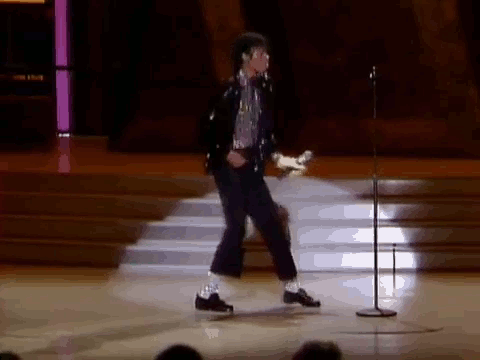
Equally important were Jackson’s visual strategies. His televised debut of the moonwalk during NBC’s Motown 25: Yesterday, Today, Forever on May 16, 1983, elevated his public image and drove Thriller sales. The moonwalk, also known as the backslide, is a dance move in which the performer appears to glide backward while their body suggests forward motion. Jackson’s performance created this illusion through precise footwork and complementary movements of the arms, shoulders, and head, often including swinging arms and neck jerks. Accompanied by his sparkling single white glove, the move emphasized both his technical ability and his flair for theatrical presentation, turning a simple dance step into a lasting symbol.
His videos consistently explored racial themes: in “Beat It,” he intervenes in a gang fight, while “The Girl Is Mine” subtly implies an interracial relationship, showing how Jackson used the medium to challenge social boundaries.
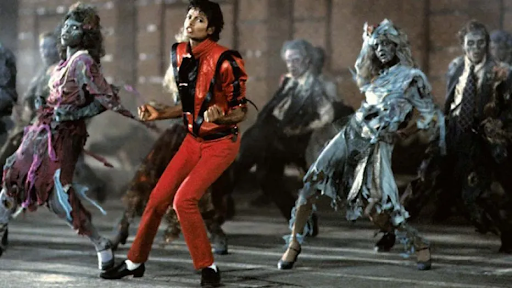
The pinnacle of his innovation came with “Thriller,” directed by John Landis, then known for his horror film An American Werewolf in London. Running approximately 15 minutes, the short combined a horror narrative with large-scale choreography and film production techniques, setting a new quality standard for music videos. The plot opens with Jackson and his girlfriend walking home when they encounter a mysterious figure who lures them into a darkened theater. Jackson transforms into a werewolf, leading to the iconic zombie dance, performed with a horde of undead figures in tightly synchronized moves. Vincent Price’s spoken-word segment enhanced the horror-movie atmosphere, while detailed makeup and special effects heightened cinematic realism.
Weeks before the premiere, Jackson, then a Jehovah’s Witness, was warned that the video promoted demonology and risked excommunication. Alarmed, he instructed his assistant, John Branca, to destroy the negatives. Branca and the production team secured the footage and proposed adding a disclaimer clarifying that the content did not represent Jackson’s personal beliefs, allowing the release to proceed without conflicting with his faith.
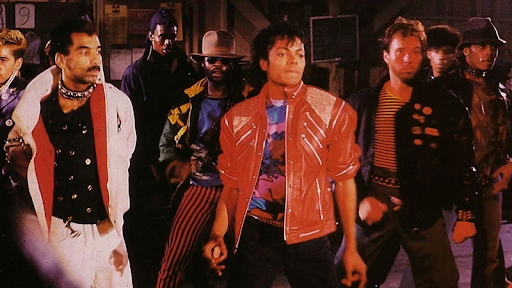
The choreography, particularly the zombie routine, became one of the most iconic dances in popular culture, widely recreated worldwide for Halloween and stage performances. Jackson’s red leather jacket, designed by Landis’s wife Deborah Nadoolman, became a lasting fashion symbol. Production costs exceeded $300,000, making “Thriller” the most expensive music video of its time. Viewer demand was so high that MTV aired it multiple times per hour, effectively dedicating a substantial portion of programming to a single video. A companion“making-of” home video sold 350,000 copies in six months, further demonstrating the project’s cultural and commercial impact.
Michael Jackson’s work on MTV transformed both the channel and the broader music industry. His videos demonstrated that music television could achieve artistic ambition while generating commercial success, which forced a reevaluation of artist marketing and audience engagement within the popular music industry. Jackson’s achievements also pressured MTV to include more African American performers in its programming, opening greater exposure for artists such as Prince, Tina Turner, Whitney Houston, and Janet Jackson.
According to The Austin Chronicle, the video for “Billie Jean” was “the video that broke the color barrier, even though the channel itself was responsible for erecting that barrier in the first place.” However, progress was incremental. “Billie Jean” did not enter MTV’s medium rotation until it reached the top of the Billboard Hot 100, and only later achieved heavy rotation alongside Jackson’s “Beat It” and Prince’s “Little Red Corvette.” In subsequent months, additional Black artists—including Eddy Grant, Donna Summer, Herbie Hancock, and Lionel Richie—were added to heavy rotation. With the release of the cinematic “Thriller” video at the end of 1983, MTV provided full support, solidifying both Jackson’s global stardom and the channel’s increasing embrace of pop and R&B.
After Thriller, Jackson continued to innovate with videos such as “Bad” (1987), “Smooth Criminal” (1988), and “Black or White” (1991). Each video integrated elaborate choreography, cinematic storytelling, and social commentary, addressing topics ranging from gang dynamics to racial integration. Jackson maintained his superstar status into the 1990s and 2000s, although his career became increasingly associated with controversy, including public scrutiny of his appearance, personal life, and allegations of sexual misconduct. Nevertheless, his influence on music, video, dance, and popular culture remained unmatched. His death in 2009 prompted a global outpouring of grief and renewed recognition of his significant impact on the entertainment industry.
Madonna
The production of celebrity has long been central to the American music industry. By the 1930s and 1940s, crooners such as Bing Crosby and Frank Sinatra became household names through coordinated promotion across film, radio, and print media. In the postwar years, television increased the machinery of fame, providing a powerful medium that helped launch figures like Elvis Presley and the Beatles into global stardom.
By the 1980s, the music industry’s system of star-making had reached unprecedented levels of sophistication. Record labels increasingly depended on a small number of blockbuster releases, and promotional campaigns were carefully orchestrated across multiple outlets. Music videos, television appearances, films, magazine spreads, and radio interviews were deployed in tandem to create the sense of a unified media blitz. Within the increasingly coordinated media system, celebrity appeal hinged on the ability to project sound and image simultaneously, giving audiences the illusion of intimacy with performers while consuming a persona produced by industry executives.
The careful packaging of stars was reinforced by a growing culture of celebrity journalism. Magazines, television exposés, paparazzi photos, and “unauthorized” biographies invited fans to follow the lives of their favorite performers, often through familiar storylines: humble beginnings, the temptations of wealth and fame, a dramatic fall, and the possibility of redemption. Some artists sustained a rebellious or scandalous persona, while others were celebrated for wholesomeness or philanthropy. In either case, these narratives said more about the fantasies and desires projected onto the artists by the public than about the artists’ private lives.
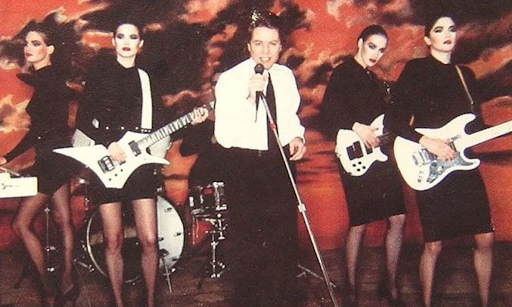
While earlier figures such as Sinatra, Bob Dylan, and the Beatles carefully crafted their images, the 1980s represented a shift toward artists who actively exploited mass media to build fascination around both their music and their identities. The launch of MTV in 1981 accelerated the mechanisms of star-making by making visual presentation as important as musical talent. Targeting a predominantly white, Midwestern teenage male audience, the channel privileged striking images and sexual spectacle. Music videos became vehicles for glamour and desire, with male musicians frequently criticized for objectifying women. The J. Geils Band’s “Centerfold” (1981) and Robert Palmer’s “Addicted to Love” (1986) exemplify this trend, utilizing visual tableaux inspired by advertising campaigns. Many video directors, drawn from the world of commercials, recognized that style and sexuality could sell records as predictably as consumer goods.
Artists adapted quickly to the new logic of image-driven stardom. Prince used sexually provocative choreography, flamboyant fashion, and androgynous styling to construct a persona of liberated sexuality. Janet Jackson’s videos from the late 1980s and early 1990s, including “Nasty” and “Control,” combined stylized sensuality with themes of female empowerment. Madonna, however, emerged as the ultimate architect of MTV-era celebrity. She blended provocative performance, visual spectacle, and media savvy to assert control over both her music and her public image. Within MTV's image-driven media environment, success increasingly depended on an artist’s ability to engage audiences visually as well as musically, making music video the central vehicle for creating and sustaining celebrity.
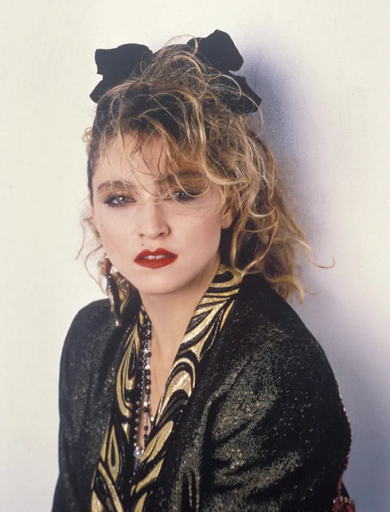
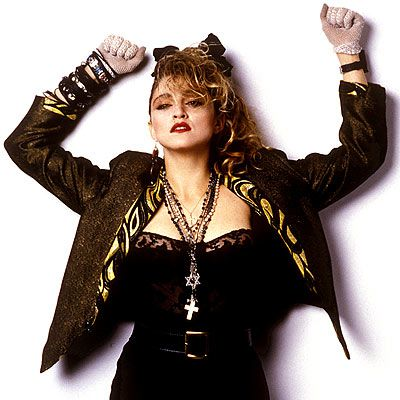
Born Madonna Louise Veronica Ciccone in Bay City, Michigan, she moved to New York City in 1977 to study dance and pursue a modeling career. Immersed in Manhattan’s nightclub scene, she became a fixture at venues such as Danceteria, where DJ Mark Kamins promoted her demo tapes and introduced her to executives at Sire Records. Her debut single Everybody (1982), became a dance hit, setting the stage for her ascent. She enlisted manager Freddie DeMann—who had overseen Michael Jackson’s career before the release of Thriller—to manage her early videos, including “Lucky Star”(1983) and “Borderline” (1984). These videos hinted at the sexuality and visual provocation that would become her signature, with “Lucky Star” offering momentary glimpses of her navel that seemed transgressive to many viewers at the time.
Madonna’s breakthrough came with“Like a Virgin” (1984), produced by Chic guitarist Nile Rodgers. The accompanying video, directed by Mary Lambert, set her against the backdrop of Venice’s canals, dressed in a wedding gown and adorned with crucifixes, rosaries, and layers of lace. At key moments, she danced in a gondola or was pursued by a lion, imagery that combined Catholic iconography with sexual innuendo. Religious groups and family organizations denounced both the video and the song for trivializing marriage and faith, yet the backlash only amplified her visibility. By courting controversy, Madonna established herself as a provocateur who understood how to use MTV’s visual medium to heighten her cultural impact.
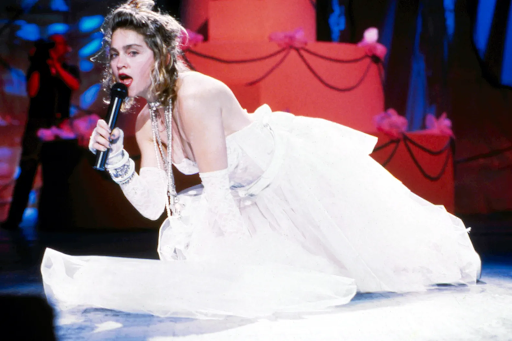
Her ability to fuse music with spectacle became even clearer at the inaugural MTV Video Music Awards on September 14, 1984. She opened the show with Like a Virgin,” emerging from a 17-foot wedding cake in a bustier, pearls, lace gloves, and a belt that read “Boy Toy.” During the performance, she rolled across the stage in her bridal gown, exposing her undergarments and blurring the line between parody and seduction. Madonna later explained that the movements were improvised after she lost a shoe, even though both shoes are clearly visible throughout the video. Regardless, the effect was electric. In a night that featured established stars such as Rod Stewart, David Bowie, and Huey Lewis, it was Madonna’s audacious performance that audiences remembered. The performance became her "coming-out party" and helped establish MTV as a generator of major cultural events, comparable in significance to the Beatles' 1964 appearance on The Ed Sullivan Show.
The strategy continued with “Material Girl", whose video reimagined Marilyn Monroe’s performance of“Diamonds Are a Girl’s Best Friend” from Gentlemen Prefer Blondes. Surrounded by tuxedo-clad suitors, Madonna adopted and exaggerated Monroe’s gestures, simultaneously celebrating and satirizing Hollywood glamour. Together, “Like a Virgin” and "Material Girl” exhibited her talent for recycling and subverting cultural stereotypes, creating images that were at once familiar and disruptive.
Through the late 1980s and early 1990s, Madonna continued to provoke debate over sexuality, gender, and religion, using music videos as a platform for cultural confrontation. “Express Yourself” (1989) juxtaposed images of her in men’s clothing commanding an industrial workforce with extended sexually suggestive scenes, including some with Madonna in a collar. The video stages power and gender dynamics through costume, choreography, and staging.
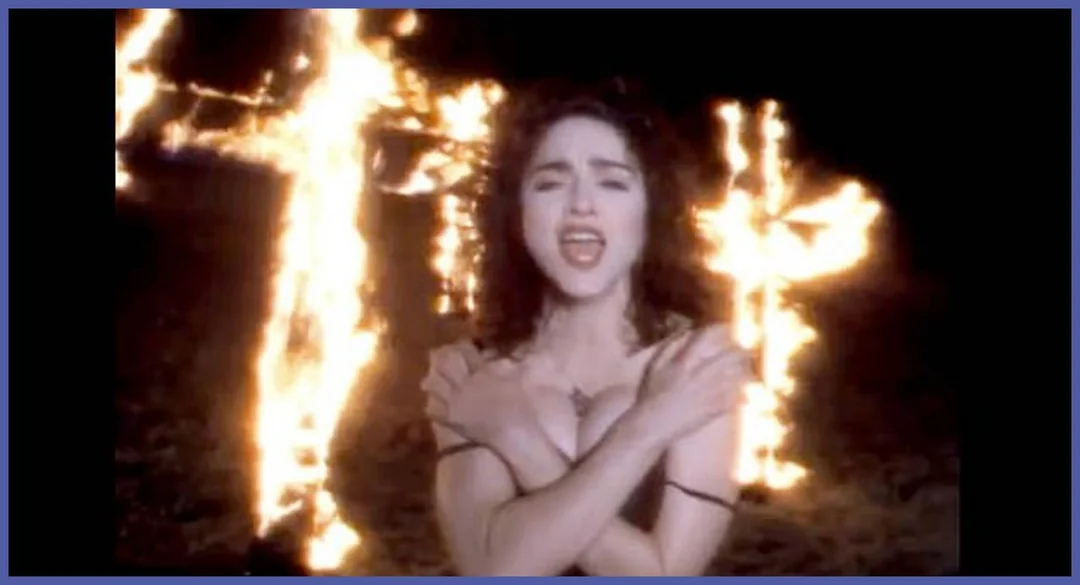
Even more provocative was “Like a Prayer” (1989), a pop-rock, dance-pop, and gospel song that incorporates funk elements, choral backing, and a searing rock guitar. The lyrics employed liturgical language but carried unmistakable undertones of eroticism, reinforcing the duality of sacred and sexual imagery. The accompanying video, directed by Mary Lambert, dramatized that tension in ways that ignited global controversy. It begins with Madonna witnessing a white woman being assaulted and killed by a group of white men. A Black bystander who tries to help is wrongly accused, arrested, and threatened with execution while the real perpetrators go free. Traumatized, Madonna flees into a church, where she prays before a statue of a Black saint resembling the accused man. The statue comes to life, offering her comfort in scenes that blur the boundary between religious devotion and sexual intimacy.
The video layers in Catholic iconography—stigmata, saints, a gospel choir—with politically charged imagery such as Ku Klux Klan–style burning crosses. Madonna is depicted lying in a pew, experiencing visions of falling through space before being caught by an influential female figure who urges her to take action, which is meant to be an implication for masturbation. Intercut sequences feature Madonna kissing the saint, bleeding from her hands, and dancing ecstatically before the crosses. In the final act, she awakens, testifies to the accused man's innocence, and secures his release.
The Vatican condemned the video for sacrilege, and Pepsi canceled its high-profile sponsorship after briefly airing an advertisement associated with the song. Madonna, however, had deliberately courted controversy, and the resulting public outrage further increased her visibility. Rather than harming her career, the uproar reinforced her reputation as a fearless, boundary-pushing artist and demonstrated the power of provocation to generate publicity and cultural relevance.
Commercially, her strategy proved extraordinarily successful. Between 1984 and 1994, Madonna achieved twenty-eight Top 10 singles—eleven reaching number one—and released eight Top 10 albums, including Like a Virgin (1984), True Blue (1986), and Like a Prayer (1989). She simultaneously provoked and fascinated the public: in a 1987 Rolling Stone readers’ poll, she was voted both the second-best and worst female singer. She became associated with both feminist empowerment and sexual provocation, and this tension contributed to her broader cultural influence.
Her videos continued to challenge prevailing social norms. “Papa Don’t Preach” (1986) addressed teen pregnancy from the perspective of a young woman asserting her independence, while “Open Your Heart” (1986) portrayed Madonna as a peep-show dancer reclaiming female sexuality as a form of performance power. In 1992, she intensified her sexualized image with the simultaneous release of the Erotica album and the coffee-table book Sex, which featured nude and S&M-themed photographs of Madonna and other celebrities. Both projects generated significant public controversy but also produced major commercial success.
By the mid-1990s, Madonna reinvented herself once again. Her lead role in Evita (1996) earned her a Golden Globe. That same year, she issued Something to Remember, a collection of ballads aimed at a more mature audience. Later albums, including Ray of Light (1998), Confessions on a Dance Floor (2005), Hard Candy (2008), and Rebel Heart (2015), showcased her evolving negotiation of sexuality, spirituality, and artistic identity, keeping her at the forefront of pop culture for decades.
Central to Madonna’s career was her insistence on artistic control. She wrote or co-wrote most of her songs, actively participated in album production, and directed the visual presentation of her music. She frequently described herself as a feminist for retaining agency over her career: “Isn’t that what feminism is all about? Equality for men and women? And aren’t I in charge of my life, doing the things I want to do and making my own decisions?” By refusing to cede authority to managers or producers, Madonna challenged an industry that often relegated women to decorative roles.
Her ability to manipulate stereotypes—whether portraying the innocent bride, the glamorous starlet, the religious transgressor, or the sexual provocateur—enabled her to reinvent her persona continually. Performances such as the 1990 Blonde Ambition tour reimagined earlier songs, like "Like a Virgin," in provocative new contexts, with Madonna dressed as an Egyptian princess and male dancers in cone-shaped brassieres. Such reinterpretations demonstrated her knack for recycling familiar material in ways that both shocked and entertained, while also compelling discussion.
Alongside contemporaries like Prince and Janet Jackson, Madonna helped establish MTV's aesthetic as sexualized, dance-oriented, and visually commanding. Yet unlike many of her peers, she maintained complete control over her image, using music videos as both an artistic tool and a commercial strategy. In doing so, she turned controversy into currency and established herself not only as a pop superstar but as one of the most influential cultural figures of the late twentieth century.
Established Artists and MTV
By the mid 1980s, MTV made music videos a central means by which audiences encountered performance, visual style, and storytelling. While the channel initially spotlighted emerging rock and pop acts, established artists quickly recognized the potential to reach younger, visually oriented viewers. For hard rock and classic rock bands, videos became a way to translate the energy of live performance into a controlled, repeatable format, letting fans witness both musicianship and stage presence without attending concerts. In the rock context, authenticity—the idea that the performance on screen conveyed the artist’s true skill and persona—was paramount. Well-executed performance videos allowed veteran musicians to maintain credibility, signaling that they had not compromised their artistry to conform to a new medium.
Many hard rock acts embraced the format by distributing videos that recreated their live stage performances. Aerosmith’s “Love in an Elevator” blended stylized clips with a choreographed performance. Def Leppard’s “Bringing on the Heartache” and Van Halen’s “Jump” both replicate the setting of a live performance, albeit clearly staged. These videos often interspersed stylized camera work or playful visual flourishes, but the central focus remained the musicians’ live labor. By presenting their music in an “authentic” way, bands could connect with a younger MTV audience while signaling that their artistry remained genuine, preserving the credibility long associated with rock performance.
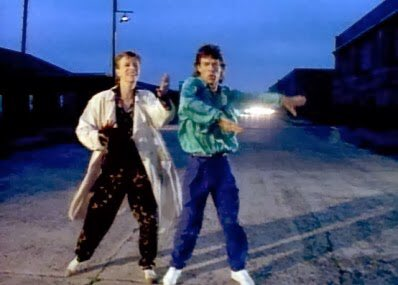
Narrative, theatrical, and humorous videos offered an alternative route to audience engagement. The Rolling Stones combined live performance with visual storytelling in clips such as “Undercover of the Night” and Mick Jagger’s 1984 “Dancing in the Street” duet with David Bowie, placing the band’s charisma and rock-and-roll identity in the foreground. David Bowie embraced MTV’s cinematic possibilities, turning videos like “Let’s Dance” and “Modern Love” into miniature productions complete with elaborate sets, choreography, and costume changes. Paul McCartney and Michael Jackson’s “Say Say Say” similarly integrated extended narratives, comedic sequences, and choreographed performance, demonstrating how the medium could broaden appeal while keeping music front and center.
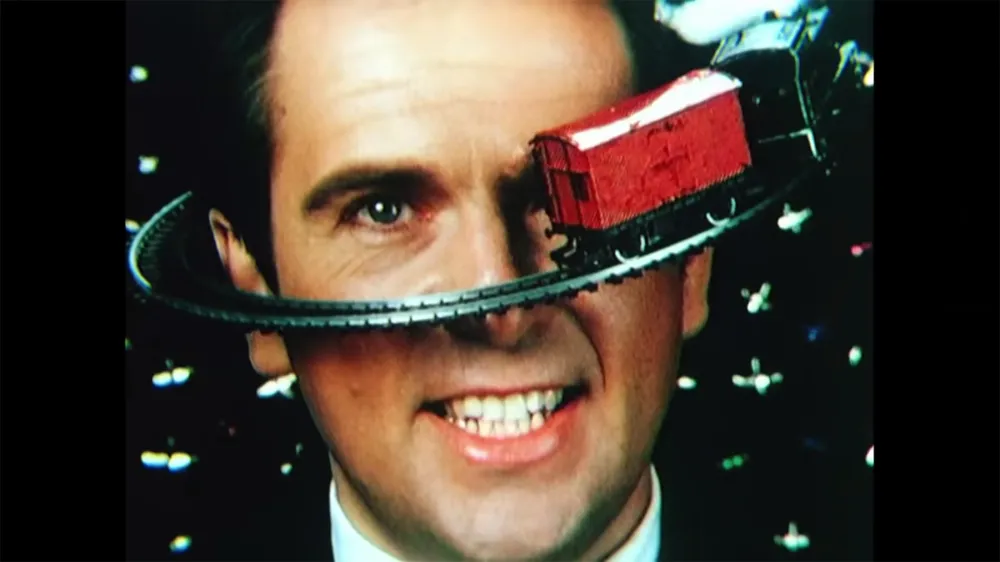
Peter Gabriel, the former lead singer of the progressive rock band Genesis and a successful solo artist, became a pioneering figure in music video creativity. His 1986 hit “Sledgehammer” represents a landmark in the medium’s evolution. The song’s groove-driven arrangement was paired with a visually striking video that combined stop-motion animation, pixilation, and claymation to literalize and exaggerate elements of the lyrics. Scenes ranged from microscopic depictions of life’s beginnings to playful sequences featuring singing fruits, dancing furniture, and toy locomotives, culminating in Gabriel’s transformation into a starman walking across the night sky. The production proved grueling: Gabriel spent eight sixteen-hour days lying under glass, his head supported by a steel pole, to achieve the precise stop-motion effects. The video’s inventiveness, technical aspects, and humor captivated audiences, earning nine MTV awards, including Best Video, and demonstrating how a visually ambitious video could elevate a song to widespread cultural prominence.
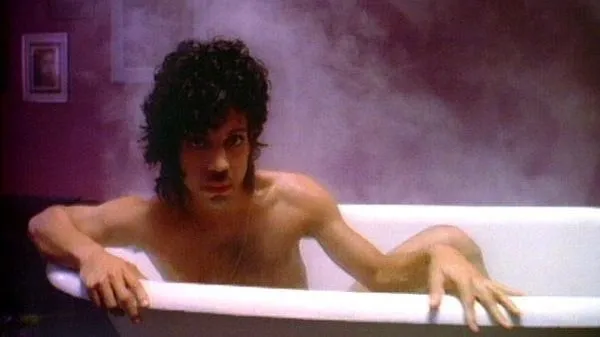
Prince similarly leveraged MTV to merge visual panache, musical virtuosity, and performance authenticity. He helped shift the channel’s early reluctance to air Black artists. His breakthrough came with videos for the 1999 album, especially “Little Red Corvette” one of the first videos by a Black artist to receive heavy rotation on MTV. The “Little Red Corvette” video, along with others like “1999,” blended stylized performance with close attention to his movement and stage presence, presenting Prince as both musician and visual performer. By 1984, “When Doves Cry” pushed further into narrative and symbolic imagery. Scenes showed Prince crawling across the floor, bathing, and standing in stark interior spaces. The visual presentation produced a fragmented, introspective tone, and the sparse visuals matched the song’s sparse arrangement. In contrast, “Raspberry Beret” used a deliberately artificial, storybook style with bright backdrops and staged tableaux. Throughout, Prince remained engaged as a musician—guitarist, bandleader, and vocalist—even in the most stylized settings. His use of sexuality and visual identity challenged MTV’s early norms. By uniting these elements, he asserted creative control while reaching a broad audience.
Together, these examples depict the multiple strategies artists used to navigate the visual era of MTV. Performance-heavy videos emphasized musicianship and stage presence, reinforcing claims to authenticity among rock veterans, while narrative, theatrical, and experimental videos offered musicians new artistic possibilities and demonstrated that storytelling and technical innovation could coexist with musical integrity. In either case, MTV allowed artists to reach broader audiences, creating a new balance between spectacle and substance that came to characterize mid-1980s popular music.
Tina Turner
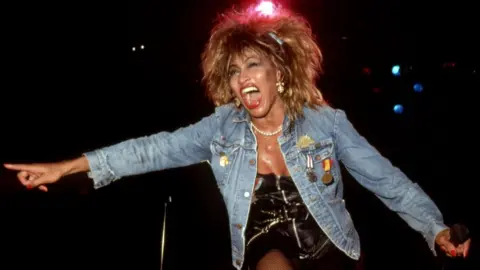
Tina Turner had been performing professionally for more than two decades before her major solo breakthrough in the mid-1980s. Born Anna Mae Bullock in 1939 in Nutbush, Tennessee, she grew up in a family of sharecroppers and first sang publicly in church. After her parents separated in 1956, she moved with her mother to St. Louis. There, she and her sister Eileen began visiting local nightclubs, where they encountered the band led by Ike Turner, the Kings of Rhythm. Bullock started singing with the group in 1957 and soon became its featured vocalist. Ike Turner later gave her the stage name “Tina Turner,” and the group began performing as the Ike and Tina Turner Revue. Their professional partnership eventually became a personal one as well, as Ike and Tina married in 1962.
Ike Turner had already built a reputation in rhythm-and-blues circles. In 1951, he played a central role in the recording of “Rocket 88.” The track, released under the name Jackie Brenston, was recorded at Sun Records in Memphis, Tennessee. Many historians regard it as one of the earliest rock and roll recordings. Built on a twelve-bar blues structure, it featured boogie-woogie piano, a driving rhythm section, distorted guitar, and a prominent saxophone solo. These elements later appeared in recordings by Little Richard and Jerry Lee Lewis. By the late 1950s, Ike had relocated the band to St. Louis. The Kings of Rhythm developed a strong regional following there.
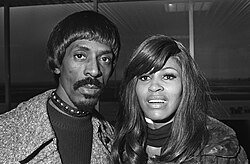
As Tina Turner became the group’s lead singer, the Ike and Tina Turner Revue gained national recognition. Their first major hit, “A Fool in Love” reached number two on the R&B charts and number twenty-seven on the pop charts in 1960. Another successful single, “It's Gonna Work Out Fine”, climbed to number two on the R&B chart and number fourteen on the pop chart. Throughout the 1960s, the Revue maintained a relentless touring schedule, performing on the Chitlin’ Circuit, a network of venues that supported Black entertainers during segregation. Their concerts became known for their intensity with their tightly rehearsed band, choreographed backing singers known as the Ikettes, and Tina Turner’s physically explosive stage presence.
Behind the group’s success, Tina and Ike Turner's marriage deteriorated. Ike exercised extensive control over the band’s finances, touring schedule, and recordings. His authority over the Revue extended into their personal lives. In her autobiography, I, Tina (1986), Turner described repeated episodes of physical violence, intimidation, and psychological control during their marriage. Although the Ike and Tina Turner Revue generated substantial income, Tina Turner had little direct control over the group's earnings.
Despite these tensions, the Revue achieved major crossover success during the late 1960s and early 1970s. The group began attracting rock audiences, especially after opening for The Rolling Stones during their 1969 American tour. Their biggest hit arrived in 1971 with their version of “Proud Mary,” originally recorded by Creedence Clearwater Revival. The Turners reinvented the song into a dramatic performance that began slowly and built into a driving groove accompanied by the Ikettes’ choreography. The recording reached number four on the pop charts and number five on the R&B charts and won a Grammy Award for Best R&B Vocal Performance by a Group.
The marriage finally collapsed in 1976 after a violent confrontation while the couple was traveling to a concert in Dallas, Texas. Turner left Ike shortly afterward, filing for divorce later that year. She departed with little money and chose to keep only the legal rights to the name “Tina Turner,” which had become central to her career. The divorce was finalized in 1978.
In the years that followed, she gradually rebuilt her career. She performed in smaller venues, including cabaret shows in Las Vegas and appearances on television variety programs. These engagements kept her visible to audiences but did not immediately lead to major recording success. During this period, Tina Turner also gained admiration from major rock musicians. Artists such as David Bowie and Eric Clapton praised her vocal power and stage presence. In concert, she increasingly performed material associated with rock artists, including The Beatles, The Rolling Stones, and Led Zeppelin, reinterpreting those songs through a blues-influenced vocal style.
Her fortunes began to change in the early 1980s. Established rock performers such as The Rolling Stones and Rod Stewart invited her to open for their tours, introducing her to younger audiences who had not seen the Ike and Tina Turner Revue during its peak years. Around the same time, she began working with manager Roger Davies, who helped guide her return to major recording projects. A major step forward came in 1983 with her recording of “Let's Stay Together,” originally recorded by Al Green. The single became an international hit, leading to a recording contract with Capitol Records. Her renewed momentum culminated in the 1984 album Private Dancer, which included the single “What's Love Got to Do with It.”
Turner initially felt uncertain about “What's Love Got to Do with It” when producer and co-writer Terry Britten presented it to her, believing that its smooth arrangement did not fully suit her voice. Britten encouraged her to reinterpret the material, and during the recording session, she reworked the phrasing and inflection to suit her vocal style. The single became the most successful recording of her career, earning multiple Grammy Awards and topping the charts for weeks.
The song’s lyrics present a narrator who views romantic love with skepticism. While the verses describe strong physical attraction, the chorus dismisses love as a “secondhand emotion.” The musical arrangement reinforces the contrast. The tempo remains steady, yet the instrumental texture changes between sections. The verses unfold over sustained synthesizer sounds resembling flutes and strings, while the chorus introduces a lighter groove built around bass and guitar patterns influenced by reggae.
For many listeners, the emotional character of the song seemed closely tied to Turner’s own biography. The voice heard in the recording conveys resilience, caution, and vulnerability at once, qualities that audiences associated with the struggles she had confronted in her earlier career. Her success with Private Dancer, therefore, carried a symbolic dimension as well. Through these recordings and the large arena tours that followed, Turner secured a place in a field long dominated by male rock performers, becoming one of the few Black women to achieve major recognition within that arena.
Graceland
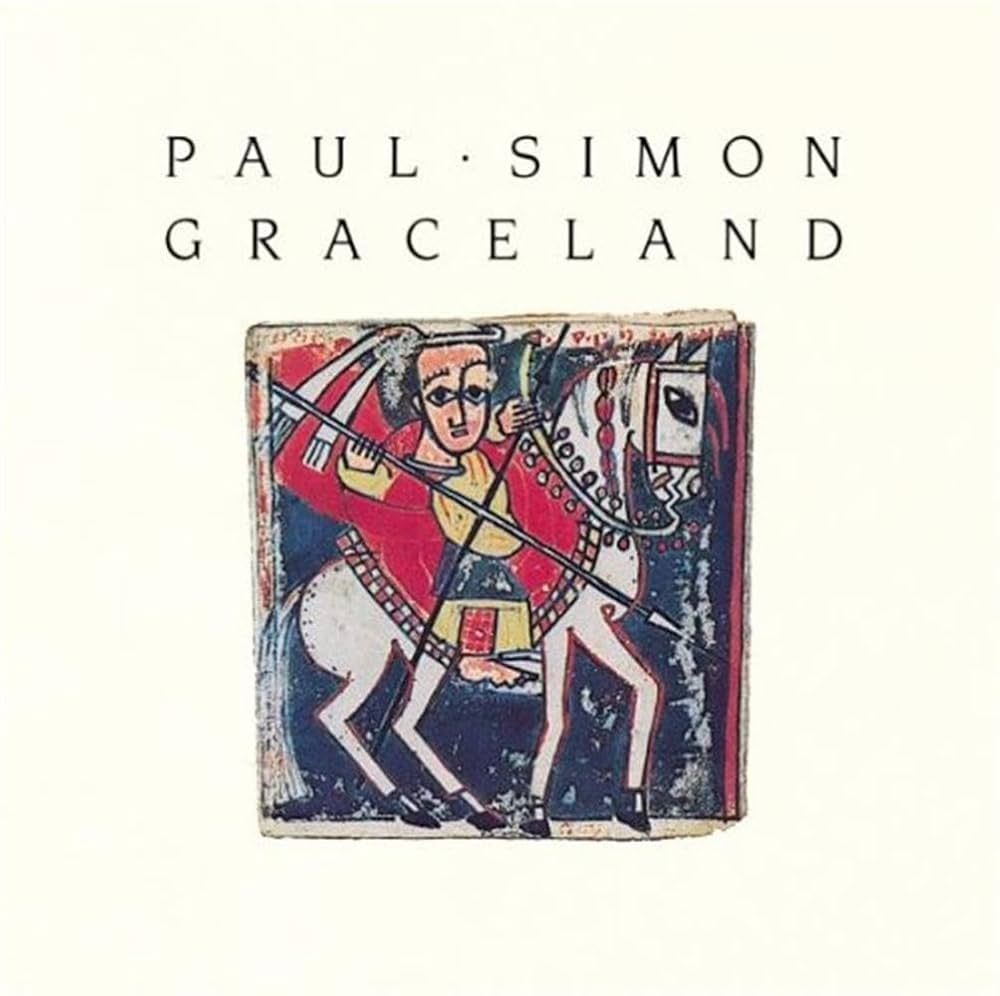
By the mid-1980s, Paul Simon was a highly respected singer-songwriter; yet, he faced a challenging period of both personal and professional turmoil. His partnership with Art Garfunkel had deteriorated, his marriage to Star Wars actress Carrie Fisher had ended, and his previous album, Hearts and Bones (1983), had underperformed commercially. In 1984, Simon discovered a bootleg cassette of mbaqanga, a South African street music style, which captivated him and inspired a bold musical direction. Simon’s interest became the basis for his seventh solo studio album, Graceland (1986).
Graceland blended Simon’s folk-rock roots with South African township styles, including mbaqanga and isicathamiya, alongside pop, rock, a cappella, and zydeco. Recording sessions took place across multiple continents: in Johannesburg, Simon worked with South African musicians including Ladysmith Black Mambazo, guitarist Ray Phiri, and bassist Bakithi Kumalo; in New York, he collaborated with American artists such as Linda Ronstadt, the Everly Brothers, Rockin’ Dopsie and the Twisters, and Los Lobos; and in London, he recorded with Ladysmith Black Mambazo again. These collaborations combined African rhythms, South African vocal styles, and Simon’s melodic songwriting, resulting in music that layered multiple rhythmic and melodic textures across diverse instrumentation.
The album was not without controversy. Recording in South Africa during the UN-imposed cultural boycott against apartheid drew criticism from Artists United Against Apartheid and others who accused Simon of breaking the boycott or appropriating African music. Simon defended the project as a statement in favor of racial collaboration and cultural exchange, emphasizing that it showcased the talents of black South African musicians while raising international awareness of apartheid. Despite initial criticism, Graceland introduced South African music to a broader, racially diverse audience, marking a significant moment in cross-cultural musical collaboration.
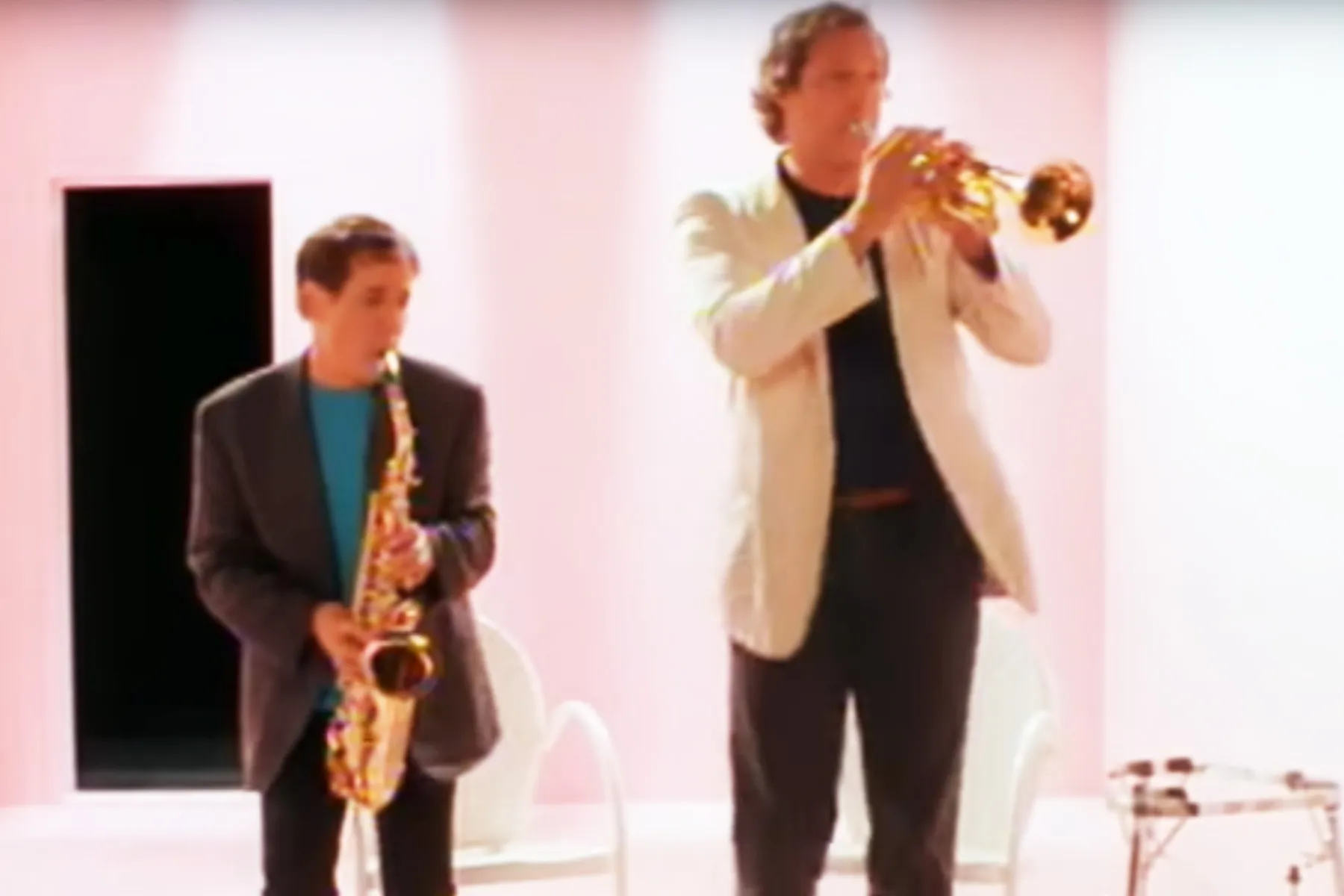
Simon’s use of MTV further increased the album’s impact. The music video for the album’s lead single,“You Can Call Me Al,” directed by Gary Weis, featured Simon and actor Chevy Chase performing humorous lip-syncing and pantomime. The video highlighted Simon’s charisma and musical personality rather than relying on complex narrative or flashy production. Other videos, such as “Diamonds on the Soles of Her Shoes,” emphasized rhythmic interaction, featuring both Simon and his South African collaborators, effectively conveying the album’s musical texture through performance-based visuals.
Musically, Graceland strikes a balance between sophistication and accessibility. Its melodies and hooks remained accessible to mainstream audiences, while intricate rhythms, varied instrumentation, and collaborative arrangements demonstrated Simon’s compositional skill. Notably, “You Can Call Me Al” showcased a multicultural ensemble in New York, including Morris Goldberg, a white South African emigrant whose pennywhistle solo contributed a distinctive sonic texture. In “I Know What I Know,” Simon contrasts the jubilant South African music with lyrics that depict an ironic encounter at an upper-crust cocktail party, creating a deliberate cultural and musical tension that accentuates the album’s complexity. The collaborations with South African and American musicians exemplified Simon’s ethos of embracing difference, allowing each musician to maintain their individual style rather than conforming to a common one.
The commercial and critical success of Graceland reflected the album’s artistic achievements. The album sold over 16 million copies worldwide, won the 1987 Grammy for Album of the Year, and became Simon’s highest-charting album in over a decade. Its innovative blending of American and South African styles helped popularize African music in the West, influencing both mainstream pop and the emerging world music genre. MTV’s platform boosted its reach, demonstrating how performance-based videos could translate complex musical experimentation into a format accessible to a mass audience.
Graceland marked a significant commercial and critical moment in Simon’s career and for 1980s popular music. The album illustrates how an established artist could navigate MTV’s visual landscape while maintaining artistic integrity, celebrate cross-cultural partnership, and create music that was simultaneously innovative, socially conscious, and broadly appealing. In the broadest sense, Graceland embodies the musical possibilities and the complications of living in an increasingly diverse and multicultural world, with each track reflecting a successful and collaborative negotiation of musical and cultural differences.
The Pitfalls of MTV
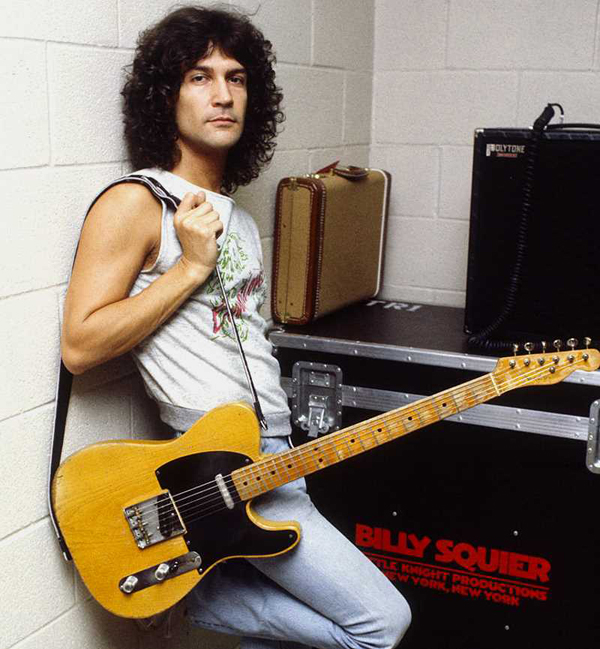
While MTV created opportunities for countless artists, it also carried risks for those who misjudged the network’s visual demands. Before the release of “Rock Me Tonite,” Billy Squier was widely regarded as one of the most promising rock artists of the early 1980s. He achieved both commercial and critical success with his first two albums, The Tale of the Tape(1980) and Don’t Say No (1981), which produced hits such as “The Stroke” and “Lonely is the Night.” Known for his energetic guitar work, catchy hooks, and commanding stage presence, Squier appealed to mainstream rock audiences as well as MTV’s emerging demographic of young viewers. He had become a fixture on tour, opening for major acts such as Kiss, Ted Nugent, and Journey. By the time “Rock Me Tonite” was in production, Squier’s career seemed poised for continued ascent.
The video for“Rock Me Tonite,” directed and choreographed by Kenny Ortega, represented a dramatic departure from the tough, guitar-driven image associated with Squier's early success. In the clip, Squier is shown waking in pastel satin sheets, prancing around a bed while dressing, and donning a pink tank top over a white shirt before picking up a pink guitar to join his band. Although Squier’s original concept aimed to parallel the way fans get ready for a show, the stylized choreography and flowing movements were widely perceived as effeminate or awkward. The stark contrast between the video’s imagery and Squier’s established rock persona created immediate controversy.
The backlash was swift and intense. Critics, musicians, and industry insiders often cite “Rock Me Tonite” as a cautionary tale of MTV’s influence and the risks inherent in translating music to a visual medium. In I Want My MTV, Rob Tannenbaum and Craig Marks note that while opinions on the best videos of the era varied, nearly everyone agreed that Squier’s effort was among the worst. Fellow artists, including Scorpions guitarist Rudolf Schenker and Def Leppard’s Joe Elliott, suggested the video undermined his credibility; Elliott famously remarked, “Mick Jagger can get away with that … Billy Squier can’t.” Fans reportedly reacted negatively, and Squier’s tour ticket sales dropped sharply, creating a direct impact on his career trajectory.
Squier later described the experience as “traumatizing,” recalling how the video’s homoerotic undertones alienated much of his audience and derailed a previously ascending career. Ortega, in contrast, defended the video, insisting that it remained true to Squier’s original concept. The disagreement between Squier and Ortega illustrates the tension between artistic intent and the visual expectations imposed by MTV, where minor miscalculations could be magnified and amplified to a national audience.
The “Rock Me Tonite” controversy illustrates MTV’s dual influence: the network could elevate artists to stardom while also imposing a rigid visual standard that penalized departures from established images. For Squier, MTV’s focus on appearance and performance style proved decisive for his career, indicating how the shift to a visually driven medium required both creativity and strategic planning. “Rock Me Tonite” ultimately stands as a cautionary example of the pitfalls of MTV-era music videos. The case demonstrates that while the network offered unprecedented exposure, it also amplified any misalignment between a performer’s image and audience expectations, sometimes with enduring consequences. Squier’s experience illustrates the delicate balance artists faced as they adapted to a medium that valued visual style alongside musical substance.
Chapter 32: Conclusion

In the 1980s, MTV and the rise of the music video fundamentally changed how audiences experienced rock and popular music. Although the channel’s emphasis on visual presentation sometimes risked overshadowing the music itself, it also gave artists greater freedom to pursue ambitious visual concepts. Similar to how concept albums in the 1970s pushed the boundaries of rock through stylistic experimentation and substantive themes, 1980s music videos integrated sound and image into unified artistic statements. Iconic videos by Michael Jackson, Madonna, and Eurythmics illustrated how visual media could enhance musical storytelling, turning songs into compelling spectacles.
By the 1990s, however, MTV began to shift away from music and toward reality programming, such as The Real World, Road Rules, and later, Total Request Live. These shows reoriented the network's identity, moving it from a platform for artistic experimentation to one focused on celebrity culture and unscripted entertainment. While MTV’s transition disappointed many music fans, it mirrored wider changes in media consumption, as audiences gravitated toward personality-driven content.
MTV’s evolution shows both the opportunities and challenges inherent in merging music with mass media. In the 1980s, the channel elevated pop, rock, and heavy metal to unprecedented cultural prominence, providing musicians with a visual platform that matched the concert hall in influence. Music videos from this era were not simply promotional devices; they constituted a cultural innovation that combined staged performance with narrative imagery. These videos bridged rock’s experimental legacy with its multimedia present, illustrating that artistic ambition could flourish in a medium increasingly formed by visual aesthetics. The music video era marked a distinct period when artistry, commerce, and technology converged, making visual presentation an integral part of the popular music experience.
Chapter 32: Further Reading
Beebe, Roger, and Jason Middleton, eds. Medium Cool: Music Videos from Soundies to Cellphones. Durham: Duke University Press, 2007.
Björnberg, Alf. “Structural Relationships of Music and Images in Music Video.” Popular Music 13, no. 1 (1994): 51–74.
Bordo, Susan. “‘Material Girl’: the Effacements of Postmodern Culture.” In Unbearable Weight: Feminism, Western Culture, and the Body, 245–76. Berkeley, CA: University of California Press, 1993.
Chastagner, Claude. “The Parents’ Music Resource Center: From Information to Censorship.” Popular Music 17 (1999): 179–92.
Denisoff, R. Serge. Inside MTV. New Brunswick, NJ: Transaction, 1988.
Freccero, Carla. “Our Lady of MTV: Madonna’s ‘Like a Prayer.’” Boundary 2 19, no. 2 (1992): 163–83.
Frith, Simon. “Only Dancing: David Bowie Flirts with the Issues.” In Zoot Suits and Second Hand Dresses, edited by Angela McRobbie, 132–40. London: Macmillan, 1989.
———, Andrew Goodwin, and Lawrence Grossberg, eds. Sound and Vision: The Music Video Reader. New York: Routledge, 1993.
———. “The Real Thing—Bruce Springsteen.” In Music for Pleasure, 94–104. New York: Routledge, 1988.
Goodwin, Andrew. Dancing in the Distraction Factory: Music Television and Popular Culture. Minneapolis: University of Minnesota Press, 1992.
George, Nelson. The Michael Jackson Story. London: Faber & Faber, 1984.
Kaplan, E. Ann. Rocking around the Clock: Music Television, Postmodernism and Consumer Culture. New York: Methuen, 1987.
Lewis, Lisa. Gender Politics and MTV: Voicing the Difference. Philadelphia: Temple University Press, 1990.
McCombe, John. “Authenticity, Artifice, Ideology: Heavy Metal Video and MTV’s Second Launch’, 1983–1985.” Metal Music Studies 2, no. 3 (2016): 405–11.
Mercer, Kobena. “‘Monster Metaphors: Notes on Michael Jackson's ‘Thriller.’’” In Sound and Vision: The Music Video Reader, edited by Simon Frith, Andrew Goodwin, and Lawrence Grossberg, 93–108. London: Routledge, 1993.
Shore, Michael. The Rolling Stone Book of Rock Video. London: Rolling Stone Press, 1984.
Tannenbaum, Rob, and Craig Marks. I Want My MTV : The Uncensored Story of the Music Video Revolution. [Rev. ed.]. Plume, 2013.
Thompson, Douglas. Madonna Revealed: The Unauthorized Biography. New York: St. Martin’s Press, 1991.
Vernallis, Carol. Experiencing Music Videos: Aesthetics and Cultural Context. New York: Columbia University Press, 2004.
Weinstein, Deena. Heavy Metal: A Cultural Sociology. New York: Lexington, 1991.
———. Heavy Metal: The Music and Its Culture. 2nd rev. ed. New York: Da Capo, 2000.
Wilson, Janelle, and Gerald E. Markle. “Justify my Ideology: Madonna and Traditional Values.” Popular Music and Society 16, no. 2 (1992): 75–84.
Whiteley, Sheila. Sexing the Groove : Popular Music and Gender. Routledge, 1997.
Young, Stephen. “Like a Critiqued: A Postmodern Essay on Madonna’s Postmodern Video ‘Like a Prayer.’” Popular Music and Society 15, no. 1 (1991): 59–68.