Chapter 17: Soul, Motown, and Stax
“Stand By Me”
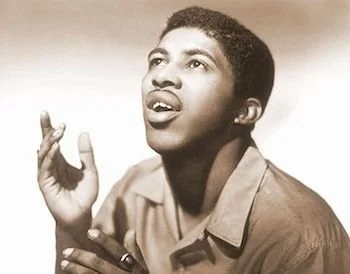
Album/Year Released
Recorded 1961
Artist/Composer
Ben E. King
Written by Ben E. King, Jerry Leiber & Mike Stoller,
Genre/Style
Sweet soul
Song Form
Verse-Chorus
“Stand By Me” (1961), recorded by Ben E. King, was written by King with Jerry Leiber and Mike Stoller, who credited the composition to the pseudonym Elmo Glick. King explained that the title and core idea were adapted from the spiritual “Stand by Me Father,” written by Sam Cooke and J. W. Alexander and recorded by the Soul Stirrers. The connection to "Stand by Me Father" situates the song within a gospel lineage while placing its message in a secular popular format.
Unlike other soul styles that rely on extended improvisation or vocal strain, the sweet soul in “Stand By Me” prioritizes smooth phrasing and studio polish. King’s vocal line stays close to the melody, with minimal ornamentation and steady dynamic control. Sweet soul arrangements use orchestral elements sparingly. In “Stand By Me,” strings reinforce harmonies and introduce independent counterlines. The combination of gospel-derived vocals and pop-oriented studio production was a major aspect of early soul production. As soul music developed in the late 1950s and early 1960s, these methods spread through labels such as Atlantic, Motown, and Stax, producing a sound that balanced gospel influence with commercial recording conventions.
The recording is in 4/4 meter and maintains a steady pulse. The bass introduces the song with a repeating riff that outlines the harmony and establishes the tonal center. A sparse triangle strike accompanies the bass riff, followed by the guitar and an Afro-Brazilian beaded rattle called the cabasa. Drums reinforce the groove with a restrained backbeat, keeping the rhythm stable and unobtrusive. The song relies on a repeating I–vi–IV–V progression within a verse–chorus form, a sequence standard in late-1950s and early-1960s popular music and closely associated with this recording. The consistent progression keeps the arrangement transparent and focuses attention on the vocal line rather than harmonic movement.
“A Change Is Gonna Come”

Album/Year Released
Recorded 1964
Artist/Composer
Sam Cooke
Genre/Style
Soul
Song Form
Verse-chorus
“A Change Is Gonna Come” was recorded by Sam Cooke in 1964 and first appeared on his album Ain’t That Good News. An edited version was later released as a single at the end of that year, serving as the B-side to “Shake.” The song occupies a central place within soul music of the early 1960s, particularly as a work closely tied to the Civil Rights Movement.
The song is set in the compound meter 12/8, though its pacing is deliberately flexible. Instead of a strict tempo, the accompaniment lets Cooke stretch and compress phrases, emphasizing the emotional weight of the lyrics. The flexible treatment of tempo is an important aspect of gospel singing technique, where expressive timing often takes precedence over rhythmic regularity.
Each verse is treated as a distinct musical space, with changes in orchestration marking transitions in the song’s emotional focus. The first verse is carried by strings, the second introduces syncopated horns, and the bridge is supported by timpani. The French horn was chosen for its mellow, subdued tone.
The lyrics draw directly from Cooke’s experiences with racial discrimination, including incidents in cities such as Memphis, Shreveport, and Birmingham. These personal references broaden their meaning, connecting individual encounters to shared experiences among African Americans in the early 1960s. Lines such as “I don’t know what’s up there / beyond the sky” express uncertainty about justice and change, while the final verse’s appeal to a “brother” serves as a metaphor for institutional power. The rejection described here reinforces the song’s sense of struggle while keeping its focus on persistence rather than despair.
Although the song did not match the commercial success of some of Cooke’s earlier releases, it gained lasting cultural significance. Over time, it became closely associated with the Civil Rights Movement and is frequently cited as one of Cooke’s most important compositions. In 2007, the recording was selected for preservation in the Library of Congress’s National Recording Registry in recognition of its cultural and historical significance.
“My Girl”

Album/Year Released
Recorded 1964
Artist/Composer
The Temptations
Written by Smokey Robinson & Ronald White
Genre/Style
Pop, Motown, Soul
Song Form
Verse-chorus with Bridge
“My Girl” (1964), recorded by the Temptations, is built around identifiable hooks in both the instrumental parts and the vocal line. In popular music, a hook is a short, recurring musical idea meant to be immediately recognizable and easy to remember. In this song, the dueling opening bass-and-guitar figure is the primary hook played by bassist James Jamerson and guitarist Robert White of the Funk Brothers, the dual riffs outline the harmony and repeats throughout the track, serving as a recurring motif, a short, recurring musical idea or theme that is repeated and developed throughout a piece of music. The lead vocal melody also features hook-like phrases, especially in the repeated “my girl” refrain, which reinforces the song’s identity through repetition.
The song is set in 4/4 meter with a steady, mid-tempo groove. Drums maintain a consistent backbeat while the bass takes a melodic role instead of staying purely accompanimental, a common Motown practice. Harmonically, the song uses a limited set of chords in the verses and choruses, creating a stable tonal framework. In the instrumental bridge, the music modulates upward to a new key which continues throughout the last chorus.
The arrangement follows a verse–chorus with a bridge form, with textures that expand gradually. Strings and tambourine support the groove and reinforce phrase endings instead of introducing new melodic material. The background vocals are tightly coordinated, providing harmonized responses and repeated syllables like “hey, hey, hey” and “my girl” that echo lead singer David Ruffin’s lead line.
“My Girl” exemplifies the Motown sound, a production style developed by founder Berry Gordy and his staff in Detroit in the early 1960s. The Motown production style combined gospel-influenced vocal phrasing with standardized pop song forms and controlled studio production. Multi-track recording let producers layer melodic bass lines, guitar riffs, orchestral instruments, tambourines, handclaps, and occasional horn or saxophone figures, which became hallmarks of the studio’s sound. Songs were built around repeating hooks and concise forms. Many songs also used the same modulation technique heard in “My Girl,” shifting up in key for the last chorus. Lyrically and sonically, Motown releases avoided abrasive textures and overtly suggestive material, aiming for crossover appeal while maintaining a recognizable house style.
“Respect”

Album/Year Released
Otis Redding: 1965
Aretha Franklin: 1967
Artist/Composer
Otis Redding / Aretha Franklin
Written by Otis Redding
Genre/Style
Southern Soul
Song Form
Strophic with interlude
“Respect” was written and recorded by Otis Redding in 1965 for his album Otis Blue/Otis Redding Sings Soul. Redding’s version uses the Stax studio style, built on a tight rhythm section with guitar, bass, drums, and horns driving a steady 4/4 pulse. The form is largely strophic, with repeated verses supported by short refrains and backing vocal responses. The groove relies on syncopated riffs from guitar and horns, creating forward motion while leaving space for Redding’s vocal delivery. His singing is direct and forceful, with short, clipped phrases that emphasize urgency. Lyrically, the song presents a domestic scenario where respect is requested after labor and provision, a viewpoint reinforced by the persistent groove and emphatic horn figures.
Aretha Franklin’s 1967 recording offers a new musical and narrative interpretation of the song. Produced by Jerry Wexler and arranged by Arif Mardin, the Atlantic version introduces a stronger call-and-response structure rooted in gospel practice. Franklin leads from the piano, supported by backing vocals from her sisters Carolyn and Erma, whose interjections give the recording much of its distinctive personality.The spelling of “R-E-S-P-E-C-T,” along with phrases like “sock it to me” and “TCB,” reframes the song as a direct assertion rather than a request. These elements, absent from Redding’s original, shift the song’s perspective toward personal agency and self-definition.
Franklin’s arrangement increases the sonic texture with added instrumental features and more backing vocals that engage in call-and-response with Franklin. A tenor saxophone solo by King Curtis appears in the interlude, drawing on harmonic material from earlier soul recordings. The rhythm section stays grounded in 4/4 meter, but the groove is sharper and more syncopated, with greater emphasis on accents and breaks. Dynamic contrasts, extended instrumental passages, and layered vocal responses introduce variation within the verse-based structure.
Both recordings share the same basic form and rhythmic framework, but their differences demonstrate how arrangement, vocal approach, and lyrical emphasis can alter the meaning of a song. Redding’s version centers on persistence and demand within a traditional male-oriented framework. Franklin's interpretation recasts the song as a collective feminist statement through gospel-inflected call-and-response, reworked lyrics, and a more assertive vocal stance. Through these changes, her recording became closely associated with broader conversations about gender, dignity, and self-respect in the late 1960s.