Chapter 43: Popular Music in the 2000s
Chapter 43: Introduction
The first decade of the twenty-first century brought a major change in how Americans found, acquired, and made music. The internet was already disrupting the recording business when the decade began, and over the next ten years file sharing, social media, and affordable recording software gave listeners and musicians ways to operate outside systems that had long depended on record labels, radio, and physical sales. These changes occurred during an unsettled period in American life, from the wars that followed September 11 to Hurricane Katrina and the financial crisis of 2008. Popular music developed within both circumstances: an industry losing control over how recordings circulated and a public living through political conflict and growing economic uncertainty.
Digital technology was already altering listening habits at the beginning of the decade. Peer-to-peer services allowed users to exchange enormous numbers of music files without purchasing CDs, contributing to a decline in physical record sales and forcing the recording industry to reconsider how recorded music could be sold online. At the same time, increasingly affordable computers and recording programs lowered the cost of making music. Musicians who once would have needed substantial studio time could record and edit material at home, while the internet provided a way to distribute the finished work.
New online communities gave those recordings somewhere to travel. MySpace became especially important for musicians during the middle of the decade, while blogs allowed writers and listeners to circulate songs outside established music publications. Facebook launched as a Harvard student network in 2004 before expanding far beyond universities, and YouTube arrived in 2005. Together, these platforms changed the relationship between musicians and listeners. Artists could post recordings and communicate directly with fans, while listeners increasingly encountered music through links and recommendations passed among other users.
Digital production also made it easier to take existing recordings apart and recombine them. Danger Mouse’s The Grey Album (2004), for example, placed Jay-Z’s vocals from The Black Album over samples constructed from the Beatles’ White Album. He distributed the project online without authorization from the Beatles’ copyright holders, leading EMI to demand that copies be removed. The dispute drew attention to questions that digital music was making increasingly difficult to avoid: who could alter an existing recording, what counted as a new work, and how copyright law would operate when music could be copied and distributed almost instantly.
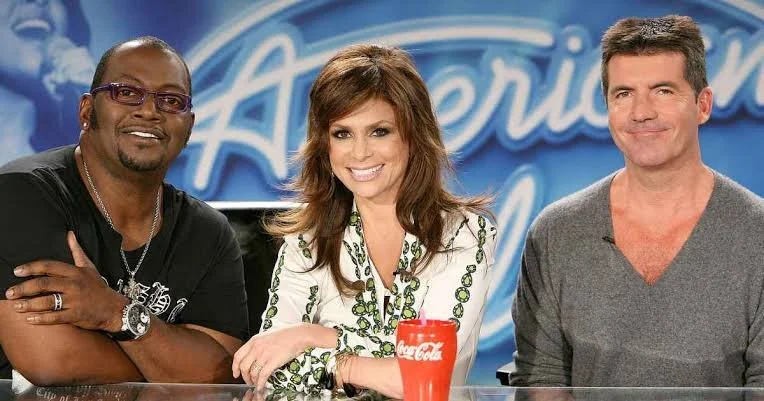
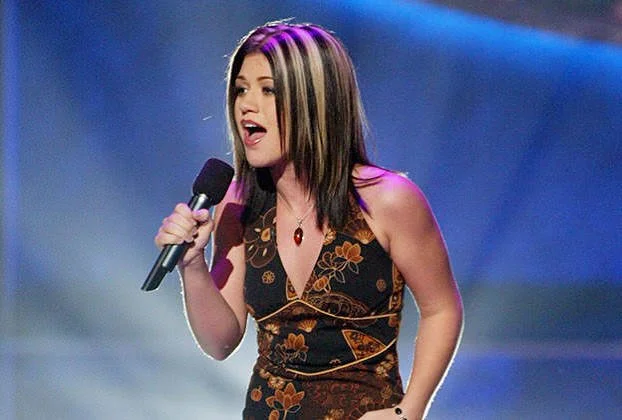
Older routes to mass audiences remained powerful alongside these newer systems. Television was especially important. American Idol, which premiered in the United States in 2002, turned the search for a recording artist into a weekly competition watched by millions of viewers. Contestants performed familiar songs while audiences followed their progress across an entire season, and winners received recording contracts after already gaining national exposure. Kelly Clarkson, Carrie Underwood, and other contestants moved from the program into successful recording careers. The show demonstrated that television could still create mass audiences even as the internet was dividing listeners among a growing number of online communities.
These changes in media unfolded during years of political conflict. President George W. Bush won reelection in 2004 while the United States remained at war in Iraq and Afghanistan. Questions about the Iraq War, national security, and the policies adopted after September 11 continued throughout his second term. Musicians responded from different positions, sometimes addressing the wars and the Bush administration directly and elsewhere incorporating the anxiety surrounding them into less explicitly political songs.
Hurricane Katrina brought another crisis in August 2005. The storm and subsequent flooding devastated New Orleans and other parts of the Gulf Coast, killing more than a thousand people and displacing hundreds of thousands. The destruction was especially severe in Black and low-income communities, and the slow government response produced widespread anger. New Orleans also occupied a particular place in American musical history, so the disaster affected musicians, clubs, neighborhoods, and institutions connected to jazz, rhythm and blues, and other local traditions. Benefit concerts raised money for survivors, while artists used performances and recordings to criticize the response to the disaster.
The presidential election of 2008 took place in a media environment that had changed considerably since the beginning of the decade. Barack Obama’s campaign made extensive use of online organizing, email, social networking, and shareable video as it built support among younger voters and other constituencies. Musicians were working through many of the same communication systems. A performer could maintain a social-media presence, release material online, and communicate with listeners without depending entirely on interviews or traditional publicity. Political campaigns and musicians were learning at roughly the same time that online communities could be turned into large networks of supporters.
Obama entered office, however, during the most severe economic crisis in the United States since the Great Depression. The collapse of the housing market had exposed problems created by risky mortgage lending and securities tied to those loans. Lehman Brothers filed for bankruptcy on September 15, 2008, as the crisis spread through the financial system. Retirement accounts lost value, unemployment rose, and millions of homeowners faced foreclosure. Congress responded in October with the $700 billion Troubled Asset Relief Program (TARP), which gave the federal government authority to stabilize financial institutions.
The effects continued well beyond the end of the decade. Anger over government spending and federal intervention helped the Tea Party movement gain momentum in 2009, while frustration with inequality and corporate power later fed Occupy Wall Street in 2011. Occupy’s phrase “We are the 99%” turned income and wealth inequality into a concise political argument. The two movements came from different political positions, but each grew partly from dissatisfaction with the institutions that had overseen the financial crisis and its aftermath.
For musicians, the recession arrived after years in which the economics of recorded music were already becoming less predictable. CD sales had fallen, unauthorized file sharing had weakened the older sales model, and online distribution had opened new routes to listeners without guaranteeing reliable income. Musicians could make and circulate recordings more easily than before, yet building a sustainable career remained difficult. The same internet that weakened some of the recording industry’s control also gave artists tools for promotion and direct communication that would become even more important during the following decade.
By 2010, popular music existed within a media system quite different from the one in place ten years earlier. Television and major labels still mattered, but they now operated beside social networks, online video, music blogs, digital stores, and file-sharing communities. The changes affected where artists came from and how listeners found them. They also prepared the industry for the next change already underway: the movement from owning downloaded or physical recordings toward streaming access, which would reorganize the music business again during the 2010s.
Streaming Audio
By the second half of the 2000s, buying individual downloads had become an established alternative to purchasing CDs, with Apple’s iTunes Store controlling much of the market. Competitors soon tried to loosen Apple’s hold on digital music. Amazon launched its MP3 store in 2007, selling tracks without the digital rights management restrictions that had limited where many iTunes purchases could be played. The open MP3 format allowed customers to move purchased songs among compatible computers and portable players without remaining inside a single company’s hardware system. Google entered digital music later, launching Google Music in 2011 before incorporating the service into Google Play the following year.
Competition among download stores mattered, but another change was already beginning. Downloading still followed the basic logic of buying a record or CD: the listener paid for a particular recording and kept a copy. Streaming changed that relationship. Instead of building a collection one purchase at a time, listeners could use an online service to hear music stored elsewhere. Subscription services charged for access to large catalogs, while advertising supported listening for users who did not pay a monthly fee. The listener’s collection could now be replaced by access to a much larger library.
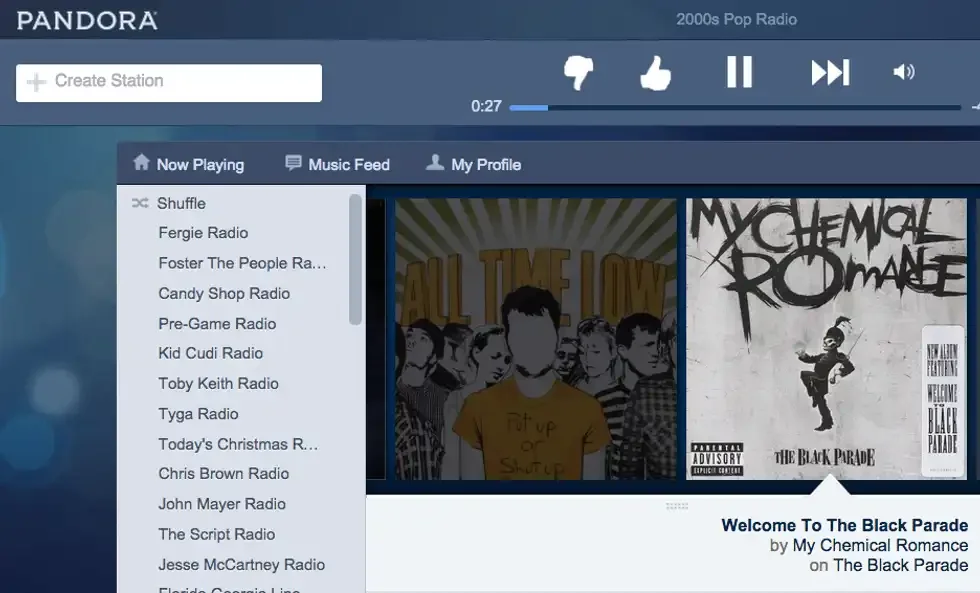
Pandora offered an early version of this model, though it worked more like personalized radio than the on-demand streaming services that followed. Rather than asking listeners to choose every song, Pandora generated stations based on their musical preferences. A user might begin with Led Zeppelin, for example, and hear Cream, the Who, or Deep Purple as Pandora identified recordings with similar musical characteristics.
Behind these recommendations was the Music Genome Project, which analyzed recordings according to hundreds of musical attributes. Trained analysts listened to songs and coded characteristics involving rhythm, harmony, instrumentation, vocal style, guitar tone, and other details. Pandora then compared those characteristics when deciding what to play. Recommendation was therefore based partly on features within the music itself rather than simply on genre labels or the purchasing habits of other listeners.
The listener could influence the station without controlling it completely. A thumbs-up encouraged Pandora to play more music with similar characteristics, while a thumbs-down pushed the station away from that selection. Users could not simply choose any recording from the catalog or replay a song whenever they wanted, and skipping was restricted. These limitations kept Pandora close to the experience of radio, but the station was now different for each listener and adjusted according to that person’s responses.
Pandora introduced a listening habit that would become much more common during the following decade: allowing software to participate in choosing what came next. Earlier forms of music discovery had depended heavily on radio programmers, record-store employees, critics, friends, and personal browsing. Pandora added automated recommendation to that process. Later streaming services would give listeners far more control over individual songs while developing recommendation systems of their own, moving digital music further away from purchasing files and toward continuous access to an enormous online catalog.

While Pandora introduced listeners to personalized streaming, it still left much of the choice in the hands of the service. Spotify offered more personalized choice into their model: access to a large music library in which listeners could decide what to hear and when to hear it. Founded in Stockholm in 2006 by Daniel Ek and Martin Lorentzon, Spotify was developed partly as a legal alternative to the piracy that had become widespread during the previous decade. Rather than trying to persuade listeners to return to buying individual recordings, the company offered much of the convenience that had made unauthorized downloading attractive in the first place.
Spotify launched in several European countries in October 2008 with two basic options. Users could listen for free with advertisements or pay for a premium subscription that removed ads and offered additional features and higher audio quality. More important was the amount of control given to the listener. Unlike Pandora’s radio-style stations, Spotify allowed users to search for specific songs, replay them, listen to complete albums, and build their own playlists. A subscription therefore worked less like a personalized radio station and more like access to a music collection that did not have to be individually purchased.
The playlist became especially important to this model. Listeners could organize songs from different artists and genres into their own collections without owning any of the recordings themselves. Because those playlists existed within a user account, they could also move between computers and, increasingly, mobile devices. Music listening was becoming less dependent on files stored on a particular hard drive or portable player. What mattered was having an account and an internet connection.
Spotify grew quickly as it expanded beyond its original European markets. By 2012, it reported more than 10 million active users, including over 3 million paying subscribers. Its growth offered the recording industry evidence that at least some listeners were willing to pay regularly for access to music rather than purchase individual songs or albums. The model would soon become a major part of the economics of recorded music, while Spotify’s playlists and recommendation systems would give the service an increasing role in deciding which songs listeners encountered.
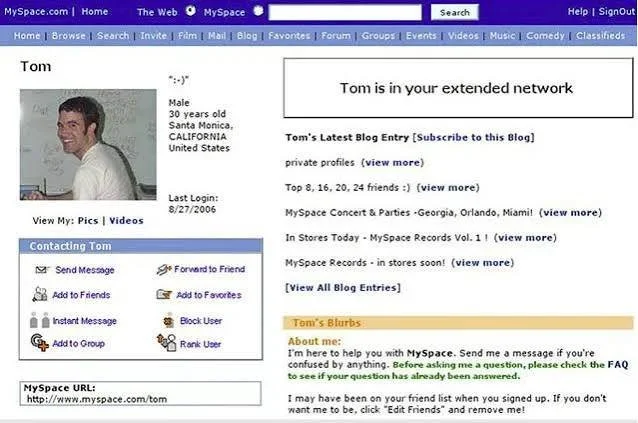
Long before Spotify made streaming a routine way to listen, Myspace was changing how musicians and audiences found one another online. Founded in 2003 by ChrisDeWolfe and Tom Anderson, the site grew rapidly during the middle of the decade and became the dominant social network in the United States before Facebook overtook it. News Corporation purchased Myspace in 2005. Users built personalized pages where they posted photographs and blogs, exchanged messages, and collected networks of “friends.” Music soon became one of the site’s main attractions because artist profiles could play recordings directly. Discovering a musician no longer required hearing a song on the radio or finding an album in a store; a link passed between friends could lead directly to the artist’s page and music.
For musicians, the profile page brought together activities that had previously been spread across several parts of the music business. Artists could post songs alongside photographs, tour dates, and biographical information, then communicate with listeners through comments and messages. New recordings could be uploaded almost immediately, giving musicians a way to test material and see how audiences responded. Fans could add artists as friends and pass their pages to other users, allowing a song to move through networks of listeners with little involvement from radio programmers or record labels.
The public nature of Myspace made audience building unusually visible. Friend counts appeared directly on profiles, turning the size of an artist’s following into something that musicians, fans, and industry figures could see. A band playing small clubs might have thousands of online followers, while a song could circulate well beyond the city where it had been recorded. The artist page became part press kit and part fan community, with the music sitting at the center of both.
For some musicians, that online audience became a route into the recording industry. Lily Allen circulated demos through Myspace before her first album appeared, and Soulja Boy used social networking and online music sites as he built an audience for his early recordings. Adam Young followed a similar path. Recording under the name Owl City, Young made music at home in Minnesota and posted it to Myspace, where the songs began attracting listeners. The attention eventually led to a major-label contract, and “Fireflies” reached number one on the Billboard Hot 100 in 2009. Myspace had allowed a home recording project to develop an audience before a conventional promotional campaign was in place.
As activity around music increased, Myspace tried to build a business around the artists using its platform. Myspace Records launched in 2005 to work with musicians gaining attention on the site. By 2010, the label was working with Universal-affiliated Fontana Distribution and Interscope on manufacturing, marketing, and distribution, while Myspace also offered digital music through the site. A platform that had initially given musicians a way to circulate recordings outside the usual label system was now becoming another place where the industry searched for artists who had already demonstrated that they could attract listeners.
The scale of the music uploaded to Myspace continued to grow even as the social network itself began losing users. By 2010, the platform reported hosting more than eight million artists. By 2014, more than 14 million musicians had uploaded over 53 million songs. Those numbers included established performers alongside unsigned bands, bedroom musicians, local scenes, demos, and recordings that may never have existed anywhere else online. Myspace had accumulated an enormous collection of music from a period when posting a song to a social-network profile was becoming an ordinary part of being a musician.
Its dominance did not last. Facebook surpassed Myspace in worldwide traffic in 2008, and listeners gradually moved toward other services. YouTube became increasingly important for hearing and sharing music, while SoundCloud later offered musicians a platform built more directly around audio. The particular services changed, but the expectations Myspace had helped establish remained. Artists increasingly needed an online identity alongside their recordings, and communication with listeners became an ongoing part of promotion rather than something handled only through interviews, advertisements, or fan clubs.
Myspace’s decline also exposed a problem that was easy to overlook during the excitement surrounding digital distribution: putting music online did not guarantee that it would remain there. In 2019, Myspace acknowledged that a failed server migration had resulted in the loss of files uploaded during its earlier years, including more than fifty million songs from 2003 through 2015. For musicians who had treated the site as the main home for demos or early recordings, some of that material disappeared with the platform.
A small portion survived because copies had been collected elsewhere. The Internet Archive later obtained roughly 490,000 MP3 files gathered independently from Myspace between 2008 and 2010 and made them available in a collection commonly called the “Myspace Dragon Hoard.” The recovery represented only a fraction of what had once been hosted on the site. By early 2022, Myspace had disabled music uploading and playback altogether.
By then, the practices that had made Myspace unusual in the mid-2000s were common across the internet. Musicians routinely posted their own work, maintained direct contact with followers, and built audiences through social platforms before attracting attention from established parts of the music industry. Myspace itself faded, but the basic relationship it created between the artist profile, the recording, and the online audience continued on YouTube, SoundCloud, Instagram, TikTok, and the platforms that followed.
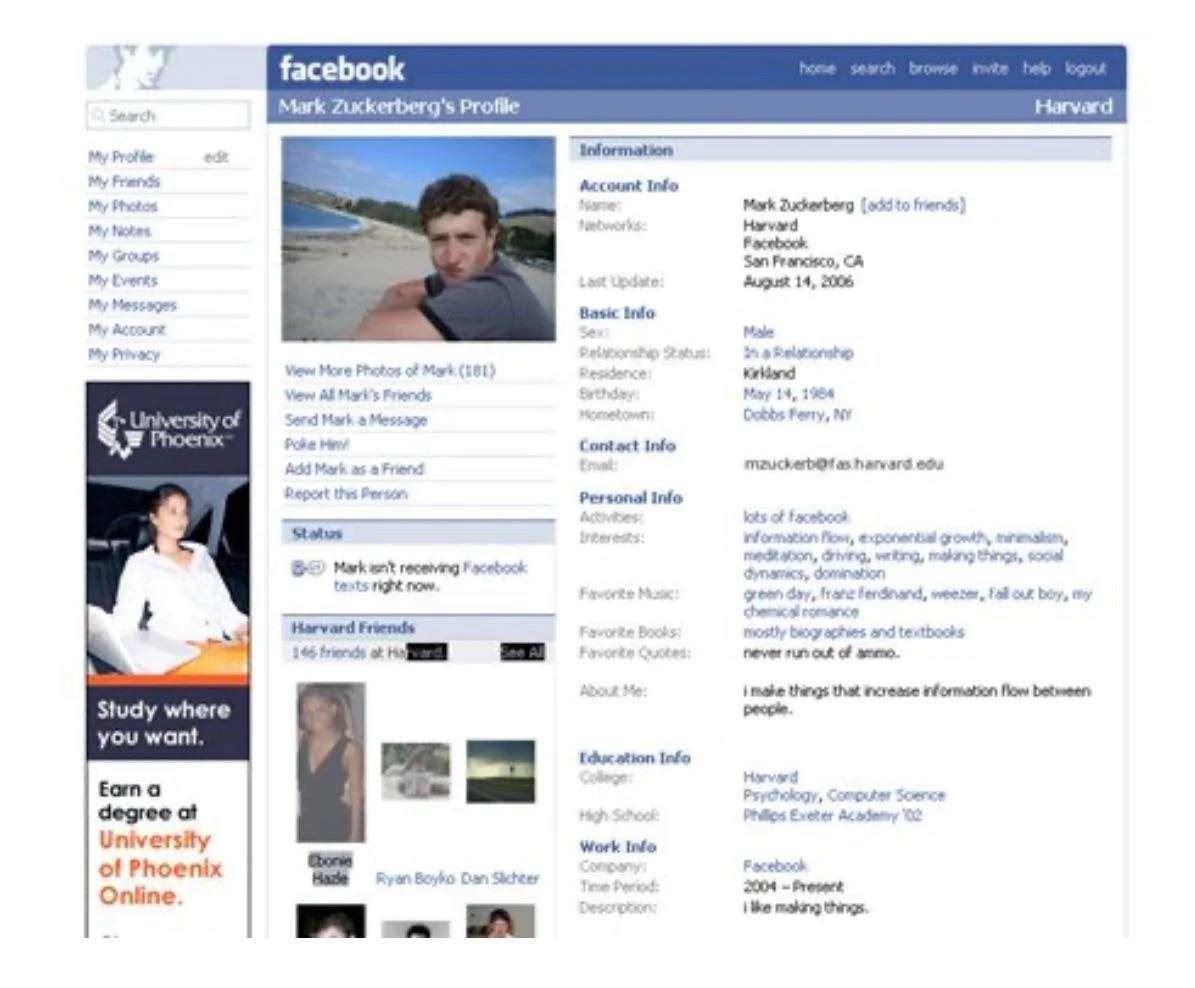
As Myspace began losing users, Facebook became the main social network through which many musicians maintained contact with their audiences. Launched in 2004 by Mark Zuckerberg and other Harvard students, Facebook initially served college students before opening more widely and eventually surpassing Myspace in worldwide traffic in 2008. Musicians followed audiences onto the new platform, carrying over many of the promotional practices that had developed on Myspace while adapting them to a different kind of social network.
Facebook placed less emphasis on the customized artist page that had been a major feature of Myspace. Instead, music circulated through an interconnected stream of posts and user activity. Artists could announce an album, post a video, share photographs from a tour, or direct followers to a new song. Fans could then respond and pass the material into their own networks. A post from a musician could reach people who had never deliberately visited that artist’s page because a friend had commented on it or shared it.
Other features made Facebook useful for the practical work of maintaining an audience. Event pages gave musicians and venues a place to advertise concerts and allowed users to indicate whether they planned to attend. Artist pages collected announcements and conversations in one location, while fan groups gave listeners spaces to exchange information independently. The introduction of the “Like” button in 2009 added a simple public measure of response. Musicians and their teams could see which posts attracted attention and adjust their online promotion accordingly.
These tools were useful to performers at different stages of their careers. Major pop artists such as Lady Gaga and Rihanna accumulated large Facebook followings that could be reached whenever a new recording or tour was announced. Independent musicians used the same basic tools on a smaller scale, posting live clips or new songs and asking followers to share them. The difference between a fan and a promoter became less distinct when listeners could distribute an artist’s material through their own social networks with a single post.
Facebook also changed how often musicians were expected to communicate with audiences. Promotion had once clustered around an album release, tour, or television appearance. Social media encouraged a more continuous presence. Photographs from backstage and brief personal updates could fill the periods between formal releases. Artists were increasingly presenting both their music and an ongoing public version of themselves, a practice that would become even more pronounced with Instagram, Twitter, and later TikTok.
Music discovery on Facebook usually happened through this social activity rather than through a dedicated music library. A listener might encounter a song because a friend posted a video or joined a discussion about an artist. As Facebook added native video and entered partnerships involving music, recordings could circulate without users leaving the platform as often. YouTube remained more directly centered on watching and searching for music videos, while Facebook made music one type of content moving through a much larger social feed.
The News Feed gradually added another element to that process. Facebook increasingly used algorithms to determine which posts appeared prominently rather than displaying everything in a simple chronological order. As a result, musicians could no longer assume that every follower would see every post. Visibility depended partly on how Facebook ranked material and how other users responded to it. Social sharing was becoming intertwined with automated selection.
That combination would become familiar across digital music during the 2010s. Listeners still recommended songs to one another, but platforms increasingly decided which recommendations, posts, and recordings received the most visibility. Facebook therefore carried online music promotion beyond the artist-profile model associated with Myspace. Musicians were now working inside a social feed where attention depended on networks of fans as well as the software organizing what those fans saw.
YouTube

Facebook showed how music could move through networks of users, but another platform made the recording itself easier to circulate. When YouTube appeared in 2005, a music video, live performance, or homemade recording could be uploaded once and passed among millions of viewers through a single link. The site allowed anyone with an account to upload a video that other users could watch and share without owning the file themselves. A music video, live performance, or homemade recording could travel far beyond an artist’s existing audience. The consequences for musicians were immediate. A song no longer needed radio airplay, MTV rotation, or an established fan community before its video could begin circulating online; a single clip could reach people who had never encountered the performer anywhere else.
YouTube cofounder Jawed Karim later connected the idea for the site partly to the difficulty of finding online video of widely discussed events. One example was the 2004 Super Bowl XXXVIII halftime show, during which Justin Timberlake briefly exposed Janet Jackson’s breast during their performance. The incident received enormous media attention, yet finding a clip online was surprisingly difficult. Karim also cited the 2004 Indian Ocean tsunami as another event for which people wanted easily accessible video. YouTube addressed that problem with a simple system: users could upload clips to one searchable site and send other people a link.
Music fit naturally into that system. Early YouTube contained home movies, comedy, television clips, and other amateur material, but musicians quickly began uploading performances and music videos. Fans also posted concert footage, covers, and recordings of their own. An artist no longer needed television rotation to place a video in front of viewers. Once a clip was online, users could send it through email, embed it on blogs or Myspace pages, and pass it through other online communities. The video itself became something audiences could circulate.
OK Go provided an early example of how far that circulation could carry a music video. In 2005, the Chicago band made a video for “A Million Ways” in which the four members performed a synchronized dance routine in a backyard. The production reportedly cost only a few dollars and had none of the elaborate sets or effects associated with expensive label-funded videos. Copies spread rapidly online, eventually drawing millions of views. OK Go had already released music and toured before the video appeared, but the clip introduced the band to a much larger online audience.
The response encouraged the group to treat the music video differently from the television-oriented format that had developed around MTV. Their next widely circulated video, “Here It Goes Again” (2006), showed the band performing a choreographed routine on treadmills in a single continuous shot. The appeal came partly from the simplicity of the idea: viewers could understand the joke immediately and send the clip to someone else without needing much context. The video became closely associated with the song itself, showing how online circulation could make the visual presentation of a recording part of its success.
Major record companies soon began negotiating with YouTube rather than treating user-uploaded music only as a copyright problem. In 2006, Warner Music Group reached an agreement to make music videos from its catalog available on the platform and to receive revenue from advertising connected to its material. Other labels developed arrangements of their own as YouTube became increasingly difficult for the recording industry to ignore.
Google purchased YouTube for $1.65 billion in stock later in 2006. Under Google, the site expanded rapidly while developing advertising and copyright systems intended to accommodate both users and rights holders. Music became one of its largest categories. Official videos existed beside fan uploads and live performances, placing material that had once been distributed through separate channels inside the same searchable platform.
Radio airplay and record sales had long provided much of the data used by the Billboard charts, but neither fully captured the millions of times audiences were now playing songs through online video. In 2013, Billboard added U.S. YouTube streaming data to the Hot 100 and several genre charts. A view on an online video platform could now contribute directly to a song’s chart position.
The change became especially visible when songs generated enormous online audiences before traditional measures had fully registered their popularity. Music discovery was no longer confined to radio programmers, record stores, or even an artist’s own social-media followers. A viewer could encounter a song through a recommendation, an embedded video, a parody, or a link sent by a friend. YouTube placed the recording within a culture of constant sharing, where the audience participated directly in how quickly and how far a song traveled.

YouTube’s ability to circulate amateur performances soon created a new route into the recording industry, as Justin Bieber’s early career demonstrated. In 2007, when he was twelve, Bieber’s mother began uploading videos of him singing covers of pop and R&B songs. The recordings were simple home videos rather than professional promotional material, with Bieber performing songs associated with artists such as Ne-Yo and Chris Brown. People searching for those songs could encounter Bieber’s versions alongside recordings by established performers, allowing him to attract listeners before he had a manager or recording contract.
One of those viewers was Scooter Braun, a talent manager and marketing executive who came across Bieber while searching YouTube in 2007. After watching more of his videos, Braun contacted Bieber’s family and eventually brought him to Atlanta. There, Bieber performed for Usher and began working toward a recording contract with Island Records. The sequence would have been difficult to imagine only a few years earlier: a manager had discovered an unknown Canadian teenager through videos uploaded from home and used the audience forming around those clips as evidence that the singer could attract listeners.
Bieber released his debut EP, My World, in 2009 at age fifteen. Its singles “One Time” and “One Less Lonely Girl” reached the Billboard Hot 100, while the EP established him with a much larger pop audience. He followed it with the album My World 2.0 in 2010, co-writing several of its songs. “Baby,” featuring Ludacris, reached number five on the Hot 100, and “Eenie Meenie,” recorded with Sean Kingston, also became a charting single. Bieber had entered the conventional major-label pop business, but the online audience that preceded his contract continued to influence how his career developed.
YouTube continued to amplify that audience after Bieber became an established recording artist. The video for “Baby” became the most-viewed video on the platform in 2010 and remained in that position until Psy’s “Gangnam Style” passed it in 2012. By then it had accumulated hundreds of millions of views. Bieber’s following also spread across Twitter and other social platforms, where fans calling themselves “Beliebers” could follow his activities and communicate with one another throughout the day. Celebrity was becoming continuous rather than confined to albums, concerts, television appearances, and magazine coverage.
Bieber was part of a wider pattern. Dutch singer Esmée Denters attracted attention by posting cover songs to YouTube and later signed with Tennman Records, Justin Timberlake’s label, before releasing Outta Here in 2009. Filipino singer Jake Zyrus, then performing as Charice Pempengco, reached international audiences after videos of television performances circulated widely on YouTube and later released Charice through Reprise Records in 2010. Their careers differed, but each showed record companies paying attention to musicians who had already attracted online audiences.
The relationship between artist discovery and the recording industry was therefore changing. Labels still supplied recording budgets, marketing, distribution, and industry connections, but they no longer had to be the first institution to identify a performer. Managers and label executives could search YouTube for musicians whose videos were already generating interest. View counts and online followings offered visible evidence of an audience before a contract was signed. For aspiring musicians, uploading a performance could function as an informal audition available to anyone who happened to find it.
By the early 2010s, YouTube occupied several positions within the music business at once. An unsigned musician could use it to attract attention, while an established artist could release an official video to an international audience. Fans could upload covers and concert footage, and labels could use the platform to promote recordings from their catalogs. Views eventually became important enough that Billboard incorporated U.S. YouTube data into the Hot 100 in 2013. Online video had moved from an alternative promotional outlet into the systems used to measure popular music.
YouTube was only one part of a larger change already underway. During the same period, physical sales were declining, digital downloads had separated individual songs from albums, and streaming was beginning to replace ownership with access. The way listeners paid for music had changed repeatedly in little more than a decade: first through CDs, then through downloadable files, and increasingly through paid access to recordings online. Each format encouraged different listening habits and gave the music industry different ways to make money.
The album consequently faced new competition from the individual track. Digital stores allowed listeners to buy one song without purchasing the rest of an album, while YouTube allowed them to play particular recordings without buying anything. Streaming would make individual selection easier still. Musicians gained more flexibility over when and how they released material, and audiences no longer had to organize their listening around the album schedules established by record companies.
Promotion was changing at the same time. Radio and television still mattered, and record labels retained considerable financial and promotional power, but they now operated beside social networks, blogs, video platforms, and streaming services. A song could begin circulating through a Myspace page or YouTube video before receiving substantial radio play. Fans themselves participated in distribution by posting links and sharing videos through their own networks.
The result was a more fragmented system for popular music. Earlier formats such as Top 40 radio, album-oriented rock stations, and MTV had concentrated large audiences around a limited number of songs and performers. Online listening gave audiences far more choices and made smaller musical communities easier to sustain. As those communities multiplied, the boundaries separating mainstream pop from specialized genres became harder to locate. The digital music business had opened more routes between musicians and listeners while also giving new intermediaries—platforms, recommendation systems, search rankings, and visible measures of online attention—a greater role in deciding what audiences encountered..
Hip-Hop in the 2000s
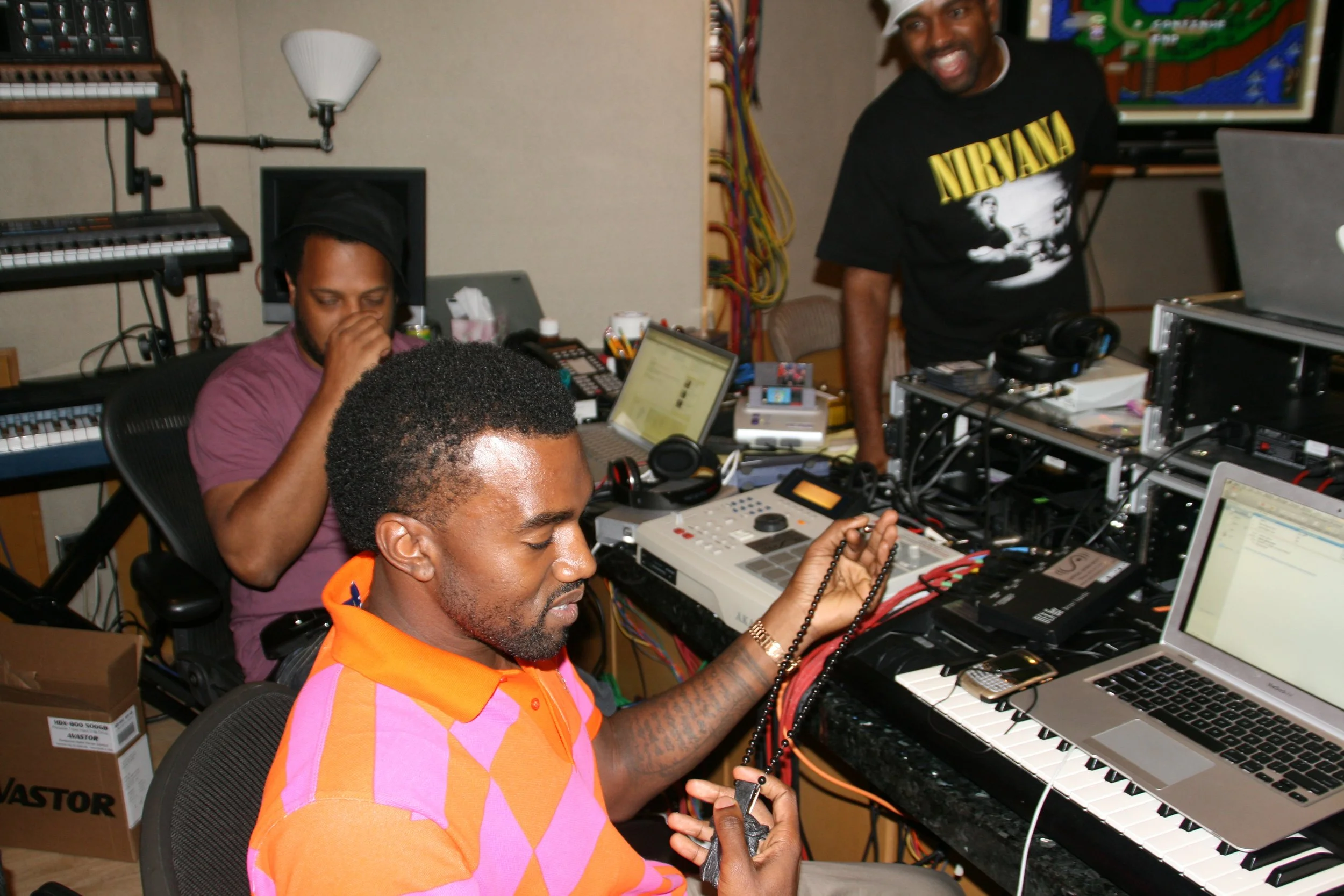
The changing media system affected every part of popular music, but hip-hop provides an especially useful example of what happened when digital circulation coincided with enormous commercial growth. By the beginning of the 2000s, hip-hop had moved far beyond the commercial position it occupied during its early decades. Rap records regularly reached the top of the charts, major labels invested heavily in the genre, and hip-hop had become increasingly connected to fashion, film, advertising, and other parts of popular culture. Success on this scale raised an old question in a new form. Hip-hop had developed partly as the music of communities excluded from many established forms of cultural and economic power. What happened when the genre itself became part of the mainstream?
Larry Starr and Christopher Waterman identify three broad responses that help explain how artists approached that question during the early twenty-first century. These were not separate schools or fixed categories. Musicians could move among them or pursue several at once. Each gave artists a different way to deal with the tension between hip-hop’s outsider identity and the wealth and visibility available to successful performers.
One response centered on the hustler, a figure already familiar within hip-hop but given new possibilities by the genre’s commercial growth. Earlier rap had often treated hustling as a way of surviving or gaining power within street economies. As successful rappers gained access to larger amounts of capital, that identity could extend into legitimate business. The hustler became an entrepreneur who approached record labels, clothing companies, beverages, and other ventures with the same language of ambition and self-reliance found in earlier street narratives. Wealth could therefore be incorporated into an artist’s identity rather than treated simply as evidence of having left hip-hop behind.
The changing economics of recorded music made this strategy increasingly practical. As CD sales declined during the 2000s, musicians had greater reason to earn money outside album sales. A successful recording career could provide the audience for a clothing line or another business, while those ventures could strengthen the public identity surrounding the performer. Music and entrepreneurship became closely connected, and the artist’s career could extend well beyond making records.
A second response concerned what commercial success allowed musicians to do with the music itself. Once an artist had established a large audience, success could provide room to take greater creative risks. Albums became places for personal writing and unusual production choices rather than simply collections of singles designed to reproduce an earlier hit. Hip-hop artists increasingly claimed the kind of creative authority long associated with major rock performers, treating an album as an individual work whose sound could change considerably from one release to the next.
That approach also placed more attention on the artist as a public personality. Autobiographical writing had long existed in hip-hop, but celebrity created new subjects: fame, family conflict, mental health, consumerism, and the pressures of public attention could enter the music alongside subjects associated with earlier rap. Provocation and spectacle remained useful, yet they could exist beside unusually private material. Mainstream visibility therefore became something artists could write about as well as something they pursued.
The third response involved the boundaries of hip-hop itself. Sampling had connected rap to other musical traditions from the beginning, and collaborations between rappers and R&B singers were already common. During the 2000s, however, the distinctions among hip-hop, R&B, pop, rock, and electronic music became increasingly difficult to maintain. Artists could sing as well as rap, build songs around electronic production, or construct albums from musical references that crossed several established categories.
Digital listening made these exchanges easier for audiences to follow. MP3 collections and online music sites placed recordings from different genres beside one another, while Myspace and YouTube allowed songs to circulate outside the radio formats that had previously separated many styles. The same listener could move among rap, R&B, rock, and pop without changing stations or visiting different sections of a record store. Musicians were working within those changing listening habits, and genre labels became less restrictive guides to what an album was expected to sound like.
The three responses frequently overlapped. Entrepreneurship could finance musical experimentation, while stylistic freedom could bring an artist into new markets and audiences. A musician might adopt the language of the hustler in one context and pursue highly personal songwriting in another. Starr and Waterman’s framework is therefore most useful as a way of tracing the choices available to hip-hop artists once commercial success had become part of the genre’s normal environment. The artists discussed in the following sections made those choices differently, producing some of the decade’s debates over money, authorship, celebrity, and the boundaries of hip-hop itself.
Jay-Z
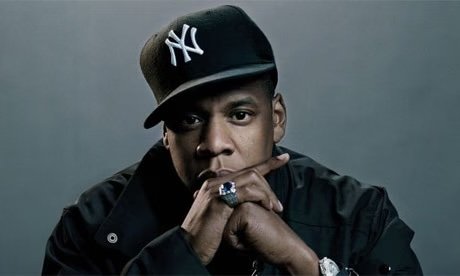
Shawn “Jay-Z” Carter shows how the hustler could function as both a musical persona and a model for doing business in hip-hop. Raised in Brooklyn’s Marcy Houses, Carter sold crack cocaine as a teenager and young adult before establishing himself as a rapper. Those experiences became recurring material in his lyrics, where drug dealing appears through stories about money, danger, ambition, and the calculations required to survive. As his career grew, Jay-Z carried the language of hustling into legitimate business, presenting the transition from street dealer to recording artist and executive as a continuation of the same pursuit of economic independence.
His recording career developed slowly. Jay-Z appeared with his mentor Jaz-O on “Hawaiian Sophie” and “The Originators” before gaining further attention through appearances with other New York rappers, including Big Daddy Kane’s “Show and Prove” in 1994. Unable to secure the recording deal he wanted, he formed Roc-a-Fella Records with Damon Dash and Kareem “Biggs” Burke. The decision gave the partners control over the release of Jay-Z’s debut album, Reasonable Doubt (1996), before they reached a distribution agreement with Priority Records.
Reasonable Doubt established the character that Jay-Z would return to throughout his music. Its songs are told largely from the perspective of a dealer who understands both the rewards and dangers of the drug trade. The production relies heavily on samples, with soul and jazz recordings providing a restrained setting for Jay-Z’s conversational delivery. He often sounds detached from the violence and anxiety he describes, giving the narrator the composure of someone constantly evaluating risk. The album also introduced a tension that would follow him throughout his career: the desire to escape street life without denying the experiences that had given him his material and public identity.
As Jay-Z’s audience grew, that tension became increasingly connected to wealth. In My Lifetime, Vol. 1 (1997) moved toward a more polished sound, with production that included work from Sean “Puff Daddy” Combs’s Bad Boy circle. His commercial audience expanded considerably with Vol. 2... Hard Knock Life (1998). The title track built its chorus from “It’s the Hard Knock Life” from the Broadway musical Annie, placing Jay-Z’s verses about street life beside the voices of children singing about hardship. The unexpected sample helped the song reach audiences beyond rap radio, while the album sold more than five million copies in the United States.
Jay-Z continued that run with Vol. 3... Life and Times of S. Carter (1999), which included “Big Pimpin’,” recorded with the Texas rap duo UGK. By this point, luxury and consumption had become increasingly prominent in his music. Expensive cars, jewelry, travel, and nightlife appeared beside memories of drug dealing. Wealth was part of the narrative itself: the former dealer could point to material success as evidence that he had mastered another economic system.
His growing fame also brought legal problems into public view. In December 1999, Jay-Z was accused of stabbing record executive Lance “Un” Rivera during an altercation at a Manhattan nightclub. He later pleaded guilty to third-degree assault and received three years of probation. In 2001, competition within New York hip-hop produced another public conflict when Jay-Z exchanged diss tracks with Nas. Their feud became one of the period’s most closely followed rap rivalries before the two reconciled publicly at Jay-Z’s “I Declare War” concert in 2005.
The business side of Jay-Z’s career was expanding at the same time. Roc-a-Fella had begun as a solution to the difficulty of securing a satisfactory record deal, but it gave him experience as both performer and label owner. In 1999, Rocawear extended the Roc-a-Fella name into clothing. Hip-hop fashion was already a large market, and Jay-Z treated his audience as something that could support businesses outside recorded music. He later sold the rights to the Rocawear brand to Iconix Brand Group in 2007 for $204 million while retaining an interest in its product development.
Other investments followed. Jay-Z opened the first 40/40 Club in New York in 2003 and later became a minority owner of the New Jersey Nets. These ventures made the relationship between his lyrics and business career unusually direct. The rapper who described himself as a hustler was now using the income and audience produced by music to acquire ownership stakes and build companies. Entrepreneurship became part of the public character surrounding the recordings rather than a separate activity conducted away from them.
Jay-Z continued releasing albums throughout this expansion. The Black Album (2003) was presented as his final record before a planned retirement, and its songs frequently look back over his career. The retirement proved temporary, but it coincided with another move into the business side of the industry. In 2004, Jay-Z became president and CEO of Def Jam Recordings, placing a rapper who had once created an independent label because he could not secure the deal he wanted in charge of one of hip-hop’s established record companies.
He returned to recording with Kingdom Come (2006). His work during this period also moved into philanthropy and international issues. Through a partnership with the United Nations, Jay-Z drew attention to problems involving access to clean water in parts of Africa. His later albums American Gangster (2007) and The Blueprint 3 (2009) continued his recording career as his business interests expanded. In 2008, he married Beyoncé, and the following year he left Def Jam and established Roc Nation, a company working across artist management, recording, publishing, and touring.
His 2008 appearance at Britain’s Glastonbury Festival offered another example of how far hip-hop had moved into spaces once associated mainly with rock. Oasis guitarist Noel Gallagher objected publicly to the decision to have a rapper headline the festival. Jay-Z responded onstage by opening his set with a deliberately awkward rendition of Oasis’s “Wonderwall” before moving into his own “99 Problems.” The joke answered the controversy without requiring a speech and turned the argument over whether hip-hop belonged at a major rock festival into part of the performance.
During the 2010s, Jay-Z continued moving between music and business. His memoir Decoded (2010) combined autobiography with explanations of his lyrics, giving readers a detailed account of how experiences from Marcy Houses and the drug trade entered his writing. Magna Carta Holy Grail (2013) continued his run of commercially successful albums and included collaborations with Beyoncé and Justin Timberlake.
Jay-Z also moved directly into the streaming business. In 2015, he acquired the company behind Tidal and relaunched the service with a group of musician shareholders that included Beyoncé, Rihanna, Kanye West, Nicki Minaj, Jack White, Arcade Fire, and Madonna. Tidal presented artist ownership as an alternative to streaming companies controlled primarily by technology firms, extending Jay-Z’s long-standing interest in owning more of the businesses through which his music was sold or distributed.
Roc Nation expanded into sports and live entertainment as well. In 2019, the company entered a partnership with the National Football League involving live-music entertainment and the league’s social-justice initiative. Roc Nation subsequently became involved in producing the Super Bowl halftime show. The partnership drew criticism because it came after the NFL’s dispute with Colin Kaepernick and other players who had protested racial injustice during the national anthem, placing Jay-Z in another debate over the relationship between protest, institutional power, and commercial partnership.
Forbes identified Jay-Z as hip-hop’s first billionaire in 2019 which gave the hustler persona of Reasonable Doubt a very different ending point. His early songs described someone trying to accumulate enough money to escape the dangers of the drug trade; decades later, the same language of ownership and independence had become attached to record companies, clothing, entertainment businesses, and streaming. Jay-Z’s career shows why the hustler proved so adaptable to mainstream hip-hop: commercial success could be incorporated into the persona rather than requiring the artist to abandon it.
Kanye West
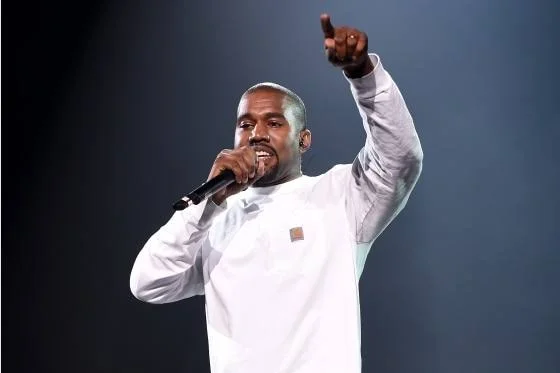
Jay-Z’s expansion of Roc-A-Fella also created opportunities for another artist who would answer the possibilities of mainstream hip-hop differently. Kanye West first gained wide attention as a producer within Jay-Z’s musical circle before establishing himself as a rapper with a public identity far removed from Jay-Z’s hustler persona. Kanye West entered the music industry as a producer before establishing himself as a rapper. Growing up in Chicago, he became involved in the city’s hip-hop scene as a teenager and began experimenting with sampling and beat programming around age fifteen. By the mid-1990s, he was producing professionally, and at nineteen he received an early album credit for his work on Chicago rapper Grav’s Down to Earth (1996). West briefly attended Chicago State University before leaving college to pursue music full-time, a decision he would later turn into part of the story surrounding his first album.
During these early years, West developed a production style built heavily around samples from 1960s and 1970s soul records. He often sped up a vocal passage until the singer’s voice rose in pitch, then cut the sample into short phrases that could be repeated over newly programmed drums. The technique became known as “chipmunk soul.” West did not invent the approach—earlier hip-hop producers, including RZA, had experimented with pitched vocal samples—but he made it especially prominent in mainstream rap during the early 2000s. The recognizable voices and melodies of older soul recordings gave his beats an emotional quality that could remain audible even after the original song had been broken into fragments.
West’s production career accelerated after he began working with Roc-A-Fella Records in New York around 2000. His work on Jay-Z’s The Blueprint (2001) brought his production to a much larger audience. On “Izzo (H.O.V.A.),” West built the beat around a sped-up sample of the Jackson 5’s “I Want You Back,” while “Takeover” used a sample from the Doors within a much harder arrangement. The contrast between those tracks also showed that his production was broader than the soul-sampling style with which he became associated.
More work followed for artists inside and outside Roc-A-Fella. West produced Jay-Z and Beyoncé’s “’03 Bonnie & Clyde,” Alicia Keys’s “You Don’t Know My Name,” Talib Kweli’s “Get By,” and Ludacris’s “Stand Up.” By the early 2000s, he had established himself as a producer who could work across different corners of hip-hop and R&B. Production, however, was never his only goal. West wanted to record as a rapper, and convincing the industry to take that ambition seriously proved more difficult.
Part of the problem was the way record executives understood the commercial image of a rapper at the time. West had grown up in a middle-class household and did not have the street or gang background that had become common in the public personas of many successful rappers. His clothes reinforced the difference. He wore polo shirts, sweaters, and designer shoes at a time when mainstream rap fashion leaned heavily toward oversized streetwear. Executives who valued him as a producer were less certain that audiences would accept him as a performer.
West eventually wrote openly about those differences rather than trying to imitate the personas around him. A serious car accident in October 2002 gave him an early opportunity to do so. The crash fractured his jaw, which had to be wired shut during his recovery. Within weeks, he recorded “Through the Wire,” rapping with his injured jaw over a sample of Chaka Khan’s “Through the Fire.” The circumstances of the recording became part of the song itself: West describes the accident and his recovery while the altered pronunciation caused by his injury remains audible throughout the track. The recording helped persuade Roc-A-Fella to support him as a rapper as well as a producer.
The College Dropout arrived in 2004 after several delays. The album drew from the soul-based production West had developed for other artists, but its subject matter separated him from much of the mainstream rap surrounding it. He wrote about college and low-wage employment, along with religion and consumer culture. His own insecurities also became recurring material. Instead of constructing an invulnerable character, West frequently admitted to wanting status and luxury even while questioning why those things mattered to him.
“All Falls Down” develops that contradiction through consumerism and insecurity. West describes spending money on clothing and jewelry as a response to self-consciousness, eventually admitting, “We all self-conscious, I’m just the first to admit it.” The criticism therefore includes the narrator himself. He understands the pressures behind conspicuous consumption while continuing to participate in it, allowing the song to examine the appeal of status without pretending that awareness automatically frees someone from it.
“Jesus Walks” brought another subject rarely heard in a mainstream rap single at the time into the center of the album. West raps openly about Christian faith while also commenting on the commercial risk of making a religious rap song. The recording places gospel references and choral voices inside a heavy hip-hop arrangement, connecting the spiritual subject matter to the soul and gospel sources already present in his production. The song also turns the music business itself into part of the argument, with West questioning why rappers could discuss violence and sex more easily than faith on commercial radio.
The album’s largest chart success came with “Slow Jamz,” recorded with Twista and Jamie Foxx, which reached number one on the Billboard Hot 100. Its success placed West firmly within mainstream hip-hop even though much of The College Dropout was built around subjects that record executives had once considered difficult to market. His middle-class upbringing, interest in religion, anxieties about status, and experience leaving college became material for the album rather than obstacles that had to be hidden.
The College Dropout therefore established a sound that West would continue to develop throughout the decade. His production could draw openly from older soul and gospel recordings while his lyrics moved between confidence and insecurity. He could participate in the consumer culture surrounding mainstream rap and question his own participation in the same song. Those contradictions gave West room to write about experiences that had received less attention in commercially dominant hip-hop and provided the basis for the increasingly different musical directions he pursued on the albums that followed.
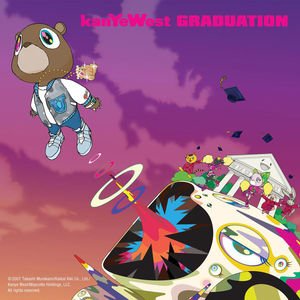
After The College Dropout, West avoided settling into the soul-sampling style that had made him successful. Late Registration (2005), made partly with composer and producer Jon Brion, expanded that sound with strings and other orchestral instruments. “Gold Digger,” built around Ray Charles’s “I Got a Woman,” reached number one on the Billboard Hot 100. On Graduation (2007), West turned toward synthesizers and electronic production, partly inspired by seeing bands such as U2 perform in arenas. “Stronger”, which samples Daft Punk’s “Harder, Better, Faster, Stronger,” became another number-one single and brought electronic dance sounds more directly into his music.
West changed direction again after his mother, Donda West, died in November 2007 and his engagement to Alexis Phifer ended. 808s & Heartbreak (2008) replaced much of the dense sampling of his earlier records with the electronic percussion of the Roland TR-808, sparse synthesizers, and Auto-Tuned singing. Songs such as “Heartless” and “Coldest Winter” dealt openly with failed relationships, grief, and emotional withdrawal. West also carried the album’s heart imagery into his clothing and stage designs.
808s & Heartbreak also loosened the distinction between singing and rapping in mainstream hip-hop. Auto-Tune was already widely used by artists such as T-Pain, but West used it across an album centered largely on grief and isolation. Its combination of melodic vocals and electronic production provided a reference for later hip-hop artists who moved regularly between rapping and singing.
After the sparse sound of 808s, West returned to dense production on My Beautiful Dark Twisted Fantasy (2010). He recorded much of the album in Hawaii following the backlash over his interruption of Taylor Swift at the 2009 MTV Video Music Awards. Samples and guitars overlap with keyboards and layered vocals throughout the record. His public behavior also became part of the writing. On “Runaway”, West acknowledges his own destructive behavior, while “Power” uses a sample of King Crimson’s “21st Century Schizoid Man” beneath a more confrontational performance.
Yeezus (2013) moved in the opposite direction. West stripped the arrangements down to distorted synthesizers and abrasive electronic rhythms, drawing from industrial music, acid house, and Chicago drill. The Life of Pablo (2016) brought gospel vocals back into his music alongside rap and electronic production. Its release also took advantage of streaming in an unusual way: after releasing the album through Tidal, West continued revising individual tracks and mixes while the album was already available to listeners.
His later projects continued these changes in sound. Kids See Ghosts (2018), recorded with Kid Cudi, combined rap with psychedelic and electronic production, while Jesus Is King (2019) centered on Christian faith and gospel music. Donda (2021), named for his mother, returned to gospel alongside rap and electronic production.
Across these albums, West rarely repeated the production of the record before it. The soul samples of The College Dropout expanded into the orchestration of Late Registration and the electronic sound of Graduation. Personal loss led to the sparse vocals of 808s & Heartbreak, followed by the dense arrangements of My Beautiful Dark Twisted Fantasy and the harsher minimalism of Yeezus. His commercial position gave him considerable freedom to move among these different styles, making the album itself the main vehicle for his changes in sound.
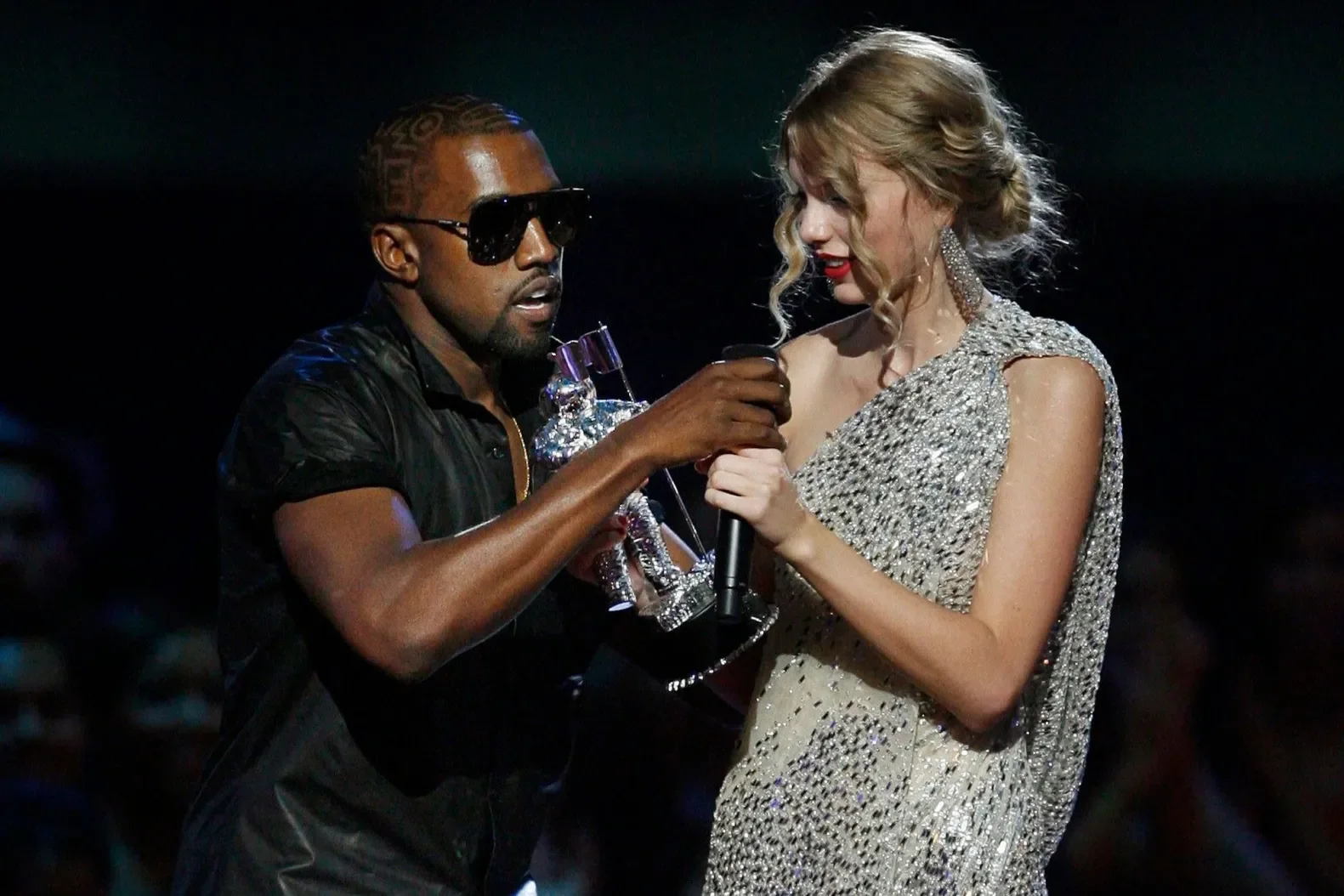
West’s public behavior increasingly became part of how audiences understood his career. During a 2005 Hurricane Katrina telethon, he departed from the prepared script and declared, “George Bush doesn’t care about Black people,” criticizing both the federal response and media portrayals of Black survivors. Four years later, he interrupted Taylor Swift’s acceptance speech at the MTV Video Music Awards to argue that Beyoncé should have won. The incident began a long public dispute with Swift, while later feuds with figures such as Drake played out through songs, interviews, and social media. West also cultivated an unusually grand public persona, repeatedly calling himself a genius and sometimes comparing himself to religious or historical figures. His 2014 marriage to Kim Kardashian placed him even further inside celebrity culture, where his music, fashion, relationships, and public statements received continuous attention.
Politics became another part of that persona. West publicly supported Donald Trump and met with him at the White House in 2018 before launching his own presidential campaign in 2020. The campaign reached the ballot in several states but never developed into a serious national challenge. In 2021, he legally changed his name to Ye, a name he had previously connected to the biblical word for “you,” explaining, “I’m you. I’m us. It’s us.”
His public conduct took a more serious turn in 2022. Ye began making explicitly antisemitic statements, repeated antisemitic conspiracy theories, praised Adolf Hitler, and denied or minimized the Holocaust. He later used swastika imagery as well. The statements brought widespread condemnation and ended several major business relationships, including Adidas’s partnership with his Yeezy brand.
Ye’s later conduct has made discussion of his music more difficult to separate from the way he has used his celebrity outside it. His earlier recordings remain important to the development of hip-hop production, melodic rap, and digital album releases, while his antisemitic statements created a separate problem for audiences and institutions deciding how to engage with that work.
Outkast
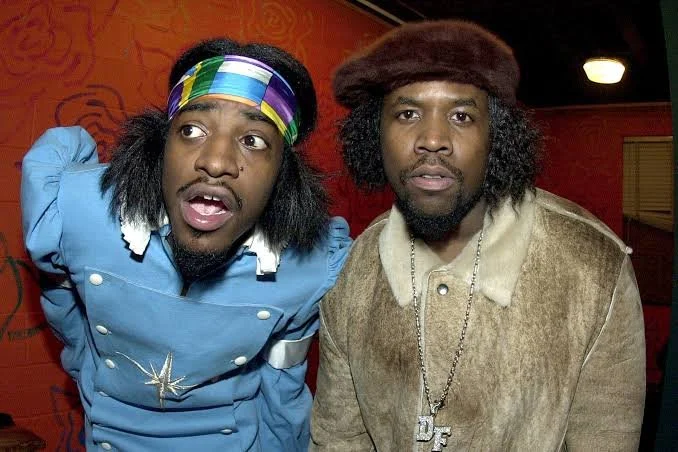
By the 1990s, Atlanta was developing into an important center for Southern hip-hop. Local artists and producers built networks that gave the city a sound distinct from the rap coming out of New York and Los Angeles. Labels such as LaFace Records brought some of that music into national distribution, while production teams such as Organized Noize drew heavily from Southern soul and funk. Outkast came out of this environment and soon pushed beyond the expectations attached to Southern rap, moving freely among musical styles while keeping Atlanta at the center of their identity.
André “André 3000” Benjamin and Antwan “Big Boi” Patton met while attending Tri-Cities High School near Atlanta. After performing together as teenagers, they signed with LaFace Records in 1992 and made an early recorded appearance on a remix of TLC’s “What About Your Friends.” Their first album, Southernplayalisticadillacmuzik (1994), was produced largely by Organized Noize and drew from funk and soul alongside hip-hop. Live bass and guitar appeared beside programmed beats, giving the record a warmer instrumental sound than much of the sample-heavy East Coast rap of the period.
The album also announced the duo’s attachment to Atlanta and the wider South. Even its title exaggerated Southern pronunciation and imagery, while the songs referred to local places and experiences. “Git Up, Git Out” uses a slow funk groove beneath verses about work, ambition, and the danger of becoming complacent. Big Boi and André already sounded different from one another: Big Boi generally used a direct and rhythmically precise delivery, while André was more likely to bend his phrasing or approach a verse from an unexpected angle. Their differences gave Outkast room to develop without requiring both members to follow the same musical direction.
That Southern identity mattered at a time when national discussions of hip-hop still centered heavily on the East and West Coasts. At the 1995 Source Awards, where tensions between those scenes were especially visible, Outkast won Best New Rap Group and faced boos from parts of the audience. André responded with the declaration, “The South got something to say.” The line captured the position Outkast occupied at the time: they were gaining a national audience while coming from a region that was still frequently treated as peripheral to hip-hop.
Their next albums moved further from the sound of the debut. ATLiens (1996) used darker and more spacious production, with the duo taking a larger role in producing their own music. The album also introduced the extraterrestrial imagery suggested by its title, giving Outkast another language for presenting themselves as outsiders. Aquemini (1998), whose title combines the zodiac signs Aquarius and Gemini associated with the two members, expanded the arrangements again. Funk remained important, but the album also made room for soul and psychedelic sounds alongside live instrumental performances.
As the music expanded, the differences between André and Big Boi became more pronounced. Big Boi remained closely connected to Southern rap and funk, while André increasingly experimented with singing, unusual clothing, and musical references that sat outside conventional hip-hop. Outkast turned that contrast into part of the group rather than forcing the two members toward a single style. Their albums could move between different sounds because the tension between their personalities was already built into the duo.
Stankonia (2000) pushed the music toward faster tempos and more electronic production. “B.O.B. (Bombs Over Baghdad)” moves at a frantic pace, combining rapid drums with electronic sounds and gospel vocals. “Ms. Jackson,” written partly about the difficulties surrounding André’s relationship with Erykah Badu and her mother, relies more heavily on melody and became Outkast’s first number-one single on the Billboard Hot 100. The two songs sound markedly different, yet both belonged comfortably on the same album. Stankonia eventually sold more than four million copies in the United States.
The growing differences between André and Big Boi became the organizing idea behind Speakerboxxx/The Love Below (2003). Released under the Outkast name, the double album consists largely of two separate projects. Big Boi’s Speakerboxxx stays closer to Southern hip-hop, building songs around rap and funk-based production. André’s The Love Below gives far more space to singing and moves through funk, electronic music, and pop. Separating the two halves allowed each member to pursue his own interests while keeping the recordings together as an Outkast release.
The album produced a number-one single from each half. Big Boi’s “The Way You Move” pairs his rapping with a sung chorus and a horn-driven groove. André’s “Hey Ya!” is structured more like a pop song than a conventional rap single, with André singing over acoustic guitar, keyboards, and a rhythm whose changing meter gives the verses an unusual movement. Both songs reached number one on the Billboard Hot 100, one after the other.
Speakerboxxx/The Love Below spent seven weeks at number one on the album chart and won the Grammy Award for Album of the Year in 2004. Its commercial success was especially striking because the record made the internal differences within Outkast more obvious than ever. A Southern hip-hop duo had released a double album in which one member remained close to rap while the other spent much of his half singing, yet both sides found large audiences.
Outkast followed with Idlewild (2006), created alongside Bryan Barber’s film of the same name. Set partly within a fictional 1930s Southern nightclub world, the project gave the duo another setting in which to work with older forms of Black popular music alongside contemporary production. It became their final studio album together.
Afterward, Big Boi and André increasingly pursued separate careers. Big Boi released Sir Lucious Left Foot: The Son of Chico Dusty in 2010, continuing his work within Southern rap and funk. André recorded less frequently under his own name but remained active through guest appearances with artists including UGK, Jay-Z, and John Legend. Outkast reunited for live performances in 2014 without recording another album.
“Hey Ya!” became Outkast’s largest pop hit and took André 3000 further outside the usual sound of early-2000s hip-hop. Beneath its bright, danceable surface, the song has an unusual rhythmic design. Its repeating chord progression runs for six measures, but the fourth measure contracts to 2/4 instead of the surrounding 4/4. Each cycle therefore contains twenty-two beats rather than the twenty-four expected from six full measures of 4/4. The shortened measure gives the progression a quick rhythmic push before it settles back into the regular pulse.
The lyrics are similarly unsettled beneath the upbeat performance. André sings about a relationship that is falling apart and questions why people remain together after love has disappeared. The energetic chorus makes the song easy to hear as a celebration, even though the verses are filled with doubt about romantic commitment. During the breakdown, André shifts into the role of a bandleader and urges listeners to “shake it like a Polaroid picture,” a line that quickly escaped the song and became a popular catchphrase.
The Polaroid reference drew from the common belief that shaking an instant photograph helped it develop. By 2003, however, Polaroid’s self-developing film did not require shaking, and vigorous movement could interfere with the image. The lyric became popular enough that Polaroid, which had filed for bankruptcy in 2001, used the renewed attention in promotions connected to the song while reminding customers that its photographs did not actually need to be shaken.
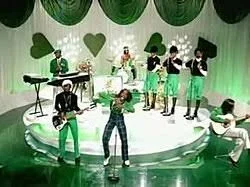
The music video extended the joke by imagining “Hey Ya!” as the television debut of a fictional band. Directed by Bryan Barber, the video casts André as all eight members of the Love Below, named after his half of Speakerboxxx/The Love Below. Each member has a different name and personality, allowing André to move between lead singer and instrumentalists as though a single performer had been split into an entire group.
The setting borrows from American television appearances by British Invasion bands during the 1960s, especially the Beatles on The Ed Sullivan Show. The stage and screaming audience recall those broadcasts, while André’s costumes play with the coordinated appearance of early pop groups. The reference becomes funnier because of the music being performed. An Atlanta rapper appears as an imaginary British pop band playing a song that moves freely through funk, rock, electronic music, and pop.
The video received heavy rotation on MTV and BET while “Hey Ya!” spent nine weeks at number one on the Billboard Hot 100. André sings through nearly the entire recording, yet the song remained attached to Outkast and to the duo’s history in Southern hip-hop. Its success gave The Love Below room to move well beyond conventional rap without requiring André to separate himself completely from the musical world in which Outkast had developed.
Outkast was only one part of the rapidly growing Atlanta scene. While André and Big Boi were stretching outward toward funk, pop, and electronic music, other Southern artists were developing music centered more heavily on rhythm and the physical energy of clubs. Crunk grew from this environment, using shouted vocals and repetitive electronic beats to encourage audience participation. The Roland TR-808 drum machine became especially useful because its deep bass drum and sharp percussion could cut through crowded clubs and powerful car sound systems.
The basic ingredients of crunk were already present during the 1990s. Three 6 Mafia’s “Gette’m Crunk” (1997) places several voices over repetitive synthesizer parts, with syncopated kick drums and rapid hi-hat patterns driving the track. Earlier Outkast recordings came from the same Southern rap culture but often relied more heavily on live instruments. “Player’s Ball,” for example, uses Hammond organ, wah-wah guitar, bass, and acoustic drums. Southern hip-hop therefore included several distinct styles before crunk settled into the electronic sound that became familiar during the next decade.
By the early 2000s, Lil Jon & the East Side Boyz and the Ying Yang Twins had carried crunk into the national mainstream. “Salt Shaker” (2003), by the Ying Yang Twins with Lil Jon & the East Side Boyz, is built from shouted vocals and a repeated synthesizer figure over electronic percussion. Handclaps and TR-808-style drums keep the groove deliberately repetitive, while the voices work almost as another layer of rhythm. The point is less to follow an extended narrative than to create the intensity and repetition of a crowded club.
Trap was developing alongside crunk, although its lyrics dealt more directly with the drug economy and the conditions surrounding it. The word “trap” referred to places where drugs were sold and also carried the sense of being caught within a life that was difficult to escape. Atlanta rappers used the term during the 1990s, and groups such as Goodie Mob and Outkast referred to the trap before it became the name of a recognized subgenre.
Early trap shared crunk’s heavy bass and electronic percussion but developed a sparser and darker sound. The TR-808 again became important, especially its low bass drum, while rapid hi-hats and restrained synthesizer parts left open space around the rapper’s voice. Lyrics often dealt with selling drugs and the violence surrounding that economy, describing the trap as both a source of money and a dangerous environment. During the late 2000s and 2010s, that Atlanta sound would spread far beyond the South, eventually becoming common across hip-hop and mainstream pop.
Beyoncé in the 2000s
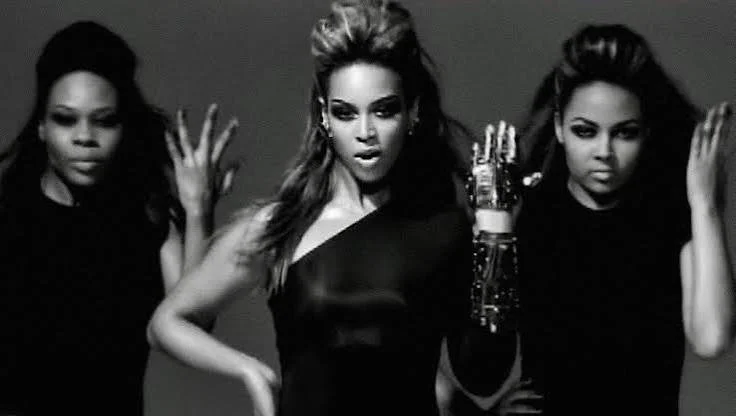
Hip-hop’s influence during the 2000s extended well beyond artists identified primarily as rappers. Its production, collaborations, and rhythmic vocabulary were increasingly intertwined with mainstream R&B and pop. As Destiny’s Child entered its final years, Beyoncé began a solo career that gave her more control over her musical and visual presentation. Dangerously in Love (2003) debuted at number one on the Billboard 200 and earned five Grammy Awards. Its lead single, “Crazy in Love,” featuring Jay-Z, paired a horn sample from the Chi-Lites’ “Are You My Woman (Tell Me So)” with a driving R&B and hip-hop beat. Working with producers such as Rich Harrison, the Neptunes, Rodney Jerkins, and Stargate, Beyoncé continued drawing from older soul and funk while moving comfortably between contemporary R&B and pop. Her singing was equally flexible, moving from restrained passages into gospel-influenced runs and dense multitracked harmonies.
Her recordings during the rest of the decade moved between emotional restraint and a more forceful performance style. “Irreplaceable” uses a relatively spare guitar arrangement as Beyoncé calmly dismisses an unfaithful partner, while “If I Were a Boy” uses role reversal to describe frustration within a relationship. That contrast became explicit on I Am... Sasha Fierce (2008), which separated quieter material from songs associated with Beyoncé’s more assertive “Sasha Fierce” stage persona. “Single Ladies (Put a Ring on It)” belonged firmly to the latter, using clipped electronic rhythms beneath a commanding vocal.
“Single Ladies” also showed how closely Beyoncé’s music had become connected to choreography and video. Its black-and-white video places Beyoncé with two dancers against a nearly empty background, directing attention toward their synchronized movements. Online imitations and parodies spread rapidly through YouTube, so audiences reproduced the choreography as they circulated the song. Her performances also drew from earlier Black women in popular music, including Tina Turner and Diana Ross. In Cadillac Records (2008), she portrayed Etta James and recorded several of James’s songs for the soundtrack.
By the end of the decade, Beyoncé’s solo work connected vocal performance with choreography and increasingly deliberate visual presentation. Her first three albums produced several number-one singles while giving her room to work across R&B and pop without settling on a single sound. Those elements would become more closely connected during the 2010s, when visual material increasingly became part of how she conceived and released entire albums.
Rihanna

Beyoncé’s recordings demonstrate how closely R&B, hip-hop, and pop had become connected during the decade. Rihanna entered the same commercial field from a different musical background, bringing dancehall and Caribbean rhythms into the mixture. Her debut single, “Pon de Replay” (2005), places a simple pop melody over a dancehall-influenced rhythm, while its title uses Bajan Creole for “play it again.” Early albums such as Music of the Sun (2005) and A Girl Like Me (2006) continued working with reggae and dancehall alongside contemporary R&B. At the same time, songs such as “SOS” moved toward electronic dance-pop, giving Rihanna room to work between Caribbean styles and the club-oriented production becoming more common in mainstream pop.
“Umbrella” (2007) brought that style to a much larger audience. The recording is unusually spare for a major pop single, built around programmed drums, repeating synthesizer parts, and a GarageBand drum loop that producer Tricky Stewart used as the basis of the track. Rihanna’s cool, slightly metallic vocal sits above the repetition, while the elongated “ella, ella” refrain turns a fragment of the title into the song’s main hook. “Umbrella” became the lead single from Good Girl Gone Bad (2007), an album that moved her further toward electronic R&B and dance-pop and established the more controlled vocal style heard throughout much of her later work.
Rihanna continued moving among styles without abandoning the Caribbean phrasing and rhythms present in her earliest recordings. The darker electronic production of Rated R (2009) appears on songs such as “Hard,” while “Rude Boy” returns more directly to dancehall. During the early 2010s, she worked extensively with the electronic dance music entering mainstream pop. “Only Girl (In the World)” and “We Found Love”, produced by Calvin Harris, use repeating synthesizer patterns and large dance beats, placing her voice inside the club sound that dominated much of the period.
Her Barbadian vocal identity became especially prominent again on “Work” from ANTI (2016). The production is sparse, leaving considerable space around the rhythm and Rihanna’s voice. She sings partly in Jamaican Patois and Caribbean-inflected English, allowing pronunciation and rhythmic phrasing to carry much of the song. The repetition of “work” changes slightly as she sings it, making the voice itself part of the groove rather than relying on a densely arranged instrumental track.
Across these recordings, Rihanna moved easily among R&B, dancehall, electronic pop, and later trap-influenced production. Repetition often provided the connection: short rhythmic cycles and recurring vocal phrases left space for her distinctive pronunciation and delivery. Her early career brought Caribbean sounds into mainstream American pop, while her later recordings increasingly allowed those sounds to sit at the center rather than being treated as occasional stylistic additions. The chapter will return to that development in the discussion of her work during the 2010s.
Alicia Keys

Electronic production became increasingly common in R&B and pop during Rihanna’s rise, but it was only one direction available to singers during the decade. Alicia Keys built her early recordings around a noticeably different sound, placing piano, live instruments, gospel, and soul alongside contemporary R&B and hip-hop. She began studying piano at seven and later attended Manhattan’s Professional Performing Arts School, where she continued developing as a performer and songwriter. After attracting industry attention as a teenager, she eventually signed with Clive Davis’s J Records in 2000. Working closely with producer Kerry “Krucial” Brothers, Keys developed music that drew from R&B and hip-hop while retaining strong connections to gospel, blues, jazz, and her classical piano training.
Her debut, Songs in A Minor (2001), introduced that combination to a large audience and earned five Grammy Awards. “Fallin’” spent six weeks at number one on the Billboard Hot 100 and places Keys’s piano beneath a vocal performance steeped in gospel and blues. The song moves repeatedly between emotional restraint and melismatic runs, with strings entering around the piano as the arrangement grows. “A Woman’s Worth” is quieter, using piano and orchestral accompaniment beneath lyrics about respect within a relationship. Both songs place the voice and piano at the center rather than relying primarily on the electronic production common in contemporary R&B.
Keys continued developing this sound on The Diary of Alicia Keys (2003). “If I Ain’t Got You” uses a repeating piano figure beneath lyrics questioning the value of money and possessions without emotional connection. The arrangement remains relatively restrained, allowing the melody and vocal phrasing to carry the song. “You Don’t Know My Name,” produced by Kanye West, works differently. A sample from the Main Ingredient’s “Let Me Prove My Love to You” gives the recording a 1970s soul character, while Keys interrupts the song with an extended spoken passage in which the narrator imagines calling a man she has been watching from a distance. The combination of soul sampling and conversational storytelling places Keys comfortably between neo-soul and contemporary hip-hop production.
Live performance remained an important part of how she presented this music. Unplugged (2005) placed her songs in a concert setting built around voice and live instruments, while later recordings continued to use the piano even as the production became larger. “No One” from As I Am (2007), for example, surrounds Keys’s voice with drums and fuller production but retains a simple keyboard progression beneath the song. The single reached number one on the Hot 100 and became one of her largest hits.
Her connection to hip-hop became especially visible on Jay-Z’s “Empire State of Mind” (2009). Keys sings the chorus over a piano-centered progression while Jay-Z’s verses describe New York through his own experiences in the city. Her soaring refrain gives the song a scale closer to an anthem, contrasting with the denser detail of the rap verses. The recording spent five weeks at number one and brought together two New York musicians whose careers had developed through different parts of the same R&B and hip-hop world.
Keys also worked outside recording during these years. She published Tears for Water: Songbook of Poems & Lyrics in 2004 and appeared in films including The Nanny Diaries (2007) and The Secret Life of Bees (2008). Her philanthropic work included involvement with Keep a Child Alive, an organization supporting people affected by HIV/AIDS.
Across her early recordings, Keys kept acoustic piano and live musicians unusually prominent within mainstream R&B. Her classical training supplied part of that musical vocabulary, while gospel and soul could be heard more directly in her singing and harmonic choices. At a time when digital production was becoming increasingly common in pop and R&B, Keys built much of her music around the physical sound of the piano and a voice capable of moving between restrained verses and gospel-derived runs.
Lady Gaga
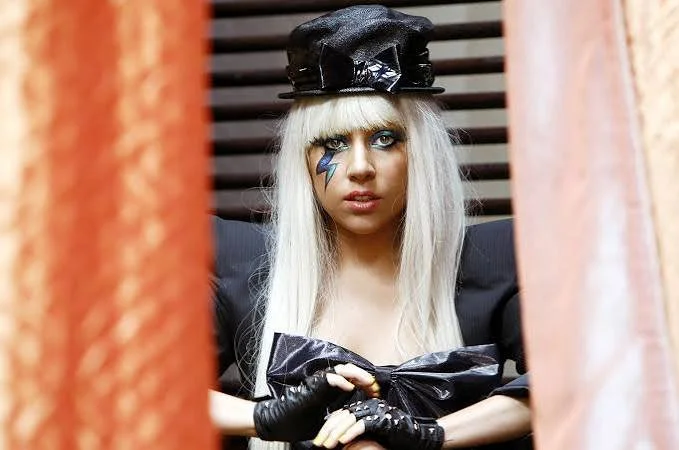
If Keys maintained a strong connection to piano and live instrumentation, Lady Gaga (Stefani Germanotta) pursued the electronic side of late-2000s pop much more aggressively. Her recordings drew from dance clubs and synthesizer-based production, while her videos, costumes, and performances made visual spectacle inseparable from the music. She began playing piano as a child and later studied at New York University’s Tisch School of the Arts before leaving to pursue music full-time. Performing in downtown New York clubs gave her space to develop as a singer and songwriter while experimenting with costumes and staged performance. After working briefly as a songwriter for other artists, she signed with Streamline Records in 2007 and began recording the material that became her debut album.
The Fame (2008) brought the electronic sound of dance clubs into tightly constructed pop songs. “Just Dance” and “Poker Face” rely on synthesizers, programmed beats, and repetitive hooks, with Gaga moving between sung melodies and clipped rhythmic phrases. Both reached number one on the Billboard Hot 100. Other singles, including “LoveGame” and “Paparazzi,” continued the album’s fascination with nightlife and celebrity. Fame appears throughout the record as something glamorous and desirable, but Gaga often treats that glamour with enough exaggeration to make it feel artificial.
That uneasiness became more pronounced on The Fame Monster (2009), a companion release to her debut that added eight new songs. “Bad Romance” turns romantic obsession into an enormous electronic pop song built from pounding dance rhythms and a deliberately repetitive vocal hook. “Telephone,” recorded with Beyoncé, places a story about refusing unwanted calls inside a fast-moving club track. The new songs kept the dance production of The Fame while giving more attention to fear, unhealthy relationships, and the pressures surrounding celebrity.
The visual presentation was inseparable from the recordings. Gaga treated music videos and award-show appearances as extensions of the songs, often using elaborate costumes and exaggerated characters rather than presenting a stable, everyday version of herself. Her fashion moved between glamour and deliberate ugliness, with unusual silhouettes and androgynous styling challenging expectations about how a female pop star was supposed to look. The images could be comic or disturbing, and they gave audiences something to interpret beyond the recording itself.
Her 2010 MTV Video Music Awards appearance pushed that strategy especially far. Gaga arrived wearing a dress made from raw beef, accompanied by matching shoes, a purse, and a hat. The outfit generated immediate controversy because it was grotesque and absurd within the polished setting of a celebrity awards show. Gaga later connected the dress to the idea of defending one’s rights and opposition to the U.S. military’s “Don’t Ask, Don’t Tell” policy. Whatever meaning viewers assigned to it, the appearance demonstrated how thoroughly she had made costume and spectacle part of her work as a pop performer.
Musically, Gaga drew from house and electronic dance music while also borrowing the theatricality of glam rock. Synthesizers and programmed rhythms dominate many of her early recordings, but her voice often works against the polished electronic surface. She could sing with considerable force and sometimes used deliberately rough or strained sounds for dramatic effect. That contrast became important to her early persona: highly controlled electronic production surrounded a performer who often appeared excessive and unpredictable.
By the end of the 2000s, Gaga had made the visual performance surrounding a pop song nearly as important as the recording itself. Her videos, costumes, and public appearances gave songs such as “Poker Face” and “Bad Romance” a theatrical world that continued after the music stopped. That combination suited the emerging online media environment particularly well, where an unusual costume or music-video scene could circulate independently through YouTube and social media while drawing audiences back to the song.
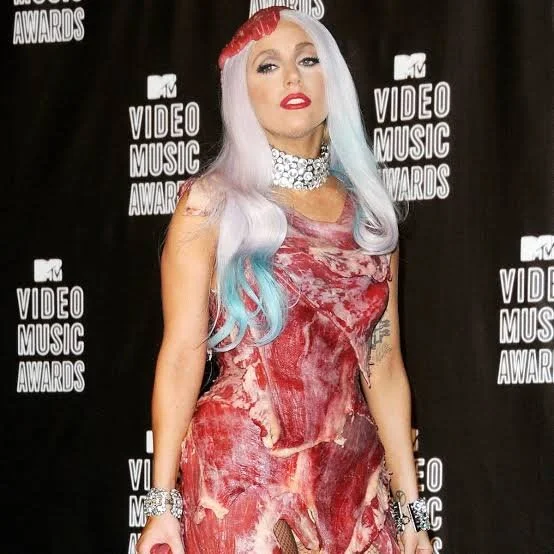
Gaga continued to move beyond the electronic pop of her debut as her career developed. Born This Way (2011) brought glam rock and Eurodance into songs that dealt more openly with sexuality and self-acceptance. The title track became especially important to LGBTQ+ fans, while songs such as “The Edge of Glory” and “Government Hooker” moved between dance production and rock influences. Her later projects showed how far she was willing to move from the sound that had first made her famous. She recorded the jazz album Cheek to Cheek (2014) with Tony Bennett and later returned to electronic dance-pop on Chromatica (2020). Mayhem (2025) again drew from dance music while incorporating rock and industrial sounds. Her duet with Bruno Mars, “Die with a Smile,” reached number one on the Billboard Hot 100 during this period.
Acting gave Gaga another outlet for the theatrical persona already present in her music. She appeared in American Horror Story: Hotel (2015–2016) before starring opposite Bradley Cooper in A Star Is Born (2018). The film allowed her to present a much less elaborate performance style than the costumes and characters associated with her pop career. “Shallow,” recorded with Cooper for the soundtrack, became a major hit and won the Academy Award for Best Original Song. She later starred in House of Gucci (2021), continuing to move between recording and acting rather than treating film as a brief side project.
Gaga’s relationship with her fans developed alongside these changes. She calls them “Little Monsters,” while fans refer to her as “Mother Monster”; she later tattooed the words “Little Monsters” on her arm. The names gave the fan community a shared identity that extended beyond simply following her music. Gaga communicated directly with fans through social media, where they circulated performances and discussed the messages attached to her songs. The relationship became especially close around subjects such as sexuality and LGBTQ+ rights, which were already present in her recordings and public statements.
The Little Monsters also demonstrate how online fandom was changing pop celebrity. Fans could organize themselves and circulate material without waiting for a label or television network to do it for them. A performance, costume, political statement, or short clip could move rapidly through fan accounts and online communities, keeping Gaga visible between formal releases. Her audience participated in maintaining the public world surrounding her music rather than simply receiving finished songs and videos.
Gaga understood that relationship early in the rise of social media and made it part of her public identity. The theatrical characters and costumes gave fans a constant supply of images to circulate, while the language of “Mother Monster” and “Little Monsters” turned the relationship between performer and audience into an ongoing community. Her career therefore provides an early example of a form of pop stardom that became increasingly common during the 2010s: the artist maintained a continuous online presence while fans participated directly in circulating and interpreting the material around the music.
Singer-Songwriters and Pop-Rock in the 2000s

While much of early twenty-first-century pop leaned toward digital production, synth-pop textures, and hip-hop–influenced rhythms, the decade also saw a revival of the singer-songwriter tradition. Their recordings often placed the voice and acoustic instruments near the front, drawing from folk and older singer-songwriter traditions alongside jazz, country, reggae, and R&B. Norah Jones, Jack Johnson, and Jason Mraz worked within this broad area without sounding especially alike. Jones leaned toward jazz and country, Johnson toward relaxed folk rock, and Mraz toward a more rhythmic style influenced by jazz and reggae.
Norah Jones arrived with the quietest sound of the three. The daughter of concert producer Sue Jones and sitarist Ravi Shankar, she grew up in Texas and New York and studied piano before attending the University of North Texas as a jazz piano major. Her listening ranged from Billie Holiday to Willie Nelson, and those interests met on Come Away with Me (2002). The album moves among jazz, folk, country, and pop while keeping the arrangements restrained. Piano and acoustic guitar often leave open space around Jones’s voice rather than filling every part of the recording.
“Don’t Know Why” captures that sound especially well. Jones sings with a soft delivery over piano and a lightly swinging rhythm section, rarely pushing the melody toward a dramatic climax. The chords and phrasing carry traces of jazz, but the song remains close enough to pop and folk to work outside a specialist jazz audience. Come Away with Me eventually sold more than twenty million copies worldwide and received several awards at the 2003 Grammys, including Album of the Year. Jones continued moving among American musical traditions on Feels Like Home (2004) and Not Too Late (2007), while collaborations with Willie Nelson, Dolly Parton, Herbie Hancock, and Outkast placed her in markedly different musical settings.
Jack Johnson reached many of the same listeners through a more stripped-down folk-rock sound. Raised in Hawaii, Johnson had been a competitive surfer before injuries redirected more of his attention toward filmmaking and music. Brushfire Fairytales (2001) established his relaxed acoustic style through songs such as “Flake” and “Bubble Toes.” Acoustic guitar carries most of the harmonic movement, while bass and light percussion keep the arrangements uncluttered. His singing follows the same pattern, usually staying conversational rather than pushing toward the vocal display common in contemporary pop.
In Between Dreams (2005) continued that sound with slightly fuller arrangements, while “Upside Down,” written for the Curious George soundtrack in 2006, brought it to a family audience. A buoyant acoustic-guitar figure carries the song over understated percussion, giving the recording an easy rhythmic motion without requiring dense production. Johnson’s environmental interests also entered his career through benefit work and efforts to reduce waste associated with touring, connecting the relaxed outdoor image surrounding his music with causes he supported away from the stage.
Jason Mraz worked with similar acoustic materials but treated rhythm and voice differently. His early songs often use rapid conversational phrasing, syncopation, and vocal improvisation drawn partly from jazz and R&B. “The Remedy (I Won’t Worry),” from Waiting for My Rocket to Come (2002), moves quickly between densely packed verses and a more open chorus. His singing frequently treats syllables as rhythmic material, allowing the vocal line to move around the beat rather than simply carrying a melody above it.
That rhythmic interest remained audible as Mraz’s audience grew. Mr. A–Z (2005) used fuller arrangements with piano and layered guitars, while We Sing. We Dance. We Steal Things. (2008) brought him his largest commercial success. “I’m Yours” places a simple acoustic-guitar progression over a relaxed reggae-influenced beat, leaving room for Mraz’s loose phrasing and improvised vocal details. The recording sounds informal, but much of its character comes from the way his voice shifts around the steady underlying rhythm.
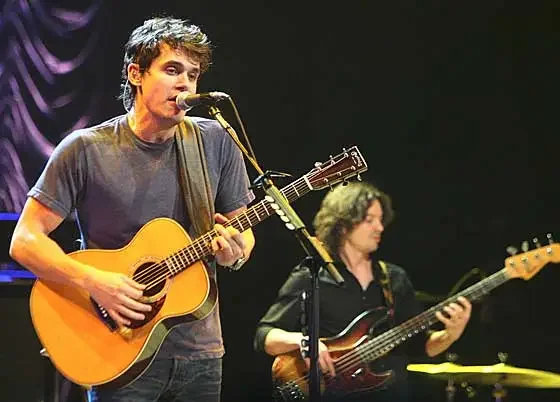
John Mayer occupied another part of the 2000s singer-songwriter spectrum, combining acoustic pop songwriting with a growing interest in blues guitar. After briefly attending Berklee College of Music, he moved to Atlanta and worked the club and coffeehouse circuit before gaining a wider audience with Room for Squares (2001). Songs such as “No Such Thing” and “Your Body Is a Wonderland” paired conversational lyrics with guitar parts that were more harmonically involved than much of contemporary acoustic pop. His early music drew comparisons to the Dave Matthews Band, but Mayer increasingly used his success as a singer-songwriter to pursue the blues and improvisational playing that had interested him before his pop career.
That change became easier to hear after Heavier Things (2003), which included “Daughters,” winner of the Grammy Award for Song of the Year. Rather than remaining within the acoustic-pop sound of his early singles, Mayer began devoting more attention to electric guitar. His playing drew heavily from Stevie Ray Vaughan, along with Jimi Hendrix and Eric Clapton, musicians whose blues-based soloing provided models for his own development.
The John Mayer Trio gave that side of his music its own setting. Formed with bassist Pino Palladino and drummer Steve Jordan, the group stripped away much of the polished production surrounding Mayer’s pop recordings and concentrated on blues-rock and extended guitar playing. The live album Try! (2005) included longer solos alongside a cover of Hendrix’s “Wait Until Tomorrow.” Mayer later recorded Hendrix’s “Bold as Love” for Continuum (2006), bringing his blues interests back into his solo work.
Continuum joined the two sides of Mayer’s career more closely. “Gravity” is built around a slow blues progression with considerable open space between the instruments, allowing the guitar phrases to answer Mayer’s vocal rather than filling the entire arrangement. “Waiting on the World to Change” uses a similarly restrained sound beneath lyrics about political frustration among younger Americans. The album allowed Mayer to remain within mainstream pop while giving electric guitar and blues phrasing a larger role than they had occupied on his debut.
His later recordings continued moving between acoustic songwriting and blues-based guitar music. Battle Studies (2009) stayed relatively close to pop-rock, while Born and Raised (2012) drew more heavily from folk, country, and 1970s singer-songwriter music. The uncluttered production on these recordings left audible space around the instruments, giving them a sound closer to older studio recordings than to the densely layered pop production common during the same period.
Mayer’s public life sometimes competed with his music for attention during the late 2000s. His relationships with other celebrities and several widely criticized interviews made him a frequent subject of entertainment coverage. He later withdrew from much of that publicity, and his work with Dead & Company beginning in 2015 placed greater emphasis on extended live improvisation. Performing the music of the Grateful Dead required Mayer to work within long instrumental sections where solos changed from night to night, extending the improvisational side of his playing that had already appeared with the John Mayer Trio.
While Mayer moved further toward blues and roots music, another group found a large audience by taking pop-rock toward R&B and dance production. Maroon 5 developed from Kara’s Flowers, a Los Angeles band whose earlier recordings had attracted limited attention. After reorganizing with guitarist James Valentine and adopting a new name, the group released Songs About Jane in 2002. Adam Levine’s high lead vocal sat over guitar-based arrangements that drew from rock, funk, and R&B.
The album gained momentum gradually rather than immediately. “Harder to Breathe” brought the group onto rock and pop radio, followed by “This Love” and “She Will Be Loved.” By 2004, Songs About Jane had become a major commercial success, eventually selling more than four million copies in the United States, and Maroon 5 received the Grammy Award for Best New Artist in 2005.
As the decade continued, Maroon 5 placed less weight on its original guitar-driven sound. It Won’t Be Soon Before Long (2007) brought funk and electronic production further forward on songs such as “Makes Me Wonder,” while Hands All Over (2010) continued the movement toward beat-centered pop. Levine’s voice became the most consistent element as the instrumental setting around it changed. The shift prepared Maroon 5 for an even more pronounced move into electronic dance-pop during the 2010s, when the band would operate increasingly within mainstream pop rather than the pop-rock format of its debut.
Alongside the acoustic singer-songwriters and American pop-rock bands of the 2000s, Coldplay brought the British tradition of melodic guitar rock to a large international audience. Formed in London and fronted by Chris Martin, the band drew from the atmospheric guitar music of Radiohead and the emotional directness of singers such as Jeff Buckley. Their breakthrough single, “Yellow” (2000), established many of the qualities associated with their early sound: a simple guitar figure, spacious percussion, and Martin’s high, exposed vocal. Parachutes (2000) developed that restrained style across songs that often relied on repetition and gradual changes in dynamics rather than dense arrangements.
A Rush of Blood to the Head (2002) gave the band a broader range without leaving that basic sound behind. “The Scientist” is built around a repeating piano progression, while “Clocks” turns another piano figure into the rhythmic center of the song. Guitar-driven tracks such as “In My Place” gave the album a louder side, allowing Coldplay to move between quiet ballads and songs suited to larger concert spaces. Chris Martin’s voice remained the connection between these settings, shifting from a restrained lower register into falsetto as the arrangements grew around him.
As Coldplay’s audience expanded, so did the scale of its recordings. X&Y (2005) made greater use of synthesizers and larger guitar textures, while Viva la Vida or Death and All His Friends (2008), made with producers including Brian Eno, moved further from the band’s early guitar-centered sound. Strings, bells, electronic sounds, and other instruments entered the arrangements, and conventional guitar parts sometimes moved into the background. “Viva la Vida” is built largely around strings and a steady rhythmic pulse as Martin sings from the perspective of a fallen ruler. The song reached number one on the Billboard Hot 100 and received the Grammy Award for Song of the Year.
The band continued moving between electronic pop and quieter material during the 2010s. Mylo Xyloto (2011) used brighter synthesizers and more heavily produced rhythms, while Ghost Stories (2014) reduced the scale after the end of Martin’s marriage to Gwyneth Paltrow. A Head Full of Dreams (2015) returned to a brighter pop sound with stronger dance and funk elements. Across these records, Coldplay retained an emphasis on repeated melodic figures and Martin’s voice even as the instrumentation around them changed.
Their concerts grew alongside the recordings, eventually placing Coldplay among the major stadium touring bands of the twenty-first century. The Music of the Spheres tour, which began in 2022, also incorporated efforts to reduce the environmental cost of large-scale touring. The band reported a 59 percent reduction in direct carbon emissions from its first two years compared with its previous stadium tour, using measures that included renewable energy and rechargeable show batteries. The project connected the enormous technical demands of stadium concerts with an attempt to reduce some of their environmental effects.
Coldplay occupied a different part of 2000s popular music from Norah Jones, Jack Johnson, Jason Mraz, or John Mayer, but their success depended on some of the same musical qualities. That emphasis on recognizable voices and melodies also helps explain the appeal of televised singing competitions. American Idol built an entire program around finding singers whose voices audiences could recognize and follow.
American Idol
The prominence of individual singers in 2000s popular music found another outlet on television. When American Idol premiered in 2002, it built an entire competition around the voice and stage presence of individual performers. Contestants usually sang familiar songs rather than original material, allowing audiences to compare how different singers interpreted music they already knew. The program combined this focus on performance with reality television and audience voting, turning the search for a recording artist into a weekly national event.
Music had been part of American television for decades before American Idol. Programs such as American Bandstand brought current pop and rock performers to teenage audiences, while Hee Haw mixed country performances with comedy. Variety shows regularly featured singers alongside comedians and other entertainers, and televised talent competitions gave amateurs a route onto the screen. These programs also served the commercial needs of television: recognizable songs and performers could attract large audiences, which in turn attracted advertisers.
The talent-show format had an especially long history. The Original Amateur Hour, adapted from the radio program Major Bowes Amateur Hour, placed amateur performers before a national television audience beginning in the late 1940s. Later programs altered the formula. The Gong Show turned amateur competition into comedy during the 1970s, while later series such as America’s Got Talent opened the contest to many kinds of performers. American Idol concentrated specifically on singers and connected the competition directly to the recording industry.
Music executive Simon Fuller developed the format through his company 19 Entertainment. The first version, Britain’s Pop Idol, premiered in 2001, and the American adaptation followed on Fox on June 11, 2002. Thousands of people auditioned in cities around the country before producers and judges reduced the field to a smaller group of contestants. Those singers then performed in televised rounds, with the winner receiving a major-label recording contract. Other finalists sometimes secured contracts afterward, although those deals were not guaranteed.
Audience participation distinguished American Idol from many earlier television talent shows. Judges evaluated the performances, but viewers ultimately determined which contestants advanced through telephone, text-message, and later online voting. The arrangement gave audiences an active role in the competition. A viewer was asked to do more than watch a singer perform; voting helped decide which performer returned the following week and eventually who received the recording contract.
The original judging panel also became part of the program’s appeal. Randy Jackson brought experience as a bassist, producer, and music-industry professional, while Paula Abdul came from pop music and choreography. Simon Cowell, a British music executive, became known for unusually blunt criticism of contestants. His exchanges with performers and the other judges supplied much of the program’s conflict between songs. Ryan Seacrest became the sole host in 2003. As the original panel changed, later judges included Kara DioGuardi, Ellen DeGeneres, Jennifer Lopez, and Steven Tyler.
Contestants were expected to move among different styles rather than establish themselves within a single genre from the beginning. Theme weeks could require them to sing Motown and country or material associated with particular performers and songwriters. Guest mentors such as Randy Travis and Harry Connick Jr. worked with contestants during episodes connected to their areas of experience. A singer therefore had to reinterpret familiar material while still giving viewers a reason to recognize an individual voice and personality.
The performances occupied only part of each episode. Backstage footage, interviews, rehearsal scenes, and biographical segments introduced contestants before they sang and followed their reactions afterward. Viewers learned about families, hometowns, setbacks, and ambitions while watching the competition unfold over several months. The program was therefore selling more than vocal ability. Audiences were following individual stories and then voting for the performers whose voices and personalities interested them.
That combination connected television directly to the recording business. By the time an American Idol winner released a first single or album, millions of viewers had already watched that singer perform repeatedly and had participated in the competition. The program effectively turned the promotional process that normally followed the signing of a new artist into part of the selection process itself. Winners entered the recording industry with an audience that had already spent an entire television season getting to know them.

The first test of whether American Idol could produce a recording career came immediately after its inaugural season. Kelly Clarkson defeated Justin Guarini in 2002 and performed “A Moment Like This,” written by Jörgen Elofsson and John Reid, during the season finale. RCA released the song as her first single, and it reached number one on the Billboard Hot 100. Clarkson entered the recording industry with an advantage few new singers had: millions of viewers had already watched her perform throughout the competition and participated in choosing her as the winner.
Clarkson soon developed a career that extended well beyond the program. Her early recordings relied heavily on professional songwriters, but she gradually took a larger role in writing her own material. Over the following decade, she moved from the pop of her first releases toward a stronger pop-rock sound and later co-wrote songs such as “Catch My Breath” (2012). Her album sales made her the highest-selling recording artist to come from American Idol, giving the program early evidence that its audience could follow a contestant into a long-term recording career.
The same pattern appeared in other genres. Carrie Underwood won the fourth season in 2005 and moved directly into country music, where her American Idol audience helped introduce her to listeners beyond the usual country market. Her debut album, Some Hearts (2005), sold millions of copies and produced several country and pop crossover hits. Clarkson and Underwood followed different musical paths after the competition, demonstrating that the program did not require its winners to remain within a single American Idol sound.
Winning the competition was also unnecessary for turning television exposure into a career. Because contestants remained on the program for weeks or months before elimination, finalists could build recognizable public identities long before the season ended. Jennifer Hudson finished seventh during Season 3 in 2004 but later developed careers in both music and film. Her performance as Effie White in Dreamgirls (2006) earned her the Academy Award for Best Supporting Actress in 2007, giving her a level of recognition far beyond what her placement on American Idol might have suggested.
Chris Daughtry followed another route after finishing fourth in Season 5 in 2006. He signed with RCA and formed the band Daughtry, whose self-titled debut became a major rock release. The connection to American Idol continued even after he left the competition: the band’s song “Home” was later used during elimination sequences on the program. Other finalists, including Clay Aiken, Katharine McPhee, and Elliott Yamin, also used the audience they had acquired on television to pursue recording, touring, or acting careers.
Contestants who were eliminated from American Idol could still leave the program with a substantial audience. Many had performed repeatedly for millions of viewers before their departure, giving record companies the opportunity to sign singers who were already familiar to the public. Performers could also carry that recognition into recording or acting careers. Although each season produced only one winner, several contestants could leave the same season with opportunities in the entertainment industry.
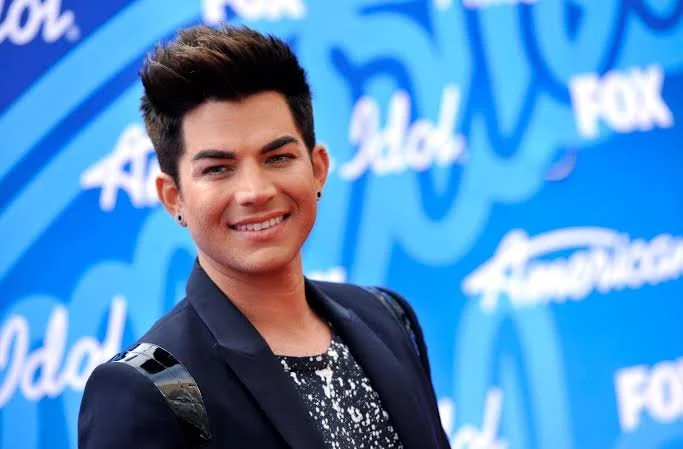
Adam Lambert provided a different example of what American Idol exposure could produce. A contestant on Season 8 in 2009, Lambert arrived with years of experience in musical theater and brought that background into performances that were unusually theatrical for the program. His high vocal range and dramatic arrangements allowed him to move comfortably between pop and classic rock. During his audition, he sang part of Queen’s “Bohemian Rhapsody,” while later performances substantially reworked familiar songs rather than simply reproducing their original arrangements. His slowed-down version of Tears for Fears’ “Mad World” became especially associated with his run on the show.
Lambert finished second to Kris Allen, but the result did little to limit his recording career. For Your Entertainment appeared later in 2009 and included “Whataya Want from Me,” which reached the Top 10 of the Billboard Hot 100. His theatrical stage presence also carried into his solo performances, giving him a public identity distinct from the more conventional pop singers who had come through earlier seasons of American Idol.
Questions about Lambert’s sexuality followed him throughout the competition, although he did not publicly identify himself as gay until after the season ended. His subsequent openness gave an openly gay male pop singer unusual visibility within mainstream American music at the time. Lambert became involved in LGBTQ+ advocacy and spoke publicly about sexuality and representation, making that part of his public life rather than concealing it to maintain a conventional pop image.
His connection to classic rock eventually developed into another career. Beginning with appearances alongside Queen members Brian May and Roger Taylor, Lambert became their touring lead vocalist under the name Queen + Adam Lambert. The collaboration became regular beginning in the early 2010s and required Lambert to sing material closely associated with Freddie Mercury without attempting to reproduce Mercury’s personality or performance exactly. His background in theatrical singing made Queen’s large-scale songs particularly well suited to his voice, while the tours introduced the band’s catalog to audiences that included listeners who had first encountered Lambert through American Idol.
Lambert’s career also points to something broader about the program. By its later seasons, winning had become only one measure of success. A contestant could use several months of national television exposure to establish a recognizable voice and public identity before releasing an album. The audience vote determined the competition, but record companies and viewers could continue supporting performers regardless of where they finished.
The voting system was one of American Idol’s most important differences from earlier music television. Viewers were asked to participate directly in deciding who advanced, turning musical preference into a repeated public vote. The program combined that process with reality-TV storytelling, so audiences judged performers they had also watched rehearse, receive criticism, discuss their families, and respond to elimination. Later competitions including The Voice and the American version of The X Factor adopted variations on the same mixture of performance and competition.
The format also attracted criticism. Some musicians objected to the idea that a television competition could compress years of career development into a single season, while others questioned the emphasis on vocal interpretation over songwriting or instrumental work. The program favored performers who could make familiar songs immediately recognizable while still giving them enough individual character to attract votes. Those demands rewarded a particular kind of musician and left many other forms of musical ability outside the competition.
American Idol nevertheless created a direct connection among television audiences, aspiring singers, and the recording industry. Clarkson and Underwood won their seasons and moved into successful recording careers, while Hudson, Daughtry, and Lambert showed that contestants could benefit without winning. At the same time that Myspace and YouTube were opening decentralized routes to an audience, American Idol offered almost the reverse: millions of people watched the same performers each week and collectively participated in deciding which singers received the most attention. Both systems changed how an unknown musician could become familiar to a national audience during the 2000s.
The Mash-Up
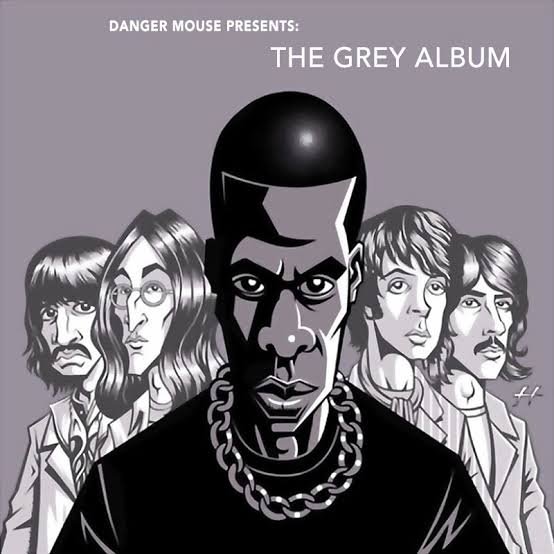
As computers became more powerful and recording software became easier to obtain, musicians could do increasingly complex production outside professional studios. Programs such as Pro Tools, Logic, Cubase, and GarageBand allowed users to record and edit audio on personal computers, while software such as Ableton Live and ACID Pro made it easier to work with loops and samples. A producer with relatively modest equipment could cut recordings into pieces, alter their tempo or pitch, and arrange many layers within the same project. For musicians working outside the major-label system, the internet then provided a place to circulate the finished recording without first manufacturing a physical release.
One style closely associated with this new production environment was the mash-up, a recording made by combining recognizable parts of existing songs into a new track. Mash-ups usually depend on larger portions of source recordings than traditional hip-hop sampling. Instead of taking a brief drum break or instrumental fragment and building a new beat around it, a producer might place the complete vocal from one song over the instrumental backing of another. The pleasure often comes from recognizing both sources and hearing how unexpectedly well—or deliberately awkwardly—they fit together.
Digital software made this process considerably easier. Programs such as Ableton Live and ACID Pro allowed producers to adjust tempo and synchronize recordings that had originally been made at different speeds. Pitch could also be altered so that melodies and harmonies from separate songs worked together more convincingly. These tools did not eliminate the musical decisions involved, but they reduced some of the technical difficulty of matching recordings made in different studios, periods, and styles.
The simplest format became known as an “A vs. B” mash-up: the vocal track from one recording placed over the instrumental track of another. Soulwax’s “Smells Like Teen Booty” offers an especially direct example. The track combines vocals from Destiny’s Child’s “Bootylicious” (2001) with the guitars, bass, and drums of Nirvana’s “Smells Like Teen Spirit” (1991). The pairing brings polished early-2000s R&B vocals into one of the most recognizable recordings of 1990s alternative rock. Much of the effect comes from hearing two songs associated with different genres and audiences suddenly occupying the same musical space.
Other producers pushed the format further. Girl Talk built tracks from rapidly changing fragments of many recordings rather than limiting himself to two sources, while Earworm became known for combining numerous popular songs into annual “United State of Pop” mixes. Danger Mouse took the idea to album length with The Grey Album (2004), placing Jay-Z’s vocals from The Black Album over music constructed entirely from samples of the Beatles’ White Album. These projects treated recorded music itself as material that could be cut apart and reorganized.
Because mash-ups relied heavily on copyrighted recordings, they also exposed a conflict between what digital technology allowed musicians to make and what copyright law allowed them to distribute. Clearing every sample could be prohibitively expensive, especially for producers working without label support. Many mash-ups therefore circulated as free downloads through blogs, file-sharing networks, and music websites rather than through conventional commercial releases. Attempts to remove them could sometimes draw even more attention to the recordings.
Mash-ups fit especially well within the internet culture of the 2000s because recognition was part of the experience. Listeners familiar with the original songs could understand the joke or musical connection almost immediately and pass the track to someone else. Digital production had made it easier to take recordings apart; online distribution made it equally easy for those recombinations to circulate. The mash-up brought those two changes together, turning existing popular music into raw material for a new kind of amateur and independent production.

Released online in 2004, the project combined Jay-Z’s vocals from The Black Album (2003) with music constructed entirely from samples of the Beatles’ self-titled 1968 album, commonly known as the White Album. Danger Mouse did far more than place one recording over another. He cut the Beatles’ songs into small pieces—guitars, drums, handclaps, keyboards, and vocal fragments—and rearranged them into new backing tracks for Jay-Z’s raps.
The pairings sometimes created connections between recordings that had little in common in their original settings. On “99 Problems,” Jay-Z’s vocal is placed against distorted guitars and vocal sounds taken from the Beatles’ “Helter Skelter,” giving the rap a much harsher rock backing. “What More Can I Say?” uses material from “While My Guitar Gently Weeps,” including acoustic guitar and bass, to create a more subdued setting. Across the album, familiar Beatles recordings are broken apart until individual sounds can function inside hip-hop production.
Danger Mouse initially pressed only about 3,000 copies and distributed them privately, but digital copies quickly spread through file-sharing networks. The project was especially suited to online circulation: listeners already familiar with Jay-Z or the Beatles could immediately understand its basic idea, while the unauthorized samples made an ordinary commercial release difficult.
That problem soon became explicit. EMI, which controlled rights connected to the Beatles recordings, sent cease-and-desist notices demanding that distribution stop. Jay-Z’s side did not mount a similar objection to the use of his vocals. The attempt to suppress the album produced an organized online response. On February 24, 2004, more than 170 websites participated in “Grey Tuesday,” making The Grey Album available for free as a protest against what organizers considered excessive restrictions on sampling and remix culture. More than 100,000 copies were reportedly downloaded that day, and the album continued circulating afterward.
The dispute turned The Grey Album into something larger than an experimental hip-hop project. It raised a question that digital production had made increasingly difficult to avoid: how much control should copyright holders retain when another artist uses an existing recording to create something recognizably new? Danger Mouse treated the album as a creative project rather than an attempt to substitute for the original Beatles recordings. Copyright law, however, generally requires permission to reproduce copyrighted sound recordings regardless of how extensively the material is rearranged, unless the use qualifies for an exception such as fair use.
The controversy also occurred only a few years after Congress had extended the duration of American copyright. The Copyright Term Extension Act of 1998 increased protection for works by individual authors from the life of the author plus fifty years to life plus seventy. For many corporate and work-for-hire creations, the term increased from seventy-five to ninety-five years from publication. The extension meant that older works would remain protected for another twenty years before entering the public domain.
Entertainment companies and copyright organizations supported the legislation, including Disney, whose early Mickey Mouse films were approaching the end of their existing terms. Critics consequently nicknamed the law the “Mickey Mouse Protection Act.” It was also commonly called the Sonny Bono Copyright Term Extension Act after the late musician and congressman associated with the legislation. Steamboat Willie (1928), the first widely released Mickey Mouse sound cartoon, became a frequently cited example in arguments over the extension because the law delayed its entry into the public domain until 2024.
Supporters of longer copyright terms argued that creators, heirs, and rights holders should continue receiving the economic benefits of works that retained commercial value. Critics argued that repeated extensions kept older cultural material under private control for too long, limiting the material available for adaptation and reuse. Digital remixing made that disagreement especially concrete. A producer could manipulate decades-old recordings on an inexpensive computer, but the technical ability to remake a recording did not provide the legal right to distribute the result.
The Grey Album sat directly inside that conflict. The Beatles recordings were more than thirty years old when Danger Mouse sampled them, yet they remained protected by copyright. Clearing such extensive use would have required permission from the relevant rights holders, making a legal commercial release difficult. The internet offered another route: once copies began moving through file-sharing networks, stopping circulation became far harder than preventing stores from selling a physical album.
The controversy did not prevent Danger Mouse from entering the commercial recording industry. He soon worked with CeeLo Green as Gnarls Barkley, producing the 2006 hit “Crazy,” and later produced albums including Gorillaz’s Demon Days (2005), the Black Keys’ Attack & Release (2008), and Beck’s Modern Guilt (2008). His later collaboration with Sparklehorse, Dark Night of the Soul, encountered another dispute with EMI before receiving an official release. Even after moving into conventional commercial production, questions about ownership and control continued to follow some of his projects.
The clash over The Grey Album captured a problem that would recur throughout digital music. Software had made existing recordings easier to copy and rearrange, while the internet made the resulting work easy to circulate. Copyright law still gave rights holders considerable control over those recordings. Mash-up culture grew in the space between those realities, where creating a new track could take place on a home computer in a matter of hours while securing permission to distribute the same track could involve several copyright holders and substantial licensing costs.
Chapter 43: Conclusion

By the end of the 2000s, the distance between making music, finding an audience, and entering the recording industry had narrowed considerably. Listeners were participating in that process as well. They voted for American Idol contestants, passed YouTube videos among friends, followed musicians on social media, and downloaded The Grey Album during an organized protest over copyright. Audiences had long influenced which music became popular, but digital media gave individual listeners more direct ways to circulate recordings and participate in an artist’s rise.
The routes into a professional career changed with them. Kelly Clarkson and Carrie Underwood reached the recording industry through a television competition watched by millions, while Justin Bieber attracted attention through homemade performances posted to YouTube. Mash-up producers could create and distribute music without a conventional record release, and Myspace allowed unsigned musicians to build audiences before a label became involved. Record companies still controlled substantial resources, but they increasingly encountered artists who already had visible followings.
These changes also created new problems. Digital software made existing recordings easier to sample and rearrange, while copyright law continued to restrict how those recordings could be distributed. Online visibility gave musicians more ways to reach listeners but did not remove questions about who controlled their work or who received the money it generated. Even ideas about musical talent were changing as television competitions, viral videos, home recording, and digital production placed different kinds of ability before large audiences.
By the beginning of the 2010s, popular music was moving away from a system built primarily around physical recordings, radio, and television. Streaming and social media would push those changes much further. The developments of the 2000s had already altered the basic relationship among musicians, audiences, and the companies between them, preparing listeners for a decade in which access to music would increasingly replace ownership.
Chapter 43: Further Reading
Barfe, Louis. Where Have All the Good Times Gone?: The Rise and the Fall of the Record Industry. London: Faber and Faber, 2004.
Brown, Jake. Jay-Z and the Roc-A-Fella Dynasty. Phoenix, AZ: Half Note Press, 2005.
Brown, Jake. Kanye West in the Studio: Beats Down! Money Up!. Phoenix, 2006.
Burkart, Patrick. Digital Music Wars: Ownership and Control of the Celestial Jukebox. Lanham, MD: Rowman & Littlefield, 2006.
Burkart, Patrick. Music and Cyberliberties. Middletown, CT: Wesleyan University Press, 2010.
Burgess, Jean, and Joshua Green. YouTube: Online Video and Participatory Media. Cambridge, MA: Polity Press, 2009.
Ciccariello-Maher, George. “A Critique of Du Boisian Reason: Kanye West and the Fruitfulness of Double-Consciousness.” Journal of Black Studies 39, no. 3 (2009): 371–401.
Dills, T. “Kanye West.” In Icons of Hip-Hop: An Encyclopedia of the Movement, Music, and Culture, edited by M. Hess, 555–76. Westport, CT: Greenwood, 2007.
Gopinath, Sumanth. The Ringtone Dialectic: Economy and Cultural Form. Cambridge, MA: MIT Press, 2013.
Holmes, Su. “‘Reality Goes Pop!’ Reality TV, Popular Music, and Narratives of Stardom in Pop Idol.” Television & New Media 5 (2004): 147–72.
Jenkins, Henry. Convergence Culture: Where Old and New Media Collide. New York: NYU Press, 2008.
Johansson, Sofia, Ann Werner, and Greg Goldenzwaig, eds. Streaming Music: Practices, Media, Cultures. Abingdon: Routledge, 2018.
Kinskey, Rebecca. We Used to Wait: Music Videos and Creative Literacy. Cambridge: MIT Press, 2014.
Lessig, Lawrence. Free Culture: How Big Media Uses Technology and the Law to Lock Down Culture and Control Creativity. New York: Penguin, 2004.
Lessig, Lawrence. Remix: Making Art and Commerce Thrive in the Hybrid Economy. New York: Penguin, 2008.
Lister, Martin, Jon Dovey, Seth Giddings, Iain Grant, and Kieran Kelly. New Media: A Critical Introduction. London: Routledge, 2003.
Manovich, Lev. The Language of New Media. Cambridge, MA: MIT Press, 2001.
McLeod, Kembrew. Freedom of Expression®: Overzealous Copyright Bozos and Other Enemies of Creativity. New York: New York University Press, 2005.
Meizel, Katherine. Idolized: Music, Media, and Identity in American Idol. Bloomington: Indiana University Press, 2010.
Moorefield, Virgil. “Modes of Appropriation: Covers, Remixes, and Mash-ups in Contemporary Popular Music.” In Recorded Music: Performance, Culture, and Technology, edited by A. Bayley, 291–306. Cambridge: Cambridge University Press, 2010.
Ross, Dax-Devlon. The Nightmare and the Dream: Nas, Jay-Z and the History of Conflict in African-American Culture. Jersey City, NJ: Teneo Press, 2008.
Stahl, Matthew. “A Moment Like This: American Idol and Narratives of Meritocracy.” In Bad Music, edited by C. Washburne and M. Derno, 212–32. London: Routledge, 2004.
Sterne, Jonathan. “The MP3 as Cultural Artifact.” New Media & Society 8, no. 5 (2006): 825–42.
Strangelove, Michael. Empire of the Mind: Digital Piracy and the Anti-Capitalist Movement. Toronto: University of Toronto Press, 2005.
Vincent, Frances. Myspace for Musicians. Boston: Course Technology, 2007.
Wang, Wallace. Steal This File Sharing Book: What They Won’t Tell You About File Sharing. San Francisco: No Starch Press, 2004.
Woods, Alyssa. Rap Vocality and the Construction of Identity. PhD diss., University of Michigan, 2009.
Wikström, Patrik. The Music Industry: Music in the Cloud. Cambridge, England, and Malden, MA: Polity Press, 2009.
Winograd, Morley. Millennial Makeover: MySpace, YouTube, and the Future of American Politics. New Brunswick, NJ: Rutgers University Press, 2008.