Chapter 35: Hip Hop pt.2
“Fight the Power”
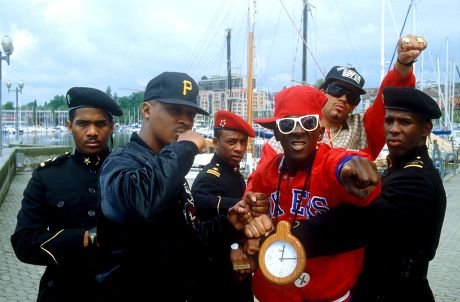
Album/Year Released
1989 (album: Fear of a Black Planet)
Artist/Composer
Public Enemy
Carlton Ridenhour, Eric Sadler, Hank Boxley, Keith Boxley
Genre/Style
Political hip-hop
Song Form
Verse–chorus with recurring hook
“Fight the Power,” released in 1989 by Public Enemy and later included on their 1990 album Fear of a Black Planet, is widely recognized as one of hip-hop’s most prominent examples of organized political expression. Public Enemy, formed in the early 1980s in New York by Chuck D (Carlton Douglas Ridenhour), Flavor Flav (William Jonathan Drayton Jr.), DJ Terminator X (Norman Rogers), Professor Griff (Richard Griffin), and the production team the Bomb Squad (Hank Shocklee, Keith Shocklee, and Eric “Vietnam” Sadler), signed with Def Jam Recordings following initial work as Spectrum City. Director Spike Lee commissioned the song for his 1989 film Do the Right Thing, where it debuted on the soundtrack before an extended version appeared on Fear of a Black Planet. Distributed by Motown Records, the single reached number one on the Hot Rap Singles chart.
Musically, "Fight the Power" relies on dense sampling, a hallmark of the Bomb Squad's production style. Instead of employing a sparse groove, the track integrates numerous short prerecorded fragments, including funk breaks, vocal shouts, sirens, scratching, bass figures, and bursts of noise, to create a rapidly shifting composite texture. The combination of numerous short samples produces a thick, nearly chaotic collage where multiple rhythmic layers coexist within a steady duple meter, producing a pronounced polyrhythmic effect. The track opens with a 16-second sample of civil rights attorney Thomas “TNT” Todd declaring, “Yet our best trained, best educated, best equipped, best prepared troops refuse to fight…,” which immediately situates the song within the tradition of Black political oratory. The introduction transitions into a brief section featuring a reversed vocal snippet from Trouble Funk’s “Pump Me Up,” saxophone triplets by Branford Marsalis, sharp snare hits, and the repeated “chuck chuck” exclamation from the Dramatics’ “Whatcha See Is Whatcha Get,” a subtle nod to Chuck D himself. Exhortations such as “Let me hear you say,” sourced from Sing a Simple Song by Sly and the Family Stone, reinforce the call-and-response dynamic rooted in Black church and funk traditions.
As the introduction intensifies, the texture becomes increasingly complex, looping more than ten distinct samples within a few seconds. These include fragments from Hot Pants by James Brown, whose vocalizations and rhythmic energy permeate the track, and the iconic drum break from Funky Drummer, performed by Clyde Stubblefield. Additional references, such as Planet Rock by Afrika Bambaataa, “I Know You Got Soul,” and “Teddy’s Jam,” further contribute to the layered sonic landscape. A sharp, staccato guitar riff punctuates the mix, while a commanding voice urges, “Come on, get down.” Despite the dense musical backdrop, Chuck D’s vocal delivery remains rhythmically precise, forceful, and clearly articulated, assuring his message is intelligible amid the complex soundscape.
Structurally, the song follows a largely linear verse-based form with a recurring, anthemic hook—“Fight the Power”—in place of a traditional melodic chorus. The repeated title phrase serves as a rallying cry, sustaining the song’s energy through the outro, where, in some versions, an alarm clock sound symbolizes awakening. Chuck D has described Public Enemy as "Black people's CNN," a mission conveyed through the song's raw, confrontational, and urgent tone. The lyrics advocate resistance against “the powers that be,” promoting awareness, organization, and mental self-defense within the Black community. In the first verse, Chuck D addresses “brothers and sisters,” positioning the song as both a communal exhortation and a work of revolutionary art. He rejects superficial claims of sameness—“No, we’re not the same / ’Cause we don’t know the game”—and calls for both material justice and political consciousness.
The third verse drew particular attention for its critique of iconic American figures. Chuck D’s dismissal of Elvis Presley as a hero to many but not to him challenges Presley’s symbolic status within white American culture, especially in light of rock and roll’s Black origins. Flavor Flav’s condemnation of John Wayne references Wayne’s publicly stated racist views, including remarks from a 1971 interview. Chuck D later clarified that his criticism was aimed less at Presley personally than at a cultural system that crowned him “King” while overlooking Black innovators. The verse continues by affirming Black pride and calling attention to the absence of many Black heroes from national commemoration, reinforcing the song's broader critique of historical exclusion.
The title references the 1975 song by The Isley Brothers, connecting Public Enemy’s anthem to an earlier tradition of resistance against oppression. In 2020, the group released a remix that preserved the original's structure while including new verses addressing contemporary social issues. Spike Lee directed the original music video, filmed in Brooklyn, which depicts a mass political rally featuring Public Enemy, Lee, members of the Fruit of Islam, and images of leaders such as Martin Luther King Jr. and Malcolm X. The visual presentation accentuates the song’s integration of hip-hop culture, civil rights history, and collective activism.
“Eye Know”
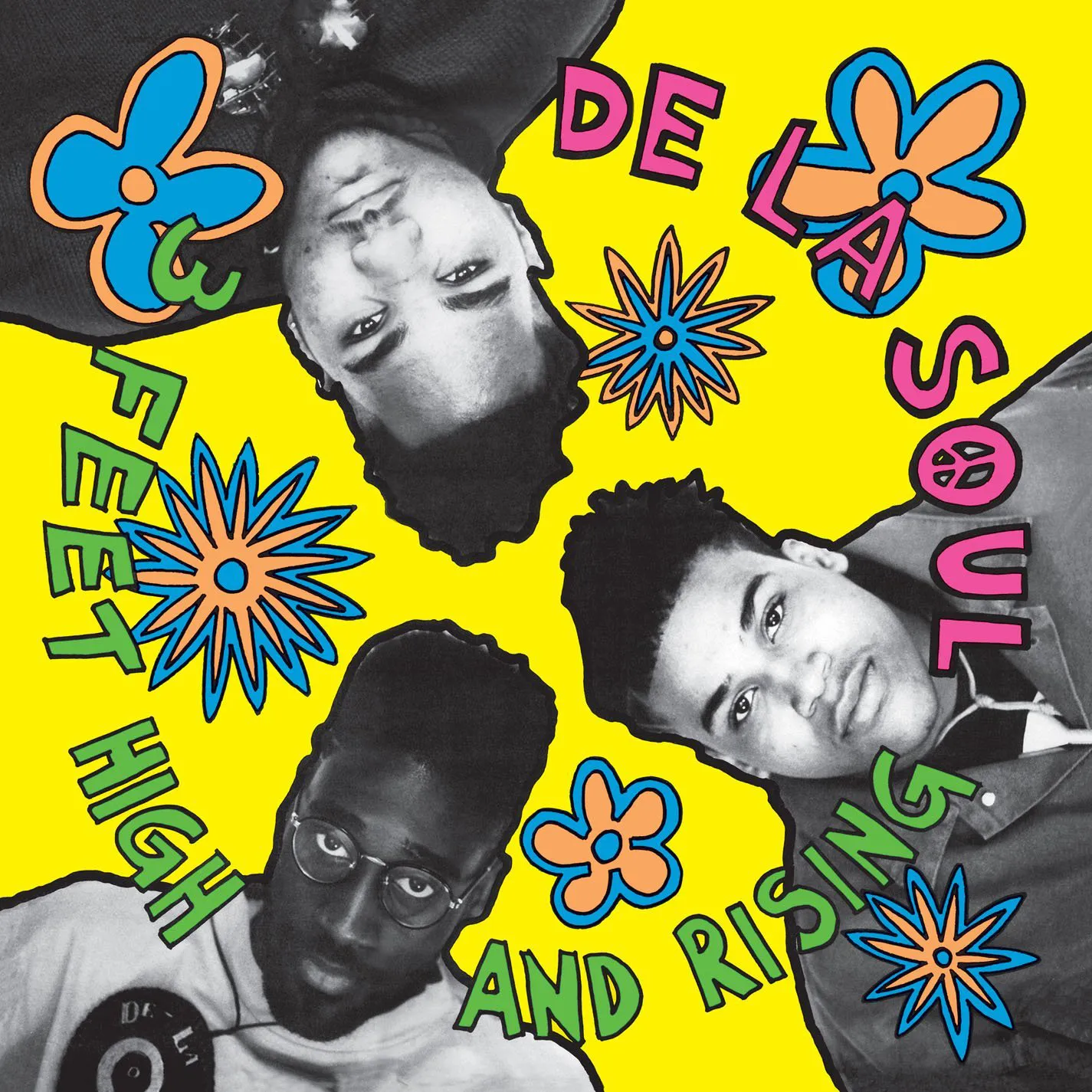
Album/Year Released
1989 (album: 3 Feet High and Rising)
Artist/Composer
De La Soul
Paul Huston, David Jude Jolicoeur, Vincent Mason, Kelvin Mercer, Walter Becker, Donald Fagen
Genre/Style
Alternative hip-hop
Song Form
Verse–chorus
“Eye Know,” released in 1989 on De La Soul’s debut album 3 Feet High and Rising, illustrates the melodic, sample-driven qualities characteristic of alternative hip-hop at the end of the 1980s. The trio, formed in New York in 1987 by Vincent Lamont Mason Jr., Kelvin Mercer, and David Jude Jolicoeur—known by the monikers Pasemaster Mase, Posdnuos, and Trugoy—collaborated under the guidance of producer Prince Paul and secured a contract with Tommy Boy Records. Their debut album, released in the spring of 1989, introduced the group’s “D.A.I.S.Y. Age” philosophy (“Da Inner Sound, Y’all”), which emphasized unity, peace, and positivity. While some critics quickly labeled them a “hippie” rap group due to these themes, De La Soul rejected the “hippie” characterization and instead positioned themselves as innovators broadening hip-hop’s expressive possibilities.
“Eye Know (The Know It All Mix)” was released as a single from the album and earned considerable success in the United Kingdom, reaching number 14 on the UK Singles Chart, although it was not issued as a single in the United States. Structurally, the track follows a verse–chorus format in a steady duple (4/4) meter, but its organization is fluid and loop-based, relying more on recurring sampled hooks than on clearly separated sections. The song’s foundation is a collage of carefully selected samples from funk and pop recordings, which serve as both harmonic support and rhythmic drive. These short, looping segments establish a stable groove, contributing to the track’s bright and buoyant character.
Notable sampled elements include guitar, keyboard, and vocal fragments from “Peg” by Steely Dan, whose polished jazz-rock textures provide a prominent melodic hook. The relaxed whistle from (Sittin' On) The Dock of the Bay by Otis Redding introduces a breezy, affectionate quality, while guitar and horn lines from “Make This Young Lady Mine” by The Mad Lads enhance the groove. The rhythmic foundation features drums from “Get Out of My Life, Woman” by Lee Dorsey, further supported by percussion from “Sing a Simple Song” by Sly and the Family Stone.
The song presents an openly romantic, optimistic narrative, supported by a lighthearted beat and a memorable refrain. The production’s prominent drum loop and bright tonal palette enhance the affectionate atmosphere, establishing the track as a distinctive alternative to the era's more confrontational rap aesthetics. In a broader historical context, “Eye Know” marks a significant point in hip-hop’s stylistic evolution, demonstrating that the genre could incorporate humor, introspection, and warmth whilst maintaining rhythmic complexity.
“F— the Police”
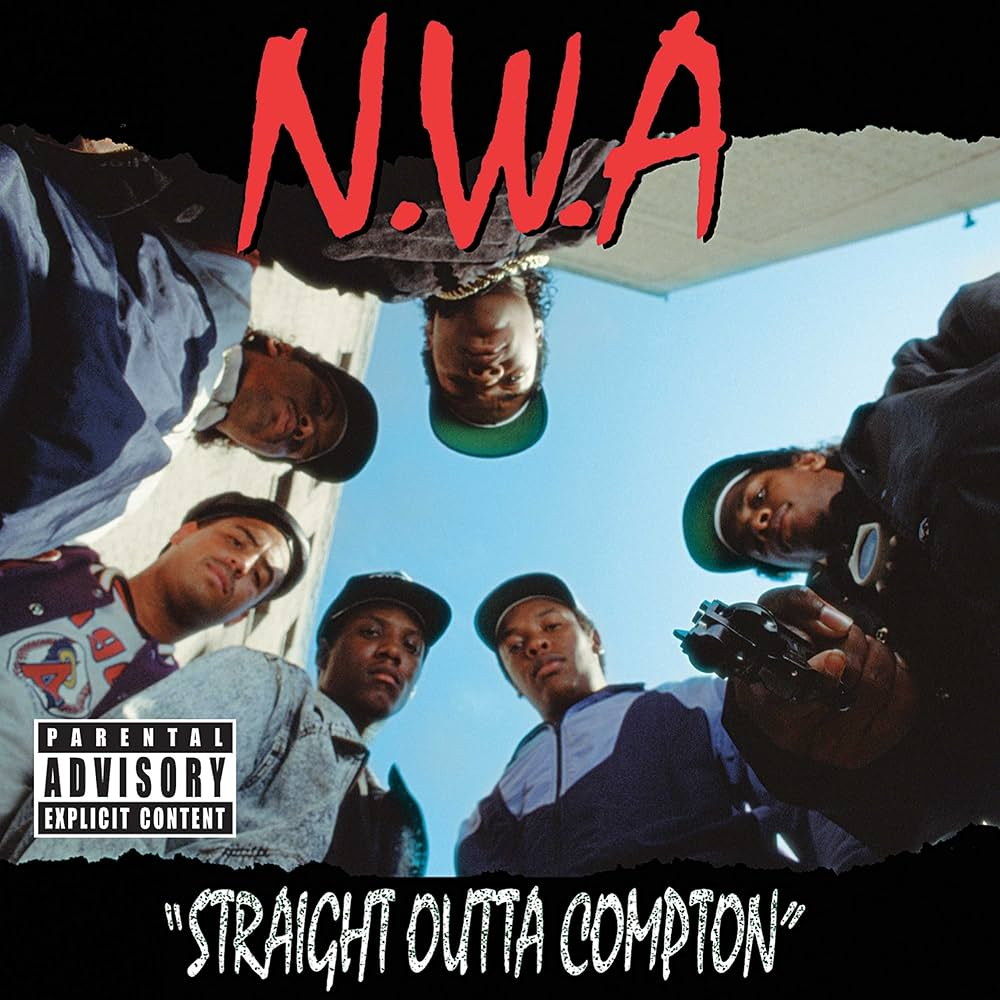
Album/Year Released
1988 (album: Straight Outta Compton)
Artist/Composer
N.W.A.
O'Shea Jackson, Lorenzo Patterson, Tracy Curry
Genre/Style
Gangsta rap
Song Form
Verse-driven with spoken interludes
“F— tha Police,” released in 1988 on N.W.A.’s debut album Straight Outta Compton, is widely regarded as one of the most controversial and influential recordings in the history of gangsta rap. The group, which included Dr. Dre, Ice Cube, MC Ren, and Eazy-E, composed the track as a direct and confrontational response to their encounters with law enforcement in Los Angeles. The song is set in a steady 4/4 meter and features a sparse, repetitive drum-machine pattern with minimal harmonic or melodic development. The stripped-down production foregrounds rhythm and lyrical delivery, amplifying the impact of each rapper’s statements. The limited musical variation keeps attention on the verses, which serve as personal testimonies.
The song’s structure is primarily verse-driven, organized around a dramatic courtroom parody. Dr. Dre adopts the role of judge, presiding over a fictional trial in which the police department is the defendant. Ice Cube, MC Ren, and Eazy-E each “take the stand,” presenting verses that function as sworn testimony addressing systemic police brutality and racial profiling. Spoken interludes reinforce the courtroom motif by dramatizing stereotypical stop-and-frisk incidents and violent confrontations. The narrative concludes with the fictional jury finding the police department guilty, followed by a police officer protesting the verdict and being forcibly removed while shouting obscenities. The theatrical courtroom framing device intensifies the song’s satirical reversal of institutional authority by redirecting the legal system's mechanisms against itself.
Each verse is performed in an assertive and direct style characterized by sharp accents and concise phrasing. Instead of utilizing intricate melodic hooks, the track derives its energy from rhythm and rhetorical delivery. The lack of harmonic progression directs attention toward the lyrics and rhythmic delivery. N.W.A.’s confrontational style and explicit lyrics provoked considerable backlash upon release, with critics alleging that the group advocated violence against law enforcement. N.W.A. maintained that the song represented an honest depiction of their community’s experiences, contending that it documented systemic abuse rather than encouraged aggression.
The controversy intensified when the Federal Bureau of Investigation issued a warning letter to the group’s record label, condemning the song on account of its perceived endorsement of violence. Although the explicit language restricted radio airplay, the ensuing public debate increased attention and commercial success. Straight Outta Compton ultimately achieved double platinum status, and “F— tha Police” became a focal point for discussions of censorship, freedom of expression, and the societal responsibilities of artists.