Chapter 22: Psychedelic Rock Pt.2
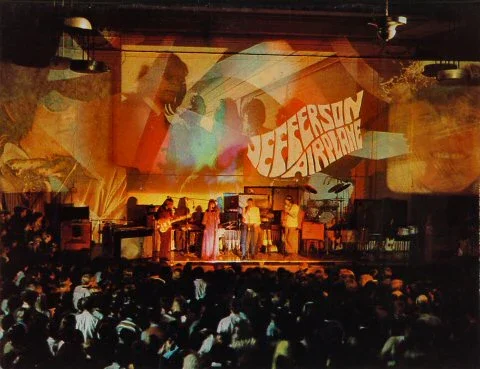
Chapter 22: Introduction: The LA Scene
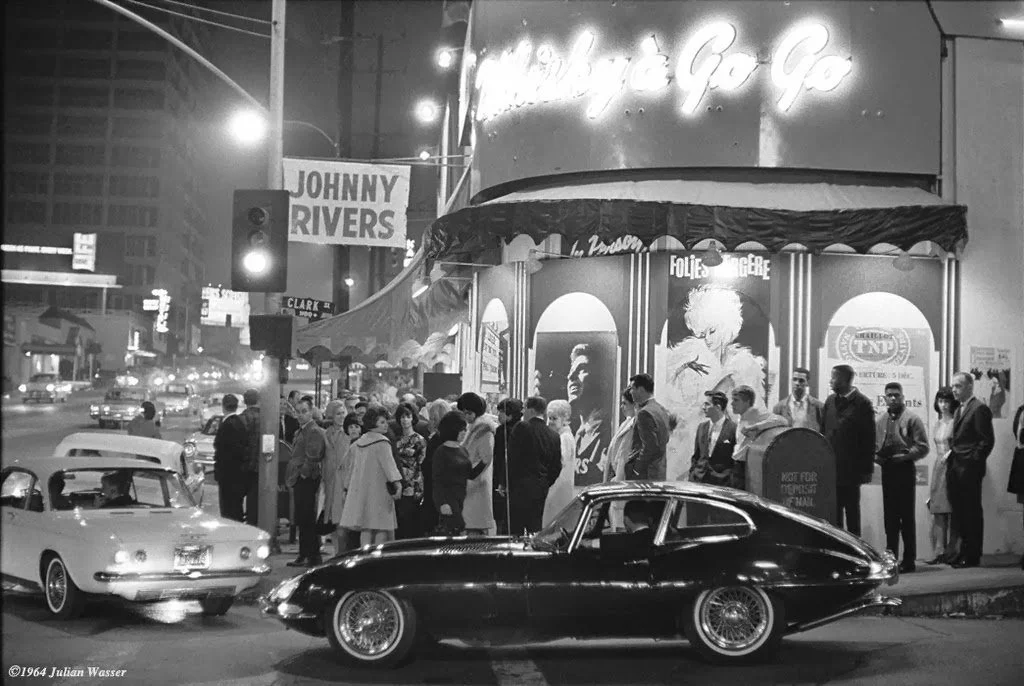
As we discussed in Chapter 20, by the mid-1960s, Los Angeles had become a magnetic hub for the folk-rock movement and the larger counterculture. As the center of the American film industry, the city attracted writers, musicians, and visual artists who worked within and against established narrative forms. The city’s warm climate, proximity to the entertainment industry's infrastructure, and access to a growing youth market created fertile ground for a distinct psychedelic scene that intertwined music, art, and commercial interests.
Venues such as the Whisky a Go Go on the Sunset Strip and the Troubadour became gathering places where the emerging psychedelic cultural energy found an audience. The Whisky, a club named after its original go-go dancers, became a vibrant crossroads for musicians, filmmakers, poets, and activists alike. Bands like the Byrds frequently played there, while The Doors held the position of house band, honing their dark, theatrical style through nightly performances that often blurred the boundary between concert and something akin to a spiritual ritual.
The Byrds' 1966 album Fifth Dimension captured the growing psychedelic sensibilities of the mid-1960s, with “Eight Miles High” emerging as its most emblematic song. Departing from their earlier folk rock style, the band embraced a more experimental sound that mirrored the era’s fascination with altered states and new musical frontiers. Roger McGuinn’s guitar tone, produced on a 12-string Rickenbacker and picked close to the bridge, created a bright, chiming resonance that suggested the timbre of a sitar. His method drew on modal improvisation techniques influenced by jazz saxophonist John Coltrane, whose interest in Indian classical forms inspired McGuinn to explore sustained, drone-like textures.
For 1966, “Eight Miles High” was strikingly forward-looking, placing The Byrds alongside the Beatles and other innovators of the British Invasion in pushing rock into uncharted territory. The song’s shifting harmonies and reliance on the Dorian mode (a minor scale with a raised sixth) gave it a hypnotic, otherworldly quality. Though the Byrds insisted the lyrics described the literal experience of flying, many listeners interpreted them as a veiled reference to LSD and psychedelic consciousness. The song’s double meaning exemplifies the pre-1967 “double entendre syndrome” within music designed for mass commercial appeal, where countercultural messages were carefully encoded to avoid censorship. The interplay between overt presentation and subtle subversion became a hallmark of the Los Angeles psychedelic scene and fostered a creative cross-pollination that influenced not only rock music but also fashion, visual art, and film. As a result, Los Angeles joined San Francisco and New York as a major site of countercultural production during the 1960s.
“Good Vibrations"

Following the release of the Beach Boy’s album Pet Sounds in 1966, Brian Wilson's reputation as a visionary musician began to gain broader recognition, particularly in the U.K. music press. Although the album was not a commercial blockbuster in the U.S., it was celebrated in Britain, where musicians and critics alike recognized Wilson's ambitious compositional techniques and innovative production. Capitol Records and Wilson's close circle, including former Beatles publicist Derek Taylor, began promoting the slogan "Brian Wilson is a genius" in interviews and articles to market the group. While the marketing campaign succeeded in raising Wilson's profile as an auteur, it also intensified the already immense pressure he was placing on himself to deliver something even greater.
Wilson was keenly aware of what could be described as a friendly artistic rivalry with the Beatles, whom he both admired and felt compelled to surpass. After hearing Rubber Soul (see Chapter 18) in late 1965, Wilson described it as a "whole album with all good stuff," inspiring him to conceive Pet Sounds as a unified artistic statement. When the album Revolver followed in 1966 and the Beatles began their own studio experimentation, Wilson felt that the stakes had been raised yet again. With the groundbreaking album Sgt. Pepper's Lonely Hearts Club Band on the horizon, he became obsessed with creating a response that would not just equal it but outshine it. Wilson’s drive led to the conception of SMiLE, a project he described as a "teenage symphony to God."
The first single associated with this hefty project and the immediate follow-up to Pet Sounds was the wildly ambitious "Good Vibrations" (1966), which Brian Wilson famously described as a "pocket symphony." "Good Vibrations" track marked a radical shift in pop production, showcasing Wilson's revolutionary use of the recording studio itself as an instrument. He treated the studio's acoustics, microphone placement, and mixing console as compositional tools, layering and combining sounds with the care of a painter selecting colors. By exploiting the unique tonal characteristics of different rooms and echo chambers in each studio, Brian Wilson made the recording studio itself part of the compositional process.
To record the song "Good Vibrations," Wilson employed a technique called modular recording, an innovative method at the time. Wilson recorded sections separately—often in different studios and on different days—and then meticulously pieced them together from various reels of analog tape. Tape splicing itself was a highly labor-intensive and delicate process: engineers would physically cut the magnetic tape using razor blades or specialized cutting machines, then join segments with adhesive tape. Precision was essential to ensure smooth transitions without audible clicks or timing errors. Because there was no digital editing, any mistake meant repeating the cutting process—or, in the worst cases, rerecording the damaged section—making Wilson's meticulous working methods all the more remarkable.
One of the most distinctive sounds on "Good Vibrations" comes from the electro-theremin, an early electronic instrument that produces eerie, wavering tones through manual manipulation of oscillator frequencies. The electro-theremin is a distinct instrument from the traditional theremin. While the traditional theremin is controlled by moving one's hands near two metal antennas to manipulate pitch and volume without physical contact, the electro-theremin uses a mechanical interface—such as a slide or keyboard—for precise pitch control, making it more stable and better suited for pop music recording. Invented by trombonist Paul Tanner and engineer Bob Whitsell in the late 1950s, the electro-theremin was designed to mimic the theremin's sound while offering more precise pitch control. It features a mechanical slider (or rotary dial) attached to a pitch control circuit, allowing the performer to glide smoothly between notes by physically moving the control along a continuous scale. The mechanical slider gave the instrument its distinctive swooping sound, but with greater tuning accuracy than the original theremin. On "Good Vibrations," the electro-theremin's shimmering, voice-like tone adds a haunting, psychedelic dimension that was utterly unique among pop songs in 1966.

Wilson also layered additional unconventional instruments into the track's kaleidoscopic soundscape. A key example is the mouth harp (also known as a jaw harp or Jews harp), a small plucked idiophone that produces twanging, vibrating tones. The player places the instrument between the teeth and plucks a metal tongue while using the mouth and breath to control the resulting overtones. Its rhythmic, bouncing sound adds a quirky, percussive texture to the song's introduction and verse sections, contributing to the surreal, carnival-like atmosphere. Another textural highlight is the tack piano, an upright piano modified by placing small metal tacks into the hammers that strike the strings. The tacks in the piano hammers create a bright, jangly, slightly metallic sound evocative of honky-tonk saloons or music boxes that cuts sharply through the dense arrangement.
"Good Vibrations" breaks from traditional verse-chorus structures through its modular construction and contains a collage of contrasting musical episodes, each recorded independently and later spliced together. The song opens in E♭ minor with the lyric, "I, I love the colorful clothes she wears," introducing a tight, syncopated groove with sparse instrumentation and a slightly ominous tone. This leads into a surprising modulation to G major in the pre-chorus ("When I look in her eyes…") where the harmonies soften and the texture opens up, offering emotional relief. The chorus shifts again to B♭ major ("I’m pickin’ up good vibrations…"), where soaring vocal harmonies and the gliding electro-theremin enter, giving the song a harmonic lift.
After a second chorus, the song enters a breakdown section with the lyric, "Gotta keep those lovin’ good vibrations a-happenin’," where tempo slows, textures thin, and the harmonic center becomes fluid. Cello ostinatos and organ pulses float beneath the surface, creating a surreal, meditative soundscape. The track ultimately returns to its chorus material ("Good, good, good, good vibrations…"), but this reprise is fuller and more texturally dense, layering voices, theremin glides, and percussion into a swirling finale. Rather than resolve neatly, the song fades out into silence. Wilson's bold use of key changes, modular form, and innovative instrumentation produces something closer to a miniature symphonic work than a conventional pop song, capturing both his restless creativity and the increasing ambitions of 1960s studio production.
The production of "Good Vibrations" was famously laborious, spanning over six months and involving more than 90 hours of tape. Sessions took place across four major Los Angeles studios: Western, Gold Star, Sunset Sound, and Columbia. At an estimated cost of ranging from $15,000 to $50,000 (around $450,000 today), "Good Vibrations" was the most expensive single produced up to that time. Its commercial success, reaching number one on the Billboard Hot 100, demonstrated that experimental and highly crafted studio work could resonate with a mainstream audience. For Wilson, the single stood as both a creative peak and a tantalizing preview of the even more ambitious Smile project he was already conceiving.
SMiLE

While the other members of the Beach Boys were away touring, Wilson immersed himself in Los Angeles' countercultural circles. He surrounded himself with artists, mystics, and collaborators who shared his experimental ambitions. Working closely with folk-rock lyricist and prominent member of the L.A. counterculture Van Dyke Parks, he envisioned a record that would weave together themes of American history, environmentalism, colonial critique, drug culture, spiritual searching, and the loss of youthful innocence. These eclectic themes were set to ornate baroque arrangements and avant-garde studio techniques. Songs like "Surf's Up," "Cabin Essence," and "Heroes and Villains" combined richly layered harmonies with impressionistic lyrics and abrupt shifts in mood, tempo, and texture. However, the very qualities that made Smile so visionary—abrupt formal shifts, dense orchestration, and open-ended structure—also complicated completion.
As sessions dragged into 1967, Wilson's mental health deteriorated under immense expectations, perfectionism, and drug use. The "genius" label and the pressure to outdo the Beatles became overwhelming. Bandmates and studio musicians described Wilson becoming increasingly erratic—scrapping finished recordings, obsessing over minute details, and abandoning sessions. He famously built a sandbox under his piano to feel "closer to the earth" while composing and grew convinced certain studios were cursed.
Wilson's paranoia intensified, particularly regarding Phil Spector. He believed Spector was trying to sabotage or even kill him due to jealousy that Wilson was encroaching on his position as the best producer in Los Angeles. Wilson began interpreting innocent events as deliberate threats. After viewing a Spector-produced film, Wilson thought it contained secret messages aimed at him and suspected his house was bugged. He began conducting meetings while floating in his swimming pool, convinced it was the only place safe from surveillance. His increasing use of psychedelic drugs, especially LSD, opened artistic avenues but exacerbated his psychological distress.
Internal tensions within the Beach Boys exacerbated Wilson's struggles. Some members, especially Mike Love, resisted Wilson's psychedelic direction, urging him not to "f--- with the formula" of catchy melodies, tight harmonies, and upbeat California-themed lyrics. Love has since disputed this portrayal, arguing that he intended to protect the band's success rather than to stifle creativity. Regardless, this rift deepened Wilson's isolation and anxiety, leaving him feeling misunderstood as he pursued his higher calling to craft a perfect "teenage symphony to God."
An infamous incident during the recording of "Mrs. O’Leary’s Cow," intended to represent fire (The real Mrs. O'Leary's Cow is said to have started the Great Chicago Fire of 1871), exemplified Wilson's unraveling mental state. He instructed musicians to wear fire helmets and create musical chaos. When a fire broke out in a nearby building that night, Wilson believed his music had caused it. Shaken, he shelved the entire section and came to see Smile as cursed.

The project collapsed shortly before the release of Sgt. Pepper's Lonely Hearts Club Band in 1967, an album Wilson reportedly heard and said, "They did it first." Whether apocryphal or not, this story expressed the painful reality that the Beatles had achieved the kind of concept album Wilson sought. Smile remained unfinished—an archive of fragmented tapes and abandoned sessions that would trouble Wilson for decades to come.
The shelving of Smile marked the end of Wilson's most ambitious creative phase. His mental health declined rapidly, and his role within the band diminished. Though fragments of Smile appeared on later albums like Smiley Smile and Surf's Up, the original vision remained unrealized until Brian Wilson Presents Smile was released in 2004 to critical acclaim, completing the once "lost" masterpiece.
Following Wilson's retreat from touring and leadership, Carl Wilson emerged as the band's steadying force. Under his guidance, the Beach Boys transitioned into a more democratic phase. Albums like Sunflower (1970) and Surf's Up (1971) featured introspective songwriting from all members, with Carl overseeing much of the production. Sunflower included tracks from Dennis and Brian, while Surf's Up tackled social and environmental issues and revived the long-shelved Smile title track. Though commercial success waned in the U.S., the band earned renewed critical respect, especially in Europe. Carl's leadership and emotive vocals sustained the group through the 1970s until he died in 1998. Today, the Beach Boys are remembered for their early sun-drenched commercial pop hits but also for their pioneering studio innovations, harmonic sophistication, and outsized influence on American popular music and culture.
The Doors
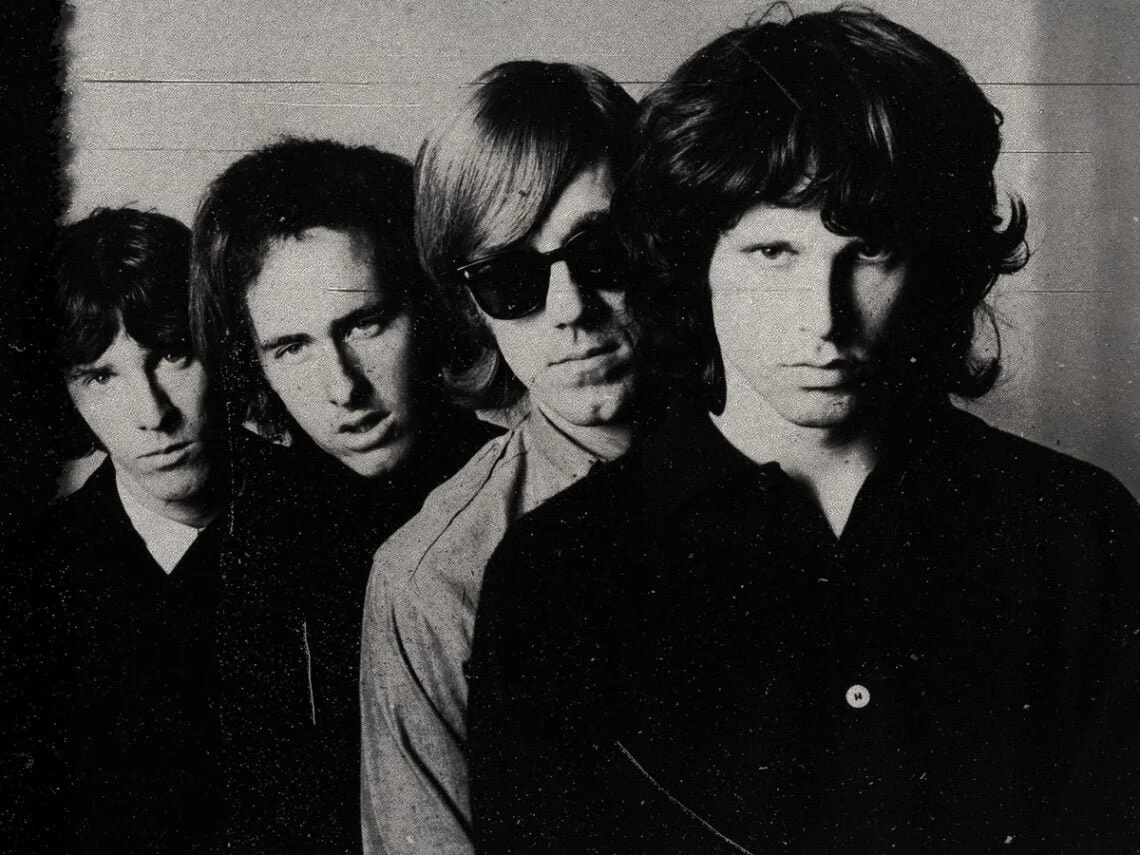
Formed in Los Angeles in 1965, The Doors emerged from the creative meeting of poet and lyricist Jim Morrison and keyboardist Ray Manzarek, who first connected while studying film at UCLA. Joined by guitarist Robby Krieger and jazz-trained drummer John Densmore, the band chose a name inspired by Aldous Huxley’s novel describing his own psychedelic experience, The Doors of Perception. The title, itself drawn from 19th-century artist William Blake's phrase about cleansing the "doors of perception," firmly situated the group within the counterculture's fascination with altered states of consciousness and heightened awareness.
One distinctive feature of The Doors was their absence of a bassist. Instead, Manzarek’s simultaneous playing of bass lines on a Fender Rhodes Piano Bass with his left hand, and melodic lines on a Vox Continental organ with his right, crafted a rich, layered sound that became a signature of the band. Manzarek's keyboard bass and organ texture provided a haunting backdrop for Morrison’s distinctive deep baritone voice, often delivered with a narrow, almost spoken range. His lyrics probed themes of death, sexuality, violence, and myth, and his volatile, theatrical stage presence turned The Doors into one of the most provocative and captivating bands of the late 1960s.
The band’s initial rise was closely tied to the vibrant Los Angeles club scene, especially their residency at the Whisky a Go Go on the Sunset Strip. Here they honed their craft, opening for folk-rock acts such as Buffalo Springfield and The Turtles. However, Morrison’s unpredictable onstage behavior came to a head during a performance of “The End,” when he improvised a sexually explicit and profane line that referenced the Oedipus complex—an allusion to a taboo desire involving his mother and the killing of his father—that led to the band’s dismissal. Rather than diminishing their profile, the incident solidified their reputation for pushing boundaries.
In 1966, The Doors signed with Elektra Records and released their self-titled debut album in early 1967. Played extensively on progressive FM radio, the album quickly climbed the charts to number two, trailing only behind Sgt. Pepper’s Lonely Hearts Club Band. The breakthrough single “Light My Fire,” written primarily by Krieger, exemplified their blend of blues-rock and improvisational depth, driven by Manzarek’s baroque-influenced organ solo. When performing the song on the Ed Sullivan Show, Morrison famously refused to change the word “higher” to “better” as requested to avoid drug references. The radio edit removed the word “high” to prevent censorship. Although the track was initially shortened for AM radio, its success encouraged stations to play the full-length version, encouraging music industry officials to embrace longer, album-oriented rock tracks—a change that echoed the counterculture’s preference for immersive, exploratory listening.
Another early song, “Break On Through (To the Other Side),” captured the band’s psychedelic spirit and hinted at themes of spiritual transcendence. The song’s dynamic fusion of Latin rhythms, blues, and rock remained intact. Its verses shift from a bossa nova groove to a driving rock beat in the chorus, showcasing The Doors' ability to combine contrasting musical styles while pushing beyond conventional song structures.
Following their debut, The Doors released Strange Days (1967), which reached number three on the charts and featured standout tracks such as “People Are Strange” and “Love Me Two Times.” The album also featured the nearly 11-minute “When the Music’s Over,” a dark, hypnotic piece that captured the intensity of their live performances. Their next album, Waiting for the Sun (1968), became their only number-one release, propelled by the hit single “Hello, I Love You.”
“Touch Me,” released in late 1968, drew heavily from traditional pop and jazz influences. This track featured elaborate brass and string arrangements that recalled the big-band swing and crooner traditions of the 1940s and 1950s. Jim Morrison’s vocal delivery is less the declamatory chant of his darker material and more a smooth croon akin to Frank Sinatra. This darker, sultry stage performance was emblematic of Morrison’s nickname “The Lizard King.” The song’s instrumentation, complete with jazzy saxophone lines, blurred the boundary between rock and earlier forms of American popular music, creating a kind of historical callback that situated The Doors within a broader lineage of musical experimentation.
As the band’s success grew, Morrison’s personal struggles deepened. His heavy drinking, drug use, and bouts of depression exacerbated an already volatile personality. Producer Paul Rothchild recalled recording sessions where Morrison’s mood swung unpredictably between introspective calm and reckless outbursts. “You just never knew! Was he going to be Dr. Jekyll or was he going to be Mr. Hyde? Was it gonna be the calm, erudite scholar, or the crazed kamikaze pilot drunk?” Morrison's volatility came to a head during a 1969 concert in Miami, Florida, an event that would become one of rock history’s most infamous moments. During the performance, Morrison’s behavior grew increasingly erratic and confrontational. Witnesses reported that he exposed himself onstage and taunted the crowd and law enforcement officers, acts considered scandalous at the time. Police abruptly halted the concert, and Morrison was arrested on charges of indecent exposure and public intoxication. The arrest and subsequent trial attracted intense media coverage, dividing public opinion between those who saw Morrison as a dangerous rebel and others who viewed him as a symbol of countercultural resistance to authority.
Despite internal tensions, The Doors continued to record. The Soft Parade (1969) incorporated brass and string arrangements, adding new textures to their sound, while Morrison Hotel (1970) marked a return to the rawer blues-rock that had originally driven their sound. Morrison’s final album with the band, L.A. Woman (1971), featured classics like“Love Her Madly” and “Riders on the Storm.” Shortly after its release, Morrison relocated to Paris, seeking respite from legal troubles and the pressures of fame. He died there in July 1971 at age 27 from a heroin overdose.
The Doors’ blend of poetic imagery, blues-based rock, and improvisational exploration placed them at the intersection of mainstream rock success and the psychedelic counterculture. Their music drew heavily on the era's fascination with altered consciousness and social transgression, while their career changed how rock music was recorded, marketed, and consumed.
The Monterey Pop Festival
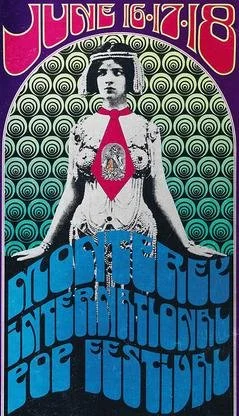
By the mid-1960s, the West Coast music scene was marked by the complex and often competing dynamics between the two distinct cultural centers of Los Angeles and San Francisco. Despite their close proximity, the cities represented contrasting visions of the emerging counterculture. Los Angeles, with its sprawling entertainment industry and cosmopolitan diversity, was seen by many in San Francisco as a “plastic dystopia,” a place synonymous with commercialism, superficiality, and limited political engagement. In contrast, many in Los Angeles regarded San Francisco as insular, overly idealistic, and socially narrow—a tribalistic enclave lacking the modern sophistication of Los Angeles’ thriving cultural industries.
Amid these tensions, the Monterey Pop Festival in June 1967 emerged as a crucial moment that helped bridge the gap between the two scenes. Organized in just seven weeks by John Phillips of The Mamas and the Papas alongside music industry veterans Lou Adler, Alan Pariser, and Derek Taylor, Monterey aimed to showcase the best of West Coast rock and folk, unite the two cities, and elevate rock music to the highbrow status of jazz and folk. The festival was propelled and marketed by Scott McKenzie’s anthem “San Francisco (Be Sure to Wear Flowers in Your Hair),” which ironically shares more musical affinity with the Los Angeles sound than any San Francisco band. The song quickly became synonymous with countercultural ideals of flower power and helped spread the festival’s reach nationwide. Monterey brought together artists from both cities and beyond, fostering a rare moment of unity and creative exchange.
The performances at Monterey illustrated this exchange of musical styles and ideas. Janis Joplin’s raw, blues-inflected vocals with Big Brother and the Holding Company earned widespread acclaim and secured her place as a central performer within the San Francisco scene. The Who brought their intense British Invasion energy, culminating in the theatrical destruction of instruments, a powerful symbol of rock’s rebellious spirit that helped shift the genre toward more aggressive performance styles. Otis Redding’s soulful, charismatic presence and stirring renditions of “Respect” and “Try a Little Tenderness” broke racial and genre boundaries, broadening his appeal and introducing his music to predominantly white rock audiences.
The festival’s success was notable not only for its scale but also for its spirit. Held at the Monterey County Fairgrounds, the event attracted between 25,000 and 90,000 attendees (sources vary widely, with some claiming more than 200,000 were present), far exceeding the venue’s official capacity of 7,000. Monterey’s organizers prioritized artistic freedom and cultural expression over commercial gain. Most artists performed without pay, with proceeds donated to charity, except for sitar virtuoso Ravi Shankar, who was compensated for his extended set. The nonprofit festival models, combined with extensive media coverage and a documentary film, set a precedent for future large-scale festivals such as Woodstock and the Altamont Free Concert.
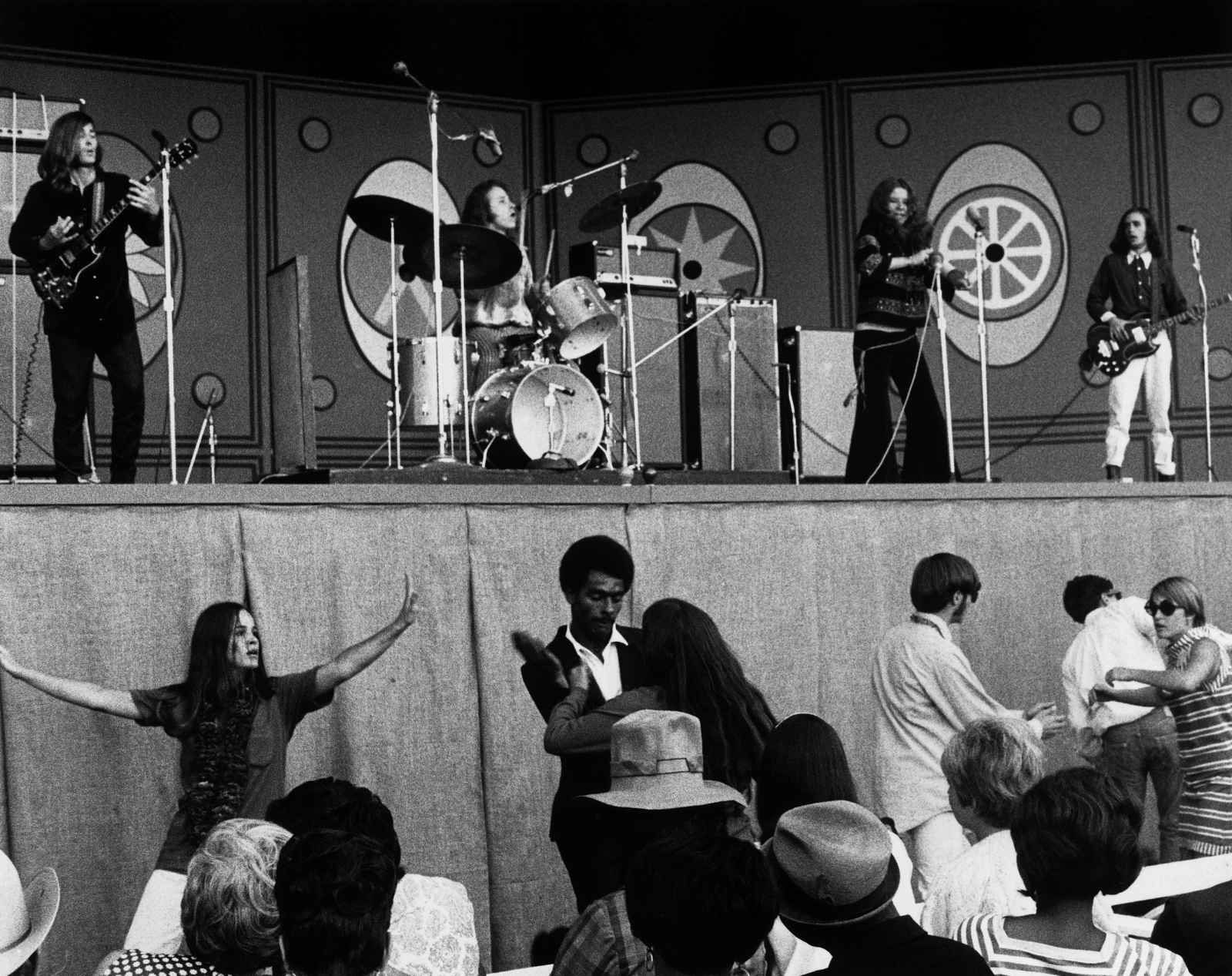
In retrospect, the Monterey Pop Festival is often treated as a central event in accounts of 1960s counterculture and arguably the most successful of the era’s music festivals. It not only showcased landmark performances but also symbolized a moment of creative unity between the often-competing Los Angeles and San Francisco scenes. Monterey established the blueprint for the modern music festival, an idea and format still employed to this day.
Jimi Hendrix
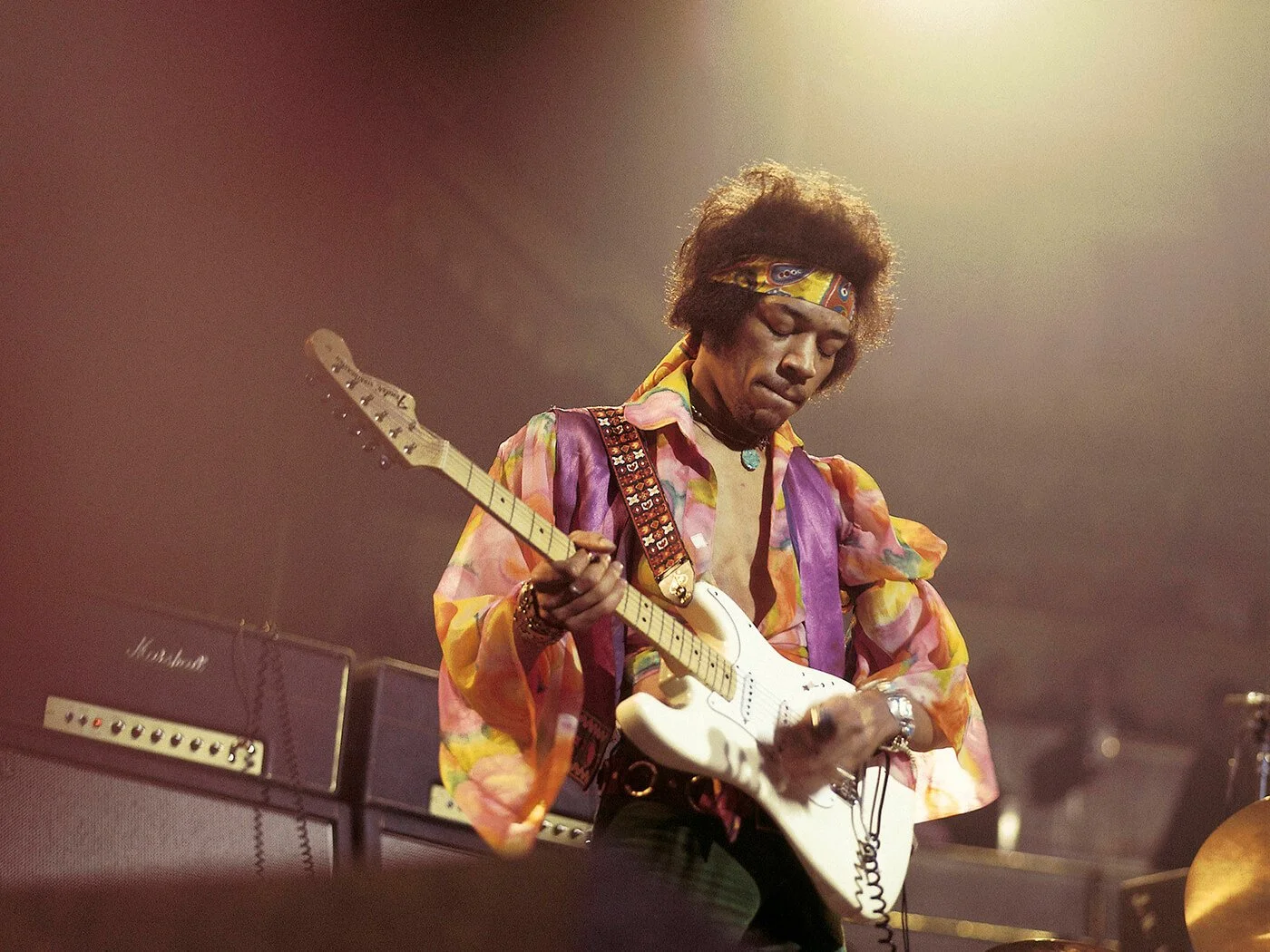
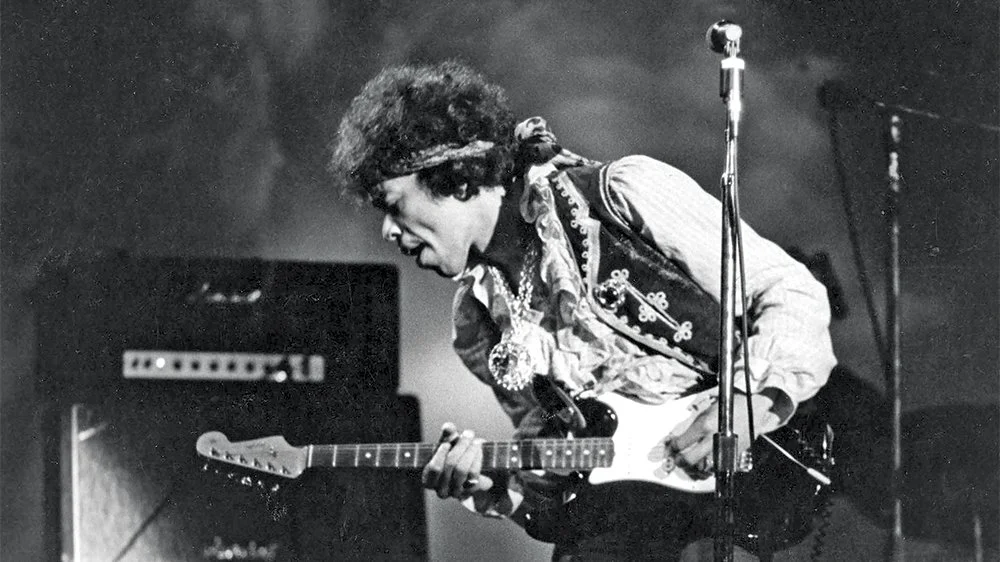
One of the most unforgettable moments at the Monterey Pop Festival came from an artist who was still relatively unknown to many in the American audience—Jimi Hendrix. His explosive guitar playing and dramatic finale captivated both the crowd and the press, propelling him into international stardom almost overnight. Hendrix was introduced at the festival by Rolling Stones guitarist Brian Jones as “the most exciting performer [he had] ever heard,” before launching into a blistering, fast-paced version of Howlin’ Wolf’s “Killing Floor.” Dressed in vibrant, exotic clothing, he immediately stood out as a singular presence on stage. Music historian Charles Shadwick later described Hendrix not only as a revolutionary musical force but also as “an entirely original vision of what a black American entertainer should and could look like.”
The Jimi Hendrix Experience’s set combined electrifying covers like “Hey Joe,” B.B. King’s “Rock Me Baby,” and Bob Dylan’s “Like a Rolling Stone” with original songs such as “Foxy Lady,” “The Wind Cries Mary,” and “Purple Haze.” Throughout the performance, Hendrix broadened the boundaries of showmanship and sexuality—playing his guitar with his teeth, executing provocative movements including humping the amplifiers, and engaging in wild, theatrical gestures that stunned the audience. His physicality was as integral to his act as his innovative guitar work, creating an intense, visceral experience that blended music and performance art.
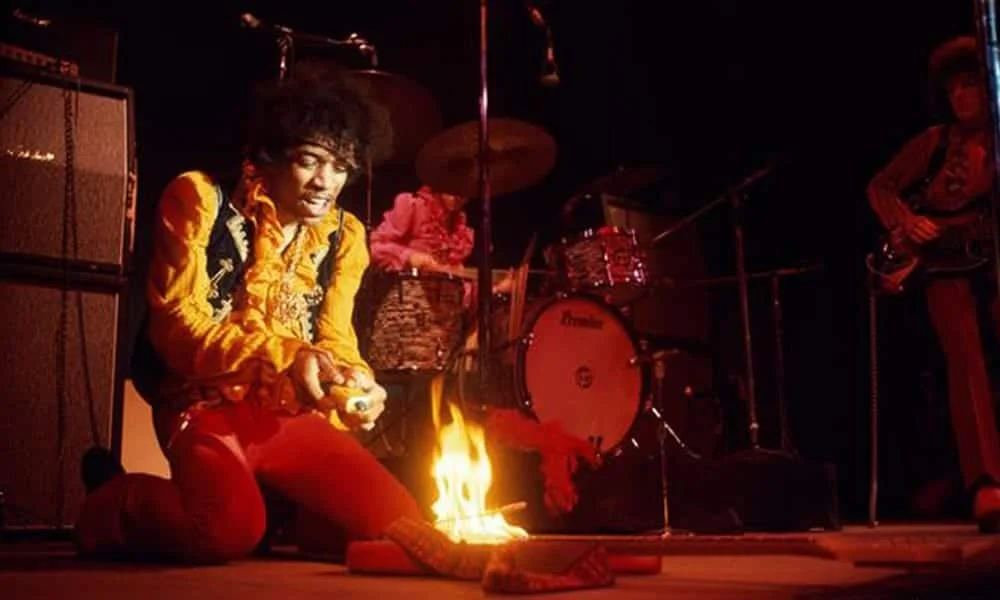
The set reached its climax during a performance of the Troggs’ “Wild Thing,” when Hendrix smashed his guitar on stage, doused it with lighter fluid, and set it ablaze. Flames engulfed the instrument as Hendrix knelt, hands raised in a dramatic and unforgettable image. He then threw the burning guitar into the crowd, an act that became one of rock’s most iconic moments and a lasting symbol of rebellion and theatricality. Author Gail Buckland noted that the image of Hendrix, hands raised before his burning guitar, stands as “one of the most famous images in rock.” For Hendrix, the act held deep symbolic meaning: “I decided to destroy my guitar at the end of a song as a sacrifice. You sacrifice things you love. I love my guitar.” Captured on film by D.A. Pennebaker for the Monterey Pop documentary, this powerful gesture played a crucial role in introducing Hendrix to a wider American audience
While Monterrey brought Hendrix into the spotlight, his career had been steadily building up to that moment. Born on November 27, 1942, in Seattle, Washington, into a middle-class family, Hendrix began playing guitar at age fifteen. He drew inspiration from blues legends like B.B. King, Muddy Waters, and Chuck Berry, as well as rock and roll pioneers such as Elvis Presley and Little Richard. His left-handed playing style—famously adapting a right-handed guitar by restringing it upside down—became a hallmark of his distinctive sound and technique.
In the early 1960s, Hendrix toured the “chitlin’ circuit,”a network of venues across the segregated United States that provided performance opportunities for African American musicians during the Jim Crow era. He played backup for artists including Little Richard, The Isley Brothers, Ike and Tina Turner, Wilson Pickett, and Jackie Wilson. By 1964, he had moved to New York, where he formed his own band, Jimmy James and the Blue Flames, and began developing his unique blend of blues, rock, and psychedelic experimentation. His big break came in September 1966 when Chas Chandler, bassist for the Animals, saw him perform a riveting version of “Hey Joe.” Chandler brought Hendrix to London, helped him form the Jimi Hendrix Experience with bassist Noel Redding and drummer Mitch Mitchell, and launched him into the thriving British rock scene.
In the early days of the Experience, Hendrix’s setlist was heavily influenced by blues and soul, with a growing number of original compositions. He began experimenting boldly with feedback, fuzz distortion, and other electronically generated sounds. In Britain, the Experience quickly scored hits with “Hey Joe,” “Purple Haze,” and “The Wind Cries Mary,” drawing attention for Hendrix’s bold use of feedback, distortion, wah-wah, fuzz boxes, and other effects that expanded the guitar’s expressive range. Hendrix's initial success in England grew out of both the opportunities and the barriers he encountered as an African American artist in the United States. His music did not conform to mainstream expectations of Black popular style, limiting his initial visibility in the U.S. This pattern was not unique to Hendrix; historically, many Black American musicians—jazz legends like Duke Ellington among them—found more enthusiastic and respectful audiences in Europe than at home, where racial segregation and commercial expectations often constrained their artistic freedom and recognition. By contrast, the vibrant British pop and later psychedelic scene of the 1960s—anchored by youth cultures such as the fashion-conscious “mods” and the leather-clad “rockers”—embraced American popular music, particularly the electric guitar, with fervor. In this climate, Hendrix’s virtuosic, high-volume experimentation found fertile ground alongside the innovations of British acts like Pink Floyd and Cream. The band’s psychedelic fashion and high-energy performances set the stage for their American debut at the Monterey Pop Festival in June 1967.
One of the original songs performed at Monterey was “Purple Haze,” often interpreted as musically and lyrically evoking the effects of psychedelic drugs. It appears on the band’s first album, Are You Experienced? (1967). The track contains several defining elements of Hendrix’s style: extreme amplification, controlled feedback, pitch bending using the vibrato tailpiece (commonly referred to as a “whammy bar”), and the use of various effects hardware. The whammy bar is a lever attached to the guitar’s bridge that allows the player to raise or lower the pitch of notes, producing swooping or shaking tones. Hendrix also used the fuzz pedal, which deliberately distorts the guitar signal to create a thick, gritty tone, and the wah-wah pedal, which alters the sound by sweeping a band-pass filter up and down in frequency, mimicking the human voice saying “wah-wah.” Operated by foot, the wah-wah pedal functions as a low-pass filter when pressed down—allowing low frequencies to pass while blocking higher ones—and as a high-pass filter when pushed forward, allowing high frequencies to pass while blocking lower ones. In addition to these effects, Hendrix employed the Octavia, a pedal newly developed by sound engineer Roger Mayer, which doubled notes an octave higher, giving the song its distinctive, otherworldly timbre.
By the summer of 1967, Are You Experienced?, had been released in the United States and quickly climbed to number five on the charts after the Monterey Pop Festival. Its raw, blues-infused rock sound was a bold departure from much of the popular music available at the time. Unlike the commercial pop acts dominating the airwaves, Hendrix’s album stood alongside the harder-edged San Francisco bands such as Jefferson Airplane and the Grateful Dead, as well as the second-wave British Invasion groups like The Yardbirds and The Who. The album’s fusion of blues roots with explosive guitar innovation and psychedelic experimentation in tracks like “Foxy Lady,” “The Wind Cries Mary,” and the title track “Are You Experienced?” set a new standard for rock music, challenging traditional song structures and embracing studio techniques that enhanced its sonic impact.
Though Hendrix was often celebrated for his theatrical stage presence, he sometimes felt that his onstage antics overshadowed his serious musical ambitions. The tradition of flamboyant showmanship in rock and roll long predated Hendrix, with Chuck Berry’s duck walk, Elvis Presley’s hip-shaking dance moves, and Jerry Lee Lewis’s habit of kicking away his piano bench all becoming iconic elements of performance. Hendrix initially embraced this lineage, adding his own dramatic flourishes such as playing the guitar behind his head or with his teeth, and even lighting his instrument on fire. Yet as he began to focus more on pure musicianship, some fans expressed disappointment, preferring the more extravagant aspects of his earlier shows.
The Experience’s sophomore effort, Axis: Bold as Love (1968), showed the significant artistic growth and a maturation of Hendrix’s songwriting. The album blended a variety of musical styles, from hard rock and blues to more melodic and introspective pieces. “Little Wing,” in particular, became celebrated for its poetic lyricism and delicate guitar phrasing, displaying a sensitivity that contrasted with Hendrix’s more fiery performances. Meanwhile, experimental tracks like “EXP” delved into Hendrix’s fascination with science fiction and Hindu philosophy, weaving themes of cosmic consciousness and spirituality into the album’s fabric. This added thematic depth gave the album a broader scope beyond conventional rock, signaling Hendrix's growing ambition to use music to explore complex ideas and emotional landscapes.
Released in August 1968, Electric Ladyland is widely regarded as Hendrix’s magnum opus. It was his only album to reach number one on the charts and showcased a wide range of musical experimentation and technical innovation. The opening track, “And the Gods Made Love,” employed tape speed manipulation to craft a brief but effective electronic composition, signaling Hendrix’s willingness to incorporate avant-garde studio techniques into his work. The lengthy blues epic “Voodoo Chile” featured extraordinary contributions from drummer Mitch Mitchell and guest organist Stevie Winwood, alongside Hendrix’s own powerful vocals and guitar work. The track fused raw blues with poetic, Dylanesque lyrics and impassioned vocal shouts, exemplifying the album’s synthesis of tradition and innovation.
Electric Ladyland also included Hendrix’s most commercially successful single, his electrifying cover of Bob Dylan’s “All Along the Watchtower,” which was praised for its dramatic arrangement and virtuosic guitar solos. The album closes with “Voodoo Child (Slight Return),” a wah-wah-driven blues anthem that became one of Hendrix’s signature songs. “Voodoo Child (Slight Return),” showcased his mastery of the wah-wah pedal, creating a dynamic, vocal-like guitar sound.
Electric Ladyland exhibits an unusual thematic unity, with certain songs beginning on one side of the album and reappearing on another. For example, “Rainy Day, Dream Away” on side three returns as “Still Raining, Still Dreaming”on side four, shifting from a gentle, jazz-inflected rock ballad to a harder rock sound. The album also includes a traditional 12-bar blues, “Come On (Part I),” and continues Hendrix's exploration of guitar timbres in tracks such as “Gypsy Eyes.”
Among its most ambitious works, “1983 (A Merman I Should Turn to Be),” which flows seamlessly into “Moon, Turn the Tides,” serves as a comprehensive statement of Hendrix’s artistry. The piece combines driving rock with subtle electronic textures, features solos from drummer Mitch Mitchell and bassist Noel Redding, and incorporates ethereal flute by Chris Wood. Lyrically, “1983” presents an apocalyptic vision in which the protagonist, disillusioned by overbearing and hypocritical authority, rejects state governance and walks into the ocean. The title references Section 1983 of the Civil Rights Act of 1871, which allows civil action for the deprivation of rights.
The song is structured in standard verse–refrain form with a bridge, but an extended instrumental interlude and coda enlarge its scope. In addition to Hendrix’s signature guitar effects, the track employs numerous studio techniques characteristic of Electric Ladyland’s experimental nature, including tape-speed modification, musique concrète, and varied multi-tracking methods. The bridge features a Spanish-style bolero rhythm on drums, recalling Jefferson Airplane’s “White Rabbit.”
Hendrix’s influence cannot be overstated. He pioneered new styles and techniques that refashioned the electric guitar’s role in rock music. His inventive use of effects, feedback, and volume influenced later hard rock and heavy metal bands that followed, though many later groups only adopted the superficial aspects of his innovations, missing the subtlety and creativity that marked his work. Music critic John Morthland observed that while 1970s heavy metal bands borrowed from Hendrix’s emphasis on volume and riffs, none matched his finesse or imagination. Tragically, Hendrix died in London in 1970 due to barbiturate intoxication. An autopsy revealed he had ingested eighteen times the recommended dosage of the sedative Vesparax, along with tranquilizers, amphetamines, depressants, and alcohol. Despite his short life, Hendrix remains one of the most original and influential guitarists of the rock era and the most prominent African American figure in late-1960s rock music. Jimi Hendrix was the first famous black rock guitarist to achieve mainstream success in over a decade. His fusion of blues, soul, and psychedelic rock, combined with his innovative techniques and stage presence, ensured his enduring legacy in the history of popular music.
Woodstock
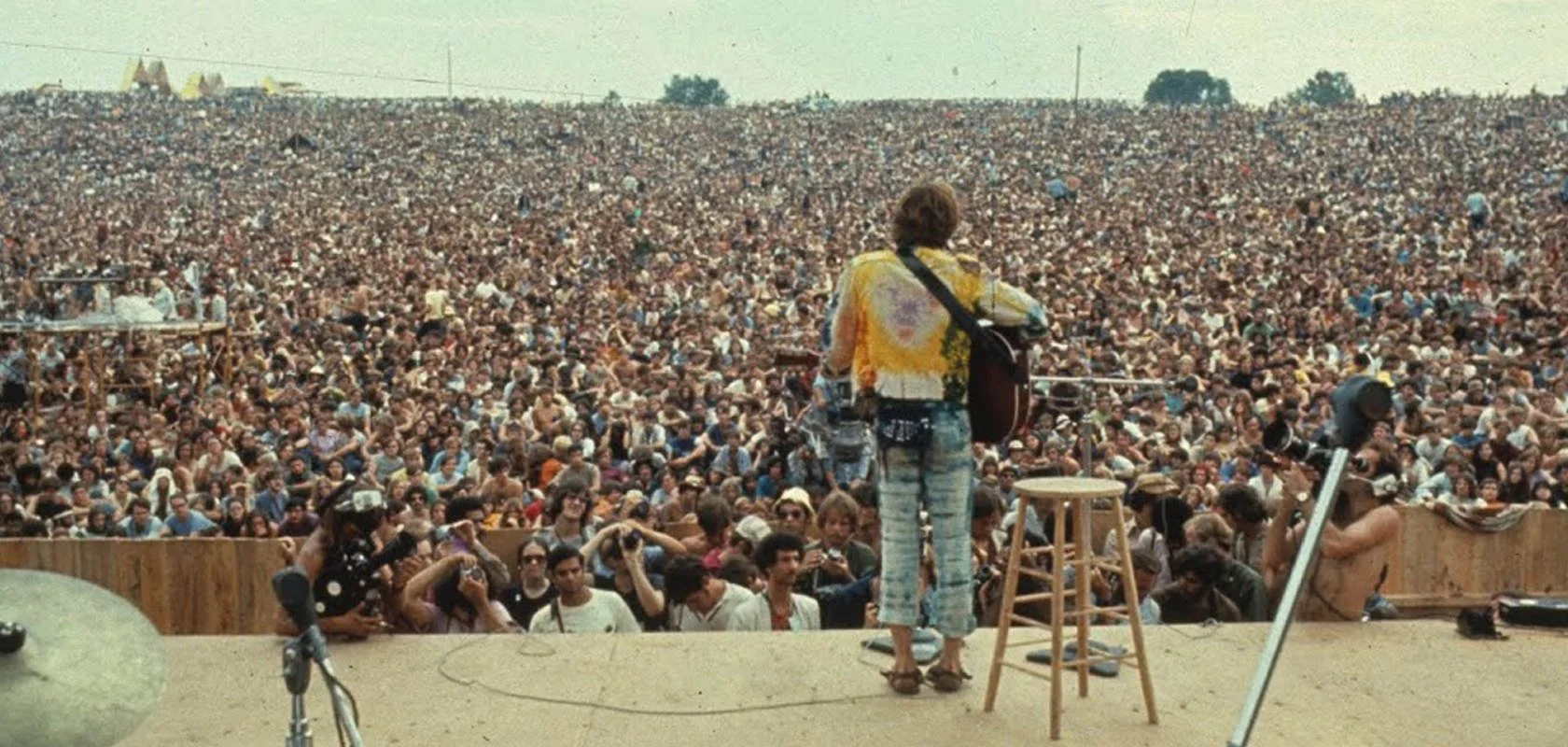
The Woodstock Music and Art Fair, commonly known simply as Woodstock, took place from August 15 to 18, 1969, on a 600-acre dairy farm owned by Max Yasgur in Bethel, New York, approximately 60 miles southwest of the town of Woodstock—despite what the festival’s name might imply. Billed as the “Aquarian Exposition: 3 Days of Peace & Music,” the festival aimed to embody and celebrate the ideals of the 1960s countercultural movement, including peace, love, and a shared passion for music.
Conceived initially as a ticketed business venture with the help of Bill Graham, Woodstock’s organizers expected around 50,000 attendees and sold roughly 186,000 tickets at $6 per day in advance and $8 at the gate. However, more than 500,000 people ultimately arrived, drawn by the festival’s utopian promise and growing cultural buzz. The overwhelming turnout made controlling admission nearly impossible, especially after members of Up Against the Wall Motherfucker cut down sections of the fences, allowing thousands to stream in without paying. Their actions effectively turned Woodstock into a massive free festival. The influx of attendees created immense logistical challenges: traffic jams extended for miles, with some cars stranded for hours; food and water became scarce; sanitation facilities were insufficient, leading to unsanitary conditions; and the medical tents were overwhelmed. Heavy rains turned parts of the farm into muddy fields, complicating movement and shelter.
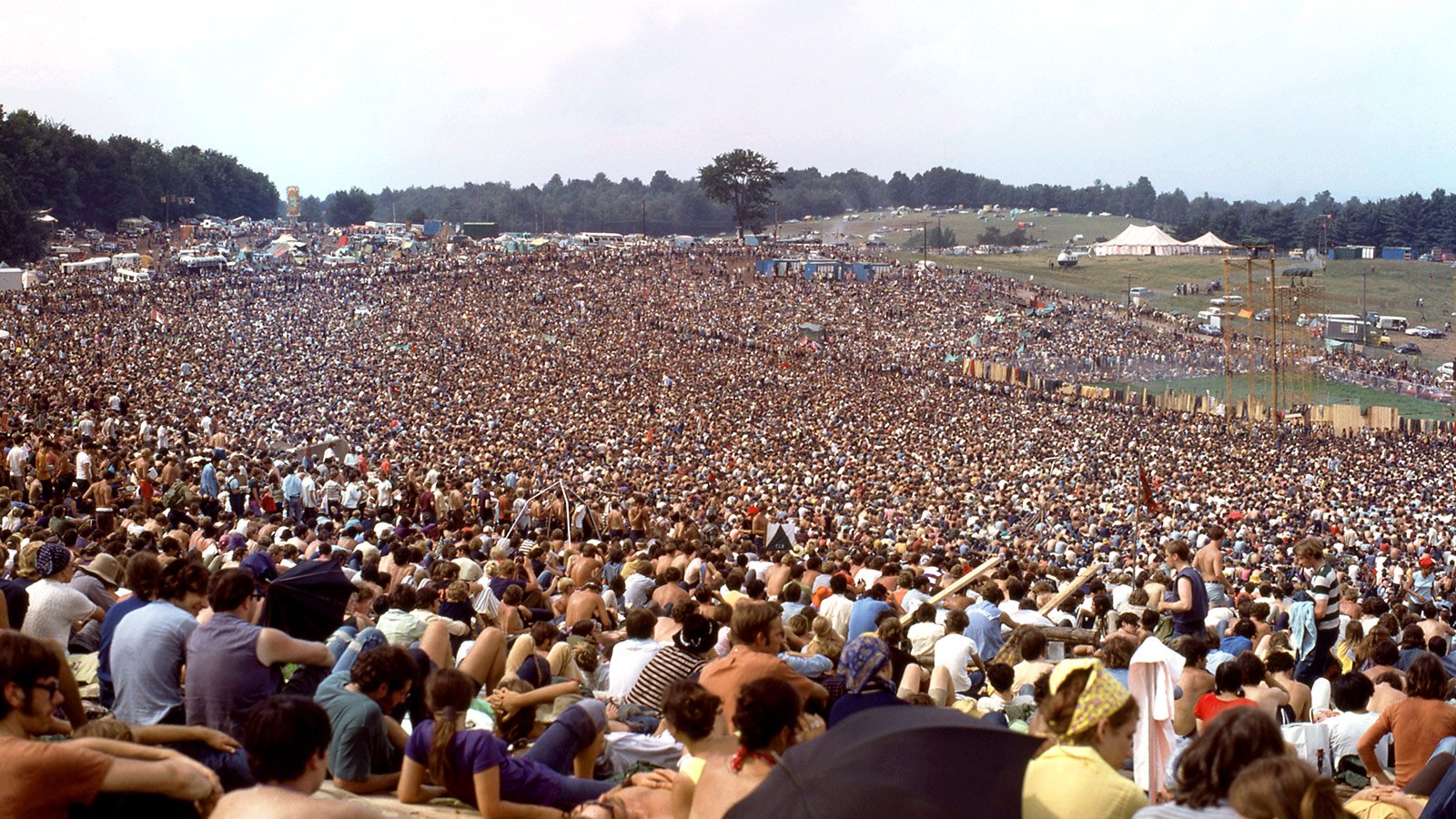
Despite these logistical hardships, the crowd’s spirit remained remarkably cooperative and peaceful. The local community, including farmers, restaurants, and communes, rallied to provide food, water, and medical assistance. Volunteers and organizers warned the audience about dangerous batches of LSD circulating on-site, stressing safety amidst the freewheeling atmosphere. Tragically, three people died accidentally during the festival despite its utopian aspirations. In response to the unfolding situation, New York’s governor declared the area a disaster zone, and both the National Guard and the U.S. Army were mobilized to maintain order and provide support. However, no intervention was ultimately required.
Financially, Woodstock was a failure, ending with a debt of approximately $1.5 million. The scale of the event, combined with free admission and the costs of emergency measures, ensured the festival would not turn a profit. Yet its cultural impact far exceeded any financial considerations. Woodstock was a roaring success in this regard. Its message of peace, music, and communal spirit resonated deeply with a generation and beyond. Through extensive media coverage, a landmark documentary film, and savvy marketing over subsequent decades, Woodstock has become firmly established in the American cultural imagination as an iconic symbol of the 1960s counterculture and one of the most important moments in popular music history. More importantly, it proved that this young group of counterculturists could gather peacefully and live out the ideals they championed.
Musically, Woodstock featured thirty-five acts across three days, representing a diverse cross-section of the late-1960s rock and folk scenes. Notably, only four female performers appeared: Melanie Safka, Joan Baez, Grace Slick, and Janis Joplin. Joplin, recently launched into a solo career after leaving Big Brother and the Holding Company, delivered a raw, emotionally charged set, despite being visibly intoxicated and under the influence of heroin. Her performances of songs like “Piece of My Heart” and “Work Me, Lord” were emblematic of her powerful yet turbulent style.
Country Joe and the Fish offered a different, but equally emblematic, expression of the festival’s political spirit. The group embodied the uneasy but often productive overlap between Berkeley radicals and San Francisco hippies. The two groups, though commonly associated in the public imagination, often disagreed about the relationship between culture and politics. Radicals criticized the hippies for being detached and apolitical, while hippies saw the radicals as too rigid and consumed by activism. Country Joe and the Fish bridged this divide by combining sharp political commentary with psychedelic experimentation. Even their name carried this dual orientation, with “Country Joe” referencing Josef Stalin and “the Fish” drawn from Mao Zedong’s description of revolutionaries as “the fish who swim in the sea of the people.”
At Woodstock, Joe McDonald appeared solo as a last-minute replacement, delivering the infamous “Fish Cheer” before launching into “I-Feel-Like-I’m-Fixin’-to-Die Rag.” Originally written in 1965, the song mocked the Vietnam War with biting satire, pairing jaunty, sing-along melodies with darkly ironic lyrics about death in combat and profiteering by arms manufacturers, including the refrain, “Whoopee! We’re all gonna die.” What had once been a playful chant spelling out the word "Fish"—"Give me an F, give me an I…"—became the "Fuck Cheer" at Woodstock, shouted in unison by hundreds of thousands of audience members. Together, the cheer and the rag became one of Woodstock's most memorable political statements, through its blend of antiwar defiance, countercultural irreverence, and the raw energy of collective participation.
Jimi Hendrix was the festival’s final act, taking the stage early Monday morning, August 18, after delays caused by persistent rain. By that time, the audience had thinned from an estimated peak of 450,000 to about 30,000. Hendrix was initially introduced as the Jimi Hendrix Experience, but clarified that his group was now called Gypsy Sun and Rainbows, or a “Band of Gypsies,” In 1969, Hendrix disbanded the Experience. His performance included a now-legendary psychedelic rendition of “The Star-Spangled Banner,” transforming the American national anthem into a complex artistic statement on the Vietnam War. Through the use of electronic effects, Hendrix simulated the sounds of bombs exploding, sirens wailing, and machine-gun fire, while manipulating the melody to express both national pride and profound disillusionment. Critics have since described this performance as one of the most potent musical condemnations of the war, capturing the fractured American psyche during the turbulent era.
Woodstock has become one of the largest and most significant music festivals in history, a touchstone event for the baby boomer and silent generations. Though plagued by organizational challenges and financial loss, it remains a lasting symbol of 1960s countercultural ideals: communal harmony, music's capacity to bring people together, and a vision of peace amid social upheaval. The festival’s legacy endures in popular memory and culture, representing a moment when hundreds of thousands of young people came together to create an unprecedented cultural and musical phenomenon.
Chapter 22: Conclusion
By the middle years of the 1960s, psychedelic rock had emerged as a musical current devoted to stretching both sound and perception. Musicians working within blues, folk, and rock traditions increasingly favored extended forms, exploratory improvisation, studio manipulation, and lyrics informed by dream logic, mysticism, and altered awareness. These choices reflected a broader cultural mood marked by experimentation with consciousness, widespread drug use, and a desire to rethink social norms, authority, and personal freedom.
While San Francisco’s Haight-Ashbury functioned as an early gathering point for this culture, the Los Angeles scene quickly became just as influential. Bands based in Southern California viewed psychedelia through a different lens, influenced by the entertainment industry, cinematic sensibilities, and a more confrontational relationship with fame and spectacle. The Doors fused psychedelic textures with theatrical darkness and literary ambition, while the Byrds blended folk-rock roots with studio experimentation and modal harmony. This West Coast network of musicians, producers, and studios helped carry psychedelic rock into mainstream visibility without fully abandoning its experimental impulse.
The movement’s arrival on a national stage became unmistakable at the Monterey International Pop Festival in 1967. Monterey introduced many American audiences to the intensity and scope of psychedelic performance, particularly through artists such as Jimi Hendrix and Janis Joplin, whose appearances reframed the possibilities of live rock music. Two years later, Woodstock amplified this moment on an even larger scale. The festival presented psychedelic rock as the dominant sound of youth culture, closely associated with collective expression, resistance to the Vietnam War, and hopes for social change. At the same time, Woodstock hinted at the strain beneath these aspirations, as scale, commercialization, and exhaustion began to press against the movement’s original aims.
For many, Woodstock remains the clearest symbol of the psychedelic rock era's peak. The landmark festival captured the hope and creativity of a generation while also foreshadowing the challenges that lay ahead. As the 1970s unfolded, psychedelic rock gave way to new musical forms, but its influence continued to resonate, serving as a reminder of a brief yet seminal moment in cultural history.
Despite its idealistic promise, the psychedelic movement also contained darker undercurrents. The utopian vision of peace and love was complicated by rising drug dependency, social unrest, and violent episodes, culminating in tragic events such as the Altamont Free Concert and the rise of the Charles Manson family. These moments exposed the limits of the countercultural dream and ushered in a period of growing disillusionment.
Tragically, several of the movement’s brightest stars, often grouped as members of the “27 Club,” died at the age of twenty-seven. Alongside Hendrix, Janis Joplin, and Jim Morrison also died within a brief span, their untimely deaths marked the close of an era and punctuated the toll exacted by the excesses of the rock and roll lifestyle.
Although psychedelic rock faded as a dominant style in the early 1970s, its aesthetic and technical innovations continued to influence later forms of popular music. Its emphasis on studio experimentation, extended form, and subjective experience informed later developments in progressive rock, heavy metal, alternative music, and experimental genres, ensuring that its influence remained audible long after the cultural moment that produced it had passed.
Chapter 22: Further Reading
Burke, Patrick. “Tear Down the Walls: Jefferson Airplane, Race, and Revolutional Rhetoric in 1960s Rock.” Popular Music 29, no. 1 (2010): 61–79.
Bugliosi, Vincent, and Curt Gentry. Helter Skelter: The True Story of the Manson Murders. [1st ed.]. New York: W. W. Norton & Company, Inc., 1974.
Cohen, Allen, ed. The San Francisco Oracle Facsimile Edition: The Psychedelic Newspaper of the Haight-Ashbury, 1966–1968. Berkeley: Regent Press, 1991.
Dalton, David. Piece of My Heart: The Life, Times, and Legend of Janis Joplin. New York: McGraw-Hill, 1985.
Densmore, John. Riders on the Storm: My Life with Jim Morrison and the Doors. New York: Delacorte Press, 1990.
Fong-Torres, Ben. “Jefferson Airplane Grunts: ‘Gotta Evolution.’” Rolling Stone, no. 92 (1971): 1, 28–30.
Fornatale, Pete. Back to the Garden: The Story of Woodstock. New York: Touchstone, 2009.
Friedman, Myra. Buried Alive: The Biography of Janis Joplin. New York: Morrow, 1973.
Gans, David. Conversations with the Dead: The Grateful Dead Interview Book. New York: Citadel Press, 1991.
Gans, David, and Peter Simon. Playing in the Band: An Oral and Visual Portrait of the Grateful Dead. New York: St. Martin’s Press, 1985. 2nd ed., New York: St. Martin’s Griffin, 1996.
Ginsberg, Allen. Howl, and Other Poems. 40th anniversary ed. San Francisco: City Lights Pocket Bookshop, 1996.
Gleason, Ralph J. The Jefferson Airplane and the San Francisco Sound. New York: Ballantine Books, 1969.
Hall, Stuart. The Hippies: An American “Moment.” Birmingham: University of Birmingham, Centre for Contemporary Cultural Studies, 1968.
Henderson, David. ’Scuse Me While I Kiss the Sky: The Life of Jimi Hendrix. Toronto: Doubleday Canada, 1981.
Hicks, Michael. Sixties Rock: Garage, Psychedelic, and Other Satisfactions. Chicago: University of Illinois Press, 1999.
Hopkins, Jerry. The Lizard King: The Essential Jim Morrison. London: Plexus, 1992. 2nd ed., 2006.
Hoskyns, Barney. Beneath the Diamond Sky: Haight-Ashbury, 1965–1970. New York: Bloomsbury, 1997.
———. Waiting for the Sun: A Rock ’n’ Roll History of Los Angeles. Milwaukee, WI:
Backbeat Books, 2009.
Knight, Curtis. Jimi: An Intimate Portrait of Jimi Hendrix. New York: Grosset & Dunlap, 1974.
Lang, Michael, with Holly George-Warren. The Road to Woodstock. New York: Ecco, 2009.
McDonough, Jack. San Francisco Rock: The Illustrated History of San Francisco Rock Music. San Francisco: Chronicle Books, 1985.
Morrison, Craig. “Psychedelic Music in San Francisco: Style, Context, and Evolution.” PhD diss., Concordia University, 2000.
Perry, Charles. The Haight-Ashbury : A History. 1st ed. New York: Random House, 1984.
Perry, Helen Swick. The Human Be-In. New York: Basic Books, 1970.
Roszak, Theodore. The Making of a Counter Culture: Reflections on the Technocratic Society and Its Youthful Opposition. Garden City, NY: Anchor Books, 1969.
Sculatti, Gene, and Davin Seay. San Francisco Nights: The Psychedelic Music Trip, 1965–1968. New York: St. Martin’s Press, 1985.
Selvin, Joel. Summer of Love: The Inside Story of LSD, Rock & Roll, Free Love, and High Times in the Wild West. New York: Dutton, 1994.
Selvin, Joel. Altamont : The Rolling Stones, the Hells Angels, and the inside Story of Rock’s Darkest Day. First edition. New York, NY: Dey St., an imprint of William Morrow Publishers, 2016.
Shapiro, Harry. Waiting for the Man: The Story of Drugs and Popular Music. New York: St. Martin’s Press, 1988.
Sinclair, Mick. San Francisco: A Cultural and Literary History. Northampton, MA: Interlink Books, 2004.
Slick, Grace, and Andrea Cagan. Somebody to Love? A Rock-and-Roll Memoir. New York: Warner Books, 1998.
Smith, Eugene. “Within the Counterculture: The Creation, Transmission, and Commercialization of Cultural Alternatives During the 1960s.” PhD diss., Carnegie Mellon University, 2001.
Tamarkin, Jeff. Got a Revolution! The Turbulent Flight of Jefferson Airplane. New York: Atria Books, 2005.
Unterberger, Richie. Turn! Turn! Turn! The ’60s Folk-Rock Revolution. San Francisco: Backbeat Books, 2002.
Whiteley, Sheila. The Space Between the Notes: Rock and the Counter-Culture. London: Routledge, 1992.
Wolfe, Tom. The Electric Kool-Aid Acid Test. New York: Picador, 2008.
Zimmerman, Nadya. Countercultural Kaleidoscope: Musical and Cultural Perspectives on Late Sixties San Francisco. Ann Arbor: University of Michigan Press, 200