Chapter 31: New Wave
Chapter 31: Introduction
By the late 1970s, punk had already established a visible presence on both sides of the Atlantic, but its reputation as abrasive and financially risky limited its commercial reach in the United States. While CBGB provided regular performance space for bands like the Ramones, Television, and Patti Smith Group, punk remained an underground force, largely absent from FM radio and viewed with suspicion by record executives. Although magazines such as Rolling Stone, Crawdaddy, and Creem covered the scene, the music business was hesitant to promote a genre associated with nihilism, chaos, and controversy. Even when the Sex Pistols brought their notorious American tour to the South in early 1978, the spectacle generated headlines but little mainstream traction. Although Patti Smith bucked this trend by breaking through internationally with Easter (1978) and her co-written hit with Bruce Springsteen, "Because the Night," Television—despite widespread critical acclaim for Marquee Moon (1977)—struggled to achieve comparable commercial success. Instead of fully embracing punk, the music industry gravitated toward a safer, more marketable alternative. Out of the same New York scene, "New Wave" established itself as a distinct category: music that retained punk's energy and rebellious spirit, but tempered its raw aggression with irony, wit, and stylistic experimentation—a shift that the band Devo summed up succinctly in their lyric,"We are through being cool."
New Wave distinguished itself not only through its attitude but also through its sound. Instead of punk's stripped-down reliance on guitar, bass, and drums, New Wave bands expanded their palette with synthesizers, keyboards, and wind instruments. Where punk generated propulsion through relentless guitar strumming, New Wave often centered songs on repeating bass patterns and concise melodic riffs. Singers retained punk's limited vocal range and speech-like delivery but abandoned its shouted intensity, favoring cool, detached performances that conveyed alienation with reserve rather than rage. The result was music that sounded more urbane, artsy, ironic, and self-conscious. Many New Wave musicians came from art-school backgrounds, which encouraged experimentation with synthesizers, detached vocal styles, and unconventional visual aesthetics. With ties to visual art, design, and performance, they brought a cultivated sensibility that appealed to college audiences and proved easier for labels to market.
Industry rebranding, however, was only part of the story. In England, critics such as Jon Savage began applying terms like "new musick" and "post-punk" to describe groups that were pushing beyond punk's garage rock roots. Bands such as Devo, Blondie, and Talking Heads absorbed influences from electronic music, funk, reggae, and art rock, creating a futuristic soundscape without severing ties to rock tradition. For some listeners, New Wave represented punk's natural evolution—subtler, more melodic, and less grotesque than punk's flirtations with sadomasochism and shock. For others, it was little more than a marketing strategy designed to make confrontational music palatable to wider audiences.
Whatever its origins, New Wave brought many of the era’s cultural and musical tendencies into popular music. It balanced art-school sensibilities with pop accessibility, embraced alienation as irony. New Wave recast punk's rebellion in a sleeker, more melodic, and more commercially accessible form. By the end of the decade, New Wave had become the dominant language of alternative music, with bands that translated these ideas into distinctive sonic and visual styles. Among them, few embodied the movement's wit, irony, and futuristic sensibility as vividly as Devo.
Devo
Formed in 1975 by Jerry Casale and Mark Mothersbaugh, art students at Kent State University, Devo began as a soundtrack project for their satirical short film The Truth About De-Evolution. The name itself, an abbreviation of "de-evolution," expressed their conviction that modern society was not advancing but actively sliding backward. Their first singles, "Mongoloid” and "Jocko Homo," set the tone for what would become their signature aesthetic: mechanical repetition, absurd humor, and an anxious fascination with technology's dehumanizing effects. "Jocko Homo," with its chant-like refrain "Are we not men? We are Devo," became the band's rallying cry, performed live as a robotic mantra supporting the claim that technology had stripped away human essence. Its synthesized, repetitive instrumental backing further heightened the perception of detachment from emotion.
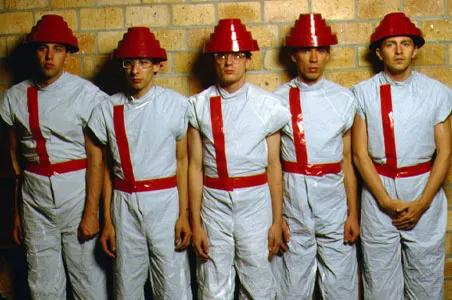
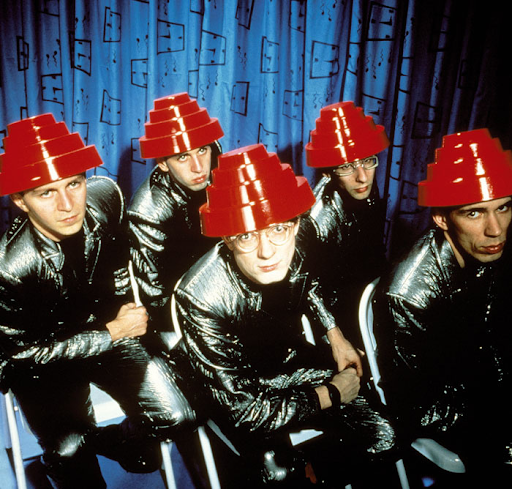
Equally striking was the group's visual presentation. Drawing on the campy futurism of 1950s science fiction, Devo appeared in industrial uniforms, plastic jumpsuits, and, most famously, their red "energy dome" hats. These rigid, molded headpieces doubled as both satire and critique: they resembled props from a B-movie yet were described by the band as devices designed to recapture wasted energy in a conformist, technologically drained society. Paired with alienated vocals and synthesized textures, Devo's stage persona heightened the impression of a band deliberately estranged from ordinary human feeling.
Their debut album, Q: Are We Not Men? A: We Are Devo! (1978), produced by Brian Eno, featured a jagged, mechanical reworking of the Rolling Stones' "(I Can’t Get No) Satisfaction" alongside their signature track "Jocko Homo." Eno, the English musician, composer, and producer who had first gained recognition with the art-rock band Roxy Music in the early 1970s, was a pioneer of ambient music and experimental studio techniques. Known for his use of tape manipulation, synthesizers, and unconventional recording methods, he emphasized texture, repetition, and sound manipulation as compositional tools, drawing on techniques from contemporary minimalism while working within pop song formats. His collaboration with Devo encouraged the band to sharpen their mechanical, satirical aesthetic. Eno later worked with other pioneering New Wave acts, most notably Talking Heads, introducing greater rhythmic complexity and electronic experimentation into their recordings.
While American sales of Q: Are We Not Men? A: We Are Devo! were limited, the album found a receptive audience in England, where Devo's satire and eccentric image aligned with post-punk tastes. Mainstream success at home came with Freedom of Choice (1980), a record that leaned more heavily on synthesizers and produced the hit single "Whip It." Frequently misinterpreted as a song about violence, masturbation, or substance abuse, "Whip It" was, according to the band, a tongue-in-cheek pep talk about perseverance: problems could be overcome by "moving forward" and "getting straight," encapsulating the futurist ethos of the band's music.
Talking Heads
As we saw in the previous chapter, CBGB in New York had become the proving ground for punk bands in the 1970s, such as Television and the Ramones. By the decade's end, however, the club was also nurturing a new wave of artists who would find greater commercial success. Chief among them were Talking Heads, a group that stood apart from the raw aggression of their peers by steering punk's energy toward a more cerebral, art-driven style that helped construe New Wave.
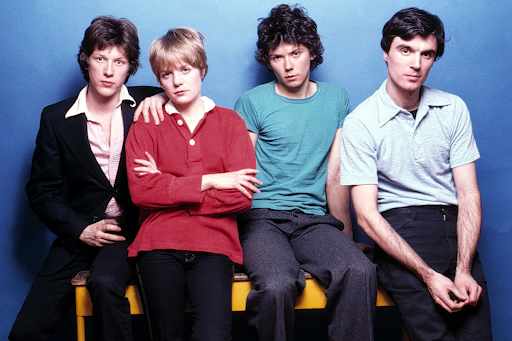
Formed in 1974 by Rhode Island School of Design students David Byrne, Chris Frantz, and Tina Weymouth (later joined by Jerry Harrison), the band carried the sensibility of art school into rock. Their very name came from an observation about Television: the body disappeared from the frame, leaving only a head that talked. The band's ironic detachment is apparent in much of their work. When they debuted at CBGB in 1975, opening for the Ramones, they stood apart visually as well as musically. Instead of ripped jeans and leather jackets, Byrne and his bandmates performed in khakis, sweaters, and vests, projecting the awkward seriousness of cerebral college students. What punk expressed through aggression, Talking Heads conveyed through musical restraint, irony, and studied awkwardness.
After signing with Sire Records in 1977, Talking Heads released their debut album, Talking Heads: 77, which earned critical acclaim and introduced the band to a larger audience. The album's standout track, "Psycho Killer," co-written by David Byrne, Chris Frantz, and Tina Weymouth, typifies their early style: sparse, repetitive instrumentation anchored by Weymouth's steady bass line and Frantz's precise drumbeat. Byrne's vocals alternate between monotone recitation and sudden bursts of nervous intensity, while the lyrics shift between English, French, and fragmented syllables, conveying the inner monologue of a serial killer. The combination of sparse instrumentation, linguistic play, and unsettled vocal delivery established the band's reputation for intellectual, art-driven rock, a signature that would carry through their subsequent albums.
Talking Heads' musical style was deeply informed by minimalism, an aesthetic that emphasizes the use of a limited set of elements—such as colors, shapes, sounds, or words—arranged in repeated patterns and subtle variations. Minimalism occupied a prominent place in the New York art music scene of the 1960s and 1970s. Composers such as Steve Reich, Terry Riley, and Philip Glass, created complex textures from simple, repetitive musical motifs. Talking Heads adapted these principles to rock, blending minimalist repetition and clarity with the interlocking, riff-based rhythms pioneered by African American musicians, particularly James Brown. Their compositions were characterized by structural simplicity, with repeated instrumental patterns layered to create intricate textures. Contrasting sections were introduced through carefully arranged shifts in instrumentation, while strong pop hooks ensured the music remained engaging and accessible. The combination of repetition, clarity, and subtle variation gave the songs an intellectual rigor, while the incorporation of funk-derived grooves provided rhythmic drive and energy.
As their career progressed, Talking Heads deepened their hybrid of minimalist art music and rhythm-driven rock. More Songs About Buildings and Food (1978) featured their inventive cover of soul singer Al Green and Teenie Hodges's "Take Me to the River," while Fear of Music (1979) and Remain in Light (1980) explored intricate, interlocking polyrhythms influenced by West African music. Tracks such as "Once in a Lifetime" and "Houses in Motion" layered repetitive instrumental motifs beneath Byrne's spoken or chant-like vocals, producing a hypnotic, machine-like effect. Songs like "The Overload" pushed this aesthetic further, creating droning, immersive soundscapes that drew from both minimalism and the experimental edge of the Velvet Underground. Eno's influence helped the band fuse minimalist repetition with the riff-driven grooves of funk, while occasional reggae and other global rhythms added further complexity and rhythmic richness. His production emphasized texture, spatial depth, and a sense of controlled unpredictability, guiding Talking Heads toward a more cerebral, experimental, and globally aware New Wave sound.
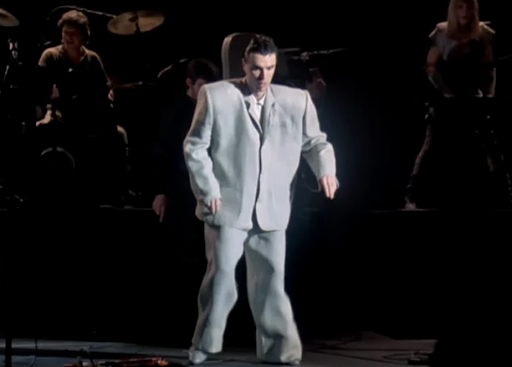
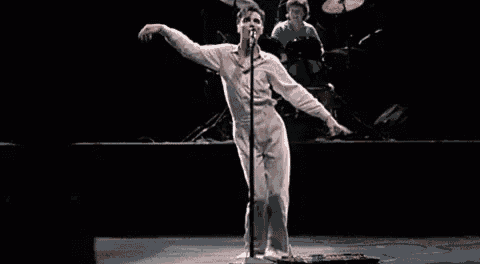
Visually, Talking Heads projected a cerebral, art-school sensibility that set them apart from their peers at CBGB. Byrne, in particular, cultivated an iconic anti-charisma: oversized suits, slacks, sweaters, and vests complemented his nervously self-conscious stage presence. Reviewer Michael Aron, writing in the November 17, 1977 issue of Rolling Stone, described him:
"Everything about him is uncool: his socks and shoes, his body language, his self-conscious announcements of song titles, the way he wiggles his hips when he's carried away onstage (imagine an out-of-it kid practicing Buddy Holly moves in front of a mirror)."
Yet these dance movements, simultaneously stiff, precise, and jerky, became a signature style, establishing a new kind of cool grounded in intellectualism and aesthetic deliberation rather than traditional rock star bravado. Much like punk's deliberate antifashion, Talking Heads' nerdy, intellectual style resonated with college audiences and artists who found the band's studied awkwardness both relatable and compelling, turning discomfort into performance and anti-charisma into a new form of cultural authority.
By the early 1980s, Talking Heads had established themselves as one of the most prominent bands in New Wave, balancing critical acclaim with commercial success. Their albums consistently broke into Billboard's Top 40, several achieving gold or platinum status. They even scored a Top 10 hit with "Burning Down the House" in 1983. Byrne would go on to play a central role in the world beat movement of the 1980s and 1990s, bringing African, Brazilian, and Caribbean artists to American audiences. Yet the roots of Byrne's interest in global musical traditions were already evident in Talking Heads' late 1970s recordings, which combined the repetition of minimalism with funk grooves, global rhythms, and their charactistic ironic sensibility.
Blondie
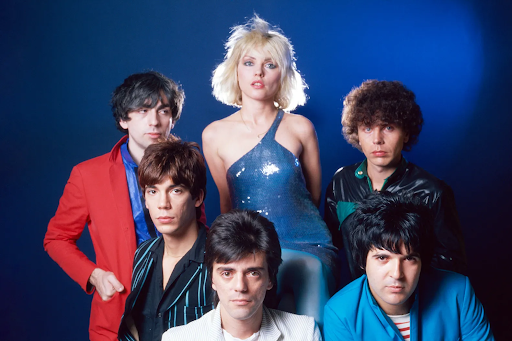
Among the most commercially successful New Wave bands to rise out from CBGB was Blondie, founded by singer Debbie Harry and guitarist Chris Stein. The band's sound, while classified as New Wave, was eclectic, blending punk's energy with pop, disco, and other contemporary styles such as reggae and funk. Harry's expressive and melodic vocal delivery distinguished her from many of her New Wave peers, who regularly favored more monotone or detached deliveries.
Their early albums, Blondie (1976) and Plastic Letters (1978), found greater success in England than in the United States, a pattern shared by several early New Wave acts that initially struggled to enter the American market. However, Blondie's breakthrough arrived with their third album, Parallel Lines (1978). The record included "Heart of Glass ," which became the band's first major international hit, topping charts on both sides of the Atlantic. The song fused a disco-inspired beat with a pronounced hi-hat rhythm, with New Wave elements such as synthesizers, abstract sound effects, and detached, witty lyrics. Harry's delivery, singing lines like, "Once I had a love and it was a gas / soon turned out to be a pain in the ass," combined irony and cool detachment, creating a bridge between disco's danceability and New Wave's cerebral aesthetic. While some critics accused Blondie of "selling out" by embracing disco as a “rock band,” the band's eclecticism was central to its appeal, demonstrating that commercial success could coexist with experimentation across musical genres.
Blondie followed Parallel Lines with a string of major American hits, including "Call Me" (1980), "The Tide Is High" (1980), and "Rapture" (1981). The latter captured the band's adventurous spirit, incorporating a rap section inspired by New York's emerging hip-hop scene and showing their inclination to engage with new musical currents. Released as the final single from Autoamerican, the title of "Rapture" played on multiple meanings—referring to the rap itself, a state of ecstasy, and even the religious notion of the rapture. Its lyrics name-check graffiti artist Fab Five Freddy and prominent hip hop artist DJ Grandmaster Flash (see Chapter 33), referencing graffiti writing and hip-hop block parties. The music video shows Debbie Harry walking through a New York neighborhood as graffiti writers spray a wall, featuring cameos from graffiti artists Fab Five Freddy, Lee Quiñones, and Jean-Michel Basquiat. While not the first song to feature rap, "Rapture" was the first to pair rap with entirely original music and the first rap-influenced track to reach number one on the U.S. charts. In just a few years, Blondie had risen from one of CBGB's unlikeliest acts to mainstream acclaim, representing the wider industry shift from punk's raw edge to New Wave's commercially viable eclecticism.
Alongside Debbie Harry's charismatic presence and distinctive style, Blondie provided a visible precedent for female-led rock acts in the late 1970s and early 1980s. Artists such as Joan Jett and Pat Benatar would soon follow, combining punk and New Wave roots with mainstream rock appeal. Harry's blend of vocal expressiveness, fashion-forward image, and willingness to experiment with multiple genres represented the possibilities New Wave offered both creatively and commercially, setting a template for future acts to bridge underground credibility with pop success.
New Wave Looks Backward
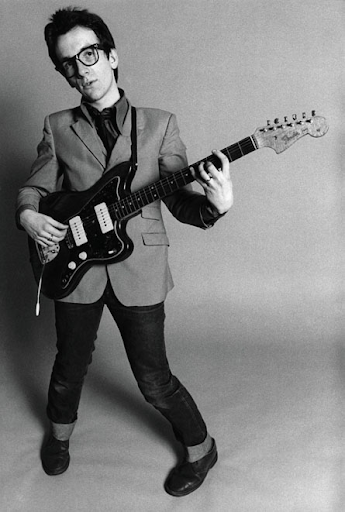
One distinguishing feature of New Wave was its fascination with earlier rock styles and the visual imagery associated with them, setting it apart from the psychedelic and hippie-influenced rock of the late 1960s and early 1970s. Musicians like Elvis Costello illustrated this backward glance: his Buddy Holly-style horn-rimmed glasses, straight-leg pants, and short haircut stood in sharp contrast to the bell-bottoms and shoulder-length hair that dominated the era. These stylistic choices signaled a deliberate aesthetic, linking New Wave performers to the lineage of rock history while framing a contemporary, ironic sensibility.
New Wave's engagement with rock history reached beyond sound to themes, presentation, and lyrical content. While psychedelic and mainstream rock had emphasized extended jams, instrumental virtuosity, and philosophical or cosmic reflection, New Wave pared songs down to concise, hook-driven forms. Lyrics returned to familiar topics—teenage romance and everyday experiences—while musical displays of technical skill were deliberately restrained. The references to the past were often ironic rather than nostalgic; New Wave musicians did not just seek to revive earlier styles wholesale, but instead used them to comment on contemporary culture and project alternative visions for the future.
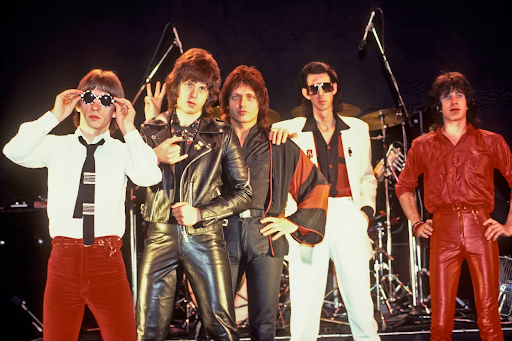
The Cars illustrated the synthesis of past and present in New Wave. Formed in Boston in 1976 by singer and guitarist Ric Ocasek, the band combined punk's driving energy with guitar lines evocative of Chuck Berry and other early rock and roll pioneers, set against Ocasek's dry, emotionally detached vocals. Their debut album, The Cars, released in 1978, featured hits such as "My Best Friend’s Girl" and "Just What I Needed." These songs combined catchy riffs, handclaps, and call-and-response hooks with New Wave elements like synthesizers and subtly ironic lyrics, all delivered in a cool and restrained style. Candy-O (1979) continued this musical direction with "Let’s Go," and the band maintained commercial momentum into the early 1980s with tracks like "Shake It Up" (1981), layering danceable rhythms and choruses reminiscent of early rock with jaunty synthesizers and quirky, abstract lyrics.
Both sonically and visually, the Cars bridged eras. Classic rock references coexisted with modern production and performance techniques, while album art and stage presentation often incorporated nods to 1950s imagery. The combination of early-rock references and modern production produced an aesthetic at once familiar and forward-looking, a reinvention of rock history filtered through New Wave's ironic sensibility.
Musical allusions to the past are particularly evident in "My Best Friend’s Girl." The opening handclaps evoke early-1960s girl-group pop("My Boyfriend’s Back") and early Beatles recordings ("I Want to Hold Your Hand"), while a rockabilly-inspired guitar lick links verses and choruses, recalling late-1950s artists like Carl Perkins, Elvis Presley, and Gene Vincent. Repeated organ chords summon mid-1960s garage bands, and Ocasek's vocal quirks and hiccups reference Buddy Holly and the naïve charm of pre-hippie teen music. Structurally, the song follows a simple compound AABA pattern with repeated sections, in contrast to the richer harmonic textures of mainstream rock at the time. Rather than copying these earlier styles, the Cars reinterpreted them, refracting rock history through the ironic, detached lens of late-1970s New Wave.
Tom Petty
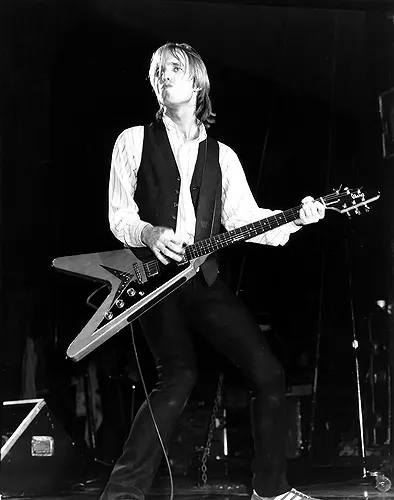
Although Tom Petty and the Heartbreakers were not necessarily New Wave artists in a stylistic sense, their label and the music industry often marketed them alongside New Wave acts in the late 1970s. The association between Tom Petty and New Wave owed as much to visual presentation as to music: Petty and his band often wore colorful suits and narrow ties, projecting a clean, modern image that paralleled New Wave aesthetics, while their return to the concise, riff-driven rock of the 1950s and 1960s resonated with retro-conscious trends popular in the era.
Tom Petty's fascination with rock and roll began early. At age ten, he met Elvis Presley, an encounter that made a lasting impression, and by the time he saw the Beatles perform on The Ed Sullivan Show, he knew he wanted to play in a band. Petty's own music drew deeply from the folk-rock traditions of Bob Dylan and the Byrds—so much so that Byrds guitarist Roger McGuinn once joked that upon first hearing Petty's "American Girl" (1977), he thought it was one of his own songs. With the Heartbreakers, Petty crafted songs that were compact, riff-driven, and tightly structured, a sharp contrast to the sprawling improvisations of Southern rock popular at the time. His nasal vocals quickly became a signature element of the band's sound, while his frequent use of twelve-string electric guitars lent their music a bright, chiming texture which evoked the Byrds' jangly guitar sound while anchoring it firmly in a modern rock context.
After early success with "Breakdown" (1976) and two albums on Shelter Records, Petty renegotiated his contract with MCA, a rare achievement for artists of the era. Damn the Torpedoes (1979), produced with Jimmy Iovine, reached wide radio rotation and strong sales, The album featured FM staples such as "Don't Do Me Like That" and "Refugee." Subsequent albums like Hard Promises and Long After Dark continued to blend accessible rock songwriting with hints of folk and 1960s pop influences.
In the early 1980s, Petty faced a commercial lull, but a collaboration with Dave Stewart of the Eurythmics—an English duo comprised of Stewart and singer Annie Lennox known for their synth-driven, experimental pop sound—briefly revived his visibility. Working with Stewart on "Don’t Come Around Here No More," Petty incorporated off-kilter production and psychedelic flourishes. At the same time, the accompanying music video cast him as the Mad Hatter in an Alice in Wonderland-inspired visual, capturing MTV audiences and attracting younger fans.
Petty's solo work, beginning with Full Moon Fever (1989), often employed Heartbreakers members. With producer Jeff Lynne from the Electric Light Orchestra, he layered multiple acoustic and electric guitars, including twelve-string electrics, creating lush, textured arrangements that fused his folk-rock roots with Lynne's polished production. Alongside Lynne, Bob Dylan, Roy Orbison, and George Harrison, Petty co-founded the Traveling Wilburys in the late 1980s, further strengthening his connection to classic rock traditions. Across decades, he balanced reverence for rock's past with a contemporary sensibility, producing music that was at once timeless and rooted in American rock tradition.
The B-52s
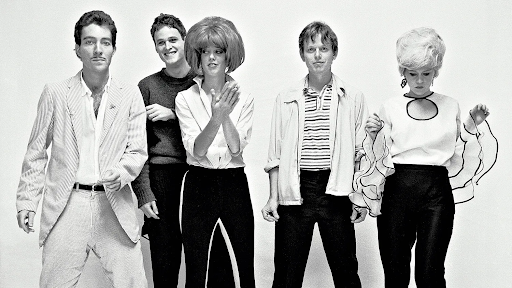
The B-52s combined the music, lyrics, and fashion of the 1960s with a distinctly eccentric, irreverent sensibility, creating a sound and image uniquely their own. The band—Fred Schneider, Kate Pierson, Cindy Wilson, Ricky Wilson (Cindy's brother), and Keith Strickland—featured multi-instrumentalists, with Ricky Wilson on guitar and Schneider, Pierson, and Cindy Wilson sharing vocals. Early independent recordings and performances at CBGB garnered them attention, and signing with Warner Brothers in 1979 led to the release of their self-titled debut.
Their first single, "Rock Lobster" (1979), drew heavily on 1960s musical styles. Ricky Wilson's surf-inspired guitar riffs evoked the bright, reverb-heavy tones of mid-1960s instrumental rock, while handclaps, call-and-response vocal harmonies, and catchy melodic hooks recalled the girl-group and Brill Building pop of the same era. Pierson's synthesizer bassline added a modern, idiosyncratic edge, and the lyrics describing a surreal beach-party narrative populated with real and fantastical sea creatures were punctuated with whimsical sound effects, capturing the band's playful, experimental spirit. The B-52s also directly engaged with 1960s pop through their cover of Petula Clark's 1964 hit "Downtown," reframing girl-group style within a New Wave context. Angular rhythms, unconventional song structures, and idiosyncratic vocal deliveries positioned the band firmly in the late-1970s New Wave scene, blending nostalgia with a contemporary, ironic sensibility.
Performances at Max's Kansas City in 1978 and on Saturday Night Live in 1980 raised their national profile, leading to broader commercial success with Wild Planet (1980), which reached the Top 20 in both the U.S. and the U.K. The band continued recording and touring through the early 1980s but took a hiatus following Ricky Wilson's death from AIDS in 1985. When they regrouped later in the decade, Keith Strickland assumed guitar duties rather than bringing in a new member, and this period produced the band's biggest commercial success with "Love Shack " (1989), which became an enduring New Wave classic.
Prince
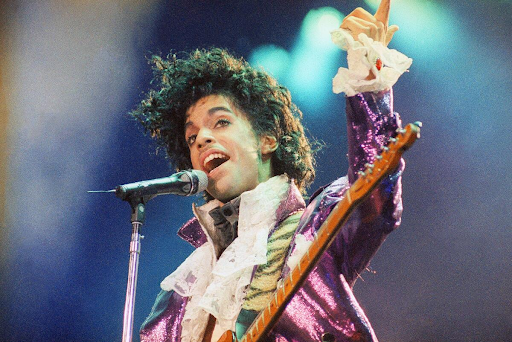
Born and raised in Minneapolis, Prince Rogers Nelson—who later adopted the name the Artist— taught himself piano, guitar, bass, and drums, forming his first band while still in high school. By the time he signed with Warner Bros. in 1977, he had already developed a remarkable command of studio production and multi-instrumental performance. The contract granted him near-total creative freedom, an uncommon privilege for a Black solo artist at the time.
Although his early music was rooted in funk, R&B, and soul, Prince also absorbed the angular guitars, electronic textures, and ironic detachment associated with New Wave. Early albums like Dirty Mind (1980) and 1999 (1982) blended punk's stripped-down immediacy with synthesizer-driven grooves and sexually provocative lyrics. The combination of funk, R&B, soul, and New Wave influences aligned him with the experimental spirit of New Wave, even as he surpassed its boundaries. His ability to synthesize Black musical traditions with New Wave aesthetics broadened the genre’s scope while also influencing mainstream pop and R&B production throughout the 1980s. His technical command as a performer, songwriter, and producer set him apart; he fused multiple musical traditions into a singular, highly distinctive sound, separating him from many artists who achieved similar mass appeal.
His early albums, For You (1978) and Prince (1979), showcased a blend of funk, disco, and rock music. Instead of the typical horn sections found in contemporary R&B, he often employed synthesizers. Prince promptly established himself as an artist with eclectic tastes and broad crossover appeal. He merged traditional Black styles like funk and soul with "white" genres like rock and New Wave. Prince’s distinctive blend of funk, soul, rock, and New Wave would later be referred to by critics as the Minneapolis sound.
Songs like "I Wanna Be Your Lover" demonstrated his musical approach, featuring danceable grooves, falsetto vocals, and fluid guitar lines. Prince was a formidable multi-instrumentalist who often performed nearly every instrumental part on his recordings, including guitar, bass, drums, and keyboards. His Hendrix-influenced guitar work was a central component of his sound. Prince was known for his wide vocal range, including an impressive falsetto and high-pitched screams, akin to James Brown’s vocal techniques. Vocally, he punctuated songs with sharp yelps, gasps, and falsetto cries that bordered on erotic exclamation. By combining elements traditionally associated with both Black and white popular music, he reached a broad audience while maintaining uncompromising artistic control. From the outset of his career, Prince pursued direct control over production, promotion, and distribution. He built and operated his own recording space at Paisley Park in Minneapolis. He produced his own sessions, performed most of the instrumental parts, and fought to retain ownership of the master recordings created there.
With Dirty Mind (1980) and Controversy (1981), he deepened this fusion, layering robotic New Wave–influenced synthesizers over driving funk rhythms and rock guitar riffs. Lyrically and visually, he challenged sexual and religious norms, fashioning a persona that was simultaneously provocative and playful. 1999 (1982) continued this trajectory. The title track paired synthesizer-driven pop with political and dystopian themes, producing crossover hits that solidified his mainstream success.
Visually, Prince cultivated a highly distinctive stage persona. His fashion merged glam rock, New Wave, and classic R&B showmanship. His stage wardrobe included ruffled shirts, tailored jackets, high-heeled boots, and gender-fluid silhouettes. Onstage, he blended theatricality with virtuosity, moving seamlessly between sultry dance routines, extended guitar solos, and dramatic vocal performances. His fluid exploration of masculinity and sexuality amplified the provocative character of his music and reinforced the hybridity that distinguished his sound.
Prince's large-scale breakthrough arrived with Purple Rain (1984), which he recorded with his band the Revolution. The album was accompanied by a semi-autobiographical feature film. The movie presented Prince as a young, misunderstood musical genius navigating love, ambition, and creative rivalry, interweaving the narrative with live performance sequences that captured the theatricality of his stage performances. The album and film together fused rock, funk, pop, and R&B in innovative ways. The lead single, "When Doves Cry," famously omitted a bass line. The absence of a bass line produced a stark, minimalist funk-rock texture that emphasized Prince's rhythmically intricate vocals and drum programming.
The title track, "Purple Rain," showcased Prince's mastery of emotional storytelling and musical virtuosity. The song's slow, anthemic arrangement features a shimmering electric guitar tone enhanced with a chorus effect—a technique in which an audio signal is mixed with one or more slightly delayed copies of itself, producing a rich, swirling texture that thickens the sound. The vocals also employ a prominent delay effect, in which the signal is repeated after a set interval to create an echo-like resonance, supplying depth and space to the performance. The climactic guitar solo demonstrates his Hendrix-inspired phrasing, blending blues-inflected bends, sustained notes, and expressive dynamics that heighten the track's dramatic tension. Combined with soaring vocals and layered harmonies, "Purple Rain" became both a critical and commercial triumph, cementing Prince's global superstar status through multi-platinum sales, Grammy recognition, and heavy MTV rotation. From the early 1980s through the early 1990s, Prince dominated the commercial music charts. Between 1982 and 1992, nine of his albums reached the Top 10, with three climbing to the top spot: Purple Rain (1984), Around the World in a Day (1985), and Batman (1989). Over the same decade, he placed twenty-six singles in the Top 40, five of which reached number one.
Prince’s music became increasingly stylistically diverse throughout the late 1980s and 1990s. Around the World in a Day (1985) and Parade (1986) incorporated psychedelic rock, orchestration, and world music influences. Sign o' the Times (1987) demonstrated his capability to navigate electronic minimalism, horn-driven funk, guitar rock, and introspective ballads within a single cohesive work. In the 1990s, with his group the New Power Generation, he integrated hip-hop rhythms and rapped vocals into funk and rock frameworks, as seen on Diamonds and Pearls (1991). Meanwhile, Emancipation (1996) and subsequent releases explored sequenced, dance-oriented production
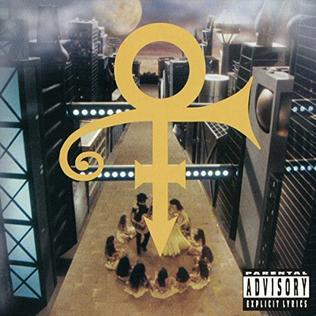
During the early 1990s, Prince faced mounting struggles with his record label, Warner Bros., which pressured him to release music more frequently than he wished. In protest, he appeared with the word "SLAVE" written on his face. In 1993, he changed his name to an unpronounceable symbol known as the Love Symbol. Changing his name to the Love Symbol became a metaphor for his assertion of independence and control over his creative output. He was often referred to as "The Artist Formerly Known as Prince" (TAFKAP) or simply "The Artist." Under this new identity, he continued to release music on his own terms, experimenting with distribution and production. After moving to Arista Records in 1998, he reverted to his original name in 2000.
Over the next decade, Prince remained a commercial force, with six albums reaching the U.S. top ten. By the time of his sudden death in April 2016, at age 57, from an accidental fentanyl overdose at his Paisley Park estate in Chanhassen, Minnesota, he had released 39 studio albums. He left behind a vast vault of unreleased recordings, including fully completed albums and over fifty finished music videos. Since his passing, numerous posthumous collections have been issued by his estate, further demonstrating the scope of his prolific output and ongoing influence.
The integration of musical originality, instrumental mastery, and visual panache helped Prince achieve iconic status and influenced countless performers across musical genres. From Musicology (2004) release to his posthumous releases, he continued to explore funk, jazz, electronic dance music, and R&B. He remains one of the most influential and distinctive figures in modern popular music, demonstrating a relentless commitment to artistic freedom, experimentation, and the expansion of popular music's boundaries. Throughout his career, he sold over 80 million albums worldwide.
Chapter 31: Conclusion
The late 1970s and early 1980s represented a decisive moment in popular music, as punk and New Wave emerged in reaction to the conventions of mainstream and hippie rock. Punk channeled raw energy, aggression, and immediacy, while New Wave favored eccentricity, irony, and a return to musical simplicity. Both movements drew inspiration from earlier innovators such as the Velvet Underground, whose unconventional forms, instrumentation, and lyrical practices challenged typical popular-music conventions. Punk filtered these influences through confrontational intensity, whereas New Wave reimagined them with cheeky detachment, critiquing the excesses of hippie-era rock while presenting a forward-looking, ironic aesthetic.
The rise of punk and New Wave marked the decline of hippie-style rock as a dominant cultural force. Although elements of the hippie aesthetic would reappear in later decades—through heavy metal, music videos, and revivalist movements—the era in which rock primarily served as a vehicle for transcendence and extended musical exploration had largely come to an end. The blending of punk, New Wave, and mainstream rock created a transitional musical domain in which irony, stylistic economy, and eclecticism became central to popular music.
Within this musical context, New Wave artists demonstrate how musicians handled the tensions between reverence for musical heritage, commercial pressures, and the desire to reconceptualize popular music. By embracing, filtering, or subverting earlier styles, these performers forged new modes of expression, fashioning a post-hippie, post-punk era characterized by experimentation, stylistic hybridity, and a playful reconsideration of what popular music could achieve.
Chapter 31: Further Reading
Bangs, Lester. Blondie. New York: Warner Books, 1980.
Baker, Stuart, ed. New York Noise: Art and Music of the New York Underground 1978–88. London: Verse Chorus Press, 2007.
Bodinger-deUriarte, C. “Opposition to Hegemony in the Music of Devo: A Simple Matter of Remembering.” Journal of Popular Culture 18, no. 4 (1985): 57–71.
Cateforis, Theo. Are We Not New Wave? Modern Pop at the Turn of the 1980s. Ann Arbor, MI: University of Michigan Press, 2011.
———. “Performing the Avant-Garde Groove: Devo and the Whiteness of the New Wave.” American Music 22, no. 4 (2004): 564–88.
Covach, John. “Pangs of History in Late 1970s New-Wave Rock.” In Analyzing Popular Music, edited by Allan F. Moore, 173–95. Cambridge, MA: Cambridge University Press, 2003.
Dellinger, Jay, and David Giffels. Are We Not Men? We Are Devo!. London: Omnibus Press, 2003.
Harry, Debbie, Chris Stein, and Victor Bockris. Making Tracks: The Rise of Blondie. New York: St. Martin’s Press, 1998.
Feldman, Jim. Prince. New York: E. P. Dutton, 1985.
Gendron, Bernard. Between Montmartre and the Mudd Club: Popular Music and the Avant-Garde. Chicago: University of Chicago Press, 2002.
Hawkins, Stan. “Prince: Harmonic Analysis of Anna Stesia.” Popular Music 11 (1992): 325–35.
Hebdige, Dick. Subculture: The Meaning of Style. London: Methuen, 1979.
Kristal, Hilly, and David Byrne. CBGB & OMFUG: Thirty Years from the Home of Underground Rock. New York: Harry N. Abrams, 2005.
Kronengold, Charles. “Exchange Theories in Disco, New Wave, and Album-Oriented Rock.” Criticism 50, no. 1 (2008): 43–82.
Laing, Dave. One Chord Wonders: Power and Meaning in Punk Rock. Milton Keynes: Open University Press, 1985.
McNeil, Legs, and Gillian McCain. Please Kill Me: The Uncensored Oral History of Punk. New York: Grove Press, 1997.
Petty, Tom, and the Heartbreakers. Runnin’ Down a Dream. Directed by Peter Bogdanovich. Reprise, 2007. [Video documentary]
Reynolds, Simon, et al. “Sham 94?” Melody Maker, March 26, 1994.
Savage, Jon. England’s Dreaming: Sex Pistols and Punk Rock. London: Faber & Faber, 1991.
Valentine, Gary. New York Rocker: My Life in the Blank Generation, with Blondie, Iggy Pop, and Others, 1974–1981. London: Omnibus Press, 2002.
Walser, Robert. “Prince as Queer Poststructuralist.” Popular Music and Society 18, no. 2 (1994): 79–89.
Wimberley, Richard. E. “Prophecy, Eroticism and Apocalypticism in Popular Music.” Black Sacred Music 3 (1989): 125–32.
Zollo, Paul, and Tom Petty. Conversations with Tom Petty. London: Omnibus Press, 2005.