Chapter 35: Hip Hop pt.2
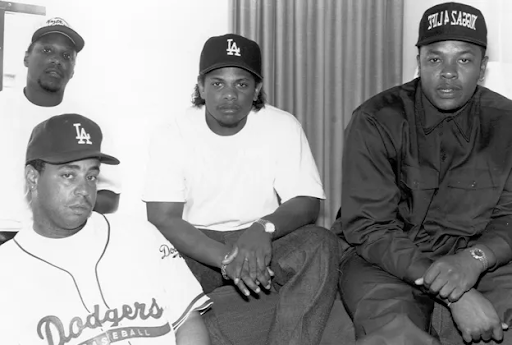
Chapter 35: Introduction
In the previous chapter, we explored how some of the most commercially successful early hip-hop groups drew heavily from rock instrumentation, guitar riffs, and performance style. Artists such as Run-DMC and the Beastie Boys used samples and collaborations with rock musicians to build a hybrid style that reached both rap and rock audiences through radio play and MTV rotation. The fusion with rock helped hip-hop gain visibility beyond its origins in New York–based community scenes and set the stage for the genre’s rapid expansion in the late 1980s and early 1990s. By the late 1980s, hip-hop had become a remarkably diverse genre, encompassing a wide range of sounds, lyrical perspectives, and creative identities.
Following the success of Run-DMC’s crossover hit “Walk This Way” (1986) with Aerosmith, hip-hop began to receive wide rotation on MTV. Rap tours began filling arenas, and feature films introduced elements of hip-hop culture to mainstream audiences. The clean, humorous songs of DJ Jazzy Jeff & The Fresh Prince, and the dance-oriented hits of MC Hammer, broadened the genre’s appeal among pop listeners, while N.W.A. and Ice-T brought uncompromising depictions of life in marginalized neighborhoods and gang violence to national attention. At the same time, hip-hop remained a platform for socially conscious expression. KRS-One, through Boogie Down Productions, emphasized “edutainment,” using rap to educate audiences through lyrics and performance.
By the late 1980s, regional styles had begun to crystallize, extending hip-hop’s influence far beyond New York City. Distinct sounds emerged in Los Angeles, Miami, and other major population centers, tied to local conditions and social realities. Concurrently, hip-hop's rhythms, lyrical practices, and cultural ideas circulated internationally, influencing youth cultures across Britain, France, Germany, the Netherlands, Canada, and Japan, as well as in China, India, Scandinavia, and parts of Africa. During this period, hip-hop moved from a local subculture to a global form of music and youth culture.
Political Hip-Hop
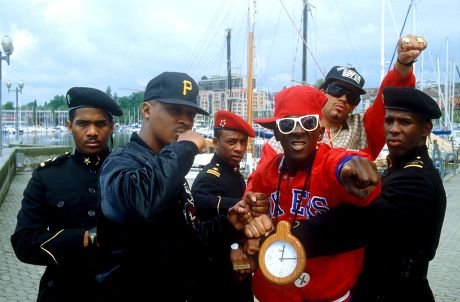
By the late 1980s, hip-hop had become a vehicle for sharp political commentary, with Public Enemy providing one of the clearest examples of this development. While earlier artists such as Grandmaster Flash had explored social issues, Public Enemy made activism central to their music, urging African Americans to confront injustice and assert cultural identity. Tracks like “Fight the Power” (1990) and “Power to the People” (1990) addressed social issues directly, calling listeners to expand their awareness and engage in collective action. Their album titles, It Takes a Nation of Millions to Hold Us Back (1988) and Fear of a Black Planet (1990), announced the scope of their ambition, positioning the group as chroniclers of systemic racism and visionaries of cultural liberation.
Public Enemy’s live performances enhanced their message, blending music, theater, and political symbolism. The group’s standard configuration included two MCs, Chuck D (Carlton Ridenhour) and Flavor Flav (William Drayton), plus a DJ, Terminator X (Norman Rogers), and a “Minister of Information,” Professor Griff (Richard Griffin). Flavor Flav served as comic foil and “hype man,” energizing audiences with wild interjections and flamboyant attire, including a necklace with a clock face. Professor Griff oversaw The Security of the First World (S1W), a group of dancers and stage guards dressed in paramilitary uniforms who performed choreography that fused step routines, martial arts, and military drill formations.
Musically, Public Enemy’s innovation came mainly from their production team, the Bomb Squad (Hank and Keith Shocklee with Eric “Vietnam” Sadler). Their music layered dense samples, beats, and noise into collages that conveyed the disorder and intensity of life in densely populated, economically marginalized neighborhoods. Using samplers, turntables, and drum machines, they blended funk grooves, jazz riffs, speeches, sirens, and crowd noise, creating dense, rhythmically layered tracks with a confrontational sound. Songs like “Fight the Power” combined the iconic drum break from James Brown’s “Funky Drummer” with samples from at least twenty other tracks, including work by Afrika Bambaataa, Sly and the Family Stone, and Bobby Byrd. Chuck D’s lyrics demanded awareness—“freedom of speech is freedom or death”—while challenging oppressive cultural icons: “Elvis was a hero to most, but he never meant s--- to me.”
Their second album, It Takes a Nation of Millions to Hold Us Back, pushed the sonic boundaries of political hip-hop. Tracks like “Don’t Believe the Hype” critiqued mainstream media distortions, and “Party for Your Right to Fight”recontextualized the Beastie Boys’ rebellious adolescent energy into a statement on social struggle. Chuck D described rap as "Black America's CNN," arguing that it functioned as a medium for circulating information outside mainstream journalism.
Public Enemy’s work reached a wider audience through their high-profile collaborations and film appearances. In 1989, director Spike Lee commissioned the group to compose “Fight the Power” for Do the Right Thing. Two years later, their collaboration with the thrash metal band Anthrax on “Bring the Noise” (1991) bridged rap and rock, contributing to later rap-metal crossovers that flourished later in the decade with artists like Rage Against the Machine and Limp Bizkit.
By the mid-1990s, however, Public Enemy’s commercial prominence began to fade amid internal and external controversies. Professor Griff, one of the group’s founding members, was dismissed in 1989 following public outrage over antisemitic remarks he made in a Washington Times interview, a scandal that temporarily fractured the group and drew widespread media attention. Additionally, Flavor Flav’s recurring legal troubles and substance abuse issues became tabloid fodder, undermining the group’s public image. Despite these challenges, Public Enemy’s artistic and political influence remained significant. Chuck D became a respected cultural critic, writer, and public speaker, leveraging his platform to address systemic racism, media bias, and the corporate exploitation of Black art. Public Enemy’s music—part sound collage, part political manifesto—broadened hip-hop from party-oriented entertainment into a medium for protest, consciousness raising, and cultural critique.
Sample-Based Hip-Hop
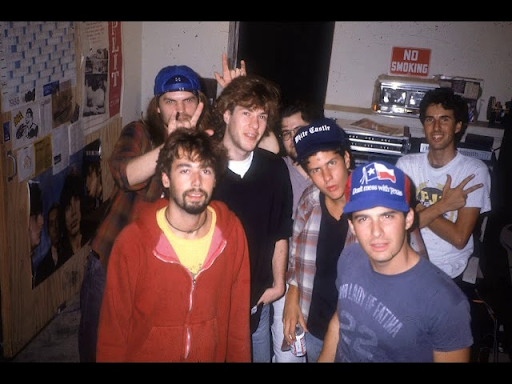
By the late 1980s, sampling had become the dominant method of hip-hop production. Producers increasingly relied on digital samplers such as the E-mu SP-1200 and Akai MPC60, which allowed them to capture fragments of existing recordings and reassemble them into entirely new compositions. Digital sampling broadened hip-hop's sonic vocabulary as rappers layered their verses over complex webs of sounds drawn from earlier musical traditions.
Among the most innovative sampling collectives was the Bomb Squad, whose work with Public Enemy demonstrated dense, multilayered production techniques. The Bomb Squad's production method involved stacking dozens of short musical fragments—drum breaks, horn stabs, vocal shouts, and spoken-word snippets—into rhythmically volatile textures. By fusing funk and early hip-hop, with sirens, crowd noise, and radio fragments, the Bomb Squad created tracks that mirrored the intensity, chaos, and complexity of city life.
While sampling became widespread during this era, each producer developed a distinctive sonic identity. Some emphasized sparse, looping grooves, keeping the spotlight on the MC, while others pursued intricate layering techniques, turning songs into rich, textured sound collages. Sampling thus became not only a technical innovation but a creative philosophy, treating recorded history as raw material for new cultural articulation.
The Beastie Boys’s album Paul's Boutique (1989) provides a striking example of sample-based composition at its most elaborate. After the success of Licensed to Ill (1986), the trio left Def Jam and signed with Columbia Records. For Paul’s Boutique, they collaborated with producers John King and Michael Simpson, known as the Dust Brothers. While their approach paralleled the Bomb Squad in scope, it differed in texture and tone, favoring playful and densely layered tracks with shifting samples and tonal contrasts.
Paul’s Boutique is built from hundreds of samples, blending 1970s funk, early hip-hop, rock music, television jingles, and film soundtracks into intricate, multi-layered tracks. A clear example is “Shadrach”, whose rhythmic foundation comes from looped drum breaks sampled from 1970s funk records. Multiple elements from Sly and the Family Stone’s“Loose Booty” form the song’s choral refrains, while the closing seconds feature the iconic “Funky Drummer” break. Lyrically, the Beastie Boys mix humor, surrealism, and biblical allusions, likening themselves to Shadrach, Meshach, and Abednego while recounting everyday exploits and paraphrasing scripture.
Other tracks, such as “Shake Your Rump” and “The Sounds of Science”, similarly merge rock riffs and funk grooves with rapid-fire, semi-shouted vocal delivery. The tracks assemble disparate samples into coherent, rhythmically lively compositions. In doing so, Paul’s Boutique broadened the types of sounds and sources used in hip-hop production and proved that sampling could function as a compositional tool as well as a medium for cultural commentary.
De La Soul
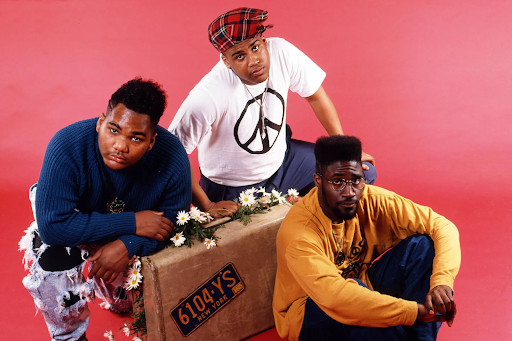
De La Soul was an American rap group formed in 1987 in Long Island, New York. The trio, Kelvin "Posdnuos" Mercer (Plug One), David "Trugoy the Dove" Jolicoeur (Plug Two), and Vincent "Maseo" Mason (Plug Three), met at Amityville High School, where they began experimenting with unconventional production ideas that would distinguish them from their peers. They soon connected with producer Paul “Prince Paul” Houston, a founding member of Stetsasonic, who helped develop their early sound. Together, they created 3 Feet High and Rising (1989), an album that pushed hip-hop in new directions through humor, sonic experimentation, and extensive sampling. The title 3 Feet High and Rising referenced Johnny Cash's song "Five Feet High and Rising" and suited De La Soul's playful, eclectic sensibility. De La Soul described their outlook as the "D.A.I.S.Y. (Da Inner Sound, Y'all) Age," emphasizing peace, individual expression, and a playful, self-aware aesthetic.
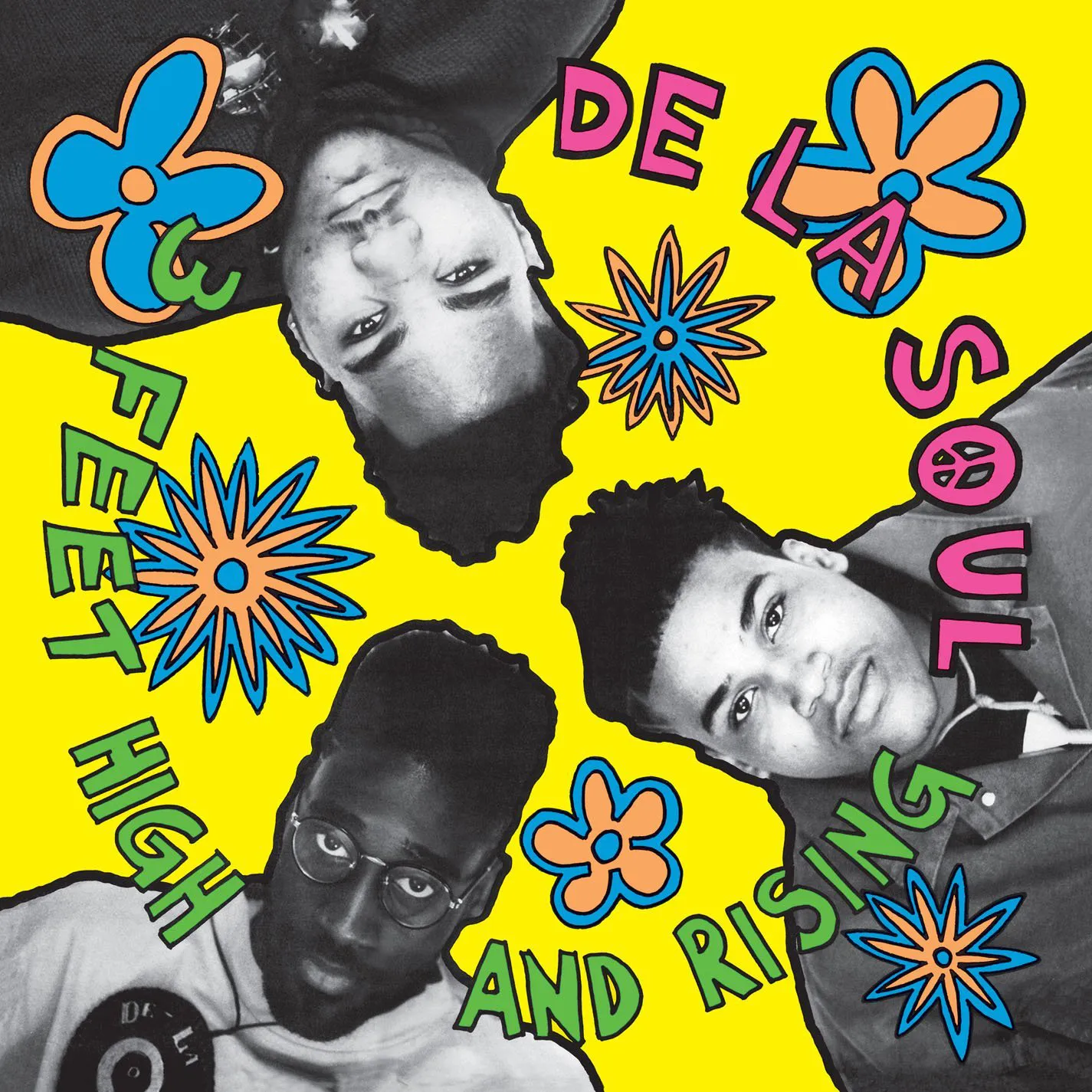
Musically, 3 Feet High and Rising drew from an extraordinary range of sources. The group and Prince Paul incorporated funk, soul, pop, doo-wop, psychedelic rock, jazz, country, and even educational records, layering them into dense, collage-like arrangements using digital sampling technology, including a Casio RZ-1 drum machine and an Eventide Harmonizer. Tracks such as “The Magic Number” blended the grooves of Led Zeppelin’s “The Crunge” with James Brown, Syl Johnson, and the Fatback Band, while “Eye Know” sampled Steely Dan’s “Peg,” Otis Redding’s “(Sittin’ On) The Dock of the Bay,” and Sly and the Family Stone’s “Sing a Simple Song.” The fusion of seemingly incompatible sounds gave the album a bright, playful character, earning it recognition as one of hip-hop’s first “psychedelic” records. The album also featured humorous skits styled like a quiz show, popularizing the use of interludes in hip-hop albums that followed.
Lyrically, De La Soul focused on themes of peace, harmony, and self-expression, offering a conscious alternative to the violence and braggadocio prevalent in late 1980s rap. Their breakout single, “Me, Myself and I,” reached number one on the R&B charts, and the album went gold within three months of its release. Critics praised the group’s wit, intelligence, and offbeat charm, with Robert Christgau of The Village Voice describing their music as “the New Wave to Public Enemy’s punk.” Despite their commercial and critical success, the trio grew frustrated with the “hippie rapper” stereotype, which influenced the darker, more confrontational tone of their follow-up album, De La Soul Is Dead (1991).
De La Soul’s extensive use of sampling also placed them at the center of one of hip-hop’s most important legal controversies. Their song “Transmitting Live From Mars” contained an unauthorized sample of the Turtles’ “You Showed Me,” resulting in a lawsuit that the Turtles won. The case increased the legal and financial pressure on producers to obtain permission before using copyrighted samples. By the early 1990s, the financial and legal costs of using hundreds of samples made dense, sample-heavy albums increasingly challenging to produce, effectively ending that era of production.
Despite the legal and financial challenges posed by sample clearance, De La Soul remained active through the 1990s and beyond, releasing albums such as Buhloone Mindstate (1993) and Stakes Is High (1996), which continued to experiment with sound while addressing social and political issues. Their later work embraced jazz rap, blending elements of cool jazz, soul jazz, and bebop with Afrocentric themes and lyrical positivity. For many years, their catalog was unavailable on streaming services due to sampling clearances and contractual complications, but it was finally re-released in 2023, introducing a new generation of listeners to their groundbreaking, genre-expanding work.
Native Tongues Collective
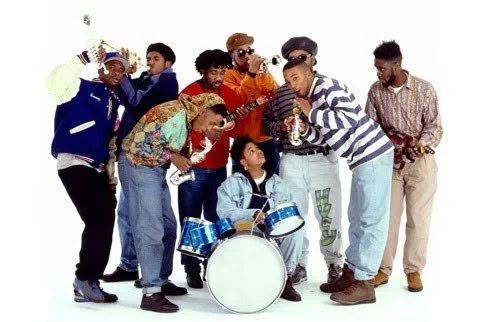
Building on the experimental, sample-rich techniques associated with De La Soul, the late 1980s saw the emergence of a broader hip-hop movement centered on positivity, Afrocentrism, and collaboration. While De La Soul had reconceived the possibilities of sound and lyrical creativity with 3 Feet High and Rising, other artists began to explore how hip-hop could also serve as a vehicle for cultural awareness, social consciousness, and community-oriented expression. The ethos of positivity, Afrocentrism, and collaboration gave rise to the Native Tongues Collective in New York City, a loose coalition of like-minded artists who shared a commitment to musical experimentation, humor, and socially conscious lyrics.
The Native Tongues drew inspiration from the intellectual and cultural legacy of the Black Arts Movement, with figures such as Amiri Baraka, Nikki Giovanni, Larry Neal, and Gwendolyn Brooks providing a foundation for their celebration of African and African American identity. Central to the collective were groups and artists, including the Jungle Brothers, De La Soul, A Tribe Called Quest, Queen Latifah, Monie Love, and Black Sheep, as well as later collaborators such as Busta Rhymes and Mos Def. Many members were connected to Afrika Bambaataa’s Universal Zulu Nation, whose philosophy of peace, unity, and respect informed their work.
The Jungle Brothers set the collective’s musical direction with their 1988 debut Straight Out the Jungle, blending jazz samples, Afrocentric themes, and laid-back grooves. Members Afrika Baby Bam (Nathaniel Hall), Mike Gee (Michael Small), and DJ Sammy B (Samuel Burrell) collaborated with DJ Red Alert and drew inspiration from Bambaataa’s vision, producing socially conscious lyrics atop club-ready rhythms. Their track “I’ll House You” became one of the first successful fusions of hip-hop and house music. Their 1990 follow-up, Done by the Forces of Nature, continued this musical direction through collaborations with De La Soul and A Tribe Called Quest while exploring spiritual and dance-oriented themes.
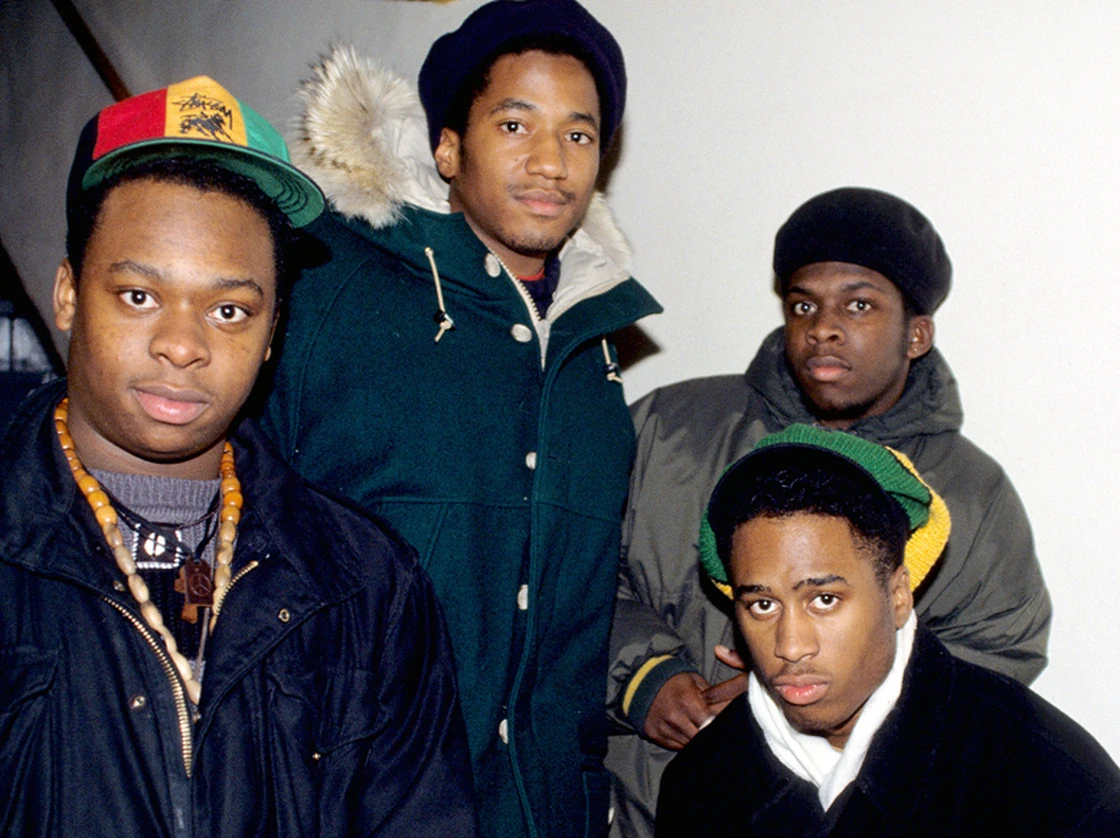
A Tribe Called Quest played a central role in the collective’s identity. Formed in Queens in 1985 by Q-Tip (Jonathan Davis), Phife Dawg (Malik Taylor), Ali Shaheed Muhammad, and Jarobi White, they signed with Jive Records in 1989. Their early albums—People’s Instinctive Travels and the Paths of Rhythm (1990), The Low End Theory (1991), and Midnight Marauders (1993)—were acclaimed for their sophisticated jazz-based sampling and socially conscious lyrics. Songs such as “Excursions,”“Scenario,” and “Check the Rhime” blended humor with cultural critique, often sampling jazz artists like Art Blakey and Ron Carter. One of A Tribe Called Quest’s most celebrated tracks,“Can I Kick It?” (1990), demonstrates their inventive use of sampling and playful lyrical style. The song prominently features a looped sample of Lou Reed’s “Walk on the Wild Side,” recasting the smooth, laid-back bassline as a hip-hop groove beneath Q-Tip's conversational raps. The track’s relaxed, improvisatory feel, combined with its witty wordplay and call-and-response phrasing, shows how the group connected jazz and rock influences with hip-hop performance. Their lyrical focus on community, love, and social awareness positioned them as leaders of the emerging alternative rap movement, influencing artists such as Common, Erykah Badu, and The Roots.
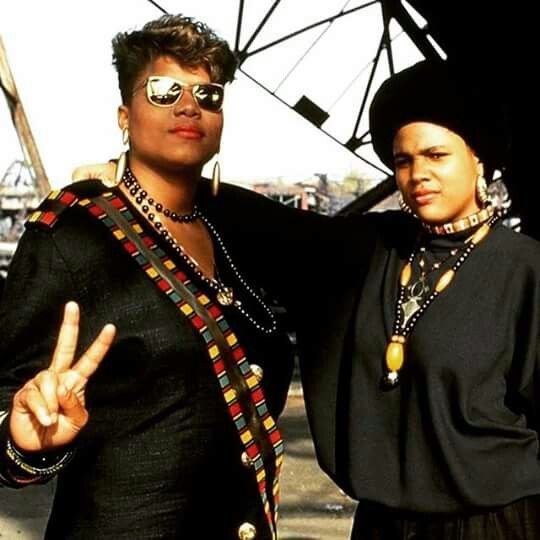
Queen Latifah played an influential part in extending the collective's reach, particularly through her advocacy of feminist perspectives within hip-hop. Born Dana Elaine Owens in Newark, New Jersey, she adopted the Arabic name Latifah, meaning “delicate” or “kind.” Beginning as a beatboxer for Ladies Fresh and joining the Flavor Unit, she released her debut single, “Wrath of My Madness,” in 1988. Her album All Hail the Queen (1989) introduced her assertive voice and addressed challenges facing Black women. The single “Ladies First,” featuring Monie Love, blended feminist themes with layered samples from Kool and the Gang’s “Good Times” and 7th Wonder’s “Daisy Lady”, asserting the importance of women’s voices in the male-dominated hip-hop landscape. Latifah continued to merge reggae, R&B, and hip-hop on subsequent albums, including Nature of a Sista’ (1991) and Black Reign (1993), the latter featuring the Grammy-winning “U.N.I.T.Y.”, which confronted domestic violence, sexism, and self-respect. As the first solo female rapper to achieve gold certification, Latifah's success provided a prominent model for later women rappers seeking greater visibility within the genre.
Although the Native Tongues never released a formal group album, their collaborations influenced the sound and ethos of late twentieth-century hip-hop, offering a counterbalance to the rise of gangsta rap. Their Afrocentric, positive, and collaborative musical identity incorporated humor and cultural pride, influencing later artists such as Mos Def, Talib Kweli, and The Pharcyde. By connecting the creative experimentation of De La Soul with a wider philosophy of cultural consciousness, the Native Tongues repositioned hip-hop as a space for community, creativity, and empowerment, continuing the legacy of the Black Arts Movement through rhythm, poetry, and performance.
Reality Rap
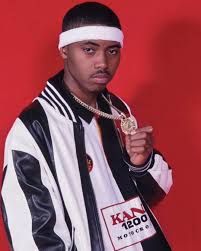
By the late 1980s and early 1990s, a new form of socially conscious hip-hop began to emerge, often described as reality rap. The term referred to a lyrical style that sought to portray the unfiltered experiences of life in America’s inner cities, confronting systemic racism, economic struggle, violence, and survival. Reality-rap artists treated rap as a documentary medium, effectively turning individual and collective experiences into narrative material. Reality rap offered both social commentary and self-expression, positioning the MC as a storyteller and cultural historian.
Reality rap emphasized narrative authenticity, observation, and lyrical introspection. Artists used the form to critique inequality and articulate a sense of lived truth. The evolution of reality rap built on the foundations established by early MCs and female rappers who had already begun using rap as a space for empowerment and social voice.
The legacy of realism and social consciousness in hip-hop was carried forward and deepened by Nasir bin Olu Dara Jones, known as Nas. Raised in the Queensbridge Houses in New York City, he grew up in a public housing environment marked by economic hardship, surveillance, and limited opportunities—conditions that later informed the narratives in his music. His father, jazz cornetist Olu Dara, introduced him to the rhythms and tonal qualities of jazz, influences that informed the lyrical flow and introspective mood of his work.
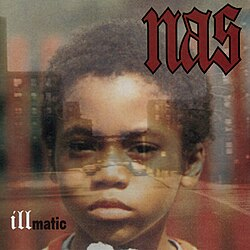
After attracting attention from the hip-hop community through guest appearances, Nas was signed to Columbia Records with the help of MC Serch of the group 3rd Bass. In 1994, Nas released his debut album, Illmatic, which is regarded as a cornerstone of hip-hop history. Songs on Illmatic, such as “N.Y. State of Mind.” combined detailed, first-person storytelling with a refined lyrical craft that set fresh standards for the genre. The album presents a first-person account of inner-city youth, painting portraits of life in Queensbridge with both realism and poetic complexity.
Nas’s writing is noted for his mastery of multi-syllabic (compound or polysyllabic) rhyme schemes—rhymes that extend across two or more syllables—and internal rhyme, where words rhyme within a single line rather than only at the end. For example:
I'm suited up with street clothes, hand me a .9, and I'll defeat foes
Y'all know my steelo, with or without the airplay
I keep some E&J, sittin' bent up in the stairway
Such intricate rhyme structures create a rhythmic density that parallels the complexity of his subject matter. His lyrics frequently explore tensions between aspiration and despair, spirituality and materialism, art and survival, giving his work both self-awareness and social depth. Nas’s engagement with jazz also reflects hip-hop’s dialogue with African American musical traditions, connecting improvisation in rap to improvisation in jazz.
Through albums like Illmatic, Nas helped establish reality rap as a poetic mode of expression, balancing lyrical virtuosity with cultural observation. His storytelling captures the tension between the dream of transcendence and the persistence of systemic constraints, rendering the realities of inner-city life into a form of literary and musical art
Hip-Hop Battles
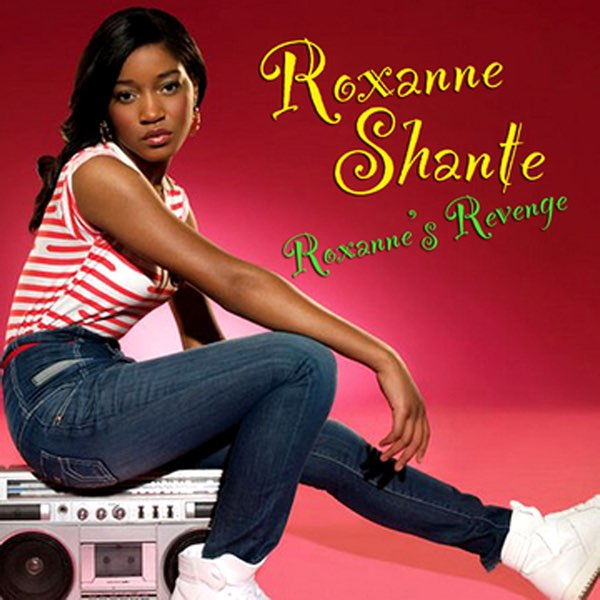
In the mid-1980s, hip-hop began to adopt a competitive spirit, often expressed through lyrical battles and “answer records.” This tradition has its roots in African American verbal sparring and the early MC rap battles that emerged during hip-hop’s beginnings at New York block parties. Among the earliest and most influential participants in this arena was Roxanne Shanté (Lolita Shanté Gooden). Shanté began her recording career as a young teenager and quickly became a sensation with her breakout single,“Roxanne’s Revenge” (1984). The track was a sharp, witty response to the male trio U.T.F.O.’s hit “Roxanne, Roxanne,” which told the story of a woman rejecting their advances. By speaking from the woman's perspective, Shanté flipped the narrative into a declaration of independence and female empowerment, thus demonstrating that female MCs could compete on equal footing with men.
“Roxanne’s Revenge” ignited what became known as the Roxanne Wars, a cascade of answer records produced by both male and female artists. The Roxanne Wars became one of hip-hop's earliest and most prolific series of answer records, producing more than thirty responses—and, by some accounts, more than one hundred. Notable entries included Sparky D’s “Sparky’s Turn (Roxanne, You’re Through),”Dr. Freshh’s “Roxanne’s Doctor—The Real Man,” and Little Ice’s “Ice Roxanne.” The ongoing clash saw Shanté release “Bite This” in retaliation for perceived stylistic theft by U.T.F.O. on “The Real Roxanne” and culminated in her final contribution, “Queen of Rox (Shante Rox On),” which displayed her lyrical dexterity and command over the narrative. The Roxanne Wars eventually concluded with East Coast Crew’s “The Final Word—No More Roxanne (Please),” calling for an end to the prolific chain of responses.
Shanté’s artistry extended beyond the battle itself. Her high-pitched but forceful delivery contrasted with the deeper voices of many male contemporaries, allowed her to wield tone, rhythm, and verbal wit as instruments of authority. Known for her freestyle prowess, quick tongue, clarity of diction, and energetic stage presence, she set new standards for live performance and MCing. Despite releasing only two albums, Bad Sister (1989) and The Bitch Is Back (1992), which were not commercial blockbusters, Shanté’s work made a major impact on hip-hop. She opened the door for later female artists, including MC Lyte, Queen Latifah, and Missy Elliott, giving women a method to engage with the politics of representation within the genre.
Shanté’s work also exemplified early womanist principles, a term coined by author and activist Alice Walker to highlight the experiences of African American women and other women of color within feminism, considering the convergence of race and gender. Through her assertive lyrical voice, improvisational skill, and unapologetic attitude, Shanté carved out space for women to participate meaningfully in hip-hop’s public and performative discourse, challenging the genre's male-dominated hierarchy. Billboard editor Natalie Weiner later recognized Shanté’s pioneering role, noting that her “blazingly male-shaming diss track” and contribution to hip-hop’s first recorded beef helped move the genre toward mainstream recognition, establishing her as one of rap’s earliest female stars. Her influence remains visible in later battle rap and as a formative influence on women’s visibility and agency in hip-hop culture.
Gangsta Rap
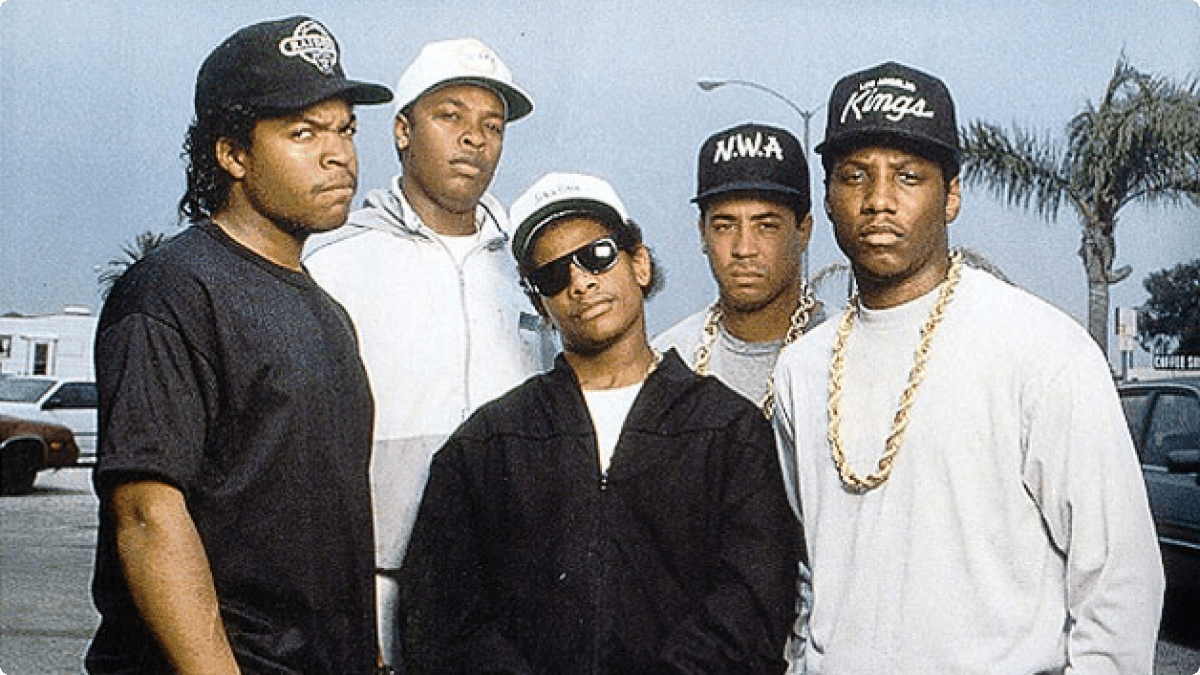
Gangsta rap emerged in the 1980s as a distinct voice in hip-hop, offering unflinching portrayals of life in marginalized communities. Unlike earlier rap that emphasized party culture or socially conscious commentary, gangsta rap turned toward crime, poverty, and systemic oppression as primary subject matter. The genre combined semi-spoken rhymes over rhythmic beats with narratives that dramatized survival and violence within ongoing power struggles, creating a vivid, cinematic storytelling style. Authenticity was paramount: rappers cultivated personas that projected toughness and credibility, blending personal experience with heightened dramatization to captivate listeners. As Ice-T explained, “You got to know what's real. We fade from reality to fiction to reality to outrageousness to totally serious in the middle of a sentence. And you’ve got to say, ‘Oh, he's talking crazy right there, oh, he meant that.’”
Gangsta rap expressed frustrations and aspirations among disenfranchised African American youth while providing a means of addressing police brutality and systemic inequality. At the same time, its use of outlaw imagery often reinforced media stereotypes of Black criminality and hypersexuality. While frequently criticized for its depictions of drugs, gang activity, and misogyny, gangsta rap’s intensity, confrontational style, and specific cultural grounding established it as both a commercial force and a vehicle for narrating life in marginalized neighborhoods and inner-city communities.
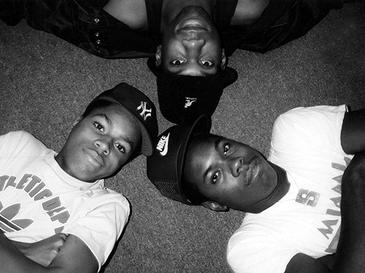
Before the West Coast sound fully developed, East Coast hip-hop laid important groundwork in socially conscious and hardcore storytelling. Boogie Down Productions (BDP), founded by Lawrence “KRS-One” Parker and DJ Scott La Rock, combined vivid depictions of life in New York’s housing projects and economically marginalized neighborhoods with social critique. Parker, who left home at thirteen and experienced periods of homelessness in New York, adopted the graffiti tag KRS-One, which stood for Knowledge Reigns Supreme Over Nearly Everyone.
After an earlier project dissolved, Parker and La Rock formed BDP and released their debut album, Criminal Minded (1987). The record included tracks such as “South Bronx” and “The Bridge is Over,” a diss track targeting MC Shan and the Juice Crew. Songs like “9mm Goes Bang” explored crime and violence, while the album’s cover art—one of the first to depict a group armed with guns—prompted accusations of glorifying violence. KRS-One defended the work, explaining, “The purpose of the album was to attract a thug-type audience, so we could teach them later on… We wanted to make intelligence a cool thing.”
Musically, Criminal Minded showcased innovative sampling techniques, combining Syl Johnson’s “Different Strokes” with Trouble Funk’s “Let’s Get Small.” The album demonstrated early experimentation with rhythm, layering, and storytelling, laying the foundation for the development of gangsta rap. These East Coast precedents provided a foundation that West Coast artists later adapted to their own experiences and environments.
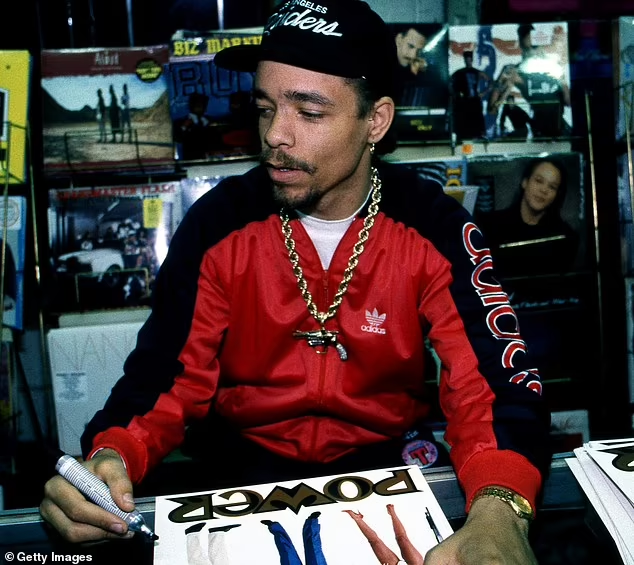
Ice-T (Tracy Lauren Marrow) grew up in New Jersey and experienced early loss, with his mother dying when he was seven and his father at twelve. He moved to Los Angeles to live with his aunt and attended Crenshaw High School, where he began reading the novels of Iceberg Slim, whose depictions of street survival inspired both his worldview and his stage name. He also drew influence from Schoolly D’s “P.S.K. What Does It Mean,” which depicted gang life and influenced his development as a rap storyteller.
After serving in the army, Ice-T pursued a career as a DJ, but his rapping quickly attracted attention. His debut album, Rhyme Pays (1987, Sire Records), introduced a menacing vocal style layered over DJ Evil E’s turntable techniques and drum machine patterns, along with studio effects such as echo and delay. The title track opens with an ominous introduction and incorporates Mike Oldfield’s Tubular Bells, famously known as the theme from The Exorcist, alongside a sample of Black Sabbath’s “War Pigs.” These samples give the track a dark, foreboding tone. Notably, Rhyme Pays was the first hip-hop album to carry a Parental Advisory label, as it was released amid debates led by the Parents Music Resource Center (PMRC) over controversial lyrical content.
Ice-T pursued projects that crossed musical and cinematic boundaries. He contributed the title track to Dennis Hopper's film Colors (1987), addressing gang violence and tensions within economically marginalized neighborhoods, and later established the collective Rhyme Syndicate, releasing Power (1988). In 1992, he founded the heavy metal band Body Count, whose self-titled debut included the controversial track “Cop Killer.” Delivered from the perspective of a vigilante, the song drew widespread public and law enforcement criticism. Although its thrash-metal style set it apart from rap, the controversy focused attention on Ice-T’s gangsta rap roots. Time-Warner eventually withdrew the album from stores, and Ice-T removed the track, yet the project brought together rap, metal, and social commentary in an unusually direct way. Through solo recordings, collaborations, and genre-crossing projects, Ice-T maintained a prominent presence and exerted substantial influence on the sound, lyrical content, and cultural position of West Coast gangsta rap. The genre documented life in communities affected by economic hardship and aggressive policing while also becoming a commercially successful form of artistic expression.
N.W.A.
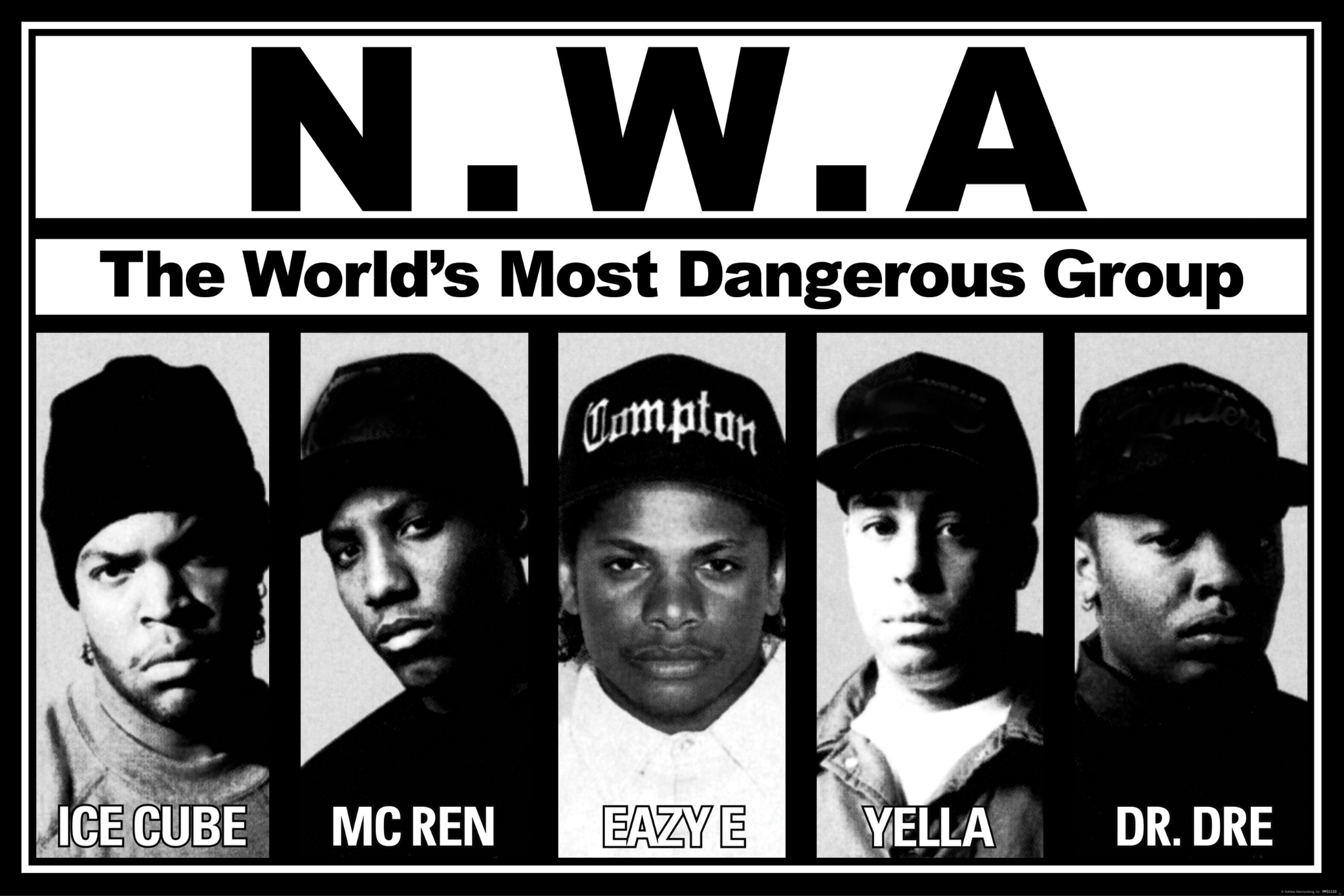
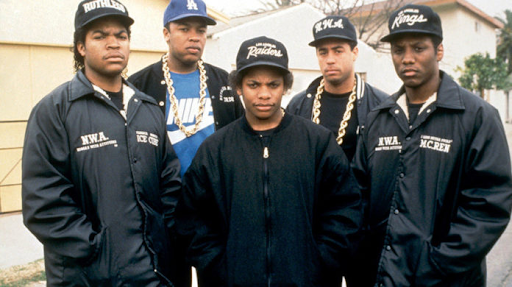
Building on earlier influences from East and West Coast hip-hop, N.W.A. (Niggaz With Attitude) emerged from Compton, California, in the mid-1980s. Compton faced high poverty levels, visible gang activity, and widespread drug use, which provided the backdrop for the group’s narratives. Formed in 1986 by Eazy-E (Eric Wright) and his manager Jerry Heller, N.W.A. included Ice Cube (O’Shea Jackson), Dr. Dre (Andre Young), DJ Yella (Antoine Carraby), and MC Ren (Lorenzo Patterson), with early contributions from Arabian Prince.
Eazy-E co-founded Ruthless Records with Heller and recruited Dr. Dre and DJ Yella. Ice Cube joined after writing “Boyz-n-the-Hood,” a song based on a high school poem originally intended for another Ruthless Records project. N.W.A. independently pressed and sold the single, gradually building a local following that spread nationally. They later signed with Priority Records, which released their debut album, Straight Outta Compton (1988).
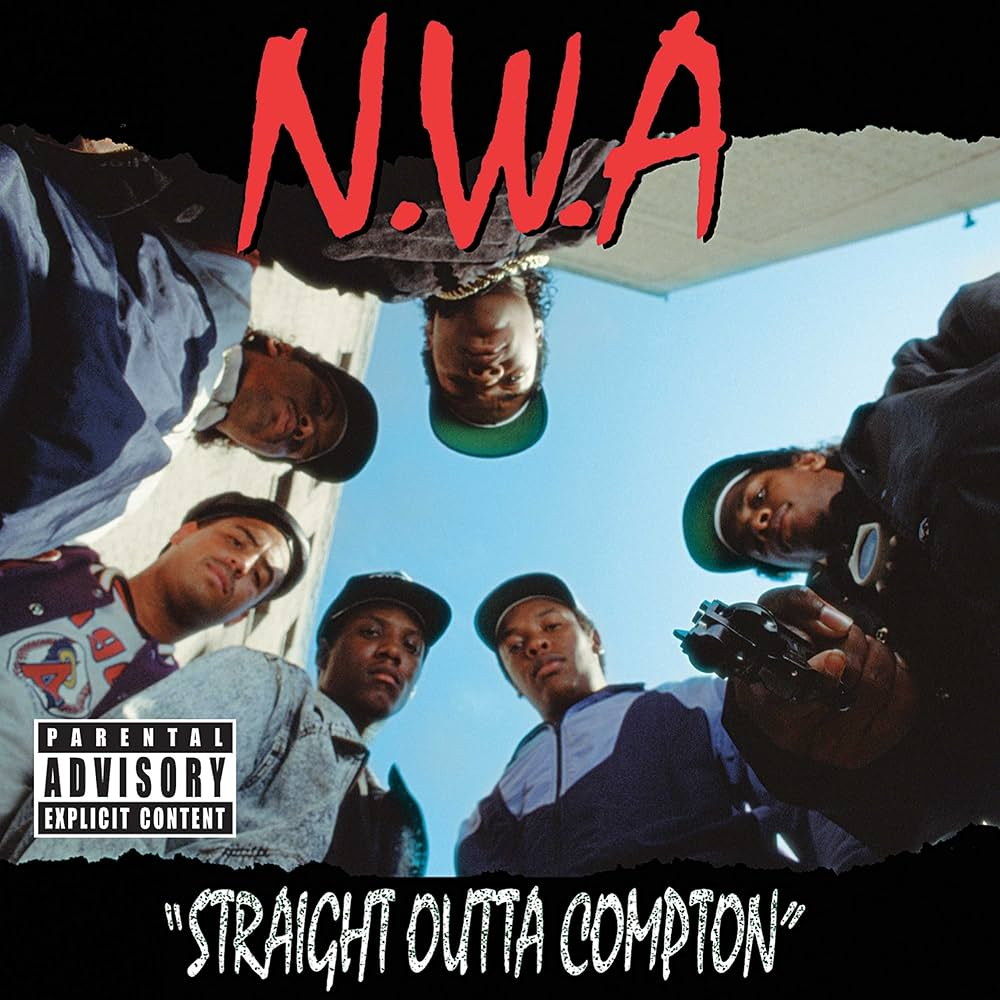
Straight Outta Compton paired street narratives with violent imagery and hard-edged production. Tracks such as “Gangsta Gangsta” and “Dopeman” depicted Compton life through semi-spoken rhymes layered over samples, drum machine patterns, and DJ techniques. Each member’s vocal style—Ice Cube’s low, commanding delivery, MC Ren’s mid-range tone, and Eazy-E’s high-pitched, nasal voice—created contrast across verses and hooks. Dr. Dre's production gave the group its distinctive sonic identity, using layered beats and sampling to create a hard-hitting backdrop that subsequently influenced G-funk and the wider West Coast sound.
The track “Fuck tha Police” exemplified N.W.A.’s blending of reality and dramatization. Opening with a courtroom skit in which Dr. Dre presides, the song features each member testifying about police harassment, delivering sharp criticism that prompted accusations of inciting violence. The FBI sent a warning letter, and mainstream radio and MTV largely refused to play the song. Nevertheless, the controversy fueled public interest, driving sales and contributing to the album’s double-platinum status. Ice Cube emphasized the authenticity behind the lyrics: “N.W.A. was simply coming from the heart. There was a lot of gang violence in our neighborhood, so that tension got onto the record.” At the same time, Eazy-E and Heller recognized the commercial potential of controversy, crafting both the group’s music and image to elicit media attention.
By presenting lived experiences through dramatized narratives, N.W.A. established reality-based gangsta rap as a major form of artistic expression. The subgenre relied on semi-spoken rhymes over rhythmic backing, emphasizing street life while cultivating a tough, authentic persona. Straight Outta Compton chronicled Compton’s environment while setting a blueprint for West Coast hip-hop in the 1990s, influencing future artists and solidifying gangsta rap’s cultural and commercial significance.
Pop Rap and Mainstream Success
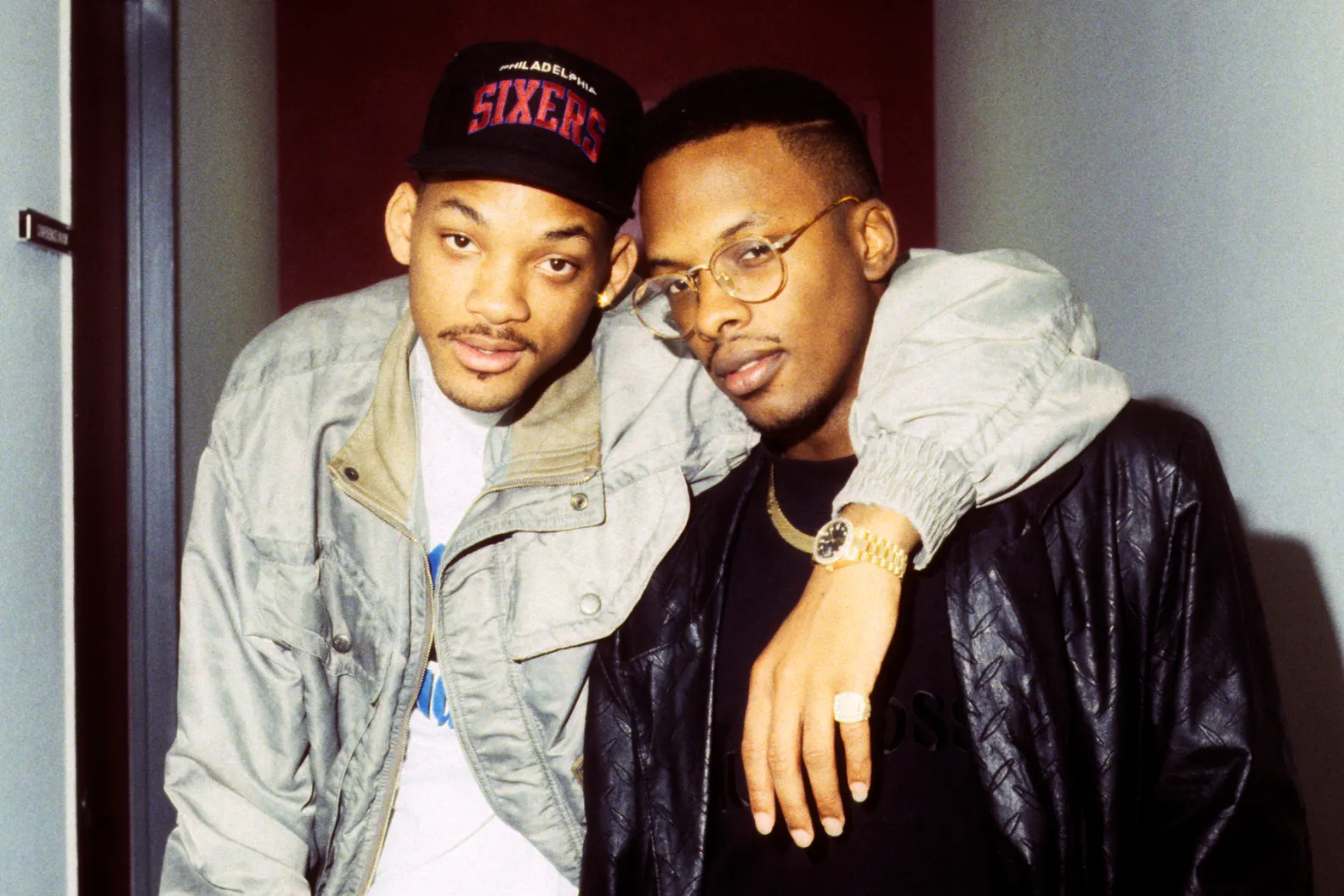
During the late 1980s, while gangsta rap groups like N.W.A. rapped about life in Compton and politically conscious acts like Public Enemy encouraged listeners to “fight the power,” a more accessible, mainstream-oriented style of rap developed, often called pop rap. Unlike gangsta rap, which focused on violence and structural inequality, pop rap instead leaned on humor, narrative detail, and rhythms suited to radio and dance settings. Its lyrics avoided explicit profanity, violent imagery, and politically charged content, making it suitable for a broader, often younger audience.
Among the earliest and most influential acts in this subgenre were DJ Jazzy Jeff (Jeffrey Allen Townes) and The Fresh Prince (Will Smith Jr). The two met at a Philadelphia house party in 1986, where Jeff’s DJ skills earned him first place in a local competition and led to a recording contract with Jive Records. Their debut album, Rock the House (1987), featured the single “Girls Ain’t Nothing but Trouble,” which combined playful storytelling with a sample of the television theme from I Dream of Jeannie. The song placed Will Smith in a series of humorous misadventures, demonstrating a comedic style of rap that contrasted sharply with the confrontational intensity of gangsta rap.
Their next album, He’s the DJ, I’m the Rapper (1988), achieved massive commercial success, selling 2.5 million copies. The single “Parents Just Don’t Understand” humorously chronicled adolescent attempts to evade parental control, further appealing to a youthful demographic. He’s the DJ, I’m the Rapper earned the duo the first-ever rap Grammy, marking a historic moment for hip-hop. They notably boycotted the ceremony because the segment was not televised, an action interpreted as a statement about the music industry’s treatment of rap.
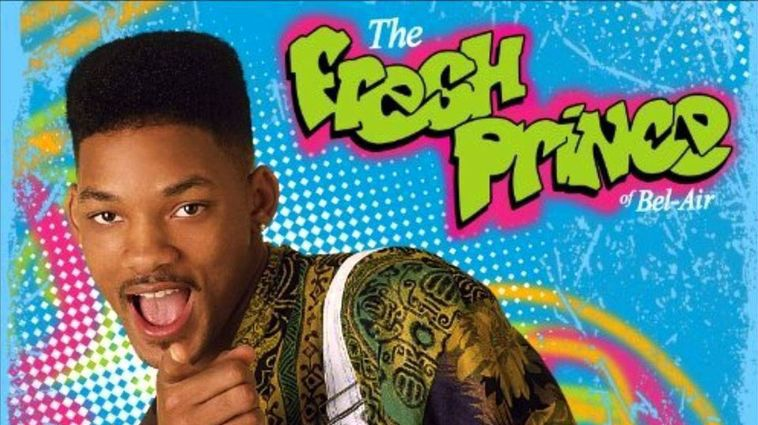
The success of DJ Jazzy Jeff and The Fresh Prince in music directly paved the way for Smith’s television career. In 1990, he starred in The Fresh Prince of Bel-Air, a sitcom in which he played a fictionalized version of himself—a streetwise teenager from West Philadelphia sent to live with wealthy relatives in Bel-Air, California. The show blended comedy with family narratives and social themes such as class and race while remaining entertaining and accessible to a broad audience. Its opening theme, performed by Smith himself, became an iconic piece of pop-rap culture, introducing millions of viewers to his music and persona. Over six seasons, the series helped cement Will Smith as a cross-media star, bridging the worlds of hip-hop and mainstream television.
Beyond his acting career, Smith returned to music with commercially successful solo albums, including Big Willie Style(1997), which featured hits such as “Gettin’ Jiggy Wit It.” He also contributed to the Men in Black soundtrack under his real name, denoting a move from his playful Fresh Prince persona to a mature pop-rap and entertainment career. DJ Jazzy Jeff further influenced the genre through his production company, A Touch of Jazz, collaborating with artists such as KRS-One and Jill Scott, and influencing the sound of contemporary hip-hop and R&B.
By offering a humorous, danceable, and broadly appealing alternative, pop rap demonstrated that hip-hop could achieve mainstream success without adopting the explicit violence or political critique that typified gangsta and conscious rap. The Fresh Prince’s music and television presence together illustrated hip-hop's potential to engage wide audiences, creating a culturally influential, family-friendly, and commercially viable version of the genre.
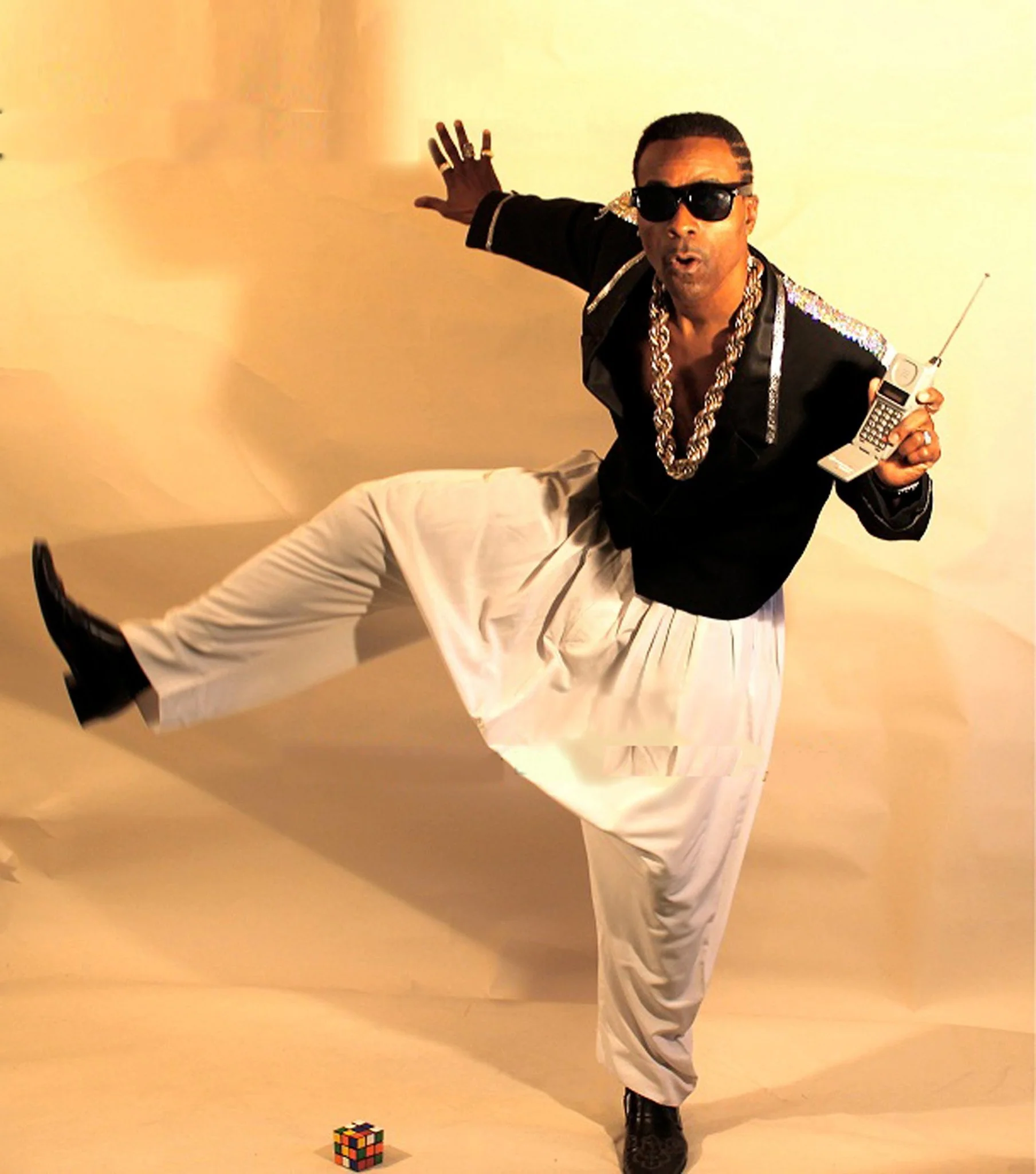
MC Hammer (Stanley Kirk Burrell) brought his own distinctive dimension to pop rap by emphasizing danceable beats, catchy hooks, and theatrical performance. His 1990 album Please Hammer, Don’t Hurt ‘Em and its lead single “U Can’t Touch This” achieved enormous commercial success, selling over ten million copies and remaining at #1 on the pop charts for twenty-one weeks—the first hip-hop album to reach that milestone. The single prominently samples Rick James’s 1981 funk classic “Super Freak,” blending it with Hammer’s high-energy lyrical delivery and animated dance routines.
Hammer’s dancing was a key part of his appeal. He popularized highly choreographed, fast-paced routines that combined elements of funk, breakdancing, and theatrical showmanship, often performed in unison with backup dancers. Signature moves included rapid spins and slides, along with exaggerated upper-body isolations, punctuated by moments where he pointed, leaned, or jumped dramatically to accentuate the rhythm. His “running man” variations and arm-swinging sequences became iconic, widely imitated in clubs, music videos, and television appearances.
Hammer’s public image spanned beyond dance. His “Hammer pants” accentuated movement and added flair to his choreography, while his ostentatious performances made him a mainstream phenomenon. He inspired a short-lived animated Saturday morning show, Hammerman, and even an action figure, further embedding his dance-driven persona in popular culture. Critics in the hip-hop community sometimes labeled him a “sellout” for catering to mainstream audiences, but Ice-T defended him, noting that Hammer stayed true to his own style while achieving broad appeal.
By combining energetic, technically skilled dance routines with catchy hooks and accessible lyrics, MC Hammer brought hip-hop into mainstream pop culture, including television, arenas, and major-label promotion. His performances demonstrated that rap could be both musically engaging and visually spectacular, influencing future pop-oriented rap acts and establishing dance as a central element of hip-hop entertainment.
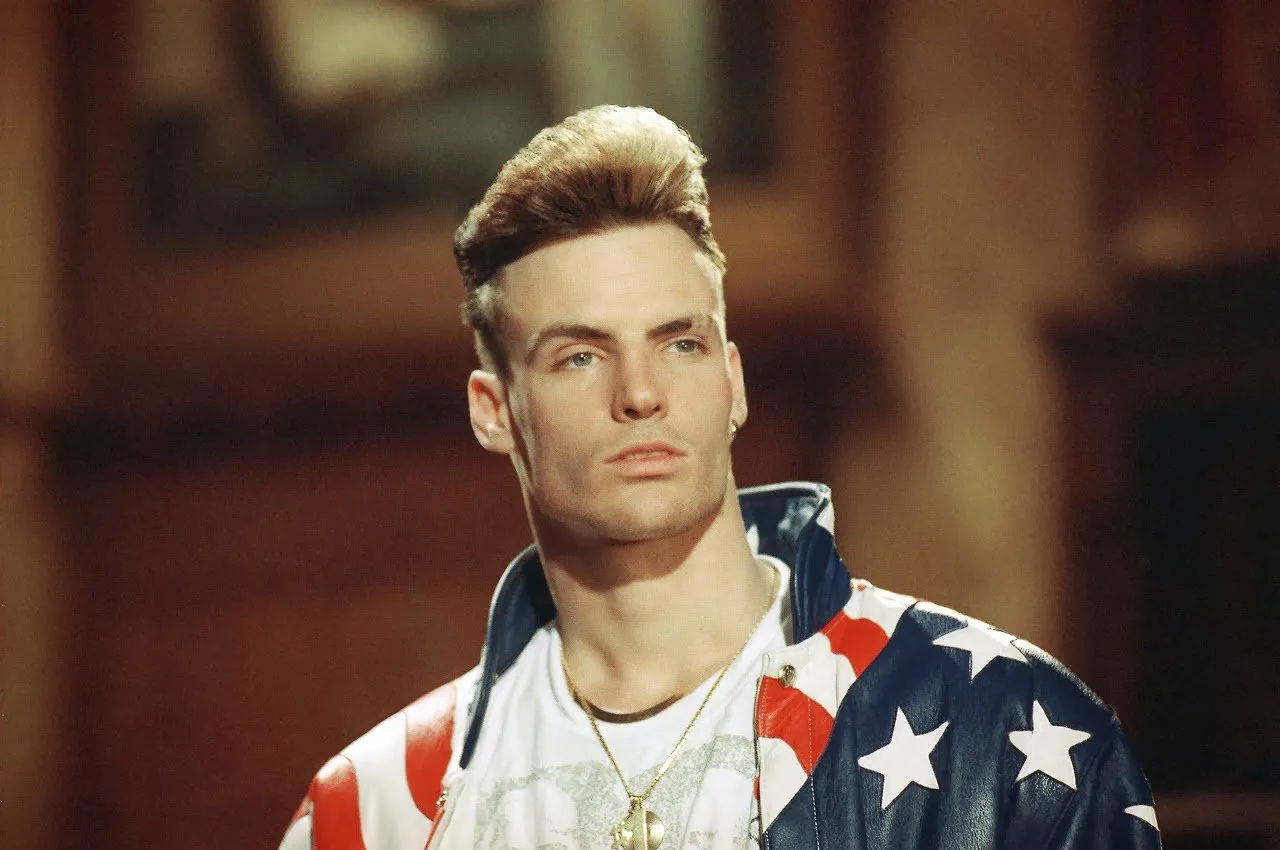
Robert Matthew Van Winkle, known by his stage name Vanilla Ice, was the first solo white rapper to achieve major commercial success, following the 1990 release of his best-known hit,“Ice Ice Baby.” He is credited with breaking down racial barriers in rap and hip-hop for future white artists, most notably Eminem.
Between the ages of thirteen and fourteen, Van Winkle practiced breakdancing, earning the nickname “Vanilla” because he was the only white member of his friend group. Although he disliked the name, it stuck. As he began battle-rapping at parties, friends began referring to him as MC Vanilla. When he joined a breakdance troupe, he adopted the stage name Vanilla Ice, combining his nickname with one of his signature breakdance moves, the “Ice.” Alongside acts like the Beastie Boys, 3rd Bass, and House of Pain, Vanilla Ice became one of the earliest white rappers to attain major success. Chuck D later credited him as a regional breakthrough, noting that he “broke through in the mid-South, in a Southern area in Texas, in something that was kind of indigenous to that hip-hop culture down there,” though he often did not receive proper acknowledgment.
In 1990, Van Winkle signed with SBK Records, which promoted his career through a fictionalized biography that falsely claimed he had grown up in rough impoverished, high-crime neighborhoods, despite his middle-class upbringing. He wrote “Ice Ice Baby” at the age of sixteen. The song’s lyrics narrate a weekend drug run that ends in a drive-by shooting, depicting the sensationalized street narratives common in pop rap. Musically, the song prominently samples the bassline from Queen and David Bowie’s “Under Pressure” (1981). Legal action from Queen and Bowie was settled out of court, with the original artists receiving songwriting credit and financial compensation.
“Ice Ice Baby” became the first hip-hop single to reach #1 on the Billboard charts, while Vanilla Ice’s debut album, To the Extreme (1990), topped the Billboard 200 for sixteen weeks and sold seven million copies in the United States. Despite commercial success, Vanilla Ice faced criticism within the hip-hop community for lacking authenticity, as his middle-class upbringing and fabricated gangster persona contrasted with the lived experiences of many Black artists. His rapid rise also sparked discussions of cultural appropriation, as he profited from Black musical and dance culture without directly engaging the social realities from which it emerged.
Nevertheless, Vanilla Ice's popularity demonstrated rap's potential to cross into the mainstream. His success paved the way for future white rappers and demonstrated the growing commercial viability of hip-hop. At the same time, it brought out the tensions around race, authenticity, and commercialization in a genre rooted in African American community-based musical and cultural practices.
The pop-rap style in the late 1980s and early 1990s—exemplified by DJ Jazzy Jeff & The Fresh Prince, MC Hammer, and Vanilla Ice—offered a mainstream, open entry point into hip-hop. It combined humor, dance, and catchy hooks, appealing to both Black and white audiences while steering clear of the controversial themes of gangsta or political rap. These artists helped establish hip-hop as a commercially viable genre with broad audience appeal, influencing MTV programming, film, and popular culture. At the same time, debates over authenticity, commercial compromise, and cultural ownership remained central to discussions of pop rap, exposing tensions between commercial success and street credibility within the hip-hop community.
Chapter 35: Conclusion
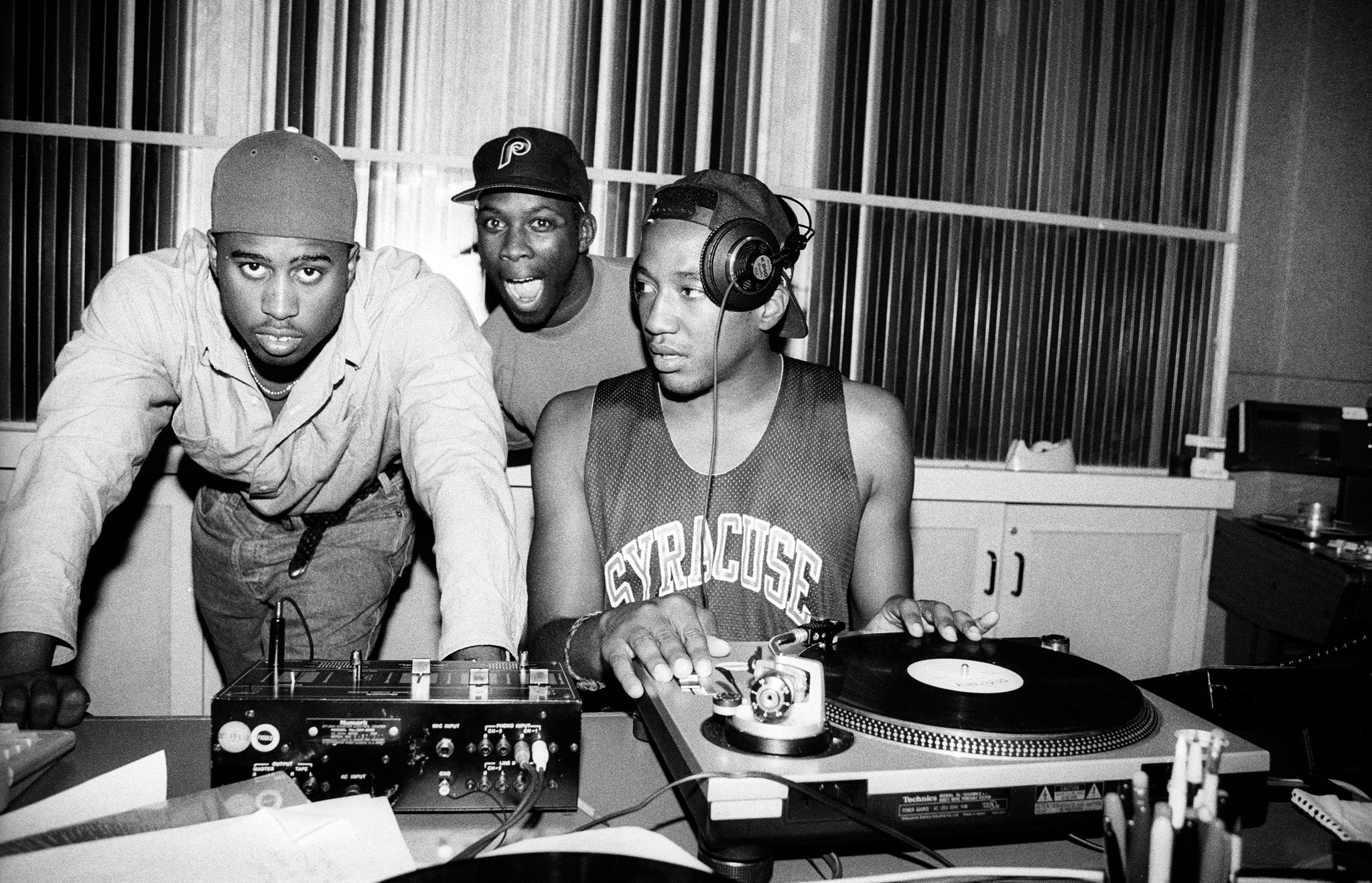
By the late 1980s and early 1990s, hip-hop had evolved into a multifaceted cultural force, encompassing a broad spectrum of sounds, styles, and social messages. Groups such as Public Enemy delivered politically charged lyrics that urged listeners to confront systemic oppression, think critically about social inequality, and assert control over their own lives. Alongside politically conscious rap, groups such as De La Soul and the Beastie Boys pursued inventive production techniques, incorporating hundreds of samples from diverse sources. Sampling became central to hip-hop production and gave the genre much of its distinctive sonic character until legal challenges in the early 1990s placed greater restrictions on the practice.
At the same time, gangsta rap emerged as a raw, unflinching chronicle of life in economically marginalized and heavily policed communities. N.W.A. and contemporaries provided graphic accounts of poverty, gang activity, and police harassment, which drew both acclaim for its authenticity and condemnation for its explicit content. In contrast, pop-oriented acts like DJ Jazzy Jeff & The Fresh Prince and MC Hammer brought humor, catchy hooks, and danceable rhythms to mainstream audiences, avoiding profanity and violent imagery while achieving massive commercial success and crossover appeal. Even artists such as Vanilla Ice, despite controversies surrounding authenticity, demonstrated how far hip-hop had moved into mainstream popular culture.
ToTogether, political rap, sample-based experimentation, gangsta rap, and pop rap demonstrate the breadth hip-hop had acquired by the early 1990s. Hip-hop could function as political commentary, detailed storytelling, dance-oriented entertainment, or commercial pop while retaining rhythmic speech and beat-centered production as common musical foundations. Whether addressing systemic injustice, celebrating street life, or entertaining mass audiences, hip-hop in this era offered a plurality of voices, demonstrating its capacity to convey complex experiences, bridge communities, and contribute to the broader landscape of American popular culture.
Chapter 35: Further Reading
Chang, Jeff. Can’t Stop, Won’t Stop: A History of the Hip-Hop Generation. New York: St. Martin’s Press, 2005.
Charnas, Dan. The Big Payback: The History of the Business of Hip-Hop. New York: New American Library, 2010.
Cross, Brian. It’s Not About a Salary… Rap, Race, and Resistance in Los Angeles. London: Verso, 2003.
Fernando, S. H. The New Beats: Exploring the Music, Culture, and Attitudes of Hip-Hop. New York: Garland, 1994.
Forman, Murray, and Mark Anthony Neal, eds. That’s the Joint!: The Hip-Hop Studies Reader. New York: Routledge, 2004.
Gold, Jonathan. “Day of the Dre.” Rolling Stone, September 30, 1993.
Heller, Jerry. Ruthless: A Memoir. New York: Atria Books, 2006.
Higa, Ben. “Early Los Angeles Hip Hop.” In The Vibe History of Hip Hop, edited by Alan Light, 111–19. New York: Three Rivers Press, 1999.
Keyes, Cheryl L. Rap Music and Street Consciousness. Urbana, IL: University of Illinois Press, 2002..
Marriott, Robert. “Gangsta, Gangsta: The Sad, Violent Parable of Death Row Records.” In The Vibe History of Hip Hop, 319–25. London: Virgin, 1999.
Ro, Ronin. Dr. Dre: The Biography. New York: Da Capo Press, 2007.
Wood, Joe. “Native Tongues: A Family Affair.” In The Vibe History of Hip Hop, edited by Alan Light, 187–99. New York: Three Rivers Press, 1999.
Rose, Tricia. Black Noise: Rap Music and Black Culture in Contemporary America. Middletown, CT: Wesleyan University Press, 1994.