Chapter 15: Teen-Targeted Pop Music in the Early '60s

Chapter 15: Introduction

The early 1960s constituted a pivotal moment in American history, a time when the country stood on the brink of enormous cultural and political transformation. In 1960, the presidential election ushered in a new generation of leadership as John F. Kennedy narrowly defeated former Vice President Richard Nixon to become the 35th president of the United States. Kennedy's youthful image, media-savvy presence, and calls for a "New Frontier" of American liberalism kindled hope in many Americans, particularly younger voters. He brought charisma to the White House and symbolized a modern, forward-looking vision of American identity, though his administration would soon be tested by both domestic unrest and global crises.

Domestically, African American students initiated direct action against racial segregation in the South with the Greensboro sit-ins in 1960, a series of nonviolent protests at a Woolworth's lunch counter in North Carolina. The sit-ins sparked similar actions across the South and energized a new generation of civil rights activists. The momentum continued with the Freedom Rides in 1961, where interracial groups of civil rights advocates rode interstate buses to test Supreme Court rulings against segregated public transportation. These riders were met with brutal resistance, especially in Alabama and Mississippi, which brought televised images of violent enforcement of Jim Crow laws into homes across the country.
Abroad, Cold War tensions surged. In April 1961, the Bay of Pigs invasion ended in failure. The CIA-backed attempt to overthrow Cuban leader Fidel Castro weakened U.S. standing in Cold War diplomacy and pushed Cuba closer to the Soviet Union. Later that year, construction of the Berlin Wall divided communist East Berlin from democratic West Berlin both physically and ideologically. It physically separated political systems and became a recurring reference point in Cold War rhetoric. However, Cold War tensions peaked in October 1962 during the Cuban Missile Crisis after U.S. reconnaissance discovered Soviet nuclear missiles in Cuba. For thirteen days, the world faced the brink of nuclear war until an eleventh-hour diplomatic agreement resolved the crisis.
Amid this turbulent backdrop, the American music industry was undergoing a shift in structure and industry control. The driving rhythms and confrontational image of 1950s rock and roll had begun to subside, in part due to the fallout from the payola scandal. Investigations into illegal practices of paying disc jockeys for airplay, most notably those involving Alan Freed, led to increased federal regulation of radio programming. Freed's career was destroyed, and many independent DJs and smaller record labels that had championed early rock and roll were displaced as major networks and labels consolidated control.
In their place, corporate-controlled radio and television programs, such as American Bandstand, gained prominence. These platforms promoted a more polished, less controversial style of popular music centered on manufactured teen idols such as Frankie Avalon, Bobby Vee, Fabian Forte, and Leslie Gore. These performers were often carefully groomed by record labels to appeal to middle-class, white American youth, heralding a shift in rock and roll's image from rebellious outsider art to commercially packaged entertainment.
The payola scandal also allowed major record labels to regain control over the music industry. During the 1950s, many executives had dismissed rock and roll as a passing fad and did not invest in its early stars. This created an opportunity for independent labels to thrive by signing groundbreaking rock artists and reaping the reward from their gamble on rock's sudden popularity. However, by the early 1960s, larger corporations recognized their mistake. They used legal enforcement to gradually tighten control over broadcasting and push independent voices to the margins. This media clampdown disproportionately affected Black musicians who had been essential to the development of rhythm and blues and rock and roll. In the name of industry reform, Black musicians were systematically sidelined. Radio programmers, now operating under stricter FCC scrutiny, avoided any material associated with racial controversy or stylistically related excess that could be perceived as a risk and instead conservatively catered to white middle-class audiences. This reinforced long-standing racial inequities within the music business.
At first glance, this period might appear to be a moment of cultural retreat. Many of rock and roll's original trailblazers had faded from the spotlight, and the rebellious energy of 1950s rock and roll gave way to a sleeker, teen-oriented pop. Yet beneath this glossy surface, the commercial structure of American popular music was changing rapidly. This chapter explores how centralized production methods, particularly those emerging from New York's Brill Building, repurposed popular rock and roll music into tightly crafted, market-driven songs aimed at teenage audiences. While new musical movements such as soul, surf, and the folk revival were quietly emerging in the background, the dominant sound of the moment constituted a more calculated, commercial approach. What seemed like a lull was, in fact, the staging ground for more expansive musical experimentation and cultural upheaval yet to come.
American Bandstand
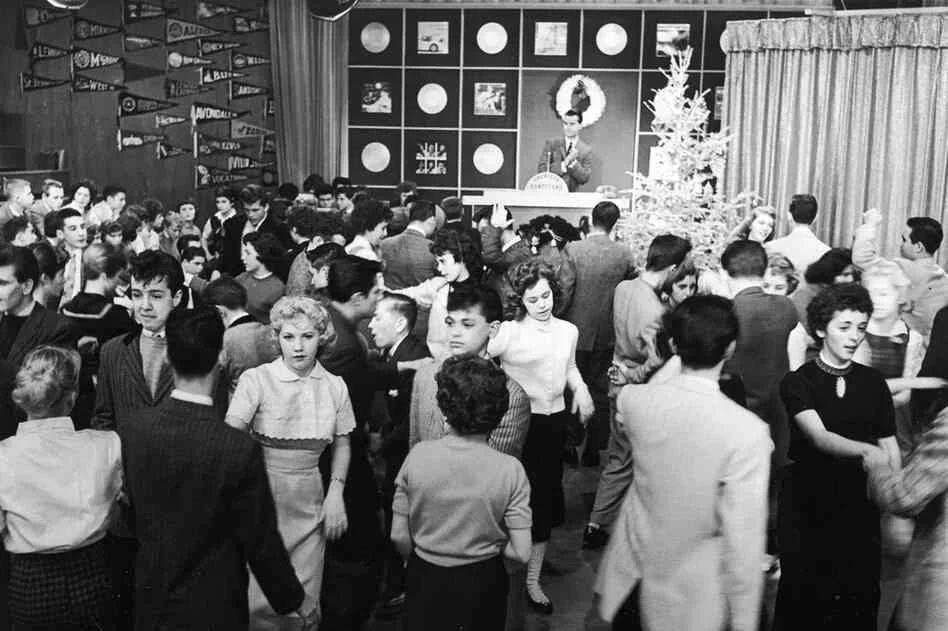
American Bandstand began as a modest local television program in Philadelphia but quickly grew into a nationally broadcast television program with a large teenage audience. Originally just called Bandstand and hosted by Bob Horn, the show was aimed at local teenagers who came to dance, hear new music, and offer their opinions on said music. After Horn's departure following a drunk driving arrest and rumored involvement in a prostitution ring, a young broadcaster named Dick Clark took over the show in 1956. On August 5, 1957, the rebranded American Bandstand debuted on national television through ABC. It aired for ninety minutes each weekday afternoon and in a primetime slot on Monday nights, perfectly timed for a teenage audience eager to tune in after coming home from school.
Dick Clark (1929–2012), often referred to as "America’s Oldest Teenager," was born in Mount Vernon, New York. He began working as a radio announcer at age seventeen at his uncle's station in Utica, New York, and later earned a degree in advertising with a minor in radio from Syracuse University. After graduating in 1951, he moved to Philadelphia, where he began hosting a radio show on WFIL in 1952. When he took over Bandstand, Clark's charisma and clean-cut image helped propel the show to national success. His smooth delivery and affable persona enabled him to connect with both teenage viewers and concerned parents, positioning rock and roll in a more acceptable, wholesome light for parents, advertisers, and network executives.

American Bandstand quickly became a powerful force in dictating the aesthetics of American youth culture. The show regularly featured a studio audience of about 150 teenagers who danced and shared their reactions to the music. Beyond showcasing music, the show influenced teen fashion, hairstyles, dating customs, and social behavior. Most of the musical acts lip-synced their performances to avoid unpredictable behavior and to maintain a tightly controlled presentation. The show's sanitized format prevented on-air surprises, such as Elvis Presley's controversial hip movements on The Milton Berle Show or Jerry Lee Lewis's wild antics on The Steve Allen Show. Many of the featured performers were selected more for their looks and potential for mass appeal than for their vocal abilities. With guidance from major labels, these singers were groomed into polished teen idols who fit the industry's image of mainstream marketability.
While rock and roll in the 1950s had centered on the performers and their stage presence, American Bandstand shifted the focus to the listener's experience and participation through dance. The shift toward dance-centered participation shift was embodied by the show's teen dance regulars—such as Justine Carrelli and Bob Clayton, Arlene Sullivan and Kenny Rossi, and Carmen Jimenez and Eddie Kelly—charismatic young people from the studio audience who appeared frequently on camera and quickly became celebrities in their own right. These teenage stars were admired for their fashion choices, signature dance moves, and on-screen relationships. Their popularity spanned beyond the show, leading to fan clubs, magazine features, and public appearances. These dancers represented an idealized version of teenage life and helped viewers across the country imagine themselves as part of a wider youth culture. Despite its broad cultural influence, the show had limited racial diversity among featured performers; Chubby Checker was the only Black artist to appear regularly during this era. Nonetheless, Clark helped launch the careers of numerous artists, including Frankie Avalon, Fabian Forte, Bobby Rydell, the Dovells, and Chubby Checker.
Behind the scenes, Dick Clark was also a savvy businessman. To secure advertisers, he personally pitched American Bandstand to agencies on Madison Avenue, a New York street home to major advertising agencies, and landed high-profile sponsors such as Beechnut Spearmint Gum. His growing influence in the industry was matched by an expansive business empire. At one point, Clark held a controlling interest in six music publishing companies, owned four record labels—including Swan, Chancellor, Cameo-Parkway, and Jamie Records—managed a record pressing plant, and operated a distribution company. Clark also ran an artist management firm, a touring company (Dick Clark's Caravan of Stars), and a concert show (The Dick Clark Show), among others. In total, he had stakes in thirty-three corporations. Although never convicted of any wrongdoing, Clark's overlapping business interests did draw scrutiny during the 1960 payola hearings. Just before the investigation, he divested himself of thirty-one companies, only to repurchase many of them once the hearings concluded.
A telling example of Clark's business savvy can be seen in his handling of the song "Sixteen Candles" by The Crests. Before he had any financial stake in the track, it was played on American Bandstand only four times over ten weeks. After he acquired the publishing rights, however, the song aired twenty-seven times in just thirteen weeks.
Though American Bandstand remained on the air for over thirty years, its cultural dominance began to wane by the mid-1960s, airing only once a week by 1964. The popularity of new musical styles and social changes eventually eclipsed its earlier influence. Still, the show played an important role in transitioning rock and roll from its rebellious roots into a widely accepted, highly commercialized genre until its final airing on September 5, 1987.
Frankie Valli and the Four Seasons
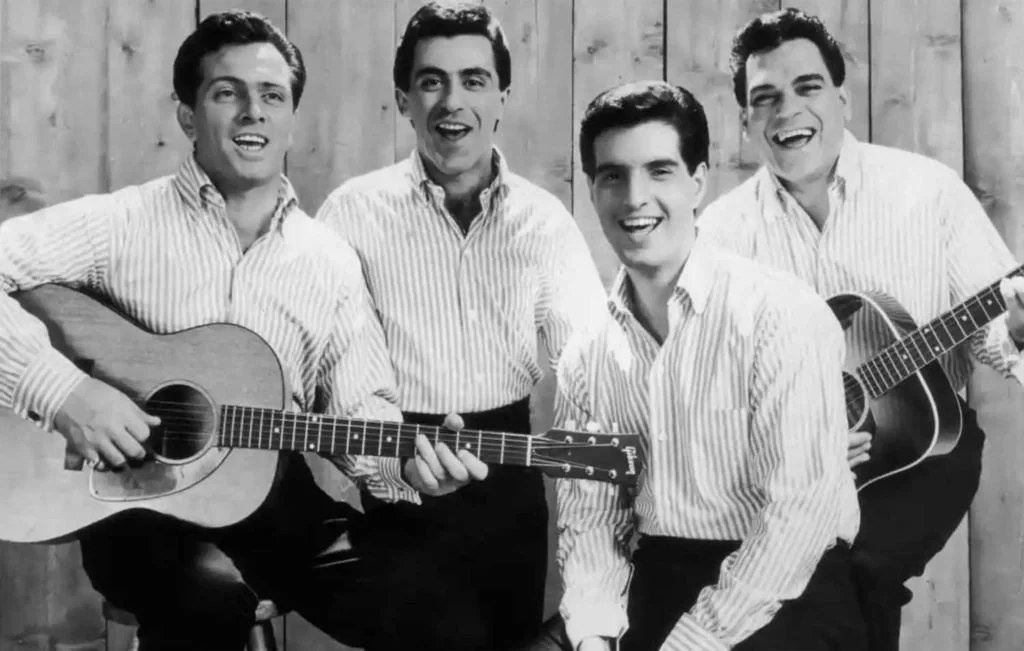
As American Bandstand helped establish the teen idol as a dominant figure in early 1960s pop culture, other groups found success by blending vocal harmony arrangements and a tightly managed public presentation. Among the most commercially successful acts of the period was Frankie Valli and the Four Seasons, whose roots extended back to the vocal group era of the 1950s.
Initially performing under the name The Four Lovers, the group formed in New Jersey and experienced only modest success in its early years. In 1960, after an unsuccessful audition at a lounge attached to a bowling alley, they renamed themselves The Four Seasons, borrowing their new name from the venue. The classic lineup included Frankie Valli on lead vocals, Bob Gaudio on keyboards and songwriting, Tommy DeVito on guitar, and Nick Massi on bass and vocal arrangements.
The group rose to national prominence in 1962 with their first number-one hit, "Sherry," a song that featured close harmony built around a high male lead voice, which became their signature vocal style. The Four Seasons modernized the tradition of vocal harmony groups by incorporating pop production values and more refined songwriting. This helped bring doo-wop-inspired music into the mainstream. Unlike many of the groups that influenced them, who were often African American and faced racial barriers to mainstream exposure, the Four Seasons were a white vocal group. This substantially increased their access to commercial radio play and allowed them broader promotional support from major labels, radio stations, and television programs. Their sound drew heavily on Black musical traditions, but the racial dynamics of the early 1960s music industry gave them a clear advantage in reaching national audiences.
At the heart of their distinctive sound was Frankie Valli's falsetto, in which a male singer reaches higher notes than his natural range by using the edges of the vocal cords, resulting in a lighter, airy tone. Valli's seamless movement between his natural voice and falsetto gave the group a unique signature that stood out in early 1960s pop. By blending the doo-wop roots of the 1950s with a cleaner pop sensibility, the Four Seasons connected 1950s harmony-group practices with later studio-based pop productions that would dominate the latter part of the decade.
Much of their success came from the songwriting partnership between Bob Gaudio and producer Bob Crewe. Together, they composed a string of radio-friendly hits such as "Big Girls Don’t Cry,”"Walk Like a Man," and "Rag Doll." These songs often combined upbeat rhythms with streetwise storytelling, expressing the group's working-class roots while connecting with a broad teenage audience. While many early 1960s acts faded with the arrival of the British Invasion, the Four Seasons maintained a strong chart presence throughout the decade. Their ability to evolve musically, along with Frankie Valli's successful solo career in the 1970s—including hits like "Can’t Take My Eyes Off You"—helped sustain commercial success across multiple decades into the 21st Century.
Chubby Checker
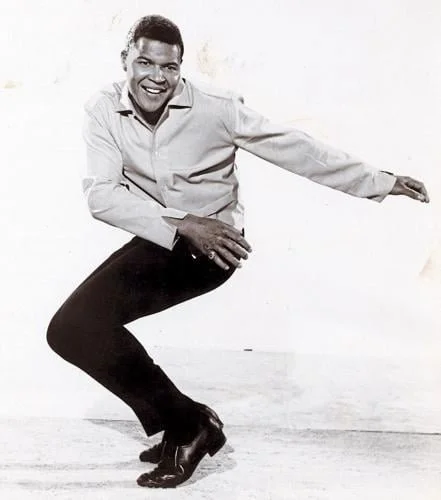
Born Ernest Evans, Chubby Checker (b. 1941) attended high school alongside fellow Philadelphian and teen idol Fabian Forte. As a teenager, Evans worked at a local produce market, where he entertained customers by singing over the loudspeaker. His vocal talent caught the attention of the store's owner, who introduced him to the established songwriter Kal Mann. Mann wrote Checker's first single, "The Class" (1959), and later connected him with Dick Clark, host of American Bandstand. During a recording session, Clark's wife jokingly suggested the name "Chubby Checker" as a playful riff on Fats Domino—and it stuck.
Checker rose to national prominence in 1960 with his recording of "The Twist," a cover of a rhythm-and-blues song originally performed by Hank Ballard and the Midnighters. Checker's version topped the Billboard pop chart in 1960 and again in 1962, making it the first song in history to hit number one in two separate chart runs. His energetic delivery and youthful appeal broadened the song’s appeal across radio, television, and dance halls. He followed it with additional hits such as"Let's Twist Again" (1961), which reached number two on the UK charts, and "Limbo Rock" (1962), which helped popularize limbo dancing in American pop culture. Although Checker never again matched the massive success of "The Twist," his music circulated widely within 1960s youth culture.
The dance crazes that Chubby Checker popularized were part of a long tradition of American social dances that captured the spirit of their times. Beginning in the 1920s with the Charleston, which embodied the freewheeling energy of the Jazz Age, new dance styles frequently appeared alongside changes in youth culture and popular entertainment. The 1950s had seen energetic partner dances like the Jitterbug and the Hand Jive, which were closely tied to the rising popularity of rock and roll music. Unlike partner or group dances that required physical contact and coordinated steps, "The Twist" introduced open or solo dancing, in which individuals danced independently without touching. This style was more palatable to television audiences and aligned perfectly with the broader movement to make popular music and dance more socially acceptable for mainstream America. By removing physical contact, "The Twist" reduced any overtly sexual connotations, rendering it suitable for family-friendly programming while still allowing young people to express themselves freely. To do the Twist, dancers were encouraged to move their hips back and forth in a twisting motion as if they were putting out a cigarette with their foot and wiping their behind with a towel. The simple movements made the dance accessible to everyone which certainly helped its rapid spread.
The success of "The Twist" inspired a flood of other open dance-themed songs and crazes in the early 1960s, such as "Peppermint Twist," "Mashed Potato Time," "The Wah-Watusi,""The Fly," "The Hucklebuck," and "Pony Time." Each of these dances built on the idea of solo or small-group movements, often accompanied by catchy, upbeat songs that dominated radio and television. These dances became a way for young people to connect socially and culturally, all of which were promoted through radio, television, and dance venues.
Teen Idols

One of the primary strategies used by major record companies in the early 1960s to regain control of the youth listening market was the development of the teen idol. These artists were deliberately selected and heavily marketed to appeal to white, middle-class families and their sensibilities. Clean-cut, polite, and uncontroversial, teen idols were designed to present a wholesome image. Male singers wore neatly tailored suits and serenaded audiences with tame love songs, while female idols were presented as sweet and innocent. This carefully curated image aligned with a larger musical trend that came to be known as "bubblegum pop" or "schlock rock"—a genre characterized by straightforward, sentimental melodies and restrained lyrical content, with a purposeful lack of edginess. Songs focused on adolescent romance and heartbreak, steering clear of the provocative themes that had previously been present in early rock and roll.
The music produced during this period stood in sharp contrast to the bold, rebellious energy of the 1950s. The fiery piano riffs of Jerry Lee Lewis and the ecstatic shouts of Little Richard gave way to soft harmonies and lush string arrangements. Stories of innocent love and devotion replaced lyrical innuendo and youthful defiance. Compared to earlier rock pioneers like Elvis Presley, Chuck Berry, and Buddy Holly, the teen idols of the early '60s were far more parent-friendly. Artists such as Frankie Avalon, Bobby Vee, Fabian Forte, and Bobby Vinton became household names by delivering ballads that reassured rather than provoked. Many of these performers were not discovered for their musical talent, but rather for their looks and charisma. Labels like Cameo-Parkway, Swan, and Chancellor would invest time and money grooming these fresh-faced young men, coaching them in performance and public image before releasing them into the charts.
Though most teen idols of the era were male, several female artists found moderate success within the same commercial framework. Singers such as Connie Francis, Annette Funicello, Lesley Gore, and Little Peggy March followed a similar formula: they performed songs written by professional songwriters that emphasized romantic loyalty, heartbreak, and teenage longing. As with their male counterparts, their music avoided overt references to physical intimacy, instead projecting an image of idealized young womanhood. However, white female solo acts remained fewer in number and less visible than male stars. As we will explore in the next lesson, it was African American girl groups who would benefit most significantly from the Brill Building model in terms of creativity, visibility, and cultural contribution.
Bobby Vee

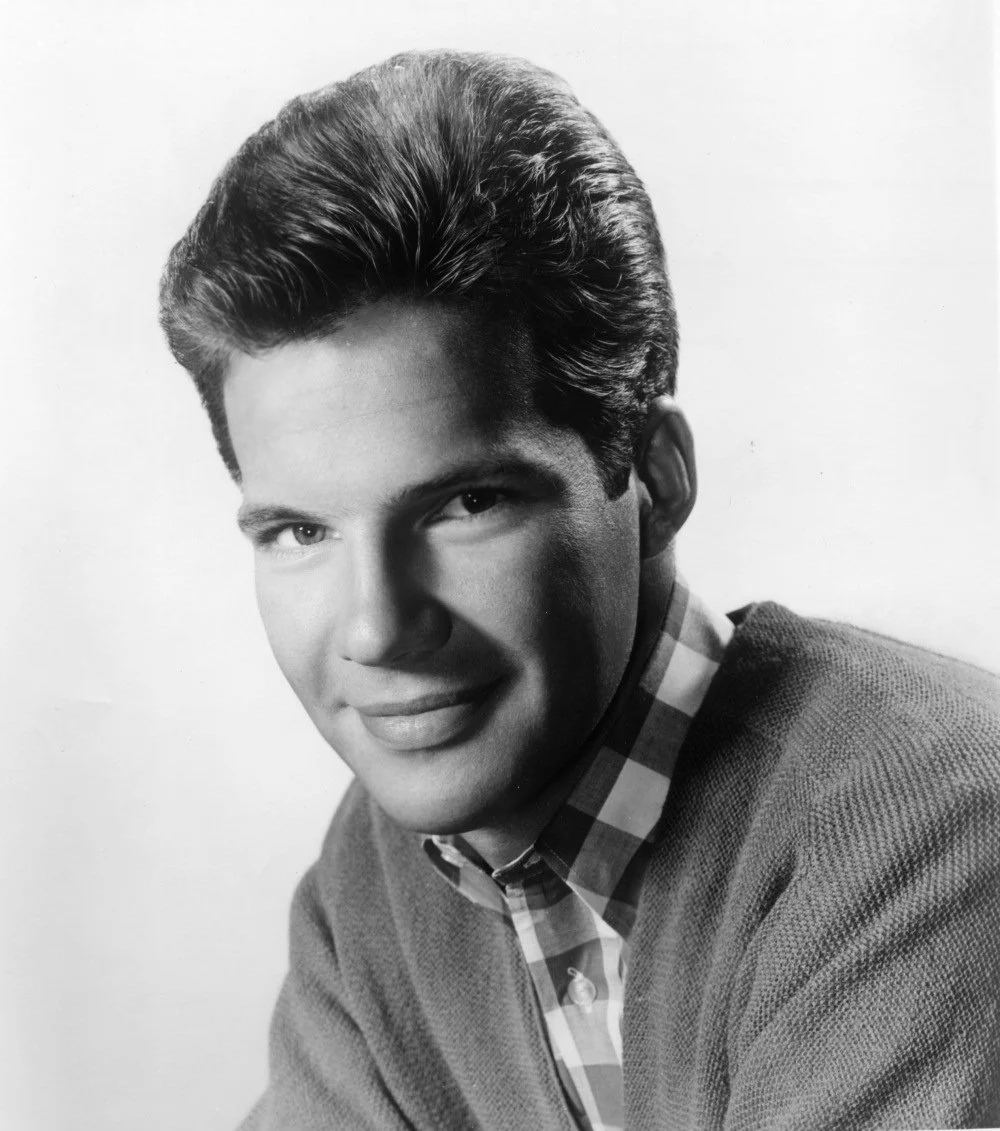
Bobby Vee (1943–2016) stands as one of the quintessential figures of this teen idol wave. His career began in the wake of tragedy: when Buddy Holly, Ritchie Valens, and the Big Bopper died in a plane crash on February 3, 1959, local concert organizers in Minnesota urgently needed replacements for the scheduled performance. Fifteen-year-old Bobby Vee and his group, The Shadows, stepped in. The moment proved to be a launching pad, and by the following year, Vee had signed a deal with Liberty Records.
Although he initially styled himself after Buddy Holly, echoing his vocal delivery and musical arrangements, Vee was soon refashioned by his label into a softer, more polished teen idol. With his clean image and melodic voice, he became a fixture of early 1960s pop. Between 1960 and 1963, Vee scored more than ten Top 20 hits, including "Devil or Angel,” "Rubber Ball,” "Run to Him," and the chart-topping "Take Good Care of My Baby." The latter, written by Carole King and Gerry Goffin, captured the gentle, romantic tone that characterized bubblegum pop. In the song, Vee appeals to his ex-girlfriend's new partner, asking him to treat her kindly—a far cry from the bold declarations of earlier rock anthems.
Unlike many teen idols of the time, Vee possessed concrete musical ability. He was a capable songwriter and instrumentalist, and he maintained a successful career long after the height of the teen idol era. In an intriguing footnote to music history, Vee briefly collaborated with a young Bob Dylan, who was then performing under the pseudonym Elston Gunn, and played piano in Vee's band before embarking on his own musical path. Though not necessarily revolutionary in sound, Vee's success helped connect elements of the rebellious fervor of 1950s rock and the carefully curated pop of the early '60s. His work contributed to the increasingly commercial structure of the pop music industry and heavily influenced commercial pop practices later used in the decade.
The Brill Building

In the late 1950s, music publisher Don Kirshner sought to establish a collaborative environment for rock and pop songwriters. His model was based on the earlier traditions of Tin Pan Alley, where professional teams wrote music for mass audiences. At 24 years old, Kirshner partnered with pop guitarist Al Nevins of The Three Suns to form Aldon Music in 1958. They opened their office near the Brill Building at 1619 Broadway in New York City, a well-known center for music publishing. Although Aldon was not located in the Brill Building itself, the music produced there became associated with the term "Brill Building pop," referring to a specific style of early 1960s pop music aimed at teenage listeners.
The Brill Building approach to songwriting combined commercial goals with professional discipline. Songs were written without a specific performer in mind and later matched to artists by record labels. At its busiest point, Aldon employed around 35 songwriters who worked regular office hours. These writers developed new songs each day, with a focus on clear structure, simple harmonies, and relatable lyrics. The model was often compared to a factory, and some critics referred to it as "Teen Pan Alley."
A few songwriters from this scene went on to become recording artists in their own right, including Neil Sedaka, Paul Anka, and Carole King. However, most remained behind the scenes and worked in teams. Several composer-lyricist partnerships became especially productive. Neil Sedaka and Howard Greenfield created catchy pop tunes, such as“Calendar Girl" and "Breaking Up is Hard to Do." Barry Mann and Cynthia Weil, a married couple, wrote songs such as "Walking in the Rain" for The Ronettes and "On Broadway" for The Drifters.
Brill Building songwriting teams often included women, a departure from earlier music publishing practices that were predominantly male. Carole King and Cynthia Weil both became respected contributors in a field that men had previously dominated. These partnerships addressed experiences familiar to young listeners, especially teenage girls. Although Brill Building songs were initially written for white teen idols, they were later performed by African American girl groups as well. Groups like The Crystals, The Ronettes, and The Shirelles brought emotion and depth to their songs and helped introduce this style of pop music to a wider audience.
King and Goffin

Carole King (b.1942) and Gerry Goffin (1939-2014) were one of the most highly influential songwriting duos during the Brill Building era. They met in 1958 while attending Queens College in New York and married the following year. Shortly afterward, they began working together as staff songwriters for Don Kirshner's Aldon Music, contributing numerous songs aimed at a young pop audience.
Their first major hit was "Will You Love Me Tomorrow," recorded by The Shirelles in 1960. This song became the first number-one single by a Black girl group and launched their prolific songwriting careers. Throughout the early 1960s, they produced a steady flow of chart-topping songs. Some of their noteworthy works include "Take Good Care of My Baby" (1961) for Bobby Vee, "Some Kind of Wonderful" (1961) for The Drifters, and"The Loco-Motion" (1962) for Little Eva. The latter was a significant hit released by Dimension Records, a label founded by Don Kirshner specifically to showcase their work.
In their partnership, King composed the music while Goffin wrote the lyrics. Together, they created songs that contained a surprising amount of emotional depth for pop songs designed for broad commercial appeal. Their lyrics often addressed themes important to teenagers, such as first love, heartbreak, and personal identity. Their melodies were accessible, and the arrangements polished, fitting the pop music style of the era. Even into the latter part of the decade, they wrote hits for a variety of artists, including "I’m Into Something Good" (1964) for Herman's Hermits and "(You Make Me Feel Like) A Natural Woman" (1967) for Aretha Franklin. The latter song became a lasting anthem of female empowerment.
King and Goffin's marriage and professional partnership ended in 1968, but both continued to influence popular music. King went on to enjoy a highly successful solo career, accentuated by her 1971 album Tapestry, which established her as a leading singer-songwriter in the 1970s. Goffin continued his career as a lyricist, writing later hits such as Whitney Houston's “Saving All My Love for You" (1985). Together and individually, King and Goffin helped craft the sound and spirit of early 1960s pop music.
Chapter 15: Conclusion
In the early 1960s, major record labels reasserted control over the youth music market, shifting power away from independent labels and radio disc jockeys. American Bandstand became a central television outlet during this time, becoming the primary venue where teenagers across the nation discovered the latest hits. The show's emphasis on open or solo dancing, where individuals danced independently without any physical contact, made it especially popular and aligned with the era's movement toward more socially acceptable forms of entertainment.
This period also witnessed the rise of teen pop idols such as Frankie Avalon, Bobby Vee, and Fabian Forte, who presented a polished and wholesome image that appealed to middle-class American families. Behind the scenes, Don Kirshner and his stable of songwriters developed a highly successful songwriting system centered in the Brill Building in New York City. This formulaic approach produced hit after hit tailored for the teen audience, combining catchy melodies with lyrics that expressed adolescent experiences. In the next lesson, we will explore other popular music styles of the early 1960s and examine the emerging role of producers in creating the sound and image of artists marketed to teenage audiences.
Chapter 15: Further Reading
Buckman, Peter. Let’s Dance: Social, Ballroom & Folk Dancing. New York: Macmillan, 1979.
Coates, Norma. “Teenyboppers, Groupies, and other Grotesques: Girls and Women and Rock Culture in the 1960s and Early 1970s.” Journal of Popular Music Studies 15, no. 1 (2003): 65–94.
Cote, David. Jersey Boys: The Story of Frankie Valli and the Four Seasons. New York: Broadway Books, 2007.
Dawson, Jim. The Twist: The Story of the Song That Changed the World. Boston: Northeastern University Press, 1995.
Emerson, Ken. Always Magic in the Air: The Bomp and Brilliance of the Brill Building Era. New York: Viking, 2005.
Inglis, Ian. “Some Kind of Wonderful: The Creative Legacy of the Brill Building.” American Music 21 (2003): 214–35.
Jackson, John. American Bandstand: Dick Clark and the Making of a Rock ’n’ Roll Empire. New York and Oxford: Oxford University Press, 1997.
Lanza, Joseph. Vanilla Pop: Sweet Sounds from Frankie Avalon to Abba. Chicago: University of Illinois Press, 2005.
Malnig, Julie. Ballroom, Boogie, Shimmy Sham Shake: A Social and Popular Dance. Champaign, IL: University of Illinois Press, 2009.
Rohlfing, Mary Ellen. “Don’t Say Nothin’ Bad about My Baby: A Re-evaluation of Women’s Roles in the Brill Building Era of Early Rock ’n’ Roll.” Critical Studies in Mass Communication 13, no. 2 (1996): 95–114.
Scheurer, Timothy E. “The Beatles, the Brill Building, and the Persistence of Tin Pan Alley in the Age of Rock.” Popular Music and Society 24, no. 4 (1996): 89–102.
Sedaka, Neil. Laughter in the Rain: My Own Story. New York: Delacorte Press, 1982.
Stearns, Marshall, and Jean Stearns. Jazz Dance: The Story of American Vernacular Dance. New York: Da Capo Press, 1968.
Warwick, Jacqueline. Girl Groups, Girl Culture: Popular Music and Identity in the 1960s. New York: Routledge, 2007.
Weller, Sheila. Girls Like Us: Carole, King, Joni Mitchell, and Carly Simon—And the Journey of a Generation. New York: Atria Books, 2008.