Chapter 34: Hip Hop pt.1
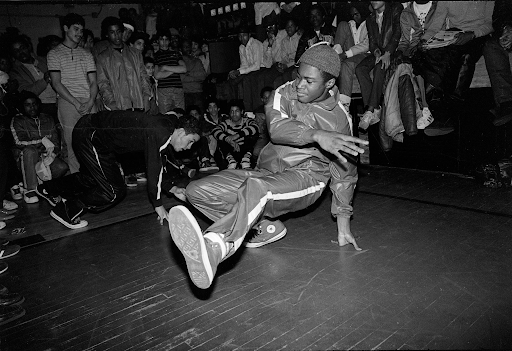
Chapter 34 traces the development of hip-hop in the South Bronx as a cultural movement built around DJing, MCing, breakdancing, and graffiti before it grew into one of the most influential genres in American popular music. Artists such as DJ Kool Herc, Afrika Bambaataa, Grandmaster Flash, Run-D.M.C., LL Cool J, and the Beastie Boys combined new turntable techniques, electronic technology, and socially conscious lyrics to carry hip-hop from neighborhood block parties to mainstream audiences.
Important Terms
Hip-Hop – A cultural movement originating in the South Bronx that combines DJing, MCing, breakdancing, and graffiti.
Rap – Rhythmic, rhyming speech performed over a musical beat.
MC (Master of Ceremonies) – A performer who delivers rhythmic spoken lyrics, energizes the audience, and performs rap.
DJ (Disc Jockey) – A performer who selects, mixes, and manipulates recorded music for an audience.
Breakbeat – The instrumental section of a recording emphasizing drums and percussion that DJs isolate and extend.
Break – A section of a song where vocals pause and percussion becomes the primary musical focus.
Breakdancing (B-Boying/B-Girling) – An acrobatic dance style developed in hip-hop culture featuring footwork, spins, freezes, and power moves.
B-Boy/B-Girl – A breakdancer who performs during the instrumental breaks of hip-hop music.
Cypher – A circle in which dancers, rappers, or other performers take turns showcasing their skills.
Rocking (Uprocking) – An early street dance emphasizing competitive footwork, burns, and stylized gestures.
Locking – A dance style using sudden pauses and exaggerated poses.
Popping – A dance style created by quickly contracting and relaxing muscles to produce sharp movements.
Toprock – Upright footwork performed before transitioning to the floor in breakdancing.
Floorwork – Ground-based movements performed during breakdancing.
Freeze – A motionless pose used to conclude a breakdancing sequence.
Power Move – An acrobatic breakdancing movement emphasizing strength and momentum.
Graffiti – Visual art using stylized lettering and images displayed on public surfaces.
Crew – A group of DJs, MCs, dancers, or graffiti artists working together.
Posse – A group of friends or performers associated with a neighborhood or hip-hop crew.
Sound System – A portable collection of speakers, turntables, amplifiers, and mixers used at parties and community events.
Toasting – A Jamaican tradition of rhythmic spoken performance over recorded music that influenced rap.
Signifying – An African American verbal tradition using wit, wordplay, and indirect meaning.
Flow – The rhythmic delivery, phrasing, and movement of lyrics over a beat.
Freestyle – Improvised rap performed without previously written lyrics.
Scratching – Moving a vinyl record back and forth under the stylus to create rhythmic sounds.
Backspinning – Reversing a record by hand to replay a musical section continuously.
Punch Phrasing – A DJ technique that inserts short musical sounds over an existing beat.
Beat Juggling – Manipulating two records to create new rhythmic patterns.
Quick Mix Theory – Grandmaster Flash's method of extending musical breaks by rapidly switching between records.
Interpolation – Re-recording or re-performing part of an existing composition rather than directly sampling the original recording.
Sampling – Incorporating a portion of an existing recording into a new musical work.
Vocoder – An electronic device that combines the human voice with synthesized sounds to produce robotic vocal effects.
Drum Machine – An electronic instrument programmed to create percussion patterns.
TR-808 – Roland drum machine whose electronic sounds became central to hip-hop.
Linn LM-1 – Early digital drum machine using recorded drum samples.
E-mu SP-1200 – Sampler widely used in hip-hop production.
Akai MPC – Sampler and sequencer that became a standard tool for hip-hop producers.
Artists Discussed
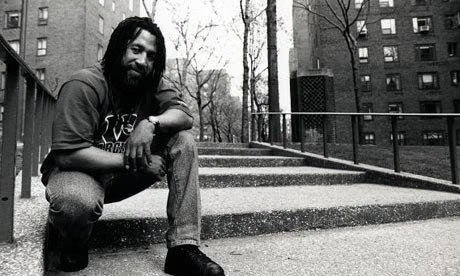
Afrika Bambaataa (Kevin Donovan) – DJ, producer, and founder of the Universal Zulu Nation.
Grandmaster Flash (Joseph Saddler) – DJ who pioneered scratching, backspinning, and quick mix theory.
DJ Kool Herc (Clive Campbell) – Jamaican-born DJ widely recognized as one of the founders of hip-hop.
Coke La Rock – Early MC who performed with DJ Kool Herc.
The Jimmy Castor Bunch – Funk group frequently played at early block parties.
Gil Scott-Heron – Poet and musician whose spoken-word recordings influenced rap.
Fab Five Freddy (Fred Brathwaite) – Graffiti artist, filmmaker, and later host of Yo! MTV Raps.
Grand Mixer D.ST (DXT) – Turntablist featured on Herbie Hancock's "Rockit."
DJ Jazzy Jay – Early hip-hop DJ and Def Jam artist.
Jam Master Jay (Jason Mizell) – DJ for Run-D.M.C.
Universal Zulu Nation – Organization founded by Afrika Bambaataa promoting peace through hip-hop.
Jazzy 5 – Early hip-hop group formed by Afrika Bambaataa.
Soulsonic Force – Hip-hop group led by Afrika Bambaataa.
Grandmaster Flash and the Furious Five – Pioneering hip-hop group.
Queen – Rock band referenced in Grandmaster Flash's turntable routines.
Blondie – New Wave band that helped introduce rap to mainstream pop audiences.
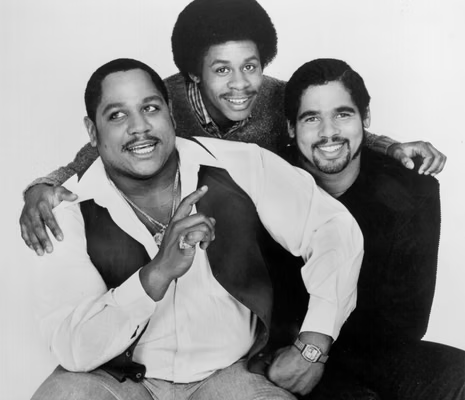
Sugarhill Gang – Group that recorded "Rapper's Delight."
Sylvia Robinson – Producer and co-founder of Sugar Hill Records.
Joe Robinson – Co-founder of Sugar Hill Records.
Sugar Hill Records – Independent label that commercialized early hip-hop.
Cold Crush Brothers – Influential Bronx rap group.
Nile Rodgers – Chic guitarist and co-writer of "Good Times."
Bernard Edwards – Chic bassist and co-writer of "Good Times."
Chic – Disco group that recorded "Good Times."
Herbie Hancock – Jazz pianist who incorporated hip-hop turntablism.
Run-D.M.C. – Hip-hop trio that blended rap with rock.
Joseph "Run" Simmons – Rapper in Run-D.M.C.
Darryl "D.M.C." McDaniels – Rapper in Run-D.M.C.
Russell Simmons – Manager of Run-D.M.C. and co-founder of Def Jam Recordings.
Eddie Martinez – Guitarist featured on "Rock Box."
Rick Rubin – Producer and co-founder of Def Jam Recordings.
Aerosmith – Rock band that collaborated with Run-D.M.C.
Def Jam Recordings – Influential hip-hop record label.
T La Rock – Early Def Jam recording artist.
LL Cool J (James Todd Smith) – Rapper who became Def Jam's first major solo star.
Public Enemy – Politically conscious hip-hop group signed to Def Jam.
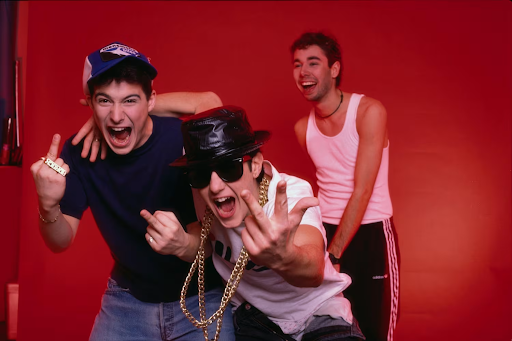
Beastie Boys – Hip-hop trio that blended punk and rap.
Songs Referenced
"The Revolution Will Not Be Televised" – Gil Scott-Heron
"Sex Education Ghetto Style" – Gil Scott-Heron
"The Get Out of the Ghetto Blues" – Gil Scott-Heron
"Funky Drummer" – James Brown
"Amen, Brother" – The Winstons
"Apache" – Michael Viner's Incredible Bongo Band
"The Mexican" – Babe Ruth
"Give It Up or Turn It Loose" – James Brown
"Zulu Nation Throwdown" – Afrika Bambaataa
"The Adventures of Grandmaster Flash on the Wheels of Steel" – Grandmaster Flash and the Furious Five
"Another One Bites the Dust" – Queen
"The Message" – Grandmaster Flash and the Furious Five
"New York, New York" – Grandmaster Flash and the Furious Five
"Beat Street Breakdown" – Grandmaster Melle Mel and the Furious Five
"Rapper's Delight" – The Sugarhill Gang
"Good Times" – Chic
"Rapture" – Blondie
"Planet Rock" – Afrika Bambaataa and the Soulsonic Force
"Trans-Europe Express" – Kraftwerk
"Numbers" – Kraftwerk
"For a Few Dollars More (Main Theme)" – Ennio Morricone
"Rockit" – Herbie Hancock
"Rock Box" – Run-D.M.C.
"King of Rock" – Run-D.M.C.
"Walk This Way" – Run-D.M.C. and Aerosmith
"It's Yours" – T La Rock and Jazzy Jay
"I Need a Beat" – LL Cool J
"Cooky Puss" – Beastie Boys
"Rock Hard" – Beastie Boys
"No Sleep Till Brooklyn" – Beastie Boys
"You Gotta Fight for Your Right (To Party!)" – Beastie Boys
Albums
This Is Madness
Pieces of a Man
Run-D.M.C.
King of Rock
Raising Hell
Radio
Bigger and Deffer
Licensed to Ill
Films
Wild Style
Flashdance
Breakin'
Beat Street
For a Few Dollars More