Chapter 18: The British Invasion

Chapter 18: Introduction

Few moments in music history reshaped American popular culture as quickly and dramatically as the British Invasion. While Americans had long admired British traditions such as royal pageantry and Shakespeare, Beatlemania signaled something different. The Beatles' arrival in early 1964 did more than launch a chart-topping band. It initiated a new phase of musical and cultural circulation between Britain and the United States and created a sweeping wave of enthusiasm for British pop musicians on a national scale. For years, the United States had exported its popular music, particularly rock and roll, rhythm and blues, and jazz, around the world with great success. But with the Beatles, a British group reintroduced those American sounds back into the American market, altered through British performance practice, and repackaged with a revived sense of vitality.
The repertoire associated with the British Invasion drew heavily from American sources. Black American artists like Chuck Berry, Little Richard, Fats Domino, Buddy Holly, and Bo Diddley were widely revered in postwar Britain, especially among working-class youth. While these musicians rarely performed live in the UK, their recordings inspired a generation of British teenagers to start bands of their own. By the early 1960s, groups such as the Beatles, the Rolling Stones, the Who, and the Kinks had absorbed these influences through careful listening and imitation. They filtered American blues, doo-wop, and early rock through their own local traditions, reshaping the music with distinct vocal inflections, phrasings, and performance styles. When these new British acts began performing for American audiences, their music sounded at once familiar and strikingly fresh.
Of the twenty-three number-one singles on the U.S. charts in 1964, nine were by British artists, including six by the Beatles alone. In 1965, thirteen of the twenty-six chart-toppers came from the UK. This flood marked the height of what became known as the British Invasion, a period in which British bands dominated American radio and transformed the soundscape of popular music. While some of these groups faded quickly, others, such as the Rolling Stones, the Who, and the Kinks, sustained long careers and shaped later approaches to songwriting, performance, and recording rock music. By this point, rock and roll could no longer be described as an exclusively American phenomenon. It had become a transatlantic conversation in which British and American artists inspired, challenged, and built upon each other's innovations.
The Beatles' overwhelming success had a ripple effect throughout the American music industry. Record labels rushed to sign British acts and introduced a wide array of new sounds and styles to U.S. listeners. American bands, eager to keep up, often adopted British mannerisms. They adjusted their fashion, altered their vocal styles, and even imitated British musical fashions. One especially unusual case was that of the Walker Brothers, an American trio who moved to the UK in 1964, achieved success there, and were then marketed back in the United States as a British Invasion band, despite being American.
Although the dominance of British bands declined somewhat after 1967, their effects remained audible in later repertoires. British artists had helped broaden the creative boundaries of American pop, expanded its global reach, and established rock and roll as a truly international form of expression. The stage was now set for further innovations, genre-blending experiments, and global collaborations. In the chapters that follow, we will trace the rise of the major British Invasion bands, examine the American responses, and examine changes in musical practice and cultural reception on both sides of the Atlantic.
The Beatles' impact on popular music and culture is difficult to capture fully. In terms of popular music alone, they revamped the genre into what later generations would recognize as modern pop. They transformed songwriting practices, pioneered new approaches to studio production, helped establish music video as a promotional tool, and altered expectations surrounding appearance, authorship, and stage behavior.

Some may wonder why this chapter on the British Invasion is the longest in a book focused on American popular music, and why the Beatles occupy such a central place in that narrative. The answer lies in the unprecedented, reciprocal transatlantic dialogue that shaped pop in the postwar era. American rock and roll and rhythm and blues inspired the Beatles' early sound, but their global success redefined American pop music itself. Their innovations challenged American artists to expand their creative ambitions, and their influence permeated everything from mainstream pop and Motown to folk-rock and psychedelia. To understand the Beatles is to understand a key part of American musical and cultural history, refracted through the lens of four young musicians from Liverpool.
Rock and Roll in the United Kingdom

Before the 1960s, Britain played a largely passive role in the global rock and roll scene. While British audiences eagerly consumed American rock music, they produced relatively few homegrown acts that gained serious attention even within the U.K. Artists like Cliff Richard and the Shadows enjoyed popularity at home but failed to spark much interest abroad, particularly in the United States, where they were often seen as local imitations of American stars. The broader music industry in Britain lacked the industrial support and stylistic confidence needed to challenge American dominance in popular music.
British audiences' access to American rock and roll was heavily mediated by a small, tightly controlled media infrastructure. Just four major record companies—EMI, Decca, Philips, and Pye—dominated the British recording industry, and opportunities for airplay were scarce; only two radio stations reached a national audience: the BBC and the pirate station Radio Luxembourg. The BBC, a state-run broadcaster, offered minimal airtime for popular music, and only one of its three radio stations regularly featured rock and roll. Saturday Club, which began airing in 1958, became one of the few outlets for rock music, though its programming remained cautious and heavily curated.
Independent radio stations did not exist in Britain at the time, and independent record labels struggled to compete with the majors. As a result, British listeners often encountered a highly filtered version of American popular music. Most of the rock and roll records available featured white American artists like Bill Haley, Buddy Holly, and the Everly Brothers. Black American musicians, whose rhythm-and-blues recordings formed the backbone of rock and roll, were far harder to access. Their music was rarely played on mainstream radio and was challenging to find in British record shops. As a result, young British fans frequently depended on imported records, word of mouth, and niche collectors' networks to discover Black American music. This scarcity, however, made the music all the more valuable to emerging British musicians hungry for new sounds and influences.
American films also played an important role in spreading rock and roll culture. Movies starring Elvis Presley or featuring Alan Freed's packaged tours of rock and R&B performers were major box office draws, introducing British youth to the sights, sounds, and attitudes of American teen culture. The popularity of American music on the British charts convinced British record companies that they needed to cultivate their own domestic rock and roll scene. Initially, this meant trying to replicate the American formula for success with local acts. However, as the 1960s progressed, British bands began to transform and re-export American musical influences, creating a transatlantic feedback loop that would alter pop practice across the remainder of the decade.
By the late 1950s, the city of Liverpool had developed a distinctive musical scene that positioned it for later prominence in the development of British popular music. As a key trading port, Liverpool maintained strong cultural and economic links to the United States, particularly through transatlantic shipping routes. American records—especially rock and roll and rhythm and blues—often arrived in Liverpool before reaching other parts of Britain, giving local youth early access to emerging musical trends. Sailors brought home records from the States, which circulated informally among fans and musicians. As a result, Liverpool teenagers were exposed to a wide range of American music, from Chuck Berry and Little Richard to Muddy Waters and Ray Charles, often before these artists became well-known in Britain at large.
Liverpool's musical curiosity thrived in the youth clubs, dance halls, and expanding network of live venues clustered especially along Matthew Street in central Liverpool. The Cavern Club, initially opened in 1957 as a jazz venue, quickly became the epicenter of the city's burgeoning rock and roll scene. By the early 1960s, it had transformed into a popular gathering place for teenagers and young adults, offering alcohol-free afternoon and evening sessions that catered specifically to Liverpool's youth. With limited opportunities for underage audiences to experience live music elsewhere, the Cavern became an accessible and welcoming space where young people could not only hear the latest sounds but also help shape them. For local groups like the Beatles, the club provided a reliable and nurturing platform for developing their stagecraft, experimenting with their repertoire, and building loyal fan bases from the ground up.

Liverpool's musical vitality was also nourished by the educational infrastructure developed during postwar reconstruction. In the wake of World War II, the British government expanded access to secondary education and vocational training as part of a greater commitment to social welfare after the devastation of the war. Many of the city's grammar schools, art colleges, and technical institutes were direct products of this postwar investment in public education. These institutions encouraged creative development and provided working-class youth with exposure to music, visual art, and performance in ways previously reserved for more privileged classes. Combined with Liverpool's tight-knit neighborhoods and cultural openness as a port city, this network fostered an unusually high concentration of young, musically ambitious individuals who would go on to shape British pop for decades to come.
A major catalyst in Liverpool's grassroots music scene was the skiffle craze of the 1950s. Skiffle music was a blend of folk, country blues, and traditional jazz influences, often played with rudimentary instruments like washboards, tea-chest basses, and acoustic guitars. British youth discovered this style largely through American recordings and the touring of Black musicians. The simplicity of skiffle's musical structure—typically built on three-chord patterns, repetitive verse forms, and improvised accompaniment—allowed young players to start bands quickly and learn by doing. For many Liverpool musicians, skiffle provided both the technical foundation and the collaborative ethos that would carry over into more complex styles, such as rock and roll. Because it required minimal training and inexpensive equipment, skiffle became a gateway genre for thousands of aspiring musicians, including the members of what would later become the Beatles.
By the early 1960s, the sounds associated with the Liverpool scene had evolved into a full-fledged musical movement. Known as Merseybeat (named after the Mersey River that runs through Liverpool), this genre blended American rock and roll with elements of British folk and pop traditions. This style fused skiffle's rhythmic energy with the tight harmonies, call-and-response vocals, and syncopated backbeats of early American rock and rhythm and blues. Other Liverpool bands, such as Cliff Richard, Gerry and the Pacemakers, and The Searchers, helped popularize the Merseybeat sound, emphasizing upbeat tempos, jangly guitars, and vocal harmonies. Although often perceived as musically simple or juvenile , the music was rhythmically agile and melodically inventive, shaped by a deep pool of transatlantic influences and filtered through the distinct working-class identity of Northern England. Merseybeat provided the model for what a British rock band could look and sound like, contributing directly to the later success of British groups in the U.S.
Becoming the Beatles

The first iteration of the Beatles formed in 1957. That summer, sixteen-year-old John Lennon met Paul McCartney, a fifteen-year-old student from nearby Liverpool Institute, at a performance of Lennon’s skiffle group, The Quarrymen, at St. Peter's Church fete in Woolton. Impressed by McCartney's ability to tune a guitar correctly and play songs by Little Richard and Eddie Cochran from memory, Lennon invited him to join the band shortly thereafter.
Lennon and McCartney formed a close bond through their mutual passion for American rock and roll. They admired artists such as Buddy Holly, the Everly Brothers, Chuck Berry, and Gene Vincent, drawing on their close-harmony singing, guitar-led song forms, and concise verse–chorus structures in their own songwriting. Their friendship became stronger through a mutual understanding of personal loss, as both had lost their mothers at a young age. This emotional bond helped create a foundation of trust that carried into their songwriting. They began composing together almost immediately, often sitting face to face with their guitars and exchanging lyrics and musical ideas in a back-and-forth flow they would later describe as "eyeball to eyeball."
In early 1958, Paul McCartney introduced John Lennon to his younger friend George Harrison. Though only fourteen at the time, Harrison had already developed impressive guitar skills. Lennon was initially reluctant to bring someone so young into the group, but that changed after Harrison delivered a flawless rendition of Bill Justis's instrumental "Raunchy" during an impromptu audition on the top deck of a Liverpool bus. His technical ability quickly won Lennon over, and with Harrison on board, the group’s guitar work became tighter, with clearer rhythmic coordination and more consistent lead–rhythm separation. Together, Lennon, McCartney, and Harrison began performing regularly, laying the platform for what would become one of the most influential songwriting and performing partnerships in the history of popular music.
Within these formative years, the band cycled through a series of names, including the Rainbows, the Moonshiners, the Nurk Twins (a name used when Lennon and McCartney performed as a duo), and Johnny and the Moondogs. Their musical influences were drawn from icons like Elvis Presley and Little Richard, but none informed their early sound more than Buddy Holly and the Crickets. Holly's clean harmonies, melodic songwriting, and two-guitar-and-bass setup became a model they would emulate. Their first known recording, made in 1958 under the name the Quarrymen, included a cover of Holly's "That'll Be the Day" and an original song called "In Spite of All the Danger." Written by McCartney and Harrison, the track reveals just how closely they modeled their early work on Holly's style of melodic contour, harmony, and song form.
As the group continued to develop, John Lennon's friend from art school, Stuart Sutcliffe, joined on bass in 1960. Soon after, they recruited drummer Pete Best, completing a five-member lineup with Lennon, McCartney, and Harrison on guitars and vocals. Renaming themselves the Silver Beetles—an homage to Buddy Holly and the Crickets—they began to solidify their identity as a performing group. Lennon later suggested changing the spelling to "Beatles" as a pun on the word beat. Though their sound was still unpolished, it was gaining strength as they played more local shows and refined their stage presence. Their first informal manager, Liverpool club promoter Allan Williams, arranged a two-month residency at the Indra Club in Hamburg, Germany. This opportunity eventually expanded to other venues along the city's bustling Reeperbahn nightlife district, where the band played marathon sets that both strengthened their musicianship and stamina. It was during their time in Hamburg that they began sporting mop-top haircuts, originally adopted from their German friends Klaus Voormann and Astrid Kirchherr, which would become one of their most iconic visual trademarks.
In the gritty red-light district of the Reeperbahn, the band performed marathon sets that often lasted up to eight hours a night, six or seven days a week. These exhausting gigs forced them to hone their musicianship, expand their repertoire, and develop a louder, more aggressive stage manner. Living conditions were rough: they slept in cramped quarters behind a movie screen, survived on cheap food, and relied on the support of fellow expatriate musicians.
The group's stint in Hamburg came to an abrupt end in late 1960. George Harrison, then just seventeen, was deported for being underage. Soon after, McCartney and Best were also expelled from the country following a minor incident in which they unintentionally set their living space on fire while clearing out. Stuart Sutcliffe chose to remain in Hamburg with his German fiancée, photographer Astrid Kirchherr, while Lennon returned to Liverpool and McCartney assumed the role of bassist.

By 1961, the Beatles had become a staple of Liverpool's thriving club circuit, performing regularly at venues like the Cavern Club, where their gritty charm, clever wit, and high-energy performances earned them a devoted local following. Brian Epstein, the impeccably dressed and business-savvy manager of his family's record store, NEMS (North End Music Stores), first heard of the band when customers began requesting a Beatles record that didn't seem to exist. Curious, Epstein attended one of their lunchtime shows at the Cavern and was struck not only by the group's raw talent but also by the electric atmosphere and the audience's fervent enthusiasm. Although their image was still rough and their act unpolished, he sensed enormous potential. Within weeks, he offered to become their manager, despite having no prior experience in artist management.

Epstein had a swift influence on the Beatles. Drawing on his background in retail, theater, and high society, he helped refine their public image and introduce a level of discipline and professionalism that matched their musical ambitions. Out went the black leather jackets and rowdy stage antics; in came sharp matching suits, coordinated bowing, and curated setlists. He encouraged them to rehearse diligently and structure their performances more deliberately. As Pete Best later recalled, "He forced us to work out a proper program for the evening, playing our best numbers, not just the ones we felt like playing at the moment." Beyond style and presentation, Epstein was a tireless advocate for the band. He firmly believed the Beatles were destined for greatness and worked relentlessly to secure them a recording contract with a major label.
Despite numerous rejections from major record labels, Brian Epstein remained persistent in his efforts to secure a recording contract for the Beatles. His determination paid off in mid-1962 when he caught the attention of George Martin, a classically trained producer at EMI's Parlophone label. Known primarily for working on comedy records and niche projects, Martin was intrigued enough to meet the band. While he appreciated their vocal blend and charismatic energy, he had serious reservations about their drummer, Pete Best. Martin suggested using a session drummer in the studio, a common industry practice at the time. However, Epstein—eager to present a fully unified and professional group—and the other Beatles, who had grown increasingly frustrated with Best's musical limitations and his perceived social distance from the rest of the band, saw this as an opportunity to make a permanent change.
Pete Best was often considered the "handsome one" of the group and enjoyed a certain local popularity, which contributed to underlying tensions and some jealousy among the other members. He was more reserved and kept to himself offstage, which stood in contrast to the close-knit camaraderie developing among Lennon, McCartney, and Harrison. His drumming, while serviceable in live settings, was not considered versatile or polished enough for studio work. The decision to replace him was difficult and controversial with their fans, but Epstein delivered the news shortly before their next recording session. In his place, the group turned to Richard Starkey, better known as Ringo Starr, a drummer they already knew from the Merseybeat scene. He had earned the nickname "Ringo" because of the numerous rings he wore on his fingers. Ringo had previously filled in for Pete Best on a few occasions and was known for his steady timing, unflashy style, and relaxed demeanor. With Ringo officially joining the band in August 1962, the Beatles' classic lineup was finally complete.
Their debut single, "Love Me Do," released in October 1962, peaked at No. 17 on the U.K. charts—modest by later standards, but a crucial first step. With Epstein's business acumen, Martin's musical insight, and the Lennon-McCartney songwriting partnership beginning to blossom, the Beatles had assembled all the core elements of their creative engine. By the end of 1962, the classic lineup was in place: John Lennon, Paul McCartney, George Harrison, and Ringo Starr, supported by manager Brian Epstein and producer George Martin—six individuals whose combined vision would constitute the most influential band in the history of popular music.
Please Please Me and With the Beatles

Following the release of the single "Love Me Do," George Martin produced the Beatles' first full-length album, Please Please Me, which came out in March 1963. Recorded at EMI's Abbey Road Studios, the album closely captured the energy and sound of the Beatles' live performances at that time. Remarkably, the entire record was completed in just one day, with minimal editing or overdubbing. Reflecting on the process, Martin described it as "a straightforward performance of their stage repertoire—a broadcast, more or less." The album features a blend of original Lennon-McCartney compositions, including "I Saw Her Standing There" and "Do You Want to Know a Secret," alongside covers of American hits, most notably a spirited rendition of the Isley Brothers' "Twist and Shout and "Chains," penned by the prolific songwriting duo Carole King and Gerry Goffin.
Their second studio album, With the Beatles, released in late 1963, drew heavily on American rock and roll, rhythm and blues, and vocal group repertoires. Building on the basis formed by Please Please Me, the album includes cover songs that span early rock and roll, girl groups, Motown, and rhythm and blues, notably "Money (That’s What I Want),"originally written by Motown founder Berry Gordy and Janie Bradford and popularized by Barrett Strong. While the Beatles' early sound retained traces of British skiffle and music-hall traditions, their most formative influences came from American rock and rhythm and blues. They absorbed Elvis Presley's vocal inflections, Carl Perkins' rockabilly fingerpicking and signature vocal "hiccups," as well as Jerry Lee Lewis's percussive, high-energy piano style. Chuck Berry provided a model for clever, narrative-driven lyrics and guitar-driven shuffle rhythms, while Little Richard inspired their gospel-inflected falsetto outbursts—most famously captured in the Beatles' signature "woooos," which became an ecstatic emblem of their early recordings and performances.
The Beatles' listening habits spanned a wide range of American artists beyond the typical male rock icons. They were especially influenced by Black R&B acts such as the Isley Brothers, Larry Williams, Arthur Alexander, Barrett Strong, the Drifters, and Smokey Robinson & the Miracles, as well as by girl groups like the Shirelles, the Marvelettes, and the Cookies. These performers shaped the Beatles' evolving approach to vocal harmonies, melodic phrasing, and lyrical sensibility, helping them craft a sound that blended British pop with American soul.
A clear example of this transatlantic synthesis is their cover of Smokey Robinson's“You’ve Really Got a Hold on Me,"featured on With the Beatles (1963). The arrangement closely replicates the Miracles' original in tempo, mood, and structure. Rather than reimagining the song, the Beatles deliver a faithful yet heartfelt interpretation that displays their respect for Motown and their aptitude as musical interpreters.
By the end of 1963, the Beatles' fusion of British and American styles had propelled them to the top of the U.K. pop charts. That October, their appearance on the popular variety show Sunday Night at the London Palladium drew an estimated fifteen million television viewers and triggered massive public excitement, with crowds of fans gathering outside the theater. This marked the beginning of what the press soon dubbed "Beatlemania:": a phenomenon that would quickly spread far beyond Britain.
The Beatles Come to America /
The Ed Sullivan Show Appearance

The Beatles' arrival in the United States in early 1964 came at a moment of fundamental cultural change, not just for music but for American society as a whole. Just months earlier, on November 22, 1963, President John F. Kennedy was assassinated in Dallas, Texas. Kennedy was the youthful and charismatic leader of what he had called the "New Frontier." He represented the hopes of a new generation: optimism, idealism, youth, along with a forward-looking vision for America's future. His sudden and violent death delivered a devastating emotional blow to the nation. Many young people had looked to him as a representation of progress and renewal. With the onset of mass media, the shock was felt instantly across the country. Public rituals of mourning dominated news coverage in the ensuing weeks, alongside uncertainty about political continuity.
The nation's shock was compounded when, just days later, Kennedy's assassin, Lee Harvey Oswald, was himself murdered on live television. These back-to-back events shook American confidence in its institutions and prompted deep soul-searching about the nation's direction. In this climate of confusion and loss, many pop culture historians suggest that the Beatles offered a welcome relief. Their energy, charm, and musical freshness provided a joyful escape that helped lift the national mood. As 1964 began, a grieving public seemed eager to embrace something new, lighthearted, and hopeful.
While some commentators see the Beatles' rise in America as an emotional response to Kennedy's assassination. Others point to more practical reasons for their success. In November 1963, Beatles manager Brian Epstein traveled to New York to secure an American record deal. After several rejections, Capitol Records, the American affiliate of their British label EMI, agreed to release "I Want to Hold Your Hand" in January 1964. When U.S. radio stations began playing the single in December, Capitol moved the release date up to December 26 to meet rising demand. The record quickly became a major hit. It was soon followed by the album Meet the Beatles, which also climbed the charts. Whether driven by emotional timing, smart promotion, or both, the Beatles had captured America's attention. And America was ready.
Capitol Records backed the release with an unconventional promotional campaign. One million interview discs were distributed to radio stations across the country, giving the impression that the Beatles had personally spoken with every American disc jockey. On the East Coast, radio stations promoted the band’s arrival through countdown-style broadcasts.: "It’s nine o’clock, kids—seventeen hours and twelve minutes until the Beatles touch American soil."
When the Beatles landed at New York's Kennedy International Airport on February 7, 1964, they were greeted by 3,000 screaming fans and hundreds of journalists. Their first U.S. press conference, held at the airport, introduced American audiences to their charm and wit. Their clever responses and irreverent humor won over even skeptical reporters. When a reporter asked, "Are you going to get a haircut while you're here?" George Harrison quipped, "I had one yesterday."
Their live debut came just two days later, on The Ed Sullivan Show on February 9, 1964. An estimated 73 million viewers tuned in, representing roughly 60 percent of the American TV audience. Dressed in matching suits and sporting their iconic mop-top haircuts, the Beatles sent the girls wild as they shook their hair and delivered electrifying performances of five songs:"All My Loving," "Till There Was You," "I Want to Hold Your Hand," "She Loves You," and "I Saw Her Standing There." With the exception of the Broadway ballad "Till There Was You," all were Lennon-McCartney originals. This performance, along with their subsequent appearances on February 16 and 23, drew an audience unprecedented for a popular music television appearance and became a watershed moment in television and pop music history. Just seven years earlier, Elvis Presley had appeared on the same show, filmed from the waist up only. By 1964, rock and roll had evolved into an international phenomenon, with the Beatles emerging as its new ambassadors.
Although earlier fan frenzies, such as those for Frank Sinatra or Elvis Presley, were notable, the Beatles' rise in America was on a completely different scale. The speed, intensity, and media coverage of their breakthrough were unprecedented. Much of their appeal came from the sheer unpredictability of the moment—no one expected that four young men from Liverpool would not only break into the American market but fundamentally transform existing patterns of promotion and audience response..
The scale of Beatlemania, or the intense fan frenzy and cultural obsession that surrounded the Beatles, was unmatched. In Kansas City, for example, the bedsheets the band had slept on were cut into 160,000 one-inch squares and sold for a dollar each. Fans fainted, climbed ventilation shafts, and swarmed concert venues, often forcing the Beatles to leave in armored vehicles for their own safety. According to The Wall Street Journal, Beatles-themed merchandise generated $50 million in sales in 1964 alone—an amount significant enough to affect the trade balance between the United States and the United Kingdom.
A Hard Day’s Night and Help!

The Beatles' breakthrough in America triggered an unprecedented wave of commercial success. By April 1964, the Beatles had taken command of the U.S. pop charts. Multiple record labels, including Capitol, Vee Jay, Swan, and others, were releasing Beatles material, flooding the market with their music. "I Want to Hold Your Hand" reached number one on February 1, 1964, and remained at the top for seven weeks. It was replaced by "She Loves You" on March 21, which itself was overtaken two weeks later by "Can’t Buy Me Love." On March 28, the Beatles shattered chart records by placing ten singles simultaneously in the Billboard Hot 100, surpassing the previous record of nine set by Elvis Presley. By mid-April 1964, the Beatles had made chart history with an astonishing fourteen singles on the Billboard Hot 100. For the week of April 4, they held the top five positions simultaneously—an unparalleled feat at the time and one that was long considered untouchable, until Taylor Swift became the first artist to occupy all ten of the top ten positions on the Hot 100 in 2022.
Following in the footsteps of American rock and roll pioneers such as Alan Freed, Bill Haley and the Comets, and Elvis Presley, the Beatles extended their influence beyond music by venturing into film. Their first feature-length movie, A Hard Day's Night, released in the summer of 1964, was both a critical and commercial success. Directed by Richard Lester, the film portrayed a fictionalized day in the life of the band, blending documentary realism with fast-paced editing, visual gags, and musical performances. Its innovative cinematography and quick-cut editing techniques were highly influential, creating the basis for the modern music video. The Beatles' natural charisma, comedic timing, and musical energy on screen captivated audiences and expanded their already massive fanbase.
The group's humor, displayed in the film, had long been a central part of their appeal, as demonstrated during the 1963 Royal Command Performance in London. Performing for an audience that included Queen Elizabeth the Queen Mother and Princess Margaret, the Beatles closed their set with John Lennon's famously cheeky remark: "Will the people in the cheaper seats clap your hands? And the rest of you, if you’ll just rattle your jewelry." The line captured Lennon's irreverent wit and the band's subversive charm, endearing them further to fans and the press alike.
The Beatles' second film, Help!, released in 1965, embraced a more colorful and surreal aesthetic. Also directed by Richard Lester, the film parodied the spy movie genre and featured an eccentric plot in which a fictional cult pursued Ringo Starr for a ceremonial ring. With its exotic locations, absurd humor, and expanded production values, Help! was another box office hit. Although not as critically lauded as its predecessor, the film further cemented the Beatles' role as pop culture icons. Its musical sequences—including performances of "Ticket to Ride,” "You’ve Got to Hide Your Love Away," and "Help!"—demonstrated the band's continuing musical evolution. The success of both films helped establish youth-oriented cinema as a viable commercial force and shaped the emerging rock musical genre.
By the end of 1965, the Beatles had reached a rare level of fame and creative independence. Unlike most pop acts who clung to familiar formulas, the Beatles had the freedom to explore new sounds and ideas without risking commercial backlash. This creative autonomy allowed greater experimentation in recording and composition during the late 1960s. They began to incorporate unconventional instruments, studio experimentation, and more introspective or socially conscious lyrical themes.
Although Lennon and McCartney wrote the majority of the group's material, George Harrison and Ringo Starr increasingly contributed original compositions, especially as the band matured. In their early years, the Beatles also performed many cover songs, drawing from American rock, R&B, and girl-group hits. The Lennon-McCartney partnership was particularly prolific; they wrote both lyrics and melodies together and are jointly credited with around 180 songs, most of which were recorded by the Beatles. Their influence extended beyond the band itself, as early in their career, they penned "I Wanna Be Your Man" for the Rolling Stones, contributing to the Stones' initial chart success.
As the Beatles ventured into increasingly ambitious creative territory, the contrasting artistic visions of John Lennon and Paul McCartney became more pronounced. McCartney gravitated toward musical classicism, crafting melodically rich compositions with broad popular appeal. Lennon, on the other hand, brought a more provocative, introspective, and politically engaged sensibility to his work. Though their personalities and artistic visions often diverged, the contrast between them helped drive the band's innovation. Together, Lennon and McCartney forged one of the most influential songwriting partnerships in the history of popular music, pushing each other—and the medium itself—to new heights.
George Martin

As Lennon and McCartney's songwriting evolved in musical scope and stylistic range, their creative expansion was consistently supported—and often elevated—by producer George Martin, frequently dubbed the “fifth Beatle” for his involvement in arranging, recording, and coordinating their studio work. Since none of the Beatles could read music, Martin translated their sung or spoken ideas into written arrangements and recorded parts. A graduate of the Guildhall School of Music and trained in classical composition and orchestration, Martin brought training in orchestration and notation to a band that worked primarily by ear and whose creativity was largely intuitive.
Although some critics have claimed that Martin was the true creative force behind the Beatles, he consistently rejected this notion. He maintained that his role was to realize the band's artistic vision, not impose his own. Often, the Beatles would sing or hum melodic lines or instrumental ideas in the studio, and Martin would transcribe and arrange them on the spot.
In the band's early years, Martin influenced their songwriting by refining their song structures and arrangements. As the Beatles matured, his contributions shifted toward expanding their sonic palette. He introduced them to instruments and studio effects rarely used in popular music at the time, including harpsichords, tape loops, orchestral strings, and other electronic textures. Alongside studio engineer Geoff Emerick, Martin helped the Beatles work within the technical limits of Abbey Road Studios, the legendary London recording facility where the band recorded most of their work. Abbey Road was equipped with the standard analog recording technology of the 1960s, which imposed constraints on sound editing and layering, but its acoustics and equipment became a key part of the Beatles' signature sound as Martin and Emerick pushed the studio to its creative limits.
One of the most significant early examples of George Martin's influence occurred in the spring of 1965, when Paul McCartney presented him with a new composition titled "Yesterday." McCartney originally envisioned a simple arrangement featuring only his vocals accompanied by an acoustic guitar. The composition stood out to Martin for its atypical structure and sophisticated harmonic progression, which included frequent shifts between major and minor chords. These harmonic nuances gave the song an emotional complexity that was rare in contemporary pop music at the time.
Recognizing the song's elegance, George Martin suggested enriching its texture with a string quartet. McCartney was initially hesitant. The idea of the Beatles, a band known for rock and roll and guitar-driven songs, using classical strings felt risky and even pretentious. String quartets were associated with composers like Mozart, Haydn, and Beethoven, not modern pop groups. However, after further discussion, McCartney agreed. Martin wrote a refined and understated arrangement for two violins, a viola, and a cello. The result was a landmark recording that expanded the boundaries of what a pop song could sound like.
Released on the Help! album in the U.K. and as a single in the U.S., "Yesterday" became a massive hit. It reached number one in the United States and became the most-covered song in the Beatles' catalog, with more than 2,500 recorded versions. Though it was released under the Beatles' name, McCartney was the only member to perform on the track in a departure from the band's typical collaborative format. John Lennon reportedly disliked the song, considering its tender tone and sentimental lyrics too far removed from his own stylistic preferences.
"Yesterday" signaled that the Beatles were no longer limited to the boundaries of rock and roll. They were now willing to experiment with different genres, arrangements, and emotional registers. Though the song itself didn't launch a new stylistic movement, it served as the first clear indication that the Beatles were moving past conventional pop formulas and toward the more adventurous and artistically ambitious music that would define their mid- and late-career work.
Rubber Soul

In late 1965, the Beatles released Rubber Soul, an album that marked a decisive shift from their early pop sound toward a more mature, introspective, and experimental style. The album cover reflected this transformation: the Beatles' faces appeared slightly distorted through a stretched photographic effect, and the band's name was notably absent. The artistic design, including the distinctive bubble font, hinted at the emerging psychedelic movement and would later become associated with psychedelic art and culture. Musically, Rubber Soul moved away from the carefree "yeah, yeah, yeah" anthems that had characterized their early hits and instead presented a more unified, album-oriented experience, where each track thoughtfully contributed to the overall mood and thematic coherence of the record rather than being a mere collection of singles.
A key catalyst in the Beatles' artistic evolution was the advancement of recording technology. The introduction of four-track recording, which replaced the earlier two-track system, enabled the band to record rhythm sections, vocals, and instruments separately, then layer and mix them with far greater precision and flexibility. This technological breakthrough transformed the process of songwriting and production into a more intentional and creative endeavor, much like the layering of colors in a painting. Ideas from Paul McCartney, John Lennon, and George Harrison could be developed incrementally, refined, and expanded in the studio, all guided by the keen musical expertise of producer George Martin.
This period likewise saw the Beatles increasingly influenced by contemporary musical trends, particularly American folk rock—American folk rock, which blended acoustic instrumentation and narrative lyrics with electric rhythm sections. Folk rock was notable for its socially and politically conscious lyrics, covering issues such as civil rights and war, alongside inward-looking themes. Artists like Bob Dylan were central to this movement. Dylan's songwriting had a strong influence on John Lennon, encouraging him to move beyond romantic themes and explore more introspective, poetic, and socially aware lyrics.
The impact of these influences is especially evident in "Nowhere Man," a standout track from Rubber Soul. The song offers a pointed critique of apathy, describing a person who refuses to take a stand or engage meaningfully with the world around him. This shift toward social commentary constituted a departure from the band's earlier love-centered lyrics and hinted at the increasingly thoughtful and issue-driven content that would characterize their later work.
Lennon's exploration of broader ideals continued in "The Word," where he embraced the concept of love as a universal force capable of healing and transforming society. Rather than focusing on individual romantic experiences, the song expresses an idealistic belief in love as a principle for living. This shift anticipated later Beatles anthems such as "All You Need Is Love" and revealed a growing lyrical ambition grounded in utopian and countercultural values. Similarly, the lyrics of"Girl" delve into deeper, more complex emotional and existential territory. The song contemplates the contradictions and hardships of life and love with lines such as:
“Was she told when she was young / That pain would lead to pleasure? / Did she understand it when they said / That a man must break his back to earn his day of leisure? / Will she still believe it when he's dead?”
McCartney's "Michelle" offered another example of the Beatles' progressing artistry. While it retained the intimacy of a love song, its musical construction was more advanced. The use of complex harmonic progressions, including diminished chords, gave the song a harmonic tension uncommon in mid-1960s pop songwriting. Diminished chords are built by stacking minor thirds, creating a tense, unstable sound that often leads the listener's ear toward resolution. In "Michelle," these chords introduce moments of ambiguity and movement, lending the song an elegance beyond standard pop harmony. Additionally, the inclusion of French lyrics added an unexpected international flair, rare for rock music at the time. Such elements reflected McCartney's expanding compositional palette and the Beatles' collective desire to push musical boundaries.
Alongside their lyrical growth, the Beatles began incorporating global influences into their music. George Harrison's exposure to Indian music, sparked during a visit to India, led to one of the first instances of Indian classical instrumentation in Western rock. His use of the sitar—a plucked string instrument from India with 18 to 21 strings with melody, drone, and sympathetic strings—on John Lennon's “Norwegian Wood (This Bird Has Flown)" introduced listeners to a new timbral landscape. The sitar's resonant and shimmering sound provided a unique texture that suited the song's enigmatic mood. This experimentation built upon earlier orchestral innovations, such as the string quartet in "Yesterday," and marked the beginning of Harrison's deeper study of Indian music under the guidance of sitar virtuoso Ravi Shankar. Shankar later credited Harrison with helping to bring Indian classical music to Western audiences.

The fusion of new lyrical themes, timbral experimentation, and innovative production techniques reached a high point in "In My Life." The song is notable for its poignant lyrics, which reflect on memory, love, and the passage of time with emotional subtlety and depth. Musically, the track features an instrumental interlude that evokes the sound and texture of Baroque polyphony, a compositional style from the 17th and early 18th centuries characterized by the interweaving of independent melodic lines, often heard in the music of composers such as J.S. Bach. To achieve this sound, producer George Martin recorded a piano solo at half speed and an octave lower, then played it back at normal speed. The result was a bright, shimmering tone that closely resembled a harpsichord, an instrument commonly associated with Baroque music. This creative use of studio technology enhanced the song's classical atmosphere but also demonstrated the Beatles' growing interest in musical hybridity and stylistic expansion. "In My Life" acts as a fitting summary of the innovations that distinguished Rubber Soul, including introspective songwriting, musical sophistication, global influence, and studio experimentation that helped redefine the possibilities of popular music.
Revolver
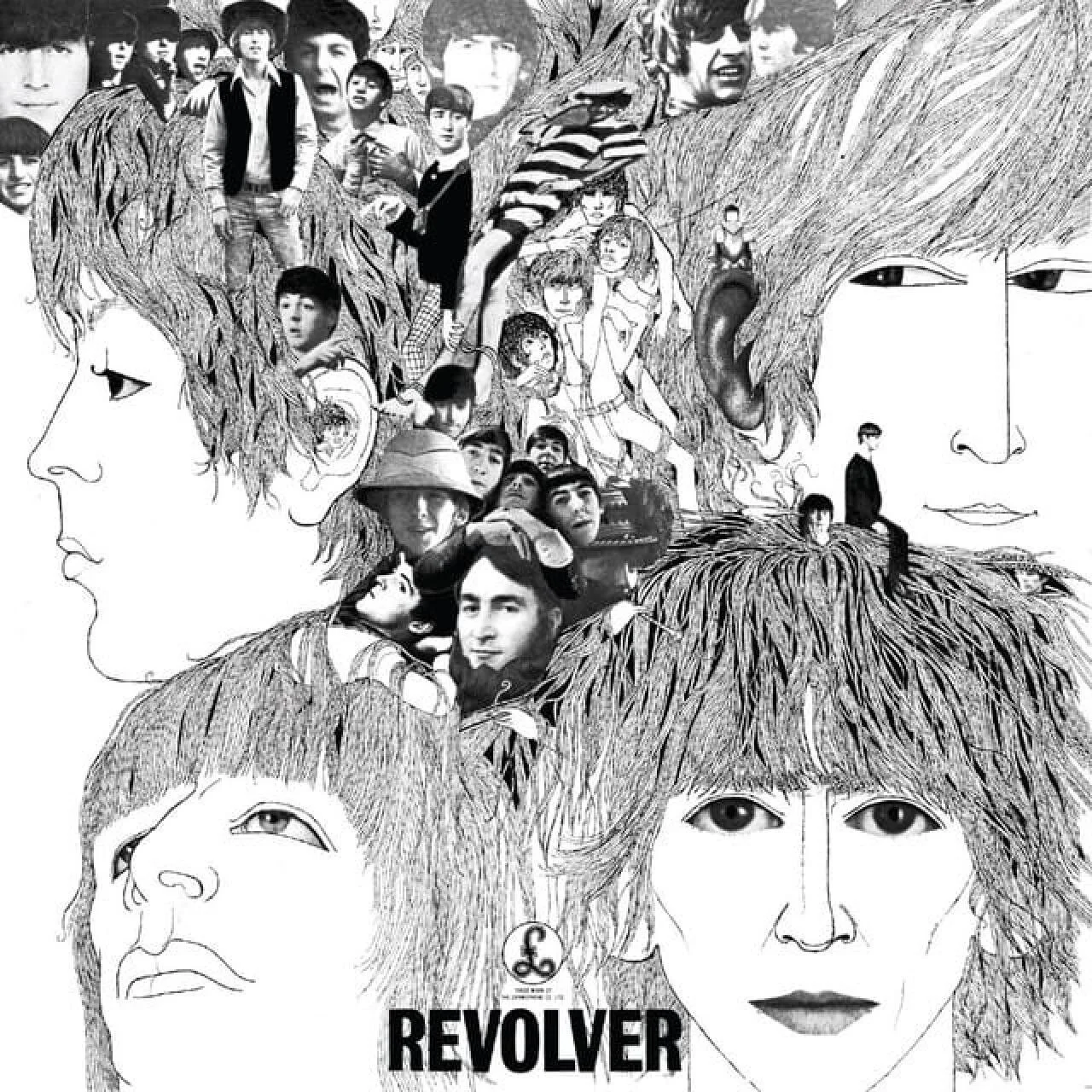
Coming on the heels of Rubber Soul, which had already signaled the band's turn toward more sophisticated songwriting and experimentation, Revolver, released in August 1966, expanded these ambitions into new sonic, lyrical, and conceptual territory. It was both a product of and a catalyst for the rapidly changing musical and cultural setting of the mid-1960s, reflecting the era's growing interest in Eastern philosophy, studio innovation, drug-influenced consciousness, and social commentary.
The album’s visual presentation made that change immediately visible. The cover, designed by German artist Klaus Voormann, offered a stark contrast to conventional album artwork of the time. Rendered in black and white, the design featured hand-drawn, collage-like portraits of the band members, interwoven with cut-out photographs of their faces. The surreal, almost psychedelic quality of the cover art anticipated the visual experimentation that would characterize the counterculture and the band's future projects. Just as the music inside broke boundaries, the cover art declared that Revolver was not just another pop record: it was something entirely new.
Musically, Revolver includes a broad array of influences and innovations. George Harrison's"Love You To" introduced listeners to Indian classical music more directly than any previous Beatles track, featuring sitar, tabla, and drones in a raga-inspired composition that exhibited his growing dedication to Indian spiritual and musical traditions. McCartney's "Got to Get You Into My Life" relies on driving brass rhythms, including trumpets and saxophones, arranged in a bright, syncopated style reminiscent of hits from labels like Motown and Stax. McCartney's "Here, There and Everywhere" contrasted this with its gentle, acoustic pop sensibility, blending close vocal harmonies and subtle chord shifts reminiscent of the Beach Boys' Pet Sounds, another 1966 release.
Perhaps the album's most striking break from pop convention comes in Paul McCartney's "Eleanor Rigby." Eschewing the band's usual instrumentation entirely, the song features no guitars, bass, or drums. Instead, George Martin arranged a double string quartet consisting of four violins, two violas, and two cellos. This instrumentation lends the track a chamber-music sensibility more akin to classical concert music than to rock. The lyrics follow two isolated characters, Eleanor Rigby and Father McKenzie, whose lives intersect only in death, portraying themes of loneliness and forgotten lives with poetic clarity. The name "Eleanor Rigby" was inscribed in a gravestone McCartney saw in the churchyard of St. Peter's Church in Liverpool—the same place where he first met John Lennon and where they would often rehearse, surrounded by similar memorials to unremembered lives. The song's vivid storytelling and experimental orchestration mark a significant evolution in the Beatles' songwriting, heralding their turn toward more literary and artistically ambitious forms.
By the time Revolver was recorded, drug use had become an important influence on the Beatles' creative process. Their experimentation began early, with stimulants like Preludin (a German diet pill that acted as an upper) during their days in Hamburg. In 1964, Bob Dylan introduced them to marijuana, a discovery that many credit with broadening their musical and lyrical scope, especially evident on Rubber Soul. However, it was the psychedelic drug LSD that had the most significant and most lasting impact on their artistic direction during the mid-1960s, initiating new paths for sonic exploration and creative expression.
The band's introduction to LSD was unexpected and controversial. In the spring of 1965, John Lennon and his wife Cynthia, along with George Harrison and his wife Pattie Boyd, attended a dinner at the home of their dentist, John Riley. After dinner, Riley invited them to stay for coffee and insisted they finish their drinks. Only afterward did he reveal that he had slipped LSD-laced sugar cubes into their coffee. Lennon was initially angry at the deception, though he later described the experience as equally terrifying and fascinating. He recalled vivid sensations, describing George's house as seeming to float like a submarine, and said the experience left him "stoned" for months. According to Bury, John and George had previously indicated openness to trying LSD, but only if they were aware beforehand. Ringo and Paul would both take LSD within the year. This shift in consciousness influenced not only the Beatles' lyrical themes, as heard in "Yellow Submarine," but also the inventive soundscapes they created in the studio.
The song that most vividly captures the Beatles' immersion in psychedelic music is "Tomorrow Never Knows," the closing track on Revolver. John Lennon drew lyrical inspiration directly from The Psychedelic Experience, a 1964 guidebook co-written by psychedelic gurus and former Harvard professors Timothy Leary, Ralph Metzner, and Richard Alpert, which itself adapted concepts from the Tibetan Book of the Dead for LSD users. Lines from the text, such as "Turn off your mind, relax, float downstream," were adopted nearly verbatim into the lyrics, urging listeners to surrender their ego and embrace an altered state of consciousness.
Musically, "Tomorrow Never Knows" broke radically from the conventions of pop music, aiming to musically evoke the feeling of an LSD trip. Lennon initially told producer George Martin that he wanted the track to sound like "thousands of Tibetan monks chanting from a mountain top." While that exact request wasn't feasible, the band's young engineer, Geoff Emerick, crafted an eerily swirling vocal effect by feeding Lennon's voice through a Leslie speaker cabinet—a rotating speaker typically used with Hammond organs—which gave the recording a ghostly, disembodied quality.
The track centers on a static C major drone, anchored by Ringo Starr's steady, tom-heavy drum pattern, which gives the piece a hypnotic rhythm. George Harrison, drawing on his study of Indian classical music, added a tamboura —a long-necked drone instrument — that enriched the harmonic texture and enhanced the meditative atmosphere.
One of the song's most innovative features was its use of tape loops, short recorded sound fragments played on multiple tape machines at different speeds and directions. These loops included reversed guitar lines, orchestral swells, bird calls, distorted laughter, and fragmented vocals, all layered into a dense sonic collage. Backward guitar effects were created by recording solos conventionally, then reversing the tape to produce surreal, bubbling phrases that seemed to bend time.
"Tomorrow Never Knows" is a landmark in the emergence of psychedelic rock. While American groups like the Grateful Dead, Jefferson Airplane, and the Doors regularly used extended improvisation to channel altered states, the Beatles took a more structured approach. Their studio techniques allowed them to craft a precise sonic simulation of psychedelic experience, blending technology, composition, and intention into a controlled and striking musical vision.
However, despite the album’s success, the band and their songs also stirred controversy. In 1966, the Beatles faced one of the most turbulent years of their career. The most explosive moment occurred when Datebook, an American teen magazine, reprinted a quote from John Lennon taken from an earlier British interview. Lennon said, "Christianity will go. It will vanish and shrink. I needn’t argue with that; I’m right and I will be proved right. We’re more popular than Jesus now: I don’t know which will go first—rock ‘n’ roll or Christianity." While the comment had generated little reaction in the U.K., it caused widespread outrage in the United States, particularly in the South. More than 30 American radio stations banned Beatles songs, fans staged public album burnings, and the band received threats of violence. Manager Brian Epstein attempted to explain that Lennon's remarks were a reflection on the declining influence of organized religion in modern life rather than a boast. However, his efforts failed to quell the anger. Ultimately, Lennon was pressured into delivering a public apology during a tense and embarrassing press conference in Chicago.

This was just one of several controversies that erupted in 1966. Earlier that summer, Capitol Records released Yesterday and Today, a U.S.-only album featuring a shocking photo of the Beatles dressed in butcher smocks surrounded by raw meat and dismembered baby dolls. Known as the "Butcher Cover," the image was intended as a satirical critique of Capitol's repeated meddling with the American versions of their albums, especially the altered track listings and sound modifications on Rubber Soul and Revolver. However, the photo sparked public outrage and was quickly withdrawn. This violent and unsettling imagery complicated the band's marketing in the U.S. Around the same time, the Beatles' vocal criticism of the Vietnam War and religion, along with the backlash over John Lennon's "more popular than Jesus" remark, triggered a strong adverse reaction, especially in the southern states. These events contributed to a significant shift in the Beatles' public image, turning them from lovable mop-tops into controversial cultural figures.

At the same time, the Beatles were growing disillusioned with live performance. Advances in their studio recordings—complex arrangements, orchestration, and tape effects—were nearly impossible to recreate on stage. Add to that the constant noise from screaming fans, death threats from the Jesus controversy, and exhaustion from years of relentless touring, and the band's enthusiasm for the road began to fade. Their final concert took place on August 29, 1966, at San Francisco's Candlestick Park. Unbeknownst to the public at the time, this would be the Beatles' last live performance as a group. Ending their touring freed the Beatles to work exclusively in the studio, allowing them to fully embrace the creative possibilities of recording technology, culminating in the epochal album Sgt. Pepper’s Lonely Hearts Club Band. From this point on, the Beatles would no longer chase audiences—they would permanently change the art of the album and change the very definition of what a rock band could be, a topic we will return to in a later chapter.
British Blues Revival
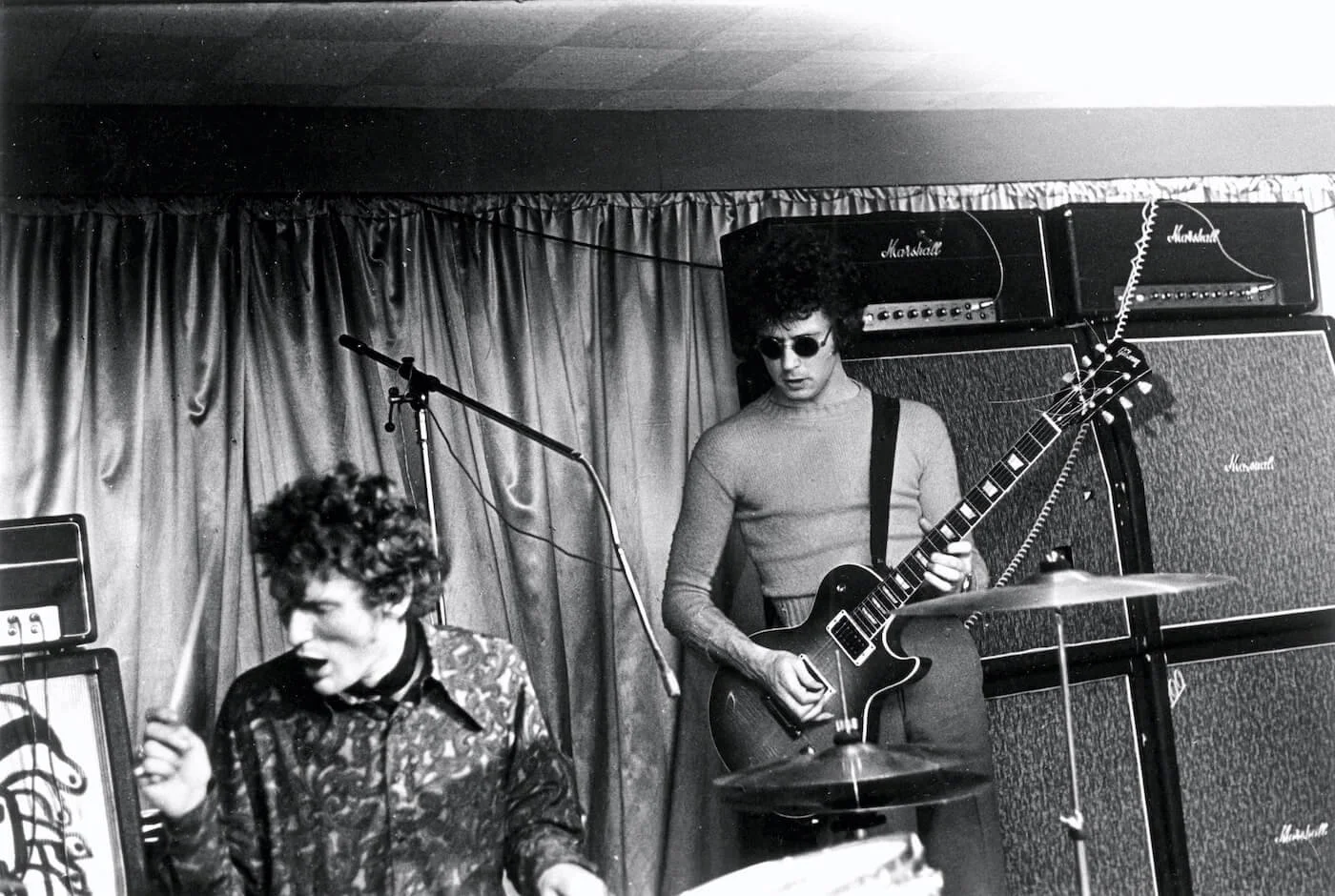
While the Beatles led the charge in melodic innovation and pop sophistication, a parallel current within the British Invasion drew directly from American electric blues. For many young British musicians in the early 1960s, the sounds of Muddy Waters, Howlin' Wolf, B.B. King, and John Lee Hooker offered something that was missing from the polished pop dominating UK radio. In postwar Britain, where many working-class youth felt alienated from mainstream culture, the blues offered both an expressive outlet and a sense of authenticity that spoke directly to the struggles of everyday life.
Part of the appeal lay in the music's directness. Repetition and improvisation mattered more than studio polish, and vocal roughness replaced clean pop timbre in stark contrast to the carefully produced pop songs popular in the UK. The blues also seemed remote and mysterious, carrying an exotic appeal to these British youths. American blues records were scarce in England, often passed around among fans like contraband. This scarcity added to their allure, and young guitarists studied the recordings obsessively, emulating their tone, phrasing, and rhythmic feel. Welcoming the genre's emotional directness and sonic power, these musicians began adapting the blues to their own cultural context, giving rise to a distinctly British interpretation of the American tradition.
One early organizer of the British blues scene was John Mayall. His group, the Bluesbreakers, formed in 1962, focused on 12-bar structures and Chicago-style arrangements. Although the Bluesbreakers never had major commercial success in the United States, they were essential to the evolution of British rock. Their lineup became a proving ground for a generation of talent: Eric Clapton, fresh from the Yardbirds, joined Mayall and honed a reputation for technical mastery with a precise vibrato. Future Rolling Stones guitarist Mick Taylor, along with Peter Green, John McVie, and Mick Fleetwood—all later of Fleetwood Mac—also passed through the Bluesbreakers' ranks. The group's focus on traditional blues techniques imparted a sense of blues integrity that resonated with serious players and listeners alike.
However, many blues-based bands translated blues techniques into pop music, and few bands illustrate the transition from traditional blues to innovative rock as clearly as the Yardbirds. Formed in 1963, the group began as a rhythm-and-blues band that drew directly on American electric blues. They quickly attracted attention for their energetic live performances and soon became known for launching the careers of three of rock's most influential guitarists: Eric Clapton, Jeff Beck, and Jimmy Page.
Eric Clapton joined the Yardbirds during their early period and brought strict adherence to earlier blues phrasing and repertoire. He studied the phrasing and technique of American artists like Robert Johnson and Freddie King, translating their sound into a precise and expressive guitar style. Clapton's dedication helped establish credibility with audiences attuned to claims of American blues authenticity, but it also put him at odds with the band’s move toward more commercial music. When the group released"For Your Love" in 1965, a pop-oriented single with a softer, more radio-friendly sound, Clapton left the band. He believed the song strayed too far from their blues foundation and soon joined John Mayall's Bluesbreakers, where he continued to refine his traditional blues approach.
Guitarist Jeff Beck stepped in and introduced a bold, experimental sound that expanded the band's musical identity. He incorporated distortion, feedback, and other sonic effects that added texture and unpredictability to their recordings. Beck's work on "Shapes of Things" opened new directions in guitar-driven music, connecting the blues with emerging psychedelic and hard rock styles. His inventive techniques extended the role of amplified guitar within British rock performance.
For a brief period, Beck shared the stage with former session player Jimmy Page, who initially joined the band as a bassist before moving to lead guitar. After Beck's departure, Page became the group's central creative figure. He emphasized a heavier, more riff-based sound as he built on the band's signature use of extended instrumental sections known as "rave-ups." These energetic repeated figures and gradual intensification laid the groundwork for the extended solos and dramatic contrasts that would subsequently define Page's work with his band Led Zeppelin.
The Yardbirds' catalog reflected their evolution. Songs like "I’m a Man" and "Heart Full of Soul" retained blues elements, while "Over Under Sideways Down" and "Happenings Ten Years Time Ago" ventured into more experimental and psychedelic territory. Although the group disbanded in 1968, its members pursued different directions after the breakup. Clapton, Beck, and Page each carried forward different aspects of the band's musical direction. Beck explored jazz-rock fusion; Clapton deepened his exploration of blues and roots music but eventually joined the psychedelic scene with the band Cream; and Page channeled the Yardbirds' heavier instincts into the formation of Led Zeppelin.
The Rolling Stones

Formed in London in 1962, the Rolling Stones emerged from a thriving rhythm-and-blues scene centered on venues like the Ealing Club, which hosted jam sessions led by blues advocate Alexis Korner. Childhood friends Mick Jagger and Keith Richards reconnected through their shared passion for American R&B and rock-and-roll records. Jagger sang with Korner's Blues Incorporated, while Richards honed his guitar skills by emulating Chuck Berry's riffs. Brian Jones, performing as originally under the name Elmo Lewis, was also part of this scene, experimenting with bottleneck guitar and blues saxophone. Together with pianist Ian Stewart, bassist Dick Taylor, and drummer Mick Avory, they formed the Rolling Stones—named after Muddy Waters's song "Rollin' Stone."
The band made its debut at London's Marquee Club in July 1962 and quickly gained a devoted following. As the lineup solidified, Bill Wyman replaced Taylor on bass, and jazz drummer Charlie Watts joined permanently. With their gritty sound, wild stage presence, and unkempt look, the Stones stood in sharp contrast to the Beatles' polished image. Manager Andrew Loog Oldham, who began mentoring them in 1963, encouraged them to create a public persona around rebellion and sexuality. Despite only being nineteen years old and inexperienced in the studio, Oldham became their producer and encouraged the band to embrace their raw, outsider identity. Early press coverage cast them as dangerous and subversive; one critic labeled them "five indolent morons who seem to enjoy wallowing in the swill-tub of their own repulsiveness."
In 1963, the Stones signed with Decca Records under terms that allowed them to retain ownership of their recordings and gave them extended studio time—an unusual arrangement for a new band. While The Beatles' early recordings featured covers by songwriters like Carole King and Gerry Goffin, as well as Smokey Robinson and Berry Gordy, the Stones sought out the sound of blues pioneers such as Muddy Waters, Howlin' Wolf, Bo Diddley, Jimmy Reed, and the rock-and-roll pioneer Chuck Berry. Their early singles included covers of Chuck Berry's "Come On" and Willie Dixon's "I Want to Be Loved." They also recorded"I Wanna Be Your Man," a Lennon-McCartney song that helped raise their profile. Although the band briefly appeared on television in coordinated suits, they quickly abandoned this look in favor of casual, mismatched clothing that reinforced their rebellious image.
Throughout their early career, the Rolling Stones positioned themselves as the grittier, darker counterpart to the Beatles. Where the Beatles embodied charm and musical refinement, the Stones embraced chaos, raw emotion, and sexuality. Fans often aligned themselves with one band or the other, and by the late 1960s, the question "Are you a Beatle or a Stone?" became a shorthand for broader musical and cultural identities. By 1964, their performances had grown more sexually charged and their sound more assertive. Their debut album, The Rolling Stones, leaned heavily on American blues and consisted of blues and R&B covers by artists such as Bo Diddley, Jimmy Reed, and Slim Harpo. Jagger's vocals delivered a swaggering, sensuous tone that became central to their style. Tracks such as "I'm a King Bee" and "Little by Little"showcased the band's skill in blending blues traditions with a more aggressive rock sensibility.
However, Oldham recognized that for the band to achieve any semblance of lasting success, they required original songs. Taking matters into his own hands, he locked Jagger and Richards in a room until they produced new material. This effort yielded "As Tears Go By," initially given to Marianne Faithfull, and their breakthrough single "The Last Time," which reached number one in the UK in 1965. Over time, Jagger and Richards evolved from reworking blues standards into crafting complex, riff-driven songs with lyrics expressing frustration and alienation.
The Rolling Stones Join the British Invasion

The Stones officially joined the British Invasion with their first U.S. and Canadian tour in June 1964. At that point, their single "Not Fade Away," backed with "I Wanna Be Your Man," had only just begun to register on the American charts. When they arrived at Kennedy Airport, only a few hundred fans greeted them—far fewer than the massive crowds that welcomed the Beatles. While the Beatles enjoyed primetime exposure on The Ed Sullivan Show, the Stones were booked on lower-profile television programs. Their appearance on Dean Martin's The Hollywood Palace was notably dismissive, with Martin mocking both their music and their long hair. In Omaha, Nebraska, they played to just 600 fans in a venue that could hold 15,000. The Stones' initial efforts to challenge Beatlemania in the U.S. largely fell flat, except for a few sold-out shows at Carnegie Hall in New York City.
Despite the rough start, the tour was not without its rewards. The band made a significant stop in Chicago, the birthplace of much of their musical inspiration. There, they met legendary figures like Muddy Waters, Chuck Berry, and Willie Dixon. The Stones also recorded their cover of "It's All Over Now" at Chess Studios, linking them directly to the rich tradition of Chicago blues.
Later in 1964, the Stones toured Europe before embarking on a more successful second U.S. tour, which included an appearance on The Ed Sullivan Show. During this tour, Mick Jagger was impressed by a James Brown performance that created a lasting impression on him. Inspired, Jagger incorporated Brown's energetic dance moves into the band's stage act, adding a new dynamic to their live shows. The Rolling Stones' rough, rebellious image may have slowed their acceptance in America at first. However, by late 1964, they were gaining traction. Their subsequent U.S. tours were increasingly popular, and the press covered plenty of stories about their scandalous behavior, which only fueled their growing reputation as rock's bad boys.
During the Rolling Stones' second American tour, they swiftly drew notice from the American teenage market, not only for their music but also for their wild and often scandalous behavior. With hits like "Get Off of My Cloud,""19th Nervous Breakdown," and "Let's Spend the Night Together," the Stones firmly established themselves as the rebellious counterpart to the Beatles. Earlier that year, in January 1965, the band released their second album, 12 X 5, which leaned heavily on the R&B and blues roots that informed their early sound. Singles such as "Time Is on My Side" reached number six in the United States, while "The Last Time" topped the charts in the UK and entered the American top ten. By spring, the Stones had achieved an impressive feat, holding the top single, EP, and LP positions in Britain, and they were poised to make a significant impact on the U.S. market.
During their third U.S. tour in spring 1965, the Stones appeared again on prominent television programs such as The Ed Sullivan Show and the youth-oriented Shindig. It was during a break in a motel room that Keith Richards began playing a catchy guitar riff, which inspired Mick Jagger to improvise lyrics on the spot. This collaboration produced "(I Can't Get No) Satisfaction," a song that rapidly became a number-one hit. Though the lyrics provoked controversy—some interpreted them as a reference to masturbation, others to general sexual frustration—Jagger explained that the song expressed a more general sense of dissatisfaction, encompassing sexual, artistic, and spiritual frustration experienced by a band constantly on tour.
Released in the summer of 1965, "(I Can't Get No) Satisfaction" represented a major step forward in the Rolling Stones' songwriting and musical direction. Built around a now-iconic guitar riff by Keith Richards, the song opens with a simple melodic figure that gradually builds as bass, drums, and acoustic guitar enter. Richards originally recorded the distorted riff using a Gibson Maestro fuzzbox—a small effects unit that alters the guitar's signal to create a gritty, buzzing tone—intended as a placeholder for a planned horn section. The horns were never added, and the fuzz-laden guitar line became the song's central hook.
The song is structured in verse-chorus form, with each section anchored by the relentless repetition of the central riff. Jagger's vocal delivery shifts between weary cynicism and explosive frustration. In the verses, he critiques the empty promises of modern consumer culture—"useless information" on the radio and a TV ad man who "can't be a man ’cause he doesn’t smoke the same cigarettes as me." The lyrics also hint at the personal toll of fame, addressing sexual rejection, fatigue, and emotional distance during touring life. The line about not getting any "girl reaction" drew controversy for its suggestive implications, prompting TV censors to alter the lyrics for the band's appearance on Shindig!.
Musically, the song relies on repetition and restraint rather than harmonic complexity. The driving rhythm, fuzz-drenched riff, and escalating vocal energy generate tension without relying on complexity. In its final seconds, Jagger can be heard improvising a few bluesy vocal lines, a nod to the band's roots in American rhythm and blues. The track closes with a quiet repetition of the refrain, abruptly ending in a final shouted phrase that fades out. At the time, the song's defiant lyrics and raw sound unsettled more conservative listeners. "Satisfaction" was widely perceived as a challenge to the cultural status quo, supporting the Stones' reputation as dangerous, provocative, and unapologetically modern.
Behind the scenes, the Rolling Stones' business operations started to change with the arrival of Allen Klein as their new business manager. His appointment allowed Andrew Loog Oldham to focus more fully on the band's creative direction. Klein, already known for managing prominent acts like the Animals, Donovan, and Herman's Hermits, brought a reputation for aggressive deal-making and sharp financial acumen. While effective, his cutthroat approach made him a controversial figure. The Stones' biographer Philip Norman quipped that "a piranha might conceivably have the edge in politeness." Despite resistance from Oldham's partner, Eric Easton, Klein's control over the band's business affairs quickly grew, sparking legal disputes and heightening tensions within the group.
In December 1965, the Rolling Stones released December's Children (And Everybody's) just in time for the holiday season. The album featured "Get Off My Cloud," a chart-topping single that further extended the band’s chart presence and media visibility. Yet behind the scenes, Brian Jones's personal decline was accelerating. Though he had been the group's original artistic leader, his influence diminished as Jagger and Richards took creative control through their increasingly successful songwriting partnership. Still, Jones remained essential to the band's early sound, contributing slide guitar, harmonica, and other instrumental textures that deepened their blues interpretations. As his drug and alcohol use escalated, Jones began missing sessions—including the one for "Satisfaction." Contemporary accounts describe his home filled with hashish and marijuana, and his behavior turning erratic. He grew paranoid, convinced the other band members were conspiring against him. The introduction of LSD worsened his condition; on one occasion, he refused to enter the studio, claiming it was infested with black beetles.
Aftermath

Released in 1966, the album Aftermath was a creative breakthrough for the Rolling Stones. It was their first album composed entirely of original material by Mick Jagger and Keith Richards, displaying the band’s evolving sound and growing artistic confidence. The album also highlighted Brian Jones’s increasingly adventurous approach to instrumentation. Moving beyond guitar and harmonica, Jones expanded the group’s sonic palette by incorporating the melodic percussion of the marimba on “Under My Thumb,” the strumming of the Appalachian dulcimer on “Lady Jane,”and the Indian sitar on “Paint It, Black.” Inspired in part by George Harrison’s earlier explorations with Indian instruments, Jones’s sitar added a dark, exotic texture that deepened the song’s brooding and hypnotic atmosphere.
“Paint It, Black” became one of the Stones’ most iconic hits, reaching number one on both the U.S. and UK charts. The track opens with a droning sitar line layered over a steady rhythm section and a descending bass line, producing an Eastern-influenced texture built on drone and rhythmic repetition. Jagger’s vocals enter with lyrics that serve as a stark meditation on grief, alienation, and emotional numbness. The song’s minor harmonies and modal shifts—especially the use of the dark and tense Phrygian mode—heighten its sense of psychological tension and despair. With “Paint It, Black,” the Stones embraced psychedelic sensibilities and global musical influences, signaling a decisive shift from their earlier blues-rooted style toward more experimental and evocative sonic territory.
Despite their creative growth, the mid-1960s were marked by increasing controversy. Their 1967 album Between the Buttons included the hits “Ruby Tuesday” and “Let’s Spend the Night Together,” the latter of which drew criticism for its overt sexual themes. The album reached number three in the UK and number two in the U.S., and would be Andrew Loog Oldham’s final project as the band’s producer.
In early 1967, British tabloid News of the World launched a three-part exposé titled “Pop Stars and Drugs: Facts That Will Shock You,” which triggered a wave of legal trouble for the Stones. The second installment targeted the band directly, falsely accusing Mick Jagger of drug possession due to mistaken identity—the reporter had actually witnessed Brian Jones. Jagger filed a libel suit, but the damage was done. On February 12, Sussex police, tipped off by the paper, raided a party at Keith Richards’ Redlands estate. Although no arrests were made immediately, Jagger, Richards, and art dealer Robert Fraser were soon charged with drug offenses. Andrew Oldham, fearing arrest, fled to the United States. While awaiting the fallout, Jagger, Richards, and Jones traveled to Morocco with singer Marianne Faithfull, Anita Pallenberg (Jones’s girlfriend), and others. The trip turned personal when Pallenberg left Jones for Richards, creating a permanent rupture in Jones’s relationship with the band. Richards later acknowledged, “That was the final nail in the coffin with me and Brian. He’d never forgive me for that.”
On May 10, the day of the Redlands arraignment, police raided Jones’s home and charged him with cannabis possession. By mid-1967, three of the five Stones were confronted with legal battles. Jagger and Richards were convicted in June: Jagger received a three-month sentence for possessing amphetamines, while Richards was sentenced to one year for allowing cannabis use on his property. Both were briefly jailed before being released on bail pending appeal.
The harsh sentences sparked a cultural backlash. The Times ran an editorial titled “Who Breaks a Butterfly Upon a Wheel?” criticizing the disproportionate punishment. As a gesture of gratitude toward fans, the Stones released “We Love You,” which opened with the clang of prison doors and included references to writer Oscar Wilde’s 1895 libel trial after he was accused of sodomy. On July 31, the appeals court overturned Richards’ conviction and reduced Jagger’s to a conditional discharge. Jones’s trial followed in November. In December, he received a £1,000 fine and three years’ probation, with an order to seek professional help.
Their Satanic Majesties Request

Their Satanic Majesties Request (1967) was the Rolling Stones’ foray into psychedelic music, filled with studio effects, dissonant textures, and layered instrumentation associated with psychedelic pop. Often interpreted as a reply to the Beatles’ Sgt. Pepper’s Lonely Hearts Club Band, the album came together quickly, with the band eager to produce a comparable statement (See the chapter on Psychedelic Rock). The recording sessions, though, were troubled. Brian Jones frequently slept through takes, and when he did participate, his playing was sometimes so unreliable that the others quietly unplugged his guitar. One of the album’s most memorable tracks, “She’s a Rainbow,” opens with an ascending piano figure followed by a turnaround that returns throughout the song. The Mellotron and string parts enrich the middle eight, giving the track a playful, almost storybook tone. That spirit continues near the end, where the strings drift out of tune and out of key, while the band adds childlike “La La” vocals.
The album’s original cover concept was provocative and controversial. One proposed image depicted Mick Jagger naked on a cross but was rejected by the record company as being “in bad taste.” Instead, the initial LP featured a distinctive three-dimensional lenticular cover designed by photographer Michael Cooper. When viewed at a certain angle, this image showed the band members’ faces turning toward one another, except for Jagger, whose hands were crossed in front of him. A closer look reveals a subtle, cheeky detail: the faces of the four Beatles are embedded within the design, reportedly as a playful response to the Beatles’ inclusion of a Shirley Temple doll wearing a “Welcome the Rolling Stones” sweater on their Sgt. Pepper’s cover.
Earlier that year, the Stones had released “We Love You,” an attempt to answer the Beatles’ anthem “All You Need Is Love.” Accompanied by a promotional film reminiscent of the Beatles’ pioneering work, the single reflected the ongoing friendly rivalry between the two bands; however, the song received mixed reviews. Upon its release in December 1967, Their Satanic Majesties Request met with commercial and critical disappointment. Even the Stones acknowledged that in both instances they had failed to “out-Beatle” the Beatles.
Learning from their misstep, the Stones returned to their roots with the 1968 single “Jumpin’ Jack Flash.” The track was a straightforward, R&B-influenced rock-and-roll song that dispensed with the psychedelic experimentation of their previous album. This was soon followed by the more lyrically complex “Sympathy for the Devil,” inspired by Marianne Faithfull’s recommendation of Mikhail Bulgakov’s novel The Master and Margarita, which tells the story of a suave Satan visiting Soviet Russia to observe the Russian revolution’s aftermath. The song appeared on their 1968 album Beggars Banquet, which also featured “Street Fighting Man,” a politically charged track that was banned in the U.S. because it was released during a period of intense civil unrest, including race riots and protests at that year’s Democratic National Convention.
Meanwhile, Brian Jones’s personal and legal troubles worsened. Arrested again on drug charges, he faced mounting difficulties securing a U.S. work permit ahead of the band’s upcoming American tour. His deteriorating mental and physical health rendered him more of a liability than an asset. Mick Jagger, Keith Richards, and Charlie Watts made the difficult decision to part ways with Jones, presenting the split as temporary. Jones, meanwhile, feigned optimism about pursuing solo projects or collaborating with other British groups.
The Stones brought in Mick Taylor, a guitarist from John Mayall’s Bluesbreakers, to fill the vacancy left by Brian Jones. Taylor’s public debut was set for a free concert at Hyde Park, London, on July 5, 1969. Tragically, just days before the show, on July 2, Brian Jones was found dead in his swimming pool, with the official cause ruled as “death by misadventure.” Despite the shock, the Hyde Park concert went ahead as planned, drawing an estimated 250,000 fans. Footage from the event reveals a band struggling on stage—likely weighed down by Jones’s recent passing, their limited live experience, and the challenge of integrating a new guitarist.
Since their formation in 1962, the Rolling Stones have maintained a remarkably consistent presence in the music world, building a legacy as one of rock’s most enduring and influential bands. However, their reputation suffered a significant hit later in 1969 following the notorious Altamont Free Concert—an event marked by violence and tragedy that severely impacted the band’s public image. This episode is covered in greater detail in a later chapter.
After Brian Jones’s death, Mick Taylor’s addition proved crucial, as he contributed substantially to the band’s sound through the early 1970s. Taylor was eventually replaced on guitar by Ronnie Wood in 1975, who has been with the band ever since. Today, the Stones still feature two of the original five members—Mick Jagger and Keith Richards—who continue to lead the band creatively and perform live. The group also faced the loss of longtime drummer Charlie Watts, who passed away in 2021 after nearly six decades with the band. Despite these changes and challenges, the Rolling Stones continue to write new music, release albums, and tour globally for over half a century since the band began.
The Who

In postwar Britain, the late 1950s and early 1960s witnessed the rise of two competing youth subcultures: the Rockers and the Mods. These groups developed within different social and cultural milieus, yet both responded to postwar affluence and consumer culture, as youth gained public visibility and spending power. The Rockers, sometimes called ton-up boys or leather boys, were closely associated with motorcycle culture and 1950s American rock and roll. Their self-presentation centered on speed and a rugged, masculine image tied to rebellion. They rode British motorbikes like Triumphs and BSAs, aiming to hit “the ton” (100 mph), a rite of passage in the rocker scene. Their look, heavily influenced by films like The Wild One (1953) starring Marlon Brando, included black leather jackets, denim, chain wallets, and greased-back pompadours. Their music tastes gravitated toward early rockers such as Elvis Presley, Eddie Cochran, and Chuck Berry. Rockers projected an image of cultural defiance and a shared sense of outsider identity, one that was eagerly sensationalized by the British press.
In contrast, the Mods represented a more fashion-forward, urbane, and style-conscious youth movement. Short for “Modernists,” the term initially referred to fans of modern jazz, but by the early 1960s, it had evolved into a full-fledged subculture centered in London. Mods rejected the Rockers' leather-clad aesthetic and instead favored tailored Italian suits, narrow ties, button-down shirts, desert boots, and military-style parkas. These were practical for riding their preferred mode of transportation, the Vespa or Lambretta scooter, often decorated with a multitude of rearview mirrors and lights. Their musical tastes were more cosmopolitan, drawing from American soul, Motown, jazz, and R&B, as well as contemporary British beat groups. Coffee bars, unlike pubs, were central social hubs for Mods, offering late-night music, amphetamines, and a space where working-class and middle-class youth could mix freely.
The cultural divide between Mods and Rockers reached a breaking point in the spring and summer of 1964, when a series of violent clashes broke out in British seaside towns such as Brighton, Margate, and Clacton-on-Sea. These confrontations, which were largely exaggerated in scale by the British tabloid press, ignited a moral panic. Headlines warned of a youth culture run amok, while politicians and moralists decried the breakdown of British decency. In retrospect, many sociologists and historians view the panic as emblematic of broader anxieties about class, authority, and generational change in 1960s Britain.

Although the clashes began to subside by 1965, the Mod and Rocker rivalry became embedded in British popular memory. The Mod subculture, in particular, changed quickly. It expanded from its working-class jazz and soul roots to become a broader signifier of youth style and experimentation. London became the epicenter of this transformation, particularly in neighborhoods like Carnaby Street and Soho, where boutique fashion, live music clubs, and art movements such as Pop Art converged in the era known as Swinging London. Models like Twiggy and bands like The Small Faces and The Kinks became Mod icons, and the style began to be exported internationally, influencing American fashion and music scenes by the mid-1960s.
Amid the cultural ferment of early 1960s Britain, The Who emerged as a band uniquely suited to capture the spirit—and contradictions—of the Mod movement. With their sharp fashion sense and R&B-inflected sound, they became one of the most visible Mod bands. Yet their raw power, aggressive performances, and notorious habit of destroying instruments onstage also echoed the intensity and volatility often associated with Rocker culture. In this way, The Who straddled both worlds, bridging the tailored refinement of Mod style with the reckless fury of rock rebellion. They came to embody the musical experimentation and generational defiance that fueled Britain’s youth explosion.
Formed in London in the early 1960s, the band began as The Detours before briefly adopting the name The High Numbers to appeal to a Mod audience. Eventually, they changed their name to The Who and established their classic lineup: Pete Townshend on guitar, John Entwistle on bass, Roger Daltrey on vocals, and Keith Moon on drums. Each member presented a distinct onstage persona. Pete Townshend, the band’s primary songwriter, brought a sharp, intellectual edge to The Who’s music. His lyrics often explored themes of alienation, identity, and rebellion, reflecting his interest in literature and philosophy. Onstage, he introduced the now-famous “windmill” technique, swinging his arm in a circular motion to strike the guitar strings with force—a move that became one of rock’s most iconic visual trademarks. Roger Daltrey added a commanding presence as lead vocalist, often described as prowling the stage with the intensity of a lion. John Entwistle, known as “The Ox,” anchored the band with a stoic demeanor and virtuosic bass playing, his melodic lines frequently carrying as much weight as the guitar. Behind the drums, Keith Moon generated a sense of barely contained chaos. His playing was frenetic and unpredictable, yet always in conversation with the music. Together, their contrasting styles and distinct personalities created a powerful dynamic that set The Who apart from their peers.
The Who distinguished themselves musically through a blend of sonic innovation and intensity. With only one guitarist in the band, Pete Townshend developed a hybrid style that moved seamlessly between rhythm and lead. He favored powerful chords over traditional solos, using feedback, distortion, and dynamic shifts to transform the guitar into an expressive and sometimes destructive instrument. Keith Moon’s drumming filled the space left by the absence of a second guitarist. His playing was energetic and explosive, providing a wild contrast to John Entwistle’s intricately melodic bass lines. Together, Moon and Entwistle expanded the band’s sonic range and helped establish the power trio format that would later inspire groups like Cream, The Jimi Hendrix Experience, and punk rock groups like The Jam.
The Who’s fashion also reflected their connection to Mod culture. Early on, they wore sharp suits, Union Jack jackets, polka dots, and military-style coats. Townshend’s preference for boiler suits and Moon’s playful, often bold outfits accentuated their distinct personalities. Their style combined clean-cut looks with a rebellious edge, rooted in Mod ideals but always pushing boundaries. In an era where image mattered almost as much as sound, The Who delivered both.
The Who’s rise to prominence began with the 1965 single “My Generation,” which became a defining anthem for the Mod movement and the rebellious spirit of British youth. The song’s sharp melody and aggressive energy set it apart, while its most famous line—“Hope I die before I get old”—expresses defiance that appeals to many young listeners in the disaffected generation. Lead singer Roger Daltrey’s vocal delivery featured a distinctive stutter, imparting urgency and frustration to the lyrics. This stuttering style may have been inspired by blues musician John Lee Hooker’s “Stuttering Blues” or suggested to mimic the effects of amphetamines used by Mods. Regardless of its origin, the stutter became an iconic part of the song’s identity.
Musically, “My Generation” draws heavily from American rhythm and blues, particularly through its call-and-response structure. Daltrey sings a line, followed by backing vocals from Pete Townshend and John Entwistle echoing the refrain “Talkin’ ’bout my generation.” The instrumental section mirrors this interaction, with solos passing back and forth between Townshend’s guitar and Entwistle’s bass. Notably, the song includes one of rock’s earliest bass solos, performed by Entwistle on his Fender Jazz Bass. Keith Moon’s drumming adds a frenetic pulse, driving the song forward with explosive energy. The track ends not with a clean finish but a chaotic coda of feedback and noise, underscoring the band’s willingness to push sonic boundaries.
Their live shows gained a reputation for their intense destruction. An accidental moment, when Townshend struck his guitar against a low ceiling and broke the instrument, soon became a purposeful act incorporated into their shows. Moon followed by breaking his drum kit, and the band made this destructive finale a signature part of their performances.
One of The Who’s most memorable moments occurred in 1967 during their appearance on The Smothers Brothers Comedy Hour. At the end of the performance, Pete Townshend began to smash his guitars and destroy amplifiers while Roger Daltrey energetically slung his microphone around the stage. Keith Moon set off explosives in his bass drum, creating a dramatic blast that stunned the audience, singed Townshend’s hair, and reportedly contributed to his partial hearing loss in one of his ears. This event became emblematic of the band’s volatile mix of spectacle and danger.
While The Who had already gained success in Britain, their breakthrough in the United States came later that year with a powerful set at the Monterey Pop Festival. They followed this with the release of the psychedelic single“I Can See for Miles,” which marked their first major U.S. chart success. Their 1967 album, The Who Sell Out, cleverly parodied British pirate radio through fake commercials and jingles, ending with the ambitious mini-opera “Rael.” These theatrical ideas reached their peak in 1969 with Tommy, a rock opera telling the surreal story of a “deaf, dumb, and blind” pinball prodigy. Tommy demonstrated that rock music could be conceptually and narratively complex. By combining raw energy, musical innovation, and dramatic ambition, The Who established the basis for countless bands to follow, proving that rock could be explosive, stylish, thoughtful, and unapologetically loud.
The Kinks

The Kinks were formed in London in 1963 by brothers Ray and Dave Davies, and Pete Quaife, and are often cited as a major band of the 1960s. Active during the height of British rhythm and blues and Merseybeat, The Kinks were briefly part of the British Invasion in the United States until a 1965 touring ban limited their American presence. Musically, The Kinks drew from a wide range of influences. Their early sound was steeped in American R&B and rock and roll, characterized by driving rhythms and aggressive guitar riffs. However, as their career progressed, they incorporated distinctly British elements, such as music hall traditions, folk, and country influences. This fusion created a distinctly British rock style that reflected English culture and lifestyle with a keen eye for social observation and satire, chiefly through Ray Davies’s lyricism.
The band’s reputation for capturing English life was most evident in a series of critically acclaimed albums throughout the late 1960s and early 1970s, including Face to Face (1966), Something Else (1967), The Kinks Are the Village Green Preservation Society (1968), Arthur (Or the Decline and Fall of the British Empire) (1969), Lola Versus Powerman and the Moneygoround, Part One (1970), and Muswell Hillbillies (1971). These works combined sharp, lyrical storytelling with musical experimentation, often exploring themes of nostalgia, identity, and social change. Among their hit singles from this era was“Lola” (1970), a transatlantic success known for its catchy melody and provocative subject matter about a romantic encounter with a gender-nonconforming person,
The Kinks were early pioneers of a hard-edged sound that combined elements of rhythm and blues with distorted power-chord guitar riffs—most famously showcased in their 1964 breakthrough hit “You Really Got Me.” This aggressive, riff-driven style laid an important springboard for the development of hard rock and punk rock, influencing countless bands that followed. However, unlike many contemporaries, The Kinks evolved quickly beyond straightforward rock and roll. Their sound incorporated British music hall traditions, folk influences, and baroque pop, all infused with Ray Davies’s sharp, often ironic songwriting.
Pirate Radio

In the early 1960s, Britain’s radio airwaves were tightly controlled by the BBC, which adhered to a conservative programming style that largely overlooked the growing appetite for pop and rock music among young listeners. This void opened the door for unlicensed broadcasters—known as pirate radio stations—to fill the demand with fresh, energetic sounds that mainstream outlets neglected. Broadcasting from offshore ships and marine platforms just beyond British territorial waters, these stations skillfully sidestepped government regulations. Pirate radio swiftly evolved into a cultural force, reshaping music distribution and consumption and contributing directly to the popular music revolution of the decade. The term “pirate radio” itself had earlier origins in both Britain and the United States, where it described unauthorized land-based stations and powerful cross-border “border blasters.” For instance, the 1940 British comedy Band Waggon, centered on an unauthorized television broadcaster, repeatedly used the phrase “pirate station,” signaling its established place in popular culture well before the offshore boom.
A pioneering example of early cross-border broadcasting was Radio Luxembourg, based in the Grand Duchy of Luxembourg. Operating legally under a Luxembourg license, Radio Luxembourg transmitted English-language programs that reached audiences in Britain. Although the Wireless Telegraphy Act technically prohibited the reception of unauthorized broadcasts, which arguably included these signals. British authorities still considered Radio Luxembourg a “pirate radio station.” As a result, listeners were technically breaking the law by tuning in. However, the term ‘unauthorised’ was never legally defined, making it somewhat of a legal grey area. Despite this legal ambiguity, British newspapers freely published the station’s program schedules, and youth magazines like Fab 208 embraced its DJs and their lifestyles.

Building on this model, Radio Caroline emerged as the most iconic offshore pirate station, beginning broadcasts in 1964 from a ship anchored off the Essex coast. Founded by Ronan O’Rahilly, Radio Caroline sought to challenge the BBC’s monopoly, which at the time offered limited airtime to pop music and maintained a conservative programming style. The station delivered a continuous stream of contemporary pop and rock music to eager listeners, featuring American rock and roll, rhythm and blues, and emerging British acts. Its playlist included the Beatles, the Rolling Stones, Motown hits, and a growing number of psychedelic rock artists, many of whom were largely absent from official airwaves.
Radio Caroline’s success inspired a wave of similar stations, such as Radio Atlanta—which later merged with Caroline to form Radio Caroline North and South—Radio London, and Laser 558. These stations broadcast from ships just outside UK territorial waters, operating legally under international maritime law while remaining outlawed domestically. Their DJs, including influential figures like John Peel and Emperor Rosko, adopted a relaxed, freeform style inspired by American Top 40 radio, modeled after pioneers like Alan Freed. This approach fostered an energetic, intimate connection with listeners that differed markedly with the BBC’s formal delivery.
The impact of Radio Caroline and its peers broke the BBC’s broadcasting monopoly and challenged the conservative cultural gatekeepers. These stations played a crucial role in popularizing rock, pop, soul, and R&B across Britain and, indirectly, America. By providing a platform for emerging artists and new musical styles, pirate radio helped shape the soundscape of the 1960s and beyond. Their influence pushed the BBC to reform its programming. In 1967, the corporation launched Radio 1, adopting many former pirate radio DJs and embracing a format that directly catered to youth audiences.
Pirate radio’s ripple effect extended across the Atlantic, influencing American pop music by adding to the British Invasion. As British bands, popularized by pirate radio stations, gained international attention, American audiences became more receptive to new styles and sounds.
Chapter 18: Conclusion

British bands, emerging from a dynamic youth culture, brought new energy and perspective that challenged musical conventions of the early 1960s. Their fresh approaches to songwriting, performance, and visual identity helped redefine rock and pop music, seizing the attention of audiences across the Atlantic. Groups like The Beatles, The Rolling Stones, The Who, and The Kinks came to embody this cultural shift, setting the tone for a decade of rapid musical evolution.
While The Beatles and The Rolling Stones stood at the forefront, other groups expanded the reach and character of the British Invasion. Bands such as The Dave Clark Five, The Searchers, Herman’s Hermits, Gerry and the Pacemakers, and The Hollies brought polished, radio-friendly pop to American listeners. At the same time, The Animals, Manfred Mann, and The Zombies drew from blues and more experimental traditions, demonstrating the diversity and depth of British rock. Their collective impact reshaped the American music scene, showing that British artists could both reinterpret American styles and set new creative directions.
This wave of British success marked a period of change in the global music industry. British bands introduced bold production choices, distinctive fashion, and new attitudes that resonated with young listeners and expanded the scope of popular music. Their influence contributed to the rise of a more expressive and self-aware youth culture and to changes in social norms and new musical practices on both sides of the Atlantic.
The next chapter will turn to the American response. We will explore how U.S. musicians, audiences, and industry leaders reacted to the British Invasion, adapted to its influence, and forged a renewed musical identity. This transatlantic exchange between British innovation and American tradition helped define the sound of the 1960s and set the stage for the decades that followed.
Chapter 18: Further Reading
Babiuk, Andy. Beatles Gear. London: Backbeat Books, 2001.
Barna, Emilia. “‘There Are Places I’ll Remember …’: A Sense of Past and Locality in the Songs of the Beatles and the Kinks.” Budapest University of Technology and Economics. Academia.edu. Accessed May 28, 2021. https://bme.academia.edu/EmiliaBarna.
Best, Pete, and Patrick Doncaster. Beatle! The Pete Best Story. London: Plexus, 1985.
Braun, Michael. Love Me Do: The Beatles’ Progress. Harmondsworth: Penguin Books, 1962. Reprint.
Brunning, Bob. Blues: The British Connection. Poole: Blandford Press, 1986.
Brown, Pete. “Yardbirds Inside and Out.” Musician (1982): 88–98ff.
Clarke, P. F. Hope and Glory: Britain 1900–1990. London: Allen Lane, the Penguin Press, 1996.
Coleman, Ray. Clapton! An Authorized Biography. New York: Simon & Schuster, 1987.
Coleman, Ray. John Ono Lennon, 1967–1980. London: Sidgwick & Jackson, 1984.
Coleman, Ray. John Winston Lennon, 1940–1966. London: Sidgwick & Jackson, 1984.
Cooke, Deryck. “The Lennon-McCartney Songs.” The Listener, February 1, 1968.
Considine, J. D. “Clapton, Page, Beck.” Musician, February 1987, 82.
Cott, Jonathan. Let Me Take You Down: Penny Lane and Strawberry Fields Forever. Minneapolis, MN: University of Minnesota Press, 2024.
Cott, Jonathan, and Christine Doudna, eds. The Ballad of John and Yoko. New York: Rolling Stone Press, 1982.
Cox, Kathryn B. “‘What Happened to the Post-War Dream?’: Nostalgia, Trauma, and Affect in British Rock of the 1960s and 1970s.” PhD diss., ProQuest Dissertations & Theses, 2018.
Davies, Hunter. The Beatles: The Authorised Biography. London: Heinemann, 1968. 3rd ed. 1992.
Dawbarn, Bob. “Ray: The Patriotic Kink” and “How Kinky Are the Kinks?” Melody Maker, April 16 and May 28, 1966.
DiLello, Richard. The Longest Cocktail Party: An Insider’s View of the Beatles. Detroit: Plexus, 1983.
Ehrenreich, Barbara, Elizabeth Hess, and Gloria Jacobs. “Beatlemania: Girls Just Want to Have Fun.” In The Adoring Audience: Fan Culture and Popular Media, edited by Lisa Lewis, 84–107. New York: Routledge, 1992.
Emerick, Geoff. Here, There and Everywhere: My Life Recording the Music of The Beatles. New York: Gotham Books, 2010.
Epstein, Brian, with Derek Taylor. A Cellarful of Noise. Garden City, NY: Doubleday, 1964. 2nd ed. 1965.
Everett, Walter. The Beatles as Musicians: Revolver through The Anthology. New York: Oxford University Press, 1999.
Herman, Gary. The Who. London: Studio Vista, 1971.
Jagger, Mick, Keith Richards, Charlie Watts, and Ronnie Wood. According to the Rolling Stones. San Francisco: Chronicle Books, 2003.
Kofsky, Frank. “John Mayall.” Jazz and Pop, October 1968, 14–17.
Lester, Richard, dir. A Hard Day’s Night. Walter Shenson Films, Proscenium Films, 1964.
Lewisohn, Mark. The Complete Beatles Chronicle. London: Pyramid Books, 1992.
Lewisohn, Mark. The Complete Beatles Recording Sessions. London: Hamlyn, 1988.
Link, Geoffrey. “John Mayall: Into the Blues.” Down Beat 35, no. 11 (1968): 23, 41.
MacDonald, Ian. Revolution in the Head: The Beatles’ Records and the Sixties. London: Fourth Estate, 1994. 2nd ed. 1997.
Martin, George. All You Need Is Ears. New York: St. Martin’s Press, 1982.
Martin, George, with William Pearson. Summer of Love: The Making of Sgt. Pepper. London: Macmillan, 1994.
May, Chris, and Tim Phillips. British Beat. London: Studio Vista, 1974.
McCabe, Peter, and Robert D. Schonfeld. Apple to the Core: The Unmaking of the Beatles. London: Sidgwick & Jackson, 1972.
McCartney, Paul. The Lyrics: 1956 to the Present. New York: Liveright Publishing Corp, 2021.
Mellers, Wilfrid. Twilight of the Gods: The Beatles in Retrospect. London: Faber & Faber, 1973.
Melly, George. “British Pop Music.” In Revolt into Style, 23–124. London: Allen Lane, 1970.
Miles, Barry. Paul McCartney: Many Years from Now. London: Secker & Warburg, 1997.
Miles, Barry. The British Invasion: The Music, the Times, the Era. New York: Sterling, 2009.
Middleton, Richard. Pop Music and the Blues. London: Gollancz, 1972.
Moore, Allan F. The Beatles: Sgt. Pepper’s Lonely Hearts Club Band. Cambridge: Cambridge University Press, 1997.
Norman, Philip. Shout! The Beatles in Their Generation. London: Hamish Hamilton, 1982.
Perone, James E. Mods, Rockers, and the Music of the British Invasion. Westport, CT: Praeger Publishers, 2009. https://doi.org/10.5040/9798400687051.
Platt, John, Chris Dreja, and Jim McCarty. Yardbirds. London: Sidgwick & Jackson, 1983.
Richards, Keith. Life. New York: Little, Brown and Company, 2010.
Rogan, Johnny. The Kinks: The Sound and the Fury. London: Omnibus Press, 1984.
Salewicz, Chris. McCartney. New York: Futura, 1986.
Savage, Jon. The Kinks. London: Faber & Faber, 1984.
Schumacher, Michael. Crossroads: The Life and Music of Eric Clapton. New York: Hyperion, 1995.
Sheffield, Rob. “The Beatles’ Acid Test: How LSD Opened the Door to ‘Revolver.’” Rolling Stone, August 25, 2016. https://www.rollingstone.com/feature/beatles-acid-test-how-lsd-opened-the-door-to-revolver-251417/.
Smith, P.J. “Brit Girls: Sandie Shaw and the Women of the British Invasion.” In She’s So Fine: Reflections on Whiteness, Femininity, Adolescence and Class in 1960s Music, edited by Laurie Stras, 137–62. Farnham: Ashgate, 2010.
Spitz, Bob. The Beatles: The Biography. London: Aurum, 2007.
Spizer, Bruce. Beatles Records on Vee-Jay. New Orleans: 498 Productions, 1998.
Spizer, Bruce. The Beatles’ Story on Capitol Records. New Orleans: 498 Productions, 2000.
Taylor, Derek. It Was Twenty Years Ago Today. London: Sphere, 1987.
The Beatles. Anthology. San Francisco: Chronicle Books, 2000.
The Beatles. Complete Scores: Full Transcriptions from the Original Recordings: Every Song Written & Recorded by the Beatles. Chicago: Hal Leonard, 1993.
Tremlett, George W. The Who. New York: Warner Books, 1975.
Ward, Stuart. British Culture and the End of Empire. Manchester: Manchester University Press, 2001.
Wenner, Jann S. Lennon Remembers: The Rolling Stone Interviews. London: Verso, 1973.
Wyman, Bill. Stone Alone: The Story of a Rock ‘n’ Roll Band. New York: Viking, 1990.