Chapter 6: The Birth of Jazz

Chapter 6: Introduction

New Orleans, Louisiana, occupied a distinct position among American cities at the turn of the twentieth century. As a port city at the mouth of the Mississippi River, New Orleans was a major port for river traffic, international trade, and immigration, attracting people from across the United States and around the world. Its history as a former French and Spanish colony, combined with the legacy of slavery and Southern Reconstruction, gave rise to a diverse population that included Black Americans, white Americans, and Creoles of color (people of mixed African and European ancestry), as well as Creoles of French and Spanish descent and immigrants from the Caribbean and Europe. These communities lived in proximity, and despite the racial segregation codified by Jim Crow laws, musical ideas and traditions frequently crossed boundaries in ways that laws and social norms did not. New Orleans' diverse social fabric contributed to the formation of a pluralistic musical culture in which European harmony, African rhythm, Caribbean syncopation, and American folk traditions mingled freely.
In this outdoor, highly social society, music accompanied public gatherings throughout the day and night. Social organizations and community groups often had their own marching bands to provide music for parades, dances, funerals, and political events. These groups included Black mutual aid societies, benevolent associations, labor unions, fraternal lodges, and neighborhood clubs, as well as white ethnic fraternities, such as Italian or Irish societies, which also maintained their own bands to accompany their community celebrations. These ensembles supplied music for formal events and informal street gatherings. Bands were hired to advertise prizefights, played outside department stores during sales, and performed at ball games and community picnics. They also entertained passengers aboard riverboats who traveled up and down the Mississippi and carried their repertory to other river cities.
The city's economy also supported this musical abundance. New Orleans was a manufacturing hub for wind instruments, and after the Spanish-American War in 1898, the city was flooded with surplus cornets, clarinets, trombones, and drums. These instruments, often found in pawnshops and second-hand stores, were easily accessible and affordable to aspiring musicians, making informal ensembles and street bands that improvised more common. A typical street band might consist of five to ten players, with rotating lineups and guest musicians joining in as needed. These bands often performed versions of Tin Pan Alley hits, ragtime pieces, folk tunes, or hymns.
The brass band tradition had deeper historical beginnings in the city's war-time past. During the War of 1812, the Battle of New Orleans in 1815 represented a decisive American victory under the leadership of the future president Andrew Jackson and left the city teeming with military activity. Musicians who served in military bands often remained in the area after the war, contributing their training and instruments to the civilian music scene. Later, during the Civil War, New Orleans was occupied by Union forces in 1862. The presence of both Confederate and Union armies introduced a large number of military band instruments into the region, as both armies regularly kept musicians in their ranks to perform military marches. After battles or troop withdrawals, civilians would salvage the instruments left behind on the battlefield or in abandoned encampments. These instruments found their way into the hands of local musicians, many of whom were African American or Creole, who adapted them into street bands, funeral processions, and public parades. The fusion of military and vernacular traditions helped lay the foundation for the brassy, improvisational sound that would later be associated with early jazz repertory.
Jazz emerged from this dynamic cultural milieu as a hybrid musical form that combined ragtime's syncopation, the blues' expressive phrasing and 12-bar form, brass band instrumentation, and the harmonic and structural language of European music. It was both a product of cultural fusion and a form of resistance, providing Black musicians with a paid platform for artistic expression and innovation during an era of racial oppression and limited opportunities.
Although we know which musical traditions combined to create jazz, the origin of the word "jazz" remains unclear. Some believe it may come from a Creole word meaning "to speed up." Others suggest it is a corruption of the bawdy Elizabethan word "jass," meaning "to copulate with." In fact, the original spelling of the word was "jass" and did not become "Jazz" until the Original Dixieland Jass Band changed its name in late 1917. The term was changed because the Original Dixieland Jass Band trumpeter, Nick LaRocca, believed that children and some adults could not resist the temptation to scratch the letter "J" from their posters. Still others maintain it is Cajun slang for "jazz belle", a variation on Jezebel, the infamous biblical queen associated with seduction, idolatry, and moral transgression. What is certain is that the word did not originate in a polite society. It surfaced from the margins, from working-class communities and entertainment districts, expressing the gritty and rebellious spirit of the music itself.
Storyville

One unique factor that contributed to the rise of jazz in New Orleans was the city government’s approach to vice and entertainment. At the turn of the 20th century, prostitution was legal in New Orleans because city leaders such as Sidney Story persuaded municipal officials to legalize prostitution within a designated district to confine it to a controlled area. The zone covered sixty-four square blocks, bordered on the north by Robertson Street and on the south by Basin Street. Although Story intended the district to be regulated and discreet, it quickly developed an energetic and notorious reputation. Much to his embarrassment, the area was nicknamed Storyville and became a hub of late-night activity with saloons, gambling halls, cabarets, and most evidently, brothels. These establishments thrived for nearly two decades until 1917, when the U.S. Navy banned houses of prostitution within five miles of a military base. Because New Orleans was a major naval port during World War I, Storyville was effectively shut down.
Music played a central role in Storyville's atmosphere. Most brothels employed piano players who provided live entertainment for their guests, performing a mix of ragtime, popular Tin Pan Alley songs, and the blues. In more upscale establishments, small bands of three or four musicians would accompany the entertainment, offering lively, improvisational music that blurred the lines between formal composition and spontaneous creativity. Several influential jazz musicians got their early start in Storyville. Among them were Buddy Bolden, often considered one of the first true jazz musicians, and Jelly Roll Morton, who famously claimed to have invented jazz. These jobs gave young musicians regular performance work and space to test repertory and technique. Although often remembered for its illicit reputation, Storyville played a vital role in the birth and evolution of jazz, offering one of the first commercial spaces where this new music could develop organically and reach a broad, heterogeneous audience.
New Orleans Funeral Tradition

One of the most unique and culturally significant contributions to early jazz came from the New Orleans funeral tradition. On the way to the cemetery, the brass band would perform hymns and dirges in a slow, solemn, and reverent style. The music matched the solemnity of the occasion and was intended to help mourners process their grief. However, after the burial ceremony was completed, the return journey from the cemetery had a complete emotional shift. The same hymns would now be played at an upbeat tempo, often in a syncopated, ragtime-influenced style. The music’s new celebratory mood symbolized the idea that the deceased had been released from the burdens of earthly life and had passed into a state of peace or glory. The transformation of musical style from somber to spirited mirrored emotional contrasts later heard in early jazz performance.
Musicians often incorporated ragtime elements in their funeral marches, using steady bass patterns in the tuba or bass drum, wide leaps between notes in the lower voices, and syncopated melodies in the horns. These performances also featured an early form of double-time playing, in which a slow tune was played at twice the tempo while retaining the same harmonic rhythm, giving the piece new energy and character.
A distinctive feature of these funeral bands was the use of the tailgate trombone technique. Because some bands rode on flatbed wagons during the procession, the trombone player, whose instrument has a long slide, would be seated at the back of the wagon with the tailgate down, allowing space for the slide to move freely. Positioning the trombonist at the back of the wagon led to a performance style in which the trombone emphasized dramatic slides, smears, and scoops between notes, techniques that became hallmarks of Dixieland jazz. Today, the term tailgate trombone refers to this expressive, sliding style of jazz trombone playing. The jazz funeral tradition reinforced many musical values central to early jazz, including collective improvisation and rhythmic emphasis.
Musical Components of New Orleans Jazz

"...New Orleans jazz never forgot that jazz is dance music and jazz is fun…."
-Trombone Shorty
The earliest style of jazz to develop in the United States was New Orleans jazz, also known as Dixieland jazz. The New Orleans jazz style typically featured a small ensemble or combo made up of both melodic and rhythmic instruments. The melodic frontline typically included a trumpet or cornet, a clarinet, and a trombone. Each instrument had a distinct role: the trumpet played the main melody, the clarinet provided rapid, ornamental lines above the melody, and the trombone filled in the harmony below, often using slides, growls, or smears to add expression.
The rhythm section varied but usually included some combination of banjo, guitar, piano, tuba, upright bass, and drum set. The banjo and guitar, common in blues and folk traditions, provided rhythmic strumming and harmonic support. The piano added both rhythmic drive and harmonic color, especially in indoor venues. The tuba, or later the upright bass, anchored the ensemble with a steady bass line, while the drums kept time and added syncopated fills and accents. As in ragtime, the rhythm section played a steady beat while the melodic instruments layered syncopated phrases on top, creating the swinging, forward-driving sound that became a musical hallmark of early jazz.
The instrumentation of New Orleans jazz developed from a mix of cultural and musical traditions. The brass instruments, trumpet, trombone, and tuba originated from marching band music, which was closely tied to military and civic parades in New Orleans. The banjo and guitar were linked to rural blues and folk traditions, while the piano (though less prevalent due to its lack of portability) was common in middle-class homes and used in both classical and popular music.
The clarinet, however, entered the jazz ensemble through a different route. It came from the orchestral tradition, and many early New Orleans jazz clarinetists were Creoles of color, musicians of mixed French and African heritage. In the 19th century, Creoles of color often had legal status similar to that of whites, allowing them to receive formal musical training and to perform in theaters and professional orchestras. The legal status of Creoles of color changed changed after the Supreme Court's 1896 Plessy v. Ferguson decision, which upheld "separate but equal" segregation laws. Following this ruling, Creoles of color faced Jim Crow restrictions and were pushed out of classical venues. Many began performing alongside Black musicians in jazz settings, bringing their classical training and technical skills to the emerging genre. Their involvement helped introduce the clarinet and more formal Western musical practices and techniques into the New Orleans jazz ensemble.
The convergence of marching bands, blues, opera houses, and street parades gave New Orleans Jazz its distinctive character. The music was collaborative, improvisational, and deeply based in both African American musical heritage and the city's cultural diversity. It established the basis for the development of jazz throughout the twentieth century.
Most of the earliest jazz compositions were based on the 12-bar blues form, a fundamental structure in African American music discussed in previous chapters. To recap from Chapter 5, the 12-bar blues consists of 12 measures and follows a predictable harmonic progression using the I, IV, and V chords of a key. Its lyrics typically follow an AAB pattern and repeat in multiple cycles throughout a song. In jazz, each repetition of the 12-bar form is called a chorus. The jazz term "chorus" differs from the "chorus" or refrain in popular songs; in jazz, a chorus refers to one complete cycle of the form, during which a musician may play the melody, improvise a solo, or interact musically with other ensemble members.
The expressive techniques used by early jazz musicians drew directly from the blues tradition. Just as blues vocalists used blue notes, instrumentalists developed creative methods to mimic these sounds on their instruments. Jazz players bent, smeared, slurred, and slid between pitches, exploring the textural possibilities that their instruments offered. Some added vibrato or shakes to sustained notes to heighten urgency or drama. Others used plungers, mutes, or even vocal sounds such as humming or growling into their instruments to alter the tone color and expand the timbral range of their performances. The focus on timbre and tone color became one of the distinguishing characteristics of New Orleans jazz, setting it apart from the more rigid classical and military band traditions.
One vocal technique that became especially prominent in New Orleans jazz was scat singing, in which singers use nonsense syllables instead of lyrics to imitate the sounds of instruments. The scat singing style allowed vocalists to participate in the same kind of improvisational dialogue as instrumentalists, offering freedom to play with rhythm, pitch, and phrasing in real time. While scat singing has roots in earlier African American vocal traditions, Louis Armstrong is often credited with popularizing the technique and making it a central component of jazz singing. His improvisations demonstrated that the human voice could be as expressive and flexible as any instrument.
Louis Armstrong

Louis Armstrong (1901–1971) is widely regarded as one of the most influential musicians in jazz history and, perhaps, in all of American popular music. A virtuoso trumpeter, an expressive vocalist, and a charismatic performer, Armstrong became one of the principal architects of the sound of early jazz and built the foundation for its evolution throughout the 20th century. Born in New Orleans in 1901, Armstrong grew up in poverty but was exposed to the city's rich musical culture from a young age. After a brief stint in reform school, where he first learned to play the cornet, he began working with local brass bands and street ensembles, earning a respectable reputation around New Orleans. His major break came when he was invited to join Joe "King" Oliver's Creole Jazz Band in Chicago, a move that exposed him to a greater audience and set his professional career in motion.
From there, Armstrong moved to New York City to join Fletcher Henderson's orchestra, one of the most influential big band leaders of the time. On February 4, 1924, Armstrong married Lil Hardin Armstrong, King Oliver's pianist and a classically trained musician. Lil played a crucial role in guiding Armstrong's early career. Recognizing his immense potential, she encouraged him to develop his musical skills beyond performance. She taught him music theory and harmony and pushed him to adopt a more polished professional image. However, it was Armstrong's return to Chicago in 1925 that established him as a leading soloist in recorded jazz. That year, he began a series of groundbreaking recordings under his own name with a studio group known as the Hot Five (later the Hot Seven, depending on the session personnel). These recordings, made between 1925 and 1928, showcased Armstrong's extraordinary talent as a soloist. His trumpet playing, distinguished by a wide melodic range, a loud volume, and a brilliant tone, set a new standard for jazz improvisation.
Armstrong was equally influential as a vocalist. His warm, gravelly voice, use of expressive rhythm, and pioneering scat singing broadened the expressive range of jazz singing. His vocal phrasing often mirrored his trumpet improvisations, emphasizing playfulness, emotion, and spontaneity. One of his most enduring vocal recordings, "What a Wonderful World" (1967), continues to resonate with audiences today and has been prominently featured in films such as Good Morning, Vietnam(1987) and The Hitchhiker's Guide to the Galaxy (1981).
A quintessential example of Armstrong's impact on New Orleans jazz is his 1928 recording of "West End Blues" with his Hot Five. The piece begins with a now-famous unaccompanied trumpet introduction that immediately establishes Armstrong's technical prowess and expressive power. The recording unfolds in multiple choruses, each a 12-bar repetition of the blues form, featuring different soloists from the ensemble. One of these choruses features Armstrong's scat singing in a duet with the clarinet, a brilliant example of call-and-response. Throughout the track, timbre plays a central role. Armstrong's gritty vocal tone, the use of woodblocks, expressive trombone slides, and wide vibrato on sustained notes create a rich palette of sonic textures.
In Louis Armstrong's recordings, timbre is one of the most distinctive musical elements.. His gritty, textured voice, expressive scatted syllables, and the varied sounds of the ensemble, such as the woodblocks, long trombone slides, and wide vibrato on sustained notes, all contribute to an energetic and colorful soundscape. Each instrument has its own tonal identity, and Armstrong's arrangements regularly make full use of this variety.

Jazz musicians of this era also made creative use of mutes to alter the timbre of brass instruments. One common type is the plunger mute, which is literally the rubber end of a toilet plunger used to cover and uncover the bell of a trumpet or trombone. The plunger mute technique produces a sound that mimics wordless vocalizations, often described as a "wah-wah" effect, famously heard in the "voice" of the teacher in Charlie Brown cartoons. Plunger mutes and similar devices allowed performers to make their instruments speak, adding another expressive layer to the music. In Armstrong's performances and in early New Orleans jazz more broadly, special passages for soloists, innovative mute effects, and attention to tone color grew into key elements of the music’s personality.
Key Figures in New Orleans Jazz

Buddy Bolden (1877–1931)
Often referred to as the first major jazz musician, Charles "Buddy" Bolden was one of the earliest figures to develop an improvisational, blues-influenced style later adopted by early jazz musicians. Known as "King Bolden," he led one of the most celebrated bands in New Orleans at the turn of the century. Bolden was famous for his brilliant tone and powerful cornet playing, which, according to legend, could be heard from as far as twelve miles away on a quiet night. Eyewitnesses described his ability to "improvise endlessly" and stretch the melody in unanticipated ways, introducing a freer sense of rhythm that departed from the more rigid, composed structures of ragtime. Bolden referred to his music as ragtime, but his version featured strong syncopation and slurred, bent notes, supported by an aggressive rhythmic pulse that foreshadowed the sound of jazz.
Tragically, Bolden's career was cut short. In 1907, at the age of 30, he was institutionalized with what was then diagnosed as dementia praecox (now understood as schizophrenia), exacerbated by alcoholism. He spent the remaining twenty-four years of his life at the Louisiana State Insane Asylum in Jackson, never performing again. Due to his brief career, Bolden’s influence is difficult to document directly. Although he never recorded commercially, oral histories suggest he may have made a handful of wax cylinder recordings around 1905; none have been found. As a result, Bolden's music survives only in the memories of those who heard him and in the stylistic traits later described by musicians who witnessed his performances.
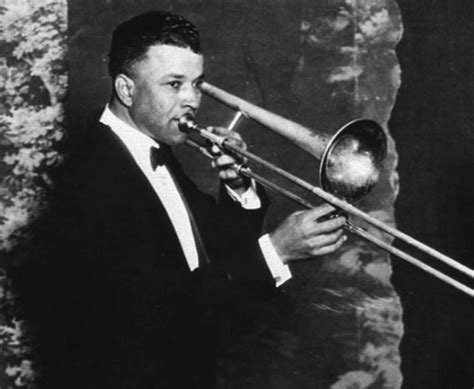
Kid Ory (1886–1973)
Edward "Kid" Ory was a versatile multi-instrumentalist who eventually made his mark as one of the most influential trombonists in early jazz. He organized his first band at the age of fifteen and quickly became a central figure in the New Orleans jazz scene. Ory was particularly known for his "tailgate trombone" style. Ory used glissandi or continuous slides between notes to imbue his playing with emotional richness and rhythmic punch. His robust tone and rhythmic drive anchored the band's harmonic framework, often strengthening the beat with counterlines and punchy fills that added propulsion to the music.
In 1919, Ory led one of the first African American jazz groups to make commercial recordings. He later moved to Chicago, where he played a vital role in the city's burgeoning jazz scene and collaborated with key figures such as Louis Armstrong. Ory contributed considerably to Armstrong's legendary Hot Five and Hot Seven sessions, helping to popularize the New Orleans jazz sound for a wider audience. His composition, "Muskrat Ramble," became a jazz standard that has since been widely covered by subsequent jazz musicians. Through his expressive playing and pioneering techniques, Kid Ory helped establish the trombone as an essential and dynamic voice in jazz.

Sidney Bechet (1897–1959)
Sidney Bechet was one of the first great soloists in jazz history and a significant influence on generations of clarinet and soprano saxophone players. Bechet, born into a Creole family of color in New Orleans, was classically trained and brought his orchestral background into the jazz world. He was famous for his mastery of double-time playing, executing techniques such as scoops, smears, and ornamental flourishes to build dramatic tension and accent key melodic notes. His attention to tone and timbral contrast added emotional richness and technical sophistication to his performances.
Bechet also contributed to the circulation of jazz outside the United States. He made his first trip to Europe in 1919 as part of Will Marion Cook's Southern Syncopated Orchestra, and his playing made a strong impression in London, where he was praised by classical musicians and critics alike for his virtuosity and unique sound. His most lasting impact, however, came in France. After several visits during the 1920s and 1930s, Bechet settled permanently in Paris after World War II. In postwar France, he became a national celebrity, recording prolifically, performing to sold-out crowds, and even starring in films. French audiences embraced jazz as both an exotic and sophisticated art form.
Bechet's popularity in France helped elevate jazz's status in Europe, where it was increasingly viewed as a serious artistic genre rather than as simple entertainment. Bechet's success abroad also illustrates how African American musicians often found greater respect, opportunity, and freedom in Europe than they did in the racially segregated United States.
Jelly Roll Morton
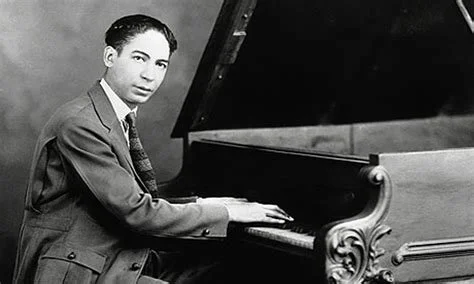
One of the most colorful and pioneering figures in early jazz, Ferdinand Joseph LaMothe, better known as Jelly Roll Morton (1890–1941), was born in New Orleans. He began playing the piano around the age of ten and, by his early teens, was performing ragtime in Storyville, the city's red-light district. His stage name, "Jelly Roll," a slang term for a woman's genitalia at the time, suited his ostentatious personality and his immersion in the nightlife culture, which strongly influenced early jazz. At age seventeen, Morton was reportedly kicked out of his family home for playing piano in the bordellos. From then on, he devoted himself entirely to music and entertainment, becoming not just a pianist and composer but also a vaudeville performer, pool hustler, hotel owner, boxing promoter, cosmetics entrepreneur, music editor, and recording executive. His life was as bold and wide-ranging as his musical output.
Between 1904 and 1917, Morton traveled extensively across the United States, playing in vaudeville and cabaret shows from the Gulf Coast to California. He moved to Chicago in 1922 and recorded his first sides in 1923. By 1926, Morton had formed his legendary band, Jelly Roll Morton and His Red Hot Peppers. He made a series of landmark recordings with Victor Records, including "Grandpa's Spells" and "Black Bottom Stomp." These studio sessions are considered among the finest examples of New Orleans jazz and showcased Morton's brilliance as a composer, arranger, and pianist.
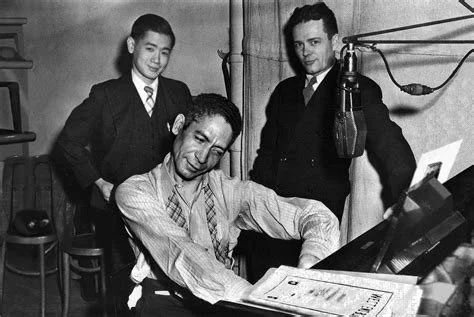
Though he famously claimed to have "invented jazz," a claim historians treat as an exaggeration rather than documentation, Morton's contributions to the development and dissemination of jazz are indisputable. His solo piano recordings, such as "King Porter Stomp" and "Tiger Rag," are considered masterpieces, and his compositions have been performed and reinterpreted by jazz musicians for generations. As musical styles shifted in the 1930s and Morton's career waned, folklorist Alan Lomax recognized his significance and invited him to the Library of Congress. There, in 1938, Morton recorded over 100 sides of music and oral history, creating an extraordinary archive that preserves his music and recorded his first-hand recollections of early jazz. Jelly Roll Morton died in Los Angeles in 1941, but his legacy lives on in the recordings, compositions, and larger-than-life stories that helped establish jazz as a distinct musical tradition.
New Orleans Jazz on the Move

The rich nightlife and musical vibrancy of New Orleans began to wane in the late 1910s, in part due to a series of military regulations, labor shifts, and urban policy changes. The closure of Storyville in 1917, mandated by the U.S. Navy, removed one of the city's key entertainment districts and a major venue for jazz performance. Just two years later, the Volstead Act of 1919 enforced national Prohibition, further suppressing the kinds of nightlife spaces where jazz had flourished. At the same time, the rural South experienced a more severe economic downturn. A devastating boll weevil infestation destroyed much of the cotton crop in the early 1920s, leaving thousands of people, both Black and white, unemployed. Faced with shrinking opportunities, many African Americans joined the Great Migration, seeking better lives in Northern cities where factories and urban industries promised work and stability.
One major destination for these migrants was the industrial powerhouse city of Chicago, which by the mid-1920s had become a new cultural and economic hub and the emerging epicenter of jazz in America. The musicians who relocated to Chicago, many with roots in New Orleans, brought with them the foundational elements of New Orleans jazz, but they also began to refine and expand the style to suit urban audiences and modern settings. Chicago jazz musicians introduced a more organized framework into their arrangements, including planned introductions and endings, as well as extended internal solos that allowed individual players to showcase their improvisational skills. The music became more harmonically adventurous with modulations and melodic interludes that added new levels of complexity. Rhythmically, the Chicago sound featured a lighter texture and a shift toward backbeat emphasis, placing strong accents on beats two and four of each measure. The backbeat emphasis contributed to the swinging, propulsive energy that would become central to later jazz and rhythm and blues styles. The tenor saxophone began to replace the clarinet as the leading melodic voice, while the trombone evolved beyond its traditional tailgate role to assume more melodic responsibilities.
Joe "King" Oliver

One of the dominant voices in Chicago jazz during this period was Joe "King" Oliver (1881-1938), a legendary New Orleans cornetist known for his expressive use of mutes and inventive improvisation. Born in New Orleans in 1881, Oliver began performing with local bands around 1907. By the mid-1910s, he had earned a reputation as one of the city's finest cornettists, celebrated for his expressive tone, inventive improvisation, and innovative use of mutes, techniques that allowed him to create vocal-like inflections and playful effects. In 1918, as opportunities in New Orleans began to decline, Oliver moved to Chicago, which quickly became the new epicenter of jazz. By 1922, he was leading his own ensemble, the Creole Jazz Band, at a popular cabaret. That same year, he invited his protégé Louis Armstrong, then a young cornettist in New Orleans, to join him in Chicago, creating a partnership that would become legendary.
Oliver performed at both the Lincoln Gardens and the nearby Dreamland Café, alternating sets between the two venues on foot. This arrangement helped build his reputation across Chicago's South Side and attracted large crowds keen to hear the now-famous two-cornet interplay between Oliver and Armstrong. Their performances included extended exchanges built around riffs and call-and-response, and daring improvisation that inspired musicians throughout the region. Many jazz artists traveled great distances just for the chance to hear them live perform.
In 1923, Oliver and his Creole Jazz Band made their first recordings at the Gennett Studio in Richmond, Indiana. These sessions were among the first major jazz recordings by African American musicians and had a lasting impact on the genre's development. One standout track, "Dippermouth Blues," features Oliver's signature use of plunger mutes and a jaunty, swinging solo that became widely imitated by other trumpeters during the 1920s and 1930s. Oliver continued performing in Chicago until 1927, when he moved to New York to freelance. Unfortunately, gum disease began to affect his ability to play, and he gave up the cornet altogether by the early 1930s. Despite this setback, Oliver continued to tour as a bandleader between 1930 and 1936, but his career suffered due to the Great Depression and a series of poor business decisions. In his final years, Oliver fell into poverty and died in Savannah, Georgia, in 1938, far from the fame and acclaim he had once known. Though his life ended in hardship, Oliver left a recorded model of ensemble playing and a muted cornet style, both taken up by later musicians. He helped bring jazz into the recording era, mentored Louis Armstrong, and left behind a model of ensemble playing and cornet improvisation that later musicians continued to build upon.
Recording Jazz

New Orleans jazz was one of the first American music genres to reach national audiences through commercial recordings. However, despite the genre's deep roots in African American musical traditions, the recording industry's racial biases meant that many of the earliest jazz recordings did not did not adequately recognize the contributions of Black musicians who helped create the form. Although artists like Louis Armstrong, Kid Ory, and King Oliver were already making waves in live performances by the 1910s, record companies were largely uninterested in recording Black musicians or marketing to Black audiences. As a result, very few recordings of African American jazz artists were made before the 1920s, and the first wave of jazz records featured predominantly white performers.
The first commercially successful jazz recording was made in 1917 by the Original Dixieland Jazz Band (ODJB), an all-white ensemble from New Orleans. The group was invited to perform in New York City in 1916, where their music quickly caught on with urban audiences. In 1917, they recorded "Livery Stable Blues" for Victor Records, a recording often cited as the first commercially released jazz record. "Livery Stable Blues" followed the 12-bar blues structure that was a hallmark of New Orleans jazz, but it also included a range of novelty sound effects, such as a trombone mimicking a cow's "moo" and a cornet imitating a horse's "neigh." These comic flourishes made the piece a crowd favorite and helped bring jazz into the national spotlight. While the members of the Original Dixieland Jazz Band were skilled musicians who played in the New Orleans style, their claim to be the inventors of jazz, a claim they themselves made, has been widely discredited. Musicians like Buddy Bolden, Jelly Roll Morton, Kid Ory, and others had been developing jazz well before ODJB's national debut. The ODJB's success led record companies to pursue jazz as a saleable genre, but it also set a pattern in which African American musical innovations were first popularized only to be often misrepresented by white performers.
Chapter 6: Conclusion

New Orleans jazz, the earliest form of jazz, materialized from a unique convergence of musical traditions, cultural exchange, geography, and race in the city of New Orleans. Drawing on influences such as ragtime, the blues, marching band music, and Creole classical training, the genre developed within a diverse urban setting where African American, Caribbean, and European musical practices blended freely. Musicians like Buddy Bolden and Kid Ory were among the first to develop the sound of early jazz, characterized by collective improvisation, syncopation, and expressive tone color.
As Storyville closed and economic pressures mounted in the South, jazz musicians migrated northward during the Great Migration, carrying the music to new cities and audiences. Chicago became the next major center of jazz, and it was there that artists such as Jelly Roll Morton, King Oliver, and Louis Armstrong rose to prominence. These musicians expanded the style through arranged compositions, extended solos, and new instrumentation, laying the groundwork for modern jazz.
Although jazz originated in African American communities, it was white musicians, such as the Original Dixieland Jazz Band, who made the first commercially successful recordings of the genre. Racial biases in the recording industry delayed widespread documentation of Black artists' contributions until the 1920s. When record companies finally began recording African American musicians more regularly, their work was often relegated to separate "race record" catalogs, limiting their commercial reach despite their widespread popularity. Ultimately, the story of early jazz is one of innovation, migration, and resilience. It is also a story of how African American cultural creativity shaped American music, often without receiving the recognition or support it deserved. Yet the spirit of New Orleans jazz continues to resonate in jazz traditions around the world.
Chapter 6: Further Reading
Armstrong, Louis. Satchmo: My Life in New Orleans. New York: Da Capo Press, 1954.
———, and Thomas Brothers. Louis Armstrong in His Own Words: Selected Writings New York: Da Capo Press, 2001.
Blesh, Rudi. Shining Trumpets: A History of Jazz. New York: Macmillan, 1946. Enlargeded., 1958.
Blesh, Rudi, and Harriet Janis. They All Played Ragtime. New York: Oak Publications, 1950. 4th ed., 1971.
Brunn, Harry. O. The Story of the Original Dixieland Jazz Band. Baton Rouge, LA: Louisiana State University Press, 1960. Reprint.
Charters, Samuel B. Jazz: New Orleans, 1885–1957. Belleville, NJ: Jazzology Press, 1958. Enlarged ed., 1963 (reprint).
Fischer, David B. “The Story of New Orleans’s Rise as a Music Center.” Musical America 19 (1914): 3.
Giddins, Gary. Satchmo: The Genius of Louis Armstrong. 2nd ed. New York: Da Capo=Press, 2001.
Gioia, Ted. The History of Jazz. New York: Oxford University Press, 2011.
Gushee, Lawrence. “How the Creole Band Came to Be.” In In Search of Buddy Bolden, First Man of Jazz, by Donald M. Marquis, 83–100. Baton Rouge, LA: Louisiana State University Press, 1978.
———. “King Oliver.” In Jazz Panorama, edited by Mike Williams, pages [insert page], New York and London, 1962. Reprint.
Kenney, William Howell. Chicago Jazz: A Cultural History, 1904–1930. New York: Oxford University Press, 1993.
Marquis, Donald M. In Search of Buddy Bolden, First Man of Jazz. Baton Rouge, LA: Louisiana State University Press, 1978.
Morton, Jelly Roll (J. R.). “I Created Jazz in 1902.” Down Beat 5, no. 8 (1938): 3, 31..
Raeburn, Bruce. B. “King Oliver, Jelly Roll Morton, and Sidney Bechet: Ménage à Trois, New Orleans Style.” In The Oxford Companion to Jazz, edited by Bill Kirchner, 88. New York: Oxford University Press, 2000.
Schuller, Gunther. Early Jazz: Its Roots and Musical Development. New York: Oxford University Press, 1968.
Teachout, Terry. Pops: A Life of Louis Armstrong. New York: Houghton Mifflin Harcourt, 2011.
Walser, Robert, ed. Keeping Time: Readings in Jazz History. 2nd ed. New York: Oxford University Press, 2013.
Williams, Martin. Jazz Masters of New Orleans. New York: Da Capo Press, 1967.