Chapter 23: Country Music Enters the Mainstream
Chapter 23: Introduction
As discussed in Chapter 9, country-western music grew out of a blend of traditions: ballads and dance tunes brought to the American South by immigrants from the British Isles, and the musical practices of enslaved African Americans, including banjo- and fiddle-based ensembles, twelve-bar blues forms, and call-and-response practice. By the early 1920s, this so-called “hillbilly music” had become a widely distributed commercial product, circulating nationally through records, radio broadcasts, and touring circuits. Performers such as the Carter Family and Jimmie Rodgers demonstrated that songs celebrating rural life could attract paying audiences. In the decades that followed, the genre developed along multiple paths. Gene Autry and Roy Rogers popularized the image of the singing cowboy on film, while honky-tonk bars fostered a grittier sonic palette with amplified instruments.
By the 1970s, however, the genre entered a new phase, closely tied to a cultural climate very different from the optimistic 1960s. Political idealism had waned amid the protracted Vietnam War and the Watergate scandal, while inflation and oil shortages added to widespread anxiety. Journalist Tom Wolfe famously described the period as “The Me Decade,” capturing a national shift from collective activism toward self-betterment. Many Americans embraced therapy, self-help books, yoga, meditation, and wellness retreats as avenues to personal fulfillment. Although political engagement did not disappear, it was increasingly reframed in terms of individual well-being rather than sweeping visions of social transformation.
The music industry adapted to this inward turn by emphasizing intimacy, accessibility, and confessional lyrics within popular songwriting. Record sales soared under the dominance of major labels, while cassettes and eight-track tapes brought music into homes and cars. Adult contemporary singers such as Neil Diamond, Barbra Streisand, and Roberta Flack found success with ballads centered on personal emotion rather than social critique. In country music, this sensibility surfaced in the countrypolitan sound, which softened traditional styles with orchestration and studio polish to reach broader audiences. Country-pop crossover stars, including John Denver, Kenny Rogers, and Olivia Newton-John, blended rural imagery with refined arrangements, appealing to audiences seeking familiar imagery presented through polished productions. Other figures, including Dolly Parton, Johnny Cash, and Glen Campbell, brought country performers into weekly network programming and daytime television, bringing country music into the mainstream while tempering the rougher edge of honky-tonk.
Yet not all artists accepted this polished direction. In Texas and California, Willie Nelson, Waylon Jennings, and Merle Haggard rejected Nashville’s commercial formulas, cultivating an “outlaw” image that declared musical independence from the stylings of the larger record industry. Drawing on older honky-tonk traditions exemplified by artists such as George Jones, their music projected an air of rebellion that connected with the decade’s ethos of self-definition, but with a sharper edge than the smooth countrypolitan style. Alongside these developments, female artists gained greater visibility, further broadening the genre’s scope. Together, these varied voices show how country music in the 1970s held a balance between mainstream popularity and stylistic experimentation, while simultaneously showcasing thematic depth within the genre.
Country Music on TV
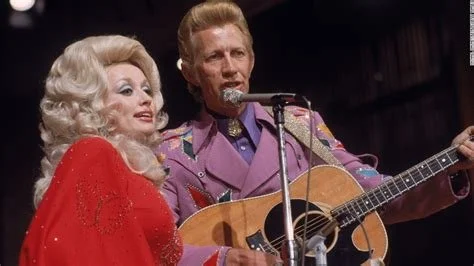
Country music had already found an eager audience on the radio long before it appeared on television (See Chapter 9). The barn dance format, popular on stations across the country in the 1930s and 1940s, transferred easily to television formats after World War II. In 1948, Midwestern Hayride began airing in Cincinnati and was later picked up by NBC in 1955. However, the most famous country radio show of all, The Grand Ole Opry, resisted the new medium and did not televise its performances until the late 1970s. In the 1960s, television gave country performers unprecedented visibility through programs such as The Wilburn Brothers Show and The Porter Wagoner Show. Both relied on a familiar variety format of music, comedy, and guest appearances, essentially translating the feel of a live radio program into a visual medium. Wagoner's show, which became the most widely syndicated country program in the nation, was especially known for its colorful spectacle. Wagoner himself was clad in rhinestone-studded suits, a dazzling counterpoint to his otherwise traditional musical values. Alongside Wagoner's own performances, the show featured comedy by Speck Rhodes, fiddling by Mack Magaha, and banjo playing by Buck Trent. For several years, Norma Jean Beasler, introduced simply as "Pretty Miss Norma Jean," served as co-host before being replaced in 1967 by a rising star named Dolly Parton.
Owing in large part to television's visibility, by the 1970s country music had grown from a regional style into a national industry. Record labels invested heavily in promotion, television specials, and crossover marketing. In 1974, the Grand Ole Opry signified this shift by relocating from its aging Nashville theater to a multimillion-dollar complex, "Opryland." Country performers such as Loretta Lynn and Merle Haggard appeared on the covers of Time and Newsweek, while Hollywood films like Nashville (1975) and Coal Miner's Daughter (1980) introduced the music to wider audiences. Country music's national expansion likewise coincided with the shifting political climate of the decade: the conservative turn of American life, reinforced by Richard Nixon's 1972 landslide victory, created fertile ground for country's growing resonance with middle-class listeners across the nation.
The country-pop crossover boom of the 1970s revived a formula that had already proven successful in the 1950s with artists like Patti Page (see Chapter 11). A new generation of musicians—many with backgrounds in pop, urban folk, and rock' n' roll—adapted country to suit mainstream tastes. By the mid-1970s, crossover singles were dominating both the pop and country charts. Charlie Rich's ballad "The Most Beautiful Girl" (1973), John Denver's "Thank God I'm a Country Boy" (1975), Glen Campbell's "Rhinestone Cowboy" (1975), and C. W. McCall's "Convoy" (1975) all became major hits. "Convoy," in particular, captured the zeitgeist of the era and became an anthem for truck drivers across the country. The song resonated in particular during fuel shortages and a Teamsters strike, while also fueling the CB radio craze among truckers. At the same time, its imagery helped launch "redneck chic," a trend in which middle-class Americans playfully adopted Southern working-class symbols—pickup trucks, denim, and cowboy boots—as markers of authenticity and outsiderness within mainstream culture.
The country-pop crossover boom was closely tied to the Nashville Sound, which was developed in the late 1950s to broaden country music's appeal. Producers such as Chet Atkins and Owen Bradley softened the rough edges of honky-tonk with string sections, piano and steel guitar textures, subtle percussion, and harmonized backing vocals. These choices emphasized melody over raw instrumental display, setting the countrypolitan style apart from the speed and virtuosity of styles like bluegrass. Later dubbed countrypolitan, this polished sound often featured sentimental lyrics and radio-friendly production, rendering it accessible to suburban and urban audiences alike. By the 1970s, countrypolitan strategies were central to the commercial success of crossover stars like Glen Campbell and John Denver, who bridged traditional country with the pop mainstream.
Glen Campbell became one of the most commercially successful crossover artists of the period. Born in Arkansas in 1936, Campbell played with western swing bands as a teenager before moving to Los Angeles in 1958, where he became a highly sought-after session guitarist and vocalist with the Wrecking Crew. After a brief stint as a touring member of the Beach Boys, he launched a solo career that produced hits such as "Gentle on My Mind" (1967), "By the Time I Get to Phoenix" (1967), and "Wichita Lineman"(1968). His public profile rose dramatically in 1969 with The Glen Campbell Goodtime Hour, a network television series that presented both his genial personality and broad musical appeal. Campbell’s television exposure turned a studio musician into a nationally recognizable performer
By 1969, three major network programs—the Glen Campbell Goodtime Hour, The Johnny Cash Show, and Hee Haw—were bringing country music into millions of American homes. Cash's show combined his own performances with historical storytelling, with guest appearances by artists ranging from Bob Dylan to Maybelle Carter, though over time, its incorporation of rock acts and grandiose production began to alienate traditionalists. Hee Haw, in contrast, leaned into slapstick humor and rural caricature, staging skits in cornfields, cabins, and general stores. Despite its exaggerated stereotypes, the program showcased remarkable talent, including banjoist David "Stringbean" Akeman, a veteran of Bill Monroe's Blue Grass Boys, and Sheb Wooley, who appeared as his comic alter ego, the perpetually inebriated Ben Colder.
Taken together, these shows demonstrated television's double-edged role in molding country music. Some foregrounded spectacle and comedy, while others emphasized virtuosity or crossover appeal. Collectively, however, television played a decisive role in redefining country's public image, broadening its audience, and affirming its place as a central strand of American popular culture in the 1970s.
George Jones and Tammy Wynette
After World War II, country-western music branched into several distinct subgenres. Among them, honky-tonk became the most widely heard commercial style, with Hank Williams as its most influential performer. Following Williams's death in 1953, the genre briefly faltered but regained momentum in the early 1960s through the work of George Jones. Raised near Beaumont, Texas, Jones absorbed church music and the recorded styles of Lefty Frizzell, Roy Acuff, Bill Monroe, and especially Hank Williams. Nicknamed "the Possum" after a radio DJ drew attention to Jones's pointy nose and beady eyes, he made his first recordings in 1954 for the independent Starday label under the guidance of producer and manager Pappy Daily, a partnership that lasted until 1968. His early work combined covers, self-penned songs, and co-written material. Jones first gained national attention with "Why Baby Why" (1955), a modest hit later re-recorded by Red Sovine and Webb Pierce, but one that led to appearances on the Louisiana Hayride and later the Grand Ole Opry.
At first, Jones's singing bore such a strong resemblance to Hank Williams and Roy Acuff that critics dismissed him as merely an imitator. By the late 1950s, however, producers urged him to "sing like George Jones," advice he embraced by cultivating a highly distinctive style. He employed sudden shifts in vocal register, sang through clenched teeth and a constricted throat, and heightened the emotional intensity of his performances with dramatic phrasing. After signing with Mercury in 1957, Jones recorded a string of honky-tonk classics that dealt with themes of loneliness, working-class struggles, and unrequited love. He excelled in both playful numbers, such as his cover of J. P. Richardson (The Big Bopper) 's "White Lightning" (1958), and wrenching ballads like "Don't Stop the Music" (1957). In the 1960s, Nashville producers further polished his sound with background vocals and fuller instrumentation, as heard in "A Girl I Used to Know" (1962), blending honky-tonk grit with commercial appeal.
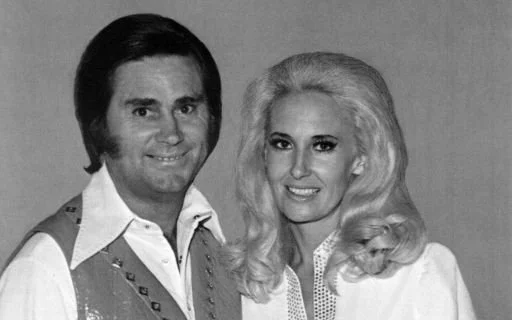
Jones also distinguished himself through duets. His 1963 hit with Melba Montgomery, "We Must Have Been Out of Our Minds," paired his voice with dobro and pedal steel to striking effect. His most famous collaboration, however, began after his 1969 marriage to Tammy Wynette. Produced by Billy Sherrill for Epic Records, their duets such as "We're Gonna Hold On," Hold On" (1973) and "Golden Ring" (1976) wove themes of devotion and relational conflict within the fabric of their own turbulent marriage.
Tammy Wynette brought her own compelling personal narrative to her music. Raised by her mother and grandparents, she worked as a cotton picker from an early age and married at seventeen. Married life didn't quite suit the young Wynette as she was incessantly drawn to gospel music. She trained as a hairdresser before moving to Nashville in the mid-1960s, against her husband's wishes. Signed to Epic Records in the mid-1960s, Wynette scored fifteen number-one hits. Her signature song, "Stand By Your Man" (1968), co-written with Sherrill, featured her emotionally charged vocal style with a tightly controlled vibrato and strained upper register, while"D-I-V-O-R-C-E" (1968) reinforced her reputation as a singer who voiced the struggles of everyday life.
"Stand By Your Man" became both widely known and sharply debated. During the women's liberation movement of the late 1960s and early 1970s, feminist critics condemned the song as conservative, even as an endorsement of female subservience. Yet many listeners, especially working-class housewives, embraced Wynette as a voice for the struggles of marital life, identifying with her candid portrayal of love, frustration, and compromise. Wynette herself maintained that the song was never intended as a political statement but as a reflection of genuine human relationships. Ironically, by the time of its release, she had already been married three times, and during the height of its popularity, she was navigating her turbulent marriage to George Jones. His alcoholism and volatility weighed heavily on their relationship.
Jones and Wynette married on February 16, 1969, but their relationship was marked by volatility. Jones's drinking fueled repeated conflicts, and although the couple moved back to Nashville in 1972 in an effort to stabilize his sobriety, he soon relapsed. Wynette often intervened directly, at times hiding his car keys to keep him from driving under the influence—a tactic that backfired when Jones famously rode a lawnmower into town to buy alcohol. In her autobiography, Wynette also recalled an incident in which Jones allegedly chased her with a loaded rifle, though Jones later denied this account.
Despite their relational turbulence, their musical partnership thrived. Albums such as Take Me (1971), Together Again(1980), and Two Story House (1980) drew upon both their personal struggles and professional synergy. Even after their divorce in 1975, they continued to collaborate until Wynette died in 1998. Her later years were marked by recurring health problems and traumatic experiences, including a 1978 kidnapping and assault, yet she remained one of country music's most influential voices, with Sherrill-produced recordings that sometimes stretched the genre's boundaries.
Jones's career likewise mirrored cycles of struggle and redemption. His alcoholism often led to missed performances, earning him the nickname "No-Show Jones," yet he continued to record prolifically. In 1980, he released "He Stopped Loving Her Today," written by Bobby Braddock and Curly Putman and produced by Billy Sherrill, a song widely hailed as one of country music's greatest. His marriage to Nancy Sepulvado in 1983 provided stability, and through detoxification and rehabilitation, he sustained a late-career resurgence. His 1999 autobiography, I Lived to Tell It All, offered a candid account of his life, and he remained celebrated as one of country's finest singers until he died in 2013.
Together, George Jones and Tammy Wynette exemplified the emotional extremes often expressed in country music: heartbreak and devotion, struggle and resilience. Their recordings, rooted in honky-tonk tradition yet combined with Nashville's polished production, brought the genre to national prominence, blending personal narrative with universal themes in ways that remain resonant within the country musical idiom to this day.
The Bakersfield Sound
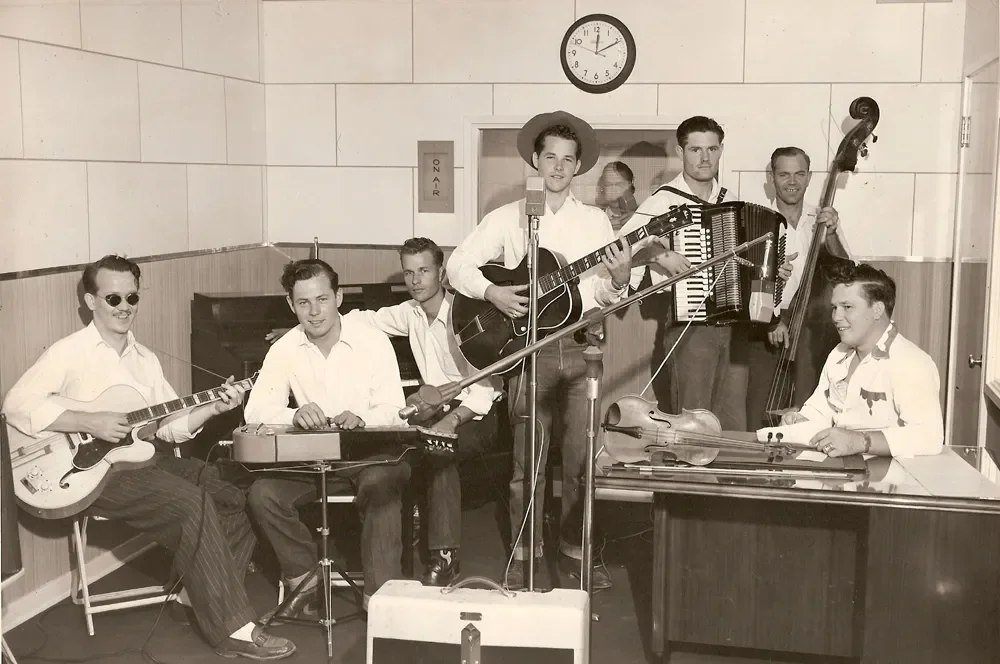
Even as the Countrypolitan sound dominated the charts, a countercurrent began to seep up among country musicians determined to preserve the genre's raw, emotional core. Much like the folk revival of the 1960s, these artists cast themselves as purists, seeking to recapture the immediacy and grit of postwar honky-tonk epitomized by Hank Williams (see Chapter 9). By the 1970s, as country music grew into a multimillion-dollar industry increasingly directed by pop sensibilities, yet some performers deliberately embraced a back-to-basics style.
One of the most explicit expressions of this ethos was the Bakersfield Sound, which developed in California's San Joaquin Valley during the 1950s. Its roots lay in the Dust Bowl migrations of the 1930s, when thousands of displaced families from Oklahoma, Arkansas, and Texas—often labeled "Okies"—settled in the Central Valley. Unlike the more entertainment-driven Los Angeles region, where country music was filtered through Hollywood's pop aesthetics, Bakersfield remained a largely rural, working-class community. Migrants found steady agricultural work there and carried with them the traditions of honky-tonk, western swing, and early country, creating an audience eager for music that spoke to their own lives.
Local infrastructure helped the style flourish. Honky-tonk bars and large dance halls offered spaces where migrant workers could gather, while regional outlets amplified the sound. Television programs such as Henson's The Trading Post on KERO-TV, radio station KUZZ, and record labels such as Tally Records and Owen Publishing promoted local musicians. At the national level, Capitol Records executive Ken Nelson helped secure national distribution for artists such as Buck Owens and Merle Haggard.
Musically, the Bakersfield Sound emphasized twangy electric guitars, pedal steel, and driving backbeats, regularly drawing on the energy of rock and roll. It offered a grittier, more visceral counterpart to Nashville's lush, string-heavy productions while retaining honky-tonk's working-class ethos. Central to this sound was the Fender Telecaster, whose bright, "ice-pick" like attack allowed guitarists to slice through the rhythm section with melodic hooks. Paired with pedal steel and tightly focused rhythm, the Telecaster gave Bakersfield recordings their signature sharp, cutting sound.
Buck Owens
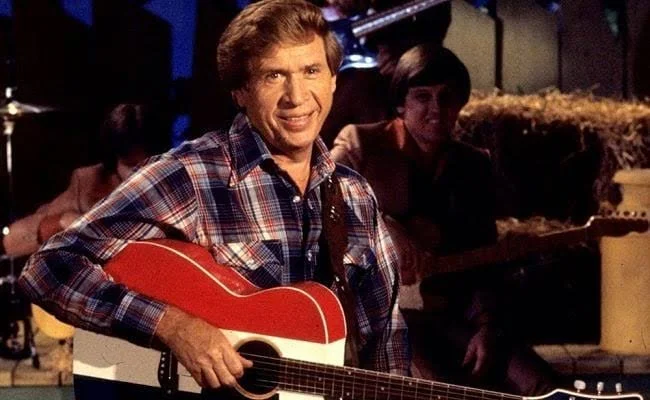
Buck Owens emerged as the leading voice of the Bakersfield Sound, establishing the West Coast alternative to Nashville-based production and ruling the charts through the 1960s. Before his rise to recording stardom, he worked throughout the 1950s as a guitarist and studio musician for other Bakersfield musicians, eventually securing a Capitol Records contract in 1957. His breakthrough came with “Act Naturally” (1963)—later famously reinterpreted by the Beatles—and was followed by a string of fourteen consecutive number-one singles. Among his best-known releases were“Together Again”(1964), “I’ve Got a Tiger by the Tail” (1965), and a high-energy cover of Chuck Berry’s “Johnny B. Goode” (1969).
Rather than celebrating restlessness or rough living, Owens’s lyrics often cast men as vulnerable figures undone by love and loneliness. The sound he forged with his band, the Buckaroos, was simultaneously sharp and relentless, which Owens compared to the momentum of a freight train. Anchored by a strong rhythm section and the twin bite of Fender Telecasters played by Owens and Don Rich, the group also relied on tight, soaring harmonies that became inseparable from the Bakersfield style. Unlike Nashville’s rotating studio system, the Buckaroos functioned as a cohesive touring and recording unit. Owens also drew a clear line between himself and the polished Nashville establishment. His 1965 “Pledge to Country Music” declared that he would never dilute his sound with pop trappings, and he pointedly rejected invitations to join the Grand Ole Opry, which he considered too commercialized.
The trajectory of Owens’s career shifted after Rich’s death in 1974, but he reinvented himself through new ventures. He became a household name as co-host of Hee Haw and branched into various business ventures, including operating radio stations, publishing and management companies, producing a television program, and owning Bakersfield’s Crystal Palace nightclub. His collaboration with Dwight Yoakam in the 1980s brought renewed recognition, culminating in his last chart-topper, “Streets of Bakersfield” (1988).
Merle Haggard
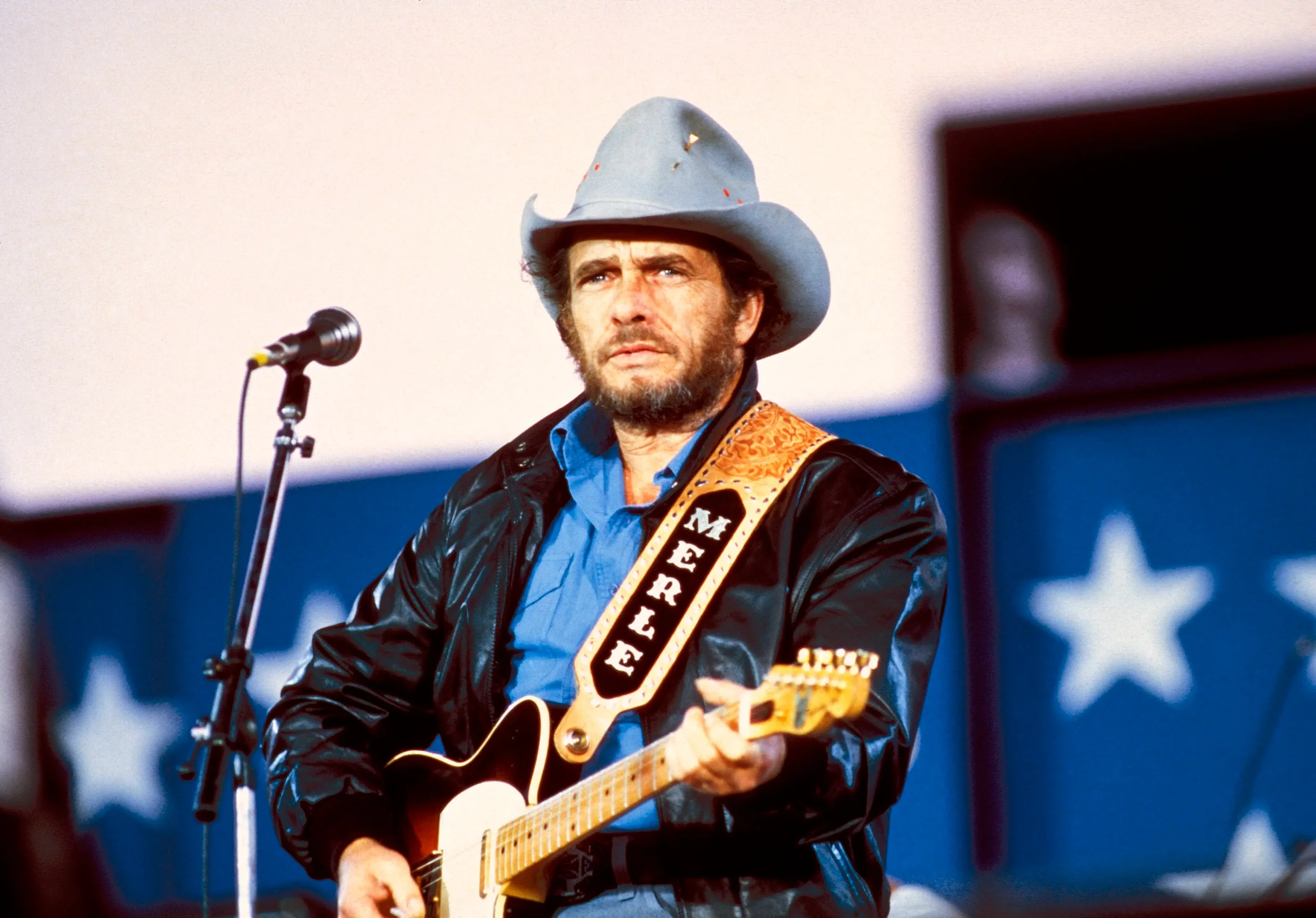
Merle Haggard, born near Bakersfield in 1937 to Oklahoma migrant parents, became one of the most commercially and critically visible singers of postwar honky-tonk and the Bakersfield Sound. The hardships of his early life would later inform his music The Haggard family lived in a converted railroad car, and the death of his father before Merle turned ten left lasting scars. A turbulent adolescence followed, marked by stints in juvenile homes and reform schools, culminating in a three-year sentence at San Quentin Prison for burglary at the age of nineteen. After his release, Haggard worked a series of blue-collar jobs while performing in Bakersfield honky-tonks, gradually carving out his musical identity.
Haggard’s earliest singles, including “Skid Row” (1962), offered stark portraits of prison life, poverty, and working-class struggle, drawing comparisons to Woody Guthrie’s style of social realism. His first release for Tally Records, “Singing My Heart Out” backed with “Skid Row,” failed commercially, with only 200 copies pressed. In 1962, his career changed direction when Haggard attended a Wynn Stewart performance in Las Vegas and heard Stewart’s “Sing a Sad Song.” Granted permission to record it, Haggard released the track to national acclaim in 1964. The following year, his recording of Liz Anderson’s “(My Friends Are Gonna Be) Strangers” reached the country Top 10, establishing both his reputation as a rising songwriter and solidifying his place in the country music scene. His band, The Strangers, with Roy Nichols on Telecaster, Ralph Mooney on steel guitar, and Bonnie Owens (the wife of Buck Owens) providing harmony vocals, became integral to Haggard’s sound. Capitol Records soon signed him, setting the stage for a career that would ultimately bring Bakersfield’s raw energy within mainstream reach.
Through the late 1960s and early 1970s, Haggard consistently chronicled the realities of working-class American life. Songs such as “The Fugitive” (1967) and “Mama Tried” (1968) drew directly from his personal history, while “Hungry Eyes” (1968) and “California Cottonfields” (1969) evoked the experiences of Dust Bowl migrants who had resettled in California. His 1973 release, “If We Make It Through December,” captured the anxieties of families confronting layoffs and economic instability during the recessions of the 1970s. Many of Haggard’s protagonists were white, working-class men striving for middle-class security—hardworking, beer-drinking, patriotic, and often politically conservative.
Haggard’s greatest commercial success came with “Okie from Muskogee” (1969), written with drummer Roy Edward Burris. Initially improvised through one-liners about small-town life, the song celebrated traditional values and rejected the countercultural ethos of the era through its renunciation of protests and drug culture. It reached number one on the country charts, number forty-one on the pop charts, and earned Haggard an invitation to perform at the Nixon White House. Some listeners embraced it as a patriotic anthem, while others dismissed it as reactionary. Haggard himself gave varying interpretations of its intent. At times, he insisted it was a sincere statement of support for Vietnam-era service members, explaining that his own prison experience made him resentful of anti-war protestors who, unlike soldiers, had never experienced a loss of freedom. At other moments, he described the song as a “character study” or even a satire, calling it in 2001 a “documentation of the uneducated that lived in America at the time.” In a 2010 interview, he recalled that his younger self had written from anger, but he now performed the song with a different perspective, acknowledging how both he and the country had changed.
Regardless of interpretation, “Okie from Muskogee” resonated with millions of Americans, particularly Southern migrants grappling with economic uncertainty in the 1970s. Yet the song also complicated Haggard’s image. Many liberal admirers who had praised him as a “poet of the common man” recoiled at what they perceived as reactionary politics. Critics such as Kurt Wolff noted that Haggard always treated the piece with humor, and its continued popularity—covered by acts as diverse as the LSD touting Grateful Dead and other countercultural bands like later iterations of The Beach Boys, Phil Ochs, The Flaming Lips, and Hank Williams III with the Melvins—illustrated its surprising cultural elasticity. Notably, Haggard had initially wanted to follow the song with “Irma Jackson,” a ballad about interracial romance, but producer Ken Nelson and Capitol Records discouraged him, fearing it would undermine the conservative image solidified by “Muskogee.”
Over the course of four decades, Haggard remained a remarkably versatile and prolific artist. He recorded tributes to country pioneers like Jimmie Rodgers and Bob Wills, while experimenting with blues, western swing, Dixieland, jazz, and bluegrass. He consistently criticized Nashville’s polished, pop-oriented productions, preferring the unvarnished realism of his Bakersfield stylings. Even late in his career, he pursued new directions, releasing albums on the punk label Anti in 2000 and 2001. Politically, Haggard resisted easy categorization, though he was outspoken in his criticism of the Iraq War.
Together with Buck Owens, Haggard helped develop the Bakersfield Sound, crafting a raw, guitar-driven alternative to Nashville’s countrypolitan style. Their innovations in rhythm, instrumentation, and lyrical subject matter revitalized honky-tonk and exerted lasting influence on country music worldwide, laying the groundwork for movements ranging from outlaw country to americana.
Outlaw Country
By the close of the 1960s, country music had branched into two primary directions. In Nashville, producers refined the polished “countrypolitan” sound, layering songs with lush strings and vocal harmonies. At the opposite end, artists such as Merle Haggard offered stark, unflinching portraits of working-class life, grounded in the raw immediacy of honky-tonk. Between these poles, radio airwaves circulated a steady stream of both styles of country-pop singles with the aim of crossover success. At the same time, some musicians resisted this commercial orientation and pursued looser songwriting and performance practices. Drawing on the decade’s social turbulence, they began fusing honky-tonk and folk traditions with rock rhythms and the introspective storytelling of singer-songwriters, giving rise to what became known as progressive country. This style prized independence and originality over commercial predictability.
Progressive country leaned on the sharp twang of Bakersfield honky-tonk, the drive of rockabilly, and the confessional lyricism of the 1960s folk revival. Its songs often addressed social or political themes, asserting that country music could move beyond its established confines. Among the most influential figures were Willie Nelson, Kris Kristofferson, Tom T. Hall, and Townes Van Zandt. Their voices lacked the polished sheen Nashville favored, yet their individuality and songwriting distinguished them. Many of their compositions reached national audiences through recordings by other performers: Jeannie C. Riley’s 1968 rendition of Hall’s “Harper Valley PTA” topped both country and pop charts, while Sammi Smith’s 1971 interpretation of Kristofferson’s “Help Me Make It Through the Night” achieved similar cross-genre success.
The college town of Austin, Texas, became the epicenter for the progressive country sensibility. The city cultivated an eclectic scene where folk, rock, western swing, Tex-Mex, jazz, and mainstream country coexisted. Local venues and radio stations drew students, artists, and working-class audiences into a shared cultural space. Progressive country positioned itself as a deliberate alternative to Nashville’s increasingly homogenized output, even while relying on familiar instruments—guitars, fiddles, and rhythm sections. The difference appeared most clearly in performance context and public image: musicians performed just as comfortably in long hair and hippie attire as in cowboy boots and hats, symbolically bridging Austin’s countercultural youth with the region’s traditional “redneck” audiences. Within this environment, outlaw country functioned not only as a musical style but as a broader statement of autonomy, and creative freedom.
Willie Nelson
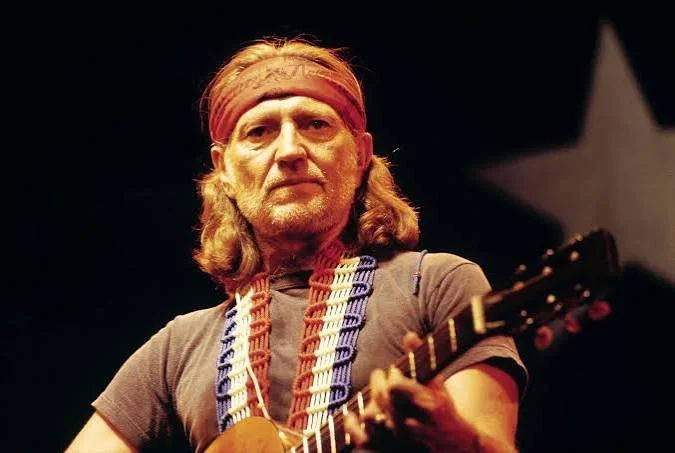
Willie Nelson, born in 1933 in Abbott, Texas, grew up immersed in church music and honky-tonk, early influences that later became audible in his phrasing and repertory. Although he would become one of country music’s most recognizable voices, his early career was driven primarily by his songwriting rather than his own recordings. In the early 1960s, Nashville artists recorded several of his songs, which became widely performed: Patsy Cline’s recording of “Crazy” (1961) became a crossover hit, while Faron Young reached the charts with “Hello Walls” the same year. Nelson recorded a series of albums for RCA Victor, yet his understated, conversational vocal style clashed with the city’s commercial expectations, earning him respect from peers but only modest attention from audiences.
In the early 1970s, Nelson left Nashville for Austin, where a vibrant, eclectic progressive country scene—later dubbed the “cosmic cowboy” movement—was already blending country, folk, rock, jazz, western swing, and Tex-Mex. Venues such as the Armadillo World Headquarters and KOKE-FM radio provided a platform where Nelson’s music resonated with both college students and working-class audiences. His new image—long hair, beard, headband, jeans, and an earring—marked a deliberate break from Nashville’s polished image and helped bridge communities that rarely interacted: hippies, rednecks, and traditional country fans alike. During this period, he signed with Atlantic Records, becoming the label’s first country artist, and began organizing outdoor “picnics,” annual festivals that paired established figures such as Roy Acuff and Earl Scruggs with younger musicians experimenting with country-rock fusion. More closely aligned with the spirit of Woodstock than the Grand Ole Opry, these gatherings drew thousands of attendees and solidified Nelson’s role as a cultural mediator between tradition and counterculture.
Nelson’s presence on television also contributed to his growing prominence. He became a recurring performer on Austin City Limits, the public television program founded in 1974 that exhibited a mix of country, folk, blues, and rock artists. The show’s emphasis on live performance and artistic authenticity fit perfectly with Nelson’s ethos, giving him a national platform to reach audiences beyond Austin’s local scene. Through these appearances, Nelson reinforced the city’s reputation as a core for progressive country and contributed to wider recognition of outlaw country as a named category within the music industry.
Nelson’s commercial breakthrough came with Red Headed Stranger (1975), a concept album that centers on a narrative of love and violence set in the Old West. The album followed his signing with Columbia Records, where he was granted complete artistic control over his recordings. Performed with a small ensemble—Nelson on guitar and vocals, Jody Payne on guitar and mandolin, Paul English on drums, and Bee Spears on bass, with occasional piano, guitar, and harmonica—the record stripped country music down to its essentials. Its single, “Blue Eyes Crying in the Rain,” a cover of a Fred Rose composition, became Nelson’s first number-one hit and cemented his reputation as both a performer and a songwriter. There is an element of irony in the fact that after years of being recognized primarily for his songwriting, his first chart-topping success was written by another composer. The album ultimately demonstrated Nelson’s ability to draw from honky-tonk traditions while resonating with a countercultural emphasis on personal authenticity and artistic freedom.
While Red Headed Stranger marked his entrance into national stardom, Nelson’s musical breadth extended well beyond the stylings featured in the album. In 1978, he released Stardust, a collection of traditional American popular songs including “Georgia on My Mind,”“Blue Skies,” and “All of Me.” Though the idea of a country singer interpreting the Great American Songbook with quiet, understated arrangements was initially seen as a gamble, the album became a commercial and critical triumph, remaining on the country charts for over a decade and attracting listeners beyond country music's traditional audience. By treating pop and jazz standards with the same intimacy he brought to honky-tonk ballads, Nelson reinforced the notion that American music was not bound by genre.
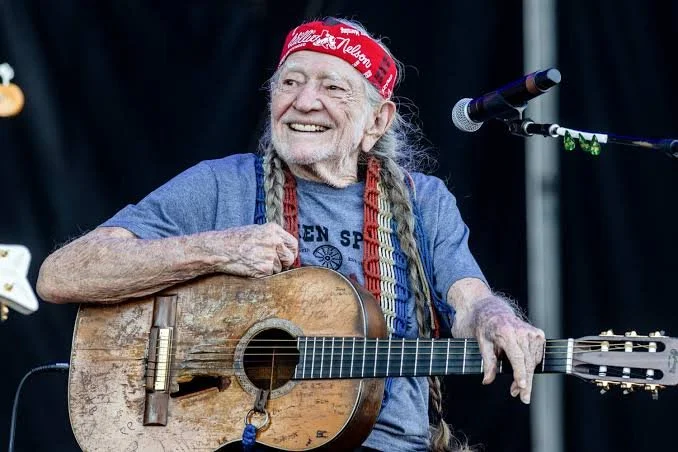
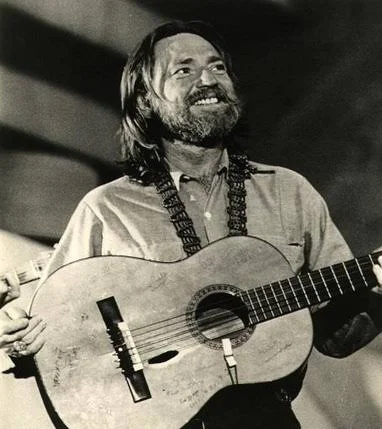
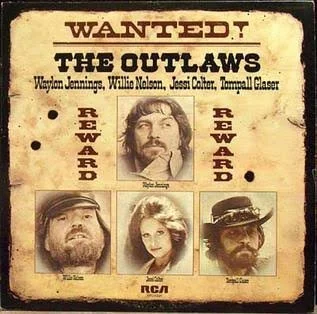
Continuity was also central to his persona. Since 1969, Nelson has performed on his Martin guitar, nicknamed Trigger after Roy Rogers’s horse, its battered frame becoming as iconic as his voice. By the late 1970s, he had moved from a progressive-country figure toward a public figure, appealing simultaneously to traditional country audiences, rock fans, and jazz enthusiasts. His influence on the outlaw country movement was further confirmed in 1976 with Wanted! The Outlaws, a collaboration with Waylon Jennings, Jessi Colter, and Tompall Glaser. The album, the first country record to sell over a million copies, not only named the subgenre but also accentuated Nelson’s role as a rebel challenging Nashville conventions while linking diverse strands of country music, tying him directly to Jennings and the broader outlaw movement.
Waylon Jennings
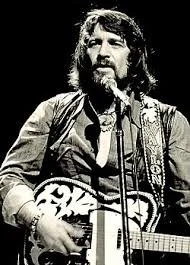
Waylon Jennings (1937–2002) became one of the largest voices of the outlaw country movement, embodying both its rebellious image and its insistence on artistic autonomy. Born in Littlefield, Texas, to parents who played guitar in local dance halls, Jennings was immersed in music from an early age. By the age of twelve, he was working as a radio disc jockey, and in the mid-1950s, he joined Buddy Holly’s band, the Crickets, as a bassist, narrowly avoiding the plane crash that killed Holly in 1959.
In the early 1960s, Jennings refined his performance skills at J.D.’s, a Phoenix nightclub frequented by cowboys, students, and business professionals. Here, he learned to connect with audiences from diverse backgrounds. By 1965, he signed with RCA Victor and relocated to Nashville, where he recorded under the guidance of producer Chet Atkins. Though encouraged to adopt the polished countrypolitan sound dominating the city, Jennings resisted, incorporating unconventional material, including covers of Beatles songs such as “Norwegian Wood” and “You’ve Got to Hide Your Love Away.” Frustrated by the constraints of the Nashville system, he renegotiated his contract in 1973, obtaining both artistic control and a substantial advance. Freed from external limitations, Jennings released Lonesome, On’ry, and Mean(1973) and The Ramblin’ Man (1974), albums that displayed his gravelly voice, hard-driving rhythms, and uncompromising songwriting.
Jennings’s outlaw image was reinforced with 1972’s Ladies Love Outlaws, whose cover photograph featured Jennings dressed in black with a cowboy hat. This costuming, generally reserved for the villain in western movies, projected the persona of a brooding rebel. While his lifestyle was no more lawless than that of other country artists, RCA and the media quickly leveraged the “outlaw” label for marketing purposes, applying it to performers who resisted Nashville’s formulaic conventions while asserting creative independence.
In 1976, Jennings was a major contributor to the compilation album Wanted! The Outlaws. The album combined Jennings’s recordings of traditional songs, such as Jimmie Rodgers’s “T for Texas,” with contemporary covers like Elvis Presley’s“Suspicious Minds,” along with originals like the Willie Nelson-penned duet “Good Hearted Women.” Wanted!became the first country record to achieve platinum certification, selling over a million copies and reaching the Top 10 on the Billboard album chart. Though the “outlaw” label and branding had commercial motivations, it nonetheless represented a genuine challenge to Nashville orthodoxy, emphasizing working-class roots, artistic freedom, and cross-genre experimentation.
Alongside Nelson, Jennings helped build outlaw country around a rejection of Nashville conformity and a celebration of creative independence. Throughout the 1970s and 1980s, he continued to record prolifically, producing albums such as Singer of Sad Songs (1971) and Honky Tonk Heroes (1973), while collaborating with Nelson, Johnny Cash, and Kris Kristofferson on projects including The Highwaymen (1985). These artists embraced their working-class “hillbilly” heritage while experimenting with musical forms, forging a distinctive, enduring branch of country music. The terms “new Nashville,” “progressive country,” and “outlaw music” have all been applied to this body of work that later scenes such as Americana and alternative country continued to reference.
Women in Country
The influx of female country artists in the 1960s and 1970s coincided with the second-wave feminist movement, which built upon the achievements of first-wave feminism in the late nineteenth and early twentieth centuries. Whereas first-wave feminism culminated in the Nineteenth Amendment of 1920 and focused primarily on securing women’s suffrage and formal legal rights, the second wave sought to confront deeper social, economic, and cultural inequalities. Women pressed for reproductive freedom, workplace equity, sexual autonomy, and broader representation in media and the arts. The period included concrete policy and technological changes: the introduction of the birth control pill in the early 1960s provided unprecedented control over reproductive choices, while the passage of Title IX in 1972 began to transform educational and athletic opportunities for girls and women.
The Equal Rights Amendment (ERA) became a central symbol of the second-wave feminist movement. Initially drafted by suffragist Alice Paul in 1923, the ERA stipulated that “equality of rights under the law shall not be denied or abridged by the United States or by any state on account of sex.” Although it stalled in Congress for decades, the amendment was reintroduced in the 1970s, gaining momentum alongside organizations such as the National Organization for Women (NOW), founded in 1966. The ERA ignited extensive activism, as it drew attention to inequities in employment, education, and family law.. Grassroots campaigns at the state level energized public debate: advocates claimed that constitutional codification of equality was essential to dismantle systematic discrimination, while opponents feared disruption to conventional gender roles and family structures. Although the ERA ultimately failed to achieve ratification, it concentrated public arguments about women’s legal status and social position—themes that appeared directly in the repertoires of female country artists.
In the male-dominated spheres of rock, pop, and folk, women often faced marginalization, their voices and perspectives relegated to the background. Country music, by contrast, granted a more visible platform for female performers. Artists such as Patsy Cline, Loretta Lynn, and Dolly Parton reached national audiences and used their music to explore issues of autonomy, labor, sexuality, and social justice. Through their songs, these performers contributed to the broader cultural conversation about gender, creating a space for women’s lived experiences to be expressed, acknowledged, and celebrated.
Patsy Cline
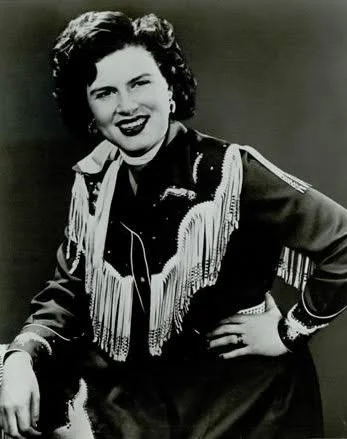
Patsy Cline rose to prominence in the late 1950s and early 1960s as one of the most widely recognized female singers in country music, skillfully blending traditional country with mainstream pop sensibilities. Her first commercial success came in 1957 when she appeared on Arthur Godfrey’s Talent Scouts, winning first place with a performance of “Walkin’ After Midnight,” a track she had recorded the year before. Written by Alan Block and Donn Hecht, the song climbed to number two on the country charts and reached number twelve on the pop charts, displaying her appeal across musical audiences. In the early 1960s, Cline continued to score hits, including Harlan Howard’s “I Fall to Pieces” and Willie Nelson’s “Crazy.” Her singing was distinguished by a warm, expressive tone and precise phrasing, while Decca Records enhanced her sound with lush string arrangements and harmonized backing vocals emblematic of the Nashville sound. The combination of Cline's vocals and Decca's polished production created a sophisticated, polished production that retained its country roots while appealing to a pop-oriented audience. Cline’s promising career ended abruptly in 1963 when she died in a plane crash at the age of thirty, yet her impact on crossover country music and the visibility of women in the genre has remained profound.
Cline’s public image evolved alongside her music. Early in her career, she often wore cowgirl dresses and hats designed by her mother, evoking traditional country aesthetics. As her sound crossed into pop, however, she began donning sequined gowns and cocktail dresses for television appearances and performances in urban venues, while continuing to wear cowgirl attire for live shows.
Beyond her musical achievements, Cline is often cited for opening commercial space for female country singers. She inspired countless performers throughout various musical genres, demonstrating that female artists could engage complex themes with authority. Kurt Wolff, in Country Music: The Rough Guide, noted that Cline possessed an “aggression” and “boisterous attitude” that won her the respect of her male counterparts. Wolff observed, “She swaggered her way past stereotypes and other forces of resistance, showing the men in charge—and the public in general—that women were more than capable of singing about such hard subjects as divorce and drinking as well as love and understanding.”
Emmylou Harris
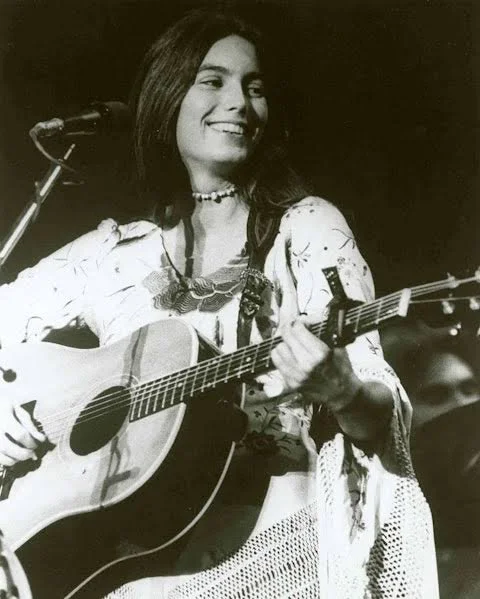
Born in Birmingham, Alabama, in 1949, Emmylou Harris began her artistic path studying drama at the University of North Carolina at Greensboro. Drawn to the burgeoning folk revival, she found inspiration in artists such as Bob Dylan, Pete Seeger, Joan Baez, and Judy Collins, which led her to relocate to Greenwich Village. There, she recorded her first album, Gliding Bird (1969), immersing herself within the folk scene and developing the foundations of her musical identity. After a divorce and an unfulfilling period in Nashville, Harris moved to Washington, DC, where she met Gram Parsons of the Byrds in 1971 (see Chapter 24). Singing backup on Parsons’s GP (1973) and Grievous Angel (1974), she absorbed his synthesis of country, rock, and folk, a musical direction that would characterize her signature sound
Harris’s solo career took off when she signed with Reprise Records and released Pieces of the Sky (1975), an album that blended country, rock, bluegrass, and Cajun influences, and included the poignant “Boulder to Birmingham.” She followed with Elite Hotel (1975), Luxury Liner (1977), and the Grammy-winning Blue Kentucky Girl (1979), albums that favored older country repertory, acoustic textures, and restrained production. Her high-lonesome, expressive voice and mastery of harmony made her a much sought-after collaborator, leading to partnerships with Bob Dylan, Dolly Parton, Linda Ronstadt, Neil Young, and Patty Griffin. Her albums in the 1970s merged rock with classic country, attracting fans of all ages and contributing substantially to the development of country rock. Harris’s performances and recordings helped unite rural country audiences with metropolitan rock listeners, building a joint musical space that transcended orthodox genre boundaries. She also contributed to the Grammy-winning O Brother, Where Art Thou? soundtrack (2000) and was inducted into the Country Music Hall of Fame in 2008.
As her career evolved, Harris increasingly drew inspiration from alternative music. The 1995 album Wrecking Ball introduced heavier rock textures that had not appeared in her earlier work, and established her as a formative figure in alternative country. Over time, critics have also linked her music to progressive country and outlaw country, while many consider her a forerunner of Americana, a genre centered on roots music. Rolling Stone has dubbed her the “Godmother of Americana,” which acknowledges her ongoing influence throughout genres and decades.
Loretta Lynn
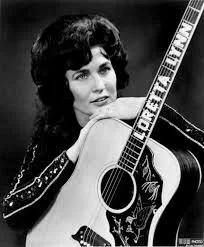
Loretta Lynn was born into poverty in Butcher Hollow, Kentucky, and married Oliver “Doolittle” Lynn at just thirteen. The couple moved to Washington State, where she began performing in local honky-tonks. Her talent soon attracted attention: Buck Owens featured her on his first television show on KTNT in Tacoma, and Vancouver businessman Norm Burley established Zero Records to release her early singles, “I’m a Honky-Tonk Girl” and “Whispering Sea”. The former, recorded in the Bakersfield Sound style, reached the top fifteen on Billboard’s Hot Country Singles chart in June 1960, giving her the first taste of national recognition.
Lynn later moved to Nashville, signing with the Wilburn Brothers’ booking agency and publishing company. They arranged her Grand Ole Opry debut in 1962 and secured a recording contract with Decca Records. Managed by the Wilburn Brothers through the early 1970s, she appeared on their syndicated television show, toured extensively, and recorded duets with established acts such as Ernest Tubb and Conway Twitty. Musically, her work drew on the honky-tonk tradition, blending guitar, piano, and backing vocals characteristic of the Nashville sound with lyrics that explored heartache, resilience, and social critique, particularly the inequities faced by women in heterosexual relationships.
Throughout her career, Lynn addressed themes of female autonomy and sexual freedom in ways that were often provocative for the era and often met with resistance from radio programmers and industry figures. Her 1967 hit “Don’t Come Home a-Drinkin’ (With Lovin’ on Your Mind)” depicted a housewife asserting agency within her marriage. However, the 1975 song “The Pill” became her most controversial record. Written with Lorene Allen, Don McHan, T. D. Bayless, and Lynn herself, the song humorously chronicled a wife’s relief at controlling her reproductive choices through birth control—a subject still considered risqué in country music and the nation’s discourse at the time. With six children, four of whom were born before she turned twenty, Lynn’s autobiographical take lent the song a certain credibility among listeners.
Despite its popularity, “The Pill” faced resistance from some country radio stations, which refused to play it, limiting its chart performance to number five on the country charts and number seventy on the pop Hot 100. The single, however, became her highest-charting pop hit and reached number one in Canada. The song also sparked broader attention to reproductive issues. In interviews, Lynn recounted that rural physicians praised the song for raising awareness about birth control in isolated areas, despite the pushback the song received. While Lynn generally maintained socially conservative Christian beliefs and avoided overt political statements, “The Pill” represented a rare liberal stance, aligning with the era’s feminist currents.
Through her use of humor, blunt honesty, and autobiographical detail, Loretta Lynn carved a unique place in country music, using her songs to explore women’s control over their bodies, sexual freedom, and autonomy. In contrast to contemporaries whose music emphasized loyalty and domesticity, such as Tammy Wynette’s “Stand By Your Man” (1968), Lynn directly engaged with issues familiar to many working-class women, and became a cultural voice for female empowerment.
Dolly Parton
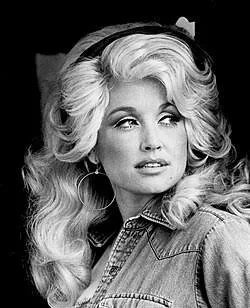
Dolly Parton, born into extreme poverty in a one-room cabin near Sevierville, Tennessee, was one of twelve children in a sharecropping family. Music was a constant presence in her life from an early age—her mother taught Appalachian folk songs, she sang in her grandfather’s church, and by age ten she was performing on Cas Walker’s radio and television programs in Knoxville. Parton began composing her own songs as a child, displaying remarkable creativity and ambition. At thirteen, she recorded the single “Puppy Love” for Goldband Records in Louisiana and made her first appearance at the Grand Ole Opry, where Johnny Cash encouraged her to trust her instincts as a performer.
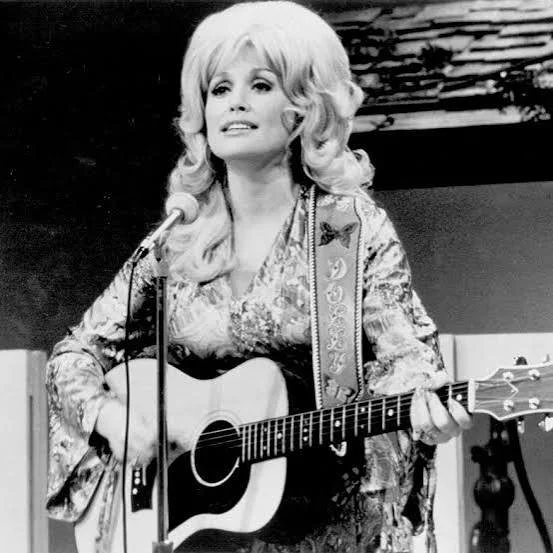
The day after graduating high school, Parton moved to Nashville. She recorded for Monument Records before joining The Porter Wagoner Showin 1967, replacing Norma Jean as Wagoner’s “girl singer.” Initially, audiences resisted the change, but with Wagoner’s guidance, Parton earned their acceptance. The major label RCA Victor signed her to a recording contract, releasing her first single with Wagoner—a remake of Tom Paxton’s “The Last Thing on My Mind”—which reached the country Top 10 in January 1968, beginning a six-year streak of virtually uninterrupted Top 10 hits for the duo. Parton remained a featured performer on the show until she left to pursue a solo career.
Parton’s songwriting consistently explored women’s experiences, personal history, and social inequities. Her farewell to Wagoner, “I Will Always Love You” (1974), reached number one on the country chart, and she famously refused Elvis Presley’s request to record it under the condition of giving up half the publishing rights—an early demonstration of her business acumen, which later contributed to her substantial royalties. Other signature songs include “Jolene” (1974), which explores romantic insecurity; “9 to 5” (1980), addressing the challenges faced by working women; and “Coat of Many Colors” (1971), a poignant reflection on her impoverished upbringing. Tracks like “Just Because I’m a Woman”(1968) and “To Daddy” (1975) challenged societal double standards, asserting female agency and resilience with autobiographical honesty.
Beyond her songwriting prowess, Parton became a multi-instrumentalist, performer, actress, and entrepreneur. Though unable to read sheet music, she plays the dulcimer, autoharp, banjo, guitar, electric guitar, fiddle, piano, recorder, and saxophone. She starred in films including 9 to 5 (1980), The Best Little Whorehouse in Texas (1982), and Steel Magnolias (1989), and collaborated with artists such as Emmylou Harris, Linda Ronstadt, Loretta Lynn, and Tammy Wynette on albums including Trio (1986), Trio II (1999), and Honky Tonk Angels (1993).
Parton’s business ventures, particularly Dollywood, the Splash Country water park, and dinner theaters such as The Dolly Parton Stampede and Pirates Voyage, have generated a significant boost on East Tennessee’s economy. Her philanthropy, most notably through the Dollywood Foundation, has supported education and poverty relief in the region where she grew up. Her career achievements are extraordinary: she has sold over 100 million records worldwide, earned multiple RIAA-certified gold, platinum, and multi-platinum awards, and had 25 singles reach number one on the Billboard country charts—a record for a female artist (tied with Reba McEntire). She has achieved 44 Top 10 country albums, more than any other artist, and charted 110 singles over forty years. She was inducted into the Country Music Hall of Fame in 1999. Parton’s remarkable capacity to blend country, pop, and socially conscious storytelling, along with her business acumen and philanthropy, has made her one of the most influential figures in country music history.
Chapter 23: Conclusion
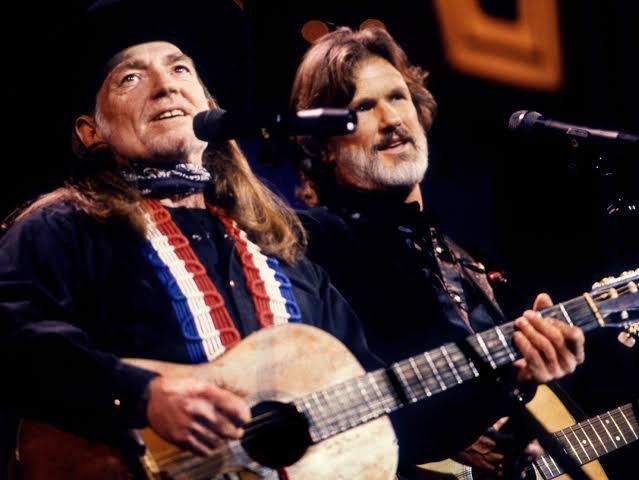
In the 1960s and 1970s, country music emerged as a dynamic cultural force, extending far beyond commercial success or chart performance. Artists increasingly used the genre as a medium through which social realities, gender dynamics, and American identities could be explored, contested, and celebrated. Country music became a lens for expressing the experiences of rural, working-class, and female audiences, reaching far beyond its traditional regional base. Presidential acknowledgment—from Nixon’s visit to the Grand Ole Opry to Carter’s invitations to artists to perform at the White House—augmented the genre’s growing stature, signaling its rise within the national imagination.
The period’s stylistic diversity speaks to the genre’s capacity for both innovation and dialogue with its own traditions. The lush orchestration of the Nashville Sound, the gritty authenticity of the Bakersfield Sound, and the rebellious eclecticism of Outlaw Country embodied competing visions of what country music could be and whom it could speak to. Artists navigated these currents with creative autonomy, crafting work that simultaneously honored the genre’s roots while opening new cultural and commercial possibilities. Songs like Lynn’s "The Pill" and Parton’s "9 to 5" illustrate how country music can articulate female empowerment, working-class struggle, and broader social critique, demonstrating the genre’s potential to engage critically with contemporary life. Through their voices, stories, and business acumen, artists like Cline, Lynn, Parton, Haggard, Jennings, and Nelson broadened country music's reach and proved the idiom could simultaneously engage with mainstream audiences, reflect the realities of American life, and provide a platform for personal and cultural expression. The interplay between the Nashville Sound, the Bakersfield Sound, and Outlaw Country illustrates the genre’s flexibility and its capacity to evolve while remaining distinctly American.
Chapter 23: Further Reading
Allen, Bob. George Jones: The Saga of an American Singer. Garden City, NY: Doubleday, 1984.
Bane, Michael. The Outlaws: Revolution in Country Music. n.p., 1978.
Bufwack, Mary A., and Robert K. Oermann. Finding Her Voice: The Saga of Women in Country Music. New York: Crown, 1993.
Carlisle, Dolly. Ragged but Right: The Life and Times of George Jones. Chicago: University of Chicago Press, 1984.
Ching, Barbara. Wrong’s What I Do Best: Hard Country Music and Contemporary Culture. New York: Oxford University Press, 2001.
Denisoff, Serge. Waylon: A Biography. Knoxville, TN: University of Tennessee Press, 1983.
Fox, Aaron A. Real Country: Music and Language in Working-Class Culture. Durham, NC: Duke University Press, 2004.
Haslam, Gerald. Workin’ Man Blues: Country Music in California. Berkeley: University of California Press, 1999.
LaChapelle, Peter. Proud to Be an Okie: Cultural Politics, Country Music, and Migration to Southern California. Berkeley: University of California Press, 2007.
Lynn, Loretta, with George Vecsey. Coal Miner’s Daughter. Washington, DC: Regnery, 1976.
Lynn, Loretta, and Patsi Bale Cox. Still Woman Enough. New York: Hyperion, 2002.
Malone, Bill C. Country Music, USA. Austin, TX: University of Texas Press, 2002.
Nelson, Willie. The Facts of Life and Other Dirty Jokes. New York: Viking, 2002.
Nelson, Willie, and Bud Shrake. I Didn’t Come Here and I Ain’t Leavin’. New York: Random House, 1988. Reprint as Willie: An Autobiography, 1988.
Parton, Dolly. Dolly: My Life and Other Unfinished Business. New York: Doubleday, 1994.
Peterson, Richard A. Creating Country Music: Fabricating Authenticity. Chicago: University of Chicago Press, 1997.
Reid, Jan. The Improbable Rise of Redneck Rock. Austin: University of Texas Press, 1974. 2nd ed., 2004.
Vander Wel, Stephanie. I Am a Honky-Tonk Girl: Country Music, Gender, and Migration. PhD diss., University of California, Los Angeles, 2008.
Wilson, Pamela. “Mountains of Contradictions: Gender, Class, and Region in the Star Image of Dolly Parton.” In Reading Country Music: Steel Guitars, Opry Stars, and Honky-Tonk Bars, edited by Cecelia Tichi, 98–120. Durham, NC: Duke University Press, 1998.
Wynette, Tammy, and Joan Dew. Stand by Your Man. New York: Simon & Schuster, 1979.