Chapter 37: Alternative Rock in the 90s pt.2
“Killing in the Name”
Album/Year Released
1992 (album: Rage Against the Machine)
Artist/Composer
Rage Against the Machine;
Tom Morello, Zack de la Rocha, Tim Commerford, Brad Wilk
Genre/Style
Rap metal; political rock
Song Form
Verse–chorus with bridge and extended intro and outro
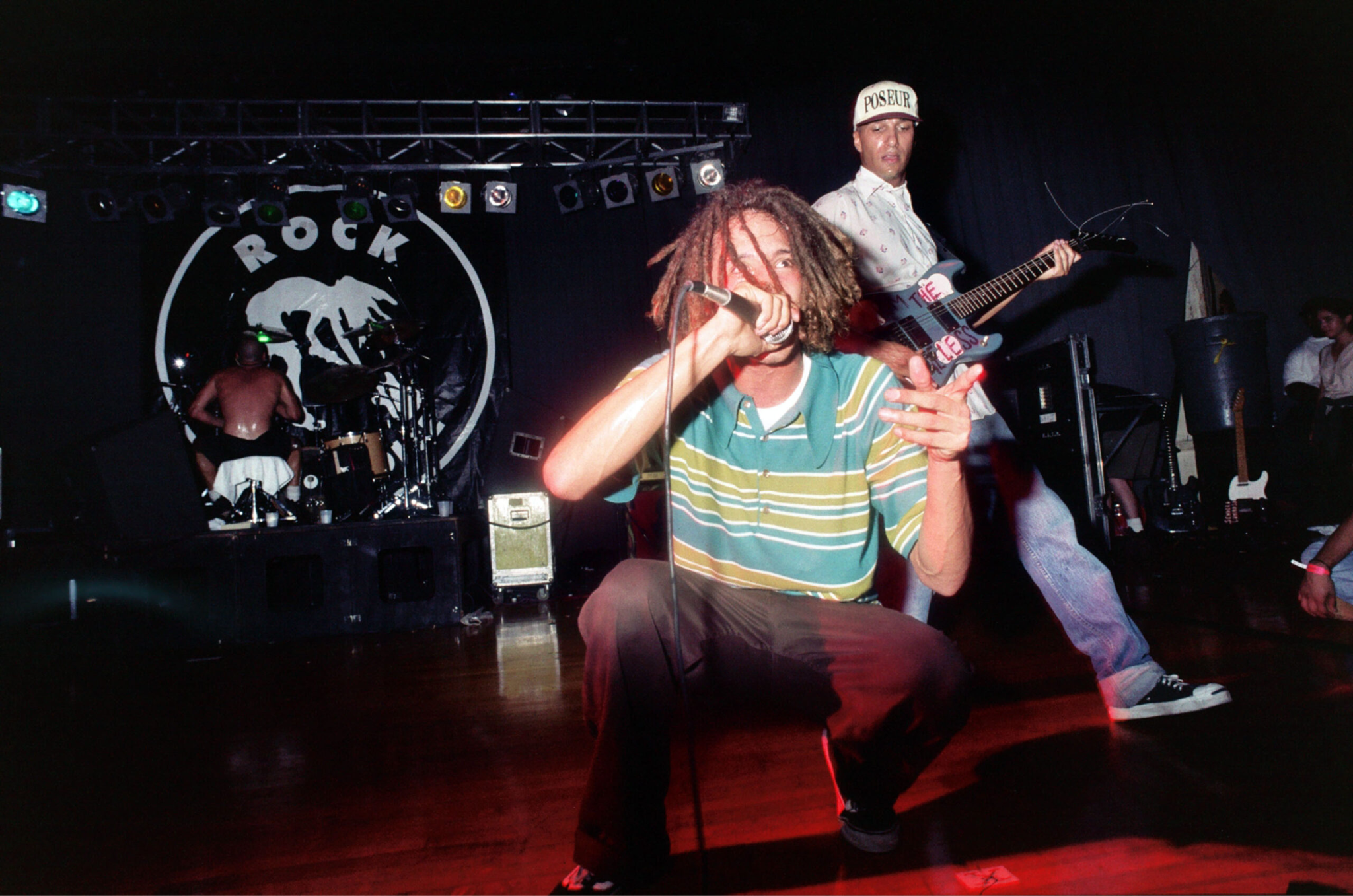
“Killing in the Name,” from the band’s 1992 self-titled debut album, combines heavy rock instrumentation with rap-inflected vocals, resulting in one of the most recognizable protest songs of the 1990s. Built in a steady 4/4 meter, the track relies on a repeating Drop D–tuned guitar riff that underpins nearly the entire composition.
The introduction features a restrained, bass-centered groove by Tim Commerford that gradually gives way to the full guitar hook. Tom Morello composed the central riff while demonstrating Drop D tuning to a student, pausing the lesson to record the idea and later developing it with the band. Morello’s performance incorporates techniques fundamental to his style, including toggle-switch staccato effects (commonly referred to as “killswitch” sounds), controlled feedback, unconventional muting, and the use of a Whammy pedal during the solo. Morello's methods produce textures reminiscent of turntable scratches or electronic glitches, thereby blurring the distinction between rock guitar and hip-hop production. Morello recorded the guitar part with a Fender Telecaster, contributing to its sharp, cutting tone.
Brad Wilk’s drumming reinforces the song’s militant atmosphere through a strong backbeat and syncopated accents. Commerford’s bass lines interlock with the drums, establishing a dense rhythmic foundation. The verses are characterized by palm-muted guitar figures that support Zack de la Rocha’s rap-style vocals. The refrains emphasize the repeated line “And now you do what they told ya,” which increases in volume and intensity with each iteration. Following the second refrain, a bridge section features Morello’s solo, displaying his distinctive stuttering and pitch-shifting effects before transitioning to the song’s final and most prominent passage.
The extended outro propels the composition to its climax. De la Rocha repeatedly chants “Fuck you, I won’t do what you tell me,” with intensity escalating during each repetition. De la Rocha's repeated refrain moves from measured repetition to overt defiance, culminating in a final screamed expletive and sudden conclusion. The word “fuck” is used seventeen times throughout the song, reinforcing its confrontational tone. Structurally, the outro functions as a sustained crescendo, relying on repetition and increasing volume rather than harmonic progression to achieve dramatic effect.
The lyrics address themes of institutional racism and police brutality, drawing partial inspiration from the beating of Rodney King and the 1992 Los Angeles riots. The line “Some of those that work forces are the same that burn crosses” explicitly links certain elements within law enforcement to the Ku Klux Klan, suggesting a continuity between state authority and racist violence. Commentators, including BBC News, have further interpreted the song as a critique of systems that legitimize violence in support of racial hierarchy and the military–industrial complex.
“Give it Away”
Album/Year Released
1991 (album: Blood Sugar Sex Magik)
Artist/Composer
Red Hot Chili Peppers
Anthony Kiedis, Flea, John Frusciante, Chad Smith
Genre/Style
Funk rock; alternative rock
Song Form
Verse–chorus
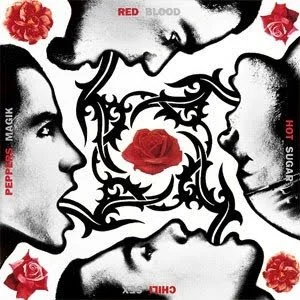
“Give It Away” combines funk rhythms with rock musicality, anchored by Flea’s slap-bass technique, which produces percussive, accented tones. John Frusciante’s guitar alternates between rhythmic stabs and melodic fills, complementing Anthony Kiedis’ rhythmically complex, rap-influenced vocal delivery. The moderate tempo brings out the precise interaction among bass, guitar, and drums, resulting in a groove-driven foundation. “Give It Away” illustrates the band's integration of funk-derived syncopation, rock instrumentation, and hip-hop-influenced vocal phrasing, a combination that became increasingly prominent in 1990s alternative rock.
The song follows a verse–chorus design and opens with Frusciante's distinctively dry guitar tone. Flea's bass line spans much of the fretboard, providing rhythmic drive and harmonic support. Kiedis introduces the refrain “Give it away, give it away, give it away now,” inspired by personal reflections on generosity and altruism. The chorus features chant-like vocals that build in intensity over the main riff. Frusciante contributes a melodic guitar solo that was recorded and then reversed in the final mix, giving the passage an unusual, disorienting contour. Additional textures, such as the mouth harp, add subtle timbral variety.
During the verses, Frusciante maintains a funk-oriented riff while Flea’s bass provides syncopated accentuation. The chorus accelerates the rhythmic momentum, supporting Kiedis’ repeated vocal chant. In the outro, the song introduces a riff reminiscent of Black Sabbath's “Sweet Leaf,” over which Kiedis continues the titular refrain before the band drops out.
The creation of “Give It Away” traces back to jam sessions in the early 1990s, first explored by Flea and Frusciante during their side project H.A.T.E. The main riff and bassline developed there were later adapted for the Red Hot Chili Peppers, with Kiedis adding the lyrical refrain after hearing the bass. The recording, produced by Rick Rubin at The Mansion in Los Angeles, emphasized minimal studio manipulation and favored dry, immediate tones. The song became one of the band's most prominent early-1990s recordings and brought their mixture of funk, rock, and rap-influenced vocals to a broad audience.
“Loser”
Album/Year Released
1994 (album: Mellow Gold)
Artist/Composer
Beck
Beck Hansen
Genre/Style
Alternative rock; indie; hip-hop influences
Song Form
Verse–chorus
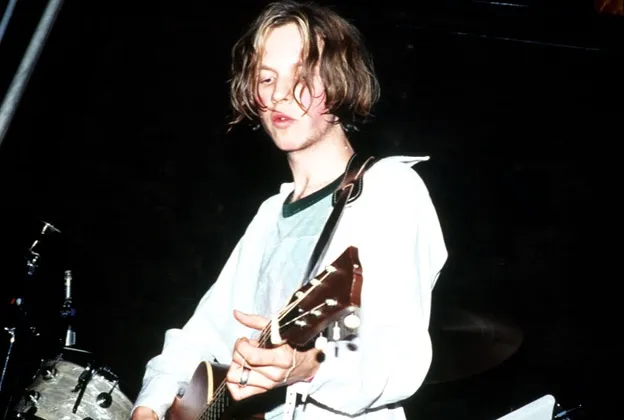
“Loser” is notable for its unconventional instrumentation, which combines sitar, slide guitar, drum machines, bass, and acoustic guitar within a unified sonic texture. Beck’s vocal delivery alternates between deadpan singing and rhythmically driven, rap-influenced phrasing, thereby integrating hip-hop elements into an alternative rock context. The song’s harmonic structure is based on static, repeated chords, while the layering of instruments introduces timbral diversity. The chorus provides contrast to the denser verses through its simple, repetitive melodic lines. “Loser” represents the experimental and genre-blending tendencies characteristic of 1990s alternative music, merging folk, hip-hop, and psychedelic elements in a commercially successful format.
The song uses a verse–chorus structure, with spoken-word or rapped verses and a melodic chorus. Open D tuning supports a two-chord progression repeated throughout. Beck, producer Carl Stephenson, and Tom Rothrock developed the track from jam sessions and experimentation. Released in 1993 on Bong Load Custom Records, it gained early airplay on modern rock stations, leading to a major-label re-release through DGC Records. It reached number 10 on the US Billboard Hot 100 in 1994, topped the charts in Norway, and entered the top ten in several countries including Australia, Canada, and Sweden.
From a compositional perspective, “Loser” features recurring musical motifs, including a slide guitar riff, Stephenson’s sitar lines, a driving bass, and tremolo guitar textures. The drum track incorporates a sample from Johnny Jenkins’ 1970 rendition of Dr. John’s “I Walk on Guilded Splinters.” Additionally, the song includes a brief dialogue sample from the 1991 film Kill the Moonlight. Beck drew upon folk traditions and identified parallels between Delta blues and hip-hop rhythms, layering these influences over a moderate tempo of 86 beats per minute in D major.
The chorus—“Soy un perdedor / I’m a loser baby, so why don’t you kill me?”—The chorus originated as Beck's self-deprecating reaction to the instrumental loop; he later described it as a response to his perceived limitations as a rapper. Although the lyrics are frequently interpreted as emblematic of Generation X slacker culture, Beck has stated that they are largely nonsensical and primarily serve as a vehicle for vocal phrasing. The verses employ free-associative, stream-of-consciousness lyrics delivered in a conversational, offhand manner, which has drawn comparisons to Bob Dylan’s talk-singing style.
“Loser” became an important track of the early 1990s alternative rock scene, demonstrating successful integration of folk, hip-hop, and psychedelic influences within a commercially viable format. Its unusual instrumentation, rhythmic interplay, and genre-blending style established Beck as a prominent figure in the decade's musical experimentation.