Chapter 30: Punk
Table of Contents
“Venus in Furs”
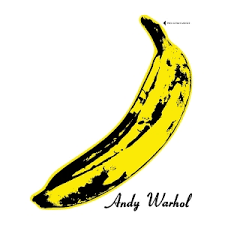
Album/Year Released
1967 (album: The Velvet Underground & Nico)
Artist/Composer
The Velvet Underground
Lou Reed
Genre/Style
Avant-garde rock; proto-punk
Song Form
Strophic; minimal sectional contrast
“Venus in Furs,” composed by Lou Reed and released in 1967 on The Velvet Underground & Nico, centers on a sustained drone rather than traditional harmonic progression, emphasizing texture and repetition. The track begins abruptly, omitting an introduction, and maintains a steady 4/4 meter throughout. John Cale’s amplified electric viola sustains and scrapes against a fixed pitch, drawing on his background in experimental music, including collaborations with minimalist composer La Monte Young and participation in Fluxus. Lou Reed’s guitar, employing ostrich tuning with all six strings set to the same pitch, eliminates chordal movement and aligns the instrument tonally with the viola. Sterling Morrison, typically a guitarist, performs on bass, repeating a narrow figure that reinforces the drone rather than outlining harmonic changes.
Maureen Tucker provides percussion, restricting the backbeat to slow bass drum strikes combined with tambourine hits, which produces a plodding, processional rhythm. The absence of fills or rhythmic variation reinforces the song’s strophic form, in which sections repeat with minimal contrast and tension accumulates through timbral intensity rather than structural change. Reed’s vocals remain flat and restrained, matching the instrumental atmosphere and allowing the lyrics, adapted from Leopold von Sacher-Masoch’s novella Venus in Furs, to convey themes of domination, submission, and erotic ritual without overt dramatic expression. Phrases such as “shiny shiny boots of leather” change the source material into a contemporary urban context while retaining its emphasis on power and control.
The overall sound has been compared to non-Western modal traditions and minimalist classical techniques, with both critics and band members noting its similarity to ritual music rather than conventional rock forms. Cale’s viola, frequently characterized as whip-like in its attack, interacts with the unvarying pulse to invoke a sense of physical tension, while the absence of harmonic resolution intensifies the track’s enclosed sonic environment. The use of drones, repetition, and timbre as structural elements diverged significantly from prevailing mid-1960s pop aesthetics and influenced later punk, noise rock, and experimental music by demonstrating how texture and duration could supplant harmonic motion as the principal organizing elements of a composition.
“Blitzkrieg Bop”
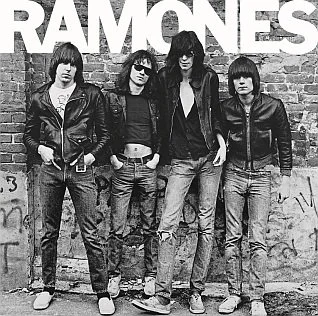
Album/Year Released
1976 (album: Ramones)
Artist/Composer
Ramones
Dee Dee Ramone, Tommy Ramone
Genre/Style
Punk Rock
Song Form
Verse–chorus
“Blitzkrieg Bop” was released in February 1976 as the debut single and opening track on the Ramones’ self-titled album. The song uses a simple verse-chorus structure at a fast tempo in 4/4 meter. The song runs just over two minutes and sticks to a basic three-chord pattern played mostly with power chords. By using only the root and fifth, the guitar skips major or minor coloration, producing a blunt, distortion-friendly sound that could be played at loud volumes.
The guitar, bass, and vocals operate in rhythmic unison, reinforced by continuous downstroke guitar and a driving drumbeat. Ornamentation is minimal, with little variation in texture or harmony. The song’s momentum is sustained through speed rather than contrast, as brief sections move rapidly from one to the next.
Johnny Ramone uses his signature aggressive downstroke picking style, often called the "chainsaw" guitar technique, throughout the song. He strums exclusively with downward strokes, producing a sharp, percussive, rhythmically driving sound. Combined with barre chords and power chords, the technique creates a relentless, buzzing attack that became one of the Ramones' signature musical characteristics.
The track opens with a progression of chords followed by the chant "Hey! Ho! Let's go!" over a tom-heavy drumbeat that functions as a rhythmic cue rather than a melodic statement. The chant returns at the end of the song, creating a sense of symmetry. The opening "Hey! Ho! Let's go!" chant was later widely adopted in sports arenas. The chant was inspired by the Bay City Rollers’ “Saturday Night,” which begins with a similar call-and-response hook. The specific phrasing “Hey ho, let’s go” draws from “Walking the Dog” by Rufus Thomas, particularly the Rolling Stones’ version, whose pronunciation the Ramones found amusing. Tommy Ramone later recalled that the chant came to him while walking home from a grocery store
Although credited to the band as a whole, the song was primarily written by drummer Tommy Ramone, with bassist Dee Dee Ramone contributing the title and lyrics. The original working title was “Animal Hop.” Lyrically, the subject matter is intentionally loose. Tommy Ramone described it as a depiction of young audiences lining up for a rock concert, losing control in the crowd. The term “blitzkrieg” references the German military tactic, meaning “lightning war,” a phrase chosen more for its sense of speed and impact than for historical commentary. Dee Dee Ramone later altered one lyric line from “shouting in the back now” to “shoot ’em in the back now,” increasing the song’s confrontational edge.
Musically and aesthetically, “Blitzkrieg Bop” rejects the extended solos, technical displays, and elaborate forms typical of mid-1970s rock. Its speed, brevity, repetition, and volume established a template for early punk rock, where immediacy and physical impact replaced complexity as the main priorities.