Chapter 11: Pop Music in the 1940s and 1950s

Table of Contents
Chapter 11: Introduction

The onset of World War II (1939–1945) brought sweeping changes to American political, economic, and cultural life on an unprecedented scale. The conflict began in Europe with Nazi Germany’s invasion of Poland in 1939 and expanded into a global war between the Axis Powers and the Allied nations. Although the United States initially remained neutral, it supplied material support to the Allies until Japan’s attack on Pearl Harbor on December 7, 1941, prompted American entry into the war. The fighting spanned multiple theaters across Europe, North Africa, and the Pacific, culminating in Germany’s surrender in May 1945 and Japan’s surrender following the atomic bombings of Hiroshima and Nagasaki in August 1945. These bombings caused massive civilian loss of life and widespread destruction, leading Japan to formally surrender on August 15, 1945. World War II officially ended on September 2, 1945, with the signing of surrender documents aboard the USS Missouri.
The impact of World War II altered nearly every aspect of American life. From 1941 to 1945, more than 16 million Americans served in the armed forces, while millions more contributed to the war effort through factory work, rationing programs, and local civil defense efforts. The mobilization of the economy to support the war effectively ended the Great Depression, ushering in a period of rapid industrial growth and national prosperity. By 1945, The war positioned the United States as a global superpower with unmatched industrial capacity and military reach.
As millions of Americans served in the armed forces, the home front became a site of constant production, rationing, and collective sacrifice. Women entered the workforce in large numbers, filling industrial and administrative roles vacated by men, even as they were expected to return to domestic life after the war. The passage of the G.I. Bill in 1944 provided returning veterans with access to education, housing, and job training. This landmark legislation fueled a postwar economic boom, grew homeownership, and helped create a new suburban middle class. At the same time, wartime migration patterns, particularly to cities and industrial centers, permanently altered the American demographic landscape, accelerating urbanization and modernizing the workforce.
Beginning in 1947, the Cold War introduced a long-lasting period of sustained geopolitical rivalry between the United States and the Soviet Union. This “warfare”was waged through by political, economic, and ideological tensions in place of direct military battles between the two superpowers. As tensions escalated with the Korean War (1950–1953) and the growing threat of global annihilation from nuclear warheads, American society found itself caught between feelings of optimism and anxiety. In this rapidly changing environment, popular music accompanied the social and cultural changes of postwar America while circulating widely through radio, recordings, and film.
During World War II, music was often performed to provide comfort and a common sense of purpose among the servicemen. Ballads, swing tunes, and patriotic anthems filled radios, jukeboxes, and live performances organized by the United Service Organizations (USO), which provided entertainment and recreational services to members of the armed forces. As the nation transitioned to peace, these musical traditions evolved in tandem with shifting social and technological settings.
Building on the base laid by Tin Pan Alley in the early 20th century, traditional pop music reached new artistic and commercial heights during the 1940s and 1950s. These songs, often romantic and carefully arranged, stood apart from the rougher styles of early jazz, blues, and gospel. They offered a vision of American life marked by love and stability, which proved highly adaptable across media such as live performance, film, radio, and later, television.

Television accelerated the popularity of pop performers after the war. Although the basic technology for TV had been developed during the 1920s and 1930s, it was only after World War II that television rapidly entered American homes. In 1946, fewer than 10,000 households owned a television set, but by 1950 that number had soared to over 4 million. By 1955, more than half of all U.S. households had a TV, and by the end of the decade, nearly 90 percent did, making television the dominant medium for entertainment and advertising. Historian Douglas Brinkley, in his biography of newscaster Walter Cronkite, described television as "a central part of many Americans’ daily lives, serving as news source, babysitter, and mindless entertainer."
Television revolutionized the promotion and perception of pop stars. Crooners like Perry Como, Nat King Cole, and Doris Day became familiar faces on network television, appearing on weekly variety shows or hosting their own programs. The visual medium introduced a new level of intimacy and celebrity, allowing singers to craft public personas that mattered as much as their vocal talents. As television became the centerpiece of postwar domestic life, it helped codify the sound and style of the era's music, turning singers into national icons and songs into multimedia experiences that reached throughout generations and geographic boundaries.
As radio, film, and dance bands helped popular music reach mass audiences, the solo vocalists within these bands rose to become the genre's biggest stars. These singers, who often performed only a few songs per show and earned less than the instrumentalists, gradually became the main attractions. By the late 1930s and throughout the 1940s and 1950s, artists like Ella Fitzgerald, Bing Crosby, and Frank Sinatra sustained long careers by interpreting songs from Broadway shows, Hollywood musicals, and the Great American Songbook.
These artists typically did not write their own material. Instead, they worked with songs composed by masters like George and Ira Gershwin, Cole Porter, Irving Berlin, and Rodgers and Hammerstein, offering their own interpretations that influenced how these songs were remembered and performed. In the chapter ahead, we will examine how singers such as Frank Sinatra, Doris Day, Nat King Cole, and others came to dominate the mainstream sound of postwar America. Through their voices and personas, they became emblematic of an era marked by the trauma of global conflict, the optimism of economic growth, and the growing influence of mass media.
Louis Armstrong as Pop Singer
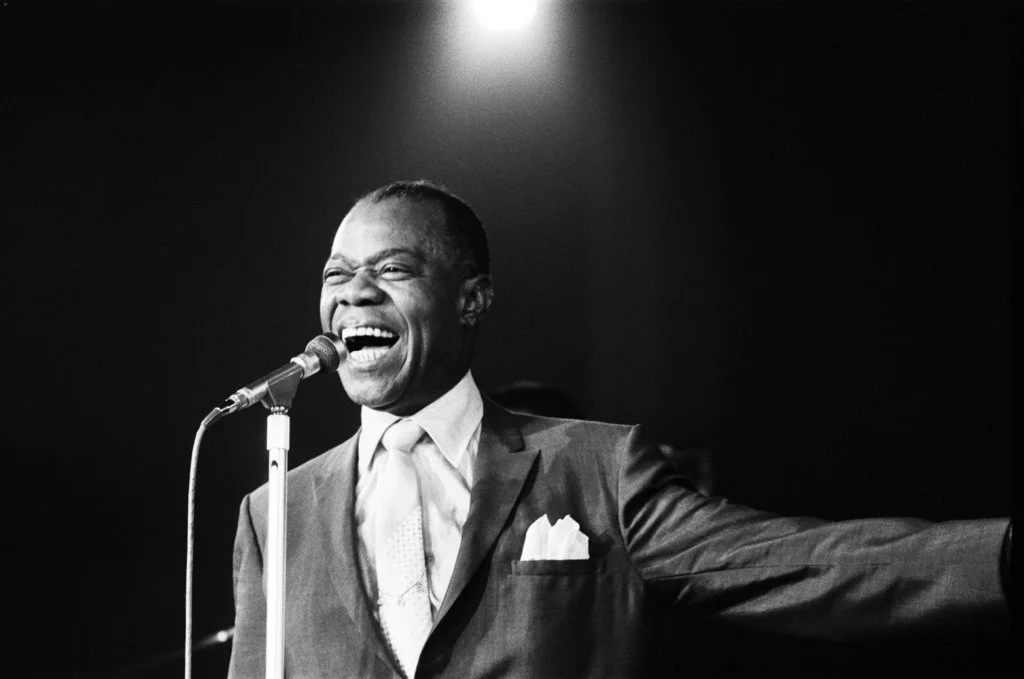
Let us now turn our attention back to the legendary jazz musician Louis Armstrong. While he first rose to fame as a jazz trumpeter and bandleader, Armstrong also became one of the most beloved and recognizable pop singers of the twentieth century. Over a career spanning five decades, he was acclaimed not only for his virtuosic trumpet playing but also for his distinctive, raspy vocal tone and improvisatory singing style.
As discussed in a previous chapter, Armstrong was a central figure in the early development of Dixieland and swing jazz, but by the 1930s, he had become a fixture in popular music, often collaborating with big-band leaders such as Count Basie and delivering jazz-inflected interpretations of pop standards. He sang and played timeless songs, including "It Don’t Mean a Thing (If It Ain’t Got That Swing)" and "Ain’t Misbehavin’." In these performances, Armstrong alternated between trumpet solos and vocal sections, demonstrating his unequaled ability to blur the lines between jazz and popular music.
Armstrong's vocal duets with Ella Fitzgerald stand among his best-known recordings. Songs such as "They Can’t Take That Away from Me" and "Dream a Little Dream of Me" accentuate the warmth and geniality of Armstrong's voice as well as his remarkable chemistry with Fitzgerald. Together, they brought jazz phrasing and spontaneity to songs from the Great American Songbook, making these classics accessible to a broader audience.
Late in his career, Armstrong recorded what would become one of his most iconic and enduring songs:"What a Wonderful World" (1967). Written by George David Weiss and Bob Thiele (pseudonym: George Douglas), the song was crafted explicitly for Armstrong. Weiss explained that he was inspired by Armstrong's role as a cultural unifier, someone who brought joy and hope to audiences of all races during the period of significant civil unrest in the 1960s. Although the song topped the UK pop charts—remarkably during the height of The Beatles' dominance over the charts—it initially struggled in the United States. This was mainly due to the president of ABC Records disliking the track and refusing to promote it. Despite the early setback, "What a Wonderful World" went on to become one of Armstrong's most beloved recordings, later adopted widely in film, advertising, and popular retrospectives.
Over the course of his career, Louis Armstrong sold more than 75 million records worldwide and received numerous accolades, including a Grammy Lifetime Achievement Award in 1972. Louis Armstrong's contributions to both pop and jazz vocal traditions are immeasurable. His novel treatment of melody, rhythm, and vocal phrasing had a lasting influence on American popular music. Beyond his technical mastery, Armstrong's special capacity to connect emotionally with audiences made him a central figure in twentieth-century American music. As both a musician and singer, Armstrong remains a towering presence in American culture.
Frank Sinatra

Frank Sinatra (1915–1998) was one of the most influential vocalists of the 20th century, a singer whose career bridged the worlds of Tin Pan Alley, big band swing, and the emerging sounds that would eventually give rise to rock and roll. Renowned for his velvety tone, careful attention to lyrical delivery, and expressive storytelling, Sinatra became the first American pop idol, setting the standard for celebrity stardom in popular music. His combination of musical sophistication and personal charisma paved the way for later icons such as Elvis Presley, The Beatles, and, decades later, for artists like Justin Timberlake and Justin Bieber.
Born in Hoboken, New Jersey, to Italian immigrant parents, Sinatra dropped out of high school at age fifteen to pursue a singing career, performing in amateur shows and saloons. He briefly sang with a group called The Hoboken Four but soon struck out on his own, working in New Jersey roadhouses until he was discovered by trumpeter and bandleader Harry James in 1939. James hired Sinatra for a six-month tour, after which Sinatra joined Tommy Dorsey's big band in 1940 as its featured soloist.
Sinatra's smooth vocal style, good looks, and charisma, which earned him the nickname "Ol' Blue Eyes," quickly made him the most popular member of Dorsey's band. In 1943, he left the group to launch a solo career, a move that represented a shift toward singer-centered stardom in popular music: for the first time, the singer—not the band—was the star. The shift in focus from ensemble to solo vocalist would subsequently refashion the structure of the rock and pop music industries.
Sinatra's rise to fame was meteoric. In early 1943, he made a sensational appearance at New York's Paramount Theater, stealing the spotlight from the Benny Goodman Orchestra. His appeal among teenage girls was unprecedented. By the time he returned to the Paramount in October 1944, Sinatra had become a cultural phenomenon. His appearance sparked a full-blown riot in Times Square, with tens of thousands of screaming fans flooding the streets and overwhelming the police. Shop windows were smashed in the chaos, and the crowd's frenzy made it nearly impossible for Sinatra to leave the theater safely. Inside the venue, hundreds of teenagers packed repeated screenings of the accompanying film just to hear Sinatra perform again and again. The press captured the moment by dubbing him not merely a "crooner," like Bing Crosby, but a "swooner," in reference to the intense, almost hysterical devotion his music inspired among young audiences.

Sinatra's popularity continued to soar throughout the mid-1940s. He became a regular presence on popular radio programs such as Your Lucky Strike Hit Parade, secured a major recording contract with Columbia Records, and expanded his career into Hollywood films with RKO Studios. His interpretations of standards like "I’ve Got a Crush on You" (1948), "I Get a Kick Out of You" (1954), "Embraceable You" (by George and Ira Gershwin), and "I’ve Got You Under My Skin" (1956) showcased his remarkable ability to combine precise technical control with deep emotional expression. Sinatra delivered these songs with clarity, warmth, and a nuanced interpretive sophistication that introduced a new standard for popular vocal performance.
Sinatra's career faced a notable decline in the early 1950s, caused by a mix of personal struggles, shifting musical tastes, and growing controversy. His popularity waned as rock and roll began to capture the attention of younger audiences, leaving traditional pop singers like Sinatra somewhat out of fashion. Additionally, Sinatra's personal life attracted negative publicity, including high-profile divorces and rumors about his temper and off-stage behavior.
Compounding these challenges were allegations of ties to organized crime figures, which cast a shadow over his public image and prompted scrutiny from the media and government officials. Though never formally charged, these associations fueled controversy and made some venues and radio stations reluctant to book or promote him. As a result, Sinatra's career stalled, and he had difficulty maintaining the momentum he had earlier achieved.
However, Sinatra staged a robust comeback in the mid-1950s, proving his range not only as a singer but also as a film actor, thereby revitalizing his career and reestablishing him as a major force in the entertainment industry. He won the Academy Award for Best Supporting Actor for his role in From Here to Eternity (1953) and earned a Best Actor nomination for The Man with the Golden Arm (1955), where he portrayed a heroin-addicted jazz drummer.
During this period, Sinatra also became closely associated with the Rat Pack, an informal but highly visible group of entertainers that included Dean Martin, Sammy Davis Jr., Peter Lawford, and Joey Bishop, as well as occasionally with Bing Crosby. Although the term “Rat Pack” had earlier Hollywood associations, it came to be associated with these singers in the late 1950s and early 1960s through the group’s performances in Las Vegas, particularly at the Sands Hotel and Casino, as well as through film roles. These engagements combined music, comedy, improvisation, and banter, creating a distinct style of nightclub entertainment that remains associated with Las Vegas.
Sinatra's later career included continued success with albums, nightclub appearances, and film roles. In the 1990s, he reached a new generation of listeners with the albums Duets (1993) and Duets II (1994), collaborating with contemporary stars while revisiting classic material. These albums won Grammy Awards and helped attract a new generation of listeners. Though his health declined in the late 1990s, and he began showing signs of dementia, Sinatra's musical legacy remained untouchable. His mastery of phrasing, his instinct for emotional timing, and his ability to embody the songs he sang made him one of the most widely recognized interpreters of the Great American Songbook.
Rosemary Clooney

Rosemary Clooney (1928–2002) was a widely popular female vocalist of the postwar era, known for a conversational vocal style and relatable, down-to-earth charm. Born in Maysville, Kentucky, Clooney began her career early, singing alongside her sister Betty Clooney on WLW, a major Cincinnati radio station, at the age of 17. Their local success led to a three-year touring stint with Tony Pastor's big band, where the sisters performed nightly repertory for dance-hall audiences on the national swing circuit.
Branching out as a solo artist, Rosemary Clooney reached a national audience in 195 with the quirky, Armenian-flavored novelty song "Come-on-a My House." Featuring an unusual harpsichord accompaniment, the song was written by William Saroyan and Ross Bagdasarian (also known as David Seville, creator of "Alvin and the Chipmunks"). Despite Clooney initially disliking the song and recording it under pressure from Columbia Records, Clooney's rendition became a massive hit, selling over a million copies and establishing her as a regular presence on radio and record charts.
The song appeared amid an early-1950s appetite for musical exoticism in American pop, or a taste among American audiences for tunes that evoked faraway places and unfamiliar cultures. These songs often relied on vague or stereotypical references to regions imagined as Middle Eastern, Asian, or Latin American, blending novelty with a sense of escapism. In particular, the rumba and other Latin-inspired dance styles, most notably the mambo, gained wide circulation in American dance halls and recordings during the early 1950s. The mambo craze, which lasted from 1949-1955 and was driven by bandleaders like Pérez Prado, brought infectious Afro-Cuban rhythms into dance halls, nightclubs, and jukeboxes across the country. Prado's 1955 hit "Cherry Pink and Apple Blossom White" topped the charts, and the popularity of the mambo influenced everything from orchestration in pop records to Hollywood musicals and suburban dance classes. The wave of interest in Latin music became an important part of the decade's musical life and intersected with novelty songs like "Come-on-a My House," which similarly offered listeners a mix of fantasy, non-classical rhythms, and cultural stylization.
However, this trend toward musical exoticism frequently relied on the appropriation and distortion of non-Western musical styles, presenting them through a lens of Western fantasy. These songs often reinforced reductive or caricatured images of other cultures, flattening complex traditions into playful or sensual tropes such as simplified rhythmic markers and stylized timbres, for American consumption. While they entertained audiences, they also contributed to a broader pattern of cultural stereotyping and erasure that would later come under critical scrutiny.
Rosemary Clooney soon followed the success of "Come-on-a My House" with a string of hit recordings, including hits such as “Beautiful Brown Eyes” (1951), “Tenderly” (1952), and "This Ole House" (1954). By the mid-1950s, Clooney had established herself as a household name for her music and also for her screen presence. She starred alongside Bing Crosby in the classic holiday film White Christmas (1954), extending her visibility beyond recording into mainstream film audiences. In 1956, she launched The Rosemary Clooney Show, a television variety program broadcast on over 100 stations nationwide. The show combined music, comedy, and guest appearances, helping Clooney maintain a prominent place in American living rooms during the early years of television.
Despite her success, Clooney faced significant personal and professional challenges. Her career declined in the late 1950s and early 1960s, influenced by changing musical tastes and personal struggles, including mental health issues and a high-profile divorce from actor José Ferrer, with whom she had five children. Nevertheless, she made a major comeback in the late 1970s with a series of critically acclaimed jazz recordings for Concord Records. Her later albums focused on the Great American Songbook and featured collaborations among artists such as Woody Herman and Diane Schuur.
In her later years, Clooney was widely celebrated for her lasting contributions to American popular music. She received numerous honors, including the Society of Singers Lifetime Achievement Award and the Grammy Lifetime Achievement Award in 2002, shortly before her passing.
Perry Como

Perry Como (1912–2001) was one of the most beloved vocalists of the 1940s and 1950s. Born Pierino Como in Canonsburg, Pennsylvania, in 1912 (some sources list 1913), Como was the seventh of thirteen children in a working-class Italian-American family. After graduating from high school, he trained as a barber and eventually ran his own shop. Music remained a hobby until he auditioned for Freddie Carlone's band, which led to his first break as a professional singer. He later joined the Ted Weems Orchestra in 1937, gaining national exposure through their appearances on radio and in live dance halls.
When Weems was drafted into the military during World War II, Como returned to Pennsylvania to resume his barbering career. But not for long, as he was soon offered a contract with Victor Records, and his 1943 debut recording, "Goodbye Sue," became the first in a long string of hits. His recordings from the 1940s included: "Long Ago and Far Away" (1944), "Till the End of Time" (1945), and "Surrender" (1946).
From 1944 to 1958, Como had 42 songs in the Top Ten, a remarkable run of success. His vocal style, rooted in the crooning tradition pioneered by Bing Crosby and other singers like Dean Martin, was known for its smooth legato phrasing and a delivery typical of mid-century crooning.
Como's 1949 recording of "Some Enchanted Evening", a ballad from Rodgers and Hammerstein's South Pacific, is a quintessential example of mid-century pop style. Like many Broadway hits of the time, the song is written in 32-bar AABA form, but Como imbues each repetition of the A section with a different tone and emotional inflection, showing his talent for interpretive subtlety. A lush string arrangement, complete with harp flourishes, sets the mood for Como's wistful and romantic delivery, which helped turn the song into one of the decade's most frequently broadcast pop recordings.
Como was also a pioneer in television, bringing his gentle charisma and musical talents to a new medium. Beginning with appearances on The Chesterfield Supper Club, he soon launched his own show, The Perry Como Show, which ran in various formats for over a decade. From 1956 to 1963, he hosted The Kraft Music Hall, one of the most successful weekly variety shows of the era. His television appearances reinforced his reputation as "America’s most relaxed superstar."
After a period of semi-retirement in the 1960s, Como made a comeback in 1970 with a highly publicized performance at the International Hotel in Las Vegas, which was his first live performance in over twenty years. He soon followed this with the hit single "It’s Impossible", which introduced his sound to a new generation of fans and brought about a series of successful international tours.
Como continued to perform throughout the 1970s, 1980s, and into the 1990s, becoming one of the few traditional pop vocalists to remain relevant in the television age. When Perry Como passed away in 2001, he left behind a remarkable heritage as one of the most respected and popular vocalists in American music history, thanks to his modest, kind-hearted personality and talent.
Tony Bennett
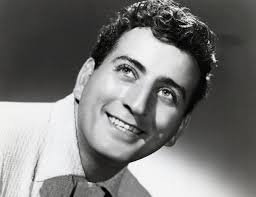
Tony Bennett (1926–2023), born Anthony Dominick Benedetto in Queens, New York, was one of the last true legends of the Great American Songbook whose career spanned eight decades and bridged the eras of big band, traditional pop, jazz, and even contemporary crossover collaborations. Known for his warm tone and impeccable phrasing, Bennett remained a beloved figure in American music well into the 21st century.
Bennett's path to stardom was by no means conventional. As a young man, he worked as an elevator operator and sang wherever he could, often performing for free just to be heard. His first major break came at age 24 under the stage name Joe Bari, when he appeared on the popular television talent show Arthur Godfrey's Talent Scouts. Not long after, while performing as a guest on Pearl Bailey's show at a Greenwich Village nightclub, Bennett caught the attention of comedian and entertainer Bob Hope. Struck by his singing voice and stage charisma, Hope suggested the more memorable stage name "Tony Bennett" and invited him to join his national tour, providing the young singer with invaluable exposure.
Following the tour, Columbia Records producer Mitch Miller recognized Bennett's potential and signed him to the label. Bennett's first releases included "The Boulevard of Broken Dreams," and he quickly followed it with a string of chart-topping hits such as: "Because of You", "Cold, Cold Heart" (a cover of the Hank Williams country ballad that helped bridge pop and country audiences), and "Blue Velvet."
But it was "I Left My Heart in San Francisco" (1962) that became Tony Bennett's signature song. The elegant ballad earned him two Grammy Awards and solidified his status as one of America's most revered vocalists. With its soaring melody and Bennett's heartfelt delivery, the song captured the longing and romance of classic American pop at a moment when rock and roll was rapidly reorienting the musical sphere. The song's impact on San Francisco civic identity has endured for decades, and it is still played after every San Francisco Giants home victory at Oracle Park.
Though his popularity declined somewhat during the rock-driven 1970s, Bennett never disappeared from public view. Instead, he shifted his focus to jazz standards and intimate club performances, remaining artistically grounded while quietly growing his audience. His dedication to musical integrity paid off: in the 1990s and 2000s, Bennett ‘s career experienced a remarkable resurgence, winning over a new generation of fans and collaborating with artists across the musical spectrum. His later partnerships included duets and albums with performers such as k.d. Lang, Christina Aguilera, Billy Joel, and Lady Gaga, with whom he recorded two full duet albums: Cheek to Cheek (2014) and Love for Sale (2021). Even as his voice mellowed with age, it retained an emotional richness that continued to resonate with listeners. His dedication to the Great American Songbook earned him lasting admiration from critics, fellow musicians, and fans worldwide. He continued performing and recording well into his nineties, until his passing in 2023, just shy of his 97th birthday.
Doris Day

Doris Day (1922–2019) was one of the most successful and versatile entertainers of the mid-20th century, with a career that spanned music, film, television, and political activism. Born Doris Mary Anne Kappelhoff in Cincinnati, Ohio, Day originally dreamed of becoming a professional dancer. However, a car accident at age fourteen left her with a badly broken leg and derailed her ambitions. During her lengthy recovery, she began taking voice lessons, at which point her talent quickly became apparent. Her first professional singing job came with bandleader Barney Rapp, who suggested she change her name to "Doris Day" after her performance of the song "Day After Day."
By the time she was sixteen, Day was performing with Bob Crosby's band, and soon after, she joined Les Brown and His Band of Renown, one of the most popular big bands of the 1940s. With Brown, she recorded some of her biggest early hits, including "My Dreams Are Getting Better All the Time" and "Sentimental Journey" — a 1945 anthem for returning World War II soldiers that became one of her signature songs.
These recordings brought her to national radio audiences and paved the way for a highly successful solo career.
In 1948, Doris Day made her film debut in the musical comedy Romance on the High Seas, performing"It's Magic," a song that became a major hit and launched her long and prolific film career. She would go on to star in 39 movies, often playing the wholesome, all-American girl in romantic comedies and musicals. Her charming and witty screen presence made her one of the top box office draws of the 1950s and early 1960s. In the process, she helped establish the Hollywood stereotype of the blonde, bubbly leading lady: cheerful, approachable, and always ready to break into song.
One of her most famous performances came in Alfred Hitchcock's 1956 thriller The Man Who Knew Too Much, in which she starred opposite James Stewart. The film featured her recording of "Que Sera, Sera (Whatever Will Be, Will Be)", which won the Academy Award for Best Original Song and became her signature tune, and has remained in regular circulation through broadcast and reuse. In addition to her music and film work, Day also starred in her own television show, The Doris Day Show (1968–1973), following the same variety-show format adopted by other mid-century vocalists like Rosemary Clooney and Perry Como.
Day's personal life, however, was often more complicated than her public image suggested. She was married four times, and her only son, Terry Melcher, became a successful record producer, known for his work with the Byrds and other 1960s rock acts (See Epilogue to Chapter 22). Later in life, Day withdrew from show business and became a passionate animal rights activist, founding the Doris Day Animal Foundation and focusing her public life on animal-rights organizations she founded.
Patti Page

Patti Page, known for her gentle, expressive voice, her genre-blending appeal, and her pioneering use of overdubbing, became one of the most popular and commercially successful singers of the postwar era. Often referred to as "The Singin' Rage," Page would go on to sell over 60 million records and chart numerous hits across both the pop and country charts. Born Clara Ann Fowler in Tulsa, Oklahoma, Page grew up in a large working-class household before entering radio performance as a teenager, singing country songs on Tulsa's KTUL radio station. At just 18, she was selected as the featured vocalist for a fifteen-minute program called Meet Patti Page, sponsored by the Page Milk Company. She adopted "Patti Page" as her professional name and carried it with her for the rest of her life.
Page soon moved to Chicago, where she appeared on national radio, including The Don McNeill Breakfast Club on ABC, and began recording for Mercury Records. In 1947, became one of the earliest popular singers to use overdubbing in commercial recordings—the technique of layering multiple vocal tracks on top of one another. Her hit "Confess" featured Page singing both lead and harmony with herself, a novel idea at the time that would become a signature of her sound.
But it was in 1950 that Page's career expanded sharply after her recording of "Tennessee Waltz." Originally a country and western song written by Pee Wee King and Redd Stewart, Page reimagined it in a gentle pop-ballad style, overdubbing herself in a duet. The song became an unprecedented success, reaching No. 1 on the Billboard chart and reportedly becoming the first tune ever to hit No. 1 in every industrialized country in the world. “Tennessee Waltz” elevated Page to national stardom while also helping to legitimize country music as a commercially viable genre in the pop market.
The overdubbing technique was pioneered and popularized by guitarist and inventor Les Paul in the late 1940s. Using reel-to-reel tape machines, Paul developed a method for recording one part of a performance, then playing it back while recording additional parts on top of it. Each layer was synchronized with the original, allowing multiple vocal or instrumental parts to be combined into a single recording. Paul refined this process by modifying tape recorders to enable sound-on-sound recording, which allowed him to stack harmonies, solos, and effects on a single track. This technique allowed Paul and singer Mary Ford to record vocals and instruments in separate takes, as heard in "How High the Moon"and "Tiger Rag," where Ford's vocals and Paul's guitar were recorded in separate passes but played back as a unified performance. This layering technique, now standard in music production, was revolutionary at the time and opened new creative possibilities for pop singers like Patti Page, who could use it to enrich their sound in studio recordings to record harmony parts without additional performers.
Throughout the 1950s, Page continued to score hits with sentimental pop ballads that appealed to both rural and urban audiences, including "I Went to Your Wedding" (1952), "(How Much Is) That Doggie in the Window?" (1953), and "Cross Over the Bridge" (1954). Page's sweet, sincere delivery and wholesome image made her a favorite on the radio and television. She became the first singer to have television shows on all three major networks. NBC aired The Patti Page Show in 1956, CBS ran The Big Record from 1957 to 1958, and ABC followed with The Patti Page Oldsmobile Show from 1958 to 1959
Although her popularity waned with the rise of rock and roll in the 1960s, Page continued to perform and returned to her country roots in the 1970s. Her work in this period reaffirmed her connection to country music, and she remained a beloved performer, touring internationally and appearing on television well into the 1990s and early 2000s. She continued to perform until 2012 and passed away in 2013.
The Boswell Sisters

During the 1930s and 1940s, vocal harmony groups, especially female trios, became an important part of American pop and jazz. One of the earliest and most influential of these groups was The Boswell Sisters, composed of siblings Connee, Martha, and Helvetia (Vet) Boswell. Hailing from New Orleans, the trio rose to national fame through their close harmonies influenced by swing rhythm and jazz phrasing, woven together with a pop sensibility.
The sisters began their career on a New Orleans radio station and quickly became local favorites. In the early 1930s, they signed with Brunswick Records and recorded with prominent jazz artists, including the Dorsey Brothers Band. Their version of "When I Take My Sugar to Tea" remains one of their best-known hits and exemplifies their unique style.
National stardom followed as the Boswells became regulars on NBC's Kraft Music Hall and appeared in several Hollywood films, including The Big Broadcast (1932), Moulin Rouge (1934), and Transatlantic Merry-Go-Round (1934). They also toured Great Britain in 1933 and 1935, gaining international recognition. The group disbanded in 1936, but Connee Boswell continued as a solo artist, enjoying a long and successful career.
Connee Boswell, the primary soloist and arranger within the group and the most musically adventurous of the Boswell Sisters, was one of the most influential yet often overlooked female pop and jazz singers of her generation. Paralyzed from the age of four due to polio, she performed from a wheelchair throughout her career. Despite this, she developed a commanding stage presence and vocal style.
After the Boswell Sisters disbanded, Connee signed with Decca Records and launched her solo career. She frequently collaborated with leading stars of the era, including Bing Crosby. Their duets, such as "Bob White (Whatcha Gonna Swing Tonight?)" (1937), "Alexander's Ragtime Band" (1938), and "An Apple for the Teacher" (1939), were major hits and showcased her innate charm and musical adaptability.
Boswell was one of the first white female pop singers to reinterpret songs through a common jazz practice involving melodic alteration and rhythmic delay. Drawing inspiration from early blues and jazz singers like Bessie Smith, Mamie Smith, and Ethel Waters, she introduced those expressive techniques to a broader popular audience. Recordings such as "They Can't Take That Away from Me,""I Cover the Waterfront," and "That Old Feeling" display her masterful use of phrasing, timing, and emotional subtlety. In contrast to the more rigid vocal delivery standard amongst her peers, Boswell's interpretations came across as fresh, intimate, and spontaneous.
Although she sold over 75 million records, Boswell never achieved the level of mainstream recognition that many of her contemporaries enjoyed. Her disability, never publicly acknowledged during her lifetime, was deliberately concealed in films through careful staging and wardrobe choices. In some productions, she was strapped into a support frame and hidden behind flowing skirts to give the illusion she was standing. In spite of these barriers, her performances remained magnetic, earning her respect across both the pop and jazz worlds.
Boswell’s influence is perhaps most evident in the work of vocalists she inspired. Ella Fitzgerald cited her as a primary influence, modeling her early phrasing and sonority on Boswell's distinctive style. In this way, Connee Boswell helped bridge the worlds of 1920s blues, 1930s swing, and the developing vocal traditions of postwar jazz and popular music.
The Andrews Sisters

The Andrews Sisters—Patti, Maxine, and LaVerne—were the most popular and influential female vocal group of the 1940s. They blended tight three-part harmonies, infectious rhythm, and a patriotic flair that made them beloved both at home and abroad during World War II. Drawing from big band swing, boogie woogie, and pop ballads, they became one of the most commercially active acts of the era
Originally from Minneapolis, Minnesota, the sisters began performing together as teenagers and eventually moved to New York City, where they launched their national career. National attention followed their 1937 recording of "Bei Mir Bist Du Schön," a Yiddish folk song adapted with English lyrics by Sammy Cahn and Saul Chaplin. The song became an unexpected smash hit, catapulting the trio to stardom and earning them a contract with Decca Records.
Throughout the 1940s, the Andrews Sisters recorded a string of hit songs that became synonymous with the American wartime experience. Their music, often backed by swing legends such as Glenn Miller, Benny Goodman, and Jimmy Dorsey, captured the era's rhythms and spirit. Notable hits include: "Boogie Woogie Bugle Boy (of Company B)" (1941), one of their most iconic songs, which captured the boogie woogie fever sweeping the nation, and became an anthem for American troops, "Rum and Coca-Cola" (1944), a controversial hit that was banned in Boston for referencing alcohol and inadvertently advertising a commercial brand, "Beer Barrel Polka (Roll Out the Barrel)" and "I’ll Be With You in Apple Blossom Time"
Their popularity soared during World War II, when they became the favorite vocal group of the American military. Tireless in their support of the war effort, they performed at USO shows, military bases, and wartime benefits, and regularly appeared on radio programs hosted by stars like Bob Hope and Bing Crosby. Their upbeat, danceable songs provided a much-needed morale boost to soldiers stationed overseas and to families back home. The sisters also appeared in more than a dozen Hollywood films, often cast as cheerful musical acts in wartime comedies and musicals. These performances helped bring their music to expanded audiences and buttressed their image as wholesome, patriotic entertainers.
Musically, the Andrews Sisters were known for their precise vocal harmonies, drawing on jazz phrasing and swing rhythms. They frequently used call-and-response structures and synchronized vocal lines to create a sound that was rhythmically vibrant and vocally intricate. Later female vocal groups such as the McGuire Sisters, The Supremes, and The Pointer Sisters drew on their close-harmony style, and their influence remains central to the development of close-harmony pop singing.
Nat King Cole

As a commercially successful Black artist in mainstream popular music, Nat King Cole expanded opportunities for later generations of singers and performers while becoming one of the leading figures in American pop. Born Nathaniel Adams Coles in Montgomery, Alabama, in 1919, he moved with his family to Chicago at a young age. Raised in a religious household where his father served as a Baptist minister, Cole showed early musical promise. He trained as a jazz pianist and, by his teens, was already performing in clubs and recording as a sideman.
In the 1930s, he formed the King Cole Trio, a jazz ensemble consisting of piano (played by Cole), guitar, and bass. The group was unique for omitting drums, creating an intimate sound that later appeared in small-combo jazz settings. They gained popularity on West Coast radio in the early 1940s, with songs like "Straighten Up and Fly Right" (1943), a swing-infused number based on a Black folktale Cole had learned from his father. The song became a major hit, pushing the trio into regular national radio rotation during the early 1940s.
Although Cole was already well respected as a jazz pianist, his smooth, expressive vocal style began drawing wider attention. By the late 1940s, he was increasingly marketed as a pop vocalist, and Cole became one of the first African American artists whose records sold consistently in white-dominated pop markets. His string of hits in the 1950s included "Nature Boy" (1948), "Mona Lisa" (1950), which won the Academy Award for Best Original Song, "Too Young" (1951), and "Unforgettable" (1951), which was later reintroduced to new audiences through a posthumously released duet with his daughter, Natalie Cole, in 1991. These songs showcased Cole's ability to perform with careful diction, controlled vibrato, and a restrained vocal tone formed by his jazz training. His vocal style appealed to a broad and integrated audience, and his recordings consistently sold well across racial lines—an uncommon achievement in the segregated music industry of the mid-20th century.
In 1956, Cole became the first African American artist to host a national network television program, The Nat King Cole Show, which aired on NBC. The show featured musical performances and guest appearances and was praised for its sophistication and musical excellence. However, national sponsors refused to support the program due to the prevailing racial climate. Despite its critical success, the show was canceled after just over a year. Commenting on the industry's reluctance, Cole famously remarked, "Madison Avenue is afraid of the dark.”
Although facing these obstacles, Cole continued to perform, record, and appear in film and television throughout the early 1960s. While his recordings became increasingly associated with pop, his music always retained the phrasing of his jazz background, helping elevate the standards of popular vocal performance.
Nat King Cole died in 1965 at the age of 45 from lung cancer. Though his life ended prematurely, his impact was far-reaching. He was a trailblazer in American music and media, a master interpreter of the American songbook, and a cultural bridge between jazz and pop, as well as between Black and white audiences, consequently reinforcing his standing in the pantheon of American popular music.
The Golden Gate Quartet
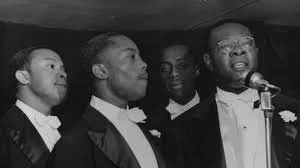
The Golden Gate Quartet was a significant African American vocal group of the pre-rock era, rising to prominence in the 1930s and 1940s by blending gospel, spirituals, and popular vocal harmony into a style that influenced later genres like doo-wop, soul, and Motown. Their performances relied on close harmony, rhythmic bass lines, and coordinated movement, and the quartet was among the first gospel acts to gain widespread mainstream recognition.
Formed in the early 1930s in Norfolk, Virginia, the original members were students at Booker T. Washington High School. They gained early attention performing gospel and jubilee music, a style rooted in the African American spiritual tradition but presented with a more rhythmic, up-tempo, and often improvisational approach. Their arrangements combined bass vocal lines, percussive syllables, and close harmonies, pushing past traditional gospel techniques while maintaining its spiritual core.
The group began recording for Victor Records in 1937, and their popularity continued to grow steadily. In 1938, producer John Hammond invited them to perform "Spirituals to Swing" concert at Carnegie Hall. This event introduced them to a larger, more integrated audience and marked an early crossover of Black sacred music into secular performance venues.
In 1941, the Golden Gate Quartet signed with Columbia Records and appeared in several Hollywood films, including Star Spangled Rhythm (1942) and Hollywood Canteen (1944). These appearances increased their visibility during World War II, when American audiences were particularly receptive to music promoting unity, faith, and national spirit.
One of their notable recordings is the 1938 version of "Stormy Weather," which showcases vocal techniques later associated with doo-wop, a genre explored in more detail in a later chapter. Their smooth harmonies, dynamic shifts, and structured vocal parts—including bass leads and falsetto flourishes—anticipated the style of vocal groups that emerged in the 1950s and 1960s, especially during the Motown era.
Many Motown groups, such as The Temptations, The Four Tops, and The Miracles, drew from the musical structure and stage presence pioneered by the Golden Gate Quartet (See Chapter 17). The group's balance of technical skill and emotional expression set a model for subsequent ensembles, blending sacred and secular influences and expanding opportunities for Black vocal groups in popular music.
The Ink Spots

The Ink Spots, alongside the Golden Gate Quartet, were pioneers in the development of modern R&B, pop ballads, and doo-wop. Their unique blend of falsetto leads, spoken bass lines, and close four-part harmonies created a style that influenced vocal groups for many years, ranging from early doo-wop ensembles to Motown groups of the 1960s. The group formed in 1934 with Jerry Daniels, Charles Fuqua, Ivory "Deek" Watson, and Orville "Hoppy" Jones. In their early years, they performed jazz and swing, touring internationally. It was only after Bill Kenny replaced Daniels in 1936 that the Ink Spots crafted the distinctive sound that made them famous.
Their signature musical pattern was instantly identifiable. Songs often included an opening verse sung by Bill Kenny in a clear, high tenor or falsetto, a spoken bass passage performed by Hoppy Jones with a deep, resonant baritone, a short instrumental section or repetition of the verse, and a closing four-part harmony.
This song structure, best exemplified by their hit "If I Didn’t Care" (1939), introduced a new style of vocal group performance. The song sold millions of copies, launching the Ink Spots to national fame, which was followed by multiple commercially successful recordings over the next decade.
The Ink Spots enjoyed significant popularity in the early 1940s. They became regular performers at well-known venues like the Apollo Theater in Harlem and the New York Paramount. They also appeared alongside Glenn Miller's orchestra. Their schedule in Manhattan was so demanding that they rented an ambulance with a driver to quickly travel between venues such as the Apollo and the Famous Door jazz club on 52nd Street, ensuring they could make back-to-back shows on time. Some of their notable hits include: "We Three (My Echo, My Shadow and Me)" (1940, "I Don’t Want to Set the World on Fire" (1941), "Into Each Life Some Rain Must Fall" (1944, featuring Ella Fitzgerald), "To Each His Own" (1946), and "For Sentimental Reasons" (1947)
The Ink Spots' music was often characterized by slow tempos, sentimental lyrics, and a romantic melancholy, contributing to the ballad format common in 1940s pop. Their recordings resonated with both Black and white audiences during a time of widespread racial segregation in the American music industry. Musically, the group combined elements of jazz, pop, and early rhythm and blues. Vocal harmony groups such as The Orioles, The Ravens, and later The Platters drew heavily from the Ink Spots' style, playing a key role in the rise of doo-wop during the 1950s and early 1960s.
Your Hit Parade

Before music charts, streaming platforms, and YouTube views became the dominant measures of success, the definitive barometer of pop music popularity in the United States was a radio program called Your Hit Parade. Running from 1935 to 1959, the show was a Saturday night ritual for millions of Americans and provided national radio exposure for singers and songwriters during the golden age of traditional pop.
Sponsored by Lucky Strike cigarettes and broadcast over the CBS radio network, Your Hit Parade featured a staff of professional vocalists and musicians who performed live renditions of the top ten songs of the week. The selections were based on a mix of criteria that gauged a song's real-world popularity, including frequency of radio airplay, spins on jukeboxes, performances by dance bands across the country, and sales of sheet music and phonograph records.
The exact formula used to determine the rankings was a closely guarded secret, handled by the prestigious accounting firm Price, Waterhouse & Co. Each Friday, a Brinks armored truck collected the latest national data from undisclosed locations and delivered it to the show's producers just in time for the weekend broadcast. The top three songs were so confidential that even the show's singers weren't told what they would be performing until the last possible moment.
In its original format, Your Hit Parade featured performances by a rotating cast of vocalists, often accompanied by full orchestration. Over the years, many of America's most celebrated pop singers appeared on the show, including Frank Sinatra, Johnny Mercer, Dinah Shore, and Dorothy Collins.
The show's influence was enormous, as it introduced new songs to a nationwide audience, extended the shelf life of existing hits, and influenced popular taste. It became a powerful promotional platform for Broadway songs, film tunes, and the work of prominent composers such as Irving Berlin, Cole Porter, and Rodgers and Hammerstein.
Some songs became recurring favorites, appearing on the show week after week. The all-time champion was Irving Berlin's “White Christmas", which was featured 33 times, ten of those at the #1 position. Close behind was "People Will Say We’re In Love" from Oklahoma! (30 appearances) and "Harbor Lights", a British pop ballad from 1937 (29 appearances).
As television became the dominant medium in the 1950s, Your Hit Parade transitioned from radio to TV in 1950, bringing its stars and orchestrated performances to living rooms across the country. Its visual panache, choreographed numbers, and lavish costumes made it one of the earliest examples of the television music variety show format that would become a staple of mid-century American entertainment.
Despite its popularity, Your Hit Parade began to decline as rock and roll changed the direction of popular music in the late 1950s. Its deliberately curated image of polished pop no longer matched the untamed vigor and youth appeal of the new rock generation. The show was ultimately canceled in 1959, but by then it had it had become a fixture of American pop culture for more than two decades.
Chapter 11: Conclusion

The pop music scene of the 1940s and early 1950s often featured large orchestras and sentimental ballads, with vocalists placed at the center of performance. Many of these singers, including Frank Sinatra, Perry Como, Doris Day, and Nat King Cole, began their careers with big bands before transitioning to solo acts as audience preferences shifted and the influence of radio, records, and television grew.
The postwar era produced some of the most memorable vocal performances in American music history. These artists helped establish the singer, not the band or the song, as the central figure in popular music. Their voices became symbols of postwar optimism, romantic longing, and domestic comfort during an era of significant cultural change.
As the 1950s advanced, however, the sound and spirit of pop music began to evolve. A new energy was emerging from the margins, rooted in Black rhythm and blues, Southern gospel, and working-class youth culture. By the end of the 1960s, popular music would have evolved significantly from the crooning era that preceded it. The seeds of a genre were sown during this time, as R&B artists began crossing over into the mainstream charts, introducing novel sounds, stories, and rhythms that we will examine in the next chapter, including doo-wop, gospel, and rhythm and blues.
Chapter 11: Further Reading
Bennett, Tony, with Will Friedwald. The Good Life: The Autobiography of Tony Bennett. New York: Pocket Books, 1998. Reprint.
Braun, Eric. Doris Day. London: Robson Books, 1991. Reprint.
Clarke, Donald. All or Nothing at All: A Life of Frank Sinatra. London: Victor Gollancz, 1997.
Clooney, Rosemary, with Joan Barthel. Girl Singer: An Autobiography. New York: Doubleday, 1999.
Cole, Mario, and Louie Robinson. Nat King Cole: An Intimate Biography. New York: Atheneum, 1971.
Day, Doris, as told to A. E. Hotchner. Doris Day: Her Own Story. New York: William Morrow, 1976.
Ewen, David. All the Years of American Popular Music. Englewood Cliffs, NJ: Prentice-Hall, 1977.
Freedland, Michael. All the Way: A Biography of Frank Sinatra. London: Weidenfeld & Nicolson, 1997.
Goldberg, Marv. More than Words Can Say : The Ink Spots and Their Music. Lanham, Md: Scarecrow Press, 1998.
Gourse, Leslie. Unforgettable: The Life and Mystique of Nat King Cole. New York: St. Martin’s Press, 1991.
Hamm, Charles. Yesterdays: Popular Song in America. New York: Norton, 1979.
Keightley, Keir. Frank Sinatra, Hi-Fi, and Formations of Adult Culture: Gender, Technology, and Celebrity, 1948–62.PhD diss., Concordia University, 1997.
Macfarlane, Malcolm, and Ken Crossland. Perry Como: A Biography and Complete Career Record. Jefferson, NC: McFarland, 2009.
Petkov, Steven, and Leonard Mustazza, eds. The Frank Sinatra Reader. New York: Oxford University Press, 1995.
Pleasants, Henry. The Great American Popular Singers. New York: Simon and Schuster, 1974.
Roberts, John Storm. The Latin Tinge: The Impact of Latin American Music on the United States. New York: Oxford University Press, 1979. 2nd ed., 1999.
Rubman, Kerill L. From Jubilee to Gospel in Black Male Quartet Singing. PhD diss., University of North Carolina, 1980.
Sanjek, David. "Ink Spots, the." Grove Music Online. July 1, 2014. Accessed June 20, 2025.https://www-oxfordmusiconline-com.libproxy.sdsu.edu/grovemusic/view/10 1093/gmo/9781561592630.001.0001/omo-9781561592630-e-1002262505.
Shaw, Arnold. Sinatra, Twentieth-Century Romantic. New York: Nelson, 1965.
Teachout, Terry. Pops: A Life of Louis Armstrong. New York: Houghton Mifflin Harcourt,
2011.
Titus, Kyla, Chica Boswell Minnerly, and David W McCain. The Boswell Legacy: The
Story of the Boswell Sisters of New Orleans and the New Music They Gave to the World. First edition. 2014.
Von Schilling, James A. “Hearing the Boswell Sisters.” Popular Music and Society 31,
no. 2 (2008): 191–200. https://doi.org/10.1080/03007760701859049.
Williams, John R. This Was Your Hit Parade. Camden, ME: Courier-Gazette, 1973.