Chapter 34: Hip Hop pt.1
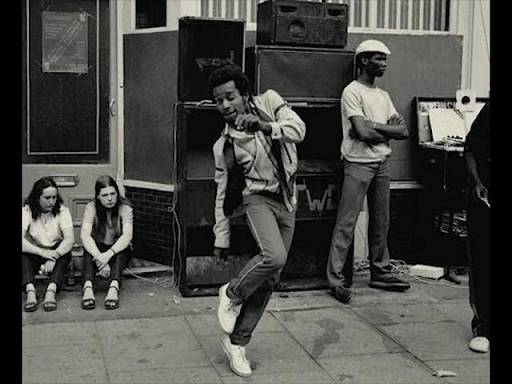
Chapter 34: Introduction
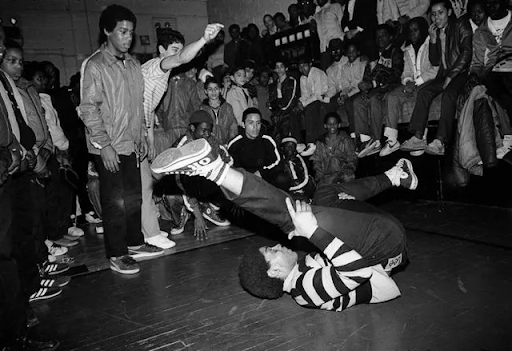
Hip-hop emerged in the 1970s as a dynamic fusion of African American and Afro-Caribbean musical traditions, drawing particularly from disco, funk, and other forms of Black dance music. The earliest expressions of hip-hop developed at neighborhood parties, where DJs played records live and MCs (Master of Ceremonies) delivered rhythmic, spoken messages over the music. Innovators such as Afrika Bambaataa and Grandmaster Flash developed new techniques for mixing, looping, and manipulating records, establishing the turntable as an instrument in its own right. By the end of the decade, hip-hop had evolved from a local, participatory culture into a commercial phenomenon. Independent, Black-owned labels such as Sugar Hill Records and Def Jam, co-founded by Rick Rubin and Russell Simmons, began recording and producing hip-hop, bringing it to national audiences. Some of the most commercially successful groups blended rap with rock, a mixture that brought hip-hop to larger white audiences and helped to establish the genre as a major force in American popular culture by the late 1980s.
Rap music, or rhythmic, rhyming speech performed over a musical beat, developed as one facet of this broader cultural movement, created by African American and Caribbean American youth in New York City. However, hip-hop culture encompassed distinctive forms of artistic expression—graffiti, breakdancing, fashion, and language—through which participants marked neighborhood ties and social position. Its roots lay in the South Bronx, then one of the most economically devastated areas of the city and the nation.
New York City in the 1970s was a city in crisis. Widespread deindustrialization, rising unemployment, and fiscal austerity left entire neighborhoods struggling to survive. Crime increased sharply as police budgets were cut, while white flight to the suburbs drained the city’s tax base. Many landlords, unable or unwilling to maintain their properties, burned buildings for insurance payouts, leaving blocks of the Bronx reduced to charred ruins. The 1977 blackout, which left the city without power for nearly 25 hours, exposed the fragility of the city’s infrastructure, triggering widespread looting and arson that left lasting scars on already damaged communities. Amid the devastation in the South Bronx, however, new forms of art and music began to flourish, converting abandoned spaces into arenas of creativity.
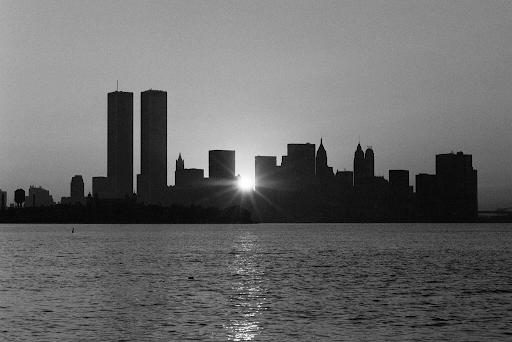
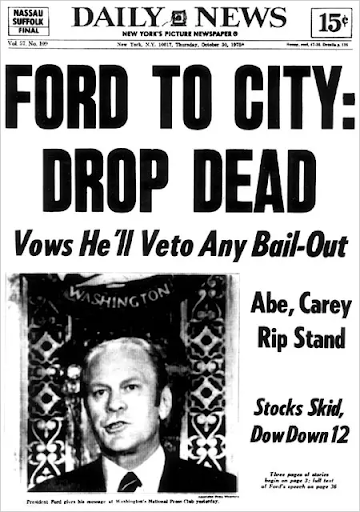
Federal budget cuts during the mid-1970s further reduced funding for low-income housing and social programs, deepening poverty and neglect in inner-city neighborhoods. In 1975, President Gerald Ford declined to authorize a federal bailout for the nearly bankrupt city, prompting the Daily News to famously declare: “Ford to City: Drop Dead.” Ford's refusal to authorize a federal bailout occurred amid a fiscal emergency driven by shrinking tax revenues and rising social service demands, leaving residents to confront the collapse of essential city services largely on their own. By the time President Jimmy Carter visited the Bronx in 1977, the borough had come to symbolize urban decline, as the New York Times described it: “a symbol of America’s woes.”
The South Bronx became a site where post–Civil Rights urban neglect coincided with new forms of cultural production. The construction of the Cross Bronx Expressway, spearheaded by city planner Robert Moses, had already displaced thousands of working-class residents, fracturing once-thriving communities. As manufacturing jobs disappeared and city services collapsed, gangs filled the social void.
Under these conditions, young people used abandoned spaces for performances, competitions, and social gatherings. Crews and posses, often tied to specific blocks or neighborhoods, emerged as central organizing units of the early Bronx hip-hop culture. Hip-hop, in its early stages, was a deeply local phenomenon, grounded in the everyday experiences and identities of Bronx youth. Even as rap later became a global commercial enterprise, many artists continued to reference their neighborhoods and communities, which kept place and social ties audible in the music.
Musically, hip-hop drew directly from the sounds that filled New York’s dance floors. Disco, funk, and Latin dance music fueled block parties and community gatherings across the Bronx. Venues like Disco Fever in the Bronx supported this scene years before hip-hop records were commercially available, hosting live sets by groups such as Grandmaster Flash and the Furious Five. While disco ruled radio playlists, its mainstream success was repackaged by European producers in ways that minimized its Black funk origins. George Clinton, through the elaborate mythology of Parliament-Funkadelic, mocked this sanitized version of dance music for white audiences as “the Placebo Syndrome.” Early hip-hop inherited the technical innovations of disco—the use of the mixer, the break, and the extended groove—while rejecting its glossy aesthetic.
DJs discovered that the most exciting moments for dancers occurred during the instrumental “breaks” of records, or the sections stripped of vocals and focused entirely on percussion and rhythm. By isolating and extending instrumental breaks, DJs provided longer rhythmic passages for dancers, contributing to the development of “breakdancing,” an acrobatic style of solo performance that emphasized individual ability and creativity. The dancers who exhibited their moves during the extended instrumental breaks became known as “B-boys” and “B-girls,” a label that could stand for “break,” “beat,” “battle,” or even “Bronx,” depending on who used it. Clubs such as the Plaza Tunnel in the Concourse Plaza Hotel became hubs of this burgeoning culture, with DJs mixing a wide range of records by artists including the Jimmy Castor Bunch, The Isley Brothers, Earth, Wind & Fire, and Rare Earth to keep crowds moving.
Hip-hop’s rise was also intertwined with the political and artistic movements of the late 1960s and early 1970s. The Black Power movement, led by figures such as Huey Newton and Bobby Seale of the Black Panther Party, called for Black self-determination and resistance to systemic oppression. Although the Panthers declined in the early 1980s, their language of empowerment circulated among younger generations. Artists working at the intersection of poetry, politics, and rhythm helped close the gap between civil rights activism and the cultural experimentation that would become widespread in the 1970s. The Last Poets, a collective including Umar Bin Hassan, Jalal Mansur Nuriddin, and Abiodun Oyewole, combined spoken word with percussion in performances such as This Is Madness(1971), forming the basis for a new synthesis of music and social critique.
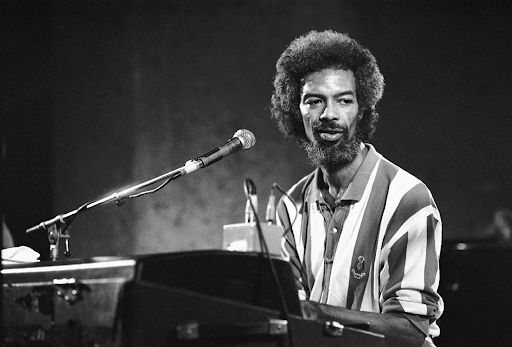
Gil Scott-Heron extended the lineage established by The Last Poets of politically charged performance. A poet and musician from the Bronx, Scott-Heron gained recognition in the early 1970s for his incisive commentaries on race, inequality, and American life. His early works, including “The Revolution Will Not Be Televised,”“Sex Education Ghetto Style,” and “The Get Out of the Ghetto Blues,” combined sharp social critique with jazz and funk rhythms. Released first as a spoken-word piece accompanied by percussion in 1970 and later as a full-band recording onPieces of a Man(1971), “The Revolution Will Not Be Televised” became one of the era’s sharpest protest anthems. The song’s title echoed a slogan of the Black Power movement, and its lyrics referenced American television, advertising, and celebrity culture to expose how mass media distracted from political struggle. Scott-Heron’s rhythmic delivery and spoken-word style would later earn him recognition as a precursor to hip-hop, influencing generations of MCs who merged poetry, politics, and rhythm.
Scott-Heron’s lyrics critiqued the complacency of a society saturated with consumer culture. His verses referenced television programs, corporate slogans, and political figures from Richard Nixon to Spiro Agnew, juxtaposing them against the lived realities of Black communities in American cities. In doing so, he reconceptualized protest music for the post–Civil Rights era, making clear that revolution would not be mediated or commodified. His influence, alongside that of The Last Poets, linked the political energy of the 1960s to the street-level creativity of 1970s hip-hop, forging a lineage of resistance through rhythm and word.
By the close of the decade, hip-hop had evolved from neighborhood gatherings into a national movement that captured the contradictions of life in American cities: poverty alongside innovation, alienation alongside community, despair redirected into artistic expression. Born from the ruins of the postindustrial city, it offered a new language of expression grounded in rhythm, social position, and political critique. Rooted in African diasporic traditions and the politics of Black self-expression, yet unmistakably modern, hip-hop functioned as both a musical genre and a broader cultural practice with ongoing influence in American life.
The Four Elements of Hip Hop
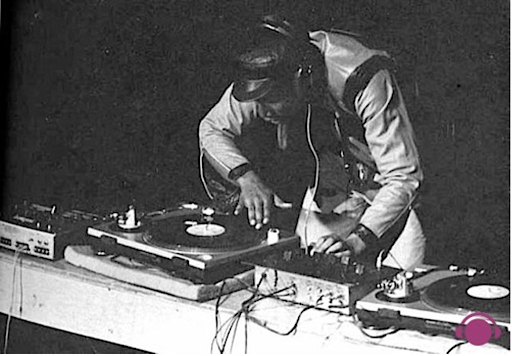
Hip-hop first emerged in New York City in the early 1970s, especially in neighborhoods with large African American, Afro-Caribbean, and Latino populations. It was construed by four foundational elements, each interconnected and mutually influential: DJing, the musical backbone of the culture; MCing or rapping, which provided verbal expression and storytelling; breaking (b-boying/b-girling), a physically dynamic and improvisational form of dance; and graffiti, a visual art form asserting identity and creativity in public spaces. Together, these elements created a cohesive culture rooted in neighborhood gatherings, competitive display, and personal expression.
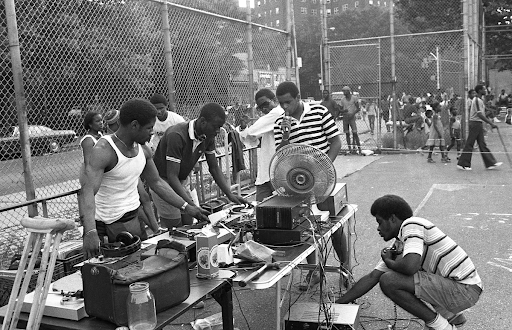
Central to hip-hop’s development was the DJ, who acted as both musician and performer. By the late 1970s, DJs had become major artistic figures, valued for their ability to blend records seamlessly to sustain energy and keep audiences dancing, often rivaling the presence of live bands. Many early hip-hop DJs were of Jamaican or Caribbean descent and drew heavily on the musical and performance traditions of their heritage. A key innovation was the mobile DJ unit, a portable setup that typically included two turntables, a mixer, speakers, amplifiers, and a collection of vinyl records, all transported in vans or cars to block parties, parks, and community centers, turning public spaces into makeshift dance halls. Often, two DJs would perform at the same event, trading songs, experimenting with transitions, and responding to the crowd’s energy in real time. These collaborations created a dynamic interplay of musical skill and improvisation, keeping the party lively and placing the DJ at the center of early hip-hop performance.
Another Jamaican contribution was toasting, a form of spoken performance over recorded music. Toasting has deep roots in African and African American oral traditions. For instance, the jeli or griotof West Africa was a musician and storyteller whose performances combined narrative, song, and cultural knowledge in communal settings. Similarly, African American verbal art forms such as boasting and call-and-response encouraged improvisation, verbal dexterity, and audience engagement. Toasts could recount heroic deeds or exaggerate real events, while boasting celebrated the performer’s skills, possessions, or social status.
Early hip-hop DJing and MCing also drew on African American church traditions and jazz vocal practices such as scat singing. Spoken interludes in R&B and the styles of radio DJs influenced delivery and timing. Recordings by Black Arts Movement poets and risqué or “blue” records influenced the rhythm, tone, and content of early MCing. Instrumental dub versions of Jamaican tracks, in which vocals were stripped to highlight rhythm and bass, provided a sonic canvas for DJs and MCs to improvise over. Collectively, these traditions met at New York City block parties and outdoor gatherings, creating spaces where communities gathered and expressed shared identity through performance. Within New York block-party culture, the DJ controlled the rhythmic structure of hip-hop, providing both the beats and the platform for vocal and dance expression.
MCs, or “Masters of Ceremony,” evolved directly from DJ culture. Initially, MCs acted as verbal entertainers, hyping the crowd, keeping energy high, and creating call-and-response dialogues with partygoers. Rapping, the core of MC performance, is a vocal art form in which words are delivered rhythmically and often rhymed over a beat. It combines elements of poetry and improvisation, with an emphasis on cadence, phrasing, and flow—the way syllables and words move over the rhythm. Early rapping drew on African oral storytelling, West African griots, and African American verbal traditions such as boasting, toasting, and signifying, blending narrative, humor, and social commentary. MCs might improvise lyrics on the spot or develop prewritten verses, responding to the energy of the crowd and interacting with the DJ’s beats. DJs and MCs performed together, creating the dynamic interplay of sound and words present in recorded hip-hop in the late 1970s. The MC’s role evolved further with commercial recordings, exemplified by the Sugar Hill Gang’s “Rapper’s Delight” (1979), hip-hop’s first major hit. Artists like Grandmaster Caz, Run-DMC, and LL Cool J refined rapping into a competitive, performative art, establishing the MC’s voice as central to hip-hop’s identity and laying the groundwork for stylistic innovations in rhyme, rhythm, and delivery.
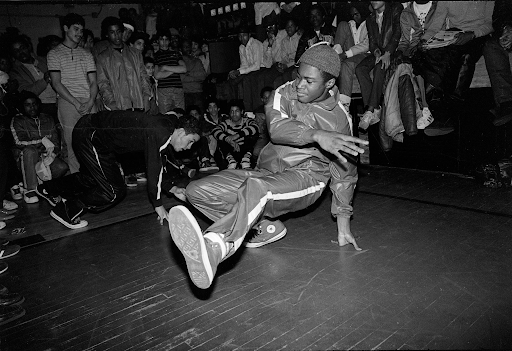
Hip-hop dance, or breaking, also emerged in the South Bronx during the early 1970s, characterized by its technical difficulty, creativity, and competitive nature. Dancers frequently engaged in performance “battles” to showcase skill, style, and presence. Breaking can be divided into traditional forms, maintained continuously since the 1970s, and social or “party” dances, which evolve rapidly. Among the four foundational dance styles—rocking, b-boying, locking, and popping—each developed distinct techniques and aesthetic principles, often in parallel on the East and West Coasts.
Rocking, or uprocking, predates hip-hop music itself and draws from Latin dance traditions such as salsa, rumba, and bomba. It is a confrontational style in which two dancers face off simultaneously rather than taking turns. Rocking movements include freestyle (expressive solo dancing), burns (exaggerated gestures to challenge or mock opponents), and jerks (stylized lunges or drops on the beat). Its confrontational and improvisational style influenced b-boying while retaining its own musical repertoire, including tracks such as Babe Ruth’s “The Mexican” (1972) and James Brown’s “Give It Up or Turn It Loose” (1969).
B-boying, commonly called breaking, is performed in the cypher, a circle of dancers. Each dancer takes a turn of roughly twenty to thirty seconds, executing sequences that include toprock (upright footwork from rocking), drops (transitions to the floor), floorwork (intricate ground movements), and freezes (posing to punctuate the performance). Floorwork includes subcategories such as footwork, air moves (acrobatics), and power moves (strength-based maneuvers). Breaking gained mainstream attention in the early 1980s through the famous B-boy group the Rock Steady Crew’s appearance in Flashdance (1983), followed by films such asBreakin’ andBeat Street. Despite commercialization and the misnomer “breakdancing,” it remains an evolving art form driven by competition and the creative use of public space.
Locking, developed on the West Coast by Don Campbell and The Lockers, emphasizes sudden pauses or “locks” in movement, often punctuated with exaggerated gestures, pointing, and playful facial expressions. It combines fast, fluid motions with abrupt halts to create striking visual effects, often performed to funk tracks with prominent drum patterns. Locking became widely known through clubs and television appearances, notably on Soul Train.
Popping, which also originates on the West Coast, relies on quickly contracting and relaxing muscles to produce a jerking effect synchronized with the beats and accents in music. Subtechniques include waving (fluid, wave-like body movements), tutting (angular arm and hand patterns), and roboting (mechanical, staccato motions). Like locking, popping was heavily performance-driven and gained exposure through clubs, competitions, and TV appearances.
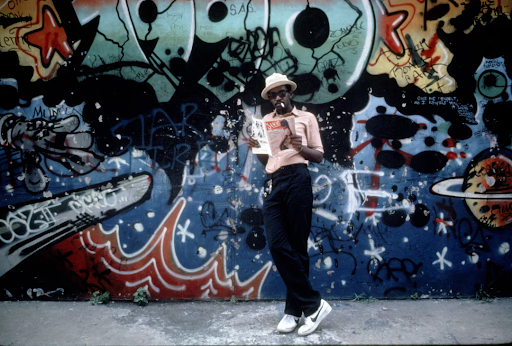
Graffiti functioned alongside music and dance as a visual assertion of presence in public city areas. Early writers used walls, subway cars, and other surfaces as canvases, transforming the city into a gallery of cultural identity. Graffiti served to mark territory and build reputation, often carrying personal or political messages. Among the most influential figures was Fab Five Freddy, a visual artist and cultural ambassador who bridged street art, hip-hop music, and mainstream media. His appearances in films like Wild Style (1983) helped introduce graffiti to wider audiences. Other notable artists included Lee Quiñones, Jean-Michel Basquiat, and Cornbread, each of whom broadened graffiti's visual vocabulary through new styles of lettering, imagery, and composition. Like DJing, MCing, and breaking, graffiti was improvisational, competitive, and deeply tied to community identity, completing the four-part structure of early hip-hop culture.
DJ Kool Herc
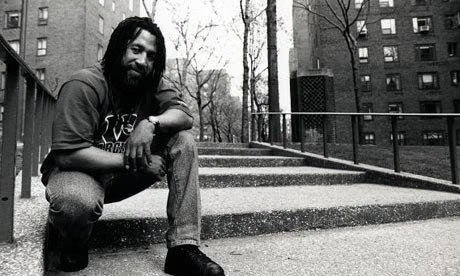
One of hip-hop’s most influential early figures was Clive “Kool Herc” Campbell, a Jamaican immigrant who arrived in the South Bronx at age twelve. Drawing on Jamaican sound system traditions, including mobile DJ units and toasting, Herc began DJing at house and block parties as early as 1973. At these events, he collaborated with Coke La Rock, who both improvised rhymes and announcements over the music, establishing a model for later MC and rap performances.
Herc developed a method called the “Merry-Go-Round,” in which he used two copies of the same record on separate turntables to isolate and extend the most rhythmically compelling sections, particularly the drum breaks. These extended percussive sections provided dancers with more time and space to execute complex moves, fueling the development of b-boying, or breakdancing. Among the most influential tracks for breaks was James Brown’s “Funky Drummer” (1970), whose drum solo, performed by Clyde Stubblefield, featured a tight, syncopated groove. The rhythm of “Funky Drummer” was particularly suited for looping because its structure supported clean repetition. Dancers could time their intricate footwork, spins, and freezes to the snare accents, while DJs could manipulate the loop to keep the crowd energized. Other popular records for breaks included the Winstons’ “Amen, Brother” (1969) and Michael Viner’s Incredible Bongo Band’s “Apache” (1973), each offered distinctive grooves and led to more elaborate movement and competition.
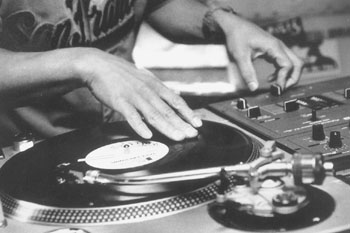
Early DJs experimented with a range of techniques that turned vinyl records from simple playback devices into instruments capable of producing entirely new sounds. Punch phrasing involves rhythmically inserting short sound segments, such as drum hits or vocal snippets, over a playing record to emphasize or enhance the rhythm. The DJ uses the mixer to layer these sounds in real time. Clock theory allowed DJs to isolate and loop specific musical breaks with precision by treating the grooves of a record as a “clock.” The DJ would mark the start of a desired section—often a drum break—and then use two turntables and a mixer to repeatedly spin the record back, creating an extended loop for dancers and MCs to perform over.
Backspinning, credited to Grandmaster Flash, involved stopping a record by hand and reversing it to replay a specific section, allowing rhythmic or melodic phrases to be repeated seamlessly. Scratching added another layer of expression, achieved by moving a record back and forth against the stylus to create percussive, rhythmic sounds. The scratching technique could take different forms, such as Flash’s “rub,” which was prepared for transitions between tracks, or “cutting,” which created improvised rhythms over an existing groove.
DJs like Grandmaster Flash, Grand Mixer D.ST., DJ Jazzy Jay, and Jam Master Jay helped popularize these methods, positioning the turntable as a percussive and melodic instrument. Building on these foundations, DJs developed beat juggling, in which elements from two records—often drum hits or instrumental phrases—were manipulated and recombined to form entirely new rhythmic patterns. These innovations fueled competitive DJ battles and also created the musical basis for hip-hop, influencing the structure of beats, the sound of rap, and the development of associated dance styles such as b-boying. Through block parties and public performances, DJs and MCs reclaimed abandoned or underused public spaces into centers of musical and social activity, in turn, establishing a culture of experimentation, improvisation, and community expression that remains central to hip-hop today.
Afrika Bambaataa
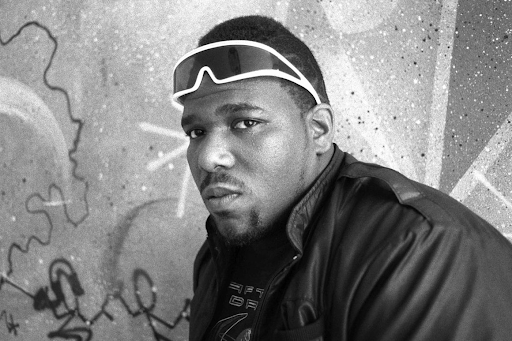
Afrika Bambaataa, born Kevin Donovan, was a vital figure in the development of early hip-hop, both as a DJ and as a community organizer. Growing up in the South Bronx during a period of deindustrialization and urban decline, Bambaataa was initially involved with the Black Spades, one of the area’s prominent street gangs. Exposed to the politics of the Black liberation movement, he sought ways to move beyond gang life and channel the youth's energy into positive social engagement. Inspired by a film about a Zulu chief who resisted colonial rule, he adopted the name Afrika Bambaataa Asim in order to symbolize racial unity and spiritual renewal. Drawing on the Black liberation movement's emphasis on racial unity and collective action, he left gang life and founded the Bronx River Association, a community organization composed of former gang members, which promoted discipline and redirected youth towards productive organized activity. By 1974, the Bronx River Association had evolved into the Universal Zulu Nation, which promoted peace, creativity, and collaboration through hip-hop culture.
As a DJ, Bambaataa became known for his eclectic musical selections, combining sounds from different genres and looping their break sections in inventive ways. He would loop the percussive sections of funk, rock, and early electronic records to create extended breakbeats, which dancers could use for b-boying and b-girling. Bambaataa often layered these beats with unexpected elements, including cartoon themes and film music, creating complex and unpredictable rhythms that energized both performers and audiences. His technical skill, extensive record collection, and ability to read and respond to the crowd earned him the nickname “Master of Records.” He began DJing in 1970 at local community events, using methods such as cueing between turntables to maintain continuous music and encouraging audience participation through call-and-response techniques and an early form of rapping.
In addition to his musical contributions, Bambaataa organized and guided early hip-hop crews that would go on to record and perform professionally. He formed the Jazzy 5, featuring MC Ice, Master D.E.E., AJ Les, and Mr. Freeze, as well as Soulsonic Force, which included Emcee G.L.O.B.E., Mr. Biggs, and Pow Wow. Both groups released 12-inch singles on the Paul Winley label in 1980, illustrating hip-hop’s transition from local parties to recorded music and to broader audiences. Bambaataa is also widely credited with popularizing the term “hip-hop” to describe the growing cultural movement encompassing music, dance, visual art, and fashion. Recordings such as “Zulu Nation Throwdown” captured the spirit of these gatherings, featuring multiple MCs introducing themselves, encouraging crowd participation, and promoting unity, offering a window into the social and musical practices that would represent hip-hop culture.
Grandmaster Flash
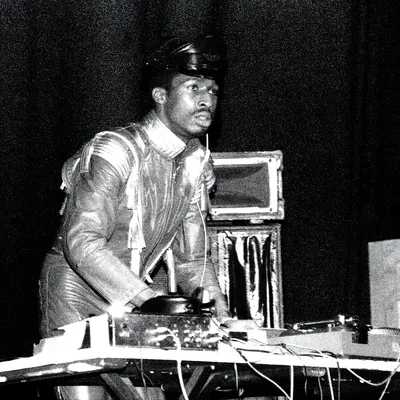
Grandmaster Flash, born Joseph Saddler in Barbados, was a pioneering figure in hip-hop DJing, notable for his ability to manipulate records in innovative ways. While Kool Herc and Afrika Bambaataa had delighted audiences by creatively combining songs, Flash was among the first to use the record itself as a versatile instrument. He perfected techniques such as scratching and backspinning, or “quick mix theory.” Flash also developed the punch-phrase, a method of rhythmically inserting short sound snippets over an existing beat.
In the late 1970s, Flash formed the Furious Five, one of hip-hop’s first supergroups, composed of MCs Melle Mel (Melvin Glover), Cowboy (Keith Wiggins), Kidd Creole (Nathanial Glover), Rahiem (Guy Williams), and Mr. Ness, also known as Scorpio (Eddie Morris). The Furious Five performed rehearsed routines in which members often finished each other’s lines in a technique known as hocket, with tightly timed delivery that still left space for variation. Their groundbreaking recordings for Sugar Hill Records, including “The Adventures of Grandmaster Flash on the Wheels of Steel” (1981), demonstrated the possibilities of turntable mastery, combining ten different records—including songs by Blondie, Queen, and Chic—into a single, cohesive track. Notably, Flash’s scratching even mimicked the rhythm of Queen’s “Another One Bites the Dust,” showing how entirely new musical compositions could be created from existing recordings.
Grandmaster Flash and Melle Mel pushed hip-hop toward narrative and social commentary with socially conscious or “message” rap. Tracks like "The Message“ (1982) and “New York, New York” (1982) offered vivid depictions of city life, poverty, and policing in direct terms, using rhythm, lyrics, and turntable techniques to convey stories based on real-world experiences. “Beat Street Breakdown” (1984), recorded for the film Beat Street, brought together Flash's innovative scratching with Melle Mel's politically engaged rhymes and helped establish their influence on a younger generation of hip-hop artists.
As DJ techniques became increasingly complex, many performers required assistance to engage the audience with spoken words while manipulating records. This role fell to the MC, or master of ceremonies, who delivered rhythmic vocal performances known as rapping. MCs energized the crowd, introduced performers, and participated in competitive battles, mirroring contests among DJs and breakdancers. Kool Herc’s assistants, the Herculoids; Afrika Bambaataa’s Soul Sonic Force; and Grandmaster Flash’s Furious Five exemplify the collaborative DJ-MC model, in which DJs and MCs together created an interactive performance culture.
Commercial Hip Hop
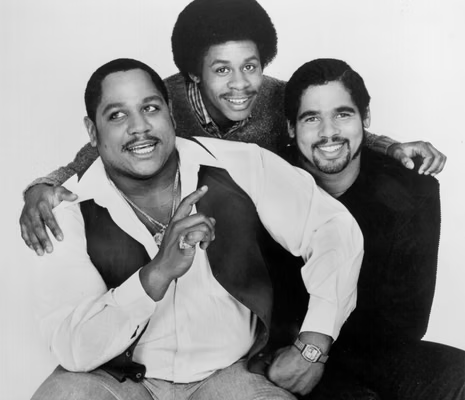
During the 1970s, hip-hop was primarily a live, community-based art form. DJs, MCs, and dancers performed at block parties and local gatherings, and recordings were rare or circulated informally. Most artists preferred live performances, which allowed constant improvisation and audience interaction. The first major commercial rap hit, however, came in 1979 with “Rapper’s Delight” by the Sugar Hill Gang. The group was assembled by Sylvia Robinson, co-founder of the independent label Sugar Hill Records, which she ran with her husband Joe. Robinson organized the recording session and brought together three rappers—Big Bank Hank, Wonder Mike, and Master Gee—who took turns delivering lengthy verses over a four-measure instrumental segment adapted from Chic’s disco hit “Good Times.” Unlike the looping techniques DJs used at live performances, the backing track was performed by a live band, and the recording was completed in a single take.
The opening line—“I said-a hip, hop, the hippy to the hip, hip, hop, and you don’t stop”—introduced the term “hip hop”to a national audience. The rappers’ flow, characterized by balanced phrases, couplet rhymes, and a sing-song cadence, helped make the song both accessible and memorable. Released in September 1979, “Rapper’s Delight” quickly climbed the charts, reaching number 36 on the Billboard Hot 100 and number 4 on the R&B chart, selling over a million copies and helping propel hip-hop from a local cultural phenomenon to an international musical force.
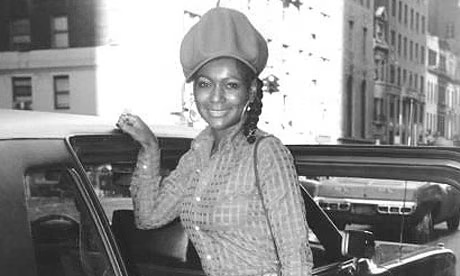
Sylvia Robinson’s role as producer was crucial in translating live hip-hop into a commercial format. By having studio musicians replay the instrumental break instead of relying on DJs to loop records, Robinson created a structured sound that could be widely distributed while retaining the energy and improvisation of block party performances. Notably, the Sugar Hill Gang’s use of the “Good Times” instrumental constituted an interpolation, a musical technique in which a portion of an existing composition is re-recorded or re-performed rather than directly sampled. Interpolation, while legally and creatively distinct from sampling, still raised questions of authorship and ownership. The “Good Times” bassline was particularly appealing to early hip-hop artists because of its steady, rhythmic groove and melodic simplicity, making it ideal for looping over extended periods of time while dancers performed. Similar to the famous drum break in James Brown’s “Funky Drummer” (1970), the bassline provided a flexible rhythmic foundation that could accommodate improvisation, freestyle lyrics, and complex breakdancing routines.
Some controversy arose over the song’s lyrics, as Grandmaster Caz of the Cold Crush Brothers claimed that Big Bank Hank had lifted some verses directly from his notebook without credit. Additionally, Nile Rodgers and Bernard Edwards of Chic were later added as co-writers after challenging the interpolation of their song, which brought early disputes over authorship and ownership into public view. Despite the authorship and interpolation disputes, “Rapper’s Delight” set a precedent for future hip-hop recordings, establishing conventions for flow, rhyme schemes, and the creative adaptation of existing music, while demonstrating that the genre could achieve mainstream commercial success.
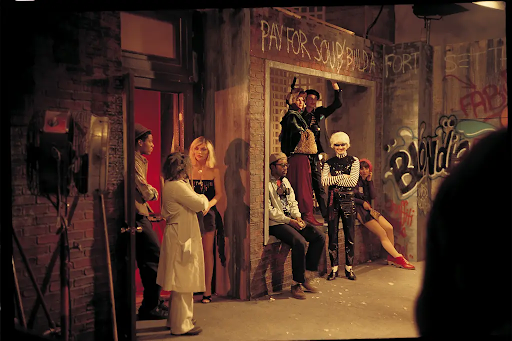
Following the success of “Rapper’s Delight,” other artists and groups began adapting rap for studio recording and commercial release. In 1981, the New Wave band Blondie, fronted by Debbie Harry, released “Rapture,” a track that blended elements of disco, funk, and hip-hop. Rather than rapping over borrowed breakbeats, Harry delivered her verses over an original instrumental arrangement, marking one of the first integrations of rap into mainstream pop. Her lyrics explicitly referenced figures central to the New York hip-hop scene, including graffiti artist Fab Five Freddy and DJ Grandmaster Flash, signaling that downtown art circles had begun to take notice of hip-hop. The accompanying music video reinforced this connection, featuring depictions of New York street life, graffiti writers at work, and cameos by artists such as Jean-Michel Basquiat and Lee Quiñones, both instrumental in bridging graffiti and fine art. “Rapture” became the first rap song to reach number one on the Billboard Hot 100, introducing many white and international audiences to the sound and imagery of hip-hop.
At the same time, hip-hop innovators added to their sonic palette through electronic instrumentation and new production techniques. In 1982, Afrika Bambaataa and the Soul Sonic Force released “Planet Rock,” a groundbreaking track that fused hip-hop with electronic music. Built around the Roland TR-808 drum machine, the song incorporated synthesized textures and melodic fragments from Kraftwerk’s “Trans-Europe Express” and “Numbers”—an example of interpolation, where melodic or rhythmic material from an existing composition is reinterpreted in a new context rather than directly sampled. Bambaataa also briefly quoted a synthesized version of Ennio Morricone’s theme from For a Few Dollars More, merging European electronic minimalism with cinematic soundscapes and funk-inspired rhythms. “Planet Rock” introduced the term “electro-funk” and became a foundational influence on later genres, including house, techno, and trance. Its futuristic sound represented a turning point in hip-hop production, demonstrating how the culture’s experimental spirit could embrace new technologies and global influences while maintaining its roots in rhythm and community expression.
Through these early commercial recordings, hip-hop developed from a localized participatory culture into a growing musical and artistic movement. Songs like “Rapper’s Delight,” “Rapture,” and “Planet Rock” captured the improvisational energy of block parties on record. These releases carried hip-hop beyond New York to wider audiences.
Hip Hop Technology
Early hip-hop DJs used analog technology in inventive ways to create the genre's characteristic performance techniques. In the Bronx during the 1970s, DJs used turntables, mixers, and vinyl records to manipulate recorded sound as part of performance. These devices, initially designed for listening, became tools for performance as DJs manipulated sound through scratching, backspinning, and live mixing. They isolated and extended rhythmic breaks to build continuous grooves that supported MCs' and dancers' improvisation. The reimagining of technology captured a broader hip-hop principle: turning limited resources into new creative possibilities. Long before digital tools became commonplace, hip-hop artists experimented with reworking and repurposing recorded sound.
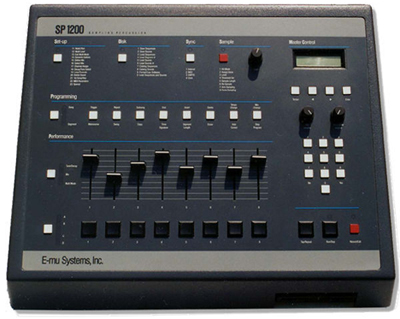
By the early 1980s, new studio technologies gave DJs and producers greater control over recorded sound. Drum machines such as the Roland TR-808 and Linn LM-1 became central to hip-hop’s sound, generating distinctive synthetic tones—deep bass kicks, crisp snares, and sharp hi-hats—that became common throughout the music of the decade. The TR-808, in particular, became iconic for its low-end resonance and user-friendliness, appearing across rap, funk, and electro tracks. At the same time, sampling devices such as the E-mu SP-1200 and Akai MPC allowed producers to capture short fragments of existing recordings and rearrange them into new rhythmic frameworks. Producers combined drum programming with sampled fragments to build tracks from layered loops and sequences, gaining more precise management over timing and arrangement in the studio.
One of the earliest and most influential examples of the convergence of turntables, drum machines, and sampling was Herbie Hancock’s “Rockit” (1983). A jazz keyboardist and composer known for his work with Miles Davis, Hancock was among the first major artists to fuse electronic instruments with hip-hop techniques. The track combined synthesizers, drum machines, turntables, and a vocoder, which electronically altered the human voice to create a robotic, synthesized sound, anticipating later vocal-processing techniques such as Auto-Tune. Featuring Grandmixer D.ST (also known as DXT) on turntables, “Rockit” was the first MTV music video to feature scratching, introducing hip-hop’s distinctive sound to a global audience.
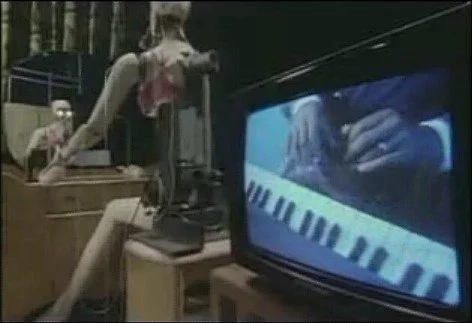
The “Rockit” video was equally groundbreaking. It became one of the first MTV videos to feature a Black artist, although Hancock himself appeared only as an image on a television screen, which was smashed at the end of the video. Its surreal imagery—animated mannequins and fragmented mechanical bodies—mirrored the track’s electronic rhythms and explored the tension between human creativity and machine precision. The video received heavy rotation on MTV and won five MTV Video Music Awards, signaling both hip-hop’s entry into mainstream media and the wider cultural fascination with technology during the decade.
Run-D.M.C.
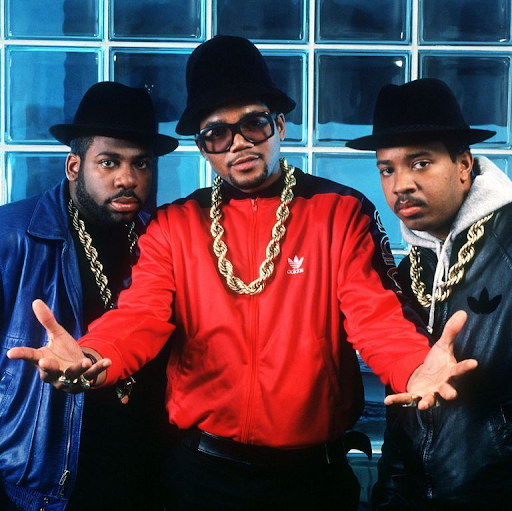
Run-D.M.C. was one of the first hip-hop groups to achieve widespread mainstream success. Formed in Hollis, Queens, the trio consisted of rappers Joseph “Run” Simmons, Darryl “D.M.C.” McDaniels, and DJ Jason “Jam Master Jay” Mizell, and was managed by Russell Simmons, Joseph’s brother and a key figure in the early hip-hop industry. Their 1984 debut album, Run-D.M.C., introduced a stripped-down production style centered on drum machines and rock-influenced textures, which was unusual for hip-hop at the time. Three of the album’s nine tracks even contained the word “rock” in their titles, and songs such as “King of Rock” featured explicit rock instrumentation, giving the group a harder, more aggressive edge than many of their contemporaries. Run and D.M.C.’s flow maintained the balanced phrases and couplet rhymes of earlier rappers. They frequently alternated lines, often joining on the final word or phrase for emphasis, creating a dynamic and assertive delivery that became a signature of their style.
The single “Rock Box” demonstrated the group's mixture of hip-hop and hard rock, with guitarist Eddie Martinez providing electric guitar riffs and solos over drum machine patterns programmed by Jam Master Jay. The song also became the first hip-hop video aired on MTV, and it brought hip-hop into mainstream visual media and exposed a larger audience to the group’s fusion of rap and rock.
Their follow-up album, King of Rock (1985), further developed Run-D.M.C.'s fusion of rap and hard rock with its guitar-driven arrangements, aggressive beats, and lyrical references to rock culture. By combining programmed percussion from drum machines with Jam Master Jay’s turntable techniques, Run-D.M.C. created a tightly synchronized, high-energy sound that translated seamlessly from live performances to recordings.
The 1986 album Raising Hell, produced by Rick Rubin, solidified their crossover appeal. Its landmark single,“Walk This Way,” a collaboration with Aerosmith, fused rock instrumentation with rap vocals, featuring Steven Tyler on chorus and Joe Perry on guitar. Run and D.M.C. 's rapped verses recast the track, while Jam Master Jay added scratching and rhythmic manipulations, blending hip-hop’s percussive intensity with rock’s sonic power. The song reached number 4 on the Billboard Hot 100, becoming a touchstone for the growing rap rock subgenre and introducing hip-hop to audiences who had previously encountered it only in localized scenes.
Beyond their recordings, Run-D.M.C. also influenced hip-hop culture visually and socially. They were the first rap group to headline a national tour and maintain a consistent presence on MTV. Their fashion—hats, gold chains, and untied Adidas sneakers—became iconic, linking the genre with streetwear. A 1986 promotional deal with Adidas further cemented this connection, establishing one of hip-hop’s first major intersections with commercial branding.
Through their combination of hard rock sonorities, precise flow techniques, and emerging production technologies, Run-D.M.C. pushed hip-hop into new territory, connecting underground culture with mainstream audiences while establishing a sonic and visual model that influenced later artists.
Def Jam Recordings

Def Jam Recordings, founded in 1983 by Rick Rubin and Russell Simmons, played a decisive role in bringing hip-hop from the streets of New York to mainstream audiences. Rubin, then a film student at New York University, initially ran the label out of his dorm room. He tested production techniques that paired stripped-down beats with concise song forms suited to radio play. Simmons, an established promoter and manager, contributed crucial industry connections and business expertise. Together, they created a blueprint for adapting club-oriented rap into short, radio-ready recordings. Rubin’s hook-first approach contrasted with earlier recordings that often featured long, improvisational jams intended for live block-party performances. Def Jam’s first official release, “It’s Yours” by T La Rock and Jazzy Jay (1984), established the label’s focus on forceful, rhythm-centered rap.
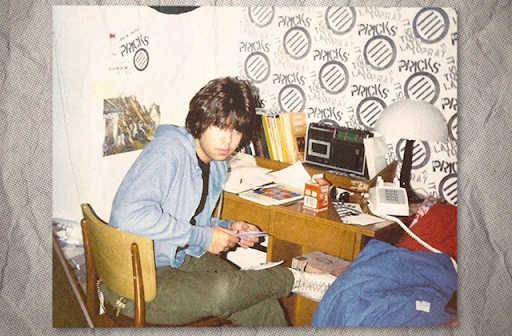
The label’s first major artist, LL Cool J or “Ladies Love Cool James,” was signed in 1984 at the age of fifteen. His debut single, “I Need a Beat” (1984), exemplified the rising "new school" style through sparse percussion, staccato vocal delivery, and lyrics centered on competition, urban life, and youthful swagger. Rubin's minimalist production gave the rhythm greater clarity, while LL Cool J's image as a tough, youthful sex symbol helped establish rappers as commercially viable pop stars. Subsequent albums, Radio (1985) and Bigger and Deffer (1986), strengthened both his reputation and Def Jam's standing, while a distribution deal with Columbia Records gave the label access to a much larger market. Tours with Run-DMC, the Beastie Boys, and other Def Jam artists introduced hip-hop to international audiences and helped attract a predominantly white demographic, demonstrating the genre’s crossover potential.
Def Jam’s success relied on the synergy between Rubin’s musical vision and Simmons’ promotional acumen. The label became synonymous with aggressive, rock-influenced rap, blending guitar riffs, drum machines, and DJ turntablism to create tracks that were simultaneously danceable, rhythmically innovative, and commercially viable. Def Jam's sonic identity can be heard across releases by LL Cool J, Run-D.M.C., Public Enemy, and the Beastie Boys. At the same time, Def Jam carefully packaged hip-hop's streetwise image for mainstream audiences, bridging racial and cultural divides in music consumption. By 1985, the label became the first independent rap company to secure a major distribution deal—a $1 million agreement with Columbia Records—which signified hip-hop’s budding commercial potential.
Although Rick Rubin left Def Jam in 1988 and Russell Simmons sold his shares to Universal Music Group between 1999 and 2000, the label continued to significantly influence the hip-hop landscape. Def Jam played a crucial role in reestablishing the producer's role as a creative force by demonstrating how studio production, marketing, and visual media could work together to bring underground music to larger audiences.
Rubin's influence extended well beyond his time at Def Jam. After leaving the label, he became a highly sought-after producer across various music genres, collaborating with an incredibly diverse range of artists, including the Red Hot Chili Peppers, AC/DC, Slayer, Johnny Cash, Adele, Kanye West, Lana Del Rey, and Ed Sheeran. Known for his minimalist production style, Rubin favored stripped-down arrangements that placed rhythm and vocal delivery at the center of the recording. His work consistently crossed genre boundaries, combining rock, hip-hop, metal, and country in ways that influenced mainstream music throughout the 1990s and 2000s.
Beastie Boys
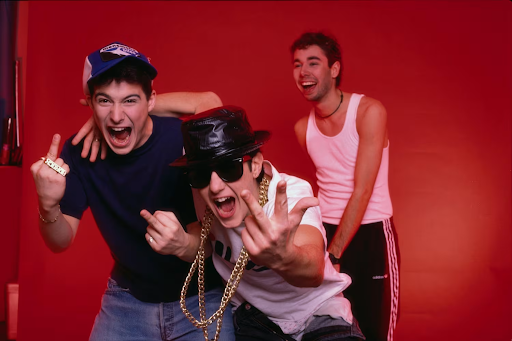
Another highly influential group to record for Def Jam Records was the Beastie Boys, a trio of white rappers consisting of Michael Diamond, Adam Horovitz, and Adam Yauch, who adopted the stage names Mike D, Ad-Rock, and MCA. The group originally formed as a punk rock band and began experimenting with rap in the early 1980s. Their name is an acronym for “Boys Entering Anarchistic States Towards Inner Excellence.” Their 1983 single, “Cooky Puss,” framed as a prank phone call, showcased comedic hip-hop elements, and Rick Rubin was brought in to DJ for their live shows. When Rubin co-founded Def Jam with Russell Simmons in 1984, the Beastie Boys joined the label and released early singles such as “Rock Hard” (1985) based on AC/DC’s song “Back in Black.” Rubin’s production fused hip-hop rhythms with rock instrumentation, appealing to both traditional hip-hop audiences and mainstream rock listeners.
The Beastie Boys’ origins date back to the experimental hardcore punk band Young Aborigines, formed in 1979. The original lineup included Diamond on drums, Jeremy Shatan on bass, John Berry on guitar, and Kate Schellenbach on percussion. When Shatan left New York City in mid-1981, Yauch took over bass, and the group adopted the name Beastie Boys. Berry departed shortly afterward and was replaced by Horovitz. Following the local success of “Cooky Puss,” the band fully transitioned to hip-hop, and Schellenbach left the group. By 1985, they were touring with Madonna, and a year later, they prepared to release their debut album.
In 1986, the Beastie Boys released Licensed to Ill, their debut album, which became the first hip-hop album to reach number one on the Billboard album charts and went on to become the best-selling hip-hop album of the 1980s. Rubin’s production incorporated samples from rock acts such as Led Zeppelin, Black Sabbath, and the Clash, while also inviting rock musicians to contribute directly. Notably, Kerry King of Slayer contributed guitar riffs and solos on tracks such as “No Sleep Till Brooklyn” and “You Gotta Fight for Your Right (To Party).” The latter’s music video became an iconic visual statement, depicting a chaotic house party full of rebellious energy, rowdy teenagers, and humorous destruction, perfectly capturing the song’s tongue-in-cheek anti-authoritarian spirit, and was on heavy rotation on MTV. The trio’s rap style mirrored that of Run-DMC, alternating lines and joining together at the ends of phrases to create a tight and forceful delivery. The album’s commercial success demonstrated hip-hop’s crossover potential, particularly among young, predominantly white audiences.
Chapter 34: Conclusion
Hip-hop emerged within the neighborhoods of New York City, rooted in African American and Afro-Caribbean musical traditions, with DJs, MCs, breakdancers, and graffiti artists building a vibrant, participatory culture. In its earliest stages, hip-hop was primarily a live art form, experienced at block parties and community gatherings rather than through commercial recordings. The transition toward recorded music in the early 1980s represented a major development in hip-hop, as pioneering artists such as Run-D.M.C., LL Cool J, and the Beastie Boys brought a harder, more aggressive character to the genre while experimenting with rock instrumentation, drum machines, and turntable techniques. Producers such as Rick Rubin and label executives like Russell Simmons played central parts in forming the harder, rock-influenced sound of mid-1980s hip-hop, with structured song forms, catchy hooks, and strategic marketing that helped rap appeal to a national audience.
By the mid-1980s, hip-hop reached national television, radio, and retail markets. Def Jam Records, through innovative production, crossover collaborations, and major-label distribution, introduced rap to mainstream audiences, while MTV provided a platform that amplified its reach, particularly among young white listeners. The fusion of rock and rap, exemplified by Run-DMC’s Raising Hell and the Beastie Boys’ Licensed to Ill, broadened hip-hop’s sonic palette and challenged existing racial and cultural boundaries in popular music. Visual culture—including music videos, fashion, and performance style—became as important as the music itself, cementing hip-hop’s influence on youth culture and identity.
The commercial growth of the mid-1980s created conditions for hip-hop to diversify in both sound and subject matter. Some artists pursued commercial appeal and crossover hits, while others continued the socially conscious storytelling pioneered by Grandmaster Flash and the Furious Five in “The Message.” The growth of independent labels, major distribution agreements, and specialized media outlets allowed the genre to spread geographically and stylistically, supporting regional scenes in Los Angeles, Atlanta, and elsewhere. By the late 1980s, hip-hop had grown from a local phenomenon into a cultural and commercial force, influencing fashion, language, media, and the trajectory of American popular music.
Institutional recognition followed as hip-hop entered mainstream media. In 1988, Yo! MTV Raps, hosted by Fab Five Freddy, became the network’s first program devoted entirely to hip-hop, bringing the culture into homes nationwide. That same year, The Source debuted as the first magazine dedicated exclusively to hip-hop, quickly becoming the best-selling music periodical in the United States. The National Academy of Recording Arts and Sciences added a rap category to the Grammys, and Billboard introduced a rap singles chart, further solidifying the genre’s legitimacy as well as reinforcing hip-hop’s position as both a commercially viable and culturally transformative force.
Chapter 34: Further Reading
Boehm, Mike. “Scott-Heron’s Take on the Roots of Rap.” Los Angeles Times, December 5, 1992.
Brown, Jake. Rick Rubin: In the Studio. Toronto: Dundurn, 2009.
Chang, Jeff. Can’t Stop, Won’t Stop: A History of the Hip-Hop Generation. New York: St. Martin’s Press, 2005.
Charnas, Dan. The Big Payback: The History of the Business of Hip-Hop. New York: New American Library, 2010.
Croom, Phyllis. “Gil Scott-Heron, Back from Being Here All Along.” Washington Post, May 8, 1994.
Fernando, S. H. The New Beats: Exploring the Music, Culture, and Attitudes of Hip-Hop. New York: Garland, 1994.
Forman, Murray, and Mark Anthony Neal, eds. That’s the Joint!: The Hip-Hop Studies Reader. New York: Routledge, 2004.
Fricke, Jim, and Charlie Ahearn. Yes Yes Y’All: The Experience Music Project Oral History of Hip-Hop’s First Decade. Cambridge, MA: Harvard University Press, 2002.
Geuraseva, Stacey. Def Jam Inc. New York: New American Library, 2005.
Hirschberg, Lynn. “The Music Man.” New York Times, September 2, 2007. https://www.nytimes.com/2007/09/02/magazine/02rubin.t.html.
Krims, Adam. Rap Music and the Poetics of Identity. New York: Cambridge University Press, 2000.
Ogg, Alex. The Men Behind Def Jam: The Radical Rise of Russell Simmons and Rick Rubin. London: Omnibus, 2002.
Ro, Ronin. Raising Hell. New York: Warner Books, 2005.
Rose, Tricia. Black Noise: Rap Music and Black Culture in Contemporary America. Middletown, CT: Wesleyan University Press, 1994.
Schloss, Joseph G. Foundation: B-Boys, B-Girls, and Hip-Hop Culture in New York. New York: Oxford University Press, 2009.
———. Making Beats: The Art of Sample-Based Hip-Hop. Middleton, CT: Wesleyan University Press, 2004.
Toop, David. The Rap Attack: African Jive to New York Hip Hop. London: Serpent’s Tail, 1984; 2nd ed., 1992 (Rap Attack 2: African Rap to Global Hip Hop); 3rd ed., 1993 (Rap Attack 3).
Wilkinson, Alec. “New York is Killing Me.” New Yorker, August 9, 2010, 26.
Keyes, Cheryl L. “At the Crossroads: Rap Music and Its African Nexus.” Ethnomusicology 40, no. 2 (1996): 223–48.