Chapter 15: Teen-Targeted Pop Music in the Early '60s

In Chapter 15 we explore how the early 1960s marked a transition in popular music as major record labels, television, and professional songwriters gained greater influence over what reached teenage audiences. Programs like American Bandstand, the rise of teen idols, and the Brill Building songwriting system replaced much of rock and roll's earlier rebellious image with polished pop songs that emphasized romance, dancing, and wider commercial appeal.
Important Terms
Teen Idol – A young performer marketed to appeal primarily to teenage audiences through music, appearance, and public image.
Bubblegum Pop – A commercial pop style featuring simple melodies, romantic lyrics, and a polished sound aimed at teenagers.
Schlock Rock – A critical term used to describe highly commercialized, formula-driven pop music of the early 1960s.
American Bandstand – A nationally televised music and dance program that introduced new artists and popularized youth culture.
Open Dance – A dance style in which individuals dance independently without a partner.
The Twist – A dance in which dancers twist their hips and feet without physical contact.
Dance Craze – A dance that becomes widely popular for a short period through music, television, and social events.
Falsetto – A vocal register above a singer's normal range, often used by male singers.
Doo-Wop – A vocal style emphasizing close harmonies, lead singers, and background syllables.
Brill Building Pop – A commercial pop style created by professional songwriters working in New York during the early 1960s.
Brill Building – A New York office building associated with music publishers and professional songwriters.
Aldon Music – Don Kirshner's music publishing company that employed many Brill Building songwriters.
Music Publisher – A company or individual responsible for promoting, licensing, and protecting songs and songwriters.
Songwriting Team – A partnership in which one person typically writes the music while another writes the lyrics.
Staff Songwriter – A songwriter employed by a publishing company to write songs for multiple artists.
Music Publishing – The business of managing songs, collecting royalties, and licensing compositions.
Lip Syncing – Performing while recorded vocals are played instead of singing live.
Payola – The illegal practice of accepting payment in exchange for radio airplay without disclosure.
Artists Discussed

Dick Clark – Television host of American Bandstand who helped popularize early 1960s pop music.
Chubby Checker (Ernest Evans) – Singer who popularized "The Twist" and the dance craze of the early 1960s.
Frankie Valli – Lead singer of the Four Seasons known for his distinctive falsetto.
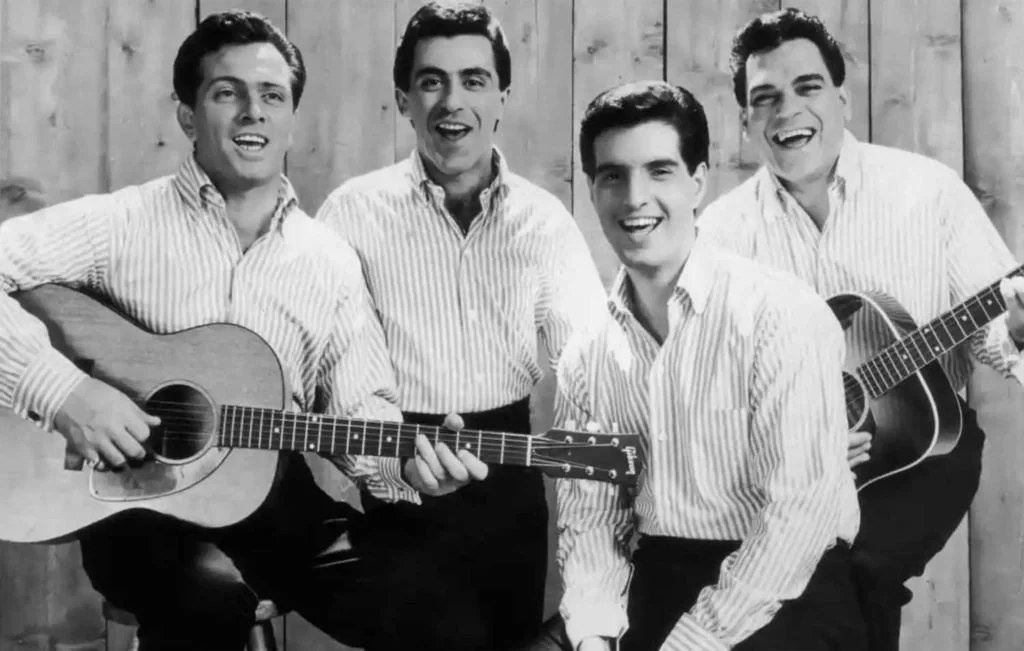
The Four Seasons – Vocal group that blended doo-wop harmonies with polished early 1960s pop.
Bob Crewe – Producer and songwriter who worked closely with the Four Seasons.
Frankie Avalon – Teen idol promoted through television and major record labels.
Fabian Forte – Teen idol whose career reflected the industry's emphasis on image.
Bobby Vee – Teen idol whose polished pop style bridged 1950s rock and early 1960s pop.
Don Kirshner – Founder of Aldon Music and organizer of the Brill Building songwriting system.
Al Nevins – Guitarist and co-founder of Aldon Music.
Neil Sedaka – Singer-songwriter associated with the Brill Building.
Howard Greenfield – Lyricist and songwriting partner of Neil Sedaka.
Barry Mann – Songwriter associated with the Brill Building.
Cynthia Weil – Songwriter associated with the Brill Building.
Carole King – Songwriter who later became a successful solo artist.
Gerry Goffin – Lyricist and songwriting partner of Carole King.
The Drifters – Vocal group that recorded "On Broadway" and "Some Kind of Wonderful."
The Shirelles – Girl group that recorded "Will You Love Me Tomorrow."
Little Eva – Singer who recorded "The Loco-Motion."
Connie Francis – Pop singer whose recordings appealed to teenage audiences.
Annette Funicello – Teen idol and singer associated with early 1960s pop.
Lesley Gore – Teen pop singer.
Little Peggy March – Teen pop singer.
Songs Referenced

"Sixteen Candles" – The Crests
"Sherry" – Frankie Valli and the Four Seasons
"Big Girls Don't Cry" – Frankie Valli and the Four Seasons
"Walk Like a Man" – Frankie Valli and the Four Seasons
"Rag Doll" – Frankie Valli and the Four Seasons
"Can't Take My Eyes Off You" – Frankie Valli
"The Class" – Chubby Checker
"The Twist" – Chubby Checker (originally recorded by Hank Ballard and the Midnighters)
"Let's Twist Again" – Chubby Checker
"Limbo Rock" – Chubby Checker
"Peppermint Twist" – Joey Dee and the Starliters
"Mashed Potato Time" – Dee Dee Sharp
"The Wah-Watusi" – The Orlons
"The Fly" – Chubby Checker
"The Hucklebuck" – Traditional dance tune (popularized by several artists)
"Pony Time" – Chubby Checker
"Devil or Angel" – Bobby Vee
"Rubber Ball" – Bobby Vee
"Run to Him" – Bobby Vee
"Take Good Care of My Baby" – Bobby Vee
"Calendar Girl" – Neil Sedaka
"Breaking Up Is Hard to Do" – Neil Sedaka
"Walking in the Rain" – The Ronettes
"On Broadway" – The Drifters
"Will You Love Me Tomorrow" – The Shirelles
"Some Kind of Wonderful" – The Drifters
"The Loco-Motion" – Little Eva