Chapter 13: Rock and Roll Pt. 1

Chapter 13 examines the rise of rock and roll during the 1950s as rhythm and blues, country, gospel, and blues merged into a new popular style aimed largely at teenage audiences. Radio, television, independent record labels, new recording technology, and artists such as Chuck Berry, Little Richard, Fats Domino, Bill Haley, and Elvis Presley helped propel rock and roll into a national phenomenon while exposing ongoing racial inequalities within the music industry.
Important Terms
Rock and Roll – A popular music style that developed during the 1950s by combining rhythm and blues, country, gospel, and blues.
Teenager – A social and economic age group that became a major consumer market after World War II.
Youth Culture – The shared music, fashion, language, and interests associated with teenagers.
Top 40 Radio – A radio format that repeatedly played the forty most popular songs.
45 RPM Single – A seven-inch vinyl record designed to play one song on each side.
A-Side – The primary song on a single intended for radio play.
B-Side – The secondary song on the opposite side of a single.
Transistor Radio – A portable battery-powered radio that allowed people to listen to music almost anywhere.
Jukebox – A coin-operated machine that played selected records in public places.
Independent Record Label – A record company operating outside the major corporate labels.
Magnetic Tape Recording – A recording method using magnetic tape that improved sound quality and editing.
Solid-Body Electric Guitar – An electric guitar built from a solid piece of wood to reduce feedback and improve sustain.
Magnetic Pickup – A device that converts string vibrations into electrical signals.
Telecaster – Fender's first commercially successful solid-body electric guitar.
Stratocaster – Fender's electric guitar featuring three pickups and a tremolo system.
Precision Bass – Fender's first successful electric bass guitar.
Amplifier (Amp) – An electronic device that increases the volume of an electric instrument.
Overdrive – A warm, distorted guitar sound created by pushing an amplifier beyond its clean volume range.
Spring Reverb – A device that creates an echo-like effect using vibrating metal springs.
Echo Chamber – A room designed to create natural reverberation during recording.
Plate Reverb – A mechanical reverb system using vibrating metal plates.
Payola – The illegal practice of accepting payment in exchange for radio airplay.
Rockabilly – An early rock and roll style blending country music and rhythm and blues.
Call-and-Response – A musical exchange in which one voice or instrument answers another.
12-Bar Blues – A twelve-measure chord progression common in blues and early rock and roll.
8-Bar Blues – A blues form built around an eight-measure harmonic pattern.
Shuffle Rhythm – A rhythmic pattern using a long-short subdivision of the beat.
Backbeat – Accenting beats two and four in common time.
Cover Version – A new recording of a song first performed by another artist.
Slapback Echo – A short tape-delay effect that creates a quick echo, commonly heard in early rockabilly recordings.
Whammy Bar (Tremolo System) – A guitar mechanism that changes string tension to create pitch variations.
Artists Discussed

Leo Fender – Founder of Fender Musical Instruments and designer of the Telecaster, Stratocaster, and Precision Bass.
Fender Musical Instruments Corporation – Company that revolutionized electric guitar and bass design.
Alan Freed – Radio disc jockey who popularized the term "rock and roll."
Chuck Berry – Rock and roll pioneer known for guitar riffs, storytelling lyrics, and the duck walk.
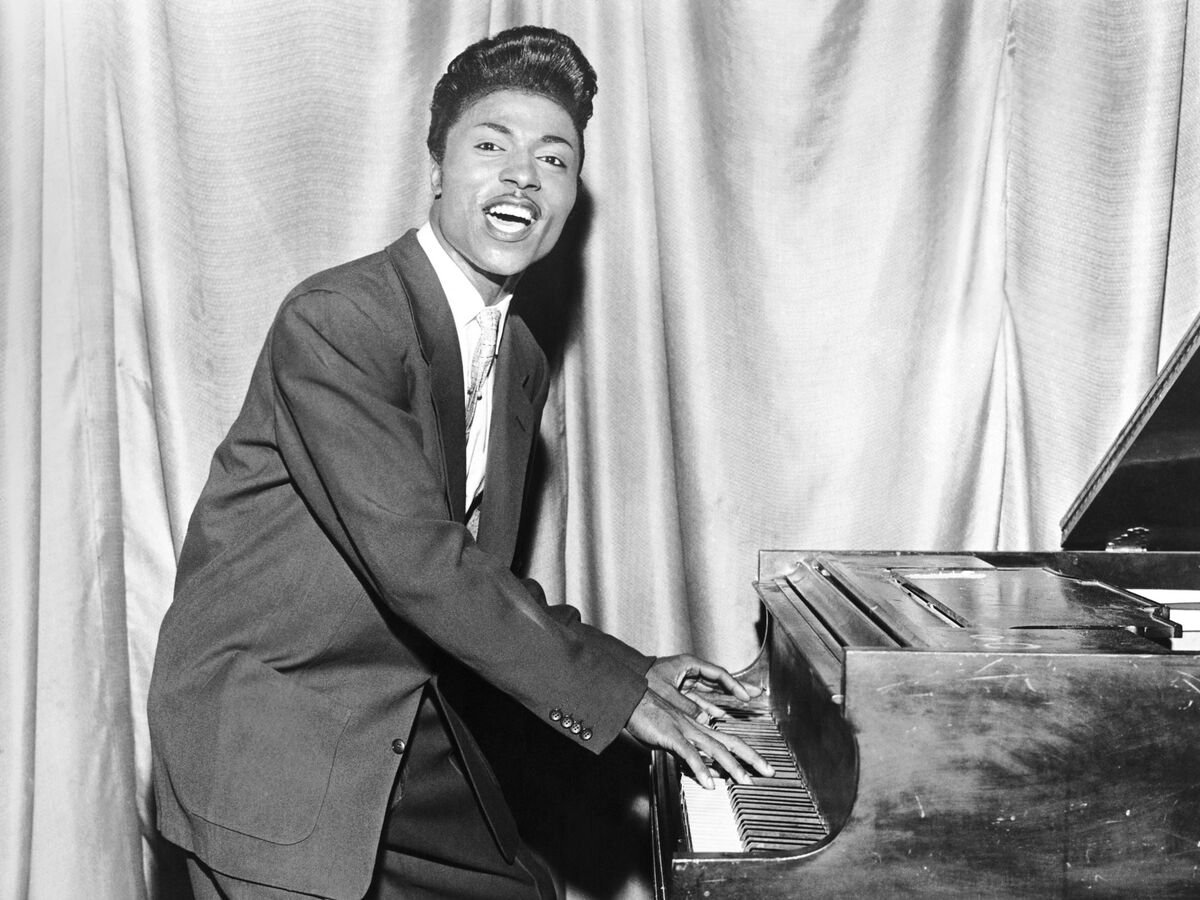
Little Richard (Richard Wayne Penniman) – Rock and roll singer and pianist whose gospel-based style helped establish the sound of early rock music
Elvis Presley – Singer who blended country, rhythm and blues, and gospel into rockabilly and early rock and roll.
Pat Boone – Pop singer known for covering rhythm and blues songs for mainstream audiences.
Big Joe Turner – Blues singer who originally recorded "Shake, Rattle and Roll."
Fats Domino (Antoine Domino Jr.) – New Orleans pianist and singer who helped bring rhythm and blues into the pop market.
Bill Haley – Rock and roll performer who introduced the genre to mainstream audiences.
Jackie Brenston – Singer who recorded "Rocket 88."
Sam Phillips – Founder of Sun Records and producer who discovered Elvis Presley.
Sun Records – Independent record label that launched Elvis Presley's career.
Scotty Moore – Guitarist in Elvis Presley's early trio.
Colonel Tom Parker – Elvis Presley's longtime manager.
Chet Atkins – Producer and guitarist who worked with Elvis Presley at RCA Victor.
Big Mama Thornton – Blues singer who first recorded "Hound Dog."
Jerry Leiber – Co-writer of "Hound Dog."
Mike Stoller – Co-writer of "Hound Dog."
Songs Referenced

"Johnny B. Goode" – Chuck Berry
"School Days" – Chuck Berry
"No Particular Place to Go" – Chuck Berry
"Back in the U.S.A." – Chuck Berry
"Roll Over Beethoven" – Chuck Berry
"Maybellene" – Chuck Berry
"Tutti Frutti" – Little Richard
"Long Tall Sally" – Little Richard
"Rip It Up" – Little Richard
"Ready Teddy" – Little Richard
"Good Golly, Miss Molly" – Little Richard
"Old Shep" – Traditional country song (popularized by Red Foley)
"The Fat Man" – Fats Domino
"Ain't That a Shame" – Fats Domino
"I'm in Love Again" – Fats Domino
"I'm Walkin'" – Fats Domino
"Blue Monday" – Fats Domino
"Whole Lotta Loving" – Fats Domino
"Blueberry Hill" – Fats Domino (written by Vincent Rose, Larry Stock, and Al Lewis)
"My Blue Heaven" – Fats Domino (written by Walter Donaldson and George A. Whiting)
"Shake, Rattle and Roll" – Big Joe Turner (later covered by Bill Haley)
"I Just Want to Make Love to You" – Muddy Waters
"Rocket 88" – Jackie Brenston and His Delta Cats
"That's All Right" – Elvis Presley (written by Arthur Crudup)
"Blue Moon of Kentucky" – Bill Monroe (performed by Elvis Presley)
"Heartbreak Hotel" – Elvis Presley
"Don't Be Cruel" – Elvis Presley
"Hound Dog" – Big Mama Thornton (covered by Elvis Presley)
"I Beg of You" – Elvis Presley
"Don't" – Elvis Presley
"One Night" – Elvis Presley
"I Got Stung" – Elvis Presley
"A Fool Such as I" – Elvis Presley
"I Need Your Love Tonight" – Elvis Presley
"Are You Lonesome Tonight?" – Elvis Presley
"Lawdy Miss Clawdy" – Lloyd Price
"Blue Suede Shoes" – Carl Perkins
"Blue Moon" – Richard Rodgers and Lorenz Hart
"Crying in the Chapel" – The Orioles (written by Artie Glenn)
"Rock Around the Clock" – Bill Haley and His Comets
"Dim, Dim the Lights" – Bill Haley and His Comets
"See You Later, Alligator" – Bill Haley and His Comets
"Corrine, Corrina" – Traditional blues song (performed by Bill Haley and His Comets)
"My Way" – Originally popularized by Frank Sinatra (posthumously recorded by Elvis Presley)