Chapter 38: Hip Hop in the 90s
“Let Me Ride”
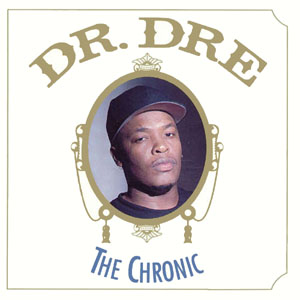
Album/Year Released
1992 (album: The Chronic)
Artist/Composer
Dr. Dre
Dr. Dre RBX, Snoop Doggy Dogg (composers)
Dr. Dre (Producer)
Genre/Style
G-Funk; West Coast hip-hop
Song Form
Verse–prechorus–chorus
“Let Me Ride” represents the G-Funk style, a subgenre of West Coast hip-hop characterized by slow, groove-oriented rhythms, melodic synthesizer lines, and significant influence from 1970s funk, particularly Parliament-Funkadelic. The track’s rhythm is structured around a 4/4 backbeat produced by drum machines, with hi-hat subdivisions adding to a syncopated, groove-focused texture. Dr. Dre incorporates layered synthesizer pads to provide harmonic depth and employs samples from pre-existing recordings to enrich the sonic landscape. The vocal delivery uses a measured, rhythmic rap style with extended phrasing, capturing G-Funk's relaxed, melodic character. The track helped codify the G-Funk aesthetic, combining melodic hooks, funk instrumentation, and rap lyricism into a commercially impactful sound.
Following his departure from N.W.A, Dr. Dre released The Chronic and co-founded Death Row Records alongside Tracy Lynn Curry (the D.O.C.), Suge Knight, and Richard “Dick” Griffey. Although primarily a solo endeavor, the album features significant collaborations, most notably with Snoop Doggy Dogg, and is distinguished by the slow, elongated vocal delivery characteristic of G-Funk. The album’s lyrical content addresses gangsta rap themes such as sex, drugs, and street life, while also exploring lighter subjects, including camaraderie and communal pride.
“Let Me Ride” was released as the third single from The Chronic in August 1993 through Interscope Records, Priority Records, and Death Row. The song achieved widespread success following Dr. Dre’s Grammy win for Best Rap Solo Performance at the 36th Annual Grammy Awards. Vocal contributions include singers Ruben and Jewell, as well as uncredited parts from Snoop Dogg, who also contributed to the songwriting. Songwriting credits are attributed to Dr. Dre, RBX, and Snoop Dogg, with RBX initially providing lyrics intended for a different track. The chorus incorporates a sample and interpolation from Parliament’s 1976 song “Mothership Connection (Star Child),” itself referencing the Negro spiritual “Swing Down Sweet Chariot.” Additional samples include James Brown’s “Funky Drummer” and Bill Withers’s 1973 track “Kissing My Love.” The production is distinguished by layered funk grooves, soulful backing vocals, rolling basslines, and high-pitched synthesizers that established Dre’s G-Funk sound and solidified The Chronic as a landmark album in hip-hop history.
“California Love”
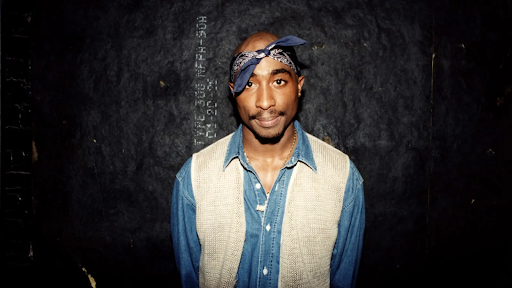
Album/Year Released
1995 (single; later on 2Pac’s All Eyez on Me)
Artist/Composer
2Pac featuring Dr. Dre
Tupac Shakur, Roger Troutman, Larry Troutman, Mikel Hooks, Norman Durham, Ronald Hudson, Woody Cunningham, Joe Cocker, Chris Stainton, James Anderson
Genre/Style
G-Funk; West Coast hip-hop
Song Form
Verse–chorus with bridge and extended outro
“California Love” exhibits the G-Funk style through its laid-back groove, funk-inspired basslines, and layered synthesizers. The talkbox, which filters the voice through a synthesizer to produce a robotic tone, is most prominent in Roger Troutman’s chorus. Dr. Dre’s production incorporates syncopated beats and a prominent sample from Joe Cocker’s “Woman to Woman,” which provides both melodic and harmonic content. 2Pac delivers rap verses with dynamic flow patterns, while Dr. Dre performs the opening rap verse, while Roger Troutman's processed talkbox vocals provide the melodic chorus. The song begins with the chorus rather than a verse, establishing a celebratory, party-like atmosphere. Dr. Dre introduces the track with a spoken monologue over the synth hook and the “Wild Wild West” chant, followed by Troutman’s iconic talkbox chorus of “California… knows how to party.” Dre performs the first 16-bar rap verse, emphasizing West Coast imagery and lifestyle, which transitions back into the chorus. 2Pac delivers the second 16-bar verse, describing an idyllic California culture, city life, and regional identity, before the chorus returns. The track concludes with an extended outro featuring layered synthesizers, drum loops, and talkbox chants, including “Shake, shake it, baby.”
Recorded after 2Pac’s release from prison, the song was produced by Dr. Dre and features Roger Troutman’s talkbox vocals, along with samples from Joe Cocker’s “Woman to Woman,” Ronnie Hudson & The Street People’s “West Coast Poplock,” and Zapp’s “Dance Floor.” Dr. Dre initially recorded the track with his own verses for his forthcoming Aftermath Entertainment label. However, Suge Knight arranged for 2Pac to perform the rap verses, establishing the song as his comeback single for Death Row Records. Tupac reportedly composed his verses in approximately 15 minutes, and the music video was filmed shortly thereafter. The chorus incorporates material from several sources: Troutman’s talkbox lines were adapted from Hudson’s “West Coast Poplock” and Zapp’s “Dance Floor,” while the hook also integrates elements from EPMD’s 1989 track “Knick Knack Patty Wack” and Joe Cocker’s 1972 song “Woman to Woman.” The remix version introduces a sample from Kleeer’s 1984 song “Intimate Connection.” The combination of funk samples, electronic effects, and West Coast rap verses demonstrates the fusion of rap, funk, and electronic instrumentation that characterizes G-Funk.
“Juicy”
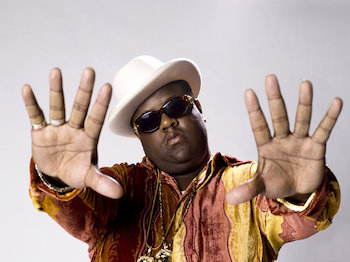
Album/Year Released
1994 (album: Ready to Die)
Artist/Composer
The Notorious B.I.G.
Christopher Wallace, Sean Combs, Jean-Claude Olivier, James Mtume
Genre/Style
East Coast hip-hop
Song Form
Verse–chorus
“Juicy” is a seminal example of East Coast hip-hop and New York style rap, built around boom-bap beats with heavy kick drums on the downbeats and snare accents on the backbeats. The track prominently samples Mtume’s 1983 song “Juicy Fruit,” which provides both melodic and harmonic material. Production by Sean “Puffy” Combs and Poke of Trackmasters layers backing vocals from the Bad Boy Records group Total, enhancing Biggie’s smooth and precise flow. The verses use internal rhymes and narrative storytelling to trace Biggie's progression from poverty in Brooklyn to musical success, while the chorus provides melodic contrast. Biggie’s storytelling details his childhood, involvement with drugs, and early aspirations in rap, constructing a rags-to-riches narrative representative of 1990s East Coast hip-hop.
“Juicy” was released in 1994 as the lead single from Biggie’s debut album, Ready to Die. The song’s lyrics reference contemporary events, including a line about the 1993 World Trade Center bombing—“Time to get paid, blow up like the World Trade”—intended as a metaphor for Biggie’s rapid rise in wealth. After the September 11 attacks, some radio stations censored or altered the lyric because of its reference to the World Trade Center to avoid upsetting listeners. This created confusion and contributing to conspiracy theories implying that Biggie had foreknowledge of 9/11, despite his death in 1997. Over time, edits on the radio were largely reverted, restoring the original lyric and reaffirming the song’s historical context.
“Juicy” integrates narrative lyricism with finely crafted instrumental layering and sampling, resulting in a track that is both personal and broadly resonant. The use of Mtume's melodic sample, the boom-bap drum pattern, and layered backing vocals provide a relatively smooth instrumental setting for Biggie's rhythmically detailed verses. The track’s success solidified Wallace’s reputation and positioned Ready to Die as a foundational work in East Coast hip-hop.