Chapter 18: The British Invasion
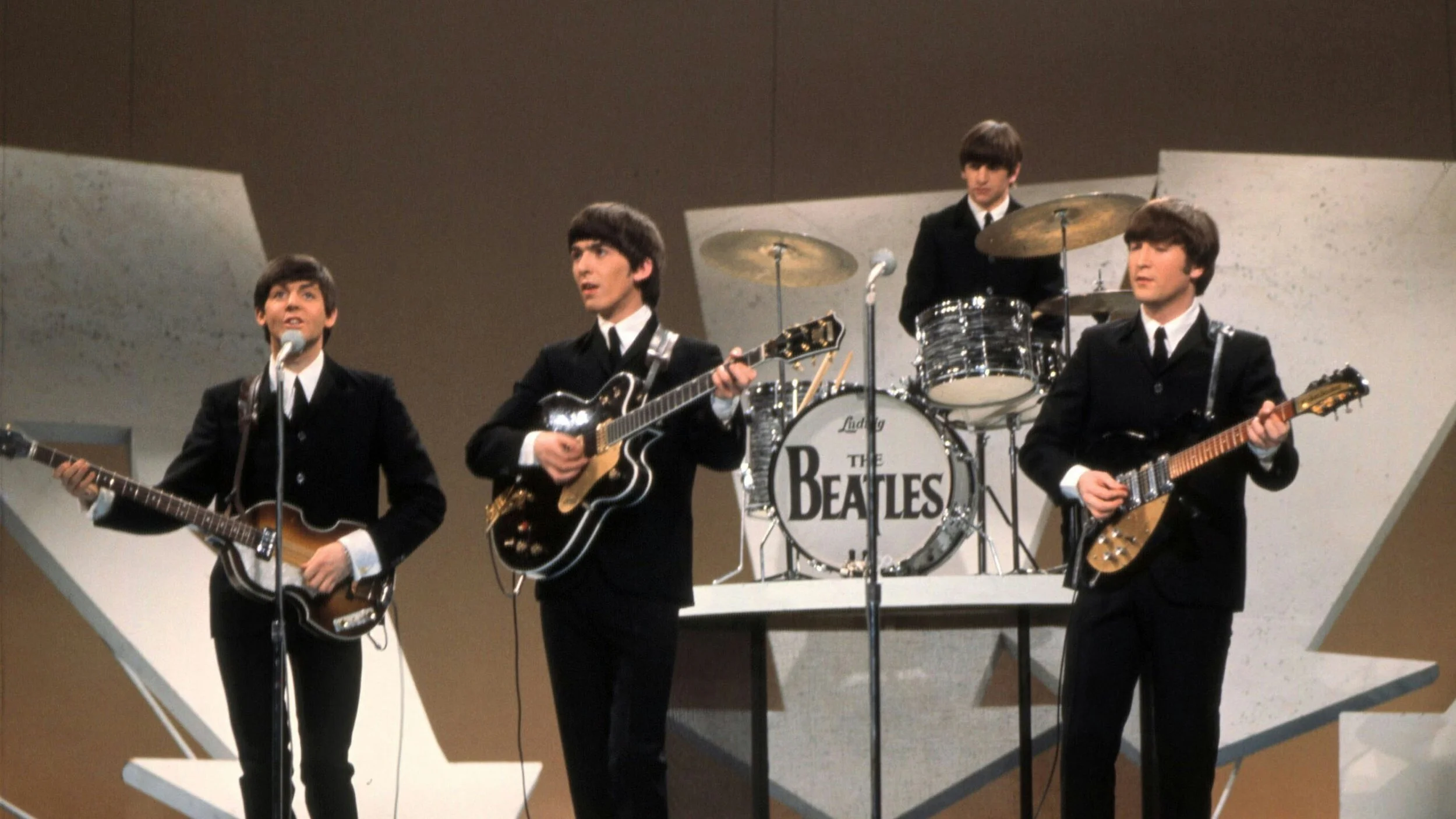
Chapter 18 follows the rise of British rock bands that drew inspiration from American rock and roll, rhythm and blues, and blues before reinterpreting those styles for a worldwide audience. The Beatles led the movement through innovative songwriting and studio experimentation, while bands such as the Rolling Stones, the Who, and the Kinks developed distinctive musical identities that expanded the creative possibilities of rock music.
Important Terms

British Invasion – The period during the mid-1960s when British rock and pop artists dominated the American music charts.
Beatlemania – The intense public excitement and fan devotion surrounding the Beatles during the 1960s.
Merseybeat – A Liverpool-based style that combined American rock and roll, rhythm and blues, skiffle, and vocal harmonies.
Skiffle – A British style combining folk, blues, country, and jazz, often played with homemade or inexpensive instruments.
Cavern Club – Liverpool music venue closely associated with the Beatles' early career.
Studio Experimentation – The use of recording technology and production techniques to create sounds not possible in live performance.
Four-Track Recording – A recording system allowing four separate tracks to be recorded and mixed independently.
Tape Loop – A continuous loop of recorded tape used to repeat sounds or musical phrases.
Backward Recording – A recording technique in which sounds are reversed to create unusual effects.
Leslie Speaker – A rotating speaker system that produces a swirling sound effect.
Drone – A sustained note or chord that continues throughout a musical passage.
Tamboura (Tanpura) – An Indian string instrument that produces a continuous drone.
Sitar – A plucked Indian string instrument introduced into rock music by George Harrison.
Raga – A melodic framework used in Indian classical music.
Phrygian Mode – A musical scale with a lowered second note that creates a dark, tense sound.
Baroque Polyphony – A musical texture with multiple independent melodies, commonly associated with composers such as J.S. Bach.
String Quartet – An ensemble consisting of two violins, one viola, and one cello.
Feedback – A sustained sound produced when amplified sound reenters a microphone or guitar pickup.
Distortion – A gritty guitar sound created by overdriving an amplifier.
Fuzzbox – A guitar effects pedal that produces a heavily distorted tone.
Rave-Up – An extended instrumental section that gradually increases in energy and intensity.
Power Chord – A guitar chord emphasizing the root and fifth, commonly used in rock music.
Rock Opera – A long-form rock composition or album that tells a continuous story.
Mods – A British youth subculture associated with fashion, scooters, soul music, and modern jazz.
Rockers – A British youth subculture associated with motorcycles, leather jackets, and 1950s rock and roll.
Pirate Radio – Unauthorized radio stations broadcasting outside government regulations, often from ships.
Radio Luxembourg – Commercial station that broadcast popular music into Britain before pirate radio became widespread.
Radio Caroline – Offshore pirate radio station that helped popularize British rock during the 1960s.
Radio 1 – BBC station created in 1967 to compete with pirate radio by focusing on popular music.
Artists Discussed

The Beatles – British band that led the British Invasion and transformed popular music through songwriting and studio innovation.
John Lennon – Rhythm guitarist, singer, and songwriter for the Beatles.
Paul McCartney – Bassist, singer, songwriter, and composer for the Beatles.
George Harrison – Lead guitarist whose interest in Indian music expanded the Beatles' musical style.
Ringo Starr (Richard Starkey) – Drummer for the Beatles.
The Quarrymen – John Lennon's skiffle group that developed into the Beatles.
Stuart Sutcliffe – Original bassist for the Beatles.
Pete Best – Original drummer for the Beatles before Ringo Starr joined.
Brian Epstein – Manager who refined the Beatles' public image and secured their recording contract.
George Martin – Producer often called the "Fifth Beatle."
Geoff Emerick – Recording engineer who helped develop the Beatles' studio techniques.
Allan Williams – The Beatles' first manager.
Bob Dylan – Folk singer-songwriter who influenced John Lennon's lyrics.
Ravi Shankar – Indian sitar virtuoso who taught George Harrison.
Timothy Leary – Co-author of The Psychedelic Experience.
Ralph Metzner – Co-author of The Psychedelic Experience.
Richard Alpert (Ram Dass) – Co-author of The Psychedelic Experience.
The Rolling Stones – British blues-rock band known for its rebellious image and blues influences.
Mick Jagger – Lead singer of the Rolling Stones.
Keith Richards – Guitarist and songwriter for the Rolling Stones.
Brian Jones – Founding member of the Rolling Stones whose instrumental experimentation broadened the band's sonic palette.
Charlie Watts – Drummer for the Rolling Stones.
Bill Wyman – Bassist for the Rolling Stones.
Alexis Korner – British blues musician who helped develop London's blues scene.
Andrew Loog Oldham – Manager and producer for the Rolling Stones.
Allen Klein – Business manager for the Rolling Stones.
John Mayall – Leader of the Bluesbreakers and central figure in the British blues revival.
John Mayall's Bluesbreakers – Band that launched the careers of several major guitarists.
The Yardbirds – British band that connected blues, psychedelic rock, and hard rock.
Led Zeppelin – Band formed by Jimmy Page after the Yardbirds.
Fleetwood Mac – Band founded by former Bluesbreakers members.
The Who – British rock band associated with the Mod movement.
The Jam – Punk band influenced by the Who.
The Kinks – British band blending rock, folk, and English music hall traditions.
Cliff Richard – Early British rock and roll singer.
Gerry and the Pacemakers – Merseybeat band.
The Searchers – Merseybeat band.
The Dave Clark Five – British Invasion band.
Herman's Hermits – British Invasion pop group.
The Hollies – British harmony group.
The Animals – British rhythm and blues band.
Manfred Mann – British rock band.
The Zombies – British rock band.
The Walker Brothers – American trio marketed as part of the British Invasion.
Radio Luxembourg – Broadcaster that introduced popular music to British audiences.
Songs Referenced

"The Twist" – Chubby Checker
"Love Me Do" – The Beatles
"That'll Be the Day" – Buddy Holly and the Crickets
"In Spite of All the Danger" – The Quarrymen
"Raunchy" – Bill Justis
"I Saw Her Standing There" – The Beatles
"Do You Want to Know a Secret" – The Beatles
"Twist and Shout" – The Beatles (originally by the Top Notes; popularized by the Isley Brothers)
"Chains" – The Cookies (written by Carole King and Gerry Goffin)
"Money (That's What I Want)" – Barrett Strong
"You've Really Got a Hold on Me" – Smokey Robinson and the Miracles
"All My Loving" – The Beatles
"Till There Was You" – Meredith Willson (performed by the Beatles)
"I Want to Hold Your Hand" – The Beatles
"She Loves You" – The Beatles
"Can't Buy Me Love" – The Beatles
"Ticket to Ride" – The Beatles
"You've Got to Hide Your Love Away" – The Beatles
"Help!" – The Beatles
"I Wanna Be Your Man" – The Rolling Stones (written by Lennon and McCartney)
"Yesterday" – The Beatles
"Nowhere Man" – The Beatles
"The Word" – The Beatles
"Girl" – The Beatles
"Michelle" – The Beatles
"Norwegian Wood (This Bird Has Flown)" – The Beatles
"In My Life" – The Beatles
"Love You To" – The Beatles
"Got to Get You into My Life" – The Beatles
"Here, There and Everywhere" – The Beatles
"Eleanor Rigby" – The Beatles
"Yellow Submarine" – The Beatles
"Tomorrow Never Knows" – The Beatles
"For Your Love" – The Yardbirds
"Shapes of Things" – The Yardbirds
"I'm a Man" – The Yardbirds
"Heart Full of Soul" – The Yardbirds
"Over Under Sideways Down" – The Yardbirds
"Happenings Ten Years Time Ago" – The Yardbirds
"Come On" – The Rolling Stones (originally by Chuck Berry)
"I Want to Be Loved" – Willie Dixon
"I'm a King Bee" – Slim Harpo
"Little by Little" – The Rolling Stones
"As Tears Go By" – Marianne Faithfull (written by Jagger and Richards)
"The Last Time" – The Rolling Stones
"Not Fade Away" – The Rolling Stones (originally by Buddy Holly)
"Time Is on My Side" – The Rolling Stones
"Get Off of My Cloud" – The Rolling Stones
"19th Nervous Breakdown" – The Rolling Stones
"Let's Spend the Night Together" – The Rolling Stones
"(I Can't Get No) Satisfaction" – The Rolling Stones
"Paint It, Black" – The Rolling Stones
"Ruby Tuesday" – The Rolling Stones
"We Love You" – The Rolling Stones
"She's a Rainbow" – The Rolling Stones
"Jumpin' Jack Flash" – The Rolling Stones
"Sympathy for the Devil" – The Rolling Stones
"Street Fighting Man" – The Rolling Stones
"My Generation" – The Who
"I Can See for Miles" – The Who
"Rael" – The Who
"You Really Got Me" – The Kinks
"Lola" – The Kinks
Albums
Please Please Me
With the Beatles
Meet the Beatles!
A Hard Day's Night
Help!
Rubber Soul
Revolver
Yesterday and Today
Sgt. Pepper's Lonely Hearts Club Band
The Rolling Stones
12 X 5
December's Children (And Everybody's)
Aftermath
Between the Buttons
Their Satanic Majesties Request
Beggars Banquet
Face to Face
Something Else
The Kinks Are the Village Green Preservation Society
Arthur (Or the Decline and Fall of the British Empire)
Lola Versus Powerman and the Moneygoround, Part One
Muswell Hillbillies
Tommy
Films
A Hard Day's Night
Help!
Books
The Psychedelic Experience
The Tibetan Book of the Dead
The Master and Margarita