Chapter 25: Hard Rock and Heavy Metal in the 70s
History of American Pop Music: Chapter 25
Hard Rock and Progressive Rock
Chapter 25: Introduction
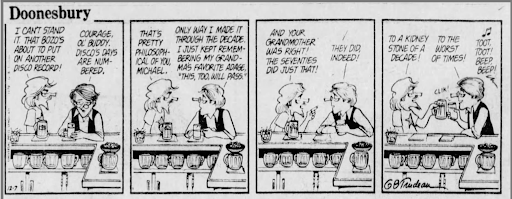
The 1970s are often remembered as a troubled decade. In the popular satirical comic strip Doonesbury, one character described it as “a kidney stone of a decade,” a phrase that perfectly captured the frustrations of a nation facing economic decline, political scandals, and cultural disillusionment. Institutions that had long seemed stable—such as the presidency, the economy, and even the military—appeared fragile and on the verge of collapse. The optimism that had characterized the postwar boom gave way to skepticism, and American exceptionalism itself appeared to be in doubt.
Historians often describe the early years of the 1970s as part of the “long 1960s,” a period extending from the mid-1950s to the mid-1970s, during which the social and cultural transformations associated with the 1960s continued to influence political organizing and cultural production. Countercultural styles—long hair, psychedelic slang, and rock music—moved into the mainstream, appearing in popular films, television, and commercial radio, albeit often stripped of their radical political edge to cater to mass audiences. At the same time, the reform movements that had surged in the 1960s, including civil rights, feminism, environmentalism, and gay liberation, remained active and visible, while new causes such as antinuclear activism gained momentum and mainstream acceptance. However, against the political and cultural backdrop, the election of President Richard Nixon represented a sharp departure from the liberal consensus of the 1960s. In his presidential campaign, Nixon appealed to what he called the “Silent Majority,” those Americans who wanted stability, order, and a return to so-called “traditional values" after years of cultural rebellion and political unrest.
Additionally, foreign policy setbacks heightened the sense of national uncertainty in the United States. The Paris Peace Accords of 1973 formally ended U.S. combat operations in Vietnam, but the conflict continued to cast a long shadow over domestic politics. In 1975, the fall of Saigon and the chaotic evacuation of the U.S. embassy signified America’s first clear military defeat in history. Images of helicopters lifting off from rooftops as desperate South Vietnamese attempted to escape became potent symbols of the limitations of U.S. power and deepened the malaise felt by a generation at home.
As the nation grappled with these foreign policy challenges, another crisis was brewing closer to home. In June 1972, five men were arrested for breaking into the Democratic National Committee headquarters, located in the Watergate office complex in Washington, D.C. What initially seemed like a minor burglary quickly escalated into a major political scandal. Investigative reporting by journalists at The Washington Post, along with congressional inquiries, revealed a pattern of illegal surveillance, political espionage, and obstruction of justice linked to President Richard Nixon’s re-election campaign.
Televised Senate hearings in 1973 brought the Watergate Scandal directly into living rooms across the country, exposing Americans to testimony about Nixon’s cover-ups, secret funds, and abuses of executive power, compounded with the revelation that Nixon had secretly taped damning conversations in the Oval Office. When the Supreme Court ordered the release of the tapes in 1974, they confirmed Nixon’s involvement in efforts to obstruct the investigation. Facing almost certain impeachment, Nixon resigned on August 9, 1974, becoming the first and only American president to do so. The consequences were immense: Watergate not only ended Nixon’s presidency but also deepened a pervasive distrust of political leaders and institutions. Many Americans became skeptical of government promises, fueling a larger crisis of confidence that extended into cultural life.
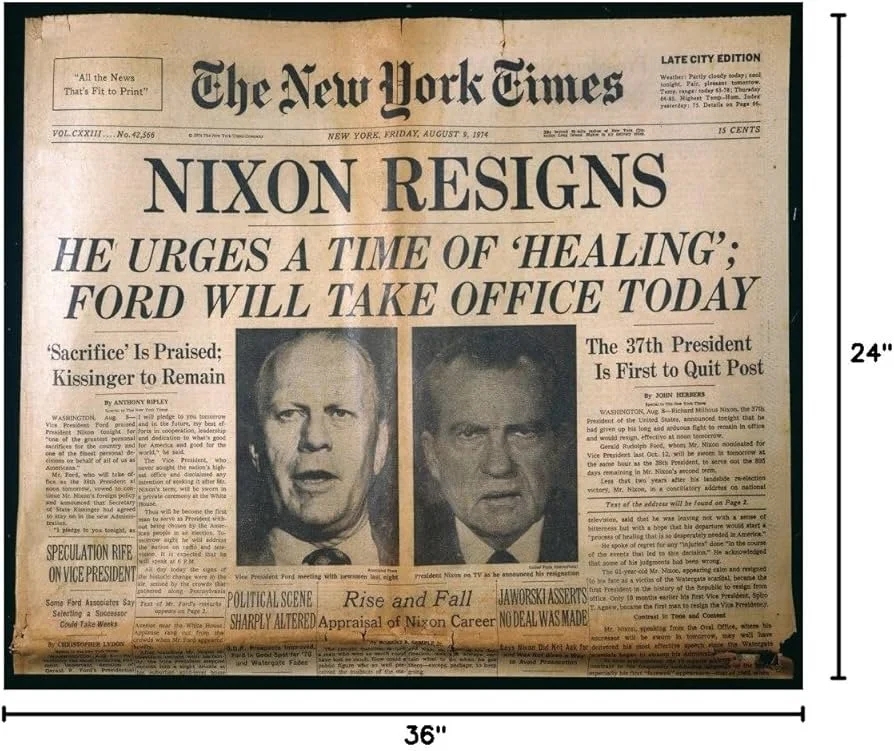
Nixon’s vice president, Gerald Ford, assumed the presidency in 1974 with a pledge to restore stability and trust in government. His rise to the nation’s highest office was unusual; he had been appointed vice president after his predecessor, Spiro Agnew, resigned amid charges of tax evasion and bribery, and he became president following Nixon’s resignation. Lacking an electoral mandate, Ford faced immediate challenges to his authority. His decision to pardon Nixon just weeks into his term, intended as a step toward national reconciliation, was widely seen as a betrayal of law and order and further undermined the public perception of his legitimacy. In 1975, the volatile political climate came into sharp focus when Ford survived two assassination attempts within a single month, including one by Lynette “Squeaky” Fromme, a follower of Charles Manson. These events connected the lingering unrest of the late 1960s to the challenges of the 1970s, as political crises and public distrust changed how many Americans viewed national stability.
The 1973 oil embargo, imposed by the Organization of Petroleum Exporting Countries (OPEC) in retaliation for American support of Israel during the Yom Kippur War, dealt another blow to national confidence. For the first time, Americans confronted the reality of global interdependence at the gas pump. Fuel shortages led to long lines at gas stations, while prices soared and consumers’ tempers flared. Images of motorists waiting for hours to fill their gas tanks became symbols of a wider economic vulnerability and how international crises could disrupt the daily lives of ordinary citizens with startling impact.

Economic troubles extended well beyond the oil crisis, leading the United States into an era of “stagflation.” The term “stagflation” describes a troubling combination of stagnant economic growth, high unemployment, and chronic inflation. Traditional economic solutions—such as raising interest rates to curb inflation or stimulating growth to create jobs—often exacerbated one issue while leaving the other unresolved. Rising prices diminished household budgets, while stagnant wages limited upward mobility. For a society accustomed to steady prosperity since World War II, stagflation shattered the notion of guaranteed economic expansion and stability.
The 1976 presidential election indicated a public desire for renewal after the turmoil of the previous decade. Jimmy Carter, a former governor of Georgia and a relative outsider to Washington politics (as well as a distant relative to the Carter Family), ran on a platform of honesty, integrity, and a promise to restore faith in government. His identity as a devout Christian and his Southern roots appealed to voters weary of corruption in the aftermath of the Watergate scandal. Yet Carter’s presidency soon became eclipsed by deepening economic troubles and mounting foreign policy crises. The most dramatic came in 1979, when Iranian revolutionaries seized the U.S. embassy in Tehran and held 52 Americans hostage for 444 days. Broadcast nightly on television, the crisis magnified a national sense of frustration and uncertainty, leaving many Americans with the impression that the decade was ending in a state of drift and malaise.
Within the turbulence of the 1970s, media spanning music, film, and television pushed creative and stylistic boundaries, while audiences simultaneously gravitated toward comforting visions of the past. Works such as American Graffiti (1973), Grease (stage, 1972; film, 1978), and the television show Happy Days (1974–1984) celebrated an imagined “golden age” of 1950s and early 1960s innocence and stability before the upheavals of the Vietnam War, civil rights struggles, and the social changes of the 1960s, although generally from a white middle-class perspective. These nostalgic portrayals offered both aesthetic and emotional refuge, allowing viewers to revisit a reassuring, idealized past even as contemporary society confronted increased uncertainty.
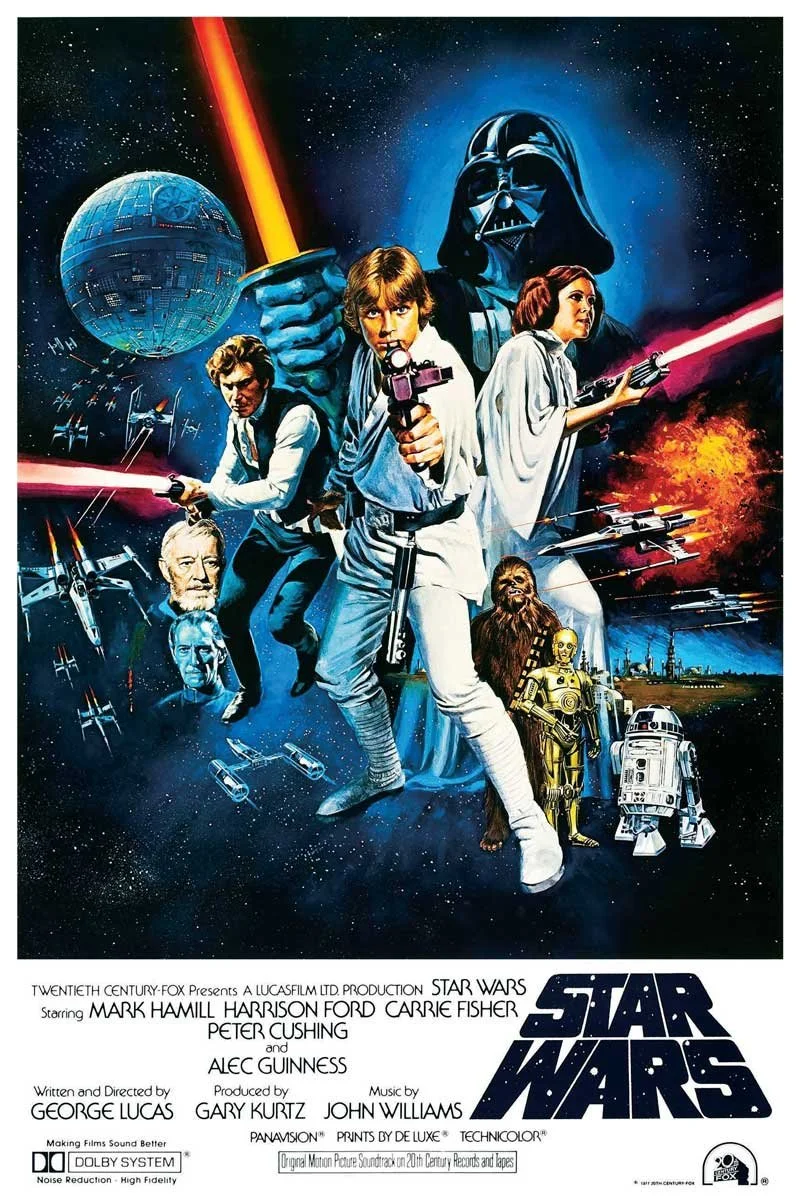
During the 1970s, Hollywood invested heavily in nostalgic, large-scale, effects-driven films called blockbusters. Jaws (1975) and Star Wars (1977) employed cutting-edge effects, immersive narratives, and ambitious marketing strategies to captivate mass audiences. Star Wars in particular drew on the conventions of earlier genres—1940s space operas, Westerns, swashbuckling adventures, and serialized cliffhangers—to construct a recognizable moral universe of heroes, villains, and epic quests. Much like the rock music of the 1970s, which often mined the past through revivalist rock, blues influences, or callbacks to 1960s hits, these films allowed audiences to confront contemporary anxieties while reconnecting with the clarity and simplicity of earlier cultural forms. In both cinema and music, the cultural ambivalence of the 1970s was expressed through works that offered comfort through memory while simultaneously exploring new artistic possibilities.
Popular music became an embodiment of a duality of continuity and change during this period. For many fans, the deaths of Jimi Hendrix and Janis Joplin in 1970, Jim Morrison in 1971, and the breakup of The Beatles in 1970 seemed to signify the end of the 1960s. However, rock music did not disappear with the counterculture; instead, it became the centerpiece of a rapidly growing corporate entertainment system. By the late 1970s, six major companies—Columbia/CBS, Warner Communications, RCA Victor, Capitol-EMI, MCA, and United Artists-MGM—controlled over 80 percent of U.S. record sales. Profits doubled from $2 billion in 1973 to $4 billion in 1978. Superstar acts such as Paul McCartney, Elton John, Fleetwood Mac, and Stevie Wonder filled arenas, while platinum albums (1 million units sold) became the new benchmark of success.
Economic pressures further accelerated this consolidation. The oil crisis raised the cost of shellac, a key material in vinyl production, making it harder for smaller companies to compete. Major labels, with their resources and distribution networks, could absorb these costs while still promoting a smaller number of blockbuster releases. As a result, the market concentrated around fewer artists and albums, squeezing out many independent labels and reducing the space for niche or experimental music within mainstream circulation.
Radio programming in the 1970s reflected the broader cultural and commercial divisions emerging in the music industry. AM Top 40 stations increasingly relied on consultants, rigid playlists, and tightly formatted rotations, favoring short, highly marketable singles designed to appeal to mass audiences. In contrast, FM radio became the primary platform for rock music, offering DJs greater freedom to explore extended tracks, deeper cuts, and experimental recordings. The free-form radio style of the late 1960s evolved into album-oriented rock (AOR), a format that emphasized LPs over singles and highlighted long, immersive tracks from bands such as Led Zeppelin, Deep Purple, Pink Floyd, and Yes. The album-oriented rock format allowed listeners to engage with music as a sustained artistic experience, rather than just a string of hits, and helped cultivate devoted fan bases around particular bands or albums.
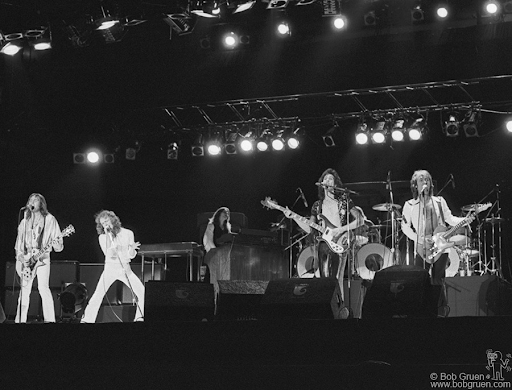
Rock performances also evolved in scale and spectacle. Hard rock bands merged their blues roots with amplified virtuosity, dominating FM radio and the concert scene. As small clubs transitioned to civic centers, coliseums, and sports arenas, concerts evolved into theatrical events marked by elaborate lighting, sound systems, and stage designs. Led Zeppelin’s 1973 U.S. tour set attendance records, while bands like Boston, Foreigner, Kansas, REO Speedwagon, and ZZ Top embraced the arena-rock model, creating expansive communal spectacles.
Albums remained the dominant artistic medium, building on the experimental precedents set by Pet Sounds (1966) and Sgt. Pepper’s (1967) and Tommy (1969), which encouraged musicians to treat LPs as cohesive statements or “concept albums.” Advances in multitrack recording enabled artists to record multiple instrumental and vocal parts separately, allowing them to be layered during mixing, and compose intricate arrangements and effects that would have been impossible in live performance. Stereo imaging techniques further enhanced these recordings by distributing sounds across the left and right speaker channels, generating a sense of spatial depth and movement. Synthesizers, such as the Moog, revolutionized sound production by generating electronic tones through oscillators, filters, and modulators. The Moog used voltage-controlled oscillators to produce entirely new electronic sounds. Synthesizers could mimic traditional orchestral timbres or produce previously unheard textures, from pulsing bass lines to ethereal pads, allowing musicians like Stevie Wonder, Pink Floyd, and Yes to construct immersive soundscapes that turned the album format into immense sonic journeys.
At the same time, portable listening technologies changed how audiences engaged with music. 8-track tapes used a continuous loop of magnetic tape divided into four stereo channels, enabling uninterrupted playback in cars or home stereos. However, the format required careful engineering to prevent tape stretching and sound distortion. Compact cassettes, with their smaller magnetic tape and simpler splicing mechanisms, made recording and sharing music far easier, letting listeners create mixtapes or duplicate albums at home. These portable formats gave listeners unprecedented control over when, where, and how they experienced music, extending the reach of complex studio productions beyond the concert hall and living room.
The 1970s brought competing musical impulses into close proximity. Artists looked backward to earlier musical traditions while pursuing new sounds, technologies, and forms of presentation. Nostalgia existed alongside experimentation, while the growing commercial power of the music industry placed artistic ambition within an increasingly corporate system. While the music industry became increasingly corporate and risk-averse, the decade’s artistic output remained remarkably varied. Singer-songwriters, glam rock, heavy metal, and arena rock flourished simultaneously, embedding rock ever more deeply into American mass culture. Across music, film, and television, the era balanced the forward-looking drive of technological and artistic experimentation with a longing for the stability of an imagined past, forming the cultural identity of a decade marked by uncertainty and change.
Hard Rock and Progressive Rock
Much of the rock music of the 1970s drew directly on the experimental and psychedelic currents of the 1960s, adopting a harder, more aggressive sound marked by riff-based writing, heavier rhythm sections, and amplified distortion. By the early 1970s, this style of hard rock had become a dominant force in popular music, combining the intensity of psychedelic experimentation with a direct, high-energy sound that could fill stadiums and capture mainstream attention.
Early examples of hard rock, such as Iron Butterfly and Steppenwolf, established sonic and stylistic traits—extended riffs, volume-driven intensity, and prolonged instrumental sections—that later appeared in early heavy metal. Iron Butterfly, formed in San Diego in the 1960s, epitomized the darker edge of psychedelia. Their most famous track, “In-A-Gadda-Da-Vida” (1968), stretches over seventeen minutes, occupying the entire second side of the album and achieving unprecedented commercial success—so much so that Atlantic Records created the “Platinum Award” for records selling over one million units. The track’s hypnotic bass and repeated guitar riff, lengthy organ, guitar, and drum solos, Middle Eastern-inflected guitar lines, fuzz-tone and wah-wah effects, and Baroque organ quotation of “God Rest Ye Merry Gentlemen” blended psychedelic experimentation with classical references while establishing the intense, riff-driven energy of subsequent hard rock.
Steppenwolf, originally named Sparrow, further developed the genre with high-energy, riff-heavy tracks like“Born to Be Wild” (1969) and “The Pusher” (1968). Their heavy distortion and driving rhythms directly carried on the sonic intensity of psychedelic rock, and“Born to Be Wild” is notable for its first recorded use of the term “heavy metal,” even though, in this context, the phrase originally referred to motorcycles. The band’s music, featured prominently in Dennis Hopper’s countercultural film Easy Rider (1969), linked hard rock with themes of freedom, rebellion, and the late-1960s counterculture. Through their instrumental virtuosity and high-energy sound, Iron Butterfly and Steppenwolf expanded the dramatic scope of hard rock and its evolution toward more complex, arena-ready forms.
Progressive rock, or “prog rock,” grew from the same late-1960s experiments but took a different path, emphasizing extended compositions, virtuosic technical skill, and conceptual ambition. Unlike the direct aggression of hard rock, prog rock sought to explore new possibilities within rock music, moving beyond the three-minute pop single to create immersive, album-length works. Bands such as Led Zeppelin (“Stairway to Heaven”) and Jethro Tull (“Aqualung”) combined shifting tempos, intricate instrumental passages, and dynamic contrasts, rewarding careful listening and fitting with the era’s broader album-oriented rock ethos.
Musically, prog rock drew from a wide array of influences, blending classical music, jazz, and rock. Emerson, Lake & Palmer adapted Romantic Russian composer Modest Mussorgsky’s Pictures at an Exhibition, Queen fused operatic grandeur with rock in “Bohemian Rhapsody”, and King Crimson incorporated complex rhythms and dissonance in “21st-Century Schizoid Man.” Lyrics were often abstract, philosophical, or fantastical, as in Yes’s “Roundabout” or Gentle Giant’s “Knots,” distinguishing the genre from mainstream rock and reinforcing its cerebral, experimental identity. Advances in studio technology, synthesizers, and multitrack recording allowed these ambitious compositions, while a growing student- and college-aged audience provided a receptive market eager for musical sophistication.
Led Zeppelin
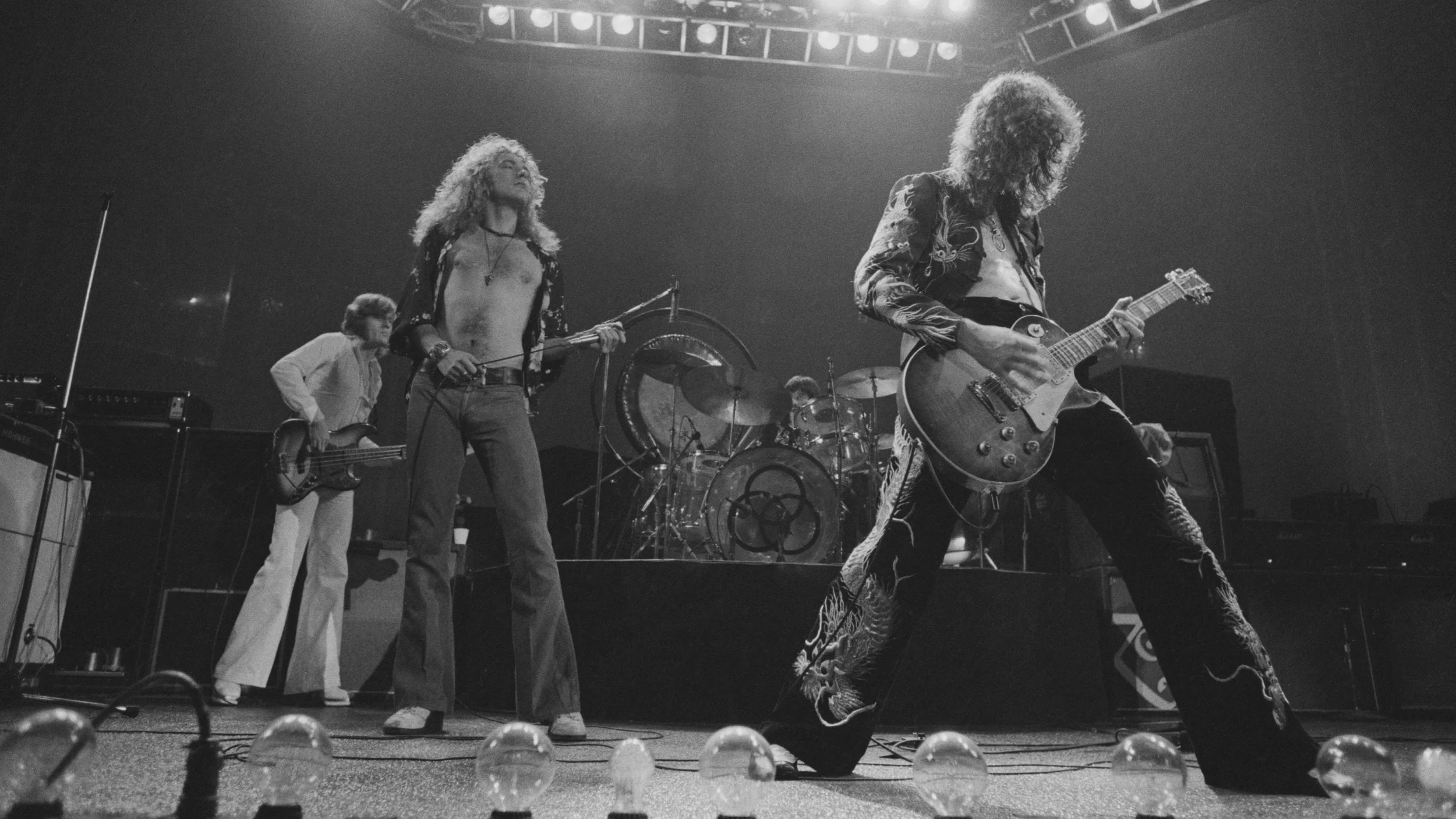
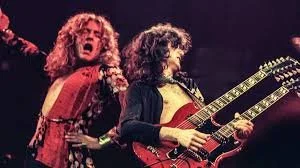
No band exerted a greater influence on hard rock during the 1970s than Led Zeppelin. When the British blues band the Yardbirds disbanded in 1968, guitarist Jimmy Page assembled a new lineup to fulfill the group’s remaining concert obligations. He recruited bassist and keyboardist John Paul Jones, drummer John Bonham, and vocalist Robert Plant. Initially performing as the New Yardbirds on a Scandinavian tour, the group soon adopted the name Led Zeppelin. Each member brought their own musical experience from the British blues revival, and Page envisioned a sound that fused electric blues, acoustic folk, and experimental, psychedelic production techniques. Page composed most of the music, while Plant contributed lyrics that often drew directly from the American blues tradition, blending elements of that musical heritage with a modern, amplified intensity that became a hallmark of hard rock.
Led Zeppelin’s self-titled debut album, Led Zeppelin (1969), introduced their bold new sound. On the track “Good Times Bad Times,” Page passed his guitar through a Leslie speaker—a specialized loudspeaker system usually used with organs that produces a swirling, almost otherworldly effect by mechanically rotating its speakers or sound horns. Meanwhile, Bonham demonstrated his extraordinary skill with rapid-fire bass drum passages executed on a single drum, a feat many drummers could only achieve using double bass drums.“Dazed and Confused,” originally performed by the Yardbirds and adapted from the American folk-rock musician Jake Holmes, is built around a descending chromatic bass riff while Page experiments with unconventional techniques, including playing the guitar with a violin bow, producing eerie, resonant textures.
The group’s second album, Led Zeppelin II (1969), is widely regarded as their heaviest and most aggressive work to that point. Page deliberately resisted the singles-oriented practices of much contemporary rock, favoring the album as a cohesive artistic statement in which tracks flowed together to create a unified sonic experience. Despite this, “Whole Lotta Love” was released as the album’s only single and quickly became a live staple. The track is built around a driving two-bar guitar riff reinforced by the bass, with a psychedelic middle section between the second chorus and third verse. The psychedelic middle section makes striking use of stereo panning, a recording technique that distributes different instruments or sounds across the left and right channels, creating a sense of spatial movement and immersion in the listener’s headphones or speakers. Layered over this are Theremin effects, giving the music a wailing, unearthly quality, and Page’s reverse echo technique, where a recorded echo is played backward and inserted before the original sound, producing a ghostly, anticipatory effect. Plant’s lyrics were adapted from Willie Dixon’s Chicago blues song “You Need Love,” previously recorded by Muddy Waters. Following a lawsuit over the adaptation, Dixon used the settlement to establish the Blues Heaven Foundation, which helps blues musicians reclaim royalties from other artists’ recordings
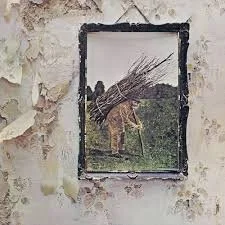
In 1971, Led Zeppelin released their untitled fourth album, commonly referred to as Led Zeppelin IV or “ZoSo,” a reference to a symbol that Page included in the album’s artwork. The album followed Led Zeppelin III (1970), which had already hinted at a more acoustic and folk-oriented direction, incorporating songs with mandolin, acoustic guitars, and pastoral melodies alongside heavier tracks. On Led Zeppelin IV, this blend of styles is heard prominently o “Stairway to Heaven,” the band’s most iconic track and one of rock music’s enduring classics. The song opens with a Renaissance-inspired acoustic guitar melody, augmented by recorders, before Plant’s vocals gradually enter. Electric guitar, electric piano, and bass join later, while drums remain absent for more than four minutes. The track culminates in a hard rock climax, featuring Page’s virtuosic, blues-infused guitar solo and Plant’s soaring wails, ending with Plant’s unaccompanied delivery of the song’s title.
“Stairway to Heaven” also demonstrates the band’s skill in merging classical and rock influences, a mixture increasingly common in 1970s progressive rock. Page’s use of intricate fingerpicking, modal harmonies, and contrapuntal interplay echoes classical composition techniques, while the amplified instrumentation and powerful climaxes retain the intensity of hard rock. Though never released as a single, “Stairway to Heaven” became emblematic of Led Zeppelin’s ability to integrate acoustic, folk, blues, and classical-inspired elements into a cohesive, dramatic work, echoing the era’s larger trend of blending musical traditions in ambitious, album-length compositions.
Throughout the 1970s, Led Zeppelin became one of the most popular live acts in rock history, consistently selling out arenas and stadiums worldwide; a 1976 concert in Pontiac, Michigan, drew over 75,000 attendees. While the band never identified as “hard rock” or “heavy metal” during their active years—the labels were applied retrospectively—their riff-driven songs, powerful drumming, and deep engagement with the blues exemplify hard rock aesthetics. Their use of distortion, heavy bass, and virtuosic solos also provided a musical blueprint for the emerging heavy metal genre. Tracks such as “Whole Lotta Love” popularized the verse-chorus-with-instrumental-interlude (AABA) structure, which became a widely adopted model for rock composition. Following John Bonham’s death in 1980 from alcohol-related complications, the surviving members chose to disband rather than replace him.
Led Zeppelin also played a central role in codifying the practices of stadium rock and album-oriented rock (AOR). Their insistence on selling complete albums rather than focusing on singles, combined with record-breaking arena tours, helped establish new norms for large-scale rock performance and listening experiences. By blending blues foundations with amplified, theatrically conceived arrangements, the band created music that was both immersive and suited for vast audiences, demonstrating how artistry and spectacle could coexist in rock.
In doing so, Led Zeppelin set the standard for subsequent generations of hard rock and heavy metal acts. Their integration of complex composition, instrumental virtuosity, and monumental live presentation influenced the structure of rock albums, the design of live shows, and the expectations of audiences, securing their status as one of the most consequential and enduring forces in modern popular music.
Heavy Metal
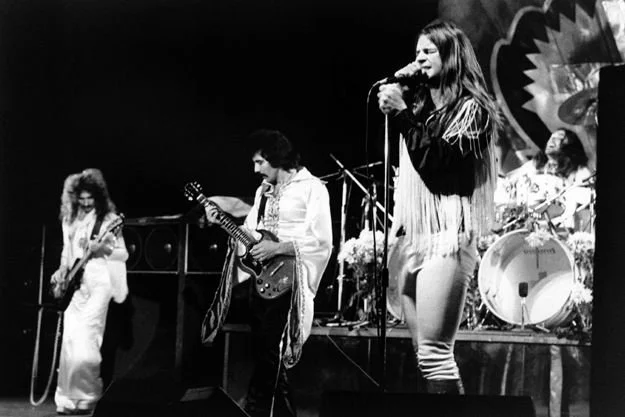
Led Zeppelin’s amplified blues, virtuosic solos, and arena-ready sound not only propelled hard rock into the mainstream but also created the foundation for a heavier, more aggressive branch of rock music. Their focus on riff-driven songs, pounding drums, and distorted guitar tones created a sonic intensity that contemporary artists would push even further. Building on these elements, heavy metal developed as a natural evolution, retaining hard rock’s technical skill and energy while amplifying volume, aggression, and thematic extremity.
Heavy metal operates through high-volume, repeated riffs, distorted guitar tones, weighty bass lines, and powerful bass drum patterns, creating a bottom-heavy, driving intensity. Central to the genre is the power chord—movable two- or three-note shapes emphasizing the root and fifth—which, when combined with repeated riffs, produces a dark and forceful sound. Lyrics often explore themes of power, rebellion, individual freedom, history, violence, and sexuality, delivered through vocal techniques ranging from piercing high screams to guttural low growls. While heavy metal occasionally overlaps with melodic hard rock or progressive rock, it is generally characterized by a deliberate stylization in both music and visual presentation.
Visual and performative conventions have always been central to heavy metal. In the 1970s, long hair, black leather jackets, studded accessories, and ripped tight jeans became typical of the genre. Stage performances emphasized energetic presence, dramatic lighting, smoke effects, and imagery drawn from horror or occult themes. Because heavy metal prioritized sonic intensity over radio-friendly melody, the genre initially built its audience through live concerts, later amplified by music videos, although some 1980s bands achieved commercial radio success. Early audiences were largely white males aged 13–35, but the fan base has diversified significantly since the late 1980s.
The blues is a fundamental influence on heavy metal. Many early guitar riffs, bass lines, and solos are rooted in blues patterns, maintaining pentatonic scales, call-and-response phrasing, and improvisation. The genre's dark themes—conflict, struggle, and personal torment—draw from the emotive storytelling of traditional blues, while techniques such as bent notes, slides, and expressive vibrato connect metal directly to its blues heritage. Even bands often cited as the progenitors of heavy metal, like Black Sabbath, grounded their ominous sound in blues-based riffs and song structures.
Many critics cite the American band Blue Cheer’s 1968 cover of Eddie Cochran’s “Summertime Blues” as the first recorded instance of heavy metal. Their rendition emphasized guitar distortion, a pounding drum line, and tightly synchronized riffs between guitar, bass, and drums, producing a dense, bottom-heavy sound. While Blue Cheer and other early U.S. bands created tracks emblematic of the emerging genre, they are not generally considered major heavy metal artists. The first full-length heavy metal album is widely regarded as the 1970 release by British band Black Sabbath, which provided an early stylistic and thematic model for the genre.
Black Sabbath
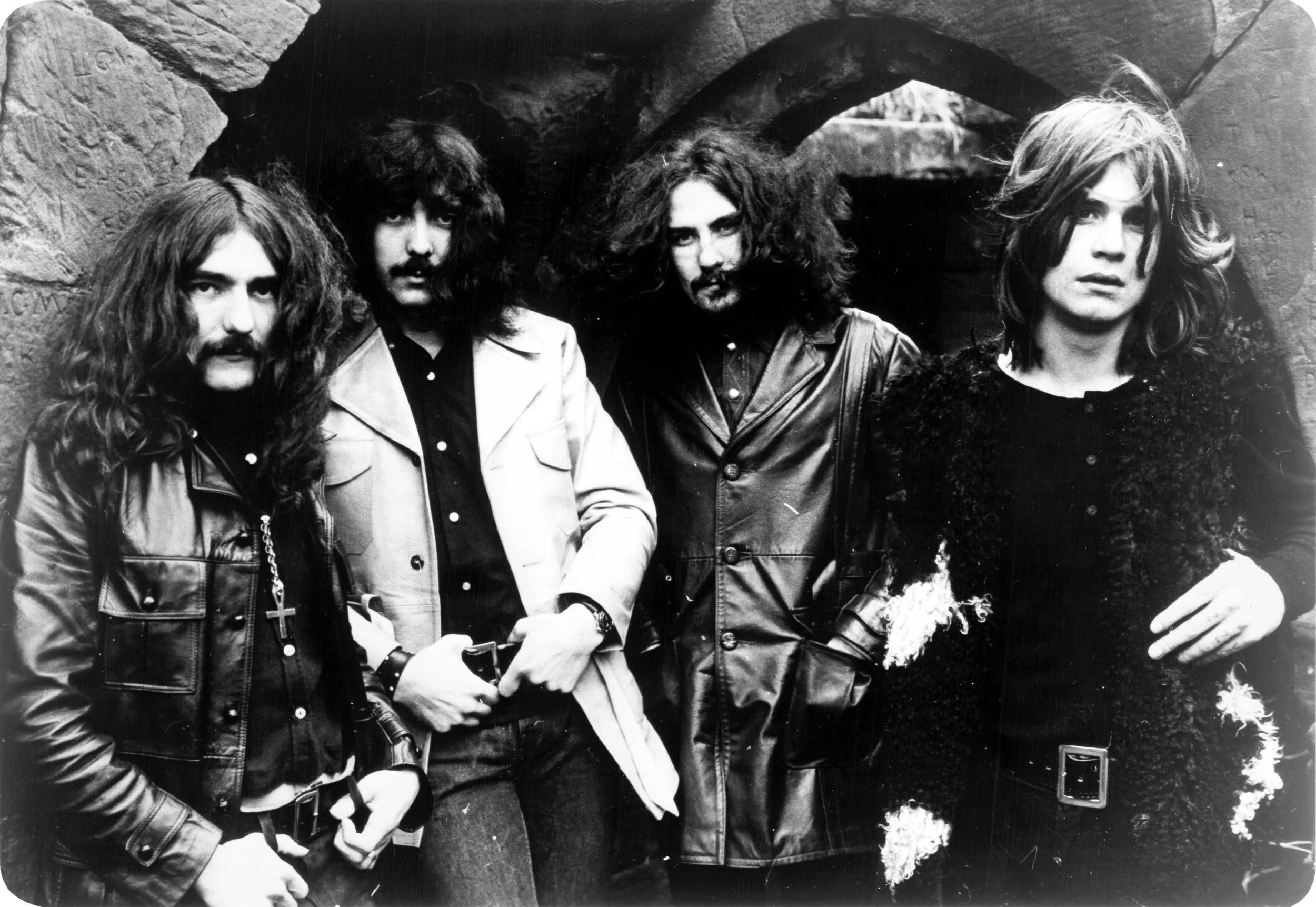
Formed in Birmingham in the late 1960s, Black Sabbath emerged as one of the first major British heavy metal bands. The group—vocalist Ozzy Osbourne, guitarist Tony Iommi, bassist Geezer Butler, and drummer Bill Ward—built on the heavy blues-rock of Cream and other 1960s acts, emphasizing riff-driven compositions in which guitar, bass, and vocals often mirrored or varied the main riff to amplify the music’s intensity. Their lyrical focus departed from typical rock subjects of love and partying, instead exploring darker subjects such as evil, war, pain, drug addiction, and the occult, delivered through Osbourne’s distinctive, sometimes paranoid vocal style.
Black Sabbath’s self-titled debut album, released on Friday, February 13, 1970, is widely recognized as the first true heavy metal album. The opening track, “Black Sabbath,” centers on a tri-tone interval—historically dubbed the “devil’s interval”—to create a foreboding, ominous atmosphere, reinforced by mirrored riffs from guitar, bass, and vocals, as well as tolling church bells that lend a funeral-like tone. Despite the darkness, the album retains its blues roots: “The Wizard” features a harmonica solo by Osbourne, while riffs, scales, and expressive vocal phrasing throughout the record draw on traditional blues forms.
Several tracks from this period exemplify Black Sabbath’s foundational influence on the heavy metal genre. “Iron Man” showcases one of rock’s most iconic riffs—a slow, crushing guitar motif supported by Iommi’s precise power chords and Butler’s heavy bass—paired with science-fiction-inspired lyrics about a man turned to steel who wreaks apocalyptic destruction. “War Pigs,” the opening track of Paranoid (1970), begins with a slow, ominous riff that escalates into galloping rhythms and dramatic tempo shifts, delivering a scathing critique of political and military leaders. The album’s title track, “Paranoid,” contrasts with its simplicity: a relentless, urgent riff augments lyrics about mental instability and social alienation. These songs demonstrate Black Sabbath's ability to fuse dark storytelling, blues-based musicianship, and heavy, riff-driven sound into a blueprint for the emerging heavy metal genre.
In the early 1970s, Black Sabbath faced accusations that their music could incite violent or self-destructive behavior. After a young woman committed suicide with the Paranoid album on her turntable, critics attempted to hold the band responsible. Osbourne defended the music, stressing that while the lyrics address real-life issues, they were never intended to encourage harm: “I never sat down to write lyrics with the intent that anyone should kill themselves. I feel very sorry for those kids. But why can’t you sing about suicide? It’s a thing that really happens.” Similarly, the band was cited in connection with the crimes of David Berkowitz, the Son of Sam killer, who claimed to have listened to their music extensively. These controversies foreshadowed recurring debates over heavy metal’s perceived influence on youth behavior, violence, or death during the 1980s and 1990s, a topic explored further in subsequent lessons.
American Heavy Metal: Alice Cooper
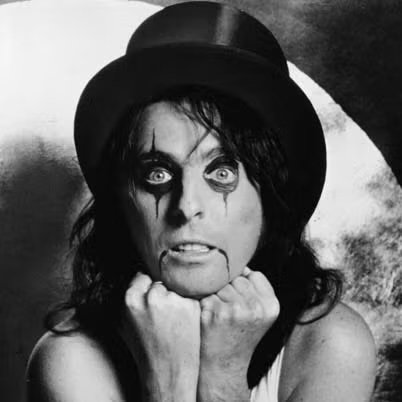
Alice Cooper and his dark persona were pivotal to the emergence of American heavy metal, a style distinct from its British counterpart. While British bands like Black Sabbath emphasized dark, riff-driven songs and dense, ominous textures, American heavy metal leaned toward melodic structures, vocal clarity, and theatrical presentation. Both as a band and later as the solo persona of lead singer Vincent Furnier, Alice Cooper developed this approach through a combination of song structure, persona, and stagecraft. Born Vincent Furnier, he adopted the stage name Alice Cooper with the help of an Ouija board, a nod to the band’s fascination with the occult. The founding lineup included Cooper on vocals and harmonica, Glen Buxton on lead guitar, Michael Bruce on rhythm guitar, Dennis Dunaway on bass, and Neal Smith on drums.
From the start, Alice Cooper distinguished itself through shocking, theatrical live performances. Shows featured elaborate props, grotesque imagery, and gender-bending costumes. Cooper’s stage attire—leather, sequins, heavy makeup, and studded gloves—became iconic, while performances often ended with symbolic executions via electric chair, guillotine, or noose. Live boa constrictors and dismembered dolls reinforced the macabre spectacle. A notorious 1969 concert involved Cooper tossing a chicken into the audience, inadvertently sparking myths that he had bitten its head off, cementing his reputation for outrageous antics.
Musically, Alice Cooper fused blues-influenced hard rock with accessible melodies and lyrics exploring adolescence and rebellion. Early hits like “I’m Eighteen” (1971) and “School’s Out” (1972) exemplify his style. “I’m Eighteen” features a harmonica and electric guitar solo rooted in blues, while “School’s Out” emphasizes an aggressive vocal delivery over a bluesy riff. Riffs serve as hooks rather than recurring structural pillars, and lyrics dramatize teenage anxieties, uncertainty, and frustration rather than occult or satanic themes.
In 1975, Cooper launched his solo career with the concept album Welcome to My Nightmare, narrating a child’s journey through surreal visions while blending blues, rock, funk, and jazz. Its opening track combines theatrical storytelling alongside accessible melodies, emphasizing adventure through the fantastical rather than literal horror. Cooper's integration of narrative and diverse musical styles contributed to a theatrical, concept-driven form of heavy metal that later performers adopted.
Throughout his career, Cooper maintained his dark theatricality and androgynous stage persona, fusing blues-rooted riffs, catchy melodies, and dramatic spectacle. By combining musical sophistication with visual performance, he established a distinctly American heavy metal style, emphasizing narrative, emotion, and darkly humorous commentary on youth and rebellion.
Glam Rock
Following the rise of theatrical American metal exemplified by Alice Cooper, a parallel strain of performance-oriented rock emerged in the United Kingdom: glam rock. Unlike the dark, blues-rooted intensity of American metal, glam rock prioritized spectacle and visual excess over claims to authenticity. Musically, glam rock drew on a wide range of influences, including 1950s rock and roll, bubblegum pop, and the brash riffs of hard rock, while incorporating the studio innovations of the late 1960s recording era. Yet it often favored concise, hook-driven songs over the extended jams or conceptual experimentation of progressive rock. While glam rock frequently explored themes of gender and sexuality through androgynous costumes, theatrical personas, and playful lyrics, its performers and audiences—like rock more broadly in the 1970s—remained predominantly heterosexual men.
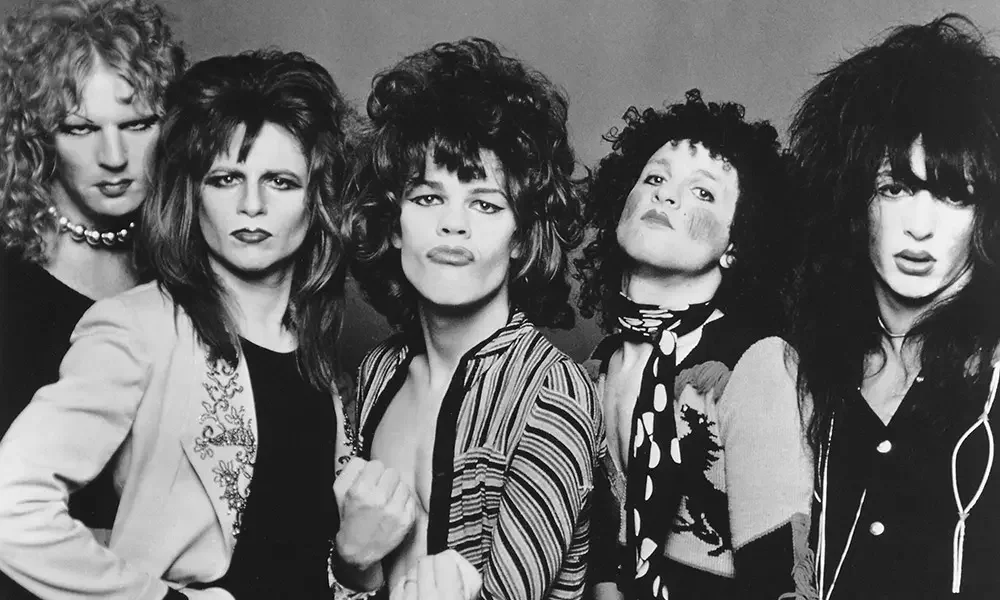
Glam rock was as much about image as sound. Artists cultivated striking, often androgynous appearances, combining glitter, makeup, platform boots, and elaborate costumes that referenced a range of influences, including 1930s Hollywood glamour, pre-war cabaret, Victorian symbolism, science fiction, and occult imagery. The movement deliberately rejected the revolutionary rhetoric of the late 1960s counterculture. In this sense, glam offered a counterpoint to the masculinity and sonic heaviness of hard rock, providing a visually expressive and playful alternative. Figures such as David Bowie, Marc Bolan’s T. Rex, and the New York Dolls experimented with cross-dressing, makeup, and overtly feminine gestures onstage, which turns their performances into a space for fluid identity. UK glitter rock bands, such as Slade, Sweet, and Gary Glitter, later brought glam’s theatricality to mainstream audiences, pairing catchy hooks and teen-oriented appeal with artful performances.
In the United States, the New York Dolls were among the earliest American bands to adopt these visual and musical strategies. Formed in New York City, the band consisted of David Johansen on vocals, Johnny Thunders and Sylvain Sylvain on guitars, Arthur Kane on bass, and Jerry Nolan on drums. Their performances were distinguished by highly stylized, androgynous stage costumes: torn satin and leather jackets, ripped tights, glitter, high heels, and excessive makeup. Johansen often performed as a parody of Mick Jagger, accentuating both camp and sexual ambiguity. Musically, the Dolls’ sound deliberately drew on a stripped-down version of 1950s rock and roll, anchored by the buzzsaw twin-guitar riffs of Thunders and Sylvain, propulsive rhythms, and Johansen’s hoarse vocals, as heard on their 1973 debut album New York Dolls. Their lyrics alternated between themes of romantic longing, as in “Looking for a Kiss,” and psychotic intensity, as in "Personality Crisis.” Though their commercial success was limited, the New York Dolls’ blend of raw sound, gender-bending fashion, and stage theatrics directly influenced both the glam and punk rock movements that followed.
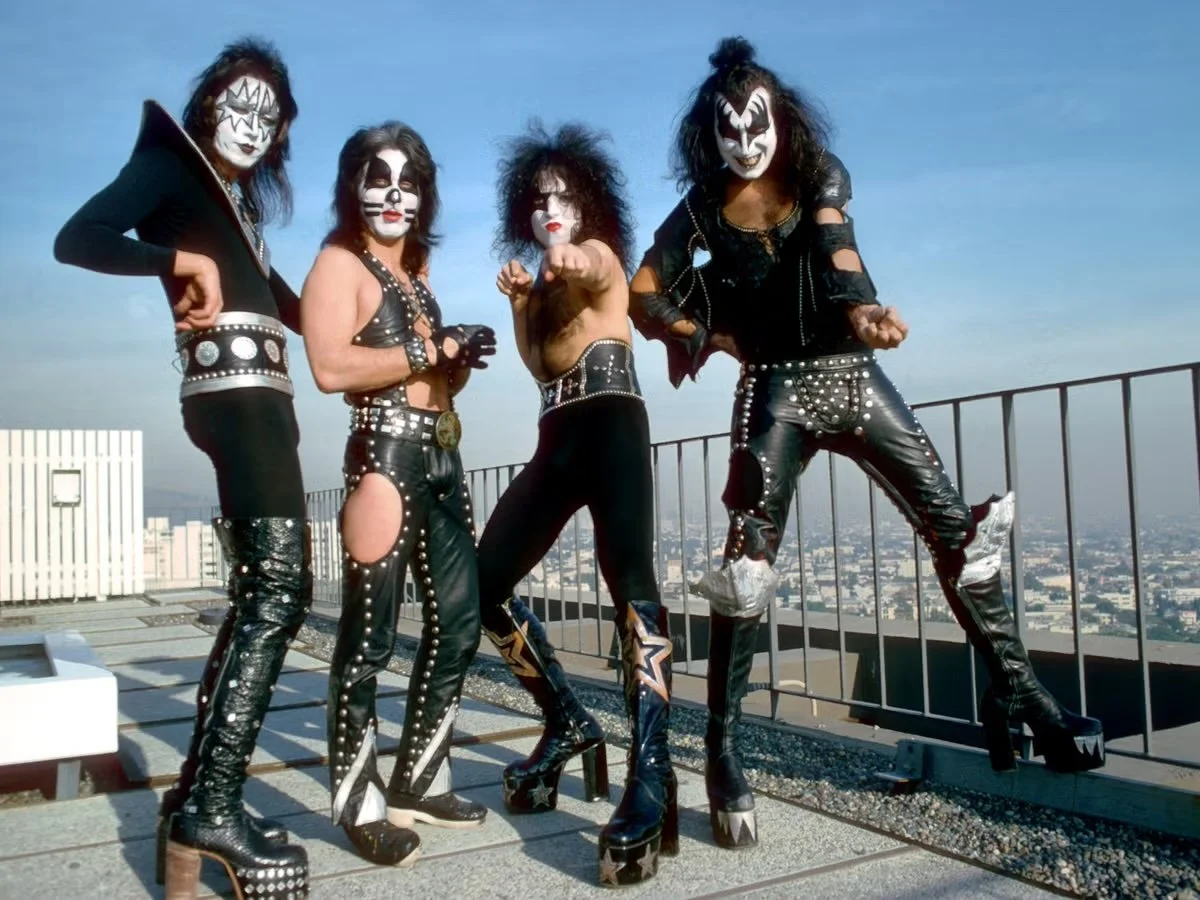
Formed in New York in 1973, Kiss fused the bombast of hard rock with the flamboyant showmanship of glam, creating a signature “shock rock” aesthetic that elevated live performance into full-scale theater. The band’s members—Paul Stanley, Gene Simmons, Ace Frehley, and Peter Criss—adopted enduring makeup personas: Stanley as The Starchild, Simmons as The Demon, Frehley as The Spaceman, and Criss as The Catman. Each persona was carefully crafted to amplify stage presence and create a distinct visual identity that complemented their music. Their performances were renowned for elaborate spectacle, incorporating pyrotechnics, smoke machines, levitating drum kits, fire-breathing, blood-spitting, and catwalks extending into the audience, making their concerts into immersive, participatory events.
Musically, Kiss balanced their visual spectacle with the power and drive of hard rock. Their songs often featured pounding, syncopated rhythms, hook-laden choruses, and riff-driven guitar work, designed to energize arenas and stadiums. Tracks such as “Rock and Roll All Nite” (1975) and “Detroit Rock City” (1976) show their distinct theatrical style, combining catchy, anthemic melodies with high-energy guitar solos. Even within the glam-infused theatrics, the band maintained the aggressive, riff-oriented sound of hard rock, making music that could stand on its own outside of the performance spectacle. Their attention to persona, stagecraft, and fan engagement—such as distributing merchandise, comic books, and elaborate stage props—set a template for immersive rock performances and inspired subsequent acts across metal, glam, and pop genres.
David Bowie

David Bowie first started performing in the mid-1960s under his birth name, Davy Jones, leading a succession of short-lived rhythm-and-blues and mod groups. In 1966, he adopted the surname Bowie to avoid confusion with Davy Jones of the Monkees, yet his early solo work was largely overlooked and bore little resemblance to the dominant rock styles of the day. In 1969, Bowie achieved his first commercial success with the single “Space Oddity,” a space-age narrative of isolation released to coincide with the Apollo moon landing. The song introduced Bowie’s interest in theatrical storytelling, a thread that would steer his career throughout the 1970s. His 1971 album The Man Who Sold the World explored psychological and fantastical themes, partially inspired by the schizophrenia that affected his stepbrother and other relatives. Hunky Dory (1971) followed with a more melodic sound, featuring sweeping orchestral arrangements, piano, and acoustic guitar, and containing tracks like"Life on Mars?" —a satirical take on Sinatra's "My Way"—and "Changes," both of which demonstrated Bowie's growing compositional sophistication.
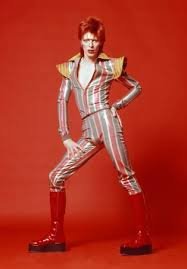
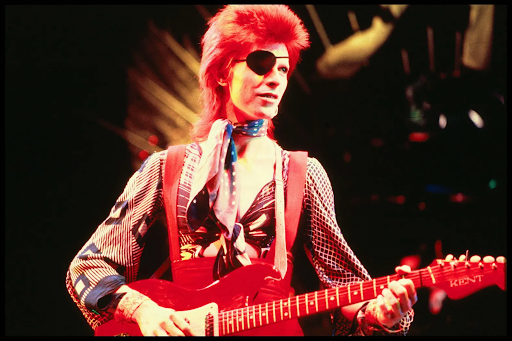
Bowie’s mainstream breakthrough came with The Rise and Fall of Ziggy Stardust and the Spiders from Mars (1972). The album presents a connected narrative centered on Ziggy Stardust, a bisexual and androgynous alien rock star sent to Earth as a messenger of impending apocalypse (“Five Years”). Ziggy rises to fame (“Ziggy Stardust”), becomes a cultural icon, and eventually falls victim to the pressures of stardom, culminating in the track“Rock ‘n’ Roll Suicide.” The album combines short, hook-driven songs with theatrical staging, and Bowie fully embodied the character with sequined jumpsuits, platform boots, and striking makeup. Musically, the record blends glam rock’s theatricality with elements of hard rock, folk, and avant-garde, while the lyrics deal with themes of fame, identity, and social alienation. Bowie’s persona and performance style—fey vocals, fluid gender presentation, and elaborate stagecraft—established a new standard for theatricality in popular music, influencing contemporaries and later artists, from Kiss and Talking Heads to Prince and Madonna.
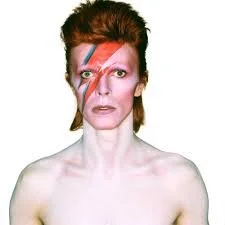
Following the release of Ziggy Stardust, Bowie continued to experiment with concept albums and stylistic reinvention. Aladdin Sane (1973) presents a fractured post-Ziggy persona, merging glam rock with jazz-inflected piano, avant-garde saxophone, and hard rock riffs. Diamond Dogs (1974) develops as a dystopian narrative, initially conceived as a musical adaptation of George Orwell’s 1984, depicting urban decay, surveillance, and social control. Songs like “Rebel Rebel”pair accessible, riff-driven rock with social commentary, while “Big Brother” and “1984” integrate cabaret stylings with funk and progressive rock textures. Young Americans (1975) marked a turn toward “plastic soul,” blending soul, funk, and R&B, with hits such as “Fame” (co-written with John Lennon) and “Young Americans.” Through these works, Bowie demonstrated how a rock artist could fuse narrative concept, theatrical performance, and diverse musical styles, establishing himself as the quintessential glam rock innovator, reshaping both the aesthetic and cultural possibilities of 1970s rock, and becoming a cultural icon until he died in 2016. Bowie consistently challenged social and musical norms, using his art, stagecraft, and public persona to destabilize assumptions about gender, sexuality, and identity. By openly performing as a bisexual man, adopting and discarding multiple alter egos, and integrating theatricality into his music, Bowie normalized theatrical persona and gender play within mainstream rock performance. He became a touchstone for queer visibility, inspiring a generation of artists to explore fluid identity, sexual politics, and performative persona.
Chapter 25: Conclusion
During the 1970s, rock music responded to political unease, economic challenges, and cultural uncertainty through new sounds and performance styles. As public confidence in government, prosperity, and postwar stability declined, rock music grew in scale and ambition. Arena concerts, increased amplification, and album-oriented compositions replaced the intimacy of 1960s club culture, altering the relationship between artists and audiences and positioning rock as both an experiential and commercial phenomenon
Hard rock and heavy metal intensified blues traditions, emphasizing greater sonic weight and darker themes as distinct responses to the era’s instability. Led Zeppelin combined American blues and British folk influences with innovative studio techniques to create music designed for large audiences and expansive venues. In contrast, Black Sabbath reinterpreted blues motifs into foreboding, industrial soundscapes that conveyed working-class anxieties and the effects of postwar decline. In the United States, Alice Cooper channeled the genre’s heaviness into theatrical narratives and themes of adolescent alienation, displaying how shock, humor, and storytelling should be integrated with aggressive musical styles.
Glam rock offered another response by treating identity as performance. Artists such as the New York Dolls, Kiss, and David Bowie embraced spectacle, artifice, and gender play. Their music presents the self as staged and changeable. Bowie’s continual reinvention showed how rock could explore fame, sexuality, and alienation within a culture determined by mass media.
Collectively, hard rock, heavy metal, and glam rock show that the 1970s was a decade when rock music became louder, more expansive, and more self-aware, even as it grew more closely integrated with corporate structures. The period brought a new cultural function to rock: uncertainty became spectacle, musical heaviness provided catharsis, and performance became a strategy for traversing a world lacking shared certainties.
Chapter 25: Further Reading
Baker, Matthew Reed. 1970s Jazz Fusion. 1st ed. New York: Bloomsbury Academic, 2025. https://doi.org/10.5040/9798765119556.
Bashe, Philip. Heavy Metal Thunder. Garden City, NY: Doubleday, 1985.
Buckley, David. The Complete Guide to the Music of David Bowie. London: Omnibus,
1996.
———. Strange Fascination. London: Virgin, 1999.
Cavicchi, David. Tramps Like Us: Music and Meaning Among Springsteen Fans. New York: Oxford University Press, 1998.
Cee, Gary. Classic Rock. New York: Billboard Books, 1995.
Considine, J.D. “Led Zeppelin: the Seventies.” Rolling Stone, no. 587 (1990): 56–60.
Cross, Charles., et al., eds. Backstreets: Springsteen, The Man and His Music. New York: Harmony, 1989.
Cross, Charles R., and Erik Flannigan. Led Zeppelin: Heaven and Hell. New York: Harmony, 1991.
Cowie, Jefferson., and Lauren. Boehm. “Dead Man’s Town: ‘Born in the U.S.A.,’ Social History, and Working-Class Identity.” American Quarterly 58, no. 2 (2006): 353–78.
Cullen, Jim. Born in the U.S.A.: Bruce Springsteen and the American Tradition. Middletown, CT: Wesleyan University Press, 2005.
Davis, Stephen. The Led Zeppelin Saga: Hammer of the Gods. New York: Morrow, 1985; 2nd ed., 1995.
Ethen, Michael. A Spatial History of Arena Rock, 1964–1979. PhD diss., McGill University, 2011.
Frith, Simon. “Only Dancing: David Bowie Flirts with the Issues.” In Zoot Suits and Second Hand Dresses, edited by A. McRobbie, 132–40. London: Macmillan, 1989.
———. “The Real Thing—Bruce Springsteen.” In Music for Pleasure, 94–104. New York: Routledge, 1988.
Gilman, Peter, and Leni. Gilman. Alias David Bowie. London: Proteus, 1986; repr. 1986.
Hatch, David, and Stephen Millward. From Blues to Rock. Manchester: Manchester University Press, 1987.
Hoskyns, Barney. Glam!. London: Faber & Faber, 1998.
Lewis, Dave. Led Zeppelin: A Celebration. London: Omnibus, 1991.
Macan, Edward. Rocking the Classics: English Progressive Rock and the Counterculture. New York: Oxford University Press, 1997.
Marsh, Dave. Born to Run. Garden City, NY: Doubleday, 1979.
Moore, Allan F. Rock: The Primary Text. Buckingham: Open University Press, 1993.
Prato, Greg, and Fred Armisen. The Yacht Rock Book: The Oral History of the Soft, Smooth Sounds of the 70s and 80s. 1st ed. La Vergne: Jawbone Press, 2018.
Springsteen, Bruce. Songs. New York: HarperCollins, 1998.
Thompson, Dave. I Hate New Music: The Classic Rock Manifesto. New York: Wiley, 2008.
Waksman, Steve. This Ain’t the Summer of Love: Conflict and Crossover in Heavy Metal and Punk. Berkeley: University of California Press, 2009.
Weinstein, Deena. Heavy Metal: A Cultural Sociology. New York: Lexington, 1991; rev. 2nd ed., Heavy Metal: The Music and Its Culture. New York: Da Capo, 2000.
Yorke, Ritchie. The Led Zeppelin Biography. Novato, CA: Underwood-Miller, 1976; 2nd ed., 1993.
Jackson, Andrew Grant. 1973: Rock at the Crossroads. 1st ed. New York: Thomas Dunne Books, 2019.