Chapter 40: Country Music in the 80s and 90s
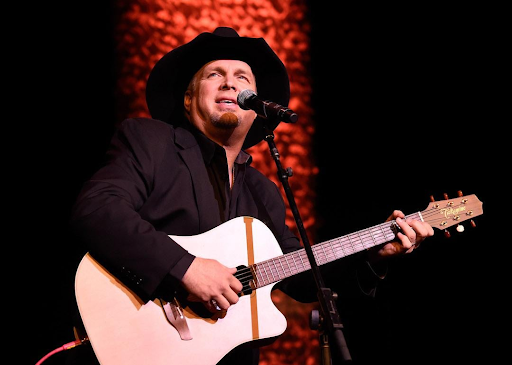
Chapter 40: Introduction
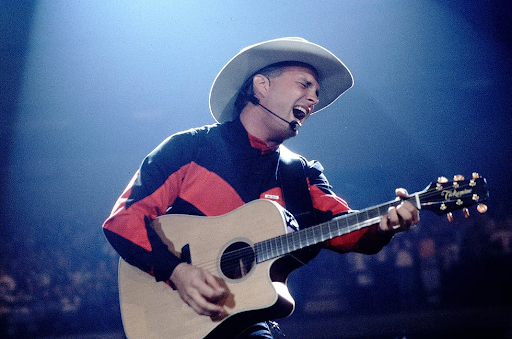
By the early 1990s, country music had become the United States’ best-selling genre. A 1995 national survey estimated that over a third of Americans—roughly 70 million people—purchased and listened to country music each week. The upsurge in country music's popularity coincided with structural changes in the broader music industry. Beginning in the late 1980s, corporate consolidation accelerated as major record labels were absorbed into multinational conglomerates that aimed to control production, distribution, and international markets. By 1990, six companies—Polygram, Sony, Matsushita, Thorn, Bertelsmann, and Time-Warner—accounted for more than two-thirds of worldwide recorded-music sales. Although industry executives increasingly prioritized international promotion and standardized marketing strategies, the United States remained the world’s largest music market, representing roughly 31 percent of global trade.
At the same time, the American music landscape fractured into a growing array of genres and subgenres. Rock split into several radio formats, including alternative rock, metal, grunge, and adult contemporary, while rap grew into a multimillion-dollar enterprise with regional styles and chart-topping acts. Genres once considered peripheral—gangsta rap, speed metal, grunge, and Latin pop—began topping the charts. International artists such as Ricky Martin and Celine Dion became influential commercial forces. Within the divided music market, country music moved from the margins to the cultural mainstream, finding an opening in an industry searching for stable, broad-appeal markets.
A wave of new artists helped country take advantage of the fragmented music market. Artists such as Brooks and Dunn, Alan Jackson, Martina McBride, and Clint Black joined an already strong cohort of late-1980s stars. Garth Brooks’s arena-rock-infused stagecraft brought unprecedented scale to country concerts, while Shania Twain’s polished, pop-leaning style drew listeners well beyond the country core. Reba McEntire, Alabama, and George Strait continued to anchor the mainstream, and at its height, country music accounted for as much as 40 percent of the nation’s top-selling albums. For many listeners, the genre offered a sonic alternative to the louder, more aggressive aesthetics of rap, heavy metal, and grunge.
As country music gained greater commercial success, it also became a touchstone in national political life. During the mid-1980s, politicians turned increasingly to country symbols and performers to strengthen their public messaging. George H. W. Bush used a Randy Travis song during the 1988 presidential campaign to reinforce his social platform, while Hillary Clinton invoked Tammy Wynette in debates about changing expectations of women’s roles. High-profile country artists performed at Republican events, but the political reality remained more varied than the public image suggested. Garth Brooks described “We Shall Be Free” as a gay-rights anthem, and explicit political content appeared in only a small fraction of hit songs. The perception of country music as conservative was reinforced by recurring themes of family, work, religion, and community—family, work, religion, and community—which political actors adapted to fit the optimism and imagery associated with the Reagan era.
Musical trends shifted in tandem with these cultural developments. In the early 1980s, a revival of traditional country styles gathered momentum as Reba McEntire, Dwight Yoakam, George Strait, Randy Travis, Ricky Skaggs, and the Judds embraced honky-tonk, rockabilly, western swing, bluegrass, and the Bakersfield sound. Groups such as Alabama and the Statler Brothers renewed interest in gospel-inflected harmonies, while the film Urban Cowboy sparked a national fascination with Western fashion and partner dancing. Women achieved increased visibility as well. Dolly Parton’s “9 to 5” opened the decade with an anthem celebrating working women, and artists like Emmylou Harris, Rosanne Cash, and the Judds sustained this impetus. By the 1990s, LeAnn Rimes, Shania Twain, and Sheryl Crow earned major crossover success and Grammy recognition, pulling in audiences from pop, rock, gospel, and Latin music.
Technological and regulatory shifts played an equally decisive role. In 1983, the Federal Communications Commission implemented Docket 80–90, a ruling that significantly relaxed restrictions on FM radio station allocation, particularly in rural and suburban areas. By allowing more FM stations to operate, the policy dramatically increased broadcast capacity and opened new markets for genres that had previously relied on AM radio, including country music. FM broadcasting offered clearer, higher-fidelity sound than AM, and because country music had long been associated with AM radio, the shift from AM to FM broadcasting opened new markets and improved the genre’s reach. Meanwhile, many stations operating in the “beautiful music” format—specializing in orchestral, instrumental, or soft, easy-listening arrangements intended for unobtrusive background listening—switched to country programming as that format declined. Producers responded to FM’s improved sound quality with more polished studio techniques, and in 1990, Billboard modified its country chart to rely solely on radio airplay.

The music industry also underwent another major change with the introduction of SoundScan, now known as Luminate, in 1991. Previously, Billboard charts relied on retailer self-reporting, a system prone to error and manipulation. SoundScan replaced it with barcode-based tracking, collecting real-time UPC data from stores and later incorporating online sales and digital downloads. Because registration was free for labels of all sizes, SoundScan provided a fuller picture of the country market, which had previously been significantly undercounted. When the first Billboard chart based entirely on SoundScan was published on November 30, 1991, the impact was immediate: country music surged upward, not simply because of an overnight change in taste, but because the system finally captured accurate sales data. By the end of the century, Billboard published roughly twenty weekly charts spanning pop, country, R&B, gospel, classical crossover, and more. SoundScan and the newly implemented Broadcast Data Systems further changed chart reporting in the early 1990s, curtailing reliance on self-reporting and increasing the number of retailers represented. Country sales climbed sharply, partly because earlier counts had underestimated them and partly because improved visibility drew new listeners.
A new commercial boom began in 1989 when strong performers and new marketing strategies, combined with improved sales tracking, converged with wider cultural changes in American media and politics. Garth Brooks led the commercial boom in country music with a hybrid sound combining neotraditional country and arena rock, staging concerts on a scale comparable to major rock tours. Neotraditionalism remained influential through the mid-1980s as artists revived earlier regional and stylistic traditions. Reba McEntire emphasized her Oklahoma ranch background and incorporated vocal techniques associated with Patsy Cline, while the midwestern town of Branson, Missouri, emerged as a major entertainment destination, complementing Nashville. Dolly Parton’s launch of Dollywood in 1986 blended her Appalachian heritage and her music with the economics of modern tourism, in turn, further increasing country music’s cultural presence.
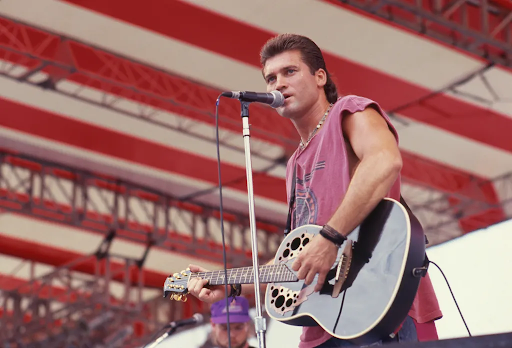
During this period, line dancing became a national craze. Rooted in older folk dance and honky-tonk traditions, line dancing involved choreographed sequences performed in unison without partners. Its appeal lay in its accessibility: dancers could join without formal training, and steps were easy to learn. Record labels actively encouraged the trend by commissioning choreography for singles, most famously Billy Ray Cyrus’s “Achy Breaky Heart.” Clubs and bars across the country adopted line dancing, including regions without established country-dance traditions, strengthening the genre’s visibility in social spaces.
Simultaneously, the early 1990s recession shifted national attention toward middle-class suburban households—often described as the “soccer-mom” demographic. Public discourse increasingly gravitated towards topics of family stability, work, and everyday life, contributing to what observers called the “Southernization of America.” In response, many country artists promoted “new country,” a style that deemphasized rural imagery and instead platformed middle-class concerns about work, adulthood, and domestic life.
Neotraditionalist Country
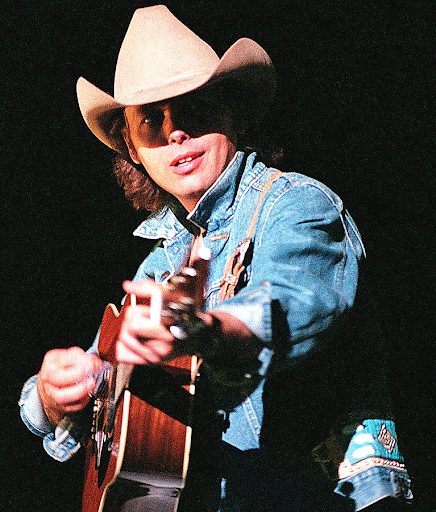
By the early 1980s, mainstream country music had shifted decisively toward polished, pop-oriented “countrypolitan” production. Artists such as Dolly Parton, with hits like “9 to 5,” moved the genre into sleek, crossover territory, and a number of former pop performers—including B. J. Thomas, Billy Joe Royal, the Osmonds, Bill Medley, Dan Seals, and Exile—turned to country in search of renewed commercial visibility. Among the era’s most visible figures was Kenny Rogers, whose recordings blended country themes with lush orchestration and adult-contemporary pop production. Songs such as “Lady,” written and produced by Lionel Richie, relied on orchestral strings, electric piano, and a slow, radio-friendly tempo more typical of pop balladry than honky-tonk country. Narrative hits like “The Gambler” and “Coward of the County” drew on country storytelling traditions, yet their studio arrangements featured smooth backing vocals, restrained rhythm sections, and layered instrumentation designed for crossover radio play. Rogers’s vocal delivery also differed from the rougher timbres associated with earlier country singers; his controlled baritone and conversational phrasing fit easily alongside soft rock and adult contemporary programming. Yet, Rogers became one of the most commercially successful recording artists of the period and a central figure in the crossover sound.
The 1980 film Urban Cowboy, starring John Travolta and Debra Winger, both responded to and accelerated the move toward polished, pop-oriented country production. Its soundtrack, curated by music industry impresario Irving Azoff, integrated accessible, radio-friendly country music into the film’s drama, popularizing a smooth, soft-core country sound epitomized by artists such as Kenny Rogers, Dolly Parton, Johnny Lee, Mickey Gilley, and Janie Frickie. The film also helped launch the national line-dancing craze. Adapted from square-dance formations for clear, audience-friendly choreography, line dancing involved sequences of steps performed in unison without partners, making it highly accessible to beginners. Clubs and bars across the country adopted the line-dancing style, including in regions without strong traditional country-dance roots, consequently strengthening the genre’s visibility in social spaces and further embedding country music into mainstream culture. Urban Cowboy thus reinforced a glossy, urban-friendly country aesthetic, privileging polished production, spectacle, and mainstream appeal over the rawer, working-class sensibilities of earlier country music.
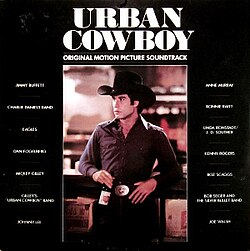
In response to the Urban Cowboy-inspired soft-core country style, many musicians began pushing back and turning instead to earlier country styles for inspiration. Neotraditional country—also known as new traditional country, hardcore country, or hard country—emerged as the clearest expression of this turn toward the past. The style focused on the instrumental timbres and vocal techniques associated with country music from the 1940s through the 1960s: fiddle lines that cut through the mix, pedal steel guitar bends, Fender Telecaster-driven twang, and tightly blended harmony vocals. Performers drew directly from honky-tonk innovators like Hank Williams and Ernest Tubb, the Bakersfield drive of Buck Owens and Merle Haggard, the Western swing of Bob Wills, and the vocal stylings of Loretta Lynn, Tammy Wynette, and George Jones. Many artists also revived mid-century performance aesthetics, adopting fashion closely tied to earlier eras. Men often returned to crisp pearl-snap shirts, embroidered Western suits, tooled-leather belts, and Stetson hats reminiscent of 1950s honky-tonk stages, while women embraced fringed dresses, bold rhinestones, and high bouffant hairstyles, visually conveying their allegiance to a more traditional country lineage.
The neotraditionalist movement gained momentum in the mid-1980s, several years after the outlaw country wave began to recede. While outlaw artists had also drawn from earlier influences, neotraditionalism arose as a more deliberate corrective to the polished, pop-leaning productions exemplified by Urban Cowboy. Outlaw country positioned itself as a rebellious, genre-blending alternative to the Nashville mainstream, whereas neotraditionalism pursued a structured, roots-focused revival capable of commercial success. As MTV and the Second British Invasion reoriented the broader musical marketplace, country sales had faltered, and the renewed emphasis on traditional instrumentation helped stabilize the genre’s core audience. At the same time, a more commercially oriented strain of “new country” developed alongside neotraditionalism. This pop-friendly variant relied on layered studio production, Cajun-inflected rhythms, and gospel-style backing vocals, supported by rhythm sections derived from rock and adult-contemporary pop. Together, these parallel developments of neotraditionalism and pop-oriented “new country” broadened country music's appeal, and by 1993 the genre accounted for nearly one-fifth of the American music market: more than double its share just four years earlier.
A cluster of artists helped move neotraditionalism from a niche revival to a mainstream force. Ricky Skaggs, Randy Travis, Patty Loveless, and the Judds combined vintage vocal aesthetics, tightly structured harmonies, and new interpretations of classic repertoire. The neotraditional revival also created space for long-established performers such as Merle Haggard, Conway Twitty, George Jones, and Don Williams, all of whom secured some of their final top-ten singles during the late 1980s, as the revival reached its commercial peak.
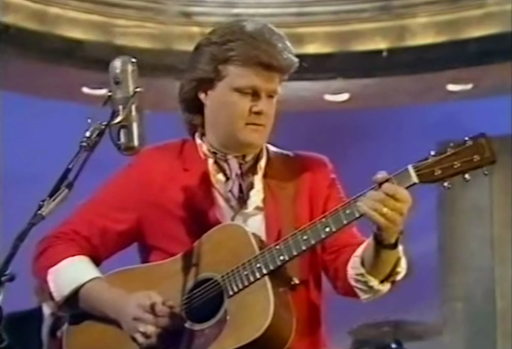
Ricky Skaggs, a bluegrass prodigy who had performed as a teenager with Ralph Stanley of the pioneering Stanley Brothers, embodied the movement’s central goal: to pull country music “back to the basics.” His sound fused mandolin, banjo, and close-harmony singing—hallmarks of early bluegrass groups such as Bill Monroe and the Stanley Brothers—with the structures and themes of contemporary country songwriting. Keith Whitley, a close friend and former bandmate of Skaggs, offered a smoother, more countrypolitan vocal style influenced by both bluegrass and the polished balladry of 1970s Nashville. His success with “Don’t Close Your Eyes” marked him as one of the decade’s most promising voices, and although his death in 1989 at age thirty-four cut short a rising career, his vocal phrasing continues to impact artists across both neotraditional and mainstream country.
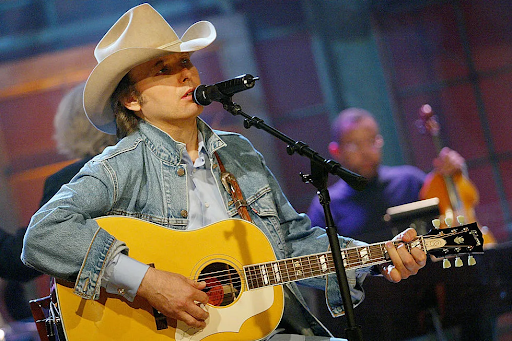
Other artists broadened the stylistic range of neotraditionalism, showing that a return to country roots could coexist with other musical idioms. Dwight Yoakam’s career illustrates this breadth. Born in eastern Kentucky and raised partly in Columbus, Ohio, he remained connected to his Appalachian roots through family ties and steady exposure to Grand Ole Opry broadcasts. His fascination with recording history led him to the Bakersfield style of Buck Owens and Merle Haggard, as well as the country rock of the Byrds, the Flying Burrito Brothers, Gram Parsons, and Emmylou Harris. After struggling to find a foothold in Nashville in the mid-1970s, Yoakam relocated to Los Angeles, where he became part of the emerging “cowpunk” scene and explored how punk’s raw, stripped-down sensibility could intersect with classic country frameworks.
Working with guitarist and producer Pete Anderson, Yoakam released the 1984 EP Guitars, Cadillacs, etc., etc. Warner Bros. Nashville reissued it with additional tracks in 1986, and the album ultimately sold more than one million copies. It produced two top-five singles—the title track and a cover of Johnny Horton’s 1956 hit “Honky Tonk Man.” Yoakam quickly developed a reputation for interpretive range, recording covers from the country canon as well as versions of rock songs by Cheap Trick, the Clash, and Elvis Presley. His commitment to reinterpreting earlier music culminated in three full albums of covers: Under the Covers (1997), Dwight’s Used Records (2004), and Dwight Sings Buck (2007).
Yoakam’s 1988 duet with Buck Owens on “Streets of Bakersfield” further exemplified neotraditionalism’s cross-generational reach. The recording revived Owens’s 1973 version and brought the Bakersfield sound back into national prominence. Its arrangement incorporated strong Mexican musical influences, most notably through Flaco Jiménez’s buoyant accordion lines, which evoke the feel of a Mexican polka. Combined with a shuffle-driven backbeat, minimal reverb, and a twangy Telecaster lead, these elements created a vivid update of Bakersfield’s signature sound. The vocal interplay between Yoakam and Owens staged a dialogue between past and present, linking the neotraditional revival of the 1980s with its Bakersfield antecedents. The single reached number one on the Billboard Hot Country Singles chart and remains one of the movement's signature recordings.
George Strait
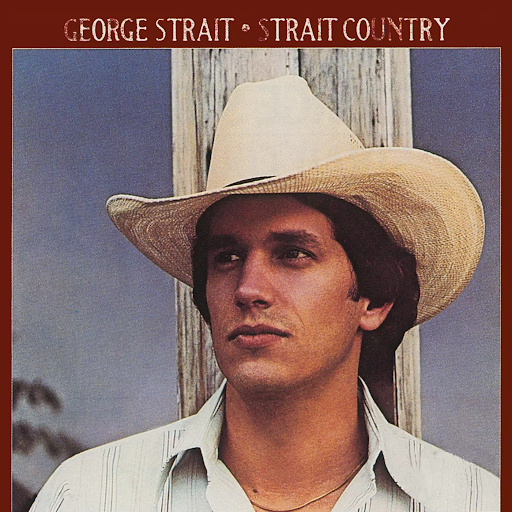
George Strait's 1981 debut album, Strait Country, marked an important moment in the neotraditionalist turn in country music. Released at a time when country-pop and Urban Cowboy aesthetics dominated the charts, the album offered a clear alternative. Strait drew from honky-tonk and Western swing traditions, along with the Bakersfield sound, presenting a sound grounded in mid-century country forms while remaining accessible to contemporary audiences. His use of classic instrumentation—particularly fiddle and steel guitar—alongside understated ballads preserved the traditional core, while clean arrangements, precise phrasing, and danceable rhythms established a model for country performance and production throughout the 1980s. The album’s success demonstrated that traditional sounds could reach a broad audience and helped direct country production during the 1980s.
Strait’s connection to these traditions grew from his years performing with his band Ace in the Hole in Texas honky-tonks. Raised on a ranch with limited exposure to country music, he developed a deeper interest in the genre during his service in the U.S. Army. While stationed in Hawaii in 1973, he auditioned for and joined the Army-sponsored group Rambling Country, deepening his appreciation for country forms. During college at Southwest Texas State University, Ace in the Hole gained regional traction, but wider recognition came only after Strait signed with MCA in 1981, arriving when the genre favored slick, pop-oriented production. His early recordings signaled a return to a more traditional sound.
Throughout the 1980s, Strait refined his neotraditional sound. Much of the material on Strait Country was written by Dean Dillon and Frank Dycus, whose lyrics and song structures complemented Strait’s restrained vocal style. His debut single explored familiar country themes of heartbreak and drinking through tightly framed honky-tonk arrangements. His second album, Strait from the Heart (1982), broadened his sound and sold over a million copies. The album’s standout track, “Amarillo by Morning”—originally recorded by Terry Stafford in 1973—became indelibly associated with Strait, eclipsing earlier versions. Across the decade, he consistently blended honky-tonk and Western swing with a smooth, unadorned delivery that contrasted with the crossover-driven productions dominating Nashville.
Strait also helped classify country music’s visual identity. His consistent use of cowboy hats, boots, and ranch-style attire reinforced a traditional country-western image at a time when country fashion had incorporated pop and disco influences. Strait’s look contributed to the rise of the “hat act” trend—a term describing male country performers who emphasized classic Western dress, particularly cowboy hats, as a central part of their public image in the late 1980s and 1990s. His combination of traditional country dress and restrained musical arrangements became a common model among later neotraditional performers.
Reba McEntire
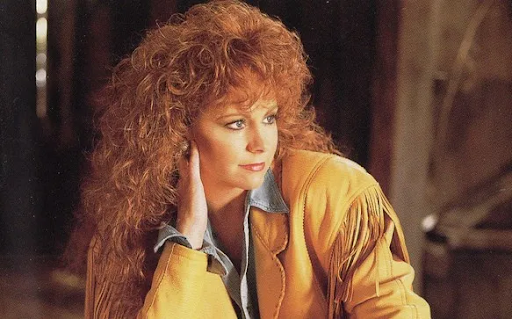
With a style firmly rooted in country’s mid-century traditions, Reba McEntire rose to prominence as one of the genre’s most influential voices during the neotraditionalist revival. Her early career, however, followed a different trajectory. Singer Red Steagall discovered her after she performed the national anthem at the National Rodeo Finals, helping her secure a Mercury Records contract. McEntire’s Oklahoma upbringing helped form her connection to country’s rural heritage. She retained a distinctive regional accent, and her family’s involvement in rodeo culture—combined with her marriage, and later divorce, to rodeo champion Narvel Blackstock—further strengthened her image of authenticity.
During her late-1970s and early-1980s tenure with Mercury, McEntire was encouraged to adopt a polished, pop-oriented style, including her rendition of “Sweet Dreams,” featuring lush orchestral strings, layered electric keyboards, and backing vocal arrangements typical of early-1980s crossover production. While these recordings earned charting singles and moderate commercial success, McEntire became increasingly dissatisfied with Mercury’s emphasis on slick, formulaic aesthetics. Seeking greater artistic control, she left the label in 1983.
Her move to MCA Nashville in 1984 marked a decisive turn toward traditionalism. With significantly more autonomy, she began releasing music rooted in the sounds of the 1950s and 1960s country. Her album My Kind of Country (1984) made McEntire’s return to traditional country instrumentation explicit. Built on acoustic guitar, pedal steel, and fiddle, the album yielded the hit “How Blue,” written by Josh Moffat, and presented a clear return to country music's traditional sound. Over the course of the decade, she released a steady stream of albums and singles that mixed original compositions alongside songs by emerging writers and revivals of older material. Notable examples include her self-penned “Only in My Mind” (1985) and Matraca Berg and Jane Mariash’s “The Last One to Know” (1987).
My Kind of Country also marked a visual shift: she replaced pop-style costumes with Western skirts, cowgirl boots, pearl-snap shirts, and sequined stage outfits, aligning her more visibly with mid-century country imagery. As the decade progressed, McEntire increasingly asserted control over her career. In 1987, she parted ways with her manager, began co-producing her own albums, launched her own publishing company and booking agency, and placed her husband Narvel Blackstock at the center of her management team. McEntire's combination of artistic and business independence solidified her status as one of the era’s most influential neotraditionalists.
McEntire’s career also extended beyond recording. She became a successful actress, appearing in Tremors (1990), various television movies, and later starring on Broadway in Annie Get Your Gun (2001). Her sitcom Reba (2001–2007) introduced her to a national audience while displaying her comedic timing. In the 2010s and 2020s, she appeared on television competitions, most notably as a coach on The Voice, further cementing her presence across multiple media platforms. However, her career has not been without tragedy. On March 16, 1991, seven members of her band were killed in a plane crash. She dedicated her 1992 album For My Broken Heart to their memory, creating one of her most emotionally powerful works.
Throughout her career, McEntire has used her music to explore the complexities of women’s experiences. Her songs confront life beyond domestic expectations (“Is There Life Out There?” [1992]), the emotional toll of infidelity (“Whoever’s in New England” [1986]; “Does He Love You,” 1993 duet with Linda Davis), and the harsh realities of poverty, most notably through her 1991 interpretation of “Fancy,” which tells the story of a young woman who turns to sex work to survive. Her powerful, ornamented vocal style, paired with elaborately staged concerts featuring choreography, large set designs, and multiple costume changes, has become an emblem of her artistry and a lasting part of her public image.
Vince Gill
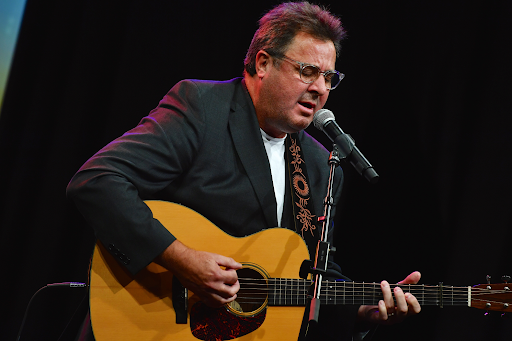
As one of the leading voices of neotraditional country in the late 1980s and 1990s, Vince Gill combined precise instrumental playing with an expressive tenor voice and restrained phrasing, all while showing a strong respect for country’s musical roots. Born in Norman, Oklahoma, he grew up immersed in diverse musical traditions, developing proficiency on guitar, mandolin, banjo, Dobro, and fiddle. His phrasing and melodic sensibility grew out of his early exposure to bluegrass. In his teens, he formed the bluegrass band Mountain Smoke, which famously opened for Kiss in 1976, only to receive a disastrous reception from the audience and be booed offstage. After stints with Bluegrass Alliance and Boone Creek, where he played alongside Ricky Skaggs, Gill moved to Los Angeles and briefly joined fiddle player Byron Berline’s backing band, Sundance.
Gill first gained wider recognition in 1978 as lead singer and guitarist of the soft-rock band Pure Prairie League, performing on the hit single “Let Me Love You Tonight” and contributing original material. He later joined Rodney Crowell’s Cherry Bombs, which included keyboardist Tony Brown, who would later facilitate Gill’s solo career. Signing with RCA Nashville in 1983, Gill released three albums—Turn Me Loose (1984), The Things That Matter (1985), and The Way Back Home (1987)—earning the ACM’s Top New Male Vocalist award in 1984, though commercial success was limited. Dropped by RCA, he signed with MCA Nashville in 1989, initiating a period of sustained artistic and commercial achievement.
His breakthrough album, When I Call Your Name (1989), and its follow-ups—I Still Believe in You (1992), When Love Finds You (1994), and Souvenirs (1995)—showcased a signature blend of neotraditionalist instrumentation and contemporary polish. Gill’s high tenor voice and bluegrass-influenced phrasing became a central element of his sound. His guitar work demonstrated both virtuosity and sensitivity as he effortlessly moved between country, bluegrass, and soft-rock textures. Gill often employs pedal steel, fiddle, mandolin, and Dobro to complement his arrangements, while his melodic phrasing elevates both uptempo honky-tonk numbers and introspective ballads. Between 1992 and 1994, he charted four solo number-one hits—“I Still Believe in You,” “Don’t Let Our Love Start Slippin’ Away,” “One More Last Chance,” and “Tryin’ to Get Over You”—all exemplifying his balance of lyrical storytelling and instrumental sophistication. He also achieved number-one collaborations with Reba McEntire on “The Heart Won’t Lie” (1993) and later with Chris Young on “Sober Saturday Night” (2016), as well as with the multi-artist group on “Forever Country” (2016). Every album he released in the 1990s earned platinum certification or higher, with I Still Believe in You reaching quintuple-platinum status.
Gill’s contributions extend beyond recordings. He hosted and co-hosted the CMA Awards for twelve consecutive years (1992–2003) and collaborated with artists ranging from Patty Loveless and Brooks & Dunn to Kelly Clarkson and Maren Morris. He has written songs for Alabama and Ty Herndon and contributed extensively as a session musician and backing vocalist. Following his 1997 divorce from Janis Oliver of Sweethearts of the Rodeo, he married contemporary Christian singer Amy Grant in 2000, and the two continued musical collaborations. In 2017, he joined the Eagles as a replacement for Glenn Frey.
Vince Gill exemplifies the neotraditionalist ethos: technical excellence paired with openness to stylistic experimentation. His virtuosic instrumental skills, expressive tenor, and deep reverence for country’s storytelling traditions have established him as one of the most prominent neotraditional country performers of the 1990s.
Garth Brooks
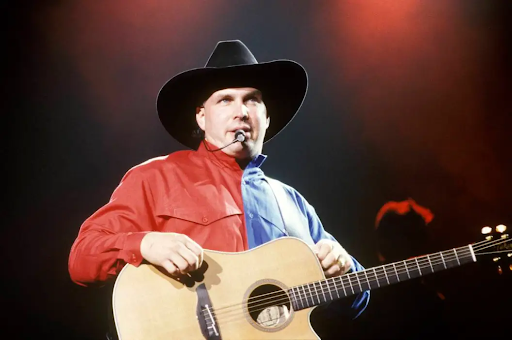
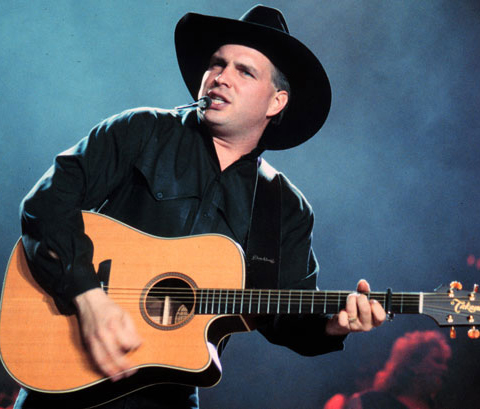
Garth Brooks became one of the most dominant country artists of the 1990s, achieving extraordinary commercial success while refashioning the genre’s musical and performance conventions. Born in Tulsa and raised in Yukon, Oklahoma, Brooks grew up in a musical household; his mother had pursued a recording career in the 1950s. He admired James Taylor and 1970s rock bands but committed to country music after hearing George Strait’s “Unwound” in 1981. While attending Oklahoma State University, he performed locally and, in 1985, initially attempted to break into Nashville without success. He returned in 1987, signed with Doyle/Lewis Management in 1988, and secured a Capitol Records deal after impressing label executives with a performance at the Bluebird Café.
Working with producer Allen Reynolds, Brooks released his self-titled debut album in 1989, featuring the number-one singles “If Tomorrow Never Comes” and “The Dance.” His debut single, “Much Too Young (To Feel This Damn Old),” told the story of an exhausted rodeo cowboy through a sparse arrangement of acoustic guitar, two-step rhythm, and plaintive fiddle lines. The following year, No Fences (1990) included “Friends in Low Places,” written by Earl Bud Lee and Dewayne Blackwell. Anchored by electric guitar, fiddle, and pedal steel, the song’s layered vocal harmonies evoke the barroom camaraderie celebrated in the lyrics. A spontaneous beer-can opening, captured during the session and included in the final mix, contributed to the song's reputation for authentically portraying working-class barroom culture. Though David Wayne Chamberlain released a version in 1989, the song became synonymous with Brooks and became an anthem for listeners drawn to its blue-collar perspective. Critic Chuck Klosterman described Brooks as “telling stories about blue-collar people who felt good about what their bad life symbolized.”
Brooks’s sound blended traditional country instrumentation with the theatricality of arena rock. He emphasized classic country elements—steel guitar and fiddle alongside visual markers such as cowboy hats, Wrangler jeans, and Roper boots—while drawing live-performance inspiration from rock acts such as Kiss, Boston, Journey, and Lynyrd Skynyrd. His arena shows combined country instrumentation with theatrical staging derived from arena rock, including pyrotechnics, smoke, dramatic lighting, suspended-wire stunts, and video projections. The combination of country instrumentation and arena-rock staging presented Brooks as both a traditional country performer and a stadium-scale entertainer.
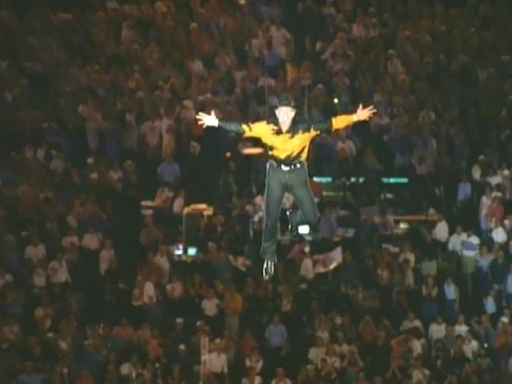
Brooks also expanded country music’s thematic range. The Thunder Rolls, co-written with Pat Alger for No Fences, features low-register guitar, atmospheric percussion, and minor-mode harmonies to dramatize a husband’s infidelity and a wife’s escalating fury. Its controversial third verse, depicting the wife shooting her abusive husband, was omitted from the studio album but performed live. The accompanying video initially faced bans on TNN and CMT, though some stations screened it as a statement on domestic violence. Brooks refused to compromise the message, and local screenings of the video became fundraisers for battered-women’s shelters.
In 1992, Brooks co-wrote “We Shall Be Free” with Stephanie Davis after witnessing the Los Angeles Riots. The song incorporates gospel-inflected backing vocals, open-chord strumming, and a broader harmonic palette, which musically supports the song’s lyrical call for social equality. Its lyrics call for a world free from hunger, oppression, racism, homophobia, and religious discrimination—an unusually direct protest for mainstream country at the time. Though censored or downplayed on some country stations, Brooks performed it at high-profile events, including Muppets Tonight (1996), the Equality Rocks march in Washington, D.C. (2000), and the Obama inaugural concert We Are One (2009). He has repeatedly affirmed that he would not compromise the song’s message to satisfy programming standards.
By 1992, Brooks’s popularity reached such heights that his NBC television special aired opposite a CBS special on Michael Jackson and ranked among the week’s top ten programs. His commercial success was unparalleled: by the end of 1993, his first six albums had each sold more than five million copies, with No Fences and Ropin’ the Wind exceeding ten million. He remains the only artist with nine RIAA Diamond-certified albums (Garth Brooks, No Fences, Ropin’ the Wind, The Chase, In Pieces, The Hits, Sevens, Double Live, The Ultimate Hits) and has sold over 170 million records worldwide. Billboard ranks him as the most outstanding male solo artist in the history of the Billboard 200, and the RIAA names him the best-selling solo artist in U.S. history.
After stepping back from full-time performance between 2001 and 2005 to focus on family, Brooks continued selling millions of albums through exclusive distribution partnerships, most notably with Amazon Music, which holds exclusive rights to his catalog releases. He returned to live performance with selective concerts, compilation releases, and a long-running Las Vegas residency, Garth at Wynn (2009–2014). Subsequent tours included a world tour with Trisha Yearwood (2014), the Stadium Tour (2019), and the Garth Brooks/Plus ONE residency in Las Vegas, which extended into 2024. His most recent studio album, Time Traveler, was released in November 2023. Brooks has also increased his digital presence through SiriusXM and an exclusive streaming deal with Amazon Music, signed in 2016. This partnership speaks to both his artistic and financial priorities. Brooks has maintained strong support for songwriters and a commitment to a distribution model that incorporates physical album sales, which he believes ensures that songwriters receive fair compensation in the streaming age.
Other Neotraditionalist Stars
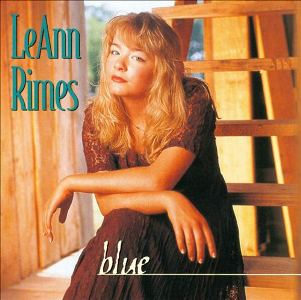
While Garth Brooks dominated the 1990s country scene, the decade also saw a diverse array of commercially successful and stylistically influential performers who broadened the genre’s audience at a time when country consistently rivaled—and often surpassed—pop and rock on the national charts. Brooks maintained near-continuous chart presence throughout the decade, though 1997 offered a rare exception: thirteen-year-old LeAnn Rimes became a breakout star, placing three albums among the year’s fifty best-selling records and signaling the genre’s stylistic and commercial breadth.
Rimes first drew attention with “Blue” (1996), written by Bill Mack in 1956. Her rich vibrato, controlled phrasing, and upper-register clarity immediately invited comparisons to Patsy Cline, anchoring her neo-traditional persona even as she strategically crossed into pop. The song’s instrumentation—steel guitar, acoustic rhythm guitar, and a shuffle-adjacent pulse—reinforced her connection to earlier Nashville styles. Although she typically did not write her own material, Rimes selected songs that allowed her to traverse multiple genres, including standards such as Paul Simon’s “Bridge Over Troubled Water” and Joe Brooks’s “You Light Up My Life,” as well as contemporary Nashville compositions tailored to both country radio and adult contemporary formats. Her career throughout the decade balanced traditional vocal aesthetics with crossover ambition.
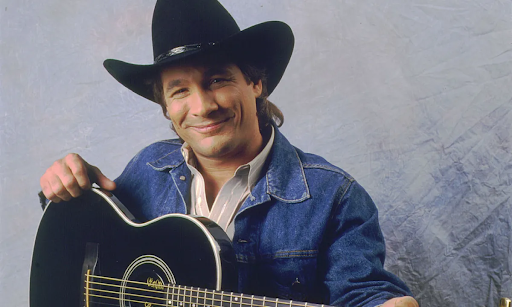
Among male performers, Clint Black emerged at the turn of the decade as one of country’s most respected new voices. His debut album, Killin’ Time (1989), delivered several number-one hits, including “A Better Man” and “Killin’ Time,” featuring tight rhythmic interplay, clean electric guitar lines, and Black’s flexible baritone. He navigated up-tempo honky-tonk numbers with the same ease as slower, harmonically rich ballads. Collaborations with artists such as George Jones, Steve Wariner, and Martina McBride—whose duet “Still Holding On” won a Grammy in 1998—broadened his stylistic range. As the decade progressed, Black incorporated stronger pop sensibilities into his songwriting and production: “Summer’s Comin’” (1995) employed surf-rock–inspired guitar timbres and a brighter, percussive mix, while “Like the Rain” (1996) centered on acoustic arpeggios and piano, creating a more introspective, adult contemporary sound. Though Black sold millions of albums and helped fashion the early 1990s Nashville sound, he was ultimately eclipsed by Brooks and fellow “hat acts” such as Alan Jackson and Travis Tritt. His founding of Equity Music Group in 2003 demonstrated his commitment to emerging artists, even though the label dissolved in 2008.
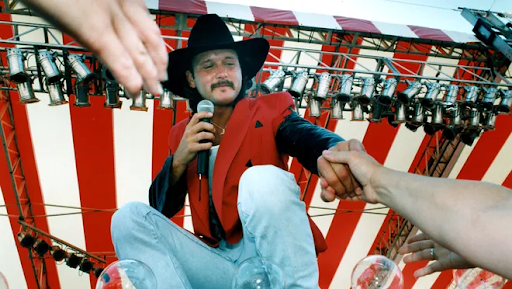
Tim McGraw rose to prominence through radio-friendly songwriting, consistent chart success, and a carefully cultivated image blending contemporary country with soft rock sensibilities. After leaving Northeast Louisiana University due to a knee injury, he relocated to Nashville in 1989. His self-titled debut album (1993) failed to chart, but Not a Moment Too Soon (1994) became the year’s best-selling country album. Singles built on catchy melodic hooks, polished guitar textures, and accessible verse-chorus structures secured McGraw national recognition. Subsequent albums, including All I Want (1995) and Everywhere (1997), produced a string of number-one hits that further exhibited his warm vocal tone and narrative-driven songwriting. His high-profile marriage to Faith Hill in 1996 brought his music to a wider audience, and duets such as “It’s Your Love” (1997) combined lush harmonies with pop-leaning production. McGraw’s acting roles—Friday Night Lights (2004), The Blind Side (2009), and Country Strong (2010)—enhanced his visibility, while awards such as ACM Top Male Vocalist (1998, 1999) and CMA Entertainer of the Year (2001) affirmed his influence.
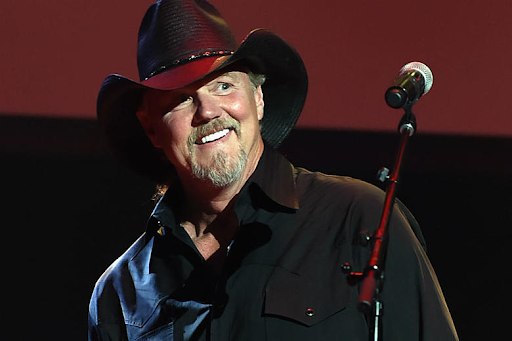
Trace Adkins offered a contrasting presence, combining a deep baritone with a working-class image and a musical palette that fused honky-tonk, Southern rock, gospel, and blues. After years working on an oil rig, Adkins moved to Nashville in 1992 and signed with Capitol Records. His debut album, Dreamin’ Out Loud (1996), produced hits including “Every Light in the House,” “I Left Something Turned on at Home,” and the number-one single “(This Ain’t) No Thinkin’ Thing.” Adkins’s recordings often featured driving electric guitar riffs, prominent bass lines, and blues-inflected phrasing, distinguishing him from more pop-oriented contemporaries. Despite personal struggles, including alcoholism, he continued charting successfully with albums such as Chrome (2001) and Comin’ On Strong (2003), both of which reached platinum status. His 2003 induction into the Grand Ole Opry cemented his place in country music, while crossover hits like “Honkytonk Badonkadonk” (2005) demonstrated his adaptability. After joining Show Dog-Universal Records in 2010, he released Cowboy’s Back in Town, continuing to blend traditional themes with contemporary production.
Collectively, these artists—Rimes, Black, McGraw, and Adkins—illustrate the stylistic and commercial diversity of 1990s country music. Many embraced neo-traditionalist markers such as cowboy hats, fiddle and steel guitar, and honky-tonk song forms, while others incorporated pop and rock influences through richer harmonies, polished production, and crossover-ready arrangements. Across the decade, choices in instrumentation, vocal style, and songwriting balanced tradition with modernity, preserving ties to post-World War II country while reaching wider audiences. Together, these artists sustained country music's popularity during one of its most commercially visible periods.
Shania Twain
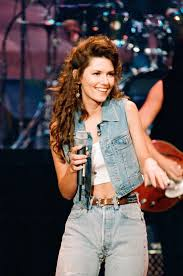
Shania Twain became a major figure in 1990s country-pop, merging traditional country storytelling with polished pop-rock production aimed at crossover audiences. Born Eilleen Regina Edwards in Windsor, Ontario, on August 28, 1965, Twain grew up in poverty in the mining town of Timmins, raised by her mother and Ojibwe stepfather. She began performing in local clubs at age eight and writing songs by age ten, drawing on country, pop, and rock influences. After graduating high school in 1983, she enjoyed modest recording success in Canada, but the 1987 death of her parents in a car accident left her responsible for raising her younger siblings and delayed her recording career.
In 1991, Twain moved to Nashville, signed with Mercury Records, and adopted the stage name “Shania,” an Ojibwe word meaning “on my way.” Her self-titled 1993 debut album achieved limited commercial success, but her 1995 follow-up, The Woman in Me, co-written and produced with her husband Robert John “Mutt” Lange, launched her to superstardom. Lange, famous for producing rock acts such as Def Leppard and The Cars, infused Twain’s country songwriting with layered, pop-rock sensibilities. The album sold over twelve million copies, won a Grammy for Best Country Album, and earned her the American Music Award for Favorite New Artist. Singles like “Whose Bed Have Your Boots Been Under?” and “Any Man of Mine” exemplify her signature sound through tight, hook-driven arrangements, prominent electric guitars combined with pedal steel accents, layered vocal harmonies, and polished production that increased crossover appeal while retaining country roots.
Twain followed her debut with Come On Over (1997), which remains the best-selling country album of all time and the top-selling studio album by a female artist in any genre. Of its sixteen tracks, twelve were released as singles, including “That Don’t Impress Me Much” and “You’re Still the One,” many of which charted on both country and pop/adult contemporary formats. Her duet “From This Moment On” with Bryan White displayed her versatility across genres. Up! (2002) reinforced her global status by releasing three versions of the album—a “green” version for country music fans, a “red” version for pop music fans, and a third “blue” version with an East Indian influence. Each version targeted a different market while preserving her controlled vibrato and pop-oriented production.
Twain’s performance style and fashion reinforced her pop-country persona. She frequently appeared in midriff-baring outfits, tight pants, crop tops, and sequined stage costumes, projecting sexual confidence and modern femininity rarely seen in country at the time. Her assertive stage presence incorporated choreographed movements, high-energy band arrangements, and visually striking videos that displayed her crossover appeal. The 1999 hit “Man! I Feel Like a Woman!” exemplifies Twain’s combination of country instrumentation and pop-rock production: driving shuffle rhythms, acoustic and electric guitar interplay, punchy drum patterns, and a brassy horn section all punctuate with celebratory liveliness. The accompanying music video, paying homage to Robert Palmer’s “Addicted to Love,” featured Twain performing alongside uniformed male models. The video presents themes of female empowerment and playful role reversal, making the music musically accessible to both country and pop audiences.
Throughout her career, Twain's music balanced traditional country elements, including storytelling lyrics, pedal steel, and acoustic guitars, with pop-rock production techniques such as layered vocals, electric guitar riffs, and hook-focused song structures. The blend of pop-rock production and traditional country instrumentation enabled Twain to score crossover hits without abandoning narrative richness, whether amid heartfelt ballads or upbeat empowerment anthems. By merging pop-rock sensibilities with country foundations, Twain achieved unprecedented commercial success, brought country music to new audiences, and influenced later country-pop performers who combined country instrumentation with pop-oriented production.
Sheryl Crow
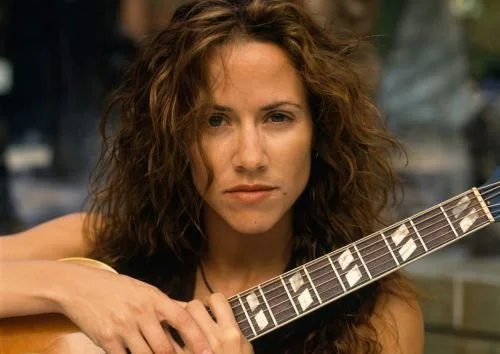
Over the course of her career, Sheryl Crow became known for combining the storytelling traditions and acoustic sounds of country music with the guitar-driven style of rock. Rather than remaining within a single genre, she blended country, rock, pop, folk, and soul into a sound that appealed to a broad audience. Her ability to move between country and rock while maintaining a recognizable style made her a prominent example of the continued overlap between country and rock during the 1990s and 2000ss. Before gaining recognition as a singer-songwriter and multi-instrumentalist, she studied music composition, performance, and education at the University of Missouri, earning a degree before beginning her professional career as an elementary school music teacher. During this time, she performed with local bands on weekends, developing proficiency on a variety of string and keyboard instruments.
Crow entered the music industry in the 1980s, recording commercial jingles and promptly establishing herself as an in-demand backing vocalist. Her earliest high-profile work came on Michael Jackson’s Bad World Tour from 1987 to 1989, where she regularly appeared onstage with him for “I Just Can’t Stop Loving You.” She also contributed background vocals for artists such as Stevie Wonder, Belinda Carlisle, Jimmy Buffett, Don Henley, and Kevin Gilbert, and in the early 1990s played keyboards and sang backup for Gilbert’s band Toy Matinee.
Her first attempt at a solo debut album, completed in 1992, was shelved by her label and never officially released, though tracks from the project circulated later through fan trading. Crow’s breakthrough arrived through her collaborations with a loose collective of musicians known as the Tuesday Music Club. Their work together resulted in Tuesday Night Music Club (1993), her official debut album for A&M Records. The project earned multiple Grammy Awards and produced major hits, including “All I Wanna Do,” bringing her widespread radio exposure during the decade. Hits such as “All I Wanna Do” combined catchy, radio-friendly melodies with jangly acoustic guitars, rhythmic bass lines, and layered vocal harmonies. The track’s laid-back groove, subtle organ fills, and clean electric guitar riffs exemplified Crow’s ability to merge pop accessibility with roots-oriented instrumentation, establishing her as a central figure in 1990s popular music.
Crow continued her momentum with her self-titled album Sheryl Crow (1996), which earned additional Grammy recognition and featured the hit “If It Makes You Happy.” Across the 1990s and 2000s, she broadened her stylistic range, experimenting with rock, folk, country, and soul. Her song "Steve McQueen," included on The Very Best of Sheryl Crow (2003), won another Grammy.
Her 2008 album Detours marked a more personal direction, addressing her experience with breast cancer and her romantic relationship with cyclist Lance Armstrong. She later returned to the sounds of her upbringing with 100 Miles from Memphis (2010), a project inspired by her early musical memories of the American South. Throughout her career, Crow’s songwriting has also attracted the attention of major performers—artists such as Celine Dion and Tina Turner have recorded her material. With nine Grammy Awards and a catalog spanning generations, Crow’s work moves across musical genres while maintaining a songwriting style that blends autobiographical storytelling with radio-oriented structure.
Alternative Country
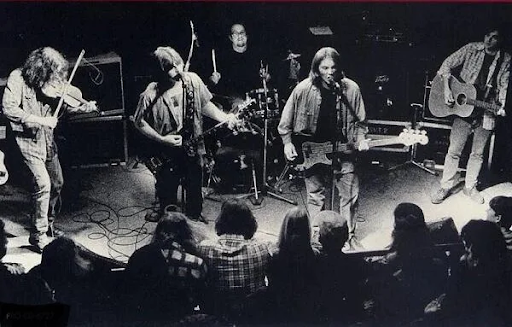
On the fringes of the alternative movement, alt-country reconnected rock with its rural and working-class roots as a distinct strain of country music, positioned against both the polished, pop-oriented Nashville sound and the neotraditionalist revival of the 1980s. The movement embraced an experimental, often subversive aesthetic, fusing traditional country instrumentation—acoustic guitar, mandolin, pedal steel, fiddle, and upright bass—with unconventional arrangements, atypical chord progressions, and hybrid rhythms drawn from rock, punk, jazz, or blues. Lyrically, alternative country artists foregrounded narrative storytelling that addressed marginalization, personal struggle, and questions of gender and sexuality—subjects largely absent from mainstream country. Vocally, performers favored expressive phrasing and a deliberately rough vocal timbre, prioritizing authenticity and emotional resonance over commercial polish.
Visually and stylistically, alternative country artists often diverged sharply from Nashville conventions. They adopted rugged, bohemian, or androgynous aesthetics, rejecting the glitzy “hat act” imagery of neotraditionalists. Stage presence, album art, and promotional visuals frequently signaled outsider status or resistance to industry norms, indicating the movement’s DIY, countercultural sensibility. In doing so, alternative country carved out a space for artists to explore personal and social themes while maintaining ties to the storytelling roots of country music, without succumbing to commercial expectations.
Bands such as Uncle Tupelo bridged the raw immediacy of punk with the storytelling traditions of American folk and country. Their 1990 album No Depression—named after a Carter Family song—became a touchstone for the genre, combining distorted guitars with pedal steel, fiddle, and acoustic instrumentation. The album’s mixture of political consciousness and unvarnished realism spoke to listeners disillusioned with both the excess of mainstream rock and the synthetic polish of Nashville country. When Uncle Tupelo disbanded in 1994, its members went on to form Wilco and Son Volt, groups that further developed alt-country’s range: The movement soon broadened to include artists such as Lucinda Williams, Whiskeytown, and later the Old 97’s, each blending confessional songwriting with a distinctly Americana soundscape.
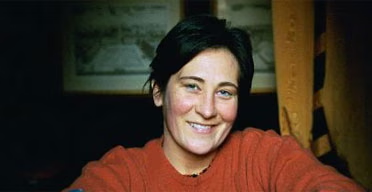
Canadian singer-songwriter k.d. lang exemplifies the alternative country ethos. Raised on the high plains, lang grew up listening to classical and rock music while developing her songwriting skills in her early teens. She studied music at Red Deer College, where a 1982 casting in the college production Country Chorale, a 1950s-style musical, introduced her to Patsy Cline’s phrasing, vibrato, and emotional nuance—elements she later incorporated into her own vocal style.
Lang began her professional career with a country-punk hybrid persona, pairing traditional country instrumentation with a deliberately androgynous and theatrical image. Her 1984 release, A Truly Western Experience, on the independent Canadian label Homestead, displayed early signs of genre hybridity, combining pedal steel, twangy guitar riffs, and country ballad forms with punk-inflected intensity. A 1985 performance at New York’s Bottom Line led to a contract with Sire Records, and her 1987 album Angel with a Lariat blended honky-tonk structures with cabaret-influenced vocal styling. While commercial radio success was limited, the album appealed to audiences searching for innovative reinterpretations of country music.
Shadowland (1988), recorded in Nashville with legendary producer Owen Bradley, demonstrated lang’s growing stylistic sophistication. She fused cabaret, jazz, and country idioms, using pedal steel, subtle string arrangements, and restrained piano to create a sound both anchored in tradition and adventurous. Her 1989 album Absolute Torch and Twang, recorded with her own ensemble in Vancouver, developed this synthesis further, integrating Latin rhythms, 1950s pop harmonies, and jazz phrasing while retaining country's storytelling core. The album displayed lang’s vocal precision, wide dynamic range, and emotionally nuanced interpretation, earning critical acclaim and a Grammy Award.
Lang’s 1992 album Ingenue marked her international breakthrough and her public acknowledgment of her sexuality, identifying her as one of the first openly lesbian pop icons. Musically, the album fused jazz, pop, and country, featuring minimalist arrangements with glockenspiel, vibraphone, acoustic guitar, and restrained string sections. Tracks such as “Constant Craving” featured her signature phrasing—long, controlled vocal lines with subtle ornamentation—paired with sparse yet emotionally resonant instrumentation.
Lang’s alternative country identity spanned beyond music into her visual and performative aesthetics. Early stage appearances featured rhinestone-studded outfits, cat-eye glasses, and theatrical flourishes, projecting a campy, androgynous persona that challenged Nashville’s conservative norms. Controversial public actions, including her 1990 participation in PETA’s “Meat Stinks” campaign, further accentuated the cultural tension surrounding her image. Despite occasional commercial setbacks, lang remained committed to artistic autonomy, consistently blending genre traditions with innovation. Her 2013 induction into the Canadian Music Hall of Fame confirmed her status as a pioneering figure who pushed the musical and aesthetic boundaries of country music.
Johnny Cash’s Late-Career Resurgence
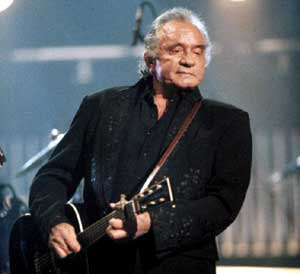
While the 1990s saw the rise of alternative country, the decade also witnessed an unexpected revival of interest in veteran artists. Bob Dylan, Joni Mitchell, and Paul Simon maintained loyal followings and occasionally attracted new listeners, but none experienced the dramatic late-career renaissance that revitalized Johnny Cash’s public image. Cash (1932–2003), who began as a Sun Records rockabilly artist in the mid-1950s and became a major country star throughout the 1960s and 1970s—complete with a successful network television show, The Johnny Cash Show—had largely faded from the commercial mainstream by the 1980s. His once-iconic voice was no longer a dominant presence on the radio, record sales had declined sharply, and he had even been dropped by his long-time label, Columbia Records, leaving him without a major platform for new music.
Cash’s revival began in the early 1990s when producer Rick Rubin, known primarily for his work with Def Jam, Run-DMC, Public Enemy, and later Slayer and the Red Hot Chili Peppers, signed Cash to his new American Recordings label in 1994. Rubin’s decision to work with Cash appeared unconventional to much of the industry: a rap and metal producer partnering with an aging country legend who had been marginalized by Nashville. Rubin approached Cash with a minimalist philosophy aimed at stripping away the polished, commercial production styles Nashville had embraced. Instead, Rubin recorded Cash with only his voice and acoustic guitar at first, believing that the raw timbre of Cash’s baritone—weathered, imperfect, and intensely expressive—was powerful enough to carry an entire album on its own.
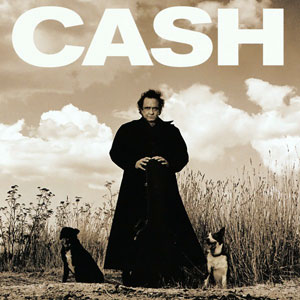
The resulting album, American Recordings (1994), exceeded all expectations. It inaugurated a five-album series (the final installment released posthumously) in which Cash interpreted contemporary rock songs, older country material, and traditional folk repertoire with a stark, intimate sound. Rubin encouraged Cash to choose songs that spoke to his personal history and spiritual concerns, creating a body of work that appeared autobiographical even when Cash was covering other artists’ material. American Recordings and its subsequent installments won widespread critical acclaim and drew a younger audience who had previously known Cash only as an icon of the past.
Cash’s late-career resurgence reached one of its emotional peaks with his 2002 cover of Nine Inch Nails’ “Hurt,” released on American IV: The Man Comes Around. Musically and interpretively, "Hurt" became one of the clearest expressions of Cash's late artistic style. Rubin’s sparse production punctuated the fragility of Cash’s voice—now roughened by illness and age—against minimal acoustic accompaniment. Cash altered the phrasing and melodic contour slightly, leaning into the lower register and sustaining notes with a sense of strain, intensifying the song’s emotional weight. The track’s slow tempo, open harmonies, and unadorned arrangement created an atmosphere of confession. Cash’s interpretation turns the industrial rock original into a meditation on regret and aging.
The accompanying music video, directed by Mark Romanek, juxtaposes images of a younger Cash with stark footage of the singer in his final years, framing “Hurt” as a career-spanning self-portrait. Its visual language—decaying costume pieces, archival performance clips, shots of the shuttered House of Cash museum—reinforced the interpretation of the song as Cash’s own farewell. Even Trent Reznor later commented that after hearing Cash’s version, “it’s no longer my song.”
“Hurt” became both a critical and popular milestone. Cash’s willingness to reinterpret rock, metal, and alternative songs on his own terms—combined with Rubin’s commitment to amplifying Cash’s authenticity rather than tailoring it for radio—helped introduce Cash's music to listeners who were more familiar with alternative rock than with his earlier country recordings. The song’s reception also demonstrated the alt-country movement’s embrace of older, marginalized country figures who embodied a raw, roots-oriented aesthetic.
Two years after Cash’s death in 2003, the biopic Walk the Line introduced his music to millions more and helped cement his late-career legacy. Today, Cash's American Recordings remain an important point of reference for understanding his impact on American music. The albums document an artist who, near the end of his life, established a new creative identity through the elemental power of voice, story, and song.
Chapter 40: Conclusion
By the early 1980s, country music entered a period of self-reorientation, most visible in the rise of the neotraditionalist movement. Artists such as George Strait, Dwight Yoakam, and Reba McEntire deliberately returned to the sounds and structures of the 1950s and 1960s, reviving the vocal styles, instrumental textures, and emotional directness associated with Hank Williams, Patsy Cline, and other mid-century icons. Marketed as "new," this music was in fact a conscious return to the genre's roots, treating tradition itself as a source of innovation. Neotraditionalists emphasized acoustic instrumentation, pedal steel, fiddle, and straightforward storytelling, balancing respect for the past with contemporary production values. Their commercial and critical success established a model that influenced the next generation of country performers.
Building on the neotraditionalist sound and performance practices established in the 1980s, artists such as Garth Brooks and Shania Twain fused neotraditionalist elements with the spectacle of arena rock and pop-oriented production, creating music that appealed to both traditional and mainstream audiences. Brooks’s stadium-scale shows, Rimes’s crossover vocal style, and Twain’s pop-infused arrangements demonstrate how neotraditionalist sensibilities could coexist with expansive commercial ambition. By the early 1990s, these combined strategies had propelled country music to unprecedented popularity, making it the highest-selling genre in the United States.
At the same time, the growth of mainstream country opened space for alternative currents. Alt-country artists reclaimed honky-tonk, bluegrass, and experimental country-rock traditions, often incorporating punk and indie-rock aesthetics to create rough-edged, subversive music that stood in sharp contrast with Nashville’s polished productions.
The decade also witnessed late-career revivals of foundational artists. Johnny Cash, whose commercial presence had waned in the 1980s, found renewed relevance through his collaboration with Rick Rubin, producing stark, emotionally raw recordings like “Hurt.” By stripping away Nashville gloss, Cash reasserted the importance of stripped-down country singing and storytelling.
Together, these developments illustrate a genre negotiating its past and future. Neotraditionalists reaffirmed mid-century conventions, commercial innovators brought country music to new audiences, alternative country pushed against established conventions, and veteran artists demonstrated the continued resonance of country music's foundational voices. The coexistence of traditional revivals, crossover production, alternative country, and renewed interest in veteran performers set the terms for many of country music's debates at the turn of the twenty-first century.
Chapter 40: Further Reading
Bufwack, Mary A., and Robert K. Oermann. Finding Her Voice: The Saga of Women in Country Music. New York: Crown, 1993.
Cash, Johnny. Man in Black. Grand Rapids, MI: Zondervan, 1975.
Cash, Johnny, with Patrick Carr. Cash: The Autobiography. New York:= HarperSanFrancisco, 1997.
Ching, Barbara. Wrong’s What I Do Best: Hard Country Music and Contemporary Culture. New York: Oxford University Press, 2001.
Cox, Patsi B. The Garth Factor: The Career Behind Country’s Big Boom. New York: Wiley, 2009.
Cusic, Don. Reba McEntire: Country Music’s Queen. New York: St. Martin’s Press, 1991.
Feiler, Bruce. Dreaming Out Loud. New York: Doubleday, 1998.
Fox, Aaron A. Real Country: Music and Language in Working-Class Culture. Durham, NC: Duke University Press, 2004.
Gaar, Gillian G. She’s a Rebel: The History of Women in Rock & Roll. London: Allison & Busby, 1993.
Lemon, Brendan. “Virgin Territory: k.d. lang.” The Advocate, June 16, 1992.
Malone, Bill C. Country Music, USA. Austin, TX: University of Texas Press, 2002.
Malone, Bill C., and Jocelyn R. Neal. Country Music U.S.A. 3rd ed. Austin, TX: University of Texas Press, 2010.
McCall, Michael. Garth Brooks: A Biography. New York: HarperCollins, 1991.
McEntire, Reba. Comfort From a Country Quilt. New York: Random House, 1999.
McEntire, Reba, with Tom Carter. Reba: My Story. New York: Simon & Schuster, 1994.
Morris, Edward. Garth Brooks, Platinum Cowboy. New York: Crown, 1993.
Neal, Jocelyn R. Country Music: A Cultural and Stylistic History. New York: Oxford University Press, 2013.
O’Brien, Lucy. She Bop: The Definitive History of Women in Rock, Pop and Soul. London: Pandora, 1995.
Peterson, Richard A. Creating Country Music: Fabricating Authenticity. Chicago: University of Chicago Press, 1997.
Roland, Tom. “Trace Adkins: The Last Cowboy.” Billboard 122, no. 29 (2010): 24–25.
Starr, Victoria. k.d. lang: All You Get Is Me. New York: St. Martin’s Press, 1994.