Chapter 26: Album Oriented Rock in the 70s
“Born to Run”
Album/Year Released
1975 (album: Born to Run)
Artist/Composer
Bruce Springsteen
Genre/Style
Heartland rock, AOR, Arena Rock
Song Form
Verse–chorus with bridge and coda
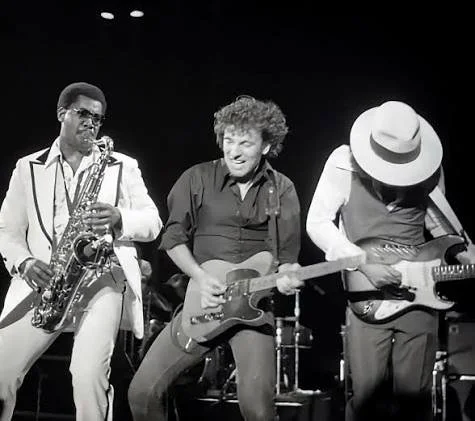
“Born to Run,” released in 1975 as the title track of Bruce Springsteen’s third album, presents a densely packed musical design built to convey momentum, urgency, and longing for escape. Written primarily in E major and set in a steady 4/4 meter, the song moves at a brisk pace that rarely dips in its dynamics, reinforcing the narrator's restless drive. The form follows a verse–chorus layout enriched by pre-chorus passages, a bridge, a prominent saxophone solo, and an extended coda that draws the emotional arc to a close. A coda is a concluding section in a musical composition that brings the piece to an end. It can vary in length, from just a few measures to an entire section. Although Springsteen began writing the song with a guitar riff, he completed much of it at the piano. The final recording used an exceptionally dense production process, mixing 72 tracks into a tightly compressed sound mass. Guitars, piano, bass, drums, glockenspiel, strings, layered vocals, and Clarence Clemons’s saxophone are blended so closely that individual timbres blur together, creating a gravelly, engine-like roar that parallels the imagery of highways, motorcycles, and motion. Some of the lead guitar parts were inspired by surf rock guitarist Duane Eddy's style, with excessive spring reverb and a tremolo-picked attack.
The dense, layered production was directly influenced by Phil Spector's wall-of-sound technique, which sought emotional force through accumulation rather than instrumental separation. In “Born to Run,” the wall-of-sound technique produces a cinematic scale, with harmonic motion pushing the melody forward and the rhythm section maintaining relentless thrust. The bridge offers a short release from that intensity before the song surges back into its final statements. The long coda allows the emotional stakes of the narrative to settle rather than end abruptly. Lyrically, the song is written in the first person as an address to Wendy, presenting escape as both romantic promise and existential necessity. Springsteen later described the song’s core impulse as a desire to leave Freehold, New Jersey, a sentiment sharpened by references to Route 9 and images of confinement. Themes of escape, confinement, and disillusionment resonated strongly in the mid-1970s, when economic crisis, political scandal, and the aftermath of Vietnam had left many Americans doubtful about traditional promises of upward mobility.
Stylistically, “Born to Run” is often associated with heartland rock, a strain of American rock music that centers working-class perspectives, direct storytelling, and emotional sincerity, typically grounded in familiar rock and folk gestures. At the same time, the song helped set the template for arena rock, a style designed for large venues that emphasizes anthemic choruses, dramatic dynamic builds, and arrangements that project clearly in expansive spaces. Arena rock favors scale, repetition, and collective emotional release, qualities that “Born to Run” delivers through its multi-layered sound and soaring refrain. The song also benefited from strong support on album-oriented rock radio, or AOR. Album-oriented rock is a radio format that arose in the late 1960s and 1970s, prioritizing full-length albums and deeper cuts over short singles, allowing longer, more elaborate tracks to gain sustained exposure. Within the album-oriented rock radio environment, “Born to Run” received heavy airplay in the United States and became Springsteen’s first Top 40 hit, even if its initial international impact remained limited.
“What a Fool Believes”
Album/Year Released
1978 (album: Minute by Minute)
Artist/Composer
The Doobie Brothers
Michael McDonald & Kenny Loggins
Genre/Style
Yacht Rock/Soft Rock
Song Form
Verse-Chorus with Bridge
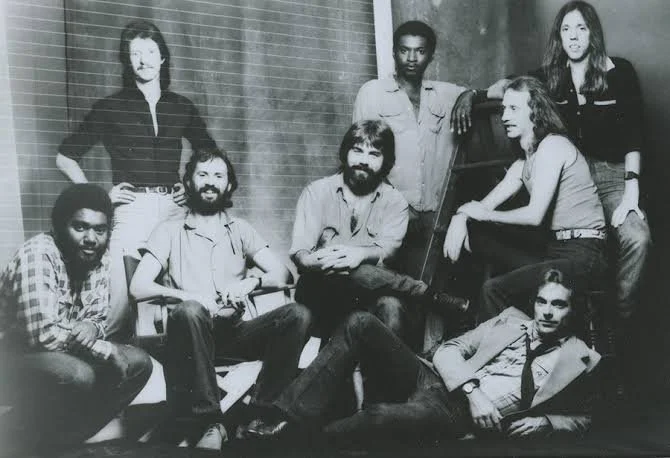
“What a Fool Believes,” recorded by the Doobie Brothers in 1978 for the album Minute by Minute, is closely associated with yacht rock and soft rock because of its polished sound, extended harmony, and smooth vocal delivery. Written by Michael McDonald and Kenny Loggins in Los Angeles, the song developed from a piano idea McDonald was developing at home, paired with a lyric concept Loggins had imagined. Their collaboration drew inspiration from earlier pop songwriting traditions, especially the compact, melodic craft of the Four Seasons, filtered through late-1970s studio refinement. Upon release, the single climbed from a modest debut on the Billboard Hot 100 to reach number one in April 1979, standing out as one of the few non-disco chart-toppers of that period. Its reception was affirmed by Grammy Awards for both Song of the Year and Record of the Year in 1980.
Musically, the song develops in G-sharp minor and relies more on evolving harmonic motion than on a dominant chorus. The structure centers on a recurring two-part verse, followed by a bridge and a refrain where the title lyric appears, before cycling back and dissolving into a fade-out. The introduction is immediately recognizable, led by a syncopated electric piano figure performed on an Oberheim 8-voice synthesizer. The piano part sets the tonal and rhythmic character of the track, establishing a gentle forward momentum that supports the song’s reflective narrative. Within each verse, the harmony moves through paired “walk-down, walk-back-up” progressions, letting the chords carry expressive weight rather than relying on dramatic changes in texture or dynamics.
The rhythmic foundation of “What a Fool Believes” draws on a shuffle rhythm, where each beat is subdivided unevenly, producing a long–short pulse instead of evenly spaced notes. The piano creates a subtle lilt that softens the groove while keeping steady motion. Closely related is what listeners call the “Doobie Bounce,” a term for the characteristic rhythmic feel of Michael McDonald’s shuffled piano playing.
Michael McDonald’s lead vocal sits prominently above the layered instrumental texture, delivering a smooth, melodic line formed by soul and pop phrasing. His voice moves fluidly through the song’s harmonically dense progressions, supporting the sense that melody and harmony are interdependent rather than separate layers. The clean production, precise backing vocals, and careful balancing of instruments place the recording within a stylistic idiom commonly associated with adult-oriented rock and the so-called West Coast sound, styles later grouped under the label yacht rock. Yacht rock, a term popularized in the 2000s, generally refers to late-1970s and early-1980s music that favors studio clarity, refined musicianship, and relaxed grooves, often blending pop, soul, jazz harmony, and rock instrumentation.
Soft rock overlaps closely with yacht rock but places greater emphasis on tuneful songwriting, smooth textures, and emotional restraint. Instead of aiming for raw intensity, soft rock prioritizes warmth, clarity, and lyrical introspection. “What a Fool Believes” fits comfortably within the soft rock tradition, using sophisticated chords and a gently propulsive rhythm to support a narrative about self-deception and emotional distance.