Chapter 30: Punk
Chapter 30: Introduction
By the mid-1970s, rock music, once closely linked with youthful rebellion, countercultures, and social critique, had become increasingly mainstream. What had previously been a powerful outlet for challenging authority and exploring alternative lifestyles now seemed to be dominated by pampered, ostentatious stars and the major record labels that promoted them. The revolutionary edge of the 1960s counterculture had dulled, and many young musicians grew frustrated with the self-conscious artistry, grandiose production, and commercial pressures of album-oriented rock. Punk rock developed in the United States as a response to this apparent creative stagnation, drawing on the unfiltered energy and do-it-yourself spirit of 1960s garage bands, the anti-authoritarian ethos of folk figures like Woody Guthrie, and early rock 'n' roll performance styles. In New York and Los Angeles, small underground clubs nurtured these new sounds and attitudes, supplying a space for musicians and fans to reject polished performance in favor of intensity, participation, and attitude. Between approximately 1975 and 1978, punk embodied a "back to basics" ethos, rejecting polished production and artistic excess in favor of speed, volume, and confrontational delivery
By the fall of 1977, American rock fans began hearing about a cluster of new bands gaining momentum in the United Kingdom. Groups such as the Sex Pistols, the Buzzcocks, and the Clash captured headlines using their confrontational style and quickly rose to mainstream attention, placing singles and albums high on the British charts. To many observers in the United States, punk appeared to be a British invention, but many of its musical practices had already developed closer to home. An underground scene had already been developing in American cities since the mid-1960s, centered mainly in New York, where bands such as the Ramones set the template for punk's stripped-down sound and rebellious ethos. As with earlier exchanges between the American and British rock scenes, punk, too, was exported to the United Kingdom, adapted to a different cultural context, and then returned to the United States in a new form. Although the movement largely dissipated by the early 1980s, its musical and aesthetic influence remains evident in alternative rock scenes across the country.
As both a cultural style and a musical genre, punk emphasized defiance against authority, middle-class norms, and conventional taste. Its songs relied on repetition, pounding rhythms, and shouted vocals, prioritizing intensity over technical skill. By stripping away the complex arrangements of progressive rock, punk displaced virtuosity into raw energy, placing attitude above polish. Punk’s rebellious spirit spread into fashion. Fans and performers alike adopted torn clothing, patched denim, ripped stockings, spiked hair, leather jackets, and do-it-yourself adornments such as safety pins and metal studs. Punk was therefore both sonic and sartorial, a revolt expressed through sound and appearance alike.
Yet the movement was rife with contradictions. Some musicians and fans treated punk's look as a vehicle for progressive critique, while others employed provocative imagery, including swastikas and links to the racist skinhead movement. Despite these tensions, punk consistently projected a contrarian spirit, rejecting mainstream norms and challenging the conservatism of the music industry. Its participants—musicians, fans, and critics alike—saw it as a necessary corrective to an ossified industry, even as the nihilism of its "I don’t give a f***" stance raised questions about authenticity.
At its core, punk represented a conscious return to what its practitioners considered authentic. By channeling the wild energy of early rock' n' roll figures such as Jerry Lee Lewis and Little Richard, punk musicians resisted the excesses of corporate rock while mounting a broader critique of social norms and commercial culture. Across cities, including New York and Los Angeles, the movement spread through underground clubs, regional scenes, and small-scale performances. This chapter examines punk’s historical conditions, musical practices, and aesthetic strategies during its early years.
ProtoPunk:
The Velvet Underground, The Stooges and the MC5
Punk's musical roots can be traced back to American garage bands of the mid-1960s. These neighborhood-based groups, often comprising teenagers, played primarily for their own enjoyment, as well as for friends, and at local dances. A few broke into the mainstream, such as the Standells with"Dirty Water" (1966), ? and the Mysterians with "96 Tears" (1966), and the Kingsmen with their raucous 1963 version of "Louie, Louie." The rough-hewn, do-it-yourself approach of these bands—comparable in some respects to a rock' n' roll-based folk movement—anticipated punk’s interest in musical minimalism, and resistance to corporate polish. By the mid-1960s, other acts were expanding the raw garage-rock sound. The Kinks' "You Really Got Me" (1964) introduced distorted guitars and aggressive riffs, while the Who's "My Generation" (1965) and the Rolling Stones' live recordings celebrated rebellious energy over refinement. American bands, such as Count Five with"Psychotic Reaction" (1966), and experimental groups like Fifty Foot Hose with"Red the Sign Post" (1968), pushed rock in confrontational, unpolished directions.
Among the most important early influences on punk music's ethos was the Velvet Underground. Lou Reed, a poet and former Brill Building songwriter, joined forces with John Cale, who had studied avant-garde composition and was playing with a performance ensemble led by avant-garde composer LaMonte Young and guitarist Sterling Morrison in New York City in the mid-1960s, to form the Velvet Underground. From the outset, the band pursued experimental forms, unconventional instrumentation, and novel modes of expression, deliberately rejecting traditional rock conventions. Reed frequently recited his poetry over Cale’s electric viola, an instrument traditionally used in classical music to provide the alto voice between violin and cello. Cale gave the instrument a new function through electronic effects, drones, and dissonance, giving the band a sound that was both abrasive and hypnotic. Drummer Maureen Tucker contributed a highly distinctive style, playing while standing, using mallets instead of drumsticks, and largely avoiding cymbals. Her sparse, unorthodox playing created an unusual percussive texture, emphasizing rhythm and repetition over conventional fills or flourishes.
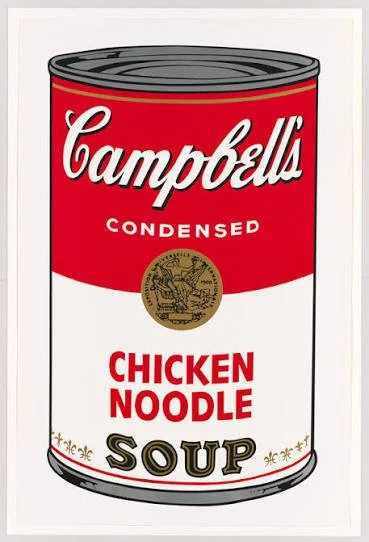
The Velvet Underground became closely associated with pop artist Andy Warhol, who was a leading figure in New York's visual arts scene. Warhol's work drew on everyday American culture, recontextualizing familiar objects and images—such as Campbell's Soup cans, Elvis Presley, and Marilyn Monroe—within an artistic framework. He invited the band to perform in his multimedia show, The Exploding Plastic Inevitable, which combined film, performance, dance, and light projections, and toured multiple cities during 1966 and 1967. Warhol also produced the band's debut album, The Velvet Underground and Nico (1967), and suggested adding the German singer Nico to three tracks. Nico's deep, haunting voice provided a stark counterpoint to Reed's monotone delivery and the band's jagged instrumentation. Warhol designed the album's iconic banana cover, which became a visual emblem of the band's fusion of avant-garde art and rock music, reinforcing their status as a provocatively artistic ensemble.
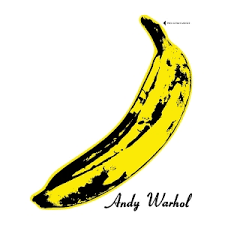
Musically, the Velvet Underground explored dark and transgressive subjects such as social alienation, drug use, violence, and sexual deviance. Reed's emotionally detached vocal delivery heightened the intensity of the lyrics, while the band relied on repetition, drone notes, and feedback to create hypnotic, sometimes chaotic soundscapes. In "Venus in Furs," Reed employed ostrich tuning, a technique in which all guitar strings are tuned to the same pitch but in different octaves, producing a droning, unorthodox sound that underlined the song's themes of sadomasochism. Cale's electric viola added folk-inflected textures, and Tucker's minimalist drumming amplified the unsettling, ritualistic atmosphere. In "Heroin," tempo and volume accelerate and decelerate to imitate the effects of drug use, blending musical experimentation with lyrical realism.
Although largely overlooked upon its initial release, The Velvet Underground and Nico became a touchstone for musicians seeking to contest conventional rock structures and lyrical boundaries. The band continued performing after splitting from Warhol, maintaining a presence in New York's underground scene until 1970, when lineup changes effectively ended their tenure, with Reed leading the final shows at Warhol's hangout, Max's Kansas City (located in New York).
The Velvet Underground’s confrontational treatment of music, which rejected commercial norms, embraced avant-garde experimentation, and addressed taboo subjects, made them a seminal influence on the emerging punk rock movement. Their work demonstrated that rock could be a medium for intellectual rigor, social critique, and aesthetic daring, inspiring later musicians to push the boundaries of sound, style, and subject matter.
The Stooges
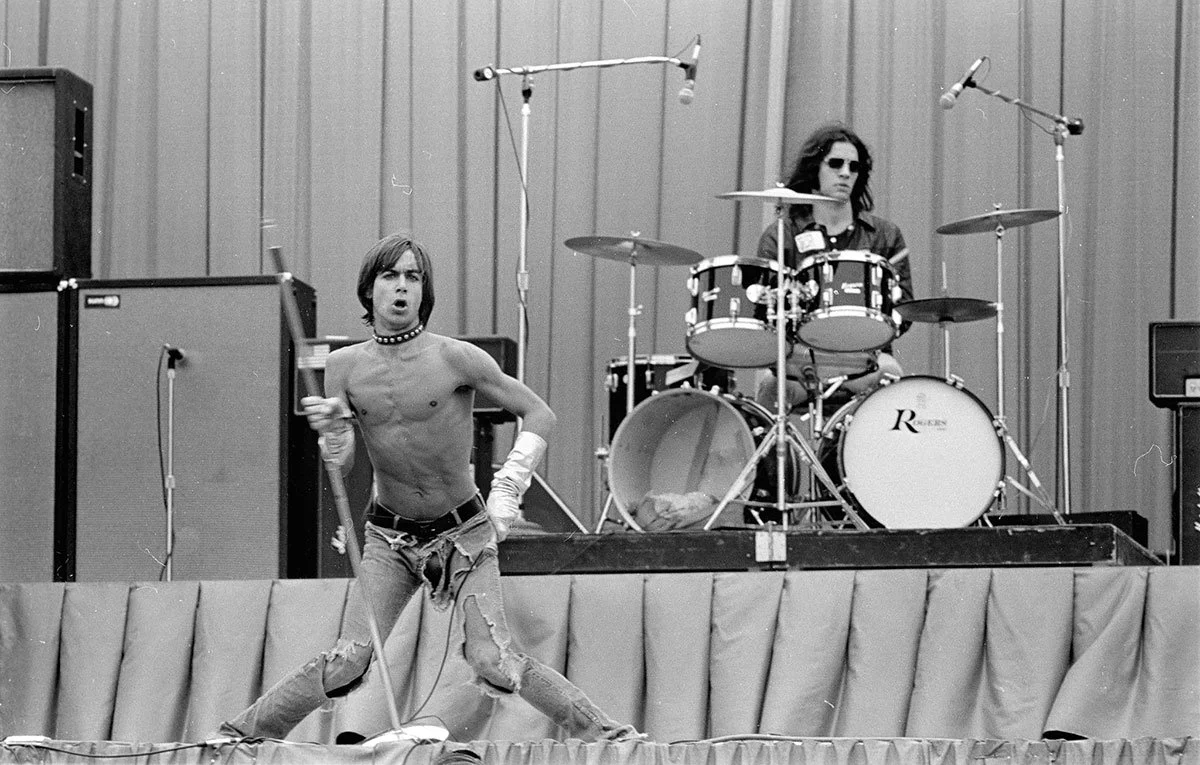
While the Velvet Underground embodied an experimental, metropolitan New York aesthetic, the Stooges, formed in Ann Arbor, Michigan, in 1967, channeled a raw, working-class energy and confrontational performance style that anticipated the theatricality of punk. Fronted by Iggy Pop, born James Osterburg, the Stooges became notorious for performances that were simultaneously outrageous and dangerous. Pop's performances blurred the boundary between entertainment and transgression, embracing self-inflicted injury and extreme physicality as acts of rebellion and spectacle. Pop frequently performed shirtless, smeared himself with peanut butter, leaped into the audience, and occasionally cut or injured himself onstage, converting each show into a spectacle of risk and provocation. Guitarist Ron Asheton described the band’s method as beginning with a single riff and building toward a chaotic explosion of energy, often culminating in smashed instruments or bloodied hands.
The Stooges' eponymous 1969 debut album, produced by John Cale of the Velvet Underground, captured their primal, garage-band sound and earned them a dedicated, though modest, national following. Songs such as "1969" conveyed the disillusionment of working-class youth caught in economic stagnation, sharply contrasting with the utopian ideals of the hippie movement and the Woodstock festival. Another signature track, "I Wanna Be Your Dog," distilled the band's raw energy into a simple, repetitive three-chord riff, underpinned by thunderous drumming and a growling, almost animalistic vocal performance from Pop. The song's stark minimalism, sexualized tension, and unrelenting intensity typified the confrontational aesthetic that would become central to punk rock. Ihrough their confrontational performance style, the Stooges offered a working-class counterpoint to the Velvet Underground's avant-garde experimentation, demonstrating that punk's early identity could develop from both intellectual abstraction and rock's physical energy.
The MC5
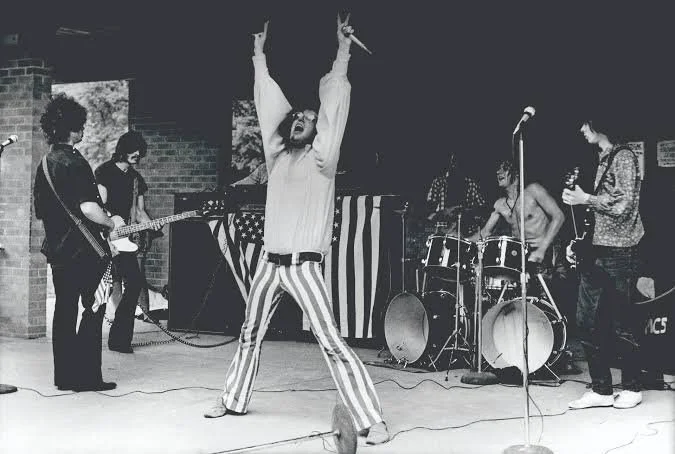
The MC5, short for Motor City Five, was formed in Detroit during the late 1960s as an irreverent, politically charged counterpart to the Stooges' performative intensity. Their 1969 debut, Kick Out the Jams, recorded live at Detroit's Grande Ballroom, illustrates the band's explosive energy. Tracks such as the title song, with its notorious rallying cry "Kick out the jams, motherf***ers!" and "Rocket Reducer No. 62 (Rama Lama Fa Fa Fa)," pulsate with distorted guitars, pounding drums, and shouted vocals. Extended covers, such as "Motor City Is Burning,"incorporate praise for the Black Panthers and draw attention to the band’s engagement with contemporary social issues.
MC5's performances were deeply entwined with political radicalism. Under the leadership of John Sinclair, who rejected conventional managerial roles and coined his enterprise "Trans-Love Energies," the band became associated with the radical group Up Against the Wall Motherfucker and helped form the White Panther Party, a militant anti-racist and anti-capitalist organization founded in solidarity with the Black Panther Party. The White Panther Party created their own 10 point program started in response to an interview where Huey P. Newton, co-founder of the Black Panther Party, suggested white activists could form a White Panther Party to support the work of the Black Panthers. The White Panthers advocated cultural revolution, free expression, and economic justice, calling for free food, free healthcare, and the abolition of money. MC5 members, as the founders of the party, embodied this ethos, appearing onstage with unloaded rifles and simulating the shooting of a band member at the climax of a show, all while visibly using LSD and marijuana. Their activism extended to the national stage when the band performed during the 1968 Democratic National Convention protests in Chicago, playing for over eight hours amidst police riots, and standing as one of the few bands willing to perform under the tense and chaotic conditions.
Musically and socially, MC5 exemplified confrontation. Their sound projected sheer aggression and urgency, matching the radicalism of their politics. Their lyrics, riffs, and stage theatrics combined to create a revolutionary sensibility in rock music, blending punk precursors with a hard-rock energy that was politically informed and socially provocative. The band drew inspiration from Marxist politics, the Black Panthers, and Beat Generation poets like Allen Ginsberg and Ed Sanders, fusing cultural critique, social consciousness, and musical intensity into a singularly compelling package. In doing so, MC5 provided a blueprint for punk rock's intertwining of music, performance, and political rebellion.
Together, these three bands established the foundations of punk rock. The Velvet Underground provided an experimental, aesthetically confrontational model, the Stooges delivered theatrical, performative extremity, and the MC5 fused aggressive sound with political engagement. Common to all three was a disregard for commercial convention, a commitment to immediacy and intensity, and a confrontational stance toward both the audience and the music industry. Their influence can be traced through the 1970s punk explosion, which incorporated these elements while translating them into a style that was at once musical, cultural, and visual.
CBGB & The New York Scene
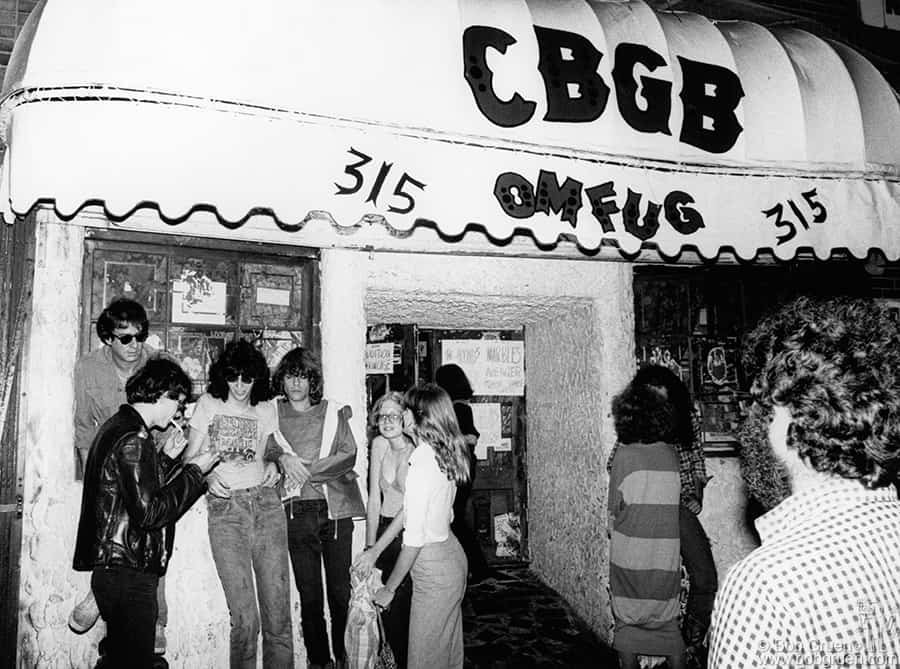
While the impulses that fed into punk surfaced simultaneously in places like Detroit, Los Angeles, and London, the music first cohered into a recognizable, if still fragmented, movement in mid-1970s New York. In punk's earliest days, the emerging New York punk sound lacked a fixed name. Some dismissed it as "street rock," but the term "punk rock" gradually took hold, popularized by Bomp! Records owner Greg Shaw, who had used it to describe rough-edged 1960s garage bands like the Seeds. The label gained traction with the January 1976 launch of PUNK magazine, whose irreverent, cartoonish sensibility echoed MAD magazine while championing the new downtown music. Around the same time, New York's Bowery district became the movement's epicenter, thanks to the club CBGB & OMFUG, an acronym for Country, Bluegrass, Blues, and Other Music for Urban Gourmandizers—better known simply as CBGB. Initially intended for other genres, the club, as the name implies, became the proving ground for bands like Television, the Patti Smith Group, and the Ramones. There, in front of small but eager crowds, musicians could test unpolished ideas, carving out an alternative to the mainstream and giving punk a sound and a home.
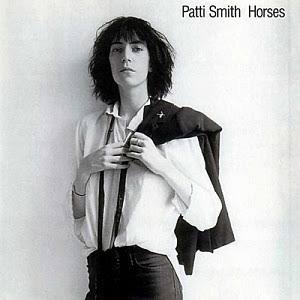
The Patti Smith Group was the first band from New York's punk scene to secure a major-label recording contract. The group consisted of poet and vocalist Patti Smith, guitarist Lenny Kaye, bassist Ivan Krall, pianist Richard Sohl, and drummer Jay Dee Daugherty. Smith and Kaye had performed together in local clubs during the early 1970s, with Smith already establishing a reputation as a poet in her own right. By 1974, the duo had grown into a full-group lineup, performing a mix of original songs and covers.
Their debut album, Horses (1975), produced by John Cale of the Velvet Underground and released on Arista Records, presented a new aesthetic for punk. Its opening track, a radical reworking of Van Morrison's "Gloria," begins with Smith's unforgettable declaration—"Jesus died for somebody’s sins but not mine," drawn from her early poem Oath—before erupting into the song's familiar chorus. Her mixture of poetry, literary allusion, and driving rock instrumentation captured the defiant spirit of punk. The record reached number forty-seven on the U.S. charts, while its austere cover photograph, taken by Robert Mapplethorpe, became one of the iconic images in rock history. Horses established Smith as the movement's first star and demonstrated that punk could be at once intellectual, confrontational, and musically powerful.
Other bands quickly followed. Television, formed by friends Richard Hell and Tom Verlaine, was inspired by both the Velvet Underground and avant-garde jazz figures. Hell and Verlaine, who had previously published poetry together, found a home at CBGB in early 1974, securing a regular Sunday night slot that helped cultivate a following. Blondie added another strand to the growing diversity of the New York scene. Richard Hell, after departing Television, fronted the Voidoids. Hell's lyrics, often portraying alienation and disaffection, paired with his distinctive, wailing vocal style, became typical of the city's punk identity.
The New York punk scene synthesized a variety of influences: the amateur energy of garage rock, the avant-garde nihilism of the Velvet Underground, the confrontational abandon of the Stooges, and the anti-fashion theatrics of the New York Dolls. CBGB, along with venues like Max's Kansas City, provided the physical and cultural space where these disparate threads combined into a coherent, self-conscious movement. The scene's emphasis on DIY creativity, raw musical expression, and social defiance set the stage for performance and production practices that other scenes later adopted in New York and beyond.
The Ramones
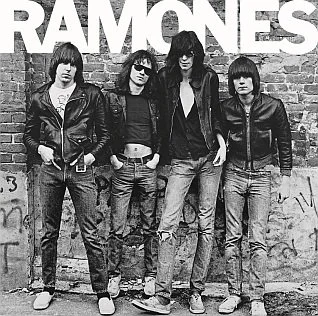
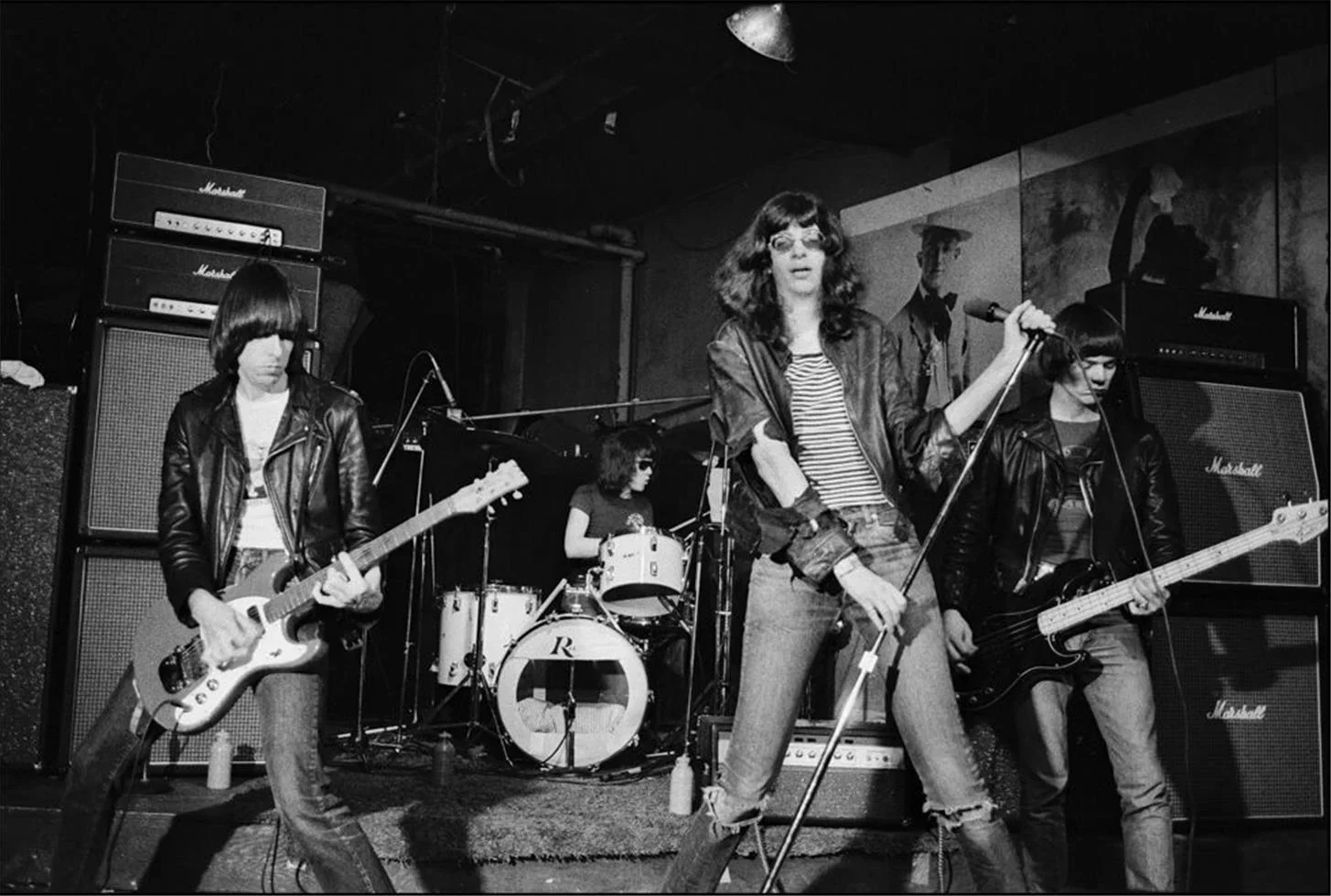
Emerging from New York's CBGB scene in 1974, the Ramones are often recognized as the first true punk rock band. Each member adopted the surname "Ramone," inspired by Paul McCartney's use of the alias Paul Ramon when checking into hotels. The lineup included vocalist Joey Ramone (Jeffrey Hyman), guitarist Johnny Ramone (John Cummings), bassist Dee Dee Ramone (Douglas Colvin), and drummer Tommy Ramone (Tom Erdelyi). None were highly trained musicians, but that limitation became central to their style. As Johnny Ramone later explained, "We put records on, but we couldn't figure out how to play the songs, so we decided to start writing songs that were within our capabilities." Their self-awareness gave the band a stripped-down aesthetic: short, high-energy songs played at blistering speed, with minimal instrumentation and little technical embellishment.
The Ramones' music was deliberately simple. Songs rarely exceeded three minutes, and guitar solos were almost nonexistent; when they did appear, they were often reduced to a single, pounding note. Joey Ramone's near-monotone vocals became a blueprint for later punk singers. Their debut album, Ramones (1976), released on Sire Records, carries the band's stripped-down method throughout its track list. Tracks such as "Blitzkrieg Bop" relied on a few repeated guitar chords, repetitive vocal lines, and a relentless drumbeat that propelled the song forward with raw intensity, while "Now I Wanna Sniff Some Glue" showcased the band's irreverent humor and youthful defiance. Recorded quickly and on a small budget of just over six thousand dollars, the album embodied the DIY ethos that would epitomize punk rock.
Johnny Ramone's guitar work reinforced the band's minimalist aesthetic. Using a strict downstroke technique, he strummed each note only downward, producing a sharp, percussive, and rhythmically driving sound. Combined with full barre chords and occasional power chords, movable two- or three-note chord forms built on the root and fifth for a punchy, aggressive tone, this technique created what critics dubbed his “chainsaw” guitar style, a relentless, buzzing attack that became a signature feature of the Ramones’ sound. Solos were rare, and when included—on songs like "Now I Wanna Sniff Some Glue" or "California Sun"—they were reduced to a single, pounding note that served the song's energy rather than technical display. The band also often played with their guitars hanging low on their bodies, bolstering a tough, streetwise stage presence.
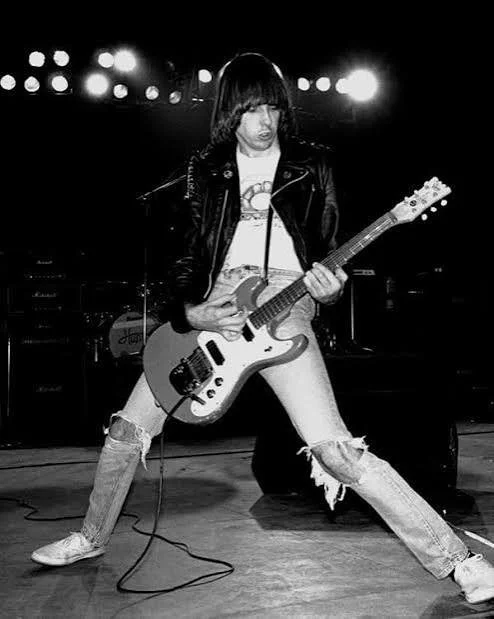
The Ramones' streetwise image was vividly captured on their debut album cover. Clad in black leather jackets, ripped blue jeans, and simple sneakers, the band projected a rebellious persona rooted in the energy of 1950s rock' n' roll while rejecting contemporary glamor and sophistication. The plain brick-wall backdrop presented the Ramones as a unified, self-styled unit, stripping away any pretense of rock-star grandeur. Their posture and clothing signaled a no-nonsense, working-class attitude, and sharply contrasted with their middle-class Queens upbringing. Early performances at CBGB, starting in 1975, made the venue a regular stop for punk performances alongside the Patti Smith Group and Television. Under the guidance of manager Danny Fields, who had previously worked with the Stooges and Lou Reed, the Ramones cultivated a devoted following that embraced both their sound and their striking visual identity.
As their music developed, songs like "I Wanna Be Sedated" from their fourth album, Road to Ruin (1978), demonstrated the band's combination of humor and musical craft. The lyrics describe a desire for escape through drug-induced paralysis, yet the melody remains catchy and upbeat, with a pop-inflected chorus reminiscent of the Beach Boys and 1960s girl groups that the band admired. Their admiration for that era was apparent in their later cover of the Ronettes' 1963 hit "Baby, I Love You" and their collaboration with producer Phil Spector. Joey Ramone described the Ramones' style as "sick bubble-gum music," bringing out the tension between playful surface elements and the darker undertones of urban frustration. Similarly, "I Wanted Everything" (1978) offers a grim snapshot of adolescent disillusionment, depicting the working- and middle-class realities of New York youth during a period of economic stagnation. Its narrative of aspiration and failure draws a line between punk rock and the socially conscious storytelling of artists like Bruce Springsteen.
Although the Ramones never achieved significant commercial success in the United States, with their highest Billboard album position reaching only number 111, their influence abroad was significant. Tours of England in 1976 helped ignite the British punk movement, inspiring future members of the Sex Pistols, the Clash, and the Damned. In 1977, scored a U.K. Top 40 hit with "Sheena Is a Punk Rocker," indicating the global reach of their sound, style, and the DIY-driven ethos that would become closely associated with punk worldwide.
British Punk
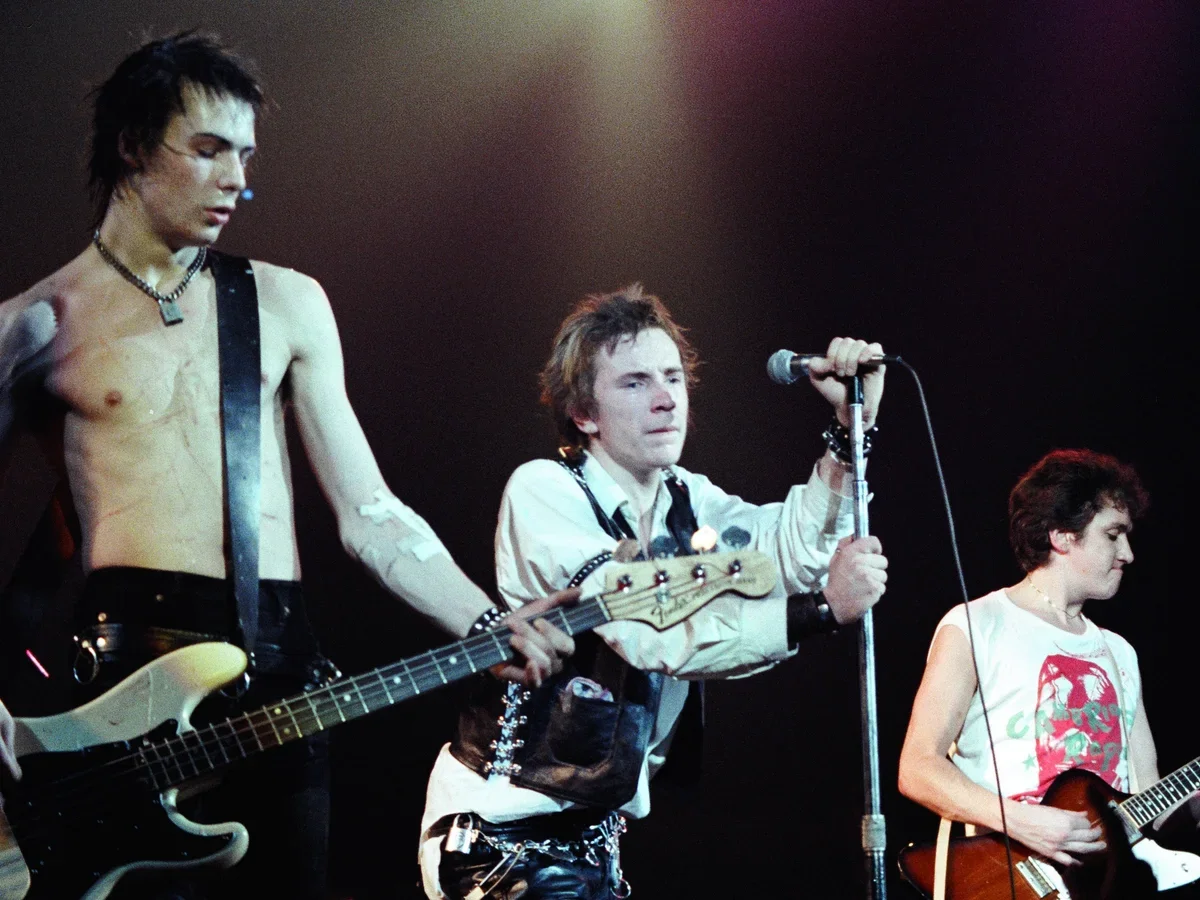
Britain's social and economic turmoil in the mid-1970s provided the conditions in which punk developed. High unemployment, rampant inflation, and scarce opportunities left many young people frustrated and disillusioned, and punk quickly became a direct outlet for their anger and rebellion. Unlike in the United States, where punk initially stood as an essentially artistic, downtown phenomenon focused on DIY music and subcultural identity, British punk was rooted in a predominantly white, working-class youth culture. Bands including the Sex Pistols and the Clash paired stripped-down sound with open political provocation, openly challenging both the media and the British establishment. While American punk often critiqued commercial rock and cultural conformity in abstract or aesthetic terms, British punk articulated current social grievances, making confrontation and outrage central to its identity while still achieving commercial visibility.
At the center of the British punk movement was Malcolm McLaren, a London boutique owner who played a major part in constructing punk’s public image and rhetoric. In the early 1970s, he ran Let It Rock, a shop specializing in 1950s rock' n' roll clothing. By 1973, he had renamed the store Too Fast to Live, Too Young to Die, where he first encountered the New York Dolls performing in London. McLaren outfitted the band in matching red leather suits, influencing their image and stage presence, and briefly managed them in 1975 before returning to London. There, he reopened the store as Sex, selling leather and fetish wear while cultivating a provocative, anti-fashion ethos that would become synonymous with punk.
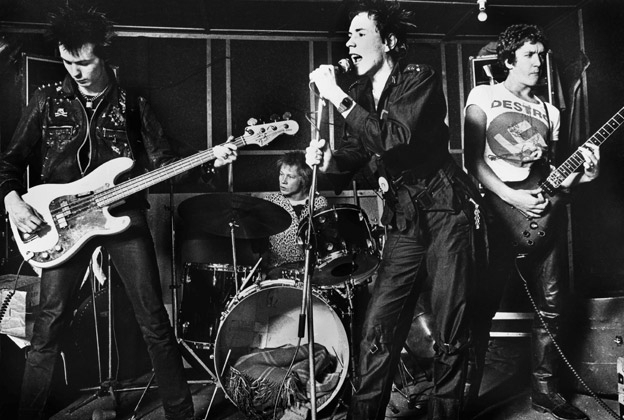
Through McLaren's shop, guitarist Steve Jones and drummer Paul Cook met bassist Glen Matlock. McLaren introduced them to John Lydon, a regular at the boutique who had never sung in public. Lydon was soon christened Johnny Rotten and became the band's frontman. By late 1975, McLaren was managing the group, molding them into the Sex Pistols. Their earliest gigs drew attention for sheer chaos: Rotten's sneering delivery, onstage profanity, and confrontational antics led to widespread bans from clubs.
In December 1976, the Sex Pistols released their first single, "Anarchy in the UK," on EMI. The song's blunt declaration of rebellion—"I am an antichrist / I am an anarchist / Don't know what I want / But I know how to get it"—immediately set the tone for the band's confrontational ethos. A televised interview in which Rotten swore prompted EMI to drop the band, and a brief stint with A&M ended similarly. The early controversy surrounding "Anarchy in the UK" and the television interview demonstrated the power of the Pistols' confrontational image and made way for their next, most infamous provocation.
Amid this period of rising fame, internal tensions and dramatic lineup changes intensified the band's volatility. In February 1977, Glen Matlock was replaced by John Ritchie, better known as Sid Vicious. Some accounts claim Matlock was dismissed for his preference for the Beatles, though Matlock later stated in his autobiography that he quit because he was "sick of all the bullshit." Conflicts with Johnny Rotten, compounded by McLaren's influence, undoubtedly played a significant role in his departure. McLaren reportedly sought Vicious for the symbolic impact of his persona, declaring, "If Johnny Rotten is the voice of punk, then Vicious is the attitude," reinforcing the band's confrontational image as much through its members as its music.
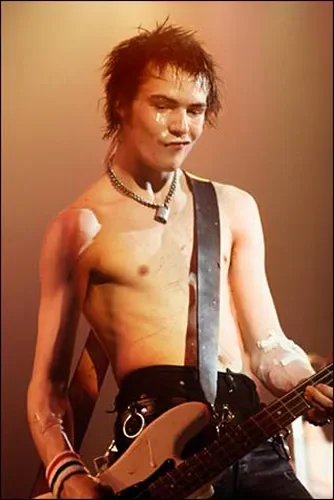
Sid Vicious was chosen not for technical skill—he could barely play bass—but for his image, which epitomized punk’s confrontational, anti-establishment ethos. His spiked hair, leather clothing, and sneering, apathetic demeanor projected the nihilistic rebellion at the heart of the movement. On stage, Vicious embraced chaos: his slurred, erratic bass lines and confrontational antics complemented Rotten’s snarling vocals, turning performances into spectacles of controlled anarchy. Offstage, Vicious’s persona was inseparable from his lifestyle, which increasingly revolved around his use of drugs and his often violent relationship with his girlfriend Nancy Spungen.
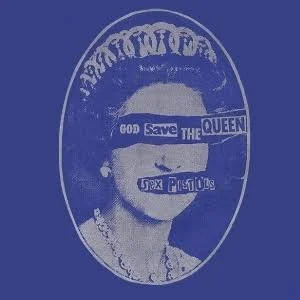
The band courted their most notorious controversy with their next single, "God Save the Queen," a direct assault on the monarchy and the British establishment. Its lyrics—"God save the queen / The fascist regime / She ain't no human being / There is no future / In England's dreaming"—articulated generational anger, rejecting nationalistic ideals and critiquing social and economic stagnation. The song's provocative imagery and language provoked widespread outrage in the tabloids, led major retailers to withdraw it from sale, and resulted in a BBC ban on radio and television airplay. Music critic Alexis Petridis later described it as the "most heavily censored record in British history."
On June 7, 1977, manager Malcolm McLaren staged an audacious public stunt: he chartered a boat for the Sex Pistols to perform "God Save the Queen" while sailing along the Thames, passing Westminster Pier and the Houses of Parliament. The event was conceived as a mockery of the Queen's river procession, scheduled for two days later. The performance descended into chaos when police forced the boat to dock, and constables surrounded the gangplank. Band members and their equipment were hurried down a side stairwell, while McLaren, Vivienne Westwood, and members of the entourage were arrested. The spectacle, combined with the song's incendiary lyrics, reinforced the Sex Pistols' image as unapologetic provocateurs and captured the confrontational, politically charged spirit of British punk.
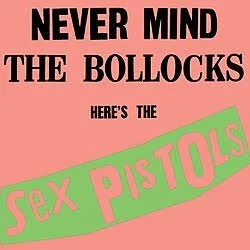
Building on their growing notoriety, the release of Never Mind the Bollocks, Here's the Sex Pistols in 1977 solidified the band's impact on both music and culture. The album quickly reached number one on the U.K. charts, provoking intense reactions that ranged from admiration to outrage. Before the album's release, the Sex Pistols had already received advances from three record companies, two of which dropped the band amid repeated controversies, essentially outmaneuvering the music industry and reinforcing their rebellious image. The album drew condemnation from the Conservative shadow minister for education, who labeled it "a symptom of the way society is declining," while both the Independent Television Companies Association and the Association of Independent Radio Contractors banned its advertisements. Despite these barriers, advance sales were strong enough to make it a chart-topping release. The provocative title also sparked a court case under the 1899 Indecent Advertisements Act, which ultimately failed, exemplifying the Sex Pistols' ability to challenge authority while achieving commercial success. With its coarse, aggressive sound and incendiary lyrics, the album captured the band's vision of punk as an unflinching, confrontational expression of youth rebellion.
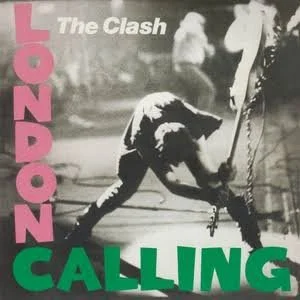
The Sex Pistols' influence reverberated across England, stimulating a wave of new punk bands. Among the most prominent was the Clash, managed by Bernard Rhodes, who positioned themselves as politically conscious punk rebels. Joe Strummer, Mick Jones, Paul Simonon, and Topper Headon released their self-titled debut, The Clash, in 1977, featuring the incendiary single "White Riot." Subsequent albums, including Give Em Enough Rope (1978) and London Calling (1980), broadened the band’s sound, and by the time of the triple album Sandinista! (1980), they were incorporating reggae, ska, and R&B influences, opening punk to a wider range of musical possibilities. Lyrically, the Clash practiced a form of social realism, directly challenging British government policies, the lingering effects of imperialism, police harassment, and the era's conservative turn. In doing so, they demonstrated that punk could be both musically raw and politically engaged, bridging the energy of rebellion with sustained social critique.
Other bands followed distinct paths: the Buzzcocks, led by Pete Shelley, favored melodic, pop-inflected punk, as evidenced by albums such as Another Music in a Different Kitchen (1978) and Love Bites (1978). The Jam, comprising Paul Weller, Bruce Foxton, and Rick Buckler, drew inspiration from mod culture and mid-1960s acts like the Kinks and the Who, blending hard-driving rhythm with catchy hooks on releases such as In the City (1977), All Mod Cons (1978), and Sound Affects (1980). Siouxsie and the Banshees brought a darker, gothic sensibility to punk, debuting with "Hong Kong Garden" (1978) and The Scream (1978). Female-fronted bands like X-Ray Spex and the Slits also challenged conventional gender norms, bringing punk to wider audiences and increasing its cultural influence.
Perhaps no band better captures the ideals and contradictions of punk than Crass. The group, founded in 1977, originated within an art collective based at the anarchist commune of Dial House in Essex. From the outset, Crass treated punk not as passive entertainment but as a vehicle for radical political change. Their members embraced anarchism as a way of life, advocating feminism, animal rights, environmentalism, and anti-fascism, while deliberately rejecting the trappings of the commercial music industry. Crass's commitment to punk's DIY ethos extended to every facet of their work, from handmade albums, collages, and pamphlets to films and graffiti stenciled across the London Underground. Their visual presentation reinforced Crass's anti-authoritarian message. Dressed in black military-surplus clothing and performing beneath a logo that fused the cross, swastika, Union Jack, and ouroboros, they sought to confront audiences with the symbols of power turned back on themselves and to dismantle the cult of personality surrounding rock musicians.
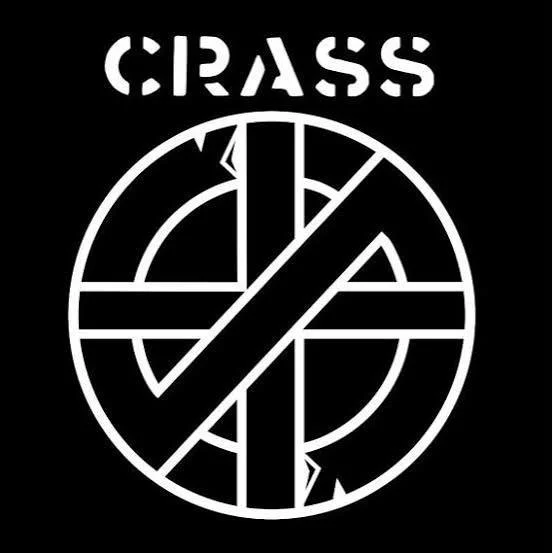
Crass emerged at a moment when punk's early ethos of DIY rebellion was under threat. Segments of the scene were being co-opted by right-wing skinheads—a subculture originating in late-1960s Britain among working-class youth, drawing on Jamaican rude boy style, ska, and mod fashion. Early skinheads were largely apolitical, connected by music, fashion, and a confrontational, streetwise posture. By the late 1970s, however, some factions embraced nationalist, fascist, and racist politics, adopting aggressive street behavior as part of their identity. Against this backdrop, Crass positioned themselves as uncompromisingly anti-authoritarian, rejecting both commercialized punk and the appropriation of youth rebellion for extremist ideology.
Musically, Crass extended punk into an explicitly political framework. Their abrasive textures, shouted vocals, and deliberately chaotic structures rejected conventional rock norms, expressing the confrontational ideas embedded in their lyrics. On the 1979 album Stations of the Crass, the track "White Punks on Hope" critiques both society and punk culture itself. The lyrics rail against the co-optation of punk into "street credibility," denouncing leftist machismo, self-righteous posturing, and the factionalism of the movement as just another form of authoritarianism. Crass insisted that real resistance could not be reduced to ideological labels or fashionable alignments; instead, it demanded constant vigilance against the ways power divides and disciplines.
Even within this denouncement of systems, the song also illustrates the volatility and tension inherent in punk's rhetorical strategies. In one line, Crass used a racial slur to signify how rulers exploit all people as outsiders and expendables. Within the context of the 1970s punk scene, some white musicians had appropriated similar language as a marker of rebellion, echoing earlier examples like Patti Smith's provocative identity work in "Rock and Roll Nigger." Scholars have traced this lineage back to Norman Mailer's The White Negro, in which Black culture was romanticized as a source of authenticity for alienated whites. Mailer’s essay calls for an adoption of black culture to express things he believes white culture will not allow, and rejects the oppression white culture has historically imposed on others. While both Smith and Crass sought to critique hierarchical power and express solidarity against oppression, the use of racialized language also exposes the movement’s blind spots, showing how radical political messages could coexist with troubling appropriations.
Beyond their lyrics, Crass's organizational practices were equally influential. They coordinated squats, ran independent record distribution, organized benefit gigs, and published self-produced magazines and leaflets, demonstrating that punk could operate as a fully autonomous cultural network. By building an infrastructure outside the major label system, Crass created a model for subsequent anarcho-punk and hardcore bands, proving that music could function as activism as much as art. Their influence extended internationally, inspiring bands and collectives in North America and Europe to adopt DIY production, radical politics, and confrontational performance practices.
Despite the international reach of Crass's model and the commercial success of bands like the Sex Pistols in the U.K., few achieved American recognition at the time; the Clash were the notable exception, breaking into the U.S. market in 1980. British punk did not fully cross the Atlantic until later, when record aficionados began taking an interest. In the meantime, many U.K. acts that reached American audiences were rebranded as "new wave" rather than "punk," displaying how the movement's radical edge was frequently tempered for commercial consumption.
Chapter 30: Conclusion
By the late 1970s, punk had securely established itself in American cities, with New York emerging as its primary incubator. Bands such as the Ramones, Television, and Patti Smith Group established the scene’s early sound and performance norms, drawing on stripped-down rock' n' roll and emphasizing raw energy and visceral impact over technical virtuosity. Their performances were intense, often chaotic, and deliberately unpolished, projecting a sense of authenticity that challenged mainstream music's conventions. Across the country, DIY networks, underground venues, and local fanzines supported a youth-driven culture that rejected commercial aesthetics, from slick production to fashion norms, cultivating a visual and sonic language that signaled rebellion.
When British punk exploded onto the scene—with the Sex Pistols, the Clash, and Crass at the forefront—it made its way back to the United States. The transatlantic flow of punk mirrored patterns from the 1960s, when British Invasion bands had absorbed American rock, R&B, and blues, adapting those styles for a new audience. Similarly, British punk was "sold back" to American listeners, simultaneously validating local scenes while commodifying aspects of punk's style and ethos. The spectacle of British punk, including confrontational stage performances, provocative fashion, and sensational media scandals, provided a vivid visual and cultural blueprint for rebellion. Leather jackets, spiked hair, torn clothing, safety pins, and DIY graphics functioned as symbols that U.S. bands could adapt, absorb, or even market. This process framed punk simultaneously as a style and a political expression. Yet the experimental edge of U.S. groups remained essential, demonstrating that punk was not simply a commercial product.
By the late 1970s, would-be punks were coalescing in the seedier parts of Hollywood, California, cultivating their own DIY music culture. Los Angeles quickly became the new American punk hub, as semi-autonomous scenes proliferated throughout the greater metropolitan area and across the country. Southern California, in particular, gave rise to hardcore—a faster, more aggressive subgenre that by the early 1980s dominated the public face of punk. Concurrently, the scene’s demographics shifted: while mid-1970s punks were typically in their twenties, by the early 1980s, teenagers dominated both the audience and the performer pool, bringing a younger, more restless energy to the music.
American punks initially believed they could revitalize a music industry they viewed as stale, formulaic, and disconnected from youth rebellion. Despite early visibility, some bands failed to change popular tastes on a broad scale. Over time, the attention shifted from large-scale reform to sustaining a permanent underground infrastructure built on DIY record labels, fanzines, and touring circuits. This underground network persists today, with labels such as Alternative Tentacles (San Francisco, 1979) and Dischord (Washington, D.C., 1980) preserving autonomous production models. Though culturally marginalized through the early 1990s, punk established the basis for indie rock, which carried forward its DIY ethos. When grunge bands such as Nirvana forayed into the mainstream in the early 1990s, they explicitly acknowledged their punk heritage, introducing the genre to new mainstream audiences.
As the intensity of late-1970s punk began to evolve, bands emerging from its shadow retained punk's rebellious energy while exploring new stylistic directions, incorporating melody, production innovation, and different genres such as pop, reggae, electronic music, and funk. Punk's move toward more melodic and stylistically varied forms helped prepare the way for new wave, which reinterpreted punk's confrontational spirit for broader audiences while conserving its cultural vitality. In the next chapter, we will trace the rise of new wave, examining how the spirit of rebellion persisted even as it was mediated, packaged, and disseminated to a global audience.
Chapter 30: Further Reading
Andersen, Mark, and Mark Jensen. Dance of Days: Two Decades of Punk in the Nation’s Capitol. New York: Akashic Books, 2009.
Bang, Lester. “Of Pop and Pies and Fun: A Program for Mass Liberation in the Form of a Stooges Review, or, Who’s the Fool?” In Psychotic Reactions and Carburetor Dung, edited by Greil Marcus, 31–52. New York: Anchor Books, 1987.
Birch, Ian. “Punk.” In The Rock Primer, edited by John Collis, 261–90. London: Granada, 1980.
Bockris, Victor, and Gerard Malanga. Up-Tight: The Velvet Underground Story. London: Omnibus Press, 1983. 2nd ed., 1996.
Hebdige, Dick. Subculture: The Meaning of Style. London: Methuen, 1979.
Kramer, Michael J. “‘Can’t Forget the Motor City’: Creem Magazine, Rock Music, Detroit Identity, Mass Consumerism, and the Counterculture.” Michigan Historical Review 28, no. 2 (2002): 42–77.
Kristal, Hilly, and David Byrne. CBGB & OMFUG: Thirty Years from the Home of Underground Rock. New York: Harry N. Abrams, 2005.
Laing, Dave. One Chord Wonders. Buckingham: Open University Press, 1985.
MacLeod, Dewar. Kids of the Black Hole: Punk Rock in Postsuburban California. Norman, OK: University of Oklahoma Press, 2010.
Marsh, Dave. “The Incredible Story of Iggy and the Stooges.” Creem ii, no. 13 (1970): 1, 29–33.
McNeil, Legs, and Gillian McCain. Please Kill Me: The Uncensored Oral History of Punk. New York: Grove Press, 1997.
Moore, Ryan. Sells Like Teen Spirit: Music, Youth Culture, and Social Crisis. New York: New York University Press, 2010.
Moore, Allan F. “The Punk Aesthetic” and “The Punk Diaspora.” In Rock: The Primary Text, 112–21, 121–27. Buckingham: Open University Press, 1993.
Pop, Iggy, and Ann Wehrer. I Need More: The Stooges and Other Stories. New York: William Morrow, 1982.
Reed, Lou. Velvet Underground: Lyrics. Milan: G. Ricordi & C., 1982.
Savage, Jon. England’s Dreaming: Sex Pistols and Punk Rock. London: Faber & Faber, 1991.
Spitz, Marc, and Brendan Mullen. We Got the Neutron Bomb: The Untold Story of L.A. Punk. New York: Three Rivers Press, 2001.
Trynka, Paul. Iggy Pop: Open Up and Bleed. New York: Broadway Books, 2007.
Thompson, Dave. Beyond the Velvet Underground. London: Omnibus Press, 1989.
Waksman, Steve. This Ain’t the Summer of Love: Conflict and Crossover in Heavy Metal and Punk. Berkeley: University of California Press, 2009.