Chapter 23: Country Music Enters the Mainstream
“Rhinestone Cowboy”
Album/Year Released
1975 (album: Rhinestone Cowboy)
Artist/Composer
Glen Campbell
Larry Weiss (composer)
Genre/Style
Countrypolitan
Song Form
Verse-Pre-chorus-Chorus
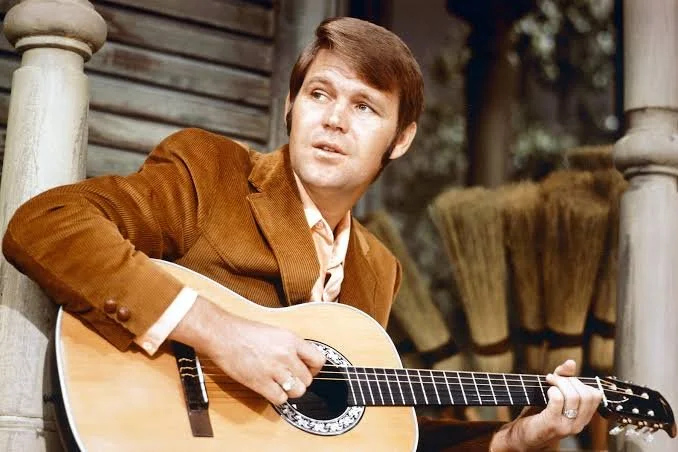
“Rhinestone Cowboy,” written by Larry Weiss and recorded by Glen Campbell, was released in May 1975 as the title track and lead single from Campbell’s album. The song became the signature hit of Campbell’s career and one of the most successful crossover singles of the decade, reaching number one on both the Billboard Country and Pop charts. Weiss had recorded the song in 1974 with limited commercial response, but Campbell discovered it while touring Australia and brought it to Capitol Records, where it was chosen for release. Its success built on Campbell’s established presence in country music and Nashville’s broader commercial direction in the mid-1970s.
The song is an example of the countrypolitan style, a type of country music that started in the late 1960s as Nashville producers tried to reach a larger pop audience. Countrypolitan used smooth vocals, pop-style song structures, and detailed studio production. Instead of traditional fiddles and steel guitars, it often featured string sections, piano, background singers, and carefully balanced studio production. The countrypolitan style grew out of the earlier Nashville Sound and became more common as country music competed with rock and pop. Artists like Tammy Wynette, Charlie Rich, Charley Pride, and Glen Campbell became known for its polished, accessible sound.
"Rhinestone Cowboy" uses a 4/4 time signature and has a clear verse, prechorus, and chorus pattern, with a short instrumental interlude and ends with a final chorus that fades out. Its regular structure and predictable layout make it easy to play on the radio, with the chorus serving as the main hook. The rhythm stays steady, as drums and bass provide a solid foundation with little dynamic change.
The arrangement relies heavily on orchestration rather than traditional country instrumentation. Strings, piano, smooth electric guitar, and resonant drums dominate the texture, producing a full, symphonic sound that corresponds more closely with pop ballad conventions than with honky-tonk or Bakersfield styles. Instrumental fills are restrained and carefully placed between vocal lines, supporting the narrative without drawing attention away from the melody. Campbell’s vocal delivery is controlled and direct, with minimal twang, keeping the lyrics intelligible and emotionally focused.
The lyrics focus on perseverance and self-belief, depicting a performer who navigates uncertainty while maintaining hope for recognition and success. The polished musical arrangement reinforces these themes by conveying struggle through a confident and aspirational sound, rather than through musical tension or rawness. In doing so, “Rhinestone Cowboy” embodies the wider aims of countrypolitan production: to communicate country narratives through a sound crafted for mainstream pop-culture circulation.
“Okie From Muskogee”
Album/Year Released
1969 (single and on the album Okie from Muskogee)
Artist/Composer
Merle Haggard
Merle Haggard and Roy Edward Burris (composers)
Genre/Style
Country; Bakersfield sound
Song Form
Verse-Chorus
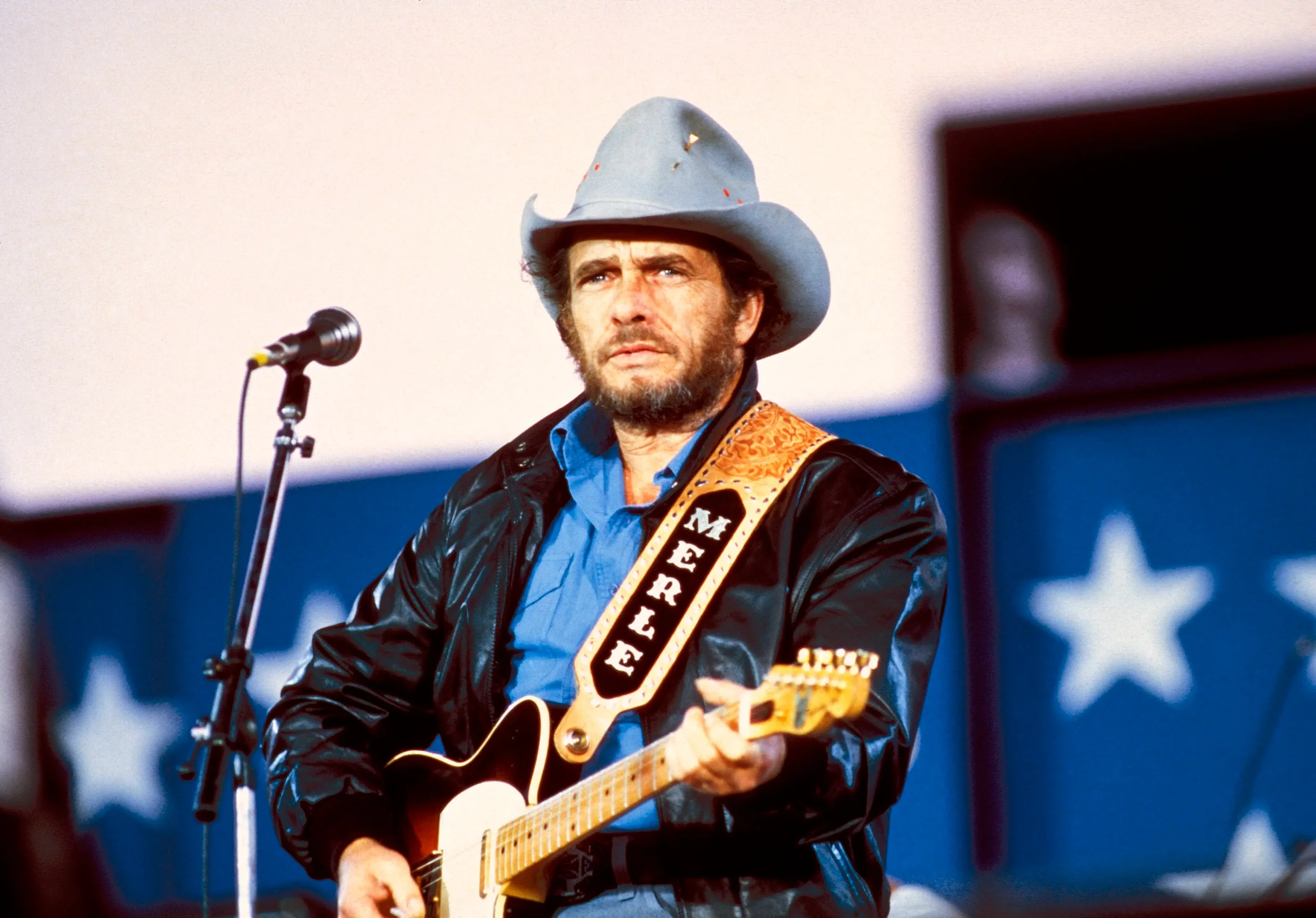
“Okie from Muskogee,” written by Merle Haggard and Roy Edward Burris and released in 1969, appeared during a time of intense political and cultural conflict in the United States. Recorded at the height of the Vietnam War, the song quickly became one of Haggard’s most recognizable works, reaching number one on the Billboard Hot Country Singles chart within weeks. Although widely received as a literal expression of conservative patriotism, Haggard later described the song as a satirical response to the protest culture he observed in the late 1960s. His own experiences with incarceration and his belief that freedom was easily taken for granted by those who already possessed it informed this perspective. The song’s rapid commercial success and contentious message placed it at the center of national debate and secured its position as a cultural flashpoint in country music.
Musically, “Okie from Muskogee” is set in 4/4 meter and follows a straightforward verse–chorus structure, repeating its design across multiple verses before ending with a brief outro. The song’s strophic layout lets the chorus serve as a recurring statement of identity, reinforcing themes of small-town pride and resistance to countercultural behavior. The simple form supports the song’s directness, making its message easy to grasp and sing, qualities that contributed to its popularity in live performances and on the radio.
The song draws heavily on the Bakersfield sound, a style of country music developed in California in the late 1950s and early 1960s that favored electric instrumentation, prominent backbeats, and a honky-tonk edge influenced by rock and roll. Unlike the smoother, orchestral Nashville sound, Bakersfield recordings emphasized twangy electric guitars, pedal steel, and a rhythm section that pushed the music forward. Haggard and Buck Owens played a major part in bringing this style to national attention. “Okie from Muskogee” expresses that aesthetic through its lean arrangement and driving groove.
Haggard’s vocal delivery is plainspoken, avoiding elaborate ornamentation for conversational phrasing. The restrained vocal delivery emphasizes the lyrics, which contrast the narrator’s values with those of the counterculture, including drug use, draft resistance, and challenges to authority. Lines such as “we don’t burn our draft cards down on Main Street” directly reference contemporary protest practices, presenting them as incompatible with the song's worldview. Although these statements were intended as exaggerated caricatures, many listeners took them at face value, turning the song into an anthem for the so-called “silent majority.”
The political reception of “Okie from Muskogee” was controversial and polarized. President Richard Nixon publicly praised the song and invited Haggard to perform it at the White House, while liberal-leaning radio stations banned it on account of its perceived ideology. At the same time, the song gained an unexpected afterlife through parody and reinterpretation. Countercultural artists such as the Grateful Dead, Phil Ochs, and the Beach Boys recorded their own versions, often using irony or humor. Parodies like “Asshole from El Paso” and “Hippie from Olema” duplicated the original’s verse structure while reframing its message from opposing political perspectives, showing how widely its musical and lyrical framework circulated.
“The Pill”
Album/Year Released
1975 (single and on the album Back to the Country)
Artist/Composer
Loretta Lynn
Loretta Lynn, Lorene Allen, Don McHan, and T. D. Bayless (composers)
Genre/Style
Country
Song Form
Strophic
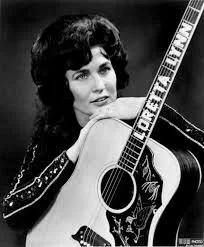
“The Pill,” released in 1975, became one of Loretta Lynn’s most controversial and widely discussed recordings for its direct engagement with women’s reproductive autonomy. Written by Lynn with Lorene Allen, Don McHan, and T. D. Bayless, the song addresses birth control from a woman’s point of view, using humor, everyday imagery, and blunt language that challenged expectations in country music at the time. Its release met resistance from many radio stations, yet it also found commercial success, crossing over onto the Billboard Hot 100 and becoming the highest-charting pop single of Lynn’s solo career.
Musically, “The Pill” is set in 4/4 meter at a moderate tempo. The accompaniment is plain, built from electric and acoustic guitars, bass, drums, piano, lap steel guitar, and background vocals by the Jordanaires. The lap steel, played horizontally with a metal bar or slide, contributes smooth gliding pitch changes and sustained tones associated with country and honky-tonk styles. Its presence adds a recognizable country color without drawing focus from the vocal line. The rhythm section maintains a consistent pulse and supports the conversational character of Lynn’s delivery.
Lynn’s vocal delivery is plainspoken and expressive, closely tied to the storytelling tradition of country music. She sings with a direct, almost spoken quality that imitates everyday speech, lending credibility to the narrator’s perspective. The lyrics use domestic metaphors, including poultry-related imagery such as “brooder house” and “nest,” to frame the husband–wife relationship.
The song follows a strophic form, repeating the same design across verses. Each verse advances the story of a woman who has spent years bearing children and managing domestic expectations, while the recurring chorus reinforces the sense of release made possible by birth control. Through repetition, the song’s message becomes familiar, allowing the social commentary to settle into the listener’s ear through musical consistency.
“Good Hearted Woman”
Album/Year Released
1972 (single, Featured on Wanted! The Outlaws [1976])
Artist/Composer
Waylon Jennings & Willie Nelson
Genre/Style
Outlaw country
Song Form
Verse-Chorus
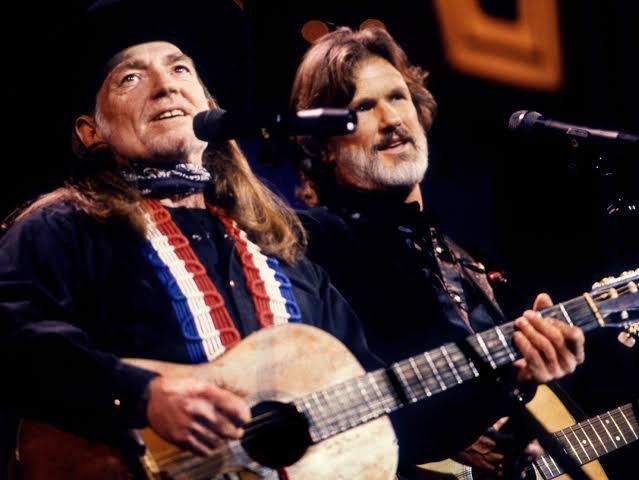
“Good Hearted Woman,” released as a single in 1972, is closely associated with the rise of outlaw country, a style that rejected Nashville’s tightly controlled studio practices for artist autonomy, leaner arrangements, and a more direct vocal presence. Written by Waylon Jennings and Willie Nelson, the song originated out of an informal writing session in Fort Worth, Texas, after Jennings saw a newspaper ad describing Tina Turner as a “good-hearted woman loving a two-timing man.” Jennings brought the idea to Nelson during a poker game, where the two wrote the lyrics together, with Nelson's wife Connie Koepke writing down lines as they were exchanged. Although accounts differ on the exact division of authorship, both artists are credited as co-writers, and the song quickly became one of Jennings’s most recognizable recordings, eventually reaching number three on the country singles chart.
Musically, the song is set in duple meter (4/4) and follows a verse–chorus structure. Its harmonic foundation is simple, relying on a three-chord progression built from D, G, and A7. The song’s harmonic economy supports the lyrics' narrative emphasis and grounds the song in the honky-tonk tradition that fed into outlaw country. In some recorded and live versions, the final chorus shifts up by a whole step, increasing intensity without changing the basic structure. Rhythmically, the verses keep a steady, unembellished pulse, while the chorus often moves into a more animated, double-time strumming feel that heightens the emotional emphasis of the refrain.
The instrumentation conveys the outlaw aesthetic through restraint. Electric guitar, pedal steel, bass, and drums form the core, with no reliance on string sections or elaborate studio effects. This stripped-back arrangement keeps attention on phrasing, tone, and lyrical delivery. Jennings and Nelson share vocal duties in a conversational manner, often trading lines or responding to each other, reinforcing the song's portrayal of an uneven but enduring relationship between a flawed man and a faithful partner. Their vocal blend is relaxed and unpolished, prioritizing their character over smoothness.
“Good Hearted Woman” also sits within a larger movement in country music. In the late 1960s and early 1970s, many artists grew frustrated with the Nashville system, which limited creative control and favored a glossy, pop-oriented sound. Outlaw country developed as a response, drawing from earlier Western, honky-tonk, rockabilly, and folk traditions while insisting on personal authorship and independent production choices. Jennings and Nelson became central figures in the outlaw country movement which later peaked commercially with the 1976 compilation Wanted! The Outlaws, the first country album to receive platinum certification. Although the movement eventually became more commercial, songs like “Good Hearted Woman” capture a period when independence, simplicity, and narrative honesty brought new directions to country music.