Chapter 20: The Folk Revival and Folk Rock
Chapter 20: Introduction
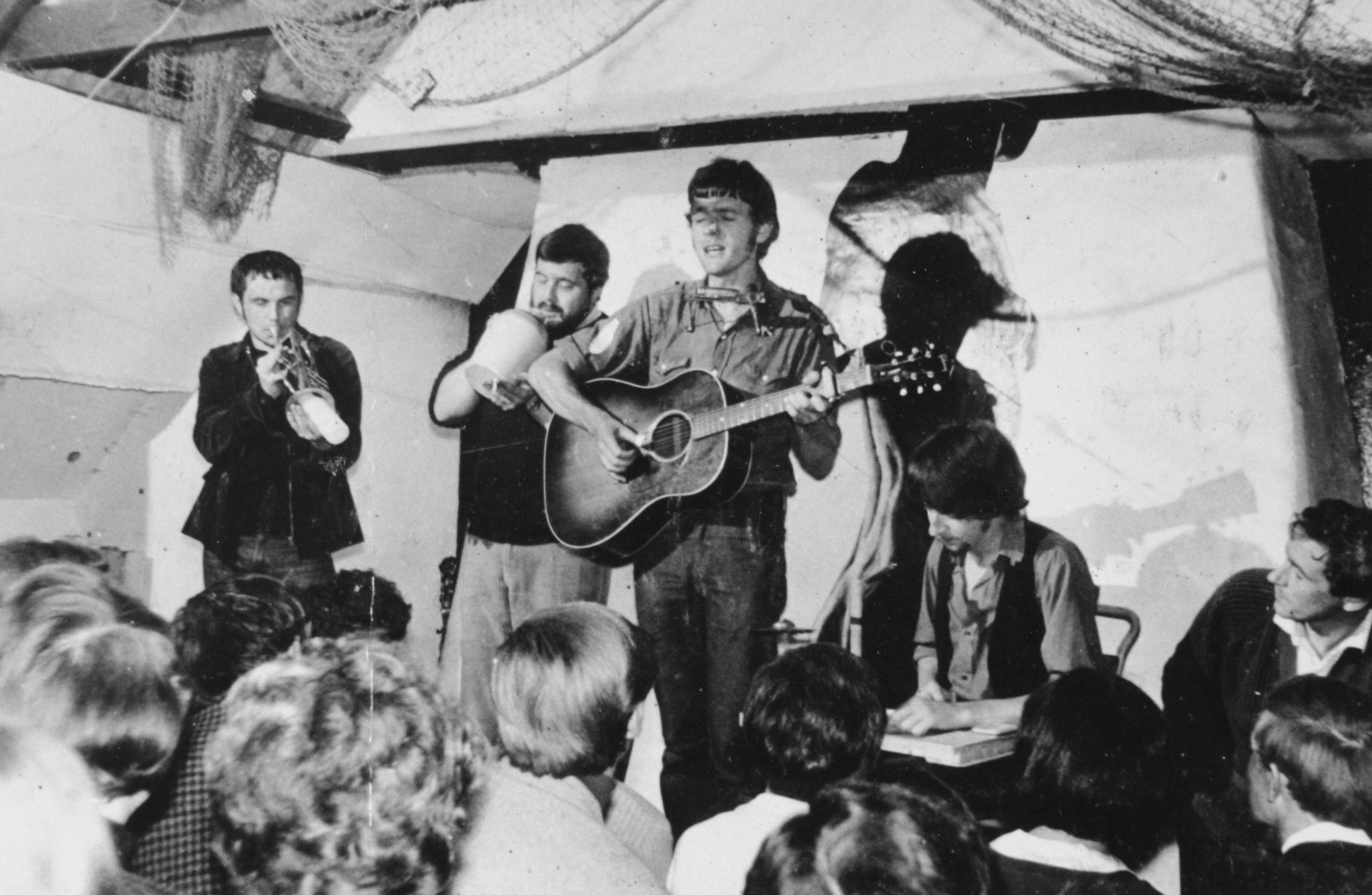
Folk music has long been a vehicle for storytelling, social commentary, and political resistance. Folk songs circulated through oral tradition and across generations, recording the experiences of workers, migrants, soldiers, and others on the social margins. In the United States, artists like Woody Guthrie and Pete Seeger helped establish a distinctly American folk tradition in the early twentieth century, one closely tied to leftist movements. Their songs supported causes such as labor rights, racial equality, and peace, often carried through simple melodies and plainspoken lyrics.
In musicological usage, traditional folk songs usually originate without named authorship and circulate through oral transmission. Communal memory governs their transmission, with songs altered through repetition and local use over time, making them part of a living cultural archive. By the 20th century, however, most of what was labeled “folk music” was not traditional in the strictest sense but rather newly composed songs written in an older folk style. Many of these were modeled on Appalachian ballads, borrowing their musical vocabulary and narrative structures to address contemporary social issues.
Folk songs frequently use limited harmonic motion, commonly centering on I–IV–V progressions and diatonic melody. The musical simplicity is intentional rather than limiting; it ensures that the lyrics remain front and center, allowing the message to be clearly understood. Folk performance prioritizes narrative clarity to communicate a story or to issue a call to action in a way that is accessible to everyone rather than display technical virtuosity.
The acoustic guitar became central to the folk tradition, both for its symbolism and practicality. It was affordable, portable, and required no amplification, making it easy to carry to rallies, picket lines, or public demonstrations. Beyond its practicality, the guitar fostered intimacy between performer and audience, encouraging group participation. Protest songs were often written with simple melodies and structures, making them easy to learn and sing collectively, reinforcing the spirit of solidarity and shared purpose at the heart of the movement.
By preserving lyrical clarity and avoiding dense musical arrangements, the minimalist texture of folk music reinforces its function as a tool for education, solidarity, and resistance. It offers listeners a message as well as an invitation to join a larger conversation rooted in the possibility of progressive societal change.
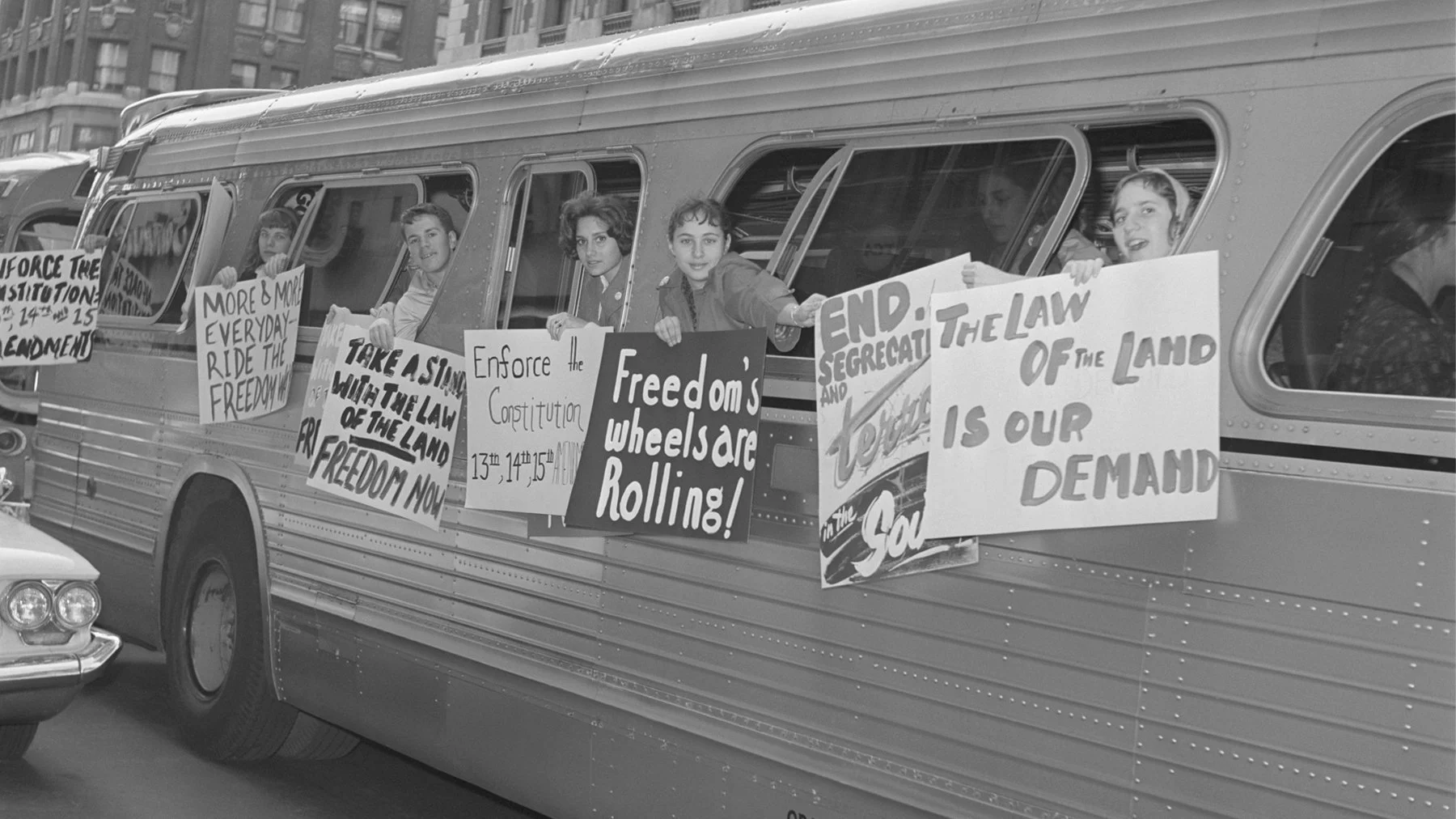
While the 1950s had largely been a decade of political conformity and cultural conservatism under the leadership of WWII general turned president Dwight Eisenhower, the 1960s brought rapid social and political change. Democratic administrations, beginning with President John F. Kennedy, fostered a surge in progressive activism and civic engagement. Kennedy’s message of national renewal through his rhetoric of the “New Frontier” and public service generated widespread enthusiasm, particularly among the youth, who were increasingly energized by causes like the fight for civil rights. Students and activists organized sit-ins, Freedom Rides, and mass marches to confront segregation and systemic racism, leading to landmark legislation such as the Civil Rights Act of 1964 and the Voting Rights Act of 1965 under the leadership of President Lyndon B Johnson.
Amidst this atmosphere of hope and activism, folk music underwent a mighty revival, particularly on college campuses and in urban coffeehouses, such as those in New York’s Greenwich Village. A new generation of musicians embraced folk as a contemporary medium for protest and critique. Its acoustic simplicity and moral clarity offered a compelling alternative to the increasingly commercialized world of rock and roll. Folk music’s socially conscious lyrics and stripped-down sound mirrored the moment’s belief in the power of words and grassroots action. Against the backdrop of the Civil Rights Movement and the escalating Vietnam War, folk songs evolved into urgent anthems for justice, peace, and equality. However, that optimism was abruptly shaken by Kennedy’s assassination in November 1963, which altered the political mood of the decade. By the decade’s end, the mood had darkened considerably—protests increasingly turned to riots, and youthful hope gave way to widespread disenchantment.
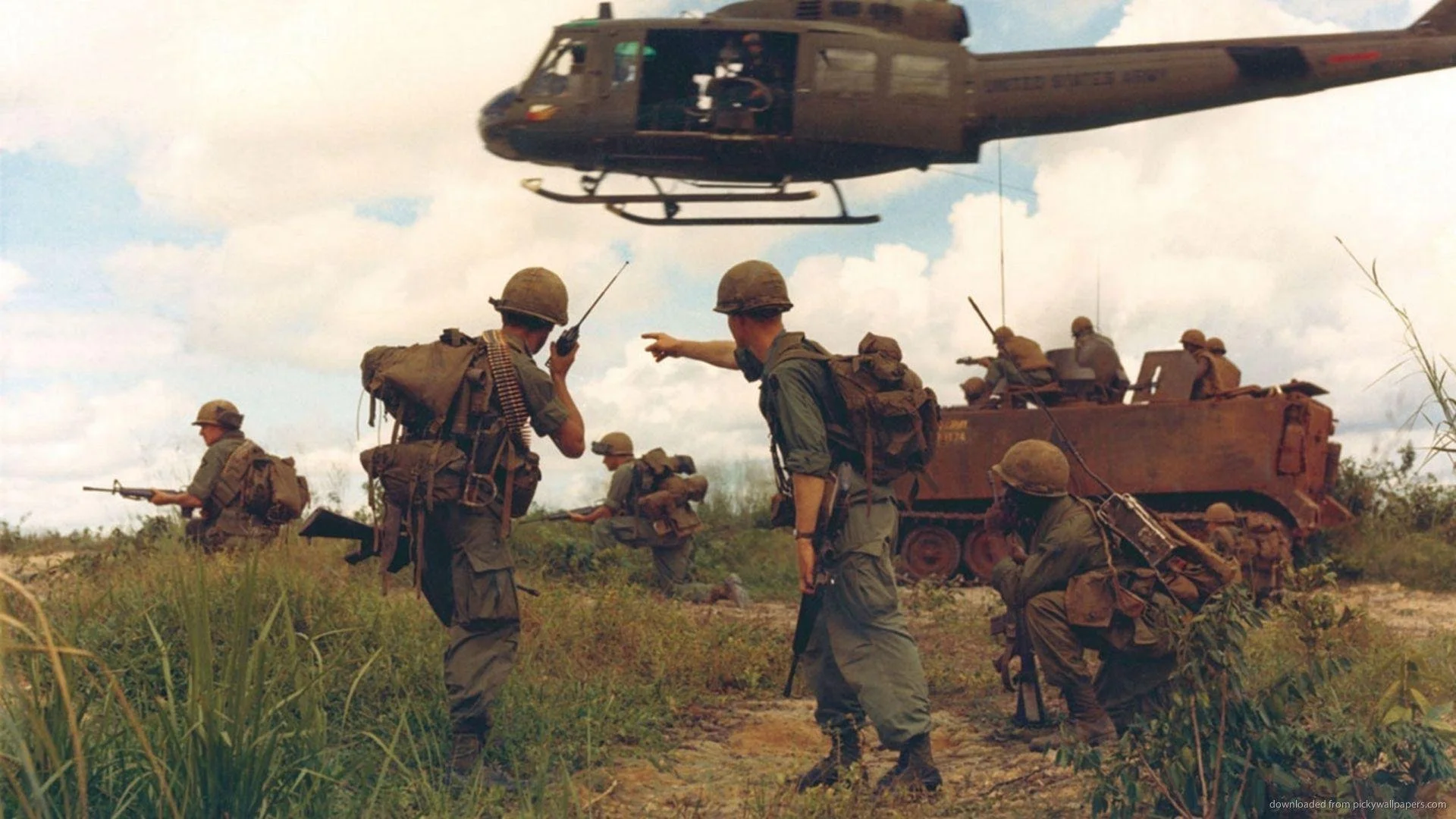
The onset of the Vietnam War intensified the growing sense of disillusionment. Unlike the civil rights struggle, the antiwar movement faced far more entrenched opposition. Though the U.S. had maintained a limited advisory presence in Vietnam during the 1950s, the conflict escalated sharply after the Gulf of Tonkin incident in 1964. President Johnson used this contested naval engagement to justify deploying combat troops. By 1965, hundreds of thousands of American soldiers were fighting in Southeast Asia against North Vietnamese and Viet Cong forces. Framed as part of the Cold War strategy to contain communism and the so-called “domino theory,” the war was widely presented by officials as a necessary defense of democracy. Yet many Americans—especially young people—saw it as imperialistic interference supporting a corrupt regime motivated by economic and geopolitical interests, instead of the democratic aims officials claimed. Many drew parallels between what they saw as foreign colonialism—America’s aggressive interference in the affairs of a so-called Third World country—and domestic colonialism, or the ongoing systemic oppression of Black Americans, Indigenous peoples, and other marginalized communities within the U.S. itself.
The draft made the war deeply personal for the younger generation and incredibly divisive. Unlike previous conflicts, young men were being conscripted directly from college campuses and working-class neighborhoods, with deferments often favoring the privileged. Those without exemptions—frequently minorities and the poor—bore the brunt of combat. Graphic news coverage, mounting casualties, and horrific incidents like the Tet Offensive and the My Lai Massacre fueled public outrage. Protests erupted on campuses nationwide, and massive demonstrations filled city streets. Despite growing opposition and rising death tolls, U.S. involvement dragged on until the early 1970s. The prolonged conflict intensified public frustration and alienation, contributing to violent clashes and riots, such as the tragic shootings at Kent State University in 1970.
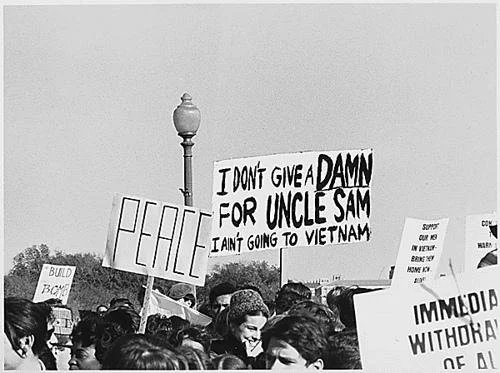
The ideal of peaceful protest frequently clashed with harsh realities. Nonviolent demonstrations sometimes devolved into chaos when confronted by aggressive police tactics or violent opposition. The assassinations of Martin Luther King Jr. and Robert F. Kennedy in 1968 dealt devastating blows to hopes for peaceful reform, while escalating government crackdowns on student movements bred further resentment. In response, some young people retreated from mainstream society—growing their hair long, adopting radical fashion, joining communes, or moving to urban centers like San Francisco to develop countercultural communities.
The counterculture was not a monolithic movement but a broad and often contradictory coalition of young people united more by a shared rejection of mainstream norms than by any single ideology. The movement, encompassing everything from political radicalism to spiritual exploration, resisted clear categorization even as it continued to grow in visibility and influence. Environmental concerns, inspired in part by Rachel Carson’s Silent Spring (1962), entered public consciousness. The women’s liberation movement challenged entrenched gender norms, pressing for equality in education, employment, and reproductive rights alongside the sexual revolution, with its rallying cry of “Freedom Now” came to encompass liberation from restrictive patriarchal and puritanical social codes.
Cultural values also shifted dramatically as traditional heroes gave way to antiheroes celebrated in music and film as flawed, rebellious figures embodying disillusionment and defiance, becoming central protagonists. Public intellectuals and countercultural leaders, such as Timothy Leary, urged youth to “turn on, tune in, and drop out,” encouraging psychedelic exploration and personal liberation over conventional social roles.
The folk revival of the early 1960s unfolded alongside the growing politicization and disillusionment of American youth during the escalation of the Vietnam War. For many young people, the conflict in Southeast Asia was not an isolated crisis but part of a broader pattern of American imperialism, and folk music became a natural soundtrack for both antiwar protest and the civil rights movement. Singing traditional ballads and original compositions, artists such as Bob Dylan, Joan Baez, and Judy Collins carried their music to sit-ins, marches, and teach-ins, often performing directly on the front lines of activism. Their songs lent moral force and emotional resonance to political struggle, providing a communal language for resistance and for imagining social change.
Yet even as folk resonated with the spirit of protest, its acoustic instrumentation began to feel limited in the face of rock’s rapid evolution. By the mid-1960s, the Beatles, the Rolling Stones, and the Beach Boys were expanding the sonic possibilities of popular music with electric experimentation and rhythmic drive. Bob Dylan’s controversial decision to “go electric” at the 1965 Newport Folk Festival exposed this tension, as he fused the lyrical gravity of folk with the sonic possibilities of rock. While his performance polarized audiences, it also catalyzed the rise of folk rock, a genre that preserved folk’s political consciousness while augmenting its expressive reach through the use of amplified instruments and new textures.
As the political climate grew more volatile, musicians like Dylan, the Byrds, Simon and Garfunkel, and the Mamas and the Papas crafted songs that captured both the anxiety and the hope of a generation caught between cultural revolution and political crisis. Drawing on the storytelling ethos of folk while embracing rock's experimental edge, they brought popular music deeper in to conversations about social issues, cultural criticism, and collective identity.
This chapter examines how folk rock emerged from these cultural and political tensions. It begins by tracing the traditional roots and revivalist impulses of folk music before the 1960s, then considers how political movements and musical innovation converged to create a new sound. Ultimately, the fusion of folk and rock gave popular music a greater role in public life, allowing artists to address the concerns of a generation living through profound social and political change.
Folk Music Before the 1960s -
Woody Guthrie, Pete Seeger
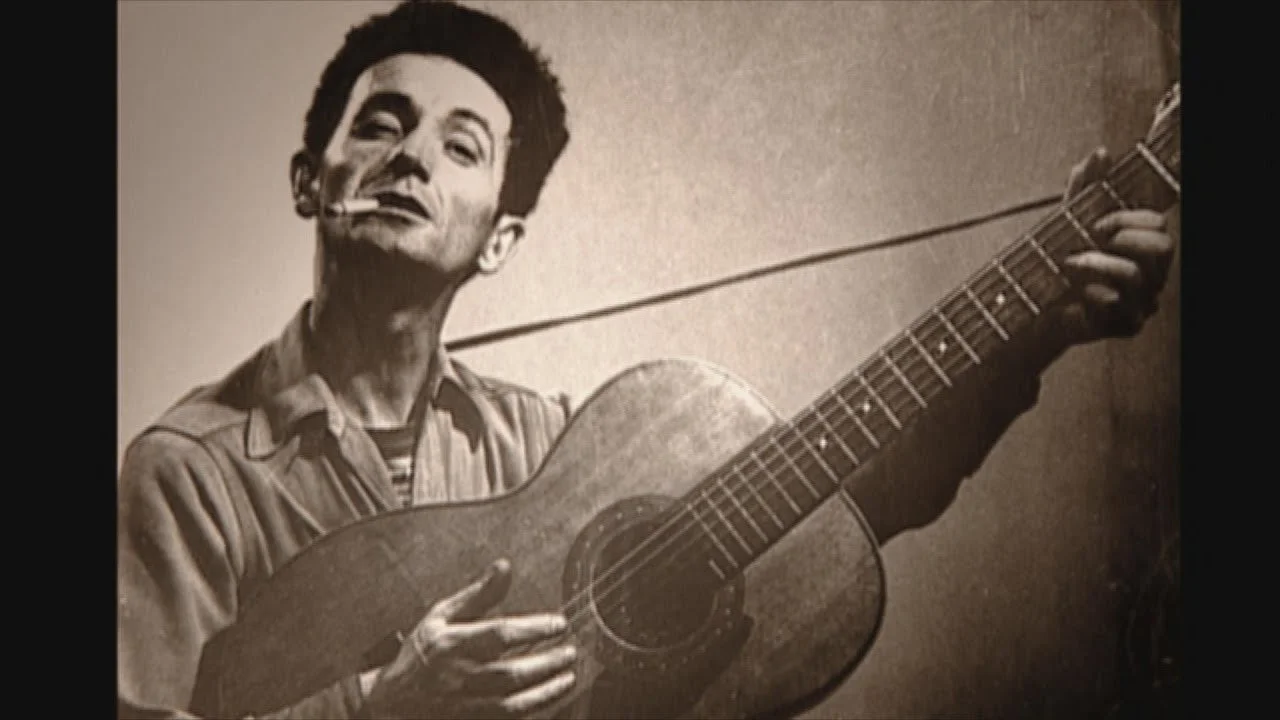
To understand the roots of the 1960s folk revival, it’s essential to examine the earlier music that revivalists sought to reclaim. Much of this revival looked back to the work of Woody Guthrie, a singer-songwriter who became a towering figure in American folk music during the 1930s and 1940s. Guthrie helped establish the idea of folk music as a vehicle for political resistance and working-class solidarity. Born in 1912 in Okemah, Oklahoma, Guthrie came from a middle-class family, but his early life unfolded amid family instability and economic insecurity. His father’s financial struggles and his mother’s progressive deterioration from Huntington’s disease led Guthrie to leave home as a teenager. He wandered through Texas and Louisiana, eventually traveling across the western United States during the Great Depression. Living a nomadic life as a “hobo,” Guthrie rode freight trains, hitchhiked, and immersed himself in the lives and music of people displaced by the Dust Bowl and economic collapse.
These experiences inspired Guthrie to write songs that captured the resilience and spirit of working-class Americans. Armed with his acoustic guitar and harmonica, he began performing in local groups, hosting radio shows in Los Angeles, and collaborating with like-minded musicians. Many of Guthrie’s early compositions, including “I Ain’t Got No Home in This World Anymore,”“Dust Bowl Blues,” and “So Long, It’s Been Good to Know You,” gave voice to those suffering from poverty, injustice, and displacement. Through these songs that critiqued the powerful and wealthy, Woody Guthrie gave voice to the growing populist movement of the 1930s, particularly during the Great Depression and the Dust Bowl.
Guthrie’s most famous composition, “This Land Is Your Land,” was written in February 1940 while he was living in New York City. At the time, Guthrie was growing increasingly frustrated with the saccharine patriotism of Irving Berlin’s “God Bless America,” which had become a popular anthem on the radio, primarily through singer Kate Smith’s widely broadcast rendition. To Guthrie, the song ignored the economic suffering and inequality facing many Americans in the wake of the Great Depression. In response, he penned what he originally titled “God Blessed America for Me,” intending it as both a parody and a people’s alternative.
Musically, the melody of “This Land Is Your Land” was borrowed from a Baptist gospel hymn called “Oh, My Loving Brother,” which had been adapted and popularized by the Carter Family in the 1930s as “When the World’s on Fire.” The song’s folk lineage denotes Guthrie’s belief in shared musical traditions as well as the larger reworking of existing forms within the folk idiom to meet the needs of the present.
Lyrically, the song starts with seemingly celebratory lines—“This land is your land, this land is my land”—but moves toward a more critical examination on American society in its lesser-known verses. Guthrie uses accessible, plainspoken language to voice his concerns about economic inequality, homelessness, and land ownership. In one of the most powerful stanzas, omitted from many schoolbook versions of the song, he writes:
There was a big high wall there that tried to stop me;
Sign was painted, it said private property;
But on the back side it didn’t say nothing;
That side was made for you and me.
This verse expresses Guthrie’s deep unease with the idea that land and wealth could be owned or hoarded by the few, while ordinary people were shut out. It captures his populist ethos and his conviction that everyone, not just the privileged, should share the country’s resources. Another verse, also often omitted, reads:
One bright sunny morning in the shadow of the steeple,
By the relief office I saw my people;
As they stood there hungry, I stood there wondering
If this land was made for you and me.
Here, Guthrie undercuts the patriotic chorus by drawing attention to the lines of unemployed Americans during the Great Depression, standing outside government aid offices. Guthrie’s juxtaposition of idealistic imagery with stark economic reality gives the song its critical edge. Rather than simply affirming America’s greatness, “This Land Is Your Land” questions whether the nation lives up to its own democratic ideals.
Over time, the song has been widely embraced, repurposed, and sanitized. The more radical verses are rarely included in official renditions or public performances, which tend to emphasize unity and national pride over protest. Yet for Guthrie, the song was never meant to be a feel-good anthem but was a challenge to the American conscience.
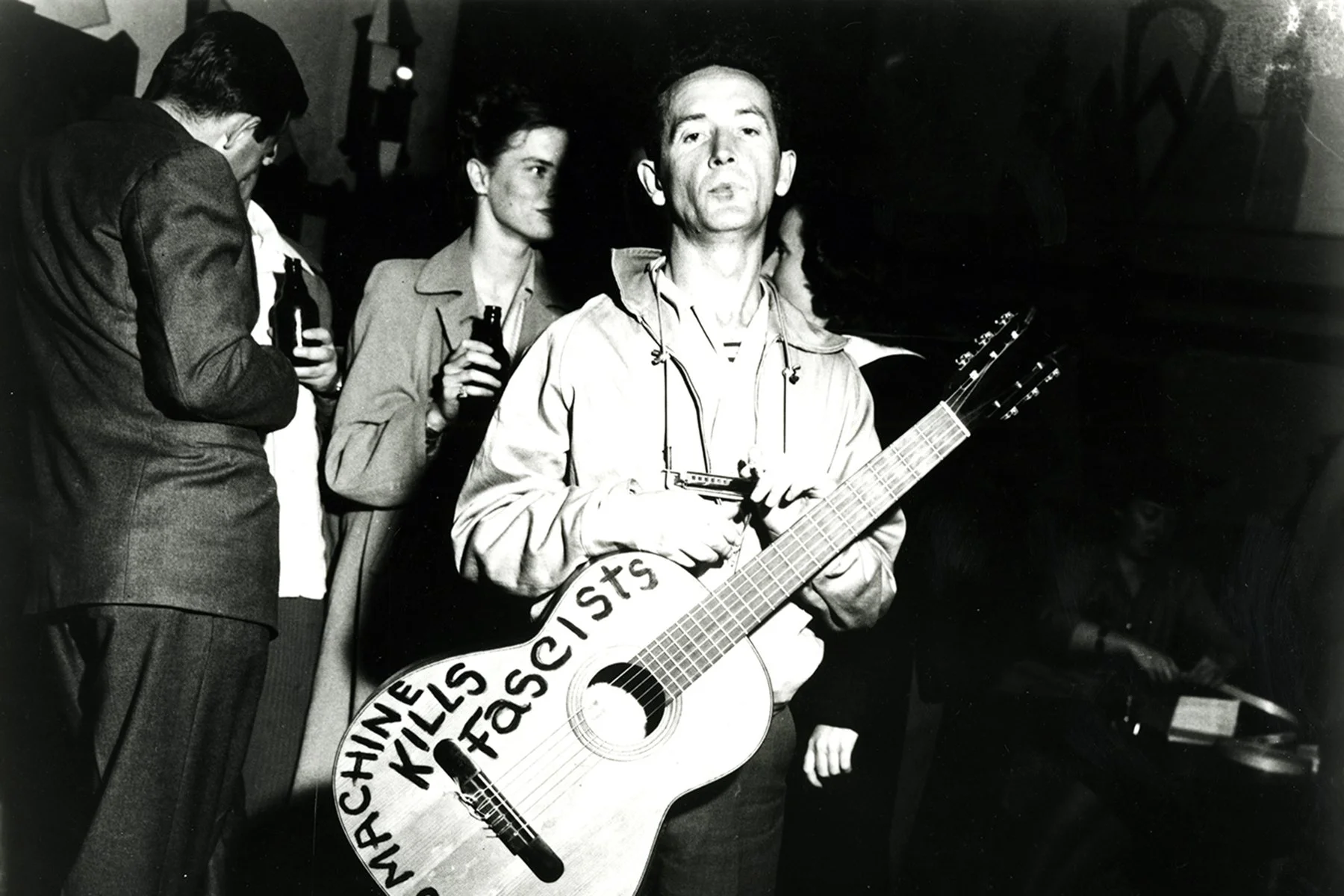
Guthrie treated patriotic song as a space for confronting inequality rather than affirming consensus. He believed that true patriotism demanded a willingness to confront injustice, and to not hide behind platitudes. Guthrie often aligned himself with left-wing politics, contributing columns to the Daily Worker (the newspaper of the Communist Party USA), performing at labor rallies, and supporting striking workers through both song and activism. During World War II, he famously affixed a sign to his guitar reading, “This machine kills fascists,” a declaration that music could be wielded as a tool of resistance. That same spirit animated songs like “Tear the Fascists Down,” in which Guthrie called for vigilance against authoritarianism, racism, and economic exploitation. Though aimed at Axis leaders, the song served as a broader condemnation of fascist ideologies wherever they appeared, including within the United States.
In 1940, Guthrie relocated to New York and quickly became a central figure in the city’s vibrant folk music scene. He collaborated with folklorist Alan Lomax, who recorded his songs and promoted his work through radio and albums like Dust Bowl Ballads. He also connected with fellow musicians such as Pete Seeger, Lead Belly, Burl Ives, Josh White, and Aunt Molly Jackson. With Seeger, he co-founded the Almanac Singers in 1941. The group frequently rewrote the lyrics of traditional songs to serve antiwar, pro-labor, and antifascist causes, setting a precedent for politically engaged folk music.
After the war, Guthrie’s performance schedule slowed, but his songwriting continued. He married modern dancer Marjorie Mazia and raised four children, including Arlo Guthrie, who would later become a noted folk musician himself. Guthrie became involved in People’s Songs, an activist musical organization founded by Pete Seeger, and supported Henry Wallace’s 1948 presidential campaign with the Progressive Party.
As political tides turned against the left in the postwar Red Scare, Guthrie’s brand of radical protest music fell out of favor. His health also began to decline as symptoms of Huntington’s disease—an inherited neurological disorder that had also afflicted his mother—worsened. By the early 1950s, Guthrie was increasingly dependent on friends and family, including activist Will Geer and the young musician Ramblin’ Jack Elliott, who became one of his most dedicated protégés and helped spread Guthrie’s music abroad. In 1956, Guthrie entered into the care of hospitals, where he would remain until he died in 1967.
Despite his declining visibility during the 1950s, Guthrie’s influence continued to grow. By the 1960s, his music and legacy had become central to the folk revival. Young performers like Bob Dylan not only admired Guthrie but modeled themselves after him, viewing him as a bridge between traditional American music and a progressive vision of political engagement. Guthrie’s belief that songs could serve as tools for social change preceded and informed later generations of left-wing folk organizing who would carry that torch forward into a new era of protest.
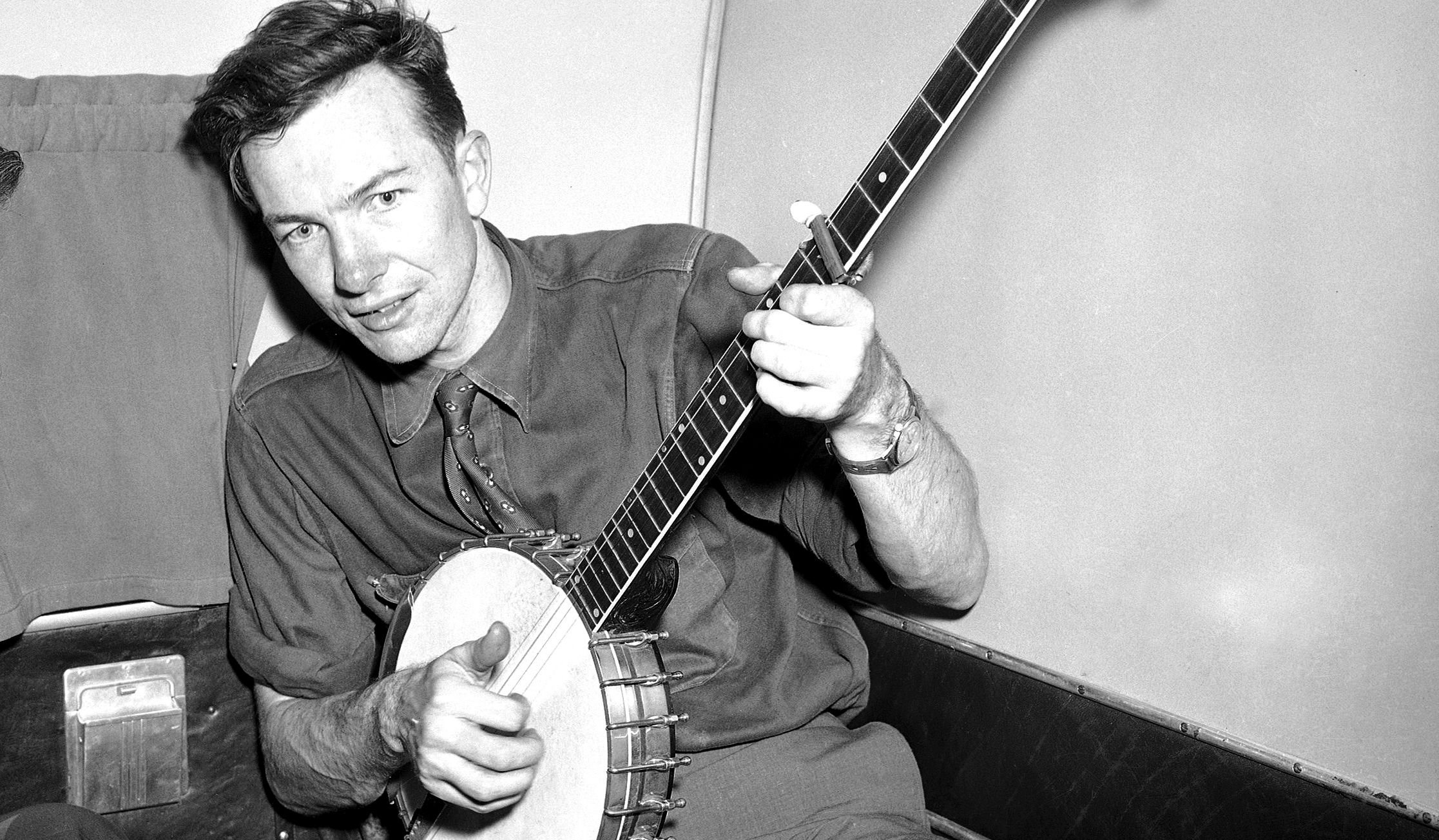
While Woody Guthrie laid the foundation for the left-wing folk movement, Pete Seeger brought it to national prominence. Born into a highly educated and musically gifted family—his father, Charles Seeger, was a musicologist, and his stepmother, Ruth Crawford Seeger, was a pioneering modernist composer—Seeger grew up immersed in American folk traditions and progressive politics. Seeger briefly attended Harvard but left in 1938 to pursue music and activism, soon finding work with folklorist Alan Lomax at the Library of Congress’s Archive of American Folk Song. There he met musicians such as Lead Belly and Guthrie, launching a lifelong dedication to using music as a tool for social change.
In 1940, Seeger co-founded the Almanac Singers with Guthrie and others, a group known for rewriting familiar tunes with lyrics supporting labor unions, antiwar efforts, and other progressive causes. In 1948, he helped form the Weavers. This more commercially oriented group nonetheless popularized folk songs like “Goodnight, Irene” (popularized initially by Leadbelly) and “So Long, It’s Been Good to Know Yuh.” Seeger deliberately used the folk instrument, the 5-string banjo. His performances contributed to renewed interest in the five-string banjo among college audiences during a time when interest in the instrument was low.
Despite their popularity and commercial success—including a number one hit with “Goodnight, Irene”—the Weavers were blacklisted during the height of the Red Scare. In 1955, Pete Seeger was subpoenaed to testify before the Joseph McCarthy-led House Un-American Activities Committee (HUAC), which was investigating alleged communist influence in American institutions, particularly the entertainment industry. Seeger, who had previously been associated with left-wing causes and the Communist Party in the 1940s, refused to answer questions about his political beliefs or name other individuals. Instead of invoking the Fifth Amendment, as many others had done, Seeger cited the First Amendment, arguing that Congress had no right to question his personal associations or beliefs. Seeger’s stance was seen as especially defiant and courageous, but it came at a high cost. He was cited for contempt of Congress and sentenced to a year in prison (though the conviction was eventually overturned in 1962). In the meantime, Seeger and the Weavers were blacklisted from radio and television appearances, and many concert venues refused to book them. The group disbanded in 1952 under increasing pressure, and Seeger’s solo career was forced underground for nearly a decade. During this time, he performed at venues far from the mainstream, such as schools, union halls, summer camps, and churches, which allowed him to continue spreading folk music and social messages at a grassroots level.
Despite—or perhaps because of—this censorship, Seeger became a symbol of artistic integrity and political resistance in the 1960s. He became a central figure in the American folk revival, inspiring countless musicians while continuing to support civil rights, environmental justice, and antiwar efforts. He played a significant role in founding the longstanding Newport Folk Festival and contributed regularly to the folk music journal Sing Out!, helping to keep protest music alive in print and performance.
As a songwriter, Seeger excelled at adapting poetry and political texts into folk anthems. He set verses from the Biblical book of Ecclesiastes to music in “Turn! Turn! Turn!,” helped popularize the Cuban poem “Guantanamera,” and collaborated with Lee Hays on classics like “If I Had a Hammer.” His original compositions, including “Waist Deep in the Big Muddy,”“Where Have All the Flowers Gone?,” and “Last Train to Nuremberg,” captured the anxieties of Cold War America and became staples of protest song repertoires. In 1963, his We Shall Overcome album, recorded live at Carnegie Hall, cemented his role as a voice of conscience for a turbulent generation. Unlike many of his contemporaries, Seeger deliberately avoided major record labels and resisted incorporating rock instrumentation, maintaining a purist style rooted in folk tradition.
Seeger played a key role in popularizing the spiritual “We Shall Overcome,” which became an anthem of the Civil Rights Movement. Though the song’s origins trace back to African American gospel and labor traditions—specifically Charles Tindley’s 1901 hymn “I’ll Overcome Someday”—it was adapted in the 1940s by striking tobacco workers in South Carolina and later revised by labor activist Zilphia Horton of the Highlander Folk School in Tennessee. Seeger first encountered the song through Horton and helped modify its lyrics and melody into the now-familiar version. His performances of “We Shall Overcome” at rallies, marches, and concerts helped the song gain national prominence as a unifying expression of resilience, hope, and peaceful resistance. The phrase “We Shall Overcome” became a rallying cry of the movement, and the song was sung at major events, including the 1963 March on Washington and the Selma-to-Montgomery marches in 1965. Seeger’s role in elevating the song demonstrated the power of folk music in social struggle but also affirmed his commitment to collective action and civil rights.
Until he died in 2014, Seeger remained an indefatigable activist, performing at rallies, writing songs, and advocating for causes from civil rights to environmental sustainability. His banjo famously bore the inscription: “This machine surrounds hate and forces it to surrender,” an echo of Guthrie’s antifascist slogan and a statement about music’s place in political action.
Bob Dylan
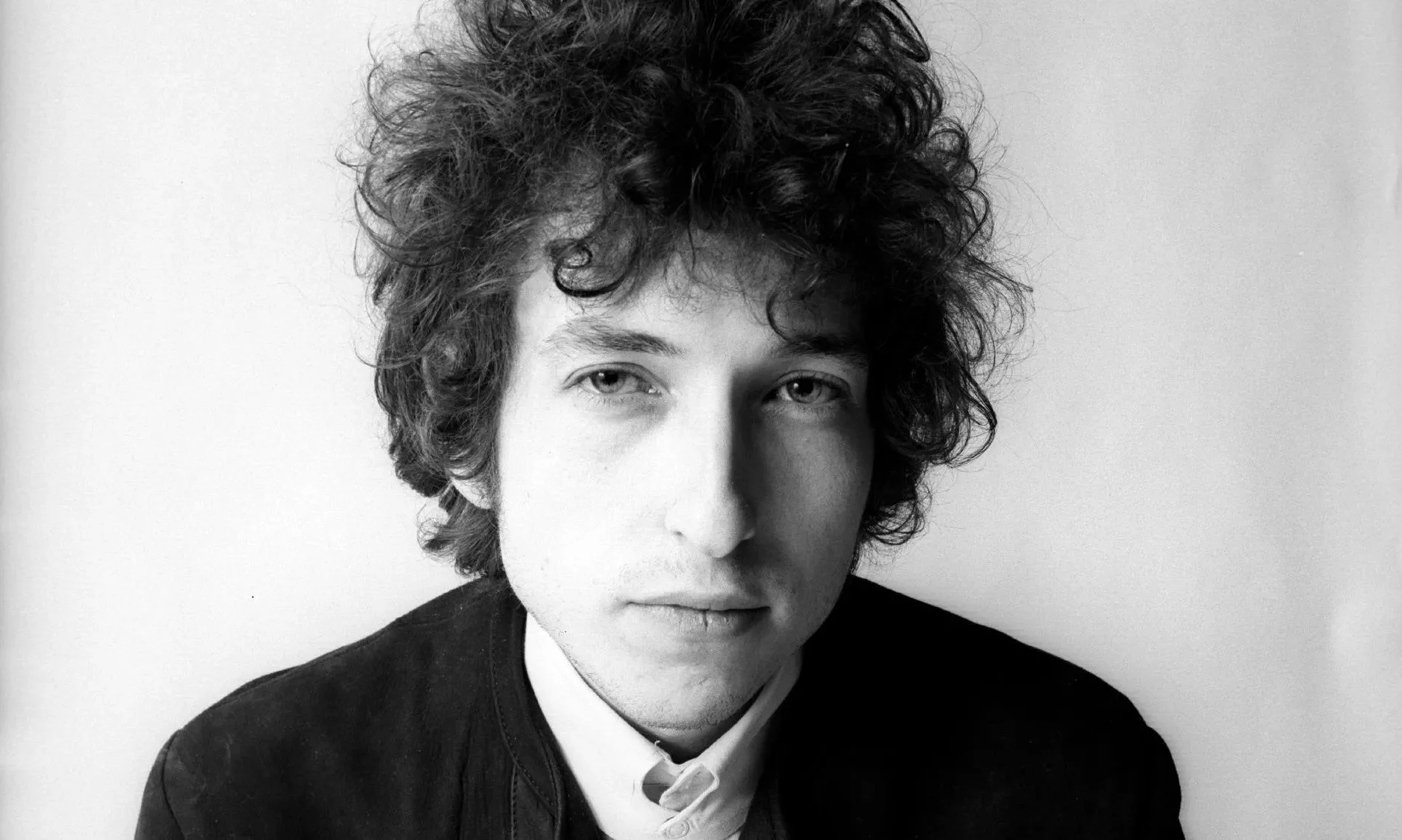
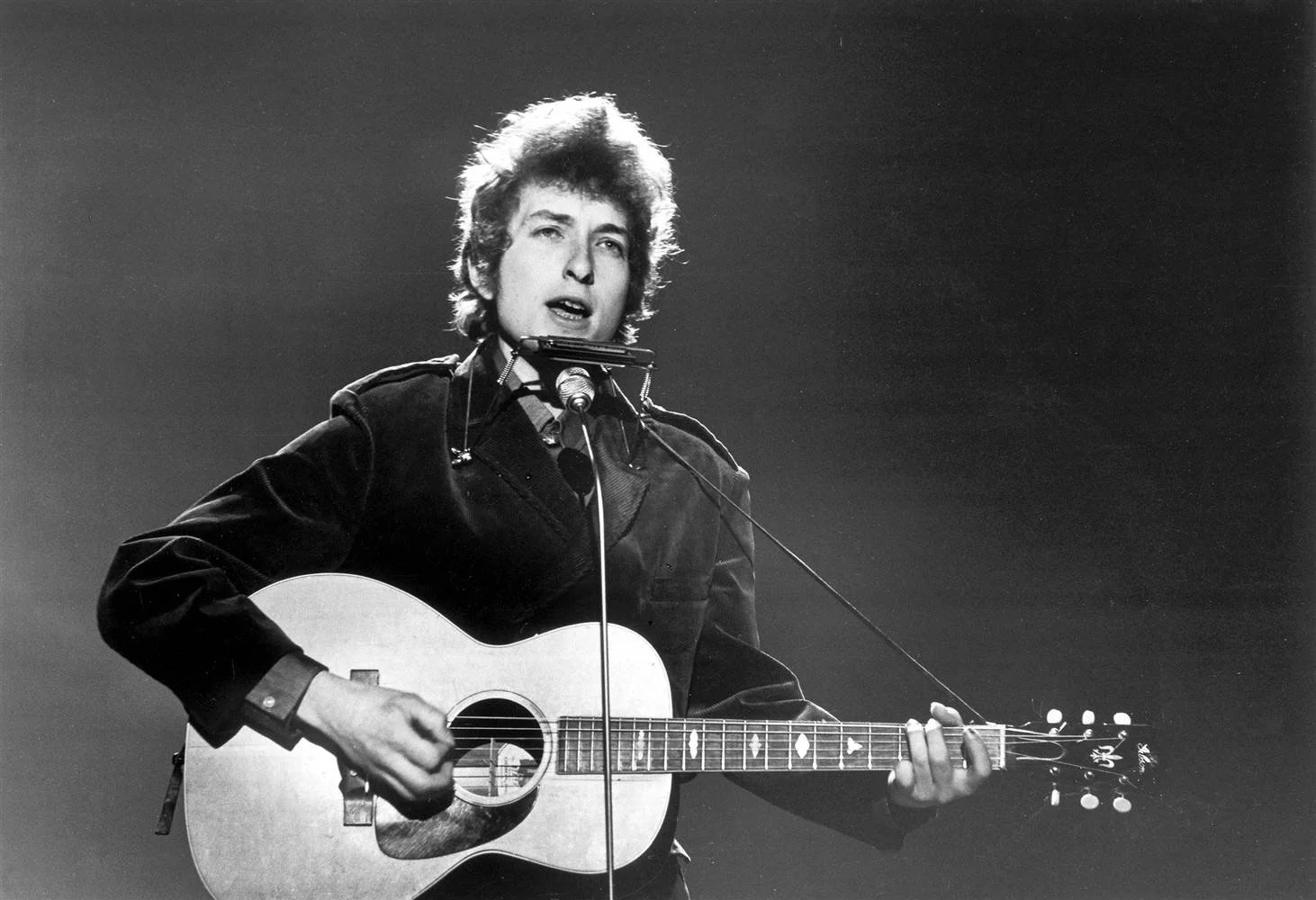
Bob Dylan, born Robert Zimmerman in 1941 in Duluth, Minnesota, is widely regarded as the most influential American singer-songwriter of the second half of the twentieth century. He grew up in Hibbing, a small mining town in northern Minnesota, and was the eldest of two sons in a Jewish family of immigrant descent. Dylan began teaching himself the guitar at the age of ten and later learned to play the piano and harmonica. During high school, he played in a local rock and roll band called the Golden Chords, though the band only played locally and never recorded or toured beyond northern Minnesota.
In 1959, Dylan enrolled at the University of Minnesota and moved to Minneapolis. While he spent little time engaged in formal academic study, he immersed himself in the city’s Dinkytown neighborhood, known for its vibrant student and bohemian culture. It was here that Dylan became involved in the local folk music scene and discovered the work of folk singer Woody Guthrie, whose socially conscious lyrics had a substantial impact on Dylan, who began to explore similar themes in his own writing. He adopted Guthrie’s plain vocal delivery and performance techniques, including the use of a harmonica rack. Around that time, he began performing under the name Bob Dylan in tribute to the Welsh poet Dylan Thomas. He legally changed his name in 1962. Dylan’s transition from rock and roll to politically engaged folk music marked the beginning of a career that would challenge musical conventions and make a significant contribution to the folk revival of the early 1960s.
In early 1961, Bob Dylan moved to New York City with the intention of visiting Woody Guthrie, who was then hospitalized with Huntington’s disease, and of immersing himself in the city’s folk music scene. He arrived in January and visited Guthrie the following day at Greystone Park Psychiatric Hospital in New Jersey. Shortly thereafter, Dylan became an active part of the Greenwich Village folk community, performing at venues such as Café Wha?, the Gaslight, and Gerde’s Folk City. In this period, he developed a crafted public persona by sharing embellished stories about his past and adopting a folksy accent, which contributed to his growing mystique within the folk community through word of mouth and press profiles.
That same year, Dylan gained recognition from key figures in the folk world. He performed regularly at the Folklore Center in New York, where he broadened his musical knowledge by listening to records and reading extensively. There, he met musicians including Dave Van Ronk, whose arrangement of “House of the Rising Sun” Dylan later recorded for his debut album. Dylan also connected with Pete Seeger, who influenced his early artistic development and became a close colleague. His performances combined traditional folk songs with his unique vocal style and finger-picked guitar and harmonica. While critics often described his voice as nasal or unrefined, it’s perceived imperfections conveyed the emotional weight of the lyrics in a way that resonated deeply with audiences. Dylan’s success helped establish the idea that expressive power and the portrayal of authenticity mattered more than technical vocal precision, setting a precedent for future singer-songwriters who did not fit conventional standards of vocal beauty.
Dylan’s first significant opportunity came in April 1961 when he opened for blues musician John Lee Hooker at Gerde’s Folk City. His performance attracted the attention of New York Times critic Robert Shelton, who praised Dylan’s talent and introduced him to manager Albert Grossman. Around the same time, Dylan played harmonica on Carolyn Hester’s recording sessions, where he met Columbia Records producer John Hammond. Impressed by Dylan, Hammond signed him to Columbia Records in October 1961.
Dylan recorded his first album, Bob Dylan, over two days in November 1961. Released in March 1962, the album primarily featured covers of traditional folk and blues songs, alongside two original compositions: “Talkin’ New York” and “Song to Woody.” “Talkin’ New York” is an autobiographical song in the talking blues style—part spoken, part sung—with simple chordal accompaniment, a form popularized by blues artist Lead Belly and Woody Guthrie. The song humorously recounts Dylan’s arrival in New York City after leaving the “Wild West.” “Song to Woody” pays tribute to Guthrie and other folk musicians such as Lead Belly and Cisco Houston. Although the album sold poorly, it marked the beginning of Dylan’s recording career and demonstrated his strong roots in the folk tradition, as well as his lyrical skill and characteristic wit.
Dylan’s reputation as a major songwriter and voice of his generation was firmly established with his subsequent two albums, The Freewheelin’ Bob Dylan (1963) and The Times They Are A-Changin’ (1964). Unlike his self-titled debut, The Freewheelin’ Bob Dylan consisted almost entirely of original compositions. Among them was “Blowin’ in the Wind,” a song that became a generational anthem by those within the civil rights organizing and campus folk circles. Structured around a series of rhetorical questions about peace, war, and civil rights, the song drew on biblical cadences and spiritual themes. By refusing to offer concrete answers, Dylan gave the song a universal quality, inviting listeners to draw their own conclusions rather than prescribing a specific course of action. The song gained widespread popularity when it was covered by Peter, Paul, and Mary, whose pristine three-part harmonies brought Dylan’s words to mainstream audiences and helped increase its circulation within the soundscape of the 1960s civil rights movement.
The song’s lyrical construction follows a pattern of three pointed questions followed by the refrain, “The answer is blowin’ in the wind.” The first verse opens with “How many roads must a man walk down,” a metaphor for experience, struggle, and self-discovery. The second question references the “white dove,” a traditional symbol of peace, and the third directly challenges the normalization of war. This escalating intensity continues throughout the song, with each verse probing the listener’s conscience. Dylan’s decision to end each stanza with the same enigmatic refrain emphasizes the elusive nature of truth and accountability. Rather than offering polemic or didacticism, he presents a moral inquiry and leaves interpretation to the audience, a hallmark of his early protest writing.
Musically, “Blowin’ in the Wind” uses melodic repetition and limited harmonic movement typical of folk repertory. Its melody, derived in part from the African American spiritual “No More Auction Block,” is repetitive and straightforward, and the sparse acoustic accompaniment creates space for the lyrics to take center stage. The unadorned musical style reinforces the democratic spirit of the song, inviting others to sing, perform, and reinterpret it.
Dylan’s songwriting also demonstrated a keen sense for metaphor and symbolic language, a quality that aligned him with the spontaneity and moral urgency of the Beat poets of the previous decade. Beat poetry, as practiced by writers like Allen Ginsberg, Jack Kerouac, and Gregory Corso, rejected academic formalism in favor of spontaneous, emotionally charged expression. It incorporated jazz rhythms, spiritual exploration, and social critique, often addressing themes of alienation, war, and consumer culture in experimental, non-linear ways. Dylan absorbed many of these influences, both in his lyrical style and his broader artistic outlook. Like the Beats, he treated his writing as a vehicle for personal revelation and political resistance.
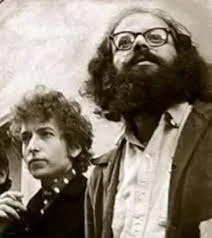
His lyrics increasingly moved away from topical specificity toward broader, more abstract themes, allowing listeners to interpret in varied ways. While early songs such as “Oxford Town” addressed real-world events— in this case, the integration of the University of Mississippi by James Meredith—Dylan came to believe that songs like “Blowin’ in the Wind” reached broader audiences by avoiding explicit references that might limit their resonance or date them. Even “A Hard Rain’s A-Gonna Fall,” often read as a warning of nuclear fallout in the wake of the Cuban Missile Crisis, was, in Dylan’s words, “just a hard rain.” The phrase served as a metaphor for the steady downpour of deception, violence, and injustice that permeated American life. “Masters of War” is a fierce indictment of the military-industrial complex, delivered with stark, almost biblical severity. Its descending chord progression and minor key melody heightens the gravity of its accusation. Rather than documenting specific events, Dylan constructed a poetic vision of a society in moral and spiritual crisis—a perspective rooted in the Beat aesthetic of symbolic protest and visionary critique. Though many interpreted Dylan’s songs from this period as protest anthems, Dylan himself resisted that label, insisting that his lyrics were more symbolic and open-ended. His refusal to be pinned down became a recurring feature of his songwriting practice, helping to ensure that his songs would remain relevant across changing historical contexts.
The Times They Are A-Changin’ further extended Dylan’s reach by deepening his engagement with themes of war, injustice, and racial violence. Released in early 1964, the album captures a moment of heightened political awareness in the United States, amid the civil rights movement, the Cold War, and growing generational tensions. “With God on Our Side” critiques the hypocrisy of American nationalism by tracing a history of war and conquest justified through religious rhetoric. Dylan delivers each verse with a calm, almost detached tone that augments the bitter irony of the lyrics. “The Lonesome Death of Hattie Carroll” recounts the real-life case of William Zantzinger, a wealthy white man who killed Black hotel worker Hattie Carroll with a cane and received a light sentence. Rather than preaching, Dylan lets the facts speak through a restrained and haunting ballad, using understatement to expose the racial injustice embedded in the legal system.
Perhaps the most notable song on the album was the title track, “The Times They Are A-Changin’,” which became an anthem for the burgeoning youth movement. Structured almost like a biblical warning, the song uses the language of prophecy to announce the arrival of a new social order. Its verses address senators, parents, and writers, urging them not to stand in the way of change. The message resonated with young listeners who felt alienated by conservative social norms and inspired by the possibility of a more just and open society. Though Dylan would soon distance himself from the “protest singer” label, The Times They Are A-Changin’ solidified his role as a leading voice in the cultural and political upheavals of the 1960s.
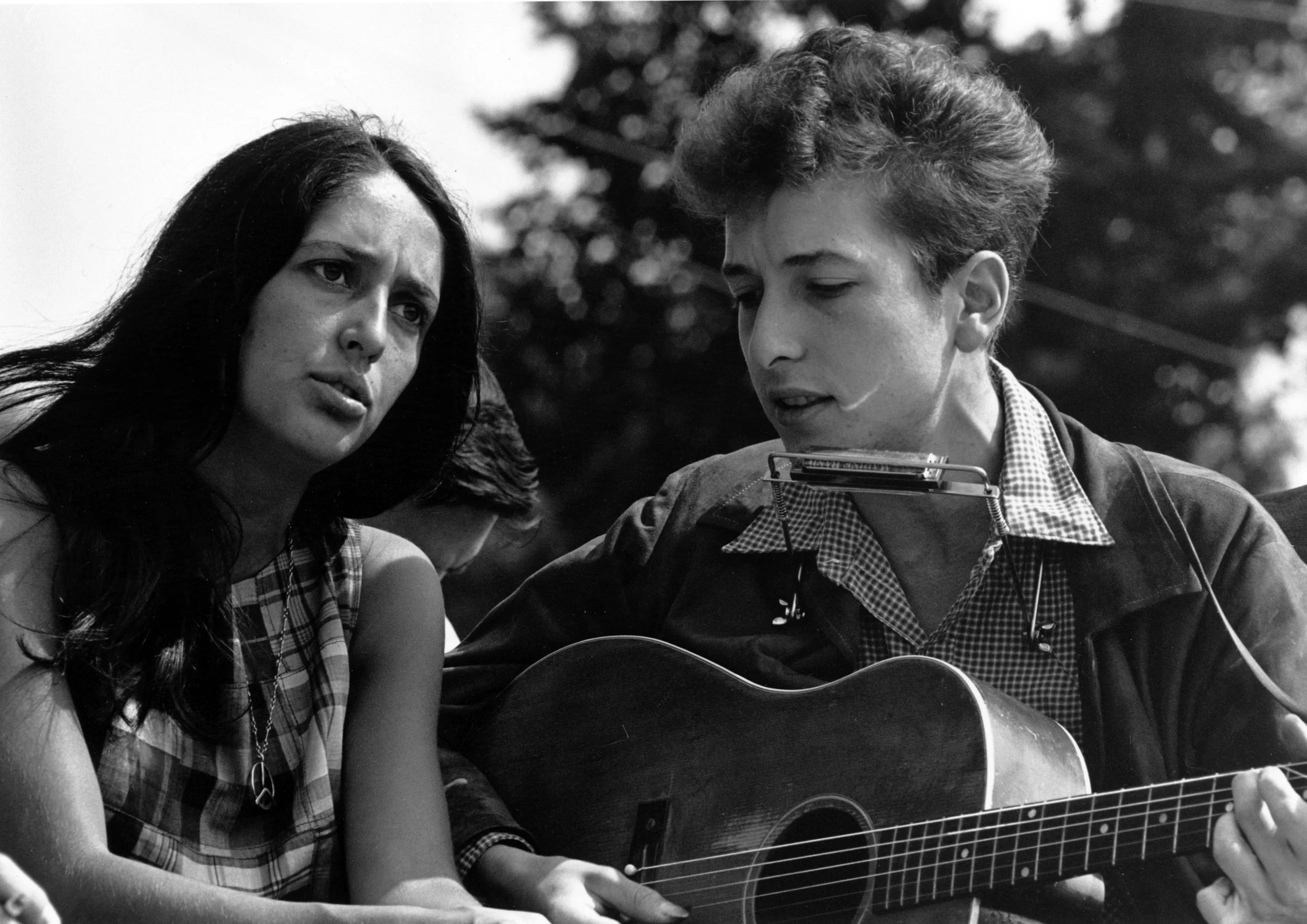
By the summer of 1963, Dylan had become a central figure in the American folk revival, magnified by his performance at the Newport Folk Festival that July. Introduced by Joan Baez—already a prominent voice in the movement—Dylan closed his set with “Blowin’ in the Wind,” a song that had become an anthem for civil rights. That same year, Peter, Paul, and Mary’s polished recording of the song brought it into the mainstream, reaching number two on the Billboard charts. Newport 1963 was not only a key platform for Dylan’s rise but also a broader convergence of musical activism and social change.
Joan Baez, who had released six successful albums with Vanguard Records by this point, was already a major figure in the folk scene. Though her early repertoire drew heavily from Anglo-American and Appalachian folk traditions, she began incorporating contemporary political songwriting into her performances. She and Dylan were both artistic collaborators and romantic partners for a brief but visible period, and Baez used her celebrity status to advocate for civil rights and protest against the Vietnam War as well as bring Dylan’s work to larger audiences.
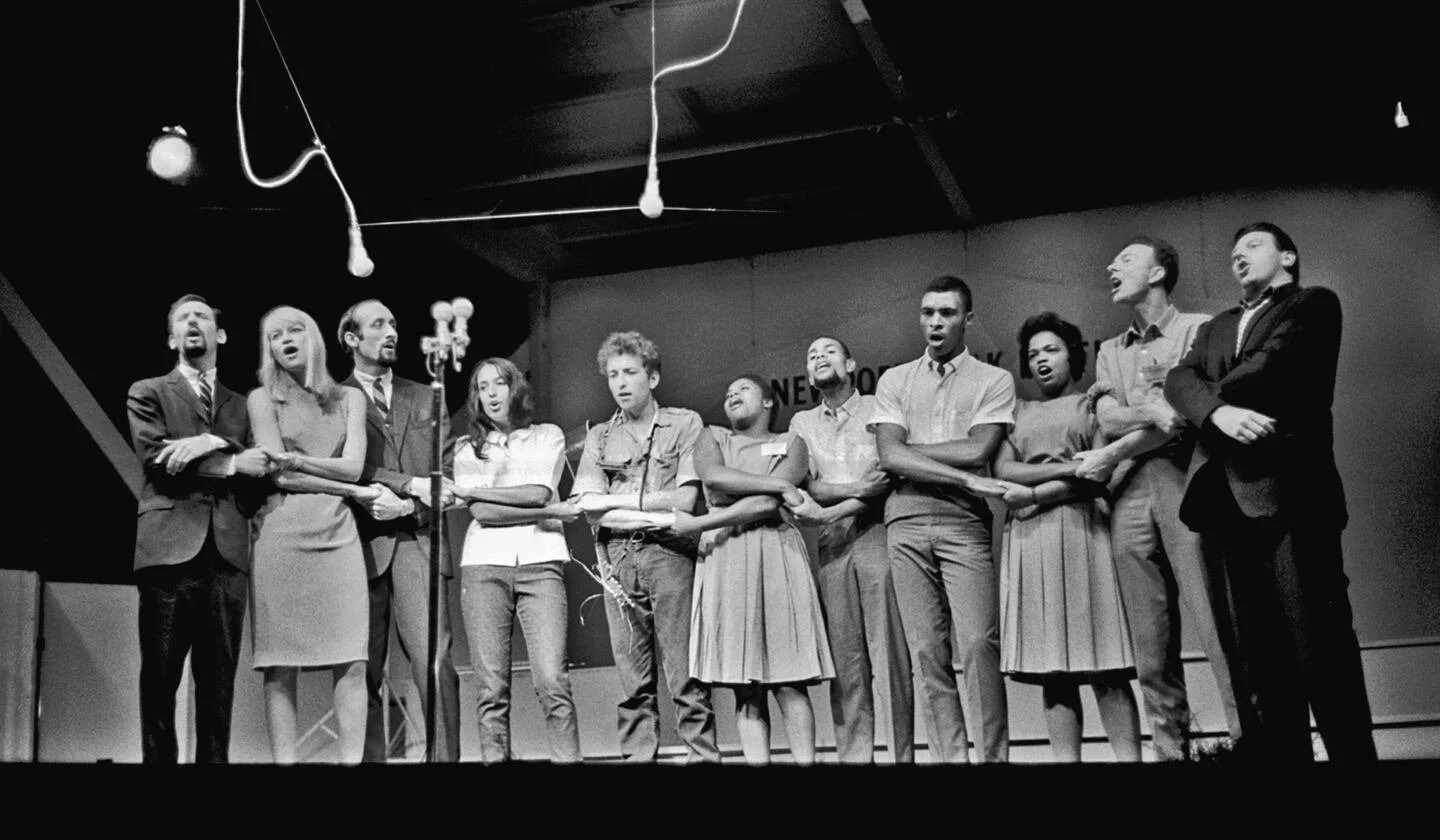
One of the most powerful moments of the 1963 festival occurred when Dylan, Baez, Pete Seeger, Peter, Paul, and Mary, along with other artists, joined together onstage to sing “We Shall Overcome.” Standing side by side in a single line, arms crossed and hands joined, they faced the audience in a striking display of unity. The performance carried particular weight given the turbulent events in the months leading up to the festival. The civil rights movement had recently endured a wave of violence and tragedy. That spring, the Birmingham Campaign drew national attention when police unleashed fire hoses and attack dogs on peaceful protesters, including children.
The brutal images, widely circulated in the media, shocked the public and laid bare the fierce resistance to desegregation. Just weeks before Newport, civil rights leader Medgar Evers was assassinated outside his home in Jackson, Mississippi, a grim reminder of the dangers activists faced throughout the South. These events were part of a broader pattern of white supremacist violence, including church bombings, Ku Klux Klan intimidation, and deadly attacks aimed at school integration and Black voter registration efforts. Within this fraught context, the communal singing of “We Shall Overcome” took on heightened emotional and political significance. The song transcended its role as a hopeful anthem, becoming a powerful declaration of resilience and solidarity amid escalating threats.
By mid-1964, Dylan’s influence was reaching new audiences and crossing musical boundaries. In August of that year, Dylan met the Beatles at the Delmonico Hotel in New York City during the band’s first major U.S. tour. Their encounter marked a moment of mutual inspiration that would influence the creative paths of both Dylan and the Beatles. Dylan introduced them to marijuana, which the Beatles later credited with enhancing their artistic horizons. More importantly, he encouraged them to move beyond conventional love songs and explore more introspective and socially conscious themes in their lyrics.
Dylan'sinfluence became especially apparent in John Lennon’s songwriting. Tracks like “You’ve Got to Hide Your Love Away” bear Dylan’s imprint through their stripped-down acoustic arrangement, world-weary tone, and plainspoken lyricism. Paul McCartney later commented that the song was “just John doing Dylan,” noting not only the stylistic shift in Lennon’s writing but also his adoption of a more nasal vocal delivery. As Dylan’s own work moved into more abstract, surreal, and symbolic territory, the Beatles followed, setting the stage for the increasingly experimental and concept-driven music of the latter half of the 1960s.
Though Dylan’s music became closely associated with political protest, he often resisted identification with any single cause. His fourth album, Another Side of Bob Dylan (1964), evokes this tension. Less overtly political, it showed continued refinement in his lyrical style, emphasizing introspection and emotional complexity. Songs like the earlier released “Don’t Think Twice, It’s All Right” combined irony and vulnerability rarely heard in popular music at the time. Dylan himself described the song as “not a love song but a statement that maybe you can say to make yourself feel better.”
Throughout his early career, Dylan distinguished himself both as a gifted lyricist and a compelling performer. He stood apart from contemporaries such as Joan Baez, Judy Collins, Tom Paxton, and Phil Ochs—not only because of his songwriting strength but also for his distinctive vocal style and phrasing. Drawing on folk, blues, and American vernacular traditions, Dylan combined poetic insight with emotional restraint in ways that broadened the singer-songwriter role and raised expectations for lyrical content in popular music.
Authenticity, Commerce, and Mediation:
Peter, Paul, and Mary
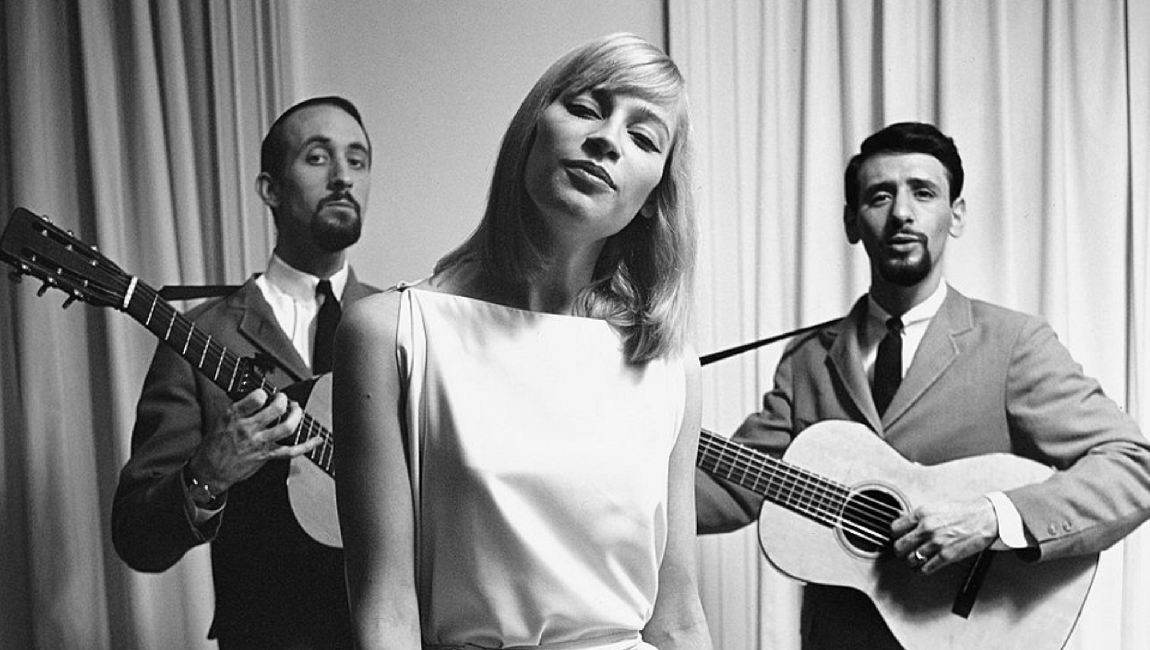
For many folk musicians in the 1950s and early 1960s, preserving a sense of “authenticity” was central to their musical identity and political ethos. Folk musicians frequently rejected mainstream pop, which they associated with artifice and consumerism. Instead of chasing radio-friendly hits or conforming to commercial trends, folk artists embraced a deliberately sparse aesthetic. They favored acoustic instruments and limited arrangements. Lyrics addressed labor struggles, civil rights campaigns, historical violence, and working-class experience. To practitioners, this outlook positioned folk music as a more serious, socially engaged alternative to the love songs and dance numbers that dominated popular charts. However, the line between authenticity and marketability was often blurred. Groups like the Kingston Trio—clean-cut and radio-friendly—helped bring folk music into the mainstream while facing criticism from purists who felt their commercial success diluted the genre’s radical roots.
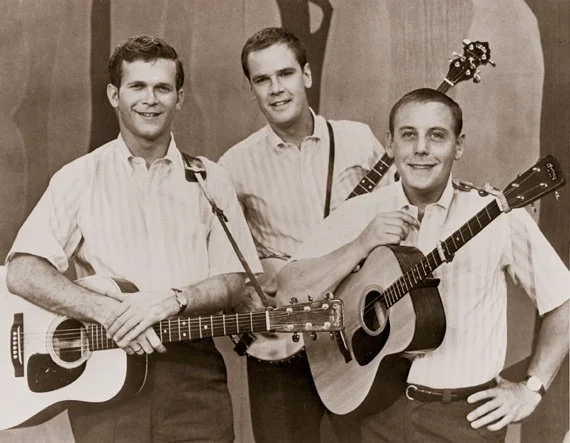
Formed in 1957 by Stanford students Dave Guard, Bob Shane, and Nick Reynolds, the Kingston Trio initially drew inspiration from the short-lived calypso craze popularized by Harry Belafonte, a singer and activist whose 1956 album Calypso became the first LP by a solo artist to sell over a million copies in the United States. Calypso, a Caribbean musical style characterized by syncopated rhythms and topical lyrics, briefly captured the American public’s interest in the mid-1950s. The Trio’s name—referencing Kingston, Jamaica—is a direct byproduct of this early influence. However, it was their 1958 recording of “Tom Dooley,” a mournful Appalachian ballad about love, betrayal, and execution, that propelled them to national fame with sustained radio airplay and record sales. With its spare arrangement of guitar, banjo, and upright bass, the song stood in stark contrast to the slick, upbeat sound of contemporary pop and early rock and roll. Its dark narrative and understated delivery lent the track a haunting emotional resonance that was rare on mainstream radio. “Tom Dooley” became a massive hit, helping to launch the commercial folk revival and demonstrating that traditional material could find a place in the popular music landscape.
With “Tom Dooley” reaching number one and winning a Grammy, the Kingston Trio demonstrated that folk material—especially when packaged with smooth harmonies and a clean-cut image—could have mass appeal. Dressed in Ivy League attire and projecting an air of collegiate charm, they stood in contrast to the rebellious, leather-clad figures of early rock ’n’ roll. Though some folk purists dismissed the Kingston Trio as overly sanitized or commercially motivated, the group’s influence on younger musicians was undeniable. While they never embraced the radical politics of later figures like Bob Dylan or Joan Baez, the Kingston Trio helped make folk music visible on a national scale. Their success in the album market, with a string of gold-certified LPs, also signaled a shift in how folk musicians could reach and sustain audiences. In many ways, they normalized the idea that “authentic” folk music could coexist with mainstream popularity: an idea that would continue to provoke debate as the genre evolved.
In general, folk musicians of the late 1950s and early 1960s distanced themselves from what they saw as the superficial themes of mainstream pop, such as romance, dancing, and commercial spectacle. As a subtle jab at this culture, the liner notes to Peter, Paul, and Mary’s debut album read: “No dancing, please!” Formed in 1961 by manager Albert Grossman, the trio consisting of Peter Yarrow, Paul Stookey, and Mary Travers offered a softer, more accessible take on the folk revival. Grossman carefully crafted their public image: Yarrow was the earnest leader, Stookey the comic spirit, and Travers a graceful and enigmatic presence. With their long hair, mustaches, and simple dress, they were a step removed from the clean-cut Ivy League look of earlier folk groups like the Kingston Trio, but still more polished and palatable than the radical protest singers who would soon occupy the movement’s harder edge.
Their first album, Peter, Paul and Mary (1962), topped the charts and resonated with the values of the burgeoning youth culture. The album included their breakthrough hit “If I Had a Hammer,” a Pete Seeger and Lee Hays protest song they would perform at the 1963 March on Washington. Their follow-up hit, “Puff, the Magic Dragon” (1963), carried a more wistful tone, meditating on the innocence of childhood, although it is sometimes misinterpreted as a drug song.
Later that same year, the trio helped propel Bob Dylan’s songwriting into the national spotlight with their cover of “Blowin’ in the Wind.” Their rendition of “Blowin’ in the Wind” became the definitive version for many listeners. Unlike Dylan’s rough-hewn original, Peter, Paul, and Mary’s version featured tight three-part harmonies and a polished acoustic arrangement. Mary’s solo line, “The answer is blowin’ in the wind,” stood out as a poignant, almost spiritual refrain supplementing the song’s declarative tone.
However, one of the persistent challenges facing the folk movement of the early 1960s was its limited reach among mainstream audiences. This wasn’t necessarily due to the lyrical content since many listeners resonated with the themes of justice, civil rights, and social critique. Instead, it was the musical language itself that proved difficult for mass appeal. At a time when rock and roll dominated the charts with its electrified instrumentation, strong backbeats, and catchy hooks, the more subdued, acoustic sound of traditional folk music felt out of step with popular tastes. Its simplicity—often consisting of just voice and acoustic guitar—could seem austere or even boring to audiences accustomed to the dynamic rhythms of Chuck Berry or the energetic harmonies of the Everly Brothers.
While folk music remained central to many protest movements and flourished within progressive and academic circles, it struggled to penetrate the commercial mainstream. That began to change with the rise of Bob Dylan, who is widely credited with fusing the poetic, socially conscious lyrics of folk with the sonic force and cultural immediacy of rock. His transition from acoustic troubadour to electric bandleader was controversial among folk purists, but it marked a true turning point in American popular music.
Dylan Goes Electric
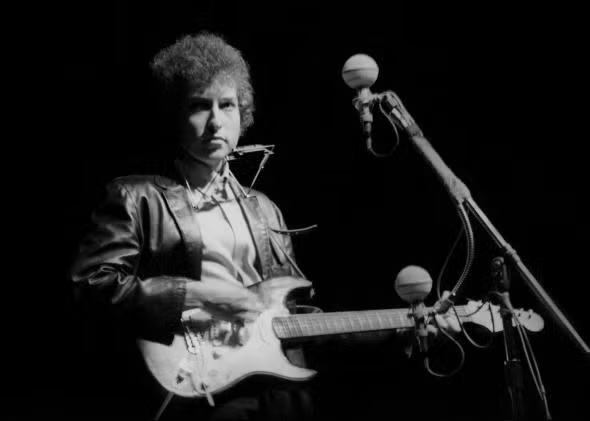
In 1965, Bob Dylan made a series of daring artistic choices. The first public signs of Dylan’s evolving sound had come earlier that year with the release of “Subterranean Homesick Blues.” Though it only reached number 39 on the charts, it was sonically jarring for longtime fans: electric guitar, drums, and a driving rock rhythm replaced the sparse acoustic arrangements of earlier recordings. The song was accompanied by an influential promotional film clip—often considered one of the first modern music videos—in which Dylan stood in an alleyway dropping cue cards with selected lyrics. Beat poet Allen Ginsberg can be seen in the background, symbolizing the link between the folk and Beat generations and implicitly validating Dylan’s role as a literary and cultural bridge. The single’s fusion of rapid-fire lyrics and rock instrumentation was an early prototype for the style that would soon be dubbed folk rock.
That March, he released Bringing It All Back Home, an album that deliberately split itself between two musical identities. The first side features Dylan backed by a full electric band. These tracks, featuring electric guitar, bass, and drums, infused his biting wordplay with the urgency and volume of rock and roll. The second side, by contrast, retained the sparse instrumentation of voice, harmonica, and acoustic guitar that had characterized his earlier protest songs, anchoring the album in the folk tradition that first brought him acclaim.
The lead single, “Like a Rolling Stone,” off his subsequent album, Highway 61 Revisited, was a watershed moment in American music. Clocking in at over six minutes—nearly three times the standard length of a radio single—it defied industry expectations and became the longest 45 RPM single released at that time. Despite its unconventional structure, the song rose to number two on the Billboard Hot 100, signaling a shift in what pop audiences were willing to accept from popular music. With Al Kooper’s improvisational organ lines and Mike Bloomfield’s jagged blues guitar, the track captured the raw energy of a band pushing the boundaries of rock. Dylan’s vocal delivery was urgent, sneering, and poetic, teetering between melody and speech, as he unloaded a scathing monologue on a woman who had fallen from privilege to isolation. Like many of Dylan’s compositions, the song posed a series of rhetorical questions, confronting the listener with biting irony.
The real explosion came that summer. On July 25, 1965, Bob Dylan took the stage at the Newport Folk Festival and delivered one of the most important performances in American popular music history. Backed by members of the Paul Butterfield Blues Band—one of the premier electric blues groups of the time—Dylan walked out with a Fender Stratocaster slung over his shoulder and launched into a short, electrified set that included “Maggie’s Farm,” the newly released “Like a Rolling Stone,” and “Phantom Engineer” (a work-in-progress that would soon evolve into “It Takes a Lot to Laugh, It Takes a Train to Cry”).
The response was chaotic. Accounts vary as some witnesses claim the audience booed him for betraying the folk tradition, while others adamantly argue against this account. Paul Butterfield Blues Band Organist Al Kooper, who played bass with Dylan that day, insisted the boos weren’t about the music but rather the poor sound quality. Still others claim that the crowd shouted “More!” rather than jeers. A famous and likely apocryphal story tells of Pete Seeger attempting to sever the power cables with an axe in protest, though again he claims he was acting due to the poor sound quality from the speakers. Whether or not these accounts are true, the symbolism stuck: Dylan had “gone electric,” and the folk world was in crisis.
Dylan was said to have “electrified one half of his audience, and electrocuted the other”. To many folk purists, Dylan’s shift represented a betrayal. He was accused of selling out, abandoning politically conscious acoustic folk for the commercial trappings of rock music. But others saw it as an artistic evolution. Rock fans embraced Dylan’s biting lyrics and gritty delivery, which offered a depth and seriousness rarely found in mainstream rock at the time. Regardless of opinion, one thing was clear: Dylan had crossed a threshold that could not be undone.
Despite the controversies, Dylan had not fully abandoned his folk roots. He continued to write songs about social issues, but his lyrics now carried layered meanings and multiple interpretations. Even his so-called “love songs” were often caustic and unromantic, offering wry, sometimes cynical observations on human behavior and relationships.
In 1966, Dylan released Blonde on Blonde, the first rock double album preceding The Beatles’ White Album by more than two years. It cemented his folk-rock hybrid sound. One standout track, “Rainy Day Women #12 & 35,” rose to number two on the charts. The song, with its refrain “Everybody must get stoned,” seemed like a cheeky response to his critics. On one level, it mocked the judgmental folk establishment that condemned him for “selling out.” On another, it played with the dual meanings of the phrase: to be persecuted (as in biblical stoning) or to escape criticism through drug use. Either way, Dylan seemed unmoved by backlash and fully committed to his new musical direction. Dylan’s move into the electric sonic territory of rock music pushed the boundaries of his own songwriting while also helping establish an entirely new genre: folk rock.
Folk Rock - The Byrds
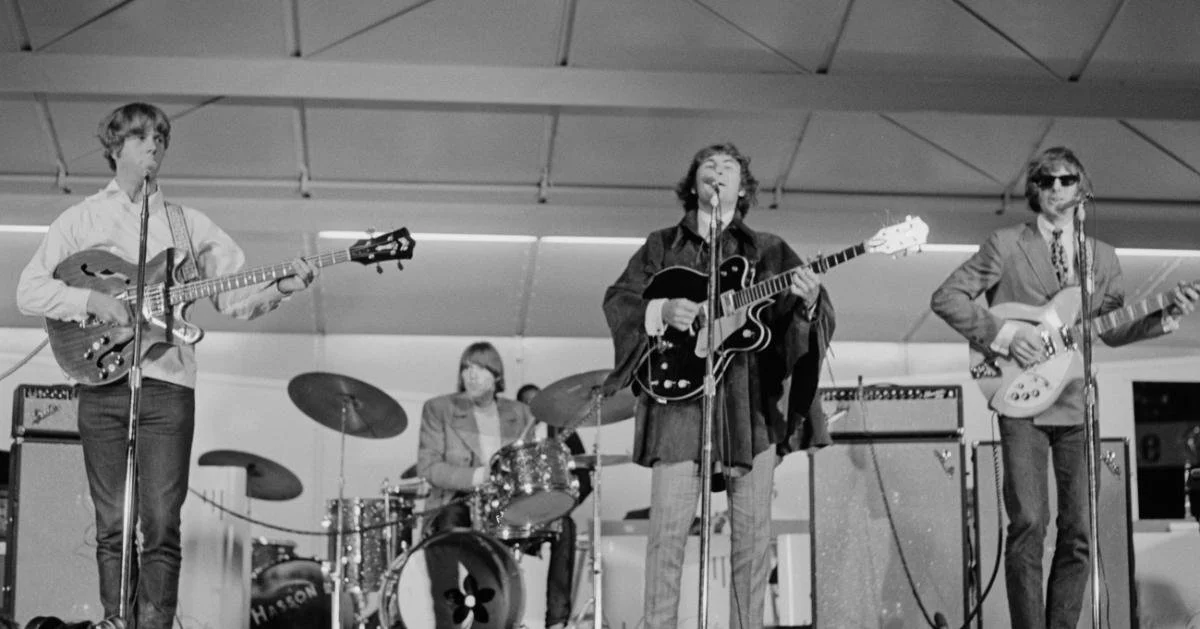
In 1965, a new California-based group called the Byrds rose to prominence by fusing the lyrical depth of folk music with the electric sound of rock. Formed in Los Angeles in 1964, the Byrds brought together musicians with roots in folk, bluegrass, and rock. Roger McGuinn, a former accompanist for folk singers like the Chad Mitchell Trio, teamed up with Gene Clark, who had been writing songs in the Dylan mold, and David Crosby, a notorious scenester and gifted harmony singer attentive to jazz-inflected chord progressions. Chris Hillman, originally a bluegrass mandolin player, took up the electric bass, and Michael Clarke rounded out the band on drums.
Their breakout hit was a radically reimagined version of Bob Dylan’s “Mr. Tambourine Man.” Whereas Dylan’s original featured just voice and acoustic guitar, with winding, poetic verses that stretched past five minutes, the Byrds’ version condensed the song to a tight, radio-friendly two-and-a-half minutes. It retained only the second verse but revamped the arrangement with electric instrumentation, layered vocal harmonies, and a steady backbeat. Released in April 1965, the single reached number one on the Billboard Hot 100 and is often credited as the song that launched folk-rock into the mainstream.
The Byrds’ combination of Dylan’s lyrics and melody with a musical accompaniment that included tambourine, crisp rock-styled drumming, and their trademark Rickenbacker twelve-string electric guitar created a distinctive and compelling sound. The twelve-string electric, played by Roger McGuinn, featured six pairs of strings, each pair tuned in octaves or unison, which gave it a uniquely resonant, shimmering tone. When amplified, the doubled strings produced a bright, bell-like chime that filled out the sonic space and created a rich, layered texture. This “jangle” became closely associated with the Byrds and later folk-rock recordings, and it influenced later rock bands from Tom Petty and the Heartbreakers to indie groups such as R.E.M.
Musically, their version of “Mr. Tambourine Man” combined the melodic clarity of pop with the poetic imagery of folk. The Byrds retained the melodic contours of Dylan’s original, but set them within a concise, structured verse-chorus format that was more palatable to radio audiences. Their tight vocal harmonies echoed the influence of the Beatles and the Beach Boys, while the instrumental groove drew from rock and roll’s rhythmic drive. The band recast the song from a contemplative, meandering folk piece into a concise pop-rock single built for radio circulation. By filtering Dylan’s introspective lyricism through the sonic palette of electrified rock production, the Byrds created a new hybrid style that resonated with both folk purists and mainstream listeners.
It is important to note that the Byrds’ version of “Mr. Tambourine Man” actually charted before Dylan performed his now-famous electric set at the Newport Folk Festival. The song had already appeared on Dylan’s Bringing It All Back Home, which was released on March 22, 1965. The Byrds released their cover just a few weeks later, on April 12. Dylan’s controversial electric performance at Newport came on July 25, 1965. The closeness of these events demonstrates how quickly folk rock was gaining popularity with American audiences and dispels any notion that the Byrds had somehow stolen Dylan’s thunder or vice versa. Instead, both artists responded to changing audience expectations around electric instrumentation and songwriting within folk and rock.
In addition to their sound, the Byrds’ image helped establish them as “America’s answer to the Beatles.” They wore matching suits and had mop-top haircuts, a clear visual nod to the Fab Four. But unlike other American bands that simply copied the Beatles’ style, the Byrds brought a uniquely American sensibility rooted in folk music and West Coast counterculture. Their fashion gradually shifted from tailored suits to fringed jackets, denim, and sunglasses, projecting a cool, bohemian image that resonated with the growing youth movements in California and beyond.
Their debut album, Mr. Tambourine Man (1965), featured four Dylan compositions, including “Chimes of Freedom,” which helped cement Dylan’s reputation as a songwriter even among audiences who hadn’t yet embraced his gravelly voice or acoustic aesthetic. Their second album, Turn! Turn! Turn!(1965), featured more original compositions along with the Pete Seeger–adapted title track with words from the book of Ecclesiastes, which also became a number one hit by December 1965.
Though their commercial success declined after 1966 and the band faced many lineup changes, the Byrds continued to push musical boundaries. With songs like “Eight Miles High,” they explored modal improvisation and Indian-influenced drone textures, becoming one of the earliest psychedelic rock acts (see Chapter 22). Later albums like Younger Than Yesterday (1967) and The Notorious Byrd Brothers (1968) showed their increasingly experimental techniques, incorporating jazz harmonies, country stylings, and innovative studio techniques.
We will return to the Byrds in later chapters as we explore both psychedelic rock and the development of country rock. Their ongoing evolution responded to changing trends in 1960s popular music and influenced later developments in psychedelic and country-rock repertories.
Simon and Garfunkel
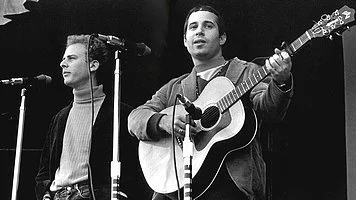
One of the most successful folk-rock duos of the 1960s, Simon & Garfunkel paired introspective acoustic songwriting with pop-oriented production within a single act. Paul Simon and Art Garfunkel had met in elementary school in Queens, New York, and began recording together as teenagers under the name Tom & Jerry. Their early material drew from Everly Brothers-style harmony pop, but by the mid-1960s, they retooled as a folk-based duo with deep lyrical sophistication and intricate vocal interplay.
Their breakthrough came in 1965 with “The Sound of Silence,” originally recorded as a purely acoustic track on their debut album, Wednesday Morning, 3 A.M. Without the duo’s knowledge, producer Tom Wilson overdubbed the song with electric guitar, bass, and drums—essentially turning it into a folk-rock track inspired by the Byrds’ success. The remix was released as a single and became a surprise hit, reaching No. 1 on the Billboard Hot 100 in January 1966. Simon & Garfunkel had unintentionally become part of the folk-rock movement, and from that point on, they embraced the hybrid style in full.
“The Sound of Silence” stood out for its haunting arpeggiated electric guitar and minor-key melody as well as for its bleak, introspective lyrics. Paul Simon’s words—“Hello darkness, my old friend”—capture a sense of alienation and spiritual disconnection that resonated with a generation disillusioned by political assassinations, Cold War paranoia, and a growing distrust in institutions. The song’s enigmatic imagery—“the words of the prophets are written on the subway walls”—blended poetic mysticism with a pointed critique of modern apathy. These themes of isolation and urban angst would reappear throughout the duo’s catalog, making them chroniclers of emotional and existential dislocation during a period of great cultural upheaval.
Their follow-up single, “I Am a Rock,” continued their introspective thread. A self-contained anthem of emotional withdrawal, the lyrics declare, “I am a rock, I am an island,” reinforcing Simon’s recurring themes of loneliness and self-preservation. Musically, the track embodies the seismic shift Bob Dylan initiated with “Like a Rolling Stone,” particularly through the use of the Hammond B3 organ. Simon & Garfunkel employed a similar technique in “I Am a Rock,” using the B3 to add a bright, almost defiant edge to the song’s otherwise somber tone. The organ’s warm, slightly distorted timbre offered a middle ground between the acoustic purity of folk and the electric assertiveness of rock. The Hammond B3 organ’s unmistakable sound is due in large part to its pairing with the Leslie speaker cabinet, an electro-mechanical device that creates a swirling, undulating tone. The Leslie is a rotating speaker system designed to manipulate sound through motion. The rotation gives the B3 organ its rich, immersive character—one that can shift from a gentle shimmer to a roaring, expressive whirl. Inside the cabinet, it contains a treble horn and a bass rotor, both of which physically spin at varying speeds. The Leslie can switch between a “chorale” (slow) and “tremolo” (fast) setting. As the organ’s sound projects through these moving components, the Doppler effect (the same phenomenon that causes a passing siren to change pitch) alters the frequency and amplitude of the sound waves, producing avibrato (wavering pitch) and tremolo (wavering volume) effect.
Simon and Garfunkel’s subsequent albums—Sounds of Silence (1966), Parsley, Sage, Rosemary and Thyme (1966), and Bookends (1968)—fused poetic lyricism, soft rock textures, and subtle orchestral arrangements. Their rendition of the traditional ballad “Scarborough Fair/Canticle” added a counterpoint melody drawn from Paul Simon’s earlier anti-war song “The Side of a Hill,” converting the centuries-old English folk tune into a haunting commentary on the Vietnam War. While the main vocal line evokes a medieval atmosphere with its refrain—“Are you going to Scarborough Fair? Parsley, sage, rosemary and thyme”—the counter-melody underneath paints a starkly modern picture of war’s brutality, with lines like “Generals order their soldiers to kill / and to fight for a cause they’ve long ago forgotten.” The juxtaposition of pastoral nostalgia and militaristic violence creates a poignant tension, reflecting the 1960s generation’s disillusionment with romanticized notions of honor and sacrifice. By weaving in layered harmonies and baroque-inspired instrumentation such as the harpsichord, the duo helped elevate folk music into a more refined, studio-crafted art form, pairing radio-friendly arrangements with literary lyric writing.
Simon & Garfunkel’s Bookends (1968) demonstrates a clear influence of Sgt. Pepper’s Lonely Hearts Club Band, both in form and concept. Like Sgt. Pepper, Bookends includes the complete lyrics on the album sleeve and presents a loosely connected narrative arc, especially on Side 1. The album explores a life journey from childhood to old age, where side one of the album marks successive stages in life, the theme serving as “bookends” to the cycle of life. The album begins with the brief instrumental, “Bookends Theme,” which returns at the end of the side, this time with lyrics, framing the album’s meditation on the passage of time and the stages of human life.
The early tracks follows this thematic structure: the first song, “Save the Life of My Child,” introduces a child standing precariously on the edge of a building, possibly contemplating suicide. “America” follows a young couple on a road trip across the country, searching not just for a place, but for purpose and meaning. “Overs” portrays a stagnant relationship, suggesting a married couple stuck in the routine of a life that has lost its spark.
One of the album’s most distinctive moments is “Voices of Old People,” a sound collage assembled by Garfunkel from real-life recordings he made while visiting nursing homes. The voices, filled with confusion, loneliness, and longing, offer a poignant, unfiltered portrait of the aging process. It is immediately followed by “Old Friends,” a quiet, contemplative song about two elderly men on a park bench, bound together by memory and routine. The lyrics—“Old friends, sat on their park bench like bookends” and “Can you imagine us years from today, sharing a park bench quietly? How terribly strange to be seventy,”—echoed with unsettling resonance for a generation that famously declared, “Don’t trust anyone over 30.” Musically, “Old Friends” builds into a lush orchestral crescendo, recalling the dramatic climax of “A Day in the Life” from Sgt. Pepper’s Lonely Hearts Club Band. Pepper and signaling Simon & Garfunkel’s growing ambition to fuse folk lyricism with broader sonic experimentation. Side 1 closes with the return of the “Bookends Theme,” bringing the listener full circle and reinforcing the album’s cyclical meditation on life, death, and memory. The image of “bookends” becomes a metaphor: childhood and old age mirror one another, with both marked by vulnerability and dependence.
As the decade progressed, Simon & Garfunkel’s music became closely tied to the New Hollywood movement in film. In the late 1960s and early 1970s, a new generation of directors such as Mike Nichols, Arthur Penn, and Dennis Hopper rejected traditional studio formulas in favor of edgier, more experimental storytelling. These films often articulate the disillusionment of the era, centering on antiheroes, countercultural themes, and a growing distrust of institutions. As part of this broader shift, directors increasingly turned to contemporary popular music instead of conventional orchestral scores, using folk and folk-rock songs to capture the mood of a restless generation.
Perhaps the most iconic example of this trend is Mike Nichols’ 1967 film The Graduate, which prominently features Simon & Garfunkel tracks such as “The Sound of Silence,” “Scarborough Fair,” and the newly written “Mrs. Robinson.” Rather than relying on a traditional score, Nichols used the duo’s introspective, melancholy songs to portray the emotional alienation of the film’s protagonist. The film’s critical and commercial success helped launch Simon & Garfunkel to superstardom and demonstrated that pop and folk-rock could serve as powerful narrative tools in cinematic storytelling.
The Graduate follows Benjamin Braddock (played by Dustin Hoffman), a recent college graduate adrift in the aimless drift of post-adolescent uncertainty. Caught between the expectations of his parents’ generation and his own sense of disaffection, Benjamin drifts into an affair with the older, married Mrs. Robinson (Anne Bancroft), whose seductive control masks her own disenchantment with suburban life. Their emotionally hollow relationship becomes a metaphor for Benjamin’s internal confusion and the emptiness of the adult world he’s been groomed to enter. When he falls for Mrs. Robinson’s daughter, Elaine, the narrative pivots from satire to emotional entanglement, which dramatized the tension between youthful longing and inherited dysfunction prevalent in the growing youth culture.
Simon & Garfunkel’s “The Sound of Silence” recurs throughout the film as a motif of emotional detachment and existential drift. In one of the film’s most iconic scenes, the song plays while Benjamin floats passively in a pool on an inflatable raft, surrounded by a world that feels sterile and unfulfilling. This scene effectively captures the ironic detachment and veiled moral critique at the heart of the story and the larger symbolism of the generational divide occurring in the 1960s. The song’s now-famous refrain—“And here’s to you, Mrs. Robinson / Jesus loves you more than you will know”—points to the hollow piety and performative moralism at the heart of postwar American suburbia.
The film’s final scene remains one of the most discussed endings in American cinema. After violently crashing Elaine’s wedding and running off with her, Benjamin and Elaine board a city bus and sit in the back, grinning breathlessly—until their smiles fade into uneasy silence. As “The Sound of Silence” returns, the camera lingers on their uncertain expressions, suggesting that their act of rebellion may offer no clear resolution. The ambiguity of the ending, accompanied by the haunting music, was a statement on the broader uncertainties of a generational anxiety of entering adulthood in a world without stable meaning or direction.
As noted in Chapter 10, bluegrass gained popularity during the folk revival because revivalists viewed it as “untainted” by commercialism. It was seen as raw, authentic, and rooted in a pre-industrial past. Arthur Penn’s Bonnie and Clyde (1967), a landmark of the movement, featured a bluegrass soundtrack by Flatt & Scruggs, including their now-iconic “Foggy Mountain Breakdown.” Bluegrass had appeared in popular media before, such as in the comedic television series The Beverly Hillbillies, where Flatt & Scruggs also provided the theme song. However, its presence in Bonnie and Clyde marked a notable shift. In this new context, bluegrass was no longer just a nostalgic or humorous reference to rural Americana. It became an emotionally charged symbol of rebellion and cultural resistance. By repurposing bluegrass in a violent, stylish, and morally ambiguous film, Penn and music supervisor Gene Parsons broadened the expressive possibilities of roots music in cinema, connecting it with the countercultural values and cinematic experimentation of New Hollywood.
Similarly, Dennis Hopper’s Easy Rider (1969) eschewed a traditional orchestral score in favor of a patchwork of contemporary folk, blues, and rock songs. This decision gave the film a raw immediacy and helped position it as a cinematic landmark of the counterculture. Tracks by The Byrds, Steppenwolf, and The Band served as active elements in the storytelling. The Byrds’ “Wasn’t Born to Follow,” playing over a montage of open-road motorcycle travel, conveyed themes of freedom, anti-conformity, and the search for spiritual meaning. As we will see in a later chapter, Steppenwolf’s featured song “Born to Be Wild” became an anthem for defiant independence, while The Band’s “The Weight” lent a sense of weary, existential gravity to the film’s cross-country journey. The collage-like use of music mirrored the fractured American landscape that the film depicted.
Simon & Garfunkel’s contributions to the New Hollywood cinematic moment were poignently emblematic. Tracks like “The Sound of Silence” and “Mrs. Robinson” gave voice to a generation suspended between the fading comforts of tradition and the uncertainties of modern life. Paired with director Mike Nichols’ visuals, the duo’s music guided the emotional tone of The Graduate, providing an internal monologue for a protagonist adrift in a world of superficiality and unfulfilled promise. Folk and folk-rock, in this context, operated as an expressive register for cultural uncertainty during the period.
The California Sound:
The Mamas & The Papas + Buffalo Springfield
Bob Dylan’s electrified performance at the 1965 Newport Folk Festival prompted rapid changes among folk musicians in the months that followed. Many musicians from the folk revival began combining folk lyric writing with rock instrumentation. The move toward electric folk rock appeared clearly on the pop charts: two rival versions of Dylan’s “All I Really Want to Do”—one by the Byrds and another by Sonny and Cher—competed for radio play, while Barry McGuire’s “Eve of Destruction” offered a Dylan-esque, gravelly vocal performance and an apocalyptic message similar in tone and rhetoric to Dylan’s recent protest writing.
Dylan’s influence encouraged many former folk musicians to plug in and alter their instrumentation and performance style. Following the Byrds’ model, a host of new folk-rock groups sprang up, most formed by artists who had come out of the early ’60s folk revival and were now embracing drums, electric guitars, and studio production. This shift gave rise to a distinct California folk-rock style, characterized by lush vocal harmonies, shimmering guitars, laid-back rhythms, and sophisticated studio arrangements. These recordings favored mood and introspection over explicit protest lyrics.
With its expansive entertainment infrastructure—spanning film, television, and music—Los Angeles offered unmatched access to top-tier recording studios, powerful record labels, and influential media networks needed for national success. During the 1960s and 1970s, the city’s countercultural energy began to merge with the reach of the entertainment industry, creating a climate where artistic experimentation coexisted with commercial imperatives. Unlike the raw, grassroots ethos of Greenwich Village or the psychedelic experimentation of San Francisco, L.A. nurtured a more polished and commercially viable version of countercultural expression made possible by the city’s unique blend of industry access and bohemian enclaves.
The Sunset Strip in West Hollywood functioned as a central performance corridor. Iconic venues like the Troubadour, the Whisky a Go Go, and the Roxy Theatre provided nightly stages for emerging acts, often attracting A&R representatives from major labels. Nearby, the hills of Laurel Canyon became a haven for artists seeking both creative inspiration and communal living. The close-knit canyon scene—home to figures like members of the Doors, singer-songwriter Joni Mitchell, and members of The Byrds and Buffalo Springfield—embodied a fusion of folk intimacy and Hollywood access.
At the same time, Los Angeles was also the epicenter of the country’s most polished and successful pop music. Producers such as Phil Spector, through the “Wall of Sound,” and Brian Wilson of the Beach Boys advanced studio-centered pop production. Major record labels such as Columbia, Capitol, and Elektra had offices and studios across the city, making it easy for artists to move from clubs to contracts. High-fidelity studios like Columbia’s Studio A, United Western Recorders, and Gold Star Studios allowed bands to experiment with layered harmonies, multitrack recording, and advanced production techniques that became synonymous with the L.A. sound. Los Angeles's recording and entertainment infrastructure enabled the seamless blending of acoustic and electric instrumentation, lending folk-rock its shimmering textures and radio-ready clarity.
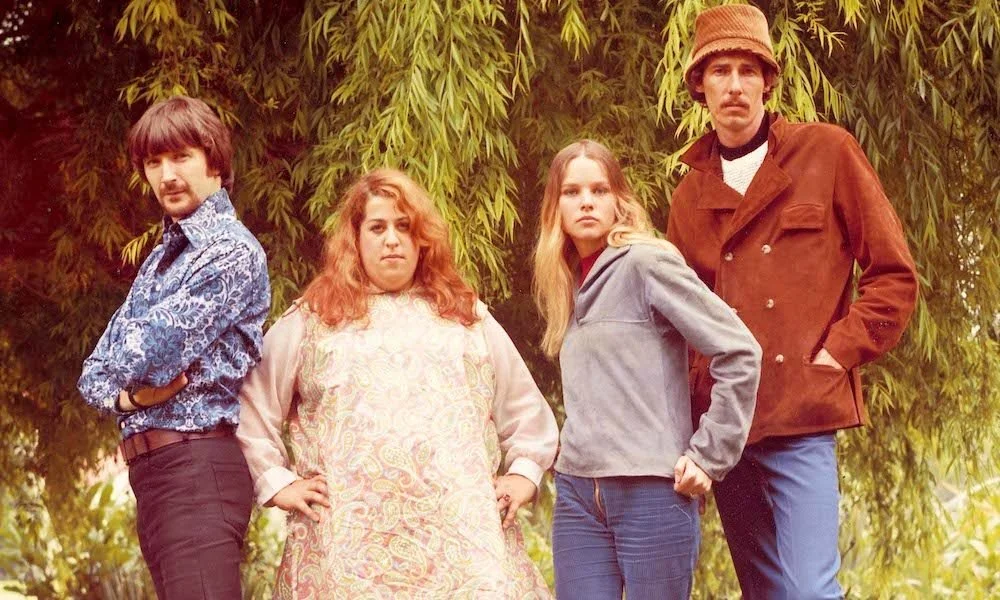
One of the most successful exponents of theCalifornia sound was the Mamas and the Papas. Though originally formed in New York in 1965, the group relocated to Los Angeles, where they contributed to a recognizable West Coast pop-folk style. The group brought together John Phillips and his wife, Michelle Phillips, alongside Denny Doherty and Cass Elliot. Cass Elliot was the last to join, and her inclusion came with some internal resistance. John Phillips initially doubted whether her contralto voice would suit his vocal arrangements, and he expressed concern—rooted in the industry’s biases at the time—that her appearance might hinder the group’s commercial prospects. Elliot, who struggled with insecurity about her weight throughout her life, nevertheless proved essential to the band’s sound and chemistry. Despite these early tensions, Michelle Phillips and Denny Doherty advocated for Elliot’s inclusion, ultimately overruling John. The group briefly considered calling themselves the Magic Cyrcle before adopting the name the Mamas & the Papas, reportedly inspired by the Hells Angels, whose female companions were known as “mamas.”
In the spring and summer of 1965, the group retreated to the Virgin Islands to rehearse and revise their arrangements and instrumentation. John Phillips, with deep roots in the folk tradition, was initially reluctant to embrace contemporary pop. However, Doherty and Elliot helped steer him toward a new direction, influenced by the Beatles and the folk-rock movement. These island rehearsals were the first time the group experimented with electric instruments.
After returning to New York, the group traveled to Los Angeles to audition for Lou Adler, co-founder of Dunhill Records. The opportunity came through Barry McGuire—of “Eve of Destruction” fame—who had befriended both Elliot and Phillips and had recently signed with Dunhill. The audition was successful, resulting in a deal for two albums a year over five years, with a 5% royalty on 90% of retail sales. As was common at the time, the contract also bundled the group’s management and publishing rights into a single “triple hat” deal. Elliot’s membership in the group became official only after this agreement was finalized.
Before releasing their own material, the Mamas & the Papas made their recording debut singing backup vocals on McGuire’s album This Precious Time. Their first single, “Go Where You Wanna Go,” saw a limited release in November 1965 but failed to chart. That song was quickly withdrawn and replaced with “California Dreamin’,” which reused the same B-side. Released in December 1965 and promoted with a full-page ad in Billboard, “California Dreamin’” reached the upper tiers of the Billboard chart and established the group as a national act.
Their debut album, If You Can Believe Your Eyes and Ears (1966), topped the Billboard chart and produced major hits like “California Dreamin’” and “Monday, Monday,” both of which captured a mood of wistful yearning and generational discontent. California Dreamin’” is anchored by a descending chord progression in a minor key, lending the song its brooding, melancholic tone. The arrangement features a prominent flute solo—an unusual choice for a pop single—that adds a haunting, almost ethereal texture. These tracks blended folk lyricism with radio-friendly arrangements, pairing introspective lyrics with arrangements suited to radio rotation. Later hits like “I Saw Her Again,”“Words of Love,”“Dedicated to the One I Love,” and “Creeque Alley” continued this trend, with “Creeque Alley” offering a witty, autobiographical look at the group’s rise from the Greenwich Village and Virgin Islands folk scenes to the heart of the L.A. music industry. As regulars on the Sunset Strip and residents of the burgeoning Laurel Canyon scene, the Mamas and the Papas were deeply embedded in the Los Angeles folk-rock community. Their sound, equal parts countercultural and commercial, grew from the unique relationship between artistic freedom and industry infrastructure that exemplified the city’s music scene in the mid-1960s.
The Mamas and the Papas’ look and image were also central to their appeal. Although they rarely engaged in overt protest songs, their fashion, consisting of flowing clothes, suede fringe, bohemian styling, paisley prints, and a soft hippie aesthetic, connected them visually to the counterculture and folk revival without alienating mainstream audiences. They represented a more commercialized, palatable version of the folk-rock movement, one that embraced harmony and polish over political confrontation. Cass Elliot, affectionately known as “Mama Cass,” became a particularly iconic figure not just for her powerful, warm contralto voice, but for her charisma, wit, and defiance of conventional beauty standards. She embodied the inclusive spirit of the counterculture and served as a social connector within the L.A. scene. Her Laurel Canyon home became a legendary gathering spot for musicians and artists, hosting informal salons that helped incubate the next wave of Southern California rock from Joni Mitchell and Crosby, Stills & Nash to members of the Monkees and the Doors.
However, by 1968, the Mamas and the Papas were unraveling. Internal tensions, romantic entanglements, and substance abuse issues led to their breakup. “Glad to Be Unhappy” would be their final Top 40 hit. Cass Elliot pursued a successful solo career and television appearances before her untimely death in 1974. John and Michelle Phillips divorced, and John battled drug addiction before later touring with his daughter, Mackenzie Phillips. The group was inducted into the Rock and Roll Hall of Fame in 1998, securing their place within mid-1960s folk-rock.
Though their music leaned more to pop than protest, the Mamas and the Papas contributed significantly to the commercial success of folk-rock. Their lush harmonies, soft-rock arrangements, and polished production were illustrative of the California sound—a blend of folk’s heart, pop’s accessibility, and rock’s studio sophistication. Alongside other bands such as the Byrds, Buffalo Springfield, and the Turtles, they helped bring folk-based songwriting into the mainstream and gave a distinctly West Coast flavor to the larger cultural revolution of the 1960s.
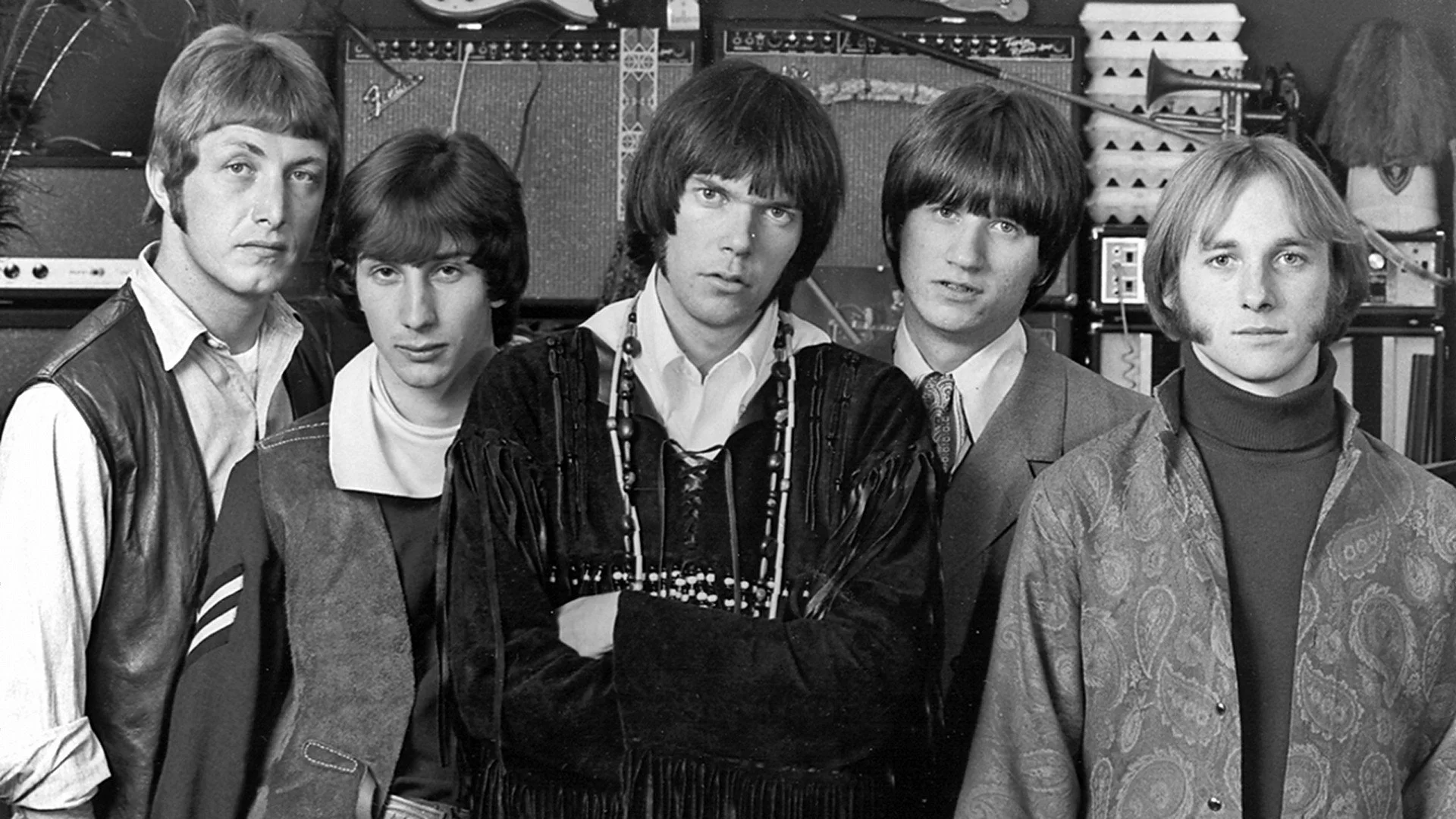
Formed in Los Angeles in 1966, Buffalo Springfield assembled a remarkable group of musicians: Stephen Stills, Neil Young, Richie Furay, Dewey Martin, Bruce Palmer, and later, Jim Messina. While their music contained many elements of folk-rock, their recordings draw on folk songwriting, rock rhythm sections, country harmony, and psychedelic studio effects. Their breakthrough single, “For What It’s Worth” (1967), is often mistaken for a Vietnam War protest anthem. In truth, Stephen Stills wrote the song in response to the “Sunset Strip riots” of late 1966—a series of tense clashes between young music fans, many of them countercultural youth and musicians, and the Los Angeles Police Department. The unrest was sparked by the enforcement of a 10 p.m. curfew and plans to demolish Pandora’s Box, a beloved nightclub at the corner of Sunset Boulevard and Crescent Heights that had become a hub for the city’s burgeoning rock scene.
Tensions between local youth and law enforcement had been mounting, as the police cracked down on long-haired teens and music lovers who flocked to the Strip. On the night of November 12, peaceful protests escalated into confrontations, resulting in over a hundred arrests and wide press coverage. The event came to symbolize the growing generational divide and backlash against youth culture. Witnessing these events firsthand, Stills captured the uneasy atmosphere in “For What It’s Worth,” pairing haunting guitar harmonics with lyrics that subtly evoke a sense of creeping authoritarianism and social uncertainty—“There’s something happening here / What it is ain’t exactly clear.”
Musically, the song is recognizable by Neil Young’s shimmering guitar harmonics, which give it an eerie, bell-like quality. Harmonics are produced by lightly touching the guitar strings at precise nodal points rather than pressing them fully, creating chime-like overtones that ring out distinctively. Coupled with the relaxed rhythm and call-and-response vocal lines, this technique helped the track stand apart from typical folk protest songs, placing the song among the earliest widely heard examples of West Coast folk-rock.
Their self-titled debut album included songs that ranged from acoustic folk to amplified rock arrangements. Primarily written by Stills and Young, it blended introspective folk with the energy and edge of rock. Tracks like “Sit Down, I Think I Love You” leaned toward folk rock, while “Go and Say Goodbye” foreshadowed the country rock style that Furay and others would develop alongside contemporaries such as the Byrds and Bob Dylan’s electric phase. By late 1967, their second album, Buffalo Springfield Again, introduced a harder, more experimental edge. Songs like “Mr. Soul” featured gritty, Rolling Stones-inspired guitar riffs; “Bluebird” combined soaring vocals with fiery guitar solos; and “Hung Upside Down” spotlighted the band’s instrumental prowess.
The ambitious and eclectic “Broken Arrow,” written and sung by Neil Young, departed from verse-chorus folk-rock through sectional form and studio collage. The track unfolds in three distinct sections, each in a different time signature, and is interspersed with layered sound effects and musical fragments that reinforce the song's surreal, introspective tone. It opens with a burst of applause—sampled from a Beatles concert—and the studio-recorded opening of “Mr. Soul,” the track that precedes it on the album Buffalo Springfield Again. These cues frame the album as self-referential studio work rather than live-style folk recording.
Each verse introduces a contrasting mood and sonic palette. The second section begins with the sound of an audience booing, followed by a calliope playing a distorted and dissonant rendition of “Take Me Out to the Ball Game,” evoking a carnival-like atmosphere tinged with irony. Later, a military-style snare drum rolls in gradually, growing in intensity, before yielding to a jazz combo improvisation featuring clarinet and piano, which weaves freely before fading into a recorded heartbeat that slowly disappears. The song’s instrumentation features organ, bass, drums, and acoustic guitar, but the textures are intentionally fragmented and disorienting.
Lyrically, “Broken Arrow” uses surreal imagery to explore the emotional toll of fame, adolescent alienation, and existential despair. Each verse ends with a haunting refrain invoking the figure of a solitary, symbolic Native American:
Did you see them, did you see them?
Did you see them in the river?
They were there to wave to you.
Could you tell that the empty-quivered
Brown-skinned Indian on the banks
That were crowded and narrow,
Held a broken arrow?
Young layers autobiographical introspection and social critique within this poetic frame, subtly referencing both his own disillusionment—a hallmark of the folk rock idiom, which often fused personal narrative with broader cultural commentary.
In hindsight, Buffalo Springfield’s lasting legacy may lie more in the influential groups its members spawned than in their own relatively brief discography. After the breakup, Richie Furay and Jim Messina co-founded Poco, pioneering the country rock sound that would later influence bands like the Eagles. Stephen Stills joined forces with David Crosby (formerly of the Byrds) and Graham Nash (formerly of the Hollies) to form Crosby, Stills & Nash—soon joined by Neil Young—creating one of the top supergroups of the era. Their intricate harmonies, socially conscious lyrics, and blend of acoustic and electric sounds heavily influenced 1970s soft-rock. Neil Young’s subsequent solo career combined introspective songwriting with fierce guitar work, cementing his status as a rock icon. Other members contributed to projects like the Souther-Hillman-Furay Band, further extending Buffalo Springfield’s influence. While their own time together was short, the band seeded a network of acts whose cultural and musical impact far outlasted the group itself.
Chapter 20: Conclusion
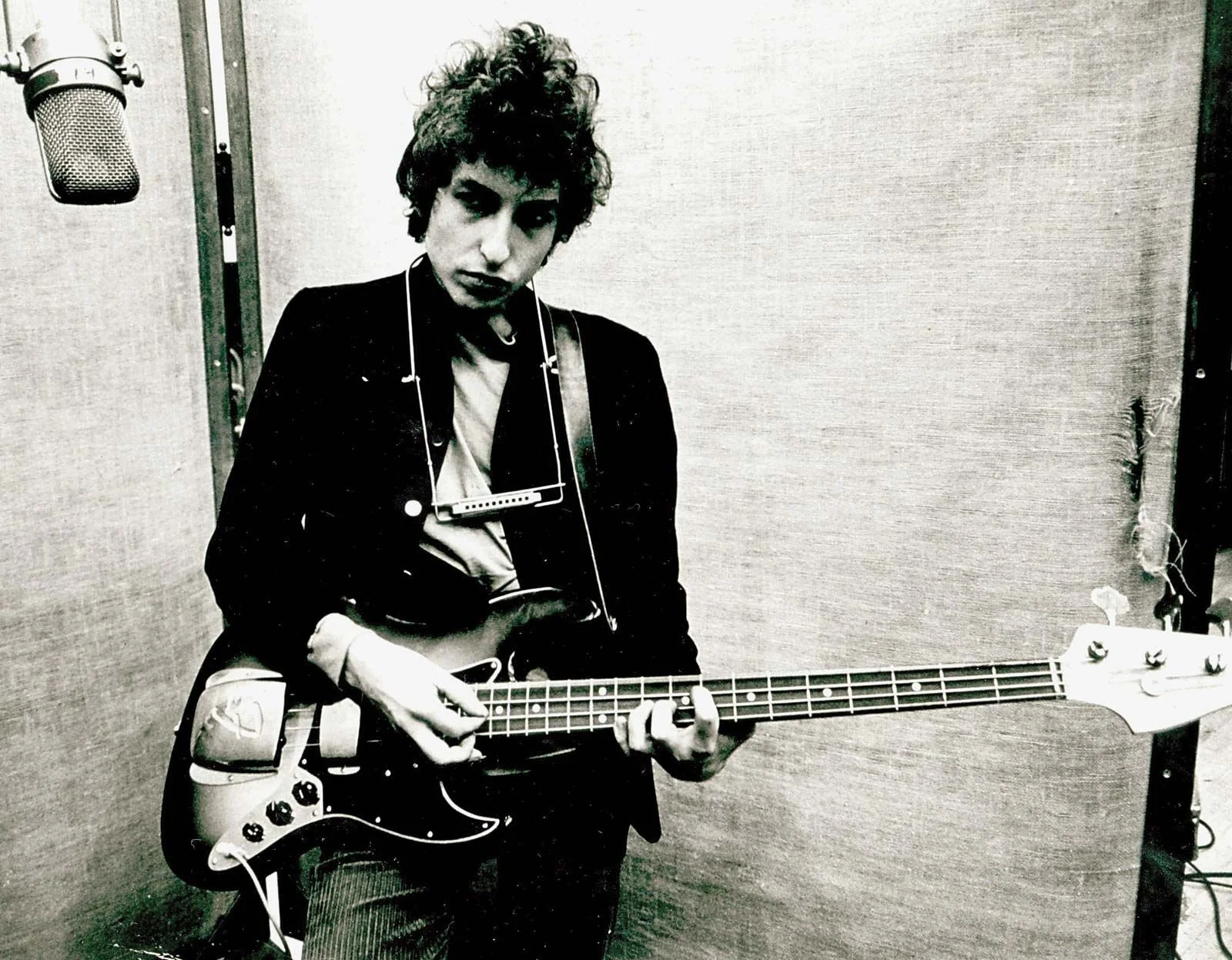
The American folk revival of the late 1950s and early 1960s was a vibrant movement that sought to reclaim and celebrate traditional folk music as a powerful vehicle for storytelling, social commentary, and cultural identity. Rooted in the songs of rural America, the revival brought attention to artists who performed acoustic music with an emphasis on lyrical depth and political engagement. This wave of folk music attracted a young, socially conscious audience eager to challenge the status quo and find authentic expression in a rapidly changing world.
Inspired by the music and politics of Woody Guthrie, Bob Dylan emerged as one of the most influential figures in this folk revival. His songwriting combined poetic nuance with sharp social critique, earning him a central place in the movement. Dylan's 1965 electric performance at the Newport Folk Festival signaled the arrival of folk rock and encouraged musicians to reconsider the relationship between folk traditions and electric rock. Yet Dylan’s impact extended beyond his embrace of electric instrumentation—he urged fellow musicians to move past superficial, commercial themes and instead pursue more profound, meaningful artistic expression.
By 1968, the initial surge of folk rock had begun to fade. Dylan was convalescing after his motorcycle accident and had retreated from the public eye. The Byrds were evolving toward country rock and experienced major personnel changes. The Mamas and the Papas were dissolving amid internal struggles, and Buffalo Springfield had distanced itself from folk rock before its own breakup. Simon and Garfunkel’s gentle harmonies lingered as a lasting presence. Although brief, lasting just two to three years, the folk rock boom successfully merged two seemingly opposing musical styles.
As the 1960s progressed, the musical landscape once again transformed. From these roots sprang several significant musical trends that would propel the rest of the decade into the next, notably the genre of psychedelic rock—an adventurous new genre that aggrandized the sonic and cultural horizons of popular music. The next chapter explores how psychedelic rock built upon folk rock’s foundations to reflect and amplify the era’s spirit of experimentation and social upheaval.
Chapter 20: Further Reading
Allen, Ray. Gone to the Country: The New Lost City Ramblers and the Folk Music Revival. Urbana: University of Illinois Press, 2010.
Baez, Joan. And a Voice to Sing With: A Memoir. New York: Penguin Books, 1987.
Bowden, Betsy. Performed Literature: Words and Music by Bob Dylan. 2nd ed. Lanham, MD: Scarecrow Press, 2001.
Cantwell, Robert. When We Were Good: The Folk Revival. Cambridge, MA: Harvard University Press, 1996.
Cohen, Ronald D. Rainbow Quest: The Folk Music and American Society, 1940–1970. Amherst: University of Massachusetts Press, 2002.
Cray, Ed. Ramblin’ Man: The Life and Times of Woody Guthrie. New York: W. W. Norton, 2004.
DeTurk, David A., and A. Poulin, eds. The American Folk Scene: Dimensions of the Folksong Revival. New York: Dell Publishing, 1967.
Dunaway, David King. How Can I Keep from Singing: Pete Seeger. New York: McGraw-Hill, 1981.
Einarson, John, and Richie Furay. There’s Something Happening Here: The Story of Buffalo Springfield—For What It’s Worth. Kingston, Canada: Quarry Press, 1997.
Filene, Benjamin. Romancing the Folk: Public Memory and American Roots Music. Chapel Hill: University of North Carolina Press, 2000.
Guthrie, Woody. Bound for Glory. New York: E. P. Dutton, 1943.
Harvey, Todd. The Formative Dylan: Transmission and Stylistic Influences, 1961–1963. Lanham, MD: Scarecrow Press, 2001.
Heylin, Clinton. Bob Dylan: A Life in Stolen Moments, Day by Day, 1941–1995. New York: Schirmer Books, 1996.
———. Bob Dylan: Behind the Shades Revisited. New York: William Morrow, 2001.
Humphries, Patrick. The Boy in the Bubble: A Biography. London: Bloomsbury, 1988.
Jackson, Bruce. “The Folksong Revival.” In Transforming Tradition: Folk Music Revivals Examined, 73–83. Urbana: University of Illinois Press, 1993.
Kaufman, Will. Woody Guthrie: American Radical. Urbana: University of Illinois Press, 2011.
Kingston, Victoria. Simon and Garfunkel: The Definitive Biography. London: Sidgwick & Jackson, 1996.
Klein, Joe. Woody Guthrie: A Life. New York: Alfred A. Knopf, 1999.
Laing, Dave, et al. The Electric Muse: The Story of Folk into Rock. London: Eyre Methuen, 1975.
Lyon, Peter. “The Ballad of Pete Seeger.” In The American Folk Scene: Dimensions of the Folksong Revival, edited by David A. De Turk and A. Poulin, 203–15. New York: Dell Publishing, 1967.
Marcus, Greil. Bob Dylan by Greil Marcus: Writings, 1968–2010. New York: PublicAffairs, 2010.
Marqusee, Mike. Chimes of Freedom: The Politics of Bob Dylan’s Art. New York: New Press, 2003.
Morella, Joe. Simon and Garfunkel: Old Friends. New York: Carol Publishing Group, 1991.
Muns, Monty. “Pete Seeger: An Appreciation.” Sing Out! 11, no. 1 (1961): 4–5.
Phillips, John, and Jim Jerome. Papa John: The Autobiography of John Phillips. Garden City, NY: Doubleday, 1986.
Phillips, Michelle. California Dreamin’: The True Story of the Mamas and the Papas. New York: Warner Books, 1986.
Reuss, Richard A. American Folklore and Left-Wing Politics. Urbana: University of Illinois Press, 1986.
Rodnitzky, Jerome L. Minstrels of the Dawn: The Folk-Protest Singer as a Cultural Hero. Chicago: Nelson-Hall, 1976.
Santelli, Robert, and Emily Davidson, eds. Hard Travelin’: The Life and Legacy of Woody Guthrie. Hanover, NH: University Press of New England, 1999.
Shelton, Robert. No Direction Home: The Life and Music of Bob Dylan. New York: Beech Tree Books, 1986.
Unterberger, Richie. Turn! Turn! Turn!: The ’60s Folk-Rock Revolution. San Francisco: Backbeat Books, 2002.
———. Eight Miles High: Folk-Rock’s Flight from Haight-Ashbury to Woodstock. San Francisco: Backbeat Books, 2003.