Chapter 5: The Blues

Chapter 5: Introduction

The blues constitute one of the most influential and enduring traditions within African American music. Formed by intense social, political, and economic oppression, the Blues developed as both an individual mode of reflection and a shared cultural practice. Blues lyrics described the challenges of the post-slavery life, capturing experiences of loss, labor, and hope under persistent injustice in the post-slavery South. In the aftermath of the Civil War, the ratification of the Thirteenth Amendment in 1865 formally abolished slavery, but it did not secure lasting freedom or equality. The brief period of Reconstruction (1865–1877) raised hopes for political participation and economic opportunity, yet these gains were quickly eroded by white supremacist resistance. The withdrawal of federal troops from the South in 1877 effectively ended Reconstruction and enabled the expansion of Jim Crow laws, a network of policies and customs that enforced racial segregation and systematically stripped Black citizens of political rights. It was within this environment of constrained freedom and institutionalized racism that the blues developed as a powerful musical response to lived experience.
In the late 19th and early 20th centuries, violence against African Americans intensified, with thousands of lynchings documented between the 1880s and the 1940s. At the same time, economic exploitation took the form of sharecropping, a system in which formerly enslaved people and their descendants farmed land owned by white landlords in exchange for a share of the crop. In practice, sharecropping kept Black families in a state of perpetual debt and dependence akin to a form of slavery. The Supreme Court's ruling in Plessy v. Ferguson (1896) upheld the constitutionality of "separate but equal" facilities, legally sanctioned segregation, and further institutionalized racial inequality.

In the early 20th century, the combined effects of racial violence, segregation, and economic exploitation helped spark one of the largest internal migrations in American history: the Great Migration. Between approximately 1916 and 1970, more than six million African Americans left the rural South and moved to cities in the North and West, seeking better economic opportunities while fleeing racial violence and segregation. As they relocated, they carried their music with them. The blues traveled with the Great Migration and evolved into new forms as it reached broader audiences. The Great Migration spread the blues beyond the South, influencing jazz, gospel, rhythm and blues, and rock and roll as musicians carried their music to northern and western cities.

The term "blues," commonly associated with feelings of sadness or melancholy, entered the common American vernacular in the late 19th century. One of the earliest recorded instances appears in the 1862 diary of Charlotte Forten, a young Black teacher working in South Carolina, who wrote, "Nearly everybody was looking gay and happy, and yet I came home with the blues." By the end of the century, the phrase "the blues" had become a common way to describe a heavy, melancholic emotional state, typically one that defied easy explanation.
The blues also evolved into distinct subgenres as geography, social context, and technological change introduced regional differences. This chapter will focus on two major strains: the rural blues, often associated with acoustic, solo performances rooted in the Mississippi Delta; and the urban blues, which emerged as African Americans migrated to northern cities and adapted the genre for new audiences and amplified settings.
Musically, the blues follows a recognizable structure. The 12-bar Blues form became one of the most influential frameworks in American music, serving as the foundation for countless songs across a plethora of genres. Early jazz styles, including Dixieland and swing, frequently adopted this same structure. In this chapter, we will explore the key formal elements of the blues, including its harmonic patterns, lyrical content, and vocal techniques.
Studying the blues offers insight into far more than its musical mechanics. It gives insight into the experienced realities of race, class, and gender in American history. It offers insight into the lived realities of race, class, and gender in American history while giving voice to people who found strength through expression, dignity amid struggle, and solidarity through shared musical experience.
12-Blues Musical Characteristics

Because the blues is the basis of most American music in the 20th century. It's a 12-bar form that's played by jazz, bluegrass and country musicians. It has a rhythmic vocabulary that's been used by rock n' roll. It's related to spirituals, and even the American fiddle tradition."
—Wynton Marsalis
The 12-bar blues is one of the most recognizable and influential forms in American music. Structurally, it is built around three lines of lyrics, typically in an AAB format, with each line corresponding to four bars of music, totaling twelve bars. The second line is a repetition of the first line, and the third line typically offers a twist or commentary. Lyrically, blues songs frequently deal with themes of personal hardship, love, loss, and resilience. Lyrics can be narrative or introspective and often employ coded wordplay, sexual innuendo, and double entendre to instill a sense of humor. Common subjects in the blues usually include sexual relationships, heartbreak, financial struggle, and social inequality. Despite the heaviness of these topics, blues lyrics are often witty, poetic, and humorous, defying listener expectations and musical norms.
Harmonically, the 12-bar blues follows a repeating chord progression based on the I, IV, and V chords of a given key:
A: I - I - I - I
A: IV - IV - I - I
B: V - IV - I - I
The simple 12-bar blues progression allows for endless variation and improvisation, and it underlies many blues, jazz, and rock songs.
Another defining musical feature of the blues is the use of blue notes. These are notes that are deliberately bent, smeared, or played slightly flat relative to standard pitch. These altered notes give the blues its expressive tone and emotional richness. Vocalists may achieve these pitch variations naturally through phrasing and inflection, and these blue notes are closely tied to the distinctive "blues scale," a variation of the pentatonic scale. The pentatonic scale, commonly found in folk traditions all around the world, is a five-note scale that omits certain tones from the more familiar seven-note major or minor scales, creating a more open and flexible melodic framework. The blues scale modifies the minor pentatonic scale by adding an extra note, known as the "blue note" (usually a lowered fifth, also referred to as a flat five or diminished fifth). The blues scale creates a sense of tension and release, giving blues melodies their distinct sound and emotional intensity.
To express blue notes, guitarists frequently use a technique called string bending, in which the player pushes or pulls the string across the fretboard to raise the pitch slightly. String bending allows for fluid, vocal-like inflections that blur the line between one pitch and the next. Another signature blues technique is the use of a slide or bottleneck, a smooth object such as a metal or glass tube, worn on a finger and slid along the strings. Slide or bottleneck playing allows the player to glide between notes with a moaning or wailing quality. Originally, blues musicians often used the neck of a broken glass bottle, which is where the term bottleneck slide comes from, to create the sliding, vocal-like effect.

The combination of the 12-bar form, lyrical patterns, and blue notes produces music with varied expression. Another core element of blues performance is the call-and-response technique, a tradition strongly embedded in African musical traditions and central to nearly every form of African American music, whether sacred, secular, or popular. A central feature that united these forms and would carry over into the blues and beyond was the call-and-response technique.
Before the blues developed as a distinct genre, African American communities had long relied on music, particularly spirituals, field hollers, and work songs, not only for emotional expression but also for solidarity, communication, and resistance. These early musical forms developed during slavery and Reconstruction in response to the severe realities of forced labor, racial oppression, and religious hope. Spirituals, based on Christian faith and biblical themes, allowed enslaved people to express sorrow, endurance, and a craving for freedom. Many spirituals also contained coded language that communicated escape plans or subversive ideas under the watchful eyes of slaveholders. Work songs, on the other hand, were rhythmically structured to match the labor at hand, whether chopping wood, hoeing fields, or laying railroad tracks. These songs helped coordinate group tasks, maintain a steady pace, and lift morale during grueling physical work. Importantly, both spirituals and work songs were often improvised, passed down orally, and meant to be performed communally.

The musical structure of call-and-response creates a back-and-forth exchange, like a conversation in sound. A solo voice or instrument presents a phrase (the "call"), and another voice or group answers (the "response"). In spirituals, call-and-response might occur between a church leader and the congregation; in work songs, between a lead singer and fellow laborers; and in blues, between a vocalist and their guitar or piano. It creates interaction and emotional dialogue within a performance. A clear example of call-and-response can be heard in Louis Armstrong's "West End Blues," where, during the third chorus, Armstrong sings a phrase that is immediately echoed and answered by the clarinetist (1:24). The conversational quality of call-and-response grows out of the blues’ foundation in oral and communal traditions. Call-and-response helped establish rhythm and cohesion in communal settings, but it also modeled the deeper cultural value of dialogue. It emphasized participation, interaction, and responsiveness —principles that would continue to circulate within African American musical forms, from blues and jazz to gospel, soul, funk, and hip-hop.
Rural Blues

One of the earliest and most influential regional styles of the blues was the rural blues. Sometimes called country blues or Delta blues, this style originated in the southern United States, with the Mississippi Delta serving as particularly fertile ground for its early development. Rural blues is characterized by acoustic, solo performances, usually featuring male musicians singing and accompanying themselves on guitar. Performances often included spoken introductions and endings, where the performer would casually address the audience, set up the song's story, or offer a personal remark. These spoken elements gave the performance an intimate, conversational tone, connecting the artist more directly with the listener. Rural blues also employed strong on-the-beat phrasing, meaning that vocal and instrumental rhythms aligned squarely with the music's underlying beat, giving it a steady, grounded feel. Unlike more formally structured musical genres, rural blues employed a flexible, less standardized song structure within the 12-bar format. Musicians often stretched or shortened musical phrases to fit their lyrics or emotional delivery. Measures might contain slightly more or fewer beats than expected, and performers freely adjusted pacing or chord changes to suit their storytelling. Rural blues performances often conveyed raw emotion and drew on the oral traditions of storytelling and improvisation found in spirituals and work songs.
Rural blues musicians often performed in informal or underground venues far removed from church halls or concert stages. Their audiences were typically found in juke joints, small, makeshift bars, or social clubs in rural communities, as well as at house parties, street corners, gambling dens, brothels, and bootlegging operations. In these lively, sometimes rowdy spaces, blues musicians provided entertainment for people trying to escape the hardships of daily life. The music's frank lyrics about sex, alcohol, hardship, and personal struggle connected with working-class black audiences, but often offended middle-class sensibilities and white cultural gatekeepers. As a result, the blues were frequently viewed by religious leaders and members of the Black middle class as morally suspect, disreputable, or even dangerous. Despite or perhaps because of its reputation, the blues thrived in the spaces where people gathered to live, work, and celebrate in the face of adversity.

Although the country blues are often associated with the Mississippi Delta, the first major recording figure of the style was the Texas-born musician Blind Lemon Jefferson (1893–1929). Blind from birth, Jefferson began performing publicly at a young age and adopted the itinerant lifestyle common to many blues musicians of the period. He traveled from town to town as a street performer, singing for passersby, relying on informal payments, and depending on the generosity of friends while seeking more stable and better-paid engagements.
Jefferson began recording in 1926, at a time when a commercial market for blues recordings had already been established by more polished, urban performers. His records were marketed as “real old-fashioned blues by a real old-fashioned blues singer,” emphasizing an authenticity and rural credibility to the music. Like his contemporaries, such as Charley Patton, Jefferson recorded a broad repertoire that extended beyond blues to include popular ragtime-influenced songs. He also recorded sacred material, issuing church songs under the pseudonym Reverend L. J. Bates in order to separate his religious recordings from his secular work.
Stylistically, Jefferson's East Texas blues differs markedly from the Mississippi Delta approach. His singing voice is usually clearer and more nasal than his peers', and his guitar playing is lighter in texture and less rhythmically forceful. Instead of preserving a steady rhythmic accompaniment, Jefferson often used the guitar to mimic the vocal line. He often treated the instrument as a responsive partner to the voice, using single-string guitar phrases to answer sung lines.
Robert Johnson

Robert Johnson (1911-1938) is often considered the most influential performer of the rural blues style, despite recording only 29 songs during his brief lifetime (41 takes total survive). Born in Hazlehurst, Mississippi, Johnson began playing harmonica and jaw harp before acquiring a guitar around 1927. In the early 1930s, he met respected Delta blues guitarist Son House, who remembered Johnson as an "embarrassingly bad guitarist." After several months away, Johnson returned with an astonishing mastery of the guitar and a new body of original songs. Local stories suggested he sold his soul to the devil in exchange for guitar skills, a narrative Johnson’s peers sometimes repeated (seemingly confirmed by an interview with his blues singing peer, Son House, later in his life). According to popular folklore, Johnson made the alleged bargain at a rural crossroads, possibly the intersection of Highways 49 and 61 in Clarksdale, Mississippi, where he was allegedly visited by a mysterious figure who tuned his guitar and imbued him with supernatural technical skill.
Johnson's recordings from 1936 and 1937 display his "supernatural" technical skill and poetic lyricism. His guitar playing often featured a shuffle rhythm, a rhythmic pattern in which the beat is divided into uneven pairs, typically a long note followed by a short note. The shuffle pattern creates a swinging, loping feel that became a hallmark of blues and later influenced jazz, swing, and rock and roll. He also used wailing bottleneck slide techniques and striking call-and-response rapport between his vocals and guitar. His lyrics explored themes of longing, isolation, and supernatural fear, rendered in vivid, poetic language.
His deeply troubled and short life contributed to the mythos of the "blues lifestyle," marked by hardship, alcohol, and wandering. Johnson died at the age of 27, allegedly poisoned by the jealous husband of a woman with whom he had flirted after playing a show near Greenwood, Mississippi. Later British blues musicians, including Eric Clapton and Keith Richards, cited Johnson's recordings as a model for guitar technique and song structure. "Sweet Home Chicago" remains one of Johnson's most iconic songs and a prime example of rural blues. Its 12-bar structure, use of blue notes, and call-and-response phrasing between voice and guitar encapsulate many of the core elements of the Delta Blues tradition.
Memphis Minnie

Memphis Minnie (1897–1973) was one of the few prominent female performers in a male-dominated rural blues scene. Her strong voice, commanding stage presence, and exceptional guitar skills made her one of the most respected blues musicians of her era. Born Lizzie Douglas in Algiers, Louisiana, she began performing on the streets of Memphis as a teenager under the name "Kid Douglas" and later joined the Ringling Brothers Circus.
In 1929, while with the circus, Memphis Minnie was discovered by a Columbia Records talent scout and began recording with her husband, guitarist Joe McCoy. Together, they created dynamic duets, with McCoy often playing bass lines on a second guitar. Minnie gained recognition for her technical skill and her assertive presence in a male-dominated scene.
She moved to Chicago in the 1930s, where she became a central figure in the urban blues scene, bridging the rural tradition with more modern, electric styles. Her songs combined sharp lyrical wit with gritty realism, tackling subjects like love, transience, and independence. In a famed performance contest, she defeated the male blues legend Big Bill Broonzy with her renditions of "Me and My Chauffeur Blues" and "Looking the World Over," earning two bottles of liquor as her prize (notable during the age of prohibition). Minnie's long and prolific recording career—spanning more than 200 tracks—solidified her status as one of the few female stars of the rural blues tradition and a trailblazer for future generations of women who embarked on careers in blues and popular music.
Leadbelly and American Folklorists

Leadbelly, born Huddie Ledbetter in Louisiana around 1888, was a deeply complex and charismatic character whose music captured both his extraordinary talent and the turbulence of his life. Known for his powerful voice and virtuosity on the twelve-string guitar, Leadbelly's songs ranged from heartfelt ballads to lively work songs and spirituals. Orphaned at a young age, he grew up in poverty amid the harshities of the segregated South, where his music became both a means of personal expression and a tool for survival. His life was distinguished by bouts of violence and frequent run-ins with the law, including arrests related to fights and weapons charges. Leadbelly spent many years behind bars, most notably in Louisiana's famous Angola Prison, where his music would eventually draw the attention of traveling folklorists who recorded his performances and disseminated them beyond his local community.
It was during one of these incarcerations that the father-and-son folklorist team, John and Alan Lomax, recorded Leadbelly for the Library of Congress. The Lomaxes were part of a wider movement of early 20th-century folklorists (also known as ethnomusicologists) who aimed to document and preserve American oral musical traditions they feared were vanishing due to rapid social and technological changes. Their work was supported in part by New Deal cultural programs under the Franklin D. Roosevelt administration, which sought to promote American arts and heritage during the Great Depression. Beginning in the 1930s, the Lomaxes undertook extensive field recording trips across the American South and West, visiting prisons, plantations, rural towns, church services, and labor camps in search of music that was largely unwritten and passed down only through performance and memory. They used newly portable recording equipment, often lugging it into remote areas, to capture spirituals, work songs, field hollers, blues, and other regional styles directly from the communities that created them.
John Lomax, in particular, was motivated by a desire to preserve the "folk voice of America," and he saw African American musical traditions as central to that goal. His son, Alan Lomax, would go on to become one of the most influential ethnomusicologists of the 20th century, promoting the necessity of cultural equity and the preservation of marginalized musical voices around the world. Their efforts preserved a vast archive of American folk and blues music and also brought national attention to musicians who would otherwise have remained unknown outside their local communities, such as Leadbelly.

The Lomaxes helped secure Leadbelly's release from prison and supported his career by organizing performances in clubs and academic settings, particularly in New York City. His recordings, which include enduring songs like "Goodnight, Irene," "Cotton Fields," and "Black Betty", are still vital documents of early blues and folk traditions. Leadbelly’s heavy thumb-picked rhythm and commanding vocal delivery influenced multiple generations of musicians, particularly later artists of the 1950s and 1960s folk revival. For example, folk singer and civil rights activist Pete Seeger credited Leadbelly as a key inspiration, even releasing an instructional album titled 12 String Guitar as Played by Lead Belly(1962).
Leadbelly’s preservation through the efforts of folklorists like the Lomaxes reminds us that much of early blues history survives because of individuals and institutions committed to documenting it, not because the commercial industry saw its value at the time.
Urban Blues

As African Americans moved from the rural South to northern cities during the Great Migration, the blues adapted to urban audiences. The urban blues maintained many of the same characteristics as the rural blues, including the 12-bar structure, the use of blue notes, and call-and-response, but it also adopted a more polished, professional sound suited to city venues and commercial recording. Urban blues was often performed by powerful female vocalists backed by a small jazz-influenced combo or solo piano. These groups typically included instruments such as trumpet, trombone, clarinet, piano, guitar, and bass, giving the music a fuller, more arranged sound.

Many of the most successful urban blues singers began their careers in vaudeville, where they performed blues songs as part of variety acts. As their popularity grew, several artists transitioned from the stage to the recording studio, molding the sound of urban blues and reaching a wider audience. These recordings were often issued as "race records," a term the music industry used to describe music made by and marketed to African Americans. Major labels like Okeh, Vocalion, and Columbia had dedicated race-record divisions, while a few smaller labels, such as Black Swan, were owned and operated by African Americans. The term "race records" applied to multiple genres marketed to African American audiences until it was eventually replaced by the designator "rhythm and blues" in 1949.
Bessie Smith and Mamie Smith

Bessie Smith (1894–1937), known as the "Empress of the Blues," was the most prominent and influential urban blues singer of the 1920s. Born in Chattanooga, Tennessee, she began singing in tent shows and minstrel circuits as a child and was musically mentored by Ma Rainey, another early blues legend. In the early 1920s, Smith moved to New York and began a recording career with Columbia Records. Between 1923 and 1933, she recorded 180 sides, often accompanied by top jazz musicians of the day, including Coleman Hawkins, Benny Goodman, Clarence Williams, and James P. Johnson.
Smith’s expressive voice and masterful phrasing made her a favorite among both Black and white audiences. Her recordings conveyed raw emotion and lyrical storytelling, as heard in her classic rendition of "Nobody Knows You When You're Down and Out," a song that became an anthem for the downtrodden during the Great Depression. Another standout performance is "Backwater Blues," an original composition inspired by the devastating 1926 flood of the Cumberland River in Nashville. In that recording, Smith engages in expressive call-and-response with pianist James P. Johnson, demonstrating the emotional depth and musical sophistication of the urban blues style. Though her popularity declined in the 1930s, Bessie Smith influenced later female vocalists in blues, jazz, and popular music.
Mamie Smith also contributed significantly to the urban blues recording industry. A vaudeville performer by training, she broke new ground in August 1920 when she recorded "Crazy Blues," written by fellow vaudevillian Perry Bradford, for OKeh Records in New York. The song’s success was unprecedented, selling over 75,000 copies in its first month, and proved that there was a substantial market for blues recordings by African American artists. “Crazy Blues’s” breakthrough led to a boom in the production of race records and created opportunities for other Black female blues singers, including Victoria Spivey, Sippie Wallace, Sara Martin, Alberta Hunter, Ida Cox, Ma Rainey, and Clara Smith.

Mamie Smith and her contemporaries were initially rejected by many record executives who objected to their “unrefined” vocal timbre, Southern diction, and seemingly unpolished performance style. However, these qualities were firmly established in the African American musical tradition, but were unfamiliar and undervalued by white industry gatekeepers. Despite these biases, the ultimate commercial success of these songs challenged industry assumptions and enabled both Black and women's musical styles to reach mainstream audiences.
Though these women often sang about themes like love, heartache, and sexual relationships, they also cultivated public images of refinement and glamour. These artists often performed in lavish dresses and projected an image of glamour and confidence. Their stage presence conveyed luxury, confidence, and power, challenging popular ideas of femininity and Black womanhood. Their audiences responded in kind, bestowing regal titles such as "Empress of the Blues" on Bessie Smith and "Mother of the Blues" on Ma Rainey in recognition of their artistic and cultural meaning.
Boogie Woogie
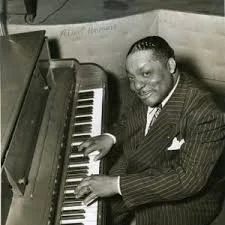
Boogie woogie is a subgenre of urban blues characterized by its left-hand ostinato patterns, which are steady, repeating musical phrases that anchor the rhythm and harmony of a piece. These ostinatos often outline a walking bass line, a type of bass progression that moves steadily through the individual notes of a scale to create a sense of forward motion. Sometimes, the left hand plays broken chords, which are chords whose notes are played one at a time in a rhythmic sequence rather than struck all at once. These patterns provide a propulsive foundation over which the right-hand plays rhythmically contrasting, highly ornamented melodic phrases. The music is often fast-paced and typically follows a 12-bar blues structure, making it both familiar and exciting to audiences.
Like ragtime, boogie woogie emphasizes rhythmic complexity and is often performed on solo piano. However, where ragtime features a more syncopated, march-like feel with a fixed sectional structure, such as AABBACCDD, boogie woogie is more groove-oriented and improvisational, particularly in the right-hand melody. One of the earliest and most influential examples of the style is Pinetop Smith’s “Pinetop’s Boogie Woogie,” a 1928 recording that captures the energy and danceable qualities of the genre.
Boogie woogie quickly became a staple at “rent parties,” informal gatherings where tenants hired a pianist, sold food and drinks, and charged a small admission fee to help cover the cost of rent. These parties were prevalent in Black neighborhoods in cities like Chicago and New York in the 1920s and 1930s. While used to raise money, rent parties also served as vital social events that brought together musicians, neighbors, and community members. They provided a safe opportunity for musical experimentation, friendly competition among pianists, and the circulation of new styles and ideas within the working-class Black communities. The high-energy, danceable rhythms of boogie-woogie made it the perfect soundtrack for these lively, communal events. Boogie-woogie’s percussive, driving piano rhythms later influenced the development of swing, jump blues, and early rock and roll, and its signature left-hand patterns remain an important part of the blues piano vocabulary today.
Arranged Blues

While the blues began as a grassroots form of musical expression, its popularity in the early 20th century also inspired professional songwriters and publishers to create blues-influenced compositions for mass consumption. Much like the wave of ragtime-themed songs produced by Tin Pan Alley, these blues-inspired pieces often borrowed the blues' aesthetic without strictly adhering to its musical conventions.
The most prolific composer of the arranged blues, W.C. Handy (1873–1958), is often referred to as the "Father of the Blues,"though it is more accurate to describe him as the father of the "arranged blues." Handy began his musical career as a cornettist and bandleader, traveling throughout the Mississippi Delta, where he encountered a wide variety of African American folk and blues styles. Inspired by his exposure to these musical traditions, he began composing blues-based songs for performance and publication.
His first major success came with "Memphis Blues", a campaign song he wrote in 1912 for E. H. Crump's mayoral run in Memphis. Although it did not strictly adhere to the 12-bar blues form, the song sparked a national craze for blues-inspired popular music. Two years later, Handy published "St. Louis Blues", which became one of the most famous American songs of the early 20th century. While also not in 12-bar form, "St. Louis Blues" integrated elements of blues tonality and theme with a more organized framework suitable for popular and classical musicians alike.
Handy's compositions helped bring the sound and themes of the blues into the concert hall, parlor, and Broadway stage. His success also encouraged other Tin Pan Alley composers to write blues-themed songs, and by the mid-1910s, hundreds of so-called "blues" numbers appeared in sheet music and on recordings. Although many of these pieces lacked the core characteristics of the genre, such as blue notes, call-and-response, and improvisation, they point to the growing national fascination with blues culture. Promotional strategies played a key role in the commercialization of blues-themed songs, with publishers and performers capitalizing on the rising popularity of the term "blues," much as they had previously done with ragtime, by branding songs as "blues" even when they shared little in common with the form's rural or urban roots.
Handy's influence extended well beyond composition and publication. In 1916, he released "Beale Street Blues", a tribute to the thriving African American cultural district in Memphis. The song played a part in strengthening the area's identity as a center for blues and even helped inspire the renaming of Beale Avenue to Beale Street. In the early 1900s, the street was lined with Black-owned clubs, restaurants, and businesses, serving as a vibrant center of community life. From the 1920s through the 1940s, Beale Street became a legendary proving ground for blues and jazz artists, hosting performances by notable figures such as Louis Armstrong, Memphis Minnie, Albert King, Muddy Waters, Rosco Gordon, and B.B. King, who earned the nickname "Beale Street Blues Boy" early in his career. Recognizing its historic significance, the U.S. Congress officially designated Beale Street as the "Home of the Blues" on December 15, 1977.

Handy's role in introducing blues to new audiences helped elevate the genre to national prominence, but it also sparked debates over authenticity, artistic ownership, and the influence of commercial trends on musical identity. His music often appealed to white audiences who were drawn to the blues because of its perceived "otherness" or "exoticism"—rooted in Black communities and associated with scandalous settings such as saloons, drinking, and brothels. However, Handy's contributions remain vital to the study of the blues as they document the evolving boundaries of what "the blues" could mean in different contexts. W.C. Handy had an outsized influence on the commercialization and national spread of the blues. His efforts helped turn the blues from a regional expression into a national style and linked local performers with commercial publishers.
Chapter 5: Conclusion

The blues stands as one of the most foundational and influential genres in American music, as it popularized the use of a 12-bar structure, lyrical repetition, blue notes, and call-and-response patterns. Yet within this seemingly simple framework, blues artists found extraordinary room for emotional richness, musical originality, and personal creativity. The blues developed as a response to social, political, and economic pressures. The blues developed in response to social, political, and economic pressures. They provided a means of individual expression and communal connection rooted in the experiences of slavery, sharecropping, and Jim Crow segregation. Artists like Robert Johnson, Leadbelly, and Memphis Minnie embodied the rural blues tradition with unamplified guitars, flexible song structures, and themes rooted in daily struggle and survival. Because many early blues musicians were excluded from the commercial recording industry, much of early blues performance tradition was preserved through oral transmission and the efforts of folklorists.
As African Americans migrated to metropolitan areas, the blues followed, evolving into a more polished, professionalized style. Urban blues featured dynamic female vocalists like Bessie Smith and Mamie Smith, backed by jazz-influenced combos. These artists gained commercial success through race records, challenging industry biases and influencing the course of American popular music. Their recordings helped elevate the blues into mainstream consciousness and expanded its cultural reach.
Other styles, such as boogie-woogie and the commercial or arranged blues of W.C. Handy, demonstrate the genre's flexibility and commercial potential. Boogie Woogie brought high-energy piano rhythms to house parties and dance halls, while Handy's blues-inspired compositions brought the music into sheet music, concert halls, and Broadway. Whether rural or urban, acoustic or arranged, blues gave voice to joy and pain, love and loss, fortitude and resistance. It bridged oral traditions and the mass media. Elements of blues continue to appear in almost every genre that followed, including jazz, gospel, rock, R&B, soul, and hip-hop, making the blues a major force in the development of the American musical vernacular.
Chapter 5: Further Reading
Abbott, Lynn, and Doug Seroff. Out of Sight: The Rise of African American Popular Music, 1889–1895. Jackson, MI: University Press of Mississippi, 2002.
Brooks, Tim. Lost Sounds: Blacks and the Birth of the Recording Industry, 1890–1919. Urbana: University of Illinois Press, 2004.
Brooks, Edward. The Bessie Smith Companion: A Critical and Detailed Appreciation of the Recordings. Wheathampstead, England: 1982. Reprint.
Harrison, Daphne Duval. Black Pearls: Blues Queens of the 1920s. New Brunswick, NJ: Rutgers University Press, 1988.
Handy, W. C. Father of the Blues: An Autobiography. New York: Macmillan, 1941.
Keil, Charles. Urban Blues. Chicago: University of Chicago Press, 1966.
Lornell, Kip, and Charles Wolfe. The Life and Legend of Leadbelly. New York: Da Capo Press, 1999.
Lonergan, David. “Alan Lomax: An Essay and Bibliography.” Music Reference Services Quarterly 3, no. 2 (1994): 3–16.
Martin, Florence. Bessie Smith. Paris: Éditions du Chêne, 1994.
Montgomery, Elizabeth Rider. William C. Handy, Father of the Blues. Champaign, IL: University of Illinois Press, 1968.
Oliver, Paul. Blues Fell This Morning: Meaning in the Blues. Cambridge, England: Cambridge University Press, 1990.
Palmer, Robert. Deep Blues. New York: Viking Press, 1981.
Scott, Michelle R. Blues Empress in Black Chattanooga: Bessie Smith and the Emerging Urban South. Urbana, IL: University of Illinois Press, 2008.
Wald, Elijah. Escaping the Delta: Robert Johnson and the Invention of the Blues. New York: Amistad, 2004.
Yurchenko, Henrietta. “Mean Mama Blues: Bessie Smith and the Vaudeville Era.” In Music, Gender, and Culture, 241–51. Wilhelmshaven, Germany, 1990.