Chapter 32: "I Want My MTV" Popular Music in the 1980s
“Thriller”
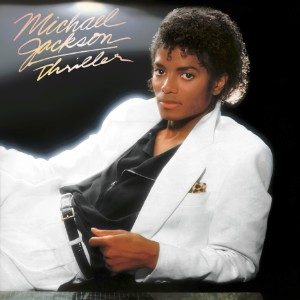
Album/Year Released
1982 (album: Thriller)
Artist/Composer
Michael Jackson
Rod Temperton (composer)
Genre/Style
Pop; post-disco; funk-influenced pop
Song Form
Verse–chorus with pre-chorus and spoken-word bridge
“Thriller,” written by Rod Temperton and produced by Quincy Jones, was released on Michael Jackson’s 1982 album of the same name. “Thriller” is a pop and post-disco track grounded in funk rhythm and theatrical sound design. The track is structured in duple meter with a consistent 4/4 pulse at approximately 118 beats per minute, achieving a balance between dance-floor accessibility and cinematic suspense. Its tonal center, C♯ Dorian, a mode related to the minor scale but distinguished by a raised sixth degree, imparts an uneasy brightness to the composition. The song’s form extends beyond a conventional verse–chorus structure, incorporating a pre-chorus, an extended spoken-word bridge, and an outro. Within the larger verse–chorus form, some sections contain internal thirty-two-bar AABA groupings. The arrangement progresses through an extended introduction, cycles of verse and chorus, a bridge that breaks the established groove, a concluding chorus, and a spoken ending that leaves the narrative unresolved.
The initial minute of the track evokes the atmosphere of a horror film rather than that of a typical pop song. Sound effects such as creaking doors, thunder, footsteps, wind, and distant howling establish a sense of threat prior to the introduction of a full rhythmic pattern. A synthesizer pulse emerges at approximately eighteen seconds, followed by the entrance of the primary melodic material and horn section at thirty-eight seconds, which remain integral throughout much of the composition. These sonic elements frame the narrative lyrics, which intensify tension through imagery of paralysis and fear, further emphasized by backing vocals that echo phrases such as “You try to scream” and “You start to freeze.” The rhythmic structure reinforces the lyrics' atmosphere of fear and suspense. The tempo evokes a quickened heartbeat, while a persistent synthesizer bass riff underpins nearly the entire song.
The production relies heavily on analog synthesizers layered with live instruments. The bassline was generated using an ARP 2600 synthesizer, while additional textures came from the Roland Jupiter-8 and Prophet-5. Rhythm programming blends electronic and acoustic sources, combining LinnDrum elements like LM-1 snare, hi-hat, and congas with a TR-808 clap, as well as live drums and bass. Harmonic support is furnished by Rhodes piano, guitar, and a horn section comprising trumpet, flugelhorn, saxophone, flute, and trombone. The synthesizers, live instruments, and electronic percussion create a dense, multilayered texture in which several instrumental lines operate simultaneously. Harmonization further enriches the sound, particularly in the choruses, where layered “zombie” vocals are combined with Jackson’s lead. Dynamic levels are generally moderate, with crescendos occurring at the beginning of the track and at each chorus, enabling a gradual increase in intensity without abrupt changes.
The spoken-word section, authored by Temperton and delivered by Vincent Price, functions as a dramatic rupture rather than a mere embellishment. The spoken-word bridge interrupts the established groove, intensifies suspense, and divides the conclusion into two distinct parts, separated by a brief vocal interjection from Jackson. Price’s narration, culminating in his iconic laugh and the sound of a door closing, stresses the song’s deliberate lack of resolution.
The song’s influence is inextricably linked to its visual presentation. Directed by John Landis, the thirteen-minute music video draws on classic horror film motifs and features choreographed zombie dances synchronized with musical accents, breaks, and transitions. Upon its premiere on MTV in December 1983, the video doubled album sales and elevated the music video into a major artistic and promotional medium, helping Thriller achieve its status as the best-selling album in history. The project required alternative financing after the record label declined to fund it, resulting in the creation of a behind-the-scenes documentary that also achieved significant commercial success. The zombie choreography by Michael Peters remains widely imitated, and the video’s cultural significance led to its induction into the National Film Registry in 2009.
“Like a Prayer”
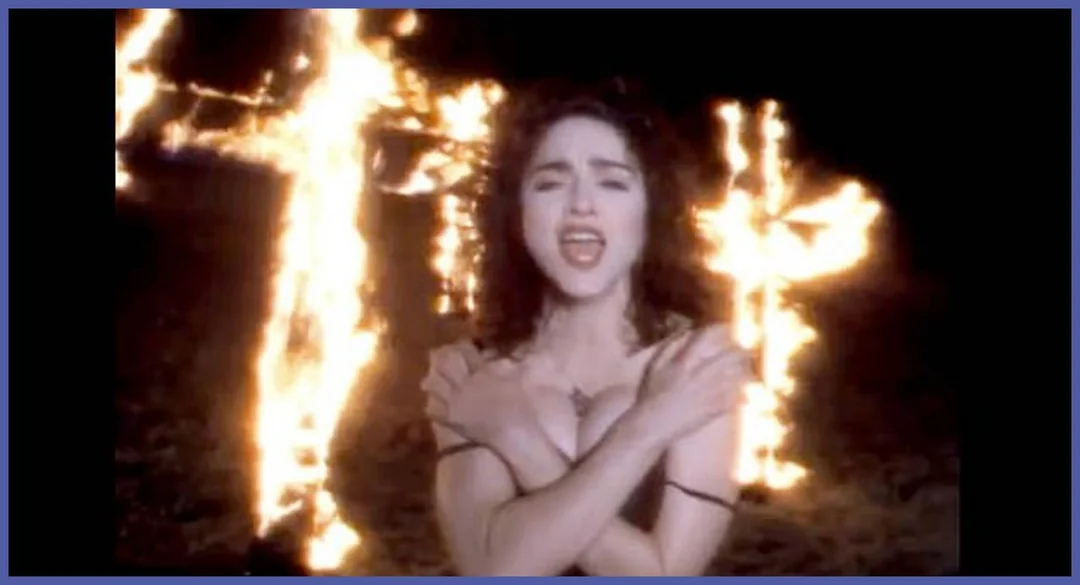
Album/Year Released
1989 (album: Like a Prayer)
Artist/Composer
Madonna
Madonna, Patrick Leonard
Genre/Style
Pop
Song Form
Verse–chorus with contrasting bridge
Released in 1989 as the lead single from Madonna's album of the same name, "Like a Prayer" combines pop songwriting with gospel-derived sounds. Written and produced by Madonna and Patrick Leonard, the song is set in duple meter at approximately 120 beats per minute and is centered in D minor, creating a darker tone than her previous work. The structure features an introduction, alternating verses and choruses, a contrasting bridge, and a climactic final chorus, with intensity building throughout. The introduction uses a church bell, door slam, and distorted rock guitar, often attributed to Prince, which drops out to make space for choir and organ. The contrast between the distorted guitar and the entrance of the choir and organ establishes the song’s central tension between secular and sacred musical elements.
The verses feature bass guitar doubled by an analog Minimoog synth and light percussion, with Madonna’s vocals remaining controlled and intimate. In the choruses, full drums enter with funk-influenced bass, while a gospel choir thickens the texture through block harmonies and call-and-response phrasing rooted in Black church traditions. The choir reinforces the tonic harmony and lifts the song into a more expansive register, while the organ timbre strengthens the arrangements connection to liturgical sound. The bridge introduces harmonic contrast and slows the momentum before the final chorus. After the second chorus, guitars pan across the stereo field, and the arrangement thickens as synthesizers and drums support Madonna’s more forceful delivery of the opening lines. An R&B-influenced backing vocal adds depth near the end, leading to a repeated chorus and gradual choral fade-out. The recording uses a denser and more varied arrangement than many of Madonna's earlier singles. Percussion, choir, and instrumental layers shift throughout, with the balance among rock guitar, electronic bass, organ, and vocals evolving as the song progresses.
The lyrics use religious language and spiritual imagery while remaining open to multiple interpretations, blending the sacred with personal intimacy. The ambiguity of the lyrics influenced the song’s reception, particularly through its video directed by Mary Lambert. The video’s portrayal of racial violence, Catholic symbolism, stigmata, burning crosses, and a dream sequence with a Black saint drew strong criticism from religious groups and the Vatican. The controversy led to corporate consequences, most notably when Pepsi canceled its sponsorship but allowed Madonna to retain her five-million-dollar fee. Despite, or perhaps because of, the backlash, "Like a Prayer" achieved global commercial success, topping the Billboard Hot 100 for three weeks and reaching number one in numerous countries. It also received strong critical reviews and was later included on Rolling Stone's list of the greatest songs of all time.
“Graceland”
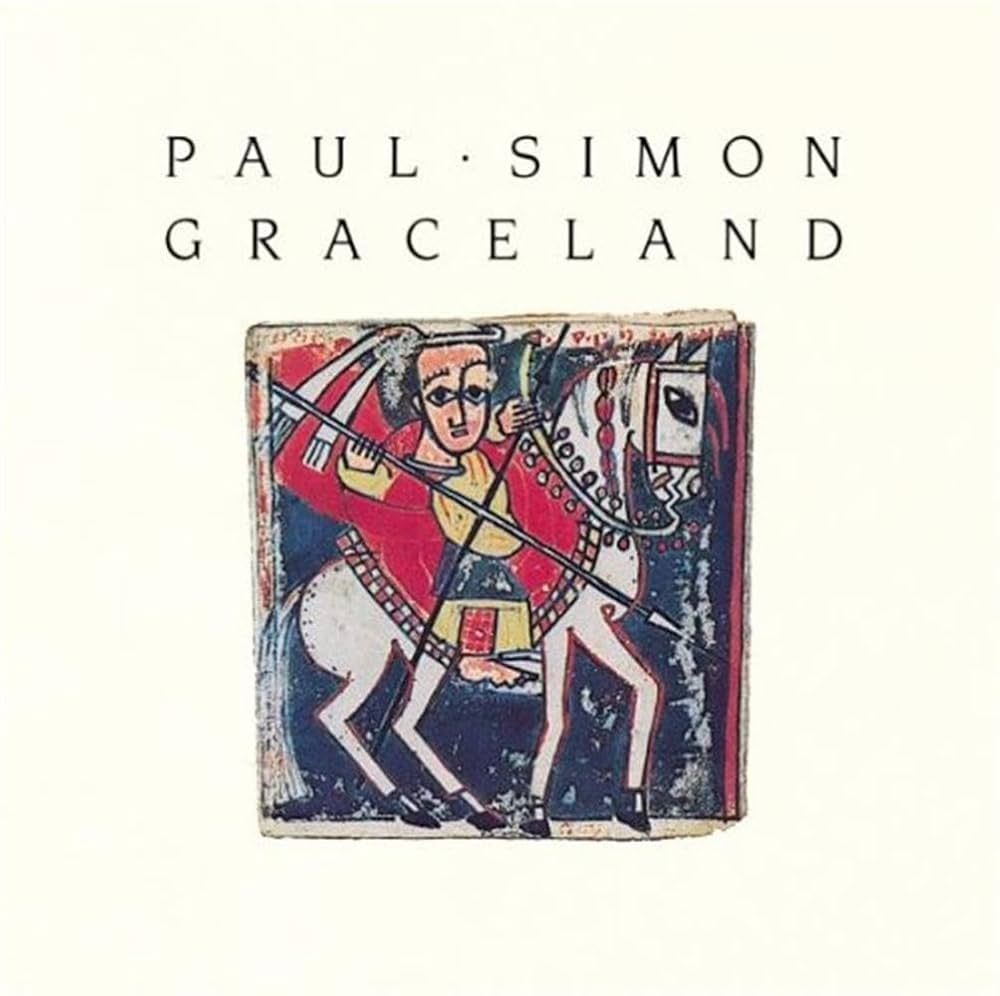
Album/Year Released
1985 (album: Graceland)
Artist/Composer
Paul Simon
Genre/Style
Pop rock; worldbeat
Song Form
Verse–chorus with instrumental interludes
Released in 1986, "Graceland" is the second track on Paul Simon's album of the same name and incorporates musical elements associated with South African mbaqanga.s The song develops in duple meter with a verse–chorus framework and instrumental interludes, beginning with an introduction built from the same harmonic material as the verses. Throughout the track, guitars play short, repeated syncopated figures that serve more as rhythmic-melodic units than harmonic backing, locking into the groove. Instead of emphasizing harmonic change, the arrangement relies on cyclical motion. Bass and percussion maintain a steady pulse, introducing small rhythmic variations that keep the texture active. The chorus centers on the recurring refrain “I’m going to Graceland,” supporting the song’s sense of movement and journey. The interlude sections allow the ensemble to foreground groove and instrumental interplay.
Simon recorded with a core group of South African musicians rather than asking American studio musicians to imitate South African styles. Their performances became central to the song's instrumental character. Guitarist Ray Phiri, fretless bassist Bakithi Khumalo, and drummer Isaac Mtshali formed the backbone of the rhythm section, developing parts collaboratively in the studio. The rhythm section draws on township-music performance practices, including melodic bass lines, interlocking guitar figures, and a continuous groove. Additional musicians joined these sessions, including Joseph Shabalala and Ladysmith Black Mambazo, whose presence elsewhere on the album reinforced the project’s choral and communal dimensions. The instrumentation of “Graceland” blends South African rhythmic sensibility with American pop-rock songwriting, producing a sound that introduced many Western listeners to South African popular-music practices.
At the same time, the album’s creation placed Simon in the middle of intense political debate. During the mid-1980s, the international music industry broadly supported a cultural boycott of South Africa in response to apartheid, formalized through actions by the United Nations Anti-Apartheid Committee in 1980. Simon argued that his goal was musical exchange rather than political intervention, yet recording with South African musicians during the boycott raised serious ethical questions after the album’s release. Critics disagreed over whether the project violated the spirit of the boycott or helped bring visibility and opportunity to artists who otherwise lacked access to global audiences. These debates continue to influence how Graceland is heard, situating the song within a broader 1980s conversation about globalization, authorship, and the uneven power relationships in cross-cultural collaboration.