Chapter 26: Album Oriented Rock in the 70s
Chapter 26: Introduction
During the 1970s, changes in recording technology, radio broadcasting, and artistic ambition pushed rock away from single-driven pop markets toward album-centered listening. Bowie’s theatrical presentation, narrative albums, and tightly constructed records appeared alongside the expansion of FM radio and the rise of album-oriented rock (AOR) programming, changes that altered how rock music was produced, distributed, and consumed. In the 1960s, the FCC implemented a non-duplication rule prohibiting FM stations from simply simulcasting AM programming. Once the rule took full effect in 1967, FM stations began experimenting with new programming formats, eventually giving rise to freeform radio. DJs such as Tom Donahue at KMPX in San Francisco (see Chapter 22) curated long, eclectic sets built around album cuts and extended recordings, often featuring experimental performers or artists who had not yet reached mainstream radio. By emphasizing albums over singles, freeform radio encouraged listeners to engage with music as a continuous, immersive experience rather than as isolated hits.
By the early 1970s, freeform programming had evolved into progressive rock radio, blending the eclecticism of freeform with more structured playlists designed to reach larger audiences and attract advertisers. Stations such as WPLJ in New York, KLOS in Los Angeles, and WRIF in Detroit began programming around popular albums, often highlighting multiple tracks rather than a full album or a single “hit.” DJs retained some discretion to feature deep cuts, but increasing commercial pressures led to more curated playlists. Innovators like Ron Jacobs at KGB-FM in San Diego and Mike Harrison at KPRI applied Top 40-style rotation to progressive radio, coining the term “album-oriented rock.”
The rise of AOR reinforced the idea of the rock album as a cohesive artistic statement intended for focused listening. Unlike Top 40 radio, which favored short, danceable singles, AOR programming encouraged audiences to experience albums in their entirety, often featuring multiple tracks from a single release. DJs and program directors could feature deep cuts, extended compositions, and narrative-driven sequences, supporting the creative ambitions of bands like David Bowie, Pink Floyd, and The Who. The format encouraged listeners to hear rock records as extended works rather than collections of singles. Albums increasingly appeared as unified recordings with internal structure and thematic continuity. The shift toward album-oriented listening helped rock music gain recognition from its audience as “high art,” comparable to classical music.
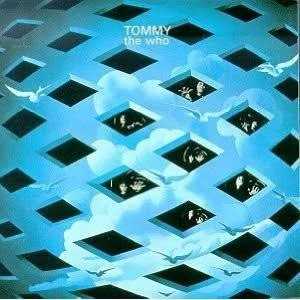
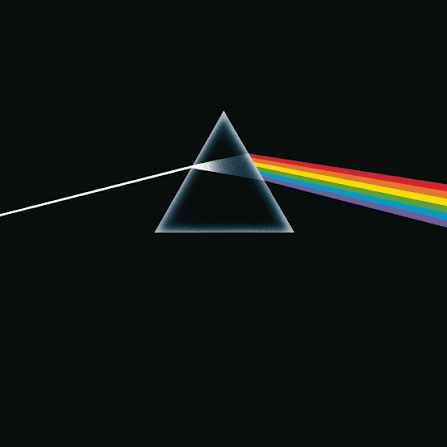
The Who’s Tommy(1969) exemplifies the concept of a Rock Opera: a “deaf, dumb, and blind” boy experiences trauma and ultimately attains spiritual enlightenment, with recurring musical motifs, dynamic shifts, and a blend of hard rock, balladry, and experimental touches. Pink Floyd developed the concept album format further with The Dark Side of the Moon (1973) and The Wall (1979). The Dark Side of the Moon explored mortality, time, mental health, and societal pressures, using seamless transitions, studio effects, synthesizers, and orchestration to create an immersive listening experience. The Wall chronicled the fictional rock star Pink, whose isolation and disillusionment with society are symbolized by a literal and metaphorical wall, combining progressive rock, theatrical interludes, and orchestration to produce a rock opera later adapted for stage and film.
Nostalgia and Hippie Aesthetics
In the mid-1970s, many American rock artists began to look back at the musical and cultural influences of the 1950s and 1960s. Artists revisited those influences and adapted them within contemporary studio production. This retrospective turn was not simply an act of imitation; it represented an overarching desire to reconnect with the perceived authenticity and emotional depth of the previous decade. For some musicians, this backward glance was a way to connect with listeners whose teenage and early adult experiences had been affected by the rock and pop of the late 1950s and 1960s. Artists like Bob Seger, Fleetwood Mac, and Aerosmith created their signature sonics by selectively incorporating the sounds, lyrical themes, and emotional terrains of 1960s rock while other artists such as Elton John and Billy Joel harkened back to the styles of 1950s rock and rollers.
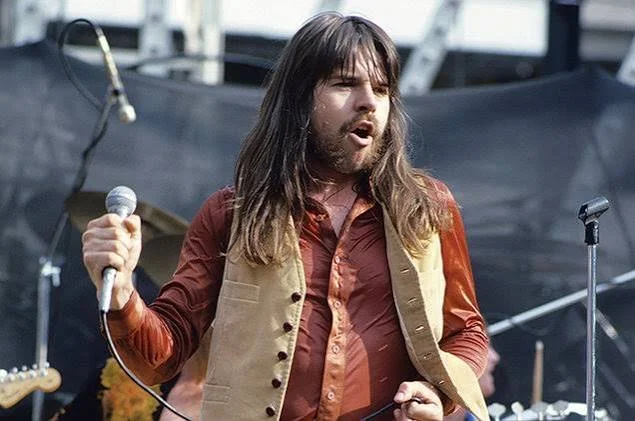
Bob Seger, a Detroit native, first emerged from the city’s late-1960s garage rock scene, where rough guitar riffs and unpolished vocals characterized the sound as heard in his 1968 single, “Ramblin’ Gamblin’ Man.” By the mid-1970s, however, he had remodeled the garage-rock style style into something more refined and reflective with the Silver Bullet Band. Tracks like “Night Moves” juxtapose first-person coming-of-age narratives with mid-tempo, guitar-driven arrangements, featuring rollicking riffs, warm piano chords, and driving bass and drums. The lyrics evoke small-town life, adolescent romance, and youthful longing, transporting listeners back to the mid-1960s even as the layered production firmly situated the music in the 1970s. Later, “Against the Wind” (1980) drew on folk-rock and outlaw cowboy imagery, pairing slower tempos and harmonized choruses with themes of resilience and weary maturity. The song’s outlaw sensibility placed Seger in dialogue with traditions popularized by Willie Nelson, Bob Dylan, and the Byrds while extending them into the arena-rock idiom of the 1970s.
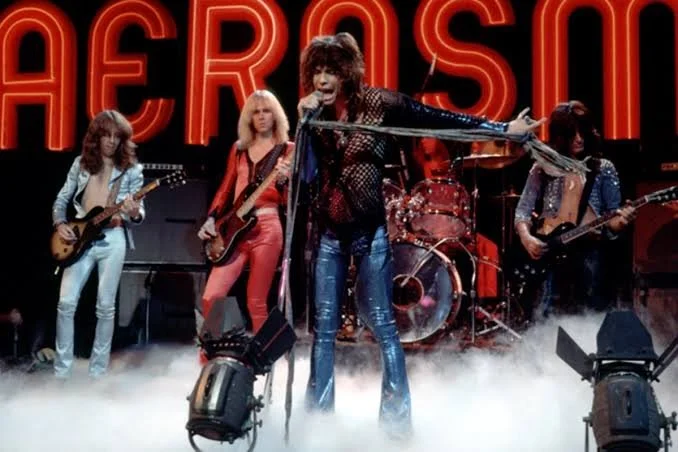
Aerosmith followed a similar path of reworking the past through the lens of British blues-rock. Formed in Boston in 1970, the band was often derided early on as a Rolling Stones knock-off, in part due to Steven Tyler’s visual resemblance to Mick Jagger and Joe Perry’s riff-driven guitar style. Yet Aerosmith succeeded in translating the swagger of the Stones into a distinctly American idiom, blending bluesy riffs with funk-influenced basslines and expansive, arena performances. Songs such as “Dream On” combined piano balladry with soaring vocals and hard rock crescendos, while “Sweet Emotion” and “Walk This Way” incorporated syncopated grooves and riff-heavy hooks that drew from both rhythm-and-blues traditions and the raw drive of 1960s garage bands.Their ability to repackage familiar blues-rock tropes with added scale and volume helped fashion the sound of American hard rock, showing how 1960s revivalism could become mass-market spectacle.
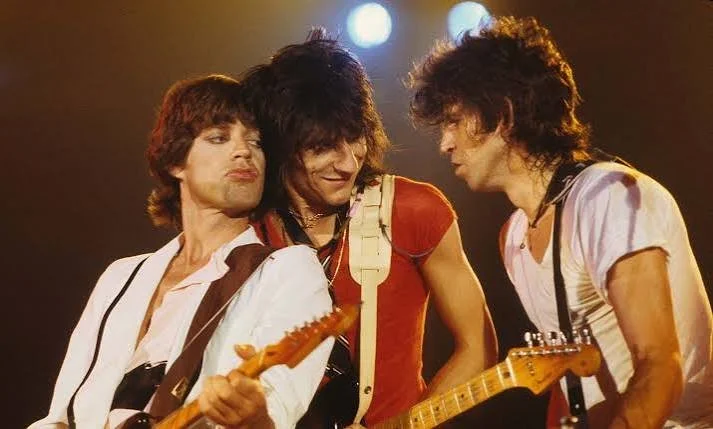
Many of the most influential bands of the 1970s had their roots in the ferment of the previous decade, evolving their sound to reach new audiences and adapt to changing cultural conditions. The Rolling Stones recaptured and carried their raw blues-rock sensibility into the next decade with Sticky Fingers (1971) and Exile on Main St. (1972), records that mixed swaggering riffs with darker explorations of excess and disillusionment which allowed them to maintain their status as a leading arena act.
The Who, as we discussed earlier, known in the 1960s for explosive singles like “My Generation” (1965), amplified their ambitions with concept albums such as Tommy(1969) and Quadrophenia(1973), which combined their hard rock energy with narrative scope and depth. The Grateful Dead, who built their reputation on the free-form psychedelia of the late 1960s, shifted toward a roots-oriented sound on Workingman’s Dead (1970) and American Beauty (1970), blending folk, country, and rock in a style reminiscent of the stylistic changes embraced by the Byrds and the Eagles (see Chapter 24). Meanwhile, Pink Floyd, emerging from London’s underground psychedelic scene, underwent a major change with the departure of original bandleader Syd Barrett and the arrival of guitarist David Gilmour. Under the new leadership of bassist Roger Waters, Pink Floyd became one of the most prominent progressive rock bands of the 1970s. Albums like The Dark Side of the Moon (1973) and Wish You Were Here (1975) translated psychedelic experimentation into expansive studio-driven meditations on modern anxiety and alienation.
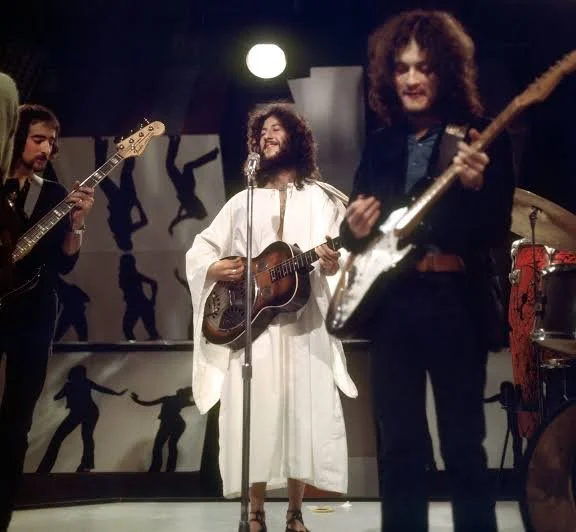
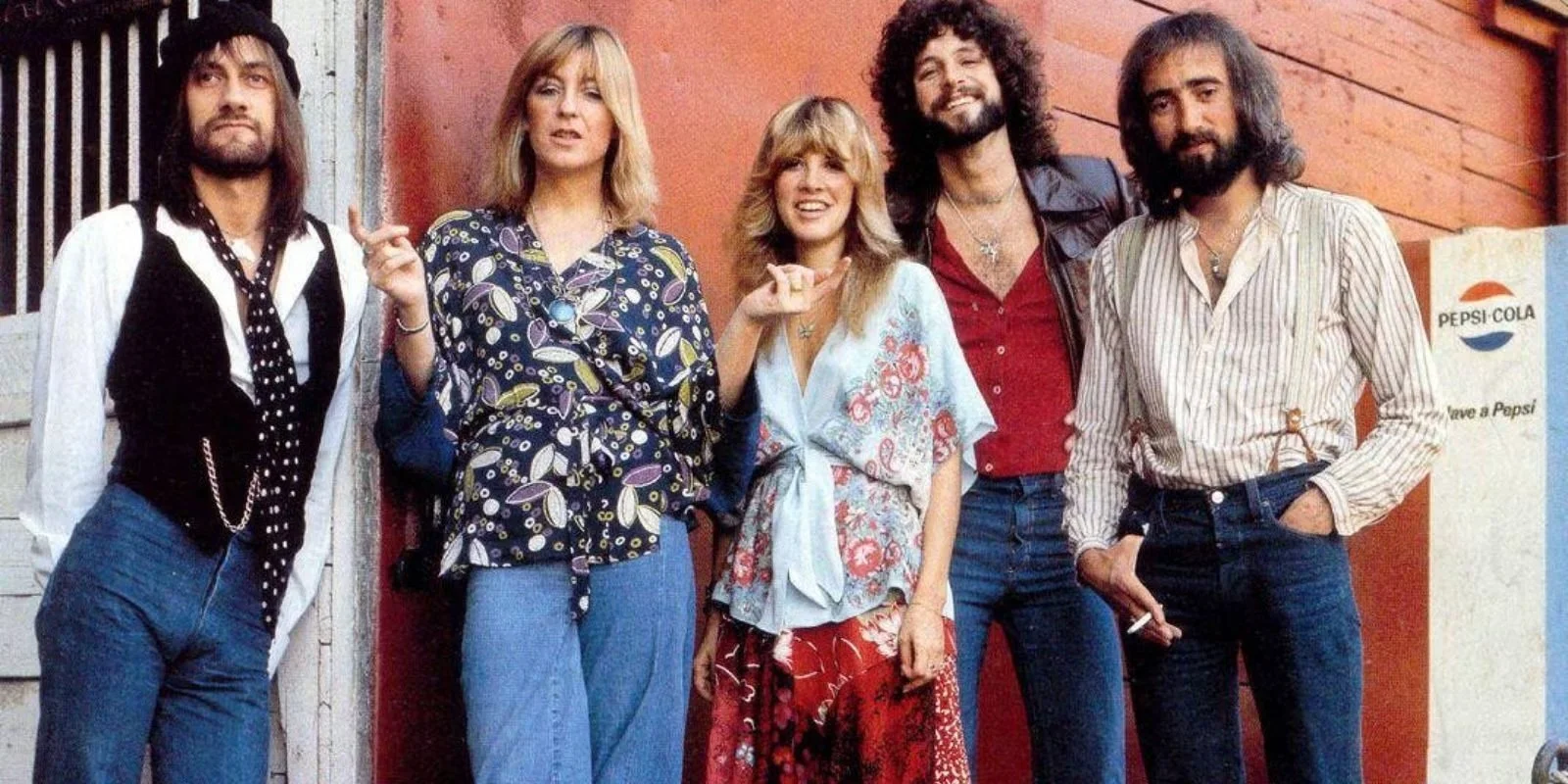
However, perhaps the best example of how the sounds and sensibilities of the 1960s were reinterpreted for new audiences in the 1970s is the band Fleetwood Mac. Formed in London in 1967 by guitarist Peter Green, who was previously a member of John Mayall and the Bluesbreakers, the band initially gained recognition during the British blues revival. They drew heavily from American Delta and Chicago blues while remaining aligned with the English counterculture. In a nod to their key members, Green decided to name the group after its drummer, Mick Fleetwood, and bassist, John McVie.
Early albums, such as Fleetwood Mac (1968) and Then Play On (1969), showcased a combination of virtuosic guitar work and psychedelic instrumental sections. The track “Oh Well, Part 1 & 2” exemplifies this duality: Part 1 features concise, riff-driven blues rock, while Part 2 develops into a psychedelic instrumental soundscape, incorporating modal shifts with extended instrumental exchanges among acoustic guitar, bass, and recorder. Other notable tracks, such as “Black Magic Woman” and the atmospheric “Albatross,” further demonstrate the band’s early blend of blues influences and late-1960s psychedelia, akin to artists like Cream and the Yardbirds. By 1970, Green left the band as he struggled with heavy drug use, disillusionment with fame, and deteriorating mental health, partly due to prolonged LSD use. His departure marked the end of Fleetwood Mac’s original blues-centered vision and paved the way for years of lineup changes and stylistic reinvention.
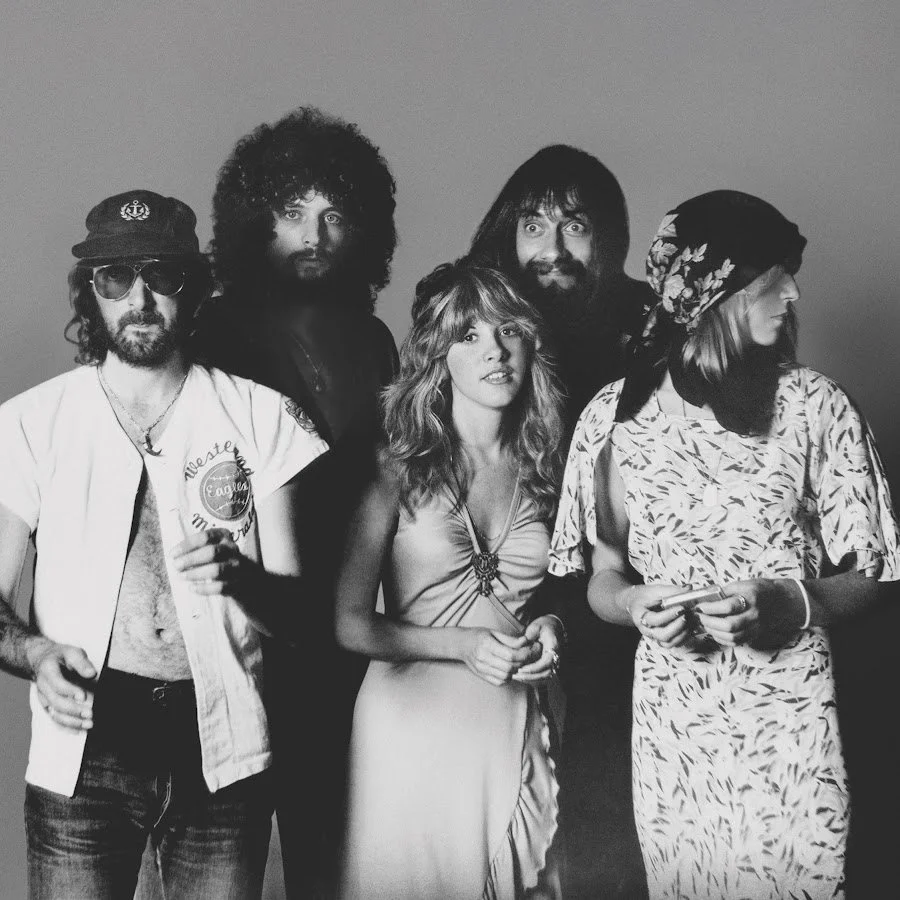
The addition of keyboardist and singer Christine McVie in 1970 and the arrival of California-based duo Lindsey Buckingham and Stevie Nicks in 1975 shifted Fleetwood Mac toward a fusion of 1960s-inspired folk-rock, psychedelic textures, and polished pop-rock. Fleetwood Mac (1975) and Rumours (1977) combined Buckingham’s intricate fingerpicking and layered studio production with Nicks’ mystical lyricism and distinctive vocals. Songs such as “Rhiannon” and “Dreams” drew on folk and psychedelic songwriting traditions of the late 1960s, while “Go Your Own Way” and “The Chain” paired driving guitar riffs with confessional lyrics, balancing commercial accessibility with clear echoes of earlier rock forms.
Central to the band’s new identity was Nicks, whose ethereal stage persona became emblematic of Fleetwood Mac’s later sound and image. Her flowing dresses, scarves, platform boots, and use of tambourine evoked the hippie aesthetic of the late 1960s while adapting it for 1970s arena spectacle. Lyrically, she explored love, loss, personal change, and self-discovery, echoing the introspective and mystical tendencies of 1960s songwriting but filtered through contemporary production. Songs such as “Rhiannon,”“Sara,” and “Gypsy” illustrate how her persona bridged psychedelic folk traditions with the more accessible pop-rock sensibilities of the 1970s.
Fleetwood Mac’s success was inseparable from the relational turbulence within the band. The recording of Rumours coincided with the dissolution of nearly all internal romantic relationships: Buckingham and Nicks’ breakup, Christine and John McVie’s divorce, and Mick Fleetwood’s marital struggles and affair with Nicks. These tensions fueled emotionally charged songs such as “Go Your Own Way,”“Dreams,” and “The Chain,” turning the band’s interpersonal conflict into widely recognizable stories of romantic collapse.
Later albums continued their musical negotiation between the past and the present. The less commercially successful Tusk (1979) embraced experimental textures, including avant-garde percussion and dub-influenced production, alongside ballads like Nicks’ “Sara.”Mirage (1982) and Tango in the Night (1987) leaned toward a polished pop sound with hits like “Everywhere” and“Little Lies,” while retaining subtle traces of blues, folk, and psychedelia. Into the 1990s and 2000s, albums such as Time (1995) and Say You Will (2003) maintained studio sophistication alongside lyrical introspection, continuing the band’s pattern of stylistic change.
Throughout their career, Fleetwood Mac showed how nostalgia could operate within contemporary rock production. They retained connections to blues and psychedelic roots while incorporating layered production, radio-ready hooks, and emotionally evocative songwriting. By channeling the aesthetics and themes of the 1960s through the lens of 1970s production and personal drama, Fleetwood Mac helped establish rock as both a vehicle for nostalgia and a form of high art.
Arena Rock
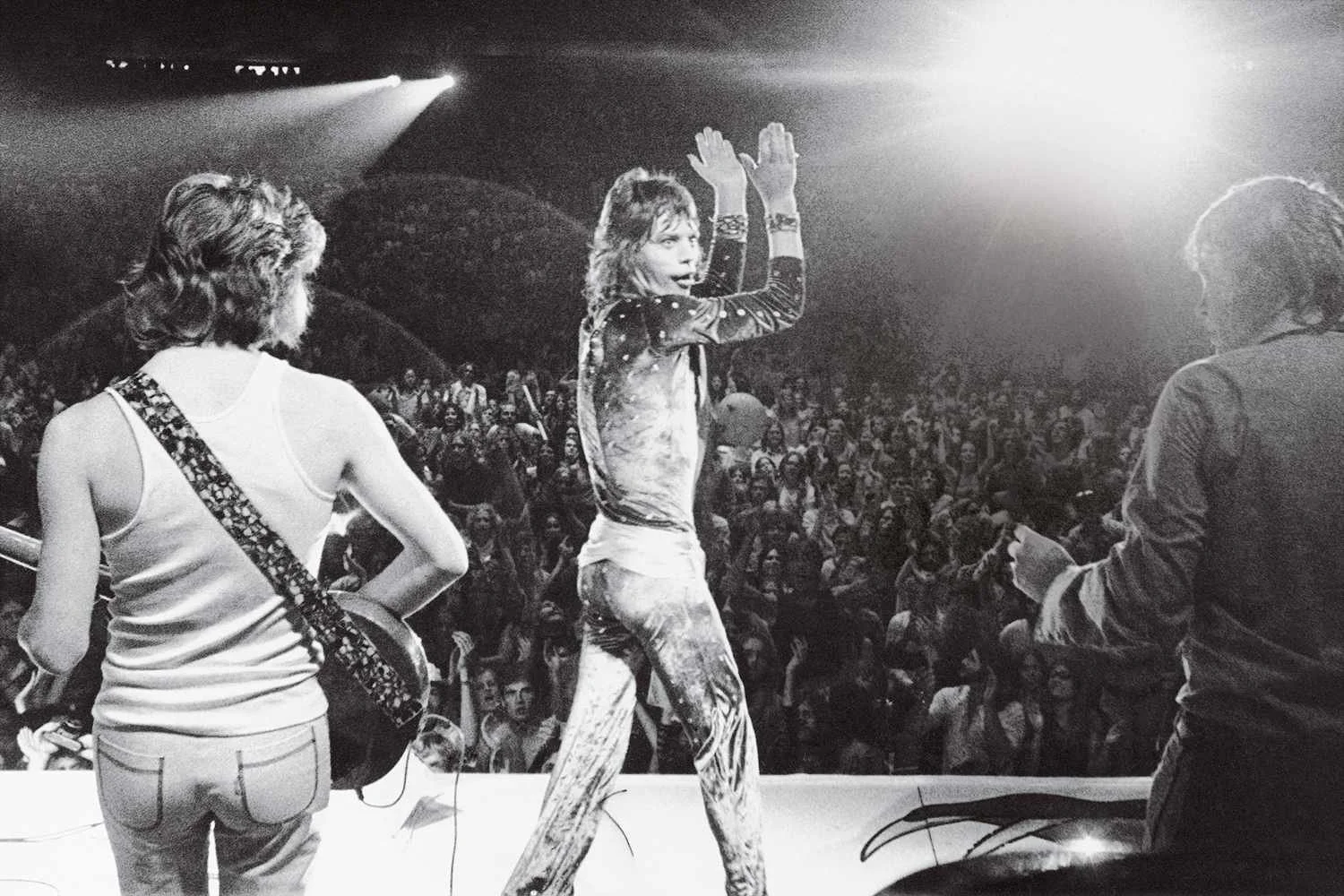
Arena rock grew out of concert practices that developed in the late 1960s and later adapted to performances for extremely large audiences. During the 1970s, major-label rock acts began organizing tours around stadiums and large indoor arenas built to accommodate very large crowds . Performances relied heavily on large choruses that audiences could sing along with and on dramatic stage presentations. Songs typically took one of two forms: driving, participatory anthems or slower, introspective ballads, regularly featuring extended guitar solos, translating the communal and improvisatory aspects of 1960s rock into a stadium-ready format.
Arena rock grew out of the expansion of large outdoor concerts during the mid-1960s. During their tours, The Beatles performed in baseball stadiums and other large venues where crowds often exceeded fifty thousand, demonstrating that rock music could draw tens of thousands of fans and maintain high production standards. Promoters began to structure concerts to maximize audience capacity, ticket sales, and media coverage, thereby turning performances into commercially viable spectacles. Rock festivals—evolving from folk gatherings and countercultural events like Woodstock (1969) and the Monterey Pop Festival (1967)—showcased both British and American acts on an unprecedented scale, including the Rolling Stones, Led Zeppelin, The Who, and Jimi Hendrix. As these festivals waned in the early 1970s, American arena concerts proliferated, and touring shifted toward arena circuits that ran continuously across major cities. Acts such as Aerosmith, Kiss, Styx, Cheap Trick, Journey, and Boston emerged as the first generation of U.S. arena rock bands, characterized by carefully managed stage productions and radio-friendly repertoires.
Advances in public address systems within sporting arenas allowed far greater amplification than earlier concert systems, while multiple speaker arrays and improved sound mixing enabled clear, balanced audio across massive venues. Stage lighting, first popularized in psychedelic rock concerts during the late 1960s, became standard in arena tours. Multi-layered rigs with automated cues, colored gels, and programmed sequences, often combined with pyrotechnics, smoke machines, hydraulic risers, and moving props, created immersive visual spectacles. Arena tours grew alongside a nationwide boom in stadium construction fueled by professional sports and urban growth .Concerts evolved into commercialized forms of mass entertainment, similar to sporting events, and arenas functioned as managed spaces with assigned seating, ticketed sections, and controlled access. This shift moved the live rock experience away from the open, participatory festival model of the 1960s toward a curated commercial spectacle.
Musically, arena rock recordings relied on dense guitar arrangements and large-scale studio production. Powerful vocals, extended guitar solos, driving rhythms, keyboards, synthesizers, and studio effects created textures capable of filling stadiums, while massive light shows, pyrotechnics, and staging reinforced the genre’s spectacle. Lyrics often matched vast scale of the arena, exploring aspirational lyrics of overcoming struggle, love, and triumph. Unlike the experimental musicality of progressive rock, arena rock favored direct melodies and clear song structures that audiences could easily recognize. By the late 1970s and into the 1980s, arena rock dominated mainstream rock culture.
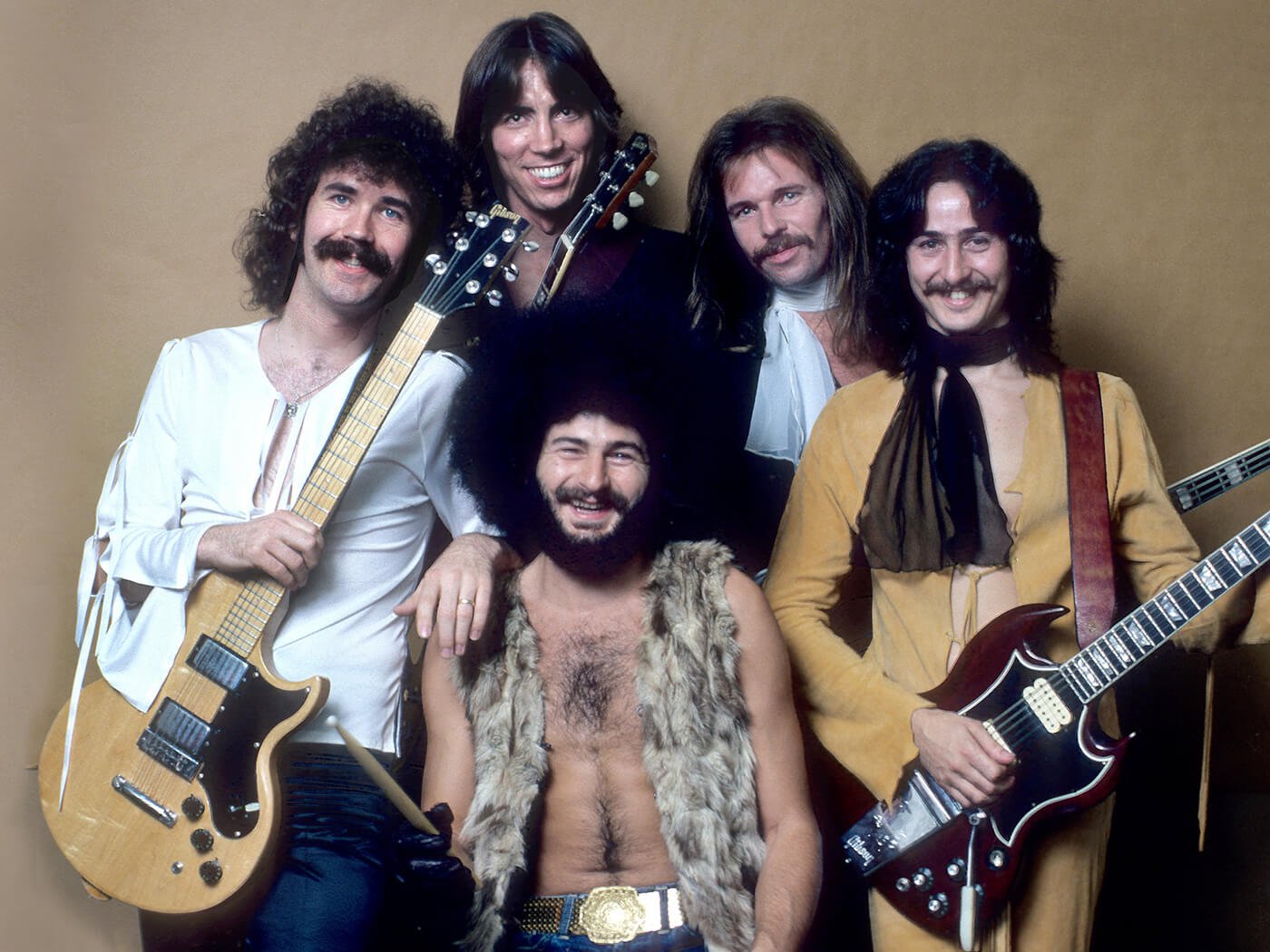
Boston, formed in 1976 by guitarist and songwriter Tom Scholz, gained recognition for its meticulously layered guitar tracks, lush vocal harmonies, and polished studio production. Their self-titled debut album featured hits like “More Than a Feeling” and “Peace of Mind,” which combined intricate guitar lines, multi-tracked vocals, and dynamic shifts between soft verses and soaring choruses, creating music that translated effectively to arena performance. Foreigner, formed the same year by Mick Jones and Lou Gramm, applied similar strategies with anthemic hits such as “Cold as Ice,” “Hot Blooded,” and “I Want to Know What Love Is.” Their use of expansive choruses, keyboard textures, and dramatic dynamics encouraged audience participation, allowing listeners to sing along and become part of the performance.
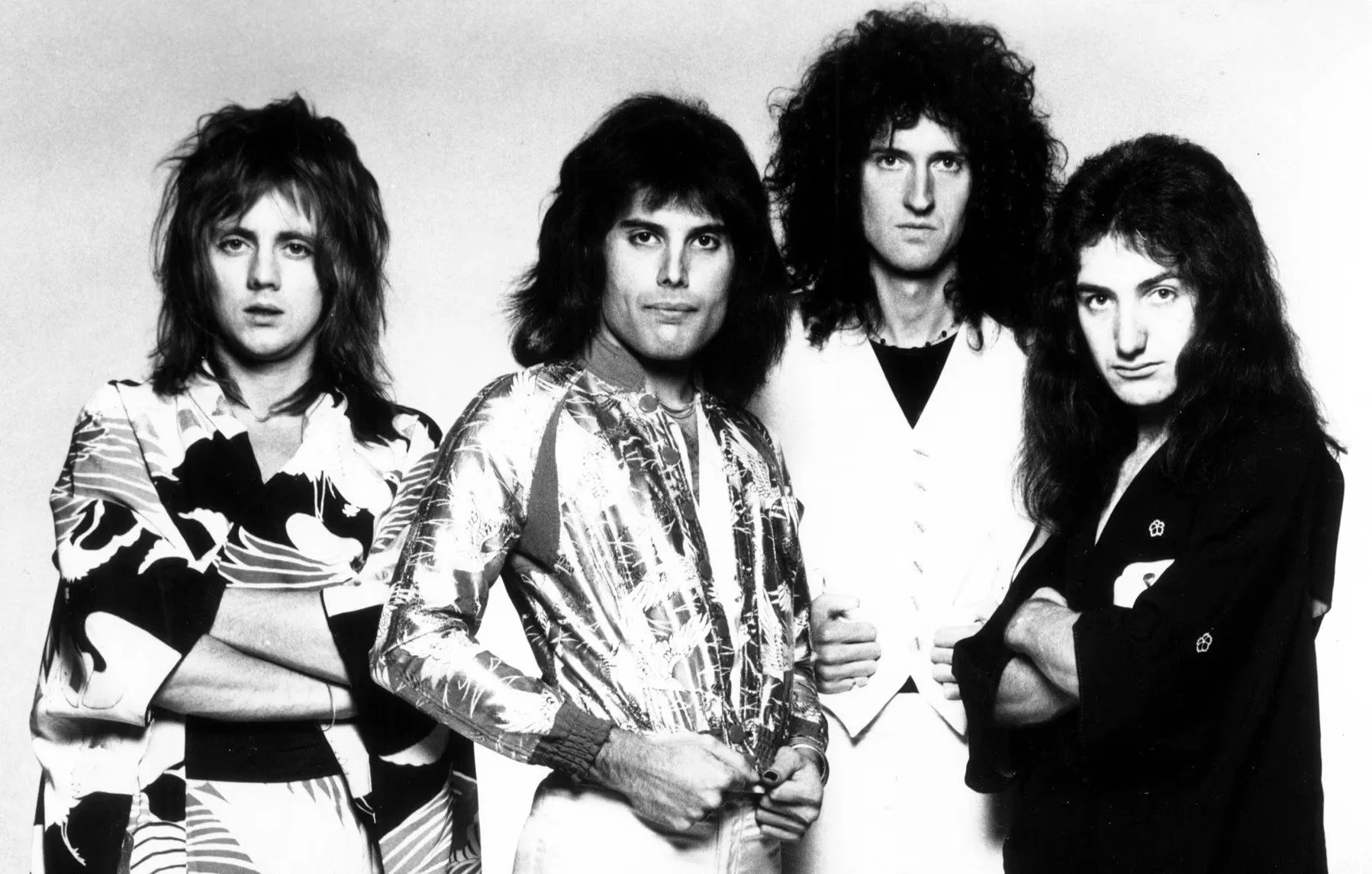
Queen, formed in London in 1970 with Freddie Mercury, Brian May, Roger Taylor, and John Deacon, placed theatrical performance and audience participation at the center of their concerts. Their music fused glam rock spectacle with progressive rock ambition and the stylistic breadth associated with the later recordings of The Beatles. Early albums such as Queen II (1974) and Sheer Heart Attack (1975) established the group in Britain and introduced them to American audiences. Their breakthrough release, A Night at the Opera (1975), featured the elaborate single Bohemian Rhapsody, which combined rock instrumentation with operatic vocal arrangements and studio experimentation. Songs like “We Will Rock You” incorporated stomp-and-clap rhythms, directly inviting audiences to participate physically, while “We Are the Champions” offered sing-along choruses that reinforced collective engagement. Mercury’s commanding stage presence, combined with May’s layered guitar orchestrations, created a fusion of musicianship, showmanship, and audience involvement that became a widely imitated model for arena rock concerts.
Central to Queen’s success was Mercury’s distinctive stage presence. Trained in art and design, he treated performance as a theatrical event that combined rock singing with gestures drawn from opera, cabaret, and glam performance. On stage, he often carried a shortened microphone stand that functioned almost as a prop, allowing him to move freely across large stages while directing the crowd with sweeping arm gestures and vocal improvisation. Concerts frequently featured extended call-and-response exchanges in which Mercury would sing melodic fragments, and the audience would mimic them, turning the crowd into an audible part of the music. His vocal range, dramatic phrasing, and confident command of large venues helped establish a model for arena rock frontmen during the 1970s and 1980s.
Mercury’s public persona also challenged conventional expectations surrounding masculinity in rock music. His early stage costumes included satin outfits, capes, and flamboyant gestures associated with glam aesthetics, while later performances adopted the tight white tank top and mustache that became another iconic image of his stage identity. Although many fans speculated about his sexuality during his lifetime, Mercury rarely discussed it publicly. After his death from complications related to AIDS in 1991, conversations about his life drew renewed attention to the impact of the epidemic on the music world and on gay communities more broadly. Because Mercury had been one of the most visible figures in global rock culture, his death forced many audiences to confront stereotypes surrounding sexuality in popular music and inspired later performers to speak more openly about sexuality within the music industry.
Additionally, singer-songwriters adapted their melodic and narrative-based songwriting styles for large-scale performances to succeed in the arena context . Elton John combined virtuosic piano playing with theatrical presentation, incorporating costume, lighting, and choreographed movements to heighten audience engagement. Songs like “Rocket Man” and “Bennie and the Jets” balance complex piano lines, dynamic tempo shifts, and dramatic vocal delivery, while encouraging sing-alongs that create a shared experience in large venues.
After achieving international recognition in the 1960s as part of Simon & Garfunkel, Paul Simon continued as a solo performer during the 1970s with albums such as Paul Simon (1972) and Still Crazy After All These Years (1975). His songwriting combined contemplative lyrics with arrangements influenced by rhythm and blues, gospel, and jazz. Songs such as "Kodachrome" and "50 Ways to Leave Your Lover" illustrate this tendency. The latter track features a distinctive drum groove by jazz drummer Steve Gadd, whose syncopated pattern adds subtle rhythmic complexity to the song, unusual in mainstream pop. Simon’s performances placed narrative detail at the center of the music, yet the rhythmic energy of his bands and the familiarity of his melodies allowed these reflective songs to connect with the large audiences that characterized arena touring during the decade.
Billy Joel similarly translated his storytelling into expansive arrangements suited for arenas. Born in 1949 and raised on Long Island, Joel began performing in local bar bands during the late 1960s before launching a solo career in the early 1970s. After moving to Los Angeles, he supported himself by playing in piano bars and cocktail lounges, an experience that later informed the autobiographical single “Piano Man” (1973). Although his early releases met with limited commercial success, Joel reached a wide audience with The Stranger (1977), which included the hit singles “Just the Way You Are,”“Movin' Out (Anthony's Song),”“Only the Good Die Young,” and “She's Always a Woman.” The follow-up album, 52nd Street (1978), reached number one in the United States and produced the singles “My Life” and “Big Shot.” Joel’s recordings place his piano and voice at the center of the arrangement while his band fills out the harmonic and rhythmic texture. Songs such as “Scenes from an Italian Restaurant” unfold like short narrative pieces, shifting between quiet storytelling passages and larger ensemble sections suited to concert performance.
Joel’s writing also draws from a wide range of musical influences, from classical composers such as Beethoven and Chopin to the melodic sensibility of The Beatles and the energy of early rock and roll. His album Glass Houses (1980) responded to the rise of new wave while reaffirming earlier rock traditions in the single “It's Still Rock and Roll to Me.” Throughout his career, Joel maintained a close association with New York and Long Island, and many of his songs reference the region directly. Tracks such as “New York State of Mind,”“Captain Jack,” and “Downeaster Alexa” evoke local settings and working-class experiences familiar to area audiences. These artists demonstrate that arena rock was not limited to guitar-driven bands, showing that singer-songwriters could thrive within the idiom as well.
Bruce Springsteen
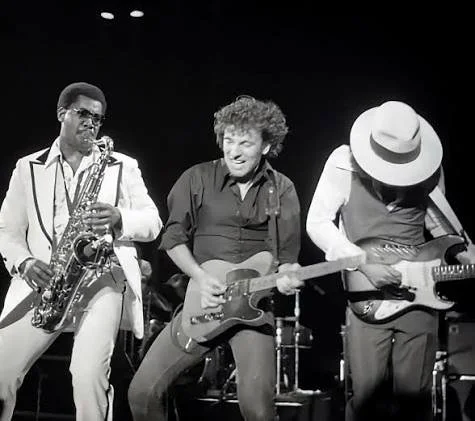
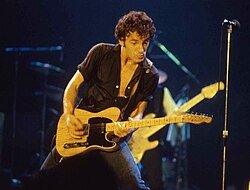
Springsteen became one of the major figures in American arena rock while maintaining a grounded, blue-collar songwriting perspective that distinguished him from many of his contemporaries. Born in 1949 in Long Branch, New Jersey, he grew up in a working-class household, a background that informed the working-class narratives in his songs. In the 1960s, Springsteen began performing in local clubs, drawing on folk, early rock and roll, and rhythm and blues. He signed with Columbia Records in the early 1970s, and his first two albums, Greetings from Asbury Park, N.J. (1973) and The Wild, the Innocent & the E Street Shuffle (1973), demonstrated his lyrical ambition and narrative style, though they achieved only modest commercial attention.With the formation of the E Street Band, Springsteen developed a sound that merged folk-inspired lyricism with muscular rock instrumentation, allowing him to combine intimate storytelling with large-scale performance.
Born to Run (1975) marked Springsteen’s breakthrough. The album’s layered production—including multi-tracked guitars and driving rhythms alongside Clarence Clemons’ saxophone solos—echoed the grandeur of Phil Spector’s “Wall of Sound.” Musically, the album blended several traditions, including rock and roll, R&B, and folk-based songwriting, combining the essence of 1950s rock with the beatnik-influenced lyricism of 1960s folk, projected onto the uncertainties of mid-1970s America. Songs like “Thunder Road” and “Jungleland” portrayed small-town dreamers seeking escape, love, and redemption, while the title track’s dynamic crescendos and impassioned vocal delivery exemplified arena-ready rock. Despite its grand production, the album remained grounded in the struggles and aspirations of working- and middle-class Americans, lending Springsteen’s music a sense of authenticity that resonated with audiences. Writing the album’s lyrics was a painstaking process; Springsteen sought to avoid rock clichés, instead creating fully developed characters navigating the aftermath of the Vietnam War, Watergate, and economic uncertainty. Born to Run presents both a nostalgic reflection and a critique of the unfulfilled American Dream, with its heroes often fleeing instability in search of personal freedom.
Springsteen continued to refine his arena rock sound while deepening his thematic focus on working-class life. Darkness on the Edge of Town (1978) presented a starker, more introspective view, pairing stripped-down arrangements with narratives of disillusionment and perseverance. The River (1980) balanced this sobriety with more accessible, anthem-like songs, such as “Hungry Heart,” allowing Springsteen to combine storytelling intimacy with larger-scale audience engagement.
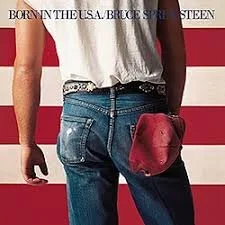
The album Born in the U.S.A. (1984) broadened the arena rock style he had developed in earlier albums by incorporating production techniques typical of 1980s popular music, including synthesizers, electronic drum textures, and highly polished radio-oriented mixing. Although the record drew more on commercial sonic styles than Springsteen’s earlier work, the album's lyrical focus remained on working-class life and the economic instability many American veterans faced after the Vietnam War. The title track, “Born in the U.S.A.,” is often mistaken for a patriotic celebration, but the lyrics portray the alienation of a returning Vietnam veteran who struggles to find employment and reintegrate into civilian society. The song’s chorus, delivered with stadium-scale vocal power, stands in tension with verses that describe poverty, social abandonment, and institutional neglect.
The record operates partly as a concept album composed of loosely connected portraits of working-class Americans in Springsteen’s mid-30s age group. Many of the characters depicted in the songs confront the erosion of economic stability and the fading of earlier life expectations. The album’s sequencing reinforces this mood. The first side opens with aggressive, high-energy tracks before gradually moving toward darker, quieter closing material such as “I'm on Fire,” whose restrained arrangement and tense atmosphere convey emotional exhaustion rather than release. Side two follows a similar pattern, beginning with the defiant optimism of “No Surrender”before the album turns toward resignation and self-examination, a trajectory that reappears in the synthesizer-driven “Dancing in the Dark” and ultimately concludes with “My Hometown.” In the final track, Springsteen sings about the decline of his birthplace and the uncertain possibility of leaving it behind with his family, creating a closing mood that approaches tragic realism through popular song.
The album's musical accessibility helped drive its commercial success. Although the lyrical content communicates social criticism, the arrangements favor stadium-friendly energy, allowing the songs to circulate widely in mainstream culture. The record produced seven consecutive Top 10 singles and sold more than fifteen million copies, following a commercial trajectory similar to that of Thriller by Michael Jackson in its ability to generate a long sequence of successful radio releases. Springsteen also produced a series of music videos for the album’s singles, helping the music adapt to the growing visual economy of popular music during the early MTV era.
The popularity of Born in the U.S.A. generated considerable political controversy. During the 1984 United States presidential campaign, President Ronald Reagan sought to capitalize on the song’s public visibility by presenting it as a token of national pride and economic optimism. This interpretation emphasized the song’s powerful chorus and flag imagery rather than its critical narrative about veteran alienation. Springsteen publicly rejected such uses of the song, explaining that his intention was to portray the hardships faced by working-class Americans rather than endorse triumphalist nationalist messaging. The iconic album cover, which shows Springsteen photographed from behind in front of the American flag, further contributed to the song’s ambiguous political reception, as the visual symbolism was often separated from the album’s darker lyrical themes.
In live performance, Springsteen became legendary for marathon concerts that could stretch beyond three hours, combining high-energy rockers with quieter, contemplative ballads, backed by The E Street Band’s expansive sound—with multiple guitars, keyboards, percussion, and saxophones. Across these works, Springsteen showed how arena rock could combine large-scale spectacle with substantive storytelling. Layered instrumentation, soaring solos, and driving rhythms made his music suitable for stadium performance, while his attention to lyrical detail preserved narrative intimacy. By blending the communal energy of arena rock with the pensive sensibilities of 1960s folk and rock, he demonstrated that stadium music could convey both the hopes and struggles of working-class life. Springsteen’s fusion of folk-inspired storytelling, R&B-infused instrumentation, and arena-ready power established him not only as a master of performance but also as a cultural chronicler of late twentieth-century America, solidifying his place as one of rock history’s most important figures.
Adult Contemporary Rock and Jazz Rock
As rock music developed through the late 1970s and early 1980s, it moved into hybrid styles that combined rock’s popularity with other musical influences. One notable development was jazz fusion, also known as jazz rock, a loosely defined category that merges rock instrumentation with the harmonic complexity and improvisational practices of modern jazz. Jazz rock encompassed both commercially successful collaborations and experimental explorations.
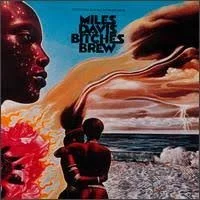
A landmark example of experimental jazz rock is Miles Davis’s Bitches Brew(1970). Davis, a central figure in modern jazz since the late 1940s and a mentor to musicians such as John Coltrane, combined avant-garde jazz with sonic textures and funky grooves inspired by Jimi Hendrix and Sly Stone. The double album featured thirteen musicians, including pianists Joe Zawinul and Chick Corea, guitarist John McLaughlin, saxophonist Wayne Shorter, and Brazilian percussionist Airto Moreira. In the studio, Davis offered minimal direction, indicating only tempos, melodies, or moods, while producer Teo Macero recorded continuously and later crafted the final recordings through editing and post-production. The result was a record that defied genre boundaries while achieving commercial success, reaching number four on the R&B chart and number thirty-five on the pop chart, and becoming Davis’s first platinum-certified release.
Other jazz-rock groups adopted a more rock-oriented, radio-friendly sound. Chicago, originally the Chicago Transit Authority, combined rock guitar with a full horn section capable of R&B-style riffs and jazz improvisation. Formed in Chicago in 1967, the band relocated to Los Angeles, where they performed as the house band at the Whisky a Go Go and opened for Jimi Hendrix and Janis Joplin on European tours. Signed to Columbia Records in 1969, their debut album reached the Top 20, and Chicago II (1970) featured hits such as “25 or 6 to 4,” exemplifying the band’s early style with Terry Kath’s descending guitar riffs, layered horns, and Peter Cetera’s harmonized vocals. Kath’s virtuosic solos, often using wah-wah pedal techniques, gave the group a distinctive voice within rock. Although Chicago gradually moved toward a smoother, adult contemporary sound after Kath’s death in 1978, their early jazz-rock fusion created a lasting imprint on both rock and popular music.
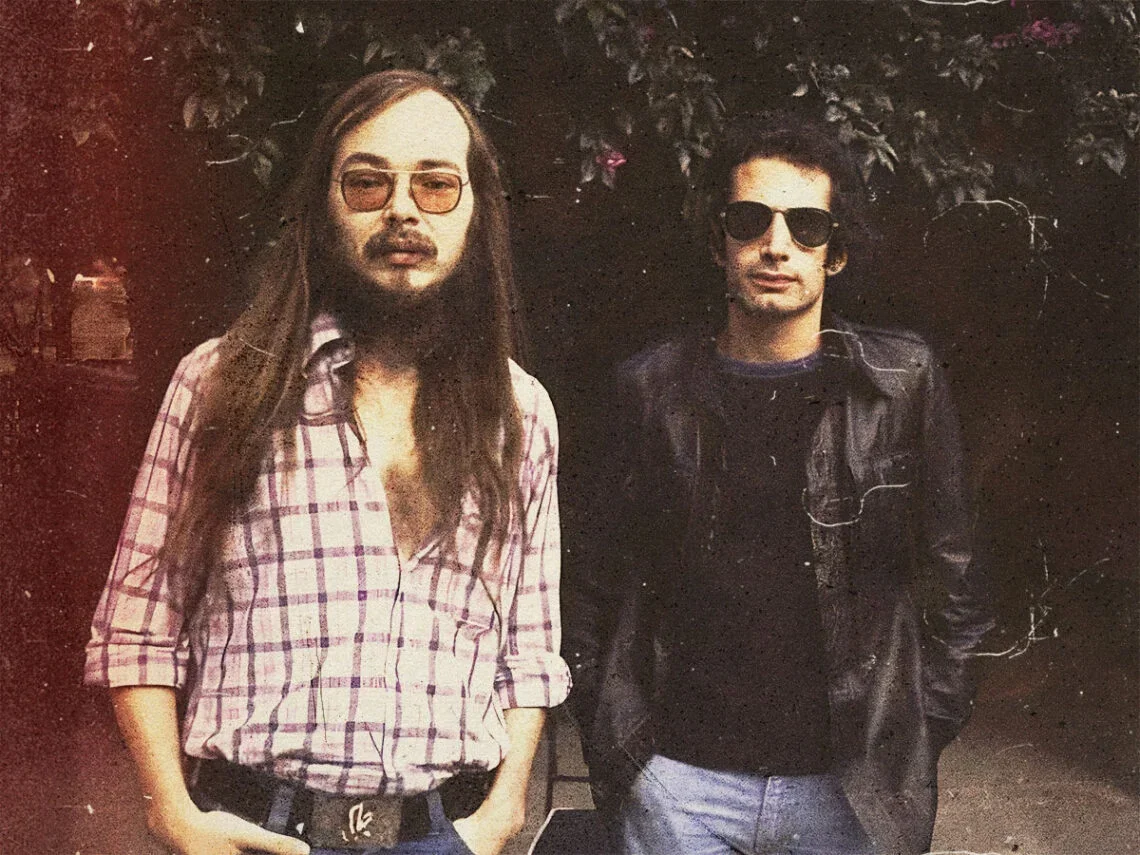
Another key example of jazz-informed rock was Steely Dan. Formed in 1972 by keyboardist and vocalist Donald Fagen and guitarist-bassist Walter Becker, Steely Dan carved out a unique space in American popular music by fusing the harmonic sophistication of jazz with the accessible structures of rock and pop. Their early albums, such as Can’t Buy a Thrill (1972) and Countdown to Ecstasy (1973), blended sharp, sardonic lyrics with inventive jazz inspired chord changes and guitar-driven rock arrangements, producing hits like “Do It Again” and “Reelin’ in the Years.” Unlike many of their arena rock contemporaries, Steely Dan quickly grew tired of extensive touring, preferring the controlled environment of the recording studio where they could refine every musical detail. The decision to stop touring helped establish their reputation as perfectionists who prized sonic precision and innovative studio techniques.
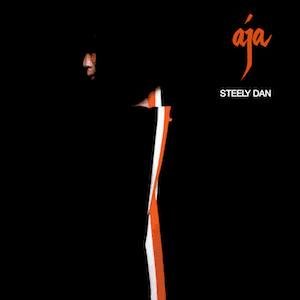
By the mid-1970s, Becker and Fagen had fully embraced a studio-centered method, recruiting elite session musicians to bring their increasingly complex musical visions to fruition. Albums like Katy Lied (1975), The Royal Scam (1976), and especially Aja (1977) showcased jazz-inflected harmonies, intricate rhythms, and meticulous arrangements that blurred the lines between popular rock and modern jazz. Aja, often regarded as their masterpiece, featured contributions from top players such as saxophonist Wayne Shorter, drummer Steve Gadd, vocalist Michael McDonald, and guitarist Larry Carlton, and yielded hits like “Peg” and “Deacon Blues.” The album’s pristine production and layered textures arose from Beck and Fagen’s obsession with high audio fidelity, while Fagen’s detached vocal delivery and Becker’s biting lyrical wit conveyed themes of alienation, cynicism, and urban ennui.
Steely Dan’s music also occupied a position between two regional currents within 1970s American rock: the Los Angeles studio style often associated with the West Coast and the urban songwriting tradition linked to New York. The Los Angeles sound, heard in artists such as The Eagles and Jackson Browne, emphasized polished production, smooth vocal harmonies, and arrangements refined by professional studio musicians. Drawing on country rock, soft rock, rhythm and blues, and jazz harmony, these recordings favored clarity, relaxed tempos, and carefully balanced textures suited to FM radio. Steely Dan shared this studio orientation and worked extensively with Los Angeles session players, including guitarists such as Larry Carlton and Lee Ritenour. Albums like The Royal Scam (1976) and Aja (1977) display the hallmarks of the West Coast studio tradition: immaculate production, layered instrumental textures, and extended jazz-influenced solos performed by elite studio musicians.
At the same time, Becker and Fagen retained strong ties to the urban sensibility associated with New York songwriting. Both had grown up in the New York metropolitan area, and their lyrics often depict city life with irony and narrative detail. Their urban sensibility connects them to artists such as Billy Joel, whose work frequently centers on specific locations and social environments in New York and Long Island. Songs like New York State of Mind, Scenes from an Italian Restaurant, and Miami 2017 (Seen the Lights Go Out on Broadway) evoke the atmosphere of bars, neighborhoods, and working-class communities in the region. The New York regional character contrasts with the more sunlit imagery associated with West Coast rock, which commonly evokes highways, open landscapes, and the leisure culture of Southern California.
Steely Dan’s recordings frequently combine these two perspectives. Their music shares the technical polish and studio craftsmanship associated with Los Angeles musicians, yet their lyrics present cynical portraits of urban characters, failed dreams, and morally ambiguous situations. Songs such as Deacon Blues and Peg illustrate this mixture of styles: harmonically sophisticated arrangements performed by top-tier studio players accompany stories that convey the sharp observational tone of New York songwriting. In this sense, Steely Dan operated as a bridge between two strands of 1970s rock culture, linking the meticulous studio aesthetics of the West Coast with the narrative, city-oriented songwriting tradition associated with New York.
Their final studio album before a long hiatus, Gaucho (1980), further emphasized lush production values, particularly on the hit “Hey Nineteen.” While Steely Dan resisted classification, their polished recordings and smooth melodies later became associated with the genre “yacht rock,” even as their lyrical irony differentiated them from the genre’s more earnest practitioners. Ultimately, Steely Dan showed how rock could assimilate jazz influences without sacrificing commercial viability, leaving a legacy as one of the most musically sophisticated acts of the 1970s.
Yacht Rock
While Steely Dan may have resisted the label, the term “Yacht Rock” has since been applied to a style of American soft rock that emerged in the mid-1970s and remained commercially popular through the early 1980s. The phrase itself was not coined until 2005, yet the music it refers to featured smooth production and strong melodic writing and became a widely heard rock style in the latter half of the decade. At the time, the style was more commonly described as “adult-oriented rock” or the “West Coast Sound.” The term “yacht rock” appeared decades later through a satirical online video series called Yacht Rock, produced by J.D. Ryznar, which linked the music to Southern California’s leisure culture of sailing and beaches. Although originally used mockingly, the phrase stuck, and by the 2010s, the genre was reappraised as one of the most enduring sounds of its era.
Stylistically, yacht rock blended rock with soul, jazz fusion, R&B, funk, and disco, favoring smoothness over aggression and creating steady, rhythmically engaging grooves. Vocal harmonies and electric-piano arrangements sat at the center of the sound, supported by carefully controlled studio production. Even songs about heartbreak or longing remained restrained, avoiding raw intensity. Music journalist Matt Colier summarized the genre’s rules as: keep it smooth, keep emotions light, and always keep it catchy. The mixture of melodic rock with R&B and funk rhythms produced a buoyant rhythmic feel, balancing surface optimism with undertones of thwarted desire.
Yacht rock also reflected broader cultural shifts of the 1970s. Whereas the counterculture of the 1960s championed collective idealism, yacht rock turned inward, favoring individualism and private forms of escape. Journalist Steven Orlofsky described it as “art untouched by the outside world,” serving as a retreat from the turbulence of Vietnam, the civil rights struggles, and the Watergate scandal. In this sense, yacht rock expressed a form of introspective individualism that followed the decline of the mass-movement idealism associated with the 1960s. Many songs present male narrators who speak directly about emotional vulnerability—admitting regret, apologizing to lovers, or reflecting on failed relationships. In a rock culture that had long celebrated masculine toughness and sexual bravado, this style allowed male performers to present sensitivity without abandoning their role as the song's central voice. The result was a repertoire in which men articulate feelings of uncertainty, longing, and self-examination in ways that resonated with an audience that included many female listeners.
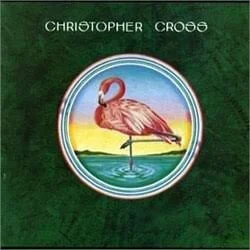
The singer-songwriter Christopher Cross embodied these qualities more fully than anyone. His track, “Sailing” (1979), paired lush string arrangements with lyrics of escape and aspiration, while “Ride Like the Wind” dramatized the exhilaration of leaving responsibilities behind. In 1981, Cross swept the Grammy Awards, winning Album of the Year, Record of the Year, Song of the Year, and Best New Artist—a feat only replicated by Billie Eilish in 2020. Steely Dan’s Aja (1977) offered a more cerebral musical direction, fusing jazz harmonies with ironic lyrics, while Fleetwood Mac and the Eagles occasionally explored the style, demonstrating how porous its boundaries could be.
Prominent artists in this style included Kenny Loggins, Michael McDonald, Christopher Cross, Toto, and Steely Dan. Rupert Holmes, Hall & Oates, and Jim Messina refined this sound into the West Coast blend of studio polish and relaxed groove associated with yacht rock. These musicians collaborated frequently and worked within a tightly connected Los Angeles studio network. Loggins’s partnership with McDonald produced “This Is It.” This network of shared songwriters, session players, and producers gave yacht rock a cohesive identity despite stylistic variation.
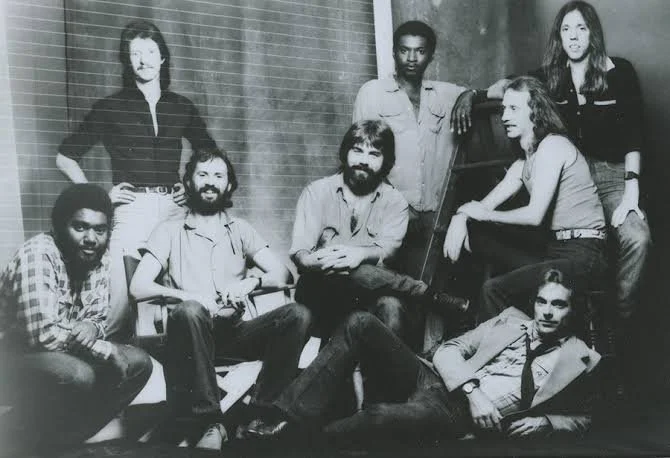
The Doobie Brothers exemplify the shift that many artists underwent from hard rock to yacht rock in the late 1970s. Formed in 1970 in Northern California, the band initially showcased a guitar-driven boogie rock sound reminiscent of bands in the psychedelic rock tradition, as evident in tracks like “Listen to the Music” and “Long Train Runnin’.” However, with the arrival of Michael McDonald in 1975, the band’s sound underwent a significant change. His gospel-influenced baritone and use of electric piano introduced jazz harmonies and smoother textures, establishing the group as one of yacht rock's preeminent acts.
The Doobie Brothers' stylistic evolution culminated in the Grammy-winning Minute by Minute (1978). Its standout track, “What a Fool Believes,” captures many features of the style with McDonald's syncopated piano playing, later known as the “Doobie Bounce,” layered harmonies, and lyrics of frustrated love. The song became not only a yacht rock anthem but one of the signature singles of late 1970s pop. Under McDonald’s influence, the Doobie Brothers bridged the gap between arena rock and yacht sophistication, showing how adaptable the genre could be.
Toto
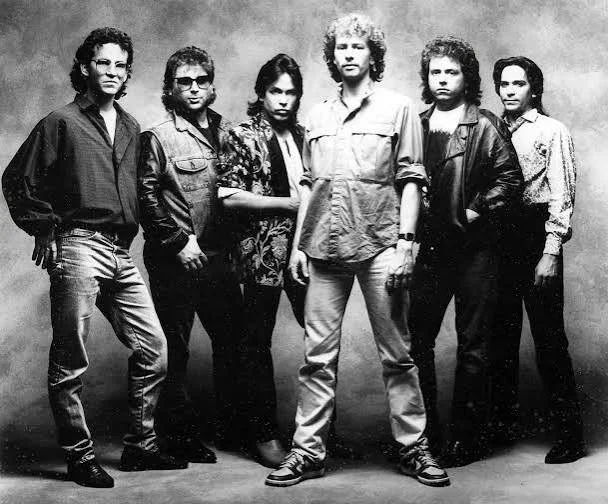
Toto emerged in the late 1970s as a quintessential studio band, fluently blending rock, jazz, funk, and pop with technical fineness and a polished sound. The group mainly consisted of accomplished session musicians from Los Angeles, each with decades of recording experience working with artists such as Steely Dan, Boz Scaggs, and Michael Jackson. Their insider knowledge of studio production, combined with virtuosic musicianship, enabled them to create music that was both radio-friendly and harmonically sophisticated. Their combined studio experience and technical virtuosity established Toto as a central act of the late 1970s and early 1980s soft rock and yacht rock scenes.
Before forming Toto, the members had played on records by Steely Dan, Boz Scaggs, and Seals & Crofts, among many others. Their technical polish and adaptability made them indispensable in the studio, and this background gave Toto a musical identity that combined virtuosity with accessibility.
Toto’s big break came through work on Boz Scaggs’ Silk Degrees (1976), where David Paich and Jeff Porcaro helped craft hits like “Lowdown” and “Lido Shuffle,” foreshadowing the smooth, sophisticated West Coast sound they would later define. Their own debut album, released in 1978, featured “Hold the Line,” a hard-edged, tightly arranged anthem that demonstrated their skill in balancing rock energy with studio polish. Their reputation increased through their own music and as in-demand session musicians, working with artists such as Elton John, Aretha Franklin, and Quincy Jones.
The song “Rosanna” from Toto’s 1982 album, Toto IV, exemplifies the band’s rhythmic virtuosity, anchored by Jeff Porcaro’s iconic “Purdie Shuffle.” This distinctive drum groove, named after legendary session drummer Bernard Purdie, blends a half-time backbeat with a triplet-based hi-hat swing, subtle ghost notes on the snare, and syncopated bass drum accents. Porcaro’s adaptation was also inspired by John Bonham’s shuffle on Led Zeppelin’s“Fool in the Rain,” resulting in a rhythm that is both relaxed and driving, showcasing Toto’s ability to integrate jazz and funk influences into mainstream rock.
If “Rosanna” showcased Toto’s rhythmic control, “Africa” displayed their mastery of atmosphere and texture. The song emerged from David Paich’s fascination with global sounds, filtered through the technological resources of early 1980s production. Layered synthesizers provided lush harmonic backdrops, while percussion instruments blended with Jeff Porcaro’s driving beat, creating a sense of both spaciousness and intimacy. The chorus, with its soaring vocal harmonies, embodied the genre’s penchant for grandeur without sacrificing accessibility.
Perhaps their most significant studio collaboration came on Michael Jackson’s Thriller (1982), the best-selling album of all time. Jeff Porcaro, Steve Lukather, and David Paich contributed extensively to the album’s recording. Lukather’s guitar prominently features on “Beat It,” where he doubled Eddie Van Halen’s famous solo with rhythm parts and provided the muscular riff that anchored the track. Jeff Porcaro contributed percussion across several songs, while David Paich handled arrangements and keyboard textures, giving the album its polish. Steve Porcaro co-wrote “Human Nature,”one of the album’s most beloved ballads, blending delicate synth lines with Jackson’s vulnerable vocals. Toto’s contributions provided the sonic sheen that made Thriller both a commercial juggernaut and a landmark of studio craftsmanship.
Reggae
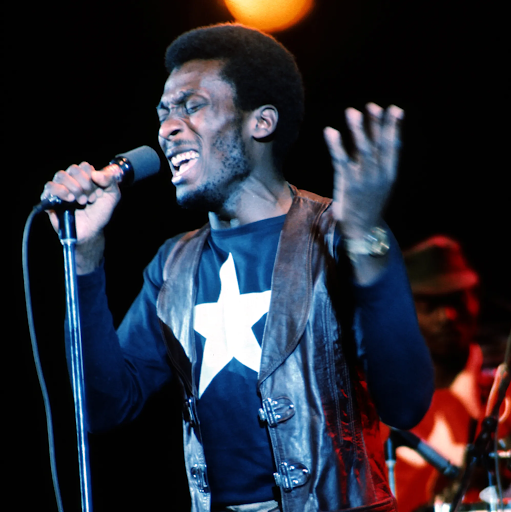
During the 1970s, reggae entered the international mainstream and gained widespread popularity among rock audiences. The genre originated in Jamaica and developed from earlier Caribbean popular music while absorbing elements of American rhythm and blues and soul. By the middle of the decade, reggae circulated widely in Britain and the United States, where rock musicians, punk bands, and later hip-hop artists began drawing on its rhythmical and stylistic vocabulary. Its international circulation reflects a larger pattern in the history of rock: musical ideas that once traveled outward from the United States returned after being adapted through other musical cultures.
Cultural exchange between Jamaica and the United States began well before reggae itself appeared. In the late 1950s, American audiences briefly encountered Caribbean music through the calypso craze, which included recordings such as “Jamaica Farewell” by Harry Belafonte. At the same time, Jamaican listeners consumed large amounts of American rhythm and blues. Jamaican radio initially followed a conservative, BBC-style format, but portable radios enabled listeners to tune in to powerful stations broadcasting from New Orleans and Florida. Through these broadcasts, Jamaican audiences became familiar with performers such as Fats Domino and the relaxed rhythmic feel associated with New Orleans rhythm and blues.
Because imported American records were limited in number, Jamaican entrepreneurs developed a distinctive way to circulate music. “Sound system” operators assembled powerful mobile speaker systems, commonly mounted on trucks, and traveled from neighborhood to neighborhood staging public dances. Competition between operators led to various tactics intended to protect exclusive material. Some removed labels from records so rival promoters could not identify them. Others hired disc jockeys who spoke rhythmically over the recordings, improvising rhymes that displayed verbal skill and audience rapport. These spoken performances foreshadowed the Jamaican practice of “toasting,” a rhythmic vocal style that subsequently influenced rap in the United States.
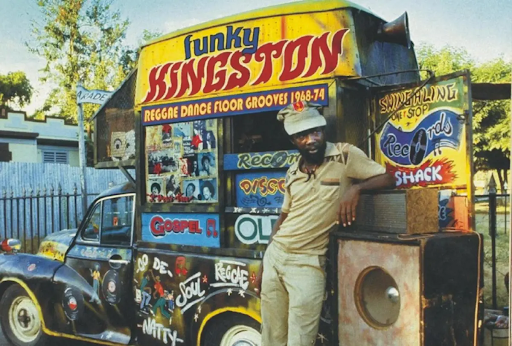
Jamaican popular music began to develop its own recognizable styles during the early 1960s. The first widely recognized genre was ska, a fast-paced style influenced by American R&B that featured a prominent offbeat rhythm commonly described as the “skank.” Ska ensembles typically included a rhythm section of piano, bass, guitar, and drums supported by brass and saxophones. By the middle of the decade, this style slowed into rocksteady, popular roughly between 1966 and 1968. Rock steady emphasized heavier bass lines and a more relaxed tempo, partly influenced by African-derived burru drumming traditions heard in Rastafarian gatherings. Lyrics increasingly addressed social and political issues affecting Jamaican society.
Out of rocksteady, reggae developed in the late 1960s. The tempo slowed further, producing wider rhythmic space and placing bass and drums at the center of the musical texture. Guitar and keyboard instruments usually play short, percussive chords on the offbeats, while the bass line carries much of the melodic movement through repeating patterns. These repeating patterns—known as “riddims”—form the structural basis of reggae performance and allow singers or instrumentalists to build multiple songs over the same rhythmic framework. American soul music also influenced reggae’s vocal style and groove orientation; recordings by artists such as James Brown and Aretha Franklin were widely heard by Jamaican musicians.
Reggae also drew on the ideology of the Rastafarian movement. Inspired by the teachings of Jamaican activist Marcus Garvey, Rastafarian belief recognized the Ethiopian emperor Haile Selassie I as a divine figure and interpreted biblical imagery through the historical experience of slavery and colonial rule. Rastafarian culture developed recognizable practices including dreadlock hairstyles, ritual use of marijuana, and symbolic language that described oppressive political systems as “Babylon.” Reggae musicians incorporated these ideas into their lyrics, shifting attention away from the love songs common in earlier Jamaican pop toward themes of liberation, social injustice, and spiritual redemption.
Reggae’s international rise during the 1970s centered on several performers, especially Bob Marley and Jimmy Cliff. Cliff played a major role in introducing reggae to American audiences through the independent film The Harder They Come (1972). The film follows a young Jamaican singer navigating Kingston’s music industry and includes a soundtrack featuring Cliff along with artists such as Toots and the Maytals. Although the film reached a relatively small theatrical audience, it developed a strong following on college campuses and in repertory theaters, where many American listeners first encountered reggae music.
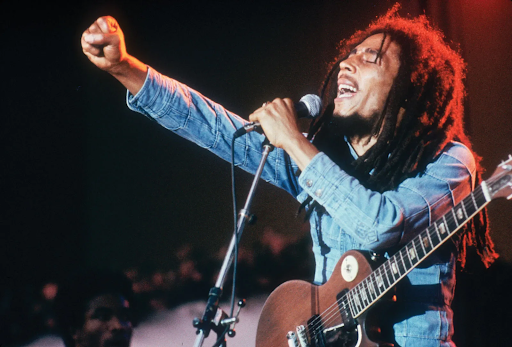
Bob Marley became reggae’s most internationally recognizable figure through a musical style that linked Jamaican popular traditions with global rock markets and political commentary. Born in St. Ann Parish in 1945, Marley spent his teenage years in Kingston, where he formed the vocal group The Wailers with Peter Tosh and Bunny Wailer. Early collaborations with producer Lee Perry played an important role in the group's early musical direction before Marley signed with Island Records, led by producer Chris Blackwell. Blackwell sought to introduce reggae to rock-oriented international audiences and supported recordings that blended Jamaican rhythmic arrangements with production techniques associated with contemporary rock music.
The Wailers’ albums Catch a Fire (1973) and Burnin' brought reggae into the global popular music market. Tracks such as “Get Up, Stand Up,” co-written with Tosh, revolve around bass-centered grooves built on reggae’s offbeat rhythmic emphasis, while call-and-response vocal structures link Marley’s lead phrasing with collective responses from the band. The lyrics call for resistance to political oppression and challenge religious doctrines that promise justice only after death, connecting everyday social struggle with political critique. “I Shot the Sheriff” similarly frames institutional authority as unjust, presenting the narrator’s conflict with state power through political allegory.
Marley’s political vision drew heavily from Rastafarian philosophy, which interpreted African diaspora history through the lens of exile, spiritual renewal, and liberation from colonial structures. Songs such as “Concrete Jungle” portray the social alienation of urban poverty in Kingston, while “Slave Driver” references plantation slavery and traces its continuing social and economic consequences. This orientation carried forward into later recordings. “War,” released on Rastaman Vibration (1976), adapts language from a speech by Emperor Haile Selassie I of Ethiopia that condemns racial inequality and colonial rule. Meanwhile, “Exodus” (1977) frames liberation as a continuous spiritual and political movement rather than a single historical event.
Marley also often communicated political themes through music that sounded reflective and intimate rather than overtly militant. “Three Little Birds,” released on Exodus (1977), uses a relaxed rhythmic pattern and simple melodic contour to convey reassurance, repeating the line that “every little thing is gonna be alright.” The song expresses spiritual confidence grounded in Rastafarian faith and collective endurance. In contrast, “Redemption Song,” recorded for Uprising (1980), removes the band arrangement entirely and presents Marley alone with an acoustic guitar. The lyrics draw directly from anti-colonial thought, particularly the 1937 speech of Marcus Garvey, urging listeners to “emancipate yourselves from mental slavery.” The stripped instrumentation shifts attention toward historical consciousness, presenting emancipation as both psychological and political.
Marley’s public identity spanned beyond music into religious and political symbolism. He became widely associated with Rastafarian spirituality, incorporating biblical imagery and diaspora-centered philosophy into his work. His public support for democratic social reform and his advocacy for the legalization of cannabis related to Rastafarian views that regarded the plant, often called “ganja,” as an aid to meditation and spiritual reflection.
Marley’s later work expressed a developed pan-African political vision formed by the influence of Garvey’s philosophy. Songs including “Zimbabwe,” “Survival,” “Blackman Redemption,” and “Africa Unite” articulate solidarity with African independence movements and celebrate the end of European colonial rule across the continent. In “Zimbabwe,” Marley links the fall of white minority rule in southern Africa to a broader vision of diaspora unity. “Africa Unite” imagines transnational African solidarity against what Marley described as “Babylon,” a metaphor for imperial and capitalist domination. Through this repertoire, Marley functioned simultaneously as a popular musician, cultural ambassador for Jamaica, and political voice for postcolonial and diasporic identity.
Reggae entered the American rock mainstream when Eric Clapton recorded a cover of Marley’s song “I Shot the Sheriff” on the album 461 Ocean Boulevard. Clapton’s version reached number one on the U.S. charts in 1974 and encouraged rock listeners to delve into Marley’s recordings. By the middle of the decade, Marley’s albums appeared regularly on American charts, including Rastaman Vibration (1976) and Exodus (1977). Concert tours drew large international audiences and established Marley as a major global figure in popular music.
Reggae also entered rock directly through stylistic borrowing. British and American rock musicians began experimenting with reggae rhythms, bass patterns, and offbeat guitar accents. For example, The Police built several early recordings around reggae grooves, including “Roxanne” and “So Lonely,” which combine rock instrumentation with reggae-influenced rhythmic designs. Elvis Costello recorded “Watching the Detectives,” a song built around a slow reggae rhythm section while incorporating the lyrical perspective of British punk. Folk-rock artists also drew on these influences; Paul Simon incorporated reggae-influenced rhythm-guitar patterns in recordings such as “Mother and Child Reunion,” which he recorded in Kingston with Jamaican studio musicians.
Reggae rhythms also appeared in punk and new wave scenes in Britain, where Jamaican immigrant communities had already established strong sound-system traditions. Bands such as The Clash recorded reggae-influenced tracks, including “Police and Thieves,” a cover of a Jamaican song originally recorded by Junior Murvin. Through these recordings, reggae rhythms entered the vocabulary of British rock during the late 1970s.
Another Jamaican innovation that impacted later music was dub production. Producers created alternate mixes of reggae recordings that removed lead vocals and emphasized bass, drums, and studio effects such as echo and reverb. These instrumental tracks allowed vocalists or disc jockeys to improvise spoken or sung lines over the rhythm. The practice of performing over pre-existing rhythmic tracks contributed to the development of rap performance in the United States during the late 1970s and early 1980s.
Within the larger history of American popular music, reggae demonstrates how musical exchange during the 1970s moved in multiple directions across the Atlantic world. American rhythm and blues and soul influenced Jamaican musicians during the 1950s and 1960s; Jamaican artists adapted those influences into new rhythmic forms, and those forms later returned to Britain and the United States through reggae’s international success. As rock musicians adopted reggae rhythms, bass patterns, and production methods, the genre became part of the larger musical vocabulary, influencing rock, punk, and hip-hop in the final decades of the twentieth century.
Chapter 26: Conclusion
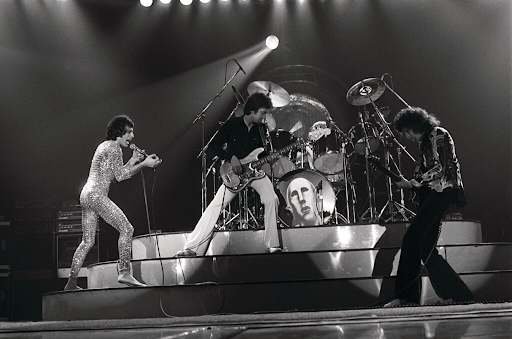
The late 1970s were a period when rock music synthesized the innovations of the early decade, combining technical ambition with commercial appeal. Across musical genres, artists drew on earlier styles such as blues, jazz, and R&B, as well as funk traditions, creating music that combined harmonic complexity with accessibility. Hard rock bands emphasized distorted guitars, driving rhythms, and virtuosic solos, while album-oriented rock favored cohesive, carefully produced recordings intended for both radio play and deep listening experiences. Arena rock amplified these qualities for live performance, with soaring vocals, layered instrumentation, and anthemic arrangements capable of filling stadiums.
Even as music became more commercially oriented, many bands retained elements of 1960s countercultural sensibilities. Folk and psychedelic influences continued to appear in lyrics and melodic writing, while studio innovations allowed for increasingly elaborate arrangements. Multitrack recording, session musicians, and detailed production techniques enabled artists to refine complex harmonies, instrumental textures, and sonic layering, bridging technical ambition and popular appeal.
Culturally, the music of the late 1970s showed a shift from collective political idealism to individualized expression and self-reflection. Songs balanced spectacle and intimacy, presenting audiences both the grandeur of communal performance and moments of personal, emotional resonance. The duality between commercial success and artistic sophistication and between energy and nuance appears throughout the decade’s popular music.
Ultimately, the period illustrates how rock evolved into a multifaceted cultural force. By consolidating the innovations of the 1960s and early 1970s, refining studio techniques, and negotiating the demands of radio, arena, and album formats, late-1970s rock established models that later artists continued to follow. The decade demonstrates that popular music could simultaneously express artistic ambition, technological advancement, and the changing social and emotional concerns of its audience.
Chapter 26: Further Reading
Alleyne, Mike. “Globalisation and Commercialisation of Caribbean Music.” Popular Music History 3, no. 3 (2009): 247–73.
Backus, Lee. “An Annotated Bibliography of Selected Sources on Jamaican Music.” Black Perspective in Music 8, no. 1 (1980): 35.
Baker, Matthew Reed. 1970s Jazz Fusion. 1st ed. New York: Bloomsbury Academic, 2025. https://doi.org/10.5040/9798765119556.
Bashe, Philip. Heavy Metal Thunder. Garden City, NY: Doubleday, 1985.
Bradley, Lloyd. Bass Culture: When Reggae Was King. London: Penguin, 2000.
Cavicchi, David. Tramps Like Us: Music and Meaning Among Springsteen Fans. New York: Oxford University Press, 1998.
Cee, Gary. Classic Rock. New York: Billboard Books, 1995.
Chang, Kevin O’Brien, and Wayne Chen. Reggae Routes: The Story of Jamaican Music. Philadelphia: Temple University Press, 1998.
Clarke, Sebastian. Jah Music: The Evolution of the Popular Jamaican Song. London: Heinemann, 1982.
Cross, Charles., et al., eds. Backstreets: Springsteen, The Man and His Music. New York: Harmony, 1989.
Cowie, Jefferson., and Lauren. Boehm. “Dead Man’s Town: ‘Born in the U.S.A.,’ Social History, and Working-Class Identity.” American Quarterly 58, no. 2 (2006): 353–78.
Cullen, Jim. Born in the U.S.A.: Bruce Springsteen and the American Tradition. Middletown, CT: Wesleyan University Press, 2005.
Davis, Stephen. Bob Marley. Rochester, VT: Schenkman Books, 1990. Revised edition, 1998.
Davis, Stephen. Reggae Bloodlines: In Search of the Music and Culture of Jamaica. London: Heinemann, 1977. 2nd ed., 1992.
Davis, Stephen, and Peter Simon, eds. Reggae International. London: Aurum Press, 1983.
Ethen, Michael. A Spatial History of Arena Rock, 1964–1979. PhD diss., McGill University, 2011.
Frith, Simon. “Only Dancing: David Bowie Flirts with the Issues.” In Zoot Suits and Second Hand Dresses, edited by A. McRobbie, 132–40. London: Macmillan, 1989.
———. “The Real Thing—Bruce Springsteen.” In Music for Pleasure, 94–104. New York: Routledge, 1988.
Hatch, David, and Stephen Millward. From Blues to Rock. Manchester: Manchester University Press, 1987.
Jahn, Brian, and Tom Webber. Reggae Island: Jamaican Music in the Digital Age. Kingston: Ian Randle Publishers, 1994.
Johnson, Howard, and Jim Pines. Reggae: Deep Roots Music. New York: Proteus Books, 1982.
Katz, David. Solid Foundation: An Oral History of Reggae. New York: Bloomsbury 2003.
Marsh, Dave. Born to Run. Garden City, NY: Doubleday, 1979.
McKnight, Cathy, and John Tobler. Bob Marley and the Roots of Reggae. London: Omnibus Press, 1977.
Moore, Allan F. Rock: The Primary Text. Buckingham: Open University Press, 1993.
Prato, Greg, and Fred Armisen. The Yacht Rock Book: The Oral History of the Soft, Smooth Sounds of the 70s and 80s. 1st ed. La Vergne: Jawbone Press, 2018.
Springsteen, Bruce. Songs. New York: HarperCollins, 1998.
Thompson, Dave. I Hate New Music: The Classic Rock Manifesto. New York: Wiley, 2008.
Waksman, Steve. This Ain’t the Summer of Love: Conflict and Crossover in Heavy Metal and Punk. Berkeley: University of California Press, 2009.
White, Timothy. Catch a Fire: The Life of Bob Marley. New York: Henry Holt, 1992. Revised edition, 1998.
Winders, Jamie A. “Reggae, Rastafarians and Revolution.” Journal of Popular Culture
17, no. 1 (1983): 61–73. Reprinted in American Popular Music, vol. 2, The Age of Rock, edited by Timothy E. Scheurer, 225–39. Bowling Green, OH: Bowling Green State University Popular Press, 1990.