Introduction

What this Book is and its Scope

This book is a survey of American popular music from the nineteenth century to the present day. It begins with studies of colonial-era musical practices and minstrelsy, then traces major developments in American music history, including Tin Pan Alley, jazz, rock and roll, country, soul, funk, disco, punk rock, hip-hop, and more, through to the present day. The aim is to provide readers with a broad stylistic and historical overview of the music that has shaped and reflected American cultural identity over the last two centuries.
Rather than treating music solely as entertainment, this book approaches popular music through a historical and cultural lens that sees music as an art form that reflects, critiques, and often helps shape the social, cultural, and political dynamics of its time. Each chapter combines listening examples, musical analysis, historical background, and cultural critique to help readers better understand the development of American popular music and the values, conflicts, and identities it expresses.
By engaging with this book, readers will be able to:
Identify key musical works and specific stylistic features in a wide range of genres.
Situate popular music within broader narratives of American history, politics, and cultural change.
Assess the evolving relationship between music and culture, including how musical practices respond to social movements, technological shifts, and market forces.
Examine how issues of race, class, gender, and power are expressed, contested, and negotiated through music.
Describe how aesthetic values and cultural identities have been shaped and communicated through popular music over time.
This book is designed for and welcomes readers at all levels and assumes no prior background in music theory. Key musical concepts will be explained throughout the text, and analysis will be presented in clear, accessible language. Listening examples and key terms are included throughout to help readers engage actively with the music and the historical narratives that surround it.
Why This Book?
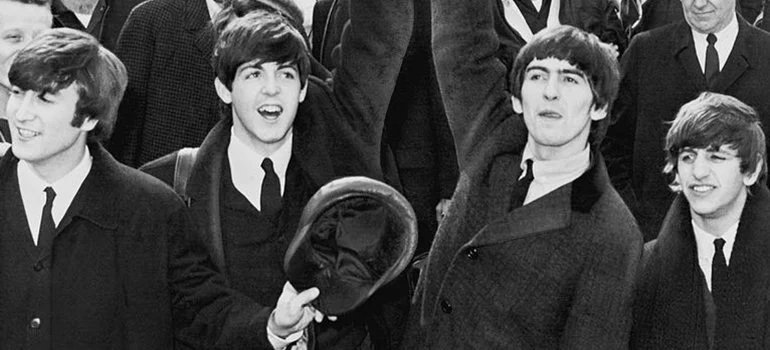
Certainly, there is a plethora of literature on the subject of American popular music. A small-sized library could be filled with books about The Beatles and their influence on American music alone. Yet despite this abundance, relatively few resources offer a comprehensive and inclusive history that moves beyond isolated genres, individual artists, or narrowly focused subcultures. Many existing surveys focus almost exclusively on rock and roll, while others rely heavily on entertainment journalism rather than critical or scholarly analysis.
Twenty-first-century surveys in particular are especially limited. For the past sixty years, rock music has dominated the scholarly discussion of American popular music. Because much of contemporary rock music has moved into underground or independent (also known as indie) scenes, many surveys tend to prioritize these movements to cover rock’s development while simultaneously overlooking mainstream genres such as hip hop, pop, country, Latin crossover, and electronic music that doBecause much of contemporary rock music has moved into underground or independent (also known as indie) scenes, many surveys tend to focus on these movements to cover rock's development while simultaneously overlooking mainstream genres such as hip hop, pop, country, Latin crossover and electronic music that dominate the charts and streaming services platforms. Additionally, many of these surveys end before the 2010s and 2020s. However, these decades have dramatically and fundamentally reshaped how popular music is created, distributed, and consumed through social media, streaming services, algorithmic recommendation systems, and other digital platforms that now play a central role in shaping musical taste and visibility.
Part of this omission may stem from a prevailing belief that recent decades have offered “no new music.” According to this view, the 21st century is marked by stylistic repetition, marketed nostalgia, or aesthetic recycling. But this raises a more meaningful set of questions:
Why are certain styles, sounds, and aesthetics continually revisited and reimagined?
What does this pattern reveal about cultural memory, technological influence, and the ways listeners relate to the past in a digital age?
Is recycling a failure of innovation, or is it a creative strategy for navigating an oversaturated, ever-shifting media environment?
Perhaps this dynamic is best seen in Benson Boone’s 2025 performance at the Coachella Valley Music and Arts Festival, where he was joined by Queen guitarist Brian May for a rendition of “Bohemian Rhapsody.” Boone appeared in a glittering jumpsuit that evoked the flamboyance of 1970s pop icons, signaling a conscious embrace of retro spectacle. In doing so, he reintroduced a song more than half a century old to a contemporary audience, most of whom had no lived memory of its original release or the cultural milieu that birthed the song, effectively recontextualizing the anthem for a new generation.

However, by framing the 21st century not as a period of decline but as a period of redefinition, this book encourages readers to think critically about how and why musical ideas persist, reappear, and evolve. The goal is not to dismiss recycled sounds but to understand their cultural function and to explore what they reveal about contemporary identity, nostalgia, authorship, and the future of popular music.
In this book, I seek to offer a historically grounded, genre-inclusive, and critically informed introduction to American popular music. At a moment when more music is available to listeners than at any other time in history, the sheer volume of content can feel overwhelming. This book is designed to offer tools for navigating that complexity. Ultimately, the book's main purpose is to organize and contextualize the vast and diverse repertoire of American popular music—a body of work spanning more than 200 years—to make it easier to understand and appreciate.
Finally, in this time of heightened national polarization, the book approaches American musical identity as a reflection of the country’s cultural plurality. American popular music has always been shaped by the intersection of multiple identities: regional, racial, gendered, economic, and generational. To understand that music is to better understand the multiplicity of American experiences.
Why Study Popular Music?
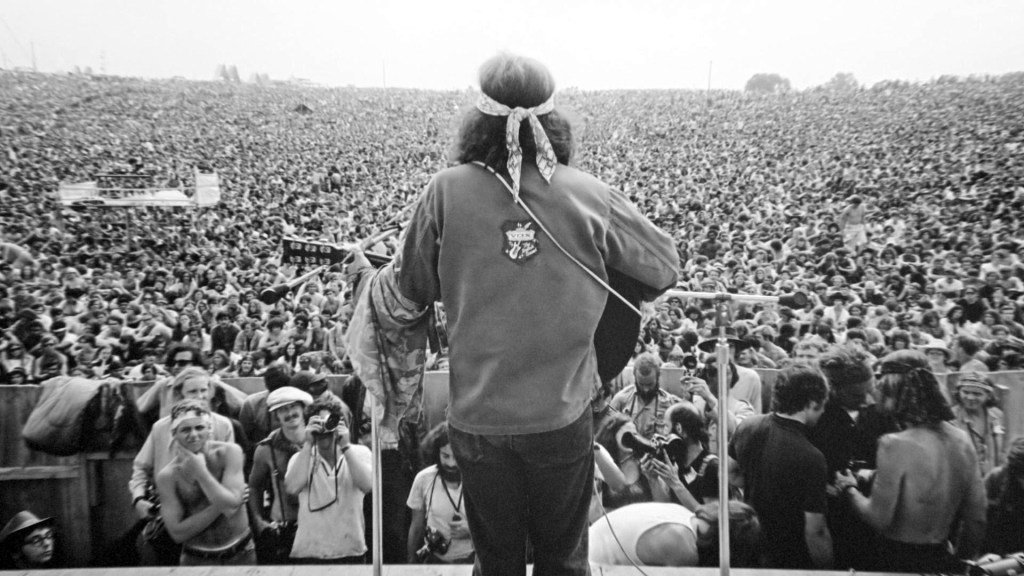
Popular music does not exist in a vacuum. From its earliest forms, American popular music has been deeply entangled with broader cultural dynamics, including race, class, gender, technology, and economics. It sits at the crossroads of artistic expression and commercial enterprise, individual identity and mass culture, vernacular creativity and institutional power. Studying popular music allows us to trace how these tensions are negotiated through sound, performance, image, and industry.
Popular music has played an enormous role in shaping the Western musical tradition in the modern era. While rock music has often taken center stage in academic and media narratives, the influence of genres such as jazz, country, soul, funk, hip-hop, and pop also extends far beyond entertainment. These styles have helped shape language, identity, politics, fashion, protest movements, and cultural memory. Importantly, studying popular music also helps dismantle a persistent stigma that it is somehow less worthy of scholarly attention than so-called “serious” or “high” art. This book rejects that binary. Popular music is neither inherently high nor low art; it is a rich, complex, and vital expression of culture, deserving of historical inquiry and critical reflection. This book encourages readers to explore how these themes unfold across different genres, historical periods, and social contexts. To study it is to better understand the American experience itself; its contradictions, its diversity, and its ongoing evolution through the music that gives it voice.
What is Popular Music?
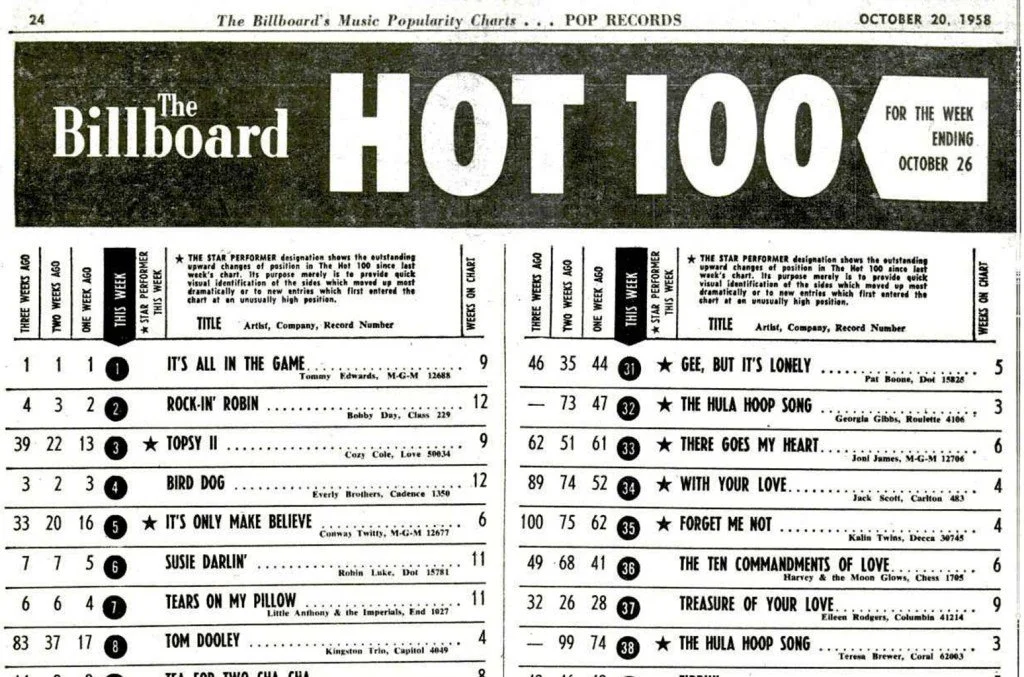
As we begin our study of popular music, it is important to establish a shared understanding of what the term entails. Popular music refers to music that is commercially produced and widely distributed, intended for mass consumption by a broad audience. It typically circulates through commercial media such as radio, television, film, digital streaming platforms, and social media, and reflects prevailing tastes, cultural trends, and social values of a given time. Studying popular music requires more than simply tracking what topped the charts. While chart success often signals public enthusiasm or popularity, it doesn’t always reflect a song or artist’s cultural significance or long-term impact. Many highly influential musicians never had mainstream hits, and some commercially successful music fades quickly from memory. Ultimately, chart success is a cultural barometer; an important lens, but not the only one, for evaluating the value audiences ascribe to certain styles of music present in American life.
In discussions of popular music, “the charts” typically refer to ranked listings of songs or albums based on various metrics of commercial success, including sales, radio airplay, streaming data, and online engagement. Examples include the Billboard Hot 100, Billboard Top 40, and genre-specific charts (e.g., Country, R&B/Hip-Hop, Dance). These rankings serve as snapshots of listener preferences and market trends, helping to identify which songs are most prominent in a given week or era.
However, among scholars and music industry observers, charts are often viewed with understandable skepticism. For much of their history, the methodologies used to compile chart rankings were not transparent. The formulas for determining chart placement have varied widely and have often been vulnerable to manipulation by record companies, distributors, and radio promoters. The Recording Industry Association of America (RIAA) and organizations like Nielsen SoundScan have attempted to standardize data collection, but challenges remain. Charts are not precise tools for measuring a song’s artistic quality, cultural importance, or long-term influence. A record might chart well due to strong promotional backing but leave little lasting impact, while another might gain minimal initial attention but become influential over time.
Despite these limitations, charts remain among the best resources available for tracking changing listener tastes and commercial patterns. When used alongside other evidence, they help illuminate the shifting landscape of musical taste and industry strategy. Ideally, researchers would also have access to comprehensive datasets, such as historical radio playlists, exact sales figures, or streaming patterns across diverse regions. However, such data is often incomplete, inconsistent, or proprietary. For this reason, this book uses chart data not as definitive proof of artistic value, but as one lens among many to explore the shifting landscape of American popular music.
Key Questions Throughout

Throughout this book, readers will be invited not only to learn about American popular music but also to question its underlying assumptions, definitions, and cultural narratives. Some of the most important and recurring questions we will return to include:
1. What is authenticity in popular music?
Authenticity is one of the most contested and elusive concepts in popular music. Who gets to be called “authentic,” and by what criteria? Is authenticity about musical skill, cultural heritage, lyrical honesty, commercial independence, or community credibility? Or is it something else entirely, shaped by perception, branding, or audience reception? There is no single or universally accepted definition of authenticity in music. Instead, it is a shifting, often subjective ideal invoked differently across genres, time periods, and social contexts. What sounds “authentic” in one setting may be perceived as artificial or contrived in another.
For many of the students in my courses, authenticity is the central question that emerges when thinking critically about popular music. It is a term used both to praise and to dismiss, drawing lines between what is considered “real” and what is seen as “manufactured.” These conversations are deeply personal and tied to how people understand identity, taste, and belonging. In the 21st century, questions of authenticity have become even more complex and emotionally charged. We live in an era shaped by digital production, algorithmic discovery, artificial intelligence, curated personas, and global circulation. When artists are discovered on TikTok, promoted by algorithms, or vocally synthesized by machines, how do we define what is “real”? Does it still matter?
While this book will not attempt to declare any artist, genre, or era as more authentic than another, it will instead raise critical questions about how authenticity is constructed, who has the power to define it, and why those definitions matter. Readers are encouraged to reflect on how the notion of authenticity is constructed, challenged, and redefined across different genres, historical periods, and communities. Rather than treating authenticity as a fixed standard, we approach it as a social and cultural negotiation, an ongoing conversation among artists, audiences, the industry, and history.
2. What does it mean to be “American” in American popular music?
There is no single definition of what constitutes “American” music. The idea of a unified national identity has always been, at best, an oversimplification or illusion and, at worst, a means to propagate a specific brand of nationalism. American music is inherently plural, and is shaped by immigration, colonization, enslavement, displacement, and cultural blending. It includes traditions and innovations from Indigenous, African, European, Asian, Latin American, and other diasporic cultures. Over time, different genres have attempted to monopolize ownership over the American experience: from country’s appeals to rural nationalism, to rock’s myth of rebellion, to hip-hop’s assertion of urban realism. These claims often marginalize other voices and reduce American music to a narrow set of sounds, stories, or values. This book resists the impulse to reduce American popular music to any one genre, artist, or ideology. Instead, it asks critical questions: Whose stories are told? Whose voices are amplified? Who gets left out?
3. What defines success in popular music?
Is success measured by chart positions, record sales, streaming numbers, critical acclaim, influence, or longevity? The music industry often promotes commercial success as the ultimate goal, but many of the most influential artists were not major chart-toppers in their time. Others gained popularity posthumously or outside the mainstream. This book does not assign a single definition of success to any artist, genre, or metric. Instead, it encourages readers to think critically about how success is framed, what it means in different contexts, and who gets to define it.
4. If authenticity, Americanness, and success are all complex and contested, then how are artists chosen for inclusion in music histories?
This final question gets to the heart of canon formation: why are some artists remembered while others are forgotten? What cultural, economic, political, or personal forces determine who is included in textbooks, playlists, award shows, and histories? This book aims to critically engage with these questions, not by presenting a definitive list of “the greatest” artists, but by highlighting a range of voices and inviting readers to participate in the ongoing process of defining and debating the meaning of American popular music.
This textbook will attempt to provide a cohesive and fair account of the history of American popular music. Therefore, many more artists and groups will enter the story than typically appear in general-interest books or media. Some of these figures were highly influential in their time but have since faded from public memory. Others have grown in significance long after their careers began. This book does not aim to convince readers to prefer one style over another, nor to discredit or elevate any artist or genre. Instead, it offers reliable information, historical context, and informed analysis to support thoughtful engagement with a vast and evolving musical landscape.
Throughout the chapters that follow, readers are encouraged to think critically about issues of race, class, gender, and power, which are essential to understanding the development of American popular music. Popular music is never just about sound; it is also about who gets heard, who gets remembered, and how identity is constructed and contested through music. From the origins of rock to the commercialization of hip-hop, from populist folk ballads to anarchic punk protest, American popular music has been a site of cultural struggle and reinvention. Readers are asked to consider how themes like stereotypes, authenticity, success, and access continue to shape musical practice and public discourse.
Please note: Some of the works discussed in this book contain explicit content, offensive language, and culturally sensitive material. These works are presented not to provoke or offend, but to explore the realities of artistic expression, cultural representation, and historical context. Readers are encouraged to approach these materials with openness and critical reflection, understanding that discomfort can be a necessary part of engaging with complex cultural histories.
How This Book is Organized

By organizing the music into eras and styles, the chapters that follow offer readers broad stylistic, historical, and cultural perspectives. Rather than elevate one genre over another or focus exclusively on commercially dominant artists, this book strives to offer a balanced and fair account of the music and the people who have shaped it. The chapters in this book are arranged chronologically and thematically. Each section introduces readers to key musical styles, cultural movements, technological innovations, and major artists associated with a particular historical moment. These chapters provide both a narrative of musical development and the historical context necessary to understand how American popular music has reflected and shaped the broader social, political, and cultural environment of its time.
Rather than emphasizing formal music theory or technical analysis, this book prioritizes listening-based engagement and cultural interpretation. It is designed to be accessible to readers without a background in music theory, while still offering tools for thoughtful and informed analysis.
Before we begin exploring the rich history of American popular music, it is helpful to establish a shared vocabulary of musical terminology. The next chapter introduces key musical terms and concepts that will recur throughout the text. These foundational ideas will serve as a framework for deeper engagement with the sounds, structures, and meanings of the music we encounter in the chapters ahead.